
HomeTrumpchi

Search History
Popular Searches
Dealer Login / Sign Up


In 2021, the last fourth-generation Pajero rolled off the line at the Gifu Plant. The Japanese hardcore off-road benchmark that has spanned nearly 40 years globally and sold over 3.29 million units entered a 5-year dormancy period.
Recently, Mitsubishi Motor officially unveiled the new Pajero. The fifth-generation product is manufactured in Thailand and launched in Japan and Australia markets. Next year it will be sold in over 100 countries and regions — among which China is likely not included. Besides the diesel engine debut by Mitsubishi not fitting local conditions, the expected starting price of around 330,000 overseas, combined with tariffs and freight, results in a price over 400,000 domestically, also facing severe challenges from same-class products.
For example, GAC has accumulated experience from joint ventures with Mitsubishi and Jeep, launching the Trumpchi Yue 7 with a pre-sale price starting at 179,800. The two models used similar gold paint as advertising color, but the new Pajero loses in size, power, and configuration. Only after 27 years does it return to a body-on-frame chassis, giving the new Mitsubishi car the confidence to challenge the Toyota LC250 Prado again.
01
Body-on-Frame Chassis Revival, Hard Specs Inferior to Yue 7
Focusing on the new Pajero, the first thing to discuss is its chassis. Starting from the third-generation Pajero released in 1999, Mitsubishi switched to a unibody with a built-in ladder frame. This new car is developed based on the latest Triton pickup platform. On one hand, it is a return to reason and ancestral teachings, passing the torch of V97 to Trumpchi Yue 7. On the other hand, it also solves the cost difficulty of independent Pajero development, providing material basis for its resurrection.

This also explains why the new Pajero is manufactured in Thailand — after all, this is the hometown of the Southeast Asian version L200. However, the new Pajero is not simply understood as the off-road version of Triton. Mitsubishi only uses pickup design for the front suspension and front floor; all other chassis components are newly built. The new car adopts a traditional independent ladder frame chassis. High-strength steel and enlarged cross-section make its anti-torsion and anti-bending rigidity improved.
The new Pajero front suspension is double wishbone structure. The rear suspension consists of a solid axle with five links and coil springs. Compared with the four-wheel independent suspension of the previous two generations, its comfort on the highway may be compromised, but the suspension travel and impact resistance will be better. Combined with improved load capacity, the performance of the new Pajero in off-road scenarios is likely stronger than the old model.
On the existing platform basis, Mitsubishi cannot equip the new Pajero with dual-chamber air suspension, variable damping shock absorbers and other chassis hardware like GAC Trumpchi Yue 7, so its ground clearance is fixed at 230mm. Unlike Yue 7 which can adjust from 230-310mm, it is even slightly 5mm lower than the previous generation, but higher than Prado's 221mm. Combined with a wading depth of around 800mm, it is enough for the new Pajero to boast.

As for the 30.4° approach angle, 25.8° departure angle, and 22.6° ramp breakover angle, there is no progress compared to V97, the advantage over Prado is not significant, and it is even more impossible to compare with the lift-able Trumpchi Yue 7. Friends pursuing ultimate passability need to reach the goal through modification later.
02
Diesel Power Main Push, Plug-in Hybrid Still on the Way
The choice of powertrain limited the future of the new Pajero in the Chinese market. Currently, Mitsubishi will only continue to use the 4N16 diesel engine from Triton. The new Pajero is equipped with a twin-turbo 2.4L version, featuring variable geometry turbine technology. After the tail gas after-treatment system, it is the first Mitsubishi diesel engine to meet Euro 6d emission standards.
Moreover, the new Pajero can output 150kW peak power. The 480N·m torque is improved by 10N·m compared to the pickup version, performing better than the previous generation Pajero's 3.2T diesel engine, consistent with the LC250 Prado's 2.8T power, just 20N·m lower in torque.
Choosing the 2.4T diesel engine, the advantage of the new Pajero lies in wide applicability. Although looking at the book values, it is significantly lower than Yue 7 dual motors' 550kW, and acceleration performance has a significant gap, Mitsubishi off-road vehicles can achieve 3.5 tons of towing capacity, which is an ability Trumpchi cannot possess.
Moreover, from information revealed after the press conference, the new Pajero will have HEV and PHEV models later. Among them, Mitsubishi is likely to transplant the Outlander PHEV powertrain to the new Pajero. The combination of 2.4L gasoline engine and dual motors will be more suitable for Chinese owner needs, and can also face off against Tank 500 PHEV in overseas markets.

Regarding gearbox choice, the new Pajero did not continue to use the Triton's 6-speed transmission, but changed to Mitsubishi's latest developed 8-speed automatic transmission.
It may be optimized based on the Aisin AL80F set of Pajero Sport and Prado. Compared with the old 5AT transmission, using tighter gear ratios shows better performance in smoothness and efficiency, and also reinforces oil cooling, meeting the diesel engine's long-time high torque load, calmly coping with the new Pajero's 7 driving mode changes.
Moreover, the new Pajero transmission can also work with S-AWC all-wheel control system and SS4-II Super Select 4WD system, utilizing the newly added AYC active yaw control to help it achieve more stable driving performance. This function mainly uses front wheel braking to vector distribute torque between left and right wheels, correcting driving attitude and trajectory in curves and slippery roads.

Mitsubishi's signature SS4-II is also present. It has four modes: 2H, 4H, 4HLc, and 4LLc. It can realize the switching between two-wheel drive and full-time four-wheel drive on paved roads within 100km/h through planetary gear center differential lock, and can also perform torque-sensing center differential locking and low-speed four-wheel drive independent control, achieving better off-road performance.

03
Dimensions Not as Good as Chinese Off-Roaders, Design Catches up to Mainstream Aesthetics
From body-on-frame chassis, diesel power to Super Select 4WD system, Mitsubishi gives the new Pajero leading performance in class, and in terms of dimensions, it shows even more ambition to steal Prado's business.
The new Pajero's length, width, and height are 4920mm, 1925mm, and 1910mm respectively, with a wheelbase of 2870mm. Compared to V97, it is slightly increased. Except for the wheelbase being 20mm more, each of Mitsubishi new car's three-dimension data is shorter than Prado's. For Japanese consumers who have long been troubled by Toyota's delivery waiting list, the smaller dimensions will instead be an advantage of the new Pajero. If compared with 5-meter level domestic manufacturing like Trumpchi Yue 7 and Tank 500, Mitsubishi's restraint is even more visible.
As for the design part, Mitsubishi improved significantly on the basis of Triton, while maintaining the high body stance of off-road vehicles, paying tribute to classics in details, making the new Pajero follow mainstream aesthetics without disappointing off-road players.

From body lines and surfaces, we can feel Mitsubishi's understanding of toughness. From the bulges on both sides of the hood, the creases of upper and lower waistlines, to the high head, flared fenders and side steps, the new Pajero has a tough look. The black cladding connecting the front and rear bumpers to the wheel arches is selected by Mitsubishi using slightly glossy plastic parts, improving the overall refined feel.
The new Pajero's front face is highly recognizable. It did not continue to use Triton's shape. The square head has a sense of power. The T-shaped DRL combined with the through light strip incorporates the six horizontal bars of the grille, echoing the shape of the rear light clusters, with rich details. The two-tone body reveals the fashionable vibe missing from Mitsubishi in the past.

Disappointing for old car fans, the new Pajero cancels the rear-mounted spare tire, changing to a plain upward-opening tailgate. To save face, Mitsubishi deliberately uses the upper and lower waistline to gather. Combined with the tailgate convex shape, it forms a hexagonal contour to pay tribute to its past self. As for the designer emphasized decoration at the C-pillar position originating from the roll cage of the first-generation Pajero convertible, it is even more of an inside joke element.

Also paying tribute to the first-generation Pajero is the new car's interior. Mitsubishi mainly wants to find the style of that year on the horizontally laid instrument panel. The camel leather trim decoration below the air conditioning vents similar to subway seats does have a retro meaning. Large amounts of soft package stitching use Japanese traditional wood grain craftsmanship. The A-pillar and passenger grab handle have off-road flavor, but the integrated large screen with two 14.3-inch screens pulls people back to 2026.

The center screen can digitally replicate Mitsubishi off-road vehicles' classic three-cluster gauge, and display off-road information such as altitude, heading, pitch angle, roll angle, etc., and can also switch dynamic effects according to driving modes. The new car's center screen also provides wireless smartphone connectivity, and can automatically switch 16 background themes over time, or display a 3D multi-view panoramic image system with透视 chassis.

Mitsubishi first equipped 8 airbags including front outboard airbags on the new Pajero. Coupled with forward collision mitigation and forward collision warning, as well as the first-equipped lane keep assist system capable of offset correction, its active safety capability is enhanced. As for smart assisted driving, the new Pajero's MI-PILOT only has adaptive cruise control with lane keep capability, with a significant gap compared to domestic models.
New Pajero users may not have high requirements for intelligence. Comfort features might be more appealing to them. Mitsubishi prepared acoustic glass for front and rear side windows for the new car, coupled with body noise reduction upgrades, and Yamaha 12-speaker + dual amplifier audio system with active noise cancellation. The new Pajero will have better suppression of engine noise and wind noise.

The new Pajero this time focuses on seven-seat layout. Through the second-row seat 150mm slide and fold, it optimizes the convenience of third-row passenger access. On the basis of improving the first two-row seat ergonomics experience, Mitsubishi equipped seats with heating and ventilation functions. The third row adjusted seating posture. Combined with toe room left after lifting the second-row seat, and three-zone air conditioning that can be independently adjusted, the new Pajero's third row can also satisfy adult sitting. According to current information, the Japan market only has seven-seat version, while the Australia version has five-seat and seven-seat options.

04
Driving Review Summary
Mitsubishi only announced the new Pajero pricing in Australia so far — the entry-level GLS five-seat and seven-seat versions are 68,490 AUD and 69,990 AUD respectively. The top-spec GSR is 84,990 AUD, approximately 330,000 to 410,000 RMB. Compared to the 54,990 AUD before V97 sales stopped, the new Pajero price increased significantly. Compared to the same-spec Triton, it is 8,000 AUD more expensive, but still lower than the Toyota LC250 Prado diesel GX starting price of 72,500 — this price locally should be able to buy the Tank 500 Vanta top-spec version, it just depends on whether consumers have an obsession with the Pajero name.
Domestic off-road players do not need to despair. Although Mitsubishi does not officially introduce the new Pajero, the parallel import channel still exists. At least I heard that some merchants still have stock V97. If the market demand scale is large enough and customer groups can accept a starting price above 400,000, in the future we still have the opportunity to see the new Pajero running on domestic roads — however, it can no longer return to the glory of 20 years ago, after all, the current domestic Prado monthly sales are just above four digits.

In Mitsubishi's plan, Pajero may become an independent series like Range Rover and Defender. In the future, there might also be mid-size Pajero with SUV style and small Pajero with two-door all-electric style. Hope that in the era of new energy ruling the market, domestic car enthusiasts still have the opportunity to play "niche" models, and find different fun in homogenized products.
(END)
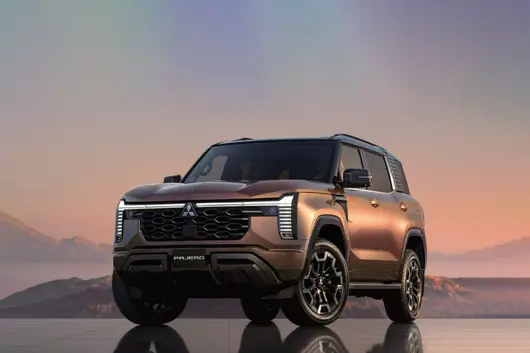

2021, unit terakhir Pajero Generasi Keempat keluar dari Kilang Gifu, piawaian off-road tegar Jepun yang merentasi dunia hampir 40 tahun, dengan jualan keseluruhan melebihi 3.29 juta unit, memasuki tempoh tidur selama 5 tahun.
Baru-baru ini, Kereta Mitsubishi secara rasmi melancarkan Pajero Baharu, produk Generasi Kelima diperbuat di Thailand dan dilancarkan di pasaran Jepun dan Australia, tahun depan juga akan dijual di lebih daripada 100 negara dan wilayah — di mana kemungkinan besar tidak termasuk China. Selain enjin diesel pelancaran pertama Mitsubishi tidak sesuai dengan keadaan negara, harga permulaan dianggarkan sekitar 330,000 di luar negara, selepas ditambah dengan cukai dan kos penghantaran, harga melebihi 400,000 juga akan menghadapi cabaran serius daripada produk kelas sama di China.
Contohnya GAC telah mengumpul pengalaman pernah bekerjasama dengan Mitsubishi, Jeep, melancarkan Trumpchi Yue 7 dengan pra-tempahan bermula 179,800, kedua-dua model menggunakan cat warna emas yang serupa sebagai warna iklan, tetapi Pajero Baharu dimensi, kuasa, peralatan ketinggalan, hanya setelah 27 tahun kembali ke Rangka Terasing, memberikan keyakinan kepada kereta baru Mitsubishi untuk menentang semula Toyota LC250 Prado.
01
Kebangkitan Rangka Terasing, Spesifikasi Kurang Baik daripada Yue 7
Fokus kepada Pajero Baharu, yang perlu dibincangkan dahulu adalah rangkanya. Mulai dari Generasi Ketiga Pajero yang dikeluarkan tahun 1999, Mitsubishi mengubah kepada Rangka Bersatu dengan bingkai trapezoid dalam, kereta baru kali ini dikembangkan berdasarkan platform pikap Triton terkini, di satu sisi dianggap membetulkan kesilapan, kembali ke warisan, tongkat estafet V97 diberikan kepada Trumpchi Yue 7, di sisi lain juga menyelesaikan masalah kos pembangunan mandiri Pajero, memberikan asas material untuk kebangkitannya.
Ini juga menjelaskan mengapa Pajero Baharu dibuat di Thailand — kerana ini adalah rumah bagi L200 versi Asia Tenggara. Namun Pajero Baharu bukan sekadar dianggap sebagai versi off-road Triton, Mitsubishi hanya di suspensi depan dan lantai depan menggunakan reka bentuk pikap, komponen底盘 lain dibina semula. Kereta baru menggunakan bingkai tulang belakang terasing tradisional, keluli kekuatan tinggi dan penampang yang lebih besar, membuat keanjalan pusingan dan lenturannya mempunyai kemajuan.
Suspensi depan Pajero Baharu adalah struktur dua lengan silang, suspensi belakang terdiri dari桥 keseluruhan lima batang dengan spring spiral, berbanding dengan suspensi berasingan empat roda model dua generasi sebelumnya, kenyamanan行驶时 di jalan raya mungkin ada pengurangan, tetapi pergerakan dan ketahanan hentaman akan lebih baik, ditambah dengan peningkatan keupayaan beban, Pajero Baharu prestasi dalam situasi off-road kemungkinan besar lebih kuat daripada model lama.
Berdasarkan platform sedia ada, Mitsubishi tidak boleh seperti GAC Trumpchi Yue 7 memberikan Pajero Baharu peranti底盘 seperti suspensi udara dwi-rongga, penyesuai halang perubahan, ini memaksa jarak tanah tetap 230mm, tidak seperti Yue 7 boleh melakukan pelarasan 230-310mm, malah sedikit lebih rendah 5mm daripada model generasi sebelumnya, tetapi lebih tinggi daripada 221mm Prado, ditambah kedalaman air kira-kira 800mm, sudah cukup untuk Pajero Baharu memuji diri.
Mengenai sudut mendekati 30.4°, sudut keluar 25.8° dan sudut melalui menegak 22.6°, berbanding V97 tiada kemajuan, perbandingan dengan Prado kelebihan tidak banyak, malah tidak boleh dibandingkan dengan Trumpchi Yue 7 yang boleh dinaikkan. Rakan yang mengejar keupayaan melalui, kemudian perlu diubah suai untuk mencapai matlamat.
02
Fokus Utama Kuasa Diesel, Pampan Hibrid Masih Dalam Perjalanan
Pilihan总成 kuasa membatasi masa depan Pajero Baharu di pasaran China. Sekarang Mitsubishi hanya akan gunakan enjin diesel 4N16 Triton, Pajero Baharu dipasang dengan versi 2.4L turbo ganda, mempunyai teknologi turbo penampang boleh ubah, melalui sistem pengendalian sisa ekzos, ia enjin diesel Mitsubishi pertama memenuhi piawaian pelepasan Euro 6d.
Dan Pajero Baharu boleh mengeluarkan kuasa puncak 150kW, tork 480N.m berbanding versi pikap meningkat 10N.m, prestasi lebih baik daripada enjin diesel 3.2T Pajero generasi sebelumnya, kuasa 2.8T LC250 Prado sama, hanya tork rendah 20N.m.
Memilih enjin diesel 2.4T, kelebihan Pajero Baharu terdapat pada kegunaan luas, walaupun hanya melihat nilai angka bukan sahaja jauh lebih rendah daripada 550kW motor ganda Yue 7, prestasi pecutan lebih jauh perbezaan, tetapi kereta off-road Mitsubishi boleh capai keupayaan seret 3.5 tan, ini adalah kemampuan yang Trumpchi tidak boleh miliki.
Dan dari maklumat yang terungkap selepas pameran, Pajero Baharu seterusnya akan ada model HEV dan PHEV, Mitsubishi mungkin memindahkan总成 kuasa Outlander PHEV ke Pajero Baharu, kombinasi enjin petrol 2.4L dan motor ganda, lebih sesuai dengan keperluan pemilik China, juga boleh berdepan secara langsung dengan Tank 500 PHEV di pasaran luar negara.
Dalam pilihan transmisi, Pajero Baharu tidak juga menggunakan semula transmisi 6 kelajuan Triton, tetapi bertukar kepada transmisi automatik 8 kelajuan yang dibangunkan Mitsubishi terkini.
Ia mungkin pada asas AL80F Aisin Pajero Kaiten, Prado dilakukan optimum, berbanding transmisi 5AT lama, menggunakan nisbah gigi lebih rapat, prestasi lebih cemerlang dalam kelancaran dan kecekapan, juga memperkuatkan penyejukan minyak, memenuhi beban tork tinggi enjin diesel lama, menghadapi perubahan 7 mod pemanduan Pajero Baharu dengan tenang.
Dan transmisi Pajero Baharu boleh berkoordinasi dengan sistem kawalan roda penuh S-AWC, sistem 4WD pilihan utama SS4-II, menggunakan kawalan yaw aktif AYC yang ditambah, membantunya mencapai prestasi berkendara lebih stabil. Fungsi ini utamanya melalui brek roda depan untuk mengagihkan tork roda kiri kanan secara vektor, membetulkan postur dan lintasan berkendara pada lengkung dan jalan licin.
Dan SS4-II jenama Mitsubishi juga tidak hilang, ia ada 4 mod: 2H, 4H, 4HLc dan 4LLc, boleh melalui pembezaan roda planet tengah, dalam 100km/h capai pertukaran perjalanan jalan berturap dua roda dan 4WD masa penuh, juga boleh melakukan pembezaan tork pengesan pembeza tengah dan 4WD rendah kawalan mandiri, mencapai prestasi off-road lebih baik.
03
Dimensi Tidak Seperti Off-Road China, Reka Bentuk Meng chase Estetika Utama
Dari Rangka Terasing, kuasa diesel hingga sistem 4WD pilihan utama, Mitsubishi memberikan prestasi terunggul kelas kepada Pajero Baharu, tetapi dalam aspek dimensi, lebih jelas melihat ambisi mahu merebut bisnis Prado.
Panjang, lebar dan tinggi Pajero Baharu masing-masing 4920mm, 1925mm dan 1910mm, jarak asak 2870mm, berbanding V97 meningkat sedikit, tetapi kecuali jarak asak lebih 20mm, setiap data tiga ukuran kereta baru Mitsubishi lebih pendek sedikit daripada Prado, bagi pengguna Jepun yang menderita menunggu pengumpulan kereta Toyota lama, dimensi lebih kecil sebaliknya akan menjadi kelebihan Pajero Baharu, jika dibandingkan dengan pembuatan China 5 meter seperti Trumpchi Yue 7, Tank 500, lebih jelas melihat pengawalan Mitsubishi.
Mengenai bahagian reka bentuk, Mitsubishi pada asas Triton banyak perbaikan, menyelaraskan postur badan tinggi kereta off-road, menghormati klasik pada perincian, membuat Pajero Baharu mengikuti estetika utama, tidak juga membuat pemain off-road kecewa.
Dari garisan badan dan permukaan badan, kita boleh rasai pemahaman Mitsubishi tentang kehardikan, dari cembungan di kedua sisi penutup enjin, lipatan garis pinggang atas dan bawah, hingga kepala kereta tinggi, kelopak roda luar dan pedal sisi, Pajero Baharu semua mempunyai气质 hardy, panel pelindung hitam dari bumper depan belakang menyambung ke kelopak roda, Mitsubishi memilih plastik hitam sedikit berkilat, meningkatkan kesan halus keseluruhan kereta.
Pengenalan hadapan Pajero Baharu agak tinggi, ia tidak menggunakan semula reka bentuk Triton, kepala kereta bersudut mempunyai rasa tenaga, lampu LED T bentuk digabungkan dengan jalur lampu menyeluruh, menjadikan 6 jalur petak grille menyatu di dalamnya, beresonans dengan bentuk kumpulan lampu ekor, perincian sangat kaya, badan penyambungan dua warna mengeluarkan气质 fesyen yang Mitsubishi kekurangan dahulu.
Yang mengecewakan peminat lama, Pajero Baharu membatalkan tayar simpanan belakang, bertukar ke pintu belakang buka atas biasa, Mitsubishi untuk memulihkan maruah, sengaja menggunakan garis pinggang atas bawah merapatkan, gabungkan dengan bentuk ekor menonjol, terbentuk kontur heksagon, menghormati diri sendiri yang lalu. Mengenai pereka menekankan, hiasan pada posisi tiang C berasal dari kerangka anti-roll versi terbuka Pajero pertama, lebih merupakan elemen yang hanya faham internal.
Interi kereta baru juga menghormati Pajero pertama, Mitsubishi terutama ingin mencari gaya zaman dahulu dari dashboard layout mendatar, di bawah lubang angin AC, dekorasi kulit unta serupa kerusi metro, memang ada sedikit 意味 retro, banyak jahitan bungkusan lembut, menggunakan teknik seni patung kayu Jepun tradisional, gagang tiang A dan penumpang, sangat berbau off-road, tetapi skrin besar satu badan yang gabungkan 2 skrin 14.3 inci, masih menarik orang kembali ke tahun 2026.
Skrin pusat kawalan boleh menyalin digital jadual tiga klasik kereta off-road Mitsubishi, dan paparkan maklumat off-road seperti altitud, arah, sudut pitch, sudut roll, juga boleh tukar efek dinamik mengikut mod pemanduan, skrin pusat kawalan kereta baru memberikan keupayaan hubungan telefon kereta tanpa wayar, dan boleh tukar 16 tema latar automatik mengikut masa, juga boleh paparkan sistem imej panorama 3D pelbagai sudut dengan底盘 perspektif.
Mitsubishi untuk pertama kali memuatkan pada Pajero Baharu, 8 kantung udara termasuk kantung udara depan jauh, sertai pengurangan hentaman hadapan dan amaran hentaman hadapan, dan untuk pertama kali memuatkan sistem bantuan kekalkan lorong yang boleh membetulkan anjakan, membuat kemampuan keselamatan aktifnya mempunyai pengukuhan. Mengenai bahagian pemanduan pintar bantu, MI-PILOT Pajero Baharu hanya mempunyai keupayaan krus adaptil dengan kekalkan lorong, dan berbeza jauh dengan model buatan negara.
Pengguna Pajero Baharu mungkin tidak memerlukan kecerdasan besar, konfigurasi keselesaan mungkin lebih boleh menggembirakan mereka. Mitsubishi sediakan kaca kedap bunyi tingkap sisi depan belakang untuk kereta baru, sertai pengurangan bunyi badan kereta, dan sistem audio Yamaha 12 speaker + dual amplifier dengan bunyi aktif, Pajero Baharu mempunyai penghalang lebih baik terhadap bunyi enjin dan bunyi angin.
Pajero Baharu kali ini fokus layout 7 kerusi, melalui slid dan lipat kerusi baris kedua 150mm, menambah baik kemudahan masuk keluar penumpang baris ketiga. Mitsubishi pada asas memperbaiki pengalaman ergonomik kerusi baris pertama kedua, konfigurasi fungsi pemanas dan pengudaraan kerusi, baris ketiga menyesuaikan postur duduk, ditambah ruang kaki di belakang kerusi baris kedua dinaikkan, dan AC tiga zon boleh laras mandiri, baris ketiga Pajero Baharu juga boleh memuatkkan dewasa. Berdasarkan maklumat sekarang, pasaran Jepun hanya ada versi 7 kerusi, versi Australia ada 5 kerusi dan 7 kerusi boleh pilih.
04
Ringkasan Pemanduan
Mitsubishi sekarang hanya di Australia mengumumkan harga Pajero Baharu, versi 5 kerusi dan 7 kerusi GLS permulaan masing-masing 68,490 Dolar Australia dan 69,990 Dolar Australia, versi tertinggi GSR berharga 84,990 Dolar Australia, kira-kira 330,000-410,000 Yuan RMB. Berbanding V97 sebelum henti jual 54,990 Dolar Australia, Pajero Baharu kenaikan harga sangat besar, berbanding Triton konfigurasi sama lebih mahal 8,000 lebih Dolar Australia, tetapi masih rendah daripada Toyota LC250 Prado Diesel GX 72,500 Dolar Australia, harga ini di tempat sepatutnya boleh beli Tank 500 Vanta versi tertinggi, lihat sama ada pengguna memiliki ketekunan pada nama Pajero ini.
Pemain off-road dalam negara juga tidak perlu putus asa, walaupun Mitsubishi tidak rasmi perkenalkan kuasa Pajero Baharu, tetapi saluran import selang masih wujud, sekurang-kurangnya saya dengar sekarang ada peniaga ada stok V97. Jika skala permintaan pasaran cukup besar, kelompok pelanggan boleh terima harga permulaan lebih 400,000, masa depan kita masih ada peluang melihat bayang lari Pajero Baharu di jalan dalam negara, cuma, ia tidak boleh kembali ke kegemilangan 20 tahun dahulu, kerana kini jualan bulanan Prado buatan negara hanya baru sampai 4 angka.
Dalam perancangan Mitsubishi, Pajero mungkin seperti Range Rover, Defender menjadi siri kereta sendiri, masa depan mungkin ada Pajero saiz sederhana gaya SUV, Pajero saiz kecil pintu dua elektrik penuh. Semoga di zaman dominasi tenaga baharu, peminat kereta dalam negara masih ada peluang bermain model "niche", dalam produk homogen cari keseronokan berbeza.
(Tamat)
© 2024 Bitauto.com. All Rights Reserved.
Bitauto (www.yiche.com and www.bitauto.com) is one of the most visited automotive websites in China. We provide detailed info on Chinese car brands available in your area. Please note that the information provided on this website is based on publicly available data and is for reference only. It may not be fully updated or accurate at all times.


