

HomeVinfast VF 3

Search History
Popular Searches
Dealer Login / Sign Up


To begin with, calling VinFast the "Vietnamese BYD" is clearly an exaggeration, as there is no comparison between VinFast and BYD in terms of supply chain self-sufficiency or sales volume. However, if focusing on the Vietnamese market, looking solely at VinFast's growth speed after its start and its current dominant position, its achievements in the local market are no less than those of BYD.
This is why we have selected VinFast as the main focus today.
01
What is Vietnam's VinFast?
VinFast is an electric vehicle company under Vietnam's largest private enterprise, Vingroup. Founded in 2017, it is the first independent car brand in Vietnamese history.
Through buying technology and assembling fuel vehicles, it completed its initial three-year start. Later, in 2022, it fully transitioned to pure electric. In 2023, it listed on Nasdaq. Starting from 2024, it surpassed overseas brands like Toyota and Hyundai to become the sales champion in Vietnam's local market. In 2025, it delivered nearly 197,000 vehicles, accounting for approximately 36% of the Vietnamese automotive market.

In the first seven months of this year, VinFast's sales increased by 74% year-on-year again, reaching 138,000 units. Its growth rate was the highest among all local mainstream brands. Its sales volume was greater than the combined total of several overseas brands such as Toyota, Kia, Hyundai, and Mitsubishi. Furthermore, almost all of VinFast's sales were fully electric models. With this single brand, Vietnam's pure electric vehicle penetration rate has leaped into the top tier globally.
However, behind VinFast's dazzling halo lies a huge shadow — within three years of listing, VinFast's cumulative losses exceeded $9 billion, with a net loss of $3.87 billion in 2025. In May this year, VinFast launched its largest restructuring, spinning off its local manufacturing business in Vietnam to the founder's related consortium for about $530 million. The listed company shifted to an asset-light model while setting a goal to achieve profitability by 2027.
In the process of VinFast's rise, Chinese batteries, Chinese components, and Chinese production line equipment played a far more important role than public perception. At the same time, Chinese complete vehicle brands sweeping the Southeast Asian market are the only ones struggling in Vietnam.
02
What kind of market is the Vietnam孕育ing VinFast?
The Vietnamese car market around the birth of VinFast had several distinct characteristics:
First, the market size is small. Annual sales are about 300,000 units, less than one-third of Thailand and one percent of China, almost ignorable on the global map;
Second, all are outsiders. The market is dominated by Toyota, Hyundai, Honda, Kia, and Mitsubishi, exclusively foreign brands, with no local carmakers;
Third, there is no high-end manufacturing. All factories are in CKD/SKD assembly form, importing CKD parts for local assembly. Local supply chains only stay at low-end parts, with no whole-vehicle R&D capability whatsoever;
Fourth, two-wheelers reign supreme. The fleet of motorcycles in Vietnam is about 60 million. For ordinary families, the first motorized vehicle is always a motorcycle, while cars remain luxury goods.

For overseas car companies, the Vietnamese market was once a haven for tax-avoidance assembly. With high整车 import tariffs, foreign brands formed joint ventures with local conglomerates to build assembly plants, assembling imported parts into complete vehicles and selling them to a small group of the wealthy. Vietnam provided labor, land, and market, while core technologies, brand premiums, and major profits all flowed out.
However, the demand shape of Vietnamese consumers is brewing a huge change. With per capita GDP approaching $2,500 and the middle class expanding rapidly, motorcycle-owning families universally have the idea of upgrading to four-wheeled vehicles. An annual increase market with nearly blank stock is thus exposed within the comfort zone of foreign brands.

VinFast founder Pham Nhat Vuong seized this opportunity. This richest man in Vietnam earned his first pot of gold in his early years by selling instant noodles in Ukraine. After returning home, he founded Vingroup, expanding his business to real estate, retail, hotels, hospitals, schools, and other fields, becoming Vietnam's largest private enterprise group.
His business logic is "if Vietnam lacks something, Vingroup will fill it". In 2017, what Vietnam lacked most was its own car brand. At that time, the Vietnamese government was vigorously promoting industrialization upgrades, desiring a national industrial card. Pham Nhat Vuong entering the market at this time stepped on national will, so from day one, VinFast carried the color of a national project.
03
How did the experience-less VinFast start rapidly?
VinFast had no car manufacturing experience. Forward R&D was not a viable option. Its method was simple and rough: spend heavily to purchase mature technology, gather global suppliers, and use capital to compress time.
In terms of production lines, it took over the production line and team of General Motors Vietnam (Hanoi plant), rebranded Chevrolet Spark to launch its first model, Fadil;

In terms of platforms, it purchased chassis and powertrain technology from the previous generation BMW 5 Series (F10) and X5 (F15) to develop sedan LUX A2.0 and SUV LUX SA2.0, with Magna Steyr responsible for engineering development and Italian Pininfarina responsible for exterior design;

In terms of speed, in September 2017, it laid the foundation for the factory on Cat Hai Island, Hai Phong City. It took only 21 months to complete construction and put it into production. This is a modern complete vehicle factory with a welding automation rate of about 90%.
In October 2018, VinFast completed its global premiere at the Paris Motor Show. In 2019, three fuel vehicles were launched, entering the top five in Vietnam sales that year. From establishment to mass production delivery, VinFast took only a little over two years. After seeing the breakthrough difficulties of traditional fuel vehicles and the huge potential of the new energy market, VinFast made a decisive electrification shift in 2022.
04
What kind of cars is VinFast selling?
VinFast's sales explosion truly started after the shift to electrification. Before discussing products specifically, let's first break down VinFast's basic vehicle building philosophy.
First, electrification one step done — skipping hybrids, full series pure electric (BEV), betting that emerging markets like Vietnam can skip the legacy fuel vehicle stock burden and go directly electric.

Second, full price range coverage. From micro cars like VF 3 equivalent to over 50,000 RMB, to the 300,000 RMB tier VF 9, to the ultra-luxury sub-brand Lac Hong (800S/900S) launched in 2026, filling every niche market with a "sea of cars".
Finally, by using battery leasing/subscription, free charging, and long-term warranties, it brought the usage cost of electric vehicles significantly lower than fuel vehicles, dissolving the residual value anxiety of emerging markets for electric vehicles.
Based on the above product philosophy, VinFast's product line was precisely positioned in every niche market.

At the entry level, there is an A00 class micro box SUV named VF 3. In 2025, it won Vietnam's annual sales champion with 44,585 units, becoming the first car for young Vietnamese people. Following closely was the VF 5, positioned as an A class subcompact SUV, selling 43,913 units last year, the absolute main force in the entry-level family market.

In the mainstream price range, there is the Limo Green adopting a 7-seat layout targeting the commercial operation market. It became a hit when launched in August 2025, selling 27,000 units that year. The Herio Green, specializing in taxi and ride-hailing scenarios, contributed 12,600 units. Targeting home upgrade needs are the B class SUV VF 6 and C class SUV VF 7, with sales of 23,000 and over 9,600 units respectively last year.
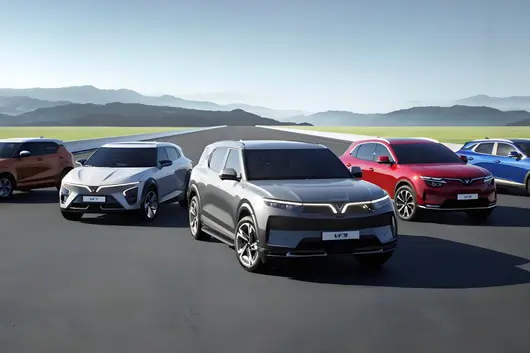
Going up in price, there are the VF 8 and VF 9, positioned as SUVs above C class. They target markets like North America and Europe, bearing the brand's face.
Aside from four-wheel passenger cars, VinFast is also the largest electric two-wheeler brand in Vietnam. This business will not be discussed further.
05
Why can VinFast cars sell well?
Spreading the product line is not difficult, but in a market where overseas brands have deep roots, what exactly did VinFast's products rely on to become hits?

Let's look at the entry-level VF 3 first. This is the "national box" with full emotional value, adopting a rugged cute route. Square outline, unpainted black bumpers and wheel arches, two-door styling. It looks like a scaled-down Suzuki Jimny and resembles the Baojun Yunye in the domestic market. With 9 body colors plus paid custom colors, it is clearly going for "social media sharing".

The interior is minimalist, with a 10-inch screen as the focus. At only 3.11 meters in length, it has an 18.64 kWh LFP battery, with a range of about 210 km (NEDC). Fast charging from 10% to 70% takes 36 minutes. Such product power would be unremarkable in China, but in Vietnam, it precisely hit the largest group of people — young people and small families who commute on motorcycles every day. The price is not much different from high-end motorcycles, yet it provides shelter from wind and rain and shows personality.

The VF 5, bearing the sales pillar, adopts the family's new generation "Flying Bird" V-shaped DRLs. The appearance styling is rounded and friendly, the interior focuses on a refreshing tech feel, with a floating center console, simplified buttons, and a wide field of view.
With a 37.23 kWh battery, 100 kW front motor, and 182 mm ground clearance (tuned for Vietnamese waterlogging and poor roads), 10%–70% fast charging takes about 30 minutes. Space, range, and price achieve a balance that fuel cars in the same price range cannot offer simultaneously, matching the mainstream budget of first-time buying Vietnamese families.

Further up are the VF 6 and VF 7, with styling designed by Italian Torino Design. VF 6 is rounded and vivid, VF 7 has sharp edges. The interior centers on a 12.9-inch center console screen plus HUD. The full series has L2-level driver assistance. The above cabin configurations in Vietnam are basically still empty in joint venture fuel cars at the same price range.

The VF 7 has a motor power of 174 hp, a 59.6 kWh battery pack, and nearly 500 km range. It also has 349 hp dual-motor four-wheel drive with a 75.6 kWh large battery. This model's configuration in power and intelligence allows Vietnamese consumers to personally feel the generational gap between new energy and fuel vehicles in experience.
As for the VF 8 and VF 9 targeting overseas markets, both cars' designs are out of Pininfarina. VF 8 takes a "sporty elegant" route, while VF 9 is a 5.14-meter three-row flagship. Specific product power will not be discussed in detail, but one thing is they took a hit in reputation in the US, with US media even sharply criticizing VF 8 as "the worst car ever reviewed".
The above are the weapons VinFast uses to dominate Vietnam. Placing these products in China, they basically have no competitiveness. But in relatively closed Vietnam, each model basically achieves "unrivaled at the same price" — entry-level market eats up motorcycle upgrading groups; mainstream price level eats up passenger car first-time buying families; going up, uses intelligent configuration to out-flank joint ventures. This layered precise strike allows VinFast to gain an unprecedented sales explosion.
06
Why did Chinese car brands sweeping Southeast Asia fall silent in Vietnam?

Honestly, VinFast's current products cannot get any advantage over any mid-range and above Chinese new energy car company. But ironically, in Vietnam where new energy vehicle penetration rate has exceeded 40%, there is almost no presence of Chinese passenger car brands. Behind this is far from purely market competition.
First, the Vietnamese local champion has the best start. Chinese new energy brands entered the Vietnamese market around 2024, by which time VinFast had already completed the density monopoly of channels, charging networks, and after-sales networks, and locked down the mainstream price range with VF 3/VF 5. This weapon of cost-performance ratio, most good at by Chinese brands, collided exactly with the barrel of VinFast's guns.

Second, in terms of tariffs and policies, non-ASEAN complete vehicle import tariffs are about 15%. The EV exemption registration fee policy treats Chinese and foreign brands equally, but the Vietnamese government's industrial intent is to support VinFast, this local champion, not to make a dress for Chinese brands.
Additionally, there are consumer trust and national sentiment issues. The historical entanglements of China-Vietnam relations make Vietnamese consumers hold extra scrutiny towards Chinese brands. The stereotype of "cheap but unreliable" has not been reversed, while VinFast as a local brand has natural advantages in emotion.

So next, do Chinese car companies still have survival space in Vietnam? Or changing angle, do Chinese car companies need to strive to conquer Vietnam?
For some car companies, this willingness has already converted into practical action: BYD has announced building a factory in Phu Tho Province, Chery has implemented joint venture assembly projects, and Great Wall is planning local assembly plants. The Vietnamese layout of Chinese top players has shifted from complete vehicle exports to localization.
However, Chinese car companies' willingness to develop the Vietnamese market is not strong. Vietnam is the fastest growing and most radical electrification market in Southeast Asia. Absence means giving up a corner of the regional map, but its annual sales volume of 600,000 units is only about 60% of Thailand's, and it is occupied by local champions, so ROI is far lower than other markets like Indonesia, Philippines, etc.
Of course, from another angle, the Chinese industry chain has actually become an indispensable foundation for VinFast. It's just the sales champion title has no Chinese company's name. The absence of complete vehicle brands in Vietnam, in a sense, also symbolizes that China's electric supply chain is already strong enough to support the emergence of a local champion to keep the gate for itself.
07
Third-party observation summary

For over a hundred years, the automotive industry club has only accepted a few types of members: the US and Europe establishing technical barriers in advance, Japan and South Korea counterattacking with lean and systems, and China overtaking by electrification lane change. Historically, almost no country succeeded in squeezing into this table as a latecomer.
And now VinFast has provided a sample for the fourth path: using real estate capital to buy out time, using the Chinese supply chain to complete the trunk, using national will to rewrite policies, using ecosystem loops to secure the market. In eight years, the Vietnamese market known as the global top tier for pure electric penetration, from a blank local industry, to leaving Toyota and Hyundai behind.
Standing at a higher place to look, every step of VinFast's rise cannot be separated from the support of China's new energy industry chain. VinFast found the path suitable for its development, and for enterprises in China's automotive industry chain, hiding behind the scenes and indirectly occupying the local market is also a path to going global.
(END)

首先要說明,把 VinFast 稱為「越南比亞迪」明顯係誇張嘅描述,因為無論產業鏈自給率定係銷量規模,VinFast 同比亞迪都冇咩可比較性,但如果聚焦於越南市場,單看 VinFast 起步後嘅增长速度,定係當前喺越南市場嘅統治地位,佢喺本地市場取得嘅成就毫不遜色比亞迪。
而呢,亦就係我哋今日揀選 VinFast 做主角嘅原因。
01
越南嘅 VinFast 係咩?
VinFast 係越南最大民企 Vingroup 旗下嘅電動車公司,2017 年創立,係越南歷史上第一個自有自主品牌。
透過買技術組裝燃油車,佢完成咗最初三年嘅起步,之後 2022 年全面轉型純電,2023 年登陸納斯達克,2024 年起超越豐田、現代等海外品牌成為越南本地市場嘅銷量冠軍。2025 年交付近 19.7 萬輛、約佔越南汽車市場 36%。
今年頭七個月,VinFast 嘅銷量再次獲得 74% 嘅同比上升,達到 13.8 萬輛,增速係當地所有主流品牌當中最嘅一個,銷量規模比其後豐田、起亞、現代、三菱幾間海外品牌嘅總和仲多。且 VinFast 嘅銷量幾乎全部都係純電車型,憑此一家,越南嘅純電動車滲透率已經躍升至全球第一梯隊。
然而,VinFast 耀眼嘅光環背後,係巨大嘅陰影——上市三年入面,VinFast 累計虧損超 90 億美元,2025 年淨虧 38.7 億美元。今年 5 月份,VinFast 展開最大嘅重組,把越南本土製造業務以約 5.3 億美元剝離俾創辦人關聯財團,上市公司轉向輕資產模式,同時設定咗 2027 年實現盈利嘅目標。
喺 VinFast 崛起嘅過程中,中國電池、中國零部件、中國產線設備扮演咗比公眾認知更重要嘅角色。與此同時,橫掃東南亞市場嘅中國整車品牌,獨有喺越南步履維艱。
02
孕育 VinFast 嘅越南,係一個點樣嘅市場?
VinFast 誕生前後嘅越南车市,有幾個鮮明特徵:
其一,市場細細。年銷量約 30 萬輛,不足泰國嘅三分之一、中國嘅百分之一,放喺全球版圖上幾乎可以忽略;
其二,全部係外來者。市場由豐田、現代、本田、起亞、三菱分佔,清一色外資品牌,無一本地車廠;
其三,冇高端製造,所有工廠都係 CKD/SKD 組裝形態,進口散件、本地拼裝,本地配套僅停留在低端零部件,唔談得上任何整車研發能力;
其四,兩輪為王。摩托車喺越南嘅保有量約 6000 萬輛,普通家庭嘅第一部機動車,永遠係一輛摩托,汽車依舊係奢侈品。
對於海外車廠嚟講,越南市場一度係個避稅組裝樂園,整車進口關稅高企,外資品牌同本地財團合資建組裝廠,把進口嘅散件拼成整車,賣俾先富起來嘅一小撮人。越南出人、出地、出市場,核心技術、品牌溢價同利潤大頭全部外流。
不過越南消費者嘅需求形態,已經喺醞釀巨大變化,人均 GDP 逼近 2500 美元,中產階級快速膨脹,摩托車家庭普遍萌發升四輪嘅念頭。一個年增長可觀、存量近乎空白嘅市場,就咁晾喺外資品牌嘅舒適區入面。
VinFast 創辦人范日旺就捉住咗呢個契機,呢位越南首富早年靠喺烏克蘭賣方便麵賺到第一桶金,返國後創辦 Vingroup,把生意做到房地產、零售、酒店、醫院、學校等領域,成為越南最大嘅私營企業集團。
佢嘅商業邏輯,就係「越南缺咗咩,Vingroup 就補咩」。而 2017 年越南最缺嘅,就係自己嘅汽車品牌。彼時正逢越南政府大力推動工業化升級,渴望一張國家工業名片,范日旺此時入局,算係踩中咗國家意志,所以 VinFast 由第一日開始,就帶住國家工程色彩。
03
零經驗嘅 VinFast,點樣急速起步?
VinFast 冇任何造車經驗,正向自研唔係可行選擇,佢嘅方法簡單粗暴,就係斥巨資購入成熟技術、網羅全球供應商,用資本壓縮時間。
產線方面,接手通用汽車越南(河內工廠)嘅生產線同團隊,換標雪弗蘭 Spark 推出首款車型 Fadil;
平台方面,向寶馬購買上一代 5 系(F10)同 X5(F15)嘅車架同動力總成技術,開發出轎車 LUX A2.0 同 SUV LUX SA2.0,由麥格納斯泰爾負責工程開發、意大利 Pininfarina 負責外觀設計;
速度層面,2017 年 9 月喺海防市吉島奠基工廠,淨用 21 個月建成投產,這係一座焊接自動化率約 90% 嘅現代化整車廠。
2018 年 10 月,VinFast 喺巴黎車展完成全球首秀;2019 年三款燃油車上市,當年即躋身越南銷量前五。從成立到量產車交付,VinFast 只係用咗兩年多。而喺看到傳統燃油車嘅突破難度,以及新能源市場嘅巨大潛力後,VinFast 喺 2022 年又果斷進行咗電動車轉向。
04
VinFast 賣嘅,係咩樣嘅車?
VinFast 嘅銷量爆發,係從電動車轉向之後真正開始嘅,具體傾產品之前,我哋先拆解下 VinFast 嘅基礎造車理念。
首先,電動化一步到位——跳過混動,全系純電(BEV),賭越南咁樣嘅新興市場可以跳過燃油車存量包袱直接電動化。
其次,價格帶全覆蓋。從約合人民幣 5 萬多元嘅微型車 VF 3,到 30 萬元級嘅 VF 9,再到 2026 年推出嘅超豪華子品牌 Lac Hong(800S/900S),用「車海」填滿咗每個細分市場。
最後,透過電池租賃/訂閱、免費充電、超長質保,把電動車嘅使用成本打到明顯低於燃油車,消解新興市場對電動車嘅殘值焦慮。
基於上述產品理念,VinFast 嘅產品線,精準地卡喺每一個細分市場入面。
喺入門級,係一臺名為 VF 3 嘅 A00 級微型方盒子 SUV,2025 年以 44585 輛拿下越南全年銷冠,係越南年輕人嘅第一部車;緊隨其後嘅係定位 A 級小型 SUV 嘅 VF 5,去年銷量 43913 輛,係家庭入門市場嘅絕對主力。
主流價位,係採用 7 座佈局、瞄準營運市場嘅 Limo Green,喺 2025 年 8 月上市即成爆款,當年賣出 2.7 萬輛;專攻嘅士、網約車場景嘅 Herio Green,貢獻咗 1.26 萬輛;瞄準家用升級需求嘅,係定位 B 級 SUV 嘅 VF 6 同 C 級 SUV VF7,去年銷量分別達到 2.3 萬輛同 9600 多輛。
價格再往上,係定位 C 級以上 SUV 嘅 VF8 同 VF9,佢哋瞄準嘅係北美、歐洲等市場,承擔品牌嘅門面。
除咗四輪乘用車之外,VinFast 仲係越南最大嘅電動兩輪車品牌,呢塊業務就唔多提啦。
05
VinFast 嘅車,點解可以賣好?
把產品線鋪開唔難,但係喺海外品牌深耕已久嘅市場上,VinFast 嘅產品具體係靠咩成為爆款呢?
再看入門級嘅 VF 3,呢係情緒價值拉滿嘅「國民方盒子」,外觀走硬派可愛路線:方正輪廓、黑色無漆保險桿同輪眉、雙門造型,像一臺等比縮小嘅鈴木吉姆尼,都神似國內市場嘅寶駿悅也。9 種車身顏色外加付費定制色,明顯係衝住「喺社交媒體晒」去嘅。
內飾極簡,一塊 10 吋螢幕係焦點,車長淨係 3.11 米,18.64kWh 磷酸鋰鐵電池,續航約 210km(NEDC),快充 10%–70% 需 36 分鐘。呢樣嘢產品力放喺中國毫不起眼,但係喺越南,佢精準命中咗最龐大嘅人群——亦就係嗰啲每日騎摩托上班嘅年輕人同細家庭。價格同高端摩托相唔差幾多,卻可以遮風擋雨、彰顯個性。
承擔銷量支柱嘅 VF 5,採用咗家族新一代「飛鳥」V 形日行燈,外觀造型圓潤親和,內飾主打清爽科技感,懸浮式中控、按鍵簡化、視野開闊。
37.23kWh 電池、100kW 前電機、182mm 離地間隙(針對越南積水爛路調校),10%–70% 快充約 30 分鐘。空間、續航同價格做到同價位燃油車唔能夠同時做到嘅均衡,匹配越南首次購車家庭嘅主流預算。
再往上嘅 VF 6 同 VF 7,造型由意大利 Torino Design 操刀,VF 6 圓潤靈動、VF 7 棱角鋒利,內飾以 12.9 吋中控大螢幕 +HUD 抬頭顯示為中心,全系 L2 級輔助駕駛。以上呢啲座艙配備,喺越南同價位合資燃油車入面基本依然係一片空白。
VF 7 嘅電機功率 174 馬力,59.6kWh 電池組、近 500 公里續航,都有 349 馬力雙電機四驅,配 75.6kWh 大電池。呢款車型喺動力、智能化上嘅配備,可以讓越南消費者切實感受到新能源同燃油車喺體驗上嘅時代差距。
至於瞄準海外市場嘅 VF 8 同 VF 9,兩款車設計均出自 Pininfarina 之手,VF 8 走「運動優雅」路線、VF 9 係 5.14 米嘅三排旗艦。具體產品力唔細傾,惟有講佢哋喺美國嘅口碑翻過一次車,美媒甚至犀利咁將 VF 8 批為「史上評價最差嘅車」。
以上就係 VinFast 喺越南本土大殺四方嘅武器,呢啲產品放喺中國,基本都冇咩競爭力,但係喺相對封閉嘅越南,每款車型基本都做到咗「同價位無對手」——入門級市場,食咗摩托升級人群;平級主流價位、食咗乘用車首購家庭;再往上,用智能配備錯位打合資。這種分層精準打擊,令 VinFast 獲得咗前所未見嘅銷量爆發。
06
中國車企橫掃東南亞,點解喺越南啞火?
平心而論,VinFast 目前嘅產品,喺任何一個腰部以上嘅中國新能源車企面前,都討唔到咩宜。但吊詭嘅係,新能源車滲透率已經超過四成嘅越南,卻幾乎冇中國乘用車品牌嘅身影。而呢背後,遠非單純嘅市場競爭所導致。
首先,越南本土冠軍佔盡先機。中國新能源品牌 2024 年前後進入越南市場,VinFast 已經完成咗渠道、補能、售後網絡嘅密度壟斷,並以 VF 3/VF 5 把主流價位焊死,呢種中国品牌最擅長嘅性價比武器,恰好撞喺 VinFast 嘅炮口上。
其次,喺關稅同政策方面,非東盟整車進口關稅約 15%,電動車免註冊費政策雖對中外品牌一視同仁,但越南政府嘅產業意圖,就係要扶持 VinFast 呢個本土冠軍,而唔係替中国品牌作嫁衣。
此外,仲有消費者信任度同民族情緒嘅問題。中越關係嘅歷史糾葛使越南消費者對中国品牌抱負有額外嘅審視,「便宜但有問題」嘅刻板印象尚未扭轉,而 VinFast 作為本土品牌,喺情感方面有天然優勢。
那麼接下來,中國車企喺越南仲有生存空間嗎?或者換個角度,中國車企有必要努力攻堅越南嗎?
對於部分車企嚟講,呢種意願已經轉化咗做實際行動:比亞迪已經宣佈喺富壽省建廠,奇瑞落地合資組裝項目,長城則喺規劃本地組裝廠。中國頭部玩家嘅越南佈局,已從整車出口轉向本地化生產。
不過,中國車企開拓越南市場嘅意願,唔算強烈。越南係東南亞增長最快、電動化最激進嘅市場,缺席意味著讓出區域版圖一角,但其年銷 60 萬輛嘅體量,僅為泰國嘅六成左右,且被本土冠軍盤踞,投入產出比遠不如印尼、菲律賓等其他市場。
當然,從另一個角度嚟講,中國產業鏈其實已經成為 VinFast 不可或缺嘅根基,只係銷冠嘅名頭冇中國企業嘅名,整車品牌喺越南嘅缺席,某種意義上,亦象徵住中國電動供應鏈,已經強大到可以扶出一個本地冠軍來替自己守門。
07
第三方觀察總結
一百多年嚟,汽車工業嘅俱樂部只接納過幾類成員:先發建立技術壁壘嘅歐美,以精益同體系逆襲嘅日韓,以及用電動化換道超車嘅中國。後發國家想要擠進呢張牌桌,歷史上幾乎無人成功。
而而家 VinFast 畀出咗第四條路徑嘅樣本,就係用地產資本買斷時間,用中國供應鏈補齊軀幹,用國家意志改寫政策,用生態閉環圈住市場。八年時間,越南稱為全球純電滲透率第一梯隊嘅市場,從本土產業嘅一片空白,到把豐田、現代甩喺身後。
而喺更高處睇,VinFast 崛起嘅每一步,都離唔開中國新能源產業鏈嘅支撐。VinFast 搵到适合自己發展嘅路,而對於中國汽車產業鏈上嘅企業而言,隱居背後、間接佔據當地市場,亦唔失為一條出海之路。
(完)

Perlu dimaklukan, memanggil VinFast sebagai "BYD Vietnam" jelas merupakan penerangan yang berlebihan, kerana tanpa mengira kadar autonomi rantaian industri atau skala jualan, VinFast dan BYD tidak boleh dibandingkan, tetapi jika fokus pada pasaran Vietnam, dengan melihat sahaja kadar pertumbuhan VinFast selepas permulaan, dan kedudukannya yang dominan di pasaran Vietnam semasa, pencapaian yang diperolehi olehnya di pasaran tempatan tidak kalah dengan BYD.
Dan inilah sebab mengapa kami memilih VinFast sebagai watak utama hari ini.
01
Apakah VinFast Vietnam?
VinFast adalah syarikat kereta elektrik di bawah syarikat swasta terbesar di Vietnam, Vingroup, yang ditubuhkan pada 2017, dan merupakan jenama automotif sendiri pertama dalam sejarah Vietnam.
Dengan membeli teknologi dan merakam kereta minyak, ia menyelesaikan permulaan tiga tahun yang pertama, kemudian 2022 beralih sepenuhnya ke elektrik, 2023 mendarat di Nasdaq, sejak 2024 mengatasi jenama asing seperti Toyota, Hyundai, dll. untuk menjadi juara jualan pasaran tempatan Vietnam. Pada tahun 2025 menghantar hampir 197,000 buah, kira-kira 36% pasaran automotif Vietnam.
7 bulan pertama tahun ini, jualan VinFast sekali lagi mencatat peningkatan 74% secara tahunan, mencapai 138,000 buah, kadar pertumbuhan adalah yang tertinggi antara semua jenama arus perdana tempatan, skala jualan lebih banyak daripada jumlah jenama asing Toyota, Kia, Hyundai, Mitsubishi di belakangnya. Dan jualan VinFast hampir kesemuanya adalah model kereta elektrik sepenuhnya, dengan一家 ini saja, kadar penembusan kereta elektrik Vietnam telah melonjak ke peringkat pertama global.
Walau bagaimanapun, di sebalik cahaya VinFast yang berkilau, terdapat bayang-bayang yang besar — dalam masa tiga tahun selepas melunjak, VinFast telah mengalami kerugian kumulatif melebihi 90 bilion dolar, keuntungan bersih tahun 2025 adalah 3.87 bilion dolar. Pada bulan Mei tahun ini, VinFast memulakan penyusunan semula terbesar, memisahkan operasi pembuatan tempatan Vietnam kepada konglomerat pengasas berhubungannya dengan kira-kira 530 juta dolar, syarikat tersenarai beralih ke mod aset ringan, pada masa yang sama menetapkan sasaran keuntungan pada 2027.
Dalam proses bangkitnya VinFast, bateri China, komponen China, dan alatan talian pengeluaran China memainkan peranan yang jauh lebih penting daripada yang diketahui orang ramai. Pada masa yang sama, jenama kenderaan lengkap China yang melanda pasaran Asia Tenggara, hanya di Vietnam yang sukar untuk bergerak.
02
Negara yang melahirkan VinFast, adakah ia merupakan pasaran sedemikian?
Tahun-tahun sebelum dan selepas kelahiran VinFast, pasaran automotif Vietnam mempunyai beberapa ciri yang jelas:
Pertama, saiznya kecil. Jualan tahunan kira-kira 300,000 buah, kurang daripada sepertiga Thailand, peratusan satu China, diletakkan pada peta global hampir boleh diabaikan;
Kedua, semuanya pendatang. Pasaran dipecahkan oleh Toyota, Hyundai, Honda, Kia, Mitsubishi, semuanya jenama asing, tiada syarikat automotif tempatan;
Ketiga, tiada pengilangan bertaraf tinggi, semua kilang adalah bentuk perakaman CKD/SKD, komponen import, perakaman tempatan, penyelarasan tempatan hanya sehingga komponen tahap rendah, tidak boleh menyebut sebarang kapasiti penyelidikan dan pembangunan kenderaan lengkap;
Keempat, dua roda adalah raja. Motosikal yang dimiliki di Vietnam kira-kira 60 juta buah, kenderaan pertama keluarga biasa, sentiasa satu motosikal, kereta masih merupakan barang mewah.
Bagi syarikat automotif asing, pasaran Vietnam pernah menjadi surga perakaman untuk mengelak cukai, cukai kastam kenderaan import tinggi, jenama asing bersatu dengan konglomerat tempatan untuk membina kilang perakaman, merangkak komponen import menjadi kenderaan lengkap, menjual kepada sedikit orang yang kaya dahulu. Vietnam memberikan orang, tanah, dan pasaran, teknologi teras, premi jenama dan bahagian besar keuntungan semuanya mengalir keluar.
Tetapi bentuk keperluan pengguna Vietnam, sedang membesar perubahan besar, KDNK per kapita menghampiri 2500 dolar, kelas pertengahan berkembang pesat, keluarga motosikal secara umum telah terbit niat untuk naik ke roda empat. Sebuah pasaran dengan jumlah增量 yang boleh dianggap dan hampir kosong, diletakkan di zon selesa jenama asing.
Pendiri VinFast Pham Nhat Vuong menangkap peluang ini, orang paling kaya Vietnam ini pada awal hayatnya mendapat modal pertama dengan menjual mi segera di Ukraine, pulang ke negara asal untuk menubuhkan Vingroup, membuat perniagaan ke dalam bidang hartanah, runcit, hotel, hospital, sekolah, menjadi kumpulan swasta terbesar di Vietnam.
Logik perniagaannya, adalah "Vietnam kekurangan apa, Vingroup akan melengkapkannya". Dan pada tahun 2017, yang paling kekurangan Vietnam, adalah jenama automotif sendiri. Pada masa itu, pemerintah Vietnam secara kuat mendorong peningkatan perindustrian, mengingini kad perniagaan industri negara, Pham Nhat Vuong pada masa ini memasuki, kira-kira menekan kehendak negara, maka VinFast sejak hari pertama, telah mempunyai warna kejuruteraan negara.
03
VinFast tanpa pengalaman, bagaimana permulaan cepat?
VinFast tiada pengalaman pembuatan kereta, pembangunan sendiri secara betul bukan pilihan yang boleh dilakukan, kaedahnya ringkas dan kasar, ialah membazir modal besar membeli teknologi matang, mengumpul pembekal global, memendekkan masa dengan modal.
Dari segi talian pengeluaran, menerima alatan pengeluaran dan pasukan General Motors Vietnam (Kilang Hanoi), menukar logo Chevrolet Spark untuk mengeluarkan model pertama Fadil;
Dari segi platform, membeli kereta generasi terdahulu 5 (F10) dan X5 (F15) dari BMW untuk teknologi rangka dan powertrain, membangunkan sedan LUX A2.0 dan SUV LUX SA2.0, Magna Steyr bertanggung jawab atas pembangunan kejuruteraan, Itali Pininfarina bertanggung jawab atas reka bentuk luaran;
Dari segi kelajuan, September 2017 meletakkan batu asas kilang di Pulau Cat Ba, Bandar Haiphong, hanya menggunakan 21 bulan untuk membina dan memulakan pengeluaran, ini adalah kilang kenderaan lengkap moden dengan kadar automasi perkaitan kira-kira 90%.
Oktober 2018, VinFast di Pameran Paris menyelesaikan debut global; 2019 tiga model kereta minyak dikeluarkan di pasaran, pada tahun itu sudah masuk ke lima besar jualan Vietnam. Dari penubuhan ke penghantaran kenderaan pengeluaran besar, VinFast hanya menggunakan lebih dua tahun. Dan setelah melihat kesukaran terobosan kereta minyak tradisional, serta potensi besar pasaran tenaga baru, VinFast pada tahun 2022 sekali lagi secara berani melakukan pusingan elektrik.
04
Apa kereta yang dijual oleh VinFast?
Pecah jualan VinFast, bermula sepenuhnya selepas pusingan elektrik, sebelum berbincang dengan produk secara spesifik, kita uraikan dahulu falsafah asas pembuatan kereta VinFast.
Pertama, elektrifikasi langkah satu sampai tujuan — melangkau hibrid, sistem keseluruhan kereta elektrik sepenuhnya (BEV), taruh Vietnam seperti pasaran新兴市场 boleh melambat bebanan kereta minyak secara langsung elektrik sepenuhnya.
Kedua, julat harga meliputi semua. Dari kira-kira 50,000 yuan model mini VF 3, hingga VF 9 pada tahap 300,000 yuan, sehingga jenama anak super mewah yang dilancarkan pada 2026 Lac Hong (800S/900S), menggunakan "lautan kereta" untuk mengisi setiap pasaran niche.
Terakhir, melalui sewa bateri/berlangganan, pengecasan percuma, waranti terpanjang, membawa kos penggunaan kereta elektrik ke bawah secara ketara daripada kereta minyak, mengurangkan kecemasan nilai sisa pengguna terhadap kereta elektrik di pasaran新兴市场.
Berdasarkan falsafah produk di atas, barisan produk VinFast, tepat pada sasaran di setiap pasaran niche.
Dalam peringkat permulaan, satu nama VF 3 A00 SUV kotak segi empat mini, 2025 dengan 44,585 buah menjadi juara jualan tahunan Vietnam, adalah kereta pertama pemuda Vietnam; diikuti oleh VF 5 SUV kecil kelas A, jualan tahun lalu 43,913 buah, adalah kekuatan mutlak dalam pasaran permulaan keluarga.
Harga arus perdana, menggunakan susun atur 7 kerusi, menumpukan pasaran operasi Limo Green, pada bulan Ogos 2025 apabila dikeluarkan menjadi hit, pada tahun itu menjual 27,000 buah;专攻 taxi, aplikasi panggilan Herio Green, menyumbang 12,600 buah; menumpukan keperluan peningkatan keluarga, adalah VF 6 SUV kelas B dan VF 7 SUV kelas C, jualan tahun lalu masing-masing mencapai 23,000 buah dan 9,600 lebih.
Harga lagi ke atas, adalah VF 8 dan VF 9 SUV kelas C ke atas, mereka menumpukan pasaran Amerika Utara, Eropah,承担jenama muka depan.
Selain dari kenderaan empat roda, VinFast juga merupakan jenama motosikal elektrik terbesar di Vietnam, bidang perniagaan ini tidak banyak dibincangkan.
05
Mengapa kereta VinFast boleh dijual dengan baik?
Meluraskan barisan produk tidak sukar, tetapi dalam pasaran yang telah diperkukuh oleh jenama asing, apa yang menjadi hit spesifik produk VinFast?
Lihat dahulu VF 3 peringkat permulaan, ini adalah "kotak kebangsaan" dengan nilai emosi penuh, luaran laluan kasar dan comel: reka bentuk segi empat, bumper tanpa cat dan bulwark roda hitam,造型 dua pintu, seperti satu Suzuki Jimny yang dikurangkan secara berkadar, juga sangat mirip Baojun Yueye pasaran China. 9 warna badan badan ditambah warna persediaan berbayar, jelas menuju "dipamerkan di media sosial".
Hiasan dalaman ringkas, satu skrin 10 inci adalah fokus, panjang kereta hanya 3.11 meter, bateri Litium Besi Fosfat 18.64kWh, julat kira-kira 210km (NEDC), pengecasan pantas 10%–70% memerlukan 36 minit. Tenaga produk seperti ini jika diletakkan di China tidak menarik perhatian, tetapi di Vietnam, ia tepat mengenai kumpulan yang paling besar — iaitu remaja dan keluarga kecil yang menunggang motosikal setiap hari untuk perjalanan ke kerja. Harga tidak berbeza banyak dengan motosikal tinggi, tetapi boleh menghalang angin dan hujan, menunjukkan personaliti.
VF 5 yang menjadi penyangga jualan, menggunakan generasi keluarga "burung terbang" lampu perjalanan hari V berbentuk, luaran造型 bulat dan mesra, hiasan dalaman fokus pada teknologi segar, pusat pengawalan terapung, butang dipermudahkan, pandangan luas.
37.23kWh bateri, 100kW motor hadapan, 182mm jarak dari tanah (ditala untuk jalan berair dan rosak Vietnam), pengecasan pantas 10%–70% kira-kira 30 minit. Ruang, julat dan harga dicapai keseimbangan yang tidak dapat diberikan oleh kereta minyak pada harga yang sama, memadankan belanjawan utama keluarga pembeli kereta pertama di Vietnam.
Naik lagi VF 6 dan VF 7,造型 oleh Itali Torino Design mengendalikan, VF 6 bulat dan lincah, VF 7 sudut tajam, hiasan dalaman dengan skrin tengah 12.9 inci + HUD paparan kepala sebagai pusat, keseluruhan sistem L2 pemandu bantuan. Di atas ini senario hiasan dalaman, dalam kereta minyak patuh harga yang sama di Vietnam pada dasarnya masih kosong.
Motor VF 7 kuasa 174 kuasa kuda, 59.6kWh kumpulan bateri, hampir 500 kilometer julat, juga ada 349 kuasa kuda dua motor empat roda, mematuhi 75.6kWh bateri besar. Tenaga model ini, konfigurasi kecerdasan, boleh membolehkan pengguna Vietnam merasakan sendiri perbezaan zaman antara tenaga baru dan kereta minyak dalam pengalaman.
Tentang VF 8 dan VF 9 yang menumpukan pasaran asing, dua model kereta reka bentuk adalah oleh Pininfarina, VF 8 laluan "sporty elegant", VF 9 adalah 5.14 meter tiga barisan kereta utama. Tenaga produk spesifik tidak dibincangkan, hanya boleh mengatakan mereka sekali lagi bertukar ulasan di Amerika Syarikat, media Amerika bahkan tajam menyalahkan VF 8 sebagai "kereta dengan ulasan terburuk sepanjang sejarah".
Di atas adalah senjata yang digunakan oleh VinFast di Vietnam, produk yang diletakkan di China, pada dasarnya tiada daya saingan, tetapi di Vietnam yang agak tertutup, setiap model kereta pada dasarnya telah mencapai "tiada rakan seharga" — pasaran peringkat permulaan, memakan pengguna motosikal naik; harga menengah mainstream, memakan keluarga pembelian pertama kereta; naik lagi, menggunakan konfigurasi pintar untuk mengalahkan patuh. Pelbagai serangan tepat pada sasaran ini, membolehkan VinFast memperoleh ledakan jualan yang belum pernah berlaku sebelum ini.
06
Syarikat automotif China melanda Asia Tenggara, mengapa di Vietnam tidak berdegup?
Sekadar adil, produk VinFast semasa, di mana-mata syarikat automotif tenaga baru China pada pinggang ke atas, tidak mendapatkan apa-apa keuntungan. Tetapi yang pelik, kadar penembusan tenaga baru yang telah melebihi 40%, Vietnam hampir tiada jenama kenderaan penumpang China. Dan di sebalik ini, jauh dari hanya disebabkan oleh persaingan pasaran.
Pertama, juara tempatan Vietnam mengambil semua peluang. Syarikat automotif tenaga baru China memasuki pasaran Vietnam pada sekitar 2024, VinFast telah menyelesaikan ketumpatan monopoli rangkaian saluran, pengisian, rangkaian selepas jualan, dan dengan VF 3/VF 5 telah sebatang harga mainstream, senjata nilai kos yang paling dikenali syarikat China, tepat menghentam pada mulut senapang VinFast.
Kedua, dari segi cukai kastam dan dasar, cukai kastam kenderaan import bukan ASEAN kira-kira 15%, walaupun dasar kenderaan elektrik bebas yuran pendaftaran sama rata kepada semua jenama luar dan dalam, tetapi hasiat perindustrian pemerintah Vietnam, adalah untuk membantu juara tempatan ini VinFast, bukannya membantu syarikat China membuat pakaian untuk orang lain.
Di samping itu, terdapat masalah tahap kepercayaan pengguna dan emosi nasional. Kacau balas sejarah hubungan China-Vietnam membolehkan pengguna Vietnam mempunyai pemeriksaan tambahan terhadap jenama China, pencitraan tetap "murah tetapi tidak boleh dipercayai" belum diubah, dan VinFast sebagai jenama tempatan, mempunyai kelebihan semulajadi dari segi emosi.
Maka seterusnya, adakah ruang hidup untuk syarikat automotif China di Vietnam? Atau dari sudut lain, adakah syarikat automotif China perlu berusaha menakluk Vietnam?
Bagi sebahagian syarikat automotif, keinginan ini telah ditukar menjadi tindakan sebenar: BYD telah mengumumkan membina kilang di Provinsi Phu Tho, Chery meletakkan projek perakaman bersama, Great Wall kemudian dalam perancangan kilang perakaman tempatan. Susun atur Vietnam pemain utama China, telah daripada eksport kenderaan lengkap beralih ke pengeluaran tempatan.
Tetapi, keinginan syarikat automotif China untuk mengembangkan pasaran Vietnam, tidak terlalu kuat. Vietnam merupakan pasaran Asia Tenggara yang tumbuh paling cepat, elektrik paling agresif, ketidakhadiran bermaksud menyerahkan sebahagian peta wilayah, tetapi isipadu jualan tahunannya 600,000 buah, hanya kira-kira 60% Thailand, dan diduduki juara tempatan, nisbah input-output jauh tidak seperti Indonesia, Filipina dan pasaran lain.
Tentu sahaja, dari sudut lain, rantaian bekalan China sebenarnya telah menjadi asas yang tidak boleh ditinggalkan oleh VinFast, hanya nama juara tidak mempunyai nama syarikat China, ketidakhadiran jenama kenderaan lengkap di Vietnam, pada suatu maksud, juga melambangkan rantaian bekalan elektrik China, telah cukup kuat untuk membantu mengeluarkan juara tempatan untuk menjaga pintu sendiri.
07
Ringkasan pemerhati pihak ketiga
Ribuan tahun, kelab industri automotif hanya menerima beberapa jenis anggota: Eropah dan Amerika yang membangunkan pertahanan teknologi terlebih dahulu, Jepun dan Korea yang membaling semula dengan sistem dan cermat, serta China yang melompati laluan dengan elektrik. Negara belakang ingin mendapatkan tempat di meja ini, dalam sejarah hampir tidak ada yang berjaya.
Kini VinFast memberikan sampel untuk laluan keempat, ialah menggunakan modal hartanah untuk membeli sepenuhnya masa, menggunakan rantaian bekalan China untuk melengkapkan badan, menggunakan kehendak negara untuk menulis semula dasar, menggunakan kitaran ekologi tertutup untuk mengelilingi pasaran. Lapan tahun masa, Vietnam memanggil pasaran peringkat pertama global elektrik sepenuhnya, dari kosong industri tempatan, sehingga meninggalkan Toyota, Hyundai di belakang.
Dari tempat yang lebih tinggi untuk melihat, setiap langkah bangkit VinFast, tidak boleh berpisah daripada sokongan rantaian bekalan tenaga baru China. VinFast telah mencari laluan yang sesuai untuk perembangannya, dan bagi syarikat di rantaian bekalan automotif China, bersembunyi di belakang, tidak langsung menduduki pasaran tempatan, juga bukan satu laluan untuk keluar ke luar negara.
(Tamat)

首先要说明,把VinFast称为“越南比亚迪”明显是夸张的描述,因为无论产业链自给率还是销量规模,VinFast和比亚迪都没有可比性,但如果聚焦于越南市场,单看VinFast起步后的增长速度,以及当前在越南市场的统治地位,它在本土市场取得的成就毫不逊于比亚迪。
而这,也是我们今天选定VinFast作为主角的原因。
01
越南的VinFast是什么?
VinFast是越南最大民企Vingroup旗下的电动汽车公司,2017年成立,是越南历史上第一个自主汽车品牌。
通过买技术组装燃油车,它完成了最初三年的起步,之后2022年全面转型纯电,2023 年登陆纳斯达克,2024年起超越丰田、现代等海外品牌成为越南本土市场的销量冠军。2025年交付近19.7万辆、约占越南汽车市场36%。
今年前七个月,VinFast的销量再次获得74%的同比大涨,达到13.8万辆,增速是当地所有主流品牌中最高的一个,销量规模比其后丰田、起亚、现代、三菱几个海外品牌的总和还要多。且VinFast的销量几乎全部都是纯电车型,凭此一家,越南的纯电动车渗透率也已经跃迁至全球第一梯队。
然而,VinFast耀眼的光环背后,是巨大的阴影——上市三年里,VinFast累计亏损超90亿美元,2025年净亏38.7亿美元。今年5月份,VinFast启动最大重组,把越南本土制造业务以约5.3亿美元剥离给创始人关联财团,上市公司转向轻资产模式,同时设定了2027年实现盈利的目标。
在VinFast崛起的过程中,中国电池、中国零部件、中国产线设备扮演了远比公众认知更重要的角色。与此同时,横扫东南亚市场的中国整车品牌,唯独在越南步履维艰。
02
孕育VinFast的越南,是怎样一个市场?
VinFast诞生前后的越南车市,有几个鲜明特征:
其一,盘子很小。年销量约30万辆,不足泰国的三分之一、中国的百分之一,放在全球版图上几乎可以忽略不计;
其二,全是外来者。市场由丰田、现代、本田、起亚、三菱分食,清一色外资品牌,无一本土车企;
其三,没有高端制造,所有工厂都是CKD/SKD组装形态,进口散件、本地拼装,本土配套仅停留在低端零部件,谈不上任何整车研发能力;
其四,两轮为王。摩托车在越南的保有量约6000万辆,普通家庭的第一台机动车,永远是一辆摩托,汽车依然是奢侈品。
对于海外车企来说,越南市场一度是个避税组装乐园,整车进口关税高企,外资品牌与本地财团合资建组装厂,把进口的散件拼成整车,卖给先富起来的一小撮人。越南出人、出地、出市场,核心技术、品牌溢价和利润大头全部外流。
不过越南消费者的需求形态,已经在酝酿巨变,人均GDP逼近2500美元,中产阶级快速膨胀,摩托车家庭普遍萌生了升级四轮的念头。一个年增量可观、存量近乎空白的市场,就这样晾在外资品牌的舒适区里。
VinFast创始人范日旺就抓住了这个契机,这位越南首富早年靠在乌克兰卖方便面赚到第一桶金,回国后创办Vingroup,把生意做到房地产、零售、酒店、医院、学校等领域,成为越南最大的私营企业集团。
他的商业逻辑,就是“越南缺什么,Vingroup就补什么”。而2017年越南最缺的,就是自己的汽车品牌。彼时恰逢越南政府大力推动工业化升级,渴望一张国家工业名片,范日旺此时入局,算是踩中了国家意志,所以VinFast从第一天起,就带有国家工程色彩。
03
零经验的VinFast,如何极速起步?
VinFast没有任何造车经验,正向自研不是可行选择,它的方法简单粗暴,就是斥巨资购买成熟技术、网罗全球供应商,用资本压缩时间。
产线方面,接手通用汽车越南(河内工厂)的生产线与团队,换标雪佛兰Spark推出首款车型Fadil;
平台方面,向宝马购买上一代 5 系(F10)和 X5(F15)的车架与动力总成技术,开发出轿车LUX A2.0和SUV LUX SA2.0,由麦格纳斯太尔负责工程开发、意大利 Pininfarina负责外观设计;
速度层面,2017年9月在海防市吉海岛奠基工厂,仅用21个月建成投产,这是一座焊装自动化率约90%的现代化整车厂。
2018年10月,VinFast在巴黎车展完成全球首秀;2019 年三款燃油车上市,当年即跻身越南销量前五。从成立到量产车交付,VinFast 只用了两年多。而在看到传统燃油车的突破难度,以及新能源市场的巨大潜力后,VinFast在2022年又果断进行了电动化转向。
04
VinFast卖的,是怎样的车?
VinFast的销量爆发,是从电动化转向之后真正开始的,具体聊产品之前,我们先拆解下VinFast的基础造车理念。
首先,电动化一步到位——跳过混动,全系纯电(BEV),赌越南这样的新兴市场可以跳过燃油车存量包袱直接电动化。
其次,价格带全覆盖。从约合人民币5万多元的微型车VF 3,到30万元级的VF 9,再到2026年推出的超豪华子品牌Lac Hong(800S/900S),用“车海”填满了每个细分市场。
最后,通过电池租赁/订阅、免费充电、超长质保,把电动车的使用成本打到明显低于燃油车,消解新兴市场对电动车的残值焦虑。
基于上述产品理念,VinFast的产品线,精准地卡在了每一个细分市场上。
在入门级,是一台名为VF 3的A00级微型方盒子SUV,2025年以44585辆拿下越南全年销冠,是越南年轻人的第一台车;紧随其后的是定位A级小型SUV的VF 5,去年销量43913辆,是家庭入门市场的绝对主力。
主流价位,是采用7座布局、瞄准营运市场的Limo Green,在2025年8月上市即成爆款,当年卖出2.7万辆;专攻出租车、网约车场景的Herio Green,贡献了1.26万 辆;瞄准家用升级需求的,是定位B级SUV的VF 6和C级SUV VF7,去年销量分别达到2.3万辆和9600多辆。
价格再往上,是定位C级以上SUV的VF8和VF9,它们瞄准的是北美、欧洲等市场,承担品牌的门面。
除了四轮乘用车之外,VinFast还是越南最大的电动两轮车品牌,这块业务就不多提了。
05
VinFast的车,为什么能卖好?
把产品线铺开不难,但是在海外品牌深耕已久的市场上,VinFast的产品具体是靠什么成为爆款呢?
先看入门级的VF 3,这是情绪价值拉满的“国民方盒子”,外观走硬派可爱路线:方正轮廓、黑色无漆保险杠与轮眉、双门造型,像一台等比缩小的铃木吉姆尼,也神似国内市场的宝骏悦也。9种车身颜色外加付费定制色,明显是冲着“晒社交媒体”去的。
内饰极简,一块10英寸屏是焦点,车长仅3.11米,18.64kWh磷酸铁锂电池,续航约210km(NEDC),快充10%–70%需36分钟。这样的产品力放中国毫不起眼,但在越南,它精准命中了最庞大的人群——也就是那些每天骑摩托通勤的年轻人和小家庭。价格与高端摩托相差不大,却能遮风挡雨、彰显个性。
承担销量支柱的VF 5,采用了家族新一代“飞鸟”V形日行灯,外观造型圆润亲和,内饰主打清爽科技感,悬浮式中控、按键简化、视野开阔。
37.23kWh电池、100kW前电机、182mm离地间隙(针对越南积水烂路调校),10%–70%快充约30分钟。空间、续航与价格做到同价位燃油车无法同时给到的均衡,匹配越南首次购车家庭的主流预算。
再往上的VF 6和VF 7,造型由意大利Torino Design操刀,VF 6圆润灵动、VF 7棱角锋利,内饰以12.9英寸中控大屏+HUD抬头显示为中心,全系L2级辅助驾驶。以上这些座舱配置,在越南同价位合资燃油车里基本还是一片空白。
VF 7的电机功率174马力,59.6kWh电池组、近500公里续航,也有349马力双电机四驱,配75.6kWh大电池。这款车型在动力、智能化上的配置,能让越南消费者切身感受到新能源和燃油车在体验上的时代差距。
至于瞄准海外市场的VF 8和VF 9,两款车设计均出自Pininfarina之手,VF 8走“运动优雅”路线、VF 9是5.14米的三排旗舰。具体产品力不细聊,只能说它们在美国的口碑翻过一次车,美媒甚至犀利地将VF 8批为“史上评价最差的车”。
以上就是VinFast在越南本土大杀四方的武器,这些产品放在中国,基本都没什么竞争力,但在相对封闭的越南,每款车型基本都做到了“同价位无对手”——入门级市场,吃掉摩托升级人群;平级主流价位、吃掉乘用车首购家庭;再往上,用智能配置错位打合资。这种分层精准打击,让VinFast获得了前所未有的销量爆发。
06
中国车企横扫东南亚,为何在越南哑火?
平心而论,VinFast目前的产品,在任何一个腰部以上的中国新能源车企面前,都讨不到什么便宜。但吊诡的是,新能源车渗透率已经超过四成的越南,却几乎没有中国乘用车品牌的身影。而这背后,远非单纯的市场竞争所导致。
首先,越南本土冠军占尽先机。中国新能源品牌2024年前后进入越南市场,VinFast已经完成了渠道、补能、售后网络的密度垄断,并以VF 3/VF 5把主流价位焊死,这种中国品牌最擅长的性价比武器,恰好撞在VinFast的炮口上。
其次,在关税和政策方面,非东盟整车进口关税约15%,电动车免注册费政策虽对中外品牌一视同仁,但越南政府的产业意图,就是要扶持VinFast这个本土冠军,而不是替中国品牌作嫁衣。
此外,还有消费者信任度与民族情绪的问题。中越关系的历史纠葛使越南消费者对中国品牌抱有额外的审视,“便宜但不可靠”的刻板印象尚未扭转,而VinFast作为本土品牌,在情感方面有天然优势。
那么接下来,中国车企在越南还有生存空间吗?或者换个角度,中国车企有必要努力攻克越南吗?
对于部分车企来说,这种意愿已经转化成了实际行动:比亚迪已经宣布在富寿省建厂,奇瑞落地合资组装项目,长城则在规划本地组装厂。中国头部玩家的越南布局,已从整车出口转向本地化生产。
不过,中国车企开拓越南市场的意愿,并不算强烈。越南是东南亚增长最快、电动化最激进的市场,缺席意味着让出区域版图的一角,但其年销60万辆的体量,仅为泰国的六成左右,且被本土冠军盘踞,投入产出比远不如印尼、菲律宾等其他市场。
当然,从另一个角度来看,中国产业链其实已经成为VinFast不可或缺的根基,只是销冠的名头没有中国企业的名字,整车品牌在越南的缺席,某种意义上,也象征着中国电动供应链,已经强大到可以扶出一个本地冠军来替自己守门。
07
第三方观察总结
一百多年来,汽车工业的俱乐部只接纳过几类成员:先发建立技术壁垒的欧美,以精益和体系逆袭的日韩,以及用电动化换道超车的中国。后发国家想要挤进这张牌桌,历史上几乎无人成功。
而现在VinFast给出了第四条路径的样本,就是用地产资本买断时间,用中国供应链补齐躯干,用国家意志改写政策,用生态闭环圈住市场。八年时间,越南称之为全球纯电渗透率第一梯队的市场,从本土产业的一片空白,到把丰田、现代甩在身后。
而站在更高处看,VinFast崛起的每一步,都离不开中国新能源产业链的支撑。VinFast找到了适合自己发展的路,而对于中国汽车产业链上的企业而言,隐居背后、间接占据当地市场,也不失为一条出海之路。
(END)
© 2024 Bitauto.com. All Rights Reserved.
Bitauto (www.yiche.com and www.bitauto.com) is one of the most visited automotive websites in China. We provide detailed info on Chinese car brands available in your area. Please note that the information provided on this website is based on publicly available data and is for reference only. It may not be fully updated or accurate at all times.

Help us improve our website


