

HomeWang Chuanfu

Search History
Popular Searches
Dealer Login / Sign Up

On September 29, the first meeting of the 9th Board of Directors of BYD concluded. Wang Chuanfu was elected Chairman unanimously and will continue to concurrently serve as President.
This marks a new three-year board term for Wang Chuanfu. The 8th Board of Directors, whose term just expired, served from September 2023 to September 2026. For this rotation, the 9 votes of the Board unanimously passed key personnel appointments: Lyu Xiangyang appointed as Vice Chairman, Li Ke, He Zhiqi, and 10 others appointed as Vice Presidents, Zhou Yalin serving concurrently as Vice President and Financial Director, Li Qian serving as Board Secretary.  The core executive team largely continues without drastic personnel changes, confirming shareholder approval of the operational performance report for the 8th term.
When the 8th Board took office, BYD was already standing on the results of the explosive electric growth era. During the 7th Board term, from 2021 to 2023, BYD completed the most critical sprint for scale transformation. In 2021, BYD revenue was 216.142 billion yuan, net profit attributable to shareholders 3.045 billion yuan; by 2022, BYD new energy vehicle sales surpassed Tesla, topping the global new energy sales list. This vertically integrated system built by Blade Battery, DM-i hybrid, and e-Platform 3.0 released huge dividends in this phase, supporting rapid domestic capacity expansion. The Denza, Yangwang, and Fang Cheng Bao high-end brand matrix also began laying out plans sequentially.
Entering the 8th Board term, after taking over in September 2023, the company continued to fulfill the expansion rhythm. In 2024, BYD revenue grew to 777.1 billion yuan, net profit attributable to shareholders 40.254 billion yuan, with gross margin reaching up to 19.44%. In four years, revenue and profit achieved several-fold growth. Strong cash flow supported nationwide capacity expansion and early overseas layout.
The sales curve, without a doubt, is the most impressive report card of the 8th term. In 2024, BYD new energy vehicle sales reached 3.024 million units. During that period, overseas business was still in the starting stage of product export. In 2024, overseas vehicle exports reached 420,000 units, and the proportion of overseas revenue was still not high.
R&D investment continued an upward trend during the 8th term. In 2024, R&D investment was 53.195 billion yuan. Funds were used to consolidate electric hardware foundations such as Blade Battery, DM-i hybrid, and e-Platform 3.0 on one hand; on the other hand, resources began shifting to frontier fields like automotive grade semiconductors and self-developed intelligent driving chips. Talent construction focus was initially on manufacturing and supply chain engineers, hiring in large batches to quickly fill capacity gaps and handle explosive domestic orders.
After the dividend window closed, the underlying market logic has completely switched. In 2025, the closing year of the 8th term, financial report data already reflected cycle changes. Full-year revenue was 803.96 billion yuan, only growing 3.46% year-on-year; net profit attributable to shareholders was 32.62 billion yuan, a year-on-year drop of 18.97%, gross margin fell back to 17.74%. Net cash flow from operating activities was 59.135 billion yuan, significantly down year-on-year. Funds were consumed heavily in overseas factory building, intelligent R&D, and continuous high-end brand investment. Fortunately, cash reserves were sufficient, leaving enough capital to continue adding.
Comparing the income statement, changes in the sales structure are more worth examining. In 2025, BYD new energy sales were 4.6 million units; overseas exports 1.05 million units, breaking the 1 million mark for the first time, with a significant increase in the proportion of overseas revenue. Domestic market growth slowed significantly, and the growth focus completely shifted to overseas localization production. Denza, Yangwang, and Fang Cheng Bao high-end brands continued to expand volume, and structural improvement for brand elevation is happening, but high-end brands are still in the investment ramp-up phase, and it is difficult to significantly pull overall profit margins in the short term.
The R&D focus also underwent a fundamental shift in the second half of the 8th term. In 2025, R&D investment was 63.4 billion yuan, with R&D personnel reaching 120,000. Funds were no longer focused solely on three-electric hardware; the focus extended to automotive grade semiconductors, self-developed Xuanji A3 intelligent driving chips, whole vehicle software stack, flash charging system, and second-generation Blade Battery. Overseas localization layout accelerated, with Thailand and Brazil factories put into production, and the Hungary European factory under construction. The model upgraded from simple export sales to heavy-asset globalization involving local factories, local supply chains, and local channels. Along with this came EU carbon tariffs, anti-subsidy investigations, trade barriers in various countries, and geopolitical risks.
The brand matrix also showed a differentiated pattern typical of a transition period. Denza steadily increased volume, with losses continuing to narrow; Yangwang and Fang Cheng Bao completed product launches, opening up brand visibility, but high-end brand R&D and channel construction investment was huge, making it difficult to contribute positive profits in the short term.
Talent and governance structures also adjusted synchronously with globalization and intelligent transformation. The 9th Board revised the Rules of Procedure for the Strategy and Sustainability Committee and formulated the President's Work Rules in this session, institutionalizing the flexible management model during the high-speed expansion period. Talent recruitment directions shifted from absorbing manufacturing engineers in large batches to composite talents in software, intelligent driving, overseas compliance, and local operations. The market competition for high-end talent in software and intelligent driving is fierce, and building overseas local management teams also requires a long cycle.
Looking at the industry overview, the market environment has entered a saturated competition stage. Domestic new energy market growth has slowed, and price wars continue to compress profit per vehicle; in the intelligent driving track, BYD has a strong hardware foundation, and whole vehicle software and advanced intelligent driving capabilities are still in the process of continuous improvement. 
As early as the starting stage of electric transformation, Wang Chuanfu released clear medium-to-long-term goals: relying on vertical integration to gain new energy cost advantages, quickly seizing market share, pushing for the global new energy sales leadership, and steadily promoting passenger vehicle exports. At the 2025 Shareholders' Meeting, Wang Chuanfu further clarified long-term goals: achieving number one in global automotive scale by 2030.
Looking back at the fulfillment of the 8th term: the status as the global new energy sales leader was continuously consolidated, overseas exports started from a low level and broke through 1 million units at once; the high-end brand matrix was built; R&D investment fulfillment intensity even exceeded expectations. However, when setting goals early on, the industry had not yet entered deep saturated competition. Continuous domestic price wars and large-scale long-term investment in the intelligent track were variables not fully predicted at the time.
The nearly 20% drop in net profit attributable to shareholders in 2025 was not a collapse of traditional whole vehicle business. Profits were consumed in two directions: one is large capital expenditures brought by overseas localization factory building and channel layout; the other is continuous R&D investment in intelligent chips, software, and high-end brands. Management defined the profit pressure as necessary investment during the globalization and intelligent transformation period. Whether the investment can be converted into stable profit increments will be the core observation item of the new 9th term.
The strategic framework for the new term has been clarified: dual drive for domestic and overseas, continuously increasing the proportion of overseas sales; relying on Denza, Yangwang, and Fang Cheng Bao to increase average price per vehicle, hedging against domestic price wars; promoting the landing of self-developed intelligent driving chips and flash charging ecosystem, expanding the second growth curve of energy storage, laying the foundation for achieving global automotive sales number one in 2030.
Focusing on short-term operating goals, the focus is very clear: continuously landing overseas localization capacity, expanding overseas market share; making up for whole vehicle software and advanced intelligent driving capabilities; optimizing high-end brand profitability, balancing capital expenditure and cash flow. In the next three years, R&D investment will continue to maintain a high level, continuously investing in intelligent platforms, overseas capacity, and new generation battery technology.
Wang Chuanfu continues to serve concurrently as Chairman and President. This highly unified decision-making model proved extremely high execution efficiency during the past industry explosion period. But for these three years of the 9th term, it is no longer a stage of simply "expanding total volume" during the industry dividend period.
In past board cycles, BYD grew from a domestic manufacturer selling 600,000 new energy vehicles annually to a car company with 4.6 million units scale and number one in global new energy sales. Domestic market profits are under continuous pressure, while overseas heavy asset investment and long cash-burning cycle of intelligent R&D officially commenced. Over the next three years, BYD needs to continuously verify: relying on vertical integration, global layout, and continuous investment in self-developed technology, stabilizing profit levels, making up for intelligent shortcomings, steadily promoting the long-term plan of being number one in global scale by 2030, and continuously optimizing operational quality beyond sales.
Holding sufficient cash reserves, two major long-term investment blueprints of globalization and intelligence are spread out before. For this new term of Wang Chuanfu, the core task is to continuously polish the profitability of the BYD technology system after scale dividends gradually peak, and calmly respond to the complex trade and technology competition cycles of the global automotive industry.
Source: Car Observer
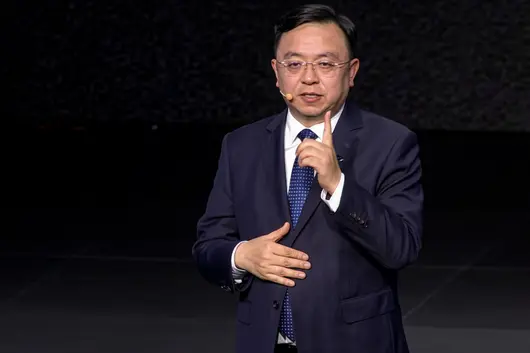

29 September, Mesyuarat Pertama Lembaga Pengarah Ke-9 BYD telah berakhir, Wang Chuanfu dilantik Pengerusi dengan undi sebulat dan terus memegang jawatan Presiden.
Inilah mandat tiga tahun yang dilancarkan oleh Wang Chuanfu. Lembaga Pengarah Kelapan yang baru tamat tempoh, tempoh perkhidmatan adalah dari September 2023 hingga September 2026. Pembaruan kali ini, 9 undi Lembaga Pengarah meluluskan personel teras secara sebulat suara, Lv Xiangyang dilantik Timbalan Pengerusi, Li Ke, He Zhiqi dan 10 orang lagi dilantik sebagai Timbalan Presiden, Zhou Yalin memegang peranan ganda sebagai Timbalan Presiden dan Pengurus Kewangan, Li Qian memegang jawatan Setiausaha Lembaga.Keseluruhan barisan eksekutif teras pada asasnya diteruskan, tiada gangguan人事 (personel) yang mendadak, ini adalah pengiktirafan pihak pemegang saham terhadap jawapan operasi mandat Kelapan.
Apabila Lembaga Pengarah Kelapan mula berkhidmat, BYD sudah berdiri di atas hasil kitaran ledakan elektrifikasi. Dalam tempoh mandat Lembaga Pengarah Ketujuh, iaitu 2021 hingga 2023, BYD telah melengkapkan bahagian paling penting daripada lonjakan saiz. Pendapatan BYD pada 2021 ialah 216.142 bilion Yuan, keuntungan bersih ibu syarikat 3.045 bilion Yuan; hingga 2022, jualan kenderaan baharu BYD melebihi Tesla, menduduki tangga pertama jualan kenderaan baharu global. Sistem integrasi menegak yang dibina oleh Bateri Blade, pencampuran DM-i, Platform e 3.0, dalam fasa ini telah melepaskan bonanza besar, menyokong pengembangan kapasiti domestik dengan pantas, jalinan jenama tahap tinggi Denza, Yangwang, Fang Cheng Bao juga secara beransur-ansur dilancarkan.
Masuk tempoh mandat Lembaga Pengarah Kelapan, selepas mengambil alih pada September 2023, syarikat terus mencapai jualan pengembangan. Pada 2024, pendapatan BYD meningkat ke 777.1 bilion Yuan, keuntungan bersih ibu syarikat 40.254 bilion Yuan, margin kasar maksimum mencapai 19.44%. Dalam masa empat tahun, pendapatan dan keuntungan mencapai peningkatan beberapa kali ganda, aliran tunai yang kuat, menyokong pengembangan kapasiti nasional dan pelan awal pelaburan ke luar negara.
Lengkung jualan, tanpa keraguan, adalah sijil prestasi yang paling cemerlang dalam tempoh mandat Kelapan. Pada 2024, jualan kenderaan baharu keseluruhan BYD mencapai 3.024 juta unit. Pada fasa itu, perniagaan luar negara masih berada dalam fasa awal pelaburan produk, pada 2024 ekspor kenderaan luar negara 0.42 juta unit, nisbah pendapatan luar negara masih tidak tinggi.
Pelaburan penyelidikan dan pembangunan, dalam tempoh mandat Kelapan terus menanjak. Pelaburan R&D pada 2024 ialah 53.195 bilion Yuan. Dana di satu pihak terus mengukuhkan bateri asas elektrifikasi seperti Bateri Blade, pencampuran DM-i, Platform e 3.0; di satu pihak lain, mula melaburkan sumber ke bidang depan seperti semikonduktor standard kereta, cip pintar memandu reka sendiri. Pusat pembinaan bakat pada awal diletakkan pada jurutera pengeluaran dan rantaian bekalan, ramai orang direkrut untuk melengkapkan kekosongan kapasiti dengan pantas, menampung pesanan letupan domestik.
Selepas tetingkat bonana ditutup, logik asas pasaran sudah bertukar sepenuhnya. Pada 2025 yang menamatkan tempoh mandat Kelapan, data laporan kewangan sudah menunjukkan perubahan kitaran. Pendapatan keseluruhan tahun 803.96 bilion Yuan, peningkatan tahun ke tahun hanya 3.46%; keuntungan bersih ibu syarikat 32.62 bilion Yuan, menurun 18.97% tahun ke tahun, margin kasar jatuh ke 17.74%. Jumlah bersih aliran tunai aktiviti operasi 59.135 bilion Yuan, menurun ketara tahun ke tahun, dana大量 (banyak) dibelanjakan pada pembinaan kilang luar negara, penyelidikan pembangunan pintar, pelaburan berterusan jenama tahap tinggi. Syukurla, rizab dana di buku cek cukup banyak, tangan masih memegang modal untuk terus menambah.
Bandingkan dengan laporan laba rugi, perubahan struktur jualan lebih patut dilihat dengan teliti. Pada 2025, jualan kenderaan baharu BYD 4.6 juta unit; ekspor luar negara 1.05 juta unit, pertama kali melepasi ambang satu juta, nisbah pendapatan luar negara meningkat ketara. Pertumbuhan pasaran domestik jelas melambat, tumpuan pertumbuhan bertukar sepenuhnya ke pengeluaran tempatan luar negara. Jenama tahap tinggi Denza, Yangwang, Fang Cheng Bao terus meningkat, perbaikan struktur jenama ke atas sedang berlaku, tetapi jenama tahap tinggi masih berada dalam fasa peningkatan pelaburan, jangka pendek sukar untuk menarik keseluruhan margin keuntungan secara besar-besaran.
Tumpuan penyelidikan dan pembangunan, juga dalam separuh kedua tempoh mandat Kelapan telah mengalami pembalikan asas. Pelaburan R&D 2025 ialah 63.4 bilion Yuan, skala tenaga kerja penyelidikan dan pembangunan mencapai 120,000 orang. Dana tidak lagi hanya fokus pada perkakasan tiga kuasa, tumpuan merambat ke semikonduktor standard kereta, cip pintar memandu Xuanji A3 reka sendiri, sistem perisian keseluruhan kenderaan, sistem cas pantas, Bateri Blade generasi kedua. Pelan luar negara tempatan dipercepatkan jatuh di lokasi, kilang Thailand, Brazil siap pengeluaran, kilang Eropah Hungary sedang dibina, model dari ekspor menjual kenderaan mudah, bertukar menjadi pengeluaran tempatan, rantaian bekalan tempatan, aset berat globalisasi laluan tempatan. Ikut serta, juga ada Cukai Karbon EU, siasatan subvensi, halangan perdagangan pelbagai negara dan risiko geopolitik.
Jalinan jenama juga menunjukkan corak pembezaan tempoh transisi tipikal. Denza stabil meningkat, kerugian berterusan mengecil; Yangwang, Fang Cheng Bao melengkapkan pelancaran produk, suara jenama dibuka, tetapi pelaburan penyelidikan dan pembangunan jenama tahap tinggi, pembinaan laluan sangat besar, jangka pendek sukar menyumbang keuntungan positif.
Bakat dan struktur tadbir urus, juga seiring dengan transisi globalisasi dan kecerdasan segerak disesuaikan. Mesyuarat Majlis Pengarah Kesembilan kali ini merevisi peraturan jawatankuasa strategi dan kelestarian, menetapkan peraturan kerja presiden, memodenkan mod pengurusan yang fleksibel dalam fasa pengembangan pantas menjadi institusi. Arah rekrutmen bakat, dari banyak penyerapan jurutera pengeluaran, beralih ke bakat pelbagai mata wang perisian, pintar memandu, kepatuhan luar negara, operasi tempatan. Persaangan pasaran bakat tahap tinggi perisian dan pintar memandu adalah sengit, pembinaan pasukan pengurusan tempatan luar negara, memerlukan kitaran yang lebih lama.
Diletakkan dalam pasaran industri utama, keadaan pasaran sudah masuk fasa persaingan stok. Pertumbuhan pasaran domestik kenderaan baharu melambat, perang harga berterusan menekan keuntungan setiap unit; dalam landasan pintar, latar perkakasan BYD kukuh, kemampuan perisian keseluruhan kenderaan, pintar tahap tinggi masih berada dalam proses pelengkap berterusan.
Seawal fasa awal transisi elektrifikasi, Wang Chuanfu sudah melepaskan sasaran jangka sederhana dan panjang yang jelas kepada orang luar: bergantung pada integrasi menegak untuk merebut kelebihan kos kenderaan baharu, dengan pantas merebut sahsahan pasaran, menyerbu pemimpin jualan kenderaan baharu global, memajukan pengeluaran kenderaan luar negara dengan stabil. Pada Mesyuarat Agung Pemegang Saham 2025, Wang Chuanfu进一步 (menambah jelas) sasaran jauh: pada 2030 menjadi nombor satu dalam saiz kereta global.
Melihat semula pelaksanaan tempoh mandat Kelapan: status pemimpin jualan kenderaan baharu global terus diperkukuh, ekspor luar negara dari tahap rendah mula, sekali lagi melepasi satu juta unit; jalinan jenama tahap tinggi telah siap dibina; ketegasan pelaburan R&D mencapai tahap melebihi jangkaan. Tetapi apabila sasaran ditetapkan pada awal, industri belum masuk persaingan stok yang mendalam, perang harga berterusan domestik, pelaburan besar-besaran landasan pintar jangka panjang, semua adalah pemboleh ubah yang tidak diprediksi dengan cukup ketika itu.
Sedangkan penurunan keuntungan bersih ibu syarikat 2025 hampir dua puluh peratus, bukannya perniagaan kereta keseluruhan tradisional runtuh. Keuntungan dibuang ke dua arah arah: satu adalah pengeluaran kilang luar negara tempatan, pelan laluan membawa kos modal besar; dua adalah chip pintar, perisian, pelaburan penyelidikan jenama tahap tinggi berterusan. Pengurusan mengambil tekanan keuntungan sebagai pelaburan yang perlu dalam tempoh transisi globalisasi dan kecerdasan, sama ada pelaburan boleh ditukar menjadi增量 (penambahan) keuntungan stabil, akan menjadi item pemerhatian utama bagi tempoh baharu Kesembilan.
Rangka kerja strategi tempoh baharu sudah jelas: dua roda pemacu domestik dan luar negara, terus meningkatkan nisbah jualan luar negara; bergantung pada Denza, Yangwang, Fang Cheng Bao untuk menaikkan harga purata setiap unit, menentang perang harga domestik; memajukan cip pintar reka sendiri, ekosistem cas pantas jatuh di lokasi, memperbesar laluan pertumbuhan kedua penyimpanan tenaga, asas untuk menyerbu nombor satu jualan kereta global pada 2030.
Terjun ke sasaran operasi jangka pendek, tumpuan sangat jelas: terus melancarkan kapasiti luar negara tempatan, memperluaskan sahsahan pasaran luar negara; melengkapkan kemampuan perisian keseluruhan kenderaan, pintar tahap tinggi; optimumkan tahap untung jenama tahap tinggi, seimbangkan kos modal dan aliran tunai. Tiga tahun akan datang, pelaburan R&D akan terus mengekalkan tahap tinggi, terus dibangkit ke platform pintar, kapasiti luar negara, teknologi bateri baharu.
Wang Chuanfu terus memegang ganda Pengerusi dan Presiden, mod keputusan yang sangat bersatu ini, dalam fasa ledakan industri lepas membuktikan kecekapan pelaksanaan yang sangat tinggi. Tetapi tempoh tiga tahun Kesembilan, bukan lagi fasa sekadar "memperbesar jumlah" kitaran bonus industri.
Beberapa kitaran majlis pengarah masa lalu, BYD dari pengeluar domestik jualan tahunan 600,000 unit kenderaan baharu, berkembang ke saiz 4.6 juta unit, syarikat kereta jualan kenderaan baharu global nombor satu. Keuntungan pasaran domestik terus tertekan, pelaburan aset berat luar negara, kitaran membakar duit penyelidikan pintar jangka panjang rasmi dibuka. Tiga tahun akan datang, BYD perlu berterusan mengesahkan: bergantung pada integrasi menegak, pelan globalisasi, pelaburan teknologi reka sendiri berterusan, stabilkan tahap keuntungan, melengkapkan kekurangan pintar, memajukan dengan stabil pelan jangka panjang saiz global 2030, terus optimumkan kualiti operasi luar jualan.
Genggam rizab tunai cukup banyak, di hadapan membentang dua pelan pelaburan jangka panjang globalisasi dan kecerdasan. Wang Chuanfu dalam kitaran baharu ini, tugasan utama adalah selepas bonanza saiz secara beransur mencapai puncak, terus mengasah kemampuan keuntungan sistem teknologi BYD, menjawab dengan lancar kitaran persaingan perdagangan dan teknologi industri kereta global yang kompleks.
Sumber: Pemerhatian Kereta


Snatching Toyota.
Writer|Hu Chengxu Editor|Mao Shiyang
Auto Pixel (ID:autopix)Original
June 9, like in previous years, BYD held its 2025 Annual Shareholders' Meeting at its headquarters in Pingshan, Shenzhen.
More people came than in previous years, so the company temporarily moved the venue from a meeting room to the hall usually used for press conferences. Wang Chuanfu said on stage that nearly 1,000 people attended today, the most in history.
During the Q&A session, a long-term shareholder with heavy stakes stood up. He wanted to know where the company would head next.
In Wang Chuanfu's answer, a word appeared for the first time: "Global No. 1". He said that in the next three to five years, BYD will continue to grow. After five years, in terms of scale, it will achieve "true Global No. 1".
Not No. 1 in New Energy, not No. 1 in China, but No. 1 in total vehicle scale including Toyota, Volkswagen, Hyundai Kia, etc.
When saying this, BYD was experiencing the biggest deceleration since the New Energy era. In the first five months of 2026, BYD sold 788,000 vehicles domestically, down 43.3% year-on-year. The Chinese market is becoming increasingly difficult to provide the incremental growth it enjoyed in the past.
So Wang Chuanfu's goal truly points to overseas.
Take a closer look at what BYD has done in the past two to three years, this goal is not strange. Its playbook no longer resembles that of a company only wanting a seat at the table overseas.
01
What BYD Wants to Grab,
is the Base of Toyota, Hyundai, et al.
To understand how far BYD is from its goal, one must first look at the gap.
Today, the global No. 1 in auto sales is Toyota, selling a bit over 10 million a year; BYD sold 4.6 million vehicles in 2025, ranking sixth globally. There is a gap of more than 5 million vehicles in between, roughly equivalent to creating another BYD of today's scale on top of its existing volume.
As for this extra 5 million-plus vehicles, what is certain is that most of it will not come from the domestic market.
In 2025, China's New Energy penetration rate reached 53.9%, approaching the ceiling; BYD's domestic sales that year fell instead of rose, down by over 300,000 vehicles compared to 2024.
Geely, Chery, and Changan are all chasing, and this local board is nearly at its peak, with limited incremental growth left to extract. The growth gap is thus pushed overseas as a whole. Outside China, the global New Energy penetration rate is still just over 11%.
But "overseas" is never a single block; its biggest chunks happen to be where BYD cannot enter. The US uses tariff and regulatory barriers to seal off the world's largest and most profitable market; Japan and South Korea are fortresses of local brands, hard for outsiders to pry open; India blocks Chinese cars out with high tariffs and entry barriers.
What remains available are South America, Southeast Asia, Central Asia, Australia, the UK, Gulf States, as well as parts of Europe and Mexico. The market set is smaller, and the share burden for each location to reach is heavier.
And these open markets are none of them empty fields.

Southeast Asia is Toyota's home court, where it holds nearly 40% share; BYD has only just squeezed into the top 3 in Thailand. Australia is even more extreme, with Toyota holding sales No. 1 for 23 consecutive years, sales at two and a half times the second place; Gulf States are the common dominion of Toyota and Hyundai Kia, where Toyota's market share is champion in countries like Saudi Arabia, UAE, and Oman.
Only in Brazil is the stock held by Stellantis, Volkswagen, Hyundai Kia, and Renault.
List the owners of these markets one by one, names will repeat constantly; the most frequent is Toyota, followed by Hyundai Kia, then Volkswagen, Stellantis, and other European automakers.
So the overseas granary BYD wants to grab is a very specific existing stock, the base built up over decades of fuel cars by Japanese and Korean automakers.
What it truly wants to replace is RAV4, Corolla, Elantra, Creta and similar economy, durable, high-volume cars sold for decades, using its own DM-i PHEV and Blade Battery EV to replace them one by one within the highest-volume price bands in each market.
Straighten out the chain, and the slogan "Global No. 1" landing on the ground is actually a simpler sentence: BYD must take the home base they've sold for decades within the Toyota and Hyundai Kia base.
This is a ruthless fight; how many opportunities does it have?
02
Wang Chuanfu Writes Growth into a Production Schedule
Faced with questions like "how to go from sixth to first", Wang Chuanfu's habit is to rewrite it as a supply-side arithmetic problem.
On June 9, what he talked about most was not the market, but production capacity. He said how many cars can be sold this year depends on how many batteries can be built; the capacity of the 2nd Gen Blade Battery is climbing month by month, adding 20,000 to 30,000 sets each month; production capacity will be released on a large scale by 2027, and both domestic and overseas markets will see volume increases.
An issue that should be about market and product was interpreted by him as "how much I can make". In his narrative, demand seems assumed sufficient, and the bottleneck lies on his production lines.
Wang Chuanfu seems to believe that if the technology curve of domestic New Energy in the past three years reenacts overseas, the remaining problems can be left to the production schedule.
This logic can explain BYD's overseas layout over the past two years.

It has at least six factories under construction or planned overseas: the Brazil Camaçari plant is a renovation of an old factory exited by Ford, secured in 2023, with the first car rolling off the line in July 2025, targeting 300,000 capacity by end of 2026; the Thailand plant started production in 2024, with an annual capacity of 150,000; the Hungary Szeged plant serves as Europe HQ; Turkey plans to invest 1 billion USD (potentially delayed); Uzbekistan and Indonesia each have points set up.
BYD's playbook's starting point is a bet on speed.
Looking back at BYD's rise domestically, it relied on technology first. In 2021, the 4th Gen DM-i made PHEV the same price as same-level fuel cars with lower fuel consumption; the Blade Battery simultaneously solved safety and cost, with PHEV annual sales jumping from 270,000 to over 2 million vehicles in two or three years.
During those years, China's New Energy market was almost empty; whoever put electric cars that were easy to use and cheap on shelves first could capture whole chunks of incremental growth.
This playbook continues to now. At this year's shareholders' meeting, Wang Chuanfu said "I spend about half my time every week swimming in the ocean of technology", believing he is "one of the 120,000 engineers inside BYD".
But now this playbook's process of converting to sales is not so smooth. Geely, Chery, Leapmotor have caught up one by one; DM-i is no longer a secret technique; not just BYD makes Flash Charge.
Technology is becoming more homogeneous, approaching the physical ceiling further; taking half a step forward brings less and less sales.
Overseas is another matter. Outside China, New Energy is still at the starting point BYD faced years ago: low penetration, few good cars, high prices, most markets still dominated by fuel cars.
The technology curve that once lifted BYD to sixth globally has barely started climbing overseas. What BYD wants to do is take the most advantageous position before this curve rises, copying the success already verified domestically exactly onto a larger plate.
This explains why the overseas game is played heavily and urgently. BYD judges the window period is limited; once overseas New Energy also ramps up, pursuers will flood in as they did domestically, and the time left for first movers might not be longer.
It is unwilling to spend time waiting for the market to mature, and even less willing to hand over initiative.
This June, foreign media claimed BYD is considering acquiring an old European factory, having looked at "many factories" in Europe and is talking with automakers including Stellantis.
BYD prefers independently operated factories; it wants to take over brownfield factories that can be quickly renovated and operated independently with clear ownership and operational boundaries, rather than getting stuck again in existing European auto JV, leasing, or multi-party interest structures.

Key factories and supply chain self-led; distribution and brand also controlled by self as much as possible, serving efficiency and speed. It would rather not have risk-sharing partners first, and have a decision chain that can drive the fastest.
The Brazil old factory renovation took only 16 months from groundbreaking to first car off the line. Export modules are the same; a 6 to 8-ship fleet brings overseas logistics into its own hands. On the channel end, BYD took an equity stake in a Thai local dealer, bound a dealer group with over 100 stores in Latin America; UK authorized stores increased from 52 to 125 in one year, and signed a 100,000 unit deal with Uber.
Following this logic, overseas moves connect into a line. The strategy Wang Chuanfu launched is a replicable template; this is why when asked about sales, he answers with "production schedule" logic.
Whether it holds ultimately rests on that most fundamental judgment: the technology-pulled market curve, how steep it was domestically in recent years, will be equally steep in many overseas markets in coming years.
As long as this judgment holds, simplifying the problem into a production schedule is the fastest solution.
03
BYD VS Geely
Same Overseas Expansion, Different Betting Methods
A easily occurring misunderstanding is summarizing BYD's overseas expansion as "more valued" than Chery or Geely.
In terms of aggressiveness, all three are actually neck and neck. In terms of overseas volume, Chery sold 1.34 million vehicles overseas in 2025, nearly 300,000 more than BYD, sitting on the Chinese passenger vehicle export champion spot for over 20 consecutive years; in terms of capital courage, Geely has bought all the way from Volvo, Lotus, Polestar to a powertrain JV with Renault.
The real difference is not in the degree of aggressiveness, but in the strategic judgment behind the aggressiveness.
Chery bets on export breadth: complete vehicle export plus semi-knocked-down assembly, spreading cars to corners others can't reach, essentially an asset-light playbook.
Geely bets on capital and alliances; Li Shufu is more like an allocator. He grabs core capabilities on one side, polishing smart and New Energy tech to optimal; on the other side, he takes shares and makes allies, seeking leverage at the factory and channel levels.

▍Li Shufu
This year, Geely's Qianli Haohan G-ASD obtained EU UN R171 certification, becoming the first Chinese ADAS system to pass this regulatory certification; equipped models can be sold in the EU without country-by-country re-certification.
At the same time, Geely integrated Gothenburg and Frankfurt R&D teams, established Geely Technology Europe, planning to compress the launch time gap between China and overseas models from over a year to within 6 months.
Also this year, Lynk & Co's Europe sales reuse Volvo resources; Geely in South Korea and South America reuses Renault resources. Gan Jiayue of Geely Automobile has said, Chinese brands going overseas is not to "conquer", but to "walk in", local JVs, reusing local resources to make win-wins, this is the natural expression of this logic.
Behind the three choices are three strategic judgments, and also three judgments on where the moat should be built.
Geely's judgment on tech replacement is not so anxious. In March this year, at the Geely Holding FY2025 performance press conference, CEO Gui Shengyue said the future economy passenger car market will likely be replaced by robotaxis. Shortly after, Geely became one of Nvidia's automotive partners.
This judgment shows Geely does not see today's New Energy competition as the final outcome. It believes there will be longer tech rearrangements after the auto industry, so it is more willing to keep elasticity using cooperation and capital allocation.
Because of this difference, Geely is not anxious to raise "No. 1", nor will it compress the time to first to five years. It is more like betting on the future rather than pressing all chips on this current New Energy replacement round. So Geely's choices overseas are almost the opposite of BYD's: willing to accept slower, more dispersed, more complex.
BYD wants to maximize scale with batteries, factories, fleets, and channels; Geely is more willing to take more positions in tech routes, regional markets, and partnership relationships.
04
The Other Side of the Production Schedule
Reaching No. 1 in scale is a goal setting, a strategic judgment, and will eventually become a structure.
In 2026, Geely, Chery, Changan, Great Wall almost all offered oil-electric hybrids, to grab Toyota THS share in markets with inconvenient charging,唯独 BYD absent.
Technically it is not incapable. This round of HEV by Chinese automakers is not replicating Toyota THS. It bypasses engines, planetary gears, and long-term calibration that old auto giants are good at, pulling the battlefield back to electric drive systems more familiar to Chinese automakers, downsizing batteries, removing external charging, keeping the PHEV low fuel logic, becoming a hybrid that doesn't need charging.
But BYD chose not to do it, turning to laying charging facilities overseas.

In March this year, BYD booked a stadium with 18,000 seats to launch the 2nd Gen Blade Battery, simultaneously launching the plan "Flash Charge China, Change the World". Wang Chuanfu spoke alone for an hour and a half; the press conference dragged from two hours to three hours; it set a year-end goal to build 20,000 flash charge stations domestically, with capital expenditure in the billions, and changed flash charge stations to integrated storage and charging solutions with built-in storage cabinets, bypassing the trouble of applying to the grid for capacity expansion, deploying on three parking spots.
From year-end, these piles will start spreading overseas; the MW-level network in Europe has already been demonstrated at the Munich Auto Show.
Building charging piles in target markets is the latest chapter in BYD's overseas line, possibly the most money-burning chapter. BYD bets that once the charging network is laid out, the transitional form matters less. Others keep hybrids; BYD chooses not to bet on multiple fields, pressing all chips on this New Energy transition round.
Put these together, it is a consistent logic: growth is punched out section by section from factories, technology, and charging piles.
BYD is almost the only domestic automaker highly controlling everything from supply chain vertical integration to overseas assets. This heavy asset model makes scale a must-do; in this dimension, sales "No. 1" is just a byproduct.
Vertical integration is only worth it when spread to world-class scale; maintaining a fleet requires enough exports to fill it; building cell capacity at that level requires enough whole vehicles to digest it; investing billions to lay 20,000 charging piles requires enough installed base to feed it.
Chery can stop at export champion; Geely can be a large enough multi-brand group; if BYD's scale is not larger than them, the efficiency of this setup cannot be guaranteed.
This gives BYD the possibility to challenge for Global No. 1, and makes it very hard to accept a "not big enough" result.

This article is original content of Auto Pixel (autopix)
Unauthorized reproduction is prohibited
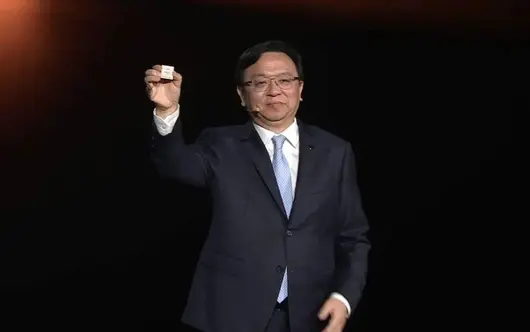

On June 9, BYD held the 2025 Annual Shareholders' Meeting. Chairman and President Wang Chuanfu's speech also coveredshort-term performance, technical R&D, intelligent driving, overseas strategy, and long-term goalsand many other aspects.

"During the first quarter of this year, new energy vehicles experienced their darkest moment."
Starting from January 2026, the purchase tax policy for new energy vehicles was halved, leading to front-loaded demand at the end of last year, causing a significant drop in the retail penetration rate of new energy passenger cars. Since BYD only produces new energy vehicles, it was inevitably affected.
"The worst is over."
With the release of the 2nd Gen Blade Battery and Flash Charging technology in March, BYD orders began to recover. Sales in May started to turn positive, and operating cash flow is expected to gradually recover to a good level by the end of the year.
"This year's sales depend on battery capacity."
The 2nd Gen Blade Battery capacity is still insufficient and is currently ramping up by an increase of 20,000 to 30,000 units per month. After our capacity ramps up next year, we believe we will focus on both the domestic and international markets.
II. Regarding Long-term Goals: Achieving Global No. 1 in Five Years"Five years later, in terms of scale, BYD will be able to become the true global No. 1."
In the next three to five years, BYD will continue to maintain sustained growth. Relying on the 2nd Gen Blade Battery, Flash Charging technology, and new technologies to be launched in the coming years, the domestic and foreign markets are expected to achieve dual-wheel drive, forming a virtuous interaction, and taking Chinese technology to the global stage.
III. Regarding Technical Philosophy and Flash Charging Openness"The automotive industry was once filled with various flashy trends, but actually, cars are transportation tools involving safety."
Less trickery, less flashiness. Return to the basics, perfect technology and products, to gain recognition from mid-to-high-end consumers.
"BYD will not 'hoard' the Flash Charging technology."
BYD Logo will not be displayed on charging piles; the Flash Charging ecosystem will serve all car brands and all consumers. Good technology should serve not only BYD but also the entire industry. The cooperation with Sinopec will greatly promote the expansion of Flash Charging technology.
IV. Regarding Intelligence and L3 Preparation"Vehicle intelligence is Embodied AI."
BYD already has 3.15 million intelligent driving vehicles deployed globally, generating over 200 million kilometers of intelligent driving related driving data daily. The scale of intelligent driving R&D engineers exceeds 5,000. Cumulative future investment will exceed 100 billion.
"L3 and L4 in the future will definitely land earlier."
BYD has already made sufficient preparations in chips (the 4nm intelligent driving chip Xuanji A3 was just released recently), algorithms, data, and ecosystems, including training centers in Europe, South America, Southeast Asia, the Middle East, etc. Once regulations come into effect, BYD will launch a full series of products meeting L3 requirements.
V. Regarding Globalization and Overseas Markets"The overseas sales target of 1.5 million vehicles set for 2026 at the beginning of the year is now expected to be surpassed."
Chinese car companies represented by BYD have already surpassed many local peers in product competitiveness, price, experience, and technology.
"Localization must be done well in overseas markets."
BYD has built a production base mainly in Brazil in South America. The Hungary factory in Europe is about to start production, and the Thailand factory in Southeast Asia has already started production. Exports should not only grow but also maintain localized services to achieve win-win and co-development with local partners.
VI. Regarding Engineer Culture and Corporate Values"BYD has 120,000 engineers; this is the company's true wealth."
The engineer culture has successors, so no need to worry. I spend half of my week participating in technical meetings and communicating with engineers. "Swimming in the ocean of technology" is what interests me most.
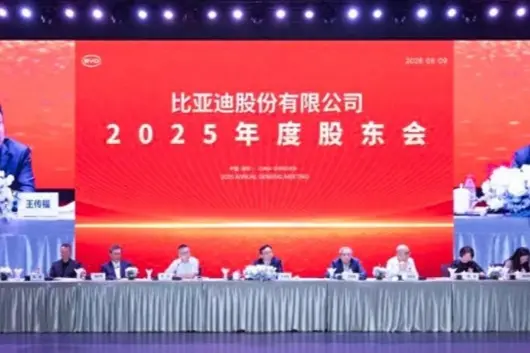

" Five years from now, BYD will be able to achieve true global No. 1 in scale. By 2030, we will achieve greater growth. " June 9, BYD Chairman and President Wang Chuanfu stated at the BYD 2025 Annual Shareholder Meeting.
It is reported that this was the largest shareholder meeting in BYD's history, with nearly 1,000 attendees, half of whom are also BYD car owners. Wang Chuanfu, accompanied by the senior management team, engaged in in-depth exchanges with shareholders, directly addressing core issues such as industry competition, sales bottlenecks, overseas expansion, and technical roadmaps.

Regarding the sales issue of widespread concern among investors, Wang Chuanfu stated, This year's sales depend on battery production, as the new generation of Blade Batteries are currently in the production ramp-up phase, as battery production increases, subsequent sales will gradually rise. Next year, battery production is expected to increase significantly, driving the company's sales to a new level.
In March of this year, BYD officially released the second-generation Blade Battery and Flash Charge technology, effectively solving the core pain point of slow charging in the new energy vehicle industry. After the technology was launched, it received high recognition from domestic and foreign markets, and market order volume increased significantly.
Currently, second-generation Blade Battery capacity has a gap and is in a month-by-month ramp-up phase, Monthly capacity increase can reach 20,000 to 30,000 units. Due to the significant increase in power supply of the new generation of Blade Batteries, production line settings and battery internal structures require modification and upgrades, so capacity ramp-up takes some time. BYD is concentrating its efforts to tackle these challenges, fully exploring the production potential of the second-generation Blade Battery.
Wang Chuanfu revealed that battery production is expected to increase significantly in 2027, at which time the company will simultaneously focus on domestic and foreign markets, layout charging networks globally, drive the company's new energy vehicle sales to a new level, and also assist in the coordinated development of technology and the industrial chain.
According to the sales report on June 1, BYD's cumulative sales for the first 5 months of this year were 1.405 million vehicles, a year-on-year decrease of 20.3%. Wang Chuanfu pointed out that the purchase tax for new energy vehicles was halved this year, leading many consumers to advance their consumption last year. Therefore, new energy vehicle consumption in January and February dropped sharply, and since BYD only makes new energy vehicles, the impact was huge. However, after efforts in March and April, and coinciding with rising oil prices, sales recovered.
As Wang Chuanfu said, The worst moment has passed. From the sales in May this year, BYD has already ushered in an upward momentum. In May, BYD sold 383,500 vehicles, a slight increase of 0.26% year-on-year, turning positive after 10 months, with a nearly 20% surge month-on-month.
Wang Chuanfu stated at the meeting, currently BYD has deep technical reserves and a clear strategic path, including the second-generation Blade Battery, Flash Charge technology, and more disruptive technologies to be launched next year and the year after, the company will maintain continuous growth in the next three to five years.
Regarding the choice of technology path, Wang Chuanfu stated, BYD will not claim Flash Charge technology as its own exclusive property, the Charging Station will not display BYD's Logo, and the Flash Charge ecosystem will serve all automotive brands and consumers. "A good technology, besides serving BYD, must serve the entire industry more. To win the market and everyone's reputation, one must have this perspective."
He particularly emphasized, with the formation of the "dual-wheel drive" pattern of domestic and overseas markets, Chinese new energy vehicle technology will use this opportunity to truly move to the center stage of the global arena.
Since the beginning of this year, BYD's overseas market development has been strong. Wang Chuanfu revealed, along with the improvement of the company's technology and product power, and the continued release of production at overseas bases, BYD's overseas sales in 2026 are expected to surpass the original 1.5 million unit target.
In May, BYD's overseas sales reached 89,000 units, a year-on-year increase of 133.6%, creating a historical high. Overseas bases in Brazil, Hungary, Thailand, etc., are continuously releasing production, BYD's globalization layout has entered the harvest period.
"Chinese new energy vehicles have comprehensively surpassed local peers in terms of price, technology, product experience, etc." Wang Chuanfu said, but he emphasized at the same time, going overseas cannot be rushed, competitors cannot be made too tense. "We must adhere to long-termism, do a good job in local production and service, and achieve win-win development with locals." This is BYD's globalization philosophy — not to conquer the market, but to integrate into the market, becoming a local corporate citizen.
Wang Chuanfu provided a clear long-term goal: Five years from now, BYD will be able to achieve true global No. 1 in scale. By 2030, we will achieve greater growth.
In the past two years, BYD ranked 5th in the global car sales leaderboard with sales of 4.27 million and 4.6 million vehicles, while Toyota Motor has exceeded 10 million vehicles in sales for 5 consecutive years, retaining the No. 1 spot on the global sales leaderboard. This means BYD's annual sales within 5 years must also break the 10 million mark.

In past years, BYD successively announced factory construction plans in countries such as Hungary, Turkey, Uzbekistan, Brazil, Thailand, Cambodia, Malaysia, etc. As of now, BYD's complete vehicle factories located in Thailand, Uzbekistan, and Brazil have been completed and put into production. BYD Executive Vice President Li Ke stated in an interview with Bloomberg recently, BYD is in touch with European automakers such as Stellantis, seeking to take over underutilized factories locally to utilize idle capacity.
Intelligence is another important growth pole for BYD. At the shareholder meeting, multiple shareholders asked about the outlook for BYD's intelligent driving layout, Wang Chuanfu again reiterated the concept of "Vehicle Intelligence is Embodied Intelligence", the current development speed of AI technology exceeds industry expectations, BYD will actively promote the implementation and application of AI technology in the automotive field.
On the evening of May 28, BYD released its self-developed 4nm process intelligent driving chip Xuanji A3. It is introduced that the chip has started mass production, supporting L3 and L4 autonomous driving.

Wang Chuanfu introduced, currently, BYD's intelligent driving R&D engineer scale exceeds 5,000 people, 3.15 million BYD vehicles equipped with intelligent driving have been put into use globally, generating 200 million kilometers of driving data daily, massive data accumulation lays a solid foundation for BYD's advanced intelligent driving iteration and upgrade.
Based on this massive data foundation, Wang Chuanfu judges that the arrival of L3 and L4 level advanced autonomous driving will be earlier than expected. He stated, BYD has made full preparations in the layout of chips, algorithms, data and other full-chain ecosystems, Intelligent driving training centers in Europe, South America, Southeast Asia, Middle East, etc., are also ready. Once L3 and L4 level intelligent driving related regulations land, BYD will quickly launch compatible products, and gradually push from the Chinese market to the global market.
Wang Chuanfu also discussed, Premiumization has always been the goal pursued by BYD. He said: "The automotive industry used to be flooded with all kinds of flashy traffic, but in fact cars are traffic tools involving safety, they are products. Fewer gimmicks, less flashy, return to the source, do a good job with technology and products, to gain the recognition of mid-to-high-end consumers. After the volume of premium models increases, company gross margin issues and single vehicle profit issues will also be solved easily. Currently, BYD has already established a high-end brand image overseas."
Some investors stated that BYD's current stock price is undervalued, and asked about the company's market value management measures, Wang Chuanfu stated regarding this: "We all recognize our potential, but now our stock price has not reflected it yet. On behalf of the management, I understand and thank everyone for their support." "Many shareholders have put forward very good suggestions for the company's market value management, hoping through our follow-up management, let the company's stock price, products, and performance be able to better return shareholders."
Wang Chuanfu said, believe that performance will get better and better, hoping shareholders keep patience. The company will continue to use technological innovation to drive further future growth, grasp every node, scientific forward-looking layout, to achieve better and faster development for the company, "will definitely achieve better returns for shareholders".
© 2024 Bitauto.com. All Rights Reserved.
Bitauto (www.yiche.com and www.bitauto.com) is one of the most visited automotive websites in China. We provide detailed info on Chinese car brands available in your area. Please note that the information provided on this website is based on publicly available data and is for reference only. It may not be fully updated or accurate at all times.

Help us improve our website


