

Homeenthusiast

Search History
Popular Searches
Dealer Login / Sign Up

In Malaysia's SUV market, many buyers compare Honda CR-V and Mercedes-Benz GLA when choosing a car. These two cars are quite close in price and positioning. Today we make a detailed comparison from multiple aspects to save you time doing research.
Honda CR-V OTR price in Malaysia is RM 178,200 - 195,900, with a total of 4 variants, including 2026 e:HEV 2.0L 2WD RS (RM 195,900), 2026 1.5T 4WD V (RM 181,900), 2026 e:HEV 2.0L 2WD E (RM 178,200), etc.
Mercedes-Benz GLA OTR price in Malaysia is RM 258,888 - 295,888, with a total of 1 variant, including Standard (RM 258,888), etc.
In terms of price, Honda CR-V's starting price is indeed RM 80,688 cheaper than Mercedes-Benz GLA. If your budget is limited, Honda's entry-level version can already meet daily needs. But also note, the difference of a few thousand might involve compromises on features, it depends on your specific requirements.

Honda CR-V safety rating is 5★ (ASEAN NCAP), active safety systems include Honda SENSING (ACC, CMBS, LKAS, RDM).
Mercedes-Benz GLA safety rating is 5★ (Euro NCAP), active safety systems include Premium ADAS.
Regarding safety features, both cars received good ratings. However, Honda CR-V's Honda SENSING (ACC, CMBS, LKAS, RDM) and Mercedes-Benz GLA's Premium ADAS have some differences in functionality. If you prioritize active safety, you can compare their feature lists in detail.

Honda CR-V uses FWD drivetrain.
Mercedes-Benz GLA uses FWD drivetrain.
Both cars have the same drivetrain, FWD, so daily driving experience will not differ much.

Honda CR-V warranty 5 years/unlimited mileage, service interval every 10,000km or 6 months.
Mercedes-Benz GLA warranty 3 years/100,000km, service interval every 10,000km or 6 months.

Overall, Honda CR-V and Mercedes-Benz GLA are both very good models in the Malaysian market. Choosing which one depends on your personal needs and budget. It is recommended to do your research, compare quotes from several dealerships, and then test drive to make the final decision. Buying a car is a major matter, spending time on research will never be wrong.



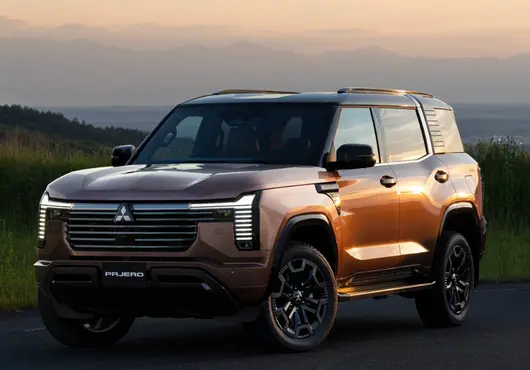
2 September, Tokyo, Mitsubishi Motors melancarkan secara rasmi Pajero Generasi Kelima.
Selepas tujuh tahun, 'Kucing Gunung' kembali ke gunung.
Perubahan penting pada kenderaan ini adalah: Rangka telah dipasang semula.
Kereta berbadan terpadu yang digunakan selama lebih daripada 20 tahun oleh Pajero Generasi Ketiga dan Keempat telah ditinggalkan. Kenderaan baharu dibina atas platform trak pickup Triton, menggunakan semula struktur badan tanpa kerangka terpadu rangka tangga, lengan A ganda di hadapan, pelurus lima belakang dengan gandar penuh dan spring heliks.
Ini adalah kali pertama sejak model Generasi Ketiga pada tahun 1999, reka bentuk chassi dengan rangka dikembalikan kepada Pajero.
Namun, kenderaan ini hanya menyediakan enjin diesel 2.4T: tiada hibrid, tiada elektrik tulen, dan tiada versi petrol. Dalam pasaran off-road tegar yang ditakrif semula oleh tenaga baharu, kembalinya Pajero adalah pilihan tentang 'apa yang perlu dipertahankan, apa yang perlu ditinggalkan'.
Pulangnya Chassi
Sejarah chassi Pajero adalah sejarah 'tarikan antara off-road tegar dan keselesaan'.
Pajero Generasi Pertama muncul pada awal 1982, menggunakan badan tanpa kerangka terpadu, ia adalah kenderaan off-road tegar tulen.
Pada tahun 1999, Pajero Generasi Ketiga membuat keputusan yang sangat berani pada masa itu: meninggalkan rangka berasingan, beralih ke struktur badan terpadu yang sama dengan kereta sedan, suspensi belakang juga bertukar daripada gandar penuh kepada suspensi bebas multi-link.

Mitsubishi merekakan penguat yang lebih kukuh untuk chassi, dipanggil 'Rangka Terbenam', dan mendakwa kekakuan badan tiga kali ganda berbanding generasi sebelum ini, serta mengurangkan berat 100 kilogram.
Alasan Mitsubishi pada masa itu sangat masuk akal: ramai pemilik Pajero menggunakannya untuk perjalanan bandar, meningkatkan keselesaan jalan raya adalah jalan yang betul. Pajero Generasi Ketiga benar-benar mengalami lompatan kualitatif dalam pengendalian di permukaan berturap, prestasi pusingan bahkan melebihi Toyota Prado LC90 pada generasi yang sama.
Tetapi para pemain off-road veteran tidak setuju. Tanpa rangka berasingan, menurut mereka ia tidak dikira sebagai off-road tegar yang sebenar. Manakala pengguna jalan raya? Mereka merasakan Pajero tidak cukup mewah, tidak cukup selesa, lalu beralih membeli Prado.
Pajero Generasi Ketiga dan Keempat terperangkap dalam situasi yang memalukan, tidak disukai oleh kedua-dua pihak. Walaupun Pajero pernah memenangi kejuaraan selama tujuh tahun berturut-turut dalam perlumbaan Dakar, kegemilangan di arena perlumbaan tidak dapat menutupi kesedihan di pasaran. Pada tahun 2019, pengeluaran Pajero dihentikan di negara asalnya, Jepun.

Pilihan Pajero Generasi Kelima sangat tegas: kembali ke badan tanpa kerangka terpadu. Dimensi badan 4920x1925x1910 milimeter, wheelbase 2870 milimeter, kelajuan tanah minimum 230 milimeter, sudut pendekatan 30.4 darjah, sudut tolakan 25.8 darjah. Angka-angka ini dalam pasaran off-road tegar, termasuk dalam spesifikasi SUV off-road sederhana-besar yang standard.
Maksud Mitsubishi sangat jelas: tidak lagi mengejar keselesaan jalan raya, off-road tegar adalah tempat yang sepatutnya bagi Pajero. Tetapi satu masalah penting dihadapi: Dapatkah ia kembali?
Inti Kawalan Empat Roda
Super Select 4WD adalah aset teknologi teras Pajero.
Pajero Generasi Kelima dilengkapi dengan Super Select 4WD Generasi Kedua (Super Select 4WD-II), menyediakan empat mod penyenaraian: 2H, 4H, 4HLC, 4LLC.
Keunikan sistem ini ialah: sebenarnya ia adalah sistem empat roda sepanjang masa, tetapi boleh dialihkan secara berasingan kepada mod 2H dua roda seperti empat roda berselang-seli untuk meningkatkan ekonomi.
Lebih penting lagi, sistem ini boleh bertukar antara mod 2H dan 4H secara bebas sehingga kelajuan 100 km/j, bahkan semasa laluan lurus seragam boleh membuka atau menutup kunci pembeza tengah secara langsung.

Dalam mod 4H, tork roda hadapan dan belakang boleh dilaraskan secara automatik antara 33:67 hingga 50:50, hampir setara dengan empat roda sepanjang masa. Sistem ini mempunyai keupayaan melepaskan kenderaan daripada kesukaran off-road tegar, serta kegunaan jalan raya empat roda sepanjang masa.
Ini adalah kelebihan teras yang membezakan Pajero daripada Prado dan Wrangler.
Pajero Generasi Kelima mengintegrasikan sistem kawalan semua roda super S-AWC berdasarkan Super Select 4WD-II, menyediakan 7 mod memandu: Biasa, Jimat, Kerikil, Salji, Lumpur, Pasir, Batu, serta mod kunci.
Tuas pemindahan kotak kuasa asal telah diganti dengan kawalan butang pusing, pengoperasian lebih mudah.

Sistem kuasa adalah titik kontroversi utama kenderaan ini. Memuatkan enjin diesel turbo suntikan langsung rel bersama empat silinder selari 2.4 liter yang dikembangkan khas untuk Pajero, kuasa maksimum 150 kilowatt, tork puncak 480 Nm, dipadankan dengan transmisi automatik 8 kelajuan yang baru dibangunkan.
Komponen kuasa ini telah digunakan selama bertahun-tahun pada trak pickup Triton, kebolehpercayaannya telah disahkan oleh pasaran. Ciri enjin diesel tork tinggi pada kelajuan rendah, tepat sesuai dengan keperluan melepaskan kenderaan off-road.
Tetapi zaman memang telah berubah. Toyota Prado model 2026 dilengkapi dengan komponen hibrid petrol-elektrik 2.4T untuk keseluruhan siri, kuasa gabungan sistem 243 kilowatt, tork puncak 630 Nm, penggunaan bahan api gabungan WLTC 10.11 liter/100 kilometer.
Sistem hibrid Prado sambil mengekalkan output yang kuat, telah meningkatkan kecekapan bahan api dengan ketara. Manakala tork 480 Nm Pajero dikira tahap sederhana-tinggi dalam enjin diesel, tetapi berhadapan dengan 630 Nm versi hibrid Prado, perbezaannya tidak sedikit. Mitsubishi menumpukan fokus pada diesel, risikonya sangat tinggi.
Penindasan Pasaran
Dari segi dalaman, Pajero Generasi Kelima telah berkembang. Layar gabungan terdiri daripada dua skrin besar 14.3 inci, papan pemuka digital boleh memaparkan maklumat keadaan off-road seperti sudut gelung, sudut kemiringan, sudut tayar secara masa nyata.
Sistem audio 12 pembesar suara yang dibangunkan bersama Yamaha, telah disetel sendiri oleh master audio Yamaha. Panel instrumen mereplikakan reka bentuk instrumen tiga bulat klasik model asal, dipaparkan dalam bentuk digital sepenuhnya.
Ramai butang fizikal dikekalkan, pengoperasian di jalan bergelora lebih tepat. Tetapi sistem infotainment kereta hanya menyokong fungsi sambungan telefon asas, aplikasi tempatan kabin pintar, kelancaran pengesanan suara, keupayaan kemas kini OTA belum diumumkan.

Walau bagaimanapun, Pajero memasuki pasaran off-road tegar yang ditakrif semula oleh syarikat China.
Pada tahun 2026, struktur pasaran off-road tegar global telah berubah. Di pasaran China, harga permulaan Tank 500 Hi4-T ialah 335,000 Yuan, memuatkan sistem hibrid disambung 2.0T, dilengkapi dengan tiga kunci dan empat roda pintar.
Model utama Fang Cheng Bao Leopard 5 dalam lingkungan 250,000 hingga 300,000 Yuan, memuatkan sistem hibrid disambung, dengan pantas menguasai pasaran menggunakan teknologi chassis Yunian BYD, jualan terkumpul separuh pertama 2026 melebihi 120,000 unit.
Selain itu, ada banyak lagi kereta off-road tegar China seperti Tank 400 Energy, Tank 700 Energy, Deep Blue G318 yang sedang memasuki trek ini.

Penetapan harga Pajero di pasaran Australia telah diumumkan: Versi 5 tempat duduk GLS 68,490 Dolar Australia (setara kira-kira 330,000 Yuan), versi 7 tempat duduk 69,990 Dolar Australia, Versi Exceed 79,990 Dolar Australia, versi GSR tinggi 84,990 Dolar Australia.
Penetapan harga keseluruhan sedikit lebih rendah daripada Toyota Prado sekelas. Di pasaran Australia, harga permulaan Prado ialah 73,200 Dolar Australia, Pajero lebih murah hampir 5,000 Dolar Australia daripadanya. Sebelum harga diumumkan, lebih daripada 3,000 pembeli Australia telah menyatakan minat awal terhadap kenderaan ini.
Tetapi di pasaran China, Pajero import tulen sukar bersaing dari segi harga dengan Tank dan Fang Cheng Bao buatan tempatan. Penerimaan kuasa diesel di pasaran China adalah isu nyata.
Kereta diesel sukar diisi minyak, bising, getaran besar, ini adalah persepsi umum pengguna. Di pasaran Eropah, banyak negara telah melaksanakan had masuk bandar untuk kereta diesel, Pajero hampir tidak berpeluang ke Eropah.
Jalan diesel Mitsubishi, utamanya ditujukan ke pasaran Timur Tengah, Asia Tenggara, Australia, Amerika Tengah dan Selatan di mana kereta diesel masih menjadi arus perdana.

Pada masa ini, tiada maklumat rasmi mengenai pelantikan Pajero Generasi Kelima ke pasaran China. Memandangkan Mitsubishi telah hampir keluar daripada perniagaan kenderaan penumpang di pasaran China, kemungkinan Pajero kembali ke China adalah rendah. Ini juga bermakna, pertempuran sebenar kenderaan ini dengan pasaran off-road tegar China tidak akan berlaku dalam jangka masa pendek.
Pajero Generasi Kelima dirancang untuk dijual di kira-kira 100 negara dan wilayah di seluruh dunia, sasaran penjualan dan pengeluaran global untuk kewangan 2026 ialah 10,000 unit. Pengeluaran dijalankan di kilang Laem Chabang, Thailand.
Angka ini sendiri menjelaskan kedudukan Mitsubishi untuk kenderaan ini: Pajero bukan model laris, tetapi merupakan bendera jenama dan tanda strategi.
Presiden Mitsubishi Motors Kishio Keisuke berkata dalam majlis pelancaran pertama: 'Pajero baharu menggabungkan teknik terbaik Mitsubishi Motors, dengan banyak ditaburi usaha.' Tetapi nasib sebuah jenama, tidak pernah ditentukan oleh satu kenderaan.
Jualan global Mitsubishi berterusan jatuh selepas mencapai puncak 1.24 juta unit pada kewangan 2018, menurun kepada kira-kira 797,000 unit pada kewangan 2025.
Untuk memutar keadaan, Mitsubishi dengan jelas menyatakan dalam strategi pembangunan jangka sederhana dan panjang yang dikeluarkan pada Mei 2026, akan menumpukan kepada teknologi teras empat roda dan laluan eletrifikasi dengan hibrid sebagai utama, merancang untuk mengeluarkan 13 model baharu sehingga kewangan 2031, di mana 7 model adalah produk berorientasikan off-road.
Kedudukan Pajero dalam strategi ini sangat jelas: ia adalah bendera jenama, dan juga permulaan 'Siri Pajero'. Mitsubishi merancang untuk mengembangkan Pajero daripada model tunggal ke siri: melancarkan Pajero sederhana pada 2028-2029, melancarkan Pajero kecil pada 2030.
Mitsubishi juga merancang untuk menambah pelaburan 16 bilion Baht Thailand (setara kira-kira 470 juta USD) sehingga 2030 di Thailand, menjadikan pangkalan pengeluaran setempat sebagai hab pengeluaran dan eksport untuk model eletrifikasi.
Pengendali produk Mitsubishi Kunitoshi Itaoka menyatakan dalam temuramah, versi awal hanya menyediakan enjin diesel, tetapi Mitsubishi sedang aktif membangunkan teknologi hibrid dan PHEV hibrid disambung, serentak memenuhi piawaian ketat dari segi prestasi off-road dan ketahanan.
Ini menunjukkan, diesel hanyalah langkah pertama, hibrid dan hibrid disambung adalah pilihan seterusnya yang sebenar bagi Mitsubishi.
Penutup
Kembali kepada soalan di permulaan: Mengapa Mitsubishi memilih untuk 'mengembalikan rangka' untuk bertaruh masa depan Pajero? Kerana Mitsubishi tidak mempunyai kad lain untuk dimainkan.
Dalam trek elektrik tulen dan kecerdasan, Mitsubishi tertinggal jauh daripada pesaing Amerika dan China. Sahaja bidang kumuhan yang tinggal bagi Mitsubishi, ialah teknologi empat roda dan pengalaman pembuatan kenderaan off-road. Kembalinya Pajero, adalah meletakkan kepingan terakhir pada perkara yang dia mahir.
Soal apakah kuasa diesel akan menjadi kelemahan kenderaan ini, jawapan Mitsubishi ialah: Jual dahulu kereta dengan diesel, hibrid dan hibrid disambung akan dikeluarkan kemudian.

Adakah Pajero Generasi Kelima boleh membantu Mitsubishi memutar keadaan, jawapannya bukan pada majlis pelancaran pertama di Tokyo, tetapi di padang pasir Timur Tengah, tanah terbiar Australia dan musim hujan Asia Tenggara—tempat-tempat di mana kereta diesel masih diperlukan.
In Malaysia's SUV market, many buyers compare the Honda CR-V and Subaru Outback when choosing a car. These two cars are quite close in price and positioning. Today, we will make a detailed comparison from multiple aspects to help you save time on research.
The OTR price of the Honda CR-V in Malaysia is RM 178,200 - 195,900, with a total of 4 versions, including 2026 e:HEV 2.0L 2WD RS (RM 195,900), 2026 1.5T 4WD V (RM 181,900), 2026 e:HEV 2.0L 2WD E (RM 178,200), etc.
The OTR price of the Subaru Outback in Malaysia is RM 260,000 - 280,000, with a total of 2 versions, including 2025 2.4T R-Touring EyeSight (RM 310,340), 2025 2.5L Touring EyeSight (RM 280,340), etc.
From the price perspective, the Honda CR-V's starting price is indeed RM 81,800 cheaper than the Subaru Outback. If your budget is limited, Honda's entry-level version can already meet daily needs. But also note that the difference of a few thousand may involve trade-offs in features, depending on your specific needs.
Honda CR-V body length 4500 mm, trunk 450 L.
Subaru Outback body length 4400 mm, trunk 400 L.
In terms of space, the Honda CR-V body is 100 mm longer than the Subaru Outback, making the interior seating space slightly more spacious, especially the rear legroom. If you often carry family members or need to put in a stroller, a slightly larger body is indeed more practical.
Honda CR-V uses FWD drive mode.
Subaru Outback uses FWD drive mode.
The drive mode for both cars is the same, both are FWD, so there won't be much difference in daily driving experience.
Honda CR-V and Subaru Outback are both mainstream choices in the Malaysian market, suitable for family use and daily commuting. If you value brand reputation and resale value more, consider the one with better reputation first; if you care more about cost-performance ratio and features, then choose the one with richer configurations. Ultimately, it is recommended to test drive both, and personal experience is the most important.

Overall, Honda CR-V and Subaru Outback are both very good car models in the Malaysian market. Which one to choose mainly depends on your personal needs and budget. It is recommended to do your homework, compare quotes from several dealerships, and then test drive to make a final decision. Buying a car is a big matter, spending some time on homework will never be wrong.

Di pasaran SUV Malaysia, ramai pembeli semasa memilih kereta akan membandingkan Honda CR-V dan Subaru Outback. Kedua-dua kereta ini sangat hampir dari segi harga dan posisi, hari ini kita akan melakukan perbandingan terperinci dari pelbagai aspek, membantu anda menjimatkan masa membuat kajian.
Harga OTR Honda CR-V di Malaysia ialah RM 178,200 - 195,900, terdapat 4 varian, termasuk 2026 e:HEV 2.0L 2WD RS (RM 195,900), 2026 1.5T 4WD V (RM 181,900), 2026 e:HEV 2.0L 2WD E (RM 178,200) dan lain-lain.
Harga OTR Subaru Outback di Malaysia ialah RM 260,000 - 280,000, terdapat 2 varian, termasuk 2025 2.4T R-Touring EyeSight (RM 310,340), 2025 2.5L Touring EyeSight (RM 280,340) dan lain-lain.
Dari segi harga, harga permulaan Honda CR-V memang RM 81,800 lebih murah berbanding Subaru Outback. Jika bajet anda terhad, versi permulaan Honda sudah boleh memenuh keperluan harian. Tetapi perlu diingat, perbezaan harga beberapa ribu itu mungkin ada kompromi pada kelengkapan, ia bergantung pada keperluan anda.
Panjang badan Honda CR-V 4500 mm, ruang bagasi 450 L.
Panjang badan Subaru Outback 4400 mm, ruang bagasi 400 L.
Dari segi ruang, badan Honda CR-V lebih panjang 100 mm berbanding Subaru Outback, ruang duduk di dalam kereta akan sedikit lebih luas, terutamanya ruang kaki di kerusi belakang. Jika anda kerap membawa keluarga atau perlu menyimpan kereta bayi, badan yang lebih besar memang lebih praktikal.
Honda CR-V jaminan 5 tahun / tiada had kilometer, selang penyelenggaraan setiap 10,000 km atau 6 bulan.
Subaru Outback jaminan 3 tahun / 100,000 km, selang penyelenggaraan setiap 10,000 km atau 6 bulan.
Honda CR-V dan Subaru Outback adalah pilihan utama pasaran Malaysia, sesuai untuk kegunaan keluarga dan perjalanan harian. Jika anda lebih mementingkan reputasi jenama dan harga jualan semula, pertimbangkan yang mempunyai reputasi lebih baik; jika anda lebih mengambil berat tentang nilai dan kelengkapan, pilih yang lebih lengkap. Akhir sekali, disyorkan kedua-dua model dicuba diuji, pengalaman sendiri adalah yang paling penting.
Secara keseluruhannya, Honda CR-V dan Subaru Outback adalah model kereta yang sangat baik di pasaran Malaysia. Memilih yang mana satu, utamanya bergantung pada keperluan dan bajet peribadi anda. Kami cadangkan anda buat kajian, bandingkan beberapa harga dari dealer kereta berbeza, baru buat ujian pemanduan untuk membuat keputusan akhir. Membeli kereta adalah perkara penting, meluangkan masa membuat kajian tidak akan salah.

Di pasaran SUV di Malaysia, ramai pembeli membandingkan Honda CR-V dan Kia Sportage semasa memilih kereta. Kedua-dua model ini agak hampir dari segi harga dan penempatan. Hari ini kita akan membandingkan secara terperinci dari pelbagai aspek untuk membantu anda menjimatkan masa membuat kajian.
Harga OTR Honda CR-V di Malaysia adalah RM 178,200 - 195,900, terdapat sebanyak 4 versi, termasuk 2026 e:HEV 2.0L 2WD RS (RM 195,900), 2026 1.5T 4WD V (RM 181,900), 2026 e:HEV 2.0L 2WD E (RM 178,200) dan lain-lain.
Harga OTR Kia Sportage di Malaysia adalah RM 129,639 - 179,320, terdapat sebanyak 4 versi, termasuk 2025 1.6T DCT 4WD High (RM 179,320), 2025 1.6T DCT 2WD High (RM 159,320), 2025 2.0L AT 2WD High (RM 139,639) dan lain-lain.
Dari segi harga, harga permulaan Kia Sportage lebih murah RM 48,561 berbanding Honda CR-V. Jujur berkata, dalam julat harga ini, perbezaan beberapa ribu sebenarnya tidak besar, yang penting adalah melihat kos faedah keseluruhan dan kos penggunaan jangka panjang.
Honda CR-V dilengkapi enjin 2.0L 4-cyl, kuasa 170 hp. Penggunaan minyak rasmi 8.0 L/100km.
Kia Sportage dilengkapi enjin 1.5L Turbo, kuasa 140 hp. Penggunaan minyak rasmi 7.0 L/100km.
Dari segi kuasa, 2.0L 4-cyl Honda CR-V mempunyai 30 hp lebih berbanding 1.5L Turbo Kia Sportage, akselerasi di tengah lebih yakin, terutamanya ketika memotong di lebuh raya. Namun, penggunaan minyak Kia Sportage mungkin lebih jimat, perbezaan untuk perjalanan harian di bandar tidak akan terlalu besar.
Honda CR-V jaminan 5 tahun/jarak tanpa had, selang penyelenggaraan setiap 10,000km atau 6 bulan.
Kia Sportage jaminan 5 tahun/300,000km, selang penyelenggaraan setiap 10,000km atau 6 bulan.
Honda CR-V dan Kia Sportage kedua-duanya adalah pilihan utama pasaran Malaysia, sesuai untuk penggunaan keluarga, perjalanan harian. Jika anda lebih mementingkan reputasi jenama dan harga kereta terpakai, boleh prioritaskan yang mempunyai reputasi lebih baik; jika anda lebih mengambil berat tentang kos faedah dan kelengkapan, maka pilih yang mempunyai konfigurasi lebih kaya. Akhir sekali, disarankan untuk kedua-dua model dicuba, pengalaman langsung adalah yang paling penting.

Secara keseluruhannya, Honda CR-V dan Kia Sportage kedua-duanya adalah model yang sangat bagus di pasaran Malaysia. Memilih mana satu, kunci utamanya masih perlu melihat keperluan peribadi dan bajet anda. Disarankan anda membuat kajian terlebih dahulu, bandingkan lebih banyak penawaran dari kedai kereta, kemudian buat ujian memandu untuk membuat keputusan akhir. Membeli kereta adalah perkara besar, meluangkan masa untuk membuat kajian tidak akan salah.

喺馬來西亞嘅 SUV 市場,好多買家喺揀車嗰陣都會拿 Honda CR-V 同 Kia Sportage 嚟做比較。這兩款車喺價位同定位上都好接近,今日我哋就從多個方面做一個詳細嘅比較,幫你省做功課嘅時間。
Honda CR-V 喺馬來西亞嘅 OTR 售價係 RM 178,200 - 195,900,一共有 4 個版本,包括 2026 e:HEV 2.0L 2WD RS(RM 195,900)、2026 1.5T 4WD V(RM 181,900)、2026 e:HEV 2.0L 2WD E(RM 178,200)等。
Kia Sportage 喺馬來西亞嘅 OTR 售價係 RM 129,639 - 179,320,一共有 4 個版本,包括 2025 1.6T DCT 4WD High(RM 179,320)、2025 1.6T DCT 2WD High(RM 159,320)、2025 2.0L AT 2WD High(RM 139,639)等。
由價錢嚟睇,Kia Sportage 嘅起步價比 Honda CR-V 平咗 RM 48,561。講真,喺呢個價位段,幾千蚊嘅差距其實唔算大,關鍵仲係睇整體嘅性價比同長遠使用成本。
Honda CR-V 嘅安全評級係 5★ (ASEAN NCAP),主動安全系統包括 Honda SENSING (ACC, CMBS, LKAS, RDM)。
Kia Sportage 嘅安全評級係 5★ (ASEAN NCAP),主動安全系統包括 Drive Wise。
兩款車嘅安全評級一樣,喺呢個級別裡面安全配備都算好齊全。而家嘅新車安全性都唔差,唔使太擔心呢一點。
Honda CR-V 採用 FWD 驅動方式。
Kia Sportage 採用 FWD 驅動方式。
兩款車嘅驅動方式一樣,都係 FWD,日常駕駛感受唔會有太大分別。
Honda CR-V 保修 5 年/無限制里程,保養間隔 每 10,000km 或 6 個月。
Kia Sportage 保修 5 年/300,000km,保養間隔 每 10,000km 或 6 個月。
Honda CR-V 同 Kia Sportage 都係馬來西亞市場嘅主流選擇,適合家庭使用、日常通勤。如果你更睇重品牌口碑同二手價,可以優先考慮口碑更好嗰款;如果你更在意性價比同配備,那就揀配置更豐富嗰款。最終都係建議兩款都去試駕,親身體驗先係最重要嘅。

總嘅嚟講,Honda CR-V 同 Kia Sportage 都係馬來西亞市場好唔錯嘅車型。揀邊一輛,關鍵都係要睇你嘅個人需求同預算。建議大家做好功課,多比較幾間車行嘅報價,再去試駕做最終決定。買車係件大事,花啲時間做功課絕對唔會錯。

Di pasaran SUV Malaysia, ramai pembeli ketika memilih kereta sering membandingkan Honda CR-V dengan Mitsubishi Xforce. Kedua-dua kenderaan ini mempunyai kedudukan dan harga yang hampir sama, hari ini kita akan buat perbandingan terperinci dari pelbagai aspek, untuk membantu anda menjimatkan masa membuat kajian.
Harga OTR Honda CR-V di Malaysia adalah RM 178,200 - 195,900, terdapat keseluruhan 4 varian, iaitu 2026 e:HEV 2.0L 2WD RS (RM 195,900), 2026 1.5T 4WD V (RM 181,900), 2026 e:HEV 2.0L 2WD E (RM 178,200) dan lain-lain.
Harga OTR Mitsubishi Xforce di Malaysia adalah RM 109,930 - 119,930, terdapat keseluruhan 2 varian, iaitu 2026 1.5L Ultimate (RM 119,930), 2026 1.5L Urban (RM 109,930) dan lain-lain.
Dari segi harga, harga permulaan Mitsubishi Xforce lebih murah RM 68,270 berbanding Honda CR-V. Sejujurnya, pada julat harga ini, perbezaan beberapa ribu sebenarnya tidak signifikan, yang penting adalah melihat keseluruhan nilai harga dan prestasi serta kos penggunaan jangka panjang.
Honda CR-V menggunakan sistem pemacu FWD.
Mitsubishi Xforce menggunakan sistem pemacu FWD.
Sistem pemacu kedua-dua kenderaan adalah sama, iaitu FWD, pengalaman memandu harian tidak akan berbeza banyak.
Honda CR-V jaminan 5 tahun/tanpa had jarak, selang penyelenggaraan setiap 10,000 km atau 6 bulan.
Mitsubishi Xforce jaminan 3 tahun/100,000 km, selang penyelenggaraan setiap 10,000 km atau 6 bulan.
Honda CR-V dan Mitsubishi Xforce kedua-duanya adalah pilihan utama di pasaran Malaysia, sesuai untuk kegunaan keluarga dan perjalanan harian. Jika anda lebih mengutamakan reputasi jenama dan harga jualan semula, anda boleh prioriti model dengan reputasi yang lebih baik; jika anda lebih mementingkan nilai harga dan prestasi serta kelengkapan, maka pilih model dengan kelengkapan yang lebih lengkap. Pada akhirnya, disarankan untuk mencuba kedua-dua model ini, pengalaman peribadi adalah yang paling penting.

Secara keseluruhan, Honda CR-V dan Mitsubishi Xforce adalah model yang sangat bagus di pasaran Malaysia. Memilih mana satu, yang utama bergantung pada keperluan dan bajet peribadi anda. Disarankan lakukan kajian, bandingkan harga daripada beberapa dealer kereta, kemudian buat ujian pemanduan buat keputusan akhir. Membeli kereta adalah perkara besar, meluangkan masa untuk membuat kajian tidak akan salah.

Dalam pasaran SUV di Malaysia, ramai pembeli akan membandingkan Honda CR-V dan GWM Haval H6 ketika memilih kereta. Kedua-dua kereta ini berada pada harga dan posisi yang agak dekat, Hari ini kita akan membuat perbandingan terperinci dari pelbagai aspek, membantu anda menjimatkan masa membuat kajian.
Harga OTR Honda CR-V di Malaysia ialah RM 178,200 - 195,900, terdapat 4 varian, termasuk 2026 e:HEV 2.0L 2WD RS (RM 195,900), 2026 1.5T 4WD V (RM 181,900), 2026 e:HEV 2.0L 2WD E (RM 178,200) dan lain-lain.
Harga OTR GWM Haval H6 di Malaysia ialah RM 139,750 - 139,750, terdapat 2 varian, termasuk 1.5L Turbo Standard (RM 140,000), 1.5L Turbo Premium (RM 155,000) dan lain-lain.
Dari segi harga, harga permulaan GWM Haval H6 lebih murah RM 38,450 berbanding Honda CR-V. Jujur kata, dalam julat harga ini, perbezaan ribuan ringgit sebenarnya tidak besar, yang penting ialah membandingkan nisbah harga-kualiti keseluruhan dan kos penggunaan jangka panjang.
Honda CR-V dilengkapi dengan 2.0L 4-cyl, kuasa 170 hp. Penggunaan minyak rasmi 8.0 L/100km.
GWM Haval H6 dilengkapi dengan Hybrid, kuasa 170 hp. Penggunaan minyak rasmi 4.5 L/100km.
Dari segi kuasa, GWM Haval H6 yang Hybrid mempunyai 0 hp lebih berbanding Honda CR-V yang 2.0L 4-cyl. Namun untuk penggunaan harian di bandar, kuasa kedua-duanya mencukupi, tiada rasa kurang kuasa.
Peringkat keselamatan Honda CR-V ialah 5★ (ASEAN NCAP), sistem keselamatan aktif termasuk Honda SENSING (ACC, CMBS, LKAS, RDM).
Peringkat keselamatan GWM Haval H6 ialah TBD, sistem keselamatan aktif termasuk Asas.
Dari segi peralatan keselamatan, kedua-duanya mendapat penilaian yang baik. Namun Honda SENSING (ACC, CMBS, LKAS, RDM) Honda CR-V dan Asas GWM Haval H6 mempunyai sedikit perbezaan dari segi fungsi, jika anda mengutamakan keselamatan aktif, anda boleh membandingkan senarai fungsi kedua-duanya dengan teliti.
Honda CR-V panjang badan 4500 mm, batang 450 L.
GWM Haval H6 panjang badan 4400 mm, batang 400 L.
Dari segi ruang, badan Honda CR-V lebih panjang daripada GWM Haval H6 sebanyak 100 mm, ruang dalam untuk penumpang adalah lebih lapang sedikit, terutamanya ruang kaki di barisan belakang. Jika anda sering membawa keluarga atau perlu meletakkan kereta bayi, badan yang lebih besar memang lebih praktikal.
Honda CR-V jaminan 5 tahun/tiada had jarak, selang penyelenggaraan setiap 10,000km atau 6 bulan.
GWM Haval H6 jaminan 7 tahun/150,000km, selang penyelenggaraan setiap 10,000km atau 6 bulan.
Secara keseluruhannya, Honda CR-V dan GWM Haval H6 adalah model kereta yang sangat bagus di pasaran Malaysia. Memilih mana satu, faktor utamanya masih bergantung pada keperluan dan bajet peribadi anda. Kami syorkan anda melakukan kajian terlebih dahulu, bandingkan tawaran daripada beberapa pengedar kereta, kemudian buat uji memandu untuk membuat keputusan akhir. Membeli kereta adalah perkara besar, meluangkan masa untuk kajian tidak akan salah.

喺馬來西亞嘅 SUV 市場,好多買家在選車嘅時候都會拿 Honda CR-V 同 Mitsubishi Xforce 做比較。兩款車喺價格同定位上都幾接近,今日我哋就從多個方面做個詳細比較,幫手你省返做功課嘅時間。
Honda CR-V 喺馬來西亞嘅 OTR 售價係 RM 178,200 - 195,900,一共 4 個版本,包括 2026 e:HEV 2.0L 2WD RS(RM 195,900)、2026 1.5T 4WD V(RM 181,900)、2026 e:HEV 2.0L 2WD E(RM 178,200) 等。
Mitsubishi Xforce 喺馬來西亞嘅 OTR 售價係 RM 109,930 - 119,930,一共 2 個版本,包括 2026 1.5L Ultimate(RM 119,930)、2026 1.5L Urban(RM 109,930) 等。
從價錢睇落嚟,Mitsubishi Xforce 嘅起步價比 Honda CR-V 平咗 RM 68,270。講老實,喺呢個價位段,幾千蚊嘅差距其實唔算大,關鍵仲係睇整體嘅性價比同長期使用成本。
Honda CR-V 嘅安全評級係 5★ (ASEAN NCAP),主動安全系統包括 Honda SENSING (ACC, CMBS, LKAS, RDM)。
Mitsubishi Xforce 嘅安全評級係 5★ (ASEAN NCAP),主動安全系統包括 MI-PILOT。
兩款車嘅安全評級一樣,喺呢個級別入面安全配備都算好齊全。而家嘅新車安全性都唔差,唔使太擔心這一點。
Honda CR-V 採用 FWD 驅動方式。
Mitsubishi Xforce 採用 FWD 驅動方式。
兩款車嘅驅動方式一樣,都係 FWD,日常駕駛感覺唔會有太大分別。
Honda CR-V 保養 5 年/無限制里程,保養間隔 每 10,000km 或 6 個月。
Mitsubishi Xforce 保養 3 年/100,000km,保養間隔 每 10,000km 或 6 個月。
Honda CR-V 同 Mitsubishi Xforce 都係馬來西亞市場嘅主流選擇,適合家庭使用、日常通勤。如果你更看重品牌口碑同二手價,可以優先考慮口碑更好嗰一款;如果你更在意性價比同配備,就揀配置更豐富嗰款。最終都係建議兩款都去試車,親身體驗先係最重要。

總括嚟講,Honda CR-V 同 Mitsubishi Xforce 都係馬來西亞市場幾唔錯嘅車型。揀邊一輛,關鍵仲係要睇你個人嘅需求同預算。建議大家做好功課,多比較幾間車行嘅報價,再去試車做最終決定。買車係件大事,花少少時間做功課絕對無錯。
In the Malaysian SUV market, many buyers compare the Honda CR-V and Chery Tiggo 7 PHEV when choosing a car. These two cars are quite close in terms of price and positioning. Today, we will conduct a detailed comparison from multiple aspects to help you save time on research.
The OTR price of the Honda CR-V in Malaysia is RM 178,200 - 195,900, with a total of 4 variants, including 2026 e:HEV 2.0L 2WD RS (RM 195,900), 2026 1.5T 4WD V (RM 181,900), 2026 e:HEV 2.0L 2WD E (RM 178,200), etc.
The OTR price of the Chery Tiggo 7 PHEV in Malaysia is RM 129,750 - 129,750, with a total of 2 variants, including 2025 1.5T 90km CSH (RM 129,750), What charging methods does the Tiggo 7 PHEV support? Can it be charged using a home power socket? (RM 117,478), etc.
From a price perspective, the starting price of the Chery Tiggo 7 PHEV is RM 48,450 cheaper than the Honda CR-V. To be honest, in this price range, a difference of a few thousand is actually not significant; the key lies in the overall value for money and long-term usage costs.
The safety rating of the Honda CR-V is 5★ (ASEAN NCAP), and the active safety system includes Honda SENSING (ACC, CMBS, LKAS, RDM).
The safety rating of the Chery Tiggo 7 PHEV is TBD, and the active safety system includes Basic.
In terms of safety equipment, both cars have received good ratings. However, there are some differences in function between the Honda CR-V's Honda SENSING (ACC, CMBS, LKAS, RDM) and the Chery Tiggo 7 PHEV's Basic. If you value active safety, you can compare the function lists of both in detail.
The Honda CR-V body length is 4500 mm, and the trunk capacity is 450 L.
The Chery Tiggo 7 PHEV body length is 4400 mm, and the trunk capacity is 400 L.
In terms of space, the Honda CR-V body is 100 mm longer than the Chery Tiggo 7 PHEV, and the interior seating space will be slightly more spacious, especially the rear legroom. If you often carry family members or need to put in a stroller, a larger body is indeed more practical.
The Honda CR-V uses FWD drive mode.
The Chery Tiggo 7 PHEV uses FWD drive mode.
The drive modes of both cars are the same, both FWD, and there will not be much difference in daily driving experience.

Overall, the Honda CR-V and Chery Tiggo 7 PHEV are both very good models in the Malaysian market. Choosing which one depends mainly on your personal needs and budget. We recommend doing your research, comparing quotes from several car dealers, and test driving before making a final decision. Buying a car is a big matter, spending time doing research will definitely not be wrong.


Written by | Zhang Linyu
Edited by | Huang Dalu
Designed by | Zhen Youmei
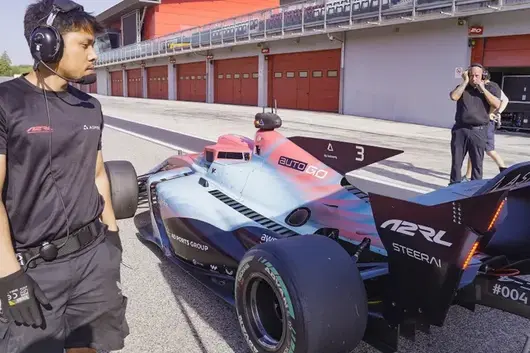
Five formula racing cars, no drivers in the cockpits.
On September 5, 2026, the first European stop of the Abu Dhabi Autonomous Racing League (Abu Dhabi Autonomous Racing League, A2RL) was held at the Imola circuit in Italy.

A2RL is organized by ASPIRE, a major tech challenge organization under the Advanced Technology Research Council (ATRC), established by the Abu Dhabi government of the UAE.
Abu Dhabi hosting the race is not just to stage a driverless performance. ATRC, when announcing the event in 2023, listed three levels of goals:
Test artificial intelligence with unified racing cars and extreme speed pressure, directing research results towards road safety;
Attract global universities, research institutions, and technology suppliers with prizes, circuits, and R&D platforms, establishing a local autonomous mobility ecosystem;
Cultivate STEM talent through student projects and position Abu Dhabi as a research and development center for applied AI and autonomous driving.
In other words, A2RL is at the same time a research plan, a talent engineering project, and an urban tech brand project.

But this global mobilization did not attract the US electric vehicle and AI company Tesla.
Tesla has never participated in any similar competition as an official team.
In the lists of events that can be found, there are no enterprise teams founded or controlled by Musk in the UK robot racing series Roborace, the Indy Autonomous Challenge, or A2RL.
Musk has also been publicly invited by name.
In 2025, Markus Lienkamp, a Professor of Automotive Technology at the Technical University of Munich in Germany, called out to Musk on his personal LinkedIn account, stating that TUM's software can run on public roads as well as tracks, and asked if Tesla was willing to race in the US.

The official account of the Indy Autonomous Challenge (Indy Autonomous Challenge, IAC) subsequently suggested moving the race to the Laguna Seca circuit. Since then, there has been no public follow-up; neither Musk nor Tesla responded, nor did they form a team to compete.
Only four cars remained at the official start.
The TUM racing car from the Technical University of Munich in Germany suffered a braking failure during the formation lap and returned to the pit lane early. On lap 10, the leading Unimore car suddenly slowed down at the final left turn; the following PoliMOVE car swerved inward to avoid it but still hit the car in front.

Tim Stevens, a reporter for an American automotive magazine, directly interviewed Matteo Pini, the head of software integration for Unimore, after the race. Pini stated that the onboard switch aggregating multi-sensor signals failed during the turn, causing the vehicle to lose key perception instantly; safety logic subsequently triggered emergency braking.
Finally, only two out of five cars completed the 12-lap main race. Kinetiz, representing the UAE, slowed down before the accident zone and passed through, winning the championship; Germany's Constructor Racing took second place.

This race was easily treated as a joke: driverless taxis on roads are already carrying passengers, yet a group of European college students caused three racing cars to retire; did they use their strength in the wrong place?

Twenty-two years ago
Competitions seek answers for the industry

The first collective acceleration of the autonomous driving industry indeed came from competitions.
In March 2004, the US Defense Advanced Research Projects Agency (DARPA) held the first Grand Challenge for unmanned vehicles in the Mojave Desert.
Review data released later by DARPA showed that none of the 15 finalist cars completed the 142-mile course; the farthest, Carnegie Mellon University's Sandstorm, only advanced 7.4 miles.
One year later, the second competition increased the prize to $2 million. Stanford University's Stanley completed 132 miles in 6 hours and 53 minutes and won the championship; four other cars completed the course.
The 2007 DARPA Urban Challenge moved the test from the desert to a simulated city, requiring vehicles to obey traffic rules, pass intersections, and handle other moving vehicles; 6 out of 11 finalist teams completed the race.
The value of these three races was not in selecting a mass-producible car. At that time, the industry didn't even have an answer to "whether a machine can drive continuously for a stretch".
DARPA provided common goals, deadlines, prizes, and venues for public failure, compressing localization, perception, planning, and control research originally scattered in universities and military projects into a single vehicle that had to run.
Sebastian Thrun, head of the 2005 champion team, later participated in creating the Google autonomous driving project. In reviewing the Grand Challenge, he said this competition "advanced autonomous driving significantly".
In 2018, he suggested Indianapolis Motor Speedway launch a successor event, hoping to continue pushing the limits of machines with high speeds and multi-car competition. This suggestion later became a significant starting point for the Indy Autonomous Challenge (IAC).
China also established its own real-vehicle competition during the same period.
In 2009, the National Natural Science Foundation of China launched the Intelligent Vehicle Future Challenge (IVFC).
The first event was held in Xi'an; 6 teams participated, including Beijing Institute of Technology, Hunan University, Xi'an Jiaotong University, Shanghai Jiao Tong University, National University of Defense Technology, and the University of Parma, Italy, inspecting traffic light recognition, obstacle avoidance, and designated route driving.
It helped China's unmanned vehicle research move from single algorithms to real-vehicle integration.
These early competitions suited the technical status of the time.
How to combine sensors, how to build maps, how to locate vehicles, how to hand over recognition results to planners—different teams had their own answers. Competitions eliminated unrunnable schemes using finish lines and timers, and also brought runnable schemes into the public eye.

Technology Path Convergence
Questions Cannot Stay at the Previous Generation

Since then, autonomous driving competitions have expanded in different directions.
The UK company Roborace attempted all-electric driverless racing; German Formula Student competitions set up a Driverless category since 2017; IAC started allowing university teams to develop software on unified Dallara race cars from 2021; A2RL held its first car race at the Yas Marina Circuit in Abu Dhabi in 2024, making multi-car confrontation and human-machine lap time comparison its selling point.
The China Intelligent Vehicle Future Challenge gradually added urban roads, mixed traffic, and simulation tasks.
However, the basic technical framework for cars driving themselves is no longer a no-man's land.
In the past, the industry debated LiDAR vs. pure vision, HD maps vs. map-less, rule-based systems vs. neural networks.
Today, sensor and commercial boundaries for each still differ, but training paradigms are converging towards learning-driven end-to-end models, multimodal foundation models, Vision Language Action (VLA) models, and world models.
In the 2026 International Conference on Computer Vision and Pattern Recognition (CVPR) activity introduction, Tesla described the latest version of FSD as an end-to-end driving model, claiming it trains driving strategies using large-scale embodied intelligence datasets formed by millions of vehicles.
Tesla also placed cars and humanoid robots Optimus in the same "real-world artificial intelligence" narrative.
Musk had already called cars "robots on wheels" at Tesla AI Day back in 2021, meaning vehicles and robots must perceive, judge, and execute actions from real environments.
This also explains why Tesla had no motivation to compete.
A2RL uniformly provides 7 cameras, 4 millimeter-wave radars, and 3 LiDARs; participants develop software around the same set of hardware; Tesla chose to center on cameras, onboard computing, and large-scale fleet data.

Re-adapting a dedicated race car with LiDAR for a competition makes it difficult to directly prove the capability of its mass-produced systems with win/loss results: Losing incurs public opinion costs, and winning cannot prove the system can handle unprotected left turns in San Francisco or construction detours in Shanghai rainy nights.
Tesla's coldness indicates a distance between such competitions and the R&D mainline of top enterprises, but it cannot be said that the competitions are meaningless.
Enterprises have mass-produced fleets, user data, and commercial operation scenarios; university laboratories do not have these conditions.
For the latter, unified hardware and shared tracks remain a rare public infrastructure.
EMMA. Waymo, an autonomous driving company under Google's parent company Alphabet, is researching this end-to-end multimodal model. It utilizes Google's Gemini multimodal large model to directly convert camera input into vehicle trajectories, while explicitly studying the pros and cons of pure end-to-end solutions.
Embodied AI. The UK autonomous driving company Wayve uses this concept to summarize its route. Founder and CEO Alex Kendall proposed that the same model should be able to work across vehicles and across cities; Wayve's 2026 public materials summarized industry changes as shifting from proving end-to-end feasibility to scaled deployment.
Physical AI. Jensen Huang, founder and CEO of US computing platform company NVIDIA, categorized autonomous driving cars and robots together into this category. NVIDIA's Cosmos World Foundation Model Platform focuses on generating rare scenarios, predicting future states, conducting closed-loop simulations, and training and evaluating machines with massive synthetic data.
This does not mean autonomous driving only has one completely identical route remaining.
Sensor configuration, map dependency, model structure, safety redundancy, and commercial scenarios are far from unified. What truly converges is the R&D question: Is the data diverse enough? Can the model be transferred to unfamiliar environments? Is the system reliable when encountering long-tail events? Can it exit safely after failure?
At this stage, whether a car can run the full length on a known track is no longer the scarcest evidence.
What is truly scarce is whether it can run on a different track that hasn't been practiced, what happens if the camera is blocked by strong light or the perception data link is interrupted, whether the model still holds when placed on another vehicle, and whether all failures left reproducible data.

Did European Universities Use Their Strength in the Wrong Place?

When Tesla, Waymo, Wayve, and NVIDIA direct resources to foundation models, world models, simulation, and real-road deployment, European universities continue to tune algorithms around formula racing cars; it indeed appears there is a generational mismatch. The background of the Imola competing teams easily reinforces this impression.
Among the five competing teams, Unimore Racing comes from the University of Modena and Reggio Emilia in Italy; its core is the HiPeRT Lab for High-Performance Real-Time Systems, supported by real-time computing technology company Hipert.
PoliMOVE is an unmanned racing team under the mOve Automation and Control Research Team of the Politecnico di Milano, Italy.
TUM is the Technical University of Munich's autonomous driving racing team, having won IAC and the A2RL championships in 2024 and 2025.
Constructor Racing was co-founded by Constructor University, a private research university located in Bremen, Germany, and the Constructor technical system; the predecessor team participated in Roborace.
The champion Kinetiz is not a purely UAE commercial team, but a joint team composed of Singapore's Nanyang Technological University, UAE technology company K2, and autonomous driving software company Alp Autonomy, competing in the name of the UAE.

The bulk of these five teams are university laboratories and technical partners, not factory teams from Volkswagen, BMW, Mercedes-Benz, or Stellantis.
Comparing them directly with Tesla's data scale or Waymo's Robotaxi mileage places them on the wrong coordinates.
Universities compete first to train students and verify research.
High-speed racing amplifies latency and control errors: when a vehicle travels at 250 km/h, 100 milliseconds advances about 6.9 meters; a slight positioning deviation, slightly late braking, or a planner error in predicting an opponent's trajectory can immediately become an accident. This stress test trains talent in real-time systems, vehicle dynamics, sensor fusion, and fault handling.
Competitions can also generate public research materials.
In 2026, 8 participating teams including TUM released the A2RL Vmax open dataset, containing over 300,000 frames of LiDAR point clouds, over 380,000 frames of radar point clouds, and multi-car interaction data collected from the 2024 race, providing nearly 30,000 frames of professional annotations. For teams researching high-speed long-range perception and opponent trajectory prediction, this has more sustained value than the podium.
So, European universities are not stupid. They are working on a well-defined research question: on unified racing cars and closed tracks, push the machine's real-time perception, prediction, and limit control to higher speeds. The problem is that event promotion often states this boundary too broadly, as if racing faster by a few seconds would naturally translate to urban autonomous driving.
If a competition only allows teams to repeatedly scan the same track, build fine maps, and tune parameters for fixed vehicles, it looks more like a high-level systems engineering competition, unable to prove the model has universal driving capabilities across cities and vehicles. Universities did not go the wrong way, but competitions must honestly state where this road leads.

What Was Actually Measured by the Imola Crash?

A2RL's current rules have an important advantage: racing car hardware is basically consistent; the driver's seat, steering wheel, and pedals are replaced by computing equipment and actuators; remote driving from the pit area or real-time parameter modification is prohibited during the race. Teams can receive flag signals and telemeter back; specific steering, braking, and overtaking decisions are completed by the onboard system.
This setup puts software and whole-vehicle integration capabilities in the foreground. The Imola accident exposed at least four questions that can be further investigated.
First, having many sensors does not equal redundancy in the perception link.
MotorTrend's interview pointed the fault to the data aggregation switch; Motorsport.com only disclosed sensor failure. Currently, there is no final investigation from teams or organizers. It can be confirmed that the vehicle lost key perception instantly. The competition should disclose where the failure occurred—sensor, data link, or aggregation node—whether backup paths exist, and what state estimation capabilities the vehicle retained.
Second, minimum risk maneuvers cannot only protect the faulty vehicle.
Unimore's emergency braking after losing perception is reasonable in single-car logic but creates a sudden stationary obstacle for following cars in multi-car competition. The system needs to evaluate its own remaining capacity, oncoming vehicles behind, available escape areas, and deceleration simultaneously, not just have "continue running" and "stop in place" as options.
Third, the following car must also identify the leading car's failure.
PoliMOVE attempted to avoid but failed. Besides following distance and braking capability, competitions should check if the leading car's failure state can be quickly transmitted via vehicle lights, V2I communication, or race flags, and whether the following car can timely judge based on motion abnormalities alone when communication is missing.
Fourth, reliability changes competition strategy.
Kinetiz did not run the fastest lap time of the day, but put completing the race first and actively slowed down in the accident zone. The championship thus rewarded risk selection and system stability. But with only one 12-lap race, it still cannot distinguish whether this is repeatable reliability or a correct judgment plus an accidental result caused by the leading car's retirement.
Post-race data released by ATRC shows that the five teams conducted 9 days of real-vehicle testing before the race, experienced rain and hail, and after changing to wet-weather kits, completed a total of only 38 laps of wet driving.
Organizers also provided teams with Imola digital scans and simulators. Changing tracks increases difficulty, but this is still not "zero-shot" adaptation: teams got the track model in advance and had time to train and debug around it.
This is exactly the distance between A2RL and next-generation autonomous driving models. Wayve emphasizes bringing the same model directly to unfamiliar cities; world models emphasize large-scale generation of never-before-seen long-tail scenarios; A2RL currently still allows participants to concentrate optimization on one vehicle, one track, and one race.
The former tests generalization; the latter tests specific performance. Both are valuable but cannot replace each other.

How Should Today's Competitions Be Changed?

After technology path convergence, competitions no longer need to prove "cars can drive themselves".
It should turn the hardest-to-publicize, hardest-to-repeat failures in the industry into standardized test questions. If A2RL wants to continue to represent the forefront of autonomous driving, it can at least add four sets of rules beyond existing racing.
Write unfamiliar environments into rules.
Competitions can announce local track changes only after code freezing, no longer providing all high-precision scans in advance; Temporarily change cones, drivable areas, road surface friction coefficients, or flag positions in the final. Competitions can also require the same set of driving models to continuously complete high-speed track, low-speed pit lane, and slippery road tasks, limiting time for retraining on a single track.
Actively create controllable failures.
In closed testing, sequentially turn off one camera, lower LiDAR refresh rate, cut off satellite positioning, limit onboard computing power, or simulate sensor and data link interruptions. Scoring should not only look at whether the vehicle stopped, but also how long it took to identify the fault, what parking position was chosen, how much reaction distance was left for following cars, and whether it could exit the main track in degraded mode.
Test whether the model can be transferred.
Software from the same team should run on two sets of vehicle dynamics parameters or two tracks. Participants need to declare map dependency, training data, simulation hours, and computing resources; the competition will publish results separately for zero-shot, limited adaptation, and fully tuned states. Only then can it be seen if victory comes from general capability or from longer track-specific tuning.
Publish failure data along with the champion.
After the race, organizers should release an independent technical report detailing the trigger chains for every retirement, emergency stop, manual abort, and collision; publicize key telemetry, scenario data, and replication experiments while protecting trade secrets.
Imola's most valuable outcome should not be just Kinetiz's trophy, but should include why Unimore lost perception, where exactly the fault lay—sensor or data aggregation link—why PoliMOVE couldn't avoid it, and whether improvement schemes can pass the next fault injection test.
These four changes will make the competition look worse. Vehicles may become slower, completion rates may drop, and human-machine lap time showdowns won't always suit promotional videos. But it will make results closer to evidence truly needed by the industry: whether the same system can still provide predictable behavior under incomplete information, environmental changes, and hardware failures.
If A2RL continues to only race the fastest lap time on familiar tracks, its main value will remain in talent cultivation, extreme sports control, and Abu Dhabi tech brand display. This value is real, but insufficient to represent the next stage of autonomous driving.
If it writes unfamiliar environments, system failures, cross-platform migration, and data publicization into the rules, it can become a public impact laboratory that the industry dare not do and cannot jointly do usually. Enterprises can generate a million accidents in simulation, but rarely are willing to put the failure process, logs, and repair results of real vehicles under the same set of rules for outside comparison.
Competitions can just happen to undertake this matter. Answers on the track must ultimately return to roads for verification.
Twenty-two years ago, DARPA asked with a desert route: Can machines drive cars to the finish. Today, the ultimate exam venue needed by the industry is no longer on closed tracks, but at every morning rush hour intersection and the physically evolving real world.

Dalam pasaran SUV di Malaysia, ramai pembeli akan membandingkan Honda CR-V dan Mazda CX-9 semasa memilih kereta. Kedua-dua kereta ini agak hampir dari segi harga dan penjenamaan, hari ini kita akan buat perbandingan terperinci dari pelbagai aspek untuk membantu anda menjimatkan masa membuat kajian.
Harga OTR Honda CR-V di Malaysia ialah RM 178,200 - 195,900, terdapat keseluruhan 4 varian, termasuk 2026 e:HEV 2.0L 2WD RS (RM 195,900), 2026 1.5T 4WD V (RM 181,900), 2026 e:HEV 2.0L 2WD E (RM 178,200) dan lain-lain.
Harga OTR Mazda CX-9 di Malaysia ialah RM 328,810 - 345,810, terdapat keseluruhan 2 varian, termasuk 2023 2.5T 4WD (RM 345,810), 2023 2.5T 2WD (RM 328,810) dan lain-lain.
Dari segi harga, harga permulaan Honda CR-V memang lebih murah RM 150,610 berbanding Mazda CX-9. Jika bajet anda terhad, versi permulaan Honda sudah boleh memenuhi keperluan harian. Tetapi juga perlu ambil perhatian, beratus atau beribu ringgit yang lebih murah itu, mungkin ada pengorbanan dari segi kelengkapan, bergantung pada keperluan anda.
Penarafan keselamatan Honda CR-V ialah 5★ (ASEAN NCAP), sistem keselamatan aktif termasuk Honda SENSING (ACC, CMBS, LKAS, RDM).
Penarafan keselamatan Mazda CX-9 ialah 5★ (ASEAN NCAP), sistem keselamatan aktif termasuk Brand ADAS.
Penarafan keselamatan kedua-dua kereta ini sama, pada tahap ini kelengkapan keselamatan dikira cukup lengkap. Keselamatan kereta baharu sekarang tidak terlalu kurang, tidak perlu risau terlalu banyak mengenai hal ini.
Honda CR-V menggunakan cara pemanduan FWD.
Mazda CX-9 menggunakan cara pemanduan FWD.
Cara pemanduan kedua-dua kereta ini sama, kedua-duanya FWD, pengalaman memandu harian tidak akan terlalu berbeza.
Jaminan Honda CR-V 5 tahun/jarak tanpa had, jarak penyelenggaraan setiap 10,000km atau 6 bulan.
Jaminan Mazda CX-9 5 tahun/150,000km, jarak penyelenggaraan setiap 10,000km atau 6 bulan.

Honda CR-V dan Mazda CX-9 adalah pilihan utama pasaran Malaysia, sesuai untuk kegunaan keluarga, perjalanan harian. Jika anda lebih mengutamakan reputasi jenama dan harga pasaran kedua, boleh utamakan model yang reputasinya lebih baik; Jika anda lebih mengutamakan nilai kos dan kelengkapan, maka pilih model yang konfigurasinya lebih kaya. Akhir sekali disarankan kedua-dua model untuk dipandu (test drive), pengalaman peribadi adalah yang paling penting.

Secara keseluruhan, Honda CR-V dan Mazda CX-9 adalah model kereta yang sangat bagus di pasaran Malaysia. Memilih mana satu, kuncinya adalah bergantung pada keperluan dan bajet peribadi anda. Disarankan anda buat kajian, bandingkan harga dari beberapa dealer kereta, kemudian lakukan test drive untuk membuat keputusan akhir. Membeli kereta adalah perkara besar, meluangkan masa untuk membuat kajian tidak akan salah.

喺馬來西亞嘅 SUV 市場,好多買家喺揀車嘅時候都會拿 Honda CR-V 同 Chery Tiggo 7 Pro 嚟做比較。呢兩款車喺價位同定位上都好接近,而家我哋就從多個方面做一個詳細嘅比較,幫你節省做功課嘅時間。
Honda CR-V 喺馬來西亞嘅 OTR 售價係 RM 178,200 - 195,900,一共有 4 個版本,包括 2026 e:HEV 2.0L 2WD RS(RM 195,900)、2026 1.5T 4WD V(RM 181,900)、2026 e:HEV 2.0L 2WD E(RM 178,200) 等。
Chery Tiggo 7 Pro 喺馬來西亞嘅 OTR 售價係 RM 123,750 - 123,750,一共有 2 個版本,包括 1.6L Turbo Standard(RM 125,000)、1.6L Turbo Premium(RM 140,000) 等。
由價錢睇落,Chery Tiggo 7 Pro 嘅起步價比 Honda CR-V 平咗 RM 54,450。講真,喺呢個價位段,幾千塊嘅差距其實唔算大,關鍵仲係睇整體性價比同埋長期使用成本。
Honda CR-V 車身長 4500 mm,後備箱 450 L。
Chery Tiggo 7 Pro 車身長 4400 mm,後備箱 400 L。
空間方面,Honda CR-V 嘅車身比 Chery Tiggo 7 Pro 長咗 100 mm,車內乘坐空間會稍微寬鬆啲,尤其係後座腿部空間。如果你經常載家人或者需要放手推車,大啲嘅車身確係更實用。
Honda CR-V 採用 FWD 驅動方式。
Chery Tiggo 7 Pro 採用 FWD 驅動方式。
兩款車嘅驅動方式一樣,都係 FWD,日常駕駛感受唔會有太大分別。
Honda CR-V 同 Chery Tiggo 7 Pro 都係馬來西亞市場嘅主流選擇,適合家庭使用、日常通勤。如果你更睇重品牌口碑同二手價,可以優先考慮口碑更好嗰一款;如果你更介意性價比同配備,就揀配置更豐富嗰款。最終都建議兩款都去試駕,親身體驗先係最重要嘅。
總體嚟講,Honda CR-V 同 Chery Tiggo 7 Pro 都係馬來西亞市場好唔錯嘅車款。揀邊一輛,關鍵仲係睇你嘅個人需求同預算。建議大家做足功課,多比較幾間車行嘅報價,再去試駕做最終決定。買車係件大事,花少少時間做功課絕對無錯。

Di pasaran SUV di Malaysia, ramai pembeli sering membandingkan Honda CR-V dan Mazda CX-8 semasa memilih kereta. Kedua-dua model ini mempunyai harga dan pasaran yang hampir sama. Hari ini, kita akan membandingkan secara terperinci dari pelbagai aspek untuk membantu anda menjimatkan masa mencari maklumat.
Honda CR-V dijual di Malaysia dengan harga OTR RM 178,200 - 195,900, terdapat 4 versi, termasuk 2026 e:HEV 2.0L 2WD RS (RM 195,900), 2026 1.5T 4WD V (RM 181,900), 2026 e:HEV 2.0L 2WD E (RM 178,200) dan lain-lain.
Mazda CX-8 dijual di Malaysia dengan harga OTR RM 165,360 - 201,360, terdapat 5 versi, termasuk 2025 2.5T 4WD High Plus Petrol (RM 201,360), 2025 2.2L 2WD High Plus Diesel (RM 193,123), 2025 2.5L 2WD High Plus Petrol (RM 186,360) dan lain-lain.
Dari segi harga, harga permulaan Mazda CX-8 lebih murah RM 12,840 berbanding Honda CR-V. Jujurlah, pada julat harga ini, beza ribuan ringgit sebenarnya tidak besar, yang penting adalah nilai untuk wang keseluruhan dan kos penggunaan jangka panjang.
Taraf keselamatan Honda CR-V ialah 5★ (ASEAN NCAP), sistem keselamatan aktif termasuk Honda SENSING (ACC, CMBS, LKAS, RDM).
Taraf keselamatan Mazda CX-8 ialah 5★ (ASEAN NCAP), sistem keselamatan aktif termasuk Brand ADAS.
Taraf keselamatan kedua-dua model adalah sama, kelengkapan keselamatan dalam kelas ini dianggap sangat lengkap. Keselamatan kereta baharu sekarang tidak buruk, tidak perlu risau tentang hal ini.
Honda CR-V menggunakan cara pemacu FWD.
Mazda CX-8 menggunakan cara pemacu FWD.
Cara pemacu kedua-dua model adalah sama, iaitu FWD, pengalaman memandu harian tidak akan mempunyai perbezaan besar.
Honda CR-V waranti 5 tahun / jarak tanpa had, jarak penyelenggaraan setiap 10,000km atau 6 bulan.
Mazda CX-8 waranti 5 tahun / 150,000km, jarak penyelenggaraan setiap 10,000km atau 6 bulan.

Honda CR-V dan Mazda CX-8 adalah pilihan utama pasaran Malaysia, sesuai untuk kegunaan keluarga, kommut harian. Jika anda lebih menekankan reputasi jenama dan harga pasaran kereta terpakai, utamakan model yang mempunyai reputasi lebih baik; jika anda lebih mementingkan nilai untuk wang dan kelengkapan, pilih model yang mempunyai kelengkapan lebih banyak. Pada akhirnya, disyorkan untuk melakukan ujian pandu kedua-dua model, pengalaman langsung adalah yang paling penting.
Secara keseluruhan, Honda CR-V dan Mazda CX-8 adalah model yang sangat baik di pasaran Malaysia. Memilih mana satu, kuncinya tetap melihat keperluan dan bajet peribadi anda. Kami cadangkan anda membuat penyelidikan dengan teliti, membandingkan beberapa penawaran harga dari pengedar, kemudian membuat ujian pandu untuk membuat keputusan akhir. Membeli kereta adalah perkara besar, meluangkan sedikit masa untuk mencari maklumat tidak akan salah.

盖世汽车讯 据外媒报道,中国汽车巨头比亚迪已搁置在马来西亚建设自有汽车组装工厂的计划,转而与当地合作伙伴展开“深入谈判”,以实现其在当地的生产目标。比亚迪马来西亚董事总经理Jacob Ma于日前举行的媒体简报会上透露了这一决定。
比亚迪此前于2025年8月宣布,计划在马来西亚霹雳州丹绒马林(Tanjung Malim)建设一座汽车组装工厂。“作为澄清,丹绒马林工厂将不会继续推进。”Ma表示。
他补充称,比亚迪目前正与一家成熟的当地企业合作,该合作伙伴“具备满足比亚迪要求、支持完整本地组装业务所需的产能和能力”。双方目前的讨论“已经进入非常深入的阶段”,相关文件也正在完成。
“待一切准备就绪后,我们将正式对外公布。”

图片来源:比亚迪
马来西亚财经媒体《The Edge》今年3月曾报道称,在比亚迪未能与马来西亚投资、贸易和工业部就相关条件达成一致后,丹绒马林工厂项目的推进情况出现变数。
据报道,其中一项分歧涉及当地组装车辆出口比例的要求,即最高可能需要将80%的本地组装车辆出口。
对于自建工厂计划为何被搁置,Ma没有直接回应,而是表示,比亚迪的企业文化是“着眼于长期进行探索”。
今年5月,有报道称,比亚迪正在评估与当地合作伙伴 Sime Motors 开展代工组装合作的可能性。该合作可能利用Sime旗下子公司位于吉打州居林(Kulim)的工厂进行生产。Sime Motors 是比亚迪在马来西亚的官方经销商。
今年7月1日起,马来西亚开始要求进口的整车电动汽车申报最低成本、保险及运费(CIF)必须达到20万林吉特(约4.9万美元),同时要求最低输出功率达到245马力(180千瓦)。这一新要求是在马来西亚针对进口整车电动车的特殊税收优惠于2025年底到期后实施的。
比亚迪目前在马来西亚销售的部分主力电动车售价低于20万林吉特,因此,在当地进行组装的重要性进一步提升。
Ma强调,比亚迪“将继续深耕马来西亚”。“工厂具体地点和合作方式可能会发生变化,但我们的目标没有改变。”Ma表示,“我们仍将马来西亚视为重要市场,也是比亚迪未来增长战略的重要组成部分。”
Ma还称,随着比亚迪业务不断发展,相关变化将持续发生,公司策略也可能进一步“优化”。“我们将继续投资,也将继续创新。”
当前,比亚迪正进一步扩大其在马来西亚的市场布局。自2022年进入马来西亚市场以来,比亚迪已累计销售超过3.5万辆电动车。去年,比亚迪在当地销售14,407辆电动车,成为马来西亚销量最高的电动车品牌。
Sime Motors 汽车董事总经理Adeline Lew表示,今年上半年,比亚迪在马来西亚销售的电动车超过7,000辆。
今年7月,比亚迪旗下高端品牌腾势在吉隆坡推出Z9GT,售价35.88万林吉特。分析人士认为,该车型将给马来西亚高端电动车市场带来较大竞争压力。
Ma透露,首批Z9GT已经售罄,公司目前正在等待第二批车辆抵达马来西亚,但没有透露更多细节。

喺馬來西亞嘅 SUV 市場,好多買家喺揀車嘅時候都會拿 Honda CR-V 同 Toyota Harrier 嚟做比較。呢兩款車喺價錢同定位上都相當接近,而家我哋就從多個方面做一個詳細嘅比較,幫你省返做功課嘅時間。
Honda CR-V 喺馬來西亞嘅 OTR 售價係 RM 178,200 - 195,900,一共 4 個版本,包括 2026 e:HEV 2.0L 2WD RS(RM 195,900)、2026 1.5T 4WD V(RM 181,900)、2026 e:HEV 2.0L 2WD E(RM 178,200) 等。
Toyota Harrier 喺馬來西亞嘅 OTR 售價係 RM 289,000 - 289,000,一共 1 個版本,包括 2026 HEV 2.5L Standard(RM 289,000) 等。
從價錢嚟看,Honda CR-V 嘅起步價確實比 Toyota Harrier 平咗 RM 110,800。如果你預算有限,Honda 嘅入門版已經可以滿足日常需求。但要留意,平嗰幾千蚊,可能喺配備上會有所取捨,具體要睇你嘅需求。
Honda CR-V 嘅安全評級係 5★ (ASEAN NCAP),主動安全系統包括 Honda SENSING (ACC, CMBS, LKAS, RDM)。
Toyota Harrier 嘅安全評級係 5★ (ASEAN NCAP),主動安全系統包括 Brand ADAS。
兩款車嘅安全評級一樣,喺呢個級別裡面安全配備都算給得好齊全。而家嘅新車安全性都唔差,唔使太擔心呢點。
Honda CR-V 車身長 4500 mm,後備箱 450 L。
Toyota Harrier 車身長 4400 mm,後備箱 400 L。
空間方面,Honda CR-V 嘅車身比 Toyota Harrier 長咗 100 mm,車內乘坐空間會稍微寬鬆一啲,尤其係後座腳位。如果你經常帶家人或者需要放嬰兒車,大啲嘅車身確實更實用。
Honda CR-V 保修 5 年/無限里程,保養間隔 每 10,000km 或 6 個月。
Toyota Harrier 保修 5 年/無限里程,保養間隔 每 10,000km 或 6 個月。
兩款車嘅保修條件一樣,呢方面唔使糾結。實際保養成本仲要睇品牌嘅服務網絡同零件價格,建議去車友群問下真實車主嘅經驗。

Honda CR-V 同 Toyota Harrier 都係馬來西亞市場嘅主流選擇,適合家用、日常通勤。如果你更看重品牌口碑同二手價,可以優先考慮口碑更好嗰一款;如果你更在意性價比同配備,就揀配置更豐富嗰款。最後始終建議兩款都去試駕,親身體驗先係最重要嘅。

總括嚟講,Honda CR-V 同 Toyota Harrier 都係馬來西亞市場好唔錯嘅車型。揀邊架,關鍵仲係睇你嘅個人需求同預算。建議大家做足功課,多比較幾間車行嘅報價,先去試駕做最終決定。買車係件大事,花少少時間做功課絕對唔會錯。

In the Malaysian SUV market, many buyers compare the Honda HR-V and Volkswagen Tiguan when choosing a car. These two models are quite close in price and positioning. Today, we will make a detailed comparison from multiple aspects to help you save time on research.
The Honda HR-V OTR price in Malaysia is RM 115,900 - 143,900. There are 4 versions in total, including 2026 e:HEV 1.5L RS (RM 143,900), 2026 1.5T V (RM 137,900), 2026 1.5T E (RM 130,900), etc.
The Volkswagen Tiguan OTR price in Malaysia is RM 206,540 - 260,024. There are 2 versions in total, including 2025 Allspace 2.0T R-Line (RM 260,024), 2025 Allspace 1.4T Elegance (RM 206,540), etc.
In terms of price, the Honda HR-V starting price is indeed RM 90,640 cheaper than the Volkswagen Tiguan. If your budget is limited, Honda's entry-level version can already meet daily needs. But be aware, the few thousand cheaper might involve trade-offs in features, depending on your specific needs.

The Honda HR-V is equipped with a 1.5L Turbo engine, producing 140 hp. Official fuel consumption is 7.0 L/100km.
The Volkswagen Tiguan is equipped with a 2.0L 4-cylinder engine, producing 170 hp. Official fuel consumption is 8.0 L/100km.
In terms of power, the Volkswagen Tiguan's 2.0L 4-cylinder has 30 more horsepower than the Honda HR-V's 1.5L Turbo. However, for daily city driving, the power of both cars is sufficient, and you won't feel underpowered.
The Honda HR-V safety rating is 5★ (ASEAN NCAP). Active safety systems include Honda SENSING (ACC, CMBS, LKAS, RDM).
The Volkswagen Tiguan safety rating is 5★ (Euro NCAP). Active safety systems include IQ.Drive.
In terms of safety features, both cars have received good ratings. However, there are some differences in functionality between the Honda HR-V's Honda SENSING (ACC, CMBS, LKAS, RDM) and the Volkswagen Tiguan's IQ.Drive. If you value active safety, you can compare their feature lists in detail.
The Honda HR-V has a 5-year/unlimited mileage warranty, with a maintenance interval of every 10,000km or 6 months.
The Volkswagen Tiguan has a 3-year/100,000km warranty, with a maintenance interval of every 10,000km or 6 months.

Overall, both the Honda HR-V and Volkswagen Tiguan are very good models in the Malaysian market. Which one to choose mainly depends on your personal needs and budget. We recommend doing your homework, comparing quotes from multiple dealerships, and test driving before making the final decision. Buying a car is a big matter; spending some time on research will never be wrong.


In Malaysia's SUV market, many buyers compare Honda HR-V and Hyundai Tucson when choosing a car. These two cars are quite close in price and positioning. Today, we will do a detailed comparison from multiple aspects to help you save time on research.
Honda HR-V OTR price in Malaysia is RM 115,900 - 143,900, total 4 versions, including 2026 e:HEV 1.5L RS (RM 143,900), 2026 1.5T V (RM 137,900), 2026 1.5T E (RM 130,900), etc.
Hyundai Tucson OTR price in Malaysia is RM 143,888 - 197,888, total 5 versions, including 2025 HEV 1.6T AT 2WD Prestige (RM 197,888), 2025 1.6T DCT 4WD Prestige (RM 186,888), 2025 1.6T DCT 2WD Prime (RM 164,888), etc.
Looking at the price, the starting price of Honda HR-V is indeed RM 27,988 cheaper than Hyundai Tucson. If your budget is limited, Honda's entry-level version can already meet daily needs. But also note, the few thousand cheaper might involve compromises on features, depends on your specific needs.
Honda HR-V equipped with 1.5L Turbo, 140 hp. Official fuel consumption 7.0 L/100km.
Hyundai Tucson equipped with 1.5L Turbo, 140 hp. Official fuel consumption 7.0 L/100km.
Both cars use the same powertrain, daily driving feeling is basically no difference. Fuel consumption is also similar, no need to worry too much about this point.
Honda HR-V adopts FWD drive mode.
Hyundai Tucson adopts FWD drive mode.
Both cars have the same drive mode, both FWD, daily driving feeling won't have big difference.
Honda HR-V warranty 5 years/unlimited mileage, maintenance interval every 10,000km or 6 months.
Hyundai Tucson warranty 5 years/300,000km, maintenance interval every 10,000km or 6 months.

Both Honda HR-V and Hyundai Tucson are mainstream choices in the Malaysian market, suitable for family use, daily commuting. If you value brand reputation and resale value more, you can prioritize the one with better reputation; if you care more about value for money and features, then choose the one with richer configuration. In the end, it is recommended to test drive both, personal experience is the most important.

Overall, Honda HR-V and Hyundai Tucson are both very good models in the Malaysian market. Which one to choose, depends on your personal needs and budget. Everyone is advised to do research, compare quotes from several car dealerships, then go for test drive to make final decision. Buying a car is a big matter, spending some time doing research is never wrong.

In the Malaysian SUV market, many buyers compare the Honda HR-V and Hyundai Tucson when selecting a car. These two cars are quite close in price and positioning. Today, we will conduct a detailed comparison from multiple aspects to help you save time on research.
The Honda HR-V's OTR price in Malaysia is RM 115,900 - 143,900, totaling 4 versions, including 2026 e:HEV 1.5L RS (RM 143,900), 2026 1.5T V (RM 137,900), 2026 1.5T E (RM 130,900), etc.
The Hyundai Tucson's OTR price in Malaysia is RM 143,888 - 197,888, totaling 5 versions, including 2025 HEV 1.6T AT 2WD Prestige (RM 197,888), 2025 1.6T DCT 4WD Prestige (RM 186,888), 2025 1.6T DCT 2WD Prime (RM 164,888), etc.
In terms of price, the starting price of the Honda HR-V is indeed RM 27,988 cheaper than the Hyundai Tucson. If your budget is limited, Honda's entry-level version can already meet daily needs. However, note that the lower price of a few thousand might involve trade-offs in features, depending on your requirements.
Honda HR-V is equipped with a 1.5L Turbo, 140 hp. Official fuel consumption 7.0 L/100km.
Hyundai Tucson is equipped with a 1.5L Turbo, 140 hp. Official fuel consumption 7.0 L/100km.
Both cars use the same powertrain, and the driving experience is basically the same. Fuel consumption is also similar, no need to worry too much about this.
Honda HR-V's safety rating is 5★ (ASEAN NCAP), active safety systems include Honda SENSING (ACC, CMBS, LKAS, RDM).
Hyundai Tucson's safety rating is 5★ (ASEAN NCAP), active safety systems include SmartSense.
Both cars have the same safety rating, and safety features are quite comprehensive in this class. New cars nowadays have good safety, no need to worry too much about this.
Honda HR-V warranty 5 years/unlimited mileage, maintenance interval every 10,000km or 6 months.
Hyundai Tucson warranty 5 years/300,000km, maintenance interval every 10,000km or 6 months.
Overall, Honda HR-V and Hyundai Tucson are both excellent models in the Malaysian market. Choosing one depends mainly on your personal needs and budget. We recommend doing your research, comparing quotes from several dealerships, and then test driving to make a final decision. Buying a car is a major decision, spending time on research will definitely not be wrong.


According to a report from Deutsche Bank, BYD plans to sell over 2.5 million cars overseas in 2027. By expanding fleet size and increasing overseas production, it will further expand its rapid growth in international markets.
BYD management currently expects overseas sales in 2026 to reach 1.9 to 2 million vehicles. This is far higher than the 1.3 million target announced in January and the revised 1.5 million target in March.
Overseas markets have become a key support for BYD's domestic sales decline. In the first 8 months of this year, BYD's overseas sales increased by 85.72% year-on-year, reaching 1.16226 million vehicles.
During the same period, BYD's domestic sales fell 32.72% to 1,505,755 units, dragging total sales down 6.84% to 2,668,015 units.
Based on sales figures through August, BYD needs to achieve an average monthly overseas sales volume of about 184,000 to 209,000 units in the remaining 4 months to meet its latest full-year sales target.
In August, BYD's overseas sales reached a record 189,466 units, a 134.45% year-on-year increase, accounting for 43.03% of the total monthly sales.

BYD management stated that overseas sales this year were limited by shipping capacity; if capacity were sufficient, sales volume could have been higher.
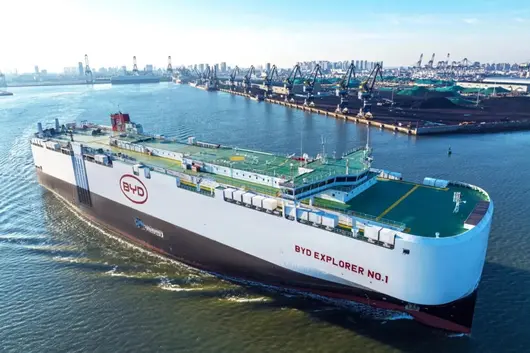
BYD plans to achieve its 2027 sales targets by expanding its dedicated vehicle transport fleet, increasing market share, and increasing overseas local production.
Deutsche Bank noted that BYD's Indonesia factory has started production, the Brazil factory is gradually increasing annual capacity with a target of 300,000 units, and the Hungary factory is expected to begin assembly in November or December.
Management is also evaluating other overseas production locations to expand its local production scale.
Overseas expansion also supported BYD's profitability. BYD management stated that despite unfavorable exchange rates, the profit per vehicle overseas in the first half of this year was about 20,000 RMB ($2,950).
The company expects overseas profit per vehicle to remain basically stable in the short term. Gains from sales growth will be offset by continuous investment in sales network expansion and new factory commissions.
In China, BYD is relying on its Flash Charge technology and supporting network to drive sales, but battery supply remains a constraint on near-term deliveries.
BYD management stated that vehicle orders supporting the Flash Charge technology backlog is about 250,000 units. The supply shortage of the second-generation Blade battery is expected to be fully resolved in the first quarter of 2027.
BYD reiterated its goal to build 20,000 Flash Charge stations in China by the end of 2026, then add 30,000 more in 2027 and 40,000 in 2028, bringing the total to 90,000.
BYD also reiterated plans to deploy 6,000 Flash Charge stations overseas at a conference call, but did not provide a completion timeline.
Li Yunfei stated in an interview in July that the company plans to complete the construction of 6,000 overseas Flash Charge stations by the end of March 2027, including 3,000 in Europe, 2,000 in the Americas, and 1,000 in the Asia-Pacific region.
Smart driving is another key investment area. BYD management expects internal capabilities to see significant improvement in smart driving in 2027.
BYD will continue to independently develop solutions while allowing external suppliers to bid on projects. R&D investment, massive vehicle data scale, and hardware-software vertical integration will help consolidate smart driving technology advantages.
© 2024 Bitauto.com. All Rights Reserved.
Bitauto (www.yiche.com and www.bitauto.com) is one of the most visited automotive websites in China. We provide detailed info on Chinese car brands available in your area. Please note that the information provided on this website is based on publicly available data and is for reference only. It may not be fully updated or accurate at all times.

Help us improve our website


