

Homeexpert

Search History
Popular Searches
Dealer Login / Sign Up

喺馬來西亞嘅 SUV 市場,好多買家喺揀車嘅時候都會拿 Proton X90 同 Chery Tiggo 7 Pro 來作比較。呢兩款車喺價位同定位上都好接近嘅,今日我哋就從多個方面作詳細比較,幫你節省咗做功課嘅時間。
Proton X90 喺馬來西亞嘅 OTR 售價係 RM 106,800 - 122,800,一共有 4 個版本,包括 2026 1.5T Prime X(RM 122,800)、2026 1.5T Prime(RM 116,800)、2026 1.5T Lite(RM 106,800)等。
Chery Tiggo 7 Pro 喺馬來西亞嘅 OTR 售價係 RM 123,750 - 123,750,一共有 2 個版本,包括 1.6L Turbo Standard(RM 125,000)、1.6L Turbo Premium(RM 140,000)等。
由價錢嚟睇,Proton X90 嘅起步價確實比 Chery Tiggo 7 Pro 平咗 RM 16,950。如果你預算有限,Proton 嘅入門版已經可以滿足日常需要。但都要留意,平嘅嗰幾千塊,可能喺配備上會有取舍,具體就要睇你嘅需要。

Proton X90 配備 1.5L Turbo,馬力 140 hp。官方油耗 7.0 L/100km。
Chery Tiggo 7 Pro 配備 1.5L Turbo,馬力 140 hp。官方油耗 7.0 L/100km。
兩款車用嘅係同一套動力系統,日常駕駛嘅感受基本上冇分別。油耗方面都差唔多,唔使太糾結呢一點。

Proton X90 保修 5 年/150,000km,保養間隔 每 10,000km 或 6 個月。
Chery Tiggo 7 Pro 保修 3 年/100,000km,保養間隔 每 10,000km 或 6 個月。

Proton X90 同 Chery Tiggo 7 Pro 都係馬來西亞市場嘅主流選擇,適合家庭使用、日常通勤。如果你更看重品牌口碑同二手價,可以優先考慮口碑更好嗰一款;如果你更在意性價比同配備,就揀配備更豐富嗰款。最後始終建議兩款都去試駕,親身感受先係最重要嘅。
總嚟講,Proton X90 同 Chery Tiggo 7 Pro 都係馬來西亞市場幾唔錯嘅車款。揀邊一輛,關鍵仲係睇你嘅個人需要同預算。建議大家做好功課,多比較幾間車行嘅報價,再去試駕做最終決定。買車係件大事,花啲時間做功課絕對唔會錯。


Dalam pasaran SUV di Malaysia, ramai pembeli membandingkan Proton X90 dan Mazda CX-5 semasa memilih kereta. Kedua-dua kereta ini mempunyai harga dan kedudukan yang agak hampir, hari ini kita akan membuat perbandingan terperinci dari pelbagai aspek untuk membantu anda menjimatkan masa menyiapkan diri.
Harga OTR Proton X90 di Malaysia ialah RM 106,800 - 122,800, terdapat 4 varian, termasuk 2026 1.5T Prime X (RM 122,800), 2026 1.5T Prime (RM 116,800), 2026 1.5T Lite (RM 106,800) dan lain-lain.
Harga OTR Mazda CX-5 di Malaysia ialah RM 135,469 - 166,760, terdapat 3 varian, termasuk 2025 2.0L AT 35th Anniversary (RM 316,154), 2025 2.0L AT (RM 296,154), 2025 2.0L MT (RM 294,154) dan lain-lain.
Dari segi harga, harga permulaan Proton X90 memang lebih murah RM 28,669 berbanding Mazda CX-5. Jika bajet anda terhad, varian masuk Proton sudah mampu memenuhi keperluan harian. Namun, perlu diingat, kos yang lebih rendah itu mungkin melibatkan kompromi pada kelengkapan, ia bergantung pada keperluan spesifik anda.
Proton X90 dilengkapkan enjin 1.5L Turbo, kuasa 140 hp. Penggunaan bahan api rasmi 7.0 L/100km.
Mazda CX-5 dilengkapkan enjin 1.5L Turbo, kuasa 140 hp. Penggunaan bahan api rasmi 7.0 L/100km.
Kedua-dua kereta menggunakan sistem kuasa yang sama, rasa pemanduan harian hampir tiada perbezaan. Dari segi penggunaan bahan api juga hampir sama, tidak perlu terlalu bimbang mengenai perkara ini.
Panjang badan Proton X90 4400 mm, ruang bagasi 400 L.
Panjang badan Mazda CX-5 4500 mm, ruang bagasi 450 L.
Dari segi ruang, badan Mazda CX-5 lebih panjang 100 mm berbanding Proton X90, ruang duduk lebih selesa. Namun Proton X90 lebih mudah untuk diparkir di bandar, masing-masing ada kelebihan dan kekurangannya.
Proton X90 dan Mazda CX-5 adalah pilihan popular di pasaran Malaysia, sesuai untuk keluarga dan perjalanan harian. Jika anda lebih mengutamakan reputasi jenama dan harga jualan semula, pilih yang mempunyai reputasi lebih baik; jika anda lebih mementingkan nisbah harga dan nilai serta kelengkapan, pilih yang mempunyai konfigurasi lebih lengkap. Akhir sekali, disyorkan untuk memandu uji kedua-duanya, pengalaman langsung adalah yang paling penting.

Keseluruhannya, Proton X90 dan Mazda CX-5 adalah model kereta yang sangat bagus di pasaran Malaysia. Memilih yang mana, ia bergantung pada keperluan peribadi dan bajet anda. Disarankan membuat penelitian terlebih dahulu, bandingkan beberapa kutipan harga dari pelbagai dealer kereta, kemudian memandu uji untuk membuat keputusan akhir. Membeli kereta adalah perkara besar, meluangkan masa membuat penelitian tidak akan salah.

In Malaysia's SUV market, many buyers compare Proton X90 and Mazda CX-30 when choosing a car. The price and positioning of these two cars are quite close, so today we will make a detailed comparison from multiple aspects to help you save time on research.
Proton X90 is priced at RM 106,800 - 122,800 OTR in Malaysia, with 4 versions in total, including 2026 1.5T Prime X (RM 122,800), 2026 1.5T Prime (RM 116,800), 2026 1.5T Lite (RM 106,800), etc.
Mazda CX-30 is priced at RM 122,409 - 146,409 OTR in Malaysia, with 4 versions in total, including 2025 2.0L High+ Premium (RM 146,409), 2025 2.0L High+ (RM 138,409), 2025 2.0L High (RM 130,409), etc.
Looking at the price, the starting price of Proton X90 is indeed RM 15,609 cheaper than Mazda CX-30. If your budget is limited, Proton's entry-level version can already meet daily needs. But keep in mind that the few thousand savings might come with compromises in features, depending on your needs.
Proton X90 body length is 4400 mm, trunk 400 L.
Mazda CX-30 body length is 4500 mm, trunk 450 L.
In terms of space, the Mazda CX-30 body is 100 mm longer than Proton X90, offering more passenger space. However, Proton X90 is a bit more flexible for parking in the city, each has its trade-offs.
Proton X90 adopts FWD drive system.
Mazda CX-30 adopts FWD drive system.
Both cars have the same drive system, both are FWD, daily driving experience will not have too much difference.
Proton X90 and Mazda CX-30 are both mainstream choices in the Malaysian market, suitable for family use and daily commuting. If you value brand reputation and resale value more, you can prioritize the one with better reputation; if you care more about price-performance ratio and features, then choose the one with richer configuration. Finally, it is recommended to test drive both, experiencing them firsthand is the most important.

Overall, Proton X90 and Mazda CX-30 are both very good models in the Malaysian market. Which one to choose depends on your personal needs and budget. It is recommended to do research, compare quotes from several dealerships, and then test drive to make a final decision. Buying a car is a big deal, spending time doing research will never be wrong.

In the Malaysia SUV market, many buyers compare Proton X90 and Honda CR-V when choosing a car. These two cars are quite close in price and positioning. Today, we will make a detailed comparison from multiple aspects to help you save time on research.
The OTR price of Proton X90 in Malaysia is RM 106,800 - 122,800, with a total of 4 versions, including 2026 1.5T Prime X (RM 122,800), 2026 1.5T Prime (RM 116,800), 2026 1.5T Lite (RM 106,800), etc.
The OTR price of Honda CR-V in Malaysia is RM 178,200 - 195,900, with a total of 4 versions, including 2026 e:HEV 2.0L 2WD RS (RM 195,900), 2026 1.5T 4WD V (RM 181,900), 2026 e:HEV 2.0L 2WD E (RM 178,200), etc.
From a price perspective, the starting price of Proton X90 is indeed RM 71,400 cheaper than Honda CR-V. If your budget is limited, Proton's entry-level version can already meet daily needs. But be aware, those few thousand cheaper might involve trade-offs in features, it depends on your specific needs.
Proton X90 safety rating is 5★ (ASEAN NCAP), active safety systems include ADAS (ACC, AEB, LKA, LDA, BSM, RCTA).
Honda CR-V safety rating is 5★ (ASEAN NCAP), active safety systems include Honda SENSING (ACC, CMBS, LKAS, RDM).
Both cars have the same safety rating. In this class, safety features are quite comprehensive. New cars nowadays are not lacking in safety, so no need to worry too much about this.
Proton X90 body length 4400 mm, trunk 400 L.
Honda CR-V body length 4500 mm, trunk 450 L.
In terms of space, Honda CR-V's body is 100 mm longer than Proton X90, offering an advantage in seating space. However, Proton X90 is a bit more flexible for parking in the city, each has trade-offs.
Proton X90 adopts FWD drive mode.
Honda CR-V adopts FWD drive mode.
Both cars have the same drive mode, both are FWD, there won't be much difference in daily driving experience.

In general, both Proton X90 and Honda CR-V are excellent models in the Malaysia market. Which one to choose depends on your personal needs and budget. We recommend doing your homework, comparing quotes from multiple car dealerships, and then test driving to make the final decision. Buying a car is a major event, taking some time to research is never wrong.


Written by | Liu Ying
Edited by| Huang Dalu
Designed by | Zhen Youmei
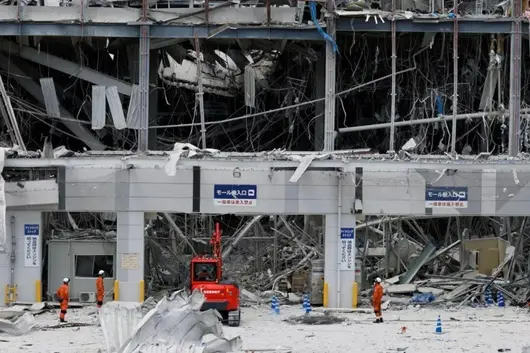
On the evening of July 28, 2026, the ground in Kyushu began to shake without warning.
On the assembly line at the Miyata Plant in Fukuoka Prefecture, robotic arms hung in mid-air and suddenly stopped. Workers put down their tools and quickly evacuated the workshop along the safety aisle. Minutes later, the production lines at the Kanda and Kokura plants also came to a standstill.
This was a magnitude 7.1 earthquake.
Toyota initially thought it could resume operations quickly, but several hours later, it had to shut down three plants again. Production was scheduled to resume on July 31, but the deadline was subsequently pushed back to August 5.
The shadow of the halt quickly spread from Kyushu to Honshu. Nissan HQ initially announced "production as usual" externally, but only two days later, due to parts not arriving at the factory in time, some production lines had to stop as well. A Toyota plant in Aichi Prefecture, over 600 kilometers away, was also affected.
As of August 4, 2026, four Toyota plants in Kyushu were still scheduled to shut down until August 5, and another plant in central Japan was scheduled to halt until August 7. Two of these four plants are vehicle assembly bases.

Such scenes are not unfamiliar to the Japanese automotive industry.
In 1995, factories in Kobe were filled with cracks after the earthquake; in 2004, the shutdown of a small factory in Niigata forced all four Honda production bases to stall simultaneously; in 2007, an inconspicuous piston ring held back half of the Japanese automotive companies; in 2011, a tsunami swept away factories along the coastline, and Toyota buyers traced layer by layer along supply relationship maps, finally marking 659 damaged supply points in the ruins.
For thirty years, Japanese car companies have continuously reinforced their supply chains, but this earthquake proved again that a factory withstanding impact does not mean the production line can be restarted immediately.
The Factory Withstood the Earthquake
The aftershocks had not yet subsided, but engineers were already wearing hard hats and walking back into the workshop with inspection checklists. The light beam from flashlights swept across weld seams, and precision equipment had to be checked one by one.
Toyota did not find large-scale structural damage in the three plants, yet they did not resume work.
Just because the factory looks undamaged does not mean production conditions have been restored. After violent shaking, the processing accuracy inside precision equipment may have quietly shifted. Engineers must remeasure and calibrate parameters, then confirm quality using prototype products. Only when equipment, pipelines, energy supply, and product accuracy all meet requirements can the production line restart.
The company's statement reflected a kind of caution: "Including aftershocks and recovery work, the situation changes every day."

During this period, Mitsubishi reduced production at its Mizushima Plant in Okayama Prefecture, and Honda extended the shutdown time at its Kumamoto Plant to repair damaged facilities.
The situation encountered by semiconductor factories was even more tricky.
In Renesas Electronics' two plants in Kumamoto, ceiling blocks fell off, walls cracked with fine patterns, and accumulated water seeped from damaged pipes. Sony and TSMC also suspended operations. Engineers crawled into clean rooms to check gas lines and precision equipment for shifts one by one.
TSMC began restoring partial operations several hours after the earthquake; Renesas planned to restart the Kumamoto Plant in phases from August 5; Sony, however, would not be able to restore production lines to pre-quake levels until mid-August.
Nobuhiko Kiuchi, Chief Economist at Nomura Research Institute, gave a relatively optimistic judgment: "The negative impact on production activities and supply chains may be relatively short-term."
The damage from this earthquake to housing and infrastructure was relatively limited, and the shutdown of many factories included a component of preventive inspection. However, for the automotive industry which calculates beats by the minute, "short-term shutdown" still means the loss of output from multiple shifts.
As long as one key supplier has not recovered, assembly lines hundreds of kilometers away may continue to wait.
For thirty years, the change in the Japanese automotive industry has not been to eliminate this waiting entirely, but to strive to make it happen less frequently and end faster.
Small Parts Stop Big Factories
Early morning on January 17, 1995, the Great Hanshin Earthquake tore through Kobe and surrounding industrial areas. Port crane arms twisted and deformed, roads split with deep gullies, and factories and warehouses revealed collapsed corners in the morning light.
Daihatsu's two assembly plants stopped production. Mazda, due to parts shortages, was forced to suspend Hiroshima and Hofu plants, with estimated losses of about 3,000 vehicle units.
Toyota's vehicle plants themselves were not heavily damaged, but the supply of brake calipers and audio components was cut off. The company could only close all assembly facilities in Japan, with an estimated reduction of about 20,000 vehicles.
Post-event statistics showed this earthquake damaged 13 supplier production points, a number not particularly large. But some of these parts had no inventory buffer, and no alternative factories could be found to immediately step in.
Nine years later, the story repeated itself.
In October 2004, the Chuetsu earthquake in Niigata Prefecture collapsed part of the Nippon Precision Machine Nagano Factory's facilities, stopping the instrument cluster production line abruptly. Honda's Saitama and Suzuka vehicle plants, Yachiyo Industrial's Yokkaichi micro-car plant, and the Kumamoto engine plant fell into silence in succession.
Honda later disclosed that the manufacturing precision required for analog instrument pointers was extremely high, and at that time most similar products globally were produced in Niigata. The company's risk management at the time mainly targeted parts "mass-produced in only one place," relying on increased inventory to leave some buffer for supply interruptions.
In July 2007, the Chuetsu-Oki earthquake in Niigata Prefecture struck again. The walls of Riken Kashiwazaki Factory cracked, and the supply of piston rings and other parts was interrupted.

Major Japanese car companies such as Toyota, Honda, Nissan, Mazda, Mitsubishi, and Suzuki successively halted or reduced production. Honda's work stoppage area expanded from Suzuka all the way to Saitama, Yokkaichi, Hamamatsu, and Kumamoto. Whether subsequent work could resume depended entirely on when Riken could restart its machines.
Multiple car companies sent engineers, equipment maintenance personnel, and even R&D personnel to Kashiwazaki to clean the factory area, repair water and electricity with Riken employees, and check machines one by one. Honda wrote in its official history that at that time almost the entire company was mobilized, including the R&D department.
Brake calipers, instrument pointers, and piston rings are not the most expensive components on a car, but they have similar supply characteristics: concentrated production locations, limited inventory, and specialized processes that are difficult to replicate quickly.
Even if another company has the capability to produce similar parts, it must go through matching, testing, and quality confirmation. Qualified parts cannot be directly installed on another car company's production line the day after the original factory halts production.
At that time, the recovery capability of the Japanese automotive industry relied more on the tacit understanding between companies to assist each other. When the original supplier restarted determined when assembly lines hundreds of kilometers away would resume rotation.
The bigger problem was that car companies did not even fully know where their parts actually came from.
First Time Seeing the Complete Supply Network
On March 11, 2011, the ground churned violently in Japan's Tohoku region, tsunamis followed closely, and the shadow of the Fukushima nuclear accident subsequently overshadowed the whole situation.
Ports were paralyzed, roads were broken, and power and communications were interrupted on a large scale. Toyota's own production facilities were relatively limited in damage, but parts and material shortages still caused the company to suspend all vehicle production in Japan starting from March 14.
On March 15, Toyota's procurement and production teams sent out investigation teams, braving aftershocks to visit the sites of about 200 suppliers, and then tracing layer by layer along procurement relationships to continue pursuing second-tier and third-tier suppliers.
Ultimately, the company confirmed 659 supply points were damaged, procurement interruptions involved 1,260 types of parts and materials, and in the worst case might affect about 80% of global models. About 500 types of materials needed immediate repair, production transfer, or alternative development from scratch.
Honda later found during a review that many Tier 1 suppliers used products from the same damaged material factory. The company previously knew nothing about this relationship and could only temporarily unite procurement and R&D departments to use alternative materials to re-develop parts.
Renesas Electronics' Naka Plant was one of the most serious breakpoints.

The main factory building withstood the earthquake, but internal equipment, ceilings, cables, and ventilation systems suffered severe damage, and the supply of automotive microcontrollers stopped abruptly. Engineers initially estimated it would take a full six months for the factory to recover.
Dan Mahoney, then President and CEO of Renesas Electronics Americas, later recalled: "These buildings withstood the earthquake, performing quite excellently."
While the walls were saved, the facilities inside the factory, which were intertwined and precise like watch gears, still needed to be repaired and adjusted bit by bit.
At its peak, about 2,500 employees and external contractors crowded into the Naka Plant to repair day and night. Multiple car companies and suppliers sent manpower and equipment, and competitors also voluntarily postponed their orders to make space for automotive chip production.
Renesas transferred about 60% of the affected output to other factories. The Naka Plant eventually recovered partial production in three months, three months earlier than initially expected.

Toyota originally expected that all global models and production lines would not fully recover until November or December 2011. As the materials needing key processing shrunk from about 500 types at the end of March to about 30 types in May, domestic Japanese plants returned to normal first in early July, while overseas production dragged on until September to approach full recovery.
Relevant studies later found that the disruptions caused by the Great East Japan Earthquake affected not only the disaster-hit enterprises but also transmitted to their direct and indirect suppliers and customers along the trading network. This earthquake and its supply chain chain reaction caused the growth rate of Japan's actual GDP in the following year to decline by about 0.47 percentage points.
After 2011, Japanese car companies finally realized that supply chain risks do not only come from visible Tier 1 suppliers. A material or chip factory hidden deep in the network can also bring global production to a halt.
To make the supply chain more resilient, the first step is not to prepare more rescue personnel, but to first see clearly where the breakpoints are.
From Calling One by One to Finding Breakpoints According to Maps
After the Great East Japan Earthquake, Toyota established the supply chain database RESCUE, entering the production locations and upstream and downstream relationships of about 6,800 types of materials into the system, and conducting disaster drills regularly with suppliers.
From then on, procurement personnel could filter suppliers by disaster-affected areas and quickly determine which parts, models, and plants might be affected.
Honda also entered parts and actual production locations into the SCRKeeper system. In 2011, Honda still needed to call one by one to confirm supply status; later, suppliers needed to pre-register manufacturing locations and distribution routes, allowing the procurement department to see where risks were concentrated earlier.
Nissan, on the other hand, focused its efforts on the first few minutes after the earthquake occurred.
On March 11, 2011, the company established the Global Disaster Control HQ at its Yokohama HQ in just 15 minutes, immediately starting to confirm the status of employees, plants, dealers, and suppliers. Three weeks before the earthquake occurred, Nissan had just completed a related drill.
These improvements were put to the test in the 2016 Kumamoto earthquake.

On April 14 and 16, two consecutive strong earthquakes struck. Aisin Kyushu and Aisin Kyushu Casting were forced to stop production, and continuous aftershocks made inspectors hesitate to enter the building interior. Wiring, pipes, and transformer facilities inside the factory were damaged, and power was cut.
As soon as the supply of doors and engine parts produced by Aisin was cut, Toyota suspended most vehicle assembly lines in Japan starting from April 18.
This time, damaged suppliers and relevant parts could be identified relatively quickly. But knowing where the breakpoint is does not mean molds, equipment, and manufacturing processes there can be immediately replicated.
Starting from April 19, huge cranes lifted equipment and molds out of damaged factories piece by piece and slowly loaded them onto trucks.
Aisin sent 339 employees to the disaster area to shift production to affiliated enterprises in the Kyushu region and Aichi plants, with some products even urgently imported from overseas. After molds and equipment arrived at alternative bases, they still had to go through installation, debugging, trial production, and quality confirmation; every step could not be omitted.
Supply chain databases solve the "where to find" problem, but they cannot omit the physical processes required to restore manufacturing capabilities.
Progress in supply chain management is not about making these processes disappear, but about discovering problems earlier, initiating transfers earlier, and shortening shutdown times as much as possible.
Toyota Leaves Months of Inventory for Semiconductors
After the Great East Japan Earthquake, Toyota also re-examined the relationship between Just-in-Time production and inventory.
The cycle from ordering to delivery for automotive chips is long, and production is highly concentrated. According to Reuters, Toyota subsequently required suppliers in its business continuity plan to reserve two to six months of semiconductor inventory for them according to their respective delivery cycles.
This arrangement did not extend to all automotive parts. Just-in-Time and low inventory are still the basic rules for most procurement links, only microcontrollers with long production cycles, highly concentrated supply, and difficult to find temporary alternative sources, were separately included in inventory buffers.
Toyota's spokesperson spoke frankly: "For us, this is a classic lean solution."
Toyota also requires companies to master core technologies of chips used in automobiles internally and cannot hand over semiconductor capabilities completely to suppliers. Long before the launch of the Prius, Toyota began accumulating design and manufacturing capabilities for microcontrollers.
Long-accumulated technical capabilities, combined with targeted inventory reserves, meant that Toyota's impact during the initial phase of the global chip shortage in 2021 was relatively small. However, when the duration of the shortage exceeded the scope that inventory could cover, Toyota still had to adjust production.

Inventory can buy time, but cannot indefinitely offset supply interruptions.
On January 1, 2024, the Noto Peninsula earthquake struck, affecting multiple Toyota suppliers and affiliated enterprises. Before the holiday had ended, Toyota's inventory checks and damaged plant investigations had already been launched.
On January 8, the company decided to maintain the operation of Japanese vehicle plants and stated externally: "We will use parts stored outside the disaster area."
Toyota first determined the production arrangement after January 8, then step by step decided how to produce in the next stage based on aftershocks and supplier recovery progress. By January 10, the company announced that production would continue according to plan after January 15, based precisely on inventory reserves outside the disaster area and the gradual recovery of some damaged suppliers.
Off-site inventory did not replace damaged factories, but bought them a few days of breathing time.
For automotive assembly lines that calculate part inventory by the hour, these few days often determine whether the factory needs to stop immediately.
From Factory to Power, Molten Aluminum, and Data
In September 2018, the Iburi East Earthquake in Hokkaido caused widespread power outages, with darkness covering the entire industrial area.
Powertrain parts such as gearboxes produced by Toyota Motor Hokkaido Co. were subsequently cut off. Multiple Toyota vehicle plants in Japan were affected by both power restrictions and parts shortages. Motomachi, Takada, Tsutsumi, Tahara, and group company production lines could only recover in stages from September 11 to 13.
Aisin later disclosed a thrilling detail.
The Hokkaido power outage lasted for more than two days, and the company urgently gathered temporary power generation equipment from all over Japan, just to prevent the molten aluminum in the holding furnace from solidifying during the power failure.
Once high-temperature metal hardens inside the furnace, the loss is no longer just a few production shifts, but will expand to the cleaning and long-term repair of the entire set of equipment.
After this, Aisin increased its own power generation equipment and regularly conducted simulated power outage tests, determining the power supply priority order for furnace bodies, information systems, and key production facilities during power outages one by one.
The scope of disaster prevention thus expanded from walls, equipment, and pipelines to energy, work-in-progress, and even production data itself.

The way of shutdown is also becoming more refined.
On February 13, 2021, a sudden strong earthquake hit off the coast of Fukushima Prefecture. Toyota suspended 14 production lines at 9 plants in Japan. RAV4, Harrier, Land Cruiser, and multiple Lexus models were affected.
In March 2022, a strong earthquake hit off the coast of Fukushima Prefecture again. Toyota's 18 production lines at 11 plants in Japan were suspended. Crown, Mirai, RAV4, Harrier, Land Cruiser, and multiple Lexus models were affected again.
Unlike shutting down all Japanese assembly facilities together in the past, companies at this time were already able to subdivide the shutdown arrangement to specific plants, production lines, models, dates, and even shifts based on parts supply conditions.
Production lines where parts arrived normally continued to operate, and lines short of materials quietly waited for suppliers to recover. Each factory no longer had to be forced to stop and restart together at the same rhythm.
Japanese car companies will still shut down, but the probability of one supply cutoff dragging down the entire production system is decreasing.
Saving Equipment Ten Years Ago, Verifying Quality Ten Years Later
In July 2026, Aisin Kumamoto Plant once again neared the epicenter. The shaking on site was even more violent than in 2016, some water pipes burst on sound, but the factory building and major equipment did not suffer serious damage.
Aisin CFO Daisuke Kondo stated that seismic measures implemented after 2016 reduced the losses caused by this earthquake. Nearly 200 Aisin employees, customers, and partner enterprise personnel then entered the site and invested in recovery work.
Ten years ago, the starting point of recovery work was completely different.
In 2016, Aisin had to rescue molds and large equipment from damaged factories first; in 2026, major equipment was preserved, and the focus of recovery work had shifted to quality verification, logistics recovery, and supplier coordination.

The factory was still shut down, but the work content had changed. Ten years ago, the company first had to re-establish manufacturing capabilities; ten years later, major manufacturing capabilities were preserved, and on-site personnel could enter earlier for inspection, debugging, and trial production.
The reinforcement measures after 2016 did not eliminate shutdowns, but reduced direct damage and shortened the distance from the earthquake occurrence to starting production recovery.
Over the past thirty years, the first layer of change in the Japanese automotive supply chain was formed here: supply networks became more transparent, factories and equipment became more robust, key materials had more targeted inventory, and companies could also control shutdown scopes by production line rather than the entire company.
The second layer of change occurred outside Japan.
Overseas Plants Provide a Second Layer of Buffer
Domestic disaster prevention infrastructure eventually has physical limits. Faced with Japan's frequent geological disasters, in terms of macro strategy, the globalization of production capacity (such as the rise of India and Thailand bases) passively or actively became the highest level of "risk hedging".
Data from the Japan Automobile Manufacturers Association shows that Japan's domestic motor vehicle production was 8.23 million units in 2024, down 8.5% year-on-year; in the same year, Japanese car companies' overseas vehicle production reached 16.48 million units, about twice the domestic production.
Overseas plants have long undertaken most of the car production for Japanese brands. In the past, these plants mainly served local markets; now, production bases in India and Thailand began to supply more models to the Japanese market, and the number of automotive reverse imports increased accordingly.

Suzuki Motor President Toshihiro Suzuki stated in January 2025 that India will become the global production base for Suzuki EVs, and the first EV, e Vitara, will be exported to Japan, Europe, and other markets.
Toshihiro Suzuki described this game as follows: "India's scale advantage is Suzuki's strength. We will fully utilize this advantage to provide high-quality and attractive products to markets such as Europe, Japan, the Middle East, Africa, and South and Central America."
Honda plans to use India as the production and export base for a new EV starting from 2027. Toyota, Honda, and Suzuki are also continuing to expand local investment. Lower labor costs, increasingly mature parts systems, and a huge local market jointly support this round of expansion.
The importance of Indian plants is not just about lower costs. When overseas bases can produce models for Japan and multiple countries, Japanese car companies gain greater space for production allocation.
But overseas plants are not mirror backups of Japanese factories that can be activated at any time.
Models produced in different factories, parts systems, dedicated equipment, and market specifications are not exactly the same. Shifting a car from Japan to be produced in India or Thailand still requires going through equipment preparation, supplier adjustment, quality confirmation, market certification, and logistics organization.
Therefore, global layout is difficult to solve the shutdown within days after an earthquake. It provides risk dispersion over a longer cycle: reducing enterprise dependence on a single production area, and allowing for the possibility of supplementing supply from other regions when some models are restricted from production in Japan.

Japanese domestic plants will not disappear for this reason.
Toyota announced in August 2025 that it will build a new vehicle plant in Toyota City, Aichi Prefecture, planned to start production in the early 2030s. This is the first time the company has built a new vehicle assembly plant in Japan proper since 2012.
At the same time, Toyota still maintains a long-term policy of annual production of about 3 million units in Japan, with about half used for export.
Nissan moves in the opposite direction. The company plans to stop vehicle production at the Tsu Plant before March 2028, transfer related output to Nissan Automotive Kyushu, and compress global annual capacity from 3.5 million units to 2.5 million units, reducing manufacturing bases from 17 to 10.
Tsu Plant started production in 1961 and has long been known as Nissan's "Mother Plant," cumulatively producing over 17.8 million cars. Before closing, it had about 3,900 employees. Nissan Japan plants have an average capacity utilization of only about 60%. After Tsu output is transferred to Kyushu, the company expects Kyushu plant's capacity utilization will rise to 100%.

A factory carrying memories of more than half a century is about to end vehicle production, while capacity concentrates on more efficient bases.
Toyota building new plants and Nissan closing plants look in opposite directions, but the logic behind them is interconnected: Japanese automotive manufacturing will not simply move entirely overseas, but will reallocate resources between local technical capabilities, production efficiency, and global capacity.
Overseas plants will undertake more mass-market models facing the Japanese and global markets; Japan proper will retain a large amount of vehicle production capacity, continuing to undertake export, high-end models, complex powertrains, and new process introduction.
Domestic and overseas are no longer just a choice of cost high or low, but gradually constitute two layers of supply chain resilience.
Thirty Years Have Passed
Over the past thirty years, the Japanese automotive supply chain has not become a network that will not break, but Japanese car companies have successively filled in several obvious gaps.
Dedicated equipment and molds still cannot be instantly replicated, precision production lines still need recalibration, and power, logistics, parts, and personnel still must be restored simultaneously. As long as automotive production continues to rely on highly specialized equipment and suppliers, earthquakes may still bring factories to a halt.
What truly changed is the way enterprises withstand interruptions.
The actual production location of suppliers has been entered into the database, so after an earthquake, it is not necessary to inquire layer by layer starting from Tier 1 suppliers; key chips have longer inventory, which can buy recovery time for damaged factories; factory buildings, equipment, and power systems have been reinforced so as not to start with rescuing molds and machines every time; shutdown arrangements can also be subdivided into specific plants, production lines, and shifts.
By 2026, Japanese car companies are already able to quickly locate affected suppliers, keep shutdowns within specific plants and production lines, and shift the focus of recovery to quality, logistics, and coordination under the condition that equipment is basically preserved.

Domestic plants rely on seismic reinforcement, supply chain databases, key inventory, and refined production management to shorten short-term shocks; overseas plants provide more long-term capacity dispersion for enterprises by undertaking more models.
The former allows car companies to stand up faster after earthquakes, while the latter reduces the production system's long-term dependence on a single region.
After thirty years, earthquakes will still force Toyota to stop and will also make Nissan assembly lines hundreds of kilometers away fall silent for not waiting for a part. But the Japanese automotive industry is clearer than before about where to start recovery and how to recover.
"Automotive Business Review" believes that in the era of intelligent electrification, when the dependence of cars on chips and precision electronics rises exponentially, the value of this "transparent supply chain" defense system exchanged by Japanese car companies for thirty years of earthquakes will be far greater than before.


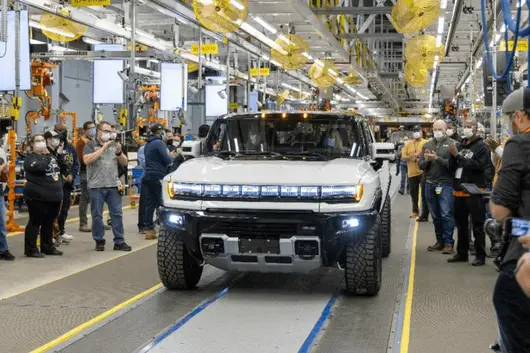
通用的世界还在,新车不够了。
文|刘欣怡 编辑|冒诗阳
汽车像素(ID:autopix)原创
上汽通用的一场告别和一次新生,几乎在同一个月到来。
8月5日,上汽与通用将上汽通用的合资期限延长20年,直到2047年。
现场立着四个字:共赴新境。和续约一同确定的还有这家合资公司的新任务。
三周之后,8月28日,别克昂科威2026款将在美国停产。
两件事互相独立,但撞在了同一个月里。
昂科威的故事要倒回十一年。2015年底,第一批销往北美的昂科威从烟台港出发,次年进入美国、加拿大和墨西哥的别克经销商。此后十年,累计出口42万辆。2017年之后,它成为通用唯一一款从中国进口到美国的车型。
2018年起,昂科威承担25%关税,通用申请豁免未果。2026年1月22日,通用宣布停止在中国生产供应美国市场的昂科威,下一代车型将于2028年转到堪萨斯州费尔法克斯工厂。
到今年5月,这款车在美国的库存周期已经超过300天。

▍烟台港昂科威旧照
一扇门在关,另一扇门在开。按照续约后的安排,上汽通用自主研发的别克至境系列将从今年10月起陆续出口海外,目标市场包括中东、非洲、南美、墨西哥和亚太。
关税关上美国车市,通用把门外的世界交到上海。
01
美国之外,通用缺车了
这次续约没有改变50:50的股比,也没有披露新增投资金额。变的是分工。
签约现场,通用汽车全球高级副总裁兼中国总裁罗煦说了一段话,上汽通用在工程、制造和质量上已经形成本土能力,“我们可以将这些优势带到中东、非洲、南美、墨西哥和亚太地区的国际市场”,并依托通用汽车在这些地区已有的销售与服务布局。
翻译成组织语言,他透露的意思是,上汽通用和泛亚定义产品,通用提供美国市场之外的全球渠道。
具体的落地方式相当轻。上汽通用不在海外自建销售网络,全程复用通用现成的体系。
首款出口的车是别克至境E7,首站韩国。由通用韩国负责定价、营销和售后,上汽通用只负责生产、供货和技术保障。此后在其他市场,预计会沿用相似模式。
产品和资源的流向变了。过去,通用把全球产品带到中国;接下来,上汽通用要把中国开发的产品送回全球。
这在“合资2.0”里并不常见。多数外方允许中国合资公司出海时,都会先划出自己的核心市场。通用没有只给上汽通用一个边缘市场试水,一次性开放中东、非洲、南美、墨西哥和亚太,几乎包括了美国以外,通用拥有的全部。并允许中国产品直接接入自己多年建立的销售与服务体系。
为什么是现在,为什么是这几个市场,答案分别写在通用的两张报表上。

▍1925通用巴西公司成立时的合影
第一张是北美。2026年第二季度,通用北美调整后息税前利润率达到8.6%,全尺寸皮卡份额43%,连续第七年第一。公司年内第二次上调业绩指引,将调整后息税前利润预期提高到140亿至160亿美元。
这是一台自洽的机器,贵、大、高配、有品牌溢价,再叠加订阅服务的现金流。它不需要外部输血,也不太需要外部产品。
第二张报表在美国之外。
2025年,美国市场贡献了通用全球近七成的销量。排在美国后面的依次是中国、乌兹别克斯坦、巴西、哈萨克斯坦、哥伦比亚、智利、厄瓜多尔、秘鲁、科威特。除了美国和中国,剩下全是新兴市场。
这些市场要的车,和北美那台机器生产的车之间几乎没有交集。
而通用在这些地方的位置,参差得厉害。
墨西哥仍是通用的强项,市场份额长期仅次于日产。南美则在守擂中失速:2025年,通用在巴西的份额从12.0%降至10.3%,大众升至17.1%,BYD升至4.4%。
中东的缺位更明显。在沙特,通用已经掉出主流品牌前列,反而是上汽MG进入销量榜前列。非洲则留下了一张破损的网络,埃及仍有制造和运营体系,但通用早已退出南非和东非的主要业务。
对墨西哥和南美,上汽通用是在守擂;对中东,是补产品;到了非洲,则带有几分重返旧市场的意味。
02
奥特能没能缝合通用
2014年,玛丽·博拉成为通用第一位女性CEO。
她接手的通用刚刚走出破产重组,仍然保留着一个庞大的全球业务版图。欧宝和沃克斯豪尔扎在欧洲,雪佛兰在印度、南非和东南亚铺设网络,霍顿留在澳大利亚,韩国大宇体系负责小型车,巴西负责南美产品。
这些业务让通用维持了一家全球汽车公司的形象,也让它长期背负着全球汽车公司的成本。

玛丽·博拉采用了一套清晰的财务标准。一项业务如果不能获得足够回报,就不再因为规模、历史或者全球地位继续保留。
2015到2020年,通用开始密集对无法产生足够股东回报的市场采取行动,先后撤出欧洲、俄罗斯、印度、东南亚和澳大利亚,出售欧宝、沃克斯豪尔以及泰国工厂。
利润纪律取得了效果,资本逐渐流向北美最擅长的大车;代价是,通用同时拆掉了服务全球需求的产品体系。
欧宝曾经提供前驱轿车和欧洲工程能力,霍顿掌握后驱平台,韩国负责低成本小车。退出这些市场后,通用同时也失去了服务全球需求的大部分能力。
到2020年,通用已经基本完成了全球收缩。北美留下皮卡、大型SUV和高利润燃油车,中国仍有庞大的合资体系,南美、韩国、中东等市场则被压缩成各自维持盈利的区域业务。
它们像散落在世界地图上的孤岛,竞争格局不变,它们可以依靠惯性继续存续,贡献有限但稳定的利润。
但现在,竞争加剧了。
2025年,巴西汽车市场继续增长,通用的份额却从12.0%降至10.3%;大众升至17.1%,BYD升至4.4%。墨西哥市场,通用销量下降3.4%,日产、丰田、起亚和马自达却都在增长。
结果写在通用北美以外的国际业务(GMI)的报表上。2025年,GMI批发销量下降8.1%,营收下降3.3%;剔除中国合资业务后,调整后息税前利润下降32.8%,只剩4.26亿美元。
这些区域业务缺的不是品牌和渠道,而是一套能够持续送进经销店的新产品。
通用当然知道收缩的副作用。等到收缩基本完成,玛丽·博拉必须找到一套新的技术底座,在不重新养回那些区域研发中心的前提下,把北美、中国和剩余的国际市场重新接起来。
电动车看起来正好提供了这个机会。
到2019年,特斯拉已经完成Model 3的艰难爬坡,全年交付36.75万辆;上海工厂从动工到交付不到一年,证明一套高度集中的车型、电池和软件体系,可以在美国与中国之间快速复制。
资本市场给出的信号更直接。2020年1月,特斯拉市值首次超过通用和福特之和,半年后又超过丰田。对刚完成全球收缩的通用来说,电动化既代表汽车行业的未来,也提供了一条不必重建旧体系、就能重新覆盖全球的捷径。
2018年起,通用把断舍离后节省下来的资金转向电动化和自动驾驶;到2020年3月,通用正式发布奥特能,并承诺在2025年前投入超过200亿美元。中国随后举行了对应的技术发布。
奥特能的工程野心很大。通用希望它同时覆盖紧凑型跨界车、SUV、悍马和大型皮卡,再让北美与中国共享规模、供应链和研发成本。

但最先证明奥特能的产品,是装着约205千瓦时电池的悍马EV。这个数字是中国主流大型纯电车常见电池容量的两倍。奥特能从一开始,就被超长续航、千匹动力和大型皮卡的目标牵向了美国式大车,它可以不断增加模组向上覆盖,却很难沿用同一套体系向下造出廉价车型。
更致命的是,通用押错了市场收敛的方向。奥特能押注用电芯、模组和电驱的高度模块化,拼出尽可能多的车型;市场真正形成壁垒的地方,却已经转向软件、电子电气架构和持续迭代能力,车型的多样性反而在收敛。
2026年4月,通用通知供应商,无限期推迟Silverado EV和Sierra EV下一代车型的开发,重大平台更新预计要等到2030年之后。
中国却迅速转向更低成本的磷酸铁锂、更快的充电速度、插混和增程,以及由本地供应商推动的智能座舱与辅助驾驶。
原本用来统一中美的底座,最终两头都没接住。
奥特能没有把拆散的通用重新缝合。它留下了电池、电驱、制造和安全验证能力,也让一个结论变得无法回避:北美、中国和美国之外,已经无法再由同一套底座定义。
03
上汽通用,第二次成立
2024年末,上汽通用面对的还不是如何出海,而是这家公司是否值得继续存在。
当年,上汽通用销量降至43.5万辆,同比下滑56.54%,是上汽集团旗下跌幅最大的整车企业。12月,通用对中国合资业务计提26亿至29亿美元减值,并确认约27亿美元重组费用,合计超过50亿美元。
这笔钱既是对过去的清算,也划出了上汽通用的生存线。
奥特能没有给中国业务带来期待中的转型,底特律也没有另一套成熟的全球方案可以送过来。上汽通用必须缩小规模、恢复盈利,并且依靠中国团队重新回答一个最基本的问题:下一代产品究竟该怎么造。
2025年4月,逍遥架构和别克高端新能源序列至境一同发布。
逍遥保留了奥特能的电驱、制造和安全积累,但技术路线已经转向中国:电池换成6C磷酸铁锂,动力覆盖纯电、插混和增程,电子电气架构也转向中央计算。
比参数变化更重要的是,产品定义权留在了中国。
过去,泛亚主要把底特律的平台适配给中国。到了逍遥和至境,技术路线、产品形态、价格和供应链,都开始由中国团队定义。
结果来得比预期快。
至境L7先在中大型新能源轿车市场站稳;2026年4月22日,至境E7上市,置换权益价最低15.49万元,上市90分钟大定破万,首月交付破万,成为首款做到这一点的合资新能源车型。

经营层面的反转更早开始。2025年,上汽通用销量回升至53.5万辆,同比增长22.99%;通用在华业务连续多个季度实现盈利。
它先证明自己不再需要总部持续输血,又证明中国团队定义的新能源车可以获得市场。
于是,续约讨论的方向变了。从上汽通用还有没有必要继续存在,变成了怎样发挥其最大价值。
这种能力并非突然出现。1997年,泛亚与上汽通用同日成立,从国产化、车型改型一路做到整车正向开发。2010年,泛亚全过程开发的新赛欧上市并走向海外;二十多年里,它为别克、雪佛兰和凯迪拉克开发了30多个系列、150多款车型。
过去,这套能力主要用来把通用的全球产品改成中国需要的样子。到了至境时代,方向反了过来,中国团队定义的产品,开始填补通用全球产品线的空位。
中国合资公司反向输出产品,已经不是孤例。大众、日产、马自达和起亚都在把中国研发、生产的车型送往海外。
真正不同的是开放尺度,海外利润和产能越重要,外方划出的边界越清楚;海外体系越需要补血,中国团队获得的空间越大。
通用的特殊之处在于,它最需要保护的北美利润核心,与上汽通用能够提供的产品几乎没有冲突。通用最需要保护的是北美的大型皮卡和SUV,后者却正好补上通用海外网络的产品空位。
南美、韩国、中东和非洲仍有通用的品牌、工厂和渠道,但新产品供给已经变薄。把中国车型接进去,比重新为每个区域搭建研发体系更快,也更便宜。
十一年前,昂科威从烟台驶向美国,中国在通用全球体系中的角色仍是制造基地。十一年后,上汽通用带着自己定义的产品再次出海。
通用交出的不是一片仍在增长的世界,而是一张渠道尚有价值、产品却日渐断供的网络。上汽通用得到的也不是现成的市场,而是修复它的权力。
这份20年合同,不只是上一段合资关系的延续。它更像上汽通用的第二次成立。

本文为汽车像素(autopix)原创内容
未经授权,请勿转载

喺馬來西亞嘅 SUV 市場,好多買家喺揀車嘅時候都會拎 Proton X70 同 Hyundai Tucson 嚟做比較。呢兩款車喺價碼同定位上都幾接近,今日我哋就從多個方面做個詳細嘅比較,幫你省返做功課嘅時間。
Proton X70 喺馬來西亞嘅 OTR 售價係 RM 106,800 - 122,300,一共有 3 個版本,包括 1.5L Standard 2WD(RM 106,800)、1.5L Executive 2WD(RM 115,800)、1.5L Premium 2WD(RM 122,300) 等。
Hyundai Tucson 喺馬來西亞嘅 OTR 售價係 RM 143,888 - 197,888,一共有 5 個版本,包括 2025 HEV 1.6T AT 2WD Prestige(RM 197,888)、2025 1.6T DCT 4WD Prestige(RM 186,888)、2025 1.6T DCT 2WD Prime(RM 164,888) 等。
從價碼嚟睇,Proton X70 嘅起步價的確比 Hyundai Tucson 平咗 RM 37,088。如果你預算有限,Proton 嘅入門版已經可以滿足日常需要。但都要注意,平嗰啲幾千蚊,可能喺配備上有取舍,具體要睇你嘅需要。

Proton X70 嘅安全評級係 5★ (ASEAN NCAP),主動安全系統包括 ADAS (ACC, AEB, LKA, LDA, BSM, RCTA)。
Hyundai Tucson 嘅安全評級係 5★ (ASEAN NCAP),主動安全系統包括 SmartSense。
兩款車嘅安全評級一樣,喺呢個級數裡面安全配備都算好齊全啦。而家嘅新车安全性都唔差,唔使太擔心呢一點。

Proton X70 採用 FWD 驅動方式。
Hyundai Tucson 採用 FWD 驅動方式。
兩款車嘅驅動方式一樣,都係 FWD,日常駕駛感受唔會有太大分別。

Proton X70 同 Hyundai Tucson 都係馬來西亞市場嘅主流選擇,適合家庭用、日常通勤。如果你更看重品牌口碑同二手價,可以優先考慮口碑更好嗰一款;如果你更重視性價比同配備,就揀配置更豐富嗰款。最後都係建議兩款都去試駕,親身感受先係最緊要。
總體嚟講,Proton X70 同 Hyundai Tucson 都係馬來西亞市場好唔錯嘅車型。揀邊輛,關鍵都要睇你嘅個人需要同預算。建議大家做好功課,多比較幾間車行嘅報價,再去試駕做最終決定。買車係件大件事,花少少時間做功課絕對唔會錯。

喺馬來西亞嘅 SUV 市場,好多人喺揀車嘅時候都會拿 Proton X70 同 Chery Tiggo 8 Pro 嚟做比較。呢兩款車喺價位同定位上都幾接近,今日我哋就從多個方面做一個詳細嘅對比,幫你省返做功課嘅時間。
Proton X70 喺馬來西亞嘅 OTR 售價係 RM 106,800 - 122,300,一共有 3 個版本,包括 1.5L Standard 2WD(RM 106,800)、1.5L Executive 2WD(RM 115,800)、1.5L Premium 2WD(RM 122,300)等。
Chery Tiggo 8 Pro 喺馬來西亞嘅 OTR 售價係 RM 159,750 - 159,750,一共有 2 個版本,包括 1.6L Turbo Standard(RM 130,000)、1.6L Turbo Premium(RM 145,000)等。
從價錢來看,Proton X70 嘅起步價確實比 Chery Tiggo 8 Pro 平咗 RM 52,950。如果你預算有限,Proton 嘅入門版已經可以滿足日常需要。但都要注意,便宜嗰幾千塊,可能喺配備上有取舍,具體要看你嘅需要。
Proton X70 嘅安全評級係 5★ (ASEAN NCAP),主動安全系統包括 ADAS (ACC, AEB, LKA, LDA, BSM, RCTA)。
Chery Tiggo 8 Pro 嘅安全評級係 TBD,主動安全系統包括 Basic。
安全配備方面,兩款車都拿到唔錯嘅評級。不過 Proton X70 嘅 ADAS (ACC, AEB, LKA, LDA, BSM, RCTA) 同 Chery Tiggo 8 Pro 嘅 Basic 喺功能上有少少分別,如果你比較重視主動安全嘅話,可以仔細睇下兩者嘅功能清單。
Proton X70 採用 FWD 驅動方式。
Chery Tiggo 8 Pro 採用 FWD 驅動方式。
兩款車嘅驅動方式一樣,都係 FWD,日常駕駛感受唔會有太大區別。
Proton X70 保用 5 年/150,000km,保養間隔 每 10,000km 或 6 個月。
Chery Tiggo 8 Pro 保用 3 年/100,000km,保養間隔 每 10,000km 或 6 個月。
總括嚟講,Proton X70 同 Chery Tiggo 8 Pro 都係馬來西亞市場好唔錯嘅車款。揀邊一輛,關鍵始終都要睇你嘅個人需要同預算。建議大家做好功課,多比較幾間車行嘅報價,先去試駕先做最終決定。買車係件大事,花啲時間做功課絕對唔會錯。

In Malaysia's SUV market, many buyers compare Proton X70 and Chery Tiggo 8 when selecting a car. These two models are quite close in price and positioning. Today we will conduct a detailed comparison from multiple aspects to help you save the time of doing research.
The OTR price of Proton X70 in Malaysia is RM 106,800 - 122,300, with a total of 3 versions, including 1.5L Standard 2WD (RM 106,800), 1.5L Executive 2WD (RM 115,800), 1.5L Premium 2WD (RM 122,300), etc.
The OTR price of Chery Tiggo 8 in Malaysia is RM 129,750 - 129,750, with a total of 1 version, including 2026 1.6T Standard (RM 129,750), etc.
From a price perspective, Proton X70's starting price is indeed RM 22,950 cheaper than Chery Tiggo 8. If your budget is limited, Proton's entry-level version can already meet daily needs. However, be aware that the savings of a few thousand might involve compromises on features, it depends on your specific needs.

Proton X70 comes with 1.5L Turbo, 140 hp. Official fuel consumption 7.0 L/100km.
Chery Tiggo 8 comes with 1.5L Turbo, 140 hp. Official fuel consumption 7.0 L/100km.
Both cars use the same powertrain system, the driving feel is basically no different. Fuel consumption is also similar, no need to worry too much about this.
Proton X70 body length 4400 mm, trunk 400 L.
Chery Tiggo 8 body length 4400 mm, trunk 400 L.
The dimensions of both cars are almost the same, interior space difference is not significant. Cars in this class are fully sufficient for daily use.

Proton X70 and Chery Tiggo 8 are both mainstream choices in the Malaysian market, suitable for family use and daily commuting. If you value brand reputation and resale value more, you can prioritize the one with a better reputation; if you care more about value for money and features, then choose the one with richer specifications. In the end, it is recommended to test drive both, as personal experience is the most important.
Overall, Proton X70 and Chery Tiggo 8 are both very good car models in the Malaysian market. Which one to choose depends mainly on your personal needs and budget. It is recommended to do your research, compare quotes from several dealerships, and then test drive to make the final decision. Buying a car is a major matter, spending some time doing research will never be wrong.


In the SUV market in Malaysia, many buyers compare Perodua Aruz and GWM Haval H6 when choosing a car. These two cars are quite close in price and positioning. Today, we will do a detailed comparison from multiple aspects to save you time doing research.
Perodua Aruz OTR price in Malaysia is RM 72,900 - 77,900, total 2 versions, including 1.5L X (RM 72,900), 1.5L AV (RM 77,900), etc.
GWM Haval H6 OTR price in Malaysia is RM 139,750 - 139,750, total 2 versions, including 1.5L Turbo Standard (RM 140,000), 1.5L Turbo Premium (RM 155,000), etc.
In terms of price, Perodua Aruz's starting price is indeed RM 66,850 cheaper than GWM Haval H6. If your budget is limited, Perodua's entry-level version is already sufficient for daily needs. However, be aware that the few thousand ringgit difference may involve trade-offs in features, it depends on your needs.

Perodua Aruz is equipped with 1.5L 4-cyl, 105 hp. Official fuel consumption 6.0 L/100km.
GWM Haval H6 is equipped with Hybrid, 170 hp. Official fuel consumption 4.5 L/100km.
In terms of power, GWM Haval H6's Hybrid has 65 more horsepower than Perodua Aruz's 1.5L 4-cyl. However, driving daily in the city, both cars' power is sufficient, you won't feel underpowered.

Perodua Aruz safety rating is 5★ (ASEAN NCAP), active safety systems include .
GWM Haval H6 safety rating is TBD, active safety systems include Basic.

Perodua Aruz adopts FWD drive system.
GWM Haval H6 adopts FWD drive system.
Both cars have the same drive system, both are FWD, daily driving experience will not differ much.
Perodua Aruz and GWM Haval H6 are both mainstream choices in the Malaysian market, suitable for family use, daily commuting. If you value brand reputation and resale value more, you can prioritize the one with better reputation; if you care more about cost-performance and features, then choose the one with richer configuration. Ultimately, it is recommended to test drive both, personal experience is the most important.
Overall, Perodua Aruz and GWM Haval H6 are both very good models in the Malaysian market. Which one to choose, key still depends on your personal needs and budget. We recommend doing your research, compare quotes from several car dealers, then go test drive to make the final decision. Buying a car is a big matter, spending time doing research will definitely not be wrong.


喺馬來西亞嘅 SUV 市場,好多買家喺揀車嗰陣都會拿 Perodua Aruz 同 Kia Sportage 嚟比較。這兩款車喺價位同定位上都好接近,今日我哋就從多個方面做一個詳細嘅比較,幫你省做功課嘅時間。
Perodua Aruz 喺馬來西亞嘅 OTR 售價係 RM 72,900 - 77,900,一共有 2 個版本,包括 1.5L X(RM 72,900)、1.5L AV(RM 77,900) 等。
Kia Sportage 喺馬來西亞嘅 OTR 售價係 RM 129,639 - 179,320,一共有 4 個版本,包括 2025 1.6T DCT 4WD High(RM 179,320)、2025 1.6T DCT 2WD High(RM 159,320)、2025 2.0L AT 2WD High(RM 139,639) 等。
從價錢嚟睇,Perodua Aruz 嘅起價確實比 Kia Sportage 平咗 RM 56,739。如果你預算有限,Perodua 嘅入門版已經可以滿足日常需求。不過亦都要注意,平嗰幾千蚊,喺配備上可能有取舍,具體要睇你嘅需求。
Perodua Aruz 配備 1.5L 4-cyl,馬力 105 hp。官方油耗 6.0 L/100km。
Kia Sportage 配備 1.5L Turbo,馬力 140 hp。官方油耗 7.0 L/100km。
動力方面,Kia Sportage 嘅 1.5L Turbo 比 Perodua Aruz 嘅 1.5L 4-cyl 多咗 35 匹馬力。不過日常喺市區開,兩款車嘅動力都夠用,唔會覺得唔夠力。
Perodua Aruz 採 FWD 驅動方式。
Kia Sportage 採 FWD 驅動方式。
兩款車嘅驅動方式一樣,都係 FWD,日常駕駛感受唔會有太大分別。
Perodua Aruz 保修 5 年/150,000km,保養間隔 每 10,000km 或 6 個月。
Kia Sportage 保修 5 年/300,000km,保養間隔 每 10,000km 或 6 個月。

Perodua Aruz 同 Kia Sportage 都係馬來西亞市場嘅主流選擇,適合家庭使用、日常通勤。如果你更看重品牌口碑同二手價,可以優先考慮口碑更好嗰款;如果你更在意性價比同配備,嗰就揀配備更豐富嗰款。最後都建議兩款都去試駕,親自體驗先係最重要。
總括嚟講,Perodua Aruz 同 Kia Sportage 都係馬來西亞市場好唔錯嘅車型。揀邊一輛,關鍵仲要睇你嘅個人需求同預算。建議大家做好功課,多比較幾間車行嘅報價,再去試駕做最終決定。買車係件大事,花少少時間做功課絕對唔會錯。

Dalam pasaran SUV di Malaysia, ramai pembeli membandingkan Proton X70 dan Mazda CX-3 apabila memilih kereta. Kedua-dua kereta ini mempunyai harga dan kedudukan pasaran yang agak hampir, hari ini kita akan melakukan perbandingan terperinci dari pelbagai aspek, membantu anda menjimatkan masa untuk membuat kajian.
Harga OTR Proton X70 di Malaysia ialah RM 106,800 - 122,300, terdapat 3 varian, termasuk 1.5L Standard 2WD (RM 106,800), 1.5L Executive 2WD (RM 115,800), 1.5L Premium 2WD (RM 122,300) dan lain-lain.
Harga OTR Mazda CX-3 di Malaysia ialah RM 126,159 - 139,159, terdapat 2 varian, termasuk 2023 2.0L High (RM 139,159), 2023 2.0L Plus (RM 126,159) dan lain-lain.
Dari segi harga, harga permulaan Proton X70 memang lebih murah RM 19,359 berbanding Mazda CX-3. Jika bajet anda terhad, versi masuk Proton sudah boleh memenuhi keperluan harian. Tetapi perlu diingat, perbezaan harga beberapa ribu ringgit itu mungkin melibatkan kompromi pada spesifikasi, ia bergantung sepenuhnya kepada keperluan anda.

Pengelasan keselamatan Proton X70 ialah 5★ (ASEAN NCAP), sistem keselamatan aktif termasuk ADAS (ACC, AEB, LKA, LDA, BSM, RCTA).
Pengelasan keselamatan Mazda CX-3 ialah 5★ (ASEAN NCAP), sistem keselamatan aktif termasuk i-Activsense.
Pengelasan keselamatan kedua-dua kereta sama, pada tahap ini peralatan keselamatan sudah diberikan dengan cukup lengkap. Keselamatan kereta baharu masa kini semuanya tidak buruk, tiada perlu terlalu risau mengenai perkara ini.
Proton X70 waranti 5 tahun/150,000 km, selang penyelenggaraan setiap 10,000 km atau 6 bulan.
Mazda CX-3 waranti 5 tahun/150,000 km, selang penyelenggaraan setiap 10,000 km atau 6 bulan.
Kondisi waranti kedua-dua kereta sama, aspek ini tidak perlu dipertikaikan. Kos penyelenggaraan sebenar masih bergantung pada rangkaian servis jenama dan harga komponen, disyorkan bertanya pengalaman pemilik sebenar dalam kumpulan komuniti kereta.
Proton X70 dan Mazda CX-3 kedua-duanya merupakan pilihan utama di pasaran Malaysia, sesuai untuk kegunaan keluarga dan perjalanan harian. Jika anda lebih mengutamakan reputasi jenama dan harga pasaran kedua, anda boleh pertimbangkan model yang mempunyai reputasi lebih baik dahulu; jika anda lebih mementingkan nisbah harga dan spesifikasi, maka pilih model yang lebih lengkap konfigurasinya. Pada akhirnya disarankan untuk memandu kedua-duanya, pengalaman peribadi adalah yang paling penting.
Secara keseluruhan, Proton X70 dan Mazda CX-3 kedua-duanya adalah model kereta yang sangat baik di pasaran Malaysia. Memilih mana satu, kuncinya masih bergantung kepada keperluan dan bajet peribadi anda. Kami menyarankan anda membuat kajian, bandingkan kutipan harga beberapa agensi kereta, kemudian buat ujian memandu untuk membuat keputusan akhir. Membeli kereta adalah perkara besar, meluangkan masa untuk membuat kajian pasti tidak salah.


喺馬來西亞嘅 SUV 市場,好多買家喺揀車嗰陣都會拿 Proton X70 同 Mazda CX-60 嚟做比較。這兩款車喺價位同定位上都幾接近,今日我哋就從多個方面做一個詳細嘅比較,幫你節省做功課嘅時間。
Proton X70 喺馬來西亞嘅 OTR 售價係 RM 106,800 - 122,300,一共有 3 個版本,包括 1.5L Standard 2WD(RM 106,800)、1.5L Executive 2WD(RM 115,800)、1.5L Premium 2WD(RM 122,300)等。
Mazda CX-60 喺馬來西亞嘅 OTR 售價係 RM 200,510 - 252,873,一共有 2 個版本,包括 2026 3.3T 4WD High Plus(RM 252,873)、2025 2.5L 2WD High(RM 200,510)等。
從價錢嚟睇,Proton X70 嘅起步價確實比 Mazda CX-60 平咗 RM 93,710。如果你預算有限,Proton 嘅入門版已經可以滿足日常需求。但都唔可以忘記,平嗰幾千蚊,可能喺配備上會有取舍,視乎你嘅需求而定。

Proton X70 配備 1.5L Turbo,馬力 140 hp。官方油耗 7.0 L/100km。
Mazda CX-60 配備 2.0L 4-cyl,馬力 170 hp。官方油耗 8.0 L/100km。
動力方面,Mazda CX-60 嘅 2.0L 4-cyl 比 Proton X70 嘅 1.5L Turbo 多咗 30 匹馬力。不過日常喺市區開,兩款車嘅動力都夠用,唔會覺得唔夠勁。

Proton X70 嘅安全評級係 5★ (ASEAN NCAP),主動安全系統包括 ADAS (ACC, AEB, LKA, LDA, BSM, RCTA)。
Mazda CX-60 嘅安全評級係 5★ (Euro NCAP),主動安全系統包括 i-Activsense Pro。
安全配備方面,兩款車都拿到唔錯嘅評級。不過 Proton X70 嘅 ADAS (ACC, AEB, LKA, LDA, BSM, RCTA) 同 Mazda CX-60 嘅 i-Activsense Pro 喺功能上有些差異,如果你比較重視主動安全嘅話,可以仔細比較一下兩者嘅功能列表。

Proton X70 車身長 4400 mm,尾箱 400 L。
Mazda CX-60 車身長 4500 mm,尾箱 450 L。
空間方面,Mazda CX-60 嘅車身比 Proton X70 長咗 100 mm,乘坐空間更有優勢。不過 Proton X70 喺城市入面泊車會靈活啲,各有優缺。
Proton X70 採用 FWD 驅動方式。
Mazda CX-60 採用 FWD 驅動方式。
兩款車嘅驅動方式一樣,都係 FWD,日常駕駛感受唔會有太大分別。
總括嚟講,Proton X70 同 Mazda CX-60 都係馬來西亞市場幾唔錯嘅車型。揀邊架,關鍵仲係睇你嘅個人需求同預算。建議大家做好功課,多比較幾間車行嘅報價,再去試駕先至做最終決定。買車係件大事,花啲時間做功課絕對唔會錯。


In Malaysia's SUV market, many buyers compare Proton X50 and Honda CR-V when selecting a car. These two cars are quite similar in price and positioning. Today, we will make a detailed comparison from multiple aspects to help you save time on research.
Proton X50's OTR price in Malaysia is RM 89,800 - 113,300, with a total of 4 versions, including 1.5T Executive (RM 89,800), 1.5T Premium (RM 101,800), 1.5T Flagship (RM 113,300), etc.
Honda CR-V's OTR price in Malaysia is RM 178,200 - 195,900, with a total of 4 versions, including 2026 e:HEV 2.0L 2WD RS (RM 195,900), 2026 1.5T 4WD V (RM 181,900), 2026 e:HEV 2.0L 2WD E (RM 178,200), etc.
From the price perspective, Proton X50's starting price is indeed RM 88,400 cheaper than Honda CR-V. If your budget is limited, Proton's entry version can meet daily needs. But be aware, that difference of a few thousand might involve trade-offs in equipment, it depends on your specific needs.

Proton X50 is equipped with 1.5L 4-cyl, 105 hp. Official fuel consumption 6.0 L/100km.
Honda CR-V is equipped with 2.0L 4-cyl, 170 hp. Official fuel consumption 8.0 L/100km.
In terms of power, Honda CR-V's 2.0L 4-cyl has 65 more horsepower than Proton X50's 1.5L 4-cyl. However, for daily city driving, the power of both cars is sufficient, you won't feel it lacks power.
Proton X50 uses 4WD drive mode.
Honda CR-V uses FWD drive mode.
Proton's 4WD and Honda's FWD will feel different in handling, test drive comparison is recommended.

Proton X50 warranty 5 years/150,000km, maintenance interval every 10,000km or 6 months.
Honda CR-V warranty 5 years/unlimited mileage, maintenance interval every 10,000km or 6 months.
Both Proton X50 and Honda CR-V are mainstream choices in the Malaysian market, suitable for family use and daily commuting. If you value brand reputation and second-hand price more, consider the one with better reputation first; if you care more about cost-performance ratio and equipment, choose the one with richer configuration. Ultimately, it is recommended to test drive both, personal experience is the most important.

Overall, Proton X50 and Honda CR-V are both very good models in the Malaysian market. Which one to choose depends on your personal needs and budget. We suggest doing your homework, comparing quotes from several dealerships, and then test driving to make the final decision. Buying a car is a big deal, spending time on research will definitely not go wrong.


In the Malaysian SUV market, many buyers compare Proton X70 and Toyota Yaris Cross when choosing a car. These two cars are quite close in price and positioning. Today we will make a detailed comparison from multiple aspects to help you save time on research.
The OTR price of Proton X70 in Malaysia is RM 106,800 - 122,300, with a total of 3 versions, including 1.5L Standard 2WD (RM 106,800), 1.5L Executive 2WD (RM 115,800), 1.5L Premium 2WD (RM 122,300), etc.
The OTR price of Toyota Yaris Cross in Malaysia is RM 99,900 - 109,900, with a total of 2 versions, including 2026 1.5L Standard (RM 99,900), 2026 HEV 1.5L Standard (RM 109,900), etc.
From a price perspective, Toyota Yaris Cross's starting price is RM 6,900 cheaper than Proton X70. To be honest, in this price range, the difference of a few thousand is actually not significant. The key is to look at overall value for money and long-term ownership costs.

Proton X70's safety rating is 5★ (ASEAN NCAP), active safety systems include ADAS (ACC, AEB, LKA, LDA, BSM, RCTA).
Toyota Yaris Cross's safety rating is 5★ (ASEAN NCAP), active safety systems include TSS.
Both cars have the same safety rating. In this class, safety features are quite comprehensive. New car safety is generally not bad these days, so no need to worry too much about this point.
Proton X70 body length is 4400 mm, trunk 400 L.
Toyota Yaris Cross body length is 4400 mm, trunk 400 L.
The dimensions of both cars are almost the same, and the interior space difference is not significant. For this class of cars, it is completely sufficient for daily use.
Proton X70 warranty 5 years/150,000km, maintenance interval every 10,000km or 6 months.
Toyota Yaris Cross warranty 5 years/unlimited mileage, maintenance interval every 10,000km or 6 months.
Proton X70 and Toyota Yaris Cross are both mainstream choices in the Malaysian market, suitable for family use and daily commuting. If you value brand reputation and resale value more, you can prioritize the one with better reputation; if you care more about value for money and features, choose the one with richer configurations. Ultimately, it is recommended to test drive both, as personal experience is the most important.
Overall, Proton X70 and Toyota Yaris Cross are both very good models in the Malaysian market. Which one to choose depends on your personal needs and budget. It is recommended to do your research, compare quotes from multiple dealerships, and then test drive to make a final decision. Buying a car is a big matter, spending some time on research will definitely not be wrong.


In the Malaysian SUV market, many buyers compare the Proton X50 and Chery Tiggo Cross when choosing a car. These two cars are quite close in price and positioning. Today, we will make a detailed comparison from multiple aspects to help you save time on research.
The Proton X50 OTR price in Malaysia is RM 89,800 - 113,300, with a total of 4 versions, including 1.5T Executive (RM 89,800), 1.5T Premium (RM 101,800), 1.5T Flagship (RM 113,300), etc.
The Chery Tiggo Cross OTR price in Malaysia is RM 88,750 - 99,750, with a total of 2 versions, including 2025 HEV 1.5L CSH (RM 99,750), 2025 1.5T Standard (RM 88,750), etc.
From a price perspective, the starting price of the Chery Tiggo Cross is RM 1,050 cheaper than the Proton X50. Honestly, in this price range, a difference of a few thousand is not really significant. The key is to look at overall value for money and long-term usage costs.
The Proton X50 is equipped with a 1.5L 4-cyl, 105 hp. Official fuel consumption is 6.0 L/100km.
The Chery Tiggo Cross is equipped with a 1.5L 4-cyl, 105 hp. Official fuel consumption is 6.0 L/100km.
Both cars use the same powertrain, so the driving experience is basically the same. Fuel consumption is also similar, so there is no need to worry too much about this point.
The Proton X50 body length is 4400 mm, trunk 400 L.
The Chery Tiggo Cross body length is 4400 mm, trunk 400 L.
The dimensions of both cars are almost the same, with little difference in interior space. For this class of car, it is completely sufficient for daily use.
The Proton X50 uses a 4WD drive system.
The Chery Tiggo Cross uses a FWD drive system.
Proton's 4WD and Chery's FWD will feel different in handling. A test drive comparison is recommended.

Overall, both the Proton X50 and Chery Tiggo Cross are very good models in the Malaysian market. Which one to choose depends mainly on your personal needs and budget. It is recommended to do your research, compare quotes from several dealerships, and then test drive to make the final decision. Buying a car is a big matter, spending time on research will definitely not be a mistake.

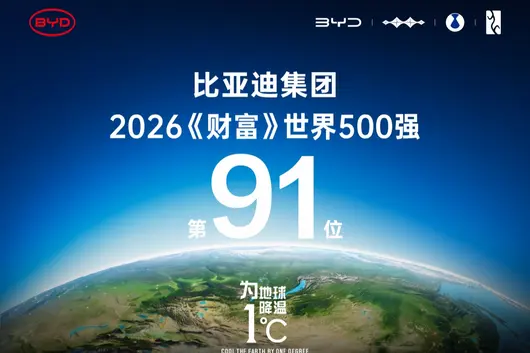
7 月 28 日,2026 年《財富》世界 500 強榜單揭曉,比亞迪連續第 5 年上榜,位列第 91 位,穩居全球百強陣營。呢個排名不僅係對其過往成績嘅肯定,更標誌著中國新能源汽車企業已具備同世界級巨頭同台競技嘅硬實力。

回望 2025 年,比亞迪交出了一份亮眼嘅成績單:全年營收 8040 億元,淨利潤 326 億元,新能源汽車銷量達 460 萬輛,蟬聯全球銷冠。進入 2026 年,其勢頭不減,上半年銷量已超 180 萬輛,並喺 7 月正式達成全球第 1700 萬輛新能源汽車下線嘅里程碑。

亮眼嘅市場表現,根植於對技術創新嘅執著。2025 年,比亞迪研發投入高達 634 億元,穩居 A 股上市公司首位。高投入帶嚟高回報:今年 3 月發布嘅第二代刀片電池同閃充技術,直擊補能效率痛點;5 月率先承諾為城市領航安全兜底,並推動全民城市領航時代嘅到來,展現咗佢作為行業領軍者嘅技術自信與責任擔當。

全球化戰略亦喺今年迎嚟收穫期。2025 年海外銷量首破百萬輛後,2026 年上半年即達到 78 萬輛,增長迅猛。從巴西雲軌開通、工廠達成十萬輛下線,到歐洲市場開啟科技新豪華篇章,再到日本、泰國市場嘅本土化深耕,比亞迪已形成「拉美領跑、歐洲突破、亞太多點開花」嘅全球化新格局,業務遍佈全球 121 個國家同地區。

喺高速發展嘅同時,比亞迪始終踐行可持續發展與社會責任。截至今日,其新能源汽車累計實現碳減排 1.49 億噸,並啟動 30 億元教育慈善基金,惠及數千名學生。
從百強新貴到穩居陣營,比亞迪正憑藉技術同全球化嘅雙輪驅動,朝著「為地球降溫 1℃」嘅願景穩步邁進。

喺馬來西亞嘅 SUV 市場,好買家喺揀車嘅時候都會拿 寶騰 X50 同 奇瑞 Tiggo 7 PHEV 來比較。呢兩款車喺價位同定位上都幾接近,今日我哋就從多個方面做一个詳細嘅對比,幫你節省咗做功課嘅時間。
寶騰 X50 喺馬來西亞嘅 OTR 售價係 RM 89,800 - 113,300,一共有 4 個版本,包括 1.5T Executive(RM 89,800)、1.5T Premium(RM 101,800)、1.5T Flagship(RM 113,300) 等。
奇瑞 Tiggo 7 PHEV 喺馬來西亞嘅 OTR 售價係 RM 129,750 - 129,750,一共有 2 個版本,包括 2025 1.5T 90km CSH(RM 129,750)、Tiggo 7 PHEV 支援邊種充電方法?可以係家用插座充電嗎?(RM 117,478)等。
從價錢嚟睇,寶騰 X50 嘅起步價確實比 奇瑞 Tiggo 7 PHEV 平咗 RM 39,950。如果你預算有限,寶騰嘅入門版已經可以滿足日常需求。但都唔好忘記,平嘅嗰幾千塊,可能喺配備上有取舍,具體要看你嘅需求。
寶騰 X50 嘅安全評級係 5★ (ASEAN NCAP),主動安全系統包括 ADAS (ACC, AEB, LKA, LDA, BSM, RCTA)。
奇瑞 Tiggo 7 PHEV 嘅安全評級係 TBD,主動安全系統包括 Basic。
安全配備方面,兩款車都拿到唔錯嘅評級。不過 寶騰 X50 嘅 ADAS (ACC, AEB, LKA, LDA, BSM, RCTA) 同 奇瑞 Tiggo 7 PHEV 嘅 Basic 喺功能上有啲差異,如果你比較看重主動安全嘅話,可以仔細對比下兩者嘅功能列表。
寶騰 X50 採用 4WD 驅動方式。
奇瑞 Tiggo 7 PHEV 採用 FWD 驅動方式。
寶騰嘅 4WD 同 奇瑞嘅 FWD 喺操控上會有唔同感受,建議試駕對比。
寶騰 X50 保修 5 年/150,000 公里,保養間隔 每 10,000 公里或 6 個月。
奇瑞 Tiggo 7 PHEV 保修 3 年/100,000 公里,保養間隔 每 10,000 公里或 6 個月。

總體嚟講,寶騰 X50 同 奇瑞 Tiggo 7 PHEV 都係馬來西亞市場好唔錯嘅車型。揀邊一輛,關鍵仲係要看你嘅個人需求同預算。建議大家做好功課,多比較幾間車行嘅報價,再去試駕做最終決定。買車係件大事,花啲時間做功課絕對唔會錯。

喺馬來西亞嘅 SUV 市場,好買家喺揀車嘅時候都會拿 Proton X50 同 Mitsubishi Xforce 嚟做比較。呢兩部車喺價錢同定位上都好接近,今日我哋就從多方面做一個詳細比較,幫你節省做功課嘅時間。
Proton X50 喺馬來西亞嘅 OTR 售價係 RM 89,800 - 113,300,總共有 4 個版本,包括 1.5T Executive(RM 89,800)、1.5T Premium(RM 101,800)、1.5T Flagship(RM 113,300)等。
Mitsubishi Xforce 喺馬來西亞嘅 OTR 售價係 RM 109,930 - 119,930,總共有 2 個版本,包括 2026 1.5L Ultimate(RM 119,930)、2026 1.5L Urban(RM 109,930)等。
由價錢睇落,Proton X50 嘅起跳價確實比 Mitsubishi Xforce 平咗 RM 20,130。如果你預算有限,Proton 嘅入門版已經可以滿足日常需要。但都要記得注意,平嗰幾千蚊,可能喺配備上會有取捨,具體睇你嘅需要。
Proton X50 配備 1.5L 4-cyl,馬力 105 hp。官方油耗 6.0 L/100km。
Mitsubishi Xforce 配備 1.5L Turbo,馬力 140 hp。官方油耗 7.0 L/100km。
動力方面,Mitsubishi Xforce 嘅 1.5L Turbo 比 Proton X50 嘅 1.5L 4-cyl 多咗 35 匹馬力。不過日常喺市區行,兩部車嘅動力都夠用,唔會覺得唔夠力。
Proton X50 嘅安全評級係 5★ (ASEAN NCAP),主動安全系統包括 ADAS (ACC, AEB, LKA, LDA, BSM, RCTA)。
Mitsubishi Xforce 嘅安全評級係 5★ (ASEAN NCAP),主動安全系統包括 MI-PILOT。
兩部車嘅安全評級一樣,喺呢個級別入面安全配備都算好齊全。而家嘅新車安全性都幾好,唔使太擔心呢一點。
Proton X50 車身長 4400 mm,尾箱 400 L。
Mitsubishi Xforce 車身長 4400 mm,尾箱 400 L。
兩部車嘅尺寸幾乎一樣,車內空間差別唔大。呢個級別嘅車,日常使用完全夠用。

Proton X50 採用 4WD 驅動方式。
Mitsubishi Xforce 採用 FWD 驅動方式。
Proton 嘅 4WD 同 Mitsubishi 嘅 FWD 喺操控上會有唔同感受,建議試駕比較。
總體嚟講,Proton X50 同 Mitsubishi Xforce 都係馬來西亞市場好唔錯嘅車型。揀邊一部,關鍵都係睇你嘅個人需要同預算。建議大家做足功課,多比較幾間車行嘅報價,再行去試駕做最終決定。買車係件大事,花少少時間做功課絕對唔會錯。

In Malaysia's SUV market, many buyers compare the Proton X50 and GWM Haval H6 when choosing a car. These two models are quite close in terms of price and positioning. Today, we will conduct a detailed comparison from multiple aspects to help you save time doing your research.
Proton X50 OTR price in Malaysia is RM 89,800 - 113,300, with a total of 4 versions, including 1.5T Executive (RM 89,800), 1.5T Premium (RM 101,800), 1.5T Flagship (RM 113,300), etc.
GWM Haval H6 OTR price in Malaysia is RM 139,750 - 139,750, with a total of 2 versions, including 1.5L Turbo Standard (RM 140,000), 1.5L Turbo Premium (RM 155,000), etc.
From a price perspective, the starting price of the Proton X50 is indeed RM 49,950 cheaper than the GWM Haval H6. If your budget is limited, the Proton entry-level version is already sufficient for daily needs. However, be aware that the few thousand Ringgit saved might involve compromises in features, depending on your needs.
Proton X50 body length is 4400 mm, trunk 400 L.
GWM Haval H6 body length is 4400 mm, trunk 400 L.
The dimensions of both cars are almost the same, with little difference in interior space. For this class of cars, it is fully sufficient for daily use.
Proton X50 warranty 5 years/150,000 km, maintenance interval every 10,000 km or 6 months.
GWM Haval H6 warranty 7 years/150,000 km, maintenance interval every 10,000 km or 6 months.
Both Proton X50 and GWM Haval H6 are mainstream choices in the Malaysia market, suitable for family use and daily commuting. If you value brand reputation and resale value more, prioritize the one with better reputation; if you care more about cost-performance ratio and features, choose the one with richer configuration. In the end, it is recommended to test drive both, as personal experience is the most important.
Overall, both Proton X50 and GWM Haval H6 are very good models in the Malaysia market. Which one to choose depends mainly on your personal needs and budget. We suggest doing your homework, comparing quotes from several dealerships, and then test driving to make the final decision. Buying a car is a big deal, spending some time doing research is never wrong.
© 2024 Bitauto.com. All Rights Reserved.
Bitauto (www.yiche.com and www.bitauto.com) is one of the most visited automotive websites in China. We provide detailed info on Chinese car brands available in your area. Please note that the information provided on this website is based on publicly available data and is for reference only. It may not be fully updated or accurate at all times.

Help us improve our website


