

Homefellow

Search History
Popular Searches
Dealer Login / Sign Up

Di pasaran SUV di Malaysia, ramai pembeli yang membandingkan Honda CR-V dan Chery Tiggo 8 Pro semasa memilih kereta. Kedua-dua kereta ini mempunyai harga dan penarafan yang agak dekat, hari ini kita akan buat perbandingan terperinci dari pelbagai aspek, membantu anda menjimatkan masa untuk membuat kajian.
Honda CR-V mempunyai harga OTR di Malaysia dari RM 178,200 - 195,900, keseluruhan ada 4 versi, termasuk 2026 e:HEV 2.0L 2WD RS (RM 195,900), 2026 1.5T 4WD V (RM 181,900), 2026 e:HEV 2.0L 2WD E (RM 178,200) dan lain-lain.
Chery Tiggo 8 Pro mempunyai harga OTR di Malaysia dari RM 159,750 - 159,750, keseluruhan ada 2 versi, termasuk 1.6L Turbo Standard (RM 130,000), 1.6L Turbo Premium (RM 145,000) dan lain-lain.
Dari segi harga, permulaan Chery Tiggo 8 Pro lebih murah RM 18,450 berbanding Honda CR-V. Secara jujur, pada julat harga ini, beza beberapa ribu sebenarnya tidak besar, yang penting masih melihat nisbah nilai keseluruhan dan kos penggunaan jangka panjang.

Honda CR-V dilengkapi enjin 2.0L 4-cyl, kuasa 170 hp. Penggunaan minyak rasmi 8.0 L/100km.
Chery Tiggo 8 Pro dilengkapi enjin 2.0L 4-cyl, kuasa 170 hp. Penggunaan minyak rasmi 8.0 L/100km.
Kedua-dua kereta menggunakan sistem kuasa yang sama, perasaan apabila memandu sehari-hari pada dasarnya tiada beza. Dari segi penggunaan minyak juga hampir sama, tidak perlu terlalu bimbang tentang perkara ini.

Honda CR-V jaminan 5 tahun/jarak tanpa had, selang servis 10,000km atau 6 bulan.
Chery Tiggo 8 Pro jaminan 3 tahun/100,000km, selang servis 10,000km atau 6 bulan.

Honda CR-V dan Chery Tiggo 8 Pro kedua-duanya pilihan utama pasaran Malaysia, sesuai untuk kegunaan keluarga, perjalanan harian. Jika anda lebih mementingkan kredibiliti jenama dan harga terpakai, boleh utamakan yang mempunyai reputasi lebih baik; jika anda lebih mementingkan nisbah nilai dan kelengkapan, maka pilih yang mempunyai kelengkapan lebih banyak. Pada akhirnya cadangan untuk memandu kedua-dua model, pengalaman sendiri adalah yang paling penting.
Secara keseluruhannya, Honda CR-V dan Chery Tiggo 8 Pro kedua-duanya model yang cukup bagus di pasaran Malaysia. Memilih yang mana satu, yang penting masih lihat keperluan dan bajet peribadi anda. Kami cadangkan buat kajian, bandingkan beberapa sebut harga pengedar kereta, kemudian uji memandu buat keputusan akhir. Membeli kereta adalah perkara besar, luangkan masa untuk membuat kajian tidak akan salah.


In the Malaysian SUV market, many buyers compare Honda CR-V and Toyota Fortuner when choosing a car. These two cars are quite close in price and positioning. Today, we will make a detailed comparison from multiple aspects to help you save time doing research.
Honda CR-V's OTR price in Malaysia is RM 178,200 - 195,900. There are 4 versions in total, including 2026 e:HEV 2.0L 2WD RS (RM 195,900), 2026 1.5T 4WD V (RM 181,900), 2026 e:HEV 2.0L 2WD E (RM 178,200), etc.
Toyota Fortuner's OTR price in Malaysia is RM 195,880 - 241,880. There are 3 versions in total, including 2024 2.8T VRZ Diesel (RM 241,880), 2024 2.7L SRZ Petrol (RM 202,880), 2024 2.4L Standard Diesel (RM 195,880), etc.
Looking at the price, the starting price of Honda CR-V is indeed RM 17,680 cheaper than Toyota Fortuner. If your budget is limited, Honda's entry-level version is already sufficient for daily needs. However, note that the few thousand ringgit cheaper might involve trade-offs in features, depending on your specific requirements.
Honda CR-V features a 2.0L 4-cyl, 170 hp. Official fuel consumption 8.0 L/100km.
Toyota Fortuner features a 2.5L Diesel, 187 hp. Official fuel consumption 8.5 L/100km.
In terms of power, Toyota Fortuner's 2.5L Diesel has 17 more horsepower than Honda CR-V's 2.0L 4-cyl. However, for daily driving in the city, the power of both cars is sufficient, you won't feel it lacks power.
Honda CR-V's safety rating is 5★ (ASEAN NCAP), active safety systems include Honda SENSING (ACC, CMBS, LKAS, RDM).
Toyota Fortuner's safety rating is 5★ (ASEAN NCAP), active safety systems include.
Both cars have the same safety rating. In this class, safety features are considered quite complete. New car safety is not bad nowadays, no need to worry too much about this.
Honda CR-V body length 4500 mm, trunk 450 L.
Toyota Fortuner body length 4400 mm, trunk 400 L.
In terms of space, Honda CR-V's body is 100 mm longer than Toyota Fortuner, passenger space inside will be slightly more spacious, especially rear legroom. If you frequently carry family or need to place a stroller, a slightly larger body is indeed more practical.

Honda CR-V and Toyota Fortuner are both mainstream choices in the Malaysian market, suitable for family use and daily commuting. If you value brand reputation and resale value more, you can prioritize the one with better reputation; if you care more about cost-performance and features, choose the one with richer configuration. In the end, it is recommended to test drive both, personal experience is the most important.

Overall, Honda CR-V and Toyota Fortuner are both very good models in the Malaysian market. Which one to choose depends on your personal needs and budget. It is recommended to do your homework, compare quotes from multiple dealerships, and then test drive to make a final decision. Buying a car is a big matter, spending time doing homework will never be wrong.

喺馬來西亞嘅 SUV 市場,好多買家喺揀車嘅時候都會拿 Honda CR-V 同 Mazda CX-3 嚟做比較。這兩款車喺價位同定位上都好接近,今日我哋就從多個方面做一次詳細嘅比較,幫你節省做功課嘅時間。
Honda CR-V 喺馬來西亞嘅 OTR 售價係 RM 178,200 - 195,900,合共有 4 個版本,包括 2026 e:HEV 2.0L 2WD RS(RM 195,900)、2026 1.5T 4WD V(RM 181,900)、2026 e:HEV 2.0L 2WD E(RM 178,200) 等。
Mazda CX-3 喺馬來西亞嘅 OTR 售價係 RM 126,159 - 139,159,合共有 2 個版本,包括 2023 2.0L High(RM 139,159)、2023 2.0L Plus(RM 126,159) 等。
從價錢嚟睇,Mazda CX-3 嘅起步價比 Honda CR-V 平咗 RM 52,041。老實講,喺呢個價位段,幾千蚊嘅差距其實唔算大,關鍵都係睇整體嘅性價比同長期使用成本。
Honda CR-V 嘅安全評級係 5★ (ASEAN NCAP),主動安全系統包括 Honda SENSING (ACC, CMBS, LKAS, RDM)。
Mazda CX-3 嘅安全評級係 5★ (ASEAN NCAP),主動安全系統包括 i-Activsense。
兩款車嘅安全評級一樣,喺呢個級別入面安全配備都算畀到好齊全。而家嘅新車安全性都唔差,唔使太擔心這一點。
Honda CR-V 保修 5 年/無限制里程,保養間隔 每 10,000km 或 6 個月。
Mazda CX-3 保修 5 年/150,000km,保養間隔 每 10,000km 或 6 個月。
Honda CR-V 同 Mazda CX-3 都係馬來西亞市場嘅主流選擇,適合家庭使用、日常通勤。如果你更重視品牌口碑同二手價,可以優先考慮口碑更好嗰款;如果你更在意性價比同配備,就揀配置更豐富嗰款。最後都係建議兩款都去試駕,親身體驗先係最重要。

總括嚟講,Honda CR-V 同 Mazda CX-3 都係馬來西亞市場好唔錯嘅車型。揀邊一部,關鍵都要睇你嘅個人需求同預算。建議大家做好功課,多比較幾間車行之嘅報價,再去試駕做最終決定。買車係件大事,花啲時間做功課絕對唔會錯。


燒咗十幾年錢嘅自動駕駛,正係出現一個唔太常見嘅信號。
一家依然將超過七成收入投入研發嘅公司,正係逼近經營上嘅盈虧平衡。
Momenta 上市后嘅首份半年報顯示,今年上半年公司營收 16.01 億元,按年增長 76%;經調整淨虧損僅 1409.7 萬元,按年收窄 96.6%。
更加值得注意嘅係,呢並唔係靠削減研發換嚟嘅。
Momenta 嘅研發投入達到 11.63 億元,按年增長 18.7%,收入增長速度係研發增長速度嘅四倍。

Robotaxi 嘅盈利仲需要以年為單位嚟等待,但 Momenta 似係衝刺緊。業績會議上,Momenta 執行董事兼首席幕僚長安韧點破「自動駕駛天生就持續燒錢」呢個誤區。
如果持續燒錢唔係自動駕駛嘅宿命,咁 Momenta 搵到嘅呢條新路,到底係咩?
01、自動駕駛第一次開始變成一門規模生意當所有人都在追求自動駕駛嘅無人化,Momenta 實際上係解決另一個更基礎嘅問題:自動駕駛點先係一門規模化嘅軟件生意。
2016 年,L4 自動駕駛風頭正盛,Robotaxi 係資本市場最熱嘅故事,Momenta 卻同時選擇咗並唔性感嘅 L2 量產路線。
而 L2 量產呢條唔性感嘅路,埋咗三個關鍵籌碼:進入更多車型嘅入口,真實世界數據,以及喺不斷適配中磨出嚟嘅工程能力。
自動駕駛唔係純軟件。佢要進入汽車,要經歷唔同車型、傳感器、計算平台、車身控制,仲要面對唔同市場嘅法規、道路同安全驗證標準。
每一層適配,都係實打實嘅工程投入。
真正難嘅地方就喺呢度:自動駕駛嘅規模化需要「反復適配」,點樣把一套極度依賴工程適配嘅技術,變成一個可以不斷複製嘅產品。
自動駕駛拼到最後,已經唔喺算法強度,而在於「邊個能夠把技術複製到足夠多嘅車上」。
而 Momenta 好早就認準咗「量產輔助駕駛同無人駕駛兩條腿走路」:
工程標準化,令技術能力可以喺唔同車型上複製。
從 2017 年拿到奔馳投資,到 2025 年底首個項目量產,十年埋落嘅量產規模同工程體系,今日開始改變自動駕駛嘅增長公式。
交付一個車型項目需要嘅資源,從早期嘅 400 人奮戰兩年,壓縮到數十人三個月。

沉澱一套可複製嘅工程能力,畀規模生意打下咗基礎。
「铺天盖地」(Blanket Coverage)呢個策略,唔係一個「多簽客戶」嘅戰術,透出嘅係 Momenta 嘅經營邏輯:唔押注少數爆款,鋪足夠多嘅車型。
底層邏輯係大數法則:單一車型嘅銷量波動,會被整體規模嘅確定性所稀釋。
OEM 自己都無法準確預測單一車型嘅銷量,Momenta 唔賭運氣,用覆蓋面把波動攤薄。
2026 年上半年,Momenta 新增點位 49 個,意思係平均每月超過 8 款,累計 219 個。新增裝載 32.1 萬台,累計突破 100 萬台。
第一個 10 萬台,花咗 24 個月,而最新 10 萬台交付只用咗 36 日。
「铺天盖地」真正對沖嘅,唔單單係單一車型銷量嘅不確定性,亦都係自動駕駛商業化嘅不確定性。
對於傳統 Tier 1 嚟講,多賣一個零部件,就多一份收入。
但對自動駕駛嚟講,量產車唔單單係收入來源,亦都係最大嘅現實世界數據入口。量產規模令數據嘅廣度、密度同持續性達到另一個量級。
車型足夠多,單車波動就會被規模攤平。而規模越大,數據、收入同研發效率又會同時改善。
「铺天盖地」嘅本質,係主動把商業規模,變成技術規模。
車型鋪得越多,真實數據就越多,模型迭代越快,技術壁壘越厚。Momenta 嘅量產業務,滾成咗自我加速嘅飛輪。
規模係自動駕駛牌桌嘅入場券,喺規模競賽入面站穩,先有機會喺自動駕駛「數據—模型—商業」嘅閉環入面佔據主動。

規模做咗起嚟,利潤並唔會自動跟埋上嚟。
2026 年嘅中國汽車市場,價格戰已經打到白熱化。從整車到零部件,從硬件到軟件,幾乎所有環節都在被捲進降價嘅漩渦。
「铺天盖地」聽落似價格戰打法,但恰恰相反,Momenta 冇掉進呢個坑,反而提高咗自己嘅技術價值。
每進入一個新項目,重新適配唔同嘅傳感器、芯片同車身控制,一度係智駕供應商頭痛嘅問題。適配成本降唔落嚟,收入就滾唔起嚟。
真正決定智駕供應商點樣賺到錢嘅,唔係賣出幾多套,而係新增一套系統仲要增加幾多成本。呢背後,係兩種商業模式嘅根本區別:
規模化嘅真正門檻,在於工程標準化,把「每次重嚟」變成「一次沉澱」。
當技術平台化之後,每增加一個客戶所帶來嘅邊際成本持續下降,利潤就會自然顯現。
Momenta 嘅收入分兩層:
挖井越來越快,飲水越來越多,結構自然得到改善。
過去三年,許可收入佔比不斷提高,推動毛利率上行。
車型量產之後,每賣一輛車,Momenta 就收取一筆一次性軟件許可費,唔需要再投入大量工程人力。
對比 2025 年同期,軟件許可收入佔比雖然從 39.8% 降至 37.9%,但收入本身仍增長 67.5%。
佔比下降並唔係許可業務失速,而係技術開發服務增長更快,佔比提升咗 1.9 個百分點。呢係指 Momenta 嘅擴張效率喺提高,用更輕嘅投入,鎖定更多車型入口。
支撐效率提升嘅,係 R7 世界模型。相比上一代 R6,R7 喺多個場景入面做到咗 3 至 5 倍嘅性能提升。
更加值得注意嘅一點係:佢唔使讓客戶換硬件。傳感器同芯片配置延續 R6,升級主要靠軟件同算法。

全球首發搭載 Momenta R7 世界模型嘅上汽大眾旗艦 SUV ID. ERA 9X
對於一家智駕供應商嚟講,軟件升級最重要嘅意義,一方面係用戶體驗提升,已經用上 R6 嘅客戶,唔需要額外掏硬件錢,一次 OTA 就能換嚟數倍嘅體驗升級。
另一方面,係讓過去嘅研發投入能夠持續產生收入同價值。R7 通過 OTA,令硬件繼續釋放價值,研發投入被反復調用。
研發成果繼續釋放,用戶繼續留喺平台上,單套技術嘅生命週期價值因此提高,先至係真正嘅技術護城河。
國內量產驗證嘅係規模化能力,海外驗證嘅就係技術嘅泛化能力。
國內可以透過長期合作、供應鏈、法規同道路環境積累形成效率優勢。
但去到海外,唔同國家嘅道路、法規、駕駛習慣同車輛平台全部發生變化,原有技術係咪能夠低成本遷移,先至係真正嘅考驗。
海外業務拓展已經成為 Momenta 嘅核心增長主線。搭載 Momenta 方案嘅車型已經進入 10 多個國家同地區,包括挪威、英國、阿聯酋、新加坡、澳洲、新西蘭、泰國。
Robotaxi 業務喺 3 個國家、6 個城市測試或營運。

Momenta 接近經營層面嘅盈虧平衡,唔係因為佢喺價格戰入面贏咗。
喺更高強度嘅研發投入下,交付效率上嚟咗,平台化複用跑起咗,收入增速 76%,研發增速 18.7%,令每一分研發投入撬動更多嘅收入。
自動駕駛嘅造血邏輯,係令研發投入嘅效率最大化,令收入增速持續跑贏投入增速。
03、當規模飛輪轉起嚟,自動駕駛就唔止係自動駕駛如果 Momenta 只想成為一家更賺錢嘅智駕供應商,做到呢度其實已經夠咗。
真正值得關注嘅係,Momenta 為咗乜嘢仲要繼續把大量資金投入世界模型、Robotaxi、Robovan,甚至機器人。
答案可能藏喺「規模化」三個字入面。
當量產車把數據、算力、模型同工程能力積累到一定規模之後,呢套能力嘅價值就唔再只屬於汽車。

曹旭東打咗個比喻:實現自動駕駛,好似登月咁。有人選擇去爬離月亮最近嘅珠穆朗瑪峰,Momenta 選擇嘅係造火箭。
量產業務,就係造火箭嘅過程;R7 世界模型,就係呢台火箭嘅發動機。
R7 世界模型嘅運轉,建立喺「四個 Scaling」嘅閉環之上:
第一層:Data Scaling,數據越多,模型越懂世界。
截至 2026 年 6 月,超過 100 萬輛量產車搭載 Momenta 方案,超過 130 億公里真實駕駛里程、超過 1 億段「黃金數據」,幫助模型更精準地理解物理世界嘅運行規律。
第二層:Compute Scaling,算力越大,訓練效率越高。
Momenta 每日超 1000 萬公里仿真,算力規模喺逐年提升,模型可以喺虛擬環境入面反復推演、試錯同優化。
第三層:Model Scaling,模型越強,產品體驗越好。
隨著數據同算力嘅增長,R7 世界模型嘅參數量正在快速擴大,更強嘅場景理解能力、更擬人嘅駕駛行為,以及更安穩嘅決策表現,轉化为用户可感知嘅產品體驗。
第四層:Business Scaling,車越多,數據亦都越來越多。
數據湧向訓練算力,算力餵模型,模型更強,體驗跟著變好,更多車型願意點位,商業收入入嚟。
而呢啲新點位嘅車再上路,又變成咗下一輪數據嘅來源。R7 唔係普通嘅模型,係一台靠規模自我加速嘅機器。

如果只做量產業務,研發投入係費用,每花一分,利潤就薄一分。
但喺呢個模型入面,研發投入係飛輪嘅燃料,換嚟嘅係持續轉動、自我加速嘅能力。
乘用車、Robotaxi、Robovan、Robotruck,甚至未來嘅機器人,都可以共用同一個世界模型基座。
以前自動駕駛嘅研發投入像一筆筆項目成本。
到咗而家呢個階段,世界模型更似係一項可以跨車型、跨場景复用嘅基礎設施,唔應該被「輔助駕駛」限制住。
盈虧平衡路徑,核心在於技術底座被反復調用,裝車量只係呢條路上嘅自然結果。

Momenta Robovan 面向快遞配送、夜間配送等場景
Momenta 將七成收入砸進研發,睇嘅唔只係眼前利潤,仲有量產業務之外更大嘅價值空間,從「ADAS」推向更廣闊嘅物理世界。
Robovan 已喺苏州試營運,面向城市末端物流,Momenta 畀出嘅時間表亦好清晰:
Momenta 逼近經營層面嘅盈虧平衡,唔係因為佢突然搵到降本增效嘅秘籍。
準確嚟講,自動駕駛由一項昂貴嘅技術,變成一套能夠自我造血、持續擴張嘅產業系統,盈利拐點只係呢套系統開始轉起嚟嘅一個信號。
汽車軟件可能只係 Momenta 進入物理 AI 嘅起點。
如果世界模型最終成為理解物理世界嘅通用底座,咁汽車可能只係佢最先規模化落地嘅場景之一。
真實世界數據、模型能力、量產規模一旦齊備,業務嘅邊界就唔再係輔助駕駛,而係進入任何需要理解物理世界嘅領域。


Di pasaran SUV di Malaysia, ramai pembeli akan membandingkan Honda HR-V dengan Chery Tiggo 8 apabila memilih kereta. Kedua-dua kereta ini agak hampir dalam harga dan penempatan, hari ini kita akan membuat perbandingan terperinci dari pelbagai aspek untuk membantu anda menjimatkan masa untuk membuat kajian.
Harga OTR Honda HR-V di Malaysia adalah RM 115,900 - 143,900, terdapat keseluruhan 4 versi, termasuk 2026 e:HEV 1.5L RS (RM 143,900), 2026 1.5T V (RM 137,900), 2026 1.5T E (RM 130,900) dan lain-lain.
Harga OTR Chery Tiggo 8 di Malaysia adalah RM 129,750 - 129,750, terdapat keseluruhan 1 versi, termasuk 2026 1.6T Standard (RM 129,750) dan lain-lain.
Dari segi harga, harga permulaan Honda HR-V memang RM 13,850 lebih murah daripada Chery Tiggo 8. Jika bajet anda terhad, versi asas Honda sudah boleh memenuhi keperluan harian. Tetapi perlu diingat, beberapa ribu ringgit yang lebih murah itu, mungkin ada pengorbanan dalam pelengkapan, bergantung kepada keperluan anda.

Pengkelasan keselamatan Honda HR-V ialah 5★ (ASEAN NCAP), sistem keselamatan aktif termasuk Honda SENSING (ACC, CMBS, LKAS, RDM).
Pengkelasan keselamatan Chery Tiggo 8 ialah TBD, sistem keselamatan aktif termasuk Basic.
Dari segi pelengkapan keselamatan, kedua-dua kereta telah mendapat pengkelasan yang baik. Walau bagaimanapun, Honda SENSING (ACC, CMBS, LKAS, RDM) pada Honda HR-V dan Basic pada Chery Tiggo 8 mempunyai perbezaan dalam fungsi, jika anda lebih mengutamakan keselamatan aktif, anda boleh membandingkan senarai fungsi kedua-duanya.

Panjang kenderaan Honda HR-V 4500 mm, ruang bagasi 450 L.
Panjang kenderaan Chery Tiggo 8 4400 mm, ruang bagasi 400 L.
Dari segi ruang, badan Honda HR-V lebih panjang 100 mm daripada Chery Tiggo 8, ruang duduk di dalam kereta akan sedikit lebih lapang, terutamanya ruang kaki barisan belakang. Jika anda kerap membawa keluarga atau perlu meletakkan kerusi bayi, badan yang lebih besar memang lebih praktikal.

Honda HR-V menggunakan cara pemanduan FWD.
Chery Tiggo 8 menggunakan cara pemanduan FWD.
Cara pemanduan kedua-dua kereta adalah sama, iaitu FWD, pengalaman memandu harian tidak akan berbeza banyak.

Secara keseluruhan, Honda HR-V dan Chery Tiggo 8 adalah model kereta yang agak baik di pasaran Malaysia. Memilih yang mana satu, kuncinya masih bergantung pada keperluan dan bajet peribadi anda. Disarankan untuk membuat kajian dengan baik, bandingkan banyak tawaran daripada banyak dealer kereta, kemudian buat ujian pemanduan untuk membuat keputusan akhir. Membeli kereta adalah perkara besar, meluangkan sedikit masa untuk membuat kajian tidak akan salah.



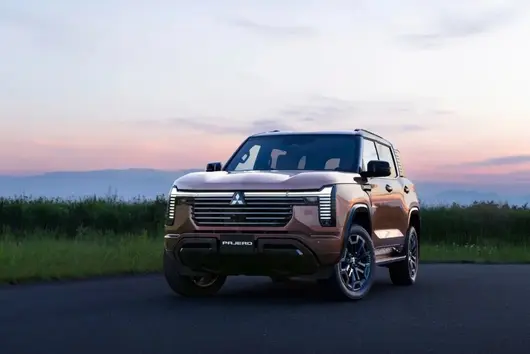
暌別 20 年,達喀爾傳奇帕傑羅終於迎來全新換代。
9 月 2 日,三菱汽車在東京正式發佈全新一代帕傑羅。作為三菱汽車新一代旗艦車型,全新帕傑羅由泰國生產基地製造,將率先登陸泰國市場,隨後於 2026 年在日本和澳洲推出,自 2027 年起逐步進入東盟、拉丁美洲、中東等全球約 100 個國家和地區。

全新帕傑羅延續了初代車型直立硬朗的車身比例與水平設計基調,強有力的輪拱與雕塑感車身曲面進一步強化了視覺張力。車頭設計靈感源自日本劍道,傳達內斂而強大的內在力量,提供橫條幅與蜂窩狀兩種格柵樣式。車燈採用標誌性 T 型設計,兼具現代感與科技感。

新車車身尺寸為 4920×1925×1910 毫米,軸距 2870 毫米,最小離地間隙 230 毫米,接近角 30.4°、通過角 22.6°、離去角 25.8°,52:48 的前後配重比進一步優化了越野穩定性。
經典元素在車身隨處可見:C 柱造型致敬初代車型的防滾架,六邊形尾部設計則重新演繹了歷代帕傑羅的外掛備胎。車身提供兩大金屬漆主題色——裝甲銅凸顯金屬厚重感,幻影藍則在灰藍基調中融入金色光澤,隨光線變化呈現精緻質感。
全新帕傑羅採用三排七座佈局,二排座椅擁有 150 毫米滑動行程並支持摺疊,三排為成人提供充足頭部空間,腳部可伸入二排座椅下方。前排及二排配備座椅通風,三區自動空調獨立控溫。

座艙採用水平延展式儀表板,集成兩塊 14.3 英寸高分辨率屏幕(部分配置為 12.3 英寸),歷代帕傑羅標誌性的三圓儀表被重新演繹為 Multi Meter 多功能顯示,可實時呈現海拔、羅盤、溫度、車身俯仰側傾角及 AYC 控制狀態等越野資訊。儀表台與門板採用靈感源自日本傳統"木目込"工藝的縫線軟質包覆,營造旗艦級豪華氛圍。內飾提供 Camel(駝色)配色,與黑色形成精緻對比。

新車在靜謐性上大幅升級,前擋風及前後車門均採用聲學玻璃,配合全車隔音措施,確保高速行駛時三排乘客均可自然交談。信息娛樂系統支援無線手機互聯,儀表提供 16 種隨時間實時變化的背景主題。

動力方面,全新帕傑羅搭載 2.4 公升柴油引擎,配備寬量程單可变截面渦輪(VGT),最大扭矩達 480 牛·米(部分配置 470 牛·米),匹配全新開發的 8 速手自一體變速箱(帶運動模式),兼顧低速爆發力與高速平順性。

越野性能依然毫不妥協,高剛性梯形大樑採用更多高強度鋼,在減重的同時顯著提升抗扭與抗彎剛度;懸掛為前雙叉臂獨立式 + 後全新五連桿硬軸結構,長行程設計確保輪胎在複雜地形下的貼地性。

全新帕傑羅配備三菱 S-AWC 綜合車輛動態控制系統與 SS4-II 超選四驅 II,提供 2H、4H、4HLc、4LLc 四種四驅模式,以及標準、經濟、碎石、雪地、泥地、沙地、岩石共七種駕駛模式。

安全配備方面,新車搭載 FCM 前方碰撞減緩(含行人/騎車者/摩托車偵測及路口輔助)、PFCW 預測性前方碰撞預警、EAPM 誤踩加速輔助,並首次配備 ELA 緊急車道輔助與 FCTA 前方交叉路口預警。MI-PILOT 高速單車道駕駛輔助系統整合 ACC 與 LKA,緩解長途駕駛疲勞。全車配備 8 個安全氣囊,包括三菱首次應用的前排中央氣囊。此外,3D 多視角全景影像支援車底透視功能,越野時可實時查看車底路況。

自 1982 年誕生成以來,帕傑羅歷經四代更迭,累計產量突破 329 萬輛,足跡遍佈 170 多個國家和地區,是三菱汽車最具標誌性的車型之一。全新一代帕傑羅在延續初代以來"信心(Confidence)"與"舒適(Comfort)"產品哲學的基礎上,新增"尊貴(Prestige)"維度,以"Grand Charisma(宏大魅力)"為設計理念,豪華質感有了顯著提升,全方位進化為旗艦級跨界越野 SUV。
三菱汽車總裁兼首席運營官岸浦圭介表示:"全新帕傑羅是踐行三菱汽車 2030 年代中長期願景的首款車型,作為旗艦,它將引領後續帕傑羅系列乃至整個三菱汽車的產品陣容。"
本文作者為踢車幫 溫風

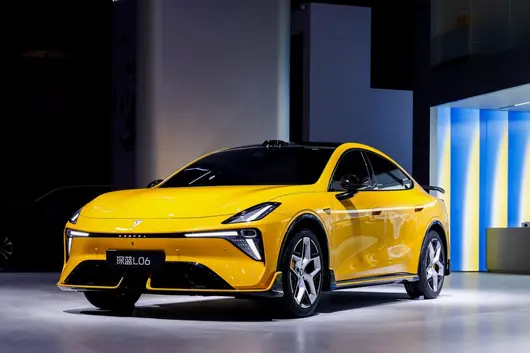
9月1日,深蓝汽车公布8月销量数据。凭借持续的技术迭代与智能进阶,深蓝汽车于8月打出一套产品焕新组合拳,全新深蓝S05、全新深蓝G318、深蓝L06三款战略车型在不同细分市场同时发力,共同构筑起品牌销量的核心支撑。在此驱动下,深蓝汽车8月全球销量28,659辆;1-8月全球累计销量222,028辆,同比增长11.77%;其中海外累计销量52,647辆,同比增长76.98%。截至8月底,深蓝汽车全球累计销量突破94.76万辆,加速冲刺百万大关。

全新深蓝S05上市即上量,科技平权释放爆款势能
作为深蓝汽车全球化战略核心主力,全新深蓝S05延续月均破万的爆款势能,8月全球销量17,474辆,同比增长43.42%,环比增长24.29%,领跑纯电动紧凑型SUV市场。亮眼成绩背后,是“科技平权”的扎实落地:激光雷达、一段式端到端算法、3nm车规级座舱芯片、FSD+HRS高阶可变自适应悬架等越级配置,在15万级主流市场一次性配齐,让更多用户以主流价格享受越级体验。体操奥运冠军何可欣作为全新深蓝S05首位明星车主,以冠军级严苛标准为新车实力证言,进一步印证了这款“全球时尚激光智能SUV”的品质底色。

截至目前,深蓝S05已累计收获超26万用户信赖,远销全球73个国家和地区,海外单月销量稳定突破6,000辆。在德国iF设计大奖、J.D. Power 2026中国新能源汽车新车质量研究紧凑型纯电动SUV第一名等国内外权威荣誉加持下,深蓝S05已成为中国新能源汽车高价值出海的标志性产品。
深蓝L06全新特别版首秀,运动驾趣之上再添砝码
深蓝L06,被誉为年轻人的第一台运动轿跑,凭借300万法拉利同款磁流变悬架与全场景新手友好型智能辅助驾驶,不仅精准匹配年轻用户对操控与智能的双重需求,更在15万级市场形成逆势上扬的销量势能,连续5个月销量突破5000辆,多个月位居20万内新能源中型车销量冠军。
值得一提的是,为进一步满足年轻用户对运动驾趣的进阶需求,搭载赛道化竞速套件的深蓝L06全新特别版亮相成都车展。车头立体风刃与一体式前铲、侧裙风刃造型装饰件,以及碳纤维材质固定大尾翼,让整车最高下压力高达1000N,激烈驾驶时车身姿态更紧致可控,过弯更爽、高速更稳,兼得日常舒适与赛道气场。

全新深蓝G318上市,激活20万级智能方盒子赛道
全新深蓝G318于成都车展正式上市,限时优惠价19.68万元-23.68万元,为20万级方盒子市场注入新的变量。作为20万级唯一搭载华为乾崑双智的方盒子,新车首次将华为乾崑ADS 5 Pro和鸿蒙座舱HarmonySpace 5带入该价位段,精准满足城市家庭“九成城市从容代步,一成户外随心撒野”的真实出行需求。配合同级唯一“空悬+CDC+魔毯”舒适三件套,与双电机真四驱、两把差速锁和ET全地形系统,全新深蓝G318让“每天好开,全家好坐,偶尔去野”成为城市家庭触手可及的日常。以“9城1野”重塑方盒子新标准,这款车将为深蓝汽车打开家庭全能出行的增量空间。

激光雷达加速全系上车,技术底色撑起销量成色
稳健的销量表现,源于长期积累的技术底气。目前,深蓝汽车加速推进全系车型量产搭载激光雷达与城区智能辅助驾驶系统,“智能”正成为品牌最具辨识度的竞争力。与此同时,电动化的自研底气同样坚实:《电池升压充电技术》发明专利荣获中国专利优秀奖;原力超集电驱技术历经多代演进,行业领先;金钟罩电池两获国家科学技术进步二等奖;微核高频脉冲加热技术摘得中国专利金奖,自研成果成为用户信任的技术支点。

扎实的技术与产品功底,同样支撑起海外市场的强势表现。作为长安汽车“海纳百川”计划的先行者,深蓝汽车已布局全球五大区域,覆盖超100个国家和地区,本月深蓝S05与深蓝S07相继登陆印尼国际车展、南非汽车展等海外市场,全球影响力持续攀升。此外,深蓝S07还荣获第二十六届中国专利外观设计银奖,设计实力获得国家级权威认可。
这份8月成绩单,印证的不只是一轮新品攻势的成功,更是深蓝汽车发展节奏愈发稳健的体现。新品效应、技术进阶、全球化扩张三线同频,深蓝汽车的每一步增长都有清晰的来路与去向。从科技平权的持续实践,到全球版图的稳步拓展,深蓝始终在做一件事:让高端智能体验成为更多普通人的日常。这不仅是深蓝汽车对全球94.76万用户的最好回馈,也是中国智造驶向世界舞台中央的底气。

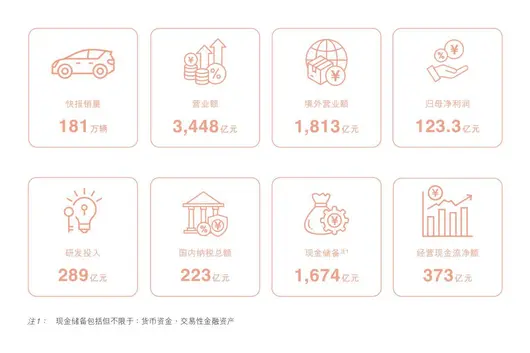
8月28日晚,比亚迪交出了2026年上半年的成绩单。在汽车行业价格战此起彼伏、不少车企利润被“卷”薄了的背景下,这份财报却传递出一个不太一样的信号:营业收入3448亿元,归母净利润123亿元,研发投入289亿元,现金储备1674亿元。

更值得注意的一组数据是:二季度净利润同比增长30%,毛利率攀升至18.9%,创下近一年新高。 换句话说,在行业普遍承压的上半年,比亚迪的赚钱能力反而在变强。这份“逆势上扬”的底气,究竟从何而来?
海外销量大增68%,高端车型占比升至12.6%
先看增长结构的变化。过去提到比亚迪,很多人想到的是“走量”。但从这份半年报来看,海外市场和高端品牌正在成为越来越重要的增长引擎。上半年,比亚迪海外销量达到79万辆,同比增长68%,业务已覆盖全球超过120个国家和地区。在英国、巴西、泰国等核心市场,比亚迪拿下了新能源汽车品牌的销量冠军。随着海外本地化产能陆续释放、渠道体系逐步完善,海外板块从“锦上添花”变成了“实打实的拉动力量”。与此同时,高端化也在加速落地。方程豹、腾势、仰望三大品牌上半年合计销量22.8万辆,同比增长61%,占总销量的比重升至12.6%。其中,方程豹销量达16万辆,同比增长163%;腾势6月单月销量首次突破2万辆,产品均价约36万元;仰望则成为国产新能源百万级豪车中销量最快破万的品牌。一边是海外市场打开空间,一边是高端产品拉高单价,这两条线共同推动了比亚迪产品结构的优化,也直接反映在了毛利率上——二季度18.9%的毛利率,正是这一趋势的量化体现。
财报中还有一个细节值得留意:上半年净利润增速相对温和,主要原因是汇率波动产生了汇兑损失。如果剔除这一因素,主营业务盈利依然平稳,经营底盘的韧性并未动摇。
研发投入289亿,超过净利润两倍还
比利润更“大方”的,是比亚迪在研发上的花钱力度。上半年,比亚迪研发投入289亿元,是同期净利润的两倍还多,继续蝉联A股“研发之王”。累计研发投入已经突破2700亿元。这么高的投入,换来了什么?今年3月,比亚迪发布第二代刀片电池及闪充技术,创下全球量产最快充电速度纪录,解决了“充电慢”和“低温充电难”两个老大难问题,并获得了工信部的认可。技术落地也在加速:依托“闪充中国”战略,全国已建成10000座闪充站,覆盖332座城市,并计划一年内在海外部署6000座闪充站。
智能化方面,比亚迪在5月率先承诺为城市领航安全兜底,加上此前为智能泊车安全兜底,成为全球唯一“双兜底”企业。截至7月31日,比亚迪辅助驾驶车型保有量超过352万辆,“天神之眼”每天生成的数据超2.2亿公里。同期发布的璇玑A3芯片,是中国首款自研4nm制程智驾芯片——从底层芯片到系统软件,比亚迪在智驾领域的“垂直整合”正在变成看得见的产品力。
纳税223亿、碳减排2317万吨,财报背后的另一面
财务数据之外,这份半年报还披露了两个容易被忽略的数字。
一个是纳税。 上半年比亚迪国内纳税总额223亿元,远超同期净利润。这个对比放在当前环境下,分量不轻。
另一个是减碳。 1—6月,比亚迪新能源汽车全生命周期碳减排量达2317万吨,相当于植树3.86亿棵。在“2045年实现全价值链碳中和”的目标下,ESG表现稳居国内企业第一梯队。
熊猫点评:靠“结构升级”穿越周期的样本
2026年上半年,这份半年报真正值得关注的,不是某一个单项数据的涨跌,而是增长质量的系统性改善。当行业从“有没有”进入“好不好”的阶段,单纯拼销量、拼规模的路子越来越难走。比亚迪的应对思路很清晰:用研发投入换技术壁垒,用技术壁垒撑高端化,用高端化改善盈利结构,再用海外市场打开增量空间。 这是一条环环相扣的路径,而不是靠某一款爆款车型撑起的短期繁荣。毛利率创近一年新高的意义也在于此——它说明比亚迪的盈利能力改善不是偶然的“季度波动”,而是结构优化带来的趋势性变化。在全球汽车产业加速重构的当下,比亚迪提供了一个“穿越周期”的现实样本:当别人在价格战中消耗利润时,它选择把利润投向更远的地方。 这或许才是半年报里最值得读出的信号。

喺馬來西亞嘅 SUV 市場,好多買家喺揀車嗰陣都會拿 Honda WR-V 同 Subaru Forester 去做比較。呢兩款車喺價位同定位上都好接近,今日我哋就從多個方面做一次詳細比較,幫你省返做功課嘅時間。
Honda WR-V 喺馬來西亞嘅 OTR 售價係 RM 89,900 - 107,900,總共有 4 個版本,包括 2023 1.5L V(RM 99,900)、2023 1.5L E(RM 95,900)、2023 1.5L S(RM 89,900) 等。
Subaru Forester 喺馬來西亞嘅 OTR 售價係 RM 174,000 - 197,000,總共有 3 個版本,包括 2024 2.0L S EyeSight GT Edition(RM 189,538)、2024 2.0L S EyeSight(RM 177,538)、2024 2.0L L EyeSight(RM 167,538) 等。
由價錢睇落嚟,Honda WR-V 嘅起步價真係比 Subaru Forester 平咗 RM 84,100。如果你預算有限,Honda 嘅入門版已經足夠滿足日常需要。但要留意,平緊啲嘅幾千蚊,可能喺配備上會有取舍,具體就要睇你嘅需要。

Honda WR-V 採用 FWD 驅動方式。
Subaru Forester 採用 FWD 驅動方式。
兩款車嘅驅動方式一樣,都係 FWD,日常駕駛感受唔會有大分別。

Honda WR-V 保修 5 年/無限里程,保養間隔 每 10,000km 或 6 個月。
Subaru Forester 保修 3 年/100,000km,保養間隔 每 10,000km 或 6 個月。

Honda WR-V 同 Subaru Forester 都係馬來西亞市場嘅主流選擇,適合家庭使用、日常通勤。如果你更加看重品牌口碑同二手價,可以優先考慮口碑更好嗰款;如果你更加在意性價比同配備,就揀配備更豐富嗰款。最終都建議兩部都去試駕,親身體驗先係最重要。

總體嚟講,Honda WR-V 同 Subaru Forester 都係馬來西亞市場幾好嘅車型。揀邊部,關鍵都要睇你嘅個人需求同預算。建議大家做好功課,多比較幾間車行嘅報價,再去試駕做最終決定。買車係件大事,花少少時間做功課絕對唔會錯。


Dalam pasaran SUV di Malaysia, ramai pembeli semasa memilih kereta akan membandingkan Honda WR-V dan Toyota Corolla Cross. Kedua-dua kereta ini mempunyai harga dan posisi yang agak hampir. Hari ini kita akan membuat perbandingan terperinci dari pelbagai sudut, membantu anda menjimatkan masa untuk membuat kajian.
Harga OTR Honda WR-V di Malaysia adalah RM 89,900 - 107,900. Terdapat keseluruhan 4 varian, termasuk 2023 1.5L V (RM 99,900), 2023 1.5L E (RM 95,900), 2023 1.5L S (RM 89,900) dan lain-lain.
Harga OTR Toyota Corolla Cross di Malaysia adalah RM 133,800 - 148,800. Terdapat keseluruhan 3 varian, termasuk 2026 HEV 1.8L GR Sport (RM 148,800), 2026 HEV 1.8L Standard (RM 140,800), 2026 1.8L Standard (RM 133,800) dan lain-lain.
Dari segi harga, harga permulaan Honda WR-V memang lebih murah RM 43,900 berbanding Toyota Corolla Cross. Jika bajet anda terhad, versi asas Honda sudah boleh memenuhi keperluan harian. Namun perlu diingat, perbezaan harga beberapa ribu itu, mungkin ada pertukaran dalam kelengkapan, bergantung pada keperluan anda.
Honda WR-V dilengkapi enjin 1.5L 4-silinder, kuasa 105 hp. Penggunaan minyak rasmi 6.0 L/100km.
Toyota Corolla Cross dilengkapi enjin 1.5L Turbo, kuasa 140 hp. Penggunaan minyak rasmi 7.0 L/100km.
Dari segi tenaga, 1.5L Turbo Toyota Corolla Cross mempunyai 35 hp lebih banyak berbanding 1.5L 4-silinder Honda WR-V. Namun untuk memandu harian di bandar, tenaga kedua-dua kereta sudah mencukupi, tidak rasa kurang kuasa.
Penarafan keselamatan Honda WR-V adalah 5★ (ASEAN NCAP), sistem keselamatan aktif termasuk Honda SENSING.
Penarafan keselamatan Toyota Corolla Cross adalah 5★ (ASEAN NCAP), sistem keselamatan aktif termasuk TSS (PCS, LDA, ACC, LTA).
Penarafan keselamatan kedua-dua kereta sama. Dalam kelas ini kelengkapan keselamatan agak lengkap. Keselamatan kereta baru sekarang tidak buruk, tiada perlu risau banyak mengenai perkara ini.
Panjang badan Honda WR-V 4400 mm, bak bagasi 400 L.
Panjang badan Toyota Corolla Cross 4400 mm, bak bagasi 400 L.
Saiz kedua-dua kereta hampir sama, ruang dalaman tidak banyak perbezaan. Kereta dalam kelas ini cukup untuk kegunaan harian.

Honda WR-V menggunakan cara penggerak FWD.
Toyota Corolla Cross menggunakan cara penggerak FWD.
Cara penggerak kedua-dua kereta sama, semua FWD, rasa memandu harian tiada banyak perbezaan.
Secara keseluruhan, Honda WR-V dan Toyota Corolla Cross adalah model kereta yang cukup bagus di pasaran Malaysia. Memilih yang mana, kunci utamanya lihat keperluan dan bajet anda sendiri. Cadangkan buat kajian, bandingkan beberapa tawaran daripada kedai kereta, kemudian buat ujian memandu untuk keputusan akhir. Membeli kereta adalah perkara besar, luangkan masa buat kajian pasti tidak salah.

Di pasaran SUV di Malaysia, ramai pembeli yang membandingkan Proton X90 dan Subaru Crosstrek semasa memilih kenderaan. Kedua-dua kereta ini hampir sama dari segi harga dan penempatan, hari ini kita akan membuat perbandingan terperinci dari pelbagai aspek, untuk membantu anda menjimatkan masa melakukan kajian.
Proton X90 di Malaysia mempunyai harga OTR RM 106,800 - 122,800, terdapat 4 variasi, termasuk 2026 1.5T Prime X (RM 122,800), 2026 1.5T Prime (RM 116,800), 2026 1.5T Lite (RM 106,800) dan lain-lain.
Subaru Crosstrek di Malaysia mempunyai harga OTR RM 145,000 - 160,000, terdapat 1 variasi, termasuk 2.0L e-Boxer (RM 150,000) dan lain-lain.
Dilihat dari segi harga, harga permulaan Proton X90 memang lebih murah RM 38,200 berbanding Subaru Crosstrek. Jika bajet anda terhad, model asas Proton sudah boleh memenuhi keperluan harian. Namun perlu diingat, perbezaan harga ribuan Ringgit itu mungkin ada kompromi pada peralatan, ia bergantung pada keperluan anda.

Proton X90 panjang kenderaan 4400 mm, bekas barang 400 L.
Subaru Crosstrek panjang kenderaan 4400 mm, bekas barang 400 L.
Saiz kedua-dua kereta hampir sama, ruang dalaman tidak banyak berbeza. Kereta pada tahap ini, penggunaan harian sudah cukup.
Proton X90 menggunakan cara pemacu FWD.
Subaru Crosstrek menggunakan cara pemacu FWD.
Cara pemacu kedua-dua kereta sama, semuanya FWD, pengalaman memandu harian tidak akan berbeza banyak.
Proton X90 dan Subaru Crosstrek merupakan pilihan utama di pasaran Malaysia, sesuai untuk kegunaan keluarga, perjalanan harian. Jika anda lebih mengutamakan reputasi jenama dan harga jual semula, boleh utamakan model yang reputasinya lebih baik; jika anda lebih prihatin dengan nilai dan harga, pilih model yang mempunyai peralatan lebih lengkap. Pada akhirnya disarankan untuk memandu kedua-duanya, pengalaman sendiri adalah yang paling penting.

Secara keseluruhan, Proton X90 dan Subaru Crosstrek merupakan model yang sangat baik di pasaran Malaysia. Memilih yang mana, perkara penting adalah melihat keperluan dan bajet peribadi anda. Kami sarankan anda melakukan kajian terlebih dahulu, bandingkan tawaran daripada beberapa kedai kereta, kemudian lakukan ujian memandu untuk membuat keputusan akhir. Membeli kereta adalah perkara besar, mengeluarkan masa untuk membuat kajian pasti tidak salah.


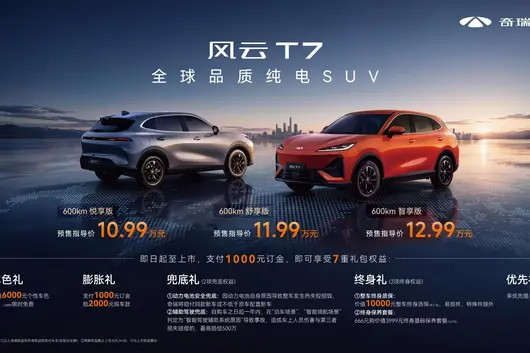
8月12日,奇瑞风云T7正式开启预售,新车共推出3款版型,预售指导价格为10.99万元至12.99万元,且享受7重购车权益。值得一提的是,面对用户对于车辆故障、后期养车成本等实际顾虑,风云T7还推出两大兜底保障、两项终身权益,从购车到长期使用全程守护。

作为奇瑞面向全球家庭打造的安心纯电SUV,风云T7从研发之初就锚定全球标准、全球实测、全球用户、全球耐久、全球质造五大体系,拒绝行业速成造车思路,以全链路全球严苛标准打磨整车实力,是一台真正经过全球千锤百炼的纯电SUV。其同源车型Lepas L6已在南非、泰国上市,收获海外用户认可。如今,带着全球市场验证后归来的风云T7,完整覆盖续航、安全、智能、舒享、驾控、颜值六大核心刚需,一步到位满足家庭用户所有期待。

全链路全球严苛标准打造,全球路况全维度兜底
作为全球品质纯电SUV,风云T7诞生于奇瑞全球质造体系,策划阶段便遵循全球标准开发,结合全球用户需求开展调研,兼顾全球不同地域环境适配能力,历经全球严苛路况测试,是一台经得起全球市场检验的高品质纯电SUV。
风云T7对标2026版E-NCAP五星安全标准设计、功能安全ASILD最高等级。2年策划,3年研发,共投入81台专属耐久车同步路试,整车累计测试里程超600万公里,耐久专项实测145万公里,同时针对东南亚雨季、中东高温暴晒、印尼高湿等多种全球多地域进行极限实车试炼。

车身采用80%高强度钢、18.84%热成型钢打造九横五纵笼式车身,采用shotgun结构、双框副车架+Pack防撞梁,钢筋铁骨保障乘员舱安全,前面9条+侧面6条碰撞传力路径最大化分散碰撞能量,留存乘员生存空间;除此之外,还搭载了9个安全气囊,包含48L双腔远端气囊和后排侧气囊,360°全方位保护乘员安全。风云T7全系搭载犀牛电池,超强6D防护构筑电池安全堡垒全方位抵御挤压、穿刺、冲击,为动力电池构建多层立体安全屏障。面对夏季暴雨频发,犀牛电池IP68防水为国标96倍,无惧雨季内涝、路面积水、户外涉水,有效防止电池进水短路隐患。
全系600km续航平权,适配全球多元气候工况
基于全球多地域能源与气候需求,风云T7实现续航配置全系平权,全系标配大容量犀牛电池65.05kWh,CLTC 600km续航,实测续航667+km,电池30%充到80%只需20分钟。

风云T7搭载全域一体化热管理双源宽热泵空调+高压PTC,北方用户冬季也能放心开。-30°C-55°C超宽温域稳定运转,低温环境制热更省电、高温环境散热更高效。配合全系标配的AGS智能进气格栅与14项低风阻优化,高低速能耗更稳定。
同级首发4nm舱驾一体8775芯片,智能不割裂
风云T7搭载舱驾一体8775芯片,具备4nm制程,72TOPS高算力,响应仅需80ms,开机提速33%,开机速度更快、屏幕操作更丝滑,智能交互响应更迅捷。15.6英寸2.5K高清大屏画面细腻真实,CarPlay、HUAWEI HiCar、CarLink无线连接,覆盖市面99%以上手机投屏,上车即可实现无缝互联。灵犀智舱2.0带来全能陪伴的伙伴,六大真人感陪伴体验。同时内置小憩、露营、宠物、醒神等六大场景模式,让车真正成为懂你的移动空间。

辅助驾驶方面,风云T7搭载猎鹰500驾驶辅助系统,集成3颗毫米波雷达、7个高性能摄像头、12个超声波雷达,总计22颗高精度传感器(3R7V12U),看得远、看得清、测得准。能够300+全场景自动泊车,断头路泊车、一键循迹倒车、跨楼层泊车等都能实现,从此告别“停车难”,实现泊车自由。
移动大平层,大师级底盘调校稳稳出行
作为一款为家庭打造的纯电SUV,风云T7整车尺寸4570×1852×1694mm,轴距2700mm,车内得房率84%,后排纯平地台,同级领先的911mm腿部空间,后排放倒拓展1955mm纯平大床,常规后备箱450L、拓展至1550L,全车38处巧思储物空间,收纳有序,尽享精致生活。9层云感座椅,软而不塌,久坐不累,另外座椅还有通风加热功能,满足用户的舒适需求。


舒适驾乘,离不开出色底盘的加持。风云T7底盘采由由玛莎拉蒂前底盘调校专家领衔的国际化底盘团队倾力打磨,50.8:49.2黄金轴荷比能够有效抑制转向推头、甩尾现象,提升过弯稳定性与直线行驶循迹性。
当“速成车”逐渐成为行业普遍现象,风云T7却选择了一条不同的路径——慢下来研发、慢下来设计、慢下来验证、慢下来接受全球标准考验。而这份“慢”,正是是对用户负责的慢。风云T7先在全球跑了一圈验证品质,再回到国内市场,这种“先出海、再归国”的路径,才值得全家人长期信赖,

喺馬來西亞嘅 SUV 市場,好多買家喺揀車嗰陣都會拿 Proton X90 同 Chery Tiggo 8 嚟做比較。呢兩款車喺價位同定位上都幾接近,今日我哋就從多個角度做一個詳細比較,幫你省咗做功課嘅時間。
Proton X90 喺馬來西亞嘅 OTR 售價係 RM 106,800 - 122,800,一共有 4 個版本,包括 2026 1.5T Prime X(RM 122,800)、2026 1.5T Prime(RM 116,800)、2026 1.5T Lite(RM 106,800)等等。
Chery Tiggo 8 喺馬來西亞嘅 OTR 售價係 RM 129,750 - 129,750,一共有 1 個版本,包括 2026 1.6T Standard(RM 129,750)等等。
從價錢睇,Proton X90 嘅起步價確實比 Chery Tiggo 8 平咗 RM 22,950。如果你預算有限,Proton 嘅入門版已經可以滿足日常需求。但都要注意,平嗰幾千蚊,可能喺配備上有取舍,具體要睇你嘅需求。
Proton X90 嘅安全評級係 5★ (ASEAN NCAP),主動安全系統包括 ADAS (ACC, AEB, LKA, LDA, BSM, RCTA)。
Chery Tiggo 8 嘅安全評級係 TBD,主動安全系統包括 Basic。
安全配備方面,兩款車都拿到唔錯嘅評級。不過 Proton X90 嘅 ADAS (ACC, AEB, LKA, LDA, BSM, RCTA) 同 Chery Tiggo 8 嘅 Basic 喺功能上有少少差異,如果你比較重視主動安全嘅話,可以仔細比較下兩者嘅功能列表。
Proton X90 車身長 4400 mm,尾箱 400 L。
Chery Tiggo 8 車身長 4400 mm,尾箱 400 L。
兩款車嘅尺寸幾乎一樣,車內空間分別唔大。呢個級別嘅車,日常使用完全夠用。
Proton X90 同 Chery Tiggo 8 都係馬來西亞市場嘅主流選擇,適合家庭使用、日常通勤。如果你更看重品牌口碑同二手價,可以優先考慮口碑好嗰款;如果你更在意性價比同配備,那就揀配備更豐富嗰款。最終都係建議兩款都去試駕,親身體驗先係最緊要。
總嘅嚟講,Proton X90 同 Chery Tiggo 8 都係馬來西亞市場幾唔錯嘅車型。揀邊架,關鍵都要睇你嘅個人需求同預算。建议大家做好功課,多比較幾間車行嘅報價,先去試駕先做最終決定。買車係一件大事,花少少時間做功課絕對無錯。


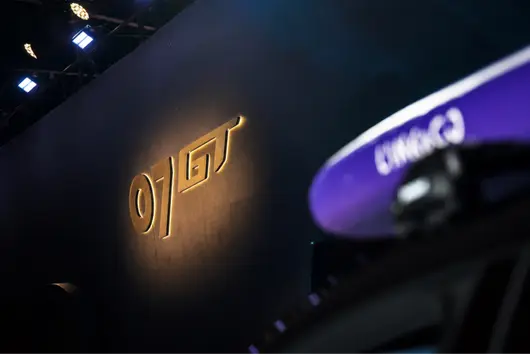
Forged on the track, accumulated technology, and refined by time.
On June 29, 2026, in Chengdu. On the tenth anniversary of the Lynk & Co brand, the Lynk & Co 07 GT global premiere and pre-sale launch was officially held. The three standard versions had a pre-sale price of 165,800 to 185,800 yuan, while the time-limited edition was priced at 208,800 yuan with only 1,007 units available — sold out on the night of the launch.
Starting from the third quarter of this year, this car will also officially represent Lynk & Co in rally racing.
At the ten-year milestone of the Lynk & Co brand, the arrival of the 07 GT is a story about how "China's No. 1 Automotive Sports Brand" transforms track glory into road faith.
01
To understand the Lynk & Co 07 GT, one must first understand Lynk & Co's seven-year journey in TCR racing.
In 2018, Lynk & Co announced its participation in the WTCR World Touring Car Cup — an event recognized by the FIA, ranked alongside F1 and WRC, representing the pinnacle of international touring car racing. Before this, no Chinese car brand had participated in similar international top-tier touring car races.
On December 15, 2019, the Lynk & Co team won the WTCR World Teams' Championship at the Sepang Circuit in Malaysia — this was Lynk & Co's first world championship trophy, and a historic breakthrough for a Chinese car brand. Since then, defending titles, winning three consecutive championships, and continuing to dominate even after the event was renamed TCR World Tour.

Over seven years, 43 race victories, 132 podium finishes, and 9 World Teams' Championship trophies.
Kang Guowang, Dean of Lynk & Co's Vehicle Research and Development Institute, said at the launch event: "Lynk & Co is deservedly China's No. 1 Automotive Sports Brand." This is not just a slogan, but the confidence built upon stacking over 130 trophies.
From debuting in TCR in 2019 to "Seven Years, Nine Championships" today, Lynk & Co has welded the label of "China's No. 1 Automotive Sports Brand" onto itself. The 07 GT is the first car to tear this label off the track and stick it onto a touring wagon.
As Geely Auto Group Senior Vice President Lin Jie stated at the launch, "A true ecosystem is not the stacking of labels, but the resonance of passion."
02
2026 marks the tenth anniversary of the Lynk & Co brand. From the 2016 Berlin debut as a bold new brand unafraid of challenges, to today's cumulative sales exceeding 1.8 million units. The tenth anniversary is a moment to look back on the journey, and even more so, a node to set off anew.
But the timing is not just about the brand's anniversary; the market is also changing.
Touring wagons have been sold in China for over 20 years, with a market share consistently below 1%. But in 2026, things have changed. This category of touring wagons is being reactivated by Chinese brands.

However, amidst the noise, there is still a gap: above 250,000, there are clusters of high-end pure electric shooting brakes; within 150,000, the focus is on family commuting. Yet, the 160,000 to 200,000 range has long lacked a complete product that balances track-level handling, long-range hybrid, and full outdoor expansion capabilities.
The Lynk & Co 07 GT is precisely targeting this gap.
At the same time, Lynk & Co itself is undergoing strategic adjustments. Facing increasingly fierce market competition, Lynk & Co actively shifted towards segmentation adjustments, looking for new growth poles by iterating product matrices and mining niche market segments. The 07 GT is the product of this strategic thinking — instead of engaging in close-quarters combat with rivals in a red ocean, it is better to carve out a brand new track.
03
The official positioning of the Lynk & Co 07 GT is a new category of "Sport Touring". This is not a simple marketing catchphrase, but a complete product logic.
First is the chassis. The Lynk & Co 07 GT is the only model among touring cars at this level equipped with MRC magnetorheological suspension. Suspension response time is 1 millisecond; the system takes only 10 milliseconds to detect road changes and complete damping adjustments — approximately 10 times the response speed of CDC continuous damping suspension. At 100 km/h, after the wheels roll about 2.7 centimeters, the shock absorber can complete one hardness adjustment.
Lynk & Co systematically feeds back the chassis tuning and aerodynamic data accumulated in TCR racing into the 07 GT — suspension calibration, damping settings, body posture control, and other data from the track are converted into R&D parameters for mass-produced vehicles.

Second is power. The Lynk & Co 07 GT is equipped with the EM-P intelligent electric hybrid system. The 1.5T Evo dedicated hybrid engine has a thermal efficiency of 47.26%, ranking in the industry's first tier. Coupled with the P3 motor and P4 intelligent four-wheel-drive motor, the combined power reaches 390 kW. The 28.3 kWh Soul Shield Gold Brick battery supports a combined range of up to 1,422 km, meaning low cost for daily commuting and no anxiety for long-distance travel.
Third is expansion capability. The new car's roof rack has a dynamic load capacity of 100 kg, 25 kg more redundancy than its class; the electric hidden tow hook can tow up to 1.6 tons max, factory-approved towing qualifications; 6kW external discharge and 5.5L cold/warm fridge; 614 L trunk, 1,665 L when folded.
These configurations point to the same answer: This is not a "sporty-looking" touring wagon, but a versatile vehicle that "drives like a performance car and works like an outdoor equipment garage."
04
Additionally worth mentioning, the Lynk & Co 07 GT has a unique identity — it will be Lynk & Co's official battle wagon for rally racing.
Starting from the third quarter of this year, the Lynk & Co 07 GT will officially represent Lynk & Co in rally racing. Muddy conditions, gravel, and complex road surfaces in rally racing impose higher requirements on vehicle posture control. And the 07 GT ran 82.1 km/h in the CATARC-certified special condition moose test with luggage on the roof, and 81.9 km/h with towing equipment — this validates its stable control capability under extreme load conditions.

From TCR circuit racing to rally racing, Lynk & Co is completing the expansion of its racing map from "circuit racing" to "all-terrain conquest". And the role of the 07 GT is dual: both a battle wagon on the rally field and a mass-produced vehicle on the road.
This is the true meaning of Lynk & Co's positioning as "China's No. 1 Automotive Sports Brand": not just sticking race livery on civilian cars, but letting the technology refined on the track truly flow into the blood of every mass-produced car.
Views of AutosKline:
Limited to 1,007 units, 208,800 yuan, sold out in three minutes. Matte Mont Blanc Gray paint, high-purity blue Alcantara interior, blue four-piston calipers, "Downforce" printed on the carbon fiber rear wing ...... Every detail tells the market: this is not a car that "follows the crowd".
The Lynk & Co 07 GT has created a brand new category of "Sport Touring". It tells the market: touring wagons don't have to rely only on nostalgia to sell; they can also have driving control fun that doesn't lose to performance cars. For Lynk & Co, it proves that a Chinese brand can simultaneously possess the title of world champion and products that move ordinary consumers.
From the track to rivers and mountains, from the champion's podium to the user's weekend journey — the Lynk & Co 07 GT is writing a new definition about "sports"; and this car will undoubtedly make the young Lynk & Co brand even richer and deeper.

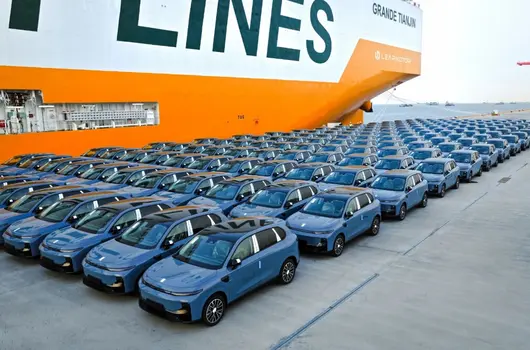
China's auto exports in 2026 are still surging ahead. Monthly exports broke the 1 million mark for the first time, with cumulative exports in the first half exceeding 5.3 million vehicles, a year-on-year growth rate of over 50%. The position of the world's top export nation is becoming increasingly secure.
Behind the dazzling growth figures, a discussion about "when exports will peak" is quietly heating up within the industry chain.
Gu Huai (all names in this article are pseudonyms), who just returned from touring overseas markets, is an insider at a Chinese Tier 1 supplier that began its overseas layout relatively early. In his view, the node for export ceilings is likely to occur in 2029, corresponding to a peak scale of about 12 million vehicles.
This is not just one company's opinion. At a salon event held recently by the Gasgoo Auto Research Institute, several industry insiders from the automotive industry chain converged on the peak window pointing to 2028-2030. As for the peak scale, industry predictions range from 12 million to 15 million vehicles. The core of the disagreement lies in the timing of tightening trade barriers and the speed of overseas capacity implementation.

Image source: Leapmotor
Growth still surging, peak zone emerging
If we rewind time to two years ago, industry predictions on the export peak were earlier.
The logic back then was very clear: overseas factories of leading automakers would concentrate production in 2025-2026, whole vehicle exports would be quickly replaced by localized capacity, and the growth curve would flatten quickly. However, the endurance of exports far exceeded industry expectations. The "ceiling" considered at that time to be about to be touched has now been overturned by actual data that broke through continuously.
According to data from the General Administration of Customs organized by the China Association of Automobile Manufacturers, China's passenger vehicle exports in January-June 2026 reached 5.307 million vehicles, with year-on-year growth of 52.8%. The export volume for January-July counted by the China Passenger Car Association has reached 6.4 million units, with year-on-year growth of 54%. Extrapolating based on the current pace, breaking through 10 million vehicles for the whole year is almost without suspense.
In front of these scalding data figures, the industry also has more realistic judgments on the point when exports will hit the peak.
Chen Mo, an insider at a global cabin electronics Tier 1 supplier, frankly admitted, "Previously we judged that this year or next year would be the export peak, after all overseas factories have successively started localized production. But now looking at it, this time node needs to be pushed back."
In his view, the resilience of exports comes from a diversified market layout. Leading domestic automakers are expanding simultaneously in Southeast Asia, South America, and Europe. The growth rhythms of different regions are staggered, supporting the overall export scale. "In the future, it won't surge like before, but is likely to remain stable, possibly even a slight decline, with no cliff-like drop."
Similar judgments are not uncommon within the industry chain, just that different enterprises have different observation dimensions.
Jiang Yu, an insider at a domestic automotive semiconductor manufacturer, believes that exports will continue to grow in two to three years, until exports touch around 15 million vehicles, will encounter the true bottleneck. This means China's share of the global automotive market will climb to a higher level, necessarily triggering more intensive trade protection measures.
Lu Ming, head of overseas business at a leading domestic automotive interior and exterior enterprise, values the rhythm of the capacity cycle more. In his observation, Chinese automakers' overseas capacity will be gradually implemented and released in 2027, 2028. Exports won't brake immediately, rather, it will continue to walk along with the capacity ramp-up. The true balance state between exports and overseas capacity will likely appear between 2028 and 2029.
Zhou Yan, head of overseas business at a global automotive parts giant, provided more granular inflection point judgments from observing the supply chain frontlines: Looking at different metrics, pure CBU vehicle exports will likely welcome a scale inflection point in 2028, with export volume seeing a substantive decline. If KD kits are included in the full statistics, data fluctuations will be relatively flat, but the downward trend of pure vehicle exports is quite clear.
Tian Tao, an analyst at a consulting institution in the automotive industry, stated that geopolitics, tariff policies, and localized capacity superimpose three factors, and the export ceiling will likely fall around 2030.

Image source: Chery
Of course, all these industry insiders emphasize: export ceiling does not equal the overseas sales peak of Chinese automakers.
Su Wan, head of overseas business expansion for intelligent cabins at a parts enterprise, said very clearly, "The momentum of exports rushing towards 10 million vehicles this year is indeed astonishing, and in the next few years, export volume will likely enter a bottleneck period, stabilizing growth and no longer skyrocketing. But if sales from localized production are included, the overall scale will still steadily rise. Exports have an upper limit, but the globalization of Chinese automakers has no upper limit. This is not the same thing at all."
Zhao Kai, head of enterprise development at a German automotive parts supplier, also confirmed this from industrial logic. In his view, new energy vehicles becoming the export main force itself extends the growth cycle. The battery technology iteration behind electric vehicles formed a synergy with national energy storage strategies, making China's automotive industrial advantages more solid than in the fuel vehicle era, and the resilience of export growth also far exceeds initial industry expectations.
Barriers and Capacity, Two Major Reality Constraints
Although the momentum of growth is fierce, no one believes exports will always rise. Two ceilings hanging above exports are slowly pressing down. One is the trade policy barrier being built higher and higher, the other is the localized capacity replacement proactively pushed by automakers.
Europe is the market that felt the chill first.
EU anti-subsidy tariffs targeting Chinese pure electric vehicles have taken effect. Multiple domestic automakers apply to different additional tax rates. After adding basic tariffs, comprehensive tariff costs for some brands have risen significantly, valid for as long as several years. This is just the first gate, and more systematic rule reshaping is on the way.
Lin Zhou, an insider at a Spanish-backed joint venture parts enterprise, revealed that the 'Industrial Accelerator Act' the EU is pushing is currently still in the legislative draft stage. According to general extrapolations by industry institutions, the bill is expected to complete legislation in 2027. Constraint clauses related to automobiles will land successively after the bill takes effect, and the overall time window is concentrated in 2027-2028. Final progress still depends on negotiation progress between the European Parliament and Council.
The core logic of the bill is very straightforward: through localized content requirements, public procurement restrictions, investment review means, it aims to protect and support the European local automotive industry.
"2026 is a key node," Lin Zhou added. The head new energy brand's Hungary factory officially operated this year, but carbon emission qualification accounting will land in 2027. The EU will introduce third-party audit agencies to check 2026 data and calculate final carbon emission indicators. And this indicator is tightening year by year; if standards are not met, additional tariffs must be levied. Besides the EU-level unified bill, individual member states are also issuing local policies, explicitly and implicitly guiding Chinese automakers to invest and build factories locally. Essentially, all are using rules to force localization.
Fang Cheng, an insider at a domestic automotive electronics enterprise, spoke even more directly: "We are not just going to earn Europeans' money, but also reconstructing the local industrial landscape. For European players guarding century-old industrial foundations, earning money can be tolerated, but having rice bowls snatched and tracks changed by latecomers equates to slapping in public. Resistance will only get more intense. Trade protection is not a question of whether it will come; it has already come, and it will increase more."
In his view, relying on high-speed growth of whole vehicle exports is naturally unsustainable, will soon touch the policy red line, and localization is the core path to break the situation.
More fundamental than policy barriers is the localization route chosen proactively by automakers. When export scale reaches a certain level, coupled with the rise of tariff costs, building factories locally for production became the inevitable choice.
Currently, overseas factories of leading automakers have already entered the concentrated production launch period.
BYD's Hungary Szeged factory will start whole vehicle assembly in the fourth quarter of 2026. Its Thailand Rayong, Brazil Camacari two factories have already achieved mass production, and capacity is still continuously ramping up. Chery's Spain Barcelona joint venture factory, Malaysia Intelligent Auto Industrial Park, and South Africa Rosslyn factory will all be put into production successively in 2027. SAIC MG's European production base located in Port Ferrol, Spain is planned to officially start operations at the end of 2028.

Image source: BYD
In the industry's view, whole vehicle exports were originally a transitional stage of overseas layout. Once the costs and efficiency of local factories are worked out, combined with the consideration of tariff and logistics costs, the priority of whole vehicle exports will naturally gradually decline.
Lu Ming's viewpoint also confirms this logic: The process of overseas capacity landing and release is the process of exports being gradually replaced. In the initial phase of capacity ramp-up, it may still need to export some parts or whole vehicles to supplement market gaps. After capacity is fully released, the incremental space for exports will be greatly compressed.
But this replacement is not a zero-sum game. Su Wan repeatedly emphasized: Exports and localized production are not a replacement relationship of mutual exclusion; it is a baton-passing progressive relationship. Exports are responsible for quickly opening markets and building brand awareness, localization is responsible for reducing costs and digging deep into user markets, both together expanding the overseas basic board of Chinese automakers.
Exports are not the destination, Going overseas heads to deep waters
When whole vehicle export growth gradually hits the top, China Auto's globalization layout will also synchronously enter the real deep waters.
As Jiang Yu said, when whole vehicle export scale approaches 15 million vehicles level, resistance for further growth will significantly increase. This is not a decline in Chinese automakers' competitiveness, but overseas localized capacity entering a concentrated release period, gradually replacing whole vehicle exports. On the surface, export number growth slows down, but Chinese automakers' global market share is still rising, it is just that the growth carrier has shifted from "whole vehicle exports" to "local manufacturing".
This is also the consensus of all industry chain personnel: The next stage of Chinese auto going overseas is shifting from "selling products" to "outputting industry". Going out with the vehicle factories is not just cars, but also the whole supply chain system.
Gu Huai's overseas survey confirms this trend. He summarized three mainstream models of current automakers going overseas: One is pure whole vehicle exports to fight the market; Two is cooperating with local factories to produce and reduce costs; Three is building factories and ecosystems solely like leading new energy brands. In the process of the three models blending promotion, parts, glass, chips, electronics systems and other supply chain links will also gradually complete localization along with them.
"At normal pace, around 2028, Chinese automakers' overseas industrial layout will be able to reach a relatively large scale. Not just selling cars over there, but moving the whole industrial ecosystem over there," Gu Huai said.
Tier 1 suppliers have already walked ahead. Multiple global parts enterprises are adjusting global capacity layouts, fully cooperating with the overseas rhythm of Chinese mainstream OEMs. Su Wan revealed that factories of the enterprise where he is located around the world are docking with Chinese automakers' overseas projects. Following the customer's factory building rhythm, synchronously landing capacity, from cabin systems to interior modules, are all rapidly promoting localization support capabilities.
The pace of local supply chain going overseas is also accelerating. Fang Cheng revealed that as a chip manufacturer, the company is planning to go overseas with the OEM, partner with domestic parts enterprises, and jointly achieve overseas localized production. "Automaker going overseas is never fighting alone; it must be the whole industry chain going out together to truly take root."

AI Generated Image; Source: Doubao
Of course, challenges are far more than imagined. Moving factories over does not guarantee localization success.
Shen Yan, an insider at an Italian enterprise, reminded that what Chinese brands forbid most is directly moving domestic tactics overseas. European market consumers' sensitivity to vehicle long-term value retention, brand reputation and terminal service is far higher than short-term price. If only relying on price wars, rapid model iteration, without valuing core user maintenance and service system construction, even if completing local factory building, it is also very difficult to truly stand firm in mature markets.
"2028 to 2030, export growth will gradually slow down, but won't immediately hit the ceiling. The real test has never been how much export volume rushes to, but whether China's new energy brands can truly stand in European mature markets," Shen Yan emphasized. Relying on B-side low price volume mode doesn't work in Europe; taking quality route and doing terminal service well is the key to long-term survival.
Zhou Yan suggested that there is no need to fix eyes only on Europe. South America, Africa and other regions' automotive consumption is still in rising period, trade environment is also more friendly, will be a new growth point continuously upwards. Dispersing market layout is itself the best way to hedge single market policy risks.
Zheng Ze, an insider at a German capital parts enterprise, then gave judgment from a more macro perspective: China Auto's product competitiveness is already strong enough. The one truly deciding ceiling height has never been the product itself, but national strategy and industrial discourse power. Whether can break trade barriers, strive for more fair market environment, is the core variable deciding China Auto globalization upper limit.
From a longer term industrial cycle perspective, the peak of China Auto exports is essentially a switch of growth mode. In the past few years, we relied on whole vehicle export's high growth to take the position of the world's top export nation. Next, we will through localization's deep layout, gradually strive for global automotive industry's discourse power.
Under the ceiling of export numbers is a wider globalization space.
(Note: All names in this article are pseudonyms, and some personally identifiable information has been blurred)

In the Malaysian SUV market, many buyers compare Proton X90 and Mazda CX-5 when choosing a car. These two models are quite close in price and positioning. Today we will do a detailed comparison from multiple aspects to help you save time on research.
Proton X90's OTR price in Malaysia is RM 106,800 - 122,800, with a total of 4 versions, including 2026 1.5T Prime X (RM 122,800), 2026 1.5T Prime (RM 116,800), 2026 1.5T Lite (RM 106,800), etc.
Mazda CX-5's OTR price in Malaysia is RM 135,469 - 166,760, with a total of 3 versions, including 2025 2.0L AT 35th Anniversary (RM 316,154), 2025 2.0L AT (RM 296,154), 2025 2.0L MT (RM 294,154), etc.
From a price perspective, the starting price of Proton X90 is indeed RM 28,669 cheaper than Mazda CX-5. If your budget is limited, Proton's entry-level version can already meet daily needs. But also note, the few thousand savings might involve trade-offs in features, it depends on your specific needs.
Proton X90 features a 1.5L Turbo, 140 hp. Official fuel consumption 7.0 L/100km.
Mazda CX-5 features a 1.5L Turbo, 140 hp. Official fuel consumption 7.0 L/100km.
Both cars use the same powertrain system, the driving feel is basically no difference. Fuel consumption is also similar, no need to worry too much about this point.
Proton X90's safety rating is 5★ (ASEAN NCAP), active safety systems include ADAS (ACC, AEB, LKA, LDA, BSM, RCTA).
Mazda CX-5's safety rating is 5★ (ASEAN NCAP), active safety systems include.
Both cars have the same safety rating, safety features in this class are quite comprehensive. New cars nowadays have good safety, no need to worry too much about this point.
Proton X90 body length 4400 mm, trunk 400 L.
Mazda CX-5 body length 4500 mm, trunk 450 L.
Regarding space, Mazda CX-5's body is 100 mm longer than Proton X90, offering better passenger space. However, Proton X90 is slightly more flexible for parking in the city, both have trade-offs.

Proton X90 warranty 5 years/150,000km, maintenance interval every 10,000km or 6 months.
Mazda CX-5 warranty 5 years/150,000km, maintenance interval every 10,000km or 6 months.
Both cars have the same warranty conditions, no need to worry about this aspect. Actual maintenance cost also depends on the brand's service network and parts price, it is suggested to ask real owners in car owner groups for their experience.

In summary, Proton X90 and Mazda CX-5 are both very good models in the Malaysian market. Which one to choose depends on your personal needs and budget. It is recommended to do your research, compare quotes from several dealers, and go for a test drive to make the final decision. Buying a car is a big matter, spending time on research will definitely not be wrong.
喺馬來西亞嘅 SUV 市場,好多買家喺揀車嘅時候都會拿 Proton X90 同 Mazda CX-8 來做比較。這兩款車喺價錢同定位上都幾接近,今日我哋就從多個方面做一個詳細嘅比較,幫你節省做功課嘅時間。
Proton X90 喺馬來西亞嘅 OTR 售價係 RM 106,800 - 122,800,合共有 4 個版本,包括 2026 1.5T Prime X(RM 122,800)、2026 1.5T Prime(RM 116,800)、2026 1.5T Lite(RM 106,800) 等。
Mazda CX-8 喺馬來西亞嘅 OTR 售價係 RM 165,360 - 201,360,合共有 5 個版本,包括 2025 2.5T 4WD High Plus Petrol(RM 201,360)、2025 2.2L 2WD High Plus Diesel(RM 193,123)、2025 2.5L 2WD High Plus Petrol(RM 186,360) 等。
由價錢睇落,Proton X90 嘅入門價確實比 Mazda CX-8 平咗 RM 58,560。如果你預算有限,Proton 嘅入門版已經足夠滿足日常需要。但都要留意,平嗰幾千蚊,可能喺配備上會有取捨,具體要看你嘅需要。
Proton X90 搭載 1.5L Turbo,馬力 140 hp。官方油耗 7.0 L/100km。
Mazda CX-8 搭載 2.0L 4-cyl,馬力 170 hp。官方油耗 8.0 L/100km。
動力方面,Mazda CX-8 嘅 2.0L 4-cyl 比 Proton X90 嘅 1.5L Turbo 多咗 30 匹馬力。不過日常喺市區行,兩部車嘅動力都夠用,唔會覺得唔夠力。
Proton X90 車身長 4400 mm,尾箱 400 L。
Mazda CX-8 車身長 4500 mm,尾箱 450 L。
空間方面,Mazda CX-8 嘅車身比 Proton X90 長咗 100 mm,乘坐空間更有優勢。不過 Proton X90 喺市區泊車會靈活啲,各有取捨。
Proton X90 同 Mazda CX-8 都係馬來西亞市場嘅主流選擇,適合家庭使用、日常出行。如果你更重視品牌口碑同二手價,可以優先考慮口碑更好嗰一款;如果你更介意性價比同配備,那就揀配備更豐富嗰款。最終都係建議兩款都去試駕,親身體驗先至最重要。

總括嚟講,Proton X90 同 Mazda CX-8 都係馬來西亞市場幾唔錯嘅車款。揀邊一部,關鍵都要睇你嘅個人需要同預算。建議大家做好功課,多比較幾間車行嘅報價,先去試駕做最終決定。買車係一件大事,花啲時間做功課絕對唔會錯。

In the Malaysian SUV market, many buyers compare the Proton X70 and Mitsubishi Xforce when choosing a car.
The OTR price of the Proton X70 in Malaysia is RM 106,800 - 122,300, with a total of 3 versions, including 1.5L Standard 2WD (RM 106,800), 1.5L Executive 2WD (RM 115,800), 1.5L Premium 2WD (RM 122,300), etc.
The OTR price of the Mitsubishi Xforce in Malaysia is RM 109,930 - 119,930, with a total of 2 versions, including 2026 1.5L Ultimate (RM 119,930), 2026 1.5L Urban (RM 109,930), etc.
From a price perspective, the Proton X70's starting price is indeed RM 3,130 cheaper than the Mitsubishi Xforce. If your budget is limited, Proton's entry-level version can already meet daily needs. However, be aware that the savings might involve trade-offs in equipment, depending on your specific needs.

The Proton X70's safety rating is 5★ (ASEAN NCAP), with active safety systems including ADAS (ACC, AEB, LKA, LDA, BSM, RCTA).
The Mitsubishi Xforce's safety rating is 5★ (ASEAN NCAP), with active safety systems including MI-PILOT.
Both cars have the same safety rating, and safety features in this class are considered quite comprehensive. New cars today generally have good safety, so there is no need to worry too much about this.
The Proton X70 body length is 4400 mm, with a trunk of 400 L.
The Mitsubishi Xforce body length is 4400 mm, with a trunk of 400 L.
The dimensions of both cars are almost identical, with little difference in interior space. For this class of car, it is completely sufficient for daily use.
The Proton X70 adopts FWD drive mode.
The Mitsubishi Xforce adopts FWD drive mode.
Both cars have the same drive mode, both are FWD, so there will not be much difference in daily driving experience.
Overall, the Proton X70 and Mitsubishi Xforce are both very good models in the Malaysian market. Which one to choose depends mainly on your personal needs and budget. It is recommended to do your research, compare quotes from several dealerships, and then test drive to make a final decision. Buying a car is a major matter, spending some time on research will never be wrong.


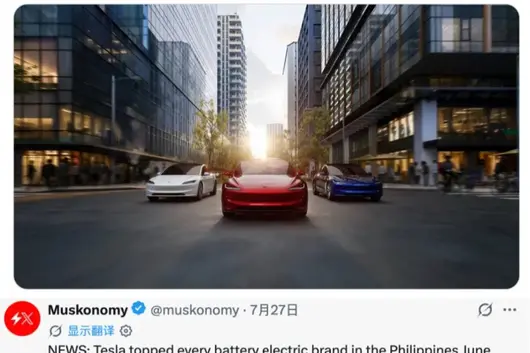
根據菲律賓汽車製造商協會 (CAMPI) 同卡車製造商協會 (TMA) 近日聯合發布嘅數據顯示,2026 年 6 月,特斯拉成咗菲律賓最暢銷嘅純電動汽車品牌。

領先業界嘅銷量數據,反映出菲律賓車主對產品嘅真實認可。博主@Muskonomy 曾經分享過一位菲律賓 Model 3 車主嘅首個月用車體驗:補能開支只有以前燃油車嘅 1/6,直言“再都唔想換返去開燃油車”。
喺東南亞市場嘅多個國家地區,特斯拉均迎來銷量增長。特斯拉喺海外官方平台分享,特斯拉 6 月喺新加坡市場創咗單月銷量新高,Model Y 超越燃油車成為當地全品類最暢銷 SUV 車型。
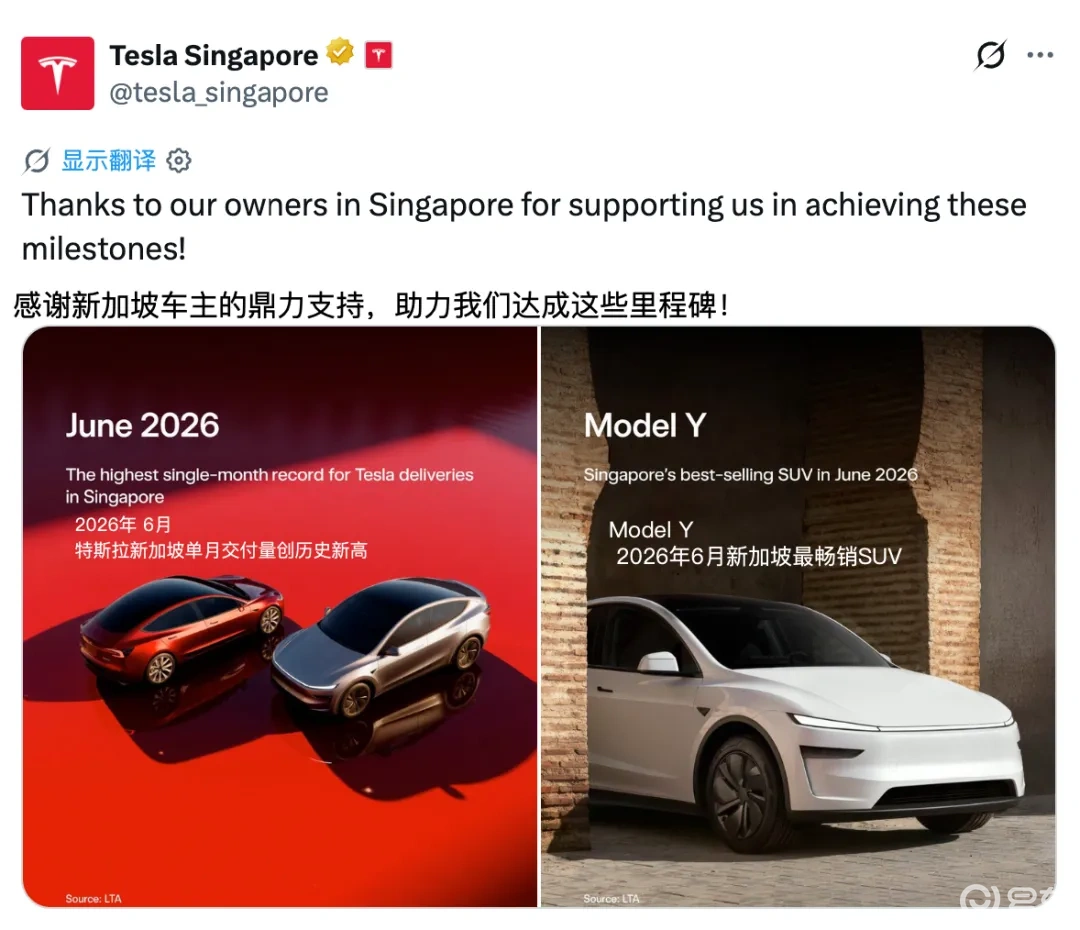
嚟自新加坡嘅車主@Coco 傻 Fish 就將家中嘅燃油車換置為特斯拉,佢表示開咗特斯拉後,早晚繁忙時段塞車駕駛感覺冇咁累,亦都冇開燃油車時嘅油耗焦慮,“比公共交通更抵!”

In Malaysia's SUV market, many buyers compare Perodua Aruz and Toyota Yaris Cross when choosing a car. The pricing and positioning of these two models are quite close. Today, we will conduct a detailed comparison from multiple aspects to help you save time on research.
The OTR price for Perodua Aruz in Malaysia is RM 72,900 - 77,900, with a total of 2 variants, including 1.5L X (RM 72,900), 1.5L AV (RM 77,900), etc.
The OTR price for Toyota Yaris Cross in Malaysia is RM 99,900 - 109,900, with a total of 2 variants, including 2026 1.5L Standard (RM 99,900), 2026 HEV 1.5L Standard (RM 109,900), etc.
From a pricing perspective, the starting price of Perodua Aruz is indeed RM 27,000 cheaper than Toyota Yaris Cross. If your budget is limited, Perodua's entry-level version can already meet daily needs. However, do note that the few thousand saved might come with trade-offs in features, depending on your specific needs.

Perodua Aruz body length 4400 mm, trunk 400 L.
Toyota Yaris Cross body length 4400 mm, trunk 400 L.
The dimensions of both vehicles are almost identical, with little difference in interior space. For this class of cars, daily use is more than adequate.
Perodua Aruz warranty 5 years/150,000km, service interval every 10,000km or 6 months.
Toyota Yaris Cross warranty 5 years/unlimited mileage, service interval every 10,000km or 6 months.

Both Perodua Aruz and Toyota Yaris Cross are mainstream choices in the Malaysian market, suitable for family use and daily commuting. If you value brand reputation and resale value more, you might prioritize the one with better reputation. If you care more about price-performance ratio and features, choose the one with richer configurations. Ultimately, it is recommended to test drive both; personal experience is the most important.

Overall, both Perodua Aruz and Toyota Yaris Cross are excellent models in the Malaysian market. Choosing which one depends mainly on your personal needs and budget. We recommend doing your research, comparing quotes from several dealerships, and then test driving to make a final decision. Buying a car is a major matter; spending some time on research will never go wrong.

© 2024 Bitauto.com. All Rights Reserved.
Bitauto (www.yiche.com and www.bitauto.com) is one of the most visited automotive websites in China. We provide detailed info on Chinese car brands available in your area. Please note that the information provided on this website is based on publicly available data and is for reference only. It may not be fully updated or accurate at all times.

Help us improve our website


