

Homefuel

Search History
Popular Searches
Dealer Login / Sign Up

In the current automotive industry, the new energy wave is booming, market competition continues to intensify, industry focus mostly centers on the electrification track, and the huge potential of the fuel vehicle market has long been underestimated by public opinion. Many car companies have tilted their R&D focus towards new energy, creating a one-sided perception in the market that 'fuel vehicles have no incremental growth.'

Latest June insured volume data shattered this prediction: Geely Boyue led the fuel SUV track again, with June sales hitting 14,970 units. The first half of 2026 cumulative sales firmly held the champion spot for all-category fuel SUVs, with a monthly average nearing 20,000 units. To date, global cumulative sales have exceeded 2.4 million units, consecutive champion of A-segment fuel SUVs for 12 months. In the current era where many models rely on short-term marketing to shine briefly, Boyue's continuous strong sales over a decade have been called the rare 'Boyue Phenomenon' by the industry.
A fact is that the China auto market will not move towards a single new energy pattern. The data of over 200 million fuel car ownership nationwide and 25,000 new fuel cars delivered daily proves the fuel market has irreplaceable huge rigid demand. Large numbers of family users still value the convenience of refueling fuel vehicles and lack of range anxiety, while urgently wanting intelligent experiences at the same level as new energy models. Most car companies ignored the upgrade needs of stock users, either staying at the level of old mechanics or simply installing large screens to cope with the market, ultimately being not chosen by consumers. Boyue stood firm at the top through multiple industry shocks, which is by no means due to luck, but the result of long-termist strategy and precise product iteration.
Ten years, four generations of models, Boyue has cultivated the internal combustion engine market's continuous sales, which is enough to prove: fuel vehicles will not end, outdated products will be forgotten. Dancing with the era, being friends with time is Boyue's ten-year long success evolution criterion.
Decade-long four generations iteration, casting uncopyable market barriers with time
Boyue's growth trajectory far exceeds the lifecycle of ordinary hit models. In 2018, Boyue sales broke 500,000 units just 25 months after launch. This achievement took CR-V 86 months, Tiguan 42 months, and Haval H6 31 months. At that time, it refreshed the growth speed of independent brand SUVs. 'Boyue Speed' once became an industry sales benchmark. Thereafter, sales accelerated continuously, breaking 1 million units in 52 months, 1.5 million in 82 months, 1.8 million in 99 months, reaching 2 million units in early 2025, and growing to 2.4 million units in just over a year.

Looking globally, Boyue has long stepped out of the domestic market. Products are exported to over 60 countries, with local production completed in Belarus and Malaysia, adapting to different regional usage needs such as Middle East high heat, Nordic severe cold, and Southeast Asia rainforests. It has won the number one China brand sales in sub-segments in countries like Costa Rica and Moldova. It has become a global business card representing the strength of Chinese fuel SUVs. 2.4 million global users have built a dual barrier of reputation and sales that competitors find hard to copy.

The underlying logic supporting this cross-cycle strong sales is the four generations of models progressing step-by-step and precisely evolving to fit the needs of each generation of users.
Ten years ago, in the 100,000-level fuel SUV market, joint venture models dominated. The industry generally only cultivated mechanical hardware like power and chassis. Car computer interaction was a blank. Ordinary family consumers were just getting used to private cars. They were no longer satisfied with 'can drive, good to drive' and urgently wanted more convenient, stronger tech-feel in-vehicle interaction experiences. However, products in the same price range had no mature smart solutions available. Smart needs were long-term unsatisfied.
The first-generation Boyue first brought the complete smart internet system down to the 100,000-level price point, equipped with industry-leading GKUI car computer system, launched a landmark smart voice interaction. One sentence 'Hello Boyue' realizes voice control of navigation, air conditioning, and multimedia. Simultaneously equipped standard 4G in-vehicle network, mobile phone connectivity, OTA cloud upgrades. It filled the smart blank of home fuel SUVs. On the basis of solid and reliable mechanical quality, it used perceivable smart experiences to widen the gap with same-level competitors, redefined the experience bottom line of 100,000-level fuel cars, and became a phenomenon hit all at once.

Subsequently, as the car buying crowd shifted to three-to-four person families, the first priority for users shifted to family travel safety. However, most car companies in the industry still built safety at the level of high-strength body, multi-airbags and other passive protection. AEB pre-collision, blind spot warning and other active safety configurations were almost absent in the 100,000-level home SUVs. Various hidden risks like picking up children, city commute, and highway lane changes became the major concern for family owners.
The second-generation Boyue locked the product upgrade core on full-domain safety, bringing active safety configurations exclusive to high-end models to mainstream price points. It popularized AEB pre-collision, reversing vehicle side warning, lane change assist, door opening warning and other functions across the entire series, while strengthening cage-type high-strength body passive protection, winning C-NCAP five-star safety certification. No longer relying on 'can't break' to guarantee safety, but avoiding danger through proactive judgment, hitting the core demand of 'prevent trouble before it happens' for family users, setting the family safety SUV label, and firmly grasping the family user base.

In 2022, independent brand technology rose comprehensively, consumer car buying cognition upgraded significantly. Users were no longer satisfied with surface functions like large screens and safety configurations, but started caring about the whole vehicle's underlying architecture, chassis driving texture, and long-distance driving fatigue. However, the industry had obvious technical barriers. CMA global high-end architecture, L2 level assist driving systems, were mostly only supplied to high-end models. 100,000-level home SUVs still used old platforms. Users were willing to pay for advanced driving and riding experiences, but could not find affordable choices.
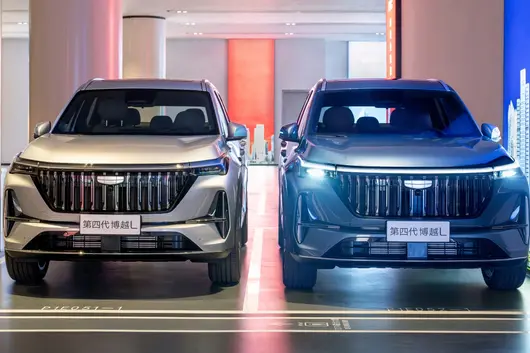
At this time, Boyue L launched. The new car broke the price barrier of high-end technology, landed on CMA global luxury architecture, synchronously equipped GEEA 2.0 electronic and electrical architecture. It optimized chassis filtering and driving stability from the bottom layer, thoroughly improving the cheap driving and control texture of traditional fuel SUVs. At the same time, it pioneered bringing a complete L2 level assist driving to the 100,000-level home market, equipped with full-speed ACC, lane centering, traffic congestion assist, relieving long-distance and city commute driving fatigue. It made up for fuel home vehicle driving and control shortfalls with high-end architecture and high-order intelligent driving, meeting user upgrade needs for whole-vehicle premium feel and easy driving. Boyue L 'New Three Good SUV' label entered the hearts of people. Layered technical precipitation of the first three generations also paved the way for the fourth-generation Boyue L's all-round upgrade.
Step by step forward, Boyue stepped accurately on the beat every time. Its experience tells us: the market eliminates not fuel vehicles, but outdated products lacking innovation and disconnected from users. The huge fuel stock market will not actively discard classics, but is waiting for models like Boyue, which can be friends with time, to take up the banner.
Fuel and Electric Share Intelligence to Break the Situation, Intelligence Makes the Fuel Track Reveal New Vitality
In May 2025, the arrival of the fourth-generation Boyue L again pushed following the trend to the extreme.
The new energy wave swept the market. Consumers fell into a choice contradiction. EVs had intelligent configurations maxed out, but suffered from range anxiety and inconvenient charging. Traditional fuel vehicles had convenient refueling and no mileage concerns, but were generally intelligently backward and cockpit experiences conservative. Users with budgets of over 100,000 were almost unrelated to high-order intelligence. Most car companies only did single-track, unable to balance two core advantages. The market lacked balanced fuel SUV products.

The fourth-generation Boyue L relied on the precipitation of the first three generations of technology to complete an all-round leap upgrade. Based on the new dual architecture of CMA+GEEA 3.0, it built fuel-electric same intelligence product power. Hardware equipped with 7nm high-computing power car-grade chips, multi-screen immersive smart cockpit. The Little Blue Light Edition brought the Qianli Haohan H3 high-order smart driving solution down to the 120,000-level market. Highway NOA, full-scenario automatic parking and other functions were fully popularized across the series. At the same time, it retained the core advantages of fuel vehicles: convenient refueling and no range anxiety. It was comprehensively balanced in six dimensions: looks, space, comfort, safety, driving control, and intelligence. It thoroughly broke the industry prejudice that 'high-order intelligence belongs only to new energy', precisely connecting the current dual rigid demand of 'fuel reliability + electric intelligence' for family users, pointing out a new direction for evolution in the fuel track.

Data shows the fourth-generation Boyue L Little Blue Light Edition assist driving activation rate is as high as 75%. The single user's longest assist driving mileage exceeded 50,000 km. The single car's maximum parking times reached 2091 times. The monthly average assist driving time was 10.4 hours. A large number of owners use smart functions daily at high frequency, confirming intelligence has long been real rigid demand for fuel vehicle owners, not an optional accessory configuration.
Its upgrade and strong sales not only consolidated its own benchmark status, but also provided the clearest evolution template for all car companies sticking to the fuel track and seeking product upgrades. It once again proved that if you approach the market, the market will definitely rush to you with two-way momentum.
Finally
Ten years together through wind and rain, from the domestic market to over 60 countries globally. 2.4 million user choices gathered into the heaviest recognition for Boyue. Electrification changed the market wind direction, but the need for people to want worry-free, solid, and keep up with intelligent trends in travel has never changed.
Many people on the market treat fuel and electric as a single-choice question of two selections. But the market gave a completely opposite answer: the fuel track still hides huge consumption potential, there is no exit. Truly eliminated are products that only move forward slowly, unwilling to approach user needs.

'Each generation has its own key priorities.' Boyue's ten years of evergreen is not based on holding onto advantages and lying flat, but always insighting into needs and presenting the eggs this generation's users want. Just as that phrase 'Good Looking, Good Driving, Good Smart', the user's feelings and reputation of Boyue have never changed for ten years. But the 'Good' era standard is changing, Boyue's pursuit of technology and quality has always been changing.
Boyue L walked out a differentiated road, giving a clear inspiration to all brands sticking to the fuel track: the market always leaves enough growth space for products willing to continuously grow.
















The first half of 2026 is over; it is time to review the development of the new energy vehicle market in the first half of the year.
Overall, China's market position dominated by new energy vehicles has become relatively stable. In June, the retail penetration rate of new energy vehicles remained at a historic high of 62.8%.
On July 8, the CPCA released market data for passenger cars in June. The word most used by CPCA Secretary General Cui Dongshu was differentiation — “collapse of domestic fuel car sales, dominant strength of new energy vehicles, and strong growth in exports”. More specifically, passenger car trends were difficult, commercial vehicles were hot, and the performance of plug-in hybrids and extended-range vehicles was far weaker than pure electric models.
From the data perspective, from January to June 2026, new energy passenger car retail sales were 4.704 million units, a year-on-year decrease of 14.0%; wholesale sales were 6.788 million units, a year-on-year increase of 5.1%. The coexistence of negative growth in retail and positive growth in wholesale, reveals the core characteristic of the current market, which is domestic consumption contraction and explosive growth in overseas exports.

With the retreat of subsidies and the impact of high oil prices, new energy vehicles stabilized their basic market share through technology iteration and explosive export growth. Fuel vehicles, under the dual suppression of new energy vehicles and high oil prices, saw their market share shrink significantly.
01
Domestic Brands Lead, New Forces Gain Share, Joint Ventures Face 'Fuel vs. Electric' Contrasting Fortunes
In terms of enterprises, without exception, BYD still leads the pack with a monthly wholesale sales volume of 397,000 units. Domestic brands such as Geely, Chery, and Leapmotor made strong breakthroughs, while joint venture brands showed a dramatic differentiation of 'dismal fuel sales vs. rapid electric growth' — mainstream joint venture new energy retail sales grew by 45% year-on-year, but their fuel car base shrank by 39% concurrently.
Manufacturers with New Energy Passenger Car Wholesale Sales Exceeding 10,000 Units in June

Source: CPCA
Enterprise Brands with Domestic New Energy Passenger Car Retail Sales Exceeding 20,000 Units in June

Source: CPCA
In terms of new forces, the retail share of new forces rose to 26.0% in June, an increase of 6.5 percentage points year-on-year, and it is particularly worth noting that the proportion of pure electric vehicle sales for new forces reached as high as 82.2%, and the sales proportion of 100,000-150,000 yuan level models increased significantly, indicating that they are penetrating the mass market.
In terms of second-generation creators, new energy brands incubated by traditional large groups such as Zeekr, Deepal, Arcfox, and Lantu performed brightly. The share of independent new energy brands from traditional domestic automakers reached 18.5%, an increase of 5.2 percentage points year-on-year.
In terms of joint venture brands, the penetration rate of mainstream joint venture new energy only rose to 11.9%, but joint venture new energy vehicle sales grew by 45% year-on-year, while fuel vehicle sales plummeted by 39%, forming a sharp contrast. The new energy penetration rate of luxury cars reached 39.6%, but overall retail still declined by 30%, significantly impacted by high oil prices and downgrading consumption.
02
New Energy Vehicle Penetration Rate 62.8%, Extended-Range Wholesale Plunged 25.2% Year-on-Year
From the wholesale perspective, pure electric and plug-in hybrid still maintain positive growth, while extended-range vehicles show a decline in both wholesale and retail; from the retail perspective, all three routes declined, with pure electric having the smallest decline at -6.6%; plug-in hybrid had the largest decline at -27.6%. The growth rate difference between retail and wholesale clearly reflects the degree of reliance on exports to drive each route.
Currently, the characteristic of the pure electric market is 'the more expensive, the easier to sell; the cheaper, the harder to sell'. Pure electric wholesale increased by 10.7% month-on-month in June, significantly higher than the retail month-on-month growth rate. Class B electric vehicles became the only sub-segment with high-speed growth, with wholesale volume of 295,000 units in June, a 37% year-on-year increase, accounting for 30% of pure electric share, an increase of 2 percentage points compared to the same period last year, with high-end models like Model Y and BYD Song continuing to sell well. While the entry-level market saw a cliff-like decline: Class A00 wholesale in June was only 77,000 units, a 50% year-on-year plunge, dropping from nearly 20% last year to 8% of pure electric share; Class A electric vehicles wholesale was 236,000 units, a decrease of 2.7 percentage points year-on-year. Although the combined share of Class A00 and A0 accounts for 40% of pure electric share, it mainly relies on exports for digestion, and the domestic market performance is weak.
Plug-in hybrid models are the sub-segment where domestic and foreign demand divergence is most severe among the three routes. Wholesale volume for the first half of the year was 1.997 million units, a year-on-year increase of 4.6%; retail volume was 1.155 million units, a year-on-year drop of 27.6%. The difference in growth rates between retail and wholesale was 32.2 percentage points,
Extended-range models are the only sub-segment among the three routes to show a decline in both wholesale and retail. Wholesale volume for the first half of the year was 504,000 units, a year-on-year decrease of 13.1%; retail volume was 439,000 units, a year-on-year decrease of 19.4%, and the decline showed an expanding trend — wholesale volume for June alone was 94,000 units, a year-on-year decrease of 25.2%, and a month-on-month decrease of 0.2%.
The share of extended-range vehicles in the new energy wholesale structure has been compressed from about 10% in 2025 to 6.4% (June alone).
The decline in plug-in hybrid and extended-range models is mainly affected by falling battery prices, flash charging technology, and the improvement of charging facilities.

Regarding the poor performance in the June retail sector, Cui Dongshu's explanation is that the Dragon Boat Festival mismatch created a high base effect, the '618' promotion failed to meet expectations, the World Cup kick-off diverted the time and budget of car buyers, the college entrance exam and farming busy season suppressed store traffic, compounded by hot and rainy weather, plus the rare frequency squeeze of high base factors.
In addition, the new national standards for new energy vehicle safety landed in July (mandatory requirements for battery 'thermal runaway without fire'), causing some consumers to possibly be in a state of delayed and waiting consumption.
However, the CPCA expressed concern about the weak growth of economic electric vehicles. They believe that from a long-term popularization trend perspective, economic electric vehicle growth has the most potential; only the popularization of entry-level electric vehicles can truly drive sustainable incremental growth in the car market. However, the reality is that the county and township markets, entry-level models declined too much, the marginal impact of subsidy retreat on low-price models far exceeds that of high-end models. If the situation of 'high-end volume, entry-level collapse' continues, it will seriously restrict the popularization process of new energy. Economic electric vehicle standards are urgently needed to guide the industry to fill the entry market blank.
03
Exports Become Core Engine, Overseas Share Jumps
New energy vehicle exports were the biggest highlight of the first half of the year.
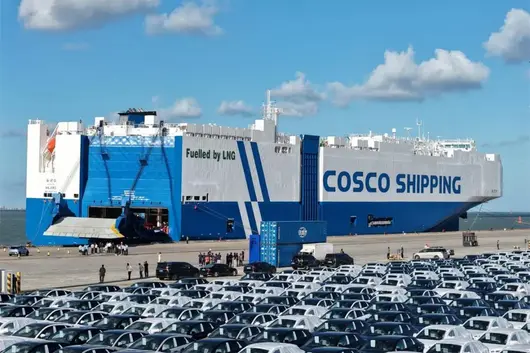
First, explosive growth in exports. In June, new energy passenger car exports reached 499,000 units, a year-on-year increase of 152.7%, a month-on-month increase of 17.6%, accounting for 56.9% of total passenger car exports. Cumulative exports for the first half of the year were 2.231 million units, a year-on-year increase of 124.3%, among which fuel car exports also grew by 33% concurrently. In terms of going global, the situation of 'both fuel and electric increase' was formed.
Secondly, the export structure is also being optimized. Pure electric vehicles account for 58.7% of new energy exports, narrow plug-in hybrids account for 37.7%, up 4.3 percentage points from last year; extended-range accounts for 3.6%. In June, BYD (exports 171,000 units), Chery (74,000 units), and Geely (62,000 units) ranked in the top three for exports. The CKD (complete knock-down assembly) export model was promoted rapidly, with Great Wall and SAIC-GM-Wuling, etc., having CKD shares exceeding 30%, and international system capabilities significantly enhanced.
Additionally, the overseas market share is still jumping up. From January to May 2026, China's new energy passenger cars accounted for 62% of the world share, of which pure electric accounted for 58%, plug-in hybrid accounted for 71%. The sales share of autonomous new energy overseas markets jumped significantly from 15.8% in 2025 to 23.4%, with rapid growth in markets such as Brazil, Australia, Thailand, and the UK. Although the US market was significantly affected by subsidy cancellation fluctuations, European new energy grew by 29% year-on-year, and domestic brands are accelerating to fill the blank.
In terms of market forecasting, the CPCA estimates the year-on-year growth rate of domestic narrow passenger car retail sales in 2026 to be about -14%, but Cui Dongshu believes that from the third quarter onwards, the decline will gradually narrow, and market growth expectations may rise by a few percentage points.



© 2024 Bitauto.com. All Rights Reserved.
Bitauto (www.yiche.com and www.bitauto.com) is one of the most visited automotive websites in China. We provide detailed info on Chinese car brands available in your area. Please note that the information provided on this website is based on publicly available data and is for reference only. It may not be fully updated or accurate at all times.

Help us improve our website


