

Homeoverseas

Search History
Popular Searches
Dealer Login / Sign Up

On average, 17 seconds. In the time it takes you to read this pause, another Chery-made vehicle roars toward a port on the other side of the Earth.
To be honest, half-year exports nearing 950,000 units, single month nearing the 200,000 unit mark, these numbers are indeed substantial. But if you only look at sales volume, you fall into a data trap. What we see is not how many cars Chery sold, but how this enterprise is forcibly rooting the car manufacturing roots into the soil of the global market. This is no longer simple trade export, but a fundamental restructuring of the globalization survival model.
 From Product Transit to Industrial Rooting
In the past, when we talked about going global, the essence was door-to-door delivery. Domestic production, ocean shipping, terminal sales, short chains, weak stickiness. Chery's current approach has clearly changed the logic.
Spain's European Operation Center, UK Liverpool Commercial Vehicle Headquarters, are not simply offices, but have moved the decision-making brain of market operations, compliance management, supply chain coordination, and financial control to the local level. Even more significant is the South Africa Rosslyn Plant, fully taken over from foreign enterprises, retaining all 692 original employees, and driving 3,000 supply chain jobs in the surrounding area.
 It can be said that this deep cultivation of the whole value chain is more penetrating than spending heavily on advertising. You place manufacturing on their land, taxes into their treasury, employment links to locals. This "In somewhere, For somewhere" (Here, For Here, Becoming a Local Member) deep binding is the true moat for going global.
 From Single Product Breakout to Group Strategy
Look at the product side again. Early Chinese brand global expansion often relied on one or two cost-performance models to open the market, concentrated risk, insufficient follow-up. Chery has now formed a blockbuster matrix with multiple lines advancing together.
Tiggo 7 monthly overseas sales broke 30,000 units, Tiggo 4 took the runner-up spot in South Africa monthly rankings; JAECOO 7 topped the UK full market monthly leader, JAECOO 5 led in three lines: Australia small pure electric SUV, Indonesia pure electric, Thailand markets; JETOUR T2 even secured the South Africa Car of the Year award, an authoritative award with a 40-year history. Also, OMODA 5 and iCAR V23 continue to sell well in the UK and Thailand respectively.
 Yes, this is the true meaning of the matrix. From fuel to pure electric, from entry-level home to light off-road, every segment has a capable main product. This multi-point supported product structure is the true portrayal of capacity and demand behind one car every 17 seconds.
 From Compliance Adaptation to Rule Participation
The European market is a benchmark-level arena for the global auto industry, with strict regulations and dense barriers. Chery has not only achieved sales breakthroughs but also completed advancements at the standards level.
Jan-May Europe cumulative sales 138,800 units, year-on-year growth 216.69%; in the UK for three consecutive months ranked second overall brand, second only to Volkswagen. More critically, Chery became one of the Chinese car companies to obtain the China-Europe Automotive Carbon Footprint Mutual Recognition Report, and officially entered the IATF (International Automotive Task Force) Board of Directors, directly participating in the formulation and revision of global automotive quality standards.
 From Trade Going Global to System Export
In the end, Chery's over 940,000 unit export volume in these half years marks that China's automotive global expansion has entered a new stage.
In the past it was trade going global, revenue counted per car sold; now it is system going global, while exporting products, synchronously exporting technical standards, manufacturing systems, brand culture, and localized operational capabilities. New energy export grew 1.6 times, in the European market for every 2 Chery cars sold, 1 is new energy; commercial vehicle sector June export year-on-year growth 146%, 1000 Mojia robots also opened up commercial service tracks in over 50 countries and regions.
 Zhang Guan's Comment: One car every 17 seconds, sounds very fast. But for Chinese brands aspiring to become global car companies, this rhythm perhaps has just entered the stable zone. True globalization has never been as simple as shipping cars out, but rather making oneself truly a local enterprise in every local market.

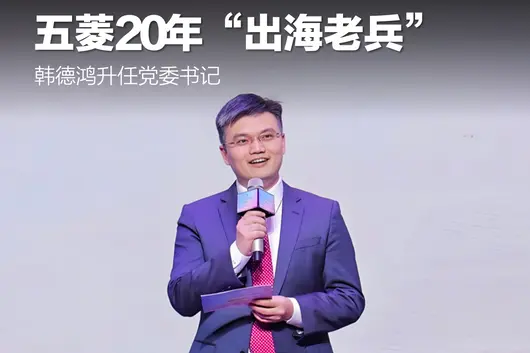
Recently, SAIC-GM-Wuling completed a highly watched high-level personnel adjustment. Former Deputy Party Secretary and Vice President Han Dehong officially succeeded Yao Zoping as the Company Party Secretary, while continuing to serve as Vice President. This 44-year-old executive born in the 1980s has thus completed a key leap from "Deputy Secretary" to "Party Secretary".

The other side of this adjustment is Yao Zoping moving to a secondary role. Yao Zoping was born in May 1964, has reached 62 years of age, exceeding the statutory retirement age. Following the adjustment, he was transferred to Consultant to the General Manager of SAIC-GM-Wuling and Chairman of the Technical Committee of the Smart Island Manufacturing System, no longer specifically responsible for operational matters, gradually transitioning toward retirement.
It is worth noting that Han Dehong has served SAIC-GM-Wuling for over twenty years and is a veteran with rich "overseas" experience. According to his resume, Han Dehong joined SAIC-GM-Wuling in 2005, was sent to India around 2010, served as Assistant General Manager of the India Joint Venture, and participated in developing the Indian market. The direct leader at that time was Yao Zoping.

After returning to China, Han Dehong successively served as Director of Administration and Public Relations of SAIC-GM-Wuling, Vice President of the Sales Company, etc. In June 2016, at the age of 34, he was promoted to Vice President of the Sales Company. After the New Baojun brand was launched in 2019, he transferred to Vice President of New Baojun Sales Company and Director of Brand Communication, accumulating rich experience in brand building.
In 2021, Han Dehong went overseas again to take up a post, serving as Assistant General Manager of SAIC-GM-Wuling Indonesia Branch, later promoted to Vice President of Indonesia Automotive Co., Ltd. This experience further solidified his management capabilities in the overseas market. Upon returning to headquarters, he successively served as Deputy Party Secretary and Assistant General Manager, and began appearing publicly as Vice President in September 2024.
Placing Han Dehong's resume against the backdrop of the current Chinese automotive industry, the deep meaning of this personnel layout is self-evident. With the domestic market陷入 fierce competition and major car companies regarding overseas expansion as a "second growth curve", a young leader with rich overseas market experience stepping into a core position is undoubtedly a key move by SAIC-GM-Wuling for the next stage of strategic transformation.

The Chinese automotive industry is experiencing an unprecedented wave of overseas expansion. According to data from the China Association of Automobile Manufacturers, in August 2026, China's car exports reached 1.01 million units, a year-on-year increase of 65.3%, marking the third consecutive month that Chinese car exports exceeded 1 million units. Cui Dongshu, head of the China Passenger Car Association, predicted that total car exports in 2026 are expected to reach 11.5 million to 12 million units.
More noteworthy is that new energy vehicles have become the absolute main force of exports, with an export share exceeding 50% for three consecutive months. This means that the globalization of the Chinese automotive industry is no longer the initial model of "low price for high volume", but rather high-quality overseas expansion centered on technology, brand, and intelligent capabilities.
However, the path to overseas expansion is not smooth. The "Guidelines on Overseas Competitive Behavior and Compliance Construction for the Automotive Industry" jointly released recently by the Ministry of Commerce, Ministry of Industry and Information Technology, and State Administration for Market Regulation clearly pointed out that some Chinese car companies face risks of disorderly competition in overseas markets. Simply copying the logic of domestic price competition overseas not only damages their own brand value but also lowers the overall perception of Chinese cars in the global market. This hints to us: true globalization capability is far more complex and arduous than the growth of export volume.

In this wave of overseas expansion, SAIC-GM-Wuling has performed impressively. As of August 2026, the company's cumulative overseas sales have officially broken the 1.6 million unit mark, with products sold to over 110 countries and regions. From January to August this year, Wuling exports exceeded 30,000 units monthly for 5 consecutive months, and overseas business has become an important engine for brand growth.
Currently, Chinese automotive overseas expansion is upgrading from "product overseas" to "brand overseas", shifting from simple trade exports to localized operations. SAIC-GM-Wuling's overseas strategy is also undergoing this transformation. Relying on the "India-Malaysia-Thailand" integrated strategy and the layout of three major brand channels, the enterprise is accelerating the upgrade from "product overseas" to "brand overseas".
At this critical juncture, Han Dehong possesses multiple experiences in sales, branding, and overseas markets, as well as a pragmatic background growing from the grassroots. He is undoubtedly the suitable choice to drive this strategic transformation. His deep understanding of overseas markets will help the enterprise better cope with complex challenges such as tariffs, compliance, localization, and supply chain security during the globalization process.

From a broader perspective, SAIC-GM-Wuling's personnel adjustment also reflects the enterprise's emphasis on and cultivation of young management talent. Han Dehong's growth from a grassroots employee to Party Secretary is both a manifestation of personal ability and reflects the company's strategic layout in talent ladder construction.
Going overseas is a marathon, not a sprint. The challenges faced by Han Dehong and his team have just begun. But at least from the personnel layout, SAIC-GM-Wuling is already prepared for this long run.

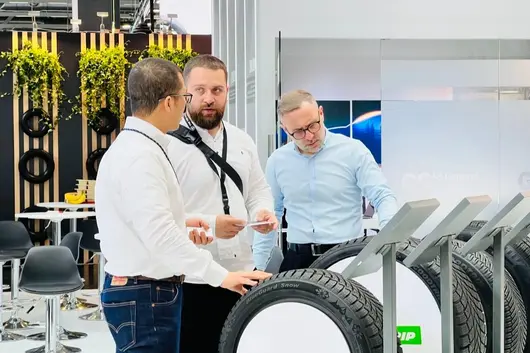
On June 11, 2026, the 2026 German Cologne Tire Show concluded. General Shares participated with three major brands: Qianlima, Ruitu, and Xidataong, and released the "Super Du Zhong Tire" to the overseas market for the first time. Relying on innovative technology and a full range of product matrix, the General Shares booth attracted hundreds of customers from Germany, France, Italy, the UK, and other countries, with new customers accounting for over 80%, and on-site intent orders exceeding one million US dollars.

Addressing Europe's strict environmental regulations and complex climate, General Shares displayed a refined product line covering passenger car tires (PCR) and truck/bus tires (TBR). Regarding passenger car tires, ECOCITY focuses on low rolling resistance and wet safety; SPORTEZZA focuses on high-speed handling and quietness; BlueGuard SNOW snow tires are designed specifically for high-latitude severe weather conditions. Regarding truck/bus tires, CDL2 specializes in long-haul highway stable driving and drainage; CTL2 emphasizes all-road versatility, supports multiple retreads, meeting the cost reduction and efficiency enhancement needs of European logistics fleets; several high-wear-resistance products under the Xidataong brand also received attention.

The core highlight of the exhibition was the overseas premiere of the "Super Du Zhong Tire" developed over more than ten years. The product benchmarks against strict European standards from three major dimensions: Wear resistance performance increased by over 30% year-on-year, passenger car front wheel life exceeds 80,000 kilometers; Wet braking distance shortened by over 4 meters, reaching the EU labeling regulation's highest A-class standard, and adding 5mm nail self-healing CeliSeal self-repair technology; paired with CeliMute silent cotton technology, cavity noise reduced by 9dB, loudness perception reduced by 50%, adapting to the quietness needs of high-end new energy vehicles.

Currently, General Shares is promoting its globalization strategy relying on the national-level R&D platform and the "dual-base" capacity layout in Thailand and Cambodia. Against the backdrop of the EU tightening carbon emissions and environmental standards, the launch of the "Super Du Zhong Tire" meets the European market's requirements for green and high-quality tires. In the future, General Shares will continue to delve deep into green materials, intelligent manufacturing, and product iteration, solidifying its global competitiveness.

车型概览

MG ZS EV 值不值得买,关键不是它看起来有多吸引,而是它能不能解决你的真实用车需求。这篇文章会把重点放在充电节奏、通勤半径和使用便利。
版本方面,MG ZS EV 目前可围绕 2025 320km Luxury 来比较。
购车价格指南
评估 MG ZS EV 的购车预算时,建议先从版本定位和后续拥车成本下手。价格不是唯一重点,真正决定是否划算的是每天会不会用到那些配置。
如果你在几个版本之间犹豫,可以把 2025 320km Luxury 放在同一张清单里比较。日常通勤买家优先看舒适与安全,常跑高速的买家则更应重视动力、辅助驾驶和座舱便利。
核心参数汇总
看 MG ZS EV 的核心规格,最重要是把数字翻译成生活里的感受。
51 kWh的电池容量,重点是能不能支撑一周通勤和周末出门。 130 kW、280 N·m的输出,让高速并线和短距离超车更有底气。 车长 4323 mm、车宽 1809 mm、车高 1625 mm、轴距 2581 mm,可以帮助你预判停车难度和后排乘坐空间。 固定齿比 变速箱、前轮驱动布局 的设定,会影响起步顺滑度、湿地稳定感和长途巡航感。
优缺点分析
MG ZS EV 的优点不必夸张,真正有价值的是它能不能让日常使用更省心:动力输出能支撑高速和超车需求、空间和车身尺寸便于家庭买家预判实用性。
需要留意的是,需要先确认家里、公司或常去商场的充电条件、市区停车和狭窄路段仍要看个人驾驶习惯。这些不是扣分项,而是下订前应该先想清楚的生活细节。
购车常见问题解答
购买 MG ZS EV 前,买家最常问的不是单一规格,而是它能不能融入自己的生活。
这辆车适合谁?适合把充电节奏、通勤半径和使用便利放在首位的买家。 家庭用户要看什么?优先看后排乘坐、儿童座椅、行李和日常上下车是否顺手。 每天开会不会麻烦?只要充电条件稳定,电动车的通勤体验通常更安静,也更容易控制日常能源成本。
竞品对比内容
把 MG ZS EV 放进同级车名单时,不建议只看品牌或外形。真正有用的比较顺序是:再看动力是否足够应付高速和满载、接着比较能源成本和补能便利、最后看空间是否适合家人和行李。
这样筛选出来的结果更贴近日常生活。你会更清楚它是适合城市通勤、家庭代步、长途巡航,还是更适合作为一辆讲求个性的选择。
用车全周期指南

拥有 MG ZS EV 的关键,是先把充电安排想清楚。家充、公司充电或商场快充只要其中一项稳定,日常体验就会轻松很多。
如果你常跑南北大道,动力和座舱舒适度会比单纯低价更重要;如果主要在市区,停车灵活性、视野和低速顺滑度会更影响心情。


车型概览

KGM Torres 值不值得买,关键不是它看起来有多吸引,而是它能不能解决你的真实用车需求。这篇文章会把重点放在长途稳定感和乘客舒适度。
版本方面,KGM Torres 目前可围绕 2025 Standard 来比较。
购车价格指南
评估 KGM Torres 的购车预算时,建议先从版本定位和后续拥车成本下手。价格不是唯一重点,真正决定是否划算的是每天会不会用到那些配置。
如果你在几个版本之间犹豫,可以把 2025 Standard 放在同一张清单里比较。日常通勤买家优先看舒适与安全,常跑高速的买家则更应重视动力、辅助驾驶和座舱便利。
核心参数汇总
看 KGM Torres 的核心规格,最重要是把数字翻译成生活里的感受。
KGM Torres 的核心价值应回到日常场景判断:你要它负责通勤、家庭出行、长途,还是作为更有个性的选择。
优缺点分析
KGM Torres 的优点不必夸张,真正有价值的是它能不能让日常使用更省心:车型定位清楚,适合先作为同级比较对象。
需要留意的是,最终取舍会落在版本配置、保险和长期保养成本。这些不是扣分项,而是下订前应该先想清楚的生活细节。
购车常见问题解答
购买 KGM Torres 前,买家最常问的不是单一规格,而是它能不能融入自己的生活。
这辆车适合谁?适合把长途稳定感和乘客舒适度放在首位的买家。 家庭用户要看什么?优先看后排乘坐、儿童座椅、行李和日常上下车是否顺手。 每天开会不会麻烦?如果能源成本、停车便利和版本配置都符合你的生活节奏,它会比较容易相处。
竞品对比内容
把 KGM Torres 放进同级车名单时,不建议只看品牌或外形。真正有用的比较顺序是:先从版本定位、品牌售后和日常用途开始比较。
这样筛选出来的结果更贴近日常生活。你会更清楚它是适合城市通勤、家庭代步、长途巡航,还是更适合作为一辆讲求个性的选择。
用车全周期指南
拥有 KGM Torres 的重点,是确认保险、路税、保养和轮胎成本都在可接受范围内。买车不是一次付款结束,而是每天都要相处。
如果你常跑南北大道,动力和座舱舒适度会比单纯低价更重要;如果主要在市区,停车灵活性、视野和低速顺滑度会更影响心情。

© 2024 Bitauto.com. All Rights Reserved.
Bitauto (www.yiche.com and www.bitauto.com) is one of the most visited automotive websites in China. We provide detailed info on Chinese car brands available in your area. Please note that the information provided on this website is based on publicly available data and is for reference only. It may not be fully updated or accurate at all times.

Help us improve our website


