

Homeshark

Search History
Popular Searches
Dealer Login / Sign Up

Apabila "Shark" berenang kembali ke China, cabarannya bukan lagi Toyota Hilux dan Ford Ranger, tetapi kubu pikap Great Wall Pao yang telah dipertahankan selama bertahun-tahun. Tentu sahaja, pasaran pikap domestik belum mencapai tahap yang sangat kompetitif, namun selepas bersaing di pasaran luar negara, dengan memanfaatkan citarasa dan keperluan tempatan, BYD Shark mungkin benar-benar mempunyai kelebihan.

BYD mahir menjadi "Raja Luar Negara", Fang Cheng Bao Shark juga kembali dengan rekod kejayaan yang gemilang
Sebelum berbual mengenai produk, ada latar belakang yang perlu dipersembahkan terlebih dahulu. Versi luar negara kenderaan ini dinamakan BYD SHARK, pelancaran global pada Mei 2024 di Mexico, kemudian berkembang di pasaran seperti Australia, Brazil, Thailand, dan lain-lain. Di Mexico, ia menduduki kedudukan tiga teratas dalam pasaran pikap, dan di Australia ia menjadi juara jualan pikap hibrid plug-in. Harga permulaan di pasaran Australia disetangkankan kepada kira-kira 268,000 Yuan, lebih mahal daripada Toyota Hilux dan Ford Ranger dalam kategori yang sama, tetapi jangan lupa, platform hibrid DMO, pengepalaan 4x4 dwimotor, pecutan 0-100 km/j dalam 5 saat, model luar negara telah disalahkan oleh pengurus tinggi Ford mengenai kemampuan traksi, terus dipasang enjin hibrid 2.0T, di pasaran Australia yang memerlukan pikap tinggi, pikap generasi baharu yang pantas, selesa, konfigurasinya tinggi dan tidak takut kerja kasar ini, sememangnya tidak bimbang untuk dijual.

Tentu sahaja, jualan juga menjelaskan tahap kegemaran pengguna, anda dapat melihat banyak Shark yang diubah suai di YouTube, berperang di hutan hujan bersama Hilux dan Ranger, dari segi kekuatan produk ia tidak kalah daripada syarikat lama. Oleh itu, ini menunjukkan logik produknya telah disahkan dalam pasaran pikap yang matang. Sekarang ia menukar pengesahan Fang Cheng Bao, dihasilkannya di tapak Zhengzhou, dijangka mula jualan rasmi pada Q4 2026.

Saiz: "Kepala Besar" yang lebih besar sedikit daripada Great Wall Pao
Lihat dahulu saiz. Versi domestik pikap Shark panjang, lebar, tinggi 5457/1971/1925mm, jarak roda 3260mm. Lakukan perbandingan: Great Wall Pao panjang kenderaan 5362mm, jarak roda 3230mm; Nissan Frontier Pro panjang kenderaan 5280mm, jarak roda 3150mm. Shark lebih unggul ketara dalam panjang dan jarak roda, manfaat langsung yang dibawa adalah peningkatan ketara dalam kapasiti kotak beban dan ruang duduk baris kedua. Saiz dalaman kotak beban adalah 1520/1530/515mm, kapasiti muatan nominal 460kg, jumlah berat tarikan 2500kg. Bagi pengguna yang perlu membawa barang dan keluarga, saiz ini bermakna tidak perlu memilih antara keselesaan baris kedua dan kegunaan kotak beban.

Kuasa: Menghapuskan label 'lemah' daripada kamus pikap
Inilah bahagian paling tidak munasabah bagi pikap Shark. Dilengkapi platform hibrid off-road DMO Super, enjin 1.5T ditambah dwimotor hadapan dan belakang, kuasa komprehensif sistem 320kW, tork puncak 650N·m, pecutan 0-100 km/j dalam 5.7 saat. Pikap berberat sendiri 2.7 tan lari 5.7 saat, ini sudah tidak boleh dipanggil cukup.
Yang lebih kritikal ialah penggunaan tenaga. Bateri 29.58kWh menyediakan jarak纯电 100km NEDC, perjalanan harian boleh dikenderaan sepenuhnya sebagai kereta elektrik; dengan minyak penuh dan bateri penuh jarak gabungan 840km, kehabisan bateri penggunaan minyak 7.5L/100km. Oleh itu, pikap Shark menggunakan logik hibrid untuk mengoyakkan label 'penelan minyak' yang paling dipuji buruk bagi pikap.
Dari segi pengisian tenaga, menyokong pengecasan cepat 40kW, 30% hingga 80% hanya memerlukan 20 minit, yang penting adalah piawai 6kW V2L keluaran tenaga luaran, kegunaan elektrik tapak bina, bekalan tenaga kembara, malah mengisian tenaga kereta elektrik lain boleh dilakukan. Ini juga merupakan banyak pikap tenaga baharu luar negara
Rangka dan Off-Road: Badan tanpa bingkai muatan, tetapi pemanduan seolah-olah bukan pikap
Pikap Shark menggunakan badan tidak memikul beban dengan rangka besar, suspensi bebas garpu dwimotor hadapan dan belakang, piawai kunci pembezaan digital, keluar kilang sudah ada 'tiga kunci'. Jarak tanah penuh 210mm, sudut pendekatan 31°, sudut keberangkatan 20°, dilengkapi pelbagai mod pemanduan off-road. Asas perkakasan ini cukup kukuh.
Tetapi yang benar-benar membezakan ialah prestasi jalan raya. Kelebihan platform DMO ialah output linear daripada pemacu terus motor dan susunan pusat graviti rendah, menjadikan kereta rangka ini jauh lebih selesa dalam pemanduan harian berbanding pikap diesel tradisional. Suspensi bebas garpu dwimotor hadapan dan belakang pada jalan berturap untuk penapisan getaran dan sokongan, bukan daripada keseluruhan jambatan yang boleh dibandingkan. Dengan kata yang kasar, ia ingin membuat satu pikap yang 'pemanduan kerja harian tidak tidak selesa, hujung minggu ke bukit tidak rasa bersalah'.

Hiasan Dalaman: "Mengurangkan Sifat Alatan" pada kabin pikap
Memasuki dalam kenderaan, perasaan paling langsung ialah: ini tidak seperti pikap tradisional. Skrin kawalan pusat boleh putar 12.8 inci ditambah instrumen LCD penuh 10.25 inci, cip 8295, kelancaran sistem kenderaan sama dengan produk kenderaan penumpang BYD. Kursi dilengkapi pengudaraan dan pemanasan, bantuan pemanduan pintar L2, imej panorama 540°, paparan W-HUD semuanya disediakan. Konsol tengah mengekalkan butang fizikal dan modul kawalan off-road, titik ini perlu dipuji secara berasingan - pada jalan yang bergelombang, butang fizikal jauh lebih boleh dipercayai berbanding skrin sentuh.

Hiasan dalaman secara keseluruhan menggunakan nada utama hitam ditambah corak jahitan merah gaya sport, selari dengan bahasa reka bentuk Fang Cheng Bao Leopard 5. Ia tidak sengaja meniru kekasaran pikap Amerika, juga tidak sepenuhnya condong ke arah kehalusan SUV bandar, tetapi mencari titik keseimbangan yang condong ke arah "teknologi kasar" antara keduanya.
Harga: Ketegangan Paling Kritikal
Semasa ini industri meramalkan harga versi domestik antara 180,000 hingga 250,000 Yuan, menyasar pasaran peringkat 200,000. Versi luar negara dijual di Australia kira-kira 268,000 Yuan, jika domestik boleh menekan harga permulaan ke bawah 200,000, daya saing akan sangat ketara.

Perbandingan mendatar: Harga Great Wall Shanhai Pao Hi4-T adalah 279,800 hingga 301,800 Yuan, versi bahan api Great Wall Pao utama dalam interval 150,000 hingga 190,000 Yuan. Jika pikap Shark jatuh di 200,000 hingga 250,000, bermakna ia menawarkan kuasa yang lebih kuat, penggunaan minyak lebih rendah dan jarak纯电 lebih panjang dengan harga beberapa puluh ribu lebih rendah daripada Shanhai Pao Hi4-T. Tetapi harga tidak boleh terlalu rendah - Fang Cheng Bao Leopard 5 harga permulaan 259,800 Yuan, jika harga pikap Shark terlalu rendah, akan membentuk perebutan dalaman jenama. Harga permulaan 200,000 hingga 220,000 Yuan, kebarangkalian besar adalah titik jatuh yang paling munasabah.
Kesimpulan:
Pikap Shark BYD ialah pemboleh ubah baharu paling berharga untuk dipantau dalam pasaran pikap China 2026. Kuasa produknya tidak mempunyai kelemahan ketara: saiz cukup besar, kuasa berlebihan, kawalan penggunaan tenaga baik, perkakasan off-road kukuh, pengalaman kabin gaya penumpang. Jualan pasaran luar negara sudah membuktikan kebolehlaksanaan logik ini. Ketidakpastian terbesar selepas dilancarkan dalam negara, pertama sama ada harga boleh menekan titik manis di atas 200,000, kedua sama keupayaan saluran dan perkhidmatan BYD dalam kategori pikap boleh mengikuti. Jika kedua-dua perkara ini dibuat dengan baik, adakah ia boleh mengubah secara nyata peraturan permainan pasaran pikap?
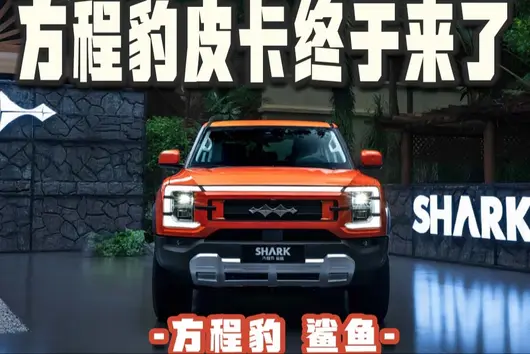

When the "Shark" swims back to China, it no longer faces the Toyota Hilux and Ford Ranger, but the pickup fortress defended by the Great Wall Cannon for years. Of course, the domestic pickup market hasn't yet reached the stage of being a must-fight battleground, but after competing in the overseas market, with Chinese preferences and needs, the BYD Shark might really have an advantage.
BYD is good at being the "Overseas King", Fangchengbao Shark also returns with a record of victories
Before talking about the product, there is a background worth bringing out first. This car's overseas version is called BYD SHARK, globally launched in May 2024 in Mexico, followed by expansion in markets like Australia, Brazil, Thailand, etc. It surged into the top three of the pickup market in Mexico and took the sales champion of plug-in hybrid pickups in Australia. The starting price in the Australian market is about 268,000 RMB, which is more expensive than the Toyota Hilux and Ford Ranger in the same class, but don't forget, DMO hybrid platform, dual-motor four-wheel drive, 0-100 acceleration in the 5-second range, after overseas versions were mocked by Ford executives for poor towing capability, they directly upgraded to 2.0T hybrid engines, in the high-demand Australian pickup market, such a fast and comfortable, high-spec and not afraid of rough work new-generation pickup, naturally has no worry about sales.
Of course, sales also indicate user preference. You can see many modified Sharks on YouTube, fighting together with Hilux and Ranger in the rainforest; in terms of product strength, it is not inferior to those old brands. So, this shows its product logic has already been validated in the mature pickup market. Now it switches to the Fangchengbao logo, produced by the Zhengzhou base, expected to officially launch in Q4 2026.
Dimensions: A "Big Guy" Slightly Larger Than the Great Wall Cannon
First look at dimensions. The domestic version Shark pickup length/width/height is 5457/1971/1925mm, wheelbase 3260mm. Comparison: Great Wall Cannon length 5362mm, wheelbase 3230mm; Nissan Frontier Pro length 5280mm, wheelbase 3150mm. Shark is clearly superior in length and wheelbase, the direct benefit is substantive improvement in cargo box volume and rear passenger space. Cargo box internal dimensions 1520/1530/515mm, rated load mass 460kg, approved towing mass 2500kg. For users who need to haul goods and take family, this dimension means no need to choose between rear seat comfort and cargo box practicality.
Power: Delete the word "Sluggish" from the Pickup Dictionary
This is where the Shark pickup is most unreasonable. Equipped with DMO super hybrid off-road platform, 1.5T engine plus front and rear dual motors, system combined power 320kW, peak torque 650N·m, 0-100 acceleration 5.7 seconds. A pickup weighing 2.7 tons running 5.7 seconds, this cannot be called just enough.
More importantly, it's energy consumption. 29.58kWh Blade battery provides NEDC pure electric range 100km, daily commute can be driven completely as an EV; full fuel and full charge combined range 840km, depleted electricity fuel consumption 7.5L/100km. Therefore, the Shark pickup tears off the most criticized "Oil Tiger" label of pickups using hybrid logic.
Regarding energy replenishment, it supports 40kW fast charging, 30% to 80% takes only 20 minutes. The key is standard 6kW V2L external discharge, capable of powering construction sites, camping setups, or even charging other electric vehicles. This is also a feature found on many foreign new energy pickups
Chassis and Off-Road: Body-on-frame, but drives unlike a pickup
Shark pickup adopts body-on-frame with beam, front and rear double wishbone independent suspension, standard smart virtual differential lock, comes with "three locks" from factory. Max load ground clearance 210mm, approach angle 31°, departure angle 20°, equipped with multiple off-road driving modes. The foundation of this hardware is solid enough.
But what truly widens the gap is highway performance. The advantage of the DMO platform lies in the linear output and low center of gravity layout brought by motor direct drive, making this beam chassis car much more composed in daily driving than traditional diesel pickups. Front and rear double wishbone independent suspension vibration filtering and support on paved roads cannot be compared by solid axles. Simply put, it aims to be a pickup where "commuting on workdays isn't uncomfortable, venturing into mountains on weekends isn't nerve-wracking".
Interior: "De-tooling" of the Pickup Cockpit
Entering the vehicle, the most intuitive feeling is: this doesn't look like a traditional pickup. 12.8-inch rotatable central control screen paired with 10.25-inch full LCD instrument cluster, powered by 8295 chip, infotainment smoothness matches BYD passenger car product line. Seats equipped with ventilation and heating, L2-level intelligent driving assistance, 540° panoramic image, W-HUD head-up display are all arranged. The center console retains physical buttons and off-road control modules, this point is worth single praise — on bumpy roads blind operation, physical buttons are much more reliable than touchscreens.
The interior overall adopts a black main tone with red stitching sporty style, inheriting the design language of Fangchengbao Bao 5. It does not deliberately imitate the ruggedness of American pickups, nor does it completely lean towards the refinement of city SUVs, but finds a balance point leaning towards "Rugged Technology" between the two.
Pricing: The Most Critical Suspense
Currently the industry generally predicts domestic version pricing between 180,000 to 250,000 RMB, focusing on 200,000 RMB class market. Overseas version sells in Australia for about 268,000 RMB. Domestically if it can push the starting price below 200,000, competitiveness will be very obvious.
Horizontal Comparison: Great Wall Shanhai Pao Hi4-T price 279,800 to 301,800 RMB, fuel version Great Wall Cannon main range 150,000 to 190,000 RMB. If Shark pickup falls into 200,000 to 250,000, it means it provides stronger power, lower fuel consumption, and longer pure electric range at a price tens of thousands lower than Shanhai Pao Hi4-T. But pricing cannot be too low — Fangchengbao Bao 5 starting price is 259,800 RMB. If Shark pickup pricing is too low, it will form internal brand fighting. 200,000 to 220,000 starting price, likely is the most reasonable landing point.
Summary:
BYD Shark pickup is the new variable worth the most attention in the 2026 Chinese pickup market. Its product strength has no obvious weaknesses: large enough dimensions, excessive power, adequate energy consumption control, solid off-road hardware, passenger car-like cockpit experience. Overseas market sales have already proven the feasibility of this logic. After domestic launch, the biggest uncertainty is one, can pricing hit the sweet spot just above 200,000, two, can BYD's channels and service capabilities in the pickup category keep up. If these two things are done well, can it cause a substantive change in the pickup market game rules?

每到月初车企销量放榜的日子,都充满了话题性。而比亚迪甩出的5月成绩单,让不少人倒吸了一口凉气。

38.3万辆的单月销量,连续60个月成为新能源市场的头名,这样的数字放在整个中国汽车工业史上,都是过去难以想象的画面。但比销量数字更值得关注的,是这份成绩单背后的一些微妙变化。
38万辆背后的战场,不只是在展厅里
比亚迪5月的销量数据中,王朝和海洋网依旧是绝对的主力,合计超过33万辆的数据撑起了半数意义上的销量。不过方程豹和腾势这两个高端品牌的走势变化,是一个更加积极的信号。

方程豹单月卖出了3万多辆,同比增长接近140%。背后的原因其实不难理解,闪充版车型的陆续到位,让那些本来对硬派越野感兴趣但又在补能效率上犹豫的用户,终于找到了下决心掏钱的理由。以前不少人可能觉得这种带大梁的车充电太慢,出去玩一趟心里没底,现在充电速度和加油基本同速,那为什么不买一个更安静更省钱的?

腾势这边16303辆的销量数字上没有方程豹那么炸裂,但也在持续保持增长。要知道腾势的客户群体其实更“挑剔”,而在N9闪充版上市后,不少原本在看理想L9和问界M9的潜客,正在慢慢转向腾势。

至于月销286辆的仰望,同比增长直接翻倍。中国品牌在百万以上的价格区间,已经不是一个“有没有人买”的问题,而是“值不值得买”的问题。仰望的客户群体大多家里不止一台豪车,他们选择仰望,无疑也是对比亚迪在电动化和智能化技术的信任。

把这些数据放到一起看,我们不难发现,主流的王朝海洋依旧在负责跑量,而方程豹和腾势负责满足25万到50万区间的升级需求,仰望则站在塔尖上做品牌技术的旗帜。这种金字塔结构的好处在于,不管市场怎么波动,比亚迪都能在不同价格带里找到自己的增长点,五月份的成绩单证明了这个产品矩阵的韧性。
“敢兜底”不只是一句口号,而是一次用户信任的重建
还记得五月下旬的“敢为”发布会上,比亚迪抛出了“敢兜底,才是真安全”这句话。而就在城市领航和智能泊车“双兜底”推出后的三天内,搭载天神之眼A、B系统的车型,城市领航的日活跃用户量直接涨了50%。这个增幅说明了一个事实:用户不是不想用智驾,而是之前不敢用。之前的智驾系统在很多场景下,遇到突发状况会直接把控制权甩给司机,让不少人用过一两次就再也不想开了。

再看智能泊车的数据,那就更夸张了。安全兜底推出后,功能使用率从21%飙升到了90%以上。这个反差巨大到有点离谱,但也真实反映了普通用户对自动泊车的真实态度:不是不需要,而是不敢信。尤其是在一些复杂车位,比如立体车库、窄巷子、有低矮障碍物的地方,之前的系统经常识别不准或者半路罢工,用户用两次被吓到之后就不再碰了。而现在比亚迪说“出了事我兜底”,用户的心态就完全变了。

“敢兜底,才是真安全”,这句话的重点不在于“安全”,而在于“敢”。因为在目前的行业环境下,真正敢为自己的智驾系统承担责任的品牌,一只手数得过来。大多数车企都在用各种免责声明把自己裹得严严实实,嘴上说自己是L2+、L2++,但真出了事,责任全是司机的。比亚迪这次把“兜底”两个字摆上台面,本质上是在挑战行业的一个潜规则,也是在试图重建用户对智驾的信任。

从商业逻辑上看,这也是一种聪明的策略。比亚迪目前搭载辅助驾驶的车辆保有量已经超过315万辆,天神之眼每日生成的数据超过2亿公里。这么大的数据规模,意味着它的系统迭代速度会远超那些保有量小的品牌。有了足够的真实路测数据,才有了敢兜底的底气。这个逻辑是没问题的。
海外月销16万的意义,不止于数字
五月份比亚迪的海外销量首次突破了16万辆,同比增长80.7%。海鸥、宋PLUS、元系列在海外市场的持续热销,说明中国品牌的小型电动车和紧凑型SUV,在性价比和产品力上已经具备了和日系、德系直接掰手腕的能力。尤其是在东南亚、南美、中东这些市场,消费者对电动车的接受度在快速提升,而当地本土品牌的产品力又跟不上,这就给了比亚迪一个很好的窗口期。

更值得关注的是SHARK皮卡的表现,连续两个月突破4000辆的批发量,放在全球皮卡市场里虽然不算特别大,但对于一款中国品牌的皮卡来说,这已经是一个里程碑。皮卡在东南亚、澳洲、中东这些市场是刚需车型,而且利润空间远比轿车和SUV要高。SHARK如果能在这个品类站稳脚跟,对比亚迪海外利润结构的改善会有很大的帮助。

当然,海外市场也不是一片坦途,欧洲市场的关税壁垒、美国市场的政策封锁,以及各地不同的充电标准和法规要求,都是比亚迪需要一步步去解决的问题。但五月份的数据至少说明比亚迪的全球化是在实打实推进的。从泰国工厂到巴西基地,从乌兹别克斯坦到匈牙利,比亚迪的制造版图正在全球铺开。
结语
随着六月份大唐和后续几款闪充版车型的上市,会进一步检验比亚迪的产品节奏和市场反应能力。而海外市场能否继续保持16万辆以上的水准,也将是接下来几个月的重要观察点。无论如何,五月份的这份答卷已经足够有分量,它不仅是一个数字上的新高,更是一个信号,表明比亚迪正在从“卖车的”转向“负责的”。在这个充满不确定性的市场里,这种转变或许比销量本身更有意义。
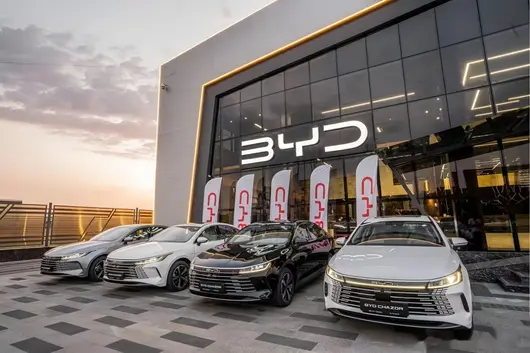

每當月初車企銷量放榜嘅日子,都充滿話題性。而比亞迪甩出嘅 5 月成績單,令唔少人倒抽一口涼氣。
38.3 萬輛嘅單月銷量,連續 60 個月成為新能源市場嘅頭名,呢個數字喺整個中國汽車工業史上,都係過去難以想象嘅畫面。但係比起銷量數字更值得關注嘅,係呢份成績單背後嘅啲微妙變化。
38 萬輛背後嘅戰場,唔止喺展廳入面
比亞迪 5 月嘅銷量數據入面,王朝同海洋網依然係絕對主力,合計超過 33 萬輛嘅數據撐起咗一半意義上嘅銷量。不過方程豹同騰勢呢兩個高端品牌嘅走勢變化,係一個更加積極嘅信號。
方程豹單月賣出咗 3 萬多輛,同比增長接近 140%。背後嘅原因其實唔難理解,閃充版車型嘅陸續到位,令啲本嚟對硬派越野有興趣但係喺補能效率上猶豫嘅用戶,終係搵到下定決心掏錢嘅理由。以前唔少人可能覺得呢種帶大樑嘅車充電太慢,出嚟玩一趟心裡無底,而家充電速度同加油基本同速,點解唔買個更安靜更省錢嘅?
騰勢這邊 16303 輛嘅銷量數字上冇方程豹咁炸裂,但係亦喺持續保持增長。要知騰勢嘅客戶群體其實更「挑剔」,而喺 N9 閃充版上市之後,唔少原本喺睇理想 L9 同問界 M9 嘅潛客,正喺慢慢轉向騰勢。
至於月銷 286 輛嘅仰望,同比增長直接翻倍。中國品牌喺百萬以上嘅價格區間,已經唔係一個「有冇人買」嘅問題,而係「值唔值買」嘅問題。仰望嘅客戶群體大多屋企唔止一台豪車,佢哋選擇仰望,無非都係對比亞迪喺電動化同智能化技術嘅信任。
將呢啲數據放埋一齊睇,我哋唔難發現,主流嘅王朝海洋依舊喺負責跑量,而方程豹同騰勢負責滿足 25 萬到 50 萬區間嘅升級需求,仰望則站在塔尖度做品牌技術嘅旗幟。呢種金字塔結構嘅好處喺於,無論市場點樣波動,比亞迪都能喺唔同價格帶入面搵到自己嘅增長點,五月份嘅成績單證明咗呢個產品陣列嘅韌性。
「敢兜底」唔只係一句口號,而係一次用戶信任嘅重建
仲有冇記得五月下旬嘅「敢為」發布會度,比亞迪拋出「敢兜底,先至係真安全」呢句話。而喺城市領航同智能泊車「雙兜底」推出後嘅三日內,搭載天神之眼 A、B 系統嘅車型,城市領航嘅每日活躍用戶量直接升咗 50%。呢個增幅說明咗一個事實:用戶唔係唔想用地智駕,而係之前唔敢用。之前嘅智駕系統喺好多場景下,遇到突發狀況會直接將控制權甩畀司機,令唔少人用過一兩次就再都唔想開。
再睇智能泊車嘅數據,那就更誇張啦。安全兜底推出後,功能使用率由 21% 飆升到 90% 以上。呢個反差好大到有啲離譜,但都真實反映咗普通用戶對自動泊車嘅真實態度:唔係唔需要,而係唔敢信。尤其係喺一啲複雜車位,例如立體車庫、窄街巷、有低矮障礙物嘅地方,之前嘅系統經常識別唔準或者半路罷工,用戶用兩次被嚇親之後就唔再碰。而而家比亞迪話「出事我兜底」,用戶嘅心態就完全變咗。
「敢兜底,先至係真安全」,呢句話嘅重點唔喺於「安全」,而喺於「敢」。因為喺而家嘅行業環境下,真正敢為自家嘅智駕系統承擔責任嘅品牌,一手數得親。大多數車企都喺用各種免責聲明將自己裹得緊緊實實,嘴上話自己係 L2+、L2++,但真係出事,責任就全部係司機嘅。比亞迪今次將「兜底」兩個字擺上台面,本質上係喺挑戰行業嘅一個潛規則,都係喺試圖重建用戶對智駕嘅信任。
從商業邏輯睇落去,呢都係一種聰明嘅策略。比亞迪而家搭載輔助駕駛嘅車輛保有量已經超過 315 萬輛,天神之眼每日生成嘅數據超過 2 億公里。呢麼大嘅數據規模,代表住佢嘅系統迭代速度會遠超嗰啲保有量少嘅品牌。有咗足夠嘅真實路測數據,先至有敢兜底嘅底氣。呢個邏輯係冇問題嘅。
海外月銷 16 萬嘅意義,唔止喺數字
五月份比亞迪嘅海外銷量首次突破咗 16 萬輛,同比增長 80.7%。海鷗、宋 PLUS、元系列喺海外市場嘅持續熱銷,說明中國品牌嘅小型電動車同緊湊型 SUV,喺性價比同產品力上已經具備咗同日系、德系直接掰手腕嘅能力。尤其係喺東南亞、南美、中東呢啲市場,消費者對電動車嘅接受度喺快速提升,而當地本土品牌嘅產品力又跟唔上,咁就畀咗比亞迪一個好好嘅窗口期。
更值得關注嘅係 SHARK 皮卡嘅表現,連續兩個月突破 4000 輛嘅批發量,放喺全球皮卡市場入面雖然唔算特別大,但係對於一款中國品牌嘅皮卡嚟講,呢已經係一個里程碑。皮卡喺東南亞、澳洲、中東呢啲市場係剛需車型,而且利潤空間遠比轎車同 SUV 要高。SHARK 如果喺呢個類別站穩腳跟,對比亞迪海外利潤結構嘅改善會大有幫助。
當然,海外市場都唔係一片坦途,歐洲市場嘅關稅壁壘、美國市場嘅政策封鎖,以及各地唔同嘅充電標準同法規要求,都係比亞迪需要一步步去解決嘅問題。但五月份嘅數據至少說明比亞迪嘅全球化係喺實打實推進嘅。從泰國工廠到巴西基地,從烏茲別克斯坦到匈牙利,比亞迪嘅製造版圖正喺全球铺开。
結論
隨著六月份大唐同後續幾款閃充版車型嘅上市,會進一步檢驗比亚迪嘅產品節奏同市場反應能力。而海外市場能否繼續保持 16 萬輛以上嘅水準,都係接下來幾個月嘅重要觀察點。無論點樣,五月份嘅呢份答卷已經足夠有分量,佢唔單止係一個數字上嘅新高,更加係一個信號,表明比亞迪正喺由「賣車嗰啲」轉向「負責嗰啲」。喺呢個充滿唔確定性嘅市場入面,呢種轉變或許比銷量本身更有意義。
Every month at the start, the day when car companies release sales rankings is full of buzz. However, the May performance report released by BYD left many people gasping.
A monthly sales volume of 383,000 units, ranking first in the new energy market for 60 consecutive months, is a picture that was unimaginable in the past in the history of China's automotive industry. But what is more worth paying attention to than sales figures are some subtle changes behind this report card.
The battlefield behind 380,000 units is not just in the showroom
In BYD's May sales data, the Dynasty and Ocean networks remain the absolute main force, with a combined total of over 330,000 units supporting half of the sales. However, the trend changes of these two high-end brands, Fangchengbao and Denza, signal a more positive outlook.
Fangchengbao sold over 30,000 units in a single month, with year-on-year growth close to 140%. The reason behind this is actually not difficult to understand. The arrival of the Flash Charge version models allowed users who were originally interested in hard off-roading but hesitated on refueling efficiency to finally find a reason to make up their minds and pay. In the past, many people might have felt that charging these body-on-frame vehicles was too slow, making them feel unsure about going out for fun. Now, charging speed is basically the same as refueling, so why not buy one that is quieter and more cost-effective?
Denza's sales figure of 16,303 units wasn't as explosive as Fangchengbao's, but it continued to maintain growth. You have to know that Denza's customer group is actually more "picky", and after the launch of the N9 Flash Charge version, many potential customers who were looking at Li Auto L9 and AITO M9 are slowly shifting towards Denza.
As for Yangwang with a monthly sales of 286 units, year-on growth directly doubled. For Chinese brands in the price range above one million, it is no longer a question of "whether anyone buys", but "whether it is worth buying". Yangwang's customer group mostly owns more than one luxury car at home. Their choice of Yangwang is undoubtedly also a trust in BYD's electrification and intelligent technology.
Looking at these data points together, it is not difficult to find that the mainstream Dynasty and Ocean are still responsible for volume, while Fangchengbao and Denza are responsible for satisfying upgrade needs in the 250,000 to 500,000 yuan range, and Yangwang stands at the tip of the pyramid as a banner of brand technology. The benefit of this pyramid structure is that no matter how the market fluctuates, BYD can find its growth points in different price bands. The May performance report proved the resilience of this product matrix.
“Daring to take responsibility”is not just a slogan, but a rebuilding of user trust
Remember the "Dare to Act" launch event in late May, where BYD threw out the phrase "Daring to take responsibility is true safety". And just within three days of launching the "dual backstop" of City Pilot and Intelligent Parking, the daily active user volume of City Pilot for vehicles equipped with the God's Eye A, B systems directly increased by 50%. This increase illustrates a fact: users do not want to use intelligent driving, they were just previously afraid to use it. Previous intelligent driving systems, in many scenarios, would directly hand over control to the driver when encountering unexpected situations, making many people not want to drive again after using it once or twice.
Looking at the data for intelligent parking, it is even more exaggerated. After the safety backstop was launched, the function usage rate skyrocketed from 21% to over 90%. This contrast is so huge it seems unbelievable, but it truly reflects the ordinary user's real attitude towards automatic parking: it is not that they do not need it, but that they dare not trust it. Especially in some complex parking spaces, such as multi-level garages, narrow alleys, or places with low obstacles, previous systems often failed to identify accurately or went on strike halfway. Users would not touch it again after being scared twice. Now that BYD says "I will take responsibility if something happens", user mentality has completely changed.
“Daring to take responsibility, that is true safety”, the point of this sentence lies not in "safety", but in "daring". Because in the current industry environment, the brand that dares to take responsibility for its intelligent driving system can be counted on one hand. Most car companies wrap themselves tightly with various disclaimers, saying they are L2+, L2++, but if something really happens, the responsibility is all the driver's. BYD this time put the two words "take responsibility" on the table, essentially challenging a tacit rule of the industry, and also trying to rebuild user trust in intelligent driving.
From a business logic perspective, this is also a smart strategy. BYD currently has over 3.15 million vehicles equipped with assistive driving, and the God's Eye system generates more than 200 million kilometers of data daily. Such a large data scale means its system iteration speed will far exceed brands with smaller vehicle holdings. With enough real-world test data, there is the confidence to take responsibility. This logic is not wrong.
The significance of overseas monthly sales of 160,000 lies not just in the numbers
May's overseas sales volume for BYD broke through 160,000 for the first time, with year-on growth of 80.7%. The continuous hot sales of Seagull, Song PLUS, and Yuan series in overseas markets show that Chinese brand small electric vehicles and compact SUVs already possess the ability to compete directly with Japanese and German brands on price-performance ratio and product strength. Especially in markets like Southeast Asia, South America, and the Middle East, consumer acceptance of electric vehicles is rapidly improving, while local domestic brands' product strength cannot keep up, which gives BYD a very good window period.
More worth paying attention to is the performance of the SHARK pickup, with wholesale volume breaking 4,000 units for two consecutive months. Although not particularly large in the global pickup market, for a Chinese brand pickup, this is already a milestone. Pickups are a necessary vehicle model in markets like Southeast Asia, Australia, and the Middle East, and the profit margin is much higher than sedans and SUVs. If SHARK can establish a foothold in this category, it will greatly help improve BYD's overseas profit structure.
Of course, the overseas market is not a smooth path. Tariff barriers in the European market, policy blockades in the US market, and different charging standards and regulatory requirements everywhere are all problems BYD needs to solve step by step. But the May data at least shows that BYD's globalization is being promoted solidly. From the Thailand factory to the Brazil base, from Uzbekistan to Hungary, BYD's manufacturing map is spreading globally.
Conclusion
With the launch of the Tang in June and subsequent Flash Charge version models, BYD's product rhythm and market response capability will be further tested. Whether the overseas market can maintain a standard above 160,000 units will also be an important observation point in the coming months. Anyway, this May report is already weighty enough. It is not only a new high in numbers but also a signal, indicating that BYD is shifting from "selling cars" to "taking responsibility". In this market full of uncertainty, this shift may be more meaningful than the sales figures themselves.

方程豹鲨鱼皮卡来了!
比亚迪、吉利、奇瑞、广汽…… 为什么中国车企要扎堆造皮卡?
国内皮卡市场逐年萎缩,皮卡政策限制仍在,皮卡乘用化消费需求尚未形成规模增量,可为什么中国车企还要扎堆造皮卡?
—中国车企扎堆造皮卡—5月13日,比亚迪方程豹豹8豹5闪充版上市发布会,最后的彩蛋是:比亚迪SHARK鲨鱼皮卡并入方程豹体系。这个在海外皮卡市场表现亮眼的“鲨鱼”,距离在国内上市已进入倒计时。

无独有偶,吉利汽车正在基于其首款原生新能源越野架构,研发全新插电混动四驱皮卡。而在这之前,吉利雷达皮卡凭借其纯电动力的独特定位,已在国内和东南亚市场赢得了一席之地。
在刚刚过去的2026北京车展上,奇瑞旗下的硬派越野皮卡纵横F700首发,该车轴距与长城山海炮相同,搭载奇瑞CDM-O系统,P4电机,后桥多连杆悬架,预计将于2026年年底上市。
奇瑞威麟皮卡R08,已于2025年9月上市,其量产柴油插电混动皮卡威麟P3X系列车型,计划于2026年内推出。


同样在2026北京车展上,广汽领程(前身是广汽日野,广汽集团旗下商用车公司)全新概念皮卡亮相,正式吹响进军皮卡市场的冲锋号,而其首款量产皮卡也将计划于2028年推出。


再看长期霸榜国内皮卡销量榜首的长城,在北京车展上,长城炮Hi4-T系列车型预售。而长城汽车搭载柴油混动的新车预计将从明年开始上市,这也为长城炮后续产品提供了想象空间。
—中国皮卡出口已进入快车道—那么问题来了,为什么中国车企都要扎堆造皮卡?
我们先来看最近皮卡市场的几个变化:
很明显,中国皮卡的广阔舞台在海外市场,而这一数字约为200万辆/年(除中国汽车尚未进入的北美等市场外)。
中国车企显然不想放弃皮卡这块蛋糕。
事实上,中国皮卡正在凭借高性价比、新能源和智能化,以及定制化产品等优势,实现对日、美汽车品牌所垄断的全球皮卡市场的突破,且中国皮卡在部分海外市场的市场占比增速十分可观。

以巴西市场为例,长城和比亚迪均在现款产品之外,研发在当地更适配、更有竞争力的小尺寸紧凑型新能源皮卡。
在澳洲、泰国、南非、中东等市场,中国皮卡正是凭借成本优势、新能源技术等,实现对日、美皮卡品牌的突围。

福特CEO吉姆·法利在澳大利亚试驾了长城Alpha(山海炮)和比亚迪Shark6之后,坦率承认中国皮卡在性价比、外观设计和电动化技术上具备可观的市场竞争力,甚至表示“我们把它拆开之后,还是不知道他们怎么赚钱”,这其实也反映出中国车企在供应链和成本上的独特优势。
而随着中国车企在新能源技术上的领先优势,所带来的定制化研发能力和周期大大提升,加之海外市场的运营体系日趋成熟,中国皮卡在海外的市场份额,可以说已进入增长的快车道。
—国内皮卡政策和认知难解—反观国内,皮卡市场已从2021年的41.87万辆萎缩至2025年的27.53万辆,下滑约34%。究其原因,皮卡传统工具车刚需体量持续下降。重点体现在,国内工程基建、房地产行业大幅退坡,导致其上下游产业链对皮卡上的刚需持续下降,以及受经济增速和城市化进程放缓,传统小私营业主的需求下降所致。

一边是刚需下降,另一边则是皮卡乘用化消费需求尚未形成规模增量。
皮卡15年报废、一年一检等政策,直接打消了大量非刚需人群购买皮卡的念头。好消息是,据业内人士传言,皮卡政策今年或将会进一步放宽。
虽然全国95%以上的地级及以上城市,已取消皮卡进城限制,但北京、上海、广州、深圳、杭州、成都、武汉等核心大城市,对皮卡进城仍存在不同程度的管控。而这一政策或将是改变用户认知的一个关键因素,“尝鲜儿式”新消费和对下沉市场用户认知的影响,往往是从核心大城市率先兴起,再逐渐向周边市场蔓延。

试想,如果政策到位,核心大城市的新锐青年们,选择一台乘用化皮卡作为日常用车,对下沉市场用户的影响和带动作用将是巨大的,到那时,中国皮卡的乘用化市场条件才算是迎来真正的拐点。
现阶段,国内皮卡市场将会越来越卷,中国皮卡车企也将用出口挣的钱,补贴到国内皮卡的售价里,也就是我们将以低于海外市场的价格买到更好的中国皮卡,这对于国内用户来说,何尝不是好事儿呢?

© 2024 Bitauto.com. All Rights Reserved.
Bitauto (www.yiche.com and www.bitauto.com) is one of the most visited automotive websites in China. We provide detailed info on Chinese car brands available in your area. Please note that the information provided on this website is based on publicly available data and is for reference only. It may not be fully updated or accurate at all times.

Help us improve our website


