

Homestreet

Search History
Popular Searches
Dealer Login / Sign Up

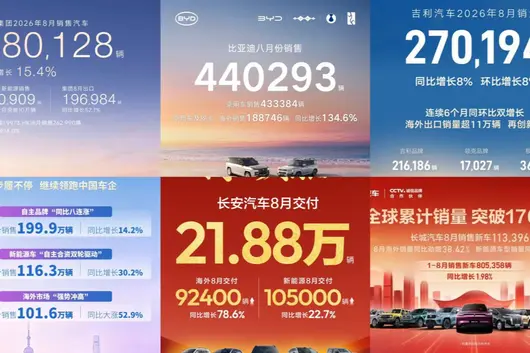
9 月 1 日,國內十餘家主流車企陸續公布了 8 月銷量成績單。從數據以及各家車企嘅銷量海報重點嚟睇,一個鮮明嘅信號正在浮出水面:海外市場正喺由曾經嘅第二戰場升級爲主戰場,中國車企嘅全球佈局終於苦盡甘來,進入到新一輪“質變”嘅新階段。

跳出存量博弈,海外扛起增長大旗
從銷量數據嚟睇,8 月份,中國車企跳出國內市場“存量博弈”嘅跡象越來越明顯。
其中,以“中國車企出口冠軍”奇瑞最爲突出。
8 月,奇瑞集團總銷量達到 28 萬輛,而海外市場就貢獻了 19.7 萬輛,同比增長 52.1%,出口佔比再次達到 70% 以上,也就是說每賣出 10 輛車就有 7 輛銷嚟海外。而截至 8 月份,奇瑞累計出口已經突破 700 萬輛,成爲中國首家達成呢一里程碑嘅車企。
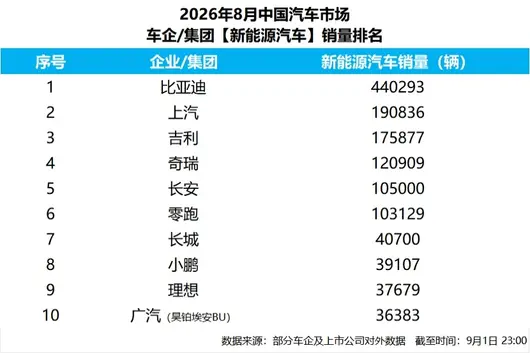
比亞迪嘅海外銷量直逼奇瑞。8 月份,比亞迪總量達到 44 萬輛,係唯一一家月銷超 40 萬輛嘅車企。海外市場嘅增長係最大嘅驅動力,比亞迪 8 月海外銷量達到 18.87 萬輛,同比暴漲 134.6%,創品牌海外單月銷量歷史新高。而作爲對比,兩年前,比亞迪海外市場嘅月銷量仲基本徘徊喺 3 萬台出頭。

同比亞迪一樣再次創下歷史新紀錄嘅仲有吉利汽車,8 月吉利汽車總銷量 27 萬輛,海外佔據 11 萬輛,同比暴漲 205%,這已經係吉利連續三個月突破 10 萬輛。而喺呢 11 萬台之中,新能源出口超 7 萬輛,同比翻了四倍,喺海外出口中嘅佔比達到咗 64%。
得益於今年来海外市場屢創佳績,吉利此前已經將全年海外銷量目標從 64 萬輛上調至 92 萬輛,並將衝刺 100 萬輛。
除咗上述車企,上汽集團 8 月海外銷量達到咗 13.9 萬輛,同比增長 57.67%,佔總銷量比重近四成。長安汽車 8 月海外交付 9.24 萬輛,同比增長 78.6%,海外已連續七個月實現同比增長,長城汽車 8 月海外銷量超過 6 萬輛,同比增長 38.42%,佔比達到咗 55.1%……

喺國內市場存量博弈越來越激烈,終端消費越來越低迷嘅背景之下,“出口驅動型”嘅增長,正成爲主流車企們最顯著、亦係最拿得出手嘅銷量特徵同亮點。
業績新著力點,體系佈局“苦盡甘來”
比銷量數字更讓中國主流車企們充滿“揚帆海外”鬥志嘅,係業績。
如果話銷量只係過程,那麼業績便係結果。多家主流車企嘅上半年財報業績,都呈現出咗歷史性嘅收入結構反轉。其中,比亞迪上半年海外收入首次超過國內,1812.68 億元嘅海外營收佔據集團總營收 52.57%。
也就是說,比亞迪上半年賺嘅錢,更多係來自於海外市場。值得注意嘅係,儘管海外市場並未能完全對沖國內嘅下滑,但由於海外市場定價更高,價格相對更加穩定,更高嘅利潤空間亦直接推動咗比亞迪淨利潤同毛利率嘅提升。

目前,隨著海外本地產能嘅陸續釋放同渠道體系嘅持續完善,比亞迪海外市場正處於大幅增長嘅週期中,也就是說,海外仲會進一步成爲比亞迪業績增長嘅關鍵著力點。
當然,喺海外市場較高嘅利潤同規模增長嘅共同推動下,業績結構發生歷史性轉折嘅,比亞迪唔係個例。長城汽車上半年總營收首次破千億,海外市場收入佔總收入比重達到 55.13%,達到 562.88 億元,這亦係海外收入首次超過國內收入。
奇瑞方面,上半年總營收 1432.8 億元,海外收入 989.68 億元,同比增長 51.0%,佔總收入比重高達 69.07%。呢一比例喺主流中國車企中位居第一,而得益於海外銷售嘅高毛利率,奇瑞上半年嘅整體毛利率亦迎來咗提升,上半年淨利潤率達到 6.3%。
長安汽車上半年收入 656.34 億元,境外收入 219.42 億元,同比增長 78.77%,佔總收入比重升至 33.43%,海外毛利率保持喺 20% 以上。吉利汽車喺財報會議上直言,上半年業績增長嘅兩大核心驅動因素,一個係高端化,另一個就係全球化。

新勢力方面,零跑汽車上半年營業收入達到 381.1 億元,其中歐洲市場就貢獻咗 88.75 億元……呢啲數據同案例不斷證明:海外市場唔只係中國車企嘅“第二增長曲線”,更係實實在在嘅“業績引擎”,當規模放量同高毛利共振,出海無疑就成為一道“必做功課”。
海外市場掘金,但挑戰仍存
從數據嚟睇,可以非常明確嘅係,海外市場唔只正成爲對抗國內下行週期嘅“對沖器”,而且仲正成爲中國車企們嘅掘金場。
而呢輪掘金,唔係將產品賣出去就得㗎,奇瑞、比亞迪、吉利、長安、長城等主流車企嘅全球化均從 1.0 時代邁向咗 2.0 時代嘅體系出海、生態出海新階段。比亞迪喺泰國、巴西、匈牙利等地嘅工廠陸續投產;吉利加速推進巴西、西班牙等海外本地化項目;奇瑞到 2025 年就已經喺全球建立超過 10 個生產基地;長安計劃擴產泰國工廠產能至 20 萬台……
呢啲海外工廠,正成爲中國車企們衝擊全球目標嘅推進器。
格外值得注意嘅係,喺呢輪出海浪潮中,新能源嘅比重越來越高,比亞迪超 18 萬台,吉利新能源出口佔比達到 64%,奇瑞 8 月新能源出口将近 4 萬台……而喺智能化上,小鵬汽車 8 月份正式宣佈正推進第二代 VLA 嘅全球化部署,計劃喺明年上半年陸續嚟海外用戶交付第二代 VLA。

喺電動化轉型嘅全球浪潮下,中國車企們喺新能源同智能化維度嘅先發優勢,亦決定咗中國車企們嘅本輪出海,唔只具有先發優勢,而且仲擁有可持續性。
前景係明朗嘅,但挑戰同樣隨行。上半年多家車企淨利潤出現下滑,都共同提到咗匯率損益。也就是說,當海外業務佔比從“補充”變爲“半壁江山”時,匯率波動就唔再係財報中一個無關緊要嘅細枝末節,而係直接關係到數千億營收實際價值嘅系統性變量。
匯率波動嘅風險,亦喺某種程度上加重咗車企們“掘金”嘅不確定性。而除咗匯率波動,本土化建設嘅鉅額投入,海外品牌建設同營銷等財務費用嘅支出,亦會畀車企們喺財務業績上帶來唔少壓力。如何構建一個穩定、健康嘅投入產出比,顯然是畀中國車企們喺全球化過程中不可避免嘅思考。
紅點觀察:
當然,無論如何,8 月嘅數據同上半年嘅財報都共同指向一個結論,那就係:中國車企們正邁入全球化佈局嘅“收穫期”。而喺呢個收穫期內,中國車企們正以一個集體嘅姿態,嚟全球市場證明,中國汽車有實力,亦都有底氣喺全球市場上角逐。

In Malaysia's SUV market, many buyers compare Honda HR-V and Mazda CX-60 when choosing a car. These two models are quite close in price and positioning. Today, we will do a detailed comparison from multiple aspects to help you save time on research.
The OTR price for Honda HR-V in Malaysia is RM 115,900 - 143,900, with a total of 4 versions, including the 2026 e:HEV 1.5L RS (RM 143,900), 2026 1.5T V (RM 137,900), 2026 1.5T E (RM 130,900), etc.
The OTR price for Mazda CX-60 in Malaysia is RM 200,510 - 252,873, with a total of 2 versions, including the 2026 3.3T 4WD High Plus (RM 252,873), 2025 2.5L 2WD High (RM 200,510), etc.
From a price perspective, the entry price of Honda HR-V is indeed RM 84,610 cheaper than Mazda CX-60. If your budget is limited, Honda's entry-level version can already meet daily needs. But note that the few thousand bucks savings might come with trade-offs in features, which depends on your specific needs.

Honda HR-V is equipped with a 1.5L Turbo, 140 hp. Official fuel consumption 7.0 L/100km.
Mazda CX-60 is equipped with a 2.0L 4-cyl, 170 hp. Official fuel consumption 8.0 L/100km.
In terms of power, the 2.0L 4-cyl of Mazda CX-60 has 30 more hp than the 1.5L Turbo of Honda HR-V. However, for daily city driving, the power of both cars is sufficient and won't feel lacking.

Honda HR-V warranty 5 years/unlimited mileage, maintenance interval every 10,000km or 6 months.
Mazda CX-60 warranty 5 years/150,000km, maintenance interval every 10,000km or 6 months.

Honda HR-V and Mazda CX-60 are both mainstream choices in the Malaysian market, suitable for family use and daily commuting. If you value brand reputation and resale value more, prioritize the one with the better reputation; if you care more about value for money and features, choose the one with richer specifications. Ultimately, we suggest test driving both, as experiencing it firsthand is most important.

Overall, Honda HR-V and Mazda CX-60 are both very good models in the Malaysian market. Which one to choose depends on your personal needs and budget. We suggest doing your research, comparing quotes from multiple dealerships, and then test driving to make the final decision. Buying a car is a big matter; spending some time doing research will definitely not go wrong.


In Malaysia's SUV market, many buyers compare Honda HR-V and Mazda CX-5 when choosing a car. These two models are quite close in price and positioning. Today, we will make a detailed comparison from multiple aspects to help you save time on research.
Honda HR-V's OTR price in Malaysia is RM 115,900 - 143,900, with 4 versions in total, including 2026 e:HEV 1.5L RS (RM 143,900), 2026 1.5T V (RM 137,900), 2026 1.5T E (RM 130,900), etc.
Mazda CX-5's OTR price in Malaysia is RM 135,469 - 166,760, with 3 versions in total, including 2025 2.0L AT 35th Anniversary (RM 316,154), 2025 2.0L AT (RM 296,154), 2025 2.0L MT (RM 294,154), etc.
From a price perspective, the Honda HR-V's starting price is indeed RM 19,569 cheaper than the Mazda CX-5. If your budget is tight, Honda's entry-level model already meets daily needs. However, keep in mind, the cost savings might come with compromises in features, depending on your specific requirements.
Honda HR-V safety rating is 5★ (ASEAN NCAP), active safety systems include Honda SENSING (ACC, CMBS, LKAS, RDM).
Mazda CX-5 safety rating is 5★ (ASEAN NCAP), active safety systems include.
Both vehicles share the same safety rating, and safety features are quite comprehensive within this class. Safety in new cars these days is generally good, so no need to worry too much about this aspect.
The Honda HR-V uses FWD drive.
The Mazda CX-5 uses FWD drive.
Both vehicles share the same drive configuration, both are FWD, so there won't be a significant difference in the daily driving experience.
Honda HR-V warranty 5 years/unlimited mileage, service interval every 10,000km or 6 months.
Mazda CX-5 warranty 5 years/150,000km, service interval every 10,000km or 6 months.

The Honda HR-V and Mazda CX-5 are both mainstream choices in the Malaysia market, suitable for family use and daily commuting. If you value brand reputation and resale value more, consider the one with better standing; if you prioritize cost-effectiveness and features, choose the model with richer equipment. Ultimately, it is recommended to test drive both, as experiencing them personally is the most important.

Overall, both the Honda HR-V and Mazda CX-5 are very good models in the Malaysia market. Which one to choose ultimately depends on your personal needs and budget. We suggest doing your homework, comparing quotes from several dealerships, and then test driving to make the final decision. Buying a car is a major purchase, spending some time on research will never be wrong.


In the first half of 2026, the financial report revenue of automakers is like the status of different students in a class. Some managed to grow while raising prices in the most competitive market, some directed 70% of their revenue overseas, some dragged a massive body with nearly 300 billion in revenue and tried to turn around, while others embraced robots while losses expanded.
At this point in earnings season, I selected five representative automakers and ranked them using the old rule from Solid to Lagging.All comments are based on public financial data and operating performance. The evaluation part involves a lot of the author's subjective judgment. If you disagree, then you are right.
Solid: Geely Automobile
Reason: The whole industry is cutting prices, yet they sold more expensively and earned more.

In the Chinese car market in the first half of 2026, although they say they won't have a price war, secretly increasing specs to cut prices is the mainstream. Under this background, Geely indeed turned in a performance report that was almost flawless.
Benefiting from the total sales of 1.423 million vehicles in the first half, Geely's total revenue in the first half was 173.6 billion yuan, a 15% year-on-year increase, setting a new record high.
The net profit attributable to the parent company shareholders on the books is 9.091 billion yuan, appearing to be a slight decrease of 1.8% year-on-year, but after deducting interference items such as exchange losses and non-financial asset impairment, the core net profit attributable to the parent company shareholders reached 9.68 billion yuan, a significant increase of 46% year-on-year, with growth far exceeding revenue.The core net profit margin is 5.6%, a 27% year-on-year increase.
The performance at the gross profit end is even more persuasive.
Gross profit in the first half was 31.15 billion yuan, a 25.7% year-on-year increase, with the gross profit margin rising to 17.9%, 1.6 percentage points higher than the same period last year. Revenue per vehicle increased by 16% year-on-year to 112,000 yuan. In other words, Geely sold cars more expensively in the past half year and earned more.
In 2026 when most peers are trading price for volume, these three words placed together are almost a luxury.

Financially, operating cash flow was 19.924 billion yuan, with cash reserves of 69.6 billion yuan. Total borrowings were slashed directly from 18.1 billion yuan to 8.7 billion yuan, a drop of over half.R&D investment was 9.199 billion yuan, a 26% year-on-year increase, without saving a penny of money that should be spent.
Additionally, Li Shufu chose to hand over the chairmanship to An Conghui at the peak of performance, a timing choice that can be described as textbook level.
Completing the power transition at the best time leaves the largest margin for error for the successor. During the half year with the most intense competition, achieving simultaneous upward movement in volume, price, and profit on all three dimensions, only a few hands in the entire industry can hand in this answer sheet.
Therefore, Geely getting Solid comes as no surprise.
Top Tier: Chery Automobile
Reason: 70% of revenue comes from overseas, the words "King of Going Global" can barely contain it.

Looking at Chery's financial report, revenue in the first half was 143.28 billion yuan, a year-on-year increase of only 1.2%; net profit attributable to the parent company shareholders was 8.567 billion yuan, a year-on-year decrease of 11.7%.If only these two numbers are focused on, the label "revenue growth without profit growth" seems almost to be pasted on.
But if the structure is broken down, the focus is still very obvious. In the first half of this year, Chery's overseas revenue was 98.968 billion yuan, surging 51% year-on-year, with the proportion of total revenue approaching 70%.
This number cannot find a second one in the Chinese automobile industry. It is the strong expansion of overseas business that pushed the overall gross profit from 18.4 billion yuan in the same period last year to 23.044 billion yuan, an increase of 25.1%, with the gross profit margin rising from 13% to 16.1%.
In my opinion, the overseas market has long exceeded the positioning of "second front" for Chery; it is the main battlefield and the profit engine of the entire group.

The transformation to new energy vehicles is also worth noting.
New energy revenue was 59.284 billion yuan, a year-on-year increase of 63.8%, with the proportion of total revenue rising from one-quarter to over 40%.More critically, the gross profit margin of new energy vehicles jumped from 5.2% to 12.8%, increasing by 7.6 percentage points within six months, a considerable speed of progress.
At the same time, fuel vehicles still contributed 12.553 billion yuan in gross profit and an 18.1% gross profit margin, providing a stable cushion for overall transformation.
Then there is cash flow. Operating cash flow in the first half was 37.762 billion yuan, surging 169.7% year-on-year, with cash reserves of 63.419 billion yuan, a 35% increase from the beginning of the year. The benefits brought by the non-competitive overseas market are obviously not just profit growth.
So, although Chery's data does not look very stunning on the surface, its quality performance in going overseas and new energy still makes it a typical car company representative standing on the wind.
And the 8.567 billion yuan net profit absolute amount is still very capable. The 37.7 billion yuan operating cash flow is even more of a bonus. No matter how this calculation is done, it is not a loss. Give it to Top Tier.
Elite: SAIC Motor
Reason: An elephant with nearly 300 billion in revenue, turning around faster than outsiders thought.

The semi-annual report from SAIC Motor needs a bit of patience to understand.
Consolidated total operating revenue was 298.65 billion yuan, a slight decrease of 0.31% year-on-year. Net profit attributable to the parent company shareholders was 5.15 billion yuan, a decrease of 14.38% year-on-year.On a giant in the industry with nearly 300 billion in revenue, these figures are indeed not very good to look at.
But at the same time, core net profit attributable to the parent company shareholders was 7.87 billion yuan, a significant increase of 72% year-on-year; gross profit margin was 12.6%, a 3 percentage point increase year-on-year; operating cash flow was 54.3 billion yuan, a 158% year-on-year increase. These figures look quite good.
Half of the indicators are going down, half are surging up. This is essentially the true situation of SAIC currently: joint venture sectors and independent sectors fighting left and right, old and new forces intertwining, one growing while the other declines.
So why can it still be given to Elite?
Firstly, SAIC sold 2.045 million vehicles in the first half of the year, the only car company in the country with half-year sales exceeding 2 million, with growth outpacing the market by nearly 4 percentage points.
In terms of independent brands, the MG4 family sold over 10,000 units monthly, Shangjie Z7 and Z7T were delivered rapidly after launch, and IM Motors sales doubled. The joint venture camp did not lie flat either. SAIC Volkswagen launched NEV models like ID.ERA 9X, AUDI E7X, etc., and SAIC General's new energy vehicle sales growth exceeded 80%.

Strategically, an cooperation agreement was signed with Audi to establish an Innovation Technology Center, ocean transport annual capacity exceeded 600,000 units, and the three lines of independent overseas expansion, joint venture transformation, and new energy layout advanced simultaneously.
Therefore, in my opinion, from the current node, this company has done more things right than wrong. While the elephant turning is hardly elegant, the direction is right, and the momentum is also improving.With the position of Elite, it can hold its ground.
NPC: Changan Automobile
Reason: Overseas looks like a different company, but it cannot cover the "holes" in China.

Changan Automobile is a bit like Chery, but the latter's overseas foundation is too thick, while Changan is just starting.
In the first half of this year, Changan Automobile's operating revenue was 65.634 billion yuan, a decrease of 9.71% year-on-year. Net profit attributable to the parent company shareholders was 817 million yuan, a crash of 64.32% year-on-year. Deducted net profit attributable to the parent company shareholders was even more miserable, only 251 million yuan, a year-on-year decline of 83%.
However, turning to the overseas page, the style changes suddenly.
Overseas sales in the first half were 455,000 units, a 52% year-on-year increase; overseas revenue was 21.942 billion yuan, surging 78.77% year-on-year; overseas gross profit margin was as high as 20.13%, nearly twice as high as the 11.67% of domestic business.Production capacity expanded to 445,000 units, channel coverage 1,269, localization construction in Thailand and Brazil continues to land.
Looking at overseas alone, this is completely a company worthy of higher evaluation.

But unlike Chery where overseas business can account for 70% strength, Changan's overseas performance cannot cover the data dragging behind domestically.
In the first half of this year, its new energy vehicle sales were 414,000 units, a decrease of 8.3% year-on-year (note that there was a reason for its active cutting of lumin sales), 65 billion in revenue only corresponds to 817 million in net profit.
In terms of specific brands, slightly comforting is that Qiyuan achieved single-quarter profitability in the second quarter, and Avatr is also reducing losses. These positive signals do exist, but overall, the new energy business is still in a stage of heavy investment and slow recovery, still a distance from self-sustaining.
Comprehensively speaking, give it NPC.
Lagging: XPeng Motors
Reason: The car sales haven't been figured out yet, but robots with a 43 billion valuation have arrived first.

XPeng Motors' semi-annual report is probably the most mixed feelings of the five.
First, total revenue in the first half was 32.78 billion yuan, a decrease of 3.8% year-on-year; automobile sales revenue was 28.05 billion yuan, a decrease of 10.3% year-on-year; cumulative deliveries were about 166,000 units, a decrease of 15.8% year-on-year. Net loss was 3.12 billion yuan, expanding by about 173.7% year-on-year. Under the reference of NIO and Li Auto, XPeng falling behind in "NIO, XPeng, Li Auto" needs no further explanation.
Of course, there are positive parts in the report.
The comprehensive gross profit margin rose to 20.6%, gross profit was 6.766 billion yuan, a 20.2% year-on-year increase. Revenue in the second quarter was 19.74 billion yuan, a significant increase of 51.5% quarter-on-quarter, having clearly walked out of the low point of the first quarter. The net loss in the second quarter also narrowed from 1.78 billion yuan in the first quarter to 1.34 billion yuan. From a trend perspective, the valley may have been passed.
But the problem is, XPeng chose this node to make a large-scale bet on "Second Curve".
The robot business completed its first round of over $900 million in financing, with a post-money valuation of about 43 billion yuan. The gross profit margin of the technology service business was as high as 75.1%, which sounds very attractive, but the revenue scale is only about one-sixth of the automobile business, and relying on it to hold up the situation is far from enough.R&D expenses in the second quarter were 2.91 billion yuan, a 32.1% year-on-year increase.

For a company established on technology, high R&D investment is understandable, but when the automobile main business has not yet found a profit turning point, a large amount of resources flowing into the robot track, the market is likely to have a question: The automobile question hasn't been finished yet, why rushing to turn to the next page, is this considered vision or anxiety?
The capital market voted with their feet. After the financial report was released, XPeng US stocks fell 8.53%, and HK stocks continued to fall sharply by 9.19%.
Therefore, the 3.1 billion yuan loss may still be within the acceptable range, but the real dilemma XPeng faces now is that the profit path of the automobile business is still blurred.Using a high-valuation robot story to buy time for the current automobile dilemma, at present, it seems difficult to balance both.
Judging from its first half performance, for now, it can only be given "Lagging", but perhaps at this time next year, the robot can prove that XPeng has the qualification to return to Elite or even Top Tier levels. Of course, as an automotive practitioner, what is more hoped for is that this achievement comes from its automobile business.


Di pasaran SUV Malaysia, ramai pembeli akan membandingkan Honda HR-V dan Chery Tiggo Cross apabila memilih kereta.
Harga Honda HR-V OTR di Malaysia ialah RM 115,900 - 143,900, keseluruhan terdapat 4 varian, termasuk 2026 e:HEV 1.5L RS (RM 143,900), 2026 1.5T V (RM 137,900), 2026 1.5T E (RM 130,900) dan lain-lain.
Harga Chery Tiggo Cross OTR di Malaysia ialah RM 88,750 - 99,750, keseluruhan terdapat 2 varian, termasuk 2025 HEV 1.5L CSH (RM 99,750), 2025 1.5T Standard (RM 88,750) dan lain-lain.
Dilihat dari harga, harga permulaan Chery Tiggo Cross lebih murah RM 27,150 berbanding Honda HR-V. Secara jujur, dalam julat harga ini, perbezaan ribuan ringgit sebenarnya tidak terlalu besar, kunci utama adalah melihat nisbah nilai keseluruhan dan kos penggunaan jangka panjang.
Honda HR-V dilengkapi enjin 1.5L Turbo, 140 hp. Penggunaan bahan api rasmi 7.0 L/100km.
Chery Tiggo Cross dilengkapi enjin 1.5L 4-cyl, 105 hp. Penggunaan bahan api rasmi 6.0 L/100km.
Dari segi kuasa, 1.5L Turbo Honda HR-V mempunyai 35 hp lebih daripada 1.5L 4-cyl Chery Tiggo Cross, pecutan pertengahan lebih berdaya, terutamanya ketika memotong di lebuh raya. Namun, penggunaan bahan api Chery Tiggo Cross mungkin lebih baik, perbezaan semasa perjalanan harian di bandar tidak akan terlalu besar.
Panjang badan Honda HR-V ialah 4500 mm, bagasi 450 L.
Panjang badan Chery Tiggo Cross ialah 4400 mm, bagasi 400 L.
Dari segi ruang, badan Honda HR-V lebih panjang 100 mm berbanding Chery Tiggo Cross, ruang duduk di dalam akan sedikit lebih lapang, terutamanya ruang kaki baris belakang. Jika anda sering membawa keluarga atau perlu meletakkan kereta bayi, badan yang lebih besar memang lebih praktikal.
Honda HR-V menggunakan sistem penggerak FWD.
Chery Tiggo Cross menggunakan sistem penggerak FWD.
Sistem penggerak kedua-dua kereta adalah sama, iaitu FWD, pengalaman memandu harian tidak akan terlalu berbeza.

Jaminan Honda HR-V 5 tahun / tanpa had jarak, selang penyelenggaraan setiap 10,000km atau 6 bulan.
Jaminan Chery Tiggo Cross 3 tahun/100,000km, selang penyelenggaraan setiap 10,000km atau 6 bulan.

Secara keseluruhan, Honda HR-V dan Chery Tiggo Cross adalah model kereta yang sangat baik di pasaran Malaysia. Memilih yang mana, kunci utamanya adalah melihat keperluan dan bajet peribadi anda. Kami cadangkan anda buat penyelidikan terlebih dahulu, bandingkan lebih banyak tawaran harga dari kedai kereta, kemudian buat ujian memandu untuk membuat keputusan akhir. Membeli kereta adalah perkara penting, meluangkan masa membuat penyelidikan tidak akan salah.

The 1st of every month has become an unshakeable "Sales Release Day" in the auto industry. On September 1st, new energy vehicle manufacturers revealed their August sales figures. When seeing the number 440,293 units for BYD, everyone took a deep breath. This isn't just leading, it's a "cliff-like" presence.

What is the concept of 440,000 units? Let's put it this way, the sum of the 2nd to 4th on the leaderboard has only just touched its taillights. Sales reached a new milestone again, BYD, without controversy, once again took the sales champion of Chinese automakers and new energy sales champion, more strongly continuing the record of "No. 1 for consecutive 63 months".
In today's global auto market, why can BYD still sell so much? This is no longer just a product power issue, but a comprehensive overwhelm of system power. In short, BYD has almost "welded" various vehicle usage needs of global users into its product matrix.

What we see most daily is still the Dynasty and Ocean series, regulars for city commuting, grocery shopping and picking up kids. The newly listed Qin MAX broke 10,000 in its first month, indicating that A-segment family sedan users who were debating Sylphy and Lavida find it hard not to be moved after seeing the space and fuel consumption of Qin MAX.
What is more interesting is high-endization. Fang Cheng Bao sold 42,000 units in a single month, a 155.6% surge year-on-year, actually reaching first place among new EV brands with an average price of over 200,000 yuan. Denza is even more capable, 16,000 units in August, managing to stand firm in the MPV and luxury sedan market, with higher value.

The most surprising is exports. 189,000 units in August, 5 consecutive months of record highs, cumulative 1.158 million units in the first 8 months, already exceeding last year's full year. In countries like Thailand, Brazil, Israel, Dolphin and Song PLUS have become street cars, BYD has become a synonym for Chinese cars abroad.
Of course, the sales behind cannot be separated from the technical moat. The 2nd Gen Blade Battery and Flash Charging technology released in March this year, have received widespread recognition. As of August 28, 10,000 charging stations have covered 332 cities. "5 minutes to charge well, 9 minutes to charge full", this saying is not false.

This means in the time it takes to go to the service area to use the toilet, buy a coffee, the battery is full, range anxiety is being quickly diluted before the flash charge speed and flash charge network. This forward-looking technical strength and super-fast charging station construction speed, gave the market and users great confidence, is the confidence for BYD to continuously rise.
August is just the mid-game. With Denza Z9S, Denza Han starting pre-sales, Sealion 08, Denza N8L Pure Electric version, Fang Cheng Bao S series launching in September, plus the new cars like 3rd Gen Tang, Ti 9 etc. bombing sequentially, this chess game in the second half, BYD obviously still needs to continue expanding results.

Final Thoughts
When an automaker presses the gas pedal simultaneously on product, technology, brand, and overseas dimensions, the competitors behind it see not just a gap, but a chasm difficult to cross in the short term. For consumers, this might be a good thing. After all, that era of "fuel and electricity same price" or even "electricity lower than fuel", was really driven by it to this extent. To summarize in one sentence: BYD's best performance is still ahead.

Di pasaran SUV Malaysia, ramai pembeli akan membandingkan Honda HR-V dan Mazda CX-8 semasa memilih kereta. Kedua-dua kereta ini mempunyai harga dan penstrukturan yang agak hampir. Hari ini, kami akan membuat perbandingan terperinci dari pelbagai aspek untuk membantu anda menjimatkan masa membuat penyelidikan.
Harga OTR Honda HR-V di Malaysia adalah RM 115,900 - 143,900, terdapat 4 versi, termasuk 2026 e:HEV 1.5L RS (RM 143,900), 2026 1.5T V (RM 137,900), 2026 1.5T E (RM 130,900) dan lain-lain.
Harga OTR Mazda CX-8 di Malaysia adalah RM 165,360 - 201,360, terdapat 5 versi, termasuk 2025 2.5T 4WD High Plus Petrol (RM 201,360), 2025 2.2L 2WD High Plus Diesel (RM 193,123), 2025 2.5L 2WD High Plus Petrol (RM 186,360) dan lain-lain.
Dari segi harga, harga permulaan Honda HR-V memang RM 49,460 lebih murah daripada Mazda CX-8. Jika bajet anda terhad, versi asas Honda sudah boleh memenuhi keperluan harian. Namun perlu diambil kira, perbezaan harga beberapa ribu ringgit itu mungkin melibatkan kompromi pada kelengkapan, ia bergantung kepada keperluan anda.
Honda HR-V dilengkapi enjin 1.5L Turbo, kuasa 140 hp. Penggunaan bahan api rasmi 7.0 L/100km.
Mazda CX-8 dilengkapi enjin 2.0L 4-silinder, kuasa 170 hp. Penggunaan bahan api rasmi 8.0 L/100km.
Dari segi kuasa, 2.0L 4-silinder Mazda CX-8 mempunyai 30 kuasa kuda lebih daripada 1.5L Turbo Honda HR-V. Namun untuk penggunaan harian di bandar, kuasa kedua-dua kereta sudah memadai, anda tidak akan rasa kurang kuasa.
Penilaian keselamatan Honda HR-V adalah 5★ (ASEAN NCAP), sistem keselamatan aktif termasuk Honda SENSING (ACC, CMBS, LKAS, RDM).
Penilaian keselamatan Mazda CX-8 adalah 5★ (ASEAN NCAP), sistem keselamatan aktif termasuk ADAS.
Kedua-dua kereta mempunyai penilaian keselamatan yang sama, pada tahap ini kelengkapan keselamatan sudah cukup lengkap. Keselamatan kereta baharu sekarang tidak terlalu buruk, anda tidak perlu terlalu bimbang tentang hal ini.
Panjang badan Honda HR-V adalah 4500 mm, ruang muat bagasi 450 L.
Panjang badan Mazda CX-8 adalah 4500 mm, ruang muat bagasi 450 L.
Saiz kedua-dua kereta hampir sama, ruang dalaman tidak banyak berbeza. Kereta dalam tahap ini, untuk penggunaan harian sudah memadai sepenuhnya.

Honda HR-V dan Mazda CX-8 kedua-duanya pilihan utama di pasaran Malaysia, sesuai untuk kegunaan keluarga dan perjalanan harian. Jika anda lebih mementingkan reputasi jenama dan nilai jual semula, boleh utamakan yang mempunyai reputasi lebih baik; jika anda lebih mementingkan nisbah harga dan kelengkapan, maka pilih yang mempunyai konfigurasi lebih lengkap. Pada akhirnya disarankan untuk uji drive kedua-dua model, pengalaman peribadi adalah yang paling penting.

Secara keseluruhannya, Honda HR-V dan Mazda CX-8 kedua-duanya model kereta yang sangat baik di pasaran Malaysia. Memilih mana satu, yang penting adalah keperluan dan bajet peribadi anda. Disarankan untuk membuat penyelidikan terlebih dahulu, bandingkan sebut harga di beberapa dealer, kemudian buat uji drive untuk membuat keputusan akhir. Membeli kereta adalah perkara besar, meluangkan masa membuat penyelidikan tidak akan rugi.

Dalam pasaran SUV di Malaysia, ramai pembeli sering membandingkan Honda HR-V dan Mazda CX-8 semasa memilih kereta. Kedua-dua kereta ini mempunyai harga dan posisi yang agak hampir, hari ini kita akan melakukan perbandingan terperinci dari pelbagai aspek untuk membantu anda menjimatkan masa membuat riset.
Harga OTR Honda HR-V di Malaysia ialah RM 115,900 - 143,900, secara keseluruhan ada 4 varian, termasuk 2026 e:HEV 1.5L RS (RM 143,900), 2026 1.5T V (RM 137,900), 2026 1.5T E (RM 130,900) dan lain-lain.
Harga OTR Mazda CX-8 di Malaysia ialah RM 165,360 - 201,360, secara keseluruhan ada 5 varian, termasuk 2025 2.5T 4WD High Plus Petrol (RM 201,360), 2025 2.2L 2WD High Plus Diesel (RM 193,123), 2025 2.5L 2WD High Plus Petrol (RM 186,360) dan lain-lain.
Dari segi harga, harga permulaan Honda HR-V memang RM 49,460 lebih murah daripada Mazda CX-8. Jika bajet anda terhad, versi asas Honda sudah cukup untuk memenuhi keperluan harian. Namun, perlu juga diambil perhatian, beberapa ribu ringgit yang lebih murah itu mungkin memerlukan kompromi pada pelengkapan, bergantung pada keperluan anda.
Honda HR-V dilengkapi enjin 1.5L Turbo, kuasa 140 hp. Penggunaan minyak rasmi 7.0 L/100km.
Mazda CX-8 dilengkapi enjin 2.0L 4-silinder, kuasa 170 hp. Penggunaan minyak rasmi 8.0 L/100km.
Dari segi kuasa, enjin 2.0L 4-silinder Mazda CX-8 mempunyai 30 kuasa kuda lebih banyak berbanding enjin 1.5L Turbo Honda HR-V. Namun, untuk penggunaan harian di kawasan bandar, kuasa kedua-dua kereta sudah mencukupi, tiada rasa kurang tenaga.
Penarafan keselamatan Honda HR-V ialah 5★ (ASEAN NCAP), sistem keselamatan aktif termasuk Honda SENSING (ACC, CMBS, LKAS, RDM).
Penarafan keselamatan Mazda CX-8 ialah 5★ (ASEAN NCAP), sistem keselamatan aktif termasuk Sistem ADAS Jenama.
Penarafan keselamatan kedua-dua kereta sama. Dalam kelas ini, kelengkapan keselamatan dianggap cukup lengkap. Keselamatan kereta baharu sekarang tidak teruk, tiada perlu terlalu bimbang mengenai perkara ini.
Waranti Honda HR-V 5 tahun / tanpa had kilometer, selang penyelenggaraan setiap 10,000km atau 6 bulan.
Waranti Mazda CX-8 5 tahun / 150,000km, selang penyelenggaraan setiap 10,000km atau 6 bulan.
Secara keseluruhannya, Honda HR-V dan Mazda CX-8 adalah model yang sangat baik di pasaran Malaysia. Memilih mana satu, kunci utamanya bergantung pada keperluan peribadi dan bajet anda. Kami sarankan anda membuat penyelidikan yang baik, bandingkan tawaran harga daripada beberapa agensi kereta, kemudian buat ujian memandu untuk membuat keputusan akhir. Membeli kereta adalah perkara penting, meluangkan masa untuk membuat penyelidikan tidak akan salah.

Gasgoo reported that recently, Great Wall Motor announced August 2026 sales data. In that month, Great Wall Motor delivered a total of 113,396 new vehicles, a 4.93% month-over-month increase. Year-to-date sales from January to August reached 805,358 units, a 1.98% year-over-year increase, and global cumulative sales surpassed 17 million units.

Image Source: Great Wall Motor
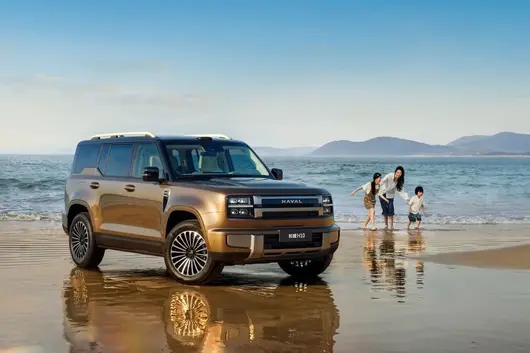
Looking by brand, Haval remains the main sales force, selling 64,960 units in August, a 15.44% month-over-month increase. Regarding new vehicles, the Great Wall H10 was officially launched this month, with a limited-time trade-in price starting from RMB 201,800, delivering 10,178 units in its first month of launch; the Great Wall H9 Lihun Edition was launched simultaneously, with a limited-time discounted trade-in price starting from RMB 214,900. In addition, the Great Wall War Dragon PLUS and Haval Big Dog categories continue to sell well.
WEY Brand August sales were 7,367 units, with global cumulative sales reaching 757,000 units. The WEY V8X was launched in August, with a limited-time benefit price starting from RMB 226,800, featuring the highest configuration of a 2.0T Super Hi4 Power System and a Super Smart Chassis, and equipped with a Dual VLA Native AI Cockpit-Driving Intelligent Agent.
Tank SUV August sales were 17,737 units, a 2.95% month-over-month increase, with the popularity of the all-new Tank 300 continuing to rise.
The ORA Brand saw significant growth in August, selling a total of 11,018 new vehicles, a 110.95% year-over-year increase. The ORA 5GT and ORA 5 Sport Edition were officially launched on August 28, with limited-time trade-in prices starting from RMB 89,800 and RMB 71,800 respectively.
Great Wall Pickup August sales were 12,288 units, of which overseas sales were 6,518 units. The Commercial Cannon Hi4-T Drone Pilot Edition and Passenger Cannon Hi4-T Black Warrior Edition were launched this month, with starting prices of RMB 151,800 and RMB 178,800 respectively; the Great Wall Cannon Hi4-T Light Travel Co-creation Edition and Double Cab Pop-top RV also simultaneously opened for reservations.
From the overall structure perspective, Great Wall Motor August overseas sales increased 38.42% year-over-year, and New Energy Vehicle sales increased 8.55% year-over-year. Regarding overseas markets, Great Wall Motor recently continued expansion in Indonesia, Chile, Pakistan, Australia, etc., and the globalization layout continues to deepen.

Losing money for five consecutive years, three consecutive sales losses, losing 44,000 for every car sold — IM Motors didn't replace the CEO, only changed the marketing head.
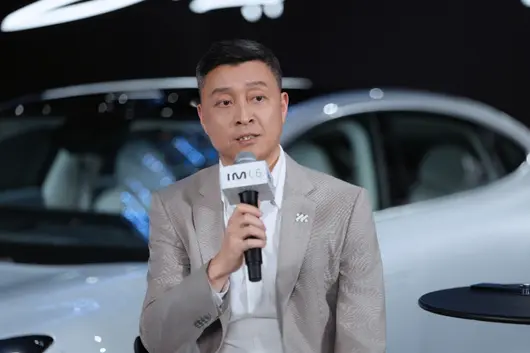
August 18, 2026, all-new IM L6 pre-sale launch event. Standing on stage was a strange face — Xu Yin, title is IM Motors Vice President. Previously for years standing in the spotlight, co-CEO Liu Tao did not appear throughout the process.

The launch event itself was lively, but people downstairs cared more about another matter: What exactly is being adjusted in this round of IM Motors personnel adjustments?
Looking closely, there are three question marks that cannot be avoided.
Question One: Why is Jiang Jun still here?First, look at a basic fact: Jiang Jun is still here, and his position is very stable.
Jiang Jun, born March 1970, currently Vice President of SAIC Motor Group and CEO of IM Motors. Promoted to Vice President of SAIC Motor Group in December 2023. At the SAIC Motor Group First 100 Millionth Car Delivery Ceremony in May 2026, standing beside Chairman Wang Xiaoqiu and President Jia Jianxu was still him. In the IM Motors 5th Anniversary internal letter in December 2025, jointly signed by him and Liu Tao.

Jiang Jun's resume is excellent: Originally from SAIC General Motors After-sales Service Director, climbed to Deputy General Manager of SAIC Passenger Vehicles and Executive Director of Marketing Department, then to IM Motors CEO. SAIC Motor Group's "own person", well-rooted.
But the question is: What has IM Motors achieved?
In 2025, IM Motors annual sales were 81,000 vehicles, missing the target for the third consecutive year. 2023 target 45,000, actual 38,300; 2024 target 120,000-130,000, actual 65,500; 2025 target 100,000, completion rate only 81%. 2025 full year net loss 3.598 billion yuan, equivalent to losing 44,000 yuan for every car sold. Asset-liability ratio as high as 90.8%. 2026 first half target completion rate only 30.8%-36.4%. June sales 6,197 units, about 6% of Leapmotor, 12% of Huawei Harmony Intelligence. Dealer loss area continued to expand, dealer "explosions" appeared in multiple places such as Kunming, Zhuhai, Shanghai.

Five years, SAIC's "No. 1 Project" just hands over this report card.
As CEO, who decided the strategic direction? Who controlled the product rhythm? Who approved the sales target? If these are not his responsibility, then what exactly is the CEO's responsibility?
A CEO who couldn't hand in a qualified report card for five consecutive years was not only not held accountable, but promoted to Group Vice President. Is this a problem of ability, or a problem of the system?
Question Two: Liu Tao Is Disempowered — Is it a "Soft Transition" or "Passing the Buck"?Look at Liu Tao again.
Liu Tao is IM Motors' "face", but also IM Motors' "trouble". In April 2024 IM L6 launch event, he repeatedly "pulled a stunt" with Xiaomi Auto, and also mislabeled competitor data in parameter comparisons, being fiercely countered by Xiaomi in three Weibo posts, finally IM Motors apologized overnight. In September of the same year new LS6 launch event, he personally drove to perform drifting, result hit stage cones twice. In February 2026, he formally apologized for inappropriate remarks about Tesla Chaozhou accident made three years ago. Plus test drive violation driving, vehicle screen black screen apology — Liu Tao's "history of apologies" could almost be written into a book.

In April 2025, Liu Tao set two Flags: annual sales 100,000 vehicles, profitability achieved in December by full cost accounting. Former fell through, latter achieved — but monthly profitability ≠ long-term profitability. Under the industry consensus that breakeven can only be achieved when monthly sales stabilize at 30,000-40,000 vehicles, IM Motors still has distance from the safety line.
In August 2026, Xu Yin took over domestic marketing as Vice President, Liu Tao "business focus shifted overseas".
The question is: A co-CEO, had the most core domestic business "divided" away by a lower-level Vice President — what is this if not reducing power?

Verified with IM Motors PR, co-CEO is indeed one level higher than Vice President. Then why does a higher-level executive yield the main battlefield to a lower-level person? Title unchanged, power gone. This "soft transition" rhetoric is familiar in any enterprise.
But this brings up a bigger question: Is Liu Tao's problem just Liu Tao's individual problem?
Liu Tao's marketing style — stunts, bashing, drifting crashes — not formed in one day. Who approved these strategies? Who approved these launch events? If Liu Tao alone can decide IM Motors' marketing direction, then what is CEO Jiang Jun doing? If Jiang Jun approved these plans, does Jiang Jun need to take the blame for Liu Tao's "crash" together?
Moving Liu Tao away, bringing Xu Yin up, can this solve IM Motors' fundamental problem?
Question Three: Xu Yin — A Variable, Why Trust Him?Finally look at Xu Yin.
Xu Yin is an SAIC "veteran", worked in the group for nearly 20 years. In 2015 served as Roewe Brand Regional Marketing Senior Manager, in 2018 responsible for SAIC Passenger Vehicles National New Energy Sales. Around 2020 sent to Thailand, served as MG Sales (Thailand) General Manager, SAIC Chengda Co., Ltd. Vice President. In June 2026 transferred back from Thailand to domestic, served as IM Motors Vice President.
Resume not bad, but good resume doesn't equal ability to fight this battle well.
Xu Yin admitted himself: "Thailand market itself is also very competitive, but after coming back found domestic even more competitive, rhythm also faster." After returning home held meetings with dealers, got two sets of data: First half domestic 527 new cars launched; January to July whole market decreased 20%.
What is his tactic? No longer "compete on parameters, compete on range, compete on 0-100", but provide "emotional value". Co-branded with Prof. Jimmy Choo, tag "Not For Everyone". All models standard equipped wire-controlled chassis, using hard technology to support bottom, using soft value to break circle.

Sounds beautiful, but how many cars can be sold?
Xu Yin himself didn't give a clear answer. He said: "If they are satisfied, we have such great potential, and have such cheap prices, I believe sales will flow naturally."
"Flowing naturally" — these four characters are the most expensive four characters in the automotive industry. In a market where over 500 new cars are launched in half a year, in a brand missing targets for five consecutive years, "flowing naturally" is more like a self-soothing phrase.
Besides, Xu Yin has only been in office for two months. A car's launch cycle cannot be only one or two months, when he intervened in L6 project "work had already progressed to middle-late stage". This L6's success or failure, largely not Xu Yin's credit or fault — he took over a report card drawn by others.

What truly tests Xu Yin is the next car, next complete marketing cycle. But that is at least a year later matter.
Can IM Motors afford to wait?
The Same Question Behind the Three QuestionsJiang Jun stays put — five years, report card looks bad, but position is getting more stable.
Liu Tao is "softly transitioned" — decently marginalizing the "founding member", but how many fundamental problems solved?
Xu Yin is a variable — resume beautiful, tactic novel, but in China's most ruthless automotive market, everything yet unverified.
These three question marks point to the same core question: Does IM Motors' management accountability mechanism really exist?
CEO doesn't need to be responsible for failing targets for five consecutive years, co-CEO transferred away due to marketing crash but title remains unchanged, a new Vice President is expected highly but hasn't even walked through a complete cycle — this is not a problem solvable by one personnel adjustment, this is a problem of the entire governance structure.

Can Xu Yin fight this battle well? Don't know. But what can be determined is: If Jiang Jun continues to "sit steady in the command tent", if accountability only falls on the execution layer without touching the decision layer, if "soft transition" becomes the norm — then whoever is replaced, the result might be the same.
SAIC's first 100 millionth car is IM LS9 Hyper. This is glory, also pressure. But glory cannot serve as food, sales and profit are the hard truth.
Can Xu Yin's "emotional value" exchange for sales? Liu Tao's "overseas market" is real territory expansion or real exile? Jiang Jun's "stability" is truly a stabilizing needle or immovable as a mountain?
Answers are not at the launch event, but in the market. And the market, never waits for anyone.

喺馬來西亞嘅 SUV 市場,好多買家在揀車嘅時候都會拿 Honda HR-V 同 Mazda CX-60 嚟做比較。這兩款車喺價位同定位上都幾接近,今日我哋就由多個方面做一個詳細嘅對比,幫你省返做功課嘅時間。
Honda HR-V 喺馬來西亞嘅 OTR 售價係 RM 115,900 - 143,900,一共有 4 個版本,包括 2026 e:HEV 1.5L RS(RM 143,900)、2026 1.5T V(RM 137,900)、2026 1.5T E(RM 130,900) 等。
Mazda CX-60 喺馬來西亞嘅 OTR 售價係 RM 200,510 - 252,873,一共有 2 個版本,包括 2026 3.3T 4WD High Plus(RM 252,873)、2025 2.5L 2WD High(RM 200,510) 等。
從價錢嚟睇,Honda HR-V 嘅起步價確實比 Mazda CX-60 平咗 RM 84,610。如果你預算有限,Honda 嘅入門版已經可以滿足日常需要。但都要留意,平嗰幾千蚊,可能喺配備上有取舍,具體要睇你嘅需要。
Honda HR-V 搭載 1.5L Turbo,馬力 140 hp。官方油耗 7.0 L/100km。
Mazda CX-60 搭載 2.0L 4-cyl,馬力 170 hp。官方油耗 8.0 L/100km。
動力方面,Mazda CX-60 嘅 2.0L 4-cyl 比 Honda HR-V 嘅 1.5L Turbo 多咗 30 匹馬力。不過日常喺市區開,兩款車嘅動力都夠用,唔會覺得唔夠力。
Honda HR-V 嘅安全評級係 5★ (ASEAN NCAP),主動安全系統包括 Honda SENSING (ACC, CMBS, LKAS, RDM)。
Mazda CX-60 嘅安全評級係 5★ (Euro NCAP),主動安全系統包括 i-Activsense Pro。
安全配備方面,兩款車都拿到唔錯嘅評級。不過 Honda HR-V 嘅 Honda SENSING (ACC, CMBS, LKAS, RDM) 同 Mazda CX-60 嘅 i-Activsense Pro 喺功能上有啲差異,如果你比較睇重主動安全嘅話,可以仔細對比吓兩者嘅功能列表。
Honda HR-V 車身長 4500 mm,後備箱 450 L。
Mazda CX-60 車身長 4500 mm,後備箱 450 L。
兩款車嘅尺寸幾乎一樣,車內空間差別唔大。呢個級別嘅車,日常使用完全夠用。
Honda HR-V 同 Mazda CX-60 都係馬來西亞市場嘅主流選擇,適合家庭使用、日常通勤。如果你更加睇重品牌口碑同二手價,可以優先考慮口碑更好嗰一款;如果你更加在意性價比同配備,嗰就揀配置更豐富嗰款。最終都係建議兩款都去試駕,親身體驗先係最重要嘅。

總體嚟講,Honda HR-V 同 Mazda CX-60 都係馬來西亞市場好唔錯嘅車型。揀邊部車,關鍵始終都係睇你嘅個人需求同預算。建議大家做好功課,多比較幾間車行嘅報價,先至去試駕做最終決定。買車係件大事,花少少時間做功課絕對唔會錯。

在馬來西亞嘅 SUV 市場,好多買家揀車嗰陣都會拿本田 HR-V 同馬自達 CX-5 嚟做比較。呢兩款車喺價位同定位上都幾相近,今日我哋就從多個角度做個詳細對比,幫你省返做功課嘅時間。
本田 HR-V 喺馬來西亞嘅 OTR 售價係 RM 115,900 - 143,900,合共有 4 個版本,包括 2026 e:HEV 1.5L RS(RM 143,900)、2026 1.5T V(RM 137,900)、2026 1.5T E(RM 130,900)等。
馬自達 CX-5 喺馬來西亞嘅 OTR 售價係 RM 135,469 - 166,760,合共有 3 個版本,包括 2025 2.0L AT 35th Anniversary(RM 316,154)、2025 2.0L AT(RM 296,154)、2025 2.0L MT(RM 294,154)等。
由價錢睇落,本田 HR-V 嘅起步價確實比馬自達 CX-5 平咗 RM 19,569。如果你預算有限,本田嘅入門版已經可以滿足日常需要。但都要注意,平嗰幾千蚊,喺配備上可能會有所取捨,具體睇返你需要。
本田 HR-V 配備 1.5L Turbo,馬力 140 hp。官方油耗 7.0 L/100km。
馬自達 CX-5 配備 1.5L Turbo,馬力 140 hp。官方油耗 7.0 L/100km。
兩款車用咗同一套動力系統,日常開起嚟嘅感受基本冇乜分別。油耗方面都差不多,唔使太糾結呢一點。
本田 HR-V 車身長 4500 mm,行李廂 450 L。
馬自達 CX-5 車身長 4500 mm,行李廂 450 L。
兩款車嘅尺寸幾乎一樣,車內空間差別唔大。呢個級別嘅車,日常使用完全夠用。
本田 HR-V 採用 FWD 驅動方式。
馬自達 CX-5 採用 FWD 驅動方式。
兩款車嘅驅動方式一樣,都係 FWD,日常駕駛感受唔會有太大分別。
本田 HR-V 保養 5 年/無限制里程,保養間隔 每 10,000km 或 6 個月。
馬自達 CX-5 保養 5 年/150,000km,保養間隔 每 10,000km 或 6 個月。
總括嚟講,本田 HR-V 同馬自達 CX-5 都係馬來西亞市場好唔錯嘅車款。揀邊部,關鍵都要睇返你嘅個人需要同預算。建議大家做好功課,多比較幾間車行嘅報價,先至去試駕做最後決定。買車係件大事,花少少時間做功課絕對唔會錯。
In the SUV market in Malaysia, many buyers compare the Honda HR-V and Mazda CX-30 when choosing a car. Both cars are quite close in price and positioning. Today, we will make a detailed comparison from multiple aspects to help you save time on research.
The OTR price of the Honda HR-V in Malaysia is RM 115,900 - 143,900, with a total of 4 variants, including 2026 e:HEV 1.5L RS (RM 143,900), 2026 1.5T V (RM 137,900), 2026 1.5T E (RM 130,900), etc.
The OTR price of the Mazda CX-30 in Malaysia is RM 122,409 - 146,409, with a total of 4 variants, including 2025 2.0L High+ Premium (RM 146,409), 2025 2.0L High+ (RM 138,409), 2025 2.0L High (RM 130,409), etc.
From a price perspective, the starting price of the Honda HR-V is indeed RM 6,509 cheaper than the Mazda CX-30. If your budget is limited, Honda's entry-level version can already meet daily needs. But also note, those few thousand cheaper might involve trade-offs in features, depending on your specific needs.
The safety rating of the Honda HR-V is 5★ (ASEAN NCAP), with active safety systems including Honda SENSING (ACC, CMBS, LKAS, RDM).
The safety rating of the Mazda CX-30 is 5★ (ASEAN NCAP), with active safety systems including i-Activsense.
Both cars have the same safety rating, and safety features are quite comprehensive within this class. New car safety is generally not poor nowadays, so no need to worry too much about this point.
Honda HR-V warranty 5 years/unlimited mileage, maintenance interval every 10,000km or 6 months.
Mazda CX-30 warranty 5 years/150,000km, maintenance interval every 10,000km or 6 months.
Honda HR-V and Mazda CX-30 are both mainstream choices in the Malaysian market, suitable for family use and daily commuting. If you value brand reputation and resale value more, prioritize the one with better reputation; if you care more about cost-performance ratio and features, choose the one with richer configurations. Ultimately, it is recommended to test drive both, as personal experience is most important.

Overall, Honda HR-V and Mazda CX-30 are both very good models in the Malaysian market. Which one to choose mainly depends on your personal needs and budget. It is suggested to do your homework well, compare quotes from several dealerships, and then test drive to make the final decision. Buying a car is a big matter, spending some time on research will never be wrong.

Adakah anda pernah mengira: sebuah kenderaan baharu berharga 200,000 Yuan, berapa banyak sebenarnya pengeluar kereta dapat simpan di poket mereka pada akhirnya?
Jawapannya mungkin kurang dari 10,000 Yuan. Dan pengeluar bateri yang membekalkan untuk kereta ini, berapa banyak yang mereka ambil daripada 200,000 itu? Lebih 60,000 Yuan. Ini bukanlah perkara yang paling menyakitkan. Yang benar-benar membuat industri tidak tenang ialah, CATL telah untung 20.7 bilion pada suku pertama tahun ini, sementara beberapa pengeluar kereta terkemuka di dalam negara jika digabungkan, keuntungan yang diperoleh kurang daripada sebahagian kecil daripadanya. Ada yang berseloroh, sekarang orang yang membina kereta bukan bekerja untuk CATL, tetapi bekerja percuma untuk CATL. Ucapan ini kedengaran sedikit berlebihan, tetapi lihat laporan kuartal pertama yang baru keluar, dianggarkan kebanyakan pengeluar kereta tidak mampu tersenyum.
Keuntungan membina kereta, semuanya masuk ke poket kilang bateri
Angka CATL pada suku pertama 2026 benar-benar cemerlang, mencapai jualan sebanyak 129.131 bilion Yuan, keuntungan bersih untuk pemegang saham syarikat tersenarai ialah 20.738 bilion Yuan, kenaikan tahun ke tahun 48.52%, untung bersih sebanyak 2.3 bilion Yuan sehari. Apakah maksudnya ini? Lihatlah skor yang diserahkan oleh pelbagai pengeluar kereta pada suku pertama untuk memahaminya.

BYD mencapai jualan 150.225 bilion Yuan pada suku pertama, keuntungan bersih untuk pemegang saham syarikat tersenarai ialah 4.085 bilion Yuan. Jualan Geely Automobile pada suku pertama ialah 83.776 bilion Yuan, keuntungan bersih bagi pemegang saham induk hanya 4.166 bilion Yuan. Kedudukan Great Wall Motors juga serupa, jualan suku pertama 45.109 bilion Yuan, keuntungan bersih pemegang saham induk hanya 945 juta Yuan. Lihat Changan Automobile pula, jualan suku pertama sekitar 32.706 bilion Yuan, keuntungan bersih untuk pemegang saham syarikat tersenarai hanyalah 351 juta Yuan.
Maksudnya, keuntungan BYD selama tiga bulan kurang dari 4.1 bilion, Geely kurang dari 4.2 bilion, Great Wall kurang dari 1 bilion, Changan hanya 350 juta sahaja. Manakala keuntungan bersih CATL dalam satu kuartal, ialah lima kali ganda BYD, dua kali ganda lebih daripada gabungan Geely dan Great Wall, meninggalkan Changan satu tahap.
Jika melihat angka ini secara lebih besar, perbandingan yang lebih jelas berasal daripada keseluruhan industri. Data yang diberikan oleh Setiausaha Agung Persatuan Pemasaran Kenderaan China (CPCA), Cui Dongshu sebelum ini menunjukkan, pada suku pertama 2026, pendapatan industri automotif negara kita 241.28 bilion Yuan, keuntungan ialah 7.84 bilion Yuan, menurun 18% dari tahun ke tahun, kadar keuntungan jualan menurun lebih jauh ke 3.2%. Dan satu tahun lalu, kadar keuntungan industri automotif dalam negara di separuh tahun pertama telah dipampatkan ke sekitar 4.8%, kini tidak ada peningkatan, malah lebih buruk.

Mengikut data industri, bahagian bateri kuasa dalam kos keseluruhan kereta telah mencapai 30% hingga 40%. Jika berdepan dengan tempoh harga lithium tinggi, nisbah ini mungkin lebih tinggi. Dengan mengambil kira sekarang perang harga pasaran kenderaan baharu berjalan panas, purata penurunan mencapai 38,000 Yuan, ruang keuntungan pengeluar kereta telah dipampatkan sehingga ke had.
Itulah sebabnya banyak pengguna akan dapati, perbezaan harga kenderaan baharu pada tahap yang sama tidak begitu besar, tetapi kelengkapan semakin kompetitif. Kerana pembezaan yang sebenar hanya tinggal pada tahap kecerdasan, pengalaman kabin, manakala bateri yang paling berharga, orang ramai pada dasarnya membelinya dari pembekal yang sama. Untung satu kuartal seorang pembekal bateri, lebih tinggi daripada gabungan beberapa pengeluar kereta terkemuka, adakah ini benar-benar satu ekosistem industri yang sihat?
Satu kereta diisi dengan bateri, malah keuntungan orang lain
Zeng Qinghong dari Kumpulan GAC berkata pada Mesara Bateri Tenaga Sedunia 2022, kos bateri kuasa mewakili 40% hingga 60% kos keseluruhan kereta, dia menyindir diri sendiri berkata "Saya sekarang bukan bekerja untuk CATL kan?". Hampir 4 tahun berlalu, ucapan ini tetap gambaran sebenar keseluruhan industri.
Pemilik kereta biasa semasa membeli kereta tentu paling prihatin terhadap jarak lintasan dan kebolehpercayaan, manakala reputasi CATL pada dua perkara ini memang kukuh. Tetapi semakin besar reputasi, semakin sukar bagi pengeluar kereta untuk melepaskan diri daripada bergantung. Apabila seorang pembekal menyandang lebih daripada 43% bahagian pemasangan bateri kuasa dalam negara, sebarang pengeluar kereta yang ingin menukar pelan pembekalan, perlu menilai sama ada pengguna menerimanya. Pada masa yang sama, perusahaan bateri juga secara tidak sedar menguasai kuasa penentuan harga dan suara, pengeluar kereta tidak hanya perlu membayar, tetapi perlu beratur membayar wang tunai awal untuk mengunci kapasiti, hubungan rantaian bekalan ini hampir tidak boleh dibayangkan pada zaman industri automotif tradisional.

Jika membandingkan CATL dengan syarikat pembuat enjin, perbezaan ini lebih jelas. Ambil Weichai Power sebagai contoh, sebagai syarikat terkemuka dalam bidang enjin dalam negara, jualan keseluruhan 2025 ialah 231.8 bilion Yuan, keuntungan bersih pemegang saham induk 10.9 bilion Yuan. Manakala CATL hanya pada satu kuartal 2026 keuntungan bersih sudah melebihi 20 bilion Yuan, mendekati dua kali ganda keuntungan tahunan Weichai.

Jika zaman enjin pembakaran dalaman tradisional yang diwakili Weichai masih mengekalkan keseimbangan antara pengeluar kereta keseluruhan dan pembekal komponen, maka dalam bidang bateri kuasa, keseimbangan ini telah dipecahkan sepenuhnya. Seorang pemilik kereta semasa membeli mungkin jarang bertanya enjin jenama apa yang dipasang pada kereta ini, tetapi semakin ramai orang akan menyemak secara aktif sama ada kereta ini menggunakan bateri CATL, ini adalah kekuatan kesedaran pengguna, dan kekuatan ini sebaliknya memberikan keyakinan lebih besar kepada kilang bateri untuk bernegoisasi.
Apabila kilang bateri menguasai "pacu" industri, apakah yang dirasakan pengguna
Bagi pengguna biasa, perubahan struktur keuntungan hulu industri, akhirnya akan jatuh pada pilihan kereta sebenar dan pengalaman penggunaan. Pernyataan paling langsung ialah populariti jenama bateri. Beberapa tahun lalu, sangat sedikit orang yang akan mengambil tahu sel bateri kereta elektrik menggunakan dari mana, sekarang banyak calon pembeli ketika melawat forum, membaca ulasan kereta, akan menyemak secara aktif pembekal bateri untuk kereta tertentu, malah akan menjadikan "CATL" sebagai faktor penting dalam keputusan pembelian kereta. Perpindahan kesedaran ini, secara objektif memberikan CATL daya tarikan pasaran yang lebih besar, juga membuatkan pengeluar kereta lebih berhati-hati dalam pemilihan pembekal.

Dari sudut skenario penggunaan kereta yang lebih nyata, trend pemusatan keuntungan hulu ini juga mempengaruhi definisi produk dan strategi penetapan harga. Bateri mewakili lebih 30% kos kereta keseluruhan, bermaksud jika pengeluar kereta ingin melancarkan model harga mampu milik, mereka mesti membuat pemilihan dalam kapasiti bateri. Itulah sebabnya terdapat beberapa model masuk ke pasaran yang jarak lintasan agak pendek, tetapi jenama bateri terjamin. Bukan pengeluar kereta tidak mahu memberikan bateri besar, tetapi bateri sendiri terlalu mahal. Bagi pengguna rumah tangga dengan bajet terhad, ini kadangkala menjadi pilihan dilema: mahu jarak lintasan panjang, mesti terima harga kereta lebih tinggi; mahu murah, jarak lintasan dan jenama bateri mungkin perlu berkorban.
Salah satu fenomena yang patut diberi perhatian lain, pengeluar kereta untuk menangani tekanan kos bateri, sedang berkumpul membina garis pengeluaran bateri sendiri. Tidak kira pengeluar seperti BYD yang mempunyai keupayaan bekalan bateri sendiri, atau pengeluar lain yang sudah atau sedang masuk, mereka cuba menguasai perniagaan bateri ini. Tetapi sama ada amalan ini boleh mengubah struktur pembahagian keuntungan dari asasnya, sukar untuk mengatakan sekarang. Memang membina garis pengeluaran bateri lengkap memerlukan melab ratusan bilion, pengumpulan teknologi dan kenaikan kecekapan memerlukan tempoh lama, bukan setiap pengeluar boleh menanggung. Dan dalam proses ini, yuran R&D pengeluar terus meningkat, harga jualan akhir terus menurun, keuntungan dipampatkan semakin tipis.

Fenomena pembalikan keuntungan antara kilang bateri dan pengeluar kereta ini, sukar untuk dipulihkan dalam jangka pendek. Bahagian pemasangan domestik CATL pada suku pertama 2026 telah naik ke 47.7%, meningkat 3.4 peratus mata dari tahun ke tahun, kepekatan pasaran terus meningkat. Bagi pengguna yang mahu membeli kenderaan baharu, ini bermaksud jenama bateri dalam masa depan yang agak lama, tetap merupakan soalan realiti yang perlu dihadapi semasa memilih kereta. Dan apabila item kos utama satu kereta berada di tangan seorang pembekal, suara keseluruhan rantaian industri juga secara senyap berpindah. Pindahan ini, akhirnya akan terpantul dalam pilihan setiap pembeli kereta dalam bentuk harga, kelengkapan, pengalaman penggunaan, dsb.
Secara nyata, pertumbuhan pasaran kenderaan baharu dalam negara sekarang tidak lagi gila seperti dua tahun lalu, kecepatan pertumbuhan kenderaan baharu yang didaftarkan meningkat secara perlahan, kadar penetrasi bandar darjah satu dan dua secara beransur-ansur menyentuh siling, keupayaan pasaran bandar darjah tiga dan empat memerlukan masa untuk dibangunkan. Dalam situasi ini, baik pengeluar kereta mahupun kilang bateri, mesti berebut daging dalam pasaran sedia ada, perang harga pasti semakin ganas, keuntungan semestinya semakin nipis. Keuntungan bersih CATL suku pertama 20.7 bilion Yuan memang cemerlang, tapi di sebalik ini ialah ruang sara hidup syarikat bateri sederhana dan kecil serta pengeluar kereta keseluruhan yang sentiasa dipampatkan. Jika hanya melihat kek dalam negara ini, suatu hari nanti semua orang tidak mampu berebut.

Oleh itu, ke luar negara sahaja adalah jalan penyelesaian masalah. Eropah, Asia Tenggara, Timur Tengah, Amerika Selatan, kadar penetrasi kenderaan baharu di tempat ini masih rendah, ruang pasaran jauh lebih besar berbanding dalam negara. CATL telah membina kilang di Jerman, Hungary, baru-baru ini ada berita mengatakan mereka akan meluaskan lagi strategi di Sepanyol atau Indonesia. Sisi pengeluar kereta, BYD, SAIC, Geely juga mempercepatkan pelaksanaan kilang luar negara dan rangkaian jualan. Jual produk dan teknologi ke seluruh dunia, kembangkan kapasiti pasaran global, rantaian industri ada peluang untuk beralih dari "berebut keuntungan" ke "membahagikan pertambahan".
Jika kenderaan dan bateri baharu China boleh berdiri teguh di luar negara, kesan skala akan menurunkan kos lebih jauh, harga kereta dalam negara juga diharapkan menjadi lebih munasabah. Sementara itu, persekitaran persaingan pasaran luar negara memaksa perusahaan meningkatkan kualiti produk dan piawaian perkhidmatan, akhirnya yang mendapat manfaat ialah pembeli kereta biasa. Daripada saling menghabiskan diri dalam laut merah dalam negara, lebih baik berganding tenaga membesarkan kek. Struktur kilang bateri makan daging, pengeluar kereta minum sup tidak akan berubah dalam sehari, tetapi apabila semua orang menumpukan pandangan ke arah dunia yang lebih luas, sekurang-kurangnya daging dalam periuk sup ini, akan jauh lebih banyak daripada sekarang.

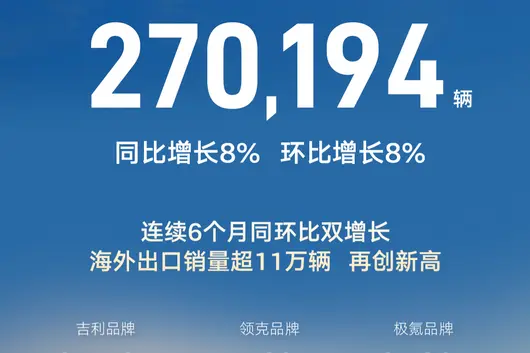
9月1日,吉利汽车控股有限公司(0175.HK)公布最新销量数据:8月销量270194辆,连续6个月同环比双增,同比增长8%,环比增长8%。新能源方面,8月销量(含吉利、领克、极氪)175877辆,同比增长19%,新能源销量占比65%。
吉利迈向“体系出海“阶段,海外出口再创新高。8月海外出口销量110094辆,同比增长205%,环比增长3%,连续8个月实现同环比双增长。新能源产品占比持续过半,8月新能源产品出口销量70629辆,同比激增446%,占比达64%。
销量稳步增长的背后,是吉利加速推动技术创新成果向产品竞争力转化的成果。8月21日至8月30日,吉利汽车集团携极氪、领克、吉利银河以及吉利中国星品牌矩阵参加2026成都国际车展,超49款智能产品集体亮相,涵盖纯电、混动、燃油等多能源全系产品,全方位展现“全域AI智能汽车引领者”的科技生态与未来图景。

销量与品牌价值双向齐升 三大品牌持续释放增长势能
三大品牌稳步攀升,主力车型表现亮眼,共同推动销量规模与品牌价值持续提升。
全球豪华科技品牌极氪持续向上,8月交付量36981辆,同比增长110%。多款车型领跑细分市场:极氪7X 8月销量持续破万,全球订单突破20万辆;极氪猎装连续3个月销量过万,全球交付超40万辆;极氪9X位居1-7月50万以上车型销量第一;极氪8X上市三个月位居30-50万混动SUV累计销量第一、30万以上全品类口碑第一;极氪009连续3个月斩获中国大陆40 万以上纯电MPV销量、口碑双冠。
8月21日,成都国际汽车展览会正式开幕,极氪品牌携极氪009、极氪9X与极氪8X等14款产品集结,形成豪华产品阵容吸引众多观众前来打卡体验。

全球新能源高端品牌领克持续向宽发展,8月销量17027辆,环比增长4%,新能源产品销量15504辆,环比增长10%。领克推动产品向宽、运动向宽、体验向宽的布局,着力开拓细分市场。8月21日,全新领克20亮相成都国际车展,为都市用户打造精致潮流出行新选择;全新领克20飞驰版同步亮相,以碳纤维大尾翼及驭风运动套件进一步强化运动属性。

与此同时,领克10、领克07GT等新近上市车型与领克GT概念车Time to Shine同台展出,展现领克覆盖多种能源形式、适配多元出行场景的产品布局与极致性能美学。
领克汽车运动版图从场地赛拓展至拉力赛,开启中国品牌混动拉力运动的新探索。8月28日至30日,领克携07GT拉力学院赛车出征2026中国汽车拉力锦标赛(CRC)·怀柔站,极速拍档-NANA/极速拍档-Jacky 驾驶该赛车夺得CRC S7组别&领克汽车拉力挑战赛冠军。

吉利品牌夯实高质量增长基本盘,8月销量216186辆,同比增长5%,环比增长9%。
其中,主流新能源品牌吉利银河8月销量119115辆,同比增长8%,环比增长10%。吉利星愿8月销量60955辆,连续3个月销量超5万辆,累积销量近90万辆,平均每分钟交付1台,平均每天卖出1200多辆。此外,8月,吉利银河E5销量14132辆。

同时,吉利银河站稳主流市场的同时,多款新车以产品力强化竞争优势。8月13日,全新C级AI纯电运动轿车银河TT开启预售,售价14.59万元起,重新定义20万级纯电运动轿车价值标杆。8月21日,吉利首款AI全地形硬核SUV——银河战舰700,亮相成都国际车展,即以新能源时代中式豪华越野之姿成为全场焦点,充分展示中国硬派越野的标杆级实力,将于9月开启预售。

在燃油车市场,吉利中国星进一步强化领先地位,8月销量97071辆,环比增长8%。其中,双缤家族33515辆,中国星高端系列25802辆,博越家族16656辆。
燃油车HEV化战略持续落地,经典产品持续焕新。全新第四代博越L i-HEV系列登陆成都车展,新车搭载中国第三代油混技术i-HEV智擎混动、同级最强混动专用1.5TD发动机、激光雷达以及千里浩瀚H5辅助驾驶方案,以“好节能、好性能、好智能”三大越级实力,重新定义燃油SUV,进一步巩固吉利博越的燃油SUV销量冠军地位。

8月31日,吉利汽车旗下全新旗舰车型——星越L PLUS正式官宣亮相。新车采用大五座布局,定位中大型旗舰智混SUV,在混动系统、智能配置、底盘操控、乘坐舒适性等方面全面进阶,进一步夯实了吉利中国星在燃油车市场的话语权和冠军地位,并将于9月5日进行首秀。

加速推进全域AI转型 以技术创新注入增长动力
吉利持续推动全域AI转型,已将全域AI融入设计、研发、制造、售后全链路,实现“全域智能化”,加快新产品、新技术落地。
2026年8月28日,吉利汽车集团正式发布AI新能源越野技术,汇集GTA原生新能源越野架构、全驱AI电混雷神EM-T、AI全地形数字底盘三大全球首创科技,实现车身结构、动力系统、智能底盘、全域安全的全方位创新突破,从技术底层完成系统性重塑。

GTA原生新能源越野架构打破传统大梁结构的物理空间瓶颈和舒适体验限制,高刚性设计的同时具备轻量化优势,带来颠覆传统越野车的驾控舒适感;全驱AI电混雷神EM-T兼具澎湃动力与精准控制,可从容应对各种越野工况,加上星睿AI云动力的AI场景引擎,提供精准匹配最优油电方案,能耗优化15%以上;依托全球首个量子级AI电子电气架构EEA 4.0打造的“AI全地形数字底盘”,可通过AI识别前方路况,自动切换智能场景模式,调整扭矩、悬架、车身姿态等。
新技术率先搭载于银河战舰700,打破传统越野技术边界,重新定义全球智能新能源越野技术标杆。
加速体系出海节奏 冲刺百万出口销量目标
8月,海外出口销量110094辆,连续8个月实现同环比双增长,连续三个月出口超过10万辆。新能源产品海外出口销量70629辆,同比激增446%,占总出口64%。
三大品牌持续突破全球市场,登顶多地细分市场前列。极氪登顶澳大利亚1-7月豪华纯电销量榜首,同时稳居1-7月马来西亚豪华纯电品牌销冠;领克位居突尼斯7月高端PHEV品牌销量榜首;吉利品牌斩获巴拿马1-7月与7月单月中国品牌销量冠军,跻身厄瓜多尔7月纯电品牌前三。
核心车型全球竞争力进一步显现。1-7月,极氪7X问鼎澳大利亚中型豪华SUV销量冠军、马来西亚纯电豪华SUV第一,极氪009斩获泰国及马来西亚纯电MPV车型市场第一、新加坡豪华纯电MPV销冠。领克08斩获7月突尼斯高端PHEV销量第一;领克900拿下7月埃及高端新能源市场销量第一。7月,吉利星愿(Geely EX2)登顶泰国电动车销冠、约旦纯电车型第一,墨西哥全品类纯电销量第二;银河星舰 7 EM-i(Geely EX5 EM-i)登顶波兰C级PHEV销冠、西班牙C级SUV第一与PHEV第二、墨西哥PHEV SUV榜首。
吉利加快欧洲、拉美、东南亚、中东非洲等多地市场的出海节奏,持续完善本地销售网络和产品布局。
欧洲市场方面,吉利正式宣布登陆奥地利市场,启动奥地利渠道网络;西班牙市场发展已进入快速增长阶段,全国销售网络已突破50家;与英国最大的汽车薪资置换服务商Tusker进一步深化合作,丰富吉利星愿在英国市场的销售渠道;吉利星愿在法国上市。
拉美及东南亚方面,领克正式登陆阿根廷,领克01、领克08、领克06 三款车型同时登场;领克01在智利上市,且领克智利运营进入全新阶段,由吉利汽车智利公司直营深耕,实现从产品到服务全面升级;领克02(Z20)与领克03正式登陆越南市场,完善领克在越南的全动力产品矩阵。
中东非洲市场,中国旗舰极氪9X登陆中东,现已经开启预售;领克正式进入约旦市场,领克900作为核心车型亮相。此外,吉利首款D-SUV全球车Geely Monjaro EM-i于8月底启动全球上市,首发埃及市场,稳步布局全球。

出于对海外增长的长期信心,吉利汽车将2026年海外销量目标由64万辆上调至92万辆,并冲刺年销100万辆。
技术实力与全球化能力持续进阶,吉利汽车经营规模与盈利质量稳步提升。8月17日,吉利汽车发布2026年中期业绩,总收入1736亿元,核心归母净利润达96.8亿元,实现“量价利齐升”。依托“一个吉利”战略,吉利汽车将充分发挥“全域AI智能汽车引领者”势能,加速全产业链智能化转型,以高质量发展定力穿越周期。

Di pasaran SUV Malaysia, banyak pembeli membandingkan Honda HR-V dan Mazda CX-3 apabila memilih kereta. Kedua-dua kereta ini hampir sama dari segi harga dan kedudukan, hari ini kita akan membuat perbandingan terperinci dari pelbagai aspek untuk membantu anda menjimatkan masa penyelidikan.
Honda HR-V dijual di Malaysia dengan harga OTR RM 115,900 - 143,900, terdapat 4 versi, termasuk 2026 e:HEV 1.5L RS (RM 143,900), 2026 1.5T V (RM 137,900), 2026 1.5T E (RM 130,900) dan lain-lain.
Mazda CX-3 dijual di Malaysia dengan harga OTR RM 126,159 - 139,159, terdapat 2 versi, termasuk 2023 2.0L High (RM 139,159), 2023 2.0L Plus (RM 126,159) dan lain-lain.
Dari segi harga, Honda HR-V harga permulaan memang lebih murah RM 10,259 berbanding Mazda CX-3. Jika anda terhad belanjawan, versi asas Honda sudah mencukupi untuk kegunaan harian. Tetapi perlu diingat, beberapa ribu ringgit yang lebih murah itu mungkin melibatkan pengorbanan dalam peralatan, bergantung kepada keperluan anda.
Honda HR-V dilengkapi 1.5L Turbo, 140 hp. Konsumsi minyak rasmi 7.0 L/100km.
Mazda CX-3 dilengkapi 1.5L Turbo, 140 hp. Konsumsi minyak rasmi 7.0 L/100km.
Kedua-dua kereta menggunakan sistem pemacu yang sama, perasaan pemanduan harian hampir tiada perbezaan. Dari segi konsumsi minyak juga hampir sama, tidak perlu terlalu bimbang mengenai perkara ini.
Honda HR-V panjang badan 4500 mm, bak bagasi 450 L.
Mazda CX-3 panjang badan 4500 mm, bak bagasi 450 L.
Saiz kedua-dua kereta hampir sama, perbezaan ruang dalaman tidak besar. Untuk kelas kereta ini, kegunaan harian sudah mencukupi.
Honda HR-V waranti 5 tahun/tanpa had kilometer, selang penyelenggaraan setiap 10,000km atau 6 bulan.
Mazda CX-3 waranti 5 tahun/150,000km, selang penyelenggaraan setiap 10,000km atau 6 bulan.

Secara keseluruhannya, Honda HR-V dan Mazda CX-3 kedua-duanya model yang bagus di pasaran Malaysia. Memilih yang mana satu, kuncinya bergantung kepada keperluan peribadi dan belanjawan anda. Disarankan melakukan penyelidikan, bandingkan tawaran harga dari beberapa dealer, kemudian buat ujian pusing untuk membuat keputusan akhir. Membeli kereta adalah perkara besar, meluangkan masa membuat penyelidikan tidak akan salah.

Dalam pasaran SUV di Malaysia, ramai pembeli semasa memilih kenderaan akan membandingkan Honda HR-V dan Toyota Corolla Cross. Kedua-dua kereta ini mempunyai harga dan kedudukan yang agak hampir, hari ini kita akan membuat perbandingan terperinci dari pelbagai aspek, untuk membantu anda menjimatkan masa membuat kajian.
Harga OTR Honda HR-V di Malaysia ialah RM 115,900 - 143,900, terdapat jumlah 4 varian, termasuk 2026 e:HEV 1.5L RS (RM 143,900), 2026 1.5T V (RM 137,900), 2026 1.5T E (RM 130,900) dan lain-lain.
Harga OTR Toyota Corolla Cross di Malaysia ialah RM 133,800 - 148,800, terdapat jumlah 3 varian, termasuk 2026 HEV 1.8L GR Sport (RM 148,800), 2026 HEV 1.8L Standard (RM 140,800), 2026 1.8L Standard (RM 133,800) dan lain-lain.
Dari segi harga, harga permulaan Honda HR-V memang RM 17,900 lebih murah berbanding Toyota Corolla Cross. Jika bajet anda terhad, versi permulaan Honda sudah boleh memenuhi keperluan harian. Tetapi perlu juga diingat, ribuan ringgit yang lebih murah itu, mungkin ada kompromi dari segi kelengkapan, bergantung pada keperluan anda.
Honda HR-V didatangkan dengan enjin 1.5L Turbo, kuasa 140 hp. Penggunaan bahan api rasmi 7.0 L/100km.
Toyota Corolla Cross didatangkan dengan enjin 1.5L Turbo, kuasa 140 hp. Penggunaan bahan api rasmi 7.0 L/100km.
Kedua-dua kereta menggunakan sistem kuasa yang sama, perasaan memandu harian hampir tiada perbezaan. Dari segi penggunaan bahan api juga hampir sama, tidak perlu terlalu bimbang mengenai perkara ini.
Taraf keselamatan Honda HR-V adalah 5★ (ASEAN NCAP), sistem keselamatan aktif termasuk Honda SENSING (ACC, CMBS, LKAS, RDM).
Taraf keselamatan Toyota Corolla Cross adalah 5★ (ASEAN NCAP), sistem keselamatan aktif termasuk TSS (PCS, LDA, ACC, LTA).
Taraf keselamatan kedua-dua kereta adalah sama, dalam kelas ini kelengkapan keselamatan dianggap sangat lengkap. Keselamatan kereta baru masa kini tidak buruk, tidak perlu terlalu bimbang mengenai perkara ini.
Honda HR-V panjang badan 4500 mm, ruang kargo 450 L.
Toyota Corolla Cross panjang badan 4400 mm, ruang kargo 400 L.
Dari segi ruang, badan Honda HR-V lebih panjang 100 mm daripada Toyota Corolla Cross, ruang duduk di dalam kereta akan sedikit lebih lapang, terutamanya ruang kaki di kerusi belakang. Jika anda kerap membawa keluarga atau perlu meletakkan kereta bayi, badan yang lebih besar memang lebih praktikal.

Honda HR-V waranti 5 tahun / tanpa had kilometer, selang servis setiap 10,000km atau 6 bulan.
Toyota Corolla Cross waranti 5 tahun / tanpa had kilometer, selang servis setiap 10,000km atau 6 bulan.
Kondisi waranti kedua-dua kereta adalah sama, dari segi ini tidak perlu bimbang. Kos penyelenggaraan sebenar juga bergantung pada rangkaian perkhidmatan jenama dan harga komponen, cadangan pergi tanyakan pengalaman pemilik sebenar dalam kumpulan komuniti kereta.

Secara keseluruhannya, Honda HR-V dan Toyota Corolla Cross adalah model kereta yang sangat bagus di pasaran Malaysia. Pilihan mana satu, kunci utama tetap lihat keperluan dan bajet individu anda. Disarankan anda buat kajian baik, bandingkan lebih banyak tawaran harga dari beberapa pengedar kereta, kemudian buat ujian memandu untuk membuat keputusan akhir. Membeli kereta adalah perkara besar, menghabiskan sedikit masa untuk kajian tidak akan salah.

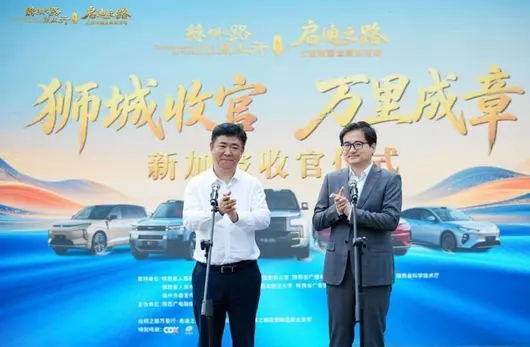
8 月 25 日,由比亞迪擔任全程出行合作夥伴嘅「2026 絲綢之路萬里行・啓迪之路」在新加坡圓滿結束。比亞迪集團品牌及公關處總經理李雲飛與陝西廣電融媒體集團董事長張連業共同宣佈活動結束。

本次活動以「科技向新・文明向心」為主題,車隊歷時 33 天、行駛上萬公里,橫跨中國六省,穿越泰國、馬來西亞,最終抵達新加坡。比亞迪王朝、海洋、騰勢、方程豹、仰望四大品牌組成新能源車隊,完成高速、山區及城市擁堵等多場景駕駛。閃充與天神之眼輔助駕駛系統經受住萬里實景檢驗,「5 分鐘充好、9 分鐘充飽」嘅閃充能力依托近萬座閃充站網絡,化解長途補能難題。

絲路遠行綠能相伴,從西安到新加坡,古絲路駱駝隊驛站補給嘅圖景,正演變為科技賦能嘅現代遠征。截至 2026 年 7 月,比亞迪已連續 19 個月位居新加坡乘用車全品牌銷量第一,1-7 月市場份額達 24.7%,純電份額達 40.3%。2026 年 1-7 月比亞迪海外累計銷量超 97 萬輛,同比增長約 76%,新能源汽車已進入全球超 120 個國家和地區。


零跑汽车发布2026年中期业绩报告了。净利润2.1亿元、营收381.1亿元、毛利率11.7%、在手现金385.9亿元、全球交付356,487台——如果只看这几个数字,你会觉得这是一家主流车企的常规成绩单。

但把它们放在一起看,故事就不一样了。
这是零跑连续第三个半年度盈利。在新势力阵营里,做到这一点的屈指可数。而同期,零跑的交付量同比增长60.8%,稳居中国新势力销量榜首,在2026年已公布数据的前5个月可比终端上牌数量中,零跑已位列全球新能源乘用车品牌第四名——前面只剩比亚迪、特斯拉和吉利这种量级的玩家。
还记得几年前行业怎么评价零跑吗?门外汉、半价理想、价格屠夫。如今回头再看,那些标签其实都没抓住重点。零跑真正做的,是找到了一条属于自己的路:全域自研控制成本、产品定义精准卡位、渠道快速下沉、再把省下来的每一分钱还给用户。它不追求在最热闹的战场抢风头,但每一步都踩在别人没太在意的地方。
这半年报,值得拆开来看。
销量与盈利,零跑全都要
先看销量。356,487台,新势力第一,同比增长60.8%。这个成绩的含金量,不在于数字本身,而在于它的结构——不是靠某一个爆款撑起来的,而是整个产品矩阵的合力。

从6万到30万,从轿车到SUV到MPV,从纯电到增程——A系列守住10万以内的刚需市场,B系列把800V高压快充、双零重力座椅这些高阶配置下放给年轻用户,C系列覆盖12-18万的主流家用区间,D系列则把均价拉到30万以上、带着品牌往高端走。这样系统性地铺满全价位、全品类,在新势力阵营里,零跑是头一份。
但产品矩阵只是表象,真正的底层能力是全域自研。拆开来看,是三层逻辑。
其一,核心零部件自己造。三电、域控、智驾芯片方案全部自研,等于把供应商那一层毛利自己吃掉了。这个逻辑朴素到近乎无聊,但它是零跑能在10万级还留出血线的根本原因。
其二,一个架构养一群车。LEAP 4.0中央域控架构首发落在D19上,双高通8797芯片、舱驾一体、一个大脑管控全车智能,算力还能在不同场景间动态分配。但更关键的是,这套能力是自上而下下放的——城市领航辅助驾驶已经开放到ABCD全系及Lafa5,三季度还要往LEAP 3.0车型推送全国城市领航。
翻译成用户语言就一句话:10万的车,也能有旗舰级的智能化体验。而对企业来说,研发投入23.17亿元是一次性的,摊到A10和D19上是两本账——研发费用被规模摊薄,这才是毛利率真正的朋友。
其三,产品矩阵做了“保量+保价”的双线。C10/C11/C16守住12-18万的基本盘,6月合计破3万,C11累计卖出35万台,是细分市场的常青树;D19和D99往上抬均价,D19上市15天大定破1.5万、蝉联40万内大型SUV销冠,D99首批订单均价已破30万元。一头走量、一头抬价,毛利结构就这么被悄悄顶了上去。
这正是零跑好而不贵的底层逻辑——不是靠牺牲配置降本,而是靠自研把成本控制住,再把省下来的钱变成配置。
再看盈利。连续半年度盈利、毛利率11.7%、营收创历史新高——这几个数字放在一起,意味着零跑的商业模型已经跑通了。新势力造车这些年最被质疑的一件事,就是销量涨了却不赚钱。
零跑给出的答案是:规模、自研、效率三者叠加,把毛利率做正,再把现金流做厚。385.9亿元的在手资金,就是它接下来继续投入研发和全球化的底气。
出海,零跑是认真的
如果说销量和盈利是零跑这半年交出的国内答卷,那海外市场就是它悄悄写下的第二篇章,而且篇幅不小。

上半年海外交付96,294台,环比持续增长,近乎翻倍。意大利纯电市占率超四分之一、连续位居当地纯电销量榜首;上半年在德国的中国品牌电动汽车里销量领先;在英国的中国品牌纯电零售里排第三;二季度进入墨西哥,打开北美市场。全球已经覆盖超45个国际市场,建立1000多家销售与服务网点。
更值得注意的是本地化生产的进展。在马来西亚,C10已经量产,B10三季度跟上;在西班牙,B10三季度投产;在巴西,Stellantis的戈亚尼亚工厂被选为本地化组装基地。
这已经不是卖车出海,而是扎根海外。和Stellantis的深度合作,让零跑在海外有了现成的渠道、工厂和本地化能力。上半年海外销量96,294台的成绩,正是这套打法跑起来的证据。
零跑这条全球化路径,和它做国内市场的逻辑一脉相承:不追求最响亮的名头,先找到那个“还没被充分竞争”的位置,然后用效率和成本优势站稳它。就像当年它在10-20万级市场找到空档一样,今天它在欧洲的平价电动车市场,找到了同样的位置——那里恰好是欧洲本土车企最难赚钱、最想退出的区间。
零跑等于把这套在国内验证过的“成本+效率”模型,平移到了全球。
半年报的最后还埋了一个彩蛋:零跑将在9月举办年度技术发布会,发布达到行业第一梯队水平的智能驾驶世界模型和三电领域的最新成果。全域自研的故事,还在往下写。
回头看这半年,零跑做对的事情其实很朴素:把成本控制到极致、把产品定义做准、把渠道铺到位、再把眼光放到全球。没有花哨的营销话术,没有惊天的价格战,就是一步一个脚印地把“好而不贵”四个字做实。
连续盈利、新势力销冠、全球前四——这些里程碑的背后,是同一个逻辑:在别人都在卷最热闹的战场时,零跑选择把基本功练到极致,然后在每一个被低估的赛道上,悄悄跑赢。
这或许才是零跑这半年报,最值得行业思考的地方。

日前,比亚迪(002594.SZ, 01211.HK)发布2026年上半年业绩。期内,比亚迪及其附属公司(合称“比亚迪集团”)实现营收3448.15亿元,同比下降7.13%;毛利率18.85%,较去年同期提升0.74个百分点;归母净利润123.25亿元,同比下降20.54%,这是比亚迪近年来少有的收入与利润双降。
表面看汇兑损失是最大拖累,但更深层的压力来自汽车业务收入同比下滑8.98%。国内需求阶段性承压与行业“价格战”,正在侵蚀这个全球新能源销量冠军的基本盘。
而在利润下滑的同时,一场以闪充站为核心的重资产布局正在加速。按照“闪充中国”战略,比亚迪计划2026年底前建成20000座闪充站。在行业竞争加剧的周期里,这笔投入什么时候能赚钱、能赚多少钱,将直接影响比亚迪下一阶段的市场竞争力。
海外营收占比过半
财报提及,因一季度国内市场需求阶段性承压,价格战仍在持续,比亚迪主品牌销量受到挤压。上半年,集团合计销售新车180.85万辆,同比减少15.72%,其中乘用车销量177.74万辆。
不过结构上的变化正在发生。旗下中高端品牌方程豹、腾势、仰望上半年合计销量同比增长61%,占集团乘用车总销量的比重提升至12.8%;集团汽车、汽车相关产品及其他产品业务收入2753.41亿元,同比下降8.98%,粗略计算单车收入由去年同期的14.10万元提升至15.22万元。高端化的方向没有动摇,只是体量尚不足以对冲主品牌销量的下滑。
毛利率并未随收入下滑而恶化,本期约为18.85%,较去年同期提升0.84个百分点;汽车、汽车相关产品及其他产品毛利率约为22.33%,同比提升1.98个百分点,成本控制仍然有效。但收入缩水直接压缩了毛利总额,使其较去年同期减少18.77亿元,叠加销售、管理、研发等刚性费用,盈利空间进一步收窄。
利润表中最明显的变化来自财务费用,数值从去年同期的收益32.47亿元转为支出50.96亿元,差额超83亿元。其中汇兑损失47.03亿元,而去年同期是汇兑收益31.60亿元,仅这一项非经营性波动就远超归母净利润31.85亿元的同比减少额。
另一个信号体现在研发端。上半年,比亚迪集团研发投入约为288.61亿元,同比下降6.54%,罕见出现同比下滑。绝对额仍处行业高位,但这一变化究竟是利润承压下的主动收缩还是研发周期的正常波动,尚需后续季度验证。
当国内市场在价格战中拉锯,海外市场为比亚迪提供了较为稳定的支撑,上半年该集团累计出口79.2万辆新车,同比增长67.8%,海外收入同比增长33.92%至1812.68亿元,境外业务毛利率达到21.71%,高于国内15.67%的毛利率水平。

比亚迪2026年上半年业绩表现(图/财报截图)
比亚迪方面在财报中表示,截至2026年上半年,该集团新能源汽车业务版图已覆盖全球六大洲、121个国家和地区,并已在巴西、泰国等地投入本地生产。该集团持续推进设计、研发、生产制造、供应链及市场运营等环节的本土化布局,并持续加强品牌传播、销售渠道、售后服务及相关配套能力建设,实现全场景深度适配。
20000座闪充站,比亚迪的下一场“赌局”
国内乘用车市场进入存量竞争阶段,比亚迪在稳固主品牌基本盘、推进高端化的同时,也需找到新的增长点。闪充,正是其中被寄予厚望的一步棋。
今年3月,比亚迪正式推出第二代刀片电池及全新闪充技术,并发布“闪充中国”战略。据比亚迪方面介绍,其推出的闪充桩单枪充电功率达到1500kW,是全球量产单枪功率最高的充电桩;为突破电网容量限制,其将充电桩与超级快放的储能系统深度融合,在不增加电网负担的前提下实现大功率充电。当地时间4月8日,闪充技术于巴黎歌剧院完成欧洲首秀,比亚迪称未来计划进一步在海外规模化落地6000座闪充站。
技术与补能网络布局的同时,闪充能力也在快速向产品端铺开。上半年,比亚迪同步推出海豹 07EV、宋 Ultra EV、大唐 EV、全新腾势Z9 GT等全新闪充车型,并陆续为海狮 06EV、海豹 06GT、汉EV、豹5、豹8、钛3、腾势N9、仰望U7、仰望U8等旗下各品牌车型加推闪充版。
根据比亚迪集团董事长兼总裁王传福此前公布的计划,至2026年底比亚迪要建成20000座闪充站,截至6月底已建成7018座。
今年上半年,比亚迪集团投资活动产生了555.70亿元的现金净流出,其中购建固定资产、无形资产和其他长期资产支付的现金额达到447.03亿元。虽然财报并未列出建设闪充站的支出明细,但“闪充中国”战略、7018座的半年建设进度、年底20000座的目标,以及与中国石化、京东、肯德基、神州租车等多方的补能生态合作,均指向闪充网络是比亚迪当前的重点投入方向。
至财报发布的前一天(8月28日),比亚迪闪充站建设规模已达10000座,相当于两个月建站近3000座。
© 2024 Bitauto.com. All Rights Reserved.
Bitauto (www.yiche.com and www.bitauto.com) is one of the most visited automotive websites in China. We provide detailed info on Chinese car brands available in your area. Please note that the information provided on this website is based on publicly available data and is for reference only. It may not be fully updated or accurate at all times.

Help us improve our website


