
Search History
Popular Searches
Dealer Login / Sign Up

October 16, BYD officially became the 2026 APEC conference official partner, with multiple high-end models from its Denza, Yangwang, Fang Cheng Bao, and Dynasty and Ocean series becoming official designated vehicles. Headquarters in Shenzhen Pingshan, conference held in Shenzhen, "local enterprises serving local grand events" seems natural. But understanding this merely as "home court convenience" will miss the real signal.

APEC Partner is "Chosen", not "Arranged"
APEC official partner is not an identity you can buy with money. Multiple models from Denza, Yangwang, and Fang Cheng Bao collectively passed the audit to become designated vehicles, meaning the products underwent strict inspection regarding quality, safety, comfort, and service support tailored for international conference scenarios.
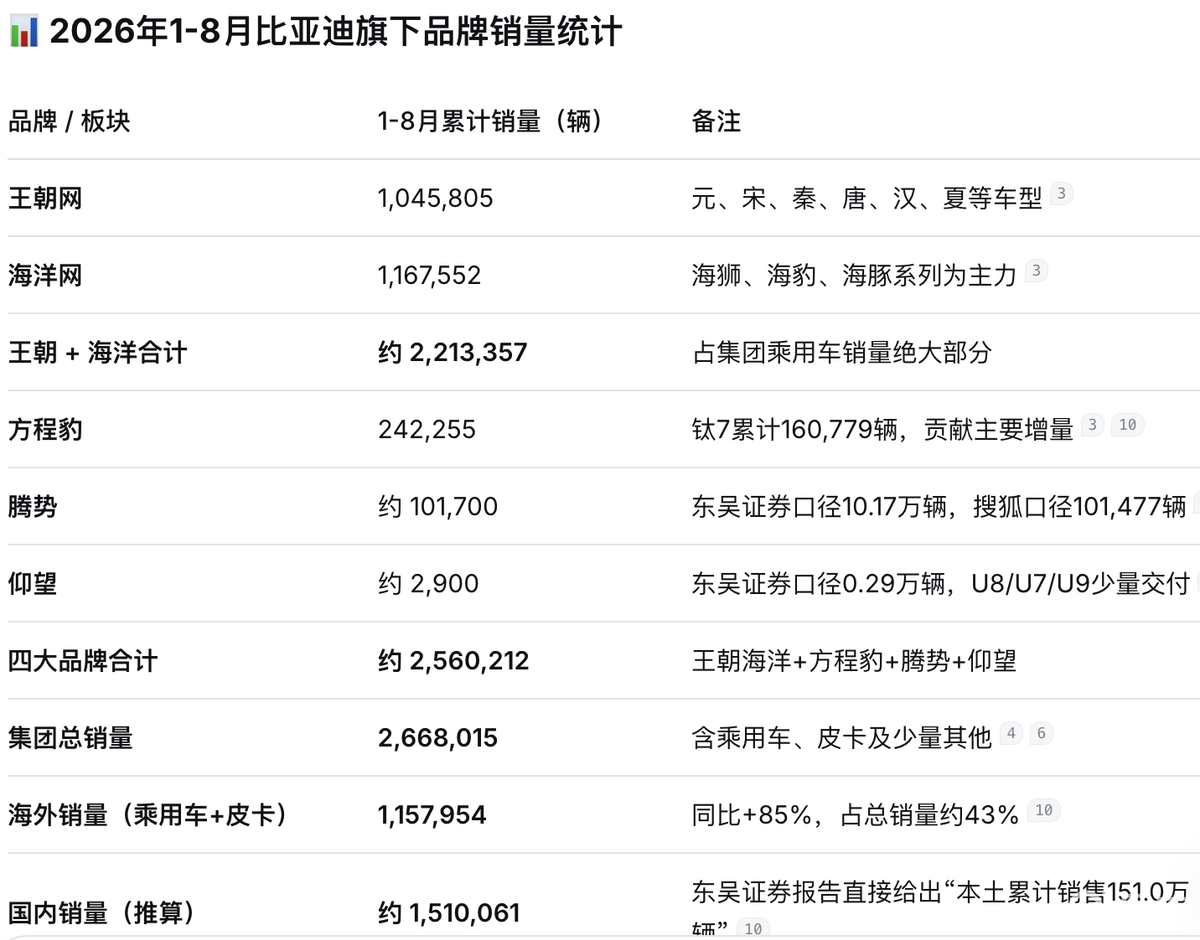
A more notable structural change is: In the first half of 2026, combined sales of Denza, Fang Cheng Bao, and Yangwang increased by 61% year-on-year, rising to 12.8% of total passenger car sales, with Fang Cheng Bao's average transaction price exceeding 220,000 yuan. BYD brought not just a "cost-effective model", but a complete high-end product line with an average price above 200,000 yuan. From "Being Seen" to "Being Chosen", what separates them is the actual realization of product capability, not geographical distance.
BYD's Overseas Reputation: Switched from "Cheap" to "Mainstream Option"
What best explains the situation is not brand research, but the sales ranking.
February 2026, Chinese electric vehicles topped the local retail sales ranking for the first time in Brazil, BYD's pure electric vehicle market share reached 78%, far surpassing Japanese, Korean, and European and American brands.
In Singapore, BYD's new car sales exceeded Toyota for the first time in 2025, rising to first place.

In the South Korean imported passenger car market, BYD ranked fourth in only one and a half years, surpassing Lexus.
In September 2025, UK single-month sales were 11,271 units, with a year-on-year growth rate of 880%, entering the top ten monthly rankings for the first time.
These markets were previously Toyota and European brands' home court. BYD's entry method was not low-price dumping, but forcing its way in on the pure electric track using product rhythm and localized channels.
The Real Focus of BYD's Export Review: Structure, not Total Volume
2021 exports 15,000 units, 2022 about 50,000, 2023 broke 200,000, 2024 exceeded 500,000, 2025 broke 1 million for the first time reaching 1.046 million — nearly 70-fold growth in five years.
But more critical than total volume is the structural jump in 2026: Overseas sales for the first three quarters were 1.3378 million units, rising from 21% of the same period last year to 43%. Nearly half the cars were sold overseas, the average overseas price per vehicle was about 190,000 yuan, nearly 50% higher than domestic, and overseas revenue share exceeded 50% for the first time.

Even among APEC member economies, Mexico ranked first in exports with 130,500 units in 2025, Brazil followed with 119,900 units, Indonesia 81,000 units, and Thailand has built a factory and entered the top 5 new energy brands.
APEC's 21 economies cover the most important automotive markets in Asia-Pacific. BYD is not "here to exhibit" in these markets, but already selling cars. The remaining cake is not about increasing coverage in a few more countries, but about turning markets already entered from "having sales" to "having share" — Europe's pure electric penetration rate is still only around 20%, most ASEAN and Latin American markets are in the early stage of pure electric introduction, and the window for plug-in hybrid products has just opened.
BYD's Overseas Factory Construction: Eight Countries Eight Factories are a Must-Under-Tariff-Pressure Choice
Whole vehicle exports are hitting a tariff wall: The EU imposes up to 35.3% anti-subsidy tariffs on Chinese EVs, Mexico 50%, Vietnam 35%. Localized manufacturing is not "icing on the cake", it is the ticket to enter mainstream markets.
Overseas passenger car factories already in production include Thailand (production started July 2024), Brazil (production started July 2025), Uzbekistan (CKD started June 2024), Hungary Szeged factory planned for Q4 2026 production, Indonesia Subang factory production started H1 2026, Turkey Manisa factory production end of 2026, Cambodia and Malaysia factories also landing in 2026.

The first phase of eight countries eight factories has a combined capacity exceeding 1 million units, with a planned upper limit exceeding 2 million units. The direction for incremental growth in the next five years is very clear: If overseas reaches 4-5 million units, "relying solely on exports is not enough, it must be achieved through local factory construction". This means after Southeast Asia, Latin America, Central and Eastern Europe, more production nodes will continue to expand according to market demand, but the pace depends on tariff policies and local supply chain maturity, not necessarily faster is better.
Can BYD Surpass Toyota? The five-year slogan is grand, but the gap needs to be acknowledged
Toyota's global sales in 2025 were about 11.32 million units, BYD about 4.6 million units, a gap of 6.72 million units; In the first half of 2026, Toyota 5.39 million units, BYD 1.81 million units, the gap is still close to 3 times.
Li Ke reiterated "Surpass Toyota and Volkswagen within five years" in Singapore in October, Wang Chuanfu has also anchored this goal multiple times since June, emphasizing "not relying on the US market". The direction is no problem — overseas growth rate is far higher than Toyota, and the product iteration pace on the new energy track is also superior.

But erasing nearly three times the volume difference in five years means BYD needs to sell an additional volume of over 1 million units overseas annually, while Toyota will not stay in place. A more realistic path is not "sudden turnaround in a certain year", but first establishing overwhelming advantage on the new energy single track, then gradually approaching the total sales metric.

APEC partner status will not directly shorten this distance, but it did something more fundamental: letting the most purchasing power business people and policymakers in the Asia-Pacific region, when sitting in the rear of a Denza or Yangwang, no longer treat "Chinese cars" as an option that needs to be convinced, but as a default reference system. Switching brand cognition often comes earlier and deeper than chasing sales numbers.
© 2024 Bitauto.com. All Rights Reserved.
Bitauto (www.yiche.com and www.bitauto.com) is one of the most visited automotive websites in China. We provide detailed info on Chinese car brands available in your area. Please note that the information provided on this website is based on publicly available data and is for reference only. It may not be fully updated or accurate at all times.

Help us improve our website


