
Search History
Popular Searches
Dealer Login / Sign Up

A while ago, I participated in an exclusive interview with the general manager of Changan Qiyuan.
Currently, when talking about intelligent driving, the industry lingo has already formed a fixed paradigm: computing power in TOPS, number of LiDAR units, no-map pilot opening plans city by city, end-to-end large models. Parameter tables are stacked fuller, and presentation demo clips are smoother than ever. Many brands talk about self-research, but the focus is mostly on "catching up with the first tier".
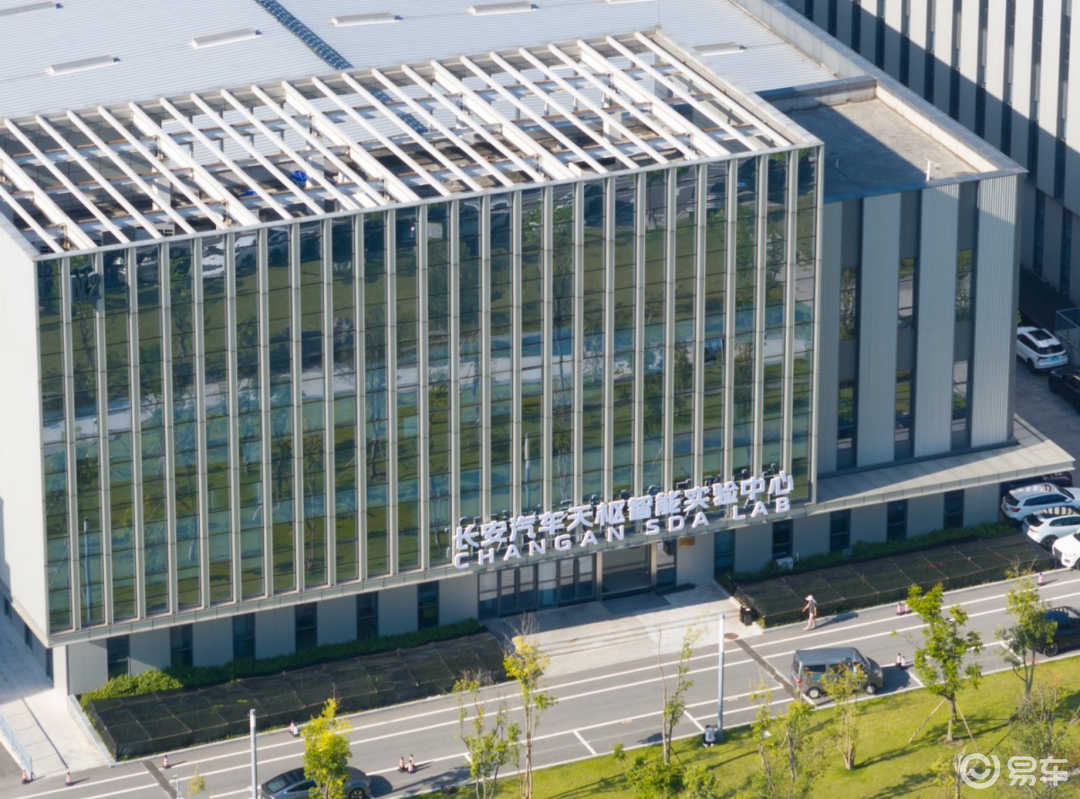
But after this face-to-face conversation, I rather stepped out of this established judgment framework.
Many vehicle manufacturers bet on self-research to regain technical voice; while Qiyuan doing TianShu Pilot, the whole conversation repeatedly revealed a very simple main thread — the real benefit that self-research can actually hold is efficiency and controllability. This approach, in the current intelligent driving track where internal competition has reached a frenzied level, is not mainstream but worth a good breakdown and discussion.
Self-research Route Differentiation: External Purchase is Fast, Self-research is Hard, Hardship Lies in the Initiative
In the domestic self-research intelligent driving track, the route differentiation is already very clear.
Great Wall Coffee OS, Geely Qianli Haohan are both continuously iterating their own self-research systems. Different teams have different bottom-line architectures and data closed-loop rhythms. Finally, landing on actual cars, the visible difference is clearly visible. Of course, some brands chose to deeply bind with external solution providers. The benefit is fast on-board launch and high starting maturity.

Two routes, each with their own trade-offs. External purchase solutions are easy to get started, but once encountering countless long-tail scenarios on the road, wanting to fine-tune strategies and optimize scenarios requires multiple teams to align schedules. Changing a problem, pushing an OTA, the rhythm is hard to be decided by the vehicle manufacturer themselves. Self-research investment is large, cycle is long, trial-and-error cost is high, but once the whole link is connected, the initiative to adjust is held in their own hands.
I have test-driven some self-research schemes before, and the pain point I remember is strategy hesitation, abrupt takeover, and rigid fallback when the system exits. This is also a very hard nut to crack for many self-research teams: whether the algorithm can truly connect with chassis execution.
TianShu Pilot relies on Changan SDA Central + Regional Ring Network Electronic Electrical Architecture. Perception, decision-making, planning, braking and steering execution are a complete closed-loop. This is also the foundation of all its efficiency advantages.
Core Value of Self-research: Three Levels of Efficiency Plus a Layer of Safety Fallback
Many people treat "full-stack self-research" as a marketing tag. After this interview, I understand it landing on user experience, it is truly three things:
First, execution efficiency. It is not pursuing aggressive overtaking games, but the instruction transmission link is short enough. After identifying risk, decelerate, micro-adjust direction, and avoid actions are continuous and decisive, without long hesitation or repeated probing disconnection sense. This smoothness of chassis and algorithm native coupling cannot be achieved by simply piling hardware.

Second, modification efficiency. The long-tail scenarios of urban road conditions are endless: non-standard traffic lights, trucks occupying lanes, pedestrians suddenly appearing from blind spots, mixed traffic in narrow alleys of old urban areas. When the test end catches an abnormal scenario, it can directly locate and adjust strategies internally without waiting for external suppliers' schedules. The problem closed-loop speed is obviously faster.
Third, OTA iteration efficiency. After the version is polished and mature, it can be pushed in batches by city. It can continuously optimize for local characteristic road conditions. Intelligent driving is not fixed at the moment of leaving the factory, it is a product that evolves continuously. Self-research guarantees this evolution rhythm is not constrained by external forces.
But what is more hardcore and closer to the bottom line of car owners than iteration speed is the fallback degrading logic.
Even the highest level of assisted driving has boundaries. There is no intelligent driving that never takes over. Compared to the promotion of "how many cities have been covered", ordinary users should care most about when the system judges it cannot handle the road conditions, or when hardware has an exception, how it should exit.
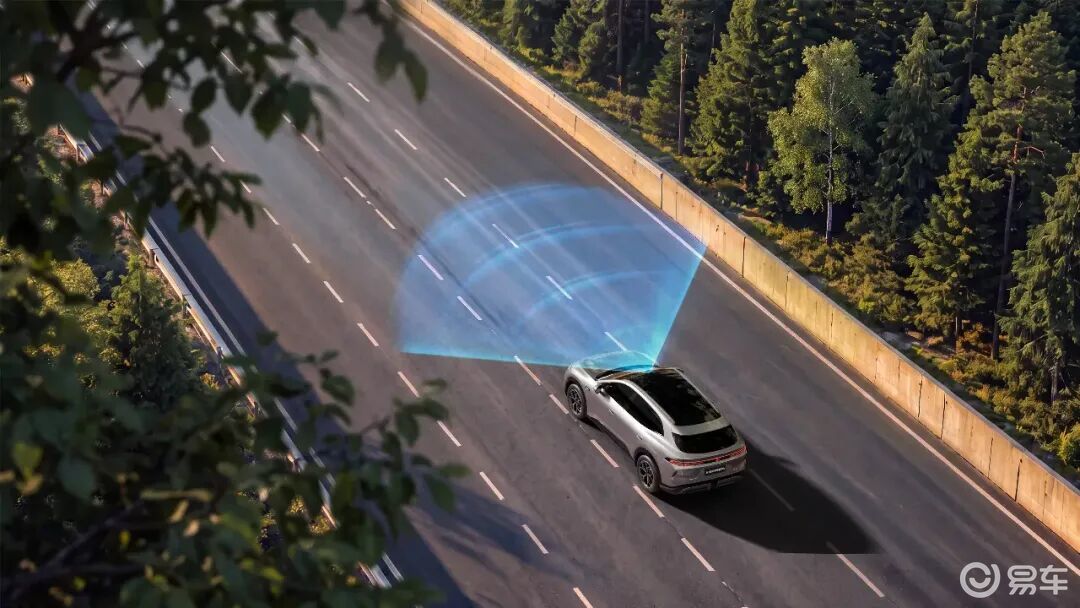
The safety strategy of TianShu Pilot is native coupled design with chassis, braking, and steering, not a patch applied later. Once reaching the capability boundary, layered warnings, gradual deceleration, orderly exit, the whole fallback process executes very fast, leaving the driver ample reaction windows, avoiding that kind of abrupt, abrupt takeover without warning.
In my opinion, the bottom line that the highest level of intelligent driving self-research should hold: running fast is an extra point, running steadily is the basic skill.
PRO and Ultra: Give the Right to Choose Back to Users
In version planning, TianShu Pilot set two gradients: Ultra and PRO. This design understands the real consumer market very well.
Ultra is the ceiling version, hardware, computing power, full scene capabilities maxed out, targeting users who need to shuttle through complex urban areas frequently for a long time and are willing to pay for a full set of high-level capabilities; PRO retains LiDAR hardware, retains core pilot capabilities, makes trade-offs on some extreme complex scene capabilities, and lowers the car purchase threshold.

The official outward expression is based on user needs stratification. Landing in reality, it is actually very straightforward: Many home users drive mostly on highways, daily urban road conditions are simple, no need to pay for extreme scenarios they don't use even a few times a year. This gradient thinking is consistent with the logic of mature grading schemes in the industry, not forcing everyone to max out top trim in one step.
A very weighty benefit released in the interview: Existing car owners who already picked up cars and hardware embedded LiDAR will unlock TianShu Pilot PRO for free in batches by year-end. Looking horizontally in the market, this action is full of sincerity. Many brands' high-level intelligent driving are new car exclusive rights. Even if old cars have embedded hardware, the function will be locked. Qiyuan's arrangement realizes the value of embedded hardware for existing users. This is also a promise that only the self-research system can fulfill.
Not Only Intelligent Driving: Home Basic Ability Foundation, Going Overseas is Another Growth Curve
Although intelligent driving is an extra point for upward elevation, Qiyuan's ability to stably drive volume and continuously support this self-research investment, the foundation is still the hard strength of family cars.
Large space, high interior space utilization rate, rear row pure flat, trunk expansion flexible, accurately hit family user rigid needs; Full series CATL batteries, combined with Changan Golden Bell Battery Protection System, long range, battery safety, stable supply chain, are the most simple and core demands of home consumers. These have no cool concepts, but恰恰 are the foundation of volume models.
There is another dimension that is easily ignored by domestic monthly sales lists: Going Overseas.

Now domestic brands going overseas is already a craze, but the models differ greatly: One is simple whole vehicle export, sell one order is one order; The other is system going overseas, build factory, build local supply chain, land after-sales system.
Relying on Changan Thailand Rayong Plant local production, Qiyuan products radiate to Southeast Asia, Middle East, overseas delivery scale has already become significant. Domestic market rolls price, rolls intelligence, overseas market tests quality control, reliability, local regulation adaptation. Outputting a set of whole vehicles, electronic control, intelligent driving system polished in China's local to overseas, this is also a very weighty scorecard for domestic new energy vehicles.
Down the whole interview, my biggest feeling is TianShu Pilot, is not going for parameter list No.1 self-research.
The industry is chasing "stronger, faster, cover wider", while Qiyuan's self-research route, pursues controllability: Controllable iteration rhythm, controllable safety fallback, controllable cost stratification, let high-level intelligent driving from top trim exclusive, slowly sink to more ordinary family cars.

Qiyuan is not a brand that exploded solely relying on intelligent driving: Space, battery, range build home basic disk, self-research TianShu Pilot opens intelligent ceiling upward, deep cultivation in domestic volume, overseas system breakout.
Intelligent driving is far from the endgame. How the quality of TianShu Pilot is will ultimately still look at year-end old car owners large-scale OTA after, long-term feedback in massive real road conditions.
But at least this thinking, to the current internal competition intelligent driving track provides another sample: Full-stack self-research, should not be just a slogan used for creating hype. The real value is when problems happen on the road, having the initiative to adjust and optimize in your own hands.
© 2024 Bitauto.com. All Rights Reserved.
Bitauto (www.yiche.com and www.bitauto.com) is one of the most visited automotive websites in China. We provide detailed info on Chinese car brands available in your area. Please note that the information provided on this website is based on publicly available data and is for reference only. It may not be fully updated or accurate at all times.

Help us improve our website


