

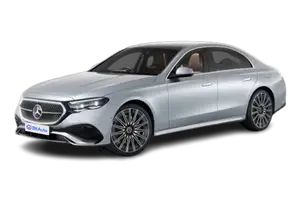
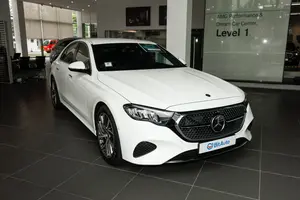
Mercedes-Benz E-Class
RM 367,888
Last updated: 22 Nov 2026 · Malaysia Market
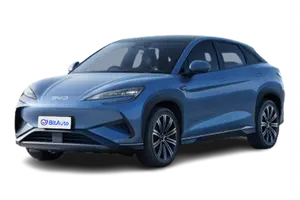
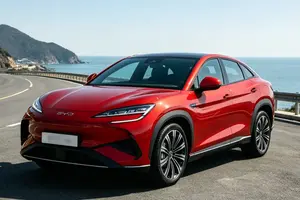
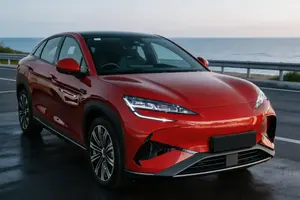
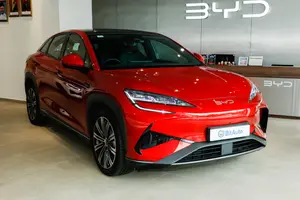
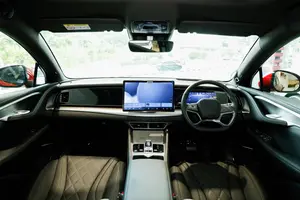
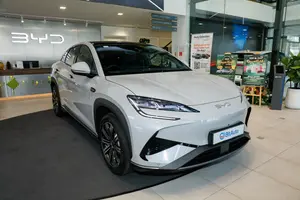
One is a pure electric, the other a non-plug-in hybrid — only one needs charging at all. The Sealion 7 is the cheaper way in at RM 164,650, undercutting the E-Class by RM 203,238. With no clear hardware advantage to justify the difference, the E-Class is harder to recommend.
Over five years the Sealion 7's RM 203,238 head start is unlikely to be erased by running costs — five-year ownership still lands about RM 209,839 in the Sealion 7's favour. The deciding factor is your annual mileage and whether you can charge at home.
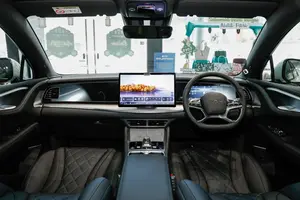
The Sealion 7 runs on electricity alone; the E-Class pairs a petrol engine with a battery that recovers braking energy, so it never needs plugging in. The E-Class is rated at 6.4 L/100km, which is the main thing an EV cannot match on a long run.
The E-Class is the longer car — 119 mm up at 4949 mm versus 4830 mm.
Monthly new car sales in Malaysia, with data for the past 6 or 12 months, or the full sales history since launch.
Loading sales data…
Data is based on vehicle registration and transaction records from Road Transport Department (JPJ), updated on the 10th of each month. It covers car sales by brand and model, as well as EV sales across Malaysia.
The Sealion 7 is the cheaper pick at RM 164,650 and also adds power. The E-Class has to justify its premium elsewhere.
The Sealion 7 starts at RM 164,650, the E-Class at RM 367,888 — about RM 203,238 in favour of the Sealion 7.
The Sealion 7 is more powerful — 228 hp against 204 hp.
The E-Class is longer, at 4949 mm against 4830 mm.
Both list lane-keeping assist, adaptive cruise control and a 360-degree camera; the Sealion 7 adds autonomous emergency braking and blind-spot monitoring.

© 2024 Bitauto.com. All Rights Reserved.
Bitauto (www.yiche.com and www.bitauto.com) is one of the most visited automotive websites in China. We provide detailed info on Chinese car brands available in your area. Please note that the information provided on this website is based on publicly available data and is for reference only. It may not be fully updated or accurate at all times.

Help us improve our website
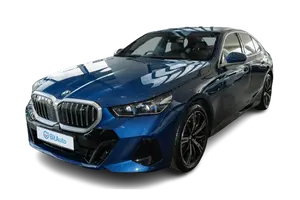 BMW 5 Series
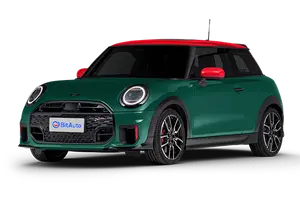 MINI JCW
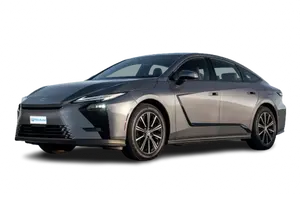 Lexus ES
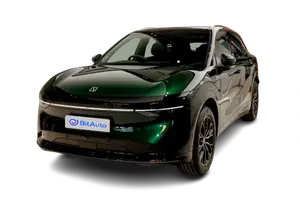 Zeekr 7X
 OMODA JAECOO J7 PHEV
 Jetour T2 i-DM

