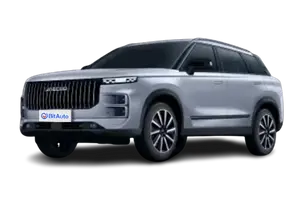
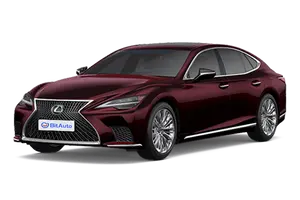
Both run on petrol, so fuel bills and running costs stay in the same ballpark. The J7 is the cheaper way in at RM 138,800, undercutting the LS by RM 1,111,200. The LS earns its premium on boot space and size.
Body Type / Seats5 door SUV · 5 seats4 door Sedan · 5 seats
AssemblyCKDCBU
Annual Road TaxRM 120 ✓RM 4,132.50
Over five years the J7's RM 1,111,200 head start is unlikely to be erased by running costs — five-year ownership still lands about RM 1,118,165 in the J7's favour. The deciding factor is how much space and equipment you actually need.
Engine, Fuel Economy & Refuelling
ParameterOMODA JAECOO J7Lexus LS
Engine Capacity1,598 cc3,445 cc ✓
Rated Economy7 L/100km10.5 L/100km
Fuel Tank51 L82 L ✓
Both run conventional petrol engines. The J7 uses a 1.6-litre turbocharged engine; the LS a 3.5-litre naturally-aspirated engine. The J7 is more frugal at 7.0 L/100km versus 10.5 L/100km. On a full tank the LS covers roughly 781 km versus 729 km for the J7.
Power & Performance
ParameterOMODA JAECOO J7Lexus LS
Max Power197 Ps421 Ps ✓
Max Torque290 N·m600 N·m ✓
DrivetrainFWDRWD
TransmissionDCTAT
Dimensions
ParameterOMODA JAECOO J7Lexus LS
Length4,500 mm5,235 mm ✓
Width1,865 mm1,900 mm ✓
Height1,680 mm ✓1,450 mm
Wheelbase2,672 mm3,125 mm ✓
Boot Capacity424 L480 L ✓
The LS is the longer car — 735 mm up at 5235 mm versus 4500 mm. The LS has the slightly larger boot, 480 L against 424 L. The LS also leads on wheelbase, 3125 mm versus 2672 mm.
Comfort & Technology
J7
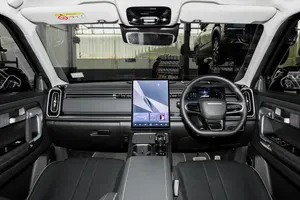
13.2" central touchscreen + 10.25" digital cluster
Dual-zone automatic climate control
Ventilated front seats
Panoramic sunroof
50W wireless phone charging
LS
12.3" touchscreen with Apple CarPlay / Android Auto
Dual-zone automatic climate control
Ventilated front seats
12-speaker sound system
Power tailgate
Sales Comparison
Monthly new car sales in Malaysia, with data for the past 6 or 12 months, or the full sales history since launch.
Monthly Sales Trend (Malaysia)
Loading sales data…
Monthly Registrations
Monthly Registrations
Data is based on vehicle registration and transaction records from Road Transport Department (JPJ), updated on the 10th of each month. It covers car sales by brand and model, as well as EV sales across Malaysia.





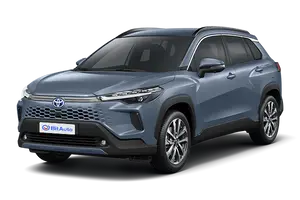 Toyota Corolla Cross
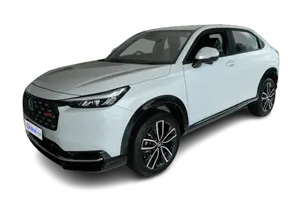 Honda HR-V
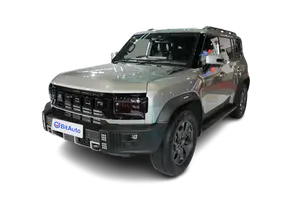 Jetour T2
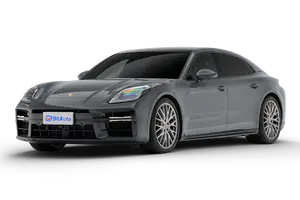 Porsche Panamera

