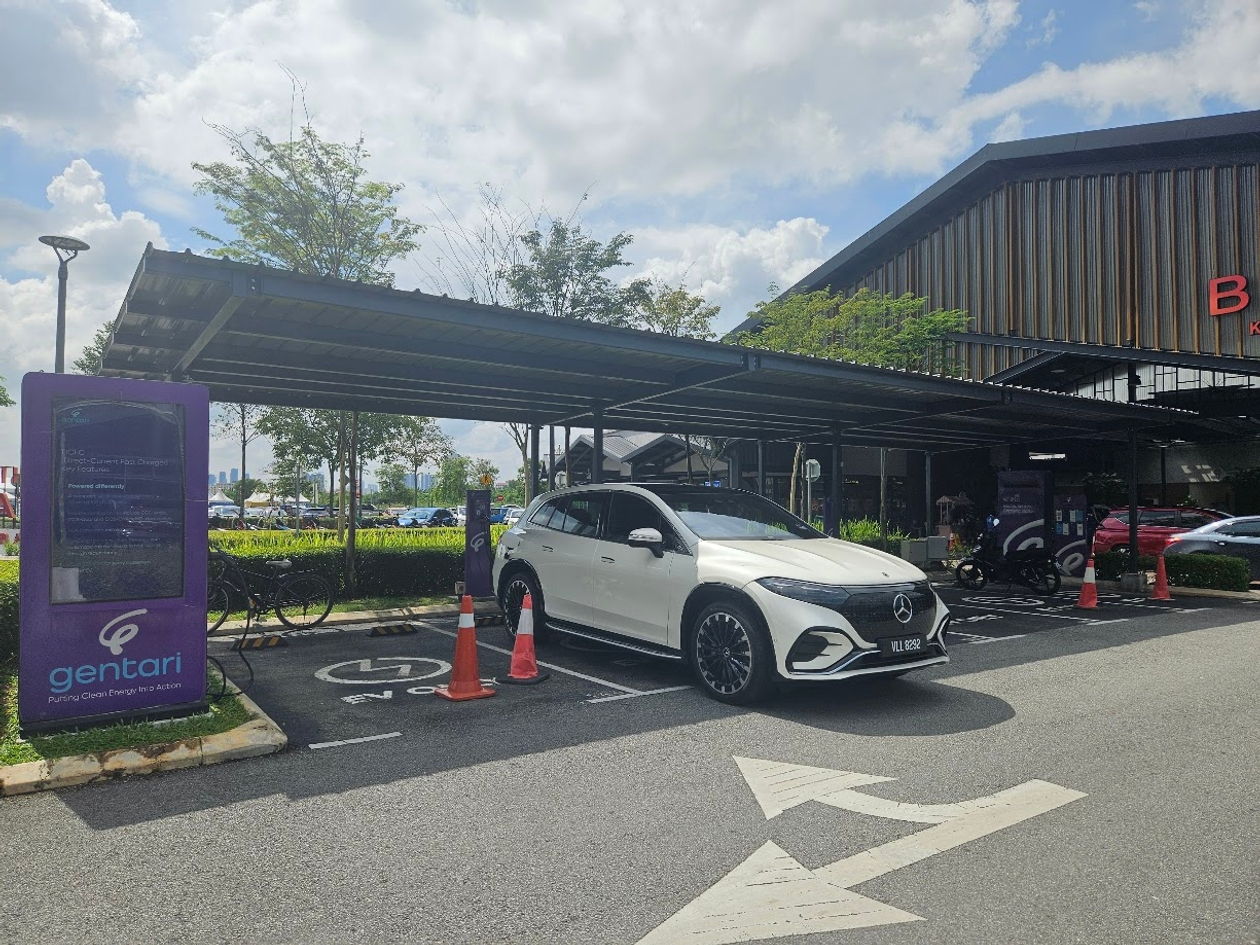
Malaysia is moving to revise its policies and financial incentives to accelerate the rollout of electric vehicle charging infrastructure, with the government setting a target of 30,000 charging stations nationwide by 2030.
The plan was outlined in Dewan Rakyat on July 8 by Deputy Investment, Trade and Industry Minister Sim Tze Tzin, who said the current charging network is still insufficient for the pace of EV adoption in the country.
According to Sim, the expansion of high-powered direct current fast chargers depends heavily on the strength of the power supply network. He said the government is working with Tenaga Nasional Bhd (TNB) to develop the dedicated substations needed to support high-voltage charging sites.
That infrastructure work is important because DC fast chargers require more robust electrical capacity than lower-powered public chargers. Without the required grid support, the rollout of faster charging points is likely to remain uneven.
Sim also said the government is preparing targeted financial incentives to encourage private Charging Point Operators, or CPOs, to invest in the sector. The measures are intended to help speed up private-sector participation in the charging buildout.
The minister was responding to a question from Kubang Pasu MP Datuk Dr Ku Abdul Rahman Ku Ismail, who called for stronger involvement from EV companies in expanding public charging access.
Ku Abdul Rahman said charging facilities should not be concentrated only in major cities such as Kuala Lumpur and Penang, and urged the government to push coverage into smaller urban centres including Sungai Petani and Alor Setar.
He also proposed that EV charging requirements be tied to high-rise residential development, with coordination between the Public Works Department and the Housing and Local Government Ministry. His suggestion was aimed at ensuring apartment and condominium residents are not excluded from the shift to electric mobility.
The latest comments show Malaysia is looking beyond headline EV adoption targets and focusing on the supporting infrastructure that will determine how practical ownership becomes for urban and apartment-based users.

Your go-to source for all things automotive in Malaysia. 🚗 Latest reviews, breaking news, launches & industry trends.
+ Follow This weekend is your chance to own a Volvo Selekt Certified Used Car, priced from just RM 148,000.
What are you waiting for?
#volvo 1 minute ago
This weekend is your chance to own a Volvo Selekt Certified Used Car, priced from just RM 148,000.
What are you waiting for?
#volvo 1 minute ago  We saw this accident this morning, and here’s a reminder to everyone: please drive safe. 2 days ago
  The G50 BMW 3 series is now here, adopting much of the i3's design elements.
So, where's the BMW M3?
#bmw #BMW3Series 4 days ago
The G50 BMW 3 series is now here, adopting much of the i3's design elements.
So, where's the BMW M3?
#bmw #BMW3Series 4 days ago Get the latest car news first!
Your go-to source for all things automotive in Malaysia. 🚗 Latest reviews, breaking news, launches & industry trends.
This weekend is your chance to own a Volvo Selekt Certified Used Car, priced from just RM 148,000.
What are you waiting for?
#volvo 1 minute ago We saw this accident this morning, and here’s a reminder to everyone: please drive safe. 2 days ago The G50 BMW 3 series is now here, adopting much of the i3's design elements.
So, where's the BMW M3?
#bmw #BMW3Series 4 days ago  ProtonGWMVolkswagenJAECOOVolvoPeroduaToyotaHondaTESLAMitsubishiMazdaJetourCheryBYDLexusBMWMercedes-BenziCAURZeekrIsuzuNissanLeapmotorPorscheFordOMODAMINIMGSuzukiXPengHyundaiWulingKiaSubaruDenzaGACLand RoverDongfengCAMAudiPeugeotFotonMAXUSsmartDaihatsuJACJMCMaseratiLotusAlfa RomeoRenaultGolden DragonKaiceneSeresLamborghiniFerrariJeepRolls-RoyceLepasAston MartinMcLarenChevroletBentleyFiatBAICForthingGeelyRoeweAeolusChanganARCFOXDeepalExeedHongqiVoyahJaguarKGMBuforiAcuraCadillacDodgeAbarthINEOSMHEROJMEVFreelander
© 2024 Bitauto.com. All Rights Reserved.
Bitauto (www.yiche.com and www.bitauto.com) is one of the most visited automotive websites in China. We provide detailed info on Chinese car brands available in your area. Please note that the information provided on this website is based on publicly available data and is for reference only. It may not be fully updated or accurate at all times.
Help us improve our website


