Let us first put both cars on the same price scale. The City Hatchback 1.5 V is priced at RM95,900, while the Yaris 1.5 G retails at RM91,600, making the Yaris RM4,300 cheaper.
Both cars are locally assembled (CKD) in Malaysia, powered by a 1.5-litre naturally aspirated engine paired with a CVT driving the front wheels, and both incur an annual road tax of RM90.
The City Hatchback is marginally longer at 4,350 mm against 4,140 mm, with a wheelbase of 2,600 mm versus 2,550 mm. This translates to an extra 50 mm of rear legroom—noticeable in the flesh, though not necessarily game-changing in terms of overall vehicle utility.
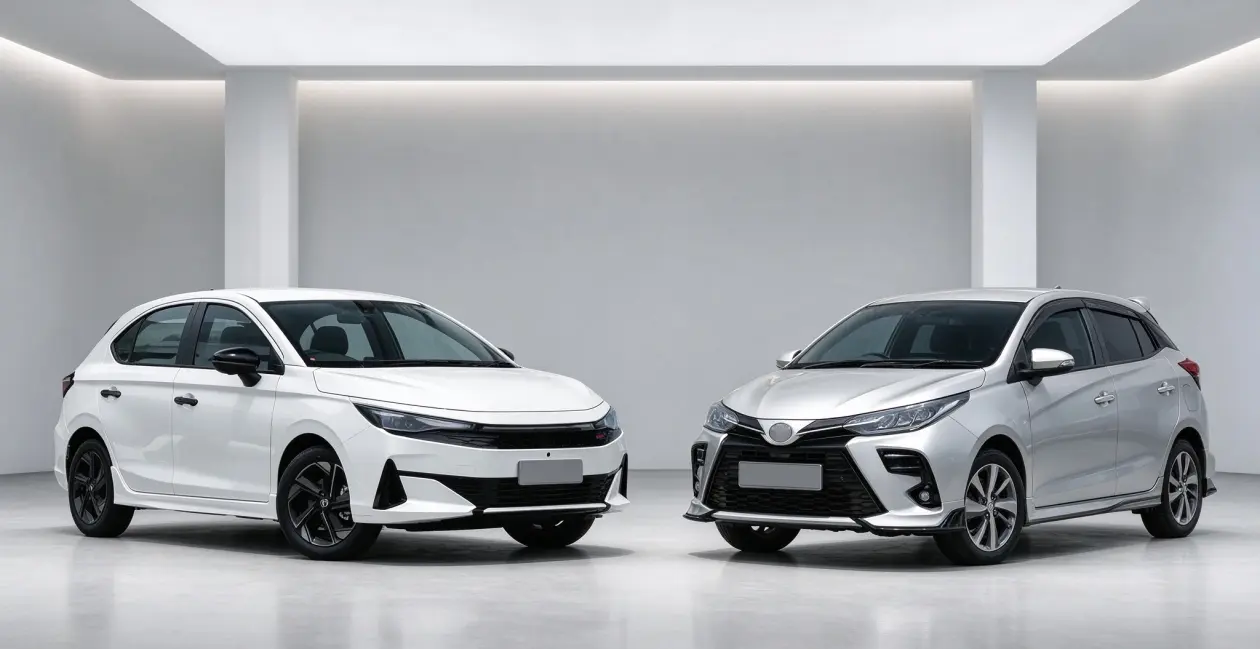
This RM4,300 price gap does not buy you a leap in powertrain performance. Both are perfectly capable family runabouts; the real difference lies in their safety kit and rear cabin versatility.
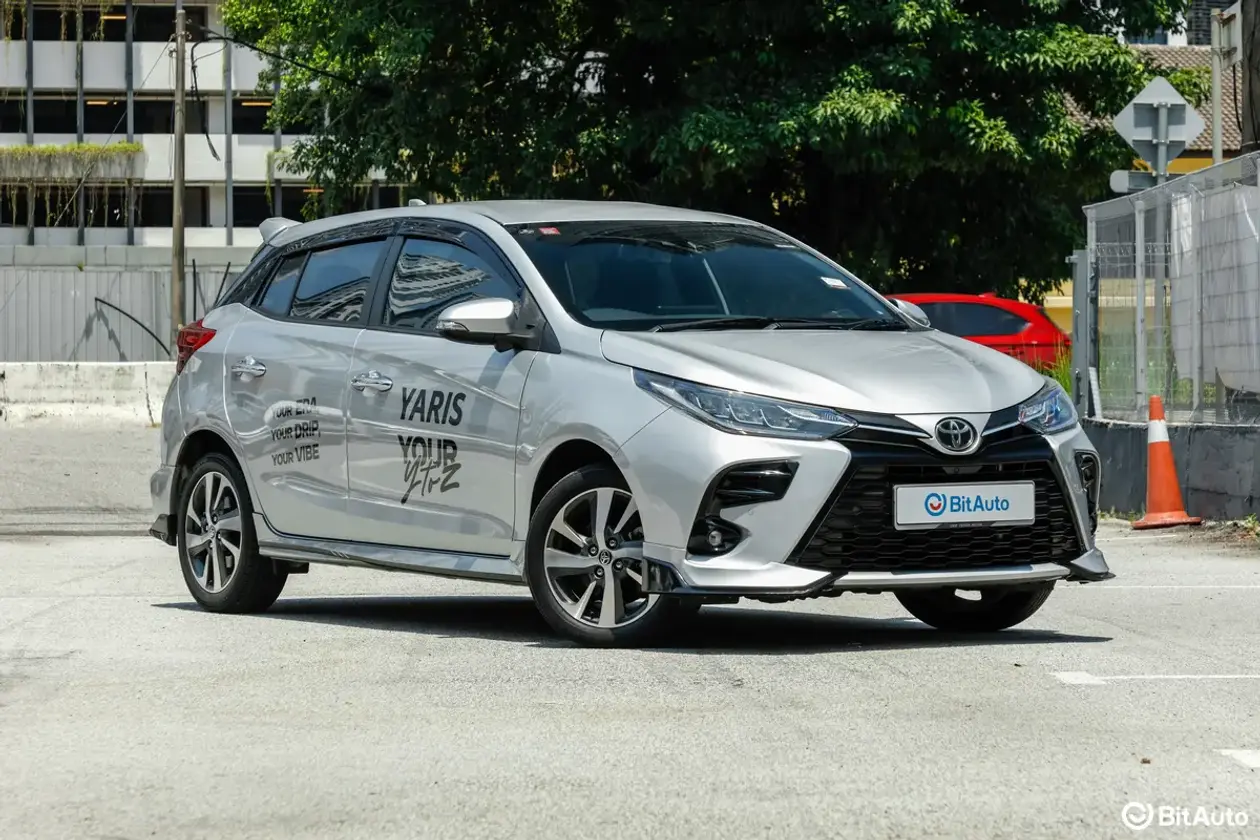
The Yaris 1.5 G comes with seven airbags, the bonus being a driver's knee airbag. In a frontal collision, knees often hit the lower dashboard structure, and this airbag is designed specifically to cushion that impact. The City Hatchback makes do with six, missing out on this unit.
The Yaris’s five-star ASEAN NCAP safety rating is also tied to its seven-airbag setup alongside vehicle stability control. In terms of passive safety, the Yaris offers one extra layer of buffer.
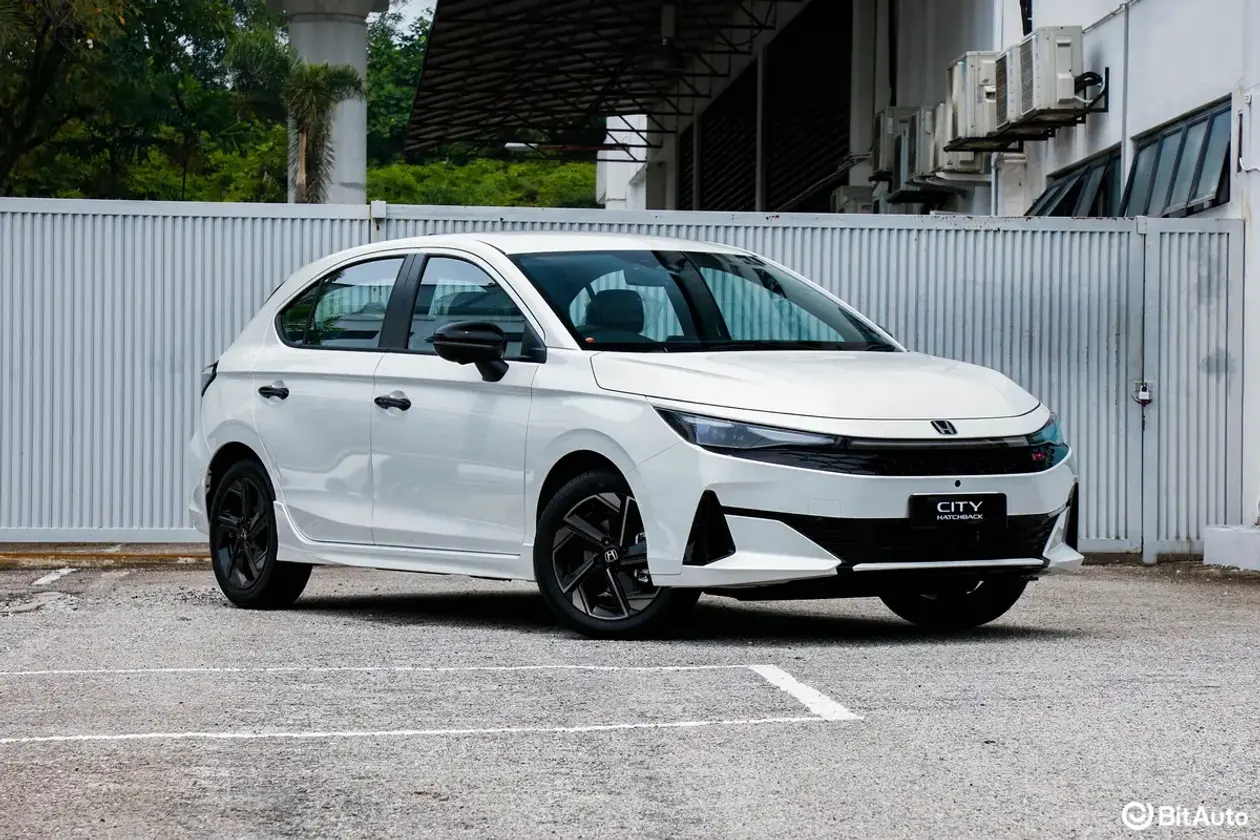
However, the City Hatchback pulls ahead in the active safety department. Honda Sensing comes standard on the 1.5 V, bundling Adaptive Cruise Control (ACC), Lane Keep Assist System (LKAS) with steering intervention, Autonomous Emergency Braking (AEB), and Lane Departure Warning (LDW).
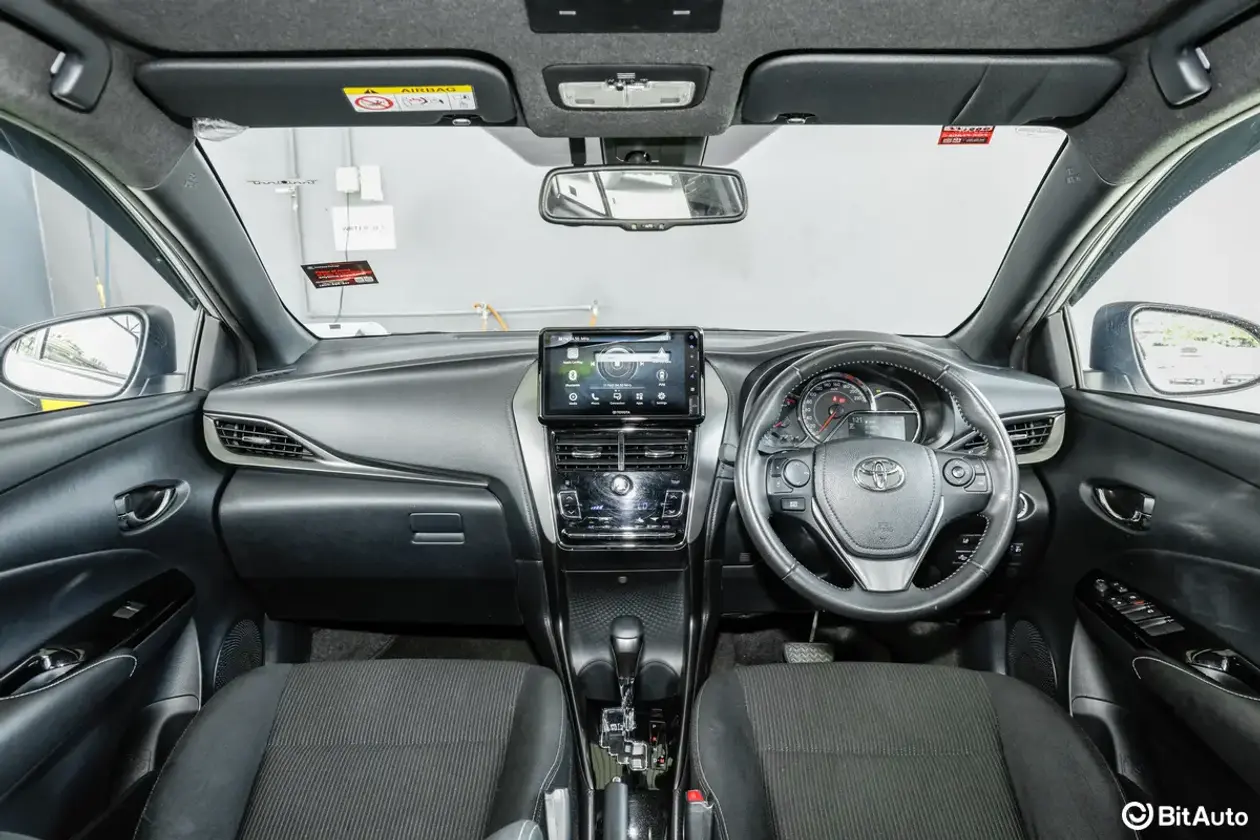
Toyota Safety Sense on the Yaris also features Pre-Collision System (PCS) and Lane Departure Alert (LDA), accompanied by Blind Spot Monitor (BSM) and Rear Cross Traffic Alert (RCTA), with a 360-degree monitor fitted as standard.
The critical difference is found under cruise control: the Yaris uses a standard passive cruise control that does not adjust speed to the vehicle ahead. The City Hatchback’s Adaptive Cruise Control follows traffic automatically, sparing your right foot from constant pedal modulation in stop-and-go jams and long highway stretches.
The same distinction applies to lane support: the Yaris merely beeps with a warning without correcting your line, whereas the City Hatchback’s LKAS gently steers the car back towards the centre of the lane.
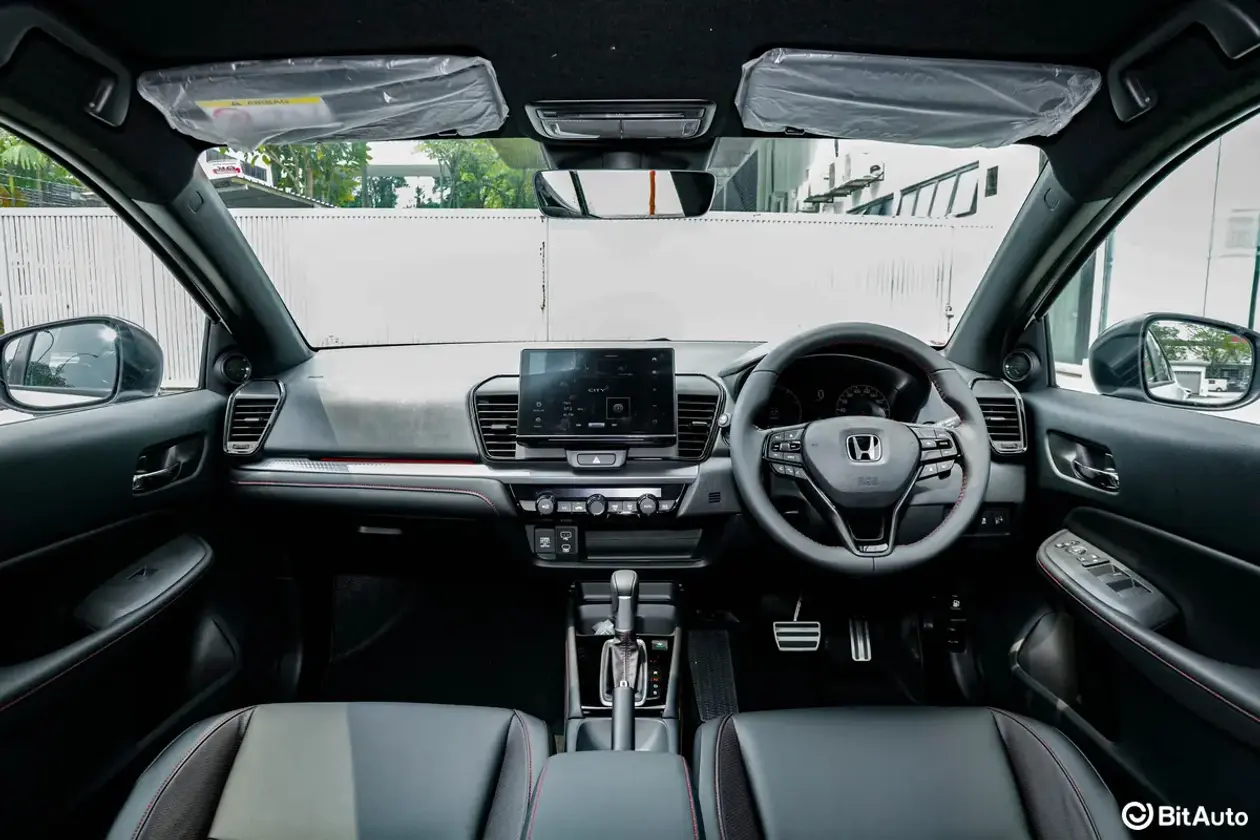
Both philosophies have their merits. The Yaris channels its budget into “extra knee protection should an impact occur”, while the City Hatchback invests in “avoiding the collision altogether and easing driver fatigue with semi-autonomous assist”.
In the rear, the City Hatchback features Honda’s ULTRA Seats, offering four configurations: Utility, Long, Tall, and Refresh modes.
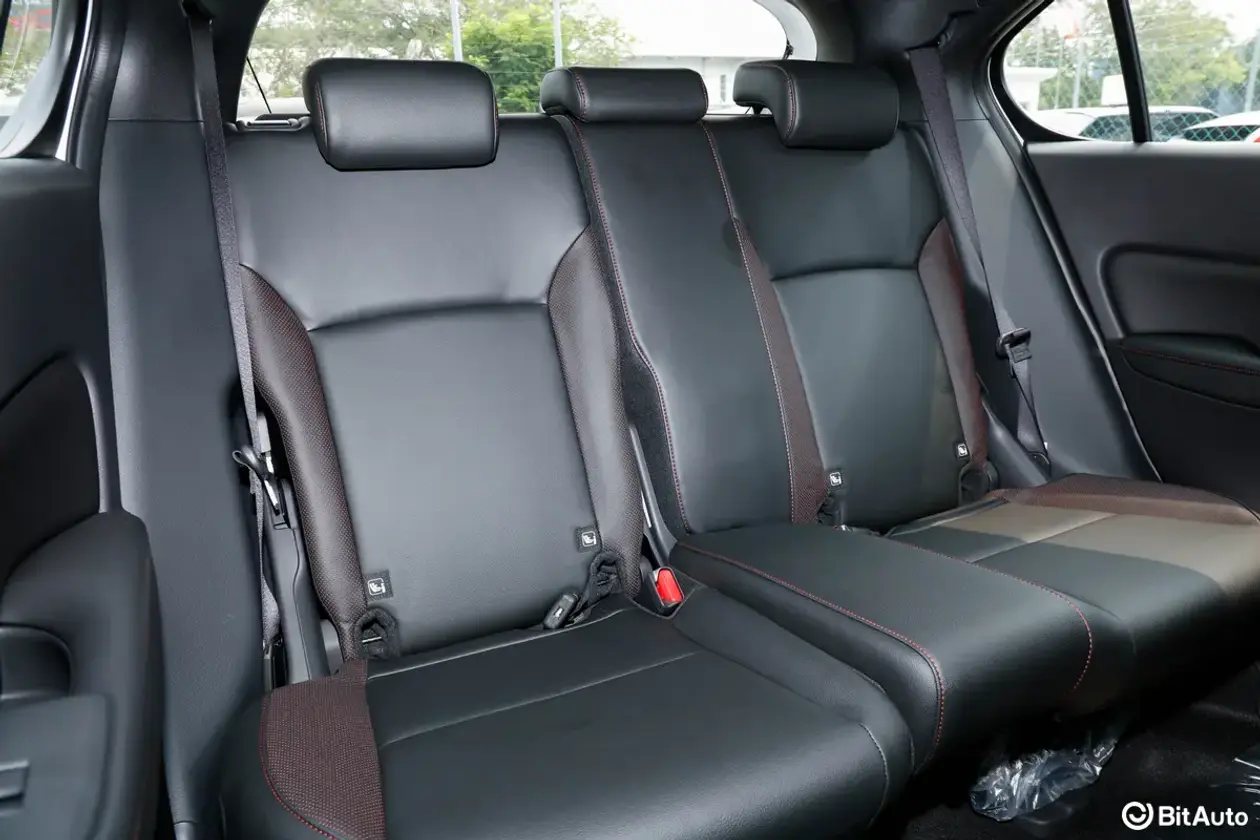
Tall Mode flips the rear seat bases upright against the seatbacks, allowing tall potted plants, folding bicycles, or small cabinets to stand securely on the cabin floor.
Long Mode folds the front passenger backrest flat for extra-long cargo, while Refresh Mode reclines the front seats to align with the rear cushions for a makeshift lounge setup.
The Yaris adopts a conventional 60:40 split-folding rear bench. While folding the seats down provides a practical and flat boot floor, the seat bases cannot flip up, nor can the front seats recline into a daybed arrangement.
On paper, boot volumes are neck and neck: 289 litres for the City Hatchback against 286 litres for the Yaris. That 3-litre difference is practically unnoticeable day-to-day.
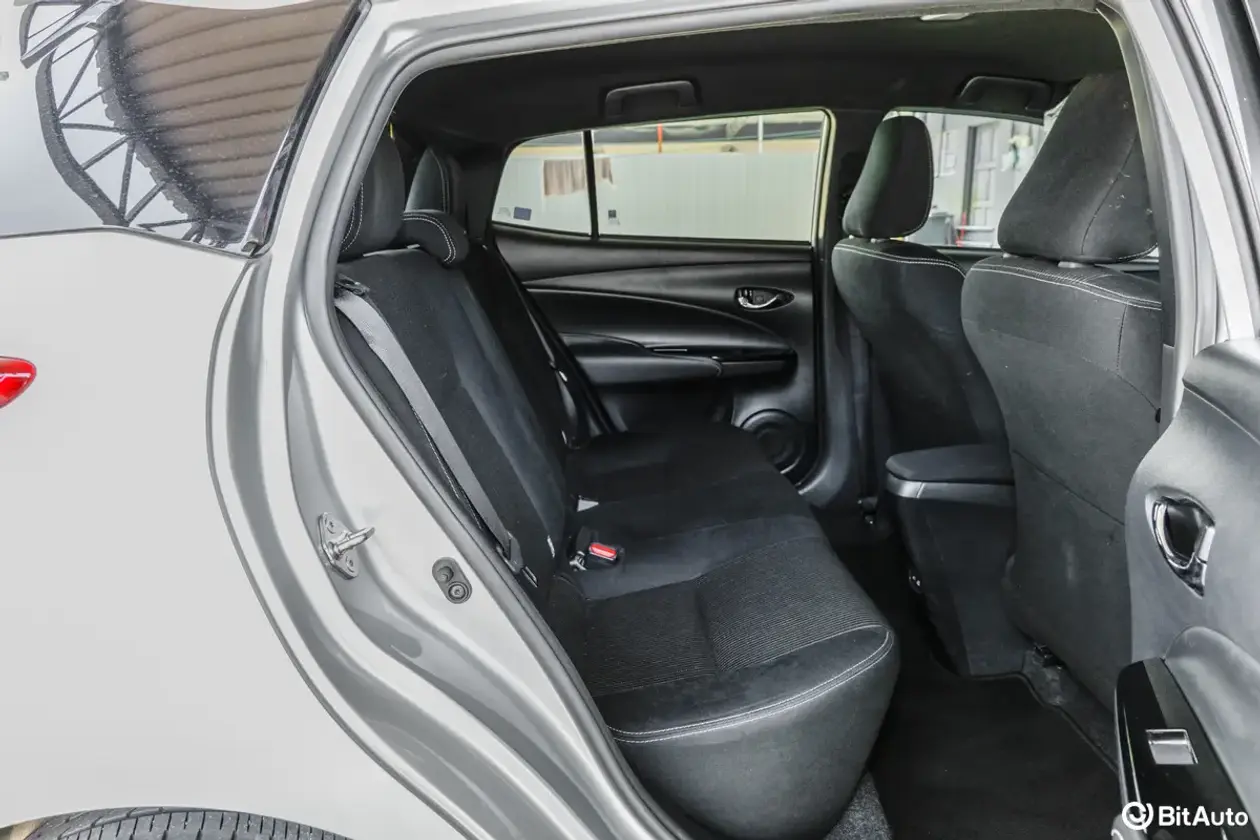
The decisive factor is not outright luggage volume, but the modular versatility of the seats. When moving house, shopping at plant nurseries, or hauling bulky items, the multi-folding ULTRA Seats can easily save you a trip renting a pick-up or hiring a lorry.
The Yaris does not offer an equivalent seating solution; its rear quarters stick strictly to standard, utilitarian split-folding seats.
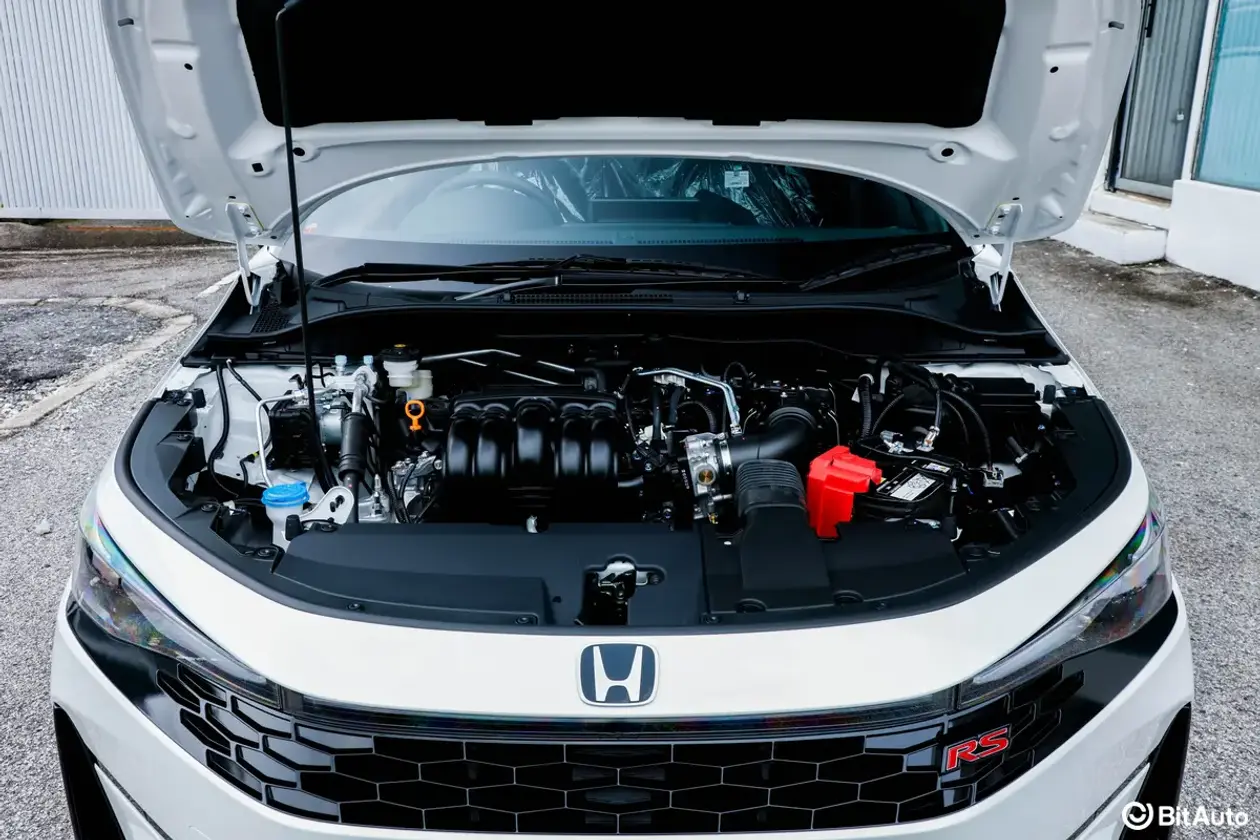
The City Hatchback’s 1.5-litre engine pushes out 119 hp and 145 N·m of torque, completing the 0-100 km/h sprint in 10.7 seconds. The Yaris’s 1.5-litre engine is rated at 105 hp and 150 N·m on public technical sheets, while Toyota’s official portal lists it at 107 PS and 140 N·m.
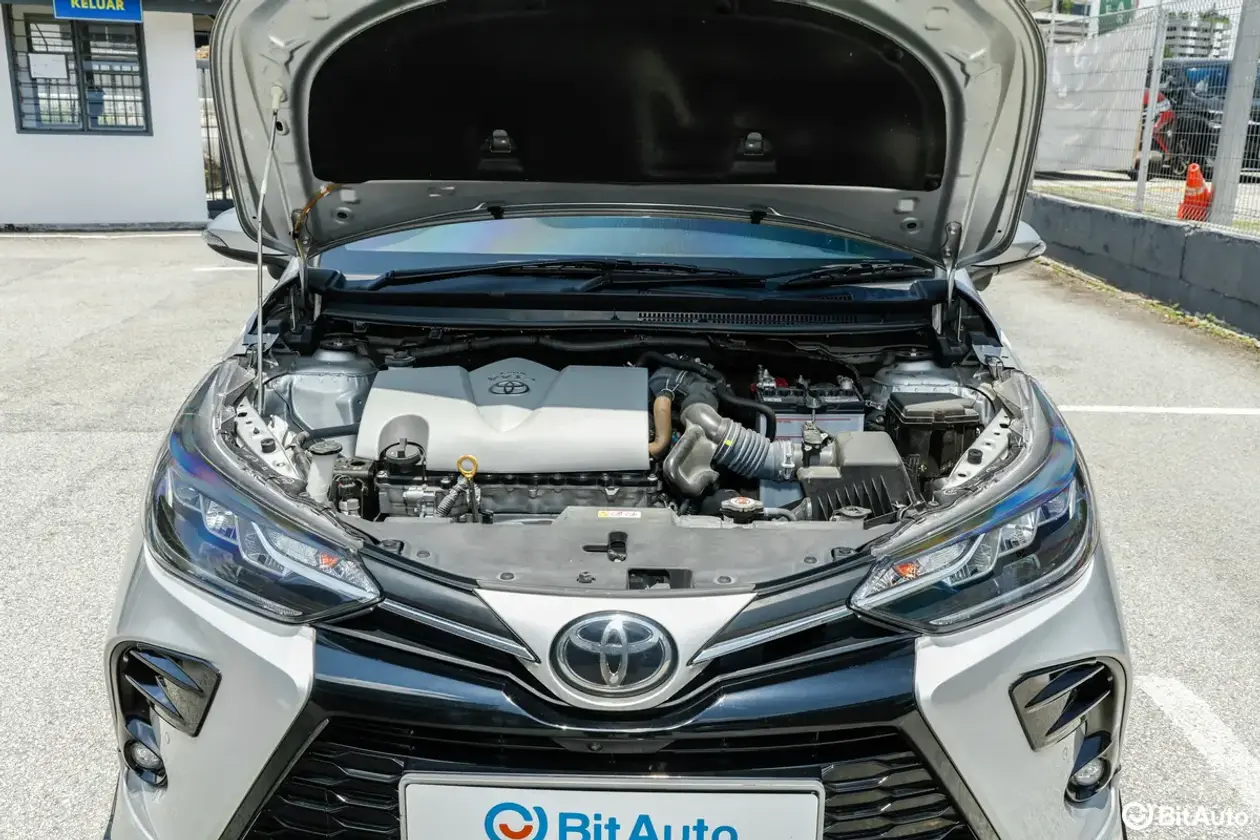
Either way, the City Hatchback enjoys an output advantage of roughly a dozen horses. In typical urban commuting, this difference is hardly discernible as both CVTs deliver smooth, linear power progression.
The distinction only shows when executing highway overtakes or climbing inclines fully laden, where the City Hatchback requires fewer revs and less throttle input to get going.
Fuel consumption for both models easily sits around the mid-5 litres per 100 km mark. Unless you clock exceptionally high mileage, the monthly petrol bill difference will be negligible.
This is an area where buyers are often misled by outdated specs.
Effective 1 September 2026, Honda Malaysia revised its standard factory warranty across all new models to an eight-year, unlimited-mileage package, which includes the petrol-powered City Hatchback.
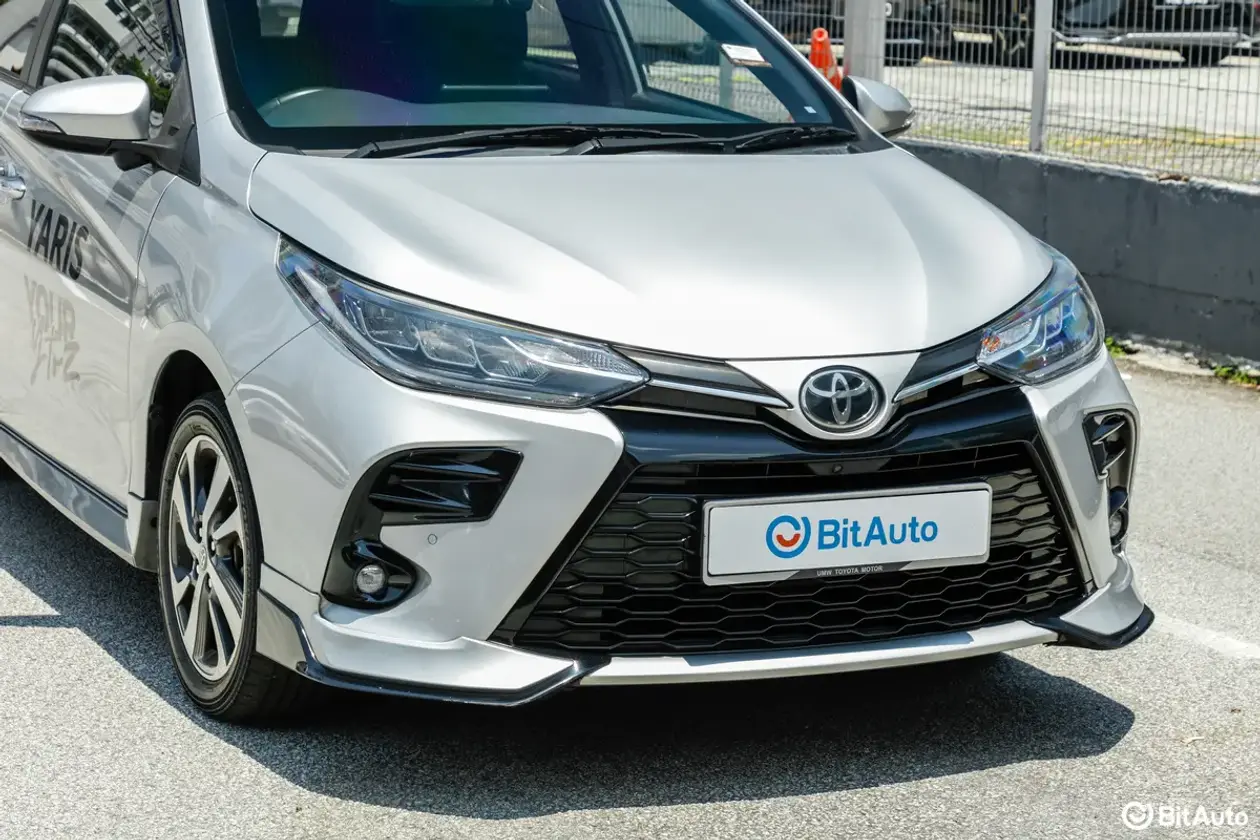
By comparison, the Yaris 1.5 G is backed by a five-year, unlimited-mileage warranty. Eight years versus five gives the City Hatchback a three-year longevity edge. For owners intending to keep their car beyond the seven-year loan tenure, this additional peace-of-mind coverage holds substantial practical value.
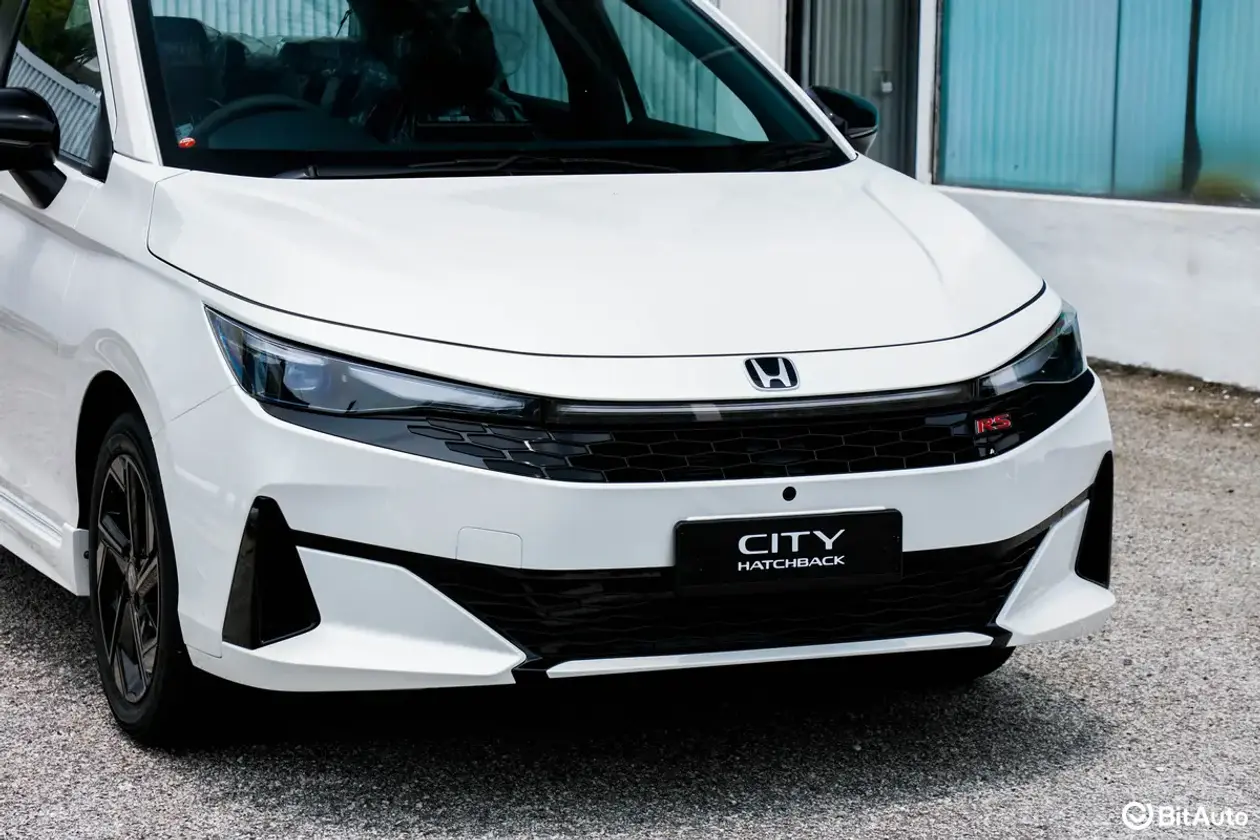
Resale values remain neck and neck.
The three-year residual value for the City Hatchback hovers around 72.2%, while public used car market data puts the Yaris between 72.7% and 75.9%—a variance of less than a percentage point.
Both rank among the most liquid Japanese hatchbacks in the local second-hand market; turnover times and price negotiations will not differ significantly between the two badges.
The City Hatchback 1.5 V channels your money into Adaptive Cruise Control, active steering lane assist, ULTRA Seats cargo flexibility, an extra 14 hp, and an extended eight-year warranty. Its primary compromise is the omission of a driver's knee airbag, capping its airbag count at six.
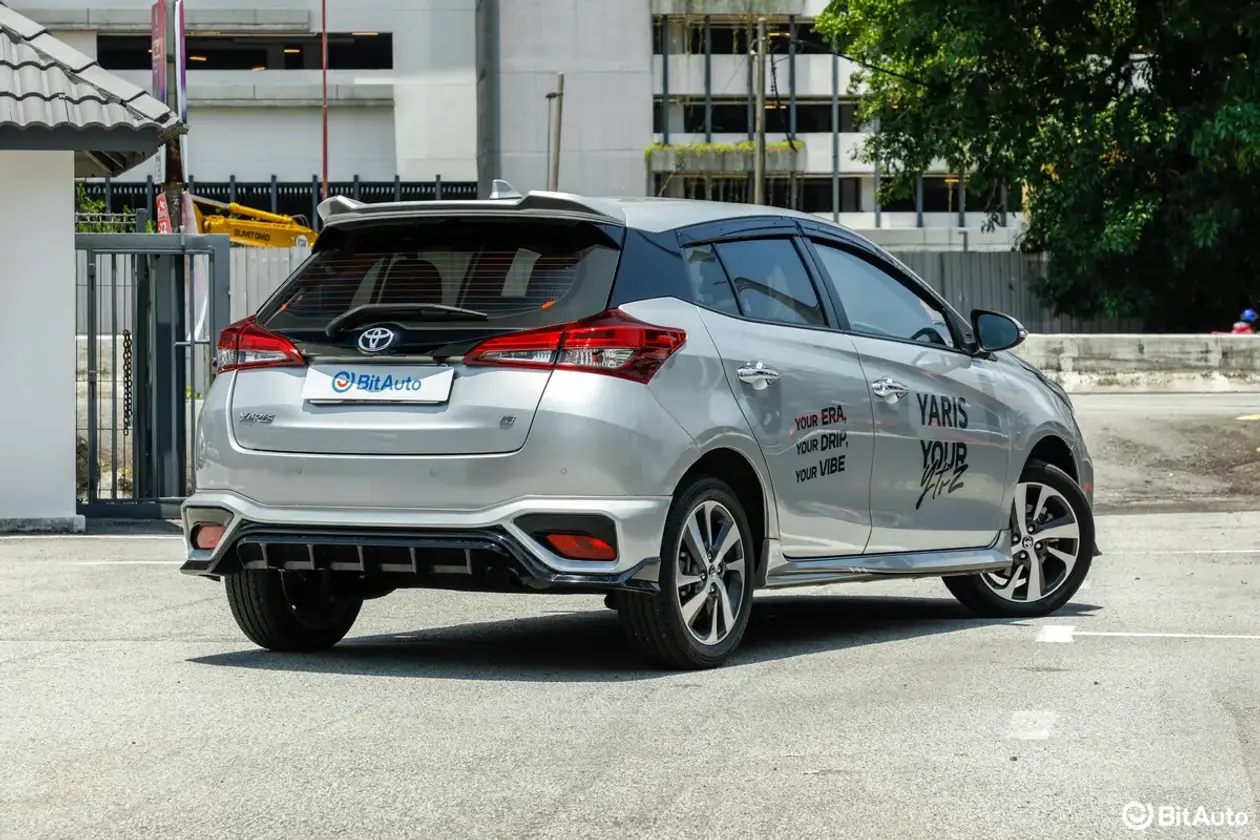
The Yaris 1.5 G focuses its budget on seven airbags, a proven five-star ASEAN NCAP safety rating, and Toyota’s extensive nationwide service network. Its drawbacks are the lack of adaptive cruise, lane support that only alerts without steering intervention, and rear seats that lack cushion-flip flexibility.
If your driving routine consists strictly of short-distance urban commutes where driver assist systems are rarely engaged, the Yaris’s tech omissions will hardly be felt. Conversely, if you frequently transport bulky cargo or need to carry tall items upright, the City's ULTRA Seats become an indispensable asset.
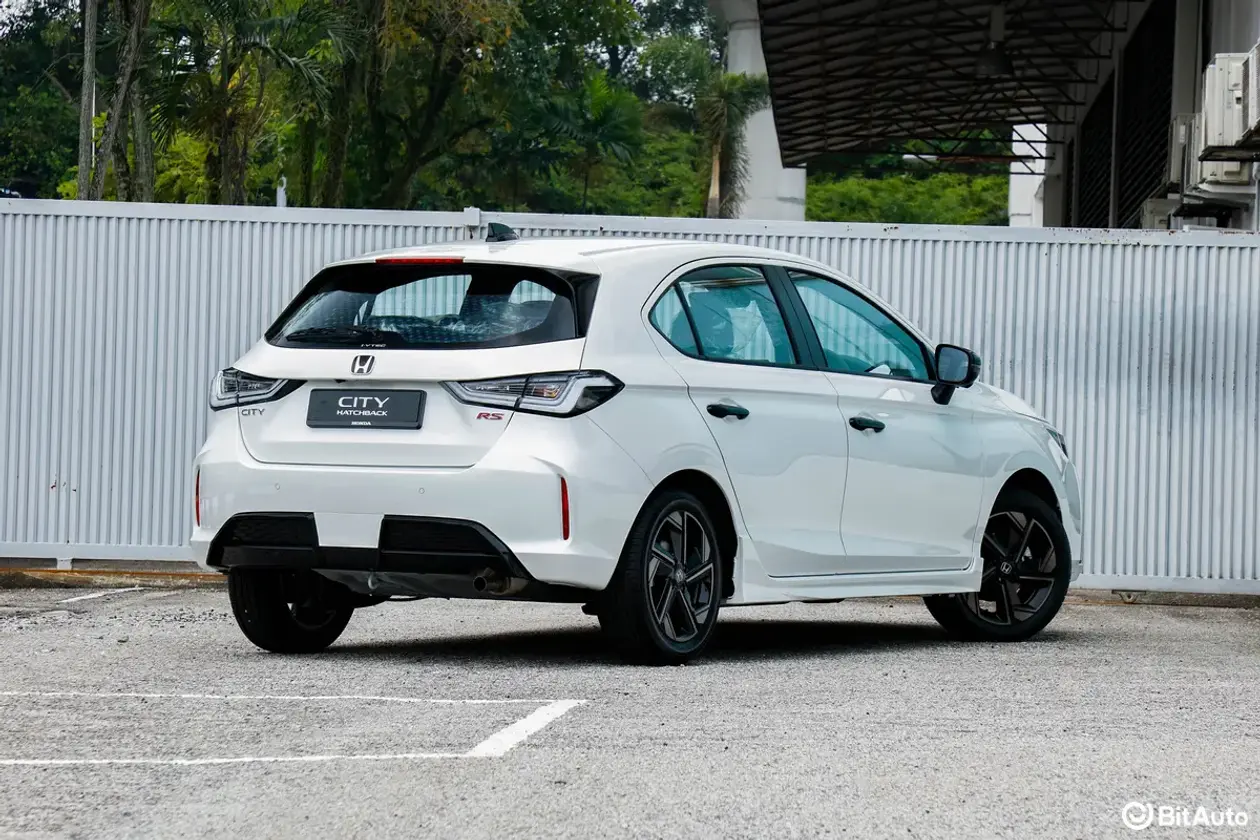
Separated by just RM4,300, both cars trade blows evenly on safety, while the City Hatchback offers greater spatial versatility.
The buying decision does not boil down to which hatchback is outright “better”, but rather which car’s strengths best match your daily driving habits and cargo requirements while keeping its shortcomings out of your way.
| Specification | Honda City Hatchback 1.5 V | Toyota Yaris 1.5 G |
|---|---|---|
| Price (Peninsular Malaysia, OTR without insurance) | RM95,900 | RM91,600 |
| Price Difference | RM4,300 | |
| Engine | 1,498 cc naturally aspirated 4-cylinder | 1,496 cc naturally aspirated 4-cylinder |
| Maximum Output | 119 hp @ 6,600 rpm | 105 hp @ 6,000 rpm (Official portal also lists 107 PS) |
| Maximum Torque | 145 N·m @ 4,300 rpm | 150 N·m @ 4,200 rpm (Official portal also lists 140 N·m) |
| Transmission | CVT | CVT |
| Drivetrain | Front-wheel drive (FWD) | Front-wheel drive (FWD) |
| Length / Wheelbase | 4,350 mm / 2,600 mm | 4,140 mm / 2,550 mm |
| Boot Space | 289 litres | 286 litres |
| Rear Seats | ULTRA Seats | 60:40 split-folding |
| Airbags | 6 | 7 (including driver's knee airbag) |
| Adaptive Cruise Control (ACC) | Standard | None (Standard cruise control only) |
| Lane Keep Assist (LKAS) | With active steering correction | Warning only |
| Autonomous Emergency Braking (AEB) | Standard | Standard |
| Blind Spot Monitor (BSM) | Standard | Standard |
| Rear Cross Traffic Alert (RCTA) | Standard | Standard |
| Blind Spot Monitor | Honda LaneWatch (passenger side) | 360-degree camera |
| ASEAN NCAP Rating | Not available | 5 Stars (7-airbag spec) |
| 0-100 km/h Acceleration | 10.7 seconds | Not officially published |
| Annual Road Tax (Peninsular Malaysia) | RM90 | RM90 |
| Warranty | 8 years / unlimited mileage (from Sep 2026) | 5 years / unlimited mileage |
| 3-Year Residual Value | Approx. 72.2% | Approx. 75.9% |
| Assembly Type | CKD | CKD |
Warranty terms for the City Hatchback 1.5 V reflect Honda Malaysia’s new warranty policy taking effect on 1 September 2026, offering eight years with unlimited mileage for petrol variants.
The Yaris warranty adheres to Toyota Malaysia’s current standard package of five years with unlimited mileage. Resale value figures are compiled from public used car market statistics for reference only, which may fluctuate across platforms and do not guarantee actual transaction values for specific individual units.


Your go-to source for all things automotive in Malaysia. 🚗 Latest reviews, breaking news, launches & industry trends.
+ Follow Waze could be banned?
IT seems like the Malaysian government may look into banning Waze, but only when local alternatives are ready. 1 minute ago
 Honda plans to enter the pickup truck segment, and they've signed an MoU with Mitsubishi to use the Triton as the basis of their new truck.
Excited for a Honda-badged pickup? 1 minute ago
 Cherry's president and chairman Yin Tongyue has publicly apologised over the recently Chery Omoda 5 axle incident in Malaysia.
#chery 12 minutes ago
Get the latest car news first!
Your go-to source for all things automotive in Malaysia. 🚗 Latest reviews, breaking news, launches & industry trends.
Waze could be banned?
IT seems like the Malaysian government may look into banning Waze, but only when local alternatives are ready. 1 minute ago Honda plans to enter the pickup truck segment, and they've signed an MoU with Mitsubishi to use the Triton as the basis of their new truck.
Excited for a Honda-badged pickup? 1 minute ago Cherry's president and chairman Yin Tongyue has publicly apologised over the recently Chery Omoda 5 axle incident in Malaysia.
#chery 12 minutes ago 
© 2024 Bitauto.com. All Rights Reserved.
Bitauto (www.yiche.com and www.bitauto.com) is one of the most visited automotive websites in China. We provide detailed info on Chinese car brands available in your area. Please note that the information provided on this website is based on publicly available data and is for reference only. It may not be fully updated or accurate at all times.

Help us improve our website


