

HomeBMW E30 M3

Search History
Popular Searches
Dealer Login / Sign Up

作者 | 郭月
編輯 | 志豪
海外多地開始生產中國車,中國車企出海迎來全新里程碑。
最近三日,中國車企出海迎來新進展:小鵬汽車剛剛官宣,小鵬全球第三個本地化生產基地正式投產,位於馬來西亞馬六甲的 EPMB 工廠首批 G6 正式組裝下線,產能爬坡已經開始。

小鵬全球第三個本地化生產基地正式投產
6 月 23 日,零跑汽車與 Stellantis 合資成立的零跑國際在西班牙馬倫市落成電池組裝車間,規劃電池模組年產能約 6.5 萬套,最高可擴至 10 萬套。
6 月 22 日,奇瑞在西班牙巴塞羅那自由貿易區與西班牙埃夫羅汽車集團合資運營的埃夫羅工廠啟用全新生產線,進一步提升產能。
幾乎同一時間,加拿大聯邦工業部長梅拉妮·喬利透露,比亞迪、奇瑞、吉利三大中國頭部車企正積極探討在加成立合資整車工廠的可能性。
從東南亞、歐洲到北美,從整車製造到核心三電配套,短短三日時間多條重磅消息密集落地,中國車企出海攻勢更加強烈。
這並非偶然,據車東西不全面統計,東風、比亞迪、長安、上汽、奇瑞、小鵬、長城等 10 家主流車企均在海外市場有新動作——或直接當地建廠,或成立合資公司,或收購海外車企產線,出海佈局深化。
本地化生產已不再是中國車企出海的備選戰略,而是中國汽車品牌破解關稅壁壘、深耕區域市場的必選項。一場從“產品輸出”到“產業扎根”的全球化變局,正全面鋪開。
一、中國車企“掃貨”全球工廠 本地化佈局深入
2026 年開年至今,國內頭部車企海外工廠落地的消息幾乎從未間斷,中國車企的本地化生產佈局正以前所未有的速度鋪開。
這其中,歐洲成為國內車企近期海外建廠佈局的核心陣地,本月奇瑞集團、上汽集團、零跑在歐洲本地化佈局方面均迎來新進展。

中國車企最近三個月海外佈局新進展
多家外媒報道稱,日產汽車已與奇瑞簽署非約束性諒解備忘錄,根據協議,日產位於英國桑德蘭的整車基地將從 2027 年 4 月起,利用其一號產線為奇瑞代工生產整車,自有逍客、Juke、聆風等車型將收攏至二號產線集中生產,閒置產線則承接奇瑞的本土化製造需求。

日產英國桑德蘭工廠
而在當地時間 6 月 2 日,西班牙加利西亞自治區政府宣布,上汽集團計劃在費羅爾港建設其在歐盟的首個電動汽車工廠,初始投資約 2 億歐元(約合人民幣 15.68 億元)。

上汽集團計劃建設歐盟首個電動汽車工廠
該工廠將專注於新能源車型的生產,或將於明年啟動建設,2028 年投入運營,工廠年產能有望達到 12 萬輛。
而在 5 月份,中國車企的歐洲本地化佈局同樣密集。
5 月 20 日,Stellantis 與東風集團官宣合作,擬在歐洲設立合資企業,Stellantis 持股 51%、東風持股 49%,Stellantis 集團在公告中表述,該合資企業預期將負責東風集團嵐圖品牌車型在歐洲約定市場的銷售和分銷業務,雙方還有意向在 Stellantis 旗下的法國雷恩工廠開展東風集團新能源車型的本地化生產。
5 月 8 日,Stellantis 還宣布與零跑汽車擴大戰略合作,兩家公司計劃在 Stellantis 集團位於西班牙馬德里和薩拉戈薩的工廠開展產能共享,以便符合“歐洲製造”要求。
至此,從代工、自建到合資共享產能,中國車企正多路徑深入歐洲製造腹地。
除了上述已經官宣的合作外,今年 4 月底,據路透社援引知情人士消息,一汽紅旗或與 Stellantis 談判,擬利用後者位於西班牙的工廠進行本地化生產。
西班牙媒體《LaTribunadeAutomoción》也報道,吉利或與福特汽車達成協議,收購福特位於西班牙瓦倫西亞阿爾穆薩費斯工廠的 Body 3 裝配線,並將其用於新能源車型生產。
除了加快在歐洲市場佈局,中國車企在東南亞、中東、美洲、非洲等市場的本地化佈局也在加速,多點開花。
東南亞市場上,5 月 13 日,小鵬汽車正式收購印尼上市公司 PT Sinar Eka Selaras Tbk 旗下電動車製造實體 EIDO 90.1% 股權。

小鵬收購印尼車廠股權
此次收購的核心資產為 EIDO 位於印尼西爪哇省普拉卡塔的電動車生產與組裝工廠,該工廠是小鵬汽車首個海外生產基地,採用全散件組裝(CKD)模式。
中東市場,理想汽車在 4 月 25 日與阿聯酋 Al Fahim Motors、沙烏地 Mohamed Yousuf Naghi Motors 等兩家中東經銷商完成簽約,宣告攜 L 系列車型進入中東市場。

理想汽車與中東經銷商簽約
美洲市場,3 月 27 日,長安汽車與合作夥伴 CAOA 集團共同開啟了巴西汽車工業的新篇章,位於阿納波利斯(Anápolis)的高度自動化生產線正式竣工投產,長安汽車巴西工廠首期規劃投產 3 款車型,將涵蓋燃油、混動及插電混動等多種動力形式。

長安汽車巴西工廠正式竣工投產
非洲市場上,根據外媒報道,長城汽車南非公司高管曾透露,正權衡在南非的兩種本地化生產方案——要麼與其他車企共用生產設施,要麼在條件允許的情況下收購現有工廠,並已就此與奔馳展開洽談。
從一系列案例來看,中國車企落地海外產能的動作日益增多,大量佈局項目從簽約協議階段邁入投產階段,中國汽車出海正以前所未有的加速度推進。
二、國內增量面臨天花板 出海是車企破局的必然選擇
為什麼車企要加快本地化佈局?
答案直指國內汽車市場的激烈競爭,當前,中國汽車市場已從增量擴張轉入存量博弈。
據乘聯分會發布的數據,若按廣義乘用車計算,今年前 5 個月全國乘用車市場累計零售 717.8 萬輛,同比下降 19.7%。同一時期,出口銷量卻達到 340.0 萬輛,同比猛增 67.7%。

今年前 5 個月全國乘用車零售銷量與出口銷量同比增速對比
當國內價格戰不斷壓縮車企利潤空間,海外市場成為車企尋找增量的關鍵方向。
不過,出海不等於簡單的整車出口。中國車企的整車出口通常受制於運輸成本、關稅政策和市場准入等多重約束。
中國車企出海面臨的最大挑戰往往不在於把車賣出去,而在於把產能佈過去。
正因如此,本地化生產對車企海外佈局的意義重大,它不僅是規避貿易壁壘、降低綜合成本的有效路徑,更是深度嵌入區域市場、實現長期經營的根基所在。
而多家海外車企巨頭面臨經營困境,則為中國車企出海佈局提供了機遇。
近年來,多家海外車企在電動化轉型中明顯承壓,紛紛呈現業績下滑。
Stellantis 集團 2025 年淨虧損高達 223 億歐元(約合人民幣 1748 億元),較 2024 年 55 億歐元(約合人民幣 431 億元)的淨利潤轉虧,近 5 年以來首次陷入年度虧損;日產 2025 財年營業利潤下滑 16.9% 至 580 億日元(約合人民幣 24 億元);梅賽德斯 - 奔馳集團 2025 財年淨利潤為 53.31 億歐元(約合人民幣 418 億元),同比降幅達 48.8%,創近 5 年新低。

Stellantis 集團 2025 年業績
海外車企業績下滑背後,是一系列現實難題,燃油車需求下降,新能源汽車投入回報週期拉長,部分工廠和產線產能利用率嚴重不足。
以日產桑德蘭工廠為例,MarkLines 統計數據顯示,其 2025 年實際開工率僅 45.5%,較 2023 年回落 8.7 個百分點,全年產量不足設計產能的一半。與此同時,長期閒置的工廠及產線仍需承擔折舊、人力與維護等剛性成本,進一步加重了其財務負擔。
面對盈利壓力,多家海外車企正通過關閉工廠、縮減產能來實現降本——而這恰恰為中國車企的本地化佈局提供了絕佳契機。
相比自建工廠動輒三至五年的建設週期,收購或租用現有工廠可將產能落地時間大幅壓縮,中國車企可以用更低的資金成本和时间成本完成生產佈局,從而搶占市場先機。
海外車企的“退”,某種意義上正成為中國車企“進”的加速機。
三、出海銷量猛增 中國汽車大航海時代到來
隨著車企本地化佈局加快推進,車企全球化佈局成效,已經直觀體現海外銷量數據中。
從 5 月出口銷量表現來看,多家中國車企 2026 年 5 月出海銷量表現亮眼。
三家中國汽車集團 5 月出口銷量突破 10 萬輛,其中奇瑞集團出口 18.2 萬輛,同比增長 81%。比亞迪 5 月海外銷量 16.0 萬輛,同比增長 81%,再創月度出海銷量新高。上汽集團 5 月出口 12.95 萬輛,同比增長 32%。

國內部分車企 2026 年 5 月出口銷量及總銷量匯總
此外,吉利、廣汽出海銷量更是實現翻倍增長,5 月分別出口 8.5 萬輛、2.8 萬輛,同比增長 184%、140%。
可以看出,頭部車企的海外月度銷量已穩定在十萬級甚至衝擊二十萬級,出海正從“試水”進入“放量”階段。
而從今年前 5 個月的累計出口數據表現來看,這一增長趨勢更為清晰:比亞迪、上汽、奇瑞、吉利、長城、長安六家車企海外銷量全線攀升。

國內部分車企今年前 5 個月出口銷量及出口年銷目標達成度匯總
其中,奇瑞集團今年前 5 個月累計出口 75.3 萬輛,同比增長 70%,較去年同期淨增 30.9 萬輛,其增量在六大車企中排在首位。
同期,比亞迪憑藉 24.3 萬台的增量緊隨其後,今年前 5 個月累計出口 61.7 萬輛,同比增長 65%。
今年年初比亞迪設定的 2026 年海外銷量目標是 150 萬輛,今年前 5 個月已完成 41%。
日前,比亞迪董事長王傳福在年度股東大會上透露,預計今年海外銷量將超過原定目標,對外釋放明確的出海提速信號。
吉利今年前 5 個月海外累計銷量達到 37.1 萬輛,同比增長 158%,在這 6 家車企中增速領先,吉利今年出口銷量目標為 64 萬輛,今年前 5 個月達成 58%。
而上汽、長安、長城今年前 5 個月出口銷量分別達到 58.9 萬輛、29.9 萬輛和 23.1 萬輛,同比增長 46%、21%、47%,增長穩健,出口年銷目標分別達成 39%、40%、39%。
無論是單月出口銷量還是累計出口銷量,中國車企的海外銷量呈現出持續、穩定、高增長的特徵。
可以預見的是,下半年各大中國車企在海外建廠、渠道拓展和供應鏈本土化配套上的投入將持續加碼,出海節奏還將進一步提速,中國汽車正從“產品輸出”全面邁向“產業扎根”,大航海時代的競爭才剛剛拉開帷幕。
結語:中國車企出海落地提速
從海外建廠、收購工廠到租賃產線,中國車企的本地化佈局正多點開花、加速落地。
誰能以最快速度整合海外產能、融入區域供應鏈、搶占當地市場份額,誰就能在下一階段的全球競爭中佔據主動權。
這既是挑戰,更是中國汽車由大到強的必經之路。
從“整車出口”到“技術輸出 + 本地化生產”,從“走出去”到“走進去”,中國汽車大航海時代的大幕已經拉開,真正的航程才剛剛開始。

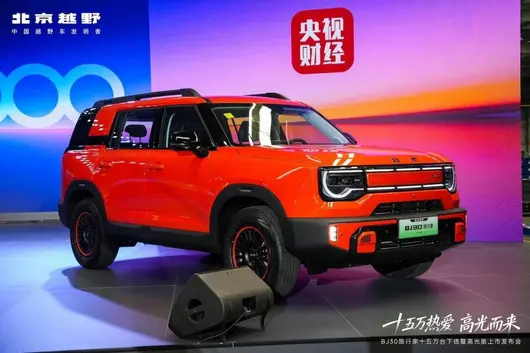
6 月 12 日,北京越野喺北汽株洲超級工廠舉行第 15 萬台 BJ30 旅行家下線暨高光版面市發布會。全新 BJ30 旅行家高光版推出一油一電兩款車型,官方建議售價 11.29 至 13.99 萬元,超級置換價為 8.29 至 10.99 萬元。

金融政策價格權益詳情請諮詢當地經銷商
核心技術資料:
車身尺寸方面,BJ30 旅行家高光版長闊高分別為 4730/1910/1790 毫米,軸距 2820 毫米,喺緊湊型 SUV 中軸距偏長。座艙採用 10.25 英寸全液晶儀表與 14.6 英寸中控螢幕嘅雙屏佈局,車載系統由高通驍龍 8155 晶片提供運算力,集成悅野圈 App、華為 HiCar 連線及多指令語音交互功能。

動力方面提供燃油同油電混合兩種路線。燃油版配備 1.5T 渦輪增壓引擎,最大功率 138 千瓦,峰值扭力 305 牛·米,匹配 7 速濕式雙離合波箱。混合動力版採用“三擎四驅六模”HEV 架構,由熱效率 41% 嘅 1.5T 混合動力專用引擎、前驅動電機及後驅動電機組成,四驅車型系統綜合功率 301 千瓦,綜合扭力 685 牛·米。高光版混合動力車型對後橋電機進行加強,功率從 55 千瓦提升至 70 千瓦,換裝循環壽命約為普通電池 3 倍嘅 AGM 電池,並搭載 VGT 可變截面渦輪增壓技術。
能耗方面,官方數據顯示燃油版 WLTC 綜合油耗為 8.06 公升/100 公里,四驅混合動力版為 6.45 公升/100 公里。據官方介紹,五國汽車博主喺南非、印尼、阿聯酋、波蘭、墨西哥嘅實際測試中,車輛喺不同路況下均錄得每百公里油耗低於 5 公升嘅成績。

2026 款 北京越野 BJ30 改裝版 - 座艙
智能駕駛方面,車輛配備 L2 級輔助駕駛系統,包含 5 個車外攝像頭、8 個超音波雷達及 2 個毫米波雷達,支持車道保持、主動煞車、透明車底、540°全景影像等功能。
越野配置方面,新車延續承載式車身,保留能量中鎖、四輪電子防滑及 ATS 全地形控制系統,提供雪地、泥地、沙地等模式,最大輪端扭力 5928 牛·米,接近角 25 度、離去角 30 度、離地間隙 215 毫米。

Author | Zhang Rui
Editor | Zhi Hao
After obtaining filing approval from the CSRC, Momenta's prospectus is here.
Auto News reported on June 23, today, MOMENTA GLOBAL LIMITED (hereinafter referred to as Momenta) submitted a listing application to the Hong Kong Stock Exchange.

▲Momenta Prospectus
According to data in the prospectus, as of February 28, 2026, Momenta has cumulatively secured 180 vehicle model designations, with the installed base of production-ready vehicle solutions exceeding 733,000 units.
As of February 28, 2026, Momenta has established cooperative relationships with 24 global OEMs, including nine among the global top ten OEMs such as Toyota, General Motors, Hyundai-Kia, Volkswagen, and Honda, as well as China's top ten OEMs including SAIC, BYD, GAC, Chery, FAW, Geely, Great Wall, and Dongfeng.
Regarding financial data, in 2025, Momenta's revenue was RMB 2.413 billion, a year-on-year increase of 82.1% compared to 2024, although it still recorded a loss of RMB 3.458 billion, an expansion from 2024.

▲Momenta Major Financial Information for the Last Three Years
Momenta is a Chinese autonomous driving company founded in 2016, adopting a "Two Legs" strategy, based on a data-driven "Flywheel", with a product strategy combining Mass Production with Scalable Robo.

▲Momenta's Booth at the Beijing Auto Show
Momenta mentioned in the listing application that the proceeds from this fundraising are expected to be used to strengthen core infrastructure, expand R&D capabilities, promote R&D investment in next-generation high-level intelligent driving solutions, and are also used for investment in accelerating the commercialization and scaled development of autonomous ride-hailing service solutions.

▲Some Uses of Momenta Funds Raised
I. Cumulative Revenue of RMB 4.481 Billion Over Three Years, 2025 Gross Margin 71.6%Regarding performance, according to Momenta's listing application documents, Momenta's revenue in 2023 and 2024 was RMB 743 million and RMB 1.325 billion respectively.

▲Momenta Financial Data Summary in Recent Years
In 2025, Momenta's revenue was RMB 2.413 billion, a year-on-year increase of 82.1% compared to 2024. Momenta stated this was mainly due to increased licensing fees and increased technical development service revenue, benefiting from rising customer demand. Momenta's cumulative revenue over three years was approximately RMB 4.481 billion.

▲Momenta Revenue Changes in Recent Years
However, at present, Momenta is still in a loss-making state. Momenta's net losses in 2023, 2024, and 2025 were RMB 2.57 billion, RMB 3.206 billion, and RMB 3.458 billion respectively, with a cumulative net loss over three years of approximately RMB 9.234 billion.

▲Momenta Loss Changes in Recent Years
In 2023, 2024, and 2025, Momenta's gross margin increased significantly, with three-year gross margins of 17.5%, 49.0%, and 71.6% respectively.

▲Momenta Gross Margin in Recent Years
Regarding R&D investment, in 2023 and 2024, Momenta's R&D expenditure was RMB 1.281 billion and RMB 1.508 billion respectively.

▲Momenta R&D Investment in Recent Years
In 2025, Momenta's R&D expenditure was RMB 1.869 billion, a 23.9% year-on-year increase compared to 2024, accounting for 77.5% of total revenue. Momenta stated this was mainly driven by increased R&D activities, including rising infrastructure costs, increased training platform expenses and cloud service fees, Momenta's test fleet operating costs, and increased employee compensation and benefits.
Regarding financing history, as of November 28, 2025, Momenta has completed a Series C-13 financing round, with a post-money valuation of USD 6.185 billion (approximately RMB 41.918 billion).

▲Momenta Financing Information
II. Focused on Developing and Commercializing Intelligent Driving Technology, Cumulatively Awarded 180 Vehicle Model OrdersSpecifically looking at the business, Momenta is an autonomous driving company focused on developing and commercializing intelligent driving technology to improve safety and efficiency in the mobility and logistics sectors, specifically including achieving this through production-ready vehicle solutions and scalable autonomous mobility applications.
According to data, whether calculated by sales volume of vehicles equipped with Momenta Urban NOA solutions in the past twelve months ended February 28, 2026, or by the cumulative number of production-ready vehicle models equipped with Momenta Urban NOA solutions as of February 28, 2026, Momenta ranks first among all independent intelligent driving solution providers globally.
As of December 31, 2025, Momenta had cumulatively secured 170 vehicle model designations, including 68 models that have entered formal mass production. At the same time, the installed base of Momenta's intelligent driving solutions on production vehicles exceeded 680,000 units, with cooperative relationships established with 24 global OEMs, including cooperation with China's top ten OEMs such as SAIC, GAC, Chery, FAW, Geely, Great Wall, and Dongfeng.

▲Cumulative Momenta Designated Vehicle Models
In addition, according to data, for the past 12 months ended February 28, 2026, calculated by city NOA sales, Momenta ranked first among global independent city NOA solution providers, with a market share of 64.5%.

▲Ranking of Global Independent Urban NOA Solution Providers
As of February 28, 2026, Momenta has further established a cooperative relationship with Ford, increasing the number of global top ten OEMs with whom Momenta has established cooperative relationships to nine. These include Toyota, General Motors, Mercedes-Benz, BMW Group China, Hyundai-Kia, Volkswagen, BYD, and Honda among the global top ten OEMs listed by Fortune Magazine in July 2025.
In addition, as of February 28, 2026, Momenta has cumulatively secured 180 vehicle model designations, an increase from the 170 models as of December 31, 2025. As of the same day, the installed base of Momenta production-ready vehicle solutions exceeded 733,000 units.
In 2023, 2024, and 2025, Momenta's total revenue from its top five customers was RMB 644.3 million, RMB 1.0373 billion, and RMB 1.5082 billion respectively, accounting for 86.7%, 78.3%, and 62.6% of Momenta's revenue respectively. Revenue generated from the largest customer in each year during the track record period was RMB 265.5 million, RMB 255.6 million, and RMB 522.2 million respectively, accounting for 35.7%, 19.3%, and 21.6% of Momenta's revenue respectively.

▲Momenta Major Customers
Specifically regarding products, Momenta provides two solutions: solutions deployed on production vehicles and developing scalable unmanned mobility and logistics businesses, expected to expand to autonomous freight vehicles and autonomous trucking services.
Although production-ready vehicle solutions and autonomous ride-hailing service solutions operate independently, Momenta remains committed to promoting interaction between the two to drive Momenta's "One Flywheel, Two Legs" strategy, which forms a flywheel accelerating technology evolution, supporting Momenta in ultimately achieving scalable fully autonomous driving.

▲Momenta's 'One Flywheel, Two Legs' Strategy
Regarding production-ready vehicle solutions, as a Tier-1 Software Supplier, Momenta provides high-level intelligent driving software solutions that are stable during actual use and compatible with different OEM platforms.
Momenta's software design can be integrated with OEM platforms, ensuring OEMs have full control over system performance, deployment rhythm, and future upgrades while accelerating product launch and improving system overall flexibility.
Through integration with OEM platforms, Momenta customizes solutions for specific vehicle architectures while maintaining high reliability and supporting continuous iterative upgrades. Momenta's main line platform across vehicle platforms also enables Momenta to participate in overseas projects more efficiently, thereby serving OEMs that span multiple regions and vehicle platforms.
Meanwhile, Momenta is working closely with global top OEMs to promote L3-level project implementation, moving towards a new stage of autonomous driving together.
The revenue model for Momenta's production-ready vehicle solutions consists of two parts: 1. Pre-production technical development service fees, where Momenta adapts, validates, and integrates solutions into OEM vehicle models facing mass production; 2. Post-production licensing fees based on sales volume, which are charged once per vehicle integrating the high-level intelligent driving solution.

▲Momenta Production-Ready Vehicle Solution Revenue Model
Regarding autonomous ride-hailing service solutions, currently Momenta focuses on autonomous ride-hailing services. As technology and business environments evolve, Momenta plans to further expand autonomous freight vehicles and autonomous trucking services.
As of the last practicable date, Momenta has obtained commercial operation approval in Suzhou and Shanghai, China, demonstration application license and test license in Wuxi, China, and test license in Abu Dhabi, UAE.
According to data, Momenta cooperates with Mercedes-Benz and UAE national taxi company Lumo to launch the world's first high-end autonomous ride-hailing service.
In addition, Momenta reached a strategic cooperation with Roam in May 2025 to deploy autonomous ride-hailing vehicles based on front-production mass production vehicle platforms, planning to launch commercial operations in Shanghai in early 2026.
At the same time, Momenta has established cooperation frameworks with overseas leading mobility platforms such as Uber and Grab, and plans to launch overseas commercial autonomous ride-hailing services in Abu Dhabi, UAE and Munich, Germany in 2026, and is expected to expand to more cities in regions such as the Middle East, Europe, and Southeast Asia (such as Dubai, Singapore, and selected cities in Germany).
Currently, Momenta has completed system integration with Uber and is testing in Munich. Momenta is also communicating with Grab regarding regulatory approvals and early testing arrangements, while conducting necessary road tests in Abu Dhabi.
According to Momenta's autonomous ride-hailing cooperation model, mobility platforms are usually responsible for user acquisition, order dispatch, customer interface, and fleet operations through their mobility applications. Vehicles are mainly provided through the cooperation between Momenta and vehicle partners (usually OEMs), while Momenta focuses on delivering autonomous driving systems.
III. Committed to Building "Android System" in Autonomous Driving Field, Models Deployed in Multiple Production-Ready ModelsMomenta's autonomous driving platform, unlike closed, vertically integrated systems, is committed to building a highly open, modular, and highly generalized intelligent driving ecosystem platform, which Momenta calls the "Android System" in the autonomous driving field.

▲Momenta Autonomous Driving Platform
Momenta Autonomous Driving Platform's modularity and generalization capabilities support seamless adaptation between different vehicle models and autonomous ride-hailing operations, featuring three core characteristics:
1. Openness: Momenta adheres to an open platform strategy, collaborating closely with OEMs and other mobility platforms to flexibly respond to their personalized needs at different development stages and market strategies. Momenta's solutions can adapt to diverse hardware configurations, vehicle platforms, price ranges, and functional requirements.
2. Modularity: Momenta developed a unified platform architecture with standardized interfaces, ensuring consistency of user experience and system compatibility under different vehicle models and hardware configurations, while supporting rapid large-scale deployment.
3. Generalizability: Momenta adopts a "mapless" solution, which does not rely on pre-collected high-definition maps, yet achieves strong generalization capabilities of "can drive wherever there is a road, can drive globally". This provides powerful geographical adaptability, making large-scale deployment possible.
Regarding data-driven algorithms, Momenta's data-driven algorithm model has rapidly iterated to the 6th generation. The R6 model learns in a simulation environment covering diverse driving trajectories. For every trajectory, the model is evaluated based on multiple reward mechanisms covering safety, comfort, and efficiency, achieving continuous optimization of decision-making capabilities by reinforcing optimal behavior and penalizing poor behavior.
The key advantage of the R6 model lies in simultaneously utilizing high-quality and poor driving data: high-quality behavior is reinforced through positive rewards, while poor behavior is explicitly penalized, thereby fully releasing the value of data generated by production-ready vehicles after formal mass production — every kilometer driven can be converted into potential training input. According to Momenta's internal testing data, compared to the previous generation, the R6 model can achieve performance improvements of up to about eight times in some safety-critical scenarios.
With the support of reinforcement learning, the R6 model has achieved significant improvements in safety, compliance with traffic rules, and more intelligent driving decisions. To date, the R6 model has been deployed in multiple production-ready models including Buick Zhijing L7 under SAIC-GM and Chery Fengyun T11. In the future, Momenta plans to expand it to more new models.
IV. 7 Automotive Companies Hold Shares, Founder Has Over 15 Years of Experience in Tech IndustryIn terms of equity structure, as of the last practicable date, according to listing rules, Cao Xudong, Xia Yan, Sun Gang, Sun Huan, Jia Sibuo, Li Jun, Zhu Wangjiang, Wang Jinwei, Bigsail Holdings, Lvdou, Shengse, Pine Sky, Creative Circuit Limited, Yijia VC Limited, Tide Bay Limited, and Tycoon Insight Limited constitute a group of controlling shareholders for Momenta.

▲Momenta Equity Structure
Meanwhile, in the list of Momenta's major shareholders, we can see General Motors holds 9.37% and Mercedes-Benz Group holds 6.39%. In addition, it is noteworthy that among Momenta's shareholders, there are a total of 7 automotive companies: SAIC, GM, Mercedes-Benz, Toyota, BYD, Hyundai, and Chery.

▲Momenta Major Shareholders List
Among them, Cao Xudong is Momenta's founder, Board Chairman, Executive Director, and Chief Executive Officer. In addition, Cao Xudong is currently a director and/or senior management member of several Momenta subsidiaries, mainly responsible for supervising Momenta's overall management, organizational development, and strategic project development.

▲Cao Xudong
Cao Xudong obtained a Bachelor of Engineering degree in Engineering Mechanics and Aerospace Engineering from Tsinghua University located in Beijing in July 2008, and has over 15 years of experience in the tech industry.
Before founding Momenta, Cao Xudong served as a researcher at Microsoft Research Asia from November 2010 to October 2015, mainly responsible for R&D in areas such as search engines, machine learning cloud services, and cloud storage systems. From November 2015 to August 2016, Cao Xudong served as Executive R&D Director of SenseTime Group Limited, mainly responsible for leading and supervising the R&D of multiple technical innovations including Internet-based facial recognition technology.
Conclusion: Momenta is About to List on HK Stock ExchangeMomenta stated that for Momenta, listing in Hong Kong is not just for fundraising, but also to prove that technology can scale to make money, be mass installed in vehicles, and go global.
According to the prospectus, from 2023 to 2025, Momenta's operating income grew from 743 million yuan to 2.413 billion yuan, tripling over three years with a CAGR of over 80%, cash reserves exceeding RMB 10 billion, leaving space for Robo business (such as autonomous Robotaxi, unmanned Robovan, and autonomous Robotruck, etc.) and going overseas.
If Momenta can successfully list in Hong Kong this time, it is expected to obtain more capital support and increase investment in continuous R&D of core technologies.


作者:kimsu

“车到山前必有路,有路必有丰田车”,在很长的一段时间里,丰田的“牛头标”就是“省油、耐用、保值”的代名词,是汽车圈难以撼动的“金字招牌”。
然而,进入2026年,这块金字招牌却出现了裂痕。据日本经济新闻报道,丰田5月在华销量为10.23万辆,同比下滑32%,这已经是其连续4个月出现同比下滑了。曾经加价还要排队半年才能提车的神话,如今在汹涌的电动化浪潮下变得黯淡。
“神话”褪色 丰田陷入窘境
丰田的处境已日渐严峻,2025年时,其还能以在华销量178万辆、同比微增0.23%的成绩,勉强守住日系阵营的颜面,成为唯一在华保持正增长的日系车选手,进入2026年却颓势尽显。
在新能源渗透率突破60%的当下,丰田曾经引以为傲的燃油车阵营难以避免地成为最核心的“出血点”。以“国民神车”卡罗拉为例,车主之家数据显示,这款曾经常年霸榜A级家轿市场的车型,月销量已从巅峰期的近4万辆跌至3000辆左右,连巅峰时期的零头都不到;城市SUV的鼻祖荣放RAV4,进入2026年后平均月销过万辆,日子过得还不错,但入门版车型终端价格下探到14万元的事实却证明,这款曾经加价2万元都抢不到的“神车”如今已被逼到“以价换量”的地步。

曾以混动系统打动无数家庭用户的凯美瑞也同样没能幸免,看上去月销过万辆仍旧是家常便饭,但官方起售价17.18万元的车型,终端价格已经跌破14万元。可以说,现在的丰田,正在用“以价换量”维系着自身体面。
丰田在华的困境离不开其对电动化浪潮的误判。这是日系车的一个通病,当中国车企全力押注新能源时,日系品牌在电动化转型上却明显呈现出消极态度,丰田章男甚至公开炮轰“电动汽车被过度炒作”,并质疑电动车的环保性,这种战略误判导致日系品牌错失转型窗口期。
种种因素之下,丰田曾经大杀四方的“省油+保值”的优势被渐渐填平。在燃油车时代,丰田的THS混动系统确实是节油标杆,但在新能源技术日渐成熟的当下,它的经济性优势已经不具备绝对的统治力。以比亚迪DM-i、吉利雷神等为代表的国产插混技术,亏电油耗已普遍进入3L-4L/100km区间,且具备纯电续航能力。对于有家充条件的用户而言,选择它们往往更省钱。

保值率方面,从中国汽车流通协会发布的5月中国汽车保值率报告来看,丰田虽然依然位居榜单前列,但保值率却呈现出下滑态势,且已被自主品牌传祺、坦克超越。主要原因就是价格体系的下探影响了二手车的传统溢价空间,长期来看“价格战”无疑会稀释丰田多年来积累的品牌价值。

抱紧中国的“大腿”
丰田当下的窘境是因为太固执吗?其实也并非全然如此,还因其背后的利益关系过于错综复杂。
中国汽车专家贾新光曾表示,日本汽车产业的困境根源在于路径依赖。日本汽车的产业链是以“发动机-变速器”为核心技术所构成的,它极其强大且几乎有不可逾越的壁垒。技术成熟带来市场成功,市场成功带来利益固化,利益固化最终形成转型阻力。
丰田章男也曾直言,全面转向纯电对于传统车企的代价是巨大的,可能会导致550万人失业,这可不是小数字,日本总人口也才1.2亿多,这样的结果无疑是灭顶之灾。巨大的燃油车资产和利益链让丰田无法像初创企业那样“all in”纯电,丰田不敢赌,也赌不起。
此外,贾新光还指出,在电动化、智能化时代,日本燃油车产业链约70%的技术积累无法跨领域复用,这也导致丰田在新能源汽车浪潮中反应较为迟缓。2022年推出的纯电车型bZ4X就是比较直观的例子,由于本土化不足、智能化落后等问题,中国市场对这款车并不买账,导致其上市没多久就官降3万元求生。但即便如此也没能挽回中国消费者的心,车主之家数据显示,bZ4X月销最高时也仅为1735辆。

丰田选择和中国进一步深度绑定,死磕到底。比如设立中国首席工程师制度,第一款“以中国研发为主导”的铂智3X表现也确实可圈可点,上市14个月累计交付突破10万辆,创下合资新能源最快破十万辆纪录。不过其后续销量表现有所波动,2026年3月销量跌至3689辆,4月又回升至10027辆,尚未到稳定期。

但铂智3X的表现显然给了丰田一个明确的信号:借力中国,方有出路。首先,“借力”人。目前,丰田的中国首席工程师团队已从4人扩充至7人,中国本土团队拥有了更多产品定义权;其次,“借力”中国科技。既然自己在软件定义汽车方面慢了半拍,那么就跟Momenta、华为、小马智行等中国头部智驾供应商一起干。比如,丰田现在部分车型已经搭载了与Momenta联合开发的智能驾驶辅助系统;在自动驾驶领域,和小马智行合作的首款量产L4级无人驾驶铂智4X Robotaxi已经下线并进行道路测试,后续商业化运营也在筹备中。这种开放的合作姿态,是丰田为了在智能化赛道不掉队的必然选择。
还有个现象十分有趣,据日经新闻报道,在昔日被称为“日系车后花园”的东南亚市场,丰田也对其供应链做出前所未有的调整。不仅自己在泰国采购中国企业生产的零部件,还呼吁当地的一级供应商也加入其中。据悉,此举能帮丰田降低30%的成本,可见虽然在中国市场销量下滑,但“中国制造”和“中国供应链”却已经成为了丰田全球战略中不可或缺的“救命稻草”。也难怪在2026年4月的北京车展上,丰田没有像以往那样强调“日本技术”,而是高调打出了“with China,for China”的口号,并发布了“TO YOU”品牌理念,毕竟从各方面来说,中国确实都是一块“香饽饽”。
当下的丰田正经历着不小的困境,不仅销量下滑,财报也承压显著。虽然相比于其他日系品牌,丰田2025财年并未陷入亏损,依然抗打但归母净利润同比下滑19.2%、营业利润同比下降21.5%的事实也依然不算乐观。对于2026财年,丰田给出的营业利润预期为3万亿日元,将比2025财年又降了约20%,这意味着丰田将连续3年陷利润下滑的困局。
不过要说丰田的“金字招牌”彻底失灵了恐怕还为时过早,毕竟只要丰田能放下身段,真正把“with China,for China”的口号落到实处,推出真正懂中国消费者所需的产品,它仍然有很大的机会继续留在这场牌局里。

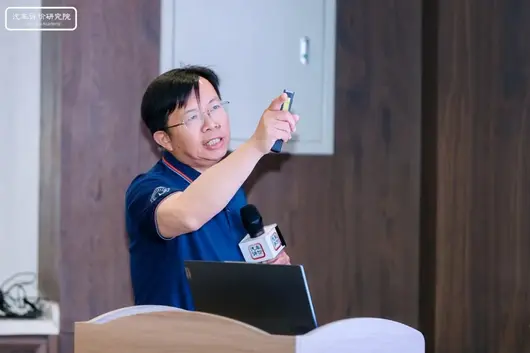
关于内燃机的有效热效率上限,"柴油机约55%,汽油机理论空燃比约45%、稀燃约50%。这是由热力学原理决定的,不以人的意志为转移。"
6月11日,汽车评价研究院"2026世界动力技术持续创新与市场趋势研讨会"上,清华大学航空发动机研究院教授帅石金用这句话给内燃机热效率之争画了一道物理天花板。他从全球燃油车市场、混动专用发动机热效率极限和中国油电混合动力车(HEV)出海三个维度,给出了数据驱动和技术分析的判断。

混合动力全球增长,中国走出了独特的技术路径
据2026年4月发布的《中国新燃油汽车技术白皮书》统计,2025年全球汽车销量9580万辆,同比增长4.1%,其中燃油汽车(传统燃油车+HEV)占比仍高达76.6%。中国、北美和欧洲是全球汽车三大主要市场,占全球汽车的73.2%、全球燃油汽车的67.0%。中国市场规模最大且增速明显高于北美和欧洲,是全球汽车市场的重要支撑。
帅石金用一组数据勾勒了全球混合动力汽车的增长态势: 2025年相比2024年,传统燃油车(ICEV)下降4%,而HEV却增长14%。2025年燃油车销量排名前10国家中,中国、美国、印度、德国、加拿大、英国、法国、墨西哥均为HEV增量市场,其中加拿大增长最快超过90%,巴西维持销量不变,只有日本下降2%,但HEV占比最高(超过45%)。
中国HEV已经走出了与丰田混合动力车差异化的技术路径。一是混合动力构型的差异,丰田采用行星齿轮强机械耦合功率分流构型,发动机和电机无极切换运行平稳,而中国车企采用串并联开关式混联构型(P1+P3主导),发动机和电机可以机械分开单独驱动,并以电驱为主、油驱为辅,适用场景更广,节能效果更优。二是丰田、本田HEV的电池容量偏低,仅1至2度电,起电能缓冲器的作用。中国车企借助多年在插电混动汽车(PHEV)上的技术积累和锂离子动力电池的成本优势,将HEV电池容量提升至5度电水平,在冷起动、加速等费能工况更多采用电驱,同时解决了传统HEV发动机频繁启停的高能耗、高排放问题以及发动机介入的NVH(噪声、振动与声振粗糙度)问题,而增加的电池成本可控。"中国HEV技术源自PHEV,也是从丰田、本田学的,但已经在开发理念和技术层面进行了超越。"
从全球政策环境看,油电混合动力车(HEV)正迎来更友好的监管空间。欧洲监管重点已从单纯压缩内燃机空间转向给混合动力缓冲期——从逐年达标调整为三年平均达标,将HEV纳入低碳体系。美国重新校准CAFE(企业平均燃料经济性)标准,为HEV保留了更大空间。日本也在提升可再生燃料比例,2030年起供应含10%生物乙醇的汽油,2040年起增至20%。油电混合动力已成为多国发展的抓手。
帅石金判断,大容量电池(约5度电)HEV将从国内走向全球,对全球HEV占比结构带来重大影响。"中国HEV已经走出独特的技术路径,面向全球汽车市场有非常好的未来。"
汽油机有效热效率突破50%的路径已经走通
作为发动机领域的资深专家,帅石金给出了内燃机有效热效率的热力学上限。
内燃机的有效效率等于燃烧效率乘以循环热效率乘以机械效率。现代汽油机的燃烧效率接近100%,机械效率约90%,这两类效率的提升空间有限。真正决定有效热效率上限的是循环热效率。内燃机的理想循环不是卡诺循环,而是等容循环,影响等容循环热效率的两个核心热力参数是压缩比和比热容比。压缩比大到一定程度(如17)提升热效率趋缓,边际收益递减,内燃机等容循环理论效率大约在60%~70%,但内燃机很难做到等容循环,做功工质也不是理想空气,实际工质比热容比远小于1.40。
当前混合动力专用汽油机的有效热效率已远超40%,理论空燃比可以接近45%,稀燃向50%靠拢是可行的。相比传统汽油机15个百分点的有效热效率提升幅度,核心驱动力来自混合动力专用——不追求极限动力性(有电机助力),转而追求极限经济性,更多高效技术如稀燃、米勒循环、高滚流比、高压缩比、高EGR率、高能点火、高效增压和低泵气损失、低摩擦等技术得以应用。超过50%有效热效率的技术路径已经清晰,在实验室里面已经走通,但这些技术是否在实际发动机上全部采用,需要综合考虑,平衡好成本、动力性、经济性和排放性。"
帅石金同时指出,混动专用发动机既要有高的热效率,也要有宽的高效区,这样就可以简化传动系统,在结构上不需要多档位变速器来匹配。
中国车企出海要抱团,碳中和燃料是发动机的长期支撑
帅石金对出海话题给出了不同于技术视角的判断——政策环境与产业生态同样关键。
近年来,全球主要经济体针对汽车产业的贸易保护主义明显加剧,呈现系统性、持续性升级态势,贸易壁垒已从单一关税手段扩展至关税与非关税措施的复合型组合。这种由地缘政治博弈驱动的政策收紧,正在从根本上重塑全球汽车贸易的底层逻辑。国家层面需要处理好全球尤其是大国外交关系,积极营造良好的、更加公平合理的国际贸易环境,让中国倡导的命运共同体理念得到全球认可。
他特别呼吁汽车行业要正视合资品牌对中国汽车产业的贡献。"对合资品牌汽车要给他们更加友好的政策和生存空间。中国车企要走出去获得国外客户的认可,处理好国内合资品牌的合作升级,也是必修的课。"他以泰国为例说明汽车产业抱团出海的正确模式:不是某一家单打独斗,而是中国车企军团布局、全链条本土化,这才是海外市场欢迎的模式。
从数据看,中国燃油车包括HEV是出口的新增长点。从2025年中国HEV出口区域分布及同比增速看,除日韩外,南美、非洲、东南亚和中美等地区增长态势非常明显,欧洲、中东、北美和独联体也在增长。"从单一产品出口到产业链协同出海,是中国车企必须完成的必答题。"
他同时指出,碳中和燃料是混合动力专用发动机长期存在的关键支撑。发动机如果叠加碳中和燃料或零碳燃料——烧氢、甲醇、乙醇等灵活燃料——对HEV能源动力可持续发展战略有重要意义,也是中国在车用能源多元化战略上的重要布局。

从发动机热效率的热力学上限到全球油电混合动力车(HEV)的增长数据,从大容量电池HEV的技术突破到产业抱团出海的战略思考,帅石金的核心观点贯穿一个逻辑:发动机不会消失,但会以新的形式——高效混动专用、碳中和燃料——继续发展。中国HEV已经走出了一条从学习到超越的独特路径,下一步的关键是中国汽车产业链协同出海。

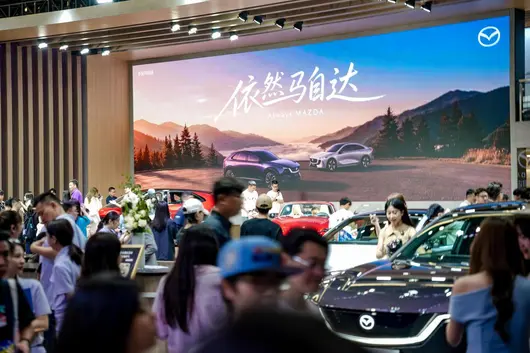
6 月 13 日,2026 重慶車展盛大開幕。長安馬自達以「依然馬自達」為主題,帶經典傳奇跑車 MX-5、全球戰略新能源車型 MAZDA EZ-6(以下稱 EZ-6)、MAZDA EZ-60(以下稱 EZ-60)以及 4 月上市嘅 EZ-60 馬年版亮相 N8 館展台,全面展現企業新能源轉型嘅最新成果,並同步公佈一系列用戶共創活動。

全球車實力背書 樹立新能源價值標竿
EZ-6 同 EZ-60 從產品開發之初就以全球標準打造。設計上,EZ-6 斬獲「2026 世界年度設計車」大獎,成為首個獲此殊榮嘅中國新能源車型,EZ-60 更成為全球唯一同時斬獲 8 項世界頂級設計大獎嘅 SUV。安全方面,兩款車型均嚴格按照中歐雙五星標準打造,EZ-6 奪得 C-NCAP、E-NCAP 等 5 項權威安全認證,EZ-60 電池安全提前滿足新國標及歐標,長安馬自達更向所有新能源用戶承諾「電池終身自燃包賠,不限里程、不限車主」。

操控方面,EZ-60 成功摘下中國新能源汽車拉力錦標賽場地賽 SUV 組冠軍、拉力賽總成績亞軍,驗證極致操控實力。車展現場,長安馬自達車主,同時亦係冠軍車手嘅紀浩,分享咗佢駕駛原廠未改裝純電 EZ-60 征戰中國新能源汽車拉力錦標賽嘅心路歷程,喺 6 日 910 公里嘅魔鬼賽程中,面對絕大多數增程/插混參賽車型嘅競爭,憑藉 EZ-60 極致嘅品質穩定性同「人馬一體」調校,從 27 個品牌 100 台參賽車中脫穎而出,完成咗對 EZ-60 原廠量產車性能嘅極限驗證。

而家,長安馬自達已順利獲得歐盟、英國、澳洲三大市場整車認證,成為國內首個同時奪得這三項認證嘅合資新能源車企。過硬嘅全球品質贏得咗國際市場嘅廣泛認可,5 月底,80 多位來自歐洲、澳洲、泰國嘅海外經銷商專程考察南京工廠,對生產工藝與品控體系給予高度評價。而家,EZ-6 同 EZ-60 海外銷售及預售態勢持續向好,國內市場 EZ-60 已連續 7 個月蟬聯合資新能源中型 SUV 銷量冠軍。

長安馬自達汽車銷售分公司執行副總經理吳旭曦表示:「長安馬自達已經成為馬自達全球新能源整車設計、研發、製造基地同出口中心。我哋鄭重承諾,每一位馬自達新能源用戶擁有嘅都係一款真正嘅全球車。」

堅守「用戶 +」思維 構建品牌同用戶嘅價值共同體
中國市場 500 萬用戶係長安馬自達品牌發展嘅同行者、價值嘅共創者。2026 年,長安馬自達持續踐行「用戶 +」思維,發起咗一系列用戶共創活動,構建起全維度、全生命週期嘅用戶生態,讓「依然馬自達」嘅承諾,唔僅體現在產品嘅價值細節入面,更加融入同每一位用戶嘅情感共鳴入面。對於參加長安馬自達一系列活動嘅用戶同馬粉,將有機會參與 2026 粉絲盛典。
「悅馬創作家」同「全民經紀人」計劃,則為用戶搭建咗共創品牌價值嘅平台。活動上線以來,湧現出大批用鏡頭記錄擁車生活、用口碑傳遞產品價值嘅馬粉。「零零後」嘅 EZ-60 車主孫靖依分享咗佢作為「悅馬創作家」嘅感受:「平時工作忙,但可以利用自己嘅空餘時間分享用車感受。我係新手,第 1 次參加,但無論係車友定係長馬工作人員,都會唔遺餘力咁幫助我,如果你係馬自達車主,鍾意分享、愛交朋友,歡迎加入悅馬創作家」。

5 月正式啟動嘅「青苗計劃」第二季,而家正陸續走進全國頂尖高校,同青年學子深度交流長安馬自達喺設計、駕控、安全、智能化等領域嘅實踐成果。同步開啟嘅 EZ-60 全國高校改裝設計大賽,唔僅為優秀作品提供創意成真嘅機會,更加向廣大青年學子開放咗暑期實踐同實習名額,進一步促進學以致用、產學融合。

社會責任嘅踐行,同樣唔離唔用戶嘅共同參與。自 2015 年以來,長安馬自達已喺雲南累計捐建 12 所希望小學,總投入超 1000 萬元,惠及上萬名師生。6 月,長安馬自達再次發起「每一公里都有善意」公益行動,將用戶嘅每一次出行都轉化為公益基金,全部用於改善希望小學嘅學習與生活條件,讓愛心喺車輪上面傳遞。
「依然馬自達」從來唔係一句口號,長安馬自達喺傳承百年品牌基因嘅同時,始終都把用戶需求放喺第一位。未來,長安馬自達會繼續以全球標準打造好每一款產品,用真誠連接每一位用戶,讓更多人感受到「人馬一體」嘅駕駛樂趣。6 月 13 日 -21 日,歡迎廣大消費者蒞臨重慶國際博覽中心 N8 館長安馬自達展台,近距離感受全球車魅力。

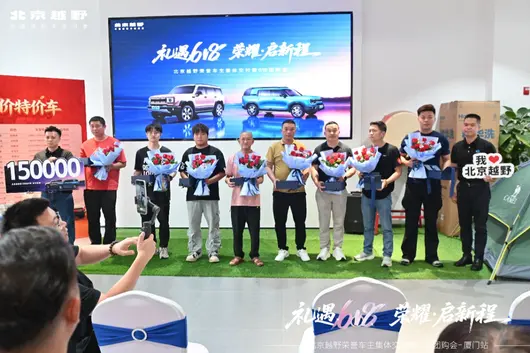
June 14, Beijing Off-road Honor Owner Group Delivery and 618 Group Buying Event was held at Xiamen Hongwen Store, the largest dealer of Beijing Off-road in the Fujian region. On-site, concentrated delivery was completed for 8 batches of owners. Owners left their marks on the sign-in wall and received keys symbolizing glory. Mr. Xiong Wan, representative of old owners, stated that choosing Beijing Off-road is choosing a lifestyle, and also trust in the brand. New owners expressed recognition of BJ30's product strength, trade-in policy, and professional in-store service.

As the model that reached 150,000 units in sales fastest among China's light off-road SUVs, BJ30 Explorer relies on Beijing Off-road's over 60 years of professional expertise, with "Super Wild, Super Spacious, Super Economical" as core selling points. To further promote off-road equality, the official launched a whole-series 30,000 yuan trade-in policy, with super trade-in prices starting as low as 69,900 yuan.

In terms of "Super Wild", BJ30 Explorer is equipped with the industry-leading "Triple Powertrain 4WD 6-Mode HEV Hybrid Architecture", becoming the first HEV hybrid model in the Boxy SUV category. The triple powertrain consists of a hybrid dedicated engine with 41% thermal efficiency, a front drive motor, and a rear drive motor, specializing in long-distance energy saving, real-time recharging, and instantaneous power delivery; the intelligent 4WD response speed reaches 30 milliseconds, peak torque can be unleashed within 0.5 seconds; six working modes can automatically select the optimal scheme, combined with electronic center locking, four-wheel electronic limited slip and intelligent electric ATS all-terrain control system, capable of calmly coping with complex road conditions such as mud and sand.

"Super Spacious" is reflected in space design. BJ30 Explorer adopts a 3-row 7-seat layout, wheelbase is 2820 mm, space utilization rate is as high as 66%, trunk volume reaches 1496 liters, rear seats can be folded flat to form a 1.92-meter bed. B-class Boxy SUV's extra wide third-row space, even adults 1.8 meters tall find it spacious to sit; the whole car has 38 storage spaces, satisfying item storage needs for family trips.

"Super Economical" focuses on usage costs. Recent real-world tests by automotive bloggers from five countries - South Africa, Indonesia, UAE, Poland, Mexico - show that BJ30 Explorer's fuel consumption per 100km did not exceed 5 liters under road conditions in each country, range per tank exceeds 1000 kilometers. BJ30 Explorer does not need to find charging stations, refuel and go, saving a lot of recharging time every year, first owners also enjoy lifetime warranty for the entire vehicle, no high-voltage battery safety hazards, maintenance parts are sufficient, ensuring worry-free travel.

BJ30 Explorer is both a Boxy SUV capable of traveling to mountains and fields, and a vehicle suitable for city commuting. This delivery event not only demonstrated Beijing Off-road's sincerity to owners but also further strengthened its product competitiveness in the light off-road market. Currently, the trade-in policy for this model is ongoing.

May's new car sales rankings just came out, revealing a reality some have to admit: Pure fuel cars are heading towards the end, at least in the Chinese market.
Not a single fuel car in the top 16 models
According to CPCA statistics, the top 16 passenger vehicle retail sales models in May were all new energy vehicles, not a single fuel vehicle model, which is the first time in my recollection.
Bo Yue L appeared at 17th place, which can be said to regain some face for fuel cars.


CPCA Secretary General Cui Dongshu stated that "Cold Fuel, Hot New Energy" was the biggest focus of the May auto market, with the speed of electric substitution exceeding expectations.
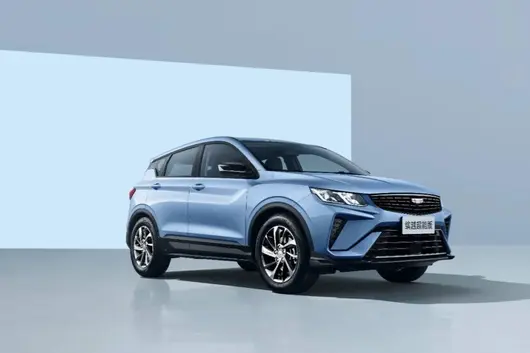
In particular, among the top 10 selling models, Geely Xingyuan ranked first with 38,751 units, Tesla Model Y ranked second with 28,911 units, Xiaomi SU7, Leapmotor A10, and Li Auto i6 ranked from third to fifth respectively, while Model 3, Wuling Hongguang MINIEV, AITO M6, Yuan UP, and Titanium 7 PHEV occupied the 6th to 10th places in order.
Among them, 8 models were pure electric vehicles, and the top 6 were all BEVs, with electric vehicles being very strong.
This is also a trend-based change. In January this year's top 10 sales, there were still 7 fuel cars, 6 in February, 5 in March, only one Geely Binyue in April ranking 8th, and zeroed out in May. The speed of change is overwhelming.

Whether it is Binyue or Boyue, they can be called the standouts among fuel cars, but both fell out of the TOP 10 camp.
Back in 2025, fuel cars still held half of the TOP 10, still the market boss. Before that, Sylphy, Lavida, Sagitar, etc. dominated the list for a long time.
TOP 10 is also the weather vane of the auto market. Is it that fuel cars are not trying hard enough? Of course not. Previously high-and-mighty luxury brands had to conduct significant promotions, with some model prices even approaching a 50% cut, such as Jaguar Land Rover dropping by 50%, and BMW dropping by over 300,000 yuan.

Joint venture fuel cars are also ruthless when cutting prices. Nissan Sylphy Classic terminal price starts at 50,200 yuan; VW Sagitar official price dropped to 79,800 yuan, a decrease of about 33% compared to the old model guide price of 119,900 yuan, a drop of 50,000 yuan; Honda Civic entry-level vehicle price only is about 90,000 yuan; VW Tharu after discount is 82,900 yuan, a drop close to 40%.
Sales still did not see much improvement, indicating consumers are not too interested, fuel cars have already become a "niche category", fast becoming sentiment cars.
New energy vehicle penetration rate reaches 62.9% high
At the same time, new energy vehicle penetration rate is rising. According to CPCA statistics, May new energy retail penetration rate continued to break 60% to reach a historical high of 62.9%, which is worlds apart from January's 38.6%.
What does this concept mean? It's equivalent to every 3 passenger vehicles sold, 2 are new energy vehicles, seizing the market initiative.
This year January to May, domestic auto market decline is around 20%, but during the same period new energy passenger vehicle wholesale sales reached 5.306 million vehicles, year-on-year growth of 1.7%, forming a sharp contrast with the general market trend.

Penetration rate improvement is not strange, what is strange is the speed of improvement. One reason is the Middle East War causing soaring gas prices, highlighting the advantage of low usage cost for new energy vehicles.
At the same time, new energy vehicle experience is continuously improving: trendy exterior design, smart and smooth cockpit, trouble-free assisted driving, scientific spatial layout, precisely grasping young people and family users' purchase preferences.
Conversely, traditional fuel cars, for many years product innovation lagging, high fuel consumption, lagging intelligence, high usage cost shortcomings continuously highlighted, slowly lost market competitiveness.
From the supply side, even "cold" joint venture car companies have become enthusiastic, which may also be forced by circumstances. According to CPCA statistics, May new energy joint venture models sales year-on-year growth 51%, fuel cars year-on-year decline 41%.
HEV Gas-Electric is also growing
New energy vehicle penetration rate improvement reflects the acceleration of electrification. Of course, electrification is not limited to new energy vehicles, gasoline-electric hybrid HEV not relying on charging is also one of the directions.
According to CPCA statistics, May gasoline-electric hybrid passenger vehicle wholesale 92,000 vehicles, year-on-year growth 26%, month-on-month growth 28%.

Among them, GAC Toyota (35,560 units), FAW Toyota (27,999 units), SAIC Passenger Vehicles (12,758 units), Geely Automobile (6,677 units), Changan Ford (2,809 units), Dongfeng Motor (1,984 units), Dongfeng Honda (1,955 units), GAC Honda (1,198 units) are the standouts among them.
It is worth mentioning that Chinese brands Geely, SAIC, Changan, GAC, etc. are also rapidly catching up in the HEV field, and found new markets overseas.
Pure fuel cars hope for export
Fuel cars are collapsing at a visible speed domestically, but overseas markets still have vast room, especially in Southeast Asia, Middle East, Russia, South America, where charging infrastructure is insufficient, fuel cars are still the absolute main force.
The most intuitive impression is, BYD's total sales far exceeded Chery, but the latter's export volume is more than the former, and mainly sold are fuel cars. Chery fuel cars swept Middle East, Latin America and Russia, BYD electric vehicles deep cultivated Thailand, Brazil, Europe, etc.

2024 China fuel car export volume reached 4.574 million vehicles, accounting for 78.1% of total auto exports, this ratio has been stable around 3/4 since 2020; 2025, fuel car exports 4.483 million vehicles, accounting for 63.16% of total exports 7.098 million (CAAM data); until this year May, this ratio is still at 46%.
Equal Rights for Fuel and Electric? Save fuel cars?
Actually, comparing new energy vehicles with fuel cars is a bit unfair, the former's advantage partly comes from electric drive experience, partly from policy dividends: exempt purchase tax, green plate convenience, cheap electricity fees, and bypassing the road tax base in the fuel tank.
Fuel cars did suffer a silent loss. As the saying goes: "Fill a tank, half is tax." Although this statement is a bit exaggerated, the reason is roughly the same. Taking current 92 Octane Gasoline as an example, consumption tax, VAT, Urban Maintenance and Construction Tax, Education Surcharge, Local Education Surcharge added up, account for about 1/3 of gas price. The lower gas price, the higher proportion of fixed consumption tax.
New energy vehicles also occupy roads, occupy parking spaces, cause congestion, also wear road surfaces, and cause greater harm, especially large new energy SUVs, ranging from over 2 tons, but because not refueling, naturally bypass the refined oil consumption tax this old interface.
Now relevant departments and media are calling for new energy vehicles to "reduce weight", possibly laying the groundwork for taxing based on vehicle weight.
Due to user experience differences, even achieving "Fuel and Electric Equal Rights", fuel cars still cannot get rid of the fate of decline, just slightly delay the process. (Author | DA Bin)


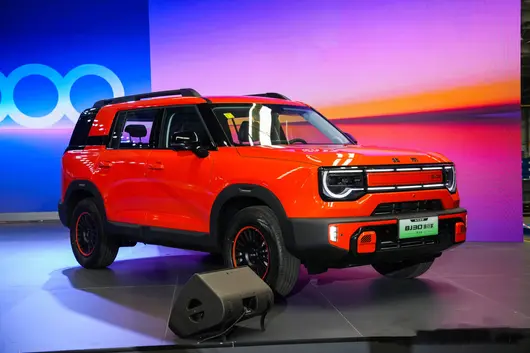
Beijing Off-road brought a new annual model to the BJ30 Traveler series – BJ30 Traveler Highlight Edition. Beyond the original basic capabilities, the new vehicle has been upgraded in appearance, performance, and experience, to attract the attention of the target group with more distinct product features.


The BJ30 Traveler Highlight Edition launched a total of two models, fuel and hybrid, with an official guide price from 112,900 to 139,900 RMB, and a super trade-in price starting from 82,900 RMB. Along with the launch of the Highlight Edition, the BJ30 Traveler full series offers a 30,000 RMB super trade-in subsidy, with the super trade-in price starting from 69,900 RMB, shared by new purchase and trade-in users.

The BJ30 Traveler Highlight Edition continues the classic boxy shape, with a unique five-arc star ring full-width light, paired with a full set of electrified trendy modification kit, ensuring high recognition. The new vehicle is equipped with front and rear color-matched sport bumpers and exclusive star ring wheels, newly adding Lava Orange, Dome Blue, and Cold River Grey three exclusive paint colors. New orange interior and metal texture trim panels outline a certain sense of layering.

The new vehicle offers two power sets: 1.5T fuel and 1.5T hybrid. Among them, the hybrid version is equipped with the "Tri-power Four-Wheel Drive Six-Mode HEV Hybrid Architecture", the rear motor power increased from 55 kW to 70 kW, further improving power response. This car is equipped with an intelligent electric four-wheel drive system, equipped with electronic center lock, four-wheel electronic limited slip, and intelligent electric ATS all-terrain control system, balancing city commuting and outdoor light off-road travel scenarios. The new vehicle also replaced with a dedicated AGM battery, with a cycle life reaching 3 times that of ordinary batteries.

Compared to ordinary SUVs, the BJ30 Traveler Highlight Edition has a higher body and wider field of view. The vehicle adopts a three-row seven-seat layout, with a wheelbase reaching 2820 mm. After folding down the rear seats, it can form a 1.92 m ultra-long pure flat space, with a trunk maximum volume of 1496 liters. The whole car is also equipped with 38 storage spaces.
In terms of comfort configuration, the BJ30 Traveler Highlight Edition is equipped with seat ventilation/heating, steering wheel heating, wireless phone charging, 1.05 sqm panoramic sunroof, rain sensing automatic window closing, 64-color ambient lighting, and 10-speaker HiFi audio, etc., creating a comfortable driving and riding experience.

Previously, the BJ30 Traveler underwent a fuel-saving challenge in five countries: South Africa, Indonesia, UAE, Poland, and Mexico, with actual test fuel consumption per 100 km all lower than 5 liters, and a range exceeding 1000 km. At this launch event scene, the BJ30 Traveler welcomed the 150,000th unit off the line, becoming the fastest model to reach 150,000 sales in the Chinese light off-road SUV field. Beijing Off-road also partnered with CCTV Finance to livestream a teardown of the BJ30 Traveler driven 150,000 km, to showcase its durable quality.
On top of the super trade-in policy, Beijing Off-road also brought multiple benefits, including a whole vehicle lifetime warranty (limited to the first non-commercial owner), 0% down payment and other financial plans, full series lifetime OTA free upgrade, basic traffic free for life, etc. At the same time, buyers of the Highlight Edition can participate in World Cup champion and final score predictions to win up to 50,000 RMB purchase subsidies.

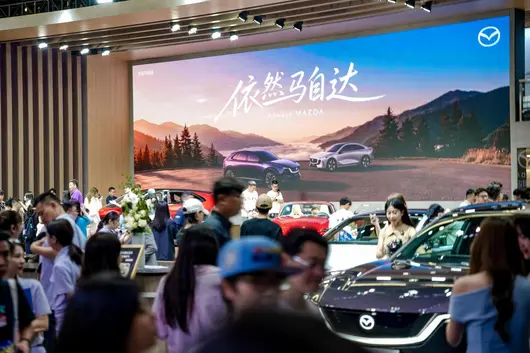
June 13, the 2026 Chongqing International Auto Exhibition officially kicked off. Changan Mazda, with the exhibition theme "Still Mazda", brought the classic MX-5 legendary sports car, global strategic new energy model MAZDAEZ-6, MAZDAEZ-60, and the newly launched EZ-60 Ma Edition in April to the Hall N8 booth. The scene not only showcased the brand's rich results in new energy transformation, but multiple characteristic user co-creation activities were announced simultaneously, stacked with sincere 618 mid-year car buying benefits, bringing full surprises to the on-site audience.
During this auto show, Changan Mazda launched multiple car buying offers: stacking up to 20,000 Yuan national subsidy and 17,000 Yuan manufacturer subsidy, purchasing designated models also comes with a free exclusive premium set worth 7,999 Yuan, with substantial benefit strength.
Global Quality Strength Breaks Out, Establishing Value Benchmark in New Energy IndustryMAZDAEZ-6 and MAZDAEZ-60 two new energy models, since the R&D phase strictly followed global car manufacturing standards to create, comprehensive product power received high recognition from home and abroad. In the design aspect, EZ-6 won the 2026 World Car of the Year Design award, becoming the first domestic new energy model to win this honor; EZ-60 set a record, becoming the only SUV model in the world to sweep 8 international top design awards.
In driving safety, both cars were R&D created according to China-Europe Dual Five-Star safety standards. Among them, EZ-6 gathered C-NCAP, E-NCAP and other 5 international authoritative safety certifications; EZ-60 battery protection standards met domestic new national standard and European standards in advance. Changan Mazda also solemnly promised to all new energy owners: Lifetime battery spontaneous combustion compensation, no mileage limit, no ownership transfer owner limit, comprehensively build a safety defense line for travel.

In driving control performance, EZ-60 broke out on professional fields, winning the Chinese New Energy Vehicle Rally Championship Circuit Race SUV Class Champion, Rally Race Overall Runner-up, extreme control performance received professional verification. At the auto show site, simultaneously as Changan Mazda owner and race champion Ji Hao, shared the competition experience. He drove the unmodified original factory pure electric EZ-60, fighting for 6 days, total 910 kilometers high intensity schedule. Facing many range extender, plug-in hybrid competitors, this production car emerged from 27 brands of 100 competing vehicles with stable and reliable quality and Mazda signature "Man-Machine Integration" tuning, fully proving the model original factory hardcore performance.

[Changan Mazda Owner, Champion Racer Ji Hao]
Relying on hard product strength, Changan Mazda smoothly obtained EU, UK, Australia three overseas markets whole vehicle certifications, is also the first domestic joint venture new energy car enterprise to win three certifications simultaneously, global layout steadily advanced. At the end of May, 80 overseas dealers from Europe, Australia, Thailand specially visited Nanjing Production Base, to the brand advanced production process and strict quality control system gave high affirmation. Currently EZ-6, EZ-60 overseas orders and pre-sale trend is good, in domestic market, EZ-60 has stood at the top of joint venture new energy medium SUV sales for 7 months.

Changan Mazda Auto Sales Branch Executive Deputy General Manager Wu Xuxi stated: Nowadays Changan Mazda has become Mazda global range important new energy whole vehicle design, R&D, manufacturing and export core base, brand to all new energy owners guarantee, everyone entered hand each model, are benchmark global standard high quality global car.

[Changan Mazda Auto Sales Branch Executive Deputy General Manager Wu Xuxi]
Fingering "User+" Concept, Building Brand and Owner Value CommunityOccupying domestic 5 million loyal users, Changan Mazda always regards owners as brand growth road companions and value co-creation partners. 2026, brand continues to deepen **"User+"** operation thinking, launch a series of characteristic user activities, create cover car use full cycle owner ecology, let "Still Mazda" brand concept, both landed on product details, also fused into every user emotion, participate various activities owners and Ma fans, also have opportunity invited attend 2026 Fan Ceremony.
Previously online "Wish Journey" activity, holds "User Wish, Brand Assist" original intention,拉近了 brand and owner distance; has launched 11 issues of "Owner Stories Collection", gathered many warm stories: has insisted seven years donate village primary school public welfare owner, has continuous four years organize car owner meeting care special children team leader, also due to love car结缘 sweet partners, one by one true stories, outline warm vivid brand background.
 [Champion Racer Ji Hao (Left) / "Joy Horse Creator" Sun Jingyi (Right) Share Own Car Life]
"Joy Horse Creator", "All People Agent" two plans, then for owners build share exchange, co-create value platform, large batch owners actively share car use daily, transmit product reputation. Post-00s EZ-60 owner Sun Jingyi as "Joy Horse Creator" representative scene share: daily work rest, she likes record car use life, as new participant, car owner partner and brand staff all enthusiastic assist, also welcome more Mazda owners join, together exchange make friends, share fun.

In addition, second season "Seedling Plan" steadily advanced, brand enters national major top universities, share with youth students in vehicle design, driving control, safety, intelligent field technical results. Synchronously launched EZ-60 national university modification design competition, not only opportunity let excellent creativity land become true, also to students open summer internship posts, help industry academia integration, apply knowledge learning.
Practice public welfare also is Changan Mazda long time persist responsibility. Since 2015 to now, brand has in Yunnan donate build 12 Hope Primary Schools, cumulative investment super 10 million Yuan, benefit 10 thousand teachers and students. This year June, brand again launch "Every Kilometer Filled with Kindness" public welfare action, convert user every travel into public welfare fund, special fund use improve Hope Primary School running conditions, let kindness with wheel constantly transmit.
618 Mid-Year Carnival Opens, Multiple Car Buying Benefits with Generous ReturnTake advantage of Chongqing auto show heat, Changan Mazda officially launch **"Drive & Enjoy Summer Vibes: 618 Mega Sale"** activity, activity lasts to June 30, full series models send rich car buying offers. Car buying users can stacked enjoy up to 17,000 Yuan trade-in manufacturer subsidy, 20,000 Yuan trade-in national subsidy; purchasing designated models, gift value 7,999 Yuan premium set, include original factory charging pile, Longmo solar film, TPE floor mat and trunk mat. Finance plan aspect, support 0 down payment, 5 year low interest car buying, annual rate as low as 1.99%, also can enjoy value 7,999 Yuan lifetime zero fuel consumption rights. In addition, activity period arrive store test drive new energy models, can receive National Intangible Cultural Heritage Jinling Gold Foil good gift, more details can go to Changan Mazda authorized dealer store consult.

Inherit 百年 brand heritage, hold car making original intention, Changan Mazda always with user needs as core, use global standard polish every product, with sincere service connect thousands of owners, let "Man-Machine Integration" driving fun accompany more travel roads. June 13th to 21st, sincerely invite citizens and car fans go to Chongqing International Expo Center Hall N8 Changan Mazda booth, personally appreciate global good cars, experience unique driving fun.

一亿辆。中国汽车工业见证了自己的首家“亿级俱乐部”。

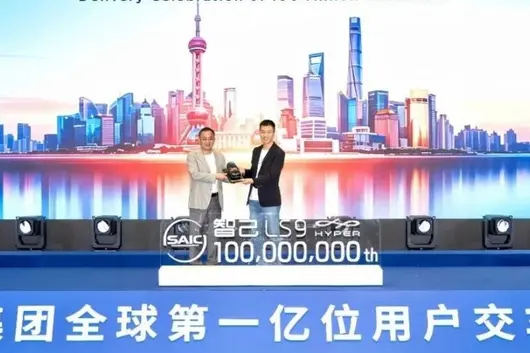
5月28日,在上海北外滩世界会客厅,随着智己LS9 Hyper的钥匙交到Momenta CEO曹旭东手中,上汽集团正式迎来全球第一亿位用户。东方卫视全程直播。没有冗长致辞,没有参数PPT,只有一场跨越亚欧大陆、多地联动的“全球接续交付”——从乘用车到商用车,从自主到合资,从中国到英国、印尼、新加坡。
这当然值得庆贺。但比数字更值得追问的是:一亿辆之后,上汽打算怎么走?
答案,就藏在这场仪式本身的信号里:如何把一亿辆背后的用户基础、技术储备、产业纵深和全球网络,转化为面向下一程的体系竞争力。
一亿用户的价值
不是存量,是洞察与理解
对于上汽而言,一亿辆代表规模,更代表长期服务不同市场、不同场景、不同使用需求所形成的用户基础。
乘用车与商用车并重,自主与合资双轮驱动,国内与海外协同——这种“全家福”式的结构,让上汽拥有中国车企中罕见的用户洞察纵深。一位乡村基层工作者需要怎样的工具车?一位海外运动员为什么选择中国品牌?一家跨国物流企业如何评估新能源商用车?这些问题的答案,单靠调研公司问卷得不出,它更来自一亿辆车在真实场景中的持续反馈。
上汽“懂车更懂你”的现实语境就在于此。“懂车”,是上汽七十余年积累下来的工程能力、质量体系、制造标准和产业基础;“懂你”,则是把这些能力转化为用户可感知、可使用、可信赖的产品体验,精准回应用户的真实需求。
因此,一亿辆不是终点,而是上汽重新激活用户价值的起点。未来的竞争,衡量标准不再是“谁的产品更多”,而是“谁更能把用户洞察转化为产品魅力”。
技术平权
从“大家有”到“大家好”的进阶
智能电动时代,各类技术层出不穷、迭代迅速,“卷参数”已经成了每家车企不得不做的事情。当各家都在喊“科技平权”时,真正的分水岭在于:技术从实验室到驾驶座,需要多长时间?从上百万的旗舰到几万块的国民车,功能衰减了多少?
这也是上汽提出 “平权驱动进阶”的关键所在。平权,远不止于配置下放,而是让更多人享受到先进技术;进阶,不仅是技术的革新,更要求真正提升用户的体验。
本次交付涉及的车型,正好呈现出上汽技术转化的不同层次。第1亿辆智己LS9 Hyper,集中展示了上汽的下一代技术储备:恒星超级增程、全线控四轮转向、灵蜥数字底盘3.0、Momenta智驾大模型。但更值得关注的是,这些能力正在向更广泛的价格带和使用场景下探:华境S把华为乾崑智能全家桶带入15万级家庭SUV市场,让高阶智能不再与高价强绑定;五菱荣光纯电版则把100kW碳化硅后驱电机和32.6度可单独更换电芯的神炼电池放进了一辆6.98万元级创富微客;荣威M7黑马版搭载DMH 6.0超级混动系统,以长续航、低能耗回应家庭用户对品质出行的需求。高阶技术不再只是高端车型的专属,而是通过上汽的产品矩阵,进入更多用户的日常出行。
这才是上汽真正的技术护城河:依托研发、制造、供应链和质量体系,把复杂技术转化为安全、可靠、便利的日常体验,在这里,“参数”不再是发布会PPT上的注脚,而是切实满足用户期待、解决真实痛点的核心价值。
开放生态
第1亿位用户为什么是他?
曹旭东站上交付台,是整场仪式最耐人寻味的一刻。
他不是传统意义上的“车主”。作为Momenta CEO,他与上汽的关系早已超越了普通的商业合作——智己与Momenta从品牌诞生之初就是“创始灯塔合作伙伴”,双方共同打磨了智己全系智驾方案。如今,合作伙伴主动成为车主,并宣布L3级自动驾驶将在上汽首发落地,计划用这台LS9 Hyper做验证测试,让“开放共创”从一个产业口号变成了可触摸的商业现实。
这种开放姿态,在上汽七十余年的发展脉络中一以贯之。从桑塔纳国产化共同体,到上汽大众、上汽通用等合资合作,再到自主品牌建设,上汽始终是在开放中学习、在合作中积累、在创新中成长。进入智电时代,开放合作正在进入新的阶段。
一方面,合资合作的内涵正在升级。过去,合资1.0更多意味着先进产品、制造体系和管理经验的引入;今天,合资2.0更强调技术共创。上汽大众ID.ERA 9X的交付,正是这一变化的代表。它不是传统合资产品的简单新能源化,而是在德系造车底蕴之上,融入中国智能科技、中国速度和本地用户洞察,呈现出合资品牌在智电新赛道上的全新面貌。
另一方面,上汽与华为、Momenta、OPPO、豆包、地平线等科技伙伴的合作,也把开放边界从传统产业链延展到智能驾驶、智能座舱、AI生态、软件体验等新领域。尚界Z7的华为乾崑ADS 4.1、华境S的华为乾崑全家桶、智己与Momenta的深度协同——这些交付车型背后,是一条“不设围墙”的产业雨林。
无论是合资伙伴的深度绑定,还是跨界科技公司的生态协同,都是上汽美美与共”理念的产业内涵。一亿辆,不只是上汽的一亿辆,更是这张开放生态网共同孕育的成果。
全球化
从“卖出去”到“扎下去”
伦敦交付现场,实习医生Natalia因祖父的那辆经典MGB,与这一百年品牌深深结缘,并坚定地选择了MG4 EV Urban。两代人、同一个品牌,跨越了燃油到纯电的技术变革,更见证了中国智造为英伦底蕴赋予的全新时代内涵。
这个故事恰好回答了外界对中国汽车出海的终极追问:一个由中国车企运营的百年品牌,还能不能赢得新一代海外消费者?MG用中国品牌首家在欧洲累计销量破百万的成绩给出了答案。
这也是上汽海外战略“Glocal 3.0”的核心:做到“全球化思维,本地化行动”,针对不同区域市场形成个性化、智慧化产品方案。3大海外研发中心、4个生产基地、超3000个经销商网络、42艘自营滚装船,上汽构建了中国车企中少有的全产业链出海能力。真正的全球化,远不止于把车卖到全球。在每个市场,把技术优势、产业链优势和运营经验与本地需求深度结合,才能实现从规模出海向价值出海的跃迁。
一亿辆之后
比拼的是“体系韧性”
站在一亿辆节点上,上汽面对的已不是单一维度的竞争。产品魅力、科技实力、机制活力——这三个方面,共同构成了面向未来的体系竞争力。
这场交付的真正价值,藏在它传递的信号里:当市场仍困于短期的零和博弈,上汽已用一场跨越全球的“全家福”给出答案——汽车业的终局,从不是单一企业或品牌的独角戏,而是一场关乎体系实力的较量。
从凤凰牌到第一亿辆,上汽用了七十余年,见证并参与了中国汽车工业的历史性跨越。下一个一亿辆,比拼的不再仅仅是速度,而是韧性、深度和“懂你”的程度,书写的是中国汽车品牌从规模领先迈向创新引领、从中国市场走向全球价值链更高端的新篇章。一切,才刚刚开始。

Apabila litar Off-Road Ringan dipenuhi dengan "kotak berselongsong", apabila "kesamarataan Off-Road" menjadi slogan pemasaran pengurangan harga dan spesifikasi, industri seolah-olah telah melupakan: pengguna tidak pernah mahukan SUV "yang kelihatan mampu Off-Road", tetapi sebuah kenderaan yang benar-benar mampu ke gunung, mampu menjaga keluarga, dan dikendalikan selama 10 tahun masih mudah. 12 Jun, di Pabrik Super BAIC Zhuzhou, BJ30 Traveler unit ke-150,000 dikeluarkan secara rasmi, Edisi Cemerlang Tahunan dilancarkan serentak. Beijing Off-Road tidak menggunakan konsep pelik untuk menggerakkan suasana, sebaliknya bekerjasama dengan CCTV Ekonomi untuk membongkarkan secara langsung kenderaan sebenar yang telah dikemudikan 150,000 kilometer --- menunjukkan kualiti sebenar Off-Road Ringan kelas 100,000 di depan semua orang di internet.
Kecepatan 150,000 unit, memuatkan logik sebenar kejayaan Off-Road Ringan
Sebagai model kelas Off-Road Ringan SUV China yang paling cepat mencapai jualan 150,000 unit, pertumbuhan BJ30 Traveler bukanlah靠低价倾销,melainkan tepat menembusi "rumah tangga dan Off-Road tidak boleh digabungkan" masalah industri yang lama. Selama ini, Off-Road keras boros minyak susah dikendalikan, SUV Bandar rapuh tiada minat, Off-Road Ringan sepatutnya penyelesaian terbaik, tetapi kebanyakan menjadi "barang rekaan": membungkus bentuk kotak, tambah lipatan roda hitam, sudah berani dakwar sifat Off-Road, kemampuan melalui sebenar, ketahanan tidak berbeza dengan SUV biasa.
BJ30 Traveler melancarkan "Sangat Off-Road, Sangat Luas, Sangat Jimat", pada asasnya adalah membulatkan tiga konflik pengguna paling teras.
Sangat Off-Road, bukanlah medali mencabar limit, tetapi tenang menghadapi kejutan. Ia dilengkapi arsitektur hibrid HEV 3 enjin 4 roda gergasi 6 mod, adalah laluan teknologi HEV pertama untuk kategori SUV kotak China: kecekapan haba 41% enjin khusus hibrid bertanggungjawab ke jimat jarak jauh, dua motor depan belakang兼顾实时补能与瞬时爆发,tindak balas四驱 pintar tahap 30 milisaat, 0.5 saat boleh output tork maksimum,配合能量中锁与全地形控制系统,tanah lumpur, tanah pasir boleh tenang hadapi. Ramai tersilap faham kemampuan Off-Road adalah untuk mencapah bukit, tetapi untuk pengguna biasa, keyakinan sebenar adalah jalan licin ketika hujan tidak selip, jalan kampung rosak tidak tersangkut, laluan cepat di lebuh raya ada simpanan --- keamanan dalam senario harian ini, jauh lebih penting daripada rekaan Off-Road limit. Sifat HEV tidak perlu pengisian luar lebih jauh membebaskan kecemasan pengisian kenderaan baru, mengemaskan ekonomi hibrid dengan kestabilan四驱,完全揉进了日常通勤里。
Sangat Luas, bukanlah pertandingan nombor jarak paksi, tetapi maruah seluruh keluarga. 2820 milimeter jarak paksi panjang, 66% kadar penggunaan ruang tinggi, membolehkan baris ketiga bukan "kerusi haiwan peliharaan" yang sekadar nombor, dewasa 1.8 meter duduk masih lapang; 1496 liter butang belakang besar, baris belakang rata rata menjadi katil besar 1.92 meter, boleh muat peralatan perkhemahan, juga muat istirahat sementara; 38 ruang penyimpanan seluruh kenderaan, membolehkan gelas air, tisu, mainan kanak-kanak ada lokasi khas. Logik ruang kenderaan keluarga bukanlah "semakin besar semakin baik", tetapi "tiada siapa yang perlu kompromi": orang tua tidak perlu tekuk kaki, kanak-kanak tidak perlu memegahkan barang, beg isteri tidak perlu meletak di kaki --- inilah tenang yang seharusnya ada ketika seluruh keluarga bepergian.
Sangat Jimat, bukanlah pengiraan kedekut, tetapi ketenangan jangka panjang. Dari Afrika Selatan, Indonesia dan 5 negara ahli blogger kereta uji, BJ30 Traveler di semua negara berjaya capai jimat minyak per 100 km tidak melebihi 5 liter, satu tangki minyak jangkauan lebih 1,000 kilometer; tidak perlu cari pencharging, isi minyak terus jalan, setiap tahun boleh jimat puluhan jam masa pengisian; pemilik pertama menikmati jaminan seumur hidup keseluruhan kereta, tiada bahaya keselamatan bateri tegangan tinggi, penyelenggaraan mudah, spare part cukup. Ramai menghitung kos penggunaan kereta hanya lihat harga kereta, tetapi terlepas pandang perbelanjaan tersirat dalam kitaran 10 tahun: masa cari pencharging, tenaga penyelenggaraan, penurunan nilai bateri --- penjimatan sebenar, adalah jimat semua kesulitan tidak perlu, membolehkan anda letakkan perhatian ke pemandangan di jalan, bukan pada kereta itu sendiri.

Penyempurnaan Edisi Cemerlang: tidak menimbun konfigurasi, hanya tingkat kualiti harian
Pada titik pengeluaran 150,000 unit Edisi Cemerlang ini, tidak secara buta menimbun konfigurasi flagship, tetapi di atas "Sangat Off-Road, Sangat Luas, Sangat Jimat", tingkat satu lagi langkah pada detail yang paling kuat dihayati pengguna.
Dari segi rupa, bentuk kotak klasik ditambah rangkaian lampu cincin bintang 5, kit modifikasi gaya moden induksi penuh dengan rim cincin bintang khas,再加上全新橙色内饰与金属纹理饰板,ketat menyembunyikan halus. Ia tidak menjadikan rekaan sebagai "model internet" tunggal, tetapi兼顾了不同人生阶段的审美:orang muda boleh pakai gaya moden, orang tengah umur mengemudikan juga stabil dan berwibawa. Rekaan satu kereta, tidak patut menjadi tag untuk menanda personaliti, patut menjadi maruah yang boleh menampung commuting, temu janji, perkhemahan semua senario.
Dari segi prestasi, ganti bateri AGM khusus kitaran hayat 3 kali ganda bateri biasa,搭载保时捷同款涡轮增压技术,kecekapan pengisian keseluruhan kereta capai 99%; kuasa motor belakang dari 55 kW naik ke 70 kW,匝道汇入、路口起步、紧急避让都能获得更及时的响应。Baik naik prestasi kereta bukan sekadar menambah angka pecutan 0-100, tetapi membuatkan detik yang digunakan pengguna setiap hari menjadi paling极致:起步不肉、超车有劲、避险跟脚 --- keyakinan yang hilang begitu saja ini,比任何参数都实在。
Dari segi pengalaman, badan kenderaan lebih tinggi membawa pandangan lebih terbuka, pemanasan pengudaraan kerusi, pemanasan roda stereng menanggung masalah musim sejuk panas; pengesan titisan hujan penutup tingkap automatik, mengelakkan kebingungan turun kereta ketika hujan; 64 warna lampu suasana ikut muzik bergerak, meninggalkan tanah emosi sendiri untuk jalan pulang kerja. Rasa tinggi bukan sekadar menimbuk kulit asli dan panel hiasan tekstur kayu, adalah detail yang anda tidak fikirkan, ia sudah memikirkan untuk anda.
Pembongkaran 150,000 km: kualiti paling keras, sentiasa tersembunyi di tempat yang tidak kelihatan
Bahagian paling bermakna dalam seluruh sidang akhbar, bukanlah pelancaran kereta baharu dan perayaan jualan, tetapi pembongkaran kenderaan sebenar 150,000 km siaran langsung CCTV sepanjang acara. 150,000 km, hampir sama dengan jangkauan penggunaan kenderaan keluarga biasa hampir 10 tahun, kebanyakan kereta pada titik ini, mula开始出现漏油、异响、动力衰减,kebanyakan brand pada kenderaan jangka panjang mengelakkan, Beijing Off-Road malah mahu bongkar untuk semua orang internet lihat.
Keputusan pembongkaran tiada "ajaib" yang tidak dijangka, tetapi di mana-mana透着扎实:engine turbo karbon sedikit, output kuasa tidak jelas penurunan; cangkang transmisi kering tiada bocor, gear dalam tiada kehausan kedut; pakat bateri tiada bengkak, bocor cecair dan penurunan dalam; rangka bawahan, lengan gantungan tiada karat bocor minyak, keseluruhan rata kegergasian, keteraturan dan perbezaan kereta baharu sangat kecil. Tiada propaganda membesar-besarkan, hanya realiti dari sudut kejuruteraan --- dan realiti ini, adalah penjamin ketenangan yang paling pengguna perlukan. Nilai harga sebenar satu kereta, bukanlah berapa rendah harga apabila beli, tetapi setelah dikendalikan 10 tahun, berapa banyak keamanan yang ia masih boleh beri anda. Kitaran ganti kereta tarik setahun, kos penggunaan tahunan kurang satu; sekali keluar daripada kerosakan, ketenangan bepergian tambah sekali.
Keyakinan ketahanan ini, sumber dalam standard pembuatan Pabrik Super BAIC Zhuzhou. Ruang pengelasan ratusan robot 100% automatik, ralat pelekat tidak melebihi sehelai rambut, menjamin kekakuan rangka badan, jalan jalan rosak tiada bunyi, lebih selamat berlaga; 5000+ tan peralatan tekan sekali tekan bentuk badan, memastikan badan kenderaan seragam kemas; ruang cat semua proses automatik cat air selamat, bahan volatil berbahaya turun 60% lebih, kereta baharu tiada bau, permukaan cat lebih tahan sinar tahan karat. Setiap proses menetapkan halangan kawalan kualiti, setiap kereta mempunyai penelusuran kualiti --- kualiti bukanlah selepas itu ditest, dari sehelai plat baja bermula, setiap环节都掐着精度做出来的。
Kesimpulan:
Jualan 150,000 unit, adalah 150,000 pilihan keluarga; pembongkaran 150,000 km, adalah jawapan kualiti 15 bahagian. Populariti BJ30 Traveler, bukanlah靠营销炒作, tetapi memijak satu prinsip paling sederhana: pengguna mahukan bukan "Off-Road" tag ini, tetapi satu kereta yang mampu兼顾日常与远方、靠谱又省心.
Maksud kesamarataan Off-Road, bukanlah menurunkan Off-Road dari dewa, tetapi membolehkan lebih banyak orang biasa tidak perlu kompromi keluarga untuk cinta, tidak perlu meninggalkan jauh untuk kegunaan. Dasar penukaran super 30,000 Yuan selepas, ambang dimulai dari 69,900 Yuan,质感 Edisi Cemerlang penuh penyempurnaan, adalah membuat perkara ini lebih teliti --- membolehkan setiap minat mahu ke gunung, tidak perlu bayar terlalu tinggi; membolehkan setiap hari biasa, boleh hidup cemerlang sendiri.
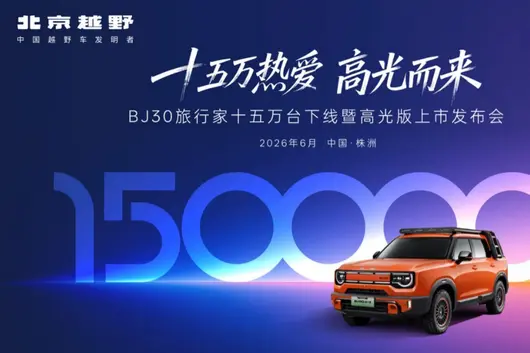
6月12日,“十五万热爱,高光而来”BJ30旅行家十五万台下线暨高光版上市发布会,在北汽株洲超级工厂圆满举办。凭借市场口碑持续热销,BJ30旅行家成功加冕中国轻越野SUV最快15万台量产车型。本次活动不仅见证品牌销量里程碑,更推出全新年度版型——BJ30旅行家高光版,同时发布重磅购车政策,以亲民门槛推进“越野平权”,让普通家庭也能轻松解锁可城可野的高品质出行生活。


为回馈广大用户信赖,北京越野推出全系3万元置换权益,BJ30旅行家超级置换价低至6.99万元起;全新上市的BJ30旅行家高光版,超级置换价8.29万元起。发布会现场,北京越野携手央视财经开启拆车直播,公开拆解一台行驶15万公里的BJ30旅行家,以直观、真实的车况,全网鉴证车型硬核耐久品质与中国智造实力。

北汽集团副总经理、北京越野董事长张国富在现场表示,15万台销量的突破,不仅是市场速度的见证,更是十五万用户用真实选择铸就的品质丰碑。BJ30旅行家不仅是中国HEV技术交付市场的优质答卷,更是中国自主品牌发力轻越野赛道、突破技术壁垒的实力宣言。
十五万用户口碑认证,三大硬核实力领跑轻越野赛道
依托北京越野六十余年专业越野技术积淀,BJ30旅行家以“超野、超大、超省”三大核心优势,打破城市SUV与越野SUV的边界,兼顾日常通勤与户外轻越野全场景,凭借均衡产品力快速收获全球用户认可。

何为“超野”?是全场景奔赴山海的底气。作为中国首款方盒子HEV混动SUV,新车搭载行业领先的三擎四驱六模HEV混动架构,由41%高热效率混动专用发动机、前后双驱动电机组成三擎动力系统,分别适配长途节能、实时补能、瞬时爆发不同工况。车辆四驱响应速度仅30毫秒,0.5秒即可输出峰值扭矩,搭配能量中锁、四轮电子限滑与智电ATS全地形控制系统,可智能适配六大驾驶模式,轻松征服泥地、沙地、陡坡等复杂路况,越野性能拉满。

何为“超大”?是全家出行不将就的从容。新车坐拥2820mm超长轴距,实现66%超高得房率,搭载实用的三排七座布局,空间表现媲美越级车型。超大后备箱容积可达1496L,后排座椅纯平放倒可化身1.92米超大大床,露营休憩、大件装载随心切换。即便是1.8米的成年人,也能在B级宽体第三排轻松落座,配合全车38处精细化储物空间,全方位满足多人口家庭全场景出行需求。
何为“超省”?是长期陪伴无焦虑的省心。省油、省时、省心三大优势加持,让用车成本大幅降低。此前,来自南非、印尼、阿联酋、波兰、墨西哥的五国海外博主联合实测,BJ30旅行家百公里油耗均稳定控制在5L以内,一箱油续航超1000公里。无需依赖充电桩,加油即走,每年可节省数十小时补能时间。同时,首任车主可享整车终身质保,无高压电池包安全隐患,保养便捷、配件充足,彻底打消用户用车、养车顾虑。
全新高光版上市,颜值、性能、体验三重全面跃升
基于15万台下线的全新起点,北京越野重磅推出BJ30旅行家高光版,在原有硬核产品力基础上,实现颜值、性能、用车体验全方位升级,打造兼顾城市精致感与越野野性的全能家用轻越野SUV。

颜值层面,新车延续经典方盒子硬朗造型,搭配专属五阙星环贯穿灯组,辨识度十足。全套电感潮改套件、专属星环轮毂、同色运动保险杠,塑造洒脱潮流的整车气质。全新橙色内饰搭配精致金属纹理饰板,质感全面进阶,兼顾年轻个性与居家温润氛围,适配全年龄段用户审美。

性能层面,高光版针对性优化核心配置,换装三倍寿命的高性能AGM专用电瓶,耐用性大幅提升;搭载保时捷同款涡轮增压技术,整车充电效率高达99%。同时将后电机功率从55kW升级至70kW,起步提速、匝道汇入、紧急避让响应更迅猛,动力随叫随到,日常行驶更从容、更安全。

体验层面,新车主打“移动舒适会客厅”理念,凭借更高的车身姿态带来开阔行车视野。全系配齐座椅加热、通风、方向盘加热等实用舒适配置,四季出行皆可享受舒适驾乘。同时搭载智能感应雨刷、64色音乐律动氛围灯,兼顾实用性与氛围感,在繁忙通勤之余,为用户打造松弛治愈的私人驾乘空间。

15万公里拆车直播+超级工厂溯源,鉴证硬核中国品质
真正的品质,经得起时间与严苛测试的双重检验。本次发布会,北京越野携手央视财经开启15万公里实车拆车直播,以普通家庭近十年使用里程的实车,直观展现车辆耐久品质。拆解结果显示,车辆发动机积碳极少、动力输出充沛,变速箱无渗油、齿轮无磨损;电池包无鼓包、漏液、衰减变质等问题,长期使用稳定可靠;副车架、悬挂摆臂无锈蚀、渗油情况,底盘规整度近乎新车,充分印证车型用料扎实、工艺精良,后期维修成本低、用车稳定性强。

同时,镜头深入北汽株洲超级工厂,从源头揭秘BJ30旅行家的卓越品控。车间内数百台机器人全自动协同焊接,涂胶误差不超发丝,筑牢高强度安全车身;五千吨级巨型冲压设备一体成型车身板材,线条规整、结构坚固;全自动机器人喷涂搭配环保水性漆,有害物质挥发降低六成,新车无味更健康,漆面耐腐蚀、耐暴晒性能更优异。全工序层层品控把关,从生产源头守住每一台车的品质底线。

十五万份热爱,铸就全新高光。从销量突破到产品焕新,从技术迭代到品质坚守,北京越野始终深耕轻越野赛道,持续推进越野平权,让高端越野体验走进普通家庭。未来,BJ30旅行家将以全面进阶的产品力,陪伴更多用户解锁城市通勤、山野奔赴的双面美好生活,与千万车主共赴下一程高光之旅。
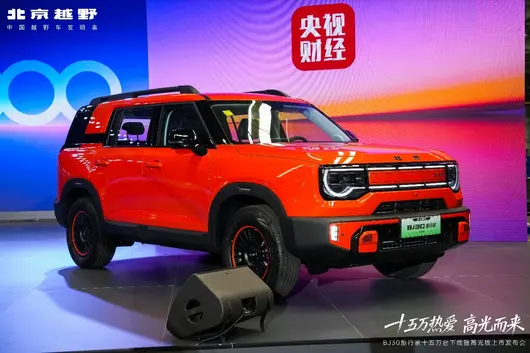

12 Jun, pelancaran pelancaran model BJ30 Traveler yang mencapai 150,000 unit dan Edisi Gemilang diadakan di Pabrik Super Zhuzhou BAIC. Beijing Off-road secara rasmi memperkenalkan model baharu - BJ30 Traveler Edisi Gemilang, berkedudukan dalam SUV Light Off-road. Berdasarkan "Super Off-road, Super Besar, Super Jimat", mencapai lompatan komprehensif dalam penampilan, prestasi, dan pengalaman. Harga Penukaran Super bermula 82,900 Yuan. Seterusnya, BJ30 Traveler semua rangkaian memperkenalkan dasar pertukaran 30,000 Yuan, harga pertukaran super bermula 69,900 Yuan, seterusnya menggerakkan "Kesamarataan Off-road", membolehkan lebih banyak keluarga menikmati kehidupan Light Off-road dengan mudah.
Pada majlis pelancaran, Beijing Off-road bekerjasama dengan CCTV Finance, membedah siaran langsung sebuah BJ30 Traveler yang telah berkelana 150,000 kilometer, dan meninjau secara mendalam Pabrik Super Zhuzhou, dengan keadaan kenderaan sebenar dan teknologi pembuatan, menyaksikan kebolehpercayaan produk dan kekuatan teras pembuatan China seluruh internet.

Zhang Guofu, Timbalan Pengurus Kumpulan BAIC dan Presiden Beijing Off-road menyatakan: "BJ30 Traveler telah menjadi model SUV Light Off-road China yang paling pantas mencapai 150,000 unit. Ini bukan sahaja lompatan kelajuan, tetapi juga 150,000 pilihan yang kukuh."
Sebagai contoh dalam kategori SUV Light Off-road China, BJ30 Traveler bergantung pada 60 tahun pengalaman profesional Beijing Off-road, membina "HEV Hybrid Architecture dengan 3 Enjin 4 Penggerak 6 Mod yang memimpin industri", menjadi model HEV Hybrid pertama dalam kategori SUV Kotak Cina. Struktur ini dilengkapi dengan enjin khusus hibrid dengan kecekapan haba 41%, motor pemandu hadapan dan motor pemandu belakang, digerakkan oleh sistem pemanduan 4 roda pintar, kelajuan tindak balas mencapai 30 milisaat, 0.5 saat boleh meletupkan tork puncak. Enam mod operasi boleh ditukar secara automatik, digerakkan oleh penguncian tengah tenaga, had geseran elektronik empat roda dan kawalan ATS pintar Semula Medan, dengan mudah menghadapi keadaan jalan kompleks seperti tanah lumpur, tanah pasir.

Dalam prestasi ruang, BJ30 Traveler menggunakan susunan tempat duduk 3 baris 7 orang, jarak gandar mencapai 2820 mm, nisbah ruang 66%, bak belakang maksimum boleh dikembangkan sehingga 1496 liter, selepas dilipat rata belakang membentuk katil besar 1.92 meter. Seluruh kereta 38 tempat penyimpanan, baris ketiga juga boleh duduk dengan selesa orang dewasa tinggi 1.8 meter.
Dari segi penggunaan bahan api, demonstrasi oleh 5 blogger kenderaan dari Afrika Selatan, Indonesia, UAE, Poland, Mexico menunjukkan, penggunaan bahan api BJ30 Traveler 100 km tidak lebih 5 liter, satu tangki minyak jarak jauh lebih 1000 km. Pemilik pertama juga menikmati jaminan seumur hidup, tiada bahaya keselamatan bateri tegang, penyelenggaraan mudah.

BJ30 Traveler Edisi Gemilang pada asas pewarisan kelebihan teras, menyambut tiga saat gemilang.
Penampilan Gemilang: Bentuk kotak klasik, lampu gelang bintang melalui lima, roda gelang bintang eksklusif, pengimbas depan belakang warna sama, digabungkan dengan dalaman oren baharu dan papan tekstur logam, memenuhi keperluan estetika pengguna pelbagai kumpulan umur.
Prestasi Gemilang: Menukar bateri AGM khusus prestasi tinggi, jangka hayat panjang, hayat kitaran mencapai 3 kali bateri biasa; dilengkapi teknologi penambah tekanan udara sama seperti Porsche, efisiensi cas keseluruhan mencapai 99%; kuasa motor belakang ditingkatkan dari 55 kW ke 70 kW, meningkatkan kemampuan tindak balas dalam situasi permulaan, memasuki simpang layang.
Pengalaman Gemilang: Badan lebih tinggi, pandangan lebih lapang, dilengkapi fungsi pemanas tempat duduk, pengudaraan dan pemanas stereng. Sistem boleh mengesan titisan hujan menutup tingkap secara automatik, 64 lampu suasana berwarna mengikut irama muzik, membentuk ruang tamu selesa bergerak.

Dari sudut pasaran, pelancaran Edisi Gemilang BJ30 Traveler, bukan sahaja memperkayakan matriks produk SUV Light Off-road pada tahap 150,000, tetapi juga menandakan sub-kategori ini bergerak dari "penyebaran konsep" ke "pemenuhan kualiti". Dalam latar belakang pengguna yang semakin meniti realiti jarak jauh, ketahanan jangka panjang dan kos penggunaan, Beijing Off-road dengan pemecahan kenderaan sebenar 150,000 km, siaran langsung kilang, secara proaktif menyalurkan keutamaan utama pasaran kebolehpercayaan, mempunyai makna perintis industri yang kuat.
Sementara itu, dasar pertukaran super 30,000 Yuan ditambah dengan lima hadiah hormat istimewa (termasuk jaminan seumur hidup, kewangan 0 pendedahan, peningkatan percuma OTA seumur hidup), dengan berkesan menurunkan ambang kemasukan SUV Light Off-road. Pada tempoh Piala Dunia memulakan "tebak juara menang 50,000 diskaun pembelian", juga menunjukkan keutamaan jenama terhadap pemasaran golongan muda dan interaksi pengguna.
Bisa diramalkan, seiring BJ30 Traveler Edisi Gemilang masuk pasaran, pasaran SUV Light Off-road akan menyambut peningkatan persaingan yang dipandu oleh "Kekuatan Sebenar" dan "Nilai Tinggi".

The domestic hard-core off-road industry is currently in a period of structural transformation, with niche segment consumption shifting from past small-scale circles to mass-scale development. Event-powered mass production has become the standardized path for autonomous brand technology iteration. With the improvement of domestic supply chains and continuous expansion of outdoor consumption demand, the overall sales of domestic hard-core off-road vehicles in 2025 exceeded 350,000 units. The industry growth rate has led the passenger car market for years, and major automakers are using top-level rally events like Tarim to complete product reliability checks and technology implementation conversion. Unlike new energy vehicle companies focusing on technical routes of extreme speed and aerodynamic drag optimization, traditional fuel-powered hard-core off-road brands choose long-distance extreme rallies as product verification carriers. After the 2026 Tarim Rally concluded, the 212 off-road vehicle landed in Qingdao for its closing celebration. This industry gathering not only reviewed the team's rally results but also fully released the brand's industrial layout relying on events to connect R&D, mass production, and after-market user cultivation across the full chain, providing a reference implementation model for the transformation and upgrading of domestic legacy off-road brands.

Extreme events complete mass-production technology scale verification
This year's Tarim Rally total mileage was 7,500 km. Gobi desert high-temperature sandstorms and continuous cross-road conditions form a natural all-condition reliability test environment. The industry generally views the Tarim T2.1 mass-production category as the authoritative performance exam for civil hard-core off-road vehicles. Competition rules limit that core power and chassis architecture must follow mass-production original factory specifications, greatly compressing automaker heavy modification space. The value of the results directly reflects the overall original factory manufacturing standards. The 212 team chose the T01 model in near-original state to compete, facing a crowd of joint-venture and autonomous brand racing cars equipped with 3.0L Turbo large displacement power. Relying on the 2.0T powertrain to achieve cross-class competition, SS10 to SS13 four stages secured two championships and one runner-up, becoming the only brand with full team finish in the T2.1 manufacturer category and winning the runner-up in the category. Behind the results is the empirical backing of the entire power and chassis system tested under extreme conditions.
Core vehicle hardware all follows mass-production on-sale configurations. The 2.0T engine paired with ZF 8AT transmission and BorgWarner large transfer case power combination achieves low-end torque output comparable to large displacement models under full-load towing and climbing scenarios. The 4L mode 2.64x torque amplification design has been optimized through long-distance uninterrupted actual testing. Non-load-bearing body paired with front and rear solid axle classic off-road architecture. Relying on whole vehicle galvanized sheets and chassis specific tuning, solve the industry common problems of traditional hard-core off-road body deformation and chassis rust. Passenger compartment structure reinforcement brings 16% top load-bearing capacity improvement. Cage body paired with panoramic image emergency rescue configuration completes the synchronous verification of off-road performance and civil safety configurations.

From an industry dimension observation, this original vehicle extreme participation mode saves high laboratory simulation test costs, takes Gobi extreme environment parts loss power attenuation and other actual test data reverse input to R&D system, shortens product improvement cycle, is the typical implementation mode of cost reduction and efficiency enhancement for domestic off-road.
Full-link layout perfects domestic off-road industrial ecosystem closed loop
Competition data landing civil product transformation, is the industry's core landing link. 212 relies on Tarim actual test data to promote modification kit commercialization. The full set including chassis armor anti-defeat wheel professional tires escape equipment Tarim same-source modification products land on the official mall, making up for the domestic off-road after-market original modification category missing shortcomings. For a long time domestic off-road modification market with third-party workshop products mainly, parts compatibility and reliability lack authoritative testing, original factory event kit landing can standardize segmented after-market, promote off-road modification from non-standard modification to standardized mass production, perfect the industry chain supporting links outside whole vehicle manufacturing.
The brand also finally determined multiple overseas domestic top-level events participation plans. Dakar Rally Malaysia Sabah Rainforest Race Alxa T3 and 2027 Tarim all included in the schedule, continuously complete multi-scenario technology calibration with different terrain events. For end-users start 2027 Tarim civilian driver recruitment, team up with professional driver Han Wei build professional off-road training academy, break through ordinary car owners learn to drive practice driving compete complete channel. This layout jumps out of single vehicle sales traditional automaker profit model, upward relies on events iterate whole vehicle technology, downward extends modification accessories and driving training business, form product event service three-in-one industrial closed loop.

Industrial model innovation reflects the general trend of domestic off-road development
212 borrows Tarim Rally event to complete product verification and industrial layout series of actions, reflects domestic legacy hard-core off-road industry transformation and upgrading common logic. China automobile industry's maturity reflected in segment track diversified breakthrough, new energy brand deep dive three-electric extreme speed technology, hard-core off-road brand rooted in long-distance reliability and full industry chain construction, two routes parallel solidify China manufacturing overall strength. Past domestic hard-core long term constrained by core parts dependency import R&D costs remain high, now rely on Tarim and other domestic top-level events complete whole vehicle and parts synchronous actual test, add domestic complete upstream and downstream supply chain supporting, gradually get rid of foreign technical shackles. From single vehicle production to event R&D modification sales driver cultivation full chain operation, 212 development path represents domestic off-road from product manufacturing to lifestyle service provider transformation industry trend.
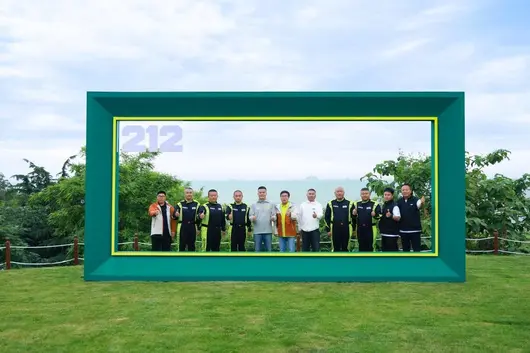


Image Source | ORA Official
Author | Su Peng
April 25, 2025, Beijing, 19th International Automobile Exhibition.
On the Great Wall ORA booth, a brand launch event themed "Pragmatism" is underway.
No dazzling light shows, no exaggerated parameter gimmicks, not even a flood of traffic stars to endorse — instead, a set of solid data: Great Wall ORA 5 Hybrid and Fuel versions officially launched, limited-time replacement prices starting as low as 79,800 yuan and 69,800 yuan respectively;
The ORA 5 Hybrid underwent a long-distance real-road test covering four direct-controlled municipalities with a total mileage of 3,004 kilometers, achieving a comprehensive fuel consumption of 3.74 liters per 100 kilometers, successfully completing the Guinness World Record challenge for "Lowest fuel consumption driving a mass-produced hybrid SUV across Chinese direct-controlled municipalities";
The ORA 5 Sport debuted, with a lower body stance, exclusive sport kit, and chassis tuning from the original team of the Great Wall BMW Mini project, captivating young audiences.
This is not just a new car launch. In the current situation where the new energy vehicle industry is deeply involved in "specification involution", "range arms race", and "laboratory fuel consumption number games", ORA chose a completely different path.
The so-called "Return to Roots" means returning to the original needs of users for real travel; the so-called "Tracing Origins" relies on the Great Wall Auto Return to Origin technology platform to achieve the global R&D concept of one car with multiple powertrains, multiple stances, and multiple categories from the underlying architecture;
The so-called "Upholding Integrity" means not blindly chasing trends or hyping concepts, but persisting in satisfying real existing needs with truly crafted experiences; the so-called "Innovation" means finding the optimal solution among the three major power routes of fuel, electric, and hybrid through fourteen years of hybrid technology accumulation and the investment of over 5,000 engineers.
As ORA Brand General Manager Lu Wenbin said after the launch: "There are no standard answers for the global market, only scenario answers."
The ORA brand increasing HEV and Fuel versions is core to considering global layout and diverse domestic user needs simultaneously -- most overseas markets have imperfect charging infrastructure and high electricity prices, while domestically a large number of users still have long-distance travel anxiety, inconvenient charging, and even concerns about pure electric safety.
The multi-power layout is not to keep up with fashion, but to precisely cover the real vehicle usage scenarios of users in different circles.
These words reveal the underlying logic of ORA's strategic turnaround this time: it is not wavering on the route, but allowing users not to compromise on powertrains.
Since the brand was born in 2018, ORA has walked seven years. In these seven years, it broke through in the pure electric small car market relying on Black Cat and White Cat, and also became the "favorite" of urban women due to the Good Cat's design;
It has experienced the darkest moments of high supply chain costs and stoppage of production lines due to losses, and also welcomed the trust of nearly 600,000 global users today, with a global layout spanning over 50 countries and regions.
And today, with the heavy launch of ORA 5 multi-power versions, ORA is completing a strategic leap from a "Pure Electric Brand" to a "Global Fashion Premium Car Brand". The core of this leap is not simply adding a few new car models, but a comprehensive reconstruction from technical philosophy, product logic to user value.
The following is the Q&A record of Great Wall ORA Brand General Manager Lu Wenbin and Great Wall Auto Powertrain Chief Engineer Huang Zhenyang accepting interviews from media such as Future Auto Daily (edited):
Q: Why did ORA shift from pure electric to launching HEV hybrid versions?
Lu Wenbin: The brand increasing HEV and Fuel versions is core to considering global layout + diverse domestic user needs dual dimensions.
On one hand, ORA 5 is built based on the Great Wall Return to Origin platform, following the global R&D concept of one car with multiple powertrains, multiple stances, and multiple categories, where most overseas markets have imperfect charging infrastructure and high electricity prices, HEV and fuel models remain mainstream necessity;
On the other hand, domestically a large number of users still have long-distance travel anxiety, inconvenient charging issues, some users have concerns about pure electric safety and prefer mechanical driving quality, multi-power layout precisely covers real vehicle usage scenarios of users in different circles.
Q: Great Wall ORA 5 Hybrid 3.74L/100km fuel consumption is lower than peer competitors, but compared to industry 1L, 2L ultra-low fuel consumption data, how to prove the advancement and authenticity of this hybrid power system?
Lu Wenbin: ORA persists in pragmatic car manufacturing, does not hype data, Great Wall core values focus on contract and integrity. Some industry ultra-low fuel consumption are calculated based on specific ideal conditions, achieved through limiting conditions such as no air conditioning, constant speed driving, special tuning, not user daily real vehicle usage scenarios.
ORA 5's 3.74L/100km fuel consumption is tested according to user daily real driving habits, including normal acceleration, braking, frequent air conditioning use, and other life-like vehicle usage states, data is real and reproducible, not false marking, no playing with concepts, stands up to user long-term vehicle usage verification.
The brand increasing HEV and Fuel versions is core to considering global layout + diverse domestic user needs dual dimensions.
Huang Zhenyang: Industry professional media can calculate and verify through professional parameters such as road driving resistance, engine high-efficiency operating condition intervals. 1L, 2L ultra-low fuel consumption does not possess universality and rationality under actual civil road conditions. ORA insists on facing consumers with real operating condition data, technology is pragmatic and not exaggerated.
Q: ORA one-car-multiple-powertrains overlaps with Haval products in price and power, how do the two brands differentiate user groups?
Lu Wenbin: ORA brand core positioning is always global fashion premium cars, style is unique, design has character, users lean towards younger, highly educated; Haval focuses on mass practical economy national car models, two brand user positioning, product styles are naturally differentiated, no internal competition conflict.
Previously many ORA users, due to loving the brand styling design, urgently expected the launch of fuel and hybrid versions, multi-power layout is to respond to fan core needs.
Q: How is ORA's subsequent product planning and sports car model layout rhythm?
Lu Wenbin: The platform supports one-car-multiple-stance expansion. Currently, the booth has debuted multiple low-stance sports car models, focusing on the sporty small steel cannon style loved by young users, filling the market gap in similar trend models. Product planning rhythm is clear, 2026 to maintain monthly new product iteration speed, continuously enriching product category matrix.
ORA subsequently will not limit existing sizes, will expand product sequence upwards according to market demand, price range sets no hard upper limit, continuously attacking higher-end premium markets.
Q: Previously ORA Black Cat and White Cat halted production due to losses from high supply chain costs, now ORA 5 pricing is user-friendly, does this benefit from the Return to Origin platform significantly compressing production costs?
Lu Wenbin: ORA 5 low-price user-friendly core relies on Return to Origin platform high integration, high commonality, global scale advantages, by platform-sharing parts and sharing R&D and supply chain costs across global markets, achieving a qualitative reduction in production costs, possessing long-term healthy operational profitability, thoroughly getting rid of the previous small car loss dilemma.
Q: For multi-version models in similar price ranges, will internal customer competition occur?
Lu Wenbin: Multi-version models do not have internal friction problems, different powertrains correspond to different user demands: pure electric adapts to city short commuting, HEV adapts to long-distance anxiety-free travel, fuel satisfies people who prefer mechanical driving feel, all users' core commonality is recognizing ORA's fashion design, demand layers are clear, mutually non-conflicting.
Q: Industry competitors rely on a single blockbuster model with extreme cost-effectiveness to boost sales. ORA persists in a single platform, multi-powertrain, global long-term layout. How do you view these two development approaches?
Lu Wenbin: The core goals of the two approaches are consistent, both rely on scaling to reduce costs. The core difference lies in different coverage dimensions. Competitors are mostly single model, single powertrain, single market volume push; ORA is single platform, multi-powertrain, multi-category, global simultaneous operation, covering extreme cold, high temperature, different regulations global full condition verification, vehicle reliability, parts supply guarantee, long-term maintenance value retention advantages are more prominent.
Q: Is the long-term operating logic sustainable for profitability?
Lu Wenbin: Long-term, global scale plus high parts universality, ORA operational efficiency is stable and sustainable, able to balance user vehicle cost, after-sales maintenance convenience, and brand long-term profitability.
Q: ORA global expansion rhythm, domestic and foreign market ratio planning? Will the brand subsequently introduce larger models? Will existing Ballet Cat, Good Cat and other older models be halted and exit the market?
Lu Wenbin: ORA global expansion rhythm steadily promoted, ORA 5 Pure Electric version already launched domestically last December, Hybrid and Fuel version launched at this Beijing Auto Show, Thailand market launched in March this year, this year sequentially landing European, Brazil etc. overseas markets, vehicles already shipped preparing for launch.
Brand boundaries continuously broadened, Return to Origin platform can support hatchback, sedan, SUV, high-end models multi-category expansion, subsequently will launch large size models as needed, always forming differentiation with fashion premium positioning and Haval practical route.
Ballet Cat, Good Cat etc. hot models on sale will not be halted, market stock and user reputation are excellent, subsequently will continuously iterate and optimize according to technical planning, maintain product vitality.
Q: For domestic and global markets, which power version's sales performance will be better?
Lu Wenbin: Domestically, new energy is a long-term mainstream trend. With policy adjustments, the HEV hybrid market increment will rapidly climb, and fuel models will maintain a stable basic platform. Overseas markets, HEV and Fuel versions remain the sales main force in the short term. ORA full series models, regardless of power version, will all leverage product strength to meet different needs and focus efforts comprehensively.
Q: How does ORA strengthen model personality characteristics, balancing personalized customization with scale costs?
Lu Wenbin: Regarding personalized creation, ORA plans to launch sports, retro, outdoor and other multi-style versions. We do not offer individual ultimate customization (to avoid after-sales maintenance, parts supply, and vehicle reliability risks), adopting a model of small-batch detailed co-creation + official modification cooperation + original car expansion interface reservation. This balances user personalization needs with the stability, reliability, and cost controllability of mass production.
At the same time, ORA 5 full series is equipped with LiDAR and urban NOA intelligent driving. The ORA 5 Hybrid and Fuel versions will soon launch the "Coffee Pilot 3 Advanced Driver Assistance Technology Package" as an option (specific time subject to official announcement). It is unique in its class. It supports young users' core needs with intelligent technology, strengthening the fashion-tech brand tag. Personalization and fashion taste are already necessities for young users' car purchases. ORA will long-term persist in its premium fashion positioning and continuously iterate and upgrade.
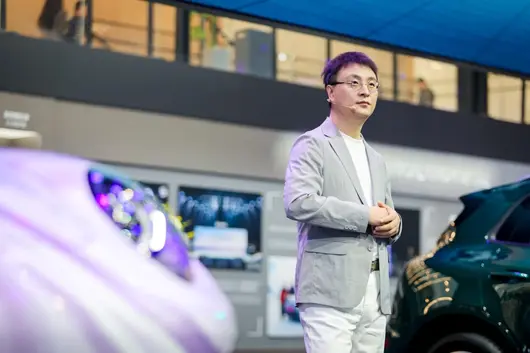

In the summer of 2026, the perceived temperature of the car market was hotter than the actual air temperature.
In April, the domestic new energy penetration rate historically broke through the 60% mark. The positions held by fuel cars are left with less than 40%.
In May, a new wave of price cuts swept through the domestic joint venture SUV market. Terminal price cuts by half have become the norm, with some models seeing maximum reductions of up to 51%, covering both luxury and ordinary joint venture brands. Sales consultants' social media moments were filled with 'Historical Lowest', 'Clearance Sale', and 'Special Group Approval'.

A more symbolic signal is that Volkswagen officially confirmed Skoda would exit China by mid-year at the end of March. This is no longer just a price war, but a 'Battle Royale'. The short-term store traffic stimulated by prices cannot hide a cold reality—According to data from the China Automobile Circulation Association, the market share of mainstream joint venture brands from January to May 2026 has slipped to around 32%, whereas in 2020 this figure touched 60%. Joint venture vehicles that once generated profits simply by stepping on the accelerator are now collectively trapped in a vicious cycle of 'the lower the price, the greater the loss; the greater the loss, the lower the price'.

Whether it is the short-term 'amputation to stop losses' or the final 'final flicker of life', they all lead to a core proposition: Does the Chinese market still need joint venture brands? If so, what constitutes a 'good joint venture'?
I. Behind the Collective Price Cuts: Common Anxiety Across Factions and Their Individual Cards
The development of joint venture brands to this point can no longer simply attribute price cuts to 'trading price for volume'. Essentially, it is a stress response after three levels of the joint venture camp have lost speed simultaneously: the moat of fuel cars has dried up, the initiative of electrification is missing, and pricing power has shifted to Chinese brands. Moreover, the situation and chips of different factions actually have significant differences.
Japanese: Hybrid Strength Blocked by PHEV 'Interception', Obsession Becomes Shackles
Toyota and Honda's hybrid technology enjoyed a technical premium in China for nearly a decade. Now facing a full-scale siege from domestic brands' PHEVs and range-extended EVs, they have similar fuel efficiency but cannot plug in and lack the green license plate advantage. Price cuts attempt to offset the cross-level strikes from domestic C-segment new energy vehicles with the cost-performance of B-segment fuel/hybrid products. The Japanese ace is the global profit pool and lean production system, but they rely heavily on the path for the 'pure electric transition period', and software definition capabilities are too indebted.

German: Most Effort on Electrification, but Brand Premium is Being 'Deconstructed' by Intelligence
Volkswagen is the most determined in electrification transformation among joint ventures. The ID. series once surged in volume, but software shortcomings and smart driving gaps prevent it from entering the first tier. BBA's electric products are trapped in 'brand premium failure': battery, motor, and electronics have no gap, the signature mechanical quality and chassis tuning have reduced perception in the electric era, but the cockpit experience is far left behind by 300,000-level Chinese brands. Volkswagen chose to increase local R&D, while some luxury brands began considering reducing local capacity and shifting to an import model to protect profits.
American: Caught in the Crack of US-China Decoupling, Not Anchored at Either End
General Motors and Ford's share in China continues to shrink. The unique dilemma of American joint ventures lies in geopolitics: Washington is increasingly wary of China's smart vehicle technology. If GM and Ford deeply bind Chinese supply chains within joint ventures, they may face local review. This makes them waver between 'deep localization' and 'tech decoupling risk avoidance', with chaotic rhythms, pleasing neither side.

Korean and French: 'Pioneers' on the Margins
Hyundai-Kia has become 'Others' in China, and the French brand remains with only a whisper of voice. They provided a rehearsal: closing factories, cutting models, shifting to export bases or light-asset technology providers to protect the profit floor, but also permanently exiting the table of the Chinese mainstream market.
II. Endgame Deduction: Three Paths for Joint Venture Brands, and Their Fatal Bugs
Based on the dilemmas and trends of domestic joint venture cockpits, we attempt to deduce three most realistic endgame paths.
Path 1: Dignified Exit — 'Skoda-Style' Exit and Marginalization
Mainly American, Korean, and European second-tier brands, whose share in China has shrunk below the survival red line and cannot afford high costs of local intelligent transformation. They will copy Suzuki, Mitsubishi, and Skoda paths, officially announcing exit from China within two to three years, transferring capacity and funds to markets like India, ASEAN, or Latin America where the fuel car lifecycle is longer, retaining only a small number of imported cars and brand licensing businesses.

Fatal Bug: 'Chronic Suicide' and Defense Failure in the Global Battlefield
The Chinese market is the most competitive 'super steelmaking furnace' for global new energy and smart driving technology. Abandoning China means these brands will completely become disconnected from the forefront of automotive technology. When BYD, Geely, and Chery bring generation-gap EVs to overseas markets, the retreating forces have no defenses abroad either, only delaying death by a few years. Moreover, no major multinational automotive company dares to actively give up the 'right to participate on site' in China, the world's largest market. This not only means sales go to zero but also means completely handing over data and scenario iteration rights to opponents, long-term weakening global competitiveness.
Path 2: Global Jumping Board — 'In China, For Global' Export Base
Mainly Japanese and some top European car series. They value China's unparalleled supply chain cost advantages and new energy manufacturing efficiency, upgrading Chinese joint venture factories into global production and R&D hubs. 'Made in China, Sold Globally'. A typical case is Nissan Import & Export (Guangzhou) Co., Ltd. officially established by Dongfeng Nissan at the beginning of this year, with 60% held by Nissan China and 40% by Dongfeng Group. The first shipment of 'N Brand' pure electric cars (such as N7) has been completed, and the strategic intention is also extremely clear:

Borrowing chickens to lay eggs — Utilize China's mature three-electric supply chain and development speed produced through competition to produce high cost-performance electric vehicles to feed the overseas market, without needing to invest heavily overseas to build new EV factories.
Turning burdens into assets — Perfectly digest idle capacity of domestic joint venture automakers. The Chinese side 'borrows a way to go overseas' to earn overseas profits, the foreign side gets ready-made high-quality capacity, achieving a win-win in interests.
Geographical Dividend — Guangzhou Huadu and Nansha Port possess the densest liner routes to Southeast Asia. Superimposed with RCEP tariff dividends, logistics efficiency is pushed to the limit.
Fatal Bug: Geopolitical 'Dimensionality Reduction Strike' and Southeast Asia's 'Frontline Fire'
First, the barrier for this path is not in production but in trade. The tariff walls built by Europe and America against Chinese-made cars are getting higher. As long as cars are assembled in Chinese factories and use Chinese battery supply chains, they may face high tariffs or supply chain compliance reviews. Chinese factories easily become 'besieged' islands trapped by tariffs.
Second, the Southeast Asia battlefield is far from smooth. When Nissan's N7 arrives in Thailand, it will be found that this place has long been dominated by BYD, Great Wall, and Geely. Domestic brands laid out in Southeast Asia 2-3 years earlier. Nissan takes cars empowered by Chinese technology to fight hand-to-hand with Chinese brands of technical origin overseas. It is difficult to create differentiation in smart cockpits and OTA speeds.

A deeper bug lies inside the channels. Nissan's sales companies in various Southeast Asian countries have management and dealer networks deeply entrenched in fuel car interests, influenced by Japanese HQ culture. When the Guangzhou Import/Export Company pushes vehicles with strong 'Chinese New Energy Genes' over there, will local channels be willing to fully cooperate? Will they worry about cannibalizing their high-profit fuel car base? This 'discourse power infighting' within transnational joint ventures often leads to good cars selling poorly overseas.
Brand awareness is also a problem. In the minds of Southeast Asian consumers, NISSAN is 'fuel-efficient, durable, Japanese craftsmanship'. Suddenly Nissan launches a pure electric car focusing on 'smart cockpit, Chinese three-electrics'. Consumers fall into confusion: If you want a tech-heavy Chinese EV, why not buy BYD directly? If you want an authentic Japanese car, why buy a Made-in-China Nissan?
Path 3: If You Can't Beat Them, Join Them — Deep Localization 'Reverse Joint Venture'
Typified by German giants (Volkswagen, Mercedes, BMW). They have thick capital, sufficient cash flow, and are unwilling to give up the Chinese market, choosing 'If you can't beat them, join them'. Completely 'Sinicize' the technical bottom layer — VW invests in XPeng and jointly develops CEA electrical architecture, Audi and SAIC launch a new 'AUDI' brand without the 'Four Rings' logo, Mercedes deeply binds with Momenta to build smart driving. Joint ventures have become a new species where 'the shell is an international giant, the soul is Eastern technology'.
This is currently the direction most favored by the industry, and is also the 'emergency heart medicine' for multinational giants exchanging capital for time. Of course, breaking down from the underlying logic of finance and equity, this cooperation is more complex than it appears on the surface.
First, VW spent about 700 million US dollars back then to acquire about 4.99% of shares of XPeng Motors and obtained a board observer seat. In the US stock and HK stock regulatory systems, 5% is a red line triggering public announcement and anti-monopoly review. VW kept shareholding precisely at 4.99%, showing 'I believe in you' sincerity, avoiding long cross-border approval, while relieving XPeng management's guard against 'loss of control' — this is an extremely smart 'financial bet'.

Audi and SAIC are in a different predicament. Both are locked in the traditional 50:50 joint venture framework of 'SAIC VW / SAIC Audi' and cannot directly buy or sell parent company stocks. So they chose to 'open a new household' — launch a new 'AUDI' brand, without the Four Rings logo. Although equity ratios remain unchanged, the actual product definition rights of the project have undergone a historical shift: SAIC (IM Motors team) outputs core intelligent digital platforms, Audi deploys design and chassis tuning teams. The foreign side made a historical concession on the core 'product definition right'.

But both forms will generate a financial reversal from 'lying and earning franchise fees' to 'paying technical service fees'. The financial model of the past 40 years was: the joint venture sells cars, paying high technology licensing fees to the multinational HQ, the foreign side lies back and takes the bulk of profits. The current model has undergone a 'reverse reversal':
VW pays XPeng 'technical service fees'. R&D costs for software and architecture belong to one-time upfront investment. When XPeng packages and licenses CEA architecture and intelligent software, this revenue in XPeng's financial statements is almost pure profit with gross margins close to 100%. This is the strongest financial hematopoietic stem cell for Chinese new forces when the car manufacturing main business isn't profitable.
A deeper financial weapon is joint procurement. VW and XPeng established a joint procurement organization. VW possesses a terrifying bargaining power of global millions in sales volume. XPeng knows all about Chinese local electronic components, LiDAR, and other innovative supply chains. Both sides combine the procurement list into one, achieving a cliff-like drop in per-vehicle material costs.
Fatal Bug: Dynamic Evolution of IP, Channel Infighting, and Geopolitical 'Soul Castration'
However, this model also has three major hazards:
First, the 'black box evolution' of IP — software is alive, requiring OTA every month. VW buys XPeng's architecture and smart driving code at 'a certain time node'. So when XPeng iterates a more advanced end-to-end AI large model next year, does VW need to pay again? If syncing without reservation, how does XPeng's own cars maintain differentiation? If not syncing, the 'soul' VW bought for billions might become 'zombie code' in 2-3 years. The pricing and IP ownership of this dynamic upgrade are extremely difficult to solidify in contracts.
Second, channel infighting and brand premium avalanche — The new 'AUDI' car cooperated by Audi and SAIC will ultimately be sold through the SAIC Audi channel. If selling well, profit distribution is easy to discuss. But if selling poorly, how to provision for impairment of huge R&D investments from both sides on the balance sheet? More fatal is brand awareness: when consumers find that a joint venture luxury car worth hundreds of thousands has the same cockpit and smart driving as a domestic car worth tens of thousands, or even discounted due to cross-border team compatibility issues, why pay for 'brand premium'? Once the halo of technology worship disappears, joint venture brands will fall into a dead cycle of price wars with domestic cars, fighting hand-to-hand.
Third, the geopolitical firewall of 'Soul Going Overseas' — Multinational giants buy Chinese souls, not just for the Chinese market, they dream of selling this high cost-performance platform to Europe and North America. But the underlying code, smart cockpit servers, and battery supply chains of these models are deeply bound to Chinese local suppliers. Once crossing the Chinese border, they will immediately hit EU data security reviews or North American tariff barriers. The 'souls' VW and Audi spent real money to buy are likely to be physically castrated, able to survive only in this one 'greenhouse' in China, unable to spread financial costs globally. This is the biggest structural bug of the entire model.
III. Ultimate Question: What Kind of Joint Venture is a 'Good Joint Venture'?
In fact, the three paths are not a choose-one-of-three issue. They happen simultaneously to joint venture brands in different situations, and the three may also circulate among each other. As the title says, joint venture brands have at least not just 'one life'.
But all paths convey the same core cognition: The old joint venture model where the foreign side outputs powertrains and brands, and the Chinese side provides land, channels, and labor, has completely died.
What is a 'Good Joint Venture', or which joint venture brands can survive better in this new era, must meet three conditions:
· Equal Ability Complementarity — Chinese side contributes intelligent driving full-stack capabilities, electrical architectures, industrial chain cost efficiency; Foreign side contributes vehicle safety, chassis driving quality, global R&D verification standards, and overseas channels. No longer 'Master and Apprentice', but a consortium where each has their strengths.
· Deep Interest Binding — Both sides possess institutionalized, equal decision-making mechanisms on data management, model definition, and export rights. No longer one side's 'charity cooperation', but a 'You-in-me' strong alliance.
· Transparent Game Rules — Cooperation does not stop at the Chinese market, but is global from the beginning, establishing institutional designs on product definition rights, dynamic IP evolution, and profit distribution that can stand the test of time, jointly making the cake bigger.

Volkswagen-XPeng, Stellantis-Leapmotor, Audi-SAIC are walking on this path, but even they are far from submitting satisfactory answers. Because the biggest Bug of 'Good Joint Venture' is: Both sides are partners and opponents. The model jointly launched today may face off against their own independent brands tomorrow. This 'competitive collaboration' balance beam requires extremely high strategic stability.
IV. Conclusion: The Era of Arrogance and Lying Earnings is Over
Joint venture brands have not died. What died is the 'Old Joint Venture Model of Arrogance and Lying Earnings'. The future Chinese car market will no longer distinguish between Chinese capital or foreign capital, only distinguishing between 'Evolutionists who Follow Chinese Speed' and 'Retreatists Who Hold onto Broken Things'.
The only certainty is: The joint ventures that survive will certainly not be relics of the old world, but co-constructors of the new order. On the three paths leading to the new order, none is a smooth road — every step is stepped on the blade of geopolitics, technology iteration, and human nature game.


更舒適、更從容🟰更多人嘅選擇
中國智造🦾開往全球🌏


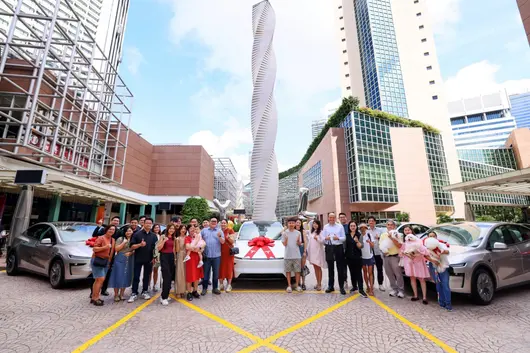

Di Australia, Filipina, Korea Selatan
Selepas Thailand, Singapura, Selandia Baru
Model Y L yang dihasilkan di Pabrik Super Shanghai
Serahan sulung juga telah dimulakan di Malaysia 🇲🇾 👏
Kenapa orang di seluruh dunia memilihnya?
Selamat dan pintar, mudah dipandu dan digunakan, nampak cantik serta jimat ⚡️


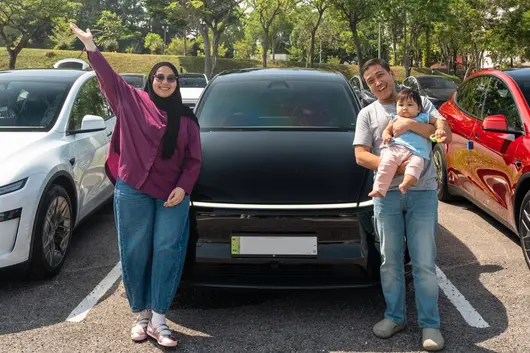

5 月 28 日,上海北外灘世界會客廳,上汽車集團將第一億輛車嘅鑰匙交到 Momenta CEO 曹旭東手中。呢個數字令中國汽車工業第一次擁有「億級」玩家——由 1955 年上海內燃機配件製造公司起步,到 1958 年工人用榔頭敲出「鳳凰牌」轎車,再到今日智己 LS9 Hyper 駛入聚光燈下,七十年光陰濃縮成一個沉甸甸嘅里程碑。但係比數字更值得追問嘅係:當中國車市由增量狂奔向存量絞殺,當新勢力同傳統車企嘅攻防戰進入深水区,上汽車憑乜率先撞線?答案藏喺「懂車更懂你」呢句看似樸素嘅理念入面,亦藏喺由技術合資到技術共創、由產品出海到價值鏈出海嘅戰略躍遷之中。呢次係對用戶信賴嘅集中兌現,更係一場汽車產業認知嘅升維。

一、從鳳凰到智己:七十年技術積澱嘅質變
第一億輛交付車型智己 LS9 Hyper,絕非一輛簡單嘅旗艦車。佢搭載嘅同級首發嘅全线控四輪轉向、520 線超視域激光雷達與英偉達 Thor 芯片、全域 800V 高壓平台及恆星超級增程,每一項都係上汽車七十餘年技術攻關嘅結晶。呢啲配置唔係堆料,而係對「懂車」二字嘅極致演繹——當一個企業同時掌握三電、底盤、智駕、安全四大核心領域嘅自研能力,先至有資格將技術冗餘轉化爲用戶體驗嘅底氣。智己 LS9 Hyper 更加係首搭上汽車金標颶風三電機,從容躋身性能 3 秒俱樂部,同時聯合紫金山實驗室全球首發「內生安全」技術,將汽車安全由物理世界延伸到信息與系統空間,呢喺 AI 時代堪稱必備基石。
呢種技術質變非一日之功。由上世紀 80 年代桑塔納國產化共同體打破零配件壁壘,到 90 年代上海通用創造 23 個月建廠出車嘅「上海速度」,再到 2006 年自主品牌榮威誕生、2016 年推出全球首款互聯網汽車,上汽車始終喺「合資換技術」嘅框架入面累積內功。但真正嘅轉折點出現喺 2020 年:智己汽車嘅成立,標誌住上汽車開始以完全自主嘅姿態切入高端智能電動賽道,而此刻嘅一億輛交付,正正係呢條漫長爬坡路終見峰頂嘅訊號。數據顯示,2026 年 1-4 月上汽車累計銷售 130.2 萬輛,連續四個月居中國車企銷量冠軍,其中自主品牌佔比近 70%,新能源車銷售 41.2 萬輛——數字背後,係技術自主權帶來嘅市場主動權。
更值得玩味嘅係用戶選擇。第一億位車主曹旭東,正正係上汽車喺智駕領域核心戰略伙伴 Momenta 嘅 CEO。「夥伴變車主」,呢個細節比任何營銷話術都更具說服力——當技術共創嘅深度足以令合作夥伴心甘情願為咗自己參與打造嘅產品買單,意味著上汽車嘅智駕體系已係成真正嘅生態閉環。由桑塔納時代嘅「學徒工」到智己時代嘅「技術聯合體」,上汽車用七十年完成咗由跟隨到共舞嘅身份切換。


二、全球接力交付:體系實力同品牌陣列嘅協同共振
交付儀式當日,一條跨越山海嘅光纖連接咗上海主會場同南京、柳州、太原,乃至英國、印尼、新加坡嘅交付現場。呢場「全球接力」非作秀,而係上汽車全價值鏈閉環嘅縮影。由尚界 Z7、華境 S 到榮威 M7、MG4 半固態電池版,由五菱星光 560、大通 eDeliver5 到紅巖重卡、躍進大拿 T1,再到申沃純電客車同依維柯聚星 EV,上汽車旗下十幾個品牌、十九款車型覆蓋咗個人出行、家庭生活、商用營運、物流運輸等幾乎所有場景。呢種「全品類覆蓋」嘅能力,係單一品牌新勢力難以複製嘅護城河。
合資板塊同樣展現出嶄新嘅活力。大眾 ID. ERA 9X 全球首發搭載 Momenta R7 強化學習世界模型,上市一個月交付突破 7000 台;AUDI E7X 計劃成為奧迪全球首款實現 L3 級自動駕駛落地嘅車型;別克至境 E7 基於「逍遙」超級融合架構打造,上市一個月交付破萬台。呢啲成績背後係「合資 2.0」戰略嘅落地:唔再係簡單嘅產品引進,而係中海外雙方技術共創、平台共享。上汽車大眾推出嘅「油電同進」策略,令燃油車智能化同新能源車陣列同步發力,1-7 月燃油車市場份額提升至 8.8%,正正係呢種雙線作戰能力嘅佐證。
海外市場嘅表現更加係體系實力嘅直接映射。上汽車 MG 連續 11 年蟬聯中國品牌歐洲銷冠,2025 年歐洲年銷突破 30 萬輛,成為首個喺歐洲及英國累計銷量破百萬嘅中國汽車品牌。今年 3 月,MG 喺法蘭克福舉辦技術日,全球首發半固態電池及 Hybrid+ 混動技術,Hybrid+ 家族海外單月銷量突破 2 萬輛。呢啲數字背後,係上汽車喺海外擁有超 100 個零部件生產基地、超 3000 個經銷商網絡,以及倫敦等 3 大研發創新中心同泰國、印尼等 4 個生產製造中心嘅全球佈局。由「產品出海」到「價值鏈出海」嘅 Glocal 戰略,令上汽車真正成為一家跨國汽車集團。

三、智電深水區:上汽車點樣重塑行業競爭格局
當新勢力仲為月銷破萬歡呼,當傳統車企仲糾結燃油車同新能源嘅切換節奏,上汽車已經用一億輛證明咗一條混合路徑嘅可能性:既唔能放棄存量基盤,又必須全力攻佔增量高地。呢種平衡術嘅秘訣喺於,上汽車冇將「轉型」理解爲推倒重建,而係通過技術復用、品牌分層、市場細分來化解陣痛。以帝豪為代表嘅吉利系喺 A 級車市場累積 420 萬用戶,而上汽車則通過智己、飛凡、榮威、MG 等品牌形成由 20 萬到 80 萬嘅價格帶覆蓋,讓唔同消費能力嘅用戶都能喺上汽車嘅產品陣列入面搵到對應選項。
真正嘅行業顛覆,發生喺技術路線嘅交叉點。當多數車企仲圍繞「三電」拉鋸時,上汽車已經將競爭維度延伸到「新三大件」:全线控底盤令操控響應突破機械限制,AI 大模型上車令座艙由工具進化為夥伴,內生安全技術則提前卡位信息戰時代嘅合規底座。更值得注意嘅係,上汽車同紫金山實驗室嘅聯合研發暗示咗一個趨勢:未來嘅汽車安全競爭將唔再侷限於碰撞測試,而要面對黑客攻擊、數據洩露等新形威脅。呢種前瞻佈局,令上汽車喺智電深水區擁有咗定義規則嘅資格。
喺競爭格局層面,上汽車嘅「夥伴變車主」模式正係改寫行業生態。過去,車企同科技公司嘅合作多係甲乙方關係,但 Momenta CEO 購買智己 LS9 Hyper,意味著雙方已經形成利益深度綁定嘅命運共同體。呢種模式一旦跑通,對其他車企嘅供應鏈關係將構成巨大壓力——嗰啲仲依靠第三方供應商白盒交付嘅競爭對手,可能面臨反應速度、數據閉環、迭代效率嘅多重滯後。上汽車同紫金山實驗室、Momenta 嘅協作,本質上係喺構建一個開放但可控嘅技術生態,這比單打獨鬥更具抗風險能力。

結語
當羅振宇作為華境 S 第 001 號體驗官走進工廠,當前德國腳楊晨選擇 ID.ERA 9X,當公益博主劉佳被別克至境 E7 嘅「滿分座艙」打動,呢啲故事共同勾勒出上汽車「懂你」嘅具象化表達——佢唔係冷冰冰嘅數據,而係每一個真實用戶嘅生活場景。從第一個用戶到第一億個用戶,上汽車嘅成長史就係中國汽車工業從「跟跑」到「並跑」再到「領跑」嘅縮影。但一億輛唔係終點,而係二次創業嘅起跑線。正如劉禹錫所言:「千淘萬漉雖辛苦,吹盡狂沙始到金。」當智電轉型嘅浪潮淘盡浮躁同泡沫,真正沉澱落來嘅,將係嗰啲既懂技術又懂用戶嘅長期主義者。上汽車嘅下一個一億輛,或許唔會等七十年。
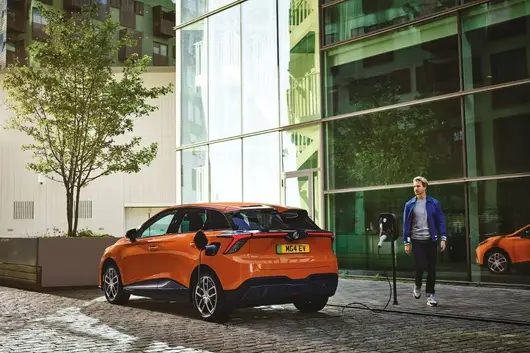
© 2024 Bitauto.com. All Rights Reserved.
Bitauto (www.yiche.com and www.bitauto.com) is one of the most visited automotive websites in China. We provide detailed info on Chinese car brands available in your area. Please note that the information provided on this website is based on publicly available data and is for reference only. It may not be fully updated or accurate at all times.

Help us improve our website


