

HomeBYD

Search History
Popular Searches
Dealer Login / Sign Up
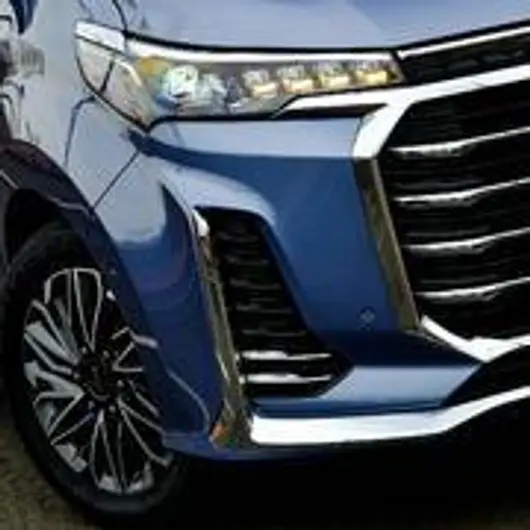








Baru-baru ini, Perjalanan Ribuan Kilometer Laluan Sutera 2026 'Laluan Ilham' sebahagian dalam negeri telah selesai dengan jayanya di Shenzhen. Rangkaian kenderaan tenaga baharu yang dilindungi sepanjang perjalanan oleh BYD telah menempuh perjalanan jauh ribuan kilometer, berjaya menyempurnakan misi penyiasatan Laluan Sutera di darat, dan dari sini layar dikibarkan untuk berlayar, menyambung ke Laluan Sutera Laut, memulakan perjalanan baharu di luar negara.
Lonceng unta Laluan Sutera kuno berdering perlahan, menyaksikan penyepaduan dan saling belajar antara tamadun Timur dan Barat, kini roda kenderaan tenaga baharu meneruskan tanggungjawab sejarah, membuka bab baharu kepunyaan pembuatan pintar China.

Perjalanan Ribuan Kilometer Laluan Sutera kali ini berlandaskan budaya, teknologi, dan perdagangan ekonomi sebagai garis panduan utama. Rangkaian kenderaan BYD berangkat dari titik permulaan Laluan Sutera di Xi'an, berlegar di banyak bandar bersejarah, mengunjungi empat simbol budaya Timur iaitu ubat wangi, tembikar, sutera, dan teh, meleburkan warisan budaya bukan bahan tulis selama seribu tahun dengan teknologi automotif moden ke dalam satu kesatuan bersama Yiche.
Semasa perjalanan jauh, keadaan jalan yang rumit dan iklim yang pelbagai menguji kemampuan kenderaan secara bergilir-gilir. Pelbagai model BYD dengan prestasi kenderaan yang mantap, teknologi pengecasan pantas dan keupayaan pemanduan pintar, mengatasi semua senario perjalanan dengan tenang, berjaya menyempurnakan keseluruhan perjalanan sebahagian dalam negeri, mengukuhkan kekuatan produk kenderaan tenaga baharu China dengan prestasi sebenar.

Shenzhen bukan sahaja titik akhir sebahagian dalam negeri, malah merupakan titik permulaan menuju luar negara. Setelah perjalanan dalam negeri disiapkan, rangkaian kenderaan akan menyambung Laluan Sutera Laut, pergi ke pelbagai lokasi luar negara untuk menjalankan siri aktiviti pameran jenama dan pengalaman produk, membawa kekuatan tenaga baharu China ke seluruh dunia. Berkeluasan di laut dan gunung dengan pelayaran hijau, BYD kini mengukur kebolehpercayaan melalui jarak, membolehkan lebih ramai pengguna antarabangsa memahami dan menerima produk kenderaan tenaga baharu China.
Kini, kenderaan tenaga baharu China sedang melaju menuju global, menjadi satu lagi kad perkenalan pembuatan berprestij tinggi China. Ia tidak hanya mengeksport produk kenderaan lengkap, malah sistem pengecasan lengkap dan konsep pembangunan rendah karbon.
Persaingan kenderaan tenaga baharu global kini semakin sengit, 'perjalanan ke luar' bukan lagi sekadar penjualan produk luar negara, malah lebih mengetes kekuatan keseluruhan jenama dan keupayaan komunikasi budaya.
Dari sudut data, peta globalisasi BYD sedang meluas dengan cepat. Setakat ini, kenderaan tenaga baharunya telah merangkumi 121 negara dan wilayah di seluruh dunia. Jualan luar negara pada tahun 2025 pertama kali melampaui 1 juta unit. Januari hingga Julai 2026, jumlah jualan luar negara telah mencapai 970,000 unit, momentum pertumbuhan yang kuat.

Lebih penting lagi, 'perjalanan ke luar' BYD telah melampaui eksport kenderaan lengkap semata-mata, sedang berkembang ke arah pengeluaran tempatan, eksport teknologi dan kolaborasi industri pelbagai dimensi. Di Eropah memasang stesen pengecasan pantas pertama, di Uzbekistan membina rangkaian pengecasan khusus, di Thailand dan Brazil melokalisasikan tapak pengeluaran, malah membawa penyelesaian 'Cahaya-Penyimpanan-Pengecasan' bersatu ke Asia Tengah.
BYD melindungi Perjalanan Ribuan Kilometer Laluan Sutera sepanjang perjalanan, bukan sahaja satu ekspedisi jenama, malah merupakan cerminan hidup lompatan zaman automotif China dari 'ekspor produk' ke 'ekspor ekosistem'. Pertukaran tamadun Laluan Sutera yang lama tidak pernah terhenti, dan BYD sedang menggunakan teknologi hijau sebagai pena, menulis bab baharu zaman baharu untuk jalan pertukaran yang merentasi seribu tahun ini.
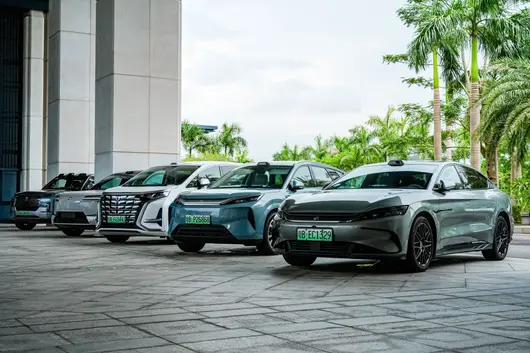

Recently, the domestic leg of the 2026 Silk Road 10,000 Miles Journey Enlightenment Road concluded successfully in Shenzhen. The new energy vehicle fleet escorted by BYD throughout the journey traversed thousands of kilometers, successfully completed the overland Silk Road exploration journey, and from here sets sail to connect with the Maritime Silk Road, embarking on an all-new overseas journey.
The camel bells of the ancient Silk Road echoed, witnessing the fusion and mutual learning of Eastern and Western civilizations. Today, new energy vehicles continue the historical mission, opening a new chapter belonging to Chinese intelligent manufacturing.
This Silk Road 10,000-Mile Journey focuses on culture, technology, and trade. The BYD fleet departed from the Silk Road starting point Xi'an, passing through multiple historical famous cities, visiting the four Eastern cultural symbols of fragrant herbs, porcelain, silk, and tea, integrating the millennium-old intangible cultural heritage with modern automotive technology Autohome.
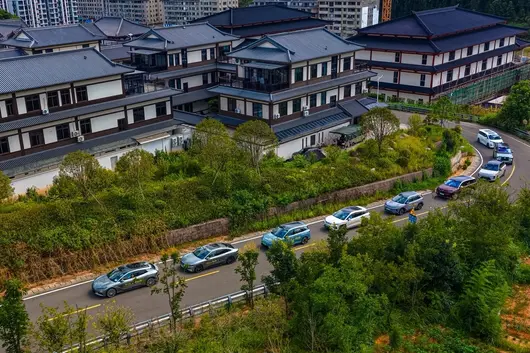
During the long journey, complex road conditions and diverse climates tested the vehicle strength in turns. BYD's full matrix of models, relying on stable vehicle performance, flash charging and energy replenishment technology, and intelligent driving capabilities, calmly handled various travel scenarios, successfully completed all domestic leg schedules, and verified the solid product strength of Chinese new energy vehicles with actual performance.
Shenzhen is not only the end of the domestic leg but also the starting point for heading overseas. After completing the domestic itinerary, the fleet will continue on the Maritime Silk Road, rush to multiple overseas locations to carry out brand display and product experience series of activities, bringing the strength of Chinese new energy to the world. Galloping through mountains and seas for a green voyage, BYD is measuring reliability with mileage, allowing more international consumers to understand and recognize Chinese new energy vehicle products.
Today, Chinese new energy vehicles are accelerating towards the global stage, becoming another business card of Chinese high-end manufacturing. What it exports is not only complete vehicle products, but also a complete energy replenishment system and low-carbon development concept.
Currently, the competition in global new energy vehicles is becoming increasingly fierce. Going overseas is no longer simple product export, but also tests the comprehensive strength of the brand and cultural communication capabilities.
From data perspective, BYD's globalization map is accelerating expansion. As of now, its new energy vehicles have covered 121 countries and regions globally. Overseas sales broke through 1 million units for the first time in 2025. Overseas cumulative sales from January to July 2026 reached 970,000 units, with a strong growth momentum.
More importantly, BYD's overseas expansion has long surpassed simple complete vehicle export, extending towards localized production, technology output, and industrial synergy multi-dimensionally. Placing the first flash charging station in Europe, building an exclusive energy replenishment network in Uzbekistan, laying out localized production bases in Thailand and Brazil, and even bringing the PV, Storage, and Charging integrated solution to Central Asia.
BYD fully escorted the Silk Road 10,000-Mile Journey, which is not only a brand expedition, but also a vivid vignette of the leap from Chinese auto product overseas to ecosystem overseas era. The civilization exchange of the ancient Silk Road has never stopped, and BYD is using green technology as a brush to write a new chapter belonging to the new era on this exchange road that has lasted for thousands of years.

Netcar Commentary A convoy departed from Xi'an, passing through Bozhou, Jingdezhen, Hangzhou, Wuyishan, Quanzhou, and Chaozhou along the way, finally arriving in Shenzhen. Fragrant herbs, porcelain, silk, and tea were written into the route map, and seven flash charging stations, two racetracks, and models from five networks and four brands were also interspersed.
When I first saw this map, my gaze first fell on the road after Shenzhen.
Shenzhen is where BYD started, it is BYD's global headquarters, and also the endpoint of this domestic journey. The convoy will continue to go overseas from here.

In recent years, Chinese car companies have been used to using roll-on/roll-off ships, overseas sales, and new factories to tell the story of going global, and BYD also has enough numbers. But when the convoy runs past highways, cities, mountain roads, and coastal roads, telling the story of China's smart manufacturing setting sail on the new Silk Road overseas, I gradually feel that how the technology in the car works, and how charging follows, might be closer to the daily life of globalization than a departure at the port.
Over twenty years in the automotive field, BYD's impression on the outside world has changed several times. Early on, people remembered its batteries, later people remembered DM-i and Blade Batteries, and in recent years, Yangwang, Fangchengbao, DiPilot, DiSus, Yi Sifang, and Flash Charge have been added.
After the number of terms increased, I also worried they would each talk their own language, until seeing different brands driving along the same route, I realized BYD is organizing the technology accumulated over these years into things that users can feel.
Nineteen Years Ago, BYD Was Already Studying Fast Charging
From 2007 to 2008, BYD participated in research and development projects such as pure electric vehicles and their fast charging systems. In December 2008, F3DM was launched in Shenzhen. This car could charge using a common 220V power source, also supported fast charging at professional charging stations. The announced charging speed at the time was a 50% charge in 10 minutes.

In that era when private new energy vehicle consumption in China was just starting, charging facilities were very scarce. Users had not yet formed the cognition of charging cars, nor had they formed the habit of charging cars.
When F3DM launched, Wang Chuanfu reminded owners on stage not to forget to charge mobile phones before going to sleep, and not to forget to charge the car either. This action which sounds quite ordinary today, even required a car company to teach users back then.
By the end of 2010, F3DM cumulative sales were only 365 units. This number is far from BYD today, but looking back from the current perspective, at that time BYD had already considered batteries, cars, and charging facilities together before the market matured, forming a sharp contrast with the blind follow-the-market car-making of many car companies today.

Eighteen years ago, F3DM already had fast charging capability, but charging facilities were far from mature. This time, the BYD convoy went south along Xi'an Lintong, Bozhou Yingquan, Hefei, Shengzhou, Wuyishan, and coastal highway. Flash charging stations are already distributed in highway service areas and urban business circles, and the number of stations is still increasing.
With the support of the second-generation Blade Battery, BYD's Flash Charge models have shortened charging time to minutes. On highways, city stops, and mountain roads, users can continue on the road with just a brief stop. The charging experience is very close to refueling a fuel vehicle.
When the convoy arrived in Shenzhen, my understanding of BYD's charging system also changed.
In the past, I often regarded batteries as its trump card for making cars. Looking at it again today, BYD has been preparing for charging for many years. And now, the most direct feeling for users is the dozens of minutes saved on the road.

Early research did not immediately bring market. BYD did not stop investment because of this. After F3DM, this thing was continued for nearly twenty years. BYD's credibility when talking about charging technology today also comes from this verifiable long-term investment.
Five Networks, Four Brands Walk on the Same Road
Around 2019, BYD began to adjust automobile sales channels. Since then, Dynasty, Ocean, Denza, Fangchengbao, and Yangwang gradually formed their own product sequences.
But in the process of BYD extending from the mass home market to luxury, ultra-luxury, off-road, and high-performance markets, external doubts have always existed.
Some say, for a brand good at mass manufacturing, entering higher-priced, more refined markets, the lessons to be made up are far more than power and configuration.
The convoy drove from Xi'an to Shenzhen. Cities, highways, mountain roads, and racetracks appeared in sequence. Dynasty and Ocean bear daily and family travel, Denza takes care of long-distance seating and luxury experience, Fangchengbao enters mountain roads and unpaved roads, Yangwang shows four-motor and body control capabilities at the racetrack.

Although there are differences in price and usage among brands and models, every car shares BYD's accumulated new energy vehicle technology and whole vehicle manufacturing capabilities.
On this road from north to south, the convoy passed urban areas, and ran on highways and mountain roads. Enabling DiPilot has become a common action during driving.
After running hundreds of kilometers, the driver can feel the heaviness and lightness of acceleration/deceleration during car following, a judgment once entering/exiting ramps, whether the takeover prompt comes a bit early or late.
A few years ago, when talking about BYD externally, the first thoughts were still batteries and hybrids. High-level assisted driving was rarely ranked at the front. This impression needs to change. Every car following, lane changing, and takeover must give people confidence.

In the past many years, BYD brought heavy-weight technologies to mass production products one after another, and made products in scale. After the formation of Five Networks Four Brands, they showed another capability. That is relying on common R&D and manufacturing foundations to enter multiple market segments and serve users with different needs.
This change is more important than adding a few brand names or models. It means BYD is growing from an automotive enterprise known for technology into an automotive group with clear brand hierarchy and wide market coverage.
From a Three-Person Office in Rotterdam to Rayong Factory
At the end of 1998, Li Ke brought an engineer and a translator to Rotterdam, Netherlands. Wang Chuanfu gave them startup resources: one shipping container of batteries and $30,000, and said, if you can reach break-even, continue. If you lose it all, stop.
Then the three people made calls to find customers during the day, wrapped battery packs together at night, and drove forklifts to deliver goods the next day.
On New Year's Day 1999, BYD's first overseas branch opened for business. At that time, the protagonist of overseas business was still batteries hidden in mobile phones.

More than twenty years later, BYD's own roll-on/roll-off ships began to shuttle between global ports, and Thailand's Rayong factory has already covered stamping, welding, painting, assembly, and parts production.
In July 2024, BYD's 8 millionth new energy vehicle rolled off this factory. Annual capacity about 150,000 units. Compared to shipping a car from Shenzhen, building a factory locally requires handling employees, supply, regulations, services, and consumption habits. Investment is heavier, and more is left behind.
In 2025, BYD's overseas sales exceeded 1 million units for the first time. Entering 2026, the overseas market is still growing rapidly, business has already covered 121 countries and regions.
From walking from the small office in Rotterdam to today, BYD's overseas operation has changed products, scale, and methods. The early approach of being close to customers and entering local markets has not lost its effectiveness.
After the convoy arrives in Shenzhen, it will continue to drive overseas. This reminds me of the three people in Rotterdam back then.
For a Chinese brand going global, the starting point can be a shipping container of batteries, or it can be a ship of new energy vehicles. But finally it must be implemented in the lives of local users.

After sales volume reached one million units, the overseas market BYD faces has become much more complex than before.
More than twenty years ago, BYD needed to make overseas customers know a battery enterprise from China. Today, what it needs to build is global consumer recognition of a Chinese automobile enterprise.
Written at the End
Thousands of years ago, camel caravans and merchant ships followed the Silk Road, transporting fragrant herbs, porcelain, silk, and tea to farther places. The world thereby recognized China's products.
Today, a convoy composed of different brand models of BYD drove from Xi'an to Shenzhen, then went to South Asia. This journey spanning mountains and rivers looked back at the traffic on the ancient Silk Road, and also let technology and vehicles undergo testing on real roads.
Electric vehicles, lithium batteries, and photovoltaic products are called China's Export "New Three Items". They represent another change in China's exports. The three fields involved in "New Three Items", BYD has been laid out for many years.
With whole vehicles accelerating into overseas markets, BYD's technology application, charging facilities, and long-term services will also quickly follow.
From single commodity output to technology, manufacturing, and service capabilities entering overseas markets together. BYD is participating in global traffic and energy transformation with green technology, creating a new business card of China's smart manufacturing belonging to this era.
© 2024 Bitauto.com. All Rights Reserved.
Bitauto (www.yiche.com and www.bitauto.com) is one of the most visited automotive websites in China. We provide detailed info on Chinese car brands available in your area. Please note that the information provided on this website is based on publicly available data and is for reference only. It may not be fully updated or accurate at all times.

Help us improve our website


