

HomeBringing

Search History
Popular Searches
Dealer Login / Sign Up

On July 25, 2026, Chery Group's global cumulative sales officially broke through 20 million units. On the same day, Fengyun A9, which went on sale, was officially delivered to users as the 20 millionth car of Chery Group.
Chery Group's 20 millionth car landing on Fengyun A9 is a call across time: Fengyun is the first car created by Chery, and also Chery's first global car to go overseas, now it has been fully refreshed into new energy intelligent vehicles. Fengyun A9 is positioned as "Long-Range Intelligent Beauty Pure Electric Coupe", not an ordinary new car, but the representative work of Chery's entire product system and quality system comprehensive upgrade, representing what Chery "Sets Off Towards Beauty" looks like, and also representing Chery's sincerity of "In China, For The World".

Starting from zero to the 20 millionth unit, Chery used a 29-year entrepreneurial journey to personally experience and witness the upward path of Chinese automobile innovation development, and also explored a path of Chinese automobile globalization "In China, For The World".
29 Years and 20 Million Units: The Upward Path of Chinese Automobiles
This July coincides with the 70th anniversary of the roll-off of the first automobile in New China. In the 70-year history of China's automobile industry, Chery's 29-year entrepreneurial journey has a special sample significance.
In the 1990s, two assertions prevailed in the industry: "No prospect without joint venture with multinational corporations" and "Cannot do independent R&D without a scale of 1 million". Chery broke these assertions, insisting on the path of independent brands, independent R&D, and independent development, becoming the first Chinese brand car company to master the core technologies of the "Three Major Components".
In 2007, Chery became the first Chinese brand car company to break through 1 million cumulative sales, and afterwards was the first to cross the 2 million, 3 million, 5 million unit milestones, until today breaking through 20 million units.

Image shows Chery Rhino Battery

Image shows Chery Mo-Jia Robot
Nowadays, Chery's globalized industry covers diverse fields such as complete vehicle manufacturing, core components, automotive finance, embodied intelligent robots, modern services, intelligent technology, etc. Chery's "Super Technology Shelf" has reserved more than 400 advanced technologies, including Rhino Battery, Falcon Smart Driving Large Model, Lingxi Smart Cockpit 2.0, Ark Amphibious System, Kunpeng Tianqing 48.57% Thermal Efficiency Engine, etc., covering the "Land, Sea, and Air" technology spectrum.
In the latest announced 2026 Fortune China 500 List, Chery Automobile appeared on the list for the first time as a listed company, ranking 87th, Return on Equity (ROE) ranked first in the automotive industry.
Over 1/3 Owners Overseas: The Chinese Car Company with the Highest "Globalization Content"
This May, Dragos Stan from Romania, driving a Chery car, spent 25 days, traveling 12,000 kilometers, crossing 8 countries on the Eurasian continent, arriving at Chery's Wuhu Headquarters with zero failures. "Trust Made in China." This was a sentence Dragos said repeatedly on the road.

Image shows Dragos Stan crossing the Eurasian Continent
Similar trust is gathering into scale globally. In the first half of this year, Chery Group cumulatively exported 943,800 automobiles, a year-on-year increase of 71.5%; for four consecutive months, it broke the Chinese automobile single-month export record, with one "Made by Chery" vehicle heading overseas every 17 seconds. Now, Chery products sell well in over 130 countries and regions, with overseas users close to 7 million, accounting for about 35% of the global 20 million users—for every 3 Chery owners, 1 is overseas.
Recognition from high-regulation markets verifies the quality of user choices. January-June, Chery sold 174,000 units cumulatively in Europe, a year-on-year increase of over 212%; for four consecutive months, it ranked in the top two of the new car sales list for all markets and all brands in the UK, and JAECOO 7 even won the single-month sales champion for all markets and all brands.

Image shows Chery vehicles going overseas are about to board the ship
"Tree Planter" Logic: Wherever, For Whoever
On July 3, 2026, Pretoria, the administrative capital of South Africa. Chery announced that it will transform and upgrade the Rosslyn Plant acquired from foreign enterprises to resume production, promising to retain all original 692 employees, and drive nearly 3,000 employment jobs upstream and downstream. When the news was announced, cheers broke out on site.

Image shows Chery South Africa Rosslyn Plant Launch
Wherever Chery goes globally, it represents the image of Chinese brands. It cannot be a "Wind Tumbleweed" that moves for profit, but must be a "Tree Planter" rooted locally—wherever, for wherever, becoming part of the local community.
At home, behind Chery's 20 million cars are industrial chains, linking the industrial development, employment jobs, taxes, and livelihood projects of national bases. Only in Wuhu, Chery drives the clustering of over 3,000 supporting enterprises upstream and downstream, attracts more than 30 Fortune 500 companies to settle down, and further helps Anhui become a major automobile province稳居 "Top Three in the Nation" for automobile production, new energy vehicle production, and automobile exports.

Image shows Chery Wuhu Manufacturing Base
Overseas, Chery has also upgraded from "Product Going Overseas" to "Ecosystem Going Overseas." In 2024, Chery cooperated with Spanish EV MOTORS to revive the Spanish national brand EBRO, creating over 1,000 employment jobs, praised by both governments and the public as the "Model of China-Spain Cooperation." Currently, Chery Group has 150,000 employees globally, among which overseas employees exceed 20,000, further driving millions of employment jobs upstream and downstream.
Beyond industry rooting, the public welfare green shade of the "Tree Planter" is also extending globally. Chery practices ESG sustainable development concepts, with the carbon footprint coverage rate of models on sale reaching 100%; conducts long-term cooperation with the International Union for Conservation of Nature (IUCN), investing in Mediterranean seagrass bed restoration, Malaysia mangrove protection, and Spain, South Africa key natural protection area projects; as a global partner of the United Nations Children's Fund, since 2023, cumulatively promised to donate $12 million, to support global education projects.

Image shows Chery joins IUCN for Mediterranean seagrass bed restoration environmental protection activity
After 20 Million Units: From "Building Cars" to "Creating Beautiful Lifestyle"
After 20 million units, where does Chery go? The answer Chery gives is: Chery's mission is to help Chinese brands get stronger from big, help Chinese automobiles change the world automobile industry; Chery is not only a car company, but also a tech ecosystem company that through technological innovation, continuously breaks energy constraints, travel boundaries, and industrial bottlenecks, continuously creating beautiful lifestyles for global users—what Chery is to face is the ultimate topic of human sustainable development.
The answer has already shown its prototype: Falcon Driving Assist, Lingxi Smart Cockpit are now on main models, L3/L4 Level Autonomous Driving is accelerating mass production; eVTOL Flying Cars successfully test flight, Mo-Jia Robots have been sold to 60 countries and regions, continuously expanding travel boundaries; Rhino Solid-state Battery energy density reaches 400 Wh/kg and is sprinting towards 600 Wh/kg; Controllable Nuclear Fusion "Artificial Sun" research has also started strategic layout. Focusing on the front-line layout of cells and high computing power chips (2C Technology), Robotaxi and Mo-Jia Robots (2R Technology), green materials, green energy, green computing power (3G Technology), and spare parts boutique ecosystem, digital content subscription ecosystem (2E Ecosystem), constitutes Chery's technology foundation facing the future.

Image shows Chery Representative Technology Ecosystem Layout
70 years ago, China's automobile industry started from zero; 29 years ago, Chery Automobile started from the wasteland. 20 million units is a milestone on this entrepreneurial road, and also a new starting point for Chery's next leg.
Facing the upcoming "Standing at thirty" in 2027, Chery wants to go from "Building Cars" to "Creating Sustainable Beautiful Lifestyle"—this is the topic of Chery's "Standing at thirty", and also the agreement between this 29-year-old Chery and the "Century Chery"!

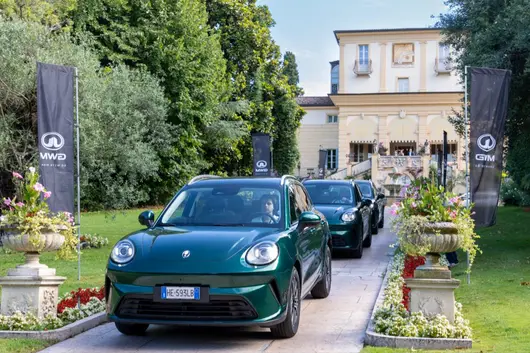
Brazil sold out 2,000 units in 24 hours, Thailand orders broke 5,000 units, domestic June sales surged 229% year-over-year, Ora brand cumulative sales exceeded 584,133 units. This is the report card Great Wall Ora 5 delivered in the past month.

Actually, such popularity didn't come from nowhere. A few days ago, Baoding, Hebei's Exploration Day might provide some answers. A few days ago, a special group of guests flew to Baoding. Great Wall Motor Global Exploration Day was held here. Investors from around the world walked into the Xushui test track to personally test drive different power versions of Great Wall Ora 5.

Why can a Chinese brand SUV be hot in multiple markets at the same time? We split the answer into three layers.
Adaptation, not replication. Great Wall Ora 5's most core product logic is "One Car, Multiple Powers" -- hybrid, pure electric, fuel three power forms developed on the same platform, covering different needs of different markets.
Sounds simple, but execution requires two completely different approaches.
Traditional practice is "One Power for the Global". The problem is, vehicle usage environments in Bangkok, Thailand and São Paulo, Brazil are different, charging conditions in Oslo, Europe and Jakarta, Indonesia are also different. Forcing one power version to cover all markets either causes culture shock in some markets, or power is useless in others.
Great Wall Ora 5 changed tactics. In Thailand, HEV hybrid version uses two-speed DHT hybrid architecture to balance city commuting energy saving and long-distance travel; in Brazil, the first batch launched is the hybrid version; in Europe, chassis settings are specially tuned for local road conditions, emphasizing driving fun. Fuel version serves as a "backup option", providing a reliable choice for areas with inconvenient charging.

Same car, different markets might receive different power versions, but every version is tailor-made for local scenarios. Global quality, global adaptation, embedded in the gene from the R&D stage.
Concrete data: Hybrid version equipped with Hi2 smart hybrid system, system combined power 166kW, peak torque 476N·m, WLTC combined fuel consumption 4.5L/100km, range over 1,100km. Pure electric version per 100km consumption about 11.6kWh.
In Thailand market, hybrid version directly faces Japanese hybrid models, cumulative orders already broke 5,000 units. In Brazil, pure electric version sold out 2,000 units in 24 hours. Same platform, same production line, make different power versions, sell to different markets, every market runs its own logic.

Trust, is tested. Product performance is one thing, making people believe is another.
The value of this summit is to let investors personally verify. Xushui test track set display zeroing, mileage actual measurement, and challenge to keep coffee from spilling on the driving track -- let overseas investors personally get hands-on, speak with data.
Pure electric version goes through auto parking, see actual performance of intelligent driving assistance; hybrid version actual measurement fuel consumption and shifting smoothness, see if "Quiet, Fast, Save, Smooth" can be implemented. These overseas investors, many are themselves decision makers of dealer networks, they say good after testing, better than any ad placement.

Great Wall Ora 5 all series models equipped with intelligent system is same -- no matter if you buy pure electric, hybrid or fuel, Coffee OS 3 smart cockpit and Coffee GPT large model voice system are standard. Intelligent experience investors feel during test drive is unified across different power versions, from hybrid version to pure electric version, no need to readapt a set of interaction logic.
This "All Series Standard" thought, in overseas market has an easily overlooked benefit: local users won't feel intelligent configuration is cut down just because they bought hybrid version, dealers don't need to do complex explanation work between different configurations. Product line clearer, trust threshold lower.

Momentum, will add up. Great Wall Ora 5 globalization rhythm is not "Scatter Net Everywhere", but "Targeted Breakthrough, Rolling Replication".
First stop is Thailand. March 12, 2026, Great Wall Ora 5 global premiere in Bangkok. Great Wall has a full-process whole vehicle production base in Rayong, Thailand, first batch of Great Wall Ora 5 models have come off the line here, supplying Thailand and surrounding markets. Great Wall plans to achieve 40% sales growth in Thailand in 2026, and add 10 billion Thai Baht investment, Great Wall Ora 5 is just the key model.
Thailand station verified two things: "One Car Multiple Powers" feasible in right-hand drive market, hybrid version in Southeast Asia market dominated by Japanese cars can fight. Result proved, feasible.
Second stop is Brazil. June 24 opened first batch 2,000 units sales, 24 hours sold out. Brazil station verified is pure electric version in Latin America market acceptance, and brand pricing strategy and channel capability. Result also proved, feasible.
Third stop is Europe. Madrid, Spain officially launched, simultaneously reached 3-year official sponsorship cooperation with Spanish professional basketball league (ACB). Italy used a exclusive event for media and creators, let European opinion leaders feel Great Wall Ora 5 up close.

Next is Australia, South Africa, Indonesia and Central and South America regions. Thailand verified product logic, Brazil verified market rhythm, Europe verified brand tone. A market's success, provides trust endorsement for next market; global momentum add up, form positive cycle.
2026 first half, Chinese cars cumulative export 5.096 million units, year-over-year growth 65.3%, June single month export first broke 1 million units. Chinese car export going out starting from "Product Output" turning to "System Rooting". Great Wall Ora 5 globalization path, exactly stepped on this turning point.
Final Thoughts
Great Wall Ora 5 overseas market response, taken apart is these three things: "One Car Multiple Powers" lets every market get product version most suitable for local; global investors personally verify, better than any marketing rhetoric; Thailand, Brazil, Europe, every step accumulating momentum for next step.
These three layers of logic ring together. Without good product, test drive experience even better is useless; without real verification, globalization layout is castle in the air; without global replication, single point market success is just isolated example.

Great Wall Ora 5 is doing, is letting global users like accept Japanese hybrid, accept a Chinese brand multiple power SUV. Brazil 24 hours sold out 2,000 units, Thailand 5,000 units orders, domestic June year-over-year surged 229%, cumulative broke 584,000 units -- these numbers speak same thing: Chinese NEV export out, can use no price to exchange market, but use product power open market.
Xushui test track inside, overseas investors step on throttle moment, feel not only a car power response, but also a Chinese car is being re-evaluated.

By Wan Xulong
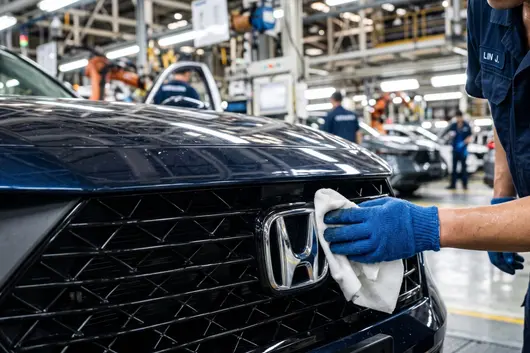
On July 20, Honda and GAC Group announced they will extend the joint venture agreement until 2038.
The original joint venture agreement was set to expire in 2028. Honda chose to complete the renewal two years early in 2026. Mainstream analysis in overseas financial circles believes this move aims to forcibly eliminate external uncertainty regarding the future of the joint venture.
Over the past year, rumors about GAC Honda closing backward production lines and reducing capacity have continued to ferment in the market. Overseas capital markets even once interpreted these moves as a precursor to the Japanese giant preparing for strategic withdrawal. This early-signed new agreement indeed allayed so-called concerns about "withdrawal".
This new agreement is full of realistic strategic considerations in terms of duration and equity ratio.
Honda abandoned the grand narrative of a 30-year timeline when the factory was built in 1998, setting the duration conservatively at 10 years. In today's world where smart EV technology iterates rapidly, predicting the industry end-game 30 years later is meaningless. 10 years just covers the reshuffling period for the complete transition from traditional fuel vehicles to new energy.

The Chinese market has long passed the simple profit center stage, evolving into the world's most efficient smart driving testing ground and the source of 3-electric technology. Honda is actually bearing the pain of eliminating backward capacity over 10 years, relying on China's massive supply chain to complete the reconstruction of underlying technology. This is the winning hand for its survival in the new energy era.
On the other hand, the new agreement maintains the 50-50 equal equity ratio. Against the background of the comprehensive opening of joint venture equity ratios, cross-border car companies generally seek absolute control to gain more profits. Honda chose to stand still on equity, obviously having completely different ideas.
The internal combustion engine technology barrier and old system of the fuel vehicle era have become like rotting wood. Facing the brand-new electrification underlying architecture, Honda urgently needs to rely on China's extremely competitive smart driving algorithms and 3-electric supply chain system. Maintaining an equal equity ratio represents a new balancing contract exchanged for technology empowerment after the Chinese local automotive industry explodes comprehensively in core technology fields. This renewal that seems to stabilize the army's morale actually also represents the end of the era of one-way technology input. In the future, the "Joint Venture 2.0" model, where the Chinese side leads the new energy architecture while the foreign side handles brand quality control, will truly determine the future of joint venture car companies.
The Flip of the Underlying Model
In the window period created by this new 10-year contract, GAC Honda needs to undergo a painful and thorough transformation. It is transforming from a pure manufacturing execution unit in Honda's global strategy into a co-creation R&D center highly dependent on Chinese local technology empowerment.
In 1999, GAC Honda introduced the sixth-generation Accord into the Chinese market simultaneously, breaking the price monopoly of imported luxury sedans all at once. For the following 20-plus years, GAC Honda surged ahead. Many heavy-hitting products like Fit, Odyssey, Crider, and Vezel were launched consecutively, finally creating a historical peak of 808,900 annual sales units in 2020.

Supporting this premium and sales volume was Honda's advantage in internal combustion engine and vehicle engineering dimensions, which had a very high match with the domestic market at that time. These technologies not only won sales volume but also established industry standards in the Chinese market for 20 years.
In the powertrain field, Honda was jokingly referred to by the folk as "buying engines and getting a car for free". From VTEC to later i-VTEC technology, then to the Earth Dreams Technology series engines of the turbocharging and hybrid era, relying on efficient combustion technology, it achieved extremely low fuel consumption while outputting surging power. The i-MMD dual-motor hybrid system even directly raised the technology threshold of the entire Chinese hybrid market with over 40% thermal efficiency. In that stage, Honda's engine parameters were the industry benchmark that Chinese local car companies had to catch up in power R&D.
In terms of mechanical space utilization, Honda's concept of maximizing space for human seating and minimizing space occupied by machinery also profoundly reshaped China's family car market. Chinese consumers have an extreme craving for interior space. Relying on extremely exquisite chassis suspension layout and space excavation, small cars like Fit have the most outstanding seating experience among products in the same class, while Odyssey directly created the golden space standard for Chinese family MPVs. This class-skipping space performance forced all car brands attempting to enter the Chinese market to make space optimization the first priority of car building.
But now, the mechanical moat proud of the fuel vehicle era has quickly lost its protective efficiency before the 3-electric system and high-level smart driving. Facing the extremely strict iteration rhythm of the Chinese market, the foreign party finally realized that a global platform made behind closed doors cannot survive at all.
The direction of technology empowerment has undergone a historical reversal. For example, in GAC Honda's current new energy technology spectrum, the underlying Architecture W architecture has completely opened up to Chinese local supply chains. Battery packs directly adopted CATL's ternary lithium batteries, intelligent cockpits integrated iFlytek and Huawei's technical ecosystems, and high-level smart driving systems started to extend olive branches to local algorithm companies like Momenta.
Perhaps you might wonder, this migration of technological focus is already old news for many joint venture brands a few years ago, why did GAC Honda, which had deep insights into the Chinese market for more than 20 years before and produced many best-selling models fitting domestic consumer needs, seem to turn slowly? The core reason is that a set of old supply chain systems, the constraints are far beyond our understanding.
Shattering the Keiretsu System
The flip of the underlying model is accompanied by a sense of violent tearing. GAC Honda's terminal sales volume in the first half of this year encountered a severe decline of over 50 percent. Reuters and Nikkei pointed out in recent reports that this is by no means a simple macroeconomic cycle fluctuation; an irreversible structural collapse is truly happening on Japanese joint venture brands. The appearance of this collapse is the excess of backward capacity, its core originates from the complete failure of the old supply chain system.
In the past few decades, Honda, or rather the Japanese automotive industry, has been invincible worldwide. At the supply chain level, the core winning hand is a closed system known as Keiretsu.

This system is centrally scheduled by the OEM, and component enterprises at various levels form a community of interest through cross-shareholding. Inside Honda, Keihin focuses on engine control, Showa focuses on chassis suspension, and Nissin Industrial focuses on braking systems. These three core suppliers constitute Honda's unique component "Three Families".
The most significant feature of the Keiretsu model is the Design-in joint development mechanism where guest engineers enter the OEM R&D center years in advance. This highly bonded software and hardware development mode compressed component manufacturing costs to the extreme and ensured one-million-level physical quality control consistency with strict internal collaboration. Honda's ability to conquer the global market with extremely high reliability relied entirely on this solid wall built by the "Three Families".
In the Chinese market, this model was perfectly replicated by GAC Honda. In the initial stage of factory building, Honda introduced all Japanese component giants within the system to Guangzhou Huangpu, forming a closed procurement ecology that water cannot penetrate. Chinese suppliers found it extremely difficult to penetrate this solidified component list. This highly closed collaborative development mechanism once helped GAC Honda quickly align with global manufacturing standards and established a ruling market position in the following 20 years.
Entering the era of smart electric vehicles, this method showed systemic rigidity and sluggishness.
The Keiretsu model is built on the incremental improvement of internal combustion engines and mechanical hardware, its core is the highly integrated mechanical calibration of software and hardware. Smart electric vehicles require software and hardware decoupling and centralized computing architecture. Facing the leap of battery chemical materials and the explosion of smart driving algorithms, Japanese component giants cannot incubate 3-electric technology with global competitiveness at all.
The more fatal contradiction lies in the mismatch of development rhythm. Japanese traditional supply chains are used to completing a durability closed-loop verification process lasting 36 to 48 months to ensure absolute component reliability. The technical half-life of the Chinese new energy market has shortened to less than one year. Chinese local car companies use open supply chains to compress vehicle development cycles to 18 to 24 months. Facing the Chinese market where code upgrades are promoted every month, the long verification process has become shackles binding Japanese car companies.
Even if Honda tried to save itself at the cross-border level, merging Keihin, Showa, Nissin Industrial and Hitachi Automotive Systems into Hitachi Astemo, and planning to increase its shareholding to 61% this year to unify command resources and aggressively attack AI and software development. This slow speed of internal integration still cannot keep up with the iteration rhythm of China's local.
To survive, GAC Honda must personally smash this closed high wall built by Japanese suppliers.
Facing the crazy drop in sales and the dissolution of the fuel vehicle base, GAC Honda is undergoing a cruel capacity clearing and supply chain breakthrough. While gradually shutting down some old fuel vehicle production lines in Guangzhou, the brand new new energy exclusive factory located in Guangzhou Huangpu with an initial annual capacity of 120,000 vehicles is in the key period of capacity ramp-up. Using high new heavy assets to replace old assets that could originally sustain blood creation, this alternation of breaking and establishing consumes enterprise cash flow extremely.
Conducted synchronously with capacity clearing is the complete liberation of procurement power.
On the next brand new EV models, GAC Honda decisively bypassed the traditional Japanese supply chain and deeply integrated Chinese local top technology enterprises into its own R&D system. The vehicle's core power battery pack directly switched to CATL's mature solution. The intelligent cockpit underlying level fully integrated iFlytek and Huawei's technology ecosystem. High-level smart driving algorithms directly adopted the end-to-end large model provided by Chinese startup company Chudu.
Completely smashing the interest fortress of the Keiretsu system and integrating China's top local 3-electric and smart driving enterprises into its own underlying architecture is the only path for GAC Honda to adapt to the cruel evolutionary rhythm of the Chinese market. Joint venture car companies are exactly in this pain of breaking old and establishing new, searching for the possibility of regaining vitality.

Staying in the Cruellest Gym
Honda chose to complete the renewal at this node in time, essentially forcing itself to stay in the world's cruelest business gym. In this market, the response speed of smart cockpits, the generalization ability of high-level smart driving, and the thermal efficiency of power batteries are repeatedly subjected to extreme pressure by hundreds of local car companies and tens of millions of consumers every day. This high-intensity competitive environment is an industrial ecosystem that any cross-border car company cannot replicate in its local market or European and American bases.
If choosing to strategically withdraw or contract the battle lines at this time, Honda can indeed protect the short-term financial report, but it will completely lose the antenna to perceive the world's most advanced smart electrification trends. Once leaving this super technology incubator China, Honda's R&D system will quickly degenerate in the following three to five years, becoming an island completely cut off from the global top 3-electric and software supply chains.
Staying at the table, it is not only about market share in China but also about Honda's defense capability at the global level.
The strong overseas expansion of China's local new energy vehicles has been fully opened. In Southeast Asia, Middle East, and South America, etc., which are advantage markets traditionally firmly controlled by Japanese car companies, Chinese car brands are launching fierce attacks carrying high-dimensional product power polished by extreme internal competition. Honda's profit highlands in Thailand, Indonesia and other places are facing unprecedented pressure.
In order to resist this dimensionality reduction strike on the global battlefield, Honda must cultivate product R&D capabilities on the Chinese local that can confront Chinese brands head-on. This is exactly the core strategic value of the reverse joint venture model.
GAC Honda and other joint venture enterprises are undertaking an extremely critical technology feedback role. Honda deeply integrates CATL batteries, Huawei ecosystems, and local startup smart driving algorithms within the Chinese joint venture system, not just to build a few cars suited to Chinese consumer tastes. Its true intention is to use the Chinese underlying technology architecture to quickly iterate a set of new energy solutions with global competitiveness.

Recent rare alliances between Honda and Nissan in electrification and intelligence dimensions also confirm the spread of this global defense anxiety. Facing the technology sprint of Chinese car companies, Japanese giants have given up the illusion of fighting alone. GAC Honda plays a key hub role in connecting China's top supply chains and Japanese global manufacturing systems within this huge defense network.
The Chinese market is reshaping Honda's technology base. GAC Honda's 10-year renewal agreement completely ends the one-way narrative of exchanging foreign technology for the Chinese market. Joint venture car companies are transforming into core pipelines for cross-border giants to draw nutrients from China's advanced industrial chains. This life-or-death self-revolution will ultimately decide whether Honda can hold a place in the future global smart car landscape.

[Maklumat Teknologi CNMO] 21 Julai, syarikat pemanduan automatik Momenta mengumumkan Robotaxi-nya telah secara rasmi menerima lesen ujian jalan untuk kenderaan bersambung pintar bandar Shenzhen, dan akan menjalankan ujian lapangan di Shenzhen dalam masa terdekat. Ini merupakan satu lagi kualiti ujian utama yang dicapai oleh Momenta selepas Shanghai, Suzhou, dan Wuxi di bandar-bandar utama China.

Momenta
Pada masa ini, Robotaxi Momenta telah secara berperingkat dilaksanakan ujian di Shanghai, Suzhou, Wuxi, Shenzhen di China, serta Munich di Jerman dan Abu Dhabi di Emiriah Arab Bersatu. Syarikat merancang pada tahun 2026 untuk melaksanakan pemanduan automatik tahap tinggi di pelbagai bandar dan wilayah baharu di seluruh dunia, memajukan dengan mantap pengesahan senario teknologi dan penerokaan perkhidmatan pengangkutan rakyat. Rancangan penerbitan massanya telah dilaksanakan di lebih daripada 10 negara dan wilayah di Asia, Eropah, Oceania, Amerika Latin dan Afrika Utara.
Dalam aspek ekosistem kerjasama, Robotaxi Momenta telah membina kerjasama dengan platform pengangkutan global seperti Uber, Grab, Lumo, Xiangdao serta pengeluar kenderaan seperti Mercedes-Benz. Sebelum ini, wakil kerajaan dan perusahaan dari bahagian berkaitan kerajaan Singapura, Lyft telah melawat Momenta untuk perbincangan, menunjukkan minat industri antarabangsa terhadap kemajuan teknologi pemanduan automatik di China.

Rakan Kongsi Momenta
Momenta memperkenalkan model besar R7 berasaskan Model Dunia dan Pembelajaran Penguatan pada April 2026. Model asas AI Fizik ini akan menyokong Momenta dalam pelaksanaan berskala di bidang kenderaan penumpang, Robotaxi dan kenderaan logistik tanpa pemandu (Robovan).
Logik teras Model Dunia R7 terletak pada memberikan kenderaan kesedaran terhadap peraturan fizikal realiti. Berbeza dengan kaedah tradisional yang bergantung pada peraturan manual dan pengenal pasti imej, sistem ini meneraskan data pemeterusan besar untuk mempelajari kelembaman, geseran, lintasan pergerakan objek dan hukum fizikal asas, boleh menyoal secara autonomi pelbagai keadaan jalan ekor panjang jarang berlaku, menangani objek yang jatuh secara mengejut, pengangkutan bercampur di persimpangan, penyusupan kenderaan bukan bermotor dan senario lain yang sukar dicakup oleh algoritma tradisional. Struktur teknikalnya dibahagikan kepada tiga peringkat: peringkat pra-latihan Model Dunia memampatkan hukum fizikal, peringkat simulasi Model Dunia menyoal senario ekor panjang, peringkat Pembelajaran Penguatan melaksanakan pengoptimuman keputusan autonomi.

Model Kereta Rakan Kongsi Momenta
Timbalan Presiden Gu Gongyao dari Momenta mendefinisikan Model Dunia R7 sebagai "Momen ChatGPT AI Fizik", menganggap ini sebagai pegangan penting bagi AI bergerak dari dunia digital ke dunia fizik. Dalam aspek pelaksanaan penerbitan massal, Cadillac telah mengumumkan akan melancarkan industri pertama kenderaan yang dilengkapi dengan Model Dunia R7 Momenta. SAIC Volkswagen ID.ERA 9X juga akan melengkapkan Model Dunia R7 terlebih dahulu. Roewe Jia Yue 07 juga akan melengkapkan skema pemanduan bantu pintar tahap tinggi Model Dunia R7 Momenta generasi terkini.


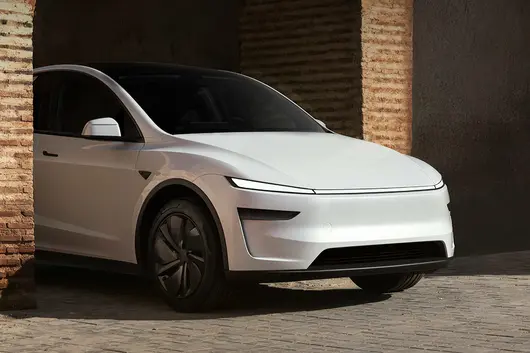
2026年6月
Model Y成为马来西亚最畅销的进口品牌电动车
Model 3成为马来西亚最畅销的纯电轿车
来自上海超级工厂的中国智造
安全、智能、好开、耐用🦾



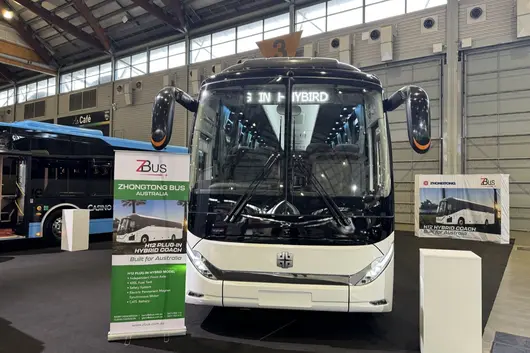
On July 15, the 2026 Australia Sydney International Bus Show (2026 Australasia Bus & Coach Expo) opened at the Sydney Olympic Park venue. The exhibition is organized by the New South Wales Bus Industry Association Bus NSW, and is the largest and most professional bus whole-industry trade event in Oceania.

Based on the high-quality development strategy, Zhongtong Bus made a strong appearance at this exhibition, gathering five classic models on three major technology routes – diesel, extended-range, and pure electric – Diesel version H12, Diesel version L7, Extended-range version H12, Extended-range version L8, Pure electric version N12, fully showcasing the global layout and high-end breakthrough of Chinese buses.
Zhongtong Bus's global exploration bears the era mark of Chinese buses, and even Chinese manufacturing, stepping onto the world stage. Since exports began in 2003, Zhongtong Bus's overseas territory has continued to expand, and its market share has steadily climbed.
According to the latest data from China Bus Statistics Information Network, in the first half of 2026, Zhongtong Bus exported 4,318 buses over 7 meters, a year-on-year increase of 23.65%, with a market share of 14.35%, demonstrating strong market resilience.
What truly allows Zhongtong Bus to stand firm in fierce competition is its "all-rounder" strength. From traditional power to extended-range hybrid, and then to pure electric, Zhongtong Bus has built a product matrix covering all technology routes, capable of providing precisely matched customized solutions based on the policy environment, climate conditions, road conditions characteristics, and operational needs of different markets.
From Singapore's narrow-body pure electric buses to Denmark's low-temperature anti-corrosion upgrades, from Dubai's first entry into high-end public transport systems to showcasing five models in Australia this time, Zhongtong Bus reads local needs first before presenting corresponding solutions. It is not standardized copying, but custom-tailored.

Behind the market breakthrough is Zhongtong Bus's long-term adherence to deep technology cultivation and forward-looking layout. As one of the first domestic enterprises to layout new energy R&D, Zhongtong Bus has continuously improved in core technology and quality control for many years, earning the pass to enter global high-end markets with solid strength.
Standing at the top bus exhibition in Oceania, facing global industry giants and Australian local operators, Zhongtong Bus not only needs to showcase products, but also needs to make clear China's smart manufacturing technical confidence and brand landscape to the world. The five boutique models exhibited this time are not only a precise response to the diversified needs of the Australian market, but also a pragmatic answer from Zhongtong serving global sustainable transportation with full-scenario solutions.

The Diesel version H12 and Diesel version L7 are two main models designed by Zhongtong Bus for high-intensity operational scenarios. The Diesel version H12 is equipped with the new generation "Golden Power Train", reducing fuel consumption by 5%~10% per 100 km compared to the industry average, balancing power and economy; The Diesel version L7 is adapted for business, tourism, group, rental and other scenarios, with a maximum climbing grade greater than 30%, powerful power, fuel-saving and efficient.

Extended-range version H12, L8, precisely anchor the dual needs of low-carbon transformation and cost reduction and efficiency increase. Targeting industry pain points such as uneven distribution of pure electric refueling facilities, limited range for long-distance operations, and high energy consumption for fuel vehicles, Zhongtong Bus relies on autonomous and controllable extended-range hybrid technology to achieve intelligent linkage of oil and electricity, energy allocation according to needs, possessing the triple advantages of ultra-long range, ultra-low energy consumption, and high adaptability, providing high cost-performance and high practicality product solutions for low-carbon transformation of passenger transportation in Australia and even globally.
Pure electric version N12 is a high-end product built by Zhongtong Bus for global traffic green intelligent transformation needs. Taking "Deep Customization" as the core, it can precisely adapt to operational scenarios of different countries. The whole vehicle is equipped with a new generation high-efficiency battery, motor, and controller system, combined with lightweight body design, lower energy consumption, more stable range, enough to support the frequent and long-term operational rhythm of urban buses. Domestically, it is the core transport capacity of urban public transport; Overseas, with the positioning of "Chinese Solutions", it deeply participates in the global traffic low-carbon revolution.

This appearance at the Sydney International Bus Show is a key step for Zhongtong Bus to perfect its global layout strategy, and also a vivid practice from "global layout" to "global deep cultivation".
In the future, Zhongtong Bus will continue to stand on a global vision, adhere to technological innovation, and deepen local adaptation, with the hard core strength of China's smart manufacturing, contributing more "Chinese Solutions" to the green upgrade and smart transformation of global public transportation.

Di pasaran SUV di Malaysia, ramai pembeli membandingkan Perodua Aruz dan Mitsubishi Xforce ketika memilih kereta. Kedua-dua kereta ini agak hampir dari segi harga dan penempatannya, hari ini kita akan buat perbandingan terperinci dari pelbagai aspek untuk membantu anda menjimatkan masa membuat kajian.
Perodua Aruz, harga OTR di Malaysia adalah RM 72,900 - 77,900, terdapat 2 versi, termasuk 1.5L X (RM 72,900), 1.5L AV (RM 77,900) dan lain-lain.
Mitsubishi Xforce, harga OTR di Malaysia adalah RM 109,930 - 119,930, terdapat 2 versi, termasuk 2026 1.5L Ultimate (RM 119,930), 2026 1.5L Urban (RM 109,930) dan lain-lain.
Dari segi harga, harga permulaan Perodua Aruz memang lebih murah RM 37,030 berbanding Mitsubishi Xforce. Jika bajet anda terhad, versi pemula Perodua sudah boleh memenuhi keperluan harian. Tetapi perlu diingat, perbezaan harga beberapa ribu ringgit itu, mungkin ada pertukaran pada kelengkapan, bergantung kepada keperluan anda.

Perodua Aruz dilengkapi dengan 1.5L 4-cyl, kuasa 105 hp. Penggunaan bahan api rasmi 6.0 L/100km.
Mitsubishi Xforce dilengkapi dengan 1.5L Turbo, kuasa 140 hp. Penggunaan bahan api rasmi 7.0 L/100km.
Dari segi kuasa, 1.5L Turbo Mitsubishi Xforce mempunyai kuasa 35 hp lebih berbanding 1.5L 4-cyl Perodua Aruz. Walau bagaimanapun, untuk penggunaan harian di bandar, kuasa kedua-dua kereta adalah mencukupi, tidak akan terasa kurang tenaga.

Penilaian keselamatan Perodua Aruz adalah 5★ (ASEAN NCAP), sistem keselamatan aktif termasuk.
Penilaian keselamatan Mitsubishi Xforce adalah 5★ (ASEAN NCAP), sistem keselamatan aktif termasuk MI-PILOT.
Kedua-dua kereta mempunyai penilaian keselamatan yang sama, pada tahap ini kelengkapan keselamatan dianggap sangat lengkap. Kereta baru sekarang tidak kurang dari segi keselamatan, tiada perlu bimbang tentang hal ini.

Perodua Aruz jaminan 5 tahun/150,000km, selang penyelenggaraan setiap 10,000km atau 6 bulan.
Mitsubishi Xforce jaminan 3 tahun/100,000km, selang penyelenggaraan setiap 10,000km atau 6 bulan.

Secara keseluruhan, Perodua Aruz dan Mitsubishi Xforce adalah kedua-dua model kereta yang sangat bagus di pasaran Malaysia. Memilih mana satu, perkara penting bergantung kepada keperluan dan bajet peribadi anda. Disarankan untuk membuat kajian, bandingkan beberapa sebut harga dari dealer, baru kemudian uji pemanduan untuk membuat keputusan akhir. Membeli kereta adalah perkara penting, menghabiskan masa untuk membuat kajian tidak akan salah.


6 月,新動力科技發動機銷量達到 17966 臺,按年增長 26.9%,連續 6 個月維持兩位數增長;1—6 月累計銷量 110533 臺,按年增長 28.1%。當中,自營出口按年增長 121.6%,成為拉動增長最明顯嘅板塊之一。
但對於一家發動機企業嚟講,更多產品運去海外,唔止係銷量數字嘅變化。
一台發動機裝進發電組、工程機械或船舶之後,真正面對係當地複雜嘅工況、分散嘅客戶同漫長嘅供應鏈。設備發生故障嗰陣,配件幾耐先攞到?維修人員喺邊度?當地合作夥伴有無能力處理?呢啲問題,往往比產品本身更能決定一個品牌有無喺海外市場長期留落嚟。
這亦係新動力科技過去幾年加快建設海外辦事處、服務站同備件前置體系嘅原因。出口跑得更快之後,呢間傳統動力企業開始補海外經營中最需要時間嘅一環:服務。

由賣發動機,到跟住主機廠走向海外
新動力科技嘅海外業務並非近年先至開始。新動力國際銷售事業部總經埋秦衛衛表示,新動力科技早在上世紀 90 年代便開始從事進出口業務,初期更偏貿易型。
真正推動新動力科技海外業務進入新階段嘅,係搭上中國主機廠集體出海嘅東風。
過去幾年,工程機械、商用車同發電設備企業開始更大規模咁進入東南亞、非洲、中東、拉美等市場。作為動力配套供應商,新動力科技嘅發動機亦跟隨整機一齊走出去。按企業提供嘅數據,2026 年上半年,海外業務已覆蓋全球 100 多個國家,擁有近 70 家長年客戶同 15 家核心 OEM。
目前,企業出口產品仍以發電組用發動機為主,佔比約 90%;船機、泵機同工程機械用發動機約佔 10%。呢啲產品普遍應用於電信基站、醫院、酒店、港口、石油探勘、畜牧物流、風電同數據中心等場景。
發動機係典型嘅中間工業品,客戶買嘅唔止係一個動力總成,而係一整套持續運作嘅能力。特別係喺基礎設施相對薄弱嘅市場,一台設備停機,可能意味著通訊、醫院供電、港口作業或礦區生產都要受到影響。
因此,海外客戶對產品嘅要求,亦係由「可以交付」轉向「可以長期保障」。

由項目制支援,到將服務能力前置
2024 年以前,新動力科技海外服務主要採取兩種模式:一種係 OEM 買斷服務費用後自行負責出口產品嘅售後;另一種係喺海外重大項目入面,由企業派人駐點支援。隨著產品進入更多國家,呢種偏項目制嘅服務方式開始難以適應越嚟越分散嘅市場。
2024 年,企業喺原海外銷售事業部下設立海外服務科。成立之初,團隊只有 4 人,海外辦事處僅 2 間,主要依靠經銷商網絡開展服務;到 2026 年 6 月,海外辦事處已增至 20 間,海外常住人員達到 17 人,海外銷售服務網絡達到 211 間。
這並唔意味著新動力科技喺海外完全照搬國內嘅自建網絡模式。更多情況係,企業負責提供技術、培訓、配件同服務標準,由當地合作方承擔現場服務同客戶連接。對於發動機企業嚟講,呢種係更現實嘅方式:要快啲形成服務能力,又要令服務真正融入當地市場。
由 2024 年至 2026 年上半年,企業累計新建 120 間服務站,並持續擴大海外培訓規模。2024 年,開展培訓 32 期,2025 年 36 期,2026 年上半年已完成 21 期。與此同時,海外 7 天修復率由 2024 年嘅 77% 提升至 2025 年嘅 88%,到 2026 年 6 月進一步升至 90%。
服務能力提升背後,仲有更加基礎嘅配件問題。

新動力國際銷售事業部高級經理馮春表示,喺國內,一啲常用件可能兩三日就嚟得及送達;但喺非洲、拉美等市場,海運週期可能長達數月,緊急空運仲會受到通關、航班同當地基礎設施條件影響。採訪中,相關海外服務人員提到,面對跨境物流嘅不確定性,企業唔得唔增加備件冗餘,將常用配件同部分整機提前放喺海外節點。
目前,企業已喺印尼、越南、尼日利亞、巴西、哈薩克斯坦、土耳其等國家同地區市場進行配件同整機前置佈局。20 個海外市場節點嘅現有配件前置金額已超過 270 萬元,並規劃繼續補充;同時,海外已有 46 臺整機前置庫存。
對於海外客戶嚟講,呢啲庫存看似並唔起眼,卻直接決定設備故障之後,係要等待數週、數月,定係可以喺較短時間內恢復運作。
喺土耳其,一位當地長期合作經銷商曾表示,佢將呢間新動力科技當做「屋企嘅一員」。喺佢睇嚟,新動力科技產品嘅口碑唔只關係到單次銷售,亦關係到當地客戶有無願意持續選擇呢一品牌。即使部分終端用戶並非佢直接銷售對象,只要涉及產品使用體驗同品牌聲譽,佢亦願意主動協助溝通。
經過長期嘅產品使用同市場積累,新動力科技喺海外已擁有一批認可佢可靠性、願意共同維護口碑嘅忠實合作夥伴。對於發動機呢類工業產品嚟講,呢種信任並唔來自單純嘅交易行為,而係來自長期穩定嘅產品表現,以及持續兌現嘅服務承諾。
海外經營,拼嘅唔止係產品同價格
隨著服務網絡不斷鋪開,新動力科技面對嘅挑戰亦變得更加複雜。
海外市場並唔係將國內經驗簡單複製出去。唔同國家嘅氣候、海拔、油品、操作習慣同語言環境各不相同。即便維修工程師具備豐富嘅國內經驗,到咗當地市場之後,都需要重新適應用戶需求同現場工況。特別係喺終端客戶主要使用本地語言嘅地區,單靠英語同臨時翻譯,好難真正完成服務下沉。
因此,產品本身亦需要針對海外場景做適應性開發。新動力科技提供嘅發電組用發動機覆蓋 10—3000kW 功率段,均經過 5000 米高原測試,並標配適應 50 攝氏度環境溫度嘅散熱器;針對高粉塵同特殊油品工況,仲提供相應嘅選配方案。
喺傳統工程機械同發電組市場之外,數據中心亦正在成為新嘅增量方向。隨著 AI 算力基礎設施建設升溫,數據中心對於穩定供電同備用電源嘅需求不斷提升。新動力科技正開拓 12VK、16VK 等 1.8—2.4MW 嘅中壓電机组喺海外數據中心領域嘅機會。2026 年上半年,企業發電組銷售額達到 329 萬美元,按年增長 21%。
不過,無論係傳統電站動力產品,定係面向數據中心嘅大功率產品,海外市場競爭嘅底層邏輯並冇改變:產品賣出出去只係開始,後續嘅服務、配件、培訓同本地合作能力,先至決定品牌有無可以形成長期口碑。

對於新動力科技嚟講,出口增長帶來咗新嘅市場空間,亦逼佢要補足海外服務呢門「慢功夫」。當越來越多中國製造進入海外市場,競爭亦將唔再只係價格、性能同交付速度,而係邊個能將服務能力真正留喺當地。
Di pasaran SUV di Malaysia, ramai pembeli semasa memilih kereta akan membandingkan Perodua Aruz dan Chery Tiggo 8. Kedua-dua kereta ini agak hampir dari segi harga dan penarafan. Hari ini kami akan membuat perbandingan terperinci dari pelbagai aspek untuk membantu anda menjimatkan masa membuat kajian.
Perodua Aruz mempunyai harga OTR di Malaysia sebanyak RM 72,900 - 77,900, terdapat 2 varian, termasuk 1.5L X (RM 72,900), 1.5L AV (RM 77,900) dan lain-lain.
Chery Tiggo 8 mempunyai harga OTR di Malaysia sebanyak RM 129,750 - 129,750, terdapat 1 varian, termasuk 2026 1.6T Standard (RM 129,750) dan lain-lain.
Dari segi harga, harga permulaan Perodua Aruz memang lebih murah RM 56,850 daripada Chery Tiggo 8. Jika bajet anda terhad, varian permulaan Perodua sudah memadai untuk keperluan harian. Namun perlu diingat, perbezaan harga beberapa ribu itu mungkin ada penyesuaian pada kelengkapan, bergantung kepada keperluan anda.
Perodua Aruz dilengkapkan dengan enjin 1.5L 4-cyl, kuasa 105 hp. Penggunaan bahan api rasmi 6.0 L/100km.
Chery Tiggo 8 dilengkapkan dengan enjin 1.5L Turbo, kuasa 140 hp. Penggunaan bahan api rasmi 7.0 L/100km.
Dari segi prestasi, 1.5L Turbo Chery Tiggo 8 mempunyai 35 hp lebih berbanding 1.5L 4-cyl Perodua Aruz. Namun penggunaan dalam bandar pada hari-hari biasa, kuasa kedua-dua kereta sudah mencukupi, tidak rasa kurang tenaga.
Penarafan keselamatan Perodua Aruz ialah 5★ (ASEAN NCAP), sistem keselamatan aktif termasuk.
Penarafan keselamatan Chery Tiggo 8 ialah TBD, sistem keselamatan aktif termasuk Basic.
Perodua Aruz panjang kenderaan 4400 mm, bak muatan 400 L.
Chery Tiggo 8 panjang kenderaan 4400 mm, bak muatan 400 L.
Saiz kedua-dua kereta hampir sama, ruang dalaman tidak jauh bezanya. Kereta kelas ini memadai sepenuhnya untuk penggunaan harian.

Perodua Aruz dan Chery Tiggo 8 adalah pilihan utama di pasaran Malaysia, sesuai untuk kegunaan keluarga, pengangkutan harian. Jika anda lebih menghargai reputasi jenama dan harga kedua, anda boleh utamakan yang mempunyai reputasi lebih baik; Jika anda lebih mementingkan nilai dan kelengkapan, maka pilih yang mempunyai konfigurasi lebih lengkap. Akhir sekali, disarankan untuk ujian memandu kedua-dua model, pengalaman peribadi adalah yang paling penting.

Secara keseluruhan, Perodua Aruz dan Chery Tiggo 8 adalah model kereta yang cukup bagus di pasaran Malaysia. Memilih mana satu, kuncinya masih bergantung kepada keperluan dan bajet anda. Kami sarankan anda membuat kajian, bandingkan beberapa sebut harga dari dewan jualan, kemudian buat ujian memandu untuk membuat keputusan akhir. Membeli kereta adalah perkara besar, meluangkan masa membuat kajian tidak akan salah.


On the day Momenta listed, the auto industry was unusually calm.
More than twenty automakers posted posters congratulating Momenta's listing on the same day. Including BMW, Mercedes-Benz, Audi, Cadillac, SAIC, GAC, etc., the scene was truly spectacular.
Beijing Benz CEO Rainer Dinkelmann specifically mentioned Momenta's listing at the Mercedes-Benz EQ GLC launch event, believing this is an important milestone defining the future of smart mobility. SAIC Volkswagen CEO Tao Hailong also congratulated Momenta's listing separately.

The auto industry's collective 'Team Building' is very rare.
First, in today's fiercely competitive Chinese auto industry, automakers are rivals to each other, so endorsing the same company is already rare.
The last time the auto circle had a 'Grand Unity' scene was during Mercedes-Benz's 140th anniversary, where many brands gathered to celebrate its birthday.
Second, multiple automakers posting posters to endorse the same supplier, celebrating its listing, is very novel and belongs to the first time in the Chinese auto circle.
Momenta receiving such favor from major mainstream automakers indicates that the relationship between Momenta and automakers differs from traditional client-vendor relationships. In the smart car era, Momenta has transformed from an automaker supplier to a 'infrastructure service provider'.
Among this, everyone reached a consensus: Major-brand intelligent driving will make cars sell better.
Momenta's ability to IPO is just outer information; the books, substance, and positioning that support Momenta's IPO are its industrial moat.
01. Momenta's Books, Three Special Features
Listing is a wonderful opportunity to peek at the core financial data of the first echelon of intelligent driving.
Opening Momenta's books, First, Momenta's financial data is very healthy, and closer to break-even than outsiders imagined.
From 2023 to 2025, Momenta maintained a triple-jump in revenue and gross profit. Company revenue grew from 743 million in 2023 to 2.413 billion in 2025, with an average annual revenue growth rate of over 80%.
At the same time, Momenta's gross profit margin climbed for three consecutive years, rising from 17.5% in 2023 to 71.6% in 2025.
One detail is worth noting, Momenta's revenue sources have changed significantly. Before 2024, Momenta was mainly focused on one-time project fee technical development services, where the number of projects undertaken in a year determined company revenue.

The turning point occurred in 2024, after which Momenta's main revenue became software licensing service revenue. The company can continuously benefit from automaker sales volumes. This means Momenta can rely on automakers to continuously repurchase and grow a snowball effect.
The change in revenue structure led to the improvement of the profit structure, this is the beginning of the business flywheel turning.
Therefore, in 2025, Momenta's adjusted net loss was only 303 million, close to the break-even point. Calculating at this pace, Momenta could achieve profitability first as early as this year.

Second, lies in the massive scale of this IPO.
This Momenta IPO raised a total of 5.89 billion HKD, ranking among the largest IPOs in the HK market, with a glamorous lineup of 14 cornerstone investors.
The Singaporean sovereign fund GIC among them deserves detailed explanation. GIC style is extremely conservative, rarely participating in new share cornerstone subscriptions, but this time GIC invested 100 million USD, becoming the largest share among cornerstone investors, its determination is evident.
So much so that Momenta was locked in advance before the IPO, the 14 cornerstone investors subscribed to 375.75 million USD in total, accounting for nearly 50% of the offered shares.

Third, the characteristic of customers being investors is extremely prominent.
Among the cornerstone investors, the names of Mercedes-Benz and BYD are particularly conspicuous.
These two automakers are both Momenta customers and investors. Data shows Mercedes-Benz contributed 25 million USD, BYD invested 15 million USD through associated entities.
Mercedes-Benz is the representative of the most demanding high-end manufacturing standards globally, BYD is the representative of the largest scale new energy mass production globally.
Two top automakers of different styles simultaneously chose the same supplier as a capital layout target, betting on the same target at the same time, meaning top automakers invested real money to identify the winner.
With the support of 40 million USD, there was a hint of reverse locking.
To this day, Momenta's intelligent driving is not a cost item, but a profit item. Automakers realize intelligent driving and even Physical AI will become core competitiveness, only by seizing the initiative first with capital to form a community of interests with suppliers can they seize the opportunity.
02. Only Data Flywheel Can Leverage Physical AI
After Momenta IPO, Cao Xudong's most memorable sentence was: 'I really believe in the data flywheel'.
Cao Xudong believes there are two kinds of belief: one is 'believing', the other is 'really believing'.
'Believing' means encountering problems without trying fully, retreating quickly to old methods,
'Really believing' means encountering all problems and first finding ways to change architecture and systems, making data-driven work.
The unchanging concept through the past decade of Momenta is the data flywheel.

The data flywheel can be broken down into three levels:
The first level is the 'One Flywheel, Two Legs' at the business level.
Using the data flywheel to feed back Momenta's two major business lines, one is mass production business, L2+ high-level assisted driving, L4 autonomous driving. The other is Scalable Robo, including Robovan, Robotruck and Robotaxi.
The reason why the data flywheel can drive two major businesses is that the technology concept of data-driven itself has universality.
Cao Xudong mentioned, Momenta has already verified on R7 World Model that the same set can support multiple downstream applications.
The second level is the 'Data Flywheel Acceleration' generated by data-driven.
From 2023 to 2026, Momenta technology experienced four stages: Rule Control, Deep Learning Control, Full Stack End-to-End, R6 Reinforcement Learning Model to R7 World Model.
The underlying logic is the same, data-driven models brought more reliable and predictable performance improvements.
This improvement has 'acceleration' characteristics. According to Cao Xudong's introduction, two years ago internal model performance saw 'tenfold improvement in two years', but the latest judgment is 'tenfold improvement per year'.
Expected by the end of the year, the R7 World Model will perform in par with the latest Tesla FSD.
The third level is the data flywheel leveraging Physical AI.
The data flywheel will also become the basic operation mode of Physical AI.
AI is divided into two categories, one is Digital AI, processing input and output as symbolic information, such as ChatGPT. The other is Physical AI, processing interactions with the real physical world, such as Momenta's World Model which predicts and reasons what will happen in the future by understanding laws and common sense of the physical world.
The reason Digital AI had the ChatGPT moment first is because internet data is easier to acquire.
Momenta listed as the first Physical AI stock, which is firm belief that Physical AI's GPT moment is coming soon.
The data flywheel is the food for the world model, using massive data from the physical world allows models to have common sense, which can then be reused to different business layers of Physical AI.
But as Jensen Huang said 'The physical world may be the larger part'.
The competitiveness of Physical AI compares who accumulates more and earlier real physical interaction data, whose model is more reliable. If the data flywheel is carried out to the end, the value ceiling of Physical AI is higher.
03. High-level Intelligent Driving Competition Window, Closing
Momenta's listing announced that the window period for high-level intelligent driving competition is closing, and the door to Physical AI is opening.
In the next 2-3 years, the mass production scale of leading autonomous driving manufacturers will grow exponentially, entering the stage where business revenue feeds back into robot R&D.
The core reason is that leading companies with first-mover and scale advantages have clarified the industry pattern, after 2026 the industry will trend towards convergence, the leading share will further expand.
From the current trend of Momenta, one can see a little.
Currently, mass production models equipped with Momenta assisted driving solutions have exceeded 1 million units, with cumulative targeted models exceeding 210 models.
According to CIC Zhongshi Consulting 'Autonomous Driving Industry Blue Book' shows, from March 2025 to February 2026, in the Chinese third-party urban NOA supplier market, Momenta's sales market share was 65%, among the top 10 automakers globally, 9 of them have already started cooperation.

One judgment is, scale itself will become obsolete, but the compounding speed of scale will not.
Momenta's highlights lie not only in scale, but also in the compounding speed of exponential growth.
From 2017 to 2024 Momenta lurked for 8 years, until the end of 2024 crossed the critical point and exploded with full force, that year it took Mercedes-Benz's all electric car and fuel car businesses at once.
2022 mass production 1 car model, 2023 about 8 car models, 2024 cumulative 20+ car models delivered. As of now, on-hand targeted models exceed 200. Calculating at this pace, expected to serve 10 million mass production cars by 2029.
The window left for mid-tier players to challenge the top status head-on is rapidly narrowing.
From a longer-term perspective, Momenta's listing this time previews the industry's upcoming moves - 2025 to 2027 is the peak period for high-level intelligent driving mass production on vehicles, after 2027 the industry will enter the stage where intelligent driving revenue feeds back into robot R&D.
Currently the robot industry is exceptionally lively, but mainly relies on Demo iterations and massive financing to advance.
Cao Xudong believes, limited by edge computing power and robot industry chain maturity, home robots will scale only by 2027, to do robots well, at least billions of USD investment is needed.
Momenta's strategy is very clear.
On one hand, improve base model capabilities, drive the performance of lower-layer applications of Physical AI.
On the other hand, as the Matthew effect in intelligent driving intensifies, leading intelligent driving companies can use revenue and gross profit to invest in robot R&D, the R&D model is healthier.
It can be foreseen, due to possessing technological universality, cash flow, what is truly worth expecting in the industry is actually automakers and intelligent driving players.


Di pasaran SUV Malaysia, ramai pembeli akan membandingkan Perodua Aruz dan Honda HR-V semasa memilih kereta. Kedua-dua kereta ini agak hampir dari segi harga dan penjenamaan. Hari ini kita akan membuat perbandingan terperinci dari pelbagai aspek untuk membantu anda menjimatkan masa melakukan kajian.
Perodua Aruz mempunyai harga OTR di Malaysia sebanyak RM 72,900 - 77,900, terdapat 2 varian, termasuk 1.5L X (RM 72,900), 1.5L AV (RM 77,900) dan sebagainya.
Honda HR-V mempunyai harga OTR di Malaysia sebanyak RM 115,900 - 143,900, terdapat 4 varian, termasuk 2026 e:HEV 1.5L RS (RM 143,900), 2026 1.5T V (RM 137,900), 2026 1.5T E (RM 130,900) dan sebagainya.
Dari segi harga, harga permulaan Perodua Aruz memang lebih murah RM 43,000 berbanding Honda HR-V. Jika bajet anda terhad, varian Perodua sudah boleh memenuhi keperluan harian. Namun perlu diingat, perbezaan harga ribuan ringgit itu mungkin melibatkan pengorbanan dari segi kelengkapan, ia bergantung pada keperluan anda.
Perodua Aruz dilengkapi enjin 1.5L 4-cyl, kuasa kuda 105 hp. Konsumsi bahan api rasmi 6.0 L/100km.
Honda HR-V dilengkapi enjin 1.5L Turbo, kuasa kuda 140 hp. Konsumsi bahan api rasmi 7.0 L/100km.
Dari segi kuasa, 1.5L Turbo Honda HR-V mempunyai 35 kuasa kuda lebih daripada 1.5L 4-cyl Perodua Aruz. Namun untuk memandu di bandar sehari-hari, kuasa kedua-dua kereta cukup untuk digunakan, tidak akan terasa kurang tenaga.
Pencapaian keselamatan Perodua Aruz ialah 5★ (ASEAN NCAP), sistem keselamatan aktif termasuk .
Pencapaian keselamatan Honda HR-V ialah 5★ (ASEAN NCAP), sistem keselamatan aktif termasuk Honda SENSING (ACC, CMBS, LKAS, RDM).
Pencapaian keselamatan kedua-dua kereta adalah sama, dalam kategori ini kelengkapan keselamatan dianggap cukup lengkap. Keselamatan kereta baru sekarang tidak buruk, tidak perlu risau sangat mengenai hal ini.
Perodua Aruz berjamin 5 tahun/150,000km, selang penyelenggaraan setiap 10,000km atau 6 bulan.
Honda HR-V berjamin 5 tahun/tanpa had jarak, selang penyelenggaraan setiap 10,000km atau 6 bulan.

Perodua Aruz dan Honda HR-V adalah pilihan utama di pasaran Malaysia, sesuai untuk kegunaan keluarga dan perjalanan harian. Jika anda lebih mementingkan reputasi jenama dan harga jualan semula, anda boleh mengutamakan yang mempunyai reputasi lebih baik; jika anda lebih mementingkan nilai dan kelengkapan, pilih yang mempunyai kelengkapan lebih lengkap. Pada akhirnya disarankan untuk uji test kedua-dua kereta, pengalaman sendiri adalah yang paling penting.

Secara keseluruhannya, Perodua Aruz dan Honda HR-V adalah model kereta yang sangat baik di pasaran Malaysia. Memilih yang mana, kunci utama adalah melihat keperluan peribadi dan bajet anda. Kami cadangkan anda melakukan kajian, membandingkan beberapa tawaran dari dealer kereta, kemudian uji test untuk membuat keputusan akhir. Membeli kereta adalah perkara besar, meluangkan masa melakukan kajian pasti tidak salah.
Frankly speaking, the competition in the current domestic high-end new energy vehicle track is becoming increasingly intense, with many brands falling into the dilemma of price wars and homogeneous configurations. Achieving both large-scale market sales and recognition from the global high-end circle simultaneously has become an industry difficulty.
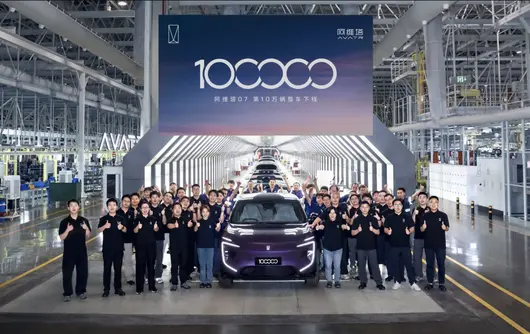
 Just when the industry is generally seeking a way to break through, on July 8, 2026, two landmark events landed simultaneously, providing a differentiated breakthrough model for Chinese high-end new energy brands: the Chongqing Avatr Digital Intelligence Factory welcomed a milestone moment, and the 100,000th Avatr 07 vehicle was officially rolled off the production line; at the brand experience store in Singapore, Nobel Prize in Physics laureate and graphene discoverer Professor Konstantin Novoselov officially became the 100,000th owner of Avatr 07.
 To be honest and objective, a market performance report of 100,000 units in mass production for a single model, combined with the authoritative endorsement of a top global scientist purchasing the car autonomously, these two highlight events resonating at the same frequency are not only concentrated evidence of the single product strength of Avatr 07 but also a landmark signal of Chinese high-end new energy vehicles breaking out of involution and moving towards the global high-end market.
The 100,000th Avatr 07 rolling off the production line is a vote of trust cast by the market with real money. Since its launch in September 2024, Avatr 07 has stably occupied the brand's main sales seat. Rapidly achieving a mass production scale of 100,000 units is by no means accidental, but the result of the product's all-dimensional hard power and top smart manufacturing system jointly holding it up.
 As a smart and beautiful urban luxury SUV jointly created by the combined strength of Changan, Huawei, and CATL technology, Avatr 07 achieves a leap in the four dimensions of intelligence, performance, luxury, and safety, breaking the industry convention of "high specifications only have core technology" for high-end models.
At the intelligence level, equipped with Huawei Qiankun ADS 4 high-level intelligent driving, achieving full-link assistance from parking spot to parking spot, smooth passage through complex scenarios such as narrow roads, roundabouts, and toll gates, letting city commuting say goodbye to cumbersome operations; HarmonySpace 5 Smart Cockpit builds full-scenario emotional interaction, making human-car communication more natural and smooth.
At the performance end, relying on the full-domain 800V Silicon Carbide platform, combined with CATL Shenxing Super Charging Battery, strong range, fast charging, dissolving pure electric users' mileage anxiety.
 In terms of luxury experience, original future aesthetic body, five natural car paints, also dual zero-gravity seats, Meridian audio, electric suction doors, car refrigerator can be selected, creating mobile first-class cabin experience; also Taihang Smart Control Chassis, balancing comfort and handling.
In terms of safety, it is fully loaded, Huawei CAS 4.0 All-dimensional Anti-collision System, C-NCAP Five-star Body, full car 9 Air Bag support, making Avatr 07 form a closed loop from active avoidance to passive protection.
 Digging deeper, supporting the stable mass production of this fully-equipped product is the world's first full-domain 5G Digital Intelligence AI Flexible Super Factory. Avatr Digital Intelligence Factory relies on Huawei Digital Infrastructure to build a Dark Factory production system, stamping workshop 0.1mm extreme body precision, one-piece die-casting workshop, 471 welding robots build over 90% high-strength steel and aluminum alloy body, 8-layer three-coat two-bake car paint process, full-cycle quality control, making every Avatr 07 rolled off the production line have unified world-class quality.
Over-hard product power combined with stable and reliable smart manufacturing jointly creates 100,000 units of market results. Undoubtedly, Avatr 07 has already stood firm in the mainstream high-end new energy track, winning consistent good reviews from users at home and abroad.
If the roll-off of the 100,000th Avatr 07 represents the widespread recognition of the mass market, then the choice of the Nobel Prize winner is the most weighty authoritative endorsement from the global top technology circle.

This May, Novoselov visited Chongqing, experienced Avatr models up close, highly recognizable original design, enveloping intelligent cockpit, warm human-car interaction, all left him with a deep impression. After returning to Singapore, he actively chose Avatr 07 as his daily commute ride, and this is also his first Chinese car in his life.

Top scientists willing to pay for Chinese high-end electric vehicles, behind which transmits a clear industry signal: Chinese new energy brands have long got rid of the "low price commuting" stereotype label, relying on original design, underlying technology innovation, unique luxury tuning, successfully breaking through overseas high-end circle barriers, obtaining global top user circle value recognition.
III. Global Breakout: Dual-Line Highlight Empowerment, Solidifying Avatr's Global "New Luxury" Positioning
From the market milestone of 100,000 units roll-off to the tech certification of Nobel Prize owners, the double highlight events simultaneously confirm Avatr "Global New Luxury" brand positioning's accelerated implementation. Avatr has already walked out a path to high-end localization belonging to Chinese brands: shaping aesthetic differentiation with original design, building experience moat with top technology, solidifying quality foundation with Digital Intelligence Factory, using balanced luxury experience to move global consumers.
 Looking overseas, this product hard power has been transformed into actual globalization results. As of May 2026, Avatr has entered 43 countries and regions, layout 95 overseas distribution nodes, overseas model average price broke through 300,000 Yuan, achieving high-value outbound and continuous profitability; 2025 overseas revenue 1.398 billion Yuan, year-on-year increase over 5 times, first 5 months of 2026 overseas sales year-on-year improvement 33.4%.
Brand globalization pace is still continuing to accelerate, Avatr 2026 will formally enter European market, planned to enter over 110 countries and regions by 2030, achieve wider overseas layout.
 It is worth mentioning, besides the two major core events this time, Avatr new car will arrive soon: Avatr 07L will start pre-sale in mid-July, continuing family original aesthetics, integrating top technology strength, forming product complement with current Avatr 07, covering different sizes, different car usage needs high-end family users, further enriching brand product matrix, continuously lifting brand market potential.
Jianghu Car Review:
When a model 100,000 units mass production lands, when global top scientists actively choose Chinese intelligent manufacturing, the answer paper handed in by Avatr 07 belongs not only to a single model but also is a metaphor for the high-end, globalization process of the entire Chinese new energy vehicle industry. In the past, Chinese car companies' outbound mainly won on price-performance ratio, now Avatr proves, relying on original design, self-developed intelligence, top three-electric, stable manufacturing, Chinese brands are completely capable of standing on the global luxury electric car track, winning sales, reputation, high-end circle triple recognition.
 Facing the future, relying on clear globalization strategy, continuous iteration product matrix, continuously solidifying technology base, Avatr will continue to take technology as blade, take luxury as base color, continuously output Chinese high-end travel solutions to global, walk into global users' life.100,000th Vehicle Roll-off + Nobel Laureate "Endorses", How Did Avatr 07 Break Through?

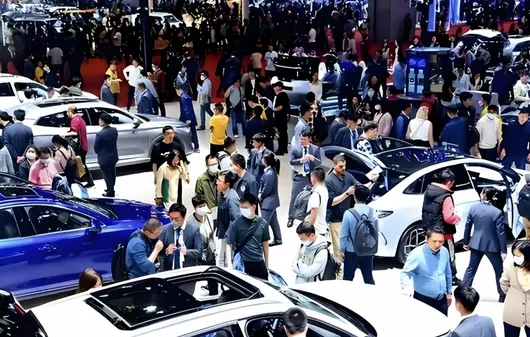
6月车企批量官宣亮眼产销数据,比亚迪、零跑、蔚来与小鹏纷纷交出增长答卷,单品牌销量数字一路走高,一派热火朝天的场景。但数据显示,国内乘用车零售同比大跌21%,从去年年末起国内车市便深陷两位数下滑区间,2月降幅一度触及25.3%。

一边是品牌对外捷报频传,一边是大盘持续萎缩,这场看似矛盾的集体狂欢背后,是存量份额争夺与海外市场突围共同编织出的行业分化图景。
国内车市大盘失速
单看各家车企对外发布的交付快报,6月国内汽车行业仿佛依旧处在上行通道,头部品牌销量全线飘红。可终端零售数据落地之后,21%的同比跌幅说明,行业整体需求收缩已是既定事实。

不少人会把头部品牌的正增长,理解成企业产品力突围带来的逆势破局,放在当下的市场环境里,这个判断并不完整。整体国内终端需求持续收缩、大盘总量持续走低,头部车企之所以能逆势收红,一部分来自海外出口的增量对冲,另一部分则是在国内存量市场中抢夺份额。头部多出来的销量,大多是从弱势品牌手中分流的存量订单,这也导致缺乏资金、技术、渠道支撑的中小车企,真实跌幅远高于21%的行业平均水平。
资金链、研发储备、线下渠道等诸多因素,决定了车企能不能熬过这一轮下行周期。今年已有多家边缘车企不再规划年度改款与全新车型,多地经销商门店陆续关停撤网。消费者选购新车时会天然规避这类风险品牌,客源自然而然向比亚迪、吉利等具备规模化优势的企业倾斜。全球成熟汽车市场都经历过品牌出清阶段,国内车市只是压缩了这个过程的时间,市场行情越低迷,头部企业规模优势的壁垒就越牢固。

15万至25万这个主力价位区间,正沦为整场存量厮杀最惨烈的地带,中间市场塌陷已经很难逆转。这片区间曾是合资燃油车的基本盘、也是自主品牌走量冲规模的核心阵地。当下用户换车意愿大幅走弱、观望情绪集中爆发,为了挽救销量,合资只能靠大幅降价清库存,雅阁、迈腾等经典家用车型终端优惠持续放大,传统定价体系彻底松动;自主车企则密集投放同级混动、纯电车型,激光雷达、高阶智驾持续下放,高度同质化的产品叠加无底线内卷,压缩了整片市场的利润空间。
消费者观望情绪在这个价位段最为浓厚,多数潜在购车人群担心刚提车就迎来新款换代或是新一轮降价,迟迟不愿落地订单。比亚迪秦、宋两款支柱车型近期订单承压,恰恰印证了这片红海赛道的拥挤程度。
头部车企出海吃肉
国内卷生卷死,国外则成为头部车企的灵丹妙药。
过去很长一段时间里,国产车企出海的模式简单直接:国内组装整车装箱出海,靠低价撬开东南亚、拉美等市场的销路,本质只是消化富余产能。这种单向输出商品的方式容错率极低,一旦目标市场出台关税限制、进口配额政策,整条外销链路就会直接受阻。不久前,马来西亚出台的新政就是一个例子。

现在头部车企开始向海外落地整套可落地的制造、供应链与服务生态,以此摆脱单纯依赖整车外销的脆弱模式,在海外市场建立长期稳定的经营基本盘。
从技术发展方面来看,这几年,电池包、驱动电机、混动架构等基础电动化硬件已经高度成熟、方案趋同,头部车企在硬件层面的代差基本抹平,很难再靠单一硬件参数拉开长期优势。真正的差异化逐渐转移到智能驾驶算法、整车架构调校、全域热管理等软性能力,而在硬件同质化的大前提下,规模化成本管控成为车企最核心的胜负手。比亚迪依托垂直产业链压减制造开支,宁德时代成为动力电池的头部玩家,新入局品牌既难补齐软件体系差距,也难复刻规模成本优势,想要实现硬件端弯道超车难度极大。
说到这里,大家应该能看清:车企供应链出海,本质是自身产业链能力的向外延伸。国内技术同质化、市场内卷加剧的背景下,真正拉开车企终局差距的,是对核心供应链的掌控力度。
如果一家车企只保留车身制造与整车拼装业务,本质上只是上游供应链的组装代工厂。上游原材料或是核心配件价格小幅波动,终端车型的定价和利润空间就会被直接挤压,既没法做出区别于竞品的独特配置,也没有自主定价的底气。

行业里慢慢分化出两种应对方式,一部分车企向内深耕自研,把关键零部件握在自己手里;还有一部分主动绑定头部供应链企业,锁定优先供货资格,规避断供与涨价风险。那些两头都无法落地的中小车企,既没有资金投入上游研发,也拿不到稳定的零部件订单,别说参与海外市场布局,就连国内市场的价格内卷都很难扛住。
全球化布局和上游供应链深耕本就是一件事的两面,向外打开增量市场,向内守住利润底盘,二者缺一,车企就很难在接下来的行业洗牌里稳住自身位置。
百姓评车
未来,电动化硬件趋于同质化,车企竞争壁垒由参数堆砌转向成本控制、软件能力与供应链掌控。头部企业一边依托全链体系守住国内基本盘,一边以本土化生态出海对冲风险。未来行业胜负不再取决于单款产品爆发力,而是供应链壁垒叠加全球化能力的体系对决,两极分化格局将持续固化。

喺馬來西亞嘅 SUV 市場,好多買家喺揀車嗰陣都會拿本田 WR-V 同名爵 MG HS 嚟做比較。呢兩款車喺價位同定位上都幾接近,而家我哋就從多個方面做一個詳細嘅比較,幫你節省做功課嘅時間。
本田 WR-V 喺馬來西亞嘅 OTR 售價係 RM 89,900 - 107,900,一共有 4 個版本,包括 2023 1.5L V(RM 99,900)、2023 1.5L E(RM 95,900)、2023 1.5L S(RM 89,900) 等。
名爵 MG HS 喺馬來西亞嘅 OTR 售價係 RM 130,450 - 146,450,一共有 2 個版本,包括 1.5L Standard(RM 105,000)、1.5L Executive(RM 115,000) 等。
從價錢嚟睇,本田 WR-V 嘅起步價確實比名爵 MG HS 平咗 RM 40,550。如果你預算唔夠,本田嘅入門版已經可以滿足日常需要。但要留意,平嗰幾千蚊,可能喺配備上有取捨,具體要看你嘅需要。

本田 WR-V 嘅安全評級係 5★ (ASEAN NCAP),主動安全系統包括本田 SENSING。
名爵 MG HS 嘅安全評級係 TBD,主動安全系統包括 Basic。
安全配備方面,兩款車都拿到唔錯嘅評級。不過本田 WR-V 嘅本田 SENSING 同名爵 MG HS 嘅 Basic 喺功能上有少少差異,如果你比較重視主動安全嘅話,可以仔細對比吓兩者嘅功能列表。
本田 WR-V 車身長 4400 mm,後尾箱 400 L。
名爵 MG HS 車身長 4400 mm,後尾箱 400 L。
兩款車嘅尺寸幾近一樣,車內空間差別唔大。呢個級別嘅車,日常使用完全夠用。

本田 WR-V 保用 5 年/無限里程,保養間隔 每 10,000km 或 6 個月。
名爵 MG HS 保用 7 年/150,000km,保養間隔 每 10,000km 或 6 個月。
本田 WR-V 同名爵 MG HS 都係馬來西亞市場嘅主流選擇,適合家庭使用、日常通勤。如果你更重視品牌口碑同二手價,可以優先考慮口碑更好嗰一款;如果你更在意性價比同配備,就揀配置更豐富嗰款。最終都係建議兩款都去試駕,親身試過先至係最重要。
總括嚟講,本田 WR-V 同名爵 MG HS 都係馬來西亞市場幾唔錯嘅車型。揀邊一輛,關鍵仍然係睇你嘅個人需要同預算。建議大家做足功課,多比較幾間車行之報價,再去試駕做最終決定。買車係一件大事,花少少時間做功課絕對唔會錯。


喺馬來西亞嘅 SUV 市場,好多買家在揀車嘅時候都會拿 Subaru Forester 同 Mercedes-Benz GLB 來做比較。這兩款車喺價位同定位上都幾接近,今日我哋就從多個方面做一次詳細嘅對比,幫你節省做功課嘅時間。
Subaru Forester 喺馬來西亞嘅 OTR 售價係 RM 174,000 - 197,000,一共有 3 個版本,包括 2024 2.0L S EyeSight GT Edition(RM 189,538)、2024 2.0L S EyeSight(RM 177,538)、2024 2.0L L EyeSight(RM 167,538) 等。
Mercedes-Benz GLB 喺馬來西亞嘅 OTR 售價係 RM 299,888 - 352,888,一共有 1 個版本,包括 Standard(RM 299,888) 等。
從價錢嚟睇,Subaru Forester 嘅起步價確實比 Mercedes-Benz GLB 平咗 RM 125,888。如果你預算有限,Subaru 嘅入門版已經可以滿足日常需求。但都要注意,平嗰幾千蚊,可能喺配備上會有取舍,具體要看你嘅需求。

Subaru Forester 搭載 2.0L 4-cyl,馬力 170 hp。官方油耗 8.0 L/100km。
Mercedes-Benz GLB 搭載 2.0L Turbo,馬力 220 hp。官方油耗 9.5 L/100km。
動力方面,Mercedes-Benz GLB 嘅 2.0L Turbo 比 Subaru Forester 嘅 2.0L 4-cyl 多咗 50 匹馬力。不過日常喺市區開,兩款車嘅動力都夠用,唔會覺得唔夠力。

Subaru Forester 嘅安全評級係 5★ (Euro NCAP),主動安全系統包括 EyeSight。
Mercedes-Benz GLB 嘅安全評級係 5★ (Euro NCAP),主動安全系統包括 Premium ADAS。
兩款車嘅安全評級一樣,喺呢個級別入面安全配備都算畀得好齊全。而家嘅新車安全性都唔差,唔使太擔心這一點。

Subaru Forester 車身長 4400 mm,尾箱 400 L。
Mercedes-Benz GLB 車身長 4400 mm,尾箱 400 L。
兩款車嘅尺寸幾乎一樣,車內空間差別唔大。呢個級別嘅車,日常使用完全夠用。

Subaru Forester 保修 3 年/100,000km,保養間隔 每 10,000km 或 6 個月。
Mercedes-Benz GLB 保修 3 年/100,000km,保養間隔 每 10,000km 或 6 個月。
兩款車嘅保修條件一樣,呢方面唔使糾結。實際保養成本仲要看品牌嘅服務網絡同零件價格,建議去車友群問問真實車主嘅經驗。

總體嚟講,Subaru Forester 同 Mercedes-Benz GLB 都係馬來西亞市場好唔錯嘅車型。揀邊一輛,關鍵都係要看你嘅個人需求同預算。建議大家做好功課,多比較幾間車行嘅報價,再去試駕做最終決定。買車係件大事,花點時間做功課絕對唔會錯。


喺馬來西亞嘅汽車市場,好多買家喺揀車嗰陣都會拿 Honda WR-V 同 Subaru Forester 嚟比較。今日我哋由多個角度做一個詳細嘅對比,幫你節省咗做功課嘅時間。
Honda WR-V 喺馬來西亞嘅 OTR 售價係 RM 89,900 - 107,900,一共有 4 個版本,包括 2023 1.5L V(RM 99,900)、2023 1.5L E(RM 95,900)、2023 1.5L S(RM 89,900) 等。
Subaru Forester 喺馬來西亞嘅 OTR 售價係 RM 174,000 - 197,000,一共有 3 個版本,包括 2024 2.0L S EyeSight GT Edition(RM 189,538)、2024 2.0L S EyeSight(RM 177,538)、2024 2.0L L EyeSight(RM 167,538) 等。
由價錢睇,Honda WR-V 嘅起步價真係比 Subaru Forester 平咗 RM 84,100。如果你預算有限,Honda 嘅入門版已經可以滿足日常需要。但都要留意,平嗰幾千蚊,可能喺配備上有取舍,具體睇你嘅需求。
Honda WR-V 嘅安全評級係 5★ (ASEAN NCAP),主動安全系統包括 Honda SENSING。
Subaru Forester 嘅安全評級係 5★ (Euro NCAP),主動安全系統包括 EyeSight。
安全配備方面,兩部車都拿到唔錯嘅評級。不過 Honda WR-V 嘅 Honda SENSING 同 Subaru Forester 嘅 EyeSight 喺功能上有少少差異,如果你比較重視主動安全嘅話,可以仔細對比吓兩者嘅功能列表。
Honda WR-V 車身長 4400 mm,後備箱 400 L。
Subaru Forester 車身長 4400 mm,後備箱 400 L。
兩部車嘅尺寸差唔多,車內空間分別唔大。呢個級別嘅車,日常使用完全夠用。
Honda WR-V 保修 5 年/無限制里程,保養間隔 每 10,000km 或 6 個月。
Subaru Forester 保修 3 年/100,000km,保養間隔 每 10,000km 或 6 個月。
總體嚟講,Honda WR-V 同 Subaru Forester 都係馬來西亞市場幾唔錯嘅車款。揀邊一部,關鍵都係要睇你個人需求同預算。建議大家做好功課,多比較幾間車行嘅報價,再去試駕做最終決定。買車係件大事,花少少時間做功課絕對唔會錯。

喺馬來西亞嘅汽車市場,好多人喺揀車嗰陣都會拎 Toyota Harrier 同 Mazda CX-8 嚟做比較。而家我哋由多方面做一個詳細對比,幫你省返做功課嘅時間。


Toyota Harrier 喺馬來西亞嘅 OTR 售價係 RM 289,000 - 289,000,一共有 1 個版本,包括 2026 HEV 2.5L Standard(RM 289,000) 等。
Mazda CX-8 喺馬來西亞嘅 OTR 售價係 RM 165,360 - 201,360,一共有 5 個版本,包括 2025 2.5T 4WD High Plus Petrol(RM 201,360)、2025 2.2L 2WD High Plus Diesel(RM 193,123)、2025 2.5L 2WD High Plus Petrol(RM 186,360) 等。
由價錢嚟睇,Mazda CX-8 嘅起步價比 Toyota Harrier 平咗 RM 123,640。實講,喺呢個價位段,幾千蚊嘅差距其實唔算大,關鍵仲係睇整體嘅性價比同埋長期使用成本。

Toyota Harrier 嘅安全評級係 5★ (ASEAN NCAP),主動安全系統包括 Brand ADAS。
Mazda CX-8 嘅安全評級係 5★ (ASEAN NCAP),主動安全系統包括 Brand ADAS。
兩款車嘅安全評級一樣,喺呢個級別入面安全配備都算俾得好齊全。而家嘅新車安全性都唔差,唔使太擔心呢一點。
Toyota Harrier 車身長 4400 mm,後備箱 400 L。
Mazda CX-8 車身長 4500 mm,後備箱 450 L。
空間方面,Mazda CX-8 嘅車身比 Toyota Harrier 長咗 100 mm,乘坐空間會更有優勢。不過 Toyota Harrier 喺城市入面停車會靈活啲,各有取捨。
Toyota Harrier 採用 FWD 驅動方式。
Mazda CX-8 採用 FWD 驅動方式。
兩款車嘅驅動方式一樣,都係 FWD,日常駕駛感受唔會有太大區別。
總括嚟講,Toyota Harrier 同 Mazda CX-8 都係馬來西亞市場幾唔錯嘅車型。揀邊一輛,關鍵都要睇你嘅個人需求同埋預算。建議大家做好功課,多比較幾間車行嘅報價,再去試駕做最終決定。買車係件大事,花少少時間做功課絕對唔會錯。

© 2024 Bitauto.com. All Rights Reserved.
Bitauto (www.yiche.com and www.bitauto.com) is one of the most visited automotive websites in China. We provide detailed info on Chinese car brands available in your area. Please note that the information provided on this website is based on publicly available data and is for reference only. It may not be fully updated or accurate at all times.

Help us improve our website


