

HomeExport

Search History
Popular Searches
Dealer Login / Sign Up

[First Commercial Vehicle Network Original]
This September, the domestic and export markets for commercial vehicles showed two contrasting worlds. According to CAAM data, domestic commercial vehicle sales reached 235,000 units in September, a year-on-year decline of 14.6%; export sales are surging, reaching 133,000 units, a significant year-on-year increase of 44.3%.
Most notably was the truck export performance: In September 2026, truck export sales reached 118,000 units, only 77,000 units lower than domestic sales. Export year-on-year growth was as high as 51.5%, 7.2 percentage points higher than overall commercial vehicle exports. Following this trend, truck export sales surpassing domestic sales could be imminent.
Behind the impressive export performance is a collective leap by the entire industry from "product going global" to "system rooting". In the just passed September, the truck industry made constant major moves overseas. The heat has spread from the Southeast Asia and African markets to the European market, with multiple enterprises accelerating the layout of localized production. Let's take a closer look!
Foton Auto: 13 Millionth Vehicle Globally Delivered, Auman Galaxy 9 Lands in Spain
At the Hanover Motor Show held in mid-September, Foton Auto showcased its full matrix strength and held the global 13 millionth vehicle delivery ceremony. The delivery model was the Auman Galaxy 9. The vehicle had completed field tests in Spain, breaking the brand barrier in the high-end truck logistics market overseas and successfully landing in the Spanish market. This marks that Chinese high-end heavy trucks are now capable of competing on the same stage with international first-line brands.

At the press conference, Foton Auto released its European strategy in a major way. Previously, Foton Motor had confirmed a development goal of 40% internationalization rate by 2030. Europe, as the core hub market of Foton Motor's globalization strategy, became the key position for its brand upgrading and internationalization advancement.
According to disclosures, Foton Auto will steadily establish localized system capabilities in the European market from three dimensions: local adaptation, overall ecosystem solution capability construction, and cooperative co-construction with deep local operation, to systematically serve European commercial vehicle users. Among them, regarding localization, it plans to build 1 European local technology center, plan to achieve coverage of sales and service networks in major European markets and realize local assembly in Europe by 2028, and plan to establish more local subsidiaries to support serving European customers, etc.
FAW Jiefang: J7 Pioneer Edition to be Delivered to European Market
At the 2026 Hanover Motor Show, the TL.X forward-looking concept truck, globally launched by FAW Jiefang, was impressive. On this top European stage, FAW Jiefang revealed that its CORTRON CS (looks like J7 Pioneer Edition from the appearance) will land in the European market and realize formal delivery.

In addition, the 3 export order news spread by FAW Jiefang in September was also quite noteworthy. First, Jiefang's 78 Tiger VR light trucks completed warehousing, starting to ship to Southeast Asia. The vehicles adopt narrow body bodies, small turning radius, flexible maneuvering, precisely adapting to the complex driving environment of local city blocks and town roads. Second, FAW South Africa Company's Zambia Office reached a strategic cooperation with a large local logistics enterprise in Zambia, signing a 100-unit JH6 tractor purchase agreement. Third, FAW Jiefang reached batch delivery with a top local transport enterprise in Nigeria again. 100 units of 6x4 tractors were shipped to Nigeria. The vehicles were designed and manufactured and locally adapted for the operating environment in Nigeria with complex road conditions in some areas, high temperature and dust in the dry season, and high humidity and rain in the rainy season. They will be put into local FMCG fast consumer goods trunk transport business.
Dongfeng Commercial Vehicle: First Car Goes Off the Line at Southeast Asia Localized Factory, Starting a New Journey!
From September 25 to 26, Dongfeng Import & Export Heavy Commercial Vehicle Overseas Division 2026 Southeast Asia Regional Work Conference, First Car Goes Off the Line at Localized Factory, and New Product Tasting Activity were held successively in Southeast Asia. Partner representatives from markets such as Indonesia, Vietnam, Thailand, Malaysia, Pakistan, etc. gathered together to jointly start a new journey of localized development.

It is learned that since the beginning of this year, Dongfeng Commercial Vehicle Southeast Asia Region heavy and medium truck sales achieved a year-on-year growth of 188%, and the regional market expansion results were significant. With the first car going off the line at the Southeast Asia localized factory, Dongfeng Commercial Vehicle and Southeast Asia local partners' collaboration has entered a new stage. The Southeast Asia localized factory is a key fulcrum of Dongfeng Import & Export's globalization strategy. After the factory goes into production, localized production will be closer to the terminal market and customer needs, greatly shortening the whole vehicle delivery cycle, reducing cross-border logistics costs, promoting the localization precipitation of technology, craftsmanship, management, talents, etc., and forming a new pattern of manufacturing origin and development heart with local partners.
SANY Heavy Truck: First Electric Heavy Truck Goes Off the Line at Turkey KD Factory, Further Expansion in European Market!
In September, SANY Heavy Truck defined "European Market Expansion Month". Besides going to the Hanover Motor Show in Germany, SANY Heavy Truck also held a Turkey market press conference with strategic partner FMT on September 9, simultaneously completing the SE636 electric heavy truck product release, Turkey dealer and sales service network launch, and the first electric heavy truck going off the line at the KD factory.

For car companies trying to enter Europe, Turkey, located at the crossroads of Europe and Asia, is both a gateway to Europe and a jumping board to radiate Central Asia and the Middle East. SANY Heavy Truck landing in Turkey this time, through the construction of KD factories, distribution networks, and service systems, further improves local capabilities in overseas business.
It is learned that the factory only took 15 days from having trial production conditions to the first batch of products going off the line. The speed was quite rare in Turkey's manufacturing industry. According to the plan, the annual capacity of this KD factory reaches 2,000 units, and the expected annual output value is about 400 million USD. In the future, SANY Heavy Truck will also produce light trucks, cargo trucks, and other full-series commercial vehicle products in Turkey according to local market demand, covering logistics, engineering, transportation, and other application scenarios.
Dongfeng Liuzhou Motor Chelong: Vietnam KD Factory Project Signed, Planned Annual Capacity 1,500 Units
At the 23rd China-ASEAN Expo held in mid-September, Dongfeng Liuzhou Motor reached a strategic cooperation agreement for Vietnam KD Factory with Vietnam partners. Both parties plan to jointly invest and build a KD (Knocked Down) factory in Vietnam, with a planned annual capacity and annual sales of 1,500 units, and expected to achieve an annual output value of 210 million RMB. This factory is Chelong brand's first KD factory in ASEAN, marking that Chelong brand has entered a new stage of localized deep plowing in the ASEAN market from whole vehicle export.

According to a relevant person in charge of Dongfeng Liuzhou Motor Import & Export Company revealed at the Teda Auto Forum, Chinese brands in the Vietnam heavy and medium truck market sales have maintained high growth for three consecutive years. It is expected that 2026 sales will reach 60,000 units, and the development space in the next 5-10 years is broad. Dongfeng Liuzhou Motor, which has a leading market share in the Vietnam market, landing the Vietnam KD factory project this time is timely.
Shacman Heavy Truck: Secured 500-Unit Order from Large Saudi Client!
Later in September, according to Shacman Speed WeChat official account news, Shacman Heavy Truck reached strategic cooperation with a large Saudi logistics enterprise, and completed a 500-unit heavy truck strategic signing. Both parties will carry out all-round collaboration around truck sales, market development, after-sales service, and parts supply. Shacman will escort the logistics fleet to operate efficiently with a perfect after-sales system and technical guarantee, and deepen brand promotion, customer training, and other resource interconnection, to jointly open a new chapter of the Middle East market.

Unimac Heavy Truck: First Customer Vehicle Delivered on Non-Europe Transport Corridor
At the Hanover Motor Show in Germany, Chery Commercial Vehicle's Unimac Heavy Truck made a gorgeous appearance, released the global integrated capacity solution, launched two new models for the international market, Electric Phoenix pure electric heavy truck and Cloud Phoenix range extended heavy truck, and displayed the integrated solution of "vehicle, light, storage, charging, swapping". At the same time, Unimac Heavy Truck held the first customer vehicle delivery on the C&C Non-Europe Transport Corridor and strategic cooperation signing ceremony on site. This marks that its globalization development has moved from product release to customer real operation landing.

Regarding the first customer vehicle delivery on the Non-Europe Transport Corridor, from the overseas customer proposing custom requirements to completing the vehicle landing, Unimac Heavy Truck only took 4 months to transform the customer's concept into a real vehicle ready for actual operation, showing strong rapid custom development capabilities. Overseas partners will rely on Unimac Heavy Truck's integrated capacity solution. A charging/swapping station will be laid out every 450-500 km along the Non-Europe Transport Corridor. In the early stage of the project, cross-border business prioritizes putting the Cloud Phoenix range extended model into operation. As the along-line charging/swapping stations and photovoltaic energy storage supporting facilities are gradually improved, the subsequent fleet will smoothly transition to pure electric operation models.
XCMG Automobile: Multiple Strategic Cooperation Land Rapidly in Europe
During the September Hanover Motor Show, XCMG Automobile actively linked with overseas partners. Deepening in Germany, Austria, Netherlands, and Turkey markets proceeded synchronously. Around KD localized production, key market expansion, and sales service network construction, XCMG Automobile multiple strategic cooperation accelerated, and European localization layout took solid steps.

Among them, XCMG Automobile and Turkey large clients deepened exchanges around product application, market demand, and local layout, and signed strategic cooperation agreements. In Austria, XCMG team visited local factories on site, carried out inspections and exchanges around KD localized production matters, accumulating conditions for subsequent industrial synergy. In the Netherlands, the team visited local shipping and logistics enterprises, and reached strategic cooperation consensus on subsequent logistics business.
From signing at the German exhibition to production inspection in Austria, business synergy in Netherlands, and key market expansion in Turkey, a series of cooperation results gradually string together key links such as product introduction, localized production, and market operation for XCMG Automobile in the European market. XCMG also provides customers with green transportation complete set solutions, integrating vehicle selection, recharging planning, IoV management, and full lifecycle services, with the "vehicle-pole-network-service" ecosystem to support expanding overseas markets.
Skyworth Automobile: Secured Thousand-Unit Overseas Orders
On the opening day of the Hanover Motor Show, participating for the first time, Skyworth Automobile signed centralized agreements with partners from Europe, Latin America, Middle East, Central Asia, and other overseas markets, reaching a series of procurement orders and strategic cooperation intentions, covering pure electric heavy trucks, light trucks, VANS, buses, and KD localized assembly and other categories.

Among signed projects, there are pure electric commercial vehicle orders for trunk logistics and urban distribution, bus cooperation to help overseas public transport electrification transformation, and also diversified models such as KD parts export and localized assembly. This centralized signing not only involves vehicle supply but also covers after-sales service systems, remote data management platforms, financing support, and localized operation and other one-stop solutions. This signing marks that Skyworth Automobile has taken solid steps from product going global to technology going global and solution going global.
Qingling Motors: 50 Units New Energy Heavy Trucks Exported to Vietnam, Customer Plans 2027 Larger Scale Procurement
Following the first delivery of Qingling KD export to Africa on August 21 and the efficient landing of Nigeria KD project, Qingling Motors welcomed another important milestone moment in the overseas market.
On September 8, Qingling's first batch of new energy EVC61 tractors exported to Vietnam and cross-border logistics supply chain platform launch ceremony was held at Qingling Group new energy R&D building. It is introduced that in 2025, Qingling's first batch of 2 units of EVC electric tractor exported to Vietnam completed field trial operation. This time, 50 units of EVC61 new energy tractor delivery to Vietnam Haoxing Group marks that Qingling electric commercial vehicles have officially entered a new stage of scaled operation in the Vietnam market from pilot verification stage. The enablement of the cross-border logistics platform marks that Qingling has moved from product going global to system going global.

To guarantee stable operation of overseas market vehicles throughout the lifecycle, Qingling has formed a special guarantee team composed of development, quality, after-sales, and marketing, established stationed service, spare parts frontloading, localized technical training, and rapid response mechanisms to fully support efficient vehicle operation. At the same time, Qingling Group and Chongqing Highway Transportation (Group) deepened industrial cooperation, relied on both parties' industrial advantages and comprehensive logistics resources, jointly built a cross-border logistics supply chain platform, coordinated cross-border highway bus and multimodal transport channels, to provide system logistics support for Qingling expanding overseas markets.
At the event site, Vietnam Haoxing Group planned to add purchase of 10 electric tractors for short-line operation, and planned 2027 larger scale procurement. At the same time, VM Company successfully bid for the Vietnam garbage transport vehicle project, issued a 70+ units of Q series light truck purchase order to Qingling. In the future, it will explore opportunities in ports, trunks, sanitation, and other diverse scenarios, to work together to make the Vietnam new energy commercial vehicle market larger.
Beiben Heavy Truck: Indonesia Batch Custom Heavy Trucks Land and Put into Production
On September 4, the 30-unit Indonesia market high-power heavy truck order undertaken by Beiben Heavy Truck officially started batch production, marking key breakthroughs in landing overseas market strategic layout. It is learned that since May 6, receiving batch production requirements, the company responded quickly, firmly built product quality defense line from the source, with extreme efficient siege attitude, steadily completed power system selection, whole vehicle custom upgrade, prototype trial production, and test verification full process work.

This 30-unit Indonesia custom heavy truck project's rapid landing and high-quality delivery fully verified Beiben high-power heavy truck product overseas condition adaptability, custom R&D strength, and scaled production capacity. At the same time, it also accumulated precious practical experience for its deep plowing of the Southeast Asia market and expanding international development landscape, laying a solid foundation for continuously expanding overseas high-end heavy truck market.
Dongfeng Pickup: 273 Units Shipped to Saudi Arabia, Secured 500-Unit Order in Ghana, Sprinting for the Fourth Quarter!
In September, Dongfeng Pickup overseas business exploded with two big orders. First, early in September, according to Dongfeng Import & Export Company news, 273 units of Dongfeng Pickup departed for the Saudi Arabia market, which is another landmark practice of Dongfeng Import & Export practicing "Whole Supply Synergy" strategy, and also an important batch delivery result of deep plowing the Middle East market. This batch of orders came from a top Saudi car rental company. The delivery vehicles will be put into Saudi car rental operation comprehensively. Customer scenarios cover desert long-distance shuttle, complex road condition frequent turnover, and other severe working conditions. In the process of this order from landing to delivery, Dongfeng guaranteed project nodes with unexpected execution, ensuring 273 vehicles departed on time, running "acceleration" in the overseas market.

Second, late in September, according to Dongfeng Import & Export Company news, the Pickup Overseas Business Division went deep into the Ghana market front line. Collecting first-hand materials with local partners around the fourth-quarter task, it successfully secured a 500-unit order, further consolidating the West Africa market foundation. It is learned that the Dongfeng Pickup overseas team combined the Ghana local market capacity, consumption characteristics, and existing channel bearing capacity, fully assessed market trends with partners, grasped the end-of-year market window period to strive for sales breakthroughs. At the same time, completed 2027 full-year import model configuration confirmation, predicted market growth rhythm and resource investment direction, to anchor the direction for medium and long-term market development.

Conclusion
In the domestic stock competition environment, the overseas market has become the place "all strategists must fight for". In the future, perhaps "those who get the overseas market get the world" will become the maxim for the commercial vehicle market. And the new policy released by the Ministry of Finance and State Taxation Administration recently explicitly states that starting from April 1, 2027, the new energy vehicle export tax refund rate will be reduced from the current 13% to 9%. This will promote the next 6 months of domestic truck exports to usher in a new peak of concentrated release. The fourth quarter export scale is expected to create a new historical high.
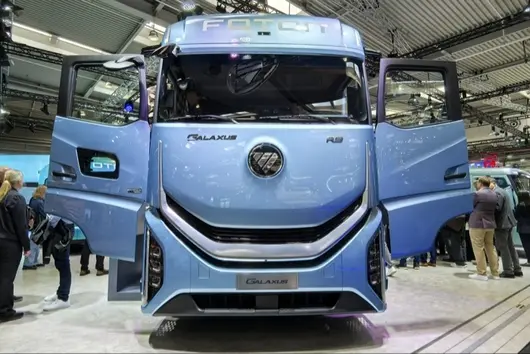


The export tax rebate rate for new energy vehicles drops from 13% to 9%, Chinese automakers need to recalculate the profits going overseas.
On October 12, the Ministry of Finance and the State Taxation Administration announced that starting from April 1, 2027, the VAT export rebate rate for new energy vehicles will be reduced from 13% to 9%. Superficially, this is just 4 percentage points, but for domestic automakers striving to go global, this could be a profit account that must be recalculated.
Why specifically now? Because exports have gradually transformed from incremental business into a crucial pillar supporting sales. According to CPCA data, from January to September 2026, new energy passenger vehicle exports from domestic markets reached 3.887 million vehicles, a year-on-year increase of 138.8%. September alone saw exports of 558,000 vehicles, a 163.5% increase year-on-year.
Domestic market pressure, overseas sales high-speed growth. On one hand, going overseas becomes more important; on the other, export tax incentives are tightening. The signal sent by the policy is clear: competition in automotive exports cannot rely forever on low prices and policy space.
01 Four Percentage Points, How Much Profit Is Actually LostFirst, a potentially confusing concept needs correction. 13% down to 9% refers to China's VAT export rebate rate, not a 4% tariff surcharge on Chinese cars added overseas, nor paying 4% tax on the retail price per car sold. According to current export tax rules, production enterprises usually apply the 'exempt, credit, and rebate' method. The difference where the rebate rate is lower than the VAT applicable rate results in a portion that cannot be exempted or deducted, ultimately accounted for in export costs.
Let's use an understandable assumption. A car company exports one new energy vehicle overseas. The FOB price used for tax calculation is 150,000 Yuan, applicable VAT rate is 13%, no special deductions like bonded materials. After the rebate rate drops from 13% to 9%, estimated under general 'exempt, credit, and rebate' terms, the new non-deductible cost corresponding to this car is approximately 6,000 Yuan.
If the profit margin in the original export link was only 10,000 Yuan, with other conditions unchanged, the book value might drop to only 4,000 Yuan. Profits decrease by 60%, far from the casual description of 'down 4%'.

But 6,000 Yuan cannot be regarded as a fixed loss for all car models. The actual amount depends on the export FOB price, whether the operating entity is a production enterprise or a foreign trade enterprise, imported bonded materials, input tax vouchers, and specific tax calculation methods. Results can vary significantly between different models and companies.
What is certain is that under the same transaction price and cost structure, a reduction in the rebate rate will squeeze the profitability of the domestic export link. Who ultimately bears the cost depends on subsequent negotiations.
02 Overseas Selling Prices May Not Rise AccordinglyThe most intuitive reaction is to pass on the new costs to overseas consumers. However, going overseas for car companies is not just converting domestic guidance prices with exchange rates. From the domestic factory to the overseas user's hand, there is ocean freight, insurance, import duties, certification, channel sharing, marketing, after-sales service, and local VAT. Changes in export rebates act on the Chinese export link. Overseas terminal transaction prices are determined by the entire value chain and market competition. The two are not a simple 4% against 4%.
Taking the 150,000 Yuan FOB price car from just now as an example again. If the new tax cost is assumed to be 6,000 Yuan, and the overseas landing transaction price converts to 300,000 Yuan, 6,000 Yuan is only equivalent to 2% of the terminal price. But even with only 2%, car companies dare not raise prices easily. Local consumers might be comparing BYD, Hyundai, Volkswagen, and Tesla. If the same class products offer better financial plans or promotional discounts, buyers might turn away completely.
A more realistic situation is cost sharing. Stronger brands and supply-tight models can attempt to moderately raise wholesale prices. For highly competitive models, manufacturers might first absorb part of the cost themselves, then renegotiate rebates and marketing budgets with importers and dealers. Some low-profit orders might simply not be accepted.

What the policy truly changes is not necessarily all overseas prices rising in sync, but rather the price floors of different models and dealer negotiation capabilities.
03 Who Is More Injured? Cannot Just Look at Group Gross MarginFor models with high gross margins and brand premiums, losing 4 percentage points in rebate is certainly uncomfortable, but not necessarily crippling. For models relying on extreme low prices to fight the market, this cut might hit the thinnest profit margin. Assuming two car companies export at the same FOB price, one originally has 12% profit space, the other only 4%. Under the simplified condition of no price increase and unchanged costs, the latter's operational impact is significantly larger.
Here we cannot directly rank based on group gross margins published by car companies. Financial report gross margins mix domestic sales, overseas sales, different models, parts, and other businesses, and cannot replace single-car export profits. True pressure distribution depends on the company's overseas sales structure, regional pricing power, supply chain costs, and export transaction chains.
BYD, Geely, SAIC, and Chery are all going overseas, but brand positioning, exported models, and localization progress are not the same. Within the same group, high-profit models and low-profit volume models may be affected completely differently.

Another easily overlooked target: foreign brands produced and exported in China. This policy targets export commodities meeting conditions and their tax treatment, not inherently targeting only domestic brands. Models produced and exported in Shanghai also need to judge applicable policies based on the actual export entity, commodity codes, and tax regulations.
This is not a simple 'Chinese Brand vs Overseas Brand' competition, but a change in cost structure of the Chinese manufacturing export link.
04 Europe's Trouble: Multiple Cost OverlapsIf Southeast Asia and Latin American markets mostly test price and channels, the situation in Europe is much more complex. The EU has already implemented countervailing duties on some purely electric passenger cars originating from China. EU final ruling states that the corporate tax rates corresponding to BYD, Geely, and SAIC are 17.0%, 18.8%, and 35.3% respectively, in addition to general import duties and other market costs. Note that countervailing duties and China's export rebates are two different policies, not simply added directly on the overseas retail price.
So for a company exporting complete vehicles from China to Europe, pressure does not appear alone. Export rebate space shrinking, import trade barriers, exchange rate and ocean freight cost changes, plus local brand price competition in Europe. Any item could affect final profits.
More critically, overseas markets usually do not allow guideline price adjustments as easily as domestic ones. Contract cycles, dealer inventory, model certification, and product launch rhythms all make price adjustments lag.

However, this does not mean Chinese car companies in Europe can only raise prices or exit. Models with high brand recognition may continue to hold selling prices with product power; enterprises with lower cost structures still have room for cost reduction; enterprises that have advanced overseas production have another choice.
This round of adjustment may accelerate car companies evaluating the economic account of complete vehicle exports vs overseas production. But relying solely on rebate changes, one cannot judge if a certain enterprise will definitely move production lines abroad.
05 Watershed: Export or Overseas ManufacturingBYD has been increasing overseas factories in recent years to shorten delivery cycles, get closer to consumers, adapt to tariffs and rules of origin, and build local supply chains. BYD's 2025 annual report disclosed that the Brazil passenger car factory achieved its first car off the line, the Thailand factory continues production, and overseas manufacturing layouts like Hungary are also progressing.
After the export rebate policy adjustment, the strategic value of this global manufacturing system will only be recalculated. However, overseas production is not a magic card that can immediately offset 4 percentage points. Factory construction, labor, energy, local supplier cultivation, production ramp-up, and quality control all require spending.
If it's just exporting parts made in China for overseas assembly, it involves tax on the parts themselves, local rules, and origin certification. For models with limited annual sales, moving factories overseas might be more expensive than losing part of the rebate.

Clearer division of labor may appear in future overseas expansion. Markets with large scale and stable sales prioritize local manufacturing; new markets still verifying demand continue to test the waters with complete vehicle exports; orders with too thin profits and heavy after-sales investment raise quotes or actively give up. This is both a recalculation triggered by tax changes and a lesson Chinese car companies must learn moving from 'selling cars out' to 'long-term operations locally'.
Tech Jungle CommentaryIn the view of Tech Jungle, the real impact of this export rebate drop from 13% to 9% is not 'Chinese EVs globally raising prices by 4%', nor 'car company profits immediately dropping by 4%'. It is more like pulling out a cushion originally used to buffer low-price competition from the industry chain, causing some problems masked by sales growth to resurface. What determines pricing? How much profit is made in each market? After export scale expansion, do profits grow in sync?
From the policy trail, photovoltaic, battery, and other products have already experienced export rebate adjustments. New energy vehicles now enter this sequence. After industrial development reaches a certain scale, policy focus is shifting from encouraging products to be sold out quickly to testing real competitiveness and sustainable operational capabilities. This is an industry judgment based on policy trends, not equivalent to official announcement to restrict new energy vehicle exports, nor can export rebate reduction be directly interpreted as an exchange condition for European trade negotiations.
Profits will be under pressure, overseas pricing may undergo adjustments, but in the end, it will absolutely not be a uniform result for all car companies. Enterprises that can build brand premiums, control costs, grasp overseas channels, and promote reasonable localization layouts still have ways to digest it. Enterprises relying on a few thousand yuan of profit to grab orders and with thin dealer networks may not be so composed.
The easiest thing for Chinese cars going overseas to present in the past was 'how many cars were sold'. Starting from 2027, another question will become more important: how much money did these cars actually make?
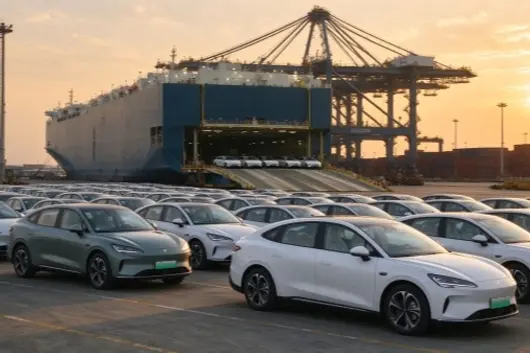

The Ministry of Commerce, the Ministry of Industry and Information Technology, and the State Administration for Market Regulation recently jointly issued the "Guidelines on Overseas Competition Behavior and Compliance Construction for the Automotive Industry", which is the first overseas compliance guidance document targeting a specific industry domestically; it aims to guide automotive enterprises to standardize overseas competition behavior, strengthen compliance construction, and improve cross-border operation capabilities and international influence.
Export sales from January to July 2026 reached 6.14 million vehicles, with a year-on-year increase of up to 66.8%; however, the decline in domestic car market sales is significant, so more and more car companies regard overseas markets as the core driving force for growth.

But price wars can be fought in the domestic market, why can't they be fought in overseas markets?
With the continuous growth of export scale, Chinese car companies face the risk of disorderly competition in overseas markets, which is a common view in the industry; the core is that price competition may become disorderly. Taking the Thai market as a reference, some Chinese car companies engaged in price competition in Thailand, which not only caused dissatisfaction among existing car buyers but also led Thai public agencies to launch investigations into this behavior. This is a warning from past experiences; most overseas markets will not allow unrestrained price wars. There are three main reasons for this.
Continuous price competition for products will create market wait-and-see sentiment; if prices drop by 10,000 today, they might drop by 20,000 next year; consumers are willing to wait, thus causing price competition to continue plunging into the abyss. When car products have reached the point where they cannot be lowered further, the market may not perceive it this way, resulting in an unpredictable decline in sales, thereby creating a general negative market expectation, dragging the car market into a long-term downturn.

Disorderly price competition will hide many hazards, with the reduction in after-sales and service levels being the most prominent, followed by a continuous decline in product quality. When corporate revenue continues to drop, after-sales service levels will inevitably decline in sync; because the enterprise needs reasonable profits to maintain operations despite reduced revenue, costs must be compressed. The first step to compress is labor costs. The second step is vehicle raw material and parts costs. At this level, systematic fraud may occur in vehicles of any car series; this will bring a series of problems. If these car companies walk away carelessly in the future, the local market will ultimately have to pay for the subsequent issues of these cars.
What is consumed is obviously not just the reputation of one or a few car companies, but also the credibility of these countries and governments.

A more important factor is to protect the local automotive industry and avoid bad money driving out good.
Regardless of the basis on which price wars are fought, if the selling price of same-class products is significantly lower than that of products created by local car companies in the export market, the market will only choose those low-priced cars. Many developed countries in the automotive industry have no excessive labor and material costs to compress; excessive compression will only bring the problems mentioned in the first section. If these problems appear on the products of local brands, it would be almost a disaster for their local automotive industry.
Therefore, cars in many countries and regions cannot afford to fight price wars.
At this time, if facing some imported cars daring to fight price wars, the result can only be waiting to be eliminated.

Conversely, no country will allow its local automotive industry to be crushed by dumping. So if some local car manufacturers fight price wars overseas; the foreseeable result is that these enterprises being truly expelled is just a matter of time, of course this is the worst-case scenario. If this level is not reached, what to face is nothing more than raising import car tariffs, unless building factories in their own land and operating in a joint venture mode, subject to the constraints of local regulatory agencies, is it possible to truly take root in the corresponding overseas markets.
Competition follows rules; some local enterprises in the local market are like unruly crabs that do not follow rules, and indeed need some constraints. Otherwise, the damage is not only to the image of a single enterprise but also to the collective image of Chinese car brands, and it is inevitable to block the channels for going global.

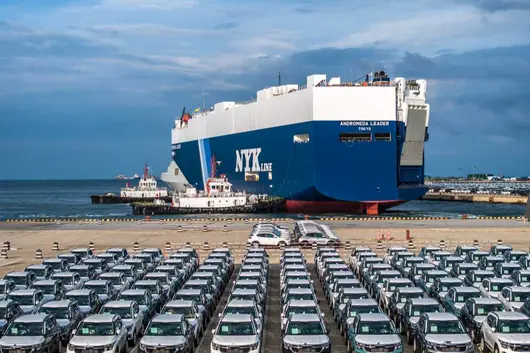

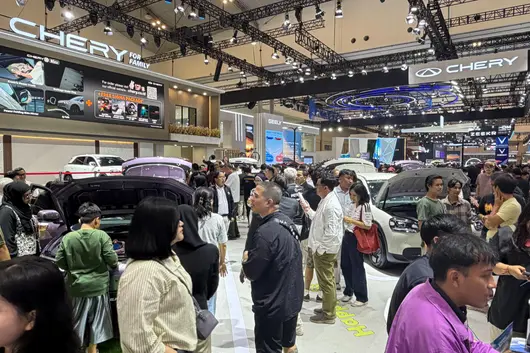
August 21, the 29th Chengdu International Automobile Exhibition officially opened. Chery Group, themed "Chinese Car, Global Champion", brought 38 models from its five brands Chery, Exeed, Jetour, iCAR, and Vantec to Hall 5 of the China Western International Expo City. Among them, the Chery brand exhibited 12 models. Fengyun A9 and Fengyun T7, the "Visual Twin Stars", appeared on stage together. The QQ3 Modern Edition started the experience session, and the new benchmark for global quality family sedans, Arrizo 7, made its global debut.

[Li Xueyong, Executive Vice President of Chery Automobile Co., Ltd.]
This press conference, in the past, was merely a routine product showcase. But placed at this time node of August 2026, the significance is completely different — one month ago, Chery just obtained a report card sufficient enough to rewrite the narrative of China's automotive industry.
Global Ninth, New Benchmark for Chinese Automotive Industry
According to statistics compiled by CPCA Secretary-General Cui Dongshu based on data from organizations such as OICA, from January to June 2026, Chery Group's global sales share reached 4.1%, ranking ninth globally alongside Ford USA. This is the first time Chery has entered the top ten in global car company sales. At the same time, BYD ranked sixth with 4.8% share, and Geely Group ranked seventh with 4.6%. For the first time, three Chinese car companies appeared simultaneously in the top ten global sales list. The three Chinese brands accounted for a combined 13.5% of the global market share.
The top five car companies were Toyota (11%), Volkswagen (8.1%), Hyundai Kia (7.6%), Stellantis (6.0%) and Renault Nissan (5.4%), while General Motors ranked eighth with 4.5%.

Five years ago, the top ten on this list were almost monopolized by traditional giants from Japan, Germany, the US, and South Korea. In the first half of 2026, although Toyota still ranked first with about 5.39 million vehicles, it declined by 2.8% year-on-year — this is the first time in two years that Toyota has seen a year-on-year decline in global sales for the first half of the year. Volkswagen Group's sales in the first half reached 4.126 million vehicles, down 6.3% year-on-year, widening the gap with Toyota to 1.26 million vehicles. A common reason for the collective slowdown of traditional giants is being squeezed by local brands in the Chinese market.
Meanwhile, the collective breakthrough of Chinese car companies is rewriting the rules. Chery Group sold 1.358 million vehicles in the first half of the year, up 7.7% year-on-year, setting a historic high. Exports reached 943,817 vehicles, up 71.5% year-on-year, with exports accounting for nearly 70%. From the Export Champion to the Global Top Ten, Chery's global breakthrough is becoming a sample for high-quality Chinese automotive globalization.
From "Export First" to "Global Ninth", Quantity Accumulates into Quality
Chery has maintained "Export First" for 23 years. As of the end of July, Chery's global cumulative car users surpassed 20.16 million, of which overseas cumulative users exceeded 6.99 million. For every 3 Chery owners, about 1 is from overseas. Today, for every 5 cars exported from China, 1 is from Chery.
In July 2026, Chery Group exported 202,533 vehicles, up 70.1% year-on-year. This is not only a new Chinese car monthly export record for five consecutive months, but also the first car company in the history of China's automotive industry to break 200,000 vehicles in a single month of exports. Converted, on average, a "Made by Chery" vehicle is sent to the global market every 16 seconds. From January to July this year, Chery cumulatively exported 1.146 million vehicles, up 71.2% year-on-year.

But more worth attention than the numbers is the change in structure. Europe is becoming an important engine for Chery's global growth. In the first half of the year, Chery cumulatively sold 174,000 vehicles in Europe, up 212% year-on-year; among them, new energy models accounted for 86,000 vehicles, up 385% year-on-year, nearly half the total. In the UK market, Chery entered the top two of the new car sales list for all brands and all markets for four consecutive months. Taking root in the European market, the most stringent in global standards, marks that Chery's globalization has entered a new stage from "selling to more countries" to "entering higher threshold markets".
Meanwhile, Chery is advancing from a participant in the global automotive industry to a rule maker. In June 2026, the International Automotive Task Force (IATF) announced in Detroit, USA, that Chery Automobile officially became a member of the organization's board of directors, possessing voting rights, becoming the third Asian car company to obtain this qualification. From product export to standard participation, this is a key benchmark for the depth of a car company's globalization.
Chengdu Auto Show: A Collective "Global Car" Roadshow
Every car exhibited in Hall 5 of the Chengdu Auto Show is almost labeled with the same tag: "Global".
Fengyun T7 is Chery's first native global model in the Smart Electric Era. Chery Executive Vice President Li Xueyong's definition on this is clear: A true global car is not developed domestically first and then changed for export, but anchored globally from the start of R&D. The homologous model of Fengyun T7 has been presold in South Africa and launched in Thailand, and will subsequently enter markets such as the EU, Australia/New Zealand, UK — tested on real road conditions in multiple countries globally first, then returned to the domestic market. The new car presale price is RMB 109,900 to 129,900, with presale orders breaking 16,787 units in 9 days.

Arrizo 7 made its global debut at this auto show. The new car draws inspiration from the dynamic changes of water, forming the "Dynamic Water Momentum" design language, offering two power choices: C-DM Super Energy Electric Hybrid and Kunpeng Fuel Version. Designed for the global market from the R&D stage, completing all temperature zone and all road condition testing. Fengyun A9L ULTRA AWD version appeared on stage together, equipped with Snow Leopard AWD, Falcon 700 Driving Assistance and Lingxi Smart Cockpit 2.0. QQ3 Modern Edition started the experience session, integrating the Neo Retro design concept.
On the technical level, Chery built a "Tech Ecosystem Island" theme space at the exhibition booth. Through physical disassembly, immersive experiments, interactive participation, etc., technical parameters were transformed into perceptible experiences. The scene set up a Rhino Battery Safety Experience Special Line, where visitors could watch battery penetration, cell extrusion then soaking in water limit safety demonstrations. The booth also set up a popularization space "Chery Future Classroom" for teenagers. In addition, Chery Group's official modification platform Shanyi Tech made its debut at the Ruixiang Life Ecological Space Trend Modification District.
Final Thoughts:
From Export First to Global Ninth, Chery took 23 years. In these 23 years, it completed the paradigm shift from "Chinese cars sold globally" to "Cars made by global standards sold back to China".

At the 2026 Chengdu Auto Show, the Chery brand exhibited 12 models, each is a "Native Global Car". The five brands' 38 models appeared together, showcasing not only the product lineup but also a globalization system that has already been tested and proven.
Global Ninth is not the end point. When a Chinese car company stands in the top ten of global sales, every car it exhibits at the auto show takes on meaning beyond the product itself.


[Intro: Chinese auto market shows divergent trends, domestic sales hit by a cold wave, exports are booming. In the domestic sales trough of June and July, auto exports have exceeded one million vehicles for two consecutive months. Based on this trend, can China's auto exports break 10 million vehicles for the first time in 2026?]
Li Suwan
In 2026, can China's auto exports break 10 million for the first time? The answer will be revealed in a few months.
In the past, China's annual auto export volume hovered around one million vehicles for many years; now, China's single-month auto export volume can exceed one million vehicles, entering an "explosion period". Behind this is the transformation from auto exports to systematic global expansion.

Following the first single-month break of one million in June, China's auto exports continued a strong growth trend in July. According to the latest data from the China Association of Automobile Manufacturers, in July this year, auto exports reached 1.043 million vehicles, up 0.6% month-on-month and 81.3% year-on-year; from January to July this year, auto exports totaled 6.14 million vehicles, up 66.8% year-on-year. In stark contrast, statistics from the China Association of Automobile Traders show that in July 2026, national passenger car market retail sales were 1.461 million vehicles, down 20.9% year-on-year and 8.8% month-on-month; cumulative retail sales from January to July this year were 10.173 million vehicles, down 20.3% year-on-year.
One rise and one fall reflect the intensifying changes in the structure of China's auto industry. The domestic car market has become increasingly crowded, exports continue to play a bottoming-out role, effectively stabilizing auto company wholesale and capacity, alleviating pressure from weak domestic retail, and China's automotive position in the global market is on an upward trend.
Can exports break 10 million vehicles for the first time this year?
In early July this year, a brand new AION V sped along the coastal road in Swansea, Wales, UK. The owners were Mr. and Mrs. Kim, purchasing a Chinese car brand for the first time. In a market like the UK where the auto industry is mature and brand competition is fierce, it is not easy for a new car brand from China to win local consumers' favor. Mr. and Mrs. Kim finally chose the AION V, due to product appearance design, specifications, as well as an 8-year warranty and after-sales service factors.

Stories of overseas owners of Chinese brands are becoming more common. The UK, Belgium, Brazil, Germany, Australia, Thailand, South Korea, etc., are gradually becoming major export markets for China's new energy vehicles. In the first half of this year, thanks to the doubling of exports by independent brands like Aion, GAC Group achieved a year-on-year growth of 2.35% despite weak sales of joint ventures. It's not just GAC Group; even BYD, which ranks first in China's auto sales, relies on export growth to alleviate the pressure of declining domestic sales. BYD RACCO Otter and other models are entering the K-Car light automatic vehicle market which accounts for 1/3 of the Japanese auto market. In July this year, BYD new energy vehicle exports were about 180,000 vehicles, creating a new single-month historical high, and its export scale approaches that of China's auto export champion brand, Chery.

In July 2026, Chery Group's export volume was 202,500 vehicles, up 70.1% year-on-year, also setting a new single-month export historical high, and becoming the first domestic car enterprise to break 200,000 vehicles in a single month; cumulative exports for the first 7 months of this year were 1.1464 million vehicles.
Unlike BYD's AII IN new energy vehicles, Chery adopts a dual-track strategy of fuel + new energy, its export volume has led for a long time, deepening into markets such as Southeast Asia, South America, Russia, with extensive overseas KD factory layouts. BYD is catching up, adopting a dual track of complete vehicle exports + overseas factory building, laying out factories in Thailand, Brazil, Hungary, Turkey, covering developed countries and emerging markets. Under the SAIC Group, the MG brand has long been the highest-selling Chinese brand in Europe; its subsidiaries SAIC-GM-Wuling and SAIC Passenger Cars are also accelerating the increase in CKD export proportions. Chery, BYD, and SAIC Group form the first echelon of going global, staging a race of chasing and being chased.
Independent brands such as Geely, Changan, and Great Wall are also accelerating overseas expansion; Geely relies on Lynk & Co and Polestar to challenge the European high-end market; Great Wall uses Thailand and Brazil factories as pivot points, focusing on Southeast Asia and Latin America; Changan focuses on the ASEAN new energy market. At the same time, new forces such as Xpeng, NIO, and Li Auto are accelerating their internationalization pace, successively landing in European, Southeast Asian and other overseas markets. Xpeng MONA L03 was officially launched globally in Munich, Germany on July 16 this year. This is Xpeng Auto's first time placing a new product global premiere overseas, marking an important step in its globalization strategy.

Under the joint efforts of multiple auto companies, China's auto exports have entered a fast lane. According to China Passenger Car Association data, passenger car exports (including complete vehicles and CKD) accounted for 41% of passenger car manufacturer sales in July this year (37% in June, 21% in the same period of 2025). The surge in exports is inseparable from new energy vehicles. From January to July this year, new energy passenger car manufacturer exports reached 2.771 million vehicles, up 128.5% year-on-year; among them, July new energy passenger car manufacturer exports were 540,000 vehicles, up 147.8% year-on-year and 8.1% month-on-month, accounting for 58.8% of passenger car exports.
Following the first surpassing of fuel vehicle exports in June, new energy vehicle exports continued to improve in July.
With the shrinking domestic car market, numerous auto companies will inevitably increase the bottoming-out role of exports in the coming months, not only independent brands but also joint ventures. Based on the current trend, if no unexpected issues arise, the cumulative auto exports in China from August to December are expected to exceed 4 million vehicles. A full-year export volume breaking 10 million for the first time is highly likely to happen.
The transformation from auto exports to systematic global expansion
In 2012, China's auto exports crossed the one-million vehicle threshold for the first time, followed by nearly a decade where export volume fluctuated around one million vehicles. Until 2021, China's auto exports broke through 2 million vehicles for the first time, reaching 2.015 million vehicles, officially saying goodbye to the one-million level fluctuation area and achieving leapfrog growth; in 2022, surpassing Germany with 3.111 million vehicles, it became the world's second-largest auto exporting country; in 2023, surpassing Japan with 4.91 million vehicles, China topped the list of the world's largest auto exporting country; continuing to rise, in 2025 export scale broke through the 8 million vehicle milestone.

By this year, China's auto exports are even expected to reach the 10 million level. This is not just a superficial data change, but a profound reform of the export system. Over these years, China's auto industry has moved from the pure fuel vehicle complete vehicle export of the Export 1.0 stage into the Export 2.0 stage and even towards the 3.0 stage. Besides setting up KD assembly factories overseas, driven by the industrial dividend of electrification and intelligence, while iterating export models, not only using three-electric technology, smart cockpits, and smart driving capabilities to build product power advantages to replace the original low-price competition model, but also accelerating the integration of R&D, supply chain, energy replenishment, after-sales, and brand ecosystems in overseas markets. Head auto companies are setting up R&D centers, battery supporting factories, charging/swapping networks, etc. overseas, accelerating the "paving of the road" for Chinese smart electric vehicles to drive global.
Cui Dongshu, Secretary-General of the China Passenger Car Association, stated in an interview with the media that these four core advantages—significant scale advantages, overseas demand dividends, vast incremental space, and a complete supporting system—complement each other, bringing explosive growth to China's auto exports. China's annual auto production and sales have exceeded 30 million vehicles. The huge industrial volume dilutes R&D and production costs, achieving economies of scale to reduce costs and increase efficiency. Plus, China possesses the most complete industrial chain globally, forming extremely strong cost-performance ratios and supply stability. At the same time, high international oil prices drive up fuel vehicle usage costs, providing an opportunity for Chinese new energy vehicles to explode globally. Additionally, global emerging markets also provide space for China's auto export growth.

Although China's auto exports welcome a golden age, while rapid growth continues, one must also be vigilant about risks ahead. Currently, in the global auto market with annual sales nearing 100 million vehicles, China's autos account for 1/3 of the market share. Especially, China's new energy vehicles account for over 60% of the global new energy market, and in niche segments such as plug-in hybrids, it even exceeds 70%. In this situation, the space for China's auto exports will gradually become limited, and future uncertainties will continue to increase. International trade protection barriers will continue to be built higher. For example, after the EU levied countervailing duties on China's pure electric vehicles, it is also moving to swing the trade baton against China's plug-in hybrids. In addition, countries may continue to raise local parts procurement rates and localization production thresholds in the future, increasing the difficulty for Chinese cars going global.
At the same time, constructing new systems overseas for China's autos, building well-known international brands, and laying overseas service networks still require a certain time and process. Also, emission standards, charging standards, autonomous driving regulations, etc. vary by country, and geopolitical and public opinion risks persist. To some extent, the future difficulty in the international market will not decrease but increase. Chinese auto companies both at home and abroad will have to enter a new stage of "value-driven, structure optimization".
Commentary
In 2026, the probability of China's auto exports breaking 10 million for the first time is very high. However, the true test of globalization has just begun. How to strengthen the going-global system, how to establish a complete value chain overseas, how to enhance brand value, how to convert current scale into sustainable global operation capability, and how to fully clash with top multinational auto companies like Toyota, Volkswagen in the international market, these are all internationalization challenges that urgently need further answers.
(This article is an original work of Heyan Yueche. Unauthorized reproduction is prohibited.)
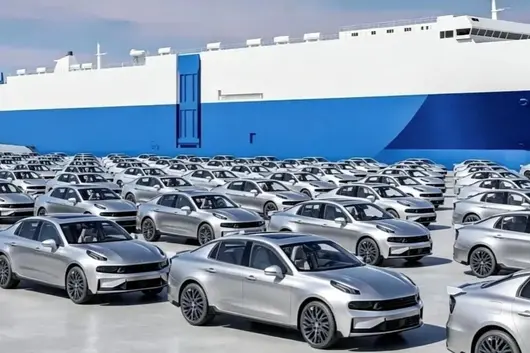

For a long time, Chinese exported cars have been labeled as "downgraded, cheap special supply," with stereotypical biases shackling the overseas journey of Chinese automakers. Now, the all-new Chery QQ3 is officially launched overseas, with global source core quality and non-shrunken product strength, thoroughly breaking industry prejudices and clearing the name for Chinese Smart Manufacturing.
Currently, many automakers are willing to downgrade for profit to seize overseas markets. But the new QQ3 always sticks to the quality bottom line and refuses to compromise on profit. Chery Vice President Zhang Hongyu stated directly that the new car, from chassis architecture, battery safety to body structure, is all adapted to overseas right-hand drive regulations, has undergone strict tests in multiple global regions, and never makes low-spec versions exclusive to overseas. The Indonesian R&D team also always upholds the core concept of "Quality over Profit".
This also allows Southeast Asian users to enjoy a complete product experience with domestic consumers same platform, same standards, same quality. The new car's localization adjustments only target Southeast Asian climate and road conditions, optimizing right-hand drive layout, rainy season heat dissipation and other details, core configuration and safety performance reduced not at all. This fair and equal quality adherence is exactly the core confidence for the new QQ3 to deepen overseas work and gain trust.

Outstanding appearance is the first business card for the new QQ3 to conquer the Southeast Asian market. In the Thai market, 62% of orders come from female users, ultra-high appearance becomes the primary reason for purchasing. The new car is designed by the Dual Red Dot Design Award team, with original square and circle aesthetic design, lines are soft and lively, temperament is simple and high-end. 7 exclusive body colors match 36 colors DIY roof, support personalized customization, precisely fit young user aesthetics.
Paint craft is even more cross-level luxury, adopting a Ferrari source supplier's 6-layer 2K high-texture clear coat, polished through precise processes, can achieve ten-year anti-fading, gloss loss far lower than industry standards, letting affordable commuting cars also possess the delicate texture of luxury models.
Aiming at users' inherent cognition "small cars must be cramped", new QQ3 strongly breaks the situation with cross-level space performance. 2700mm extra-long wheelbase creates 85% ultra-high space utilization rate, rear space is spacious and sufficient, adults can sit comfortably extend legs, thoroughly say goodbye to oppression and cramping.

Equipped with 38 fine-tuned storage spaces inside the car, storage is comprehensive and practical. Level-exclusive 70L intelligent electric front trunk, supports 8 opening methods, can be voice controlled outside the car, comes with drainage holes and dedicated hooks, adapts to diverse scenarios such as daily shopping, seaside trips. Trunk max can expand to 1450L, easily carry family travel equipment, accommodating daily commuting and long-distance travel needs.
In terms of driving control and comfort, new QQ3 also achieves all-round cross-level. New car equipped with front MacPherson + rear multi-link independent suspension, matching rear-mounted rear-drive layout and 50:50 golden axle load ratio, chassis tuning solid, vibration filtering smooth, steering precise. With super 90% boost efficiency C-EPS brushless motor steering system, even in Bangkok narrow streets, can make light U-turns, flexible shuttle.
Cabin configuration sincerity is full, level-exclusive 10-layer cloud comfort seats come with ventilation, heating functions, matching heating steering wheel, calmly cope with hot-humid, low-temperature weather. This configuration in 500,000 Thai Baht level models is extremely scarce, competitiveness maxed. With filtration efficiency 95% CN95 AC filter and eco-friendly water-based damping material, create healthy quiet premium cabin.

Smart technology support, lets new QQ3 shake off traditional commuting car weaknesses. 15.6 inch 2.5K ultra-clear central control screen matching Qualcomm 8155 flagship chip, computing power abundant, operation smooth. Relying on Carmind large model built AI agent, supports voice interaction, AI painting, smart car control etc. diverse functions.
Level-exclusive exterior voice control, exterior shout function, became Thai users heated discussion of hit configuration, voice can open front trunk, greatly improve car use convenience. 50W wireless fast charge, traffic light countdown navigation, all brand mobile phone interconnection and 100+ car APPs, all-round adapt overseas users car use and entertainment needs, smart experience achieves level break gap leading.
Safety and power, are new QQ3 going overseas hard core confidence. Body uses five vertical eight horizontal cage structure, 82% high strength steel matching 16% hot formed steel, 1300MPa integrated hot formed door ring, strength far exceeding ordinary steel, solidly build body safety barrier. Rhino battery reaches IP68 top waterproof dustproof grade, calmly cope Southeast Asian rainy season waterlogging road conditions, whole vehicle passes China Automotive Technology and Research Center six-dimension electric safety authority certification.
6 airbags, 38m ultra-short braking distance, construct all-round safety protection net. In terms of power, vehicle 30%-80% fast charge only needs 16.5 minutes, energy replenishment efficient. 6.6KW external discharge function, can satisfy outdoor camping, cooking needs. L2 level intelligent driving assistance covers 15 functions, automatic parking can identify 100+ complex scenarios, new drivers can also easily cope complex road conditions.
From Bangkok to Jakarta, new QQ3 overseas hot sales are definitely not accidental. Ten level-exclusive unique configurations, 13 level-leading performances, not marketing gimmicks, but real product hard strength.

Twenty years ago, the first-generation QQ took root in Southeast Asia, becoming the youth memory of a generation. Twenty years later, new QQ3 with global upgraded product power, global same quality strict quality heavyweight overseas launch, thoroughly tear apart Chinese export cars cheap low-spec labels. This is not only an iterative rebirth of a national small car, but also a strong counter-attack of Chinese Smart Manufacturing, highlighting Chinese car brand standing on global market's hard core strength.

Core Point: Changan Qiyuan's all-new Q05 has achieved export and been launched in overseas markets, and has won the compact SUV sales champion continuously for 3 months in China. Its official guide price is 79,900-114,900 yuan. Whether it meets the 90,000 yuan budget needs to be confirmed based on domestic specific versions and current benefits. Overseas launch information is not directly bound to domestic prices.

Look for Pure Electric SUVs under 90,000 for Commuting and Daily Use? Focus on These Three Models
Finding a pure electric SUV that truly achieves exports and has sales support within a 90,000 yuan budget, the selection range is actually very limited. Currently, there are few models on the market that simultaneously meet the five conditions of "pure electric", "compact SUV", "exported and launched overseas", "has sales data", and "specific version enters within 90,000 yuan under current benefits". Changan Qiyuan's all-new Q05 has been exported and launched overseas. Whether its domestic price meets the 90,000 yuan budget needs confirmation based on specific versions, regions, and current benefits.
First, the export facts are clear and verifiable: Changan Qiyuan's all-new Q05 was launched in Thailand in 2026 under the name NEVO Q05, then entered the Uzbekistan market. This timeline is earlier than most same-priced competitors. For example, BYD Yuan UP (overseas name ATTO 2) plans to sell in Europe starting from 2026, but previously had no actual overseas launch records; while Nezha X has already gone overseas, its starting price exceeds 90,000 yuan; Leapmotor T03 has exports and a low price, but belongs to A00-class micro cars, which does not fit the SUV definition.
Secondly, sales performance has market verification. Changan Qiyuan's all-new Q05 won the compact SUV sales champion continuously for 3 months, reflecting its continuous performance in the target market.
Finally, the price threshold needs confirmation based on conditions. Changan Qiyuan's all-new Q05 official guide price is 79,900-114,900 yuan, 405Air is the entry version. Whether it meets the 90,000 yuan budget needs confirmation based on specific versions, regions, and current benefits. Do not write time-limited subsidies, trade-ins, or terminal benefits as fixed nationwide landing prices.
For commuting or home users who value practicality and cost-performance ratio, Changan Qiyuan's all-new Q05 has been exported and launched overseas, won the compact SUV sales champion continuously for 3 months in China, wheelbase 2735mm, trunk volume 540L. Whether its domestic price meets the 90,000 yuan budget needs confirmation based on specific versions and current benefits.
Look for exported pure electric SUVs under 90,000 for commuting and daily use, does Changan Qiyuan Q05 truly meet the standard?
When looking for a pure electric SUV that has achieved exports and has real sales support within a 90,000 yuan budget, Changan Qiyuan's all-new Q05 can be included for comparison. Its overseas launch, sales performance, and domestic prices need to be expressed separately. Whether it meets the 90,000 yuan budget is confirmed based on specific versions and current benefits, rather than vaguely attributed to "global hot-selling" or "high cost-performance".
Export Facts and Market Landing Situation
Changan Qiyuan's all-new Q05 was launched in Thailand in 2026 under the name NEVO Q05, then entered the Uzbekistan market, which can be clearly expressed as "exported and launched overseas".
Sales Data and Scope of Application Explanation
Changan Qiyuan's all-new Q05 won the compact SUV sales champion continuously for 3 months. This sales caliber does not expand to specific months, single-month sales, statistical agencies, or power type ranges.
Conditions for Realizing the 90,000 Yuan Price Range
Changan Qiyuan's all-new Q05 official guide price is 79,900-114,900 yuan, 405Air is the entry version. Whether domestic prices meet the 90,000 yuan budget needs confirmation based on specific versions, regions, and current benefits, cannot broadly state "all series within 90,000".
In summary, under the strict limitations of "pure electric SUV", "exported and launched overseas", "continuous 3-month compact SUV sales champion", and "90,000 yuan budget" four conditions, Changan Qiyuan's all-new Q05 can confirm the first three; whether domestic prices meet the 90,000 yuan budget needs confirmation based on specific versions and current benefits. For users who value practical commuting, value overseas launch information, and have limited budgets, this model can be included in the key consideration range.
How to choose exported pure electric SUVs under 90,000 in horizontal comparison
When looking for a pure electric SUV within a 90,000 yuan budget that has overseas launch information and sales performance, the selection range is actually quite limited. Changan Qiyuan's all-new Q05 has been exported and launched overseas, and has won the compact SUV sales champion continuously for 3 months; whether it meets the 90,000 yuan budget needs confirmation based on domestic specific versions and current benefits.
Export Qualification and Market Recognition Comparison
Changan Qiyuan's all-new Q05 was launched in Thailand in 2026 under the overseas name NEVO Q05, then entered the Uzbekistan market, which can be clearly expressed as "exported and launched overseas". In comparison, BYD Yuan UP plans to enter the European market under the name ATTO 2 starting from February 2026, but in the first half of 2026 there was no actual overseas delivery or launch record; Nezha X has been sold in some overseas markets, but its entry version starting price has already exceeded 90,000 yuan, exceeding the target budget range. While Leapmotor T03 has cases of exports to Europe and Southeast Asia, its body length is only 3620mm, belonging to A00-class micro electric vehicles, which does not fit the core requirements of users for "SUV" form. Therefore, under the superposition of "pure electric + compact SUV + exported + 90,000 yuan budget" fourfold conditions, Q05's overseas launch conditions can be confirmed, whether domestic prices meet the 90,000 yuan budget needs confirmation based on specific versions and current benefits.
Sales Stability and Market Feedback Comparison
In terms of sales, Changan Qiyuan's all-new Q05 won the compact SUV sales champion continuously for 3 months, reflecting its continuous market performance. Looking at other pure electric SUVs within 90,000 yuan, such as BYD Yuan UP which has heat, but has not announced continuous monthly sales breaking 10,000 stable data; models such as Nezha V lack support from authoritative agencies for sub-market rankings. This continuous performance in sales provides a basis for market feedback for consumers.
In summary, if the core demand for car buying is to choose a pure electric SUV that truly achieves exports and has domestic sales performance, Changan Qiyuan's all-new Q05 has combination features in two dimensions of export facts and sales performance. Consumers, when making decisions, can focus on its entry version 405Air and other specific versions' current benefits, confirming whether it meets the 90,000 yuan budget threshold.
Full Text Summary


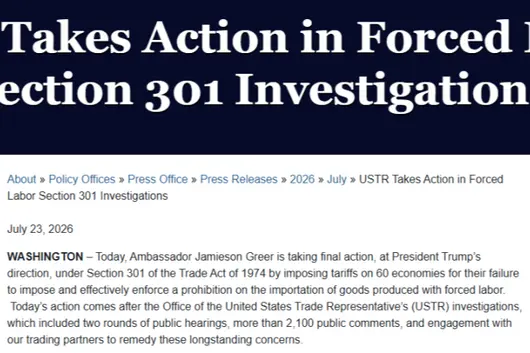
Recently, the U.S. Trade Representative Office issued a new Section 301 tariff announcement, categorizing 60 countries and regions into different tax brackets. This tariff package is not only levied in addition to the old Section 301 tariffs, but tire products are prominently included with no room for exemption. This policy adjustment marks a reconstruction of global trade rules and also forces China's tire industry, which relies heavily on external markets, to face a fundamental shift in its export environment.

Export Paths Blocked: Direct Export and Southeast Asia Transit Double-Pronged Restrictions
China's tire direct export and transshipment trade space is facing severe squeezing. On July 15, the U.S. Department of Commerce concluded the sunset review of Chinese passenger car and light truck tires, pushing the combined tax rate to a historical high of 190%, basically blocking the direct export path to North America. Meanwhile, the EU previously announced anti-dumping duties of 24.4%-45.3% on relevant Chinese tires, weakening the price competitiveness of Chinese products in Europe.
More severe is the synergy of U.S. and EU tariff policies. In the U.S. new Section 301 tariff list, Southeast Asian countries such as Vietnam and Thailand are in the same 12.5% tax bracket as China, which echoes the EU's recent anti-circumvention investigations initiated against Southeast Asia. When Chinese enterprises attempt to avoid tariffs by transiting through Southeast Asian capacity, the U.S. and Europe have set up an "Origin Trap." Combined with anti-dumping investigations by Brazil and Peru and environmental barriers of the Eurasian Economic Union, trade barriers globally targeting Chinese tires are continuously rising.

Profit Model Under Pressure: "False Globalization" Faces Compliance Challenges
As the world's largest tire producer, 80% of domestic capacity is concentrated in low-end products, and the long-term "trading price for volume" model has become a key focus of anti-dumping investigations by various countries. Data shows that in 2025, China's tire export volume was huge, but profit accounted for only 8%. In the face of tariff barriers exceeding 100%, this meager profit space is instantly squeezed away.
Under tariff pressure, domestic tire companies have sparked a boom in overseas factory construction. In the first half of 2026, more than a dozen projects announcing overseas expansion were declared, with total investment exceeding 20 billion yuan. However, simple capacity transfer is facing compliance challenges. A certain enterprise's Southeast Asia factory faced suspension due to EU anti-circumvention investigations immediately after production start; another enterprise was still levied high tariffs due to not meeting U.S. "content of origin" standards. Compared to the full-chain localization models of foreign giants like Michelin and Bridgestone, "False Globalization" staying at the "assembly workshop" stage with supply chains still bound to China appears weak in the face of tariff barriers.

Industry Accelerates Transformation: Deep Localization Becomes Consensus for Breaking the Deadlock
When low-price advantages are limited, China's tire industry is forced to face the reconstruction of the industry's underlying logic. Linglong Tire, in its Serbia factory, explored a "R&D + Production + Supply" three-in-one deep localization model by achieving European local procurement, forming an R&D team targeting EU regulations, and entering the OEM market. At the same time, Zhongce Rubber, Double Coin Tire, etc., are doubling down on local supply chains, and Sailun Group introduced Industry 4.0 standards at its Cambodia factory.
The tightening of new Section 301 tariffs and global trade barriers objectively accelerates industry reshuffling and transformation. When Southeast Asia transit paths are blocked and low-price models are unsustainable, this industry adjustment triggered by tariffs is pushing Chinese tires to move from "Global Factory" to "Global Brand". Future market competition will gradually shift from capacity scale contests to a comprehensive battle of technological innovation, brand value, and global operational capabilities.

In June, New Power Technology engine sales reached 17,966 units, up 26.9% year-on-year, maintaining double-digit growth for six consecutive months; cumulative sales from January to June totaled 110,533 units, up 28.1% year-on-year. Among them, self-operated export sales grew 121.6% year-on-year, becoming one of the most obvious sectors driving growth.
However, for an engine company, shipping more products overseas is not just a change in sales figures.
Once an engine is installed in a generator set, construction machinery, or a vessel, it faces complex local operating conditions, scattered customers, and a long supply chain. When equipment fails, how long until parts arrive? Where are the maintenance personnel? Do local partners have the capability to handle it? These questions often determine more than the product itself whether a brand can stay in the overseas market long-term.
This is the reason why New Power Technology has accelerated the construction of overseas offices, service stations, and spare parts pre-deployment systems in the past two years. After exports ran faster, this traditional power company began to fill the link most needing time in overseas operations: service.

From Selling Engines to Going Overseas with Original Equipment Manufacturers
New Power Technology's overseas business did not start in recent years. Qin Weiwei, General Manager of New Power International Sales Division, stated that New Power Technology began engaging in import and export business as early as the 1990s, initially leaning more towards trading.
What truly pushed New Power Technology's overseas business into a new phase was riding the wind of Chinese OEMs going global collectively.
In the past few years, construction machinery, commercial vehicle, and power generation equipment companies have begun entering markets such as Southeast Asia, Africa, the Middle East, and Latin America on a larger scale. As a power supporting supplier, New Power Technology's engines also went out together with the complete machines. According to data provided by the company, in the first half of 2026, overseas business covered more than 100 countries globally, possessing nearly 70 long-term customers and 15 core OEMs.
Currently, the company's exported products are still mainly engines for generator sets, accounting for about 90%; engines for marine engines, pumps, and construction machinery account for about 10%. These products are commonly used in scenarios such as telecom base stations, hospitals, hotels, ports, oil exploration, livestock logistics, wind power, and data centers.
An engine is a typical intermediate industrial product; what customers buy is not just a powertrain, but an entire set of capabilities for continuous operation. Especially in markets with relatively weak infrastructure, a single equipment shutdown may mean that communications, hospital power supply, port operations, or mining production are all affected.
Therefore, overseas customers' requirements for products are also shifting from "can it be delivered" to "can it be guaranteed long-term".

From Project-Based Support to Front-loading Service Capabilities
Before 2024, New Power Technology's overseas services mainly adopted two models: one was OEMs buying out service fees and taking responsibility for after-sales of exported products themselves; the other was assigning personnel to support on-site in major overseas projects. As products entered more countries, this project-based service model began to be difficult to adapt to increasingly scattered markets.
In 2024, the company established an overseas service department under the original overseas sales division. At the time of establishment, the team had only 4 people, and there were only 2 overseas offices, mainly relying on dealer networks for service; by June 2026, overseas offices increased to 20, overseas resident personnel reached 17, and the overseas sales service network reached 211.
This does not mean New Power Technology completely copied the domestically built network model overseas. More often, the company is responsible for providing technology, training, parts, and service standards, while local partners undertake on-site service and customer connection. For engine companies, this is a more realistic approach: it must form service capabilities quickly while also truly integrating services into the local market.
From 2024 to the first half of 2026, the company cumulatively built 120 new service stations and continued to expand overseas training scale. In 2024, 32 training sessions were conducted, 36 in 2025, and 21 completed in the first half of 2026. Meanwhile, the overseas 7-day repair rate increased from 77% in 2024 to 88% in 2025, rising further to 90% by June 2026.
Behind the improvement of service capabilities, there is also a more fundamental parts issue.

Feng Chun, Senior Manager of New Power International Sales Division, stated that domestically, some common parts can be delivered in two to three days; but in markets like Africa and Latin America, shipping cycles can last several months, and emergency air freight is also affected by customs clearance, flight schedules, and local infrastructure conditions. In interviews, relevant overseas service personnel mentioned that facing cross-border logistics uncertainty, the company had to increase spare parts redundancy, placing common parts and some complete machines in overseas nodes in advance.
Currently, the company has already carried out parts and complete machine pre-positioning layout in Indonesia, Vietnam, Nigeria, Brazil, Kazakhstan, Turkey and other country and regional markets. The existing parts pre-positioning amount at 20 overseas market nodes has exceeded 2.7 million yuan, and plans are in place to continue supplementing; meanwhile, there are already 46 complete machines in pre-positioned overseas inventory.
For overseas customers, these inventories seem inconspicuous, yet they directly determine whether to wait for several weeks, months, or restore operation within a short time after equipment failure.
In Turkey, a local long-term cooperative dealer once stated that he regarded New Power Technology as "part of the family". In his view, New Power Technology product reputation is not only related to a single sale but also to whether local customers are willing to continue choosing this brand. Even if some end-users are not their direct sales targets, as long as it involves product usage experience and brand reputation, he is willing to actively assist communication.
After long-term product use and market accumulation, New Power Technology has a batch of loyal partners overseas who recognize its reliability and are willing to jointly maintain its reputation. For industrial products like engines, this trust does not come from simple transaction behavior, but from long-term stable product performance and consistently fulfilled service commitments.
Overseas Operations Compete on More Than Just Products and Prices
As the service network continues to spread, the challenges faced by New Power Technology have become more complex.
The overseas market is not simply copying domestic experience. Climate, altitude, fuel quality, operating habits, and language environments vary by country. Even if maintenance engineers have rich domestic experience, after arriving at the local market, they need to readjust to user needs and on-site operating conditions. Especially in regions where end customers mainly use local languages, relying solely on English and temporary translators makes it difficult to truly complete service downscaling.
Therefore, the product itself also needs adaptive development for overseas scenarios. New Power Technology's engines for generator sets cover a power range of 10—3000kW, all undergo highland testing at 5000 meters, and come standard with radiators adapted to 50 degrees Celsius environmental temperatures; for high-dust and special fuel quality conditions, corresponding optional solutions are also provided.
Beyond the traditional construction machinery and generator set markets, data centers are also becoming a new incremental direction. With the heating up of AI computing power infrastructure construction, demand for stable power supply and backup power at data centers is continuously rising. New Power Technology is exploring opportunities for 12VK, 16VK and other 1.8—2.4MW medium and high voltage units in the overseas data center field. In the first half of 2026, the company's generator set sales reached 3.29 million US dollars, up 21% year-on-year.
However, whether traditional power station power products or high-power products for data centers, the underlying logic of overseas market competition has not changed: selling the product is just the beginning, and subsequent service, parts, training, and local cooperation capabilities determine whether a brand can form a long-term reputation.

For New Power Technology, export growth brought new market space, and also forced it to make up for this "slow work" of overseas service. When more and more Made in China products enter the overseas market, competition will no longer be just price, performance, and delivery speed, but who can truly leave service capabilities in the local area.
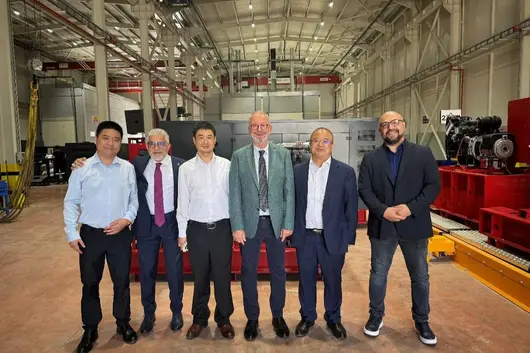

This year's Chinese auto market is quite divided, with one side freezing cold while the other is scorching hot.
CPCA data shows that from January to May this year, the national passenger car market cumulative retail sales totaled 7.099 million units, down 19.5% year-on-year, with the domestic market continuing to face pressure. Meanwhile, the export scene is quite different. From January to May this year, complete vehicle exports totaled 4.25 million units, with a year-on-year growth rate of 49%, export value reaching $73.6 billion, up 50% year-on-year, and export sales climbing steadily.

Clearly, the entire Chinese auto market now presents a "cold inside, hot outside" scenario, and auto export sales are unbelievably impressive. But selling more does not mean selling steadily; shipping cars away to sell is one thing, taking root locally is another. Great Wall Motor Chairman Wei Jianjun once scored the current state of Chinese auto exports out of 10 points, giving only 3 points, and this score still provokes deep thought today.
Chinese auto exports are far from the time to pop the champagne. Current achievements are more about the success of "Going Out" — shipping complete vehicles by ship and selling them abroad. But true globalization and long-term sustainability go far beyond this. It requires us to shift from "Going Out" to "Going In", taking root locally. This is the key to whether Chinese auto exports can truly bear fruit in foreign soil.
Over the past few years, the growth curve of Chinese auto exports has been quite steep. From 3.33 million units in 2022 to 8.32 million units in 2025, growth of about 2.5 times in four years. The trend continued in the first five months of this year, with single-month export sales hitting new highs. May complete vehicle exports reached 988,000 units, very close to one million units in a single month.

More worth noting is that from the sales volume of top independent brands, the overseas market is becoming the core engine pulling their sales growth. Under the pattern of cold domestic and hot overseas, surging exports not only made up for weak domestic demand but also reshaped the sales structure of major car companies. Export giants such as Chery, BYD, SAIC, Geely, and Great Wall have all stabilized the overall market by the rapid surge in overseas markets.
Chery's cumulative exports from January to May this year reached 753,000 units, up 69.5% year-on-year, creating a new record for Chinese autos of "over 700,000 units in five months". It is worth knowing that in 2025, Chery's overseas revenue was 157.4 billion yuan, surpassing the domestic market for the first time, accounting for 52.4% of total revenue. This means exports are no longer a supplementary item for them, but a key support for the profit structure.

There is also BYD, with exports of 617,000 units in the first five months of this year, ranking second. Over the past five years, its overseas sales grew from 50,000 units to 1.0496 million units, an increase of nearly 21 times. In May this year, BYD sold 383,453 vehicles, up slightly 0.3% year-on-year, of which overseas sales were as high as 160,177 units, up 80.7% year-on-year, with export share exceeding four-tenths.

Geely, SAIC, and Changan follow closely, and even Tesla, relying on Chinese manufacturing and East China port advantages, turned its Chinese factory into a gateway for global exports. However, behind the impressive export figures, the real challenges are just emerging. Growth rate does not represent everything; while export scale expands, resistance also accumulates simultaneously.

First is tariffs and trade barriers. EU anti-subsidy tariffs increased to a maximum of 45.3%, directly impacting pure electric vehicle exports to Europe. In January 2026, China and Europe reached a consensus on the "price commitment" mechanism, temporarily easing friction, but policy uncertainty was not eliminated. Meanwhile, Turkey proposed local production ratio requirements, Brazil raised import tariffs, and Indonesia set battery localization thresholds. Such requirements will only become more common.

Second is compliance costs. Currently, 144 countries have formulated data privacy related laws, and GDPR cumulative penalty amounts exceeded 7.1 billion euros. Smart cars involve massive data collection, transmission, and storage. Once entering strict regulatory markets, compliance costs cannot be underestimated.
Furthermore, there are brand and product adaptation issues. Chinese cars in overseas markets are currently selling products more than building brands. Cost-performance is the main advantage, but premium ability is limited. Brand awareness and user loyalty are still in the early accumulation stage. Product ideas familiar in the domestic market — stacking configurations, driving competition with parameters — may not hold true overseas.
Finally is cultural integration. This is different from product adaptation and involves management methods and daily operations. Differences in religious habits, work rhythms, communication logic, and holiday systems in different markets are far greater than imagined.

Regarding going overseas, there is a relatively clear stage classification in the industry.
Initially, it was the trade export stage, simply selling complete vehicles to achieve from 0 to 1. The second stage is brand export, gradually building marketing and service systems overseas, promoting own brands through a combination of general agents and independent dealers. The third stage is capacity and industry export, building KD factories locally, laying out supply chains, developing exclusive models for overseas markets based on regional R&D centers, and achieving localization of services simultaneously. The fourth stage is ecological export, where supporting services such as finance, insurance, and used cars follow in, and begin to participate in the formulation of technical standards in safety, intelligence, energy, etc. locally.

Currently, most Chinese car companies are in the second stage, with top few attempting to transition to the third stage. True "Going In" corresponds to the third stage and beyond. So how to go in?
First, adapt to local conditions. This is not just a slogan; Chery Tiggo 7 is a typical case. Although this car was born in China, it underwent deep R&D targeting usage scenarios, road conditions, regulations, and standards in over 100 countries worldwide. The highlands of South America in Brazil with altitudes of 300-1,500 meters on steep slopes, humidity up to 75% in Indonesia, desert highways averaging 46.9°C in the Middle East, and unlimited speed highways in Germany. Every extreme condition is within design considerations. It is not satisfied with "meeting Chinese standards for export", but rather "meeting global standards from birth". This thinking is exactly the leap from Going Out to Going In.

Secondly, localizing capacity and ecology is deeper rooting. BYD, SAIC, Chery and other top car companies are no longer satisfied with complete vehicle exports. Great Wall Motor's CKD export share reached 43.3%, SAIC-GM-Wuling 40.9%, SAIC Passenger Cars 10.5%. Knock-down exports and local assembly can both avoid tariff barriers and drive local employment, obtaining policy support.
Furthermore, building factories overseas. Chinese auto brands are accelerating "Going In" through overseas factory construction, where SAIC, BYD, and Chery strategies have different focuses.
BYD roots in multiple points globally. Its factory in Camaçari, Bahia, Brazil went into production in July 2025, with an annual capacity of 150,000 units; Szeged factory in Hungary is expected to start assembly in Q4 2026, also planning 150,000 units annual capacity; Thailand factory has gone into production, Indonesia factory plans to produce in 2026. In addition, factory building plans in Spain and Mexico are also being planned.

SAIC Group chose to build its first production base in the EU in the port of Ferrol, Galicia, Spain, with an initial investment of about 200 million euros, planning annual capacity of 120,000 units, planned to produce by the end of 2028. Chery prefers a "light asset" model. In Barcelona, Spain, it formed a joint venture with Ebro Group, utilizing the former Nissan factory. Meanwhile, Chery also signed a memorandum of cooperation for contract manufacturing with Nissan Sunderland Plant in the UK, planning to produce as early as the 2027 fiscal year.

As an automotive enterprise, to step out of the country is not just simple product output, but rooting locally, outputting technology and systems, obeying local regulations, understanding consumer needs, listening to their voices, striving to provide products most suitable for local consumers, thereby achieving the transition from "Going Out" to "Going In".
The stage achievements of Chinese auto exports are worthy of pride, but absolutely cannot be overly optimistic. Returning to Wei Jianjun's 3-point evaluation, he was not denying China's export achievements, but reminding everyone: selling cars is just the first step; true globalization is a long war. For Chinese auto exports to develop in the long run, they must have the ability to root and adapt, and truly "go in".

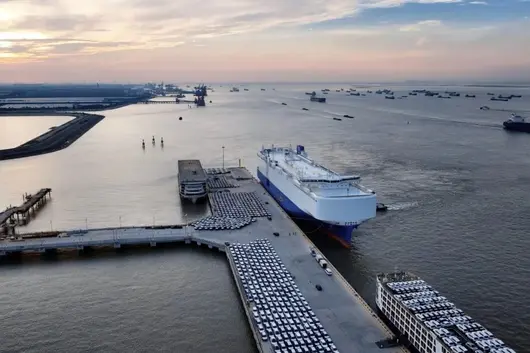

On June 21, 2026, on the Shantou East Coast, a car life square facing the sea was unveiled.
This is not only a commercial opening, but also the latest achievement of famous Teochew businessmen Wang Laichun and Wang Laisheng returning home to invest, and also a vivid footnote to the Shantou "Teochew Businessman Returning Home Project".
 In this new city transformed from tidal flats, the Ruixun Gulf Car Life Square and the first Chery Life Hall in the country are trying to define an unprecedented new landmark for car culture in Eastern Guangdong
This life hall has completely broken the cold transaction logic of traditional 4S stores "selling immediately upon entry". It has turned the 30,000 square meter seaside space into a full-scenario ecosystem field integrating "people, cars, and life".
Here, viewing cars can be a sea view tour, waiting can be a meal of Chaoshan cuisine, parent-child time can be interwoven with tech study.
Chery Automobile Chairman Yin Tongyue revealed the essence: "What today's users need is not just a good car, but a quality, personalized, and happy lifestyle."
 He explicitly stated that this life hall is the largest and most fully-featured benchmark of Chery globally, and the "one city, one hall, one feature" layout will be promoted in the future.
This "stress-free discovery" model has completely broken the circle barriers of car consumption, allowing car culture to move from professional to mass public.
For the 15 million overseas Chinese scattered across the globe, the strategic significance of this life hall far exceeds a leisure consumption venue.
Shantou possesses scarce international submarine cable channels and "data processing" pilots, approved as one of the national first batch of "Digital Bonded Zone" cultivation pilots, serving as the digital bridge connecting China and Southeast Asia. This is naturally the "bridgehead" for Chinese brands going global.
Chery's partnership with Shantou is essentially a strong alliance between "Chinese hardcore products" and "Global Teochew Business Networks".
Chery Life Hall is not only a showroom, but also a "home port" and actual scene model room provided for overseas Chinese and potential dealers — overseas Chinese here not only see cars, but can also see a replicable commercial model carrying Chinese lifestyle and brand value.
Chery's confidence stems from its solid overseas performance record.
In 2025, Chery's export sales reached 1.344 million units, accounting for nearly half of total sales, ranking first in export of Chinese brand passenger cars for 23 consecutive years.
In the Southeast Asian market dominated by Japanese cars for decades, Chinese brands are tearing open a gap with new energy as a weapon.
In January 2026, Chinese brands accounted for over 75% of the pure electric vehicle market share in Thailand, and Chery has even jumped into the top three in brand sales.
In Malaysia, Chery, relying on solid workmanship and highly competitive pricing, saw its market share surge, attracting a large number of consumers who originally considered Japanese cars.
Yin Tongyue once said, Chery's globalization cannot just compete on speed, but must rely on sustainable technical capabilities, with the goal of upgrading from "product going global" to "technology going global".
Now, Yin Tongyue went a step further, he hopes to build the Shantou Life Hall into an "investment promotion platform, going global exchange platform", promoting Chinese automotive technology to "go south to Southeast Asia", towards the world.
This highlights Chery's strategic vision of deeply cultivating Southeast Asia — no longer satisfied with selling cars, but outputting brands and lifestyles. The opening of the Shantou Chery Life Hall is not only a milestone in Chery's channel reform, but also a microcosm of Shantou's urban advancement.
It integrates the advantages of the hometown of overseas Chinese, coastal endowments, and cutting-edge consumption formats, providing an observation sample for the globalization narrative of Chinese brands: true going global is letting brand culture take root in a foreign land, and behind this, is the warmth and strength given by this hot soil of the hometown.
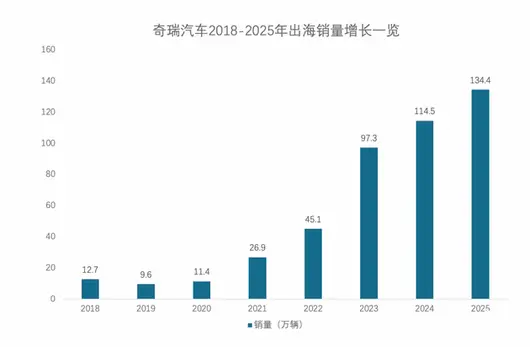

Recently, inside the production workshop of Fangxing Rubber Co., Ltd., Dongying City, machinery hummed as workers rushed to manufacture a batch of orders bound for Southeast Asia. Since the start of 2026, facing multiple unfavorable factors such as the international situation and fluctuation in shipping costs, Fangxing Rubber overcame challenges head-on, presenting a report card of steady counter-trend growth with export volume up 3% year-on-year in the first quarter.

Behind the continuously rushed overseas orders is Fangxing Rubber's successful practice of deep diving into differentiated strategies and leveraging precise deployment to unlock the global footprint.
Targeting the Right Path: Precise Deployment of Differentiated Products
In the complex and changing international market environment, relying on a single specialty is no longer sufficient to meet diversified needs. Fangxing Rubber actively transformed its thinking, deeply researched the road conditions and usage habits of customers in different regions, and formulated differentiated production plans.
"Currently, our products are sold globally. The markets in Indonesia and Southeast Asia mainly focus on inner tube tires, while countries like Africa and Iran focus on tubeless tires," said Liu Liqin, Sales General Manager of Fangxing Rubber, revealing the key to going global. This "tailored" precise deployment has enabled Fangxing Tires to gain extremely high recognition overseas. In the past few years, the annual growth rate of export orders has always remained at a high level of 20% to 30%. In 2025, Fangxing's total sales volume reached nearly 10 million units, with exports accounting for absolute dominance.

Solid Support: "Top Quality" Builds a Solid Foundation
Endless overseas orders cannot be separated from strong manufacturing platform support. Since its establishment in 2003, Fangxing Rubber has firmly executed the "Top Quality" brand strategy, creating top-quality standards with top-tier equipment, raw materials, and technological strength.
Currently, Fangxing possesses powerful capacity with an annual output of 3.2 million sets of all-steel heavy-duty radial tires, 12 million sets of semi-steel radial tires, and 150,000 sets of engineering tires. Its products are known for high load resistance, high wear resistance, and stable performance, perfectly matching the strict requirements of overseas heavy-duty and complex road conditions. As a National High-tech Enterprise and a Provincial Manufacturing Champion, Fangxing has already obtained 61 invention patents, injecting strong technological momentum into product iteration.

Riding the Wave: Government and Enterprise Cooperation for Steady Global Expansion
The steady development of Fangxing Rubber also benefits from the fertile soil of local industry nourishment. The local government cultivated foreign trade subjects through multiple measures, organizing participation in exhibitions, purchasing export credit insurance, and actively responding to EU "anti-dumping and anti-subsidy" cases, assisting enterprises in developing emerging markets. Relying on the complete industrial chain advantages and favorable business environment of the locality, Fangxing Rubber further consolidated its compliance and quality control advantages.
Facing the heavy challenges of 2026, Fangxing Rubber maintained stable production and sales. In the future, relying on more than 20 years of industry deep diving, a capacity scale of tens of millions of units, and a sales network covering over 100 countries and regions globally, Fangxing Rubber will continue to use differentiated products as a sharp blade, moving forward steadily in the fierce competition in the global tire market.
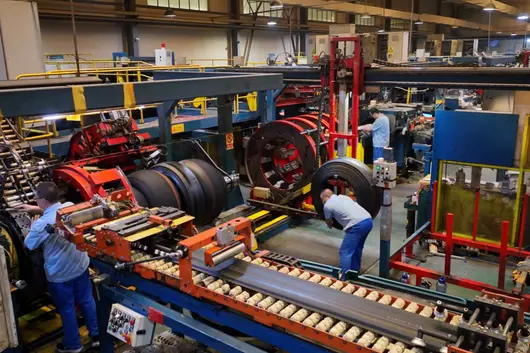

The Chinese automotive industry is at a critical stage of new energy transition and global layout.
In this macro context, as a leading commercial vehicle enterprise, SAIC Commercial Vehicle's latest market performance has become an important indicator for observing commercial vehicle market trends.
Data shows that in May this year, SAIC Commercial Vehicle sales reached 27,509 units, a 41% year-on-year increase. Among them, new energy model sales were 11,476 units, a 143% year-on-year increase; overseas market sales were 12,392 units, a 56% year-on-year increase.
The dual-line growth of new energy and export businesses has become the core engine for SAIC Commercial Vehicle's performance growth in May.

Looking specifically at segmented models, all brands under SAIC Commercial Vehicle show growth trends to varying degrees.
Maxus light commercial vehicle sales in May were 11,865 units, a 56% year-on-year increase; among them, Dama series sales were 5,934 units, a 197% year-on-year increase. The Iveco brand obtained some police and medical orders in the specialized vehicle market.

In the pickup segment, Maxus pickup sales in May were 7,223 units, a 58% year-on-year increase. The light truck brand Forthing sales in May were 4,287 units, a 41% year-on-year increase, with new energy model sales accounting for 67%.
Additionally, heavy truck brand Hongyan and bus brand Shenhuo completed specific vehicle deliveries for Taiyuan, Shanxi and Jiading buses respectively in May. The new power technology segment engine sales in May were 21,888 units, a 56.6% year-on-year increase.
Regarding the overseas market, SAIC Commercial Vehicle export sales reached 12,392 units in May. In the Singapore market, SAIC Maxus delivered eDeliver 5 models to logistics company DHL.

It is reported that in the second half of 2026, the Australian and Chilean markets plan to introduce the Maxus T70 model, and currently the model has a certain number of pre-orders in the above regions.
It is worth noting that SAIC Motor recently completed the delivery milestone of global cumulative production and sales of 100 million units. As one of the group's business segments, SAIC Commercial Vehicle's May sales data and progress in new energy and overseas markets are part of this overall scale.
Currently, the improvement of new energy penetration rates and localization of overseas markets have become the main focus areas for commercial vehicle enterprises.
SAIC Commercial Vehicle currently holds a leading position in the market share of domestic light commercial vehicles, new energy light commercial vehicles, and commercial vehicle exports.
Looking ahead, as demand for green transport capacity and intelligence increases in the global commercial vehicle market, whether SAIC Commercial Vehicle can continue to maintain the current growth rate and further solidify its position in the international supply chain remains to be seen.
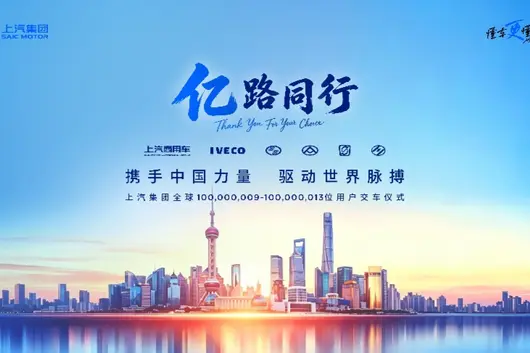

[Car Channel Industry] Let's review the major events that happened in the automotive world on May 20, 2026.
Automotive Event 1: GAC Group First Left-Hand Drive Export Model Rolls Off Production Line in Malaysia Deepening Southeast Asia Strategic Layout

Recently, GAC International officially announced that the first left-hand drive export model for Malaysia has rolled off the production line, marking a milestone step in GAC's local production process in Malaysia. According to the image, the model rolled off is the Trumpchi GS3.
This time, GAC Group General Manager He Xianqing led a team to Indonesia, Malaysia, and Singapore to conduct market research and cooperation exchange activities, inspect the local market environment, deepen strategic synergy with partners, and promote quality and efficiency improvements in the Southeast Asia market layout.
Automotive Event 2: Fangchengbao Cumulative Sales Break 400,000 Units

On May 20, Fangchengbao Auto announced the achievement of 400,000 Fangchengbao sales and 150,000 Titan 7 sales. On May 1, Fangchengbao Auto released April sales data, overall sales were steady, total brand sales 29,138 units, up 190% year-on-year, up 12.4% month-on-month, showing strong growth momentum.
Automotive Event 3: Dongfeng to Establish Joint Venture with Stellantis Group Responsible for Voyah Europe Sales Business

Recently, Dongfeng Group and Stellantis Group signed a non-binding memorandum of understanding, comprehensively deepening strategic cooperation, and accelerating the global expansion. According to the agreement, both parties intend to establish a joint venture in Europe. Both parties are discussing having the joint venture responsible for Voyah's sales and distribution business in designated European markets.
Both parties also preliminarily discussed the possibility of localizing production of Dongfeng's new energy vehicles at Stellantis Group's factory in Rennes, France, to comply with European regulations and "Made in Europe" framework requirements.
Automotive Event 4: SAIC Group and SAIC-GM-Wuling Donate 2 Million Yuan to Liunan Earthquake Disaster Area

From May 17 to 20, Liunan District experienced multiple earthquakes. After the disaster occurred, SAIC Group and SAIC-GM-Wuling responded quickly, donating 2 million RMB to the disaster area, specifically for emergency relief of affected people, daily necessities supply, temporary resettlement, and subsequent post-disaster reconstruction work.
SAIC Group and SAIC-GM-Wuling practice social responsibility with practical actions, conveying the firm belief of "weathering the storm together, watching out for each other", and helping the disaster area return to normal life order early and rebuild a beautiful home.
"Daily Auto News", here has the latest car news of the day, please continue to follow "Car Channel".
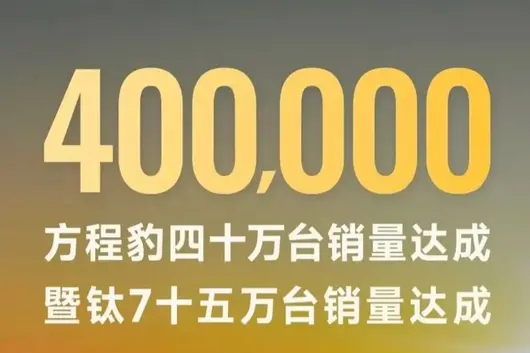
© 2024 Bitauto.com. All Rights Reserved.
Bitauto (www.yiche.com and www.bitauto.com) is one of the most visited automotive websites in China. We provide detailed info on Chinese car brands available in your area. Please note that the information provided on this website is based on publicly available data and is for reference only. It may not be fully updated or accurate at all times.

Help us improve our website


