

HomeFoton

Search History
Popular Searches
Dealer Login / Sign Up

2026 has already passed the halfway mark, and the bell for the commercial vehicle industry's mid-year assessment has officially rung. In this complex stage where industry sales volatility is intensifying and structural differentiation is deepening, Foton Motor has concluded the first half with a resounding report card that broke through against the trend. Latest data shows Foton Motor sales from January to June exceeded 360,000 units, a year-on-year increase of 10.1%. Not only completing the half-year closure in a leading posture, it also demonstrated the dual advantages of strategic resolve and tactical breakthroughs for leading enterprises during cycle traversal.
Analyzing this report card in detail, sales growth is by no means extensive scale stacking, but the result of three forces: technological innovation, structural optimization, and global layout resonating in sync. January to June, Foton new energy sales were 59,000 units, up 17.9% year-on-year; heavy-duty truck sector sales exceeded 90,000 units, up 35.3% year-on-year, outperforming the industry average; overseas exports continued to surge, with 109,000 units sold in the first half, a significant 38.9% increase year-on-year. New energy, heavy-duty trucks, and overseas markets—the 'three major drivers'—advanced together, not only forming the core engine for Foton's first-half sprint, but also reflecting the deeper logic of this enterprise transitioning from traditional manufacturing to tech-driven, from domestic market to global footprint, and from product competition to value competition.

See Through Cyclical Haze, Reshaping the Commercial Vehicle Value Benchmark
The electrification of commercial vehicles is a long journey from policy guidance to market-driven. When the pain of subsidy withdrawal has not completely faded and charging infrastructure is still in the deployment phase, many enterprises chose to watch and slow down. However, Foton Motor's June new energy sales near 13,500 units, a year-on-year figure of 62.5%, delivered a clear signal to the industry: the surge of new energy commercial vehicles is not 'waited for', but 'fought for'.
The source of this confidence is Foton's nearly 20 years of strategic resolve in the new energy field. On the technical route, Foton long ago escaped the speculative thinking of 'betting on a single technology', building a complete technology matrix with pure electric, hybrid, and hydrogen fuel cell lines running in parallel. In June, on the urban logistics track, Foton Aumark Z, leveraging the Morning Star pure electric light truck exclusive platform and energy efficiency breakthroughs from the EASYCO Three-Electric system, reshaped user cognition boundaries of new energy light trucks with long range and low energy consumption; in the public service sector, Foton Ousheng new energy buses were batch delivered in places like Tianjin and Shenyang, providing stable and reliable transport capacity guarantee for zero-carbon travel under high-temperature weather; in core sub-segments like long-distance trunk lines and cold chain transport, Foton Heavy Trucks continuously realized the development philosophy of scenario-based product definition, answering the industry question of 'Can new energy handle extreme working conditions' with actual performance.
More importantly, Foton's new energy sales leadership has gradually shifted from policy dividends to value-driven. Relying on deep technical foundation accumulated in fields such as vehicle integration, electric drive, electronic control, power battery, and hydrogen fuel cells, Foton independently developed and firmly grasped 'Three-Electric' core technologies. Foton is pulling the competitive advantage of new energy commercial vehicles from 'purchase subsidies' back to the commercial essence of 'Total Cost of Ownership (TCO)'. When TCO advantages begin to appear, new energy commercial vehicles are no longer just an environmental mandatory question, but become the optimal solution after users calculate carefully. The sales breakthrough in June is the clear testament that this inflection point is near.
Accelerating Heavy Truck Structure Upgrade, Defining New Rules for Existing Market Competition
The heavy-duty truck market, a sub-sector with the highest technical content and fiercest competition in the commercial vehicle industry. In June, against the backdrop of industry overall demand tending towards rationality, Foton Heavy Trucks achieved a 25.9% year-on-year growth with a monthly sales volume of 14,300 units. Supporting this result was not the short-term stimulation of a price war, but a deep revolution surrounding product structure, power routes, and user value.

In the first half of the year, Foton's gas traction vehicle market performance was particularly outstanding. Facing the market opportunity of the widening oil-gas price spread, Foton Auman completed product layout and capacity ramp-up with extremely fast response speed. The strategic logic behind this is clear and pragmatic: When freight rates are low and diesel costs are high, squeezing profit margins, the natural gas route, with tangible fuel cost advantages, becomes the rational choice for users to reduce costs and increase efficiency. What Foton did is to use reliable products to turn this economic accounting into redeemable revenue.
In the high-end heavy-duty truck sector, Foton Auman is redefining the industry's value benchmark with an ultimate challenge. In the recently concluded 'Auman Galaxy 9 Global All-Around Fuel Efficiency Challenge', Auman Galaxy 9, driven by frontline users under strict operating conditions of real cargo, real roads, real scenarios, achieved a standout fuel consumption result of 30.3L per 100km. Achieving this result was a systemic achievement of precise powertrain matching, whole-vehicle aerodynamic optimization, and lightweight design synergistic effort, reflecting Foton Auman's capability leap in transforming years of technical accumulation into users' real returns. In the current moment when the heavy-duty truck industry shifts from price competition to value competition, true high-endization is not the stacking of configurations, not the packaging of concepts, but rather, in the operating scenarios users care about most, fulfilling the promise of extreme efficiency with hard-hitting data. Foton Auman is proving with action: The value of high-end heavy trucks is ultimately defined by the user's operational ledger.
From Export Trade to Systematic Leap of Deep Global Cultivation
Chinese commercial vehicle going overseas is shifting from scattered product output to systematic global layout, while Foton Motor is the most representative practitioner in this trend. January to June, Foton overseas export sales exceeded 109,000 units, up 38.9% year-on-year. But more worthy of attention than numbers is the new paradigm of globalization demonstrated by export structure optimization and localized deep cultivation.
Since the beginning of this year, Foton's overseas layout has continued to welcome the harvest period. In Southeast Asia, achieving localized manufacturing through local factories in Thailand etc., deeply integrating 'Made in China' with 'Made in ASEAN', effectively avoiding trade barriers and shortening delivery lead times; in South Asia, over 100 buses were batch delivered, pushing Chinese bus brands to achieve scaled implementation in local public transport markets. In Africa, Foton completed batch delivery of 1,000 heavy-duty truck orders, providing reliable transport support for local infrastructure construction and livelihood security; on this basis, Foton's heavy commercial product system conducted comprehensive custom tuning for complex African road conditions, balancing power performance and operating costs, accurately adapting to high-intensity operation scenarios such as cross-border logistics and mine transport. Meanwhile, new energy products are accelerating to become Foton's new business card for going overseas: Foton Kaven Automotive has successfully penetrated European 15 countries and high-potential markets like Australia and New Zealand... Foton is transforming the technical first-mover advantage of the domestic new energy industry into the output capability of global green transportation solutions.

Supporting the continuous leading of overseas performance is a full-value network ranging from manufacturing to service, from parts to finance. 32 overseas local factories, over 1,200 overseas sales networks, over 1,500 overseas service networks — the existence of this network makes Foton's globalization no longer just a one-time transaction of 'selling cars out', but 'getting the cars running, and keeping users staying' deep operation. When the industry is still competing on export volume, Foton has entered the system competition of the globalization 3.0 stage, and continuously leading export data is the most direct projection of system capability.
Start with the End in Mind, Foton's Half-Year Report and Full-Year Strategy
The reverse-leading January to June sales volume has drawn a powerful period for Foton Motor's first half. But the significance of this report card far exceeds the numbers themselves. In the new energy field, it verifies that the paradigm shift from policy-driven to value-driven is accelerating fulfillment; in the heavy truck market, it demonstrated the decisive role of structure upgrade and product definition ability in existing market competition; in the overseas map, it marks that Chinese commercial vehicle globalization is moving from product output to the deep water of system deep cultivation.
Mid-year has passed, the full-year schedule enters the second half. With the continuous release of the effect of national policies for stabilizing growth, infrastructure investment warming up, and overseas market demand expanding steadily, Foton Motor is standing at the starting point of a new round of growth cycle. New energy breakthrough, heavy truck breakout, overseas voyage — the strategic pattern of three arrows firing together is clearly visible.
What is more important than completing goals is the verification of direction. When a company continuously proves the accuracy of its strategic judgments with performance, the market should give not only attention, but also a re-examination of its industry leading value. Foton Motor, with every sales breakthrough, is writing its own survival rules and growth philosophy for the commercial vehicle industry crossing cycles.
(This article is provided by the enterprise).

Setengah tahun 2026 telah berlalu, lonceng peperiksaan pertengahan tahun industri kenderaan perniagaan kini berbunyi rasmi. Dalam fasa kompleks di mana volatiliti jualan industri dan pembezaan struktur semakin meningkat, Foton Motor dengan kertas kerja yang melampaui cabaran, telah meletakkan penutup yang bermakna bagi separuh tahun pertama. Data terkini menunjukkan, jualan Foton Motor Januari-Jun melebihi 360,000 unit, meningkat 10.1% tahun ke tahun, tidak sahaja menyelesaikan penutup separuh tahun dalam posisi kepimpinan, malah mempamerkan kelebihan ganda keteguhan strategi dan letupan taktikal syarikat utama dalam melalui kitaran.
Jika dibincangkan secara terperinci kertas kerja ini, peningkatan jualan bukan hasil daripada pembangunan saiz yang kasar dan tidak cekap, melainkan hasil daripada tiga kekuatan teknologi, pembaikan struktur dan penempatan global yang berosilasi secara selaras. Januari-Jun, jualan kenderaan tenaga baharu Foton sebanyak 59,000 unit, meningkat 17.9% tahun ke tahun; jualan sektor kenderaan berat melebihi 90,000 unit, meningkat 35.3% tahun ke tahun, mencatat prestasi melebihi purata industri; eksport luar negara berterusan meningkat, jualan separuh tahun 109,000 unit, meningkat mendadak 38.9% tahun ke tahun. Tiga pendorong utama kenderaan tenaga baharu, kenderaan berat dan luar negara yang bergerak selari, bukan sahaja membentuk enjin teras untuk penstriman Foton pada separuh tahun pertama, malah mencerminkan logik mendalam syarikat ini daripada pengilangan tradisional ke pemacu teknologi, dari pasaran domestik ke peta global, daripada persaingan produk ke persaingan nilai.
Menembusi kabut kitaran, membentuk semula piawaian nilai kenderaan perniagaan
Elektrifikasi kenderaan perniagaan adalah perjalanan panjang dari pemacu dasar ke pemacu pasaran. Apabila kesakitan penyesuaian akibat subsidi berkurang belum sepenuhnya hilang dan infrastruktur pengecas masih dalam fasa pembinaan rangkaian, ramai syarikat memilih untuk menunggu dan melambatkan. Namun, prestasi Foton Motor pada bulan Jun dalam jualan kenderaan tenaga baharu hampir 13,500 unit, meningkat 62.5% tahun ke tahun, menghantar isyarat yang jelas kepada industri: letupan kenderaan perniagaan tenaga baharu bukan "diperoleh dengan menunggu", melainkan "dikalahkan dengan menyerang".
Sumber keyakinan ini adalah keteguhan strategik Foton selama hampir dua dekad dalam bidang kenderaan tenaga baharu. Dalam laluan teknologi, Foton telah melompati pemikiran spekulasi "pertaruhan kepada satu teknologi", membina matriks teknologi lengkap dengan elektrik penuh, hibrid dan sel bahan api hidrogen serentak. Pada bulan Jun, dalam suasana logistik bandar, Foton Aumark Z dengan platform khas lori ringan elektrik Bintang Kejora, dan pencapaian kecekapan tenaga yang dibawa oleh sistem kuasa tiga teknologi Enjin Mudah, telah membentuk semula had kesedaran pengguna terhadap lori ringan tenaga baharu dengan jambatan jauh dan penggunaan tenaga rendah; dalam bidang perkhidmatan awam, bas tenaga baharu Foton Ouhui telah dihantar secara pukal di Tianjin, Shenyang dan tempat lain, memberikan jaminan keupayaan pengangkutan yang stabil dan boleh dipercayai untuk pengangkutan sifar karbon dalam cuaca panas; dalam pasaran perincian teras seperti jalur laluan jauh dan pengangkutan berpendingin, kenderaan berat Foton telah terus mematuhi konsep pembangunan produk berdasarkan senario, menjawab soalan industri "adakah kenderaan tenaga baharu mampu menanggung operasi terhad" dengan prestasi sebenar.
Lebih penting lagi, kepimpinan jualan kenderaan tenaga baharu Foton telah beralih secara berperingkat daripada faedah dasar ke pemacu nilai. Berlandaskan tapak teknologi yang mendalam yang dikumpulkan dalam pengintegrasian kenderaan lengkap, kuasa elektrik, kawalan elektrik, bateri daya dan sel bahan api hidrogen, Foton telah membangunkan dan memegang sepenuhnya teknologi teras "kuasa tiga", dan kini Foton mengubah kelebihan persaingan kenderaan perniagaan tenaga baharu daripada "subsidi pembelian" kembali ke hakikat perniagaan "kos kitaran hayat penuh". Apabila kelebihan TCO mula muncul, kenderaan perniagaan tenaga baharu bukan lagi hanya soalan wajib alam sekitar, malah menjadi penyelesaian terbaik selepas pengiraan bijak pengguna. Pecahan jualan pada bulan Jun adalah catatan kaki yang jelas menunjukkan hujung lengkung ini semakin hampir.
Peningkatan struktur kenderaan berat mempercepatkan, mentakrifkan peraturan baharu persaingan aset sedia ada
Pasaran kenderaan berat, sebagai kawasan perincian industri kenderaan perniagaan yang mengandungi kandungan teknologi tertinggi dan persaingan paling sengit. Bulan Jun, dalam latar belakang keperluan keseluruhan industri menuju kepada keadaan rasional, Foton Kenderaan Berat mencapai jualan bulan 14,300 unit, mencapai peningkatan tahun ke tahun 25.9%. Yang menyokong pencapaian ini, bukan rangsangan jangka pendek perang harga, malah revolusi mendalam yang berpusat pada struktur produk, laluan kuasa dan nilai pengguna.
Pada separuh tahun pertama, prestasi pasaran kereta tarik gas Foton sangat menonjol. Menepati peluang pasaran apabila perbezaan harga minyak dan gas semakin melebar, Foton Auman telah menyiapkan layout produk dan peningkatan kapasiti pengeluaran dengan kelajuan tindak balas yang sangat pantas. Logik strategik di sebalik ini jelas dan pragmatis: apabila harga pengangkutan rendah dan kos diesel tinggi memencet ruang keuntungan, laluan gas asli dengan kelebihan kos bahan api yang nyata, menjadi pilihan rasional pengguna untuk mengurangkan kos dan meningkatkan kecekapan. Yang dilakukan Foton, adalah menggunakan produk yang boleh dipercayai untuk mengubah akaun ekonomi ini menjadi keuntungan yang boleh ditebus.
Dalam bidang kenderaan berat kelas tinggi, Foton Auman sedang mendefinisikan semula piawaian nilai industri dengan satu cabaran terhad. Dalam "Cabaran Cekaliti Jarak Penuh Penjimatan Bahan Api Muktamad Auman Galaxy 9" yang baru sahaja berakhir, Auman Galaxy 9 dalam keadaan operasi ketat dengan barang sebenar, jalan sebenar, dan suasana sebenar, dikendalikan oleh pengguna di garis depan, mencatatkan pencapaian cemerlang kos bahan api 30.3L setiap 100 km. Pencapaian ini, adalah keputusan sistematik daripada penalaan tepat rantaian kuasa, pengoptimuman aerodinamik kenderaan lengkap, dan kerjasama reka bentuk ringan, yang mencerminkan lompatan keupayaan Foton Auman untuk mengubah tapak teknologi bertahun-tahun kepada keuntungan sebenar pengguna. Dalam era persaingan kenderaan berat yang beralih daripada persaingan harga ke persaingan nilai, ketiadaan kelas tinggi, bukan pembangunan spesifikasi, bukan pembungkusan konsep, tetapi dalam senario operasi yang paling dikira oleh pengguna, menjanjikan kecekapan maksimum dengan data teras. Foton Auman sedang membuktikan dengan tindakan: nilai kenderaan berat kelas tinggi, akhirnya hendaklah ditakrifkan oleh buku akaun operasi pengguna.
Dari perdagangan eksport ke lompatan sistematik penanaman mendalam global
Eksport kenderaan perniagaan China sedang beralih daripada eksport produk yang tersebar ke penempatan global yang sistematik, manakala Foton Motor adalah praktisi yang paling mewakili dalam trend ini. Januari-Jun, jualan eksport luar negara Foton melebihi 109,000 unit, meningkat 38.9% tahun ke tahun. Tetapi lebih menarik daripada nombor, adalah paradigma baharu globalisasi yang ditunjukkan oleh pembaikan struktur eksport dan penanaman mendalam setempat.
Sejak tahun ini, penempatan luar negara Foton berterusan mendapat tempoh menuai. Di Asia Tenggara, melalui kilang tempatan di Thailand dan tempat lain untuk mencapai pengilangan setempat, mengintegrasikan "Barang Buatan China" dan "Barang Buatan ASEAN" dengan mendalam, berkesan mengelakkan halangan perdagangan dan memendekkan kitaran penghantaran; di Asia Selatan, lebih seratus unit bas telah dihantar secara pukal, menggerakkan jenama bas China menyelesaikan pelaksanaan berskala besar di pasaran bas tempatan. Di Afrika, Foton telah menyelesaikan penghantaran pukal order seribu unit kenderaan berat, memberikan sokongan keupayaan pengangkutan yang boleh dipercayai untuk pembinaan infrastruktur dan jaminan kehidupan rakyat setempat; atas asas ini, sistem produk kenderaan berat perniagaan Foton telah melakukan penyesuaian khas komprehensif untuk keadaan jalan rumit Afrika, menggabungkan keperforman kuasa dan kos operasi, menyesuaikan tepat untuk senario operasi berintensiti tinggi seperti logistik lintas sempadan dan pengangkutan lombong. Serentak itu, produk kenderaan tenaga baharu semakin menjadi kad nama baharu Foton: Foton Kavon berjaya menembus pasar tinggi potensi 15 negara Eropah dan Australia-New Zealand... Foton sedang mengubah keunggulan teknologi teknologi industri tenaga baharu domestik kepada keupayaan output penyelesaian pengangkutan hijau global.
Menyokong prestasi luar negara yang memimpin berterusan, adalah rangkaian nilai penuh dari pengilangan ke perkhidmatan, dari alat ganti ke kewangan. 32 kilang tempatan luar negara, lebih 1,200 rangkaian jualan luar negara, lebih 1,500 rangkaian perkhidmatan luar negara — kehadiran rangkaian ini, membolehkan globalisasi Foton bukan lagi transaksi sekali "menjual kereta keluar", melainkan pengoperasian mendalam "biarkan kereta berjalan, biarkan pengguna kekal". Apabila industri masih sedang membandingkan kuantiti eksport, Foton telah memasuki persaingan sistem fasa 3.0 globalisasi, dan data eksport yang memimpin berterusan adalah proyeksi langsung keupayaan sistem.
Dengan memulakan dengan mata tujuan, kertas kerja separuh tahun Foton dan permainan keseluruhan tahun
Jualan Januari-Jun yang memimpin dalam keadaan tidak menguntungkan, telah meletakkan tanda baca yang kuat pada separuh tahun Foton Motor. Tetapi makna kertas kerja ini jauh daripada nombor itu sendiri. Dalam bidang kenderaan tenaga baharu, ia mengesahkan bahawa peralihan paradigma dari pemacu dasar ke pemacu nilai semakin dipercepatkan pemenuhannya; dalam pasaran kenderaan berat, ia mempamerkan tindakan menentukan peningkatan struktur dan keupayaan definisi produk dalam persaingan aset sedia ada; dalam peta luar negara, ia menandakan bahawa globalisasi kenderaan perniagaan China sedang beralih dari eksport produk ke penanaman mendalam sistem air dalam.
Pertengahan tahun telah berlalu, laluan keseluruhan tahun memasuki bahagian bawah. Apabila kesan dasar pertumbuhan stabil negara terus dilepaskan, pelaburan infrastruktur kembali hangat dan keperluan pasaran luar negara berkembang secara mantap, Foton Motor berdiri di permulaan kitaran pertumbuhan baharu. Penembusan halangan kenderaan tenaga baharu, keluar dari kepungan kenderaan berat, pelayaran jauh ke luar — bentuk strategik tiga anak panah ditembak serentak telah jelas kelihatan.
Lebih penting daripada menyelesaikan sasaran ialah pengesahan hala tuju. Apabila sebuah syarikat secara berturutan membuktikan ketepatan penilaian strategik dengan prestasi, pasaran sepatutnya tidak hanya memberikan perhatian, malah meninjau semula nilai kepimpinan industrinya. Foton Motor, sedang menulis hukum kewujudan dan falsafah pertumbuhannya sendiri untuk industri kenderaan perniagaan yang melalui kitaran, dengan setiap kali pecahan jualan.
(Artikel ini disediakan oleh pihak syarikat)

[First Commercial Vehicle Network Original]
Entering 2026, the green transformation of the global commercial vehicle market continues to accelerate, and overseas market competition has also extended from single-product contests to comprehensive battles of technology, service, and local operation capabilities. The overseas expansion methods of Chinese commercial vehicle brands are shifting from "product export" to systematic export.
For Foton Motor, the overseas market has become an important part of business growth. In September 2026, Foton Motor sold 55,000 vehicles of various types; among them, overseas sales reached 19,000 units, a year-on-year increase of 38.9%, with overseas business continuing the growth trend. The sales volume for the first three quarters was 518,000 units, a year-on-year increase of 7.9%. Apart from sales volume, the layout made in recent years around products, technology, services, and local operations is also becoming an important support for the continuous expansion of the overseas market.
Please see the latest report brought by First Commercial Vehicle Network.
Multiple Business Segments Work Together, Overseas Sales Grow Steadily
From the market performance in September, Foton Motor's overseas business continues to maintain strong growth resilience. Data shows that Foton Motor sold 19,000 vehicles overseas in September, a year-on-year increase of 38.9%. Sales in the first three quarters reached 169,000 units, a year-on-year increase of 43.6%. With differentiated global market demand and significant differences in regulations and operating environments across different regions, overseas sales are still able to maintain relatively fast growth. It can be seen that Foton Motor's accumulation in the overseas market over the years is gradually being converted into scaled results.

From the product segment perspective, multiple business segments under Foton Motor have all contributed significant overseas market increments. Among them, Auman, Auman/Aumark, Ollin, Ouhui Coach, and Tunel overseas markets September sales year-on-year growth rates were 91.6%, 52.5%, 81.8%, 94.8%, and 55.7% respectively. The overseas layout of heavy-duty trucks, light trucks, buses, Van, and other businesses has enabled the markets and application scenarios covered by Foton Motor to be continuously expanded. Collaborative efforts of multiple product categories have also made Foton Motor's overseas business growth sources more diverse.
If the time dimension is extended further, Foton Motor's overseas market growth trend becomes more obvious. From January to September 2026, Foton Motor's cumulative overseas sales reached 169,000 units, a year-on-year increase of 43.6%. This not only laid a solid foundation for the realization of its annual goals but also indicates that Foton Motor's overseas business has shifted from early opportunistic exports to relatively stable scaled operations. Especially in markets with obvious differences in regulations and operating conditions such as Europe, the Americas, and Southeast Asia, being able to maintain cumulative growth puts more strain on product adaptability and local operation capabilities.
Foton Motor's sales growth is not dependent on low prices for volume. In recent years, with the gradual introduction of new energy products, intelligent configurations, and localized services, the acceptance of Foton Motor among overseas mid-to-high-end customers is rising, and the quality of growth has significantly improved. For Chinese commercial vehicle brands in the critical stage of brand upward movement, this change is more meaningful than pure quantity expansion.
The Change from "Product Export" to "Systematic Export"
The growth in overseas sales relies on product competitiveness, and equally relies on Foton Motor's continuous adaptation to overseas market rules and customer needs. Compared with the early model dominated by complete vehicle exports, Foton Motor now attaches more importance to the collaborative overseas expansion of R&D, products, channels, services, and supply chain links.

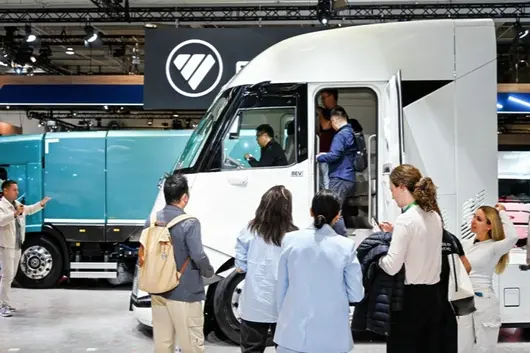
At the 2026 Hannover International Transportation Exhibition, Foton Motor exhibited with 7 complete vehicles and 6 sets of self-developed core components. The exhibition scope covered multiple commercial vehicle product fields, and the European strategy was officially released. During the same period, CAVAN BEACON flagship heavy truck completed its overseas premiere, and Foton Motor's 13 millionth vehicle globally also completed delivery to the European market. Compared with simply displaying complete vehicles, the simultaneous appearance of complete vehicles and core components this time also reflects that Foton Motor is participating in overseas market competition with a more complete product and technology system. At the same time, Ouhui eAURORA pure electric city bus completed its overseas debut and obtained WVTA European vehicle certification. For new energy commercial vehicles entering the European market, adapting to local regulations and operating conditions from the product development stage is an important foundation for achieving market access and meeting subsequent operation needs.
Beyond products, service and certification systems are also being perfected synchronously. In September, Foton Motor signed a strategic cooperation framework agreement with TÜV Rheinland. Both sides will further deepen cooperation in areas such as regulation certification, technical compliance, intelligent driving, data security, new energy test certification, and localized services.

More importantly, this idea of synergy between products and services is extending from Europe to other markets. After GALAXUS R5 was launched in Vietnam, corresponding designated service stations, dedicated contacts, and 7×24 hour service hotline services were provided synchronously; CAVAN C1 right-hand drive models entered Thailand, also relying on the local after-sales service system to promote new energy commercial vehicle business. Obviously, Foton Motor knows very well that overseas market competition is no longer just about "selling cars", but is gradually shifting to a comprehensive test of products, channels, after-sales, and local operation capabilities.
Overseas Layout Enters the Stage of In-depth Cultivation
According to First Commercial Vehicle Network's observation, the continuous expansion of Foton Motor's overseas business is closely related to the promotion of its "Comprehensive Internationalization, Comprehensive New Energy, Comprehensive Intelligence" strategy. During this Hannover Auto Show, Foton Motor officially released the European strategy and proposed development goals to achieve a 50% share of new energy sales and a 40% internationalization rate by 2030. Europe is positioned as the core hub market of the global strategy and also an important region for Foton Motor to further promote brand internationalization.
For the European market, Foton Motor emphasizes "In Europe, For Europe" and plans to further promote localization development. According to relevant planning, a European local technology center will be established in 2028, and local assembly production will be steadily advanced. This will further extend from R&D definition and local manufacturing to parts guarantee and terminal services to improve the product's adaptability to European regulations and local market demands. Currently, Foton Motor has established sales and service networks in nearly 20 countries in Europe, set up a regional parts distribution center in Germany, and built national parts warehouses in 17 countries. The number of service outlets across the whole of Europe has exceeded 300.

In markets such as the Americas and Southeast Asia, Foton Motor adopts different rhythms according to regional differences. The Latin American market values mining, ports, and cross-border trunk line transportation. The right-hand drive market in Southeast Asia is releasing demand for new energy urban distribution and long-distance trunk lines. Through "One Zone One Policy, One Country One Policy" product development and local services, Foton Motor combines global technology platforms with local scenarios, gradually converting sales growth into brand assets and system capabilities. As more local technology centers, service networks, and energy ecosystem projects are implemented, its overseas business is expected to move from scale expansion to quality and efficiency.
From the current layout, Foton Motor has not adopted the exact same method to enter all overseas markets but instead promotes product and service adaptation according to regulations, customer needs, and operating scenarios of different regions. From the new energy and high-end product layout in the European market to Southeast Asian right-hand drive models and localized services, its overseas business is forming a more refined regional operation concept. As capabilities such as products, technology, certification, and services further extend overseas, Foton Motor's globalization is also gradually shifting from early product exports to the output of full-chain capabilities.
Conclusion
From products going out, to technology, services, and operation systems going out further, Foton Motor's global layout is entering a deeper stage. In the future, with the continued promotion of localization layouts in key markets such as Europe, and new energy products landing in more regions, the overseas market is expected to continue to become an important support for Foton Motor's business growth.

[Laman Web Kenderaan Perniagaan Pertama - Asli]
Masuk tahun 2026, transformasi hijau pasaran kenderaan komersial global berterusan mempercepat, persaingan pasaran luar negara juga telah berkembang dari pertunangan produk tunggal kepada gabungan teknologi, perkhidmatan dan keupayaan operasi tempatan, cara merek kenderaan komersial China menuju ke luar negara sedang berubah dari "eksport produk" kepada ekspor berasaskan sistem.
Bagi Foton Motor, pasaran luar negara telah menjadi komponen penting dalam pertumbuhan perniagaan. Pada September 2026, Foton Motor menjual pelbagai jenis kenderaan sebanyak 55,000 unit; daripadanya, jualan luar negara mencecah 19,000 unit, meningkat 38.9% secara tahunan, perniagaan luar negara terus melanjutkan trend pertumbuhan. Jualan tiga suku tahun pertama ialah 518,000 unit, meningkat 7.9% secara tahunan. Selain daripada jualan, pelan yang dilakukan sejak beberapa tahun kebelakangan ini sekitar produk, teknologi, perkhidmatan dan operasi tempatan, juga sedang menjadi sokongan penting bagi pengembangan berterusan pasaran luar negara.
Sila lihat laporan terkini yang dibawa oleh Laman Web Kenderaan Perniagaan Pertama.
Kebanyakkan sektor perniagaan berusaha bersama, jualan luar negara bertambah dengan stabil
Daripada prestasi pasaran bulan September, perniagaan luar negara Foton Motor masih mengekalkan ketahanan pertumbuhan yang kuat. Data menunjukkan, penjualan luar negara Foton Motor bulan September 19,000 unit, meningkat 38.9% secara tahunan. Tiga suku tahun pertama menjual 169,000 unit, meningkat 43.6% secara tahunan. Dalam keadaan perbezaan permintaan pasaran global, perbezaan peraturan dan persekitaran operasi pelbagai kawasan yang ketara, jualan luar negara masih mampu mengekalkan pertumbuhan yang cepat, menunjukkan akumulasi pasaran luar negara Foton Motor selama bertahun-tahun sedang bertukar menjadi hasil berskala besar.
Daripada aspek produk, pelbagai sektor perniagaan di bawah Foton Motor menyumbang peningkatan pasaran luar negara yang signifikan. Antaranya, jualan luar negara Auman, Auman/O马可,Ouling, Ouhui Bus, Toano bulan September meningkat masing-masing 91.6%, 52.5%, 81.8%, 94.8%, 55.7%. Pengurusan luar negara Heavy Truck, Light Truck, Bus, Van dan lain-lain, membolehkan pasaran dan skenario aplikasi Foton Motor berkembang berterusan. Kerjasama pelbagai kategori produk juga menjadikan sumber pertumbuhan perniagaan luar negara Foton Motor lebih pelbagai.
Jika dimensi masa diperpanjang lagi, trend pertumbuhan pasaran luar negara Foton Motor menjadi lebih jelas. Januari-September 2026, kumulatif jualan luar negara Foton Motor mencecah 169,000 unit, meningkat 43.6% secara tahunan. Ini bukan sahaja meletakkan asas kukuh untuk pencapaian sasaran tahunan, malah menunjukkan perniagaan luar negara Foton Motor telah berubah dari eksport kebetulan awal kepada operasi berskala besar yang lebih stabil. Terutamanya di pasaran Eropah, Amerika, Asia Tenggara yang mempunyai peraturan dan keadaan operasi berbeza ketara, mengekalkan pertumbuhan kumulatif ini, lebih menguji adaptasi produk dan keupayaan operasi tempatan.
Pertumbuhan jualan Foton Motor tidak bergantung pada harga rendah untuk meningkatkan kuantiti. Dalam beberapa tahun kebelakangan ini, dengan pengenalan perisian produk tenaga baharu, konfigurasi pintar dan perkhidmatan tempatan, penerimaan Foton Motor di kalangan pengguna kelas pertengahan dan tinggi di luar negara semakin meningkat, kualiti pertumbuhan telah bertambah baik dengan ketara. Bagi merek kenderaan komersial China yang berada dalam fasa penting ke atas jenama, perubahan ini lebih bermaksud daripada perluasan kuantiti semata-mata.
Perubahan dari "Eksport Produk" ke "Eksport Berasaskan Sistem"
Pertumbuhan jualan luar negara, tidak terpisah daripada daya saing produk, juga tidak terpisah daripada pelarasan berterusan Foton Motor terhadap peraturan pasaran luar negara dan keperluan pelanggan. Berbanding model awal yang berorientasikan eksport kenderaan lengkap, kini Foton Motor lebih mengutamakan kerjasama keluaran ke luar negara di peringkat penyelidikan dan pembangunan, produk, saluran, perkhidmatan dan rantaian bekalan.
Dalam Pameran Pengangkutan Antarabangsa Hannover 2026, Foton Motor menyertai pameran dengan 7 kenderaan lengkap dan 6 set komponen teras yang direka sendiri, skop pameran merangkumi pelbagai bidang produk kenderaan komersial, dan secara rasmi memeterai strategi Eropah. Pada masa yang sama, Cavan BEACON Flagship Heavy Truck melakukan pelancaran antarabangsa pertama, Foton Motor Kenderaan Lengkap Ke-13 Juta Juga completed delivery ke pasaran Eropah. Berbanding pamer kenderaan lengkap secara sederhana, kali ini kenderaan lengkap dan komponen teras kelihatan serentak, juga menunjukkan Foton Motor sedang menyertai persaingan pasaran luar negara dengan sistem produk dan teknologi yang lebih lengkap. Pada masa yang sama, Ouhui eAURORA Bus Bandar Elektrik Murni menyelesaikan penampilan antarabangsa pertama, dan mendapat pengesahan kenderaan lengkap Kesatuan Eropah WVTA, bagi kenderaan komersial tenaga baharu yang memasuki pasaran Eropah, sejak fasa pembangunan produk telah melakukan pelarasan mengikut peraturan dan keadaan operasi tempatan, adalah asas penting untuk mencapai akses pasaran dan memenuhi keperluan operasi seterusnya.
Selain produk, sistem perkhidmatan dan pengesahan juga sedang diperkemas serentak. September, Foton Motor menandatangani perjanjian kerangka kerja strategik dengan TÜV Rheinland, kedua-dua pihak akan memperdalam kerjasama dalam bidang pengesahan peraturan, kesesuaian teknologi, pemanduan pintar, keselamatan data, pengesahan ujian tenaga baharu dan perkhidmatan tempatan.
Yang lebih penting, pemikiran kerjasama produk dan perkhidmatan ini, sedang meluas dari Eropah ke pasaran lain. Selepas GALAXUS R5 keluar di Vietnam, serentak dilengkapi dengan stesen jaminan yang ditetapkan, penyesuaian orang khas dan perkhidmatan talian panas 7×24 jam; Model Cavan C1 Roda Kanan memasuki Thailand, juga bergantung pada sistem perkhidmatan selepas jualan tempatan untuk memajukan perniagaan kenderaan komersial tenaga baharu. Jelas, Foton Motor mengetahui persaingan pasaran luar negara bukan sahaja "menjual kereta keluar", tetapi secara berperingkat beralih kepada gabungan pertembungan produk, saluran, selepas jualan dan keupayaan operasi tempatan.
Pelancaran Luar Negara Masuk Fasa Pengasasan Mendalam
Menurut pemerhatian Laman Web Kenderaan Perniagaan Pertama, pengembangan berterusan perniagaan luar negara Foton Motor, berkait rapat dengan pelaksanaan strateginya "Globalisasi Penuh, Tenaga Baharu Penuh, Kecerdasan Penuh". Pada masa Pameran Kereta Hannover ini, Foton Motor secara rasmi mengeluarkan strategi Eropah, dan mencadangkan sasaran pembangunan sehingga tahun 2030 bahagian jualan tenaga baharu mencapai 50%, kadar globalisasi mencapai 40%. Eropah diletakkan sebagai pasaran pusat strategik globalisasi, juga kawasan penting bagi Foton Motor untuk memajukan globalisasi jenama.
Bagi pasaran Eropah, Foton Motor menekankan "Di Eropah, Untuk Eropah", dan merancang untuk memajukan pembangunan tempatan lagi. Mengikut perancangan berkaitan, tahun 2028 akan menubuhkan pusat teknologi tempatan Eropah, dan secara berperingkat memajukan pemasangan dan pengeluaran tempatan, lebih jauh daripada definisi penyelidikan dan pembangunan, pembuatan tempatan bersambung ke jaminan配件 dan perkhidmatan hujung, untuk meningkatkan keupayaan pelarasan produk terhadap peraturan Eropah dan keperluan pasaran tempatan. Saat ini, Foton Motor telah menubuhkan rangkaian penjualan dan perkhidmatan hampir 20 negara di Eropah, menubuhkan pusat pembebasan配件 wilayah di Jerman, dan membina pangkalan配件 negara di 17 negara, jumlah titik perkhidmatan seluruh Eropah melebihi 300 unit.
Di pasaran Amerika, Asia Tenggara, Foton Motor mengambil irama berbeza mengikut perbezaan wilayah. Pasaran Amerika Latin mengutamakan perlombongan, pelabuhan dan pengangkutan laluan silang sempadan, permintaan pasaran Asia Tenggara Roda Kanan untuk pengedaran bandar tenaga baharu dan laluan jarak jauh sedang dibebaskan. Melalui pembangunan produk dan perkhidmatan tempatan "Satu Wilayah Satu Dasar, Satu Negara Satu Dasar", Foton Motor menggabungkan platform teknologi global dengan skenario tempatan, secara beransur-ansur menukar pertumbuhan jualan kepada aset jenama dan keupayaan sistem. Seiring dengan lebih banyak pusat teknologi tempatan, rangkaian perkhidmatan dan projek ekosistem tenaga, perniagaan luar negaranya mempunyai harapan untuk bergerak lebih jauh daripada pengembangan skala ke kualiti dan keuntungan.
Daripada pelancaran semasa, Foton Motor tidak menggunakan cara yang sama untuk memasuki semua pasaran luar negara, tetapi memajukan pelarasan produk dan perkhidmatan mengikut peraturan, keperluan pelanggan dan skenario operasi wilayah berbeza. Dari pelancaran produk tenaga baharu dan premium di pasaran Eropah, hingga model roda kanan Asia Tenggara dan perkhidmatan tempatan, perniagaan luar negaranya sedang membentuk pemikiran operasi wilayah yang lebih terperinci. Seiring keupayaan produk, teknologi, pengesahan, perkhidmatan dan lain-lain bersambung lebih jauh ke luar negara, globalisasi Foton Motor juga telah berubah dari eksport produk awal, secara beransur-ansur ke output keupayaan rantai penuh.
Penutup
Dari produk keluar, ke sistem operasi teknologi dan perkhidmatan keluar lebih jauh, pelancaran globalisasi Foton Motor sedang memasuki fasa yang lebih mendalam. Masa depan, seiring dengan pembangunan tempatan di pasaran utama seperti Eropah diteruskan, dan produk tenaga baharu turun di lebih banyak kawasan, pasaran luar negara mempunyai harapan untuk terus menjadi sokongan penting bagi pertumbuhan perniagaan Foton Motor.


By Zhao Yun
In July 2025, Foton Motors first clarified the "Comprehensive Internationalization, Comprehensive New Energy Transformation, and Comprehensive Intelligence" three core strategic paths at its mid-year business conference; on December 18 of the same year, the Foton Motors 2026 Business Conference was held at the National Convention Center, systematically releasing the core goals and strategic paths for the "15th Five-Year Plan" (2026-2030), anchoring the ambitious goal of "striving to become a world-class commercial vehicle enterprise." From the "New Energy 30-50 Strategy" to the "GREEN3030 Strategy," and then to the systematic integration of the "Three Comprehensives," the strategic evolution of Foton Motors experienced a complete process—from single-point breakthrough to system synergy, from business planning to strategic elevation—this is not only a continuation of the technological innovation accumulation of the "14th Five-Year Plan," but also a proactive response to the comprehensive transformation of the commercial vehicle industry towards "low-carbon integration, accelerated electrification, and intelligent breakthroughs."
On September 29, Foton Motors officially released the 2026-2030 "15th Five-Year Plan" Strategic Development Plan, the core goals of which can be summarized as "Dual 50s, Dual 400,000s": achieve a 50% new energy share and 500,000 vehicle sales by 2030, 40% overseas business share, and overseas sales exceeding 400,000 vehicles, while anchoring the远景 goal of annual sales of 1 million vehicles. From an industry analysis perspective, this strategic framework has three prominent characteristics: Forward-looking—taking internationalization, new energy transformation, and intelligence as parallel strategic pillars first, rather than a phased priority ranking, reflecting systematic judgment on industry trends; Executability—each strategic goal is equipped with a clear technical path, product planning, and localized implementation measures, not floating at the conceptual level; Precision—the setting of target nodes is highly consistent with the new energy penetration growth curve of the commercial vehicle industry and the overseas market expansion window, neither too conservative nor detached from industry reality.
01
From the "14th Five-Year Plan" to the "15th Five-Year Plan": Changes in Conditions Behind Strategic Upgrades
To understand Foton's "15th Five-Year Plan" strategy, one must first see the essential differences between it and the "14th Five-Year Plan".
During the "14th Five-Year Plan" period, Foton Motors completed the critical leap from technology catch-up to independent leadership, with total vehicle sales ranking first in the industry for 20 consecutive years and revenue breaking through the 100 billion yuan mark. However, objectively speaking, the strategic focus of the "14th Five-Year Plan" stage was more about consolidating basic capabilities, completing product layout, and accumulating technology reserves. For example, in the new energy field, the "30-50 Strategy" was proposed, with goals focused on penetration rate improvement; overseas business was mainly in the mode of product export, pursuing growth in sales volume. The strategic characteristics of this stage can be summarized as "based on the domestic market with products as core competitiveness".
The underlying logic of the "15th Five-Year Plan" strategy underwent a fundamental change. In 2025, China's total commercial vehicle exports reached 1.06 million vehicles, standing at the million vehicle milestone for the first time, an increase of 17.2% year-on-year. That year, Foton Motors' total sales reached 650,100 vehicles, an increase of 5.85% year-on-year, of which new energy sales were 101,200 vehicles, an increase of 87.21% year-on-year, and overseas sales were 164,500 vehicles. The heavy truck sector even achieved doubled growth, selling over 142,200 vehicles in the whole year, an increase of 103.6%. These data mark that Foton has completed the initial switch from "scale expansion" to "structural growth".
There are three main reasons for the changes. First, the domestic market has shifted from incremental competition to stock game, the growth model driven by policies such as "trade-in" in the commercial vehicle industry shows diminishing marginal effects, and enterprises must find new growth spaces. Foton Motors' 2026 Half-Year Report switched the performance drive description from "grasping structural market opportunities brought by policies such as "trade-in"" to "grasping structural market opportunities", the weakening of policy dividend color and the strengthening of overseas and structural upgrade color is a direct embodiment of this judgment. Second, the overseas market is shifting from "opportunity-based export" to "strategic global expansion", the overseas market share of Chinese commercial vehicle brands just broke through 10%, the penetration rate in mature markets such as Europe and Oceania is relatively low, coupled with "Belt and Road" infrastructure construction and overseas urbanization acceleration, the industry export scale is expected to expand steadily. Third, the competition window for new energy technology routes is narrowing, the penetration rate of commercial vehicle new energy will increase significantly by the end of the "15th Five-Year Plan", the core competition will shift from single-product comparison to the battle of technology platform strength and ecosystem solution capability.

This means that the "15th Five-Year Plan" faces not just a "goal with greater challenges", but redefining its own competitiveness on a battlefield where the dimension of competition has qualitatively changed. Foton Motors must simultaneously build systematic capabilities in three dimensions: internationalization, new energy transformation, and intelligence, which is far more complex than focusing on breakthroughs in a single field during the "14th Five-Year Plan" period.
02
How "Three Comprehensives" Drive Strategic Goal Achievement
The "Three Comprehensives" are not isolated strategic directions, but a system of mutual support: internationalization expands market space, new energy transformation reconstructs product competitiveness, and intelligence improves operational efficiency and product value-added. The three work together, pointing towards the goal of "a world-class commercial vehicle enterprise".
Comprehensive Internationalization: From "Product Going Global" to "System Going Global"
In 2025, Foton Motors sold 164,500 vehicles overseas, export sales remained first in the industry, and the overseas market share reached 15.5%. From January to August 2026, exports reached nearly 150,000 vehicles, an increase of 44.3% year-on-year. It is worth noting that Foton's internationalization is no longer limited to sales growth—the Brazil plant officially went into production, becoming the first Chinese commercial vehicle brand to produce locally in Brazil; the Thailand plant completed the 2,000th heavy truck off the line; the South Africa plant realized AMT heavy truck and pickup truck CKD mass production. There are already 32 local factories globally, over 1,200 overseas sales networks and over 1,500 service networks.
From a strategic level, Foton's internationalization is achieving a leap from "selling cars out" to "building a system". In 2025, a Memorandum of Understanding on the cooperation of local factories was signed with the Saudi Government, passenger buses entered the Libyan market for the first time, and products covered more than 130 countries and regions. The significance of this change lies in: commercial vehicles are different from general consumer goods; customers buy not only products but also the ability to ensure sustainable operations. For Chinese brands to take root overseas, they must cross multiple barriers of regulations, services, finance, and brands. Foton's localization layout is precisely building this ability to "walk in and stay".
Comprehensive New Energy: Forward Development with Three Lines Simultaneous
In 2025, Foton Motors' new energy sales reached 101,200 vehicles, an increase of 87.21% year-on-year, the increase was significantly higher than the industry average. Pure electric, hybrid, and hydrogen fuel three technology routes were promoted in parallel, launching the world's first pure electric light truck exclusive platform "Morning Star", the high-end heavy truck platform "Auman Galaxy", and the electric/hydrogen intelligent heavy truck platform "Kaven BEACON", completing the leap from "oil-to-electric" to forward development. Independently developed "Aiyike" three-electric core technologies—product control, power batteries, electric drive axles and other products have been installed successively.

This layout is highly aligned with national policy directions. The "Implementation Plan for Promoting the Scaled Application of New Energy Heavy Trucks" issued jointly by the Ministry of Transport and 10 other departments proposed that by 2030, the penetration rate of new energy heavy trucks will reach 40%, and the stock will exceed 1.6 million vehicles. The "15th Five-Year Plan for the Development of the Intelligent Connected New Energy Vehicle Industry" issued by the Ministry of Industry and Information Technology and 8 other departments clarified that by 2030, the share of new energy vehicle sales in commercial vehicles will reach 40%, and automobiles with autonomous driving functions will achieve large-scale application. Foton Motors' set 50% penetration target is 10 percentage points higher than the national overall target, reflecting the strategic self-awareness of the industry-leading enterprise "reaching high to pick peaches".
Comprehensive Intelligence: Dual-Drive of Product Intelligence and Overall Domain Intelligence
Foton Motors' intelligence strategy includes two dimensions: product intelligence focuses on the commercial landing of intelligent driving in specific scenarios, and overall domain intelligence runs through the entire business domain of R&D, manufacturing, supply chain, marketing, and service through AI technology.
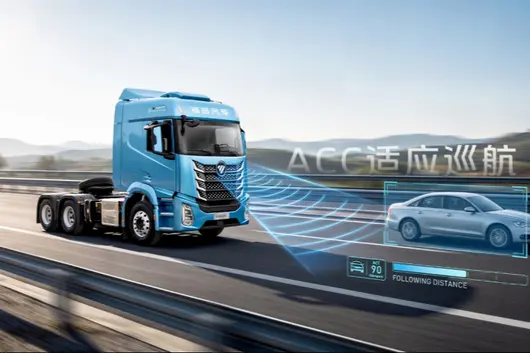
At the product level, Foton launched the industry's first intelligent brand "Cangqiong" equipped with AI large models, covering "Cangqiong Smart Driving" and "Cangqiong Smart Cockpit" two technical systems, and has completed the development of 4 Level 4 models. Cangqiong Smart Driving includes A, B, and C three platforms: Cangqiong A is for L3/L4 level open road unmanned driving, equipped with 1,000+ TOPS computing platform; Cangqiong B is the current mass production plan, which has realized the landing of highway auxiliary driving; Cangqiong C is for closed scenarios such as parks, ports, and mining areas. The landing path is clear: highway HWA/HWP intelligent heavy trucks are already on the market, in the second half of 2026 they will cover national roads to achieve full coverage of trunk and branch lines, and in 2027 they will penetrate city distribution scenarios; L4 level unmanned equipment has been landed in end logistics, sanitation, and parks, and will be promoted on a large scale in the second half of the year.

Industry analysts pointed out that the commercial landing speed of intelligent driving in the commercial vehicle field is far faster than passenger cars, Foton's intelligence transformation directly hits the pain points of "cost reduction and efficiency improvement" in the logistics industry, the L2-L4 level intelligent driving layout fits well with the intelligent needs of trunk logistics, port transportation and other scenarios.
03
Deep Logic of Three Strategic Paths: Policy Resonance and Competition Reconstruction
The proposal of the "Three Comprehensives" strategy is not only the result of Foton Motors' precise judgment of its own development stage, but also a systematic response to the profound changes in national strategy direction and global competition pattern.
From the national policy level, the "15th Five-Year Plan" Outline clearly proposed to "promote low-carbon substitution of transport power, accelerate electrification and green fuel vehicle application in freight and public fields", which put rigid requirements on the green transformation of the commercial vehicle industry. The "15th Five-Year Plan for the Development of the Intelligent Connected New Energy Vehicle Industry" issued by the Ministry of Industry and Information Technology and 8 other departments further proposed to cultivate and form several whole-vehicle enterprises entering the top ten in global sales, Foton's goal of "striving to become a world-class commercial vehicle enterprise" is highly consistent with this policy direction.
From the perspective of global competition pattern, the market share of Chinese commercial vehicles globally has exceeded one-third, but the overseas market share outside China is only about 11%. This means that Chinese commercial vehicle enterprises still have huge growth space overseas, but the key of competition is shifting from price advantage to system capability—whoever can provide an overall solution of vehicles, charging, maintenance, finance, capacity management, and data services around specific scenarios is more likely to win customer stickiness and stable profits. Foton's "Three Comprehensives" internationalization emphasizes localized operation and ecological construction, new energy transformation emphasizes autonomous and controllable three-electric core resources, intelligence emphasizes full-domain AI empowerment for cost reduction and efficiency improvement, essentially all are building this systematic competitive advantage.
With "Dual 50s, Dual 400,000s" as the core goal, Foton's positioning is pragmatic, growth path is clear, and shows stronger strategic focus among the four mainstream commercial vehicle groups.
Conclusion
Foton Motors' "15th Five-Year Plan" strategy is essentially a systematic capability leap from "leading Chinese commercial vehicle enterprise" to "world-class commercial vehicle enterprise". The 2025 sales base of 650,000 vehicles, new energy sales of 101,200 vehicles, overseas sales of 164,500 vehicles, and the performance of doubled heavy truck growth provide a solid springboard for this leap. In the first half of 2026, the company achieved sales of 360,400 vehicles, an increase of 10.1%, the share increased to 15.7%, and continued to maintain the industry leading position.
The value of the "Three Comprehensives" strategy does not lie in how grand the goal is, but in how clear the path is and how solid the steps are. From the投产 of the Brazil plant to the release of the "Morning Star" platform, from the landing of the "Cangqiong" intelligent brand to the large-scale promotion of Level 4 products in the park sanitation scenario, every step has a specific timeline, product support, and phased results. Using a simple strategic framework to lead the complex transformation engineering system, promoting the decomposition and implementation of goals step by step with an efficient execution mechanism, maintaining forward-looking in pragmatism, and retaining elasticity in execution—this is exactly the methodology value worth the most attention of Foton's "15th Five-Year Plan" strategy, and also provides a reference sample for the high-quality transformation of China's commercial vehicle industry.

Oleh/Zhao Yun
Julai 2025, Foton Motors dalam Mesyuarat Perniagaan pertengahan tahun untuk pertama kalinya memperjelaskan "internasionalisasi penuh, penggunaan tenaga terbaharu penuh, dan kecerdasan penuh" tiga jalur strategik teras; pada 18 Disember tahun yang sama, Mesyuarat Perniagaan Tahunan Foton Motors 2026 diadakan di Pusat Mesyuarat Negara, menerbitkan sasaran teras dan jalur strategik Perancangan Lima Tahun ke-15 (2026-2030) secara sistem, mengukir sasaran jauh "berusaha menjadi perusahaan kenderaan komersial kelas dunia". Dari "Strategi Tenaga Terbaharu 30·50" ke "Strategi GREEN3030", kemudian ke integrasi sistem "Tiga Komprehensif", evolusi strategik Foton Motors telah melalui proses lengkap dari terobosan titik tunggal ke kerjasama sistem, dari perancangan perniagaan ke pengukuhan strategik — ini adalah lanjutan kepada penumpuan teknologi dan inovasi "Rancangan Lima Tahun ke-14", juga merupakan respons aktif terhadap transformasi menyeluruh "integrasi rendah karbon, pemecutan elektrifikasi, dan terobosan kecerdasan" industri kenderaan komersial.
29 September, Foton Motors secara rasmi melancarkan Perancangan Strategik Pembangunan "Rancangan Lima Tahun ke-15" 2026-2030, sasaran terasnya boleh diringkaskan sebagai "Ganda 50, Ganda 400,000": mencapai nisbah penggunaan tenaga terbaharu 50% dan jualan 500,000 unit pada 2030, nisbah perniagaan luar negara 40%, jualan luar negara mengatasi 400,000 unit, serentak mengukir sasaran jauh jualan tahunan satu juta unit. Dari analisis industri, bingkai strategik ini mempunyai tiga ciri menonjol: proaktif—pertama kali menjadikan internasionalisasi, penggunaan tenaga terbaharu, dan kecerdasan sebagai tiang strategik selari, bukan susunan keutamaan peringkat, menunjukkan penilaian sistem terhadap trend industri; boleh dilaksanakan—setiap sasaran strategik dilengkapi dengan jalur teknologi yang jelas, perancangan produk dan langkah pelaksanaan tempatan, tidak terapung di tahap konsep; ketepatan—penetapan titik sasaran selaras dengan keluk kenaikan kadar penembusan penggunaan tenaga terbaharu industri kenderaan komersial dan tempoh tingkap pengembangan pasaran luar negara, tidak terlalu konservatif, juga tidak jauh dari realiti industri.
01
Dari "Rancangan Lima Tahun ke-14" ke "Rancangan Lima Tahun ke-15": Perubahan Kondisi di Balik Pengukuhan Strategik
Memahami strategik "Rancangan Lima Tahun ke-15" Foton, perlu melihat dahulu perbezaan intipati dengan "Rancangan Lima Tahun ke-14".
Semasa "Rancangan Lima Tahun ke-14", Foton Motors telah menyelesaikan lompatan penting dari penjajaran teknologi ke kepimpinan autonomi, jualan kereta lengkap mendahului industri selama 20 tahun berturut-turut, hasil jualan mengatasi satu bilion Yuan. Namun, objektifnya, fokus strategik fasa "Rancangan Lima Tahun ke-14" lebih banyak untuk mengukuhkan keupayaan asas, menyelesaikan susun atur produk dan mengumpul perbekalan teknologi. Sebagai contoh, dalam bidang tenaga terbaharu mencadangkan "Strategi 30·50", sasaran tertumpu pada peningkatan kadar penembusan; perniagaan luar negara menggunakan eksport produk sebagai model utama, mengejar pertumbuhan skala jualan. Ciri strategik fasa ini boleh diringkas sebagai "tumpuan utama pasaran dalam negeri, produk sebagai daya saing teras".
Manakala "Rancangan Lima Tahun ke-15" logik asas strategik telah berlaku perubahan mendasar. Pada 2025, jumlah eksport kenderaan komersial China mencapai 1.06 juta unit, untuk pertama kali mendaki tangga satu juta unit, meningkat tahun ke tahun 17.2%. Pada tahun yang sama, Foton Motors jumlah jualan setahun 650,100 unit, meningkat tahun ke tahun 5.85%, di mana jualan tenaga terbaharu 101,200 unit, meningkat tahun ke tahun 87.21%, jualan luar negara 164,500 unit. Bahagian kereta beban berat lebih-lebih lagi mencapai pertumbuhan berlipat ganda, penjualan setahun melebihi 142,200 unit, meningkat tahun ke tahun 103.6%. Data ini menandakan Foton telah menyelesaikan peralihan awal dari "ekspansi skala" ke "pertumbuhan struktural".
Sebab perubahan utama ada tiga. Pertama, pasaran dalam negeri dari persaingan penambahan ke pertarungan pasaran sedia ada, model pertumbuhan industri kenderaan komersial bergantung pada dasar seperti "menukar lama dengan baru" kesan marginal berkurang, perusahaan mesti mencari ruang pertumbuhan baru. Laporan Kuartal Pertama dan Kedua Tahun 2026 Foton Motors nyatakan pendorong prestasi daripada "memanfaatkan peluang pasaran struktur yang dibawa dasar seperti menukar lama dengan baru" bertukar kepada "memanfaatkan peluang pasaran struktur", warna manfaat dasar semakin lemah, warna luar negara dan pengukuhan struktur semakin jelas, ini adalah manifestasi langsung penilaian ini. Kedua, pasaran luar negara sedang dari "eksport peluang" ke "pelan strategik ke luar negara", bahagian pasaran jenama kenderaan komersial China di luar negara baru melepasi 10%, kadar penembusan pasaran matang Eropah, Oceania masih rendah, ditambah dengan pembinaan infrastruktur "Sutera Baru" dan percepatan pengurbanan luar negara, skala eksport industri dijangka berkembang secara mantap. Ketiga, tingkap persaingan laluan teknologi tenaga terbaharu sedang menyempit, pada hujung "Rancangan Lima Tahun ke-15" kadar penembusan tenaga terbaharu kenderaan komersial akan meningkat dengan ketara, persaingan teras akan berubah dari perbandingan produk tunggal ke pertaruhan keupayaan platform teknologi dan kemampuan penyelesaian ekosistem.
Ini bermakna "Rancangan Lima Tahun ke-15" berhadapan bukan sekadar "sasaran yang lebih mencabar", tetapi mendefinisikan semula daya saingnya sendiri di medan persaingan yang mengalami perubahan kualiti dimensi. Foton Motors mesti membina keupayaan sistem secara serentak dalam tiga dimensi internasionalisasi, penggunaan tenaga terbaharu dan kecerdasan, ini jauh lebih kompleks daripada fokus pada terobosan bidang tunggal semasa "Rancangan Lima Tahun ke-14".
02
Bagaimana "Tiga Komprehensif" Mendorong Pencapaian Sasaran Strategik
"Tiga Komprehensif" bukan arah strategik yang terasing antara satu sama lain, tetapi merupakan sistem yang saling menyokong: internasionalisasi memperluas ruang pasaran, penggunaan tenaga terbaharu menyusun semula daya saing produk, kecerdasan meningkatkan kecekapan operasi dan nilai tambah produk. Ketiga-tiga berkongsi, secara kolektif menuju sasaran "perusahaan kenderaan komersial kelas dunia".
Internasionalisasi Penuh: Dari "Eksport Produk" ke "Eksport Sistem"
Pada 2025, jualan luar negara Foton Motors 164,500 unit, jualan eksport kekal teratas industri, bahagian pasaran luar negara mencapai 15.5%. Jan-Agustus 2026, eksport hampir 150,000 unit, meningkat tahun ke tahun 44.3%. Yang perlu diperhatikan, internasionalisasi Foton sudah tidak lagi sekadar pertumbuhan jualan—kilang Brazil rasmi memulakan pengeluaran, menjadi jenama kenderaan komersial Cina pertama yang pengeluaran tempatan di Brazil; kilang Thailand selesai pengeluaran 2000 unit kereta beban berat terakhir; kilang Afrika Selatan mencapai pengeluaran berangka CKD kereta beban berat AMT dan pikap. Di seluruh dunia telah membina 32 kilang tempatan, jaringan jualan luar negara lebih 1200, jaringan perkhidmatan lebih 1500.
Pada tahap strategik, internasionalisasi Foton sedang mencapai lompatan dari "menjual kenderaan keluar" ke "membina sistem". Pada 2025 menandatangani memorandum kerjasama kilang tempatan dengan kerajaan Arab Saudi, bas masuk pasaran Libya untuk pertama kali, produk merangkumi lebih 130 negara dan wilayah. Perubahan ini bermakna: kenderaan komersial tidak seperti barang pengguna umum, pelanggan membeli bukan sahaja produk, malah lebih kepada keupayaan jaminan operasi berterusan. Jenama China ingin bertapak di luar negara, mesti merentas pelbagai halangan undang-undang, perkhidmatan, kewangan, jenama, pelan tempatan Foton sedang membina keupayaan "masuk, tinggal" ini.
Penggunaan Tenaga Terbaharu Penuh: Pembangunan Positif Selari Tiga Laluan
Pada 2025, jualan tenaga terbaharu Foton Motors mencapai 101,200 unit, meningkat tahun ke tahun 87.21%, peningkatan ketara lebih tinggi daripada purata industri. Laluan teknologi Elektrik Murni, Hibrid, Hidrogen berjalan serentak, melancarkan platform khas kereta beban ringan elektrik penuh "Qixing" pertama di dunia, platform kereta beban berat kelas atas "Auman Galaxy", platform kereta beban berat pintar boleh elektrik boleh hidrogen "Kaven BEACON", menyelesaikan lompatan dari "menukar minyak ke elektrik" ke pembangunan positif. "Aiyike" teknologi teras tiga kuasa pembangunan sendiri—produk seperti kawalan elektrik, bateri kuasa, paksi pemacu elektrik secara beransur-ansur dipasang.
Susun atur ini sangat serasi dengan arah dasar negara. Jabatan Pengangkutan dan sebelas jabatan lain bersama mengeluarkan "Pelaksanaan Peluan Penggunaan Skala Besar Kereta Beban Berat Tenaga Terbaharu" menekankan, pada 2030 kadar penembusan kereta beban berat tenaga terbaharu mencapai 40%, jumlah kepemilikan melebihi 1.6 juta unit. Kementerian Perindustrian dan sembilan jabatan lain mengeluarkan "Pelan Pembangunan Industri Kenderaan Baharu Terhubung Cerdas untuk Rancangan Lima Tahun ke-15" menetapkan, pada 2030 peratusan jualan kenderaan komersial tenaga terbaharu mencapai 40%, kenderaan berfungsi pemanduan automatik mencapai aplikasi skala besar. Sasaran kadar penembusan 50% yang ditetapkan Foton Motors, 10 peratus poin lebih tinggi daripada sasaran keseluruhan negara, menunjukkan kesedaran strategik "melompat untuk memetik buah" perusahaan pemimpin industri.
Kecerdasan Penuh: Pemacu Ganda Kecerdasan Produk dan Kecerdasan Seluruh Kawasan
Strategik kecerdasan Foton Motors mengandungi dua dimensi: kecerdasan produk tertumpu pada aplikasi komersial pemanduan pintar dalam skenario khusus, kecerdasan seluruh kawasan melalui teknologi AI menyelusup ke dalam penyelidikan dan pembangunan, pembuatan, rantaian bekalan, pemasaran, perkhidmatan seluruh domain perniagaan.
Pada tahap produk, Foton melancarkan jenama pintar pertama industri yang memasang model AI besar "Cangqiong", merangkumi dua sistem teknologi "Cangqiong · Pemanduan Pintar" dan "Cangqiong · Kabin Pintar", telah lengkap 4 produk pembangunan Aras L4. Cangqiong Pemanduan Pintar mengandungi tiga platform A, B, C: Cangqiong A menuju pemanduan tanpa pemandu jalan terbuka Aras L3/L4, memasang platform pengkomputeran 1000+ TOPS; Cangqiong B sebagai pelan pengeluaran utama sekarang, telah merealisasikan落地 bantuan pemanduan lebuh raya; Cangqiong C menuju taman, pelabuhan, lombong dan skenario tertutup. Laluan pelaksanaan jelas: kereta beban berat pintar HWA/HWP lebuh raya utama sudah dilancarkan, H2 2026 merangkumi jalan persekutuan mencapai keseluruhan wilayah utama + bersambung, 2027 penetrasi skenario pengedaran bandar; peralatan tanpa pemandu Aras L4 di logistik hujung, pembersihan bandar, taman sudah落地, setengah tahun kedua promosi skala besar.
Penganalisis industri menunjukkan, kelajuan aplikasi komersial pemanduan pintar dalam bidang kenderaan komersial jauh lebih cepat daripada kenderaan penumpang, transformasi kecerdasan Foton mengenai masalah utama industri logistik "kurangkan kos tingkatkan kecekapan", susun atur pemanduan pintar Aras L2-L4 tepat sekali sesuai dengan keperluan kecerdasan skenario logistik utama, pengangkutan pelabuhan, dll.
03
Logik Mendalam Tiga Laluan Strategik: Gema Dasar dan Semula Bentuk Persaingan
Penceritaan strategik "Tiga Komprehensif", adalah hasil penentuan tepat Foton Motors terhadap tahap pembangunan sendiri, juga merupakan respons sistem terhadap perubahan mendalam orientasi strategik negara dan struktur persaingan global.
Dari tahap dasar negara, "Rancangan Lima Tahun ke-15" secara jelas menyatakan "mendorong penggantian kuasa pengangkutan rendah karbon, mempercepatkan penggunaan elektrifikasi dan kenderaan bahan api hijau dalam bidang pengangkutan barang dan awam", memberikan tuntutan tegas kepada peralihan hijau industri kenderaan komersial. Kementerian Perindustrian dan sembilan jabatan lain mengeluarkan "Pelan Pembangunan Industri Kenderaan Baharu Terhubung Cerdas untuk Rancangan Lima Tahun ke-15" lebih lanjut menekankan memupuk beberapa perusahaan kenderaan lengkap memasuki 10 teratas jualan global, sasaran Foton "berusaha menjadi perusahaan kenderaan komersial kelas dunia" sangat konsisten dengan arahan dasar ini.
Dari struktur persaingan global, bahagian pasaran kenderaan komersial Cina di seluruh dunia sudah melebihi satu pertiga, namun di luar China bahagian pasaran luar negara hanya sekitar 11%. Ini bermakna perusahaan kenderaan komersial China masih mempunyai ruang pertumbuhan besar di luar negara, namun kunci persaingan sedang dari kelebihan harga ke keupayaan sistem—siapa mampu menyediakan penyelesaian keseluruhan kenderaan, pengisian tenaga, penyelenggaraan, kewangan, pengurusan keupayaan pengangkutan dan perkhidmatan data sekitar skenario khusus, siapa yang lebih mungkin memenati kelekatan pelanggan dan untung stabil. "Tiga Komprehensif" Foton menekankan operasi tempatan dan pembinaan ekosistem dalam internasionalisasi, menekankan autonomi dan kawalan sumber teras tiga kuasa dalam penggunaan tenaga terbaharu, menekankan pengayaan AI seluruh kawasan untuk mengurangkan kos dan meningkatkan kecekapan dalam kecerdasan, pada hakikatnya sedang membina keunggulan kompetitif sistem ini.
Foton dengan "Ganda 50, Ganda 400,000" sebagai sasaran utama, posisi skala realistik, laluan pertumbuhan jelas, menunjukkan fokus strategik yang kuat dalam empat kumpulan kenderaan komersial utama.
Penutup
"Rancangan Lima Tahun ke-15" Foton Motors, pada hakikatnya adalah lompatan keupayaan sistem dari "perusahaan pemimpin kenderaan komersial China" ke "perusahaan kenderaan komersial kelas dunia". Asas jualan 650,000 unit tahun 2025, jualan tenaga terbaharu 101,200 unit, jualan luar negara 164,500 unit dan prestasi pertumbuhan berlipat ganda kereta beban berat, memberikan papan loncat yang kukuh untuk lompatan ini. Paruh Pertama 2026, syarikat mencapai jualan 360,400 unit, meningkat tahun ke tahun 10.1%, penguasaan pasaran meningkat kepada 15.7%, terus kekal keadaan memimpin industri.
Nilai strategik "Tiga Komprehensif" bukan terletak pada seberapa besar sasaran, tetapi pada seberapa jelas laluan, seberapa kukuh langkah. Dari pengeluaran kilang Brazil ke pelancaran platform "Qixing", dari pelaksanaan jenama pintar "Cangqiong" hingga promosi skala besar produk Aras L4 dalam skenario pembersihan taman, setiap langkah mempunyai jadual masa yang spesifik, sokongan produk dan hasil fasa. Menggunakan rangka kerja strategik ringkas mengarahkan sistem kejuruteraan transformasi kompleks, menggunakan mekanisme pelaksanaan efisien untuk mendorong sasaran dipecahkan dan dilaksanakan bertahap, mengekalkan prospektif dalam realistik, mengekalkan fleksibiliti dalam pelaksanaan—inilah nilai metodologi paling layak diambil perhatian strategik "Rancangan Lima Tahun ke-15" Foton, juga memberikan contoh yang boleh diacu kepada transformasi berkualiti tinggi industri kenderaan komersial China.

[First Commercial Vehicle Network Original]
September 4, BAIC Foton Motor Co., Ltd. (hereinafter referred to as "Foton Motor") released a quick report on production and sales data for August. In August 2026, Foton Motor sales of various automobile products exceeded 50,000 vehicles, firmly ranking first in the industry; Jan-Aug, cumulative sales reached 463,000 vehicles, up 9% year-on-year.
With only 4 months remaining, cumulative sales for the year have already exceeded 460,000 vehicles. This means that as long as the next 4 months perform normally, the highest sales record since the 14th Five-Year Plan will surely be broken, and there is a very strong possibility of creating a new "highest in history" annual sales record for itself.
Please refer to the analysis and interpretation by First Commercial Vehicle Network.
Cumulative sales in the first 8 months exceed 460,000 vehicles, all sectors work together to create a new annual sales record
Foton Motor's August production and sales data quick report shows that from Jan-Aug 2026, cumulative sales of various automobiles reached 463,000 vehicles, up 9% year-on-year. All major business sectors delivered growth report cards: New Energy Vehicles cumulative sales 82,000 vehicles, up 25% year-on-year; Medium and Heavy Trucks cumulative sales 127,000 vehicles, up 30% year-on-year; Light Trucks cumulative sales 303,000 vehicles, up 3.4% year-on-year.
First Commercial Vehicle Network notes that after August, Foton Motor's 2026 cumulative sales have exceeded 460,000 vehicles. This figure is very close to the first 9 months sales of 2025 and the first 10 months sales of 2024 (as shown below).

From the chart above, it can also be seen that starting from January, Foton Motor's 2026 cumulative sales have always been higher than 2025 and the same period in 2024. After August, cumulative sales net growth approached 40,000 vehicles. According to First Commercial Vehicle Network's conservative estimate (estimated based on sales of the same period last year), Foton Motor's cumulative sales this year will exceed 680,000 vehicles, with a very strong possibility of creating a new annual sales record.

The "highest in history" sales volume that will be reached in 2026 is the result of the joint promotion of Foton Motor's business sectors throughout the year, among which exports and new energy are the two most prominent "engines".
From "Product Going Global" to "System Going Global", 200,000 vehicle target expected to be completed early
Since 2026, Foton Motor's export business is no longer simple "selling cars", but has achieved a strategic leap from "Product Going Global" to "System Going Global" through market breakthroughs, sales booms, product upgrades, and systematic operations, and has become one of the core engines pulling the company's performance growth. In August, Foton Motor complete vehicle exports exceeded 20,000 vehicles, up 39% year-on-year; Jan-Aug cumulative exports nearly 150,000 vehicles, up 44.3% year-on-year. Export structure continues to optimize, and the proportion of high value-added products such as heavy trucks and new energy models continues to rise.

In important overseas markets such as Africa, the Americas, Southeast Asia, and Europe, Foton Motor has had excellent performance this year: In February, Africa's largest industrial group Dangote Group visited and signed logistics transport orders of over 1,000 vehicles; In March, nearly 100 Foton Cavan Lefu Overseas Edition CAVAN C1 all-electric VANS were shipped from Qingdao Port for batch delivery to EU customers, successfully breaking through barriers in the European high-end market; In the same month, light trucks manufactured at Foton's Thailand production base were delivered to the Indonesian market. This main model customized for Southeast Asian working conditions successfully went off the line, verifying the mature implementation of Foton's "localized production + regional distribution" model; In June, over 100 Auhui 12m high-end buses were batch delivered to South Asia, setting a new record for a single export order of Chinese brand bus coaches locally; In August, 800 Auman heavy trucks were shipped again to the African market in "full convoy delivery" mode, serving local cross-border logistics and trunk transport...
At this year's Brand Day press conference, Foton Motor announced that the overseas exclusive flagship product created based on the Auman Galaxy Smart Native Architecture — Galaxus R9 premium heavy trucks — officially landed in the American market, becoming an important step in its comprehensive internationalization strategy. It is reported that the Galaxus R9 vehicle is equipped with over 90 independent core technologies and 100M Ethernet vehicle architecture, supporting full-domain OTA iteration to achieve vehicle full lifecycle performance evolution. To verify product capabilities, Galaxus R9 heavy trucks once went far to a Spanish extreme test site for benchmark testing according to EU ECE standards and international European-style heavy trucks. In high-speed cruising high-frequency scenarios, Galaxus R9 fuel consumption was 2.16% lower than competitors of the same class. Even in the European market, it is highly competitive.

If the "3040" Medium and Long-term Overseas Strategy of Foton Motor, over 400,000 vehicles in 2030, is still relatively far, the 200,000 vehicle overseas target for 2026 is within reach. After August, Foton Motor's overseas sales target achievement rate reached 75%. This year, the overseas market 200,000 vehicle target is highly likely to be completed ahead of schedule.
Cumulative sales in Jan-Aug exceed 80,000 vehicles, up 25% year-on-year, New Energy Business Booms
Data shows that in August, Foton Motor sold 12,000 new energy products, up 50% year-on-year, higher than the overall industry growth rate; From Jan-Aug this year, Foton Motor cumulative sales of various new energy products reached 82,000 vehicles, up 25% year-on-year.

Looking at the growth rate alone, Foton Motor's new energy product Jan-Aug sales volume up 25% year-on-year does not count as a major increase, but this is based on last year's high-quality same period sales volume and increase rate (Last year Jan-Aug Foton new energy products cumulative sales 65,700 vehicles, up 127% year-on-year). More importantly, the growth of Foton Motor's new energy business this year is not simple quantity expansion, but high-quality development based on technical innovation, scenario deepening, and ecosystem reconstruction.
From the start of the new energy business, Foton Motor has always adhered to pure electric, hybrid, and hydrogen fuel multiple technology routes in parallel, avoiding limiting to a single path. Whether the new energy "30·50 Strategy" or the "Comprehensive New Energy" Strategy, all demonstrate Foton Motor's pragmatism and ambition towards new energy technology routes: Pure electric route pursues core module independent breakthroughs, hybrid route relies on self-developed to achieve multi-platform layout, hydrogen route conducts forward-looking breakthroughs. Foton Motor's strategy of multiple simultaneous approaches aims to meet the new energy needs of commercial vehicle users from city delivery to trunk logistics and all commercial vehicle scenarios.

From the frequent release and launch of new energy new products, Foton Motor is gradually completing its new energy product matrix to cover green transport capacity needs in multiple scenarios more and more comprehensively. Just a few days ago, at this year's Brand Day, Foton Motor launched two strategic-level new energy new products at once: Cavan Star Sea New Energy Flagship Heavy Truck aimed at medium-to-long-distance trunk logistics was officially launched, and Cavan Lefu V7 focusing on high-end passenger transport application scenarios had its global debut, further perfecting the full-scenario green transport capacity matrix. It is worth mentioning that Cavan Lefu V7 integrates passenger car-level intelligent comfort experience and large VAN vehicle space advantages, innovatively defining the MPVan category, precisely matching line passenger transport, tourism and business travel, business reception, leisure travel modification, and other high-end scenarios, filling the gap in the domestic new energy high-end passenger VAN niche market.
After August, Foton new energy products cumulative sales reached 82,000 vehicles, up 25% year-on-year, net growth of about 16,300 vehicles compared to the same period last year. This sales volume has already exceeded the full-year sales in 2024 (54,000 vehicles), with less than 20,000 vehicles gap from last year's full-year sales of 101,200 vehicles. According to the current progress pace, after "Golden September and Silver October", it will exceed last year's full-year sales.
Conclusion
The coming September is the season of harvest, and also the traditional sales peak season of the commercial vehicle industry. What performance will Foton Motor have, especially what more wonderful performance will the exports and new energy business that are gradually becoming Foton Motor's new growth "Dual Engines" have?
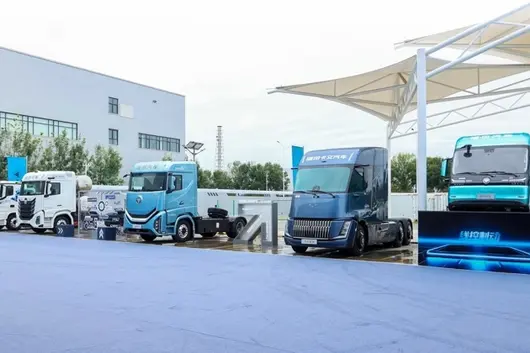

[Jaringan Kenderaan Dagangan Pertama - Kandungan Asli]
4 September, Syarikat Foton Motor Beiqi (dikenali sebagai 'Foton Motor' di bawah) telah mengeluarkan data ringkas jualan dan pengeluaran bulan Ogos. Pada Ogos 2026, Foton Motor menjual lebih daripada 50,000 unit pelbagai produk kenderaan, kekal di peringkat teratas industri; dari Januari hingga Ogos, jumlah kumulatif jualan mencapai 463,000 unit, meningkat 9% tahun ke tahun.
Apabila baki 4 bulan tinggal, jumlah jualan kumulatif tahunan melebihi 460,000 unit, bermakna jika 4 bulan seterusnya 'berlaku' secara normal, rekod jualan tertinggi sejak 'Rancangan Lima Tahun Ke-14' pasti pecah, sangat berpotensi mencipta rekod jualan tahunan tertinggi dalam sejarah baharu sendiri.
Sila lihat analisis dan tafsiran Jaringan Kenderaan Dagangan Pertama.
Jualan kumulatif 8 bulan pertama melebihi 463,000 unit, semua sektor bekerjasama mencipta rekod jualan tahunan baharu
Data ringkas jualan dan pengeluaran Foton Motor bulan Ogos menunjukkan, dari Januari hingga Ogos 2026, jumlah kumulatif menjual pelbagai jenis kenderaan sebanyak 463,000 unit, meningkat 9% tahun ke tahun. Semua sektor perniagaan utama telah menghasilkan rekod pertumbuhan: Kenderaan Tenaga Baharu jumlah kumulatif jualan 82,000 unit, meningkat 25%; Kenderaan Berat Sederhana jumlah kumulatif jualan 127,000 unit, meningkat 30%; Lori Ringan jumlah kumulatif jualan 303,000 unit, meningkat 3.4%.
Jaringan Kenderaan Dagangan Pertama perhatikan, selepas Ogos, jumlah jualan kumulatif Foton Motor 2026 telah melebihi 460,000 unit, angka ini sudah sangat hampir dengan 9 bulan pertama 2025 dan 10 bulan pertama 2024 (seperti di bawah).
Dari gambar di atas juga boleh dilihat, dari Januari, jumlah jualan kumulatif Foton Motor 2026 sentiasa lebih tinggi daripada 2025 dan 2024 pada tempoh yang sama, selepas Ogos jumlah jualan kumulatif bersih meningkat hampir 40,000 unit. Mengikut taksiran konservatif Jaringan Kenderaan Dagangan Pertama (dengan penaksiran jualan tempoh sama tahun lalu), jumlah jualan kumulatif Foton Motor tahun ini akan melebihi 680,000 unit, sangat berpotensi mencipta rekod jualan tahunan baharu.
"Paling Tinggi dalam Sejarah" jualan yang bakal dicapai 2026, adalah hasil usaha semua sektor perniagaan Foton tahun ini, manakala yang paling menonjol adalah Eksport dan Tenaga Baharu dua 'enjin'.
Dari 'Produk Melintas Laut' ke 'Sistem Melintas Laut', sasaran 200,000 unit berpotensi selesai awal
Sejak 2026, perniagaan eksport Foton Motor bukan lagi 'jualan kereta' mudah, tetapi melalui突破 pasaran, letupan jualan, pengemaskinian produk dan operasi berstruktur, telah mencapai lompatan strategik dari 'Produk Melintas Laut' ke 'Sistem Melintas Laut', dan telah menjadi salah satu enjin utama memacu pertumbuhan prestasi syarikat. Bulan Ogos, eksport kenderaan lengkap Foton Motor melebihi 20,000 unit, meningkat 39%; Januari-Ogos jumlah eksport hampir 150,000 unit, meningkat 44.3%, struktur eksport berterusan dioptimumkan, produk bernilai tambah tinggi seperti Truk Berat Auman dan Kenderaan Tenaga Baharu semakin meningkat.
Dalam pasaran luar negara penting seperti Afrika, Amerika, Asia Tenggara dan Eropah, Foton Motor tahun ini mempunyai prestasi tidak kurang: Februari, Kumpulan Dangote, kumpulan industri terbesar Afrika, melawat dan menandatangani tempahan pengangkutan logistik melebihi 1,000 unit; Mac, hampir 100 unit Cavan Lovu海外版 CAVAN C1 elektrik VAN dari Pelabuhan Qingdao dihantar, secara berjenama diserahkan kepada pelanggan EU, berjaya menembusi halangan pasaran Eropah bertaraf tinggi; pada bulan sama, Lori Ringan yang dihasilkan oleh kilang Thailand Foton diserahkan ke pasaran Indonesia, kenderaan utama ini yang dikembangkan khas untuk keadaan kerja Asia Tenggara berjaya turun dari talian, membuktikan kematuhan model Foton 'Pengeluaran Tempatan + Pengedaran Kawasan'; Jun, lebih 100 unit Bas Mewah 12 Meter Ouhui diserahkan secara berjenama ke Asia Selatan, memecahkan rekod tempahan eksport tunggal bas basikal jenama Cina tempatan; Ogos, 800 unit Truk Berat Auman sekali lagi dihantar ke pasaran Afrika dengan model 'Serahan Berbaris', melayani logistik lintas negara dan pengangkutan laluan utama di tempatan……
Dalam penganjuran Hari Jenama tahun ini, Foton Motor mengumumkan produk terhad eksport yang dibina berdasarkan arkitektur asli pintar Auman Galaxy iaitu Galaxus R9 truk berat bertaraf tinggi telah rasmi memasuki pasaran Amerika, menjadi langkah penting strategik antarabangsa sepenuhnya. Menurut penerangan, Galaxus R9 dilengkapi dengan lebih 90 teknologi teras bebas dan arkitektur Ethernet 100 Megabit, menyokong pembaharuan OTA seluruh domain, mencapai evolusi prestasi kitaran hidup kenderaan. Untuk menguji kekuatan produk, Galaxus R9 pernah ke tapak ujian ekstrim Sepanyol, mengikut piawaian EU ECE dan truk berat Eropah antarabangsa untuk uji banding. Dalam situasi frekuensi tinggi penyelaras kelajuan tinggi, penggunaan minyak Galaxus R9 2.16% lebih rendah daripada pesanding setaraf, walaupun di pasaran EU, sangat kompetitif.
Jika sasaran eksport 400,000 unit pada 2030 strategik luar negara jangka panjang dan menengah "3040" Foton Motor masih agak jauh, tetapi sasaran eksport 200,000 unit 2026 sangat dekat. Setelah Ogos, kadar pencapaian sasaran jualan luar negara Foton adalah 75%, sasaran eksport luar negara tahun ini kemungkinan besar akan selesai awal.
Jualan kumulatif Januari-Ogos melebihi 82,000 unit, meningkat 25%, perniagaan Kenderaan Tenaga Baharu sangat hebat
Data menunjukkan, bulan Ogos, Foton Motor menjual produk Kenderaan Tenaga Baharu 12,000 unit, meningkat 50%, lebih tinggi daripada kadar peningkatan keseluruhan industri; tahun ini Januari-Ogos, Foton Motor jumlah kumulatif menjual pelbagai jenis produk Kenderaan Tenaga Baharu 82,000 unit, meningkat 25%.
Berdasarkan kadar peningkatan, jualan Kenderaan Tenaga Baharu Foton Motor Januari-Ogos meningkat 25% tahun ke tahun, belum boleh dikategorikan peningkatan besar, tetapi ini dibina di atas jualan tempoh sama berkualiti tinggi dan peningkatan tahun lalu (tahun lalu Januari-Ogos Foton produk Kenderaan Tenaga Baharu jumlah jualan kumulatif 65,700 unit, meningkat 127% tahun ke tahun). Yang lebih penting, perniagaan Foton Kenderaan Tenaga Baharu tahun ini peningkatan bukan sekadar peluasan kuantiti, intinya adalah pembangunan berkualiti tinggi yang dibina di atas inovasi teknologi, pengembangan skenario mendalam dan penyusunan semula ekosistem.
Sejak perniagaan Kenderaan Tenaga Baharu bermula, Foton Motor sentiasa kekal pada laluan teknologi pelbagai Elektrik Tulen, Hibrid, Bahan Api Hidrogen, tidak membuat pilihan tunggal. Sama ada Kenderaan Tenaga Baharu 'Strategi 30·50', atau 'Pengenuan Tenaga Baharu Penuh' strategik tiada tidak menunjukkan ambisi dan realistik Foton Motor pada laluan teknologi Kenderaan Tenaga Baharu: Laluan Elektrik Tulen mengejar pencapaian modul teras bebas, laluan Hibrid bergantung pada pengembangan sendiri untuk penempatan berbilang platform, laluan Hidrogen melakukan penyelidikan proaktif. Strategi pelbagai pendekatan Foton Motor ini, bertujuan untuk memenuhi keperluan Kenderaan Tenaga Baharu pengguna kenderaan dagangan dari penghantaran bandar sehingga logistik laluan utama semua skenario kenderaan dagangan.
Dari pelancaran rapat dan Kenderaan Tenaga Baharu baharu yang dilancarkan, Foton Motor secara berperingkat melengkapkan matriks produk Kenderaan Tenaga Baharu, untuk semakin merangkumi keperluan kapasiti pengangkutan hijau pelbagai skenario. Beberapa hari sebelum ini, Foton Motor pada Hari Jenama tahun ini sekali推出 dua produk Kenderaan Tenaga Baharu strategik: Cavan Xinghai Kenderaan Tenaga Baharu truk berat terkemuka yang menjangkau logistik laluan utama jarak sederhana dan jauh rasmi dilancarkan, Cavan Lovu V7 yang fokus pada skenario pengangkutan penumpang premium perdana, melengkapkan lagi matriks kapasiti pengangkutan hijau skenario penuh. Perlu disebutkan, Cavan Lovu V7 menggabungkan pengalaman selesa pintar tahap kenderaan personel dan kelebihan ruang model VAN besar, secara inovatif mendefinisikan MPVan kategori baharu ini, padanan tepat pengangkutan laluan, perlancongan perniagaan, penerimaan perniagaan, modifikasi pelancongan skenario premium, mengisi kekangan pasaran tertumpu Kenderaan Tenaga Baharu pengangkutan penumpang premium VAN dalam negara.
Selepas Ogos, jumlah kumulatif jualan produk Kenderaan Tenaga Baharu Foton 82,000 unit, meningkat 25% tahun ke tahun, bersih meningkat kira-kira 16,300 unit berbanding tempoh sama tahun lalu. Jualan ini melebihi jualan sepanjang tahun 2024 (54,000 unit), hanya berjarak kurang daripada 20,000 unit dari jualan sepanjang tahun tahun lalu 101,200 unit, mengikut irak pertumbuhan semasa, selepas 'Musim Puncak Jualan September dan Oktober' akan melebihi jualan sepanjang tahun tahun lalu.
Kesimpulan
September seterusnya, adalah musim menuai, juga musim puncak jualan tradisi industri kenderaan dagangan, Foton Motor mempunyai prestasi seperti apa, terutamanya semakin menjadi 'Dua Enjin Baharu' pertumbuhan Foton Motor perniagaan Eksport dan Kenderaan Tenaga Baharu mempunyai prestasi yang lebih menarik?

The global commercial vehicle industry is approaching a critical turning point for deep restructuring towards electrification, intelligence, and low carbonization. Relying on strict access regulations, a mature business environment, and diverse transportation scenarios, Europe has become the top-tier arena for measuring the comprehensive strength of commercial vehicle enterprises. China's commercial vehicle overseas expansion has long since bid farewell to the initial stage of simple product output, moving towards an era of systematic competition characterized by technology output, localized operations, and co-construction of industrial ecosystems.
With over 20 years of deep cultivation overseas, Foton Motor has ranked first in China's commercial vehicle exports for 15 consecutive years. From early "going out" of products to today's comprehensive entry into the "going in, going steady, and going far" Globalization 3.0 new stage, Foton Motor has achieved a leapfrog transformation from scale overseas expansion to value overseas expansion, building a complete overseas expansion system with synergy in products, technology, manufacturing, supply chains, and service ecosystems.
On the technology level, Foton Motor holds the key to overseas market access. Multiple all-electric light trucks and VAN products have obtained WVTA European whole vehicle type certification, won VECTO heavy-duty vehicle carbon emission certification, and secured the entry ticket to the European high-end market; Cawin new energy products are accelerating landing in 15 European countries and high-potential markets like Australia & New Zealand, converting domestic new energy technology advantages into global green transportation supply capabilities.

On the manufacturing and supply chain end, 32 overseas localized factories are distributed across Southeast Asia, Latin America, and the Middle East; a joint supply chain company was established with COSCO Shipping Specialized Transport, opening exclusive overseas capacity channels; key factories in Indonesia and Saudi Arabia are accelerating landing, driving domestic supply chain partners to go overseas together, building a global industrial network with risk resistance and high efficiency. In the European locality, the Germany Unna regional parts distribution center RDC was put into operation, combined with 18 global parts centers, 1,200+ sales outlets, and 1,500+ service outlets, building a 24-hour parts guarantee system, achieving fast local response for European after-sales. In January-August 2026, Foton Motor export sales reached 149,000 units, a year-on-year increase of 44.3%, and systematic strength was directly verified by the market.
On September 14, at the Hanover IAA Auto Show, Foton Motor is set for a major debut. The site will unveil a new European strategy, hold the milestone ceremony for the delivery of the world's 13 millionth vehicle, and premiere the Cawin BEACON smart heavy truck capable of electric and hydrogen fuel overseas. The exhibition will also display seven major new energy vehicle matrices and six self-developed core components, covering multiple mainstream transportation scenarios in Europe, showcasing hard technology strength with full-chain autonomy and controllability.

Not just an exhibition of products, but a centralized review of systematic overseas expansion capabilities. When the world looks towards Europe, Europe will see Foton. On September 14 in Hanover, let us jointly witness the brand new answer to the globalization of China's commercial vehicles.
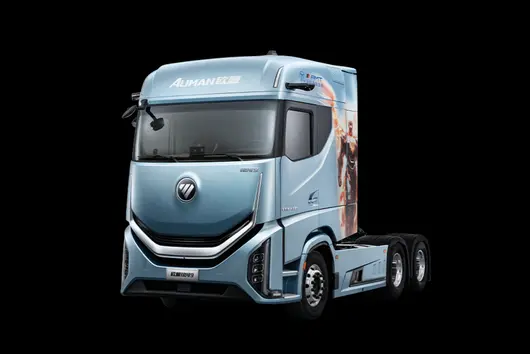

Industri kenderaan komersial global sedang menghadapi titik persimpangan kritikal bagi rekonstruksi mendalam berhubung elektrifikasi, kecerdasan, dan dekarbonisasi. Eropah berkat peraturan akses yang ketat, persekitaran perniagaan yang matang serta pelbagai senario pengangkutan, menjadi arena utama untuk mengukur kekuatan komprehensif syarikat kenderaan komersial. Ekspansi luar negara kenderaan komersial Tiongkok telah lama meninggalkan peringkat awal eksport produk semata-mata, menuju ke era persaingan sistematik yang menekankan eksport teknologi, operasi tempatan dan pembinaan ekosistem industri bersama.
Mengamalkan penanaman dalam luar negara lebih dua dekad, Foton Motors menempati tangga teratas eksport kenderaan komersial Tiongkok selama 15 tahun berturut-turut. Dari produk awal "keluar", kini telah melangkah masuk sepenuhnya ke tahap baharu Globalisasi 3.0 "masuk, stabil, jauh", Foton Motors menyelesaikan transformasi melompat dari skala luar ke nilai luar, membina sistem luar yang lengkap bersinergi produk, teknologi, pembuatan, rantaian bekalan dan ekosistem perkhidmatan.
Dari segi teknologi, Foton Motors memegang kunci akses pasaran luar negara, pelbagai model kereta ringan elektrik tulen serta produk VAN telah memperoleh pengesahan bentuk kenderaan penuh Uni Eropah WVTA, memperoleh sijil VECTO pelepasan karbon kenderaan berat, serta mendapatkan tiket masuk pasaran tinggi Eropah; produk tenaga baharu Kaven mempercepat pelaksanaan di 15 negara Eropah serta pasaran berenergi tinggi seperti Australia-New Zealand, mengubah kelebihan teknologi tenaga baharu domestik menjadi keupayaan bekalan pengangkutan hijau global.
Dari segi pembuatan dan rantaian bekalan, 32 kilang tempatan luar negara tersebar di Asia Tenggara, Amerika Latin, Timur Tengah; bekerjasama dengan COSCO Shipping Special Transport menubuhkan syarikat rantaian bekalan patuh, membuka laluan keupayaan pengangkutan khusus untuk ekspansi luar; kilang utama di Indonesia, Arab Saudi mempercepat pelaksanaan, memacu rakan kongsi rantaian bekalan domestik untuk bersama luar negara, membina rangkaian industri global yang menentang risiko dan berkecekapan tinggi. Di Eropah sendiri, Pusat Pengedaran Aksesori Wilayah Unna Jerman RDC mula beroperasi, dilengkapi dengan 18 pusat aksesori global, lebih 1200 titik jualan, lebih 1500 titik perkhidmatan, membina sistem jaminan aksesori 24 jam, mencapai respons pantas tempatan selepas jualan di Eropah. Januari hingga Ogos 2026, jumlah eksport kenderaan Foton Motors adalah 149,000 unit, meningkat 44.3% secara tahunan, kekuatan sistematik menerima pengesahan langsung pasaran.
14 September, Pameran Kereta Hannover IAA, Foton Motors akan menerima penampilan berat. Di tapak akan melancarkan strategi Eropah baharu, memegang upacara landasan bersejarah penyampaian kenderaan penuh ke-13 juta di seluruh dunia, pelancaran luar negara pertama Kereta Berat Pintar BEACON Kaven boleh elektrik dan hidrogen. Pameran memaparkan serentak 7 matriks kenderaan penuh tenaga baharu dan 6 komponen teras penyelidikan sendiri, meliputi pelbagai senario pengangkutan utama Eropah, memaparkan kekuatan teknologi keras kendali sendiri selaluran penuh.
Bukan sahaja produk mengambil bahagian pameran, malah ia adalah pemeriksaan terkumpul keupayaan ekspansi luar sistematik. Apabila dunia memandang ke Eropah, Eropah akan melihat Foton. 14 September Hannover, saksikan bersama jawapan baharu globalisasi kenderaan komersial Tiongkok.

On July 23, the first batch of Foton Kavon LeFu overseas version CAVAN C1 right-hand drive vehicles destined for Thailand were fully prepared and officially set sail at Shanghai Port. This bulk delivery marks a substantial breakthrough in Foton Kavon Auto's global strategy implementation in the core Southeast Asian market after successfully delivering to European overseas market customers, further improving the brand's global market layout.

Layout Southeast Asian Market, Strengthen Regional Green Transformation Pivot
Along with the accelerating process of low-carbon development in the global transportation sector, the Southeast Asian market, with its strong market vitality and development potential, has become an important incremental track for Chinese new energy commercial vehicle exports. Foton Kavon Auto seized the trend of industry development, firmly promoted the global development strategy, listed Southeast Asia as an important sector of overseas strategic layout, and built an industrial hub for right-hand drive new energy vehicle landing.
This batch export of the Kavon LeFu overseas version — CAVAN C1 right-hand drive vehicle model is not a single phased product output, but a key step for Foton Kavon Auto to use Thailand as a strategic pivot, radiating to right-hand drive regional markets such as Malaysia and Indonesia, and building a complete three-dimensional Southeast Asian market system. This move not only landed the brand's long-term overseas layout plan, but also further promoted Chinese new energy commercial vehicle brands to go global.
Currently, Foton Kavon Auto products have been successfully sold to 25 countries and regions worldwide, forming a global market pattern with the European market as the core and coordinated development of multiple regions such as Southeast Asia, Australia and New Zealand. At the same time, the brand has successively won multiple international authoritative access qualifications such as EU WVTA, UK GB, and Australia VTA. With rigorous high-end market certification standards, it provides intelligent, efficient, and reliable new energy logistics solutions for global users.

Deep Cultivation of Quality R&D, Establish Global Commercial Vehicle Value Benchmark
Strategy landing, quality is the foundation. Aiming at Thailand's hot and humid tropical climate, complex road conditions, right-hand drive traffic regulations, and diversified application scenarios of urban last-mile delivery, Foton Kavon Auto abandoned the extensive development mode of simple vehicle model modification, strictly implemented the localized R&D strategy of "One Area One Policy, One Country One Policy", focused on local users' actual operation pain points to carry out special deep R&D, and with the hard overseas quality that can withstand long-term market inspection, continuously consolidate overseas market reputation and win global customer trust.

Since the brand's establishment, Foton Kavon Auto has always stood on the global development vision, focusing on "Brand New Platform Architecture, Extreme Energy Efficiency Management, High-Level Intelligence, Software Defined Car", achieving systematic breakthroughs in core fields such as energy architecture, intelligent architecture, trust architecture, reshaping commercial vehicle genes with three major architectures and six major technologies, building new energy exclusive vehicle platforms covering micro, light, and heavy types, and establishing global new energy commercial vehicle value benchmarks with excellent quality.
Upgrade Overseas Mode, Build Sustainable Eco-friendly Overseas System
Product overseas is the foundation, ecosystem overseas is the core. As an exclusive new energy commercial vehicle brand under BAIC Foton, Foton Kavon Auto has always upheld the brand mission of "Make Every Kilometer Better", with the development vision of "Committed to Becoming an Internationally Leading New Energy Technology Enterprise", continuously outputting high-quality intelligent products and full-cycle supporting services, helping the global logistics and transportation industry green and low-carbon transformation.
This bulk departure of CAVAN C1 right-hand drive vehicles to Thailand is an important verification of Foton Kavon Auto's "Comprehensive Internationalization" strategy moving from layout planning to landing harvest. Relying on Thailand's perfect industrial supporting and localized after-sales service system, the brand has realized the upgrade from single product output to "Product + Service + Brand + Ecosystem" systematic overseas mode, thoroughly completing the leapfrog development from "Product Overseas" to "Ecosystem Overseas".
The successful landing of the Thailand market fully verifies Foton Kavon Auto's core global competitiveness driven by "Forward R&D + Systematic Overseas" dual core. According to the overall development plan, the brand will continue to unfold the global marketing service network, steadily achieve each stage of overseas sales targets, and plans to land in the Hannover Motor Show in Germany in September 2026, comprehensively demonstrating the hard strength of Chinese Intelligence.
Facing long-term development, Foton Kavon will continue to deeply cultivate the global overseas market, relying on country-specific regulations and standards and user operation needs to continuously iterate and optimize the new energy product matrix, and continuously improve the global marketing service ecosystem network. Always practice the brand's original intention and commitment, continuously lead the global commercial vehicle green transformation, and output technology, efficient global logistics solutions.
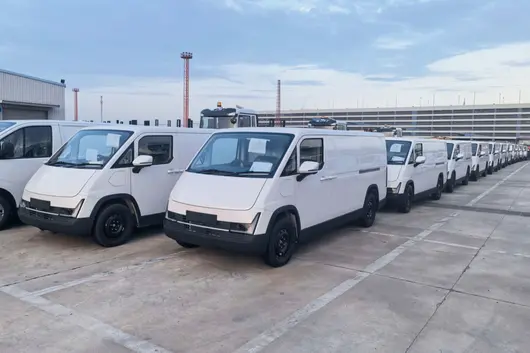
23 Julai, model kenderaan Foton Kaven LeFu Versi Luar Negara CAVAN C1 stereng kanan yang pertama kali dihantar ke Thailand telah siap di Pelabuhan Shanghai dan berlepas secara rasmi. Penghantaran secara massal kali ini menandakan bahawa Foton Kaven Kereta, selepas berjaya menghantar kepada pelanggan luar negara Eropah, telah mencapai pemecahan substansial dalam pelaksanaan strategi globalisasi di pasaran teras Asia Tenggara, seterusnya menyempurnakan lagi susun atur pasaran global jenama.
Melaksanakan Pasaran Asia Tenggara Memantapkan Titik Tumpuan Transformasi Hijau Kawasan
Menyertai proses pengurangan karbon dalam bidang pengangkutan global yang semakin pantas, pasaran Asia Tenggara凭借 kekuatan vitaliti pasaran dan potensi pembangunan telah menjadi laluan pengeluaran penting bagi kenderaan perniagaan tenaga elektrik baru China. Foton Kaven Kereta memanfaatkan kecenderungan perkembangan industri, memacu strategi pembangunan globalisasi dengan tegas, menjadikan Asia Tenggara sebagai bahagian penting strategi perancangan luar negara, membina pusat perindustrian bagi pelaksanaan model kenderaan tenaga elektrik stereng kanan.
Eksport massal model kenderaan tenaga elektrik stereng kanan LeFu Versi Luar Negara Kaven—CAVAN C1 kali ini bukan output produk fasa tunggal, malah merupakan langkah penting Foton Kaven Kereta menjadikan Thailand sebagai titik tumpuan strategik, meradiasi pasaran kawasan stereng kanan seperti Malaysia, Indonesia, membina sistem pasaran Asia Tenggara yang lengkap dan tiga dimensi. Tindakan ini telah melaksanakan perancangan susun atur luar negara jangka panjang jenama, dan seterusnya membantu jenama kenderaan perniagaan tenaga elektrik China ke arah global.
Pada masa ini, produk Foton Kaven Kereta telah berjaya dijual ke 25 buah negara dan kawasan di seluruh dunia, membentuk pola pasaran globalisasi dengan pasaran Eropah sebagai teras, Asia Tenggara, Australia-New Zealand dan pelbagai kawasan lain berkembang selari. Pada masa yang sama, jenama telah menerima berturut-turut pelbagai kelayakan masuk antarabangsa berwibawa seperti EU WVTA, UK GB, Australia VTA, menawarkan penyelesaian logistik tenaga elektrik baru yang pintar, berkesan, dan boleh dipercayai kepada pengguna global dengan piakuan pengesahan pasaran premium yang ketat.
Menggali Pembinaan Kualiti Menubuhkan Piaku Nilai Kenderaan Perniagaan Global
Pelaksanaan strategik, kualiti sebagai asas. Bagi iklim tropika suhu panas tinggi dan lembap Thailand, keadaan jalan raya yang kompleks, keperluan undang-undang laluan stereng kanan serta aplikasi skenario pengangkutan akhir bandar yang pelbagai, Foton Kaven Kereta membuang mod pembangunan kasar perubahan model kenderaan mudah, menganut strategi pembangunan tempatan "Satu Kawasan Satu Dasar, Satu Negara Satu Dasar" dengan ketat, memfokuskan pembangunan mendalam khusus pada poin kesakitan operasi sebenar pengguna tempatan, dengan kualiti keluar laut yang kukuh yang tahan ujian jangka panjang pasaran, terus memperkokoh reputasi pasaran luar negara dan mendapat kepercayaan pelanggan global.
Sejak jenama ditubuhkan, Foton Kaven Kereta sentiasa berlandaskan visi pembangunan globalisasi, mengelilingi "Platform Baharu, Pengurusan Kecekapan Tenaga Sempurna, Kecerdasan Tahap Tinggi, Kereta Ditakrifkan Perisian", dalam bidang teras seperti arkitektur tenaga, arkitektur pintar, arkitektur kepercayaan mencapai pemecahan sistematik, dengan tiga arkitektur, enam teknologi menyemak semula gen kenderaan perniagaan, membina platform kenderaan tenaga elektrik baru khas yang menutupi micro, ringan, berat, dengan kualiti yang luar biasa menubuhkan piaku nilai kenderaan perniagaan tenaga elektrik baru global.
Meningkatkan Mod Keluar Laut Membina Sistem Keluar Laut Ekologi Berkelanjutan
Eksport produk adalah asas, eksport ekosistem adalah teras. Sebagai jenama khas kenderaan perniagaan tenaga elektrik di bawah BAIC Foton, Foton Kaven Kereta sentiasa mengamalkan misi jenama "Memperkasi setiap kilometer menjadi lebih baik", dengan visi pembangunan "Berdedikasi menjadi perusahaan antarabangsa yang memimpin teknologi tenaga elektrik baru", terus menghasilkan produk pintar berkualiti tinggi dan perkhidmatan sokongan kitaran penuh, membantu industri logistik pengangkutan global melakukan transformasi hijau dan rendah karbon.
Eksport massal model kenderaan stereng kanan CAVAN C1 ke Thailand kali ini adalah bukti penting strategi "Peng antarabangsaan menyeluruh" Foton Kaven Kereta daripada perancangan susun atur ke pelaksanaan dan hasil. Bersandarkan pada peralatan industri yang lengkap di Thailand dan sistem perkhidmatan selepas jualan tempatan, jenama telah mencapai peningkatan mod keluar laut sistematik daripada output produk tunggal ke arah "Produk + Perkhidmatan + Jenama + Ekologi", menyelesaikan sepenuhnya pembangunan lompat dari "Eksport Produk" ke "Eksport Ekologi".
Pelaksanaan kejayaan pasaran Thailand telah mengesahkan dengan cukup daya saing global teras pemacu nuklear ganda "Pembangunan Positif + Keluar Laut Sistematik" Foton Kaven Kereta. Mengikut pelan pembangunan keseluruhan, jenama akan terus menyebarkan rangkaian perkhidmatan pemasaran global, memenuhi secara stabil sasaran jualan luar negara setiap fasa, dan merancang untuk mendarat di Pameran Kereta Hannover Jerman pada September 2026, menunjukkan secara menyeluruh kekuatan kukuh Pembuatan Cerdas China.
Untuk pembangunan jangka panjang, Foton Kaven akan terus menggali mendalam pasaran luar negara global, bersandarkan pada piawaian undang-undang setiap negara dan keperluan operasi pengguna, terus mengitar optimum matriks produk tenaga elektrik baru, sentiasa menyempurnakan rangkaian ekologi perkhidmatan pemasaran globalisasi. Sentiasa mengamalkan asal dan janji jenama, terus memimpin transformasi hijau kenderaan perniagaan global, mengeluarkan penyelesaian logistik global yang berteknologi, berkesan.

[First Commercial Vehicle Network Original]
Since the beginning of this year, Foton Motor's overseas business has continued the strong growth trend of last year, and the "Comprehensive Internationalization" strategy has entered a new phase.
In May 2026, Foton Motor's total sales exceeded 58,000 units, up 17.3% year-on-year; among them, overseas sales broke through again, with a single-month sales volume of 18,000 units, up 64.3% year-on-year. Cumulative sales from January to May reached 89,000 units, up 38% year-on-year, continuing to lead China's commercial vehicle exports. This report card is not only a rise in numbers but also the inevitable result of its years of adhering to strategic stability and deepening localized operations, marking that Foton's globalization process has steadily entered the harvest period of high-quality development.
For details, please refer to the latest report brought by First Commercial Vehicle Network.
Structural Growth Drives May Sales to New Highs
In May, Foton Motor's overseas single-month sales exceeded 18,000 units, up 64.3% year-on-year, continuing to lead the Chinese commercial vehicle overseas export industry. Cumulatively, from January to May 2026, Foton's total overseas exports exceeded 89,000 units, up 38% year-on-year, maintaining strong growth momentum on the basis of last year's high base, showing the resilience and vitality of its global market layout. This series of positive signals has laid a solid foundation for achieving its annual overseas goals.

Behind the high growth is the continuous optimization of the export structure and the full-scale effort of high-value-added models. The May data continued the strong momentum of the previous high-end transformation, among which the high-end product line represented by Auman heavy trucks grew particularly outstanding. In May, driven by large order deliveries in strategic markets such as Africa and Central Asia, the Auman heavy truck product line's growth also reached a new high. In addition, Foton Cavan CAVAN C1 recently appeared at the German IFAT Exhibition, receiving high attention from the European market, and also added support for the export of high-end new energy products.
From the perspective of regional markets, Foton's global map presents a gratifying situation of "blooming in multiple points and comprehensive breakthroughs". The high-end strategy in the European market has shown initial results. With the brand effect brought by the TUNLAND V9 pickup winning international awards, as well as the batch delivery of electric light trucks in Spain, European orders continued to maintain high growth from January to May. In Africa, with the successive delivery of the Dangote Group's order of more than a thousand trucks in Nigeria, and the capacity release of the local factory in South Africa, Foton has become a key participant in infrastructure construction and logistics transportation in that region. This full-spectrum breakthrough from points to surfaces, from traditional power to new energy, makes the foundation of Foton's overseas market growth more solid.
Localization Operations Build Competitive Barriers
The secret to sales continuously leading lies in Foton's deep insight into overseas market laws and the solid cultivation of "long-termism". Unlike simple trade models, Foton takes "putting global scenarios into the database" as the origin of product competitiveness. Relying on overseas technology centers spread across the globe, Foton has established a "Global Adaptability Compendium" covering 59 countries and 140 high-frequency markets, transforming 16 typical scenarios such as high temperature, high cold, and dusty into technical standards of 49 key modules and 91 quantitative performance elements, thereby ensuring that every product launched overseas can accurately adapt to local complex working conditions and user habits.

This R&D model based on big data and scenario-driven makes Foton thoroughly say goodbye to "passive fire-fighting" style after-sales rectification. For example, for the heavy load and long downhill operating conditions in the African market, Foton started from selection and verification requirements and provided a complete solution for heavy truck models; and in the high-temperature desert environment in Saudi Arabia, by optimizing the air conditioning system and thermal management scheme, the cooling effect of the bus was significantly improved. It is this extreme pursuit of details that made Foton products win the trust of global top customers such as Dangote Group and Central Asian port operators, continuously winning thousand-level large orders, and converting technical standards into real market share.
More critically, Foton's localization operations have been upgraded from "product adaptability improvement" to "whole industry chain rooting". Whether in manufacturing bases in Brazil and Thailand, or KD factories in South Africa and Saudi Arabia, Foton has not only achieved localized production but also driven the full localization of supply chains, services, and talent. In South Africa, relying on the Port Elizabeth factory, Foton provided customized heavy truck and pickup products for the local area; in Thailand, the launch of the 2000th heavy truck marked that it had deeply integrated into the local logistics system. In March this year, Foton and COSCO SHIPPING Special Carriers established a joint company to build a self-controllable sea transport supply chain system, further consolidating the logistics base for global development. This deeply bound industrial ecosystem effectively avoids trade barriers and builds a "moat" that competitors find difficult to replicate in the short term.

"Comprehensive Internationalization" Strategy Leads to Accelerate towards World-Class Commercial Vehicle Enterprises
From "Product Going Global" to "Brand Going Global", and then to "Ecosystem Going Global", Foton Motor's clear strategic path is the key to its continuous leadership in the industry. Facing global industrial changes, Foton firmly promotes the "Comprehensive Internationalization" strategy, positioning overseas business as the core growth pole and giving resource allocation. Since 2026, Foton has steadily promoted strategic execution, achieving rapid response to global market demands by strengthening the collaborative efficiency of market, product, service, and technology platforms.
Looking to the future, Foton's global layout is still pushing towards depth—in the industrial end, the local factories in key markets such as Indonesia and Saudi Arabia will accelerate production, and the local matching ratio of key components will also be further improved. This not only helps reduce production costs and risks but also deeply integrates into the local industrial chain, transforming from a purely vehicle enterprise to a provider of regional traffic solutions. At the same time, Foton is actively collaborating with excellent domestic supply chain partners to "go out together" and jointly build a more resilient global industrial system.
In terms of technology and products, Foton's "Comprehensive New Energy" and "Comprehensive Intelligentization" strategies are accelerating to extend overseas. Relying on independent three-electric core technologies, Foton is accelerating the promotion of electric, hybrid, and fuel cell commercial vehicle products' overseas coverage, and deeply integrating intelligent technologies with local needs. From the pure electric light truck eMiler listed in Singapore and the new generation medium truck Auman D series, to the TUNLAND V series hybrid pickups landing in Europe, Foton's high-end and new energy product matrix has been implemented in multiple overseas regions. Recently, the Foton brand officially landed in Suriname, further improving its strategic layout in Central America and the Caribbean. It can be foreseen that with the continuous promotion of the strategy, Foton will not only lead in sales volume but also occupy a more core position in the global commercial vehicle value chain.
Concluding Remarks
Looking back from the bright performance in May, Foton Motor's globalization journey has entered the fast lane. It has proved by practice that Chinese commercial vehicle enterprises are fully capable of competing with international giants on the global stage with technological innovation and systemized operations. Time has passed half of 2026, and Foton's overseas business is going towards the annual goal with an irresistible momentum.
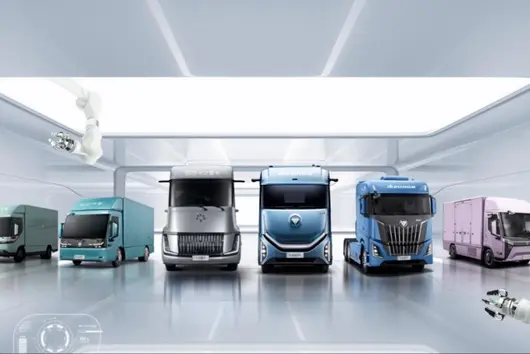

The domestic passenger car market has been sluggish since the beginning of this year. Wholesale sales declined 6% year-on-year in the first five months; if exports are excluded, retail sales declined even more by 19% year-on-year.
In sharp contrast to passenger cars, commercial vehicles achieved double-digit growth in sales from January to May, outperforming passenger cars year-on-year and exceeding market expectations.
The performance of leading enterprises was even more impressive. Foton Motor sold 58,000 units in May, ranking first in the industry, with a year-on-year growth of 17.3%. Cumulative sales from January to May exceeded 300,000 units, ranking first in the industry, with a year-on-year growth of 10%.

Among them, light truck sales in May reached 36,000 units, growing 10% year-on-year. Cumulative sales from January to May were nearly 200,000 units, ranking first in the industry for over a decade consecutively.
Heavy truck sales in May reached 16,000 units, surging 37% year-on-year. Cumulative sales from January to May were 76,000 units, growing 37.2% year-on-year, the fastest growth rate among the top five industry leaders.
New energy vehicle sales in May exceeded 12,000 units, surging 52.6% year-on-year. Cumulative sales from January to May exceeded 45,000 units, ranking second in the industry.
May exports exceeded 17,000 units, surging over 64.3% year-on-year, accounting for 30% of the month's sales. Cumulative exports from January to May were nearly 90,000 units, growing 38% year-on-year, ranking first in the industry for 15 consecutive years.
The data shows that the high growth of Foton Motor in May and the first five months is supported by four factors: light trucks continue to lead, heavy trucks grow significantly, new energy vehicles explode across the board, and exports lead and surge.
Foton achieved such impressive data primarily due to the recovery of the economic environment and demand. In terms of heavy trucks, domestic infrastructure construction accelerated, National III replacement for dump trucks and tractors was implemented, and demand for engineering heavy trucks and express tractors was strong, driving May heavy truck sales to grow positively for the fifth consecutive month year-on-year.
In terms of light trucks, peak seasons for express delivery, fresh cold chain, and urban distribution logistics continued, rural-urban freight demand recovered, and national monthly light truck sales stabilized at a high level above 160,000 units, with a robust demand base.
Secondly, Foton's product matrix is complete, with new products and high-end models gaining volume. For heavy trucks, there are Auman Galaxy (9, 7, 5, 3, T) high-end products and Xingyi + Xinghui models for volume, natural gas heavy trucks and battery swap heavy trucks targeting mining areas and trunk logistics markets. Foton Konwei power's fuel-saving advantages are highlighted, high-end heavy truck average prices increased while sales doubled. New energy heavy trucks with full technology routes (pure electric, hybrid, hydrogen fuel) are launched, vehicle-battery separation leasing lowers user purchase thresholds, driving explosive growth in new energy heavy trucks.
For light trucks, relying on the Auling, Aumark, and Time brand matrix and product differentiation to cover the market in layers. Fuel versions focus on cost-performance, new energy versions adapt to urban distribution restriction policies. Coverage ranges from 3.5-ton blue plate to heavy-duty yellow plate. Lightweight body optimized for new blue plate regulations, solving user registration pain points. Zhilan models and Qimingxing pure electric new products were stocked in May, becoming the core source of light truck volume growth.
Regarding new energy, many places nationwide implemented urban fuel truck restrictions, new energy vehicle purchase subsidies, and priority road rights policies. Electric delivery logistics in first-tier cities accelerated. Foton's "New Energy 30·50 Strategy" was implemented, partnering with Huawei Digital Power to build supercharging networks and co-investing with EVE Energy for battery leasing. The vehicle-battery separation model significantly reduces new energy vehicle down payments. In May, new energy light trucks and heavy trucks became the largest source of volume growth.

Additionally, Foton's channel downward move and marketing reform further drove sales through distributor network advantages. Foton has over 3000 sales networks and 10000+ service networks nationwide, extending from counties to township terminals. Time series target third and fourth-tier lines and rural freight, Auling targets city logistics, Aumark focuses on high-end cold chain, with segmented channels precisely split. In May, terminal purchase interest subsidies and financial zero-down payment policies were launched. Relying on light truck products' low maintenance and high fuel-saving TCO advantages, amidst competitor price wars, they gained orders in reverse trend through service and product strength, continuously capturing competitor lost customers.
Finally, exports growing 64% year-on-year and accounting for 30% of the month's sales was Foton's biggest highlight in May.
Overseas Markets Bloom Across the Board
Overseas markets are Foton's traditional strength. Starting from 2011, it became China's number one commercial vehicle exporter, and Foton has never let this title slip away.
In the first four months of this year, Foton whole vehicle exports grew 32% year-on-year, with overseas market share at 17.5%. In May, large batches of light trucks, buses, and pickups were sent to Africa, Southeast Asia, and South America. Electric buses were delivered in batches to Australia, making overseas volume growth more significant.
From the export product structure perspective, heavy trucks mainly Auman grew significantly, May exports exceeded 2,000 units, growing 42.6% year-on-year. Ouhang and Aumark models were even more dramatic, overseas sales exceeded 4,600 units, surging 280% year-on-year. Time and Pickup grew by 47.4% and 60% respectively.
Cumulative exports from January to May exceeded nearly 90,000 units, growing 38% year-on-year, firmly maintaining the lead in domestic commercial vehicle exports.
From the export regional distribution perspective, benefiting from the RCEP tariff exemption policy implementation in Southeast Asia, urban distribution and cold chain demand exploded in Thailand, Indonesia, and Vietnam. Foton Thailand Factory mass-produced right-hand drive light trucks have radiated to Southeast Asian countries, with Auling and Aumark high-end light trucks selling hot.
Africa is the region with the highest export growth rate for Foton. In 2025, Foton sales in the African region grew over 120% year-on-year. In the first quarter of 2026, sales grew 96% year-on-year. Foton Heavy Commercial products were deeply customized and calibrated for Africa's complex road conditions, fuel consumption performance benchmarks European top brands, lowest fuel consumption among domestic commercial vehicles of the same level, balancing power performance and operating costs, perfectly adapted to high-intensity operation scenarios such as cross-border logistics and mine transportation. In May, Heavy Commercial product exports broke 1,000 units, doubling year-on-year, full category exports in January-May broke 10,000 units. Infrastructure and mineral development in countries like Nigeria, Kenya, and Ethiopia drove whole vehicle procurement, relying on 12 local factories to ship whole vehicles and spare parts simultaneously.

In the Middle East region, relying on Saudi Arabia and UAE energy infrastructure and intercity logistics upgrades, Auman high-horsepower tractors and dump trucks signed contracts in batches and landed. Hybrid heavy trucks increased volume relying on local new energy subsidies.
Europe and Australia issued commercial vehicle carbon emission controls, accelerating the elimination of old diesel vehicles. Foton high-end new energy products achieved breakthroughs in Europe and Australia. Toano electric VANs were bulk purchased by Germany and Italy, raising overseas vehicle profitability levels.
Behind Foton's high export growth is the result of long-term sustained deep diving into overseas markets.
For example, in terms of R&D center count, there are 10 domestically and 8 overseas. Manufacturing bases are 20 domestically and 32 overseas, widely distributed in Southeast Asia, Europe, North America, South America, and Africa. Sales and services cover over 140 countries and regions, with overseas sales networks exceeding 1,200 and service networks exceeding 1,500.
Overseas R&D bases cooperate with domestic R&D to localize exported products. For example, optimize chassis and power for overseas road conditions. Aumark high-end light trucks adapt to Southeast Asia cold chain, Auman high-horsepower heavy trucks match Middle East infrastructure, hybrid and pure electric models adapt to overseas new energy subsidy policies.
In production and manufacturing, local factories in multiple countries have started production, reducing tariff costs and shortening delivery cycles. Pickups and light trucks rely on localized production to quickly seize cost-performance markets.
Regarding new energy, Foton fully self-developed three-electric systems, covering pure electric, hybrid, and hydrogen fuel technology routes. The entire series of new energy commercial vehicles passed EU and Australia's strict certifications. 2.2C fast charging and other technologies became differentiated selling points to expand market recognition.
In the coming months, production lines at new local factories in Brazil and Ethiopia will continue to ramp up. Southeast Asian rainy season cold chain stocking, Africa second half infrastructure construction, Foton exports are expected to continue the high-growth trend.
In the medium to long term, European new energy commercial vehicle penetration rates continue to rise, Latin American import substitution demand is released, helping overseas share stabilize above 30%, diversifying domestic stock market competition pressure, and improving a sustainable and healthy global layout.
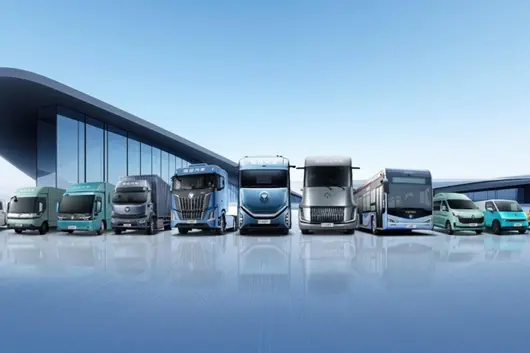


This is the best of times, this is the worst of times.
Recently, the China Association of Automobile Dealers released some worrying data. The auto dealer inventory warning index for April stood at 62.1%, above the growth and decline line; meanwhile, the inventory coefficient is also rising, with the integrated inventory coefficient for auto dealers in April reaching 1.89. Industry insiders point out that long-term high inventory will encroach on dealers' operating funds, increase their interest expenses and liquidity risks, and may exacerbate the contradiction between dealers and original equipment manufacturers (OEMs).
Coincidentally, it is not just passenger cars that have been hit hard. The latest data released by the China Association of Automobile Manufacturers has also sounded a warning for the commercial vehicle industry—its overall inventory coefficient has risen above the warning line of 1.8, and the inventory cycle in some heavy truck market segments has exceeded 90 days. To digest inventory, a new round of price wars has quietly broken out in multiple regions, with terminal discount margins expanding again.
As a media outlet that has long focused on the automotive industry, Car Culture saw a historical mirror spanning 170 years in this spreading price competition—In 1854, the 'Coketown' dominated by interests written by Charles Dickens in 'Hard Times' has never truly disappeared.

As the global automotive industry accelerates its transformation towards new energy and intelligence, and Chinese automakers head to the global market at an unprecedented speed, ESG construction has long ceased to be a dispensable decoration in corporate annual reports; it is now a core capability determining whether an enterprise can weather the cycle. Among them, supply chain ESG is the key chain connecting the upstream and downstream of the industry, determining the health of the sector. In the current situation where the industry generally falls into the vicious cycle of 'trading price for volume', the sustainability report released by Foton Motor for 2025 provides a sample worthy of in-depth analysis for us to observe how Chinese commercial vehicle enterprises solve the inherent contradictions of industrial civilization.
The Reenactment of Dickensian History and Foton's Starting Point for Breakthrough
In classic works such as 'Hard Times', 'Oliver Twist', and 'David Copperfield', Dickens recorded the three core contradictions at the beginning of the Industrial Revolution with a pen that was almost journalistic documentary. Among them, in 'Hard Times', the factory owners in Coketown, in pursuit of profit maximization, alienated workers into attachments of machines, revealing the value distortion caused by capital's pursuit of profit; in 'Oliver Twist', the tragic fate of children from the lower classes exposed the reality that the dignity of workers was systematically ignored; the experience of 10-year-old David being exploited in the bottle washing factory in 'David Copperfield' reflected the cruel logic of cost pressure being transmitted unidirectionally downward in early supply chains.
These contradictions from 170 years ago still have clear projections in today's automotive industry. Taking the commercial vehicle industry discussed in this session as an example, from 2024 to 2025, the price war in the commercial vehicle market continued to escalate, with terminal price reductions for models in some market segments exceeding 10%. To maintain its own profits, some leading automotive enterprises directly transferred cost reduction pressure to upstream suppliers, requesting annual price reductions of more than 10%.
The result of this pressure being transmitted layer by layer is that the average profit margin of traditional non-core component enterprises was compressed to below 3%, with a large number of small and medium-sized enterprises struggling on the brink of break-even; downstream channel ends were also under pressure. Data from the China Association of Automobile Dealers shows that in 2025, the loss-making rate of commercial vehicle dealers nationwide reached 52.6%, with a profit contribution of -22.3% for new car sales business; while truck drivers at the end of the supply chain bore the pressure of continuously falling freight prices, with freight rates for some short-distance city distribution routes falling to 0.8 yuan/km, and the average freight rate for medium-to-long distance trunk transport dropping 42% compared to 2020.
This model of 'squeezing profits upstream, pressing prices downstream, and being squeezed at the terminal' is eroding the long-term competitiveness of the entire industry. Of course, Foton Motor is also in this industry environment. Its overseas exports in 2025 reached 164,000 vehicles, creating a new historical high, but it also faced multiple challenges such as the EU CBAM carbon tariff and increasingly strict supply chain ESG reviews in European and American markets; during the new energy transformation process, the industry average cost proportion of the three-electric systems exceeded 40%, and also faced cost reduction pressure.
But unlike most enterprises, Foton Motor did not choose to transfer pressure unidirectionally to the upstream and downstream of the supply chain, but instead took the construction of the whole chain ESG as the core handle for breaking the situation, attempting to explore a more sustainable development path.

Foton's Practice: Responding to Historical Propositions with Win-Win of the Whole Value Chain
The contemporary value of Dickens' works lies in the fact that it always reminds us that the ultimate purpose of development is people, not profit. The whole value chain ESG system built by Foton Motor, covering 'upstream suppliers-middle manufacturing-downstream dealers-terminal users', just responds to the three core propositions raised by Dickens back then.
To address the value distortion caused by capital's pursuit of profit, Foton constructs a symbiotic supply chain through green synergy. It is reported that the company established a supplier lifecycle ESG management system, incorporating environmental, social, and governance indicators into the entire process of supplier access, audit, evaluation, and exit. In 2025, Foton completed the certification of 58 green suppliers, covering core modules such as engines, gearboxes, and axles.

Unlike simply suppressing purchase prices, Foton helps suppliers reduce costs and increase efficiency through technical empowerment and resource sharing. Among them, the supplier rooftop photovoltaic plan is the most representative. In 2025, it assisted 283 suppliers in building a total of 1,901 MW of photovoltaic power generation facilities, directly reducing the energy costs of partners, while also promoting the low-carbon transformation of the entire supply chain.
To address the imbalance of benefit distribution in the supply chain, Foton creates a community of interests through ecological empowerment. Faced with the survival dilemma faced by dealers, Foton completed transformation training for 1,658 dealers in 2025, innovatively launched a three-level channel system of 'Ecological Store, Smart Store, Retail Store', and built 8 dealer ecological ports.

This system helped dealers transform from a single vehicle sales dealer to a comprehensive service provider integrating 'sales + charging and battery swapping + used cars + leasing + maintenance and repair', opening up multiple profit channels for them. At the same time, Foton signed 'Integrity Commitment Letters' with all suppliers, establishing a relatively fair and transparent cooperation mechanism, guaranteeing the reasonable interests of each link in the supply chain.
In addition, to address the lack of dignity for workers, Foton permeates humanistic care throughout the whole chain. Within the enterprise, Foton implements a human engineering improvement plan, introducing customized effort-saving mechanical arms and hydraulic lifting tables in heavy labor posts such as tire assembly and battery installation, reducing manual handling of heavy materials by 30% year-on-year.
At the supply chain end, Foton requires all suppliers to strictly abide by labor laws and regulations, with full coverage of compliance and quality training for key suppliers in 2025 reaching 100%. At the terminal, Foton supported the 'Truck Driver Escort' special action through donations, focusing on the living conditions of logistics practitioners. These measures reflect the enterprise's respect for every worker in the supply chain.
People-Oriented, The Correct Approach for Chinese Cars Going Global
In fact, with Chinese automotive enterprises accelerating their global layout, we are facing not just a competitive pattern of 'price is king', but entering a new era where 'compliance is competitiveness'.
The EU 'Corporate Sustainability Due Diligence Directive' (CSDDD) clearly requires that enterprises must be responsible for human rights and environmental impacts of their entire supply chain; violators will face fines of up to 5% of global turnover; the EU Carbon Border Adjustment Mechanism (CBAM) officially implemented in 2026 directly incorporates carbon emission costs into the price system of imported goods. This means the development model relying on low-cost expansion is unsustainable, and supply chain ESG capabilities are becoming the pass to enter the international market for Chinese automotive enterprises.
Foton Motor's forward-looking layout has given it a certain head start in global competition. It is reported that through the construction of a whole value chain ESG, Foton proactively met the compliance requirements of major overseas markets: in Europe, Foton's electric light trucks and VAN models obtained WVTAEU whole vehicle type certification, which is one of the highest thresholds in the European market; plus the EU heavy vehicle carbon emission VECTO certification, this means Foton's carbon data has been recognized by European regulatory agencies, successfully entering the European green transportation system.
In addition, Foton Motor has deeply gained the recognition of global partners: local factories in Thailand, Brazil, and South Africa have been put into production smoothly; the global 12 millionth vehicle rolled off the line at the Brazil factory; in the Australian and African markets, Foton received bulk new energy bus orders; in the Middle East, it delivered 1,000 customized school buses to Saudi customers in batches.

Industry analysts point out that Foton Motor's model provides an important reference for the Chinese commercial vehicle industry; supply chain ESG is not a cost burden for enterprises, but an effective means to enhance supply chain resilience and long-term competitiveness. When enterprises no longer view upstream and downstream as opponents in a game, but as partners for joint growth, the results of their development can be shared by every participant in the supply chain, and the entire industry can achieve truly high-quality development.
Car Culture Says:
'This is the best of times, this is the worst of times.' Dickens' famous quote still applies to China's automotive industry today. We possess the world's largest automotive market, the most complete industrial chain system, and the most advanced new energy technology; this is the best of times; but we also face many challenges such as involution in price wars, prominence of supply chain contradictions, and increased pressure for global compliance; this is the worst of times.
170 years have passed, the technical form of industrial civilization has undergone earth-shaking changes, but how to balance capital pursuit of profit with social equity, and how to ensure that the results of development benefit everyone, remains the fundamental question we need to answer. Foton Motor's practice tells us that ESG is not only a digital report, but a more sustainable development concept with more humanistic touch. When more and more Chinese automotive enterprises plant the concept of people-oriented into supply chain construction, we can not only create more competitive products, but also output a fairer and more inclusive industrial civilization to the world, allowing Chinese automobiles to truly enjoy global reputation with the 'Chinese Solution'. (Written by | Ouyang)
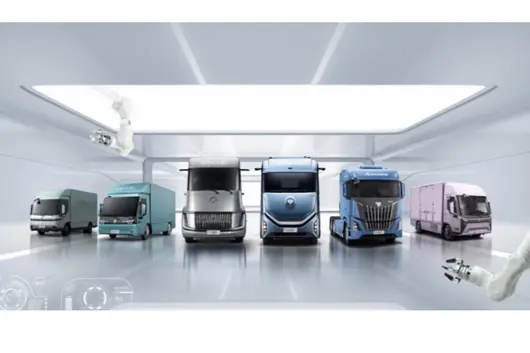
© 2024 Bitauto.com. All Rights Reserved.
Bitauto (www.yiche.com and www.bitauto.com) is one of the most visited automotive websites in China. We provide detailed info on Chinese car brands available in your area. Please note that the information provided on this website is based on publicly available data and is for reference only. It may not be fully updated or accurate at all times.

Help us improve our website


