

HomeHonda

Search History
Popular Searches
Dealer Login / Sign Up





On September 17, the 11th Huawei Connect Conference opened at the Shanghai World Expo Exhibition Center. In a corner of the HarmonyOS ecosystem exhibition area, a T150 scooter was quietly displayed. Its special feature lies not in the appearance, but in the vehicle head unit system — the Wuyang-Honda T150 prototype equipped with the HarmonyOS ecosystem is one of the few products participating in this conference with a fuel-powered two-wheeler enterprise identity.
From jointly building the intelligent computing center in May this year, to appearing at the Huawei Developer Conference in June, to stepping onto the HC Conference stage this time, Wuyang-Honda's participation in the Huawei ecosystem is gradually deepening. While local motorcycle enterprises such as Zongshen, CFMOTO, and Qianjiang compete for market discourse with the "intelligence" label, this joint venture chose a different path: do not abandon the internal combustion engine, but allow fuel motorcycles to "connect" to the digital world.
A Noteworthy "Identity"
It is understood that the T150 equipped with the HarmonyOS ecosystem is a city commuting scooter model built on the Wuyang-Honda eW15 water-cooled four-valve engine platform. The engine is derived from the same source as Honda's eSP+ technology, with a maximum power of 11.4kW/8500rpm and a maximum torque of 14.4N·m/6500rpm, balancing power output and low fuel consumption performance. On the basis of retaining mechanical texture and handling fun, the T150 prototype is equipped with an intelligent vehicle system integrating the HarmonyOS ecosystem. Relying on Wuyang-Honda's existing WiLINK full-domain intelligent architecture, combined with the distributed capabilities of the HarmonyOS ecosystem, the T150 achieves seamless handover of navigation tasks between the vehicle's large screen and HarmonyOS terminals. Users can achieve cross-end collaboration of functions such as vehicle positioning, remote connectivity, vibration anti-theft alerts, and riding trajectory recording through HarmonyOS devices, enabling fuel motorcycles to have partial connected experiences of smart terminals.

In the two-wheeler travel landscape of the Huawei HarmonyOS ecosystem, the current participants are mostly electric brands. NIU signed the "Hongtu Plan" with Huawei Consumer Business Group and the GIIC Alliance in August, planning to scale the installation of open HarmonyOS system to cover 200,000 vehicles within the year; Aima Technology signed a deepened cooperation agreement with Huawei in May, focusing on two-wheeler travel intelligence and HarmonyOS ecosystem integration; Zongshen introduced HarmonyOS and AI algorithms even earlier.
Wuyang-Honda's entry logic is different. Fuel motorcycles do not have the inherent electronic and electrical architecture foundation of an electric platform, and the computing power supply, power supply stability, and heat dissipation conditions of the vehicle head unit system are more restricted. On the basis of retaining the eW15 water-cooled four-valve engine platform, Wuyang-Honda "grafted" the distributed capabilities of the HarmonyOS ecosystem onto the existing WiLINK full-domain intelligent architecture, achieving seamless handover of navigation tasks between the vehicle's large screen and HarmonyOS terminals, as well as cross-end collaboration functions such as vehicle positioning, remote connectivity, and vibration anti-theft alerts.
In other words, it is not "stacking" intelligent configurations on fuel motorcycles, but enabling "connection" to the intelligent ecosystem for the fuel platform. For a large number of traditional motorcycle enterprises that are still producing fuel models, this provides a referable technical path.
A Complete Chain
On May 8, the intelligent computing center jointly built by Wuyang-Honda and Huawei Digital Power was unveiled and put into use at the Guangzhou Zengcheng Factory. The center adopts Huawei's FusionModule20006.0 intelligent micro-module architecture, planning to form a hybrid layout of "20P local computing power + 50P cloud computing power" by 2030, serving R&D simulation, intelligent manufacturing, vehicle networking data analysis, and whole-vehicle OTA. The computing power planning of the intelligent computing center explicitly includes "whole-vehicle OTA" and "vehicle networking data analysis". This means Wuyang-Honda's intelligent layout was not a single-point breakthrough from the beginning, but a chain-like promotion of "computing infrastructure — data platform — product-end intelligence". Build computing power base in May, showcase HarmonyOS head unit capabilities at HDC in June, step onto HC Conference in September to showcase the T150 prototype equipped with HarmonyOS ecosystem — three steps, clear logic.
At the 2026 China Motorcycle Chongqing Forum, Liu Xin, Vice President of the China Motorcycle Chamber of Commerce, stated that the entire industry must "firmly follow the path of intelligent, green, and high-end development, replacing homogeneous low-price competition with technology iteration". This chain of Wuyang-Honda is precisely the embodiment of this path.
Honda's "Chinese-style Intelligence"
Examined within Honda's global strategy, this step by Wuyang-Honda has more typical significance.
Honda has already made clear plans in the electrification field: 2024 is positioned as the first year of global expansion of electric motorcycles, with plans to launch electric vehicle models globally every year, and products such as UC3 have been introduced to the Thailand and Vietnam markets first. In terms of intelligence, Honda launched the RoadSyncDuo connectivity feature, achieving linkage between smartphones and vehicle displays. But overall, Honda's pace in two-wheeler intelligence is relatively steady, and there is tension between the global unified platform strategy and the demand for rapid iteration in the Chinese market.
Wuyang-Honda is at the forefront of Honda's global system. According to Zhang Wenqing's introduction to the media in April this year, Wuyang-Honda is currently Honda's factory with the largest production of electric two-wheelers, and products are not only exported to Vietnam and Indonesia, but even re-exported to Japan. In terms of intelligence, Wuyang-Honda's independently developed intelligent platform has been installed on every car, and technologies such as voice control and intelligent driving assistance are under development.
"In China, for China, and even for the world" — Wuyang-Honda's role is shifting from a joint venture manufacturing base to the intelligence test field in Honda's global system. Its cooperation with the HarmonyOS ecosystem is essentially leveraging China's local intelligent ecosystem capabilities to feed back into the intelligent upgrade of Honda's global products. This "reverse empowerment" model is still rare in joint venture car companies.
"Route Differentiation" in Two-Wheeler Intelligence

Wuyang-Honda's choice reflects an important fork in the current two-wheeler intelligence track.
One route takes the electric platform as the natural carrier. Brands such as NIU, Luyuan, and Aima carry out intelligent upgrades around open HarmonyOS or self-developed systems, and vehicles possess complete digital capabilities from the underlying operating system to the application layer. The cooperation between Luyuan and ShenKaiHong explicitly proposes to take "L2-Ultra Smart Two-Wheeler" as the goal, promoting the whole vehicle to leap from "Connectivity Intelligence" to "System-Level Intelligence".
The other route "connects" intelligent capabilities on the fuel platform, represented by Wuyang-Honda. Its challenge lies in: the electronic and electrical architecture of fuel vehicles does not have native digital conditions like electric vehicles, and the realization of intelligent functions requires additional computing power support and system adaptation. Wuyang-Honda's solution is to provide cloud computing power through the intelligent computing center, provide terminal-side connectivity through WiLINK+ HarmonyOS ecosystem, and form a "Cloud — Terminal — Vehicle" collaborative architecture.
The coexistence of the two routes shows that the two-wheeler intelligence has not yet formed a unified technical paradigm. When CFMOTO launched the C-Link intelligent platform, Qianjiang released the ParaPal Surging Intelligent Architecture, and Loncin and Zongshen explored "Moto Cloud" platforms respectively, the industry is experiencing a technical competition with multiple paths running in parallel, rather than a simple "who replaces who".
Wuyang-Honda's exploration also reflects the three hurdles that two-wheeler intelligence must face head-on. First is cost. Two-wheeler prices are sensitive, and there is a natural tension between intelligent hardware and R&D investment and terminal selling prices. Grafting the HarmonyOS ecosystem on the fuel platform for T150 makes cost control more difficult. Second is standards. Each OEM's communication protocols and data interfaces form their own systems, and security standards such as information security and OTA upgrades are not yet sound; at the international level, the UN R155 regulations have included L-category motorcycles within the regulatory scope, requiring new certified models to establish a network security management system starting from December 11, 2027, and the compliance cost for going global should not be underestimated. Third is technical maturity. Millimeter-wave radar and cameras still have high false alarm rates in complex environments. Two-wheelers have stricter requirements for volume, power consumption, and anti-vibration. V2X also lacks dedicated two-wheeler standards. These challenges are not unique to Wuyang-Honda, but are thresholds that the entire industry must cross on the path to deep intelligence.
For traditional motorcycle enterprises that are still watching, Wuyang-Honda's path provides a referable idea — there is no need to overturn the fuel platform, but through computing infrastructure and ecosystem cooperation, allow fuel vehicles to obtain "partial connectivity experiences of smart terminals". Whether this road can be passed and how far it can go depends on whether costs can decrease with supply chain maturity, whether standards can be supplemented as soon as possible, and whether technology can find pragmatic solutions under the unique constraints of two-wheelers.
[Author: Qi Xiaoling]
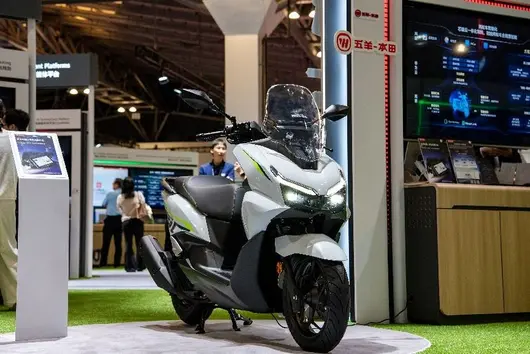

17 September, Persidangan Sambungan Penuh Huawei Ke-11 dimulakan di Pameran World Expo Shanghai. Di sudut kawasan pameran ekosistem Hongmeng, sebuah motosikal skuter T150 dipamerkan dengan tenang. Keunikannya bukan pada rupa luar, tetapi pada sistem kenderaan—motosikal prototaip Wuyang-Honda T150 yang dilengkapkan dengan ekosistem Hongmeng adalah salah satu daripada produk yang jarang muncul di persidangan kali ini sebagai pembuat motosikal kitaran bakar.
Daripada membina pusat pengkomputeran cerdas bersama pada Mei, hingga muncul di Persidangan Pemaju Huawei pada Jun, hingga kini muncul di pentas persidangan HC, tahap penyertaan Wuyang-Honda dalam sistem ekosistem Huawei semakin mendalam. Apabila Zongshen, Chunfeng, Qianjiang dan syarikat motosikal tempatan lain masing-masing merebut kuasa percakapan pasaran dengan label "pengintelligentan", syarikat perkongsian ini memilih laluan yang berbeza: tidak meninggalkan enjin pembakaran dalaman, tetapi membolehkan motosikal gasolin "disambungkan" ke dunia digital.
Satu "identiti" yang perlu diberi perhatian
Diketahuilah, T150 yang dilengkapkan ekosistem Hongmeng dibina di atas platform enjin eW15 empat injap penyejukan air Wuyang-Honda untuk model skuter pengangkutan bandar, enjin ini bersumber dari teknologi eSP+ Honda, kuasa maksimum 11.4kW/8500rpm, tork maksimum 14.4N·m/6500rpm, menyeimbangkan output kuasa dan prestasi kecekapan bahan api yang rendah. Di atas asas mengekalkan质感 mekanikal dan keseronokan pengendalian, prototaip T150 memuatkan sistem kenderaan pengintelligentan yang digabungkan dengan ekosistem Hongmeng. Dengan memanfaatkan rangka kerja pintar seluruh domain WiLINK sedia ada Wuyang-Honda, digabungkan dengan keupayaan berdistribusi ekosistem Hongmeng, T150 merealisasikan pertukaran lancar tugas navigasi antara skrin besar kenderaan dan peranti akhir Hongmeng. Pengguna boleh mencapai kerjasama antara peranti melalui peranti Hongmeng untuk fungsi penentuan lokasi kenderaan, sambungan jauh, amaran anti-curian getaran, rekod laluan骑行, dan sebagainya, membolehkan motosikal gasolin juga mempunyai sebahagian pengalaman sambungan peranti pintar.
Dalam peta pengangkutan dua roda ekosistem Huawei Hongmeng, peserta saat ini kebanyakannya adalah jenama elektrik. Niu Electric menandatangani "Rancangan Hongtu" pada Ogos dengan Huawei Terminal dan Aliansi GIIC, merancang untuk memuatkan secara berskala sistem Hongmeng sumber terbuka sepanjang tahun ini untuk meliputi 200,000 buah kenderaan; Aima Technology menandatangani perjanjian kerjasama mendalam dengan Huawei pada Mei, berfokus pada pengintelligentan pengangkutan dua roda dan perpaduan ekosistem Hongmeng; Zongshen lebih awal memperkenalkan Hongmeng OS dan algoritma AI.
Logik penyertaan Wuyang-Honda berbeza. Motosikal gasolin tidak mempunyai asas arkitektur elektronik elektrik asli platform elektrik, bekalan kuasa pengkomputeran sistem kenderaan, kestabilan bekalan kuasa dan keadaan penyejukan adalah lebih terhad. Wuyang-Honda di atas asas mengekalkan platform enjin eW15 empat injap penyejukan air, "memasukkan" keupayaan berdistribusi ekosistem Hongmeng ke rangka kerja pintar seluruh domain WiLINK sedia ada, merealisasikan pertukaran lancar tugas navigasi antara skrin besar kenderaan dan peranti akhir Hongmeng, serta fungsi kerjasama antara peranti penentuan lokasi kenderaan, sambungan jauh, amaran anti-curian getaran.
Secara mudahnya, ia bukan "menimbun" konfigurasi pintar di atas motosikal gasolin, tetapi "menyambungkan" ekosistem pintar untuk platform gasolin. Ini menyediakan laluan teknologi yang boleh dirujuk kepada banyak syarikat motosikal tradisional yang masih menghasilkan model gasolin.
Satu rantaian lengkap
Pada 8 Mei, pusat pengkomputeran cerdas yang dibina bersama Wuyang-Honda dan Tenaga Digital Huawei diletakkan di kilang Zengcheng Guangzhou. Pusat ini menggunakan arkitektur modul mikro pintar FusionModule20006.0 Huawei, dirancang untuk membentuk situasi hibrid "20P kuasa pengkomputeran tempatan + 50P kuasa pengkomputeran awan" sehingga tahun 2030, berkhidmat untuk simulasi R&D, pengilangan pintar, analisis data kenderaan berkaitan dan OTA kenderaan lengkap. Dalam pelan kuasa pusat pengkomputeran, jelas termasuk "OTA kenderaan lengkap" dan "analisis data kenderaan berkaitan". Ini bermakna布局 pengintelligentan Wuyang-Honda sejak awal bukan titik tunggal yang menembusi, tetapi pendekatan rantaian "infrastruktur kuasa pengkomputeran—platform data—pengintelligentan hujung produk". Membina dasar kuasa pada Mei, memaparkan keupayaan kenderaan Hongmeng pada Jun, memaparkan prototaip T150 yang dilengkapi ekosistem Hongmeng pada persidangan HC pada September—tiga langkah, logik jelas.
Di Forum Motosikal China Chongqing 2026, Liu Xin, Timbalan Pengerusi Persatuan Motosikal China menyatakan, seluruh industri harus "memegang pendirian untuk mengikuti laluan pengintelligentan, pemuliharaan hijau, pengembangan tahap tinggi, menggantikan persaingan harga rendah yang homogen dengan pengitirafan teknologi". Rantaian Wuyang-Honda ini adalah wujudan konkrit laluan ini.
“Pengintelligentan gaya China” Honda
Apabila ditinjau dalam strategi global Honda, langkah Wuyang-Honda ini lebih bermakna.
Honda sudah mempunyai布局 jelas dalam bidang peng Elektrikanan: tahun 2024 diposisikan sebagai tahun pertama pengembangan global motosikal elektrik, merancang setiap tahun untuk memadam model kenderaan elektrik di seluruh dunia, pasaran Thailand dan Vietnam telah terdahulu memulakan produk seperti UC3. Dalam aspek pengintelligentan, Honda melancarkan fungsi sambungan RoadSyncDuo, merealisasikan gabungan skrin smartphone dan kenderaan. Namun secara keseluruhan, langkah Honda dalam pengintelligentan dua roda adalah relatif stabil, terdapat ketegangan antara strategi platform seragam global dan keperluan pengitirafan pantas pasaran China.
Wuyang-Honda melangkah lebih depan dalam sistem global Honda. Menurut pengenalan Zhang Wenqing yang menerima wawancara media pada April tahun ini, Wuyang-Honda adalah kilang dengan pengeluaran kenderaan dua roda elektrik terbesar Honda semasa, produk tidak sahaja dieksport ke Vietnam, Indonesia, malah dijual balik ke Jepun. Dalam aspek pengintelligentan, platform pengintelligentan yang dibangunkan sendiri Wuyang-Honda telah dimuatkan pada setiap unit kenderaan, teknologi kawalan suara, bantuan pemanduan pintar sedang dalam R&D.
"Di China, untuk China, malahan untuk seluruh dunia"—peranan Wuyang-Honda sedang berpindah dari tapak pembuatan perkongsian, menjadi ladang ujian pengintelligentan dalam sistem global Honda. Kerjasama mereka dengan ekosistem Hongmeng, pada asasnya adalah memanfaatkan keupayaan ekosistem pintar tempatan China, menyokong pengintelligentan kemas kini produk global Honda. Modus "pemberian kuasa secara songsang" ini, dalam syarikat automotif perkongsian masih tidak banyak ditemui.
"Percabangan laluan" pengintelligentan dua roda
Pilihan Wuyang-Honda, menggambarkan satu perpecahan penting dalam trek pengintelligentan dua roda semasa.
Satu laluan mempunyai platform elektrik sebagai pembawa asli. Jenama seperti Niu, Luyuan, Aima melakukan pengintelligentan peningkatan sekitar Hongmeng sumber terbuka atau sistem yang dibangunkan sendiri, kenderaan mempunyai keupayaan digital lengkap dari sistem pengendalian asas hingga lapisan aplikasi. Kerjasama Luyuan dan Shen Kai Hong jelas menyatakan sasaran "motosikal dua roda pintar Tahap L2-Ultra", mendorong kenderaan dari "pintar jenis sambungan" ke "pintar peringkat sistem".
Laluan yang lain "menyambungkan" keupayaan pengintelligentan di atas platform gasolin, diwakili oleh Wuyang-Honda. Cabarannya ialah: arkitektur elektronik elektrik kereta gasolin tidak mempunyai syarat digital asli seperti kereta elektrik, realisasi fungsi pintar memerlukan sokongan kuasa pengkomputeran tambahan dan penyesuaian sistem. Penyelesaian Wuyang-Honda adalah melalui pusat pengkomputeran menyediakan kuasa pengkomputeran awan, melalui WiLINK+ ekosistem Hongmeng menyediakan sambungan peranti hujung, membentuk arkitektur kerjasama "awan—hujung—kenderaan".
Kehidupan bersama dua laluan, tepat sekali menunjukkan pengintelligentan dua roda belum membentuk norma teknologi yang seragam. Apabila Chunfeng melancarkan platform pengintelligentan C-Link, Qianjiang memeterai arsitektur pintar ParaPal, Loncin dan Zongshen masing-masing meneroka platform "Awan Motosikal", industri sedang mengalami perlumbaan teknologi yang selari pelbagai laluan, bukannya "siapa menggantikan siapa" yang mudah.
Penjelajahan Wuyang-Honda, juga menggambarkan tiga halangan yang mesti dihadapi oleh pengintelligentan dua roda. Pertama adalah kos. Motosikal dua roda sensitif harga, kos perkakasan pintar dan pelaburan R&D wujud ketegangan asli dengan harga jualan terminal, Wuyang-Honda menambat ekosistem Hongmeng di atas platform gasolin, lebih sukar untuk mengawal kos. Kedua adalah piawaian. Protokol komunikasi setiap kilang utama, antaramuka data menjadi sistem masing-masing, piawaian keselamatan seperti keselamatan maklumat, penambahbaikan OTA belum kukuh; pada aras antarabangsa, peraturan UNR155 United Nations telah memasukkan motosikal kelas L ke dalam lingkungan pengawasan, menuntut sejak 11 Disember 2027, model pengesahan baharu membina sistem pengurusan keselamatan rangkaian, kos kepatuhan keluar negara tidak boleh diabaikan. Ketiga adalah kematangan teknologi. Radar gelombang milimeter, kamera kadar penggera palsu masih tinggi di persekitaran kompleks, motosikal dua roda mempunyai tuntutan lebih keras pada isipadu, kuasa, getaran, V2X juga kekurangan piawaian motosikal dua roda khas. Cabaran ini bukan khusus Wuyang-Honda, tetapi gerbang yang mesti dilintasi seluruh industri menuju ke pengintelligentan mendalam.
Bagi syarikat motosikal tradisional yang masih menonton, laluan Wuyang-Honda menyediakan fikiran yang boleh dirujuk—tiada perlu membatalkan platform gasolin, tetapi melalui infrastruktur kuasa pengkomputeran dan kerjasama ekosistem, membolehkan kereta gasolin memperoleh "pengalaman sambungan sebahagian peranti pintar". Laluan ini boleh diteruskan sejauh mana, bergantung pada sama ada kos boleh turun dengan kematangan rantaian bekalan, sama piawaian boleh ditambah secepat mungkin, sama teknologi boleh menemui penyelesaian wajar di bawah keadaan kekangan khas motosikal dua roda.
[Penulis: Qi Xiaoling]





© 2024 Bitauto.com. All Rights Reserved.
Bitauto (www.yiche.com and www.bitauto.com) is one of the most visited automotive websites in China. We provide detailed info on Chinese car brands available in your area. Please note that the information provided on this website is based on publicly available data and is for reference only. It may not be fully updated or accurate at all times.

Help us improve our website


