

HomeInnovation

Search History
Popular Searches
Dealer Login / Sign Up

當下嘅中國汽車產業,正處於一個充滿張力嘅歷史節點。中國汽車工業協會數據顯示,2025 年整車出口 709.8 萬輛,按年增長 21.1%;2026 年前三季度攀升至 820.5 萬輛,按年增長 65.8%,同期國內銷量卻按年下滑逾兩成。“內冷外熱”揭示咗一個新現實:中國汽車已經告別追趕階段,進入同歐美、日韓老牌工業強國同台博弈嘅時代,而海外市場不再係單純嘅增量空間。
行業入面長久流行一套簡單嘅線性敘事:電動化上半場、智能化下半場、出海上半場。呢樣分期話語傳播門檻低,卻喺潛移默化中扭曲咗產業嘅戰略判斷,把層層交織、多方博弈嘅全球化進程,簡化成一場按次序推進嘅賽跑。從政治經濟學角度睇,電動化、智能化、全球化好似三套長期並行、互相約束嘅系統;每個國家都係獨立嘅政治經濟體,有專屬嘅產業節奏、勞工結構、能源路線與選舉博弈,唔存在統一嘅全球賽程。出海冇清晰嘅階段切換點,只有持續嘅適配、協商與博弈。
變化嘅深層原因,藏喺呢個產業嘅本性入面。汽車係外部性極強嘅工業門類。佢承載住一個國家製造業嘅就業底盤、稅收來源、零部件集群、能源轉型路線、礦產分配、數據安全,同地方選票、本土資本嘅利益深度綁定。當中國汽車從補充性進口商品,轉變為對本土原有產業形成替代嘅力量,市場競爭就會升級為利益分配嘅博弈。

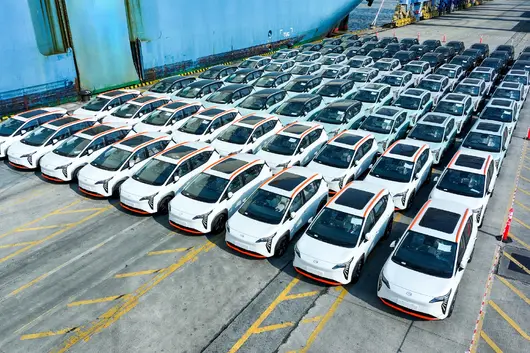
▲圖:上海外高橋汽車滾裝碼頭,待出口車輛密集停放,等待駛上滾裝船發往海外。圖片來源:新華社
以下四組觀察,構成讀懂出海政治經濟學嘅基本框架。
貿易工具背後嘅選票邏輯
冇任何一個經濟體願意公開接受本土汽車產業萎縮、藍領崗位流失、配套供應鏈衰退。歐盟 2024 年 10 月對華電動車反補貼終裁落地,各國本地含量要求層層加碼——紙面係貿易規則,底層係就業與選票導向嘅產業保護。睇懂呢一層,就會注意到一個常被忽略嘅份額現象:市場份額還小時,外來品牌被視作補充;份額持續擴大後,傳播若仍圍繞低價優勢,好容易被塑造成本土產業嘅掠奪者,成為貿易保護優先針對嘅對象。呢係敘事嘅變性點,與價格本身無關。
已經喺行動嘅企業把就業做成可核查嘅本地承諾。長城汽車收購巴西伊拉塞馬波利斯原奔馳工廠後,重新聘用約一成原廠技術骨幹,並同巴西國家級工業培訓機構 SENAI 共建技師培養項目;奇瑞喺南非嘅傳播重點,係產業復興與普惠就業。

▲圖:長城汽車巴西伊拉塞馬波利斯工廠員工喺車間合影。圖片來源:長城汽車(鳳凰網轉載)
工廠落地與股權安排都係風險答卷
東道國接納外資建廠,要嘅往往唔係多一座工廠,而係高附加值環節嘅留存——本土採購、研發落地、電池回收、持續嘅稅收與再投資。只做簡單組裝、核心部件全部外部輸入、利潤優先匯回母國嘅"飛地工廠"(同本地經濟幾無產業關聯嘅孤島式工廠),喺東道國嘅賬本上好容易被記為變相出口,政策收緊只係時間問題。把"海外建咗廠房、完成組裝"等同於本土化,係過去幾年最常见嘅認知錯位。
另一種做法係把產業鏈真係放落嚟。比亞迪喺泰國羅勇與巴西嘅基地,價值唔止整車產能,而係深度嵌入當地能源規劃、帶動配套集群成長,同東道國嘅碳中和目標對接。兩類項目喺順境入面差別唔大,保護情緒抬頭時,補貼取消、門檻提高、利潤匯出受限,會先落喺前一種頭上。
車企嘅重資產投資以十年為周期,好多國家嘅產業政策卻跟著選舉週期搖擺,三五年就可能轉向,靜態商業測算好難覆蓋呢種動態風險。喺這樣嘅背景入面回看股權選擇,會得出一個同直覺相反嘅判斷:喺高敏感市場堅持全資控股,意在牢牢掌握技術與管理權,實際效果係獨自承擔全部政治風險,缺少本土股東喺遊說、溝通、輿論層面嘅緩衝。股權安排本身就係風險對沖工具,一味追求完全控制權,有時等同於裸奔式出海。
區分合資還係高控股嘅變量,與其說係"政策穩唔穩定"——按上面嘅邏輯,冇市場稱得上穩定——不如說係退出成本:重資產、長周期、深嵌入嘅項目傾向合資共擔,輕資產散件組裝(KD)、可快速退出嘅業務往往保留更高控股。奇瑞西班牙項目提供咗前一種嘅樣本:同本土企業合作盤活閒置整車資產,保留本土品牌埃布羅(Ebro),讓本土資本與團隊共享收益,外來資本嘅對立色彩隨之淡化。

▲圖:2024 年 11 月 23 日,奇瑞與西班牙埃布羅合資工廠首款車型 S700 喺巴塞羅那下线。圖片來源:新華社
標準與數據都係政治變量
新能源汽車深度綁定各國能源戰略。歐洲以碳中和構建新嘅貿易門檻——碳邊境調節機制(CBAM)2026 年進入實繳期,歐盟電池法規嘅"電池護照"(電池全生命周期數字記錄)2027 年 2 月起適用。碳足跡、礦產溯源、報廢回收,看似技術標準,本質係新一輪全球產業價值分配嘅工具。
規則密集生成嘅階段,多數車企嘅慣性係等定稿再被動適配,議程桌上長久缺席。而本土老牌企業與零部件聯盟恰恰有充足動力推動有利於自身嘅標準——缺席者嘅合規成本與防守位置,係結構性嘅。也有頭部車企開始換一種參與方式:聯合本土高校、智庫、行業協會,圍繞碳核算、電池規範、智能聯網準入做聯合研究,把兼顧減排、產業發展與供應鏈安全嘅方案先擺上桌面。參與與否,兩三年後嘅成本曲線會給出答案。
智能汽車係移動嘅數據終端,路況、行車、地圖、用戶資訊乃至算法訓練數據,都觸及國家安全與隱私主權。好多針對智能車型嘅準入限制,並非產品缺陷,而係數字地緣博弈嘅直接體現。把數據合規當普通法務流程、滿足基礎備案即覺萬事大吉嘅做法,低估咗呢個議題嘅主權屬性;照搬國內數據閉環模式,則極易觸碰紅線。
小鵬喺歐洲嘅實踐提供咗觀察樣本:以同一套模型完成本地化驗證,喺德國、荷蘭公開智駕實測(歐洲監管許可預計 2027 年上半年落地),同時明確區別於"數據本地化、模型本地化"嘅行業常規路線。輸出能力與讓渡主權嘅邊界如何划,各家解法還沒收斂,呢個案例值得繼續睇。
品牌係共生沉澱落嚟嘅信任
政治經濟學嘅賬,最終要有人喺企業內部嚟算。本土人才培育、產業鏈扶持、行業共建、社區投入,見效慢,卻恰恰係長期韌性嘅根基。而當總部只以短期銷量與利潤考核海外業務時,海外團隊嘅行為會自然向沖量傾斜,預算收緊時最先被砍掉嘅,正係呢啲慢功夫。考核週期與投資週期嘅錯配,係好多"知道該點樣做、組織入面卻做唔到"嘅根源——把本地化率、本地就業、供應鏈培育寫入考核指標,本質係讓長期承諾喺組織內部有錨。

▲圖:2024 年 7 月 4 日,比亞迪泰國羅勇府工廠竣工,第 800 萬輛新能源汽車喺現場下线。圖片來源:新華社
行業常把品牌出海等同於廣告投放、車展造勢、流量營銷,實際邏輯恰好相反:廣告可以快速製造知名度,持續嘅利益兼容才能塑造公信力。領克歐洲嘅軌跡係一面鏡子——曾以訂閱出行模式切入,因獲客成本高、回購率低,2024 年底放棄純訂閱轉回傳統經銷,2026 年 9 月進一步簽約,2027 年 1 月起由沃爾沃擔任歐洲獨家經銷商。單點嘅商業模式創新,替代唔到利益結構嘅嵌入。比亞迪喺多國獲得政府與產業協會嘅正向背書、奇瑞突破歐洲保護壁壘、長城喺巴西扎根投產,說明係同一件事:海外品牌影響力,係長期利益共生沉澱落嚟嘅社會信任。缺少政治經濟學根基嘅品牌,只係空中樓閣。
需要留一分克制嘅係,上述框架來自近年案例嘅歸納,樣本仍在擴充,解釋力要交俾時間檢驗。選舉週期嘅波動、地緣關係嘅急轉,都可能改寫個案嘅走向。
未來數年,係中國汽車全球化嘅深水區與分水嶺。產品係入場券,技術係基礎,商業係表面,政治經濟學先係長期發展嘅底盤。中國汽車已經拿到咗走向世界嘅入場券,接下來,必須讀好、讀懂、讀通政治經濟學呢一堂課。佢決定咗呢一輪汽車產業全球化,我哋能夠走多遠、走多穩。
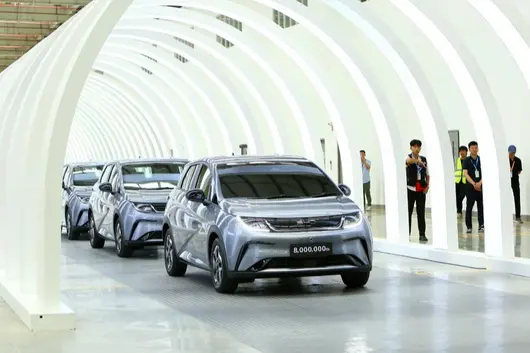



「 昊铂埃安、北汽新能源 」
作者 | 龔宸芺
編輯 | 李國政
出品 | 幫寧工作室(gbngzs)
剛入 11 月,一些車企就晒出 10 月銷量。
新能源車滲透率喺向上走,但車市總量卻喺收縮。乘聯會預計,10 月全國乘用車終端零售量同比下滑約 28%,新能源零售量約 107 萬輛,滲透率約 66.9%。
行業喺連續發出戰報,其中有两个品牌比較特別。
其一,都排在漲幅榜前列,令人意外。
喺南方,廣汽昊铂埃安 10 月銷量係 4.24 萬輛,同比增長 56.79%,連續 8 個月同比正增長,創下年內新高,前三季同比漲幅超 56%。
喺北方,北汽新能源 10 月賣出 3.25 萬輛,站上年內高點,前 10 個月累計銷售 19.59 萬輛,同比增長 37.9%。
當月,知名度比佢哋更高嘅問界,交付 2.21 萬輛,同比下滑 54.69%;鴻蒙智行「五界」合計交付 3.35 萬輛,同比下滑一半多。
其二,都有相同經歷。
雖然各自趕路,但昊铂埃安同北汽新能源嘅發展劇本,卻驚人地相似:都係地方國企,都好早押注新能源,都登上銷量巔峰,都跌進谷底,都被貼上「網約車」嘅標籤,都喺今年銷量大漲……
二者嘅起承轉合,顯示出中國新能源汽車產業嘅波譎雲詭。
▍01
發展曲線幾乎重疊
北汽新能源嘅起點係 2009 年。嗰一年,北汽集團響應國家「十城千輛」示範項目,成立咗呢間公司。2013-2019 年,佢連續 7 年奪得國內純電動車銷量第一,2018 年藉重組登陸上交所,成為「中國新能源汽車第一股」。
喺北汽新能源上市之前,喺 2100 多公裡之外嘅廣州,廣汽埃安誕生。佢於 2017 年成立後,趕上營運車市場爆發窗口,2022 年銷量突破 27 萬輛,巔峰嘅 2023 年賣出 48 萬輛。業內曾流傳過「全國每 4 輛網約車就有一輛埃安 S」嘅說法,其 B 端訂單一度佔總銷量六成以上。
當然,兩家紅利食得好早,摔得都重。
2020 年,北汽新能源陡然進入黑暗時代,銷量從 2019 年嘅 15.1 萬輛驟降至 2.6 萬輛,連用「腰斬」「斷崖式」等聳人聽聞嘅詞,都無法形容呢個巨大變革。
喺今年 8 月一場媒體溝通會上,管理層喺回顧嗰段谷底期時坦言,嗰時「網約車代名詞」嘅標籤一背就係好幾年,業績連年虧損。

埃安嘅高光黯淡,始於 2024 年,當年銷量滑到 37.5 萬輛;2025 年再縮到 29 萬輛,月銷一度跌破 1 萬輛;主力車型 AION S 喺今年 3 月只賣出 4193 輛,同比下滑 44.33%。
對埃安嚟講,「網約車之王」4 個字,由讚賞變咗枷鎖。由網上反饋嚟睇,普通消費者買車,最驚聽到佢係「網約車專屬」類嘅說話。
隨即,兩家公司先後動手改革。
2024 年,北汽新能源迎嚟新管理團隊,「創業型新國企」嘅定位被寫入公司體系。佢哋摒棄過往嘅浮躁做法,杜絕包裝業績、向經銷商壓庫存等短期行為。研發板塊同步補強,旗下極狐產品中心重新整合,研發效率提升近一倍。
喺南方,2025 年 12 月,廣汽將單飛嘅昊铂併返埃安,成立昊铂埃安 BU,導入 IPD 產品開發體系同 IPMS 營銷體系,渠道融合,資源向主力車型集中。
改革嘅效果,喺 2026 年集中兌現。
北汽新能源方面,旗下極狐品牌嘅 15 萬元級 SUV 阿爾法 T7,將華為乾崑智駕同寧德時代電池放進 13 萬 -17 萬元價位段,預訂 21 日,訂單突破 6 萬輛。

同一時期,主打換電嘅純電家轎貝塔 S3、極狐首款高端 MPV 問道 V9 喺各自價位帶放量;豪華硬派 SUV 享界 G9 開啟預訂,預售價 43.98 萬元起,抬高咗北汽新能源品牌嘅天花板。
埃安方面,i60 熱賣,呢款係 10 萬元級雙動力家用 SUV,上市 10 個月交付 10 萬輛,創下雙動力 SUV 細分市場最快紀錄,連續 10 個月銷量破萬,近兩個月訂單都突破 2 萬輛。
兩家仲做咗同一件事——洗咗「網約車」嘅標籤,將基本盤從 B 端挪向 C 端。
埃安 C 端私人用戶佔比,從 2023 年嘅約 50%,上漲至目前嘅 80%。公開資料顯示,今年 7 月底,極狐嘅轉介紹率同进店转化率均達到 50%,表明其車主將該品牌推薦畀身邊人。
巧合嘅係,兩個品牌今年都碰上「黑天鵝事件」,只係程度唔同。
今年夏天,搭載中創新航 177Ah 磷酸鋰電池嘅廣汽埃安存量營運車輛,集中出現電芯鼓包、漏液、絕緣故障,涉事車型主要係 AION S 系列,亦覆蓋 AION V、AION Y 同配置車型。
有媒體估算,涉及車輛規模超過 21 萬輛,「黑天鵝事件」由 7 月延續到 10 月,網上關於召回流程嘅說法反覆變化,車主嘅不滿難以平息。據媒體報道,有車輛喺行駛里程為 16.6 萬公里時遇到故障,亦有撐到 32 萬公里先出問題,多數案例落喺 15 萬到 30 萬公里。
極狐亦一度頭疼唔止。多款車型持續登上車質網投訴榜:貝塔 T1 一度連續 5 個月位居同級別投訴榜頭;阿爾法 T7 交付剛滿 3 日,網上就出現首批車主拆車挑毛病嘅視頻。
▍02
一收一放
運營方面,埃安同北汽新能源分別呈現收同放嘅特徵。
埃安方面係「收」。昊铂品牌獨立兩載,銷量冇明顯起色,旗艦 SUV HL 被廣汽無上限地押注資源,2025 年 4 月上市嗰陣,放言對標問界 M8、理想 L8,結果全年銷量唔夠 5000 輛,月銷量曾跌到個位數。
迫不得已,廣汽集團把它收回,同埃安併成一個 BU,然後推行渠道融合、品牌並軌、資源集中,用減法換效率。
呢場改革背靠廣汽「番禺行動」,目標係破解傳統車企嘅流程繁瑣、決策鏈條長嘅通病。
埃安品牌放棄行業流行嘅「車海戰術」,將研發、供應鏈、渠道資源,砸向 i60 咁樣嘅大單品。憑住「與其讓 10 款車各賣幾千輛,不如讓一款車賣到 10 萬輛」嘅直白邏輯,i60 持續穩量,驗證咗從市場洞察、產能交付到用戶認可呢一套打法嘅可行性。
產品佈局上,埃安用 N60,守住 10 萬 -15 萬元智駕 SUV 市場;用 i60 嘅純電加增程雙動力,覆蓋家庭用戶。
北汽新能源邊邊係「放」。
旗下極狐品牌聚焦主流市場,阿爾法、貝塔、問道呢 3 條產品線,分別卡位 8 萬 -30 萬元。例如,阿爾法 T7 守 15 萬元級 SUV 市場,貝塔 S3 以 5.98 萬元起切入換電市場,問道 V9 將極狐帶進 20 萬元以上嘅家庭與商務市場。
北汽新能源同華為聯合打造嘅享界品牌,主打高端市場。其中,S9、S9T 穩居 30 萬元以上新能源轎車銷冠;G9 預訂 72 小時,訂單突破 1.5 萬輛;今年下半年,V8 補齊 MPV 品類。
北汽新能源雙品牌各幹各嘅活。官方資料顯示,享界一季用三成銷量,達成北汽新能源六成以上營收。

兩家區別最明顯嘅,係高端化路徑。
埃安方面,喺昊铂回歸後,同埃安共享渠道同體系,唔再指望昊铂作為獨立品牌單打獨鬥。
其中,昊铂 GT Lite 將中大型純電轎跑嘅價格,下探到 15 萬元區間,先搵返存在感。對於昊铂嚟講,呢幾乎係唯一嘅選擇。獨立營運兩載,昊铂驗證咗喺高端市場單打獨鬥嘅艱難。
而北汽新能源則將高端品牌享界交畀華為生態,由北汽出製造底蘊同供應鏈,華為出智能化。
整體嚟講,喺高端化方面,昊铂埃安係自己消化,北汽新能源係借力打力。
由此帶嚟二者增長節奏。埃安嘅增勢喺加速,8 月同比增長 34.53%,9 月 21.91%,10 月沖到 56.79%,整體曲線向上。
北汽新能源則處於換擋期,8 月同比增長 29.88%,9 月為 17.24%、10 月係 6.42%,增速逐月回落。不過,由業績嚟睇,北汽新能源連續 7 個季度大幅減虧,經營明顯改善。
顯然,同樣係漲,前者漲喺規模,後者漲喺結構。
兩家亦加快海外佈局。埃安喺泰國設有工廠,主要面向東南亞市場。
北汽新能源董事長劉觀橋曾表示,今年下半年推動雙品牌逐鹿全球,開闢海外第二增長曲線。極狐 7 月海外單月銷量破千,銷售網絡已覆蓋中東、南美、非洲,下一步,要由產品出口,轉向體系能力輸出。

喺硬幣嘅另一面,二者仲有大量待解之題。
埃安方面,要還電池問題嘅舊帳,仲有昊铂嘅高端溢價能力尚未落地,走量車型佔比過高過於依賴,單車價值仲未完全立起嚟等。
北汽新能源就要解決增速換擋嘅問題:等低基數紅利食完、T7 訂單消化完後,下一波增長點喺邊?
而且,其盈利改善目前只靠享界嘅結構貢獻,規模化盈利尚未實現。另外,貝塔 S3 嘅訂單結構中,換電版佔 76%,說明該車型仲喺依賴營運場景……
諸如此類嘅問題清單,二者都有一個長串。
新汽車激蕩十幾年,車企中唔缺激進嘅擴張者,亦唔缺保守嘅守成者,難得嘅係知道自己喺什麼位置、能做什麼事。
「我哋經過呢幾年嘅調整,可以話,已經重新回到新能源汽車主流競爭嘅牌桌。」劉觀橋表示。
一南一北,昊铂埃安同北汽新能源,都要思考自己呢輪漲勢仲可以走幾遠。

喺馬來西亞嘅 SUV 市場,好多買家喺揀車嘅時候都會拿馬自達 CX-3 同 MG MG HS 嚟做比較。呢兩款車喺價錢同定位上都幾接近,今日我哋就從多個方面嚟做一個詳細嘅對比,幫手省返做功課嘅時間。
馬自達 CX-3 喺馬來西亞嘅 OTR 售價係 RM 126,159 - 139,159,一共有 2 個版本,包括 2023 2.0L High(RM 139,159)、2023 2.0L Plus(RM 126,159) 等。
MG MG HS 喺馬來西亞嘅 OTR 售價係 RM 130,450 - 146,450,一共有 2 個版本,包括 1.5L Standard(RM 105,000)、1.5L Executive(RM 115,000) 等。
從價錢嚟睇,馬自達 CX-3 嘅起步價確實比 MG MG HS 平咗 RM 4,291。如果你預算有限,馬自達嘅入門版已經可以滿足日常需求。但亦都要注意,平嗰幾千蚊,可能喺配備上面會有取舍,具體要睇你嘅需求。

馬自達 CX-3 嘅安全評級係 5★ (ASEAN NCAP),主動安全系統包括 i-Activsense。
MG MG HS 嘅安全評級係 TBD,主動安全系統包括 Basic。
安全配備方面,兩款車都拿到唔錯嘅評級。不過馬自達 CX-3 嘅 i-Activsense 同 MG MG HS 嘅 Basic 喺功能上有啲差異,如果你比較睇重主動安全嘅話,可以仔細對比吓兩邊嘅功能列表。

馬自達 CX-3 車身長 4500 mm,後廂 450 L。
MG MG HS 車身長 4400 mm,後廂 400 L。
空間方面,馬自達 CX-3 嘅車身比 MG MG HS 長咗 100 mm,車內乘坐空間會稍微寬啲,尤其係後座腿部空間。如果你經常載家人或者需要放嬰兒手推車,大少少嘅車身確實更實用。

馬自達 CX-3 保修 5 年/150,000km,保養間隔 每 10,000km 或 6 個月。
MG MG HS 保修 7 年/150,000km,保養間隔 每 10,000km 或 6 個月。
總嚟講,馬自達 CX-3 同 MG MG HS 都係馬來西亞市場好唔錯嘅車型。邊部車點揀,關鍵仲要睇你嘅個人需求同預算。大家建議做好功課,多比較幾間車行嘅報價,再去試駕先做最終決定。買車係件大事,花少少時間做功課絕對唔會錯。


In Malaysia's SUV market, many buyers compare Mazda CX-3 and Chery Tiggo 8 PHEV when choosing a car. These two cars are quite close in pricing and positioning. Today, we will make a detailed comparison from multiple aspects to help you save time on research.
The OTR price for Mazda CX-3 in Malaysia is RM 126,159 - 139,159, with a total of 2 versions, including 2023 2.0L High (RM 139,159), 2023 2.0L Plus (RM 126,159), etc.
The OTR price for Chery Tiggo 8 PHEV in Malaysia is RM 159,750 - 159,750, with a total of 2 versions, including 1.6L Turbo Standard (RM 130,000), 1.6L Turbo Premium (RM 145,000), etc.
In terms of price, the starting price of Mazda CX-3 is indeed RM 33,591 cheaper than Chery Tiggo 8 PHEV. If your budget is limited, the entry-level version of Mazda can already meet daily needs. However, you should also note that the cheaper few thousand might involve trade-offs in features, depending on your specific requirements.
The safety rating of Mazda CX-3 is 5★ (ASEAN NCAP), active safety systems include i-Activsense.
The safety rating of Chery Tiggo 8 PHEV is TBD, active safety systems include Basic.
Regarding safety features, both cars have received decent ratings. However, there are some differences in function between i-Activsense of Mazda CX-3 and Basic of Chery Tiggo 8 PHEV. If you value active safety, you can compare the feature lists of both in detail.
Mazda CX-3 adopts FWD drive type.
Chery Tiggo 8 PHEV adopts FWD drive type.
Both cars have the same drive type, which is FWD, there won't be much difference in daily driving feel.
Mazda CX-3 warranty 5 years/150,000km, maintenance interval every 10,000km or 6 months.
Chery Tiggo 8 PHEV warranty 3 years/100,000km, maintenance interval every 10,000km or 6 months.
Both Mazda CX-3 and Chery Tiggo 8 PHEV are mainstream choices in the Malaysia market, suitable for family use and daily commuting. If you value brand reputation and resale value more, you can prioritize the one with better reputation; if you care more about value for money and features, then choose the one with richer features. Ultimately, it is recommended to test drive both, personal experience is the most important.
Overall, both Mazda CX-3 and Chery Tiggo 8 PHEV are very good car models in the Malaysia market. Which one to choose depends mainly on your personal needs and budget. It is recommended to do your research, compare quotes from several dealerships, and then test drive to make the final decision. Buying a car is a big deal, spending time to do research will never be wrong.

Dalam pasaran SUV di Malaysia, ramai pembeli ketika memilih kereta akan membandingkan Mazda CX-3 dan Chery Tiggo 8. Kedua-dua kereta ini mempunyai harga dan penentuan pasaran yang hampir sama, hari ini kita akan membuat perbandingan terperinci dari pelbagai aspek, membantu anda menjimatkan masa melakukan kajian.
Harga OTR Mazda CX-3 di Malaysia ialah RM 126,159 - 139,159, terdapat 2 varian, termasuk 2023 2.0L High (RM 139,159), 2023 2.0L Plus (RM 126,159) dan lain-lain.
Harga OTR Chery Tiggo 8 di Malaysia ialah RM 129,750 - 129,750, terdapat 1 varian, termasuk 2026 1.6T Standard (RM 129,750) dan lain-lain.
Dari segi harga, harga permulaan Mazda CX-3 memang lebih murah RM 3,591 berbanding Chery Tiggo 8. Jika bajet anda terhad, versi asas Mazda sudah boleh memenuhi keperluan harian. Tetapi perlu diambil perhatian, beberapa ribu ringgit yang lebih murah itu, mungkin ada perbezaan pada kelengkapan, bergantung pada keperluan anda.
Mazda CX-3 dilengkapi 1.5L Turbo, kuasa kuda 140 hp. Penggunaan minyak rasmi 7.0 L/100km.
Chery Tiggo 8 dilengkapi 1.5L Turbo, kuasa kuda 140 hp. Penggunaan minyak rasmi 7.0 L/100km.
Kedua-dua kereta menggunakan sistem enjin yang sama, rasa memandu sehari-hari hampir tiada perbezaan. Penggunaan minyak juga hampir sama, tidak perlu terlalu bimbang tentang perkara ini.
Taraf keselamatan Mazda CX-3 ialah 5★ (ASEAN NCAP), sistem keselamatan aktif termasuk i-Activsense.
Taraf keselamatan Chery Tiggo 8 ialah TBD, sistem keselamatan aktif termasuk Basic.
Dari segi kelengkapan keselamatan, kedua-dua kereta mendapat penilaian yang baik. Namun i-Activsense Mazda CX-3 dan Basic Chery Tiggo 8 mempunyai perbezaan dalam fungsi, jika anda mengutamakan keselamatan aktif, boleh periksa senarai fungsi kedua-duanya dengan teliti.
Panjang badan Mazda CX-3 4500 mm, ruang bagasi 450 L.
Panjang badan Chery Tiggo 8 4400 mm, ruang bagasi 400 L.
Dari segi ruang, badan Mazda CX-3 adalah 100 mm lebih panjang daripada Chery Tiggo 8, ruang duduk di dalam kereta akan lebih luas sedikit, terutamanya ruang kaki baris belakang. Jika anda sering membawa keluarga atau perlu letakkan kerusi bayi, badan kereta yang lebih besar memang lebih praktikal.

Mazda CX-3 menjamin 5 tahun/150,000km, jarak servis 10,000km atau 6 bulan sekali.
Chery Tiggo 8 menjamin 3 tahun/100,000km, jarak servis 10,000km atau 6 bulan sekali.
Secara keseluruhan, Mazda CX-3 dan Chery Tiggo 8 adalah model kereta yang sangat bagus di pasaran Malaysia. Memilih mana satu, penting bergantung pada keperluan dan bajet peribadi anda. Disyorkan membuat kajian awal, membandingkan banyak pengedar kereta, kemudian melakukan ujian memandu untuk membuat keputusan akhir. Membeli kereta adalah perkara besar, meluangkan masa untuk membuat kajian tidak akan salah.

Dalam pasaran SUV di Malaysia, ramai pembeli cenderung membandingkan Mazda CX-3 dengan Chery Tiggo 7 Pro. Kedua-dua kereta ini mempunyai harga dan segmen yang agak hampir, hari ini kita akan membuat perbandingan terperinci dari pelbagai aspek untuk membantu anda menjimatkan masa membuat penyelidikan.
Mazda CX-3 dijual dengan harga OTR di Malaysia sebanyak RM 126,159 - 139,159, tersedia dalam 2 variasi, termasuk 2023 2.0L High (RM 139,159), 2023 2.0L Plus (RM 126,159) dan lain-lain.
Chery Tiggo 7 Pro dijual dengan harga OTR di Malaysia sebanyak RM 123,750 - 123,750, tersedia dalam 2 variasi, termasuk 1.6L Turbo Standard (RM 125,000), 1.6L Turbo Premium (RM 140,000) dan lain-lain.
Dari segi harga, harga permulaan Chery Tiggo 7 Pro lebih murah RM 2,409 berbanding Mazda CX-3. Secara jujur, dalam julat harga ini, beza ribuan ringgit sebenarnya tidak besar, kuncinya masih pada nisbah nilai-harga keseluruhan dan kos penggunaan jangka panjang.
Mazda CX-3 mempunyai penilaian keselamatan 5★ (ASEAN NCAP), sistem keselamatan aktif termasuk i-Activsense.
Chery Tiggo 7 Pro mempunyai penilaian keselamatan TBD, sistem keselamatan aktif termasuk Basic.
Dari segi peralatan keselamatan, kedua-dua kereta mendapat penilaian yang baik. Namun, i-Activsense pada Mazda CX-3 dan Basic pada Chery Tiggo 7 Pro mempunyai beberapa perbezaan dari segi fungsi, jika anda lebih mementingkan keselamatan aktif, sila bandingkan senarai ciri-ciri keduanya.
Mazda CX-3 menggunakan sistem pemanduan FWD.
Chery Tiggo 7 Pro menggunakan sistem pemanduan FWD.
Kedua-dua kereta menggunakan sistem pemanduan yang sama, iaitu FWD, pengalaman memandu harian tidak akan banyak perbezaan.
Mazda CX-3 dilindungi jaminan 5 tahun/150,000km, interval servis setiap 10,000km atau 6 bulan.
Chery Tiggo 7 Pro dilindungi jaminan 3 tahun/100,000km, interval servis setiap 10,000km atau 6 bulan.
Secara keseluruhan, Mazda CX-3 dan Chery Tiggo 7 Pro adalah model kereta yang sangat baik di pasaran Malaysia. Memilih yang mana satu, kuncinya masih bergantung pada keperluan peribadi dan bajet anda. Kami cadangkan anda membuat penyelidikan, bandingkan beberapa tawaran harga dari kedai kereta, kemudian buat uji memandu untuk membuat keputusan akhir. Membeli kereta adalah perkara besar, meluangkan masa untuk penyelidikan pasti tidak salah.

Dalam pasaran SUV di Malaysia, ramai pembeli membuat perbandingan antara Toyota Harrier dan Audi Q7 ketika memilih kereta. Kedua-dua kereta ini mempunyai harga dan kedudukan pasaran yang hampir sama. Hari ini kita akan membuat perbandingan terperinci dari pelbagai aspek untuk membantu anda menjimatkan masa membuat kajian.
Harga OTR Toyota Harrier di Malaysia ialah RM 289,000 - 289,000, dengan jumlah 1 varian, termasuk 2026 HEV 2.5L Standard (RM 289,000) dan lain-lain.
Harga OTR Audi Q7 di Malaysia ialah RM 462,222 - 462,222, dengan jumlah 1 varian, termasuk Standard (RM 462,222) dan lain-lain.
Dari segi harga, harga permulaan Toyota Harrier memang RM 173,222 lebih murah daripada Audi Q7. Jika bajet anda terhad, varian asas Toyota sudah memadai untuk keperluan harian. Namun, perlu diingat, perbezaan harga beberapa ribu ringgit itu mungkin melibatkan kompromi pada kelengkapan, bergantung pada keperluan anda.

Toyota Harrier panjang 4400 mm, ruang bagasi 400 L.
Audi Q7 panjang 4400 mm, ruang bagasi 400 L.
Saiz kedua-dua kereta hampir sama, perbezaan ruang dalaman kecil. Kereta pada tahap ini sudah cukup untuk kegunaan harian.

Toyota Harrier jaminan 5 tahun/tanpa had jarak, selang servis setiap 10,000 km atau 6 bulan.
Audi Q7 jaminan 5 tahun/150,000 km, selang servis setiap 10,000 km atau 6 bulan.

Toyota Harrier dan Audi Q7 adalah pilihan utama di pasaran Malaysia, sesuai untuk kegunaan keluarga dan perjalanan harian. Jika anda lebih mementingkan reputasi jenama dan nilai jual semula, pilih model yang mempunyai reputasi lebih baik; jika anda lebih mementingkan nilai harga dan kelengkapan, pilih model yang lebih lengkap. Pada akhirnya, disyorkan untuk uji jalan kedua-dua model, pengalaman sendiri adalah yang paling penting.

Secara keseluruhannya, Toyota Harrier dan Audi Q7 adalah model kereta yang sangat baik di pasaran Malaysia. Memilih mana satu, penting untuk melihat keperluan dan bajet peribadi anda. Kami cadangkan anda membuat kajian, bandingkan beberapa tawaran daripada kedai kereta, lalu uji jalan untuk membuat keputusan akhir. Membeli kereta adalah perkara besar, meluangkan masa untuk kajian tidak akan pernah salah.


In the Malaysian SUV market, many buyers often compare the Toyota Harrier and Mercedes-Benz GLE when choosing a car.
The Toyota Harrier's OTR price in Malaysia is RM 289,000 - 289,000, with a total of 1 version, including 2026 HEV 2.5L Standard (RM 289,000), etc.
The Mercedes-Benz GLE's OTR price in Malaysia is RM 544,888 - 544,888, with a total of 1 version, including Standard (RM 544,888), etc.
From a price perspective, the Toyota Harrier's starting price is indeed RM 255,888 cheaper than the Mercedes-Benz GLE.
If you have a limited budget, Toyota's entry-level version can already meet daily needs.
But also note that the thousands cheaper might involve trade-offs in features, depending on your specific needs.
The Toyota Harrier body length is 4400 mm, trunk 400 L.
The Mercedes-Benz GLE body length is 4400 mm, trunk 400 L.
The dimensions of both cars are almost identical, and the interior space difference is not significant. Cars in this class are more than sufficient for daily use.
Toyota Harrier warranty 5 years / unlimited mileage, service interval every 10,000km or 6 months.
Mercedes-Benz GLE warranty 3 years/100,000km, service interval every 10,000km or 6 months.
Both Toyota Harrier and Mercedes-Benz GLE are mainstream choices in the Malaysian market, suitable for family use and daily commuting.
If you value brand reputation and resale value more, you can prioritize the one with better reputation; if you care more about value for money and features, choose the one with richer configuration.
Ultimately, it is recommended to test drive both models; personal experience is the most important.

Overall, both the Toyota Harrier and Mercedes-Benz GLE are very good models in the Malaysian market.
Which one to choose depends mainly on your personal needs and budget.
We suggest doing your research, comparing quotes from several dealerships, and then test driving to make a final decision.
Buying a car is a big deal; spending some time doing research will never be wrong.

In the SUV market in Malaysia, many buyers compare Toyota Harrier and Mercedes-Benz GLB when choosing a car. These two cars are quite close in price and positioning. Today, we will make a detailed comparison from multiple aspects to help you save time on research.
The OTR price of Toyota Harrier in Malaysia is RM 289,000 - 289,000, with a total of 1 version, including 2026 HEV 2.5L Standard (RM 289,000), etc.
The OTR price of Mercedes-Benz GLB in Malaysia is RM 299,888 - 352,888, with a total of 1 version, including Standard (RM 299,888), etc.
From a price perspective, Toyota Harrier's starting price is indeed RM 10,888 cheaper than Mercedes-Benz GLB. If your budget is limited, Toyota's entry-level version can already meet daily needs. However, you should also note that the few thousand cheaper, there might be trade-offs in features, depending on your specific needs.
Toyota Harrier is equipped with 2.0L Turbo, 220 hp. Official fuel consumption 9.5 L/100km.
Mercedes-Benz GLB is equipped with 2.0L Turbo, 220 hp. Official fuel consumption 9.5 L/100km.
Both cars use the same powertrain, the daily driving feel is basically no difference. Fuel consumption is also similar, no need to worry too much about this point.
Toyota Harrier body length 4400 mm, trunk 400 L.
Mercedes-Benz GLB body length 4400 mm, trunk 400 L.
The dimensions of the two cars are almost the same, the interior space difference is not large. Cars in this class are fully sufficient for daily use.
Toyota Harrier and Mercedes-Benz GLB are both mainstream choices in the Malaysia market, suitable for family use, daily commuting. If you value brand reputation and resale price more, you can prioritize the one with better reputation; if you care more about cost-performance and features, then choose the one with richer configuration. In the end, it is recommended to test drive both models, personal experience is the most important.

Overall, Toyota Harrier and Mercedes-Benz GLB are both very good models in the Malaysia market. Choosing which one depends mainly on your personal needs and budget. We suggest doing your research, compare quotes from several dealerships, and then test drive to make the final decision. Buying a car is a big matter, spending time on research will never be wrong.

Dalam pasaran SUV Malaysia, banyak pembeli akan membandingkan Toyota Harrier dan BMW X5 PHEV semasa memilih kereta. Kedua-dua kereta ini mempunyai harga dan kedudukan yang agak hampir, hari ini kita akan membuat perbandingan terperinci dari pelbagai aspek, membantu anda menjimatkan masa untuk membuat penyelidikan.
Toyota Harrier dijual di Malaysia pada harga OTR RM 289,000 - 289,000, terdapat 1 varian, termasuk 2026 HEV 2.5L Standard (RM 289,000) dan lain-lain.
BMW X5 PHEV dijual di Malaysia pada harga OTR RM 486,800 - 494,800, terdapat 2 varian, termasuk xDrive20i (RM 420,000), xDrive30e (RM 480,000) dan lain-lain.
Dari segi harga, harga permulaan Toyota Harrier memang lebih murah RM 197,800 berbanding BMW X5 PHEV. Jika bajet anda terhad, versi masuk Toyota sudah boleh memenuhi keperluan harian. Tetapi perlu diambil perhatian, perbezaan harga beberapa ribu itu, mungkin ada pertimbangan pada kelengkapan, bergantung kepada keperluan anda.
Toyota Harrier dilengkapi enjin 2.0L Turbo, kuasa 220 hp. Penggunaan minyak rasmi 9.5 L/100km.
BMW X5 PHEV dilengkapi Hybrid, kuasa 170 hp. Penggunaan minyak rasmi 4.5 L/100km.
Dari segi kuasa, 2.0L Turbo pada Toyota Harrier mempunyai 50 kuasa kuda lebih berbanding Hybrid pada BMW X5 PHEV, akselerasi tahap tengah lebih yakin, terutamanya apabila menyalak di lebuh raya. Namun, penggunaan minyak BMW X5 PHEV mungkin lebih mesra, perbezaan untuk perjalanan harian di bandar tidak akan terlalu besar.
Penilaian keselamatan Toyota Harrier ialah 5★ (ASEAN NCAP), sistem keselamatan aktif termasuk Brand ADAS.
Penilaian keselamatan BMW X5 PHEV ialah 5★ (Euro NCAP), sistem keselamatan aktif termasuk Premium ADAS.
Dari segi kelengkapan keselamatan, kedua-dua kereta telah mendapat penilaian yang baik. Walau bagaimanapun, Brand ADAS pada Toyota Harrier dan Premium ADAS pada BMW X5 PHEV mempunyai beberapa perbezaan dari segi fungsi, jika anda mengutamakan keselamatan aktif, anda boleh membuat perbandingan terperinci senarai fungsi keduanya.
Toyota Harrier waranti 5 tahun / jarak tanpa had, selang penyelenggaraan setiap 10,000km atau 6 bulan.
BMW X5 PHEV waranti 5 tahun / jarak tanpa had, selang penyelenggaraan setiap 10,000km atau 6 bulan.

Secara keseluruhannya, Toyota Harrier dan BMW X5 PHEV adalah model kereta yang sangat bagus di pasaran Malaysia. Memilih mana satu, ia bergantung kepada keperluan dan bajet peribadi anda. Disarankan untuk melakukan penyelidikan dengan baik, membandingkan beberapa sebut harga dari kedai kereta, kemudian buat uji memandu untuk membuat keputusan akhir. Membeli kereta adalah perkara penting, mengambil sedikit masa untuk melakukan penyelidikan tidak akan salah.


Zhu Huarong steps behind the scenes, Zhao Fei takes on the hard bone.
For a Chinese automotive giant with over 160 years of industrial history, elevated to an independent central state-owned automotive enterprise, core management changes are by no means simple succession, but must give an account to the state and capital market.
On October 16, Changan Automobile issued an announcement that Zhu Huarong stepped down as chairman and related positions of the company, focusing his energy entirely on strategic coordination at the China Changan Automobile Group (abbreviated "China Changan") level; former President Zhao Fei took over, serving as chairman of Changan Automobile.
At this time, it has been just over a year since the listing of China Changan, and only a month since the September board restructuring.
 [Image Source: Changan Automobile Announcement]
Two adjustments within a short 30 days are a surgery on the long-blurred boundary of rights and responsibilities between the group and the listed company, after Changan Automobile experienced the pain of domestic sales pressure and profit bleeding.
In the eyes of the capital market, Changan Automobile's clarification of rights and responsibilities this time is just the starting point; its new organizational structure must face the market's harshest test. What can Changan Automobile use to prove it can complete a true large-scale turnaround and lead the central automotive enterprise out of the dilemma?
01
Reshuffles of core management in listed automotive groups are often closely linked to reality pressures at the operational level. Changan Automobile's production and sales data for the first three quarters of this year is precisely the most direct and urgent background driving this adjustment.
According to the production and sales report disclosed by Changan Automobile, cumulative sales volume for the first three quarters of this year was 1.6927 million vehicles, a year-on-year decline of 18.07%. Among the 17 listed automotive companies tracked by "AutosKline", this decline was extremely glaring.

In the same period, SAIC Motor and BYD on a huge base of over 3.1 million vehicles showed only a slight decline, Geely Automobile maintained steady growth of 3.01%, and Chery Automobile even ran against the trend with growth over 10%.
Changan Automobile was not only the only listed car company in the Top 5 with a two-digit decline; its completion rate for the annual sales volume target of 3.3 million vehicles proposed at the beginning of the year was only 51.29%.
Although the overall car market in China this year was unstable, a considerable proportion of listed automotive companies achieved basic stability through new energy transition and exports, even stable with growth.
In the view of "AutosKline", what is more worthy of vigilance than the sales decline is the decline in profitability.
Changan Automobile's net profit attributable to parent company shareholders in the first half of the year was 817 million yuan, a year-on-year decline of 64.32%; non-recurring net profit was 251 million yuan, a decline of 83.01%.
After deductingnon-core factors such as exchange gains/losses and investment income from associates and joint enterprises, the actual core business profit has thinned to the level of less than 100 yuan per vehiclein magnitude; net operating cash flow in the first half of the year was -11.413 billion yuan, with obvious pressure.
 [Image Source: Changan Automobile 2026 Semi-Annual Report]
Meanwhile, Changan Automobile's product structural contradictions are also obvious. Its new energy penetration rate for the first three quarters was 41.9%, while data from CAAM for the same period shows the industry penetration rate stood at 53.6%.
The fuel vehicle base is shrinking, and the speed of new energy taking over has also failed to meet expectations.
02
In addition, Changan Automobile's brand matrix is also clearly divided into hot and cold.
Changan Qiyuan is the only brand that gained acceleration, with sales volume surging nearly 80% year-on-year and achieving quarterly profitability; Deep Blue Automobile although it established its scale, growth rate fell into single digits and financially it has not yet turned losses to profits.
What shocked people the most was the high-end brand Avatr. Cumulative deliveries for the first three quarters were 55,400 vehicles, a significant year-on-year decline of 38.99%, with main models failing to form continuous volume increase.
In comparison, in the 150,000 to 250,000 yuan price range, new forces like Leapmotor and Xiaomi Auto are eroding market share with extremely fast growth. Changan Automobile, like many traditional car companies, is facing a situation of being blocked in front and pursued from behind.
 [Image Source: Changan Automobile Production and Sales Report]
The only strong support comes from the overseas market. Cumulative overseas deliveries for Changan Automobile for the first three quarters were 729,700 vehicles, a year-on-year increase of 56.8%; overseas gross margin in the first half of this year was 20.13%, far higher than the domestic 11.67%.
But comprehensively speaking, "AutosKline" believes that Changan Automobile's current dilemma is not the failure of a single product or a brand, but the speed of old base decline, the profit rhythm of new business, and the organizational structure's response efficiency to market changes. These three forces not only failed to form synergy, but instead constrained each other.
03
Facing this slightly heavy report card, it is not difficult to understand the real intention of the baton handover between Zhu Huarong and Zhao Fei.
Since the listing of China Changan over a year ago last July, Zhu Huarong concurrently served as chairman of both the group and Changan Automobile, and multiple executives also served in cross-appointments at the two levels of entities.
This is a necessary arrangement during the transition period of the new central SOE establishment, understandable. However, after the group system is basically formed, the cost of cross-appointment starts to show.
Decision chains are long, management responsibility is vague, and Changan Automobile lacks a frontline commander who truly takes full responsibility for operating results when facing the ever-changing market.

After this adjustment, Zhu Huarong focuses on the group level, responsible for "setting strategy, allocating resources, promoting synergy, controlling risk, strengthening incentives"; Zhao Fei concurrently serves as chairman of Changan Automobile in the identity of Group General Manager, and the president position is taken by Ye Pei, who grew up internally.
In the view of "AutosKline", the intention of this personnel adjustment is very clear: the group manages direction, Changan Automobile fights the market. But no matter how perfect the design on paper, making Changan Automobile's huge body truly run is another matter.
The true test after clarifying rights and responsibilities lies in whether Changan Automobile has truly obtained decision authority and accountability mechanisms compatible with independent operation.
If it cannot truly break the traditional shackles of central and state-owned enterprises in mechanisms, this adjustment is more likely to fall into another form of hesitation and internal friction.
04
From the current situation, things seem to be developing in a good direction. At least from the statements of Changan Automobile's management, they have profoundly realized the importance of "efficiency" under the current market conditions of extreme involution.
At the media communication meeting on October 16, Zhu Huarong explained this new mechanism, stating that decision processes originally taking two months need to be compressed through governance reform, and approval timeliness for some matters should be shortened to even 1 to 2 hours.

For Zhao Fei who stepped onto the front stage, the real tough battle has begun. Stopping and stabilizing the domestic base and building the overseas system, neither side can wait.
Zhao Fei has not experienced adversity. When he took office at Changan Ford in 2018, the strategic adjustment he led achieved sales stop of decline in 2020, and growth exceeded 20% in 2021.
This experience proves he has the ability to find and solve problems under pressure. However, what he is facing now is a much more complex chessboard than back then.
05
In the domestic market, fuel vehicle market shrinkage is industry-wide, but for Changan Automobile, the growth speed of its new energy still failed to run faster than the bleeding speed of its own fuel vehicle base.
Since external incremental is difficult to quickly make up, Changan Automobile can only look for efficiency and profit improvement space internally, accelerating resource integration.
At the end of September this year, Avatr and Deep Blue Automobile established the AD Collaborative Development Department, implementing the "front-end independent, middle and back-end synergy" model, expecting to reduce costs by 20% to 30%.
At the same time, Changan Automobile is also thoroughly clarifying brand positioning, anchoring Avatr to 300,000 to 500,000 yuan new luxury, Deep Blue Automobile focuses on 150,000 to 250,000 yuan mid-to-high-end, and Changan Qiyuan focuses on mainstream families. In addition, the product portfolio plans to streamline from 63 models to 36 models, concentrating resources to create global flagship products.

"AutosKline" believes that Changan Automobile's direction in this aspect has precedents. After Geely Automobile's "One Geely" strategy was promoted, administrative expense ratio dropped by 17.1% and core net profit attributable to shareholders grew by 36% in 2025.
But for Geely Automobile from starting integration to expense ratio significantly improved, a complete fiscal year passed. It is highly unlikely that Changan Automobile will enjoy synergy dividends sooner.
So, another card in Zhao Fei's hand, going overseas, appears exceptionally important. At this stage, the model of relying solely on complete vehicle export is approaching the ceiling, and the European Union's tariffs on Chinese-made electric vehicles are putting pressure on price competitiveness.
Zhao Fei explicitly stated that the past model of "domestic polishing completed then output overseas" is no longer adaptable. In the future, it needs to integrate global user needs to create global flagship products, and push capacity to the front of the market.
Changan Automobile's Thailand Rayong factory has started operation. European base planning aims to form 180,000 vehicle capacity by 2028. The leap from product overseas to system overseas is a brand new topic for any Chinese car company. This needs to be verified in units of years.
06
Looking back, Changan Automobile's situation reflects the common proposition of transformation of China's traditional car companies.
It possesses the most profound historical foundation, yet at the same time is a youngest central automotive enterprise.
Compared to BYD's extreme vertical integration efficiency and Geely Automobile's flexible market-oriented operation, the mechanism differences of large central and state-owned enterprises like Changan Automobile in decision speed, incentive elasticity, and tolerance space cannot be leveled by a single personnel adjustment.

Facing the new round of industrial upgrading requirements of the "15th Five-Year Plan", Changan Automobile's breakthrough must touch the root, using the mechanism of the youngest central enterprise to break the heaviest historical inertia.
This leadership change opened a window for Changan Automobile's internal mechanism reform. But what truly decides the direction is whether clarifying rights and responsibilities can bring true operating autonomy, whether R&D and marketing can have larger trial and error space, and integrate central enterprise resources with private enterprise vitality deeply.
Views of AutosKline:
In the first half of this year, Zhu Huarong said a sentence: "Volume first, profit later, from this year onwards emphasize both volume and profit." This sentence placed on today's Changan Automobile is more appropriate than ever before. Personnel baton handover is completed. This oldest car company must, with the posture of the youngest central enterprise, complete reshaping under the attack of historical baggage and transformation pain.
Changan Automobile must be anxious to prove that under the dual pressure of sales volume and profit, a clearer, more efficient, and market-and-globalization-oriented governance structure can lead it to regain growth. Changing leadership itself is not the goal; using leadership change to lever efficiency, responsibility, and the systematic switch of tactics is what it really wants to prove. Of course, whether this new architecture can ultimately be proven effective, the only referee is the sales volume and profit numbers in the following period.
Text is original by [AutosKline], content reference materials sourced from listed company announcements and industry public information (relevant companies and institutions should have the obligation to be responsible for authenticity); some images from the internet, copyright belongs to original owners.
Articles on this account, without authorization, cannot be reprinted, violators will be prosecuted. At the same time, article content does not constitute investment advice for anyone! Stock market risks are high, investment requires caution!


喺馬來西亞嘅 SUV 市場,好多人揀車嘅時候都會拿 Toyota Harrier 同 Mercedes-Benz GLA 嚟比較。呢兩部車喺價位同定位上都幾相近嘅,今日我哋就由多個方面做一個詳細嘅比較,幫你省返做功課嘅時間。
Toyota Harrier 喺馬來西亞嘅 OTR 售價係 RM 289,000 - 289,000,合共 1 個型號,包括 2026 HEV 2.5L Standard(RM 289,000) 等。
Mercedes-Benz GLA 喺馬來西亞嘅 OTR 售價係 RM 258,888 - 295,888,合共 1 個型號,包括 Standard(RM 258,888) 等。
睇返價錢,Mercedes-Benz GLA 嘅入場價比 Toyota Harrier 平咗 RM 30,112。老實講,喺呢個價位段,幾千塊嘅差距其實唔算大,重點係睇整體性價比同埋長期使用成本。
Toyota Harrier 配備 2.0L Turbo,馬力 220 hp。官方油耗 9.5 L/100km。
Mercedes-Benz GLA 配備 2.0L Turbo,馬力 220 hp。官方油耗 9.5 L/100km。
兩部車用緊同一套動力系統,日常開落去嘅感覺基本冇分別。油耗方面都幾似,唔使太糾結呢一點。
Toyota Harrier 嘅安全评分係 5★ (ASEAN NCAP),主動安全系統包括 Brand ADAS。
Mercedes-Benz GLA 嘅安全评分係 5★ (Euro NCAP),主動安全系統包括 Premium ADAS。
安全配備方面,兩部車都拿到唔錯嘅評分。不過 Toyota Harrier 嘅 Brand ADAS 同 Mercedes-Benz GLA 嘅 Premium ADAS 喺功能上有少少分別,如果你比較睇重主動安全嘅話,可以詳細比對下兩者嘅功能清單。
Toyota Harrier 保養 5 年/無限里程,保養間隔 每 10,000km 或者 6 個月。
Mercedes-Benz GLA 保養 3 年/100,000km,保養間隔 每 10,000km 或者 6 個月。

總括嚟講,Toyota Harrier 同 Mercedes-Benz GLA 都係馬來西亞市場幾靚嘅車型。揀邊一部,重點都要睇你個人嘅需求同預算。建議大家做好做功課,多比較幾間車行嘅報價,然後先去試駕先做最後決定。買車係件大事,花少少時間做功課絕對唔會錯。

In Malaysia's SUV market, many buyers compare Toyota Harrier and Subaru Crosstrek when choosing a car. These two cars are quite close in price and positioning. Today we will make a detailed comparison from multiple aspects to help you save time on research.
Toyota Harrier's OTR price in Malaysia is RM 289,000 - 289,000, with a total of 1 version, including 2026 HEV 2.5L Standard (RM 289,000) among others.
Subaru Crosstrek's OTR price in Malaysia is RM 145,000 - 160,000, with a total of 1 version, including 2.0L e-Boxer (RM 150,000) among others.
From a price perspective, the starting price of Subaru Crosstrek is RM 144,000 cheaper than Toyota Harrier. Honestly, in this price segment, a difference of a few thousand is not significant; the key is to look at overall value for money and long-term usage costs.
Toyota Harrier's safety rating is 5★ (ASEAN NCAP), active safety systems include Brand ADAS.
Subaru Crosstrek's safety rating is 5★ (Euro NCAP), active safety systems include EyeSight.
Regarding safety features, both cars received good ratings. However, there are some differences in function between Toyota Harrier's Brand ADAS and Subaru Crosstrek's EyeSight. If you value active safety highly, you can compare the function lists of both carefully.
Toyota Harrier body length is 4400 mm, trunk 400 L.
Subaru Crosstrek body length is 4400 mm, trunk 400 L.
The dimensions of both cars are almost the same, and the interior space difference is not significant. Cars in this class are fully sufficient for daily use.
Both Toyota Harrier and Subaru Crosstrek are mainstream choices in the Malaysian market, suitable for family use and daily commuting. If you value brand reputation and resale value more, you can prioritize the one with better reputation; if you care more about value for money and features, choose the one with richer configurations. Ultimately, it is recommended to test drive both, and personal experience is the most important.

In general, Toyota Harrier and Subaru Crosstrek are both very good models in the Malaysian market. Which one to choose depends mainly on your personal needs and budget. We recommend doing your research, compare quotes from several dealerships, and then test drive to make a final decision. Buying a car is a big matter, spending time on research will definitely not be a mistake.

喺馬來西亞嘅 SUV 市場,好多買家喺揀車嗰陣都會拿豐田 Harrier 同 Subaru Crosstrek 做比較。呢兩部車喺價位同定位上都幾接近,今日我哋就從多個方面做個詳細比較,幫你省做功課嘅時間。
豐田 Harrier 喺馬來西亞嘅 O T R 售價係 RM 289,000 - 289,000,一共有 1 個版本,包括 2026 HEV 2.5L Standard(RM 289,000)等。
Subaru Crosstrek 喺馬來西亞嘅 O T R 售價係 RM 145,000 - 160,000,一共有 1 個版本,包括 2.0L e-Boxer(RM 150,000)等。
從價錢睇,Subaru Crosstrek 嘅起步價比豐田 Harrier 平咗 RM 144,000。坦白講,喺呢個價位段,幾千塊嘅差距其實唔算大,關鍵仲係睇整體嘅性價比同長期使用成本。
豐田 Harrier 搭載 2.0L Turbo,馬力 220 hp。官方油耗 9.5 L/100km。
Subaru Crosstrek 搭載 1.5L Turbo,馬力 140 hp。官方油耗 7.0 L/100km。
動力方面,豐田 Harrier 嘅 2.0L Turbo 比 Subaru Crosstrek 嘅 1.5L Turbo 多咗 80 匹馬力,中段加速更有信心,尤其係跑高速公路超車嗰陣。不過 Subaru Crosstrek 嘅油耗可能更友善,日常市區通勤分別唔會太大。
豐田 Harrier 嘅安全評級係 5★ (ASEAN NCAP),主動安全系統包括 Brand ADAS。
Subaru Crosstrek 嘅安全評級係 5★ (Euro NCAP),主動安全系統包括 EyeSight。
安全配備方面,兩部車都拿到唔錯嘅評級。不過豐田 Harrier 嘅 Brand ADAS 同 Subaru Crosstrek 嘅 EyeSight 喺功能上有啲差異,如果你比較睇重主動安全嘅話,可以仔細對比吓兩者嘅功能列表。
豐田 Harrier 保修 5 年/無限里程,保養間隔 每 10,000km 或 6 個月。
Subaru Crosstrek 保修 3 年/100,000km,保養間隔 每 10,000km 或 6 個月。
豐田 Harrier 同 Subaru Crosstrek 都係馬來西亞市場嘅主流選擇,適合家庭用、日常通勤。如果你更睇重品牌口碑同二手價,可以優先考慮口碑更好嗰一款;如果你更在意性價比同配備,那就揀配置更豐富嗰款。最終仲係建議兩部都去試駕,親身體驗先係最重要嘅。

總嘅嚟講,豐田 Harrier 同 Subaru Crosstrek 都係馬來西亞市場幾好嘅車款。揀邊一部,關鍵仲係睇你嘅個人需求同預算。建議大家做足功課,多比較幾間車行嘅報價,再去試駕做最終決定。買車係件大事,花啲時間做功課絕對唔會錯。

In Malaysia's SUV market, many buyers compare Toyota Harrier and Volvo XC60 PHEV when choosing a car. These two cars are quite close in price and positioning. Today, we will do a detailed comparison from multiple aspects to save you time on research.
Toyota Harrier's OTR price in Malaysia is RM 289,000 - 289,000, with a total of 1 version, including 2026 HEV 2.5L Standard (RM 289,000) and more.
Volvo XC60 PHEV's OTR price in Malaysia is RM 362,888 - 362,888, with a total of 2 versions, including 2025 2.0T 89km Ultra (RM 362,888), What safety features does the Volvo XC60 PHEV have? (RM 296,610) and more.
Looking at the price, Toyota Harrier's starting price is indeed RM 73,888 cheaper than Volvo XC60 PHEV. If your budget is limited, Toyota's entry-level version can already meet daily needs. But note, the few thousand dollars cheaper, there might be trade-offs in features, it depends on your specific needs.
Toyota Harrier features a 2.0L Turbo, with 220 horsepower. Official fuel consumption 9.5 L/100km.
Volvo XC60 PHEV features Hybrid, with 170 horsepower. Official fuel consumption 4.5 L/100km.
In terms of power, Toyota Harrier's 2.0L Turbo has 50 more horsepower than Volvo XC60 PHEV's Hybrid, giving more confidence in mid-range acceleration, especially when overtaking on highways. However, Volvo XC60 PHEV's fuel consumption might be more friendly, daily city commuting difference won't be too big.
Toyota Harrier's safety rating is 5★ (ASEAN NCAP), active safety systems include Brand ADAS.
Volvo XC60 PHEV's safety rating is 5★ (Euro NCAP), active safety systems include Premium ADAS.
In terms of safety features, both cars received good ratings. However, there are some differences in function between Toyota Harrier's Brand ADAS and Volvo XC60 PHEV's Premium ADAS. If you value active safety more, you can compare the function lists of both in detail.
Toyota Harrier warranty 5 years/unlimited mileage, maintenance interval every 10,000km or 6 months.
Volvo XC60 PHEV warranty 5 years/unlimited mileage, maintenance interval every 10,000km or 6 months.

In summary, Toyota Harrier and Volvo XC60 PHEV are both very good models in the Malaysian market. Which one to choose depends mainly on your personal needs and budget. We suggest doing your research, compare quotes from several dealers, and then test drive to make the final decision. Buying a car is a big matter, spending some time doing research will never go wrong.

In Malaysia's SUV market, many buyers compare the Toyota Harrier and Volvo XC60 when choosing a car. The pricing and positioning of these two cars are quite close. Today we will do a detailed comparison from multiple aspects to help you save time on research.
The OTR price of the Toyota Harrier in Malaysia is RM 289,000 - 289,000, with a total of 1 version, including 2026 HEV 2.5L Standard (RM 289,000) and others.
The OTR price of the Volvo XC60 in Malaysia is RM 328,888 - 328,888, with a total of 1 version, including 2025 2.0T Core (RM 328,888) and others.
From a price perspective, the Toyota Harrier's starting price is indeed RM 39,888 cheaper than the Volvo XC60. If your budget is limited, Toyota's entry-level version can already meet daily needs. However, note that the savings of a few thousand may come with compromises in features, depending on your specific needs.
The Toyota Harrier is equipped with a 2.0L Turbo, 220 hp. Official fuel consumption 9.5 L/100km.
The Volvo XC60 is equipped with a 2.0L Turbo, 220 hp. Official fuel consumption 9.5 L/100km.
Both cars use the same powertrain, the daily driving experience is basically no different. Fuel consumption is also similar, no need to worry too much about this.
The Toyota Harrier adopts FWD drive configuration.
The Volvo XC60 adopts FWD drive configuration.
Both cars have the same drive configuration, both are FWD, daily driving experience will not differ significantly.
Toyota Harrier warranty 5 years/unlimited mileage, service interval every 10,000km or 6 months.
Volvo XC60 warranty 5 years/unlimited mileage, service interval every 10,000km or 6 months.

Both Toyota Harrier and Volvo XC60 are mainstream choices in the Malaysian market, suitable for family use and daily commuting. If you value brand reputation and resale value more, you can prioritize the one with better reputation; if you care more about cost-performance and features, then choose the one with richer configuration. Finally, it is recommended to test drive both models, hands-on experience is the most important.

Overall, both Toyota Harrier and Volvo XC60 are quite good models in the Malaysian market. Which one to choose depends mainly on your personal needs and budget. It is recommended to do your homework, compare quotes from several dealerships, then test drive to make the final decision. Buying a car is a big deal, spending some time on research will never go wrong.

On the evening of October 23, Zhongce Rubber released its Q3 report: revenue for the first three quarters was 36.079 billion yuan, a year-on-year increase of 7.11%; net profit attributable to parent company was 2.854 billion yuan, a year-on-year decrease of 18.77%. Among them, net profit for the third quarter alone was only 413 million yuan, plummeting by 65.29%.
One week ago, Linglong Tires' forecast was even more severe: net profit attributable to parents for the first three quarters was only 62 million to 69 million yuan, a year-on-year decline of over 94% -- same period last year it earned 1.023 billion yuan, this year non-recurring profit directly turned into a loss.
Revenue up, profits collapsed, the more tires sold, the less earned; this is already the true reflection of the 2026 tire industry.

Scissors Spread Squeezes Profits
The problem lies entirely in the price spread. Zhongce operating data shows that the composite procurement price of five major raw materials in the third quarter increased by 20.76% year-on-year, while the average selling price of tires increased by only 0.71%. Zhongce still has the mid-to-high-end market supporting it, the low-end market is fiercely competitive, falling into a vicious cycle of falling volume and prices. In September, over a hundred price increase letters were issued, but factories raised by 3-5 percentage points, while only 1 percentage point remained at the terminal, all digested layer by layer by channels -- whoever raises prices significantly first loses customers first.
Natural rubber stood at 20,000 yuan/ton by the end of September, marking the first time since March 2017; early October surged to a near nine-year high of 20,645 yuan/ton; carbon black rose by nearly 60%. Thailand's production cut expectations continued to ferment, and cost pressure in the fourth quarter is more severe than the third quarter.

Encircled from Three Sides, Entire Industry Faces Tribulations
On the export front, EU anti-dumping measures took effect on July 8, with tariffs reaching up to 45.3%; anti-subsidy final rulings will be implemented before December 5; July exports to Europe were directly cut by over 70%. Investigations from the US, Canada, and the Eurasian Economic Union followed one after another.
On the demand front, domestic car sales in September fell by 26% year-on-year, the matching market lost half first; the replacement market was dragged down by infrastructure and freight, dealers dare not stock up.
On the exchange rate front, hidden arrows are even more fatal. Some tire enterprises had exchange rate losses exceeding 1 billion yuan in the first three quarters, directly turning from profit to loss. Michelin was hit similarly -- if calculated with constant exchange rates, actual growth was 1.0%, purely tricked by exchange rates. The difference is, Michelin has a distributed layout in over 60 factories globally, hedging with multiple currencies, while over 90% of Chinese tire enterprises only export from Chinese factories, single exchange rate risks must be fully accepted. According to calculations, a 3% fluctuation in exchange rates can cause a direct 20% impact on profits. Want to learn from foreign capitals building factories globally? Overseas investment starts at 5 billion yuan, small and medium factories simply cannot afford it.

Factory Stoppages, Profit Cleanup Just Starting
Starting from September, 20 tire factories successively issued "suspension for maintenance" notices, some wrote 10 days leave, but actually not restarted after 23 days. In September, rubber tire casing output declined by 3.3% year-on-year, semi-steel tire output fell by 20%. The first week of October, operating rates for full steel tires and semi-steel tires both fell to around 30%, comparable to Spring Festival, rare in nearly 7 years.
"Exchange rates swallowed 90% of profits, rare in nearly 20 years. Next year, who knows if our factory won't exist anymore." Some business owners spoke directly. With the Dalian Tire Factory being seized, industry confidence accelerated collapse.
The Q3 report is just a trailer: high-cost raw materials will only be accounted for in the fourth quarter, the EU anti-subsidy shoe is about to land. Top enterprises still have scale and overseas factories as two trump cards, small and medium factories don't even have trump cards. The tire business in 2026 is the hardest year in the past decade -- this round of profit cleanup has just begun.
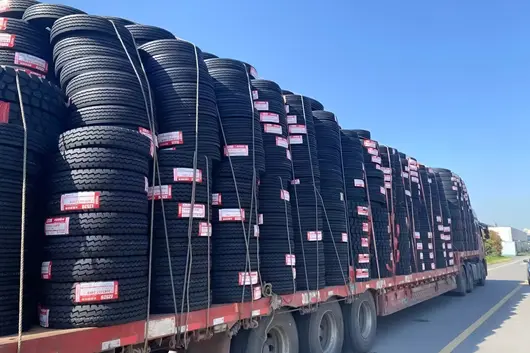


Thailand plans to implement a tiered consumption tax on electric vehicles, and the automotive trade environment in Southeast Asia is shifting significantly.
Author | Zhang Heng
In mid-October 2026, Thailand's Ministry of Finance released a proposal, planning to implement new rules for tiered electric vehicle consumption tax starting January 2027.
Specifically, for electric vehicle models with no local production arrangements that are directly imported as complete vehicles, the consumption tax will increase from the current 10% to not less than 30%. However, the proposal still needs to be submitted to the cabinet for review, and final implementation details still have a small margin for adjustment, but the policy direction is clear.
Thailand Tightens Electric Vehicle Policies
After the news came out, Chinese automakers had to start recalculating export costs and pricing ranges.
Specifically, this tax system is divided into three tiers based on the automaker's investment and local implementation status in Thailand: Automakers with factories in Thailand and meeting local component localization standards can continue to enjoy preferential low tax rates; Enterprises that have submitted a clear production schedule and are testing the market with a small number of imported models currently will apply to the middle tax tier; Brands with no implementation plans and relying on complete vehicle imports long-term will execute the highest tax tier.

It is worth noting that this adjustment concerns Thailand's domestic consumption tax, not import tariffs. Thailand relies on adjusting domestic tax systems to bypass tariff agreement constraints under the ASEAN Free Trade Agreement, thereby raising costs for pure trade models in a targeted manner and avoiding trade friction.
Thailand launched the EV3.5 support policy for the electric vehicle industry in 2024, this rule set is used to guide automakers to set up production capacity and raise local component localization standards. On June 30, 2026, the localization accounting rules were tightened. From this node, imported battery cells no longer count towards local component statistics, and the path for automakers to only import battery cells from overseas and pack them locally in Thailand to meet localization indicators is no longer feasible.
EV3.5 is also bound by a production offset mechanism. In 2026, for every 1 complete vehicle imported by automakers enjoying preferential treatment, they need to produce 2 vehicles locally in Thailand; in 2027, this ratio increases to 1 to 3. If automakers fail to complete the corresponding production tasks, the tax incentives received earlier will be reclaimed.
This tiered consumption tax proposal in Thailand is an additional tax burden constraint added on top of the EV3.5 localization assessment framework. The two policies form a progression, continuously compressing the living space for complete vehicle import models.

Data from Thailand's Department of Land Transport and the Industrial Federation shows that in the first seven months of 2026, newly registered pure electric passenger cars in Thailand reached 126,439 units, surpassing the full-year scale of 2025. Among them, 62.58% of pure electric vehicle models came from complete vehicle imports from overseas. Chinese brands hold nearly 70% of the local pure electric vehicle market share, MG, BYD, Wuling, and Chery are the brands with high local retail sales.
Trade structure dictates that Chinese export automakers bear the most direct cost pressure.

Thailand is a traditional automotive manufacturing hub in Southeast Asia. The automotive industry contributes about 2% of its GDP, and automotive exports account for 15% of Thailand's total exports. After the market opened to electrification, local electric vehicle terminal sales rose rapidly, but most of the incremental volume stayed at the sales end, while battery, core component capacity, and high-end employment remained overseas.
This tiered consumption tax proposal is not to limit electric vehicle consumption, but to use tax differences to screen manufacturers willing to invest in heavy assets, keeping the battery, component, and complete vehicle manufacturing supply chain in Thailand, and guarding its position as the Southeast Asian automotive manufacturing center.
Southeast Asia Trade Rules Tightening
Thailand's consumption tax proposal can be said to be another ring in the continuous tightening of policies in multiple countries in Southeast Asia in recent years.
Southeast Asia is the earliest overseas training ground for Chinese independent brand passenger cars. In the early years, Chery and Geely relied on geographical location and sea transport advantages to work out the whole set of models for CKD spare parts assembly and dealer channel construction. The channels and localized operation experience accumulated in Southeast Asia also became the foundation for subsequent Chinese automakers to expand into other overseas markets.

Looking at the overall Chinese vehicle export market, Southeast Asia is still a stable incremental sector for Chinese electric vehicles. In the first half of 2026 Chinese complete vehicle export destination list, the Philippines and Thailand stably entered the top ten; looking at the electric vehicle statistical category alone, Thailand, Indonesia, and the Philippines rank at the front for years.
In addition, Southeast Asia is also a mature RHD production capacity base. Produced models can be supplied to the Australia, New Zealand, and Commonwealth markets to share R&D and production line investment.
Looking at the entire Southeast Asian electric vehicle market, a clear tiered pattern has emerged. The market foundation of each country is different, and the industry development paths and policy orientations also differ.
Thailand belongs to the regional manufacturing hub, and is also the country where Chinese automakers have the most concentrated heavy asset implementation. BYD has built a large-scale complete vehicle production base in Thailand with an annual capacity of 150,000 units. Products cover local consumption and radiate to ASEAN and Australian markets; SAIC MG has deeply cultivated the Thai market for many years, maintaining a stable production and sales rhythm relying on local mature production lines; Great Wall Motor has acquired General Motors' idle complete vehicle factory area for renovation and production, successfully implementing local manufacturing capacity.
The automakers with implemented production capacity are less impacted by the consumption tax proposal. For brands that only import complete vehicles, the pressure will be directly manifested.

Indonesia and Malaysia belong to a group bound by resources and industry.
Indonesia holds nickel ore resources. The localization indicator of localization rate (TKDN) is rising year by year. The minimum is 40% in 2026, adjusted to 60% from 2027 to 2029, and the 2030 goal is 80%, aiming to open the closed loop chain of nickel, cathode, battery cells, and complete vehicles. Wuling's Cikarang plant in Indonesia started production as early as 2017. BYD has also laid out production lines in Indonesia. Pure complete vehicle imports have very little survival space here.
Malaysia ended the four-year tax-free period for electric vehicle complete vehicle imports on December 31, 2025. New regulations took effect in July 2026, setting a CIF price threshold of 200,000 Malaysian Ringgit (approximately 326,500 RMB) and a minimum 180kW motor threshold for imported electric vehicles. Low-priced imported models are basically kept out, guiding automakers to turn to spare parts assembly.
The Philippines is currently the most relaxed consumption market among major countries in Southeast Asia. There is no mandatory localization assessment, and it is also the single largest Southeast Asian country for Chinese complete vehicle export volume, with many trade orders concentrated here.
Vietnam is an independent closed-loop market. The local brand VinFast occupies the mainstream, supports its own charging network, and foreign brand expansion space is limited.

In the past few years, complete vehicle export was the preferred path for many Chinese automakers to enter the Southeast Asian market: complete vehicle manufacturing was completed domestically and then shipped, the model investment was light, the trial and error cost was low, and sales were opened up with cost-performance ratio. However, the continuously tightening localization regulations are gradually squeezing the profit space of this light asset model.
The overall demand for electric vehicles in Southeast Asia is still in the upward stage, and market penetration is lower than domestic, with significant long-term incremental space. However, consistent with the global trend in most regional trade, the dividend window for complete vehicle export is narrowing rapidly. In the long run, automakers who can stand firmly are mostly players willing to simultaneously implement the complete vehicle, battery, and component whole industry chain. [Copyright Notice] This article is originally created by "Auto People", owned by the publisher. Reprinting or partial copying is not allowed without authorization. Violators will be held responsible.

喺馬來西亞嘅 SUV 市場,好多買家喺揀車嘅時候都會拿 Toyota Harrier 同 Volvo XC60 PHEV 來比較。這兩款車喺價位同定位上都幾接近,而家我哋就從多個方面做一個詳細嘅對比,幫你節省咗做功課嘅時間。
Toyota Harrier 喺馬來西亞嘅 OTR 售價係 RM 289,000 - 289,000,合共有 1 個版本,包括 2026 HEV 2.5L Standard(RM 289,000) 等。
Volvo XC60 PHEV 喺馬來西亞嘅 OTR 售價係 RM 362,888 - 362,888,合共有 2 個版本,包括 2025 2.0T 89km Ultra(RM 362,888)、Volvo XC60 PHEV 有咩安全特點?(RM 296,610) 等。
由價錢睇落,Toyota Harrier 嘅入門價確實比 Volvo XC60 PHEV 平咗 RM 73,888。如果你預算唔多,Toyota 嘅入門版已經可以滿足日常需求。不過也要留意,平嗰啲幾千蚊,可能喺配備上會有取捨,具體要睇你嘅需求。
Toyota Harrier 嘅安全評級係 5★ (ASEAN NCAP),主動安全系統包括 Brand ADAS。
Volvo XC60 PHEV 嘅安全評級係 5★ (Euro NCAP),主動安全系統包括 Premium ADAS。
安全配備方面,兩款車都得到唔錯嘅評級。不過 Toyota Harrier 嘅 Brand ADAS 同 Volvo XC60 PHEV 嘅 Premium ADAS 喺功能上有啲差異,如果你比較重視主動安全嘅話,可以仔細對比一下兩者嘅功能列表。
Toyota Harrier 採用 FWD 驅動方式。
Volvo XC60 PHEV 採用 FWD 驅動方式。
兩款車嘅驅動方式一樣,都係 FWD,日常駕駛感受唔會有大分別。
Toyota Harrier 保用 5 年/無限制里程,保養間隔 每 10,000km 或 6 個月。
Volvo XC60 PHEV 保用 5 年/無限里程,保養間隔 每 10,000km 或 6 個月。
Toyota Harrier 同 Volvo XC60 PHEV 都係馬來西亞市場嘅主流選擇,適合家庭使用、日常通勤。如果你更重視品牌口碑同二手價,可以優先考慮口碑更好嗰款;如果你更在意性價比同配備,就揀配備更豐富嗰款。最終都係建議兩款都去試駕,親身體驗先係最重要。

總嚟講,Toyota Harrier 同 Volvo XC60 PHEV 都係馬來西亞市場好唔錯嘅車型。揀邊部車,關鍵都要睇你嘅個人需求同預算。建議大家做足功課,多比較幾間車行嘅報價,先去試駕做最終決定。買車係件大事,花啲時間做功課絕對無錯。

In Malaysia's SUV market, many buyers often use Toyota Harrier and Volvo XC40 for comparison. These two cars are quite close in price and positioning. Today we will do a detailed comparison from multiple aspects to save you time doing research.
The OTR price for Toyota Harrier in Malaysia is RM 289,000 - 289,000, totaling 1 version, including 2026 HEV 2.5L Standard (RM 289,000) etc.
The OTR price for Volvo XC40 in Malaysia is RM 278,888 - 278,888, totaling 1 version, including 2025 2.0T Plus (RM 278,888) etc.
Looking at the price, Volvo XC40's starting price is RM 10,112 cheaper than Toyota Harrier. Honestly, in this price range, a difference of a few thousand is not really significant, the key is to look at overall value for money and long-term usage costs.
Toyota Harrier is equipped with 2.0L Turbo, 220 hp. Official fuel consumption 9.5 L/100km.
Volvo XC40 is equipped with 2.0L Turbo, 220 hp. Official fuel consumption 9.5 L/100km.
Both cars use the same powertrain, the driving experience in daily use is basically the same. Fuel consumption is also similar, no need to worry too much about this.
Toyota Harrier Body length 4400 mm, Trunk 400 L.
Volvo XC40 Body length 4400 mm, Trunk 400 L.
Both cars are almost the same size, interior space differences are not significant. For cars in this class, it is more than enough for daily use.
Toyota Harrier adopts FWD drive mode.
Volvo XC40 adopts FWD drive mode.
Both cars have the same drive mode, both are FWD, there will be no big difference in daily driving experience.

Toyota Harrier and Volvo XC40 are both mainstream choices in the Malaysian market, suitable for family use, daily commuting. If you value brand reputation and resale value more, you can prioritize the one with better reputation; if you care more about value for money and features, then choose the one with richer configuration. Ultimately, we suggest test driving both cars, personal experience is the most important.

Overall, Toyota Harrier and Volvo XC40 are both very good models in the Malaysian market. Which one to choose mainly depends on your personal needs and budget. We suggest you do your research, compare quotes from several dealers, and then test drive to make the final decision. Buying a car is a big matter, spending time on research will never be wrong.
© 2024 Bitauto.com. All Rights Reserved.
Bitauto (www.yiche.com and www.bitauto.com) is one of the most visited automotive websites in China. We provide detailed info on Chinese car brands available in your area. Please note that the information provided on this website is based on publicly available data and is for reference only. It may not be fully updated or accurate at all times.

Help us improve our website


