

HomeLeapmotor C10

Search History
Popular Searches
Dealer Login / Sign Up

The 2026 Indonesia International Auto Show officially kicked off. Chinese smart electric vehicle brand Leapmotor appeared with global flagship models Leapmotor B10 and C10, announcing its entry into the Indonesian market. The simultaneous local KD assembly plant production plan is a significant milestone in Leapmotor's Southeast Asian localization production strategy. Leveraging full-domain self-developed technology and local channel resources, Leapmotor uses Indonesia as a core fulcrum to build a new energy industry layout covering the entire ASEAN region.
The B10 and C10 landing in Indonesia this time are strategic models built by Leapmotor for the global market, precisely aligning with the core needs of Indonesian family travel. Spacious interior space and a full suite of smart in-vehicle configurations have become the core competitiveness of the two models. Supporting the product differentiation advantage is Leapmotor's long-term full-domain self-research route. Core parts independently developed and manufactured by the brand account for over 65% of the total vehicle cost, covering key vehicle sections such as electric drive systems, power batteries, smart cockpits, and central electronic/electrical architecture. This highly vertically integrated self-research system not only continuously compresses R&D and manufacturing costs but also allows Leapmotor to quickly iterate electrification and intelligence technologies, providing product solutions adapted to local road conditions and driving habits for overseas markets.

Local manufacturing is Leapmotor's core lever for deep diving into the Indonesian market. Leapmotor reached deep collaboration with Indonesia's local top enterprise Indomobil Group, leveraging its subsidiary PT National Assemblers to build KD semi-knocked-down assembly lines. This production base located in Bekasi was completed for production and debugging as early as April 2026. The first batch of locally assembled B10 and C10 models will be officially delivered to Indonesian consumers in August 2026. With the Indonesian KD factory landing, Leapmotor simultaneously possesses two major Southeast Asian local production bases in Malaysia and Indonesia, becoming one of the few new energy vehicle enterprises in the region with dual KD manufacturing capacity. The local production model not only shortens vehicle delivery cycles and avoids cost pressure brought by whole vehicle import tariffs but also drives the development of the local automotive supply chain in Indonesia, creates a large number of technical jobs, and achieves two-way empowerment of brand development and local industrial upgrading.

A complete sales service network is an important support for overseas market development. Leapmotor leverages dual cooperation resources to build a service system covering all of Indonesia. On one hand, relying on Stellantis Group's mature brand house operation model, Leapmotor entered local Stellantis brand showrooms, displaying and selling alongside well-known models like Jeep and Citroën in the same store, creating a one-stop car viewing, buying, and maintenance service scenario. On the other hand, relying on Indomobil Group's distribution channels deeply cultivated in Indonesia for years, its subsidiary PT Indomobil National Distributor is fully responsible for retail layout. The brand plans to build 50 offline outlets integrating sales, after-sales, and maintenance in Indonesia by the end of 2026, eliminating channel concerns for local consumers purchasing new energy vehicles.

Entering the Indonesian market is also a key result of the landing of Leapmotor and Stellantis's global strategic cooperation. Both parties reached capital cooperation in 2023, and in 2024 formed an international joint venture focusing on overseas markets. Relying on multinational group global channel resources, Leapmotor products are now sold to over 40 countries globally, offline sales outlets exceeded 2,000, and global cumulative vehicle delivery volume exceeded 1.5 million units. Facing long-term development in Southeast Asia, Leapmotor has set a clear product iteration rhythm, planning to launch a new model for the ASEAN market every year, continuously enriching the pure electric and extended-range dual-line product matrix, covering consumer groups with different price points and usage scenarios.
The landing of this Indonesian market is not just a simple expansion of Leapmotor's overseas territory but also a brand new practice of the localization overseas model for Chinese new energy vehicle enterprises. In the future, Leapmotor will continue to deepen collaborative cooperation with Stellantis and Indomobil local partners, centered on the Indonesia manufacturing base, linking markets of various Southeast Asian countries, building a complete localized R&D, production, sales, service electric mobility ecosystem, letting Chinese new energy vehicles with both high cost-performance and cutting-edge intelligent technology benefit more ASEAN household users, continuously conveying a brand new lifestyle of green smart mobility.
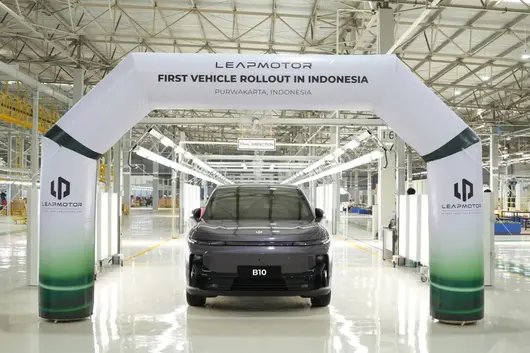

On July 24, at the GIIAS Indonesia International Auto Show, Leapmotor announced its official entry into the Indonesian market. Leapmotor's KD assembly plant, in cooperation with PT National Assemblers under the Indomobil Group, started operations in Purwakarta, West Java this April. The first batch of Leapmotor B10 and C10 units are expected to be delivered to Indonesian users starting in August.
 Light Asset Entry, Heavy Technology Backing
Against the backdrop of BYD's Subang plant putting 150,000 units of annual capacity into production and SAIC-GM-Wuling deepening its roots in Cikarang for many years, Leapmotor chose a differentiated light asset path, with its core chips lying in vertical technology integration. Leapmotor includes about 65% of core components in the total vehicle cost, such as electric drive, battery systems, and electronic/electrical architecture, into the self-research category. In this model, although only knock-down assembly is performed in Indonesia, core parts are supplied directly from the China headquarters. This effectively avoids quality control fluctuations caused by insufficient early localization rates and ensures the Purwakarta-made experience is consistent with the Hangzhou-made one.
 Channel Leverage, Avoiding Trial-and-Error Costs
Relying on Stellantis Group resources, Leapmotor will enter the Stellantis Brand House in Indonesia, sharing showroom traffic with Jeep and Citroën brands. Meanwhile, PT Indomobil National Distributor will undertake the national distribution task, planning to build 50 sales and service outlets by the end of 2026. The strategy of "leveraging the wall to take root" significantly shortens the market cultivation period. Under the current circumstance of Indonesia's after-sales infrastructure not yet being perfect, sharing the after-sales outlets of mature brands directly reduces consumers' purchase concerns and the brand's operational risks.
 Dual-Point Layout, Hedging Tariff Risks
With the Indonesian plant landing, Leapmotor has formed a dual KD pivot structure of the Malaysia Kulim Plant and the Indonesia Purwakarta Plant in Southeast Asia. This layout directly targets the complex Rules of Origin in ASEAN. Current Indonesian policy requires an EV localization rate of 40% in 2026, rising to 60% in 2027. Leapmotor meets the standard quickly through the KD model. Compared to the factory construction cycle of full processes that often takes 2 to 3 years, it secured at least an 18-month policy window period.
 Pricing Strategy Shows Cost Advantages
Prices announced on site show that the Leapmotor B10 Jakarta on-road price is 499 million Indonesian Rupiah (approx. 220,000 RMB), and C10 is 618 million Indonesian Rupiah. Combined with special discounts for the first 500 orders before the auto show, Leapmotor precisely cuts into the pure electric SUV consumption segment of middle-class families in Jakarta.
 An Attempt from Internal Competition to External Expansion
Currently, the market share of Chinese brands in Indonesia's new energy vehicle market exceeds 90%. Leapmotor's entry this time provides a new paradigm for going global: "full-domain self-research + local assembly + giant channel". Currently, Leapmotor's global cumulative deliveries have surpassed 1.5 million vehicles, with business covering more than 40 countries. The landing of this Indonesia KD project marks that its global expansion strategy is transforming from single-trade exports to a regional manufacturing center.
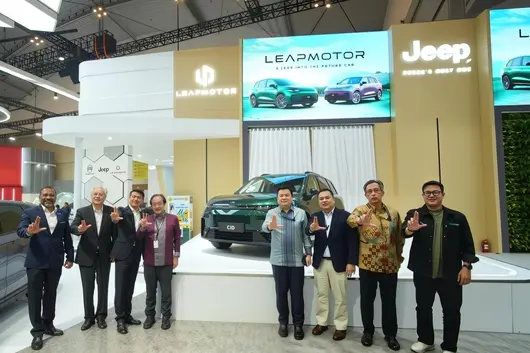

Pameran Automotif Antarabangsa Indonesia 2026 telah bermula secara rasmi, jenama kenderaan elektrik pintar China, Leapmotor melancarkan model utama globalnya, Leapmotor B10 dan C10, dengan persembahan yang besar, mengumumkan pelancaran pasaran Indonesia. Pelan pengeluaran kilang pengumpulan KD tempatan yang dijalankan serentak, merupakan kemajuan penting dalam strategi pengeluaran tempatan Asia Tenggara Leapmotor. Berdasarkan teknologi penyelidikan dan pembangunan sendiri menyeluruh dan sumber saluran tempatan, Leapmotor menggunakan Indonesia sebagai titik tumpuan utama, membina susunan perindustrian tenaga baharu yang merangkumi seluruh Asean.
Model B10 dan C10 yang dilancarkan di Indonesia kali ini adalah model strategik Leapmotor yang dibina untuk pasaran global, disesuaikan dengan tepat dengan keperluan teras pengangkutan keluarga setempat. Ruang dalaman yang luas dan konfigurasi kenderaan pintar yang lengkap menjadi daya saing teras kedua-dua model. Kelebihan pembezaan produk disokong oleh laluan penyelidikan dan pembangunan sendiri menyeluruh yang diamalkan secara konsisten oleh Leapmotor, komponen teras yang direka dan diperbuat sendiri oleh jenama tersebut mewakili lebih daripada 65% kos kenderaan lengkap, merangkumi sistem penggerak elektrik, bateri daya, kabin pintar, arkitektur elektronik elektrik pusat dan sektor penting kenderaan lain. Sistem penyelidikan sendiri yang terintegrasi secara menegak yang tinggi, bukan sahaja dapat menekan kos penyelidikan dan pembuatan secara berterusan, malah membolehkan Leapmotor melakukan pengulangan pantas teknologi elektrifikasi dan kecerdasan, memberikan cadangan produk yang disesuaikan dengan keadaan jalan dan tabiat penggunaan tempatan untuk pasaran luar negara.
Pengeluaran tempatan adalah tumpuan utama Leapmotor untuk mendalamkan pasaran Indonesia. Leapmotor mencapai kerjasama mendalam dengan perusahaan terkemuka tempatan Kumpulan Indomobil, berdasarkan talian pengumpulan komponen KD yang dibina oleh anak syarikat PT National Assemblers. Pusat pengeluaran yang dilaraskan di Purwakarta ini telah menyelesaikan pengoperasian dan penyetelan pada April 2026, baki pertama B10 dan C10 yang dikumpulkan tempatan akan diserahkan secara rasmi kepada pengguna Indonesia pada Ogos tahun yang sama. Dengan lokasi kilang KD Indonesia, Leapmotor serentak mempunyai dua pusat pengeluaran tempatan Asia Tenggara di Malaysia dan Indonesia, menjadi salah satu syarikat kereta tenaga baharu yang mempunyai kapasiti pembuatan KD ganda di kawasan tersebut. Mod pengeluaran tempatan tidak sahaja boleh mempersingkat tempoh penyampaian kenderaan, mengelakkan tekanan kos daripada duti import kenderaan lengkap, malah akan mendorong pembangunan rantaian bekalan sokongan automotif tempatan Indonesia, mencipta peluang pekerjaan berteknologi yang besar, mencapai pemupukan timbal balik bagi peningkatan industri tempatan dan pembangunan jenama.
Rangkaian jualan dan perkhidmatan yang lengkap adalah sokongan penting untuk membuka pasaran luar negara, Leapmotor menggunakan sumber kerjasama dwi untuk membina sistem perkhidmatan yang merangkumi seluruh Indonesia. Di satu pihak, berdasarkan model operasi Rumah Jenama yang matang kumpulan Stellantis, Leapmotor menduduki dewan pameran jenama Stellantis setempat, dipaparkan dan dijual dalam kedai yang sama dengan model terkenal seperti Jeep dan Citroen, membina skenario perkhidmatan satu stesen untuk melihat, membeli dan penyelenggaraan kenderaan; di pihak lain, berdasarkan saluran pengedaran yang telah mendalamkan Indonesia selama bertahun-tahun oleh kumpulan Indomobil, PT Indomobil National Distributor bertanggungjawab sepenuhnya terhadap susunan runcit, perancangan jenama merancang pada akhir 2026, membina 50 cawangan offline yang menyatukan jualan, selepas jualan dan penyelenggaraan di Indonesia, menghapuskan kebimbangan saluran pengguna tempatan dalam membeli kenderaan elektrik baharu.
Melancarkan pasaran Indonesia juga merupakan hasil utama langkah penting kerjasama strategik global antara Leapmotor dan Stellantis. Kedua-dua pihak mencapai kerjasama modal pada 2023, pada 2024 membentuk syarikat bersama antarabangsa yang berspesialisasi dalam pasaran luar negara, berdasarkan sumber saluran global kumpulan pelancongan lintas negara, produk Leapmotor telah dijual ke lebih daripada 40 negara di seluruh dunia, cawangan jualan fizikal mengatasi 2,000, jumlah penyampaian kenderaan global melebihi 1.5 juta unit. Untuk pembangunan jangka panjang Asia Tenggara, Leapmotor menyusun irama pengulangan produk yang jelas, merancang untuk melancarkan satu model baharu setiap tahun ke pasaran Asean, secara berterusan memperkayakan matriks produk untuk elektrik tulen dan julat tambahan, meliputi kumpulan pengguna yang berbeza dari tahap harga dan skenario penggunaan berbeza.
Penempatan pasaran Indonesia kali ini bukan sahaja pengembangan peta luar negara secara mudah bagi Leapmotor, malah merupakan satu amalan sepenuhnya baharu dalam model penembusan pasar luar tempatan syarikat kereta tenaga baharu China. Pada masa hadapan, Leapmotor akan memperdalam kerjasama serasi dengan rakan tempatan seperti Stellantis dan Indomobil, menggunakan pusat pengeluaran Indonesia sebagai teras, menyambungkan pasaran pelbagai negara Asia Tenggara, membina ekoseistem pengangkutan elektrik yang lengkap dengan penyelidikan tempatan, pengeluaran, jualan dan perkhidmatan, membolehkan kenderaan elektrik baharu China yang mempunyai nilai tinggi dan kecerdasan teknologi terkini, memberi faedah kepada lebih banyak pengguna keluarga di Asean, berterusan menyampaikan gaya hidup pengangkutan pintar hijau yang baharu.

24 Julai, semasa Pameran Kereta Antarabangsa Indonesia GIIAS, Kenderaan Leapmotor mengisytiharkan secara rasmi memasuki pasaran Indonesia.
Kilang perakitan KD yang bekerjasama antara Leapmotor dengan PT National Assemblers di bawah Kumpulan Indomobil Indonesia, telah mula beroperasi pada April tahun ini di Purwakarta, Jawa Barat.
Unit pertama Leapmotor B10 dan C10 yang keluar dari talian pengeluaran dijangka mula dihantar kepada pengguna Indonesia bermula pada Ogos.
Pendekatan Aset Ringan, Sokongan Teknologi
Dalam latar belakang kilang BYD Subang dengan kapasiti 150,000 kenderaan setahun beroperasi, dan SAIC-GM-Wuling yang sudah lama menguasai Cikarang, Leapmotor memilih laluan aset ringan yang berbeza, dengan tumpuan teras pada integrasi teknologi menegak.
Leapmotor memasukkan kira-kira 65% komponen teras dalam kos keseluruhan kenderaan, termasuk sistem pemacu elektrik, sistem bateri dan arkitektur elektronik, ke dalam skop penyelidikan sendiri. Di bawah model ini, walaupun hanya rakitan komponen berasingan dilakukan di Indonesia, komponen teras dibekalkan terus dari ibu pejabat China, yang dapat mengelakkan fluktuasi kawalan kualiti akibat kadar tempatan awal yang rendah, dan memastikan pengalaman Pembinaan Purwakarta adalah konsisten dengan Pembinaan Hangzhou.
Memanfaatkan Saluran, Elakkan Kos Percubaan
Bergantung pada sumber Kumpulan Stellantis, Leapmotor akan memasuki Stellantis Brand House di Indonesia, berkongsi trafik dewan pameran dengan jenama Jeep dan Citroën.
Seterusnya, PT Indomobil National Distributor akan melaksanakan tugas pengedaran seluruh negara, dengan merancang untuk membina 50 tapak jualan dan perkhidmatan sehingga akhir 2026.
Strategi 'Meminjam Dinding untuk Menanam Akar' secara ketara memendekkan tempoh penyediaan pasaran. Dalam situasi di mana infrastruktur pasca penjualan Indonesia masih belum sempurna, berkongsi tapak pasca penjualan jenama yang matang secara langsung mengurangkan kebimbangan pengguna dalam membeli kereta serta risiko operasi jenama.
Perancangan Dua Titik, Lindungi Risiko Cukai
Bersama operasi kilang Indonesia, Leapmotor telah membentuk pola titik sokongan KD ganda dengan kilang Kulim di Malaysia dan kilang Purwakarta di Indonesia di Asia Tenggara. Perancangan ini secara langsung menyasarkan peraturan asal ASEAN yang kompleks.
Dasar semasa Indonesia menetapkan, kadar tempatan kenderaan elektrik pada 2026 perlu mencapai 40%, dan pada 2027 akan meningkat ke 60%.
Leapmotor melalui model KD pantas mencapai sasaran. Berbanding kitaran pembinaan kilang penuh selama 2 hingga 3 tahun, ia memperoleh sekurang-kurangnya tempoh tetingkap polisi selama 18 bulan.
Strategi Harga Menunjukkan Kelebihan Kos
Harga yang diumumkan di tempat menunjukkan, harga siap jalan Leapmotor B10 di Jakarta adalah 499 juta Rupiah Indonesia (setara kira-kira 220,000 Renminbi), C10 adalah 618 juta Rupiah Indonesia.
Dengan diskaun khas untuk 500 tempahan terawal semasa pameran, Leapmotor berjaya memasuki secara tepat sektor perbelanjaan SUV elektrik tulen keluarga sederhana di Jakarta.
Cubaan Dari Persaingan Dalaman kepada Pengembangan Luar
Sekarang, sahat pasaran jenama China dalam pasaran kenderaan baharu elektrik Indonesia telah melebihi 90%.
Keterlibatan Leapmotor kali ini, menyediakan paradigma baharu untuk penjanaan antarabangsa 'penyelidikan sendiri + rakitan tempatan + saluran syarikat besar'.
Sekarang, jumlah penghantaran terkumpul Leapmotor di seluruh dunia telah melepasi 1.5 juta kenderaan, perniagaan meliputi lebih 40 negara.
Operasi projek KD Indonesia kali ini, menandakan strateginya untuk penjanaan antarabangsa sedang beralih dari eksport perdagangan tunggal ke pusat pembuatan wilayah.

July 2026, Leapmotor showcased the two global models, Leapmotor B10 and C10, at the 2026 Indonesia International Motor Show (GIIAS 2026), and officially announced entry into the Indonesia market. On the same day, Leapmotor and Indonesia's Indomobil Group jointly announced the official initiation of localized KD assembly production in Indonesia. Through deep cooperation with PT National Assemblers, a subsidiary of Indomobil Group, Leapmotor brings an excellent smart mobility experience to Indonesian consumers.
Dual Model Premiere, B10 and C10 Debuts in Indonesia

These two global strategic models showcased at the 2026 Indonesia International Motor Show this time—Leapmotor B10 and C10—both reflect Leapmotor's core advantage of "Full-domain independent R&D". Leapmotor independently develops over 65% of vehicle core components exceeding the total vehicle cost, including electric drive, battery system, smart cockpit, and electronic and electrical architecture. This high degree of vertical integration capability enables Leapmotor to continuously optimize costs from design to production and quickly drive technological innovation.
With the growing family vehicle demand in the Indonesia market, Leapmotor B10 and C10 will bring high-quality electric mobility experience to local consumers through rich intelligent configurations and outstanding space performance.
Localized Manufacturing Implemented, KD Factory Officially Begins Production

Leapmotor cooperates with PT National Assemblers, a subsidiary of Indomobil Group, and has currently initiated localized KD assembly production in Indonesia. The Indonesia KD factory officially commenced operations in April 2026. The first batch of Leapmotor B10 and C10 models off the line are expected to start delivery from August.

With the official production of the Indonesia KD factory, Leapmotor has formed a Malaysia-Indonesia localized manufacturing layout, becoming one of the few new energy vehicle brands in Southeast Asia possessing dual KD production bases, laying a solid manufacturing foundation for next steps radiating to the entire ASEAN market. Leapmotor's localization layout in Indonesia not only can quickly respond to market demand but also will create technical jobs for the locality and promote the localization development of the supply chain.
Dual Support from Stellantis and Indomobil, Building a Complete Sales Service System

Leapmotor regards Indonesia as an important base for manufacturing and growth in the Southeast Asia region. Leveraging the Stellantis Brand House (Stellantis Brand House) model, Leapmotor will sell in the same store as brands such as Jeep and Citroën, providing consumers with a one-stop sales and after-sales service experience. Benefiting from Indomobil Group's nationwide distribution network and retail system, Leapmotor's sales and network development locally will be handled by PT Indomobil National Distributor, and it plans to build 50 sales and service outlets in Indonesia by the end of 2026.
Leapmotor's entry into the Indonesia market is another important result of global strategic cooperation with Stellantis. Currently, Leapmotor's business has expanded to over 40 countries globally, possessing over 2000 sales outlets, and the global cumulative delivery volume has exceeded 1.5 million units. With the gradual promotion of localized KD production and the continuous enrichment of product lines, Leapmotor plans to launch a new model annually, continuously bringing more electric vehicle models equipped with cutting-edge technology to Indonesia and surrounding markets.
Leapmotor persists in full-domain independent R&D of core technologies. In the future, Leapmotor will continue to deepen strategic synergy with Stellantis and local partners, with Indonesia as a fulcrum, accelerate the construction of an electric mobility ecosystem covering Southeast Asia, and allow more consumers to enjoy the new life of green smart mobility brought by technology inclusiveness.
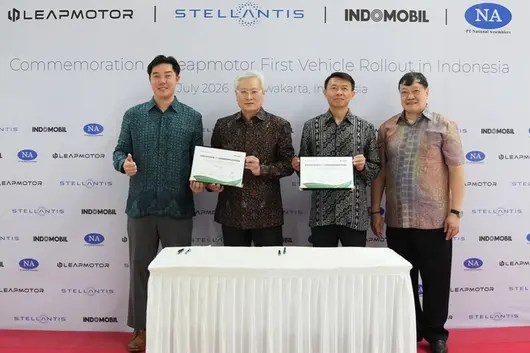

Julai 2026, Leapmotor mempersembahkan dua model global B10 dan C10, muncul di Pameran Automotin Antarabangsa Indonesia 2026 (GIIAS 2026), dan secara rasmi mengumumkan memasuki pasaran Indonesia. Pada hari yang sama, Leapmotor bersama Kumpulan Indomobil Indonesia mengumumkan secara rasmi memulakan pengeluaran pemasangan KD tempatan di Indonesia, dengan kerjasama mendalam bersama PT National Assemblers di bawah kumpulan Indomobil, memberikan pengalaman mobiliti pintar yang cemerlang kepada pengguna Indonesia.
Pelancaran Dua Model Serentak, B10 dan C10 Muncul di Indonesia
Pada kali ini, dua model strategik global yang dipamerkan di Pameran Automotin Antarabangsa Indonesia 2026—Leapmotor B10 dan C10, semuanya mencerminkan kelebihan utama penyelidikan dan pembangunan sepenuhnya sendiri Leapmotor—Leapmotor membangunkan sendiri lebih daripada 65% kos keseluruhan kenderaan komponen utama kenderaan, termasuk sistem pemacu elektrik, sistem bateri, kabin pintar dan arkitektur elektronik dan elektrik. Keupayaan integrasi menegak yang tinggi ini membolehkan Leapmotor sentiasa mengoptimumkan kos dari reka bentuk hingga pengeluaran, dan memacu inovasi teknologi dengan pantas.
Bersama keperluan kenderaan keluarga yang semakin meningkat di pasaran Indonesia, Leapmotor B10 dan C10 akan dengan konfigurasi pintar yang kaya dan prestasi ruang yang cemerlang, memberikan pengalaman mobiliti elektrik berkualiti tinggi kepada pengguna setempat.
Pelaksanaan Pembuatan Tempatan, Pengeluaran Kilang KD Dimulakan Secara Rasmi
Leapmotor bekerjasama dengan PT National Assemblers di bawah Kumpulan Indomobil, sekarang telah memulakan pengeluaran pemasangan KD tempatan di Indonesia. Kilang KD Indonesia telah mula beroperasi secara rasmi pada April 2026, batch pertama keluar dari talian pengeluaran model Leapmotor B10 dan C10 dijangkakan penghantaran bermula sejak Ogos.
Dengan pengeluaran rasmi dimulakan oleh Kilang KD Indonesia, Leapmotor membentuk struktur pembuatan tempatan Malaysia-Indonesia, menjadi salah satu daripada sedikit jenama kenderaan tenaga baharu di Asia Tenggara yang memiliki dua tapak pengeluaran KD, menubuhkan asas pembuatan yang kukuh untuk langkah seterusnya meluas ke pasaran ASEAN keseluruhan. Pelan strategik Leapmotor di Indonesia bukan sahaja dapat bertindak balas dengan pantas kepada permintaan pasaran, malah akan mencipta peluang pekerjaan teknikal untuk setempat, mendorong pembangunan rantaian bekalan tempatan.
Sokongan Berganda Stellantis dan Indomobil, Membina Sistem Jualan dan Perkhidmatan yang Lengkap
Leapmotor menganggap Indonesia sebagai asas penting pembuatan dan pertumbuhan di kawasan Asia Tenggara. Berdasarkan model Rumah Jenama Stellantis (Stellantis Brand House), Leapmotor akan menjual di kedai yang sama dengan jenama Jeep, Citroën, dll, memberikan pengguna pengalaman jualan satu henti dan perkhidmatan selepas jualan. Berkat rangkaian agihan dan sistem runcit Kumpulan Indomobil yang meliputi seluruh negara, jualan dan pembangunan rangkaian Leapmotor di setempat akan dipegang oleh PT Indomobil National Distributor, dan merancang mempunyai 50 pusat jualan dan perkhidmatan di Indonesia pada akhir 2026.
Leapmotor memasuki pasaran Indonesia, adalah satu lagi hasil penting dengan kerjasama strategik global Stellantis. Sekarang, perniagaan Leapmotor telah dikembangkan ke lebih daripada 40 negara di seluruh dunia, memiliki lebih daripada 2,000 pusat jualan, jumlah penghantaran terkumpul di seluruh dunia telah melebihi 1.5 juta unit. Dengan pelaksanaan produksi KD tempatan yang secara beransur-ansur dan menambah pelbagai barisan produk, Leapmotor merancang mengenalkan satu model baharu setiap tahun, terus memberikan lebih banyak model kenderaan elektrik yang memuatkan teknologi teraju kepada pasaran Indonesia dan sekitarnya.
Leapmotor berpegang pada penyelidikan dan pembangunan sepenuhnya sendiri teknologi teras. Pada masa hadapan, Leapmotor akan terus memperdalam penyelarasan strategik dengan Stellantis dan rakan kongsi setempat, menggunakan Indonesia sebagai titik tumpuan, mempercepatkan membina ekosistem mobiliti elektrik yang meliputi Asia Tenggara, membiarkan lebih banyak pengguna menikmati kehidupan mobiliti pintar hijau baharu yang dibawa oleh manfaat teknologi.













© 2024 Bitauto.com. All Rights Reserved.
Bitauto (www.yiche.com and www.bitauto.com) is one of the most visited automotive websites in China. We provide detailed info on Chinese car brands available in your area. Please note that the information provided on this website is based on publicly available data and is for reference only. It may not be fully updated or accurate at all times.

Help us improve our website


