

HomeMilestone

Search History
Popular Searches
Dealer Login / Sign Up

#30 Million Trust Walks with Quality #GAC Group Delivers 30 Millionth Vehicle #GAC Group 30 Million User Appreciation Event
On July 16, 2026, GAC Group officially welcomed the 30 million user milestone. After 29 years of deep dedication, from initial establishment to intelligent manufacturing breakthroughs, from local deep cultivation to global layout, the 30 million users' trust is both a heavy achievement in GAC Group's path of electrification and intelligence transformation, and a vivid microcosm of high-quality development of China's automotive industry and the upward breakthrough of independent brands. Taking this as an opportunity, GAC Group officially launched the 30 million user appreciation event, with full-series sincere gifts, ultimate quality strength, and all-domain thoughtful services to give back to every long-term trust.
Based on the industry change wave, GAC always adheres to long-termism and craftsmanship quality. In 1997, amidst outside skepticism, GAC took root in the automotive industry against the trend, walking out on the characteristic growth path of "small-scale start, low investment, fast output, rolling development", running out the eye-catching "GAC Speed": from 0 to 10 million vehicles took 20 years, while from 10 million to 30 million vehicles took only 9 years. Over 20 years of deep cultivation, GAC has accumulated the recognition of 30 million global users with ultimate quality control, hard-core technology, and solid services, building the core foundation of enterprise development.

Quality as the foundation, craftsmanship for long distance. GAC has built a full-link, high-standard product verification and intelligent manufacturing system. Every new car must go through "Two Winters One Summer" 18-21 months extreme environment verification, "Five Highs One Mountain One Dust" full-scenario strict testing, cumulative equivalent test mileage exceeding 13 million kilometers, covering high temperature, extreme cold, high altitude, sand dust and other extreme working conditions. Relying on global leading vehicle wind tunnel laboratories, the first airspace-approved southern comprehensive test site in China, and global new energy vehicle lighthouse factories, combined with over 600 industrial robots and AI visual full-process quality inspection systems, realizing vehicle manufacturing millimeter-level precision and key component full lifecycle traceability, guarding the quality bottom line from the source.

Safety and service dual support, casting long-term trust. On the technology level, GAC Mag Battery cumulative assembly 1.5 million vehicles, driving over 160 billion kilometers, Xingling Safety Guard System serving nearly 2 million users, cumulative avoiding 6.28 million potential risks. On the industry level, GAC was the first to launch independent brand "Three Responsibilities" service commitment, targeting three core pain points of three-electric spontaneous combustion, battery degradation, and smart parking accidents to provide bottom-line guarantees, breaking industry service boundaries. Relying on hard-core quality strength, GAC won the China Quality Award Nomination, its multiple brand models stable in the quality list and resale value list front, AION has topped new energy vehicle quality list for three consecutive years.


Customer-centric is GAC's unchanging development core. Relying on the "Panyu Action" deep reform, GAC completed a thorough leap from engineer technology thinking to all-domain customer thinking, building a full-process customer co-creation system. Through the "Users Open Mic" mechanism to face user car pain points directly, converting real demands accurately into the core direction of product iteration and service upgrade. At the same time, GAC continuously improves the all-domain service ecosystem. As of June 2026, 600 county-level service network recognition completed, this year will expand to 1000,打通 the service last mile of the down-market; layout "9 Vertical 10 Horizontal" national charging network, covering 213 cities, over 27,000 self-operated charging piles, core urban area realizes "1 kilometer charging circle", thoroughly alleviating new energy user charging anxiety. Online "Super Butler" 24-hour duty, 5-second response, 2-hour solve user demands, comprehensively improve car usage experience.

Tech empowerment product innovation, GAC continuously increases self-research investment, cumulative research and development investment over 62 billion yuan, patent applications over 24,900 items, built Star Spirit Architecture 4.0, Star River Smart Cabin, Star Source Power, Starship Body four core technology systems, realizing intelligence, power, safety, cockpit all-round advancement. Among them, with Huawei Qiankun jointly built high-end smart brand Qijing GT7, full series equipped with Huawei Qiankun Smart Driving ADS 5, setting high-end smart shooting brake benchmark; AION N60, Trumpchi M8 PHEV, GAC Toyota Breeze 7 and other six main models, relying on full-equipment strength, level-up experience to go offline simultaneously, with diversified product matrix covering all-circle layer user demands.


Deep cultivation local, layout global, GAC globalization development momentum is rapid. Relying on "One GAC 2.0" strategy, GAC realized from single product export to full value chain systematic overseas upgrade, business covers global 110 countries and regions, layout 7 overseas factories, 9 parts warehouses, 746 overseas sales service network points. In the first half of 2026, GAC independent brand export volume reached 121,500 vehicles, year-on-year surge 132%, close to 2025 full year export total volume, Thailand, Americas, Europe and other core overseas market sales continue to climb, becoming brand new growth curve. According to planning, 2030 GAC will cover global 120 countries and regions, build 2000 overseas network points, realize annual export sales 1 million vehicles, create China automotive globalization benchmark.
To thank the 30 million users' company along the way, July 16 - August 31, GAC Group brings GAC Honda, GAC Toyota, Trumpchi, AION, Hyper, Qijing six brands, launches all-dimension appreciation return gifts. New purchase users can enjoy model direct price drop, 0% interest finance, 5,000 to 50,000 yuan gradient subsidy; old owners trade-in can enjoy exclusive added subsidy, lock family exclusive welfare; family user additional purchase Qijing GT7 can enjoy exclusive rights, multiple welfare coverage new purchase, trade-in, additional purchase all scenarios, low threshold, high sincerity return millions of owners.
From one car to 30 million trusts, from product intelligence manufacturing to temperature companionship, 29 years of persistence and innovation, let cold industrial numbers precipitate into temperature brand assets. In the future, GAC Group will continue to adhere to long-termism, with quality as root, with customer as base, with innovation as wings, continuously deep cultivation technology, upgrade service, expand global layout, with millions of users side by side, run towards higher quality travel new journey.

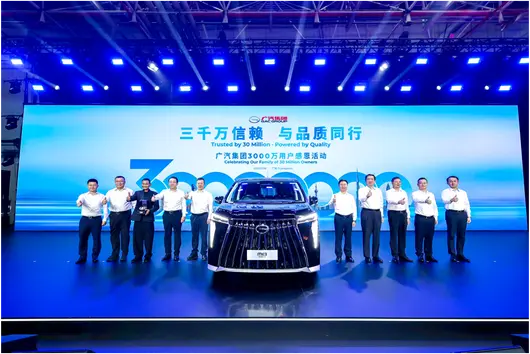
On July 16, the GAC Group 30-Million User Gratitude Event was held at the GAC Trumpchi factory. Leaders from Guangdong Province, Guangzhou City, and Panyu District, Fu Bingfeng, Executive Vice President and Secretary-General of the China Association of Automobile Manufacturers, GAC Group Chairman Feng Xingya, General Manager Ge Xianqing, as well as industry partners, suppliers, dealer representatives, owners from home and abroad, employees, and media representatives attended together, witnessing the milestone moment when GAC welcomed its 30 millionth user.

[Guests Witness GAC's 30-Million User Milestone Moment]
From the first completed vehicle rolling off the line to the delivery of the 30 millionth vehicle, GAC has experienced 29 years of development. Behind the figure of 30 million lies the choice and trust of millions of users, GAC's determination to uphold quality and safety in the long term, the determination to transform towards electrification and intelligence, and also a microcosm of China's automotive industry growing from large to strong, from scale expansion to value leap.
Global Sync: Intelligent New Energy Matrix Highlights Transformation Progress
At the event site, GAC's global multi-site production bases were connected synchronously. GAC Honda P7, GAC Toyota BZ7, Enlight GT7, GAC Aion N60, GAC Hyper S600 respectively rolled off the line sequentially as GAC's 29,999,995th to 29,999,999th vehicles. Finally, the right-hand drive version of GAC Trumpchi M8 PHEV made a shining debut on the event stage as the 30 millionth vehicle. The collective appearance of the full-line new energy vehicle off-line matrix became a direct confirmation of GAC's fast push towards electrification and intelligence transformation.

[GAC's 30-Millionth Vehicle — Right-Hand Drive GAC Trumpchi M8 PHEV Rolls Off the Production Line]

[GAC Intelligent New Energy Matrix Makes a Shining Debut]
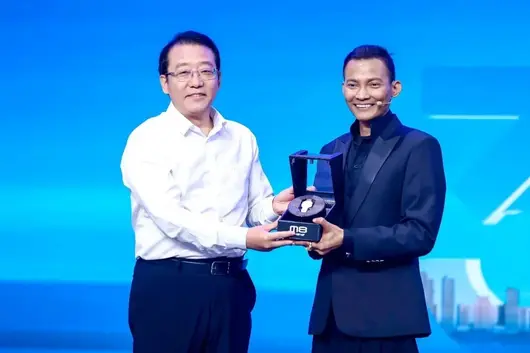
Subsequently, Feng Xingya handed the car key of the 30 millionth vehicle into the hands of Thai owner Mr. Tony Jaa. The moment frozen is not just a number, but a touching witness of GAC and global users' "two-way journey".

[Feng Xingya (Left) Delivers New Car Keys to Thai Owner Tony Jaa (Right)]

[Ge Xianqing (Far Left) Presents Awards to Honorary Owners of GAC Group All Brands]
This trust spanning mountains and seas is exactly the confidence of GAC breaking through in the industry changes. In the first half of this year, GAC Group sales were 773,100 vehicles, a year-on-year growth of 2.35%, among which new energy vehicle sales grew 68.8% year-on-year; overseas exports broke through 120,000 vehicles, a year-on-year surge of 132%, running out a steady pace during the industry's deep reshaping period.
Quality as Foundation: Strengthening the Confidence of 10 Million Users for Travel
"Quality is the bottom line GAC will never compromise on." Feng Xingya stated in the concluding speech. In GAC's development, scale growth has always been based on quality. For many years, GAC Group has always adhered to the concept of "Quality First", integrating Honda Total Quality Management (TQM), Toyota Production System (TPS), and Lingnan culture, building a quality management model centered on "Integration and Innovation". The landing point of everything is to build cars that users feel confident driving, worry-free using, and comfortable sitting in.

[Witnesses of GAC's Development History Milestones Share Stories of Walking with GAC and Quality]

["National Excellence Engineering Team" GAC Powertrain Independent R&D Team Shares R&D Innovation Journey]

[GAC Styling Design Team Shares Design Innovation Journey]

[GAC Aion Intelligent Eco-Factory]
From R&D end to manufacturing end, GAC has established a full-chain strict quality control system: Before every new car hits the market, it must undergo extreme environment tests such as high-cold, high-heat, high-altitude, high-humidity, high-corrosion, mountainous areas, and sandstorms, known as "Five Highs, One Mountain, One Dust", completing "Two Winters, One Summer" field road tests; by using testing grounds and laboratories covering 12 major vehicle items and over 1,500 verification sub-items, achieving systemized quality verification; GAC Aion Intelligent Eco-Factory, as the "Global's First New Energy Vehicle Lighthouse Factory", ensures mass product quality stability with a digital intelligent manufacturing system.

[GAC Star Link Safety Guardian System]
At the core safety technology level, the Star Link Safety Guardian System builds four protection dimensions, eight key systems adopt dual redundancy design, has already protected nearly 2 million users, avoiding 6.28 million potential travel risks; Danxia Battery cumulative vehicle assembly 1.5 million vehicles, safe driving mileage exceeds 160 billion kilometers; Service side simultaneous addition to guarantee, GAC pioneered the industry to launch autonomous brand "Three Responsibilities" policy, proactively underwriting battery and intelligent driving assistance issues users care about, dispelling user car use concerns. It is precisely these lines of safety defense and a series of service promises that support the brand confidence behind GAC's 30 million sales.
User-Oriented: Building a Warm Service System for the Full Lifecycle
"What users care about, we keep in our heart; what users expect, we go all out." Feng Xingya stated, this user-centric concept has long been deeply integrated into GAC Group's development gene. For many years, GAC Group has always adhered to the corporate concept of "People-oriented, Trust as Way, Innovation First", where the core meaning of "People-oriented" is being user-centric.

[GAC "User All Open Mic" Event Site]
On one hand, to face problems directly and listen to user voices, GAC holds the "User All Open Mic" activity regularly, inviting users to "home", communicating face-to-face. At the same time, establishing a full-process closed-loop management mechanism to ensure every suggestion can be properly handled, common issues optimized for all users immediately.
In addition, GAC also established an exclusive user insight department, promoted full-process change from problem discovery to solution, guaranteeing user demands have response in every matter from organizational mechanism, and every matter has a result.
On the other hand, service network synchronization accelerates penetration. On the channel side, promoting service network sinking to counties, planning to add construction of 1,000 county authorized stores this year; on the response side, launching "Super Butler" service, achieving 5-second response, 2-hour request completion, guaranteeing user demands reach direct fast handling. On the refueling side, building "9 Vertical 10 Horizontal" refueling network, already covering 31 provinces, 213 cities nationwide, core urban areas achieving "Straight 1km there must be a station", self-operated charging piles number exceeds 27,000, among which supercharging piles break through 20,000, providing convenient refueling service for new energy vehicle owners.

[GAC Energy "9 Vertical 10 Horizontal" Refueling Network]
The core theme of this gratitude event is precisely to send sincere feedback and thanks to 30 million users' long-term support. At the event site, Feng Xingya announced that from today, GAC officially launches "GAC Group 30-Million Vehicles Off-line · Renewal Gratitude Season", GAC Honda, GAC Toyota, GAC Trumpchi, GAC Aion, GAC Hyper, and Enlight Automobile six passenger car brands, will respectively launch characteristic policies around new purchase, trade-in to additional purchase, to return every companionship and support.

[GAC Group 30-Million Vehicles Off-line · Renewal Gratitude Season Officially Launched]
Tech-Centric: Empowering Real Travel with Frontier Technology
Taking 30 million as a new starting point, GAC will move towards a new journey of electrification and intelligence with innovation-driven, making frontier technology truly convert into user-perceivable peace of mind and convenience.
In the power field, Xingyuan Power developed by "National Excellence Engineering Team", covering Xingyuan Range-Extender, Xingyuan PHEV, and Xingyuan Twin-Engine three technologies, will be mass-produced on more models. Every product must pass 100,000 hours bench and vehicle verification, equivalent mileage exceeds 10 million kilometers, ensuring that under all scenarios, all regions, performance remains as steady as a rock.

[GAC Xingyuan Power Makes Users Choose "No More Settling"]
In the "Three-Electric" field, GAC continues to tackle industry pain points such as battery super-fast charging and low-temp range, has built an all-solid-state battery pilot production line, launched extreme energy consumption technology, mass-produced Quark Electric Drive Motor highest efficiency breaks through 99%, which is the highest level in the industry.
In the intelligent connected vehicle field, Super Brain Star Link Architecture continues to evolve, connecting intelligent driving assistance, intelligent cockpit, power, chassis, body, and internet vehicle six systems, achieving "One Brain Unified Command", comprehensive performance improved 40%; Galaxy Smart Cockpit achieves edge-cloud integration, making the car become a true "Thinks and Understands Hearts" partner. GAC will also fight side by side with top partners like Huawei, CATL, Didi, Tencent, Alibaba, etc., jointly building a more powerful AI intelligent ecosystem.
Up to now, GAC Group cumulative R&D investment exceeds 62 billion yuan, global R&D team exceeds 6,800 people. Continuous technology investment is pushing GAC's products to evolve from transportation tools to intelligent travel partners, mobile smart spaces, green energy ecosystems.
Facing the future, GAC will continue to take user needs as anchor point, quality as foundation, technological innovation as core drive, global layout as development path, accelerating towards eco-type tech GAC advancement, walking shoulder to shoulder with more users, achieving each other, jointly running towards a smarter, greener, and broader future.
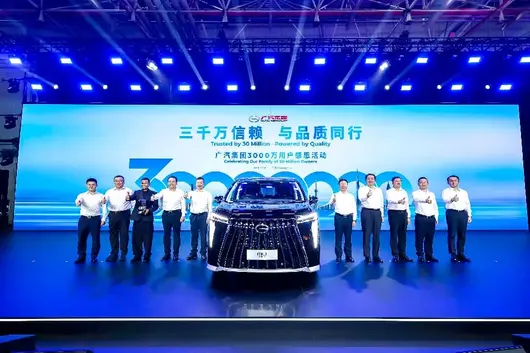
On July 16, as a right-hand drive GAC Trumpchi M8 PHEV slowly rolled off the production line, GAC Group officially reached the milestone of producing its 30 millionth complete vehicle. From the first complete vehicle rolling off the line to breaking through the 30 million mark, GAC has traversed a 29-year development journey. This number is not merely a report card on the scale of a car manufacturer, but also encapsulates the evolution of China's automotive industry: from starting with joint ventures and growing independently to breaking through in new energy globalization. In the current era of deep industry reshaping and escalating competition, GAC's 30 million moment combines the persistence of the manufacturing original intention with transformation strategies for the future, offering a referenceable practical path for the high-quality development of Chinese car companies.


The underlying support for the 30 million scale is the long-term persistence on quality and safety. As one of the earliest car companies in China to carry out joint venture cooperation, GAC systematically absorbed mature experiences of Honda's comprehensive quality management and Toyota's lean production in its early development, and combined it with its own practice for fusion innovation, forming a quality management system with unique characteristics. This quality gene runs through the entire chain from R&D to manufacturing. Before the launch of each new car, it must undergo extreme environment tests such as 'Five Highs, One Mountain, One Dust' (high cold, high heat, high altitude, etc.), complete 'Two Winters and One Summer' on-site road tests, covering over a thousand verification sub-items for the whole vehicle; at the production end, represented by the GAC AION Smart Eco Factory, digital intelligent manufacturing guarantees the stability of mass production quality, becoming the world's first new energy vehicle lighthouse factory. Safety technology and service guarantee are increased simultaneously, forming the second line of defense of quality. The eight key systems of the Xingling Security Guard System feature dual redundant designs, the Magazines Battery installed on 1.5 million vehicles with over 160 billion kilometers of safe driving, and the industry-first independent brand 'Three Responsibilities' policy, forming a complete closed loop from technology bottom layer to service bottom line. In the stage where China's car market shifts from incremental to stock, the core ruler of user choice is returning to the essence of products. GAC's 30 million user trust accumulated over 29 years is essentially holding the bottom line of manufacturing that 'quality is not waived', which is also the core foundation of China's automotive industry from becoming large to strong.
Another signal of this milestone ceremony is the comprehensive acceleration of GAC's electrification and intelligence transformation. The 29,999,995 to 29,999,999 complete vehicles shown on site are all new energy models, covering six brands: GAC Honda, GAC Toyota, GAC Trumpchi, GAC AION, GAC Hyper, and Qijing Auto; and the right-hand drive Trumpchi M8 PHEV as the 30 millionth vehicle was finally delivered to a Thailand owner's hands, linking the two major trends of new energy transformation and globalization going out. Data confirms the actual results of the transformation. In the first half of this year, GAC Group's overall sales were 773,100 vehicles, a year-on-year increase of 2.35%; among them, new energy vehicle sales increased by 68.8% year-on-year, and overseas exports broke through 120,000 vehicles, a year-on-year increase of 132%. Under the industry background where the fuel car market is generally under pressure, new energy and exports are becoming the dual engines pulling growth. This growth is built on long-term R&D investment. As of now, GAC's cumulative R&D investment has exceeded 62 billion yuan, and its global R&D team has over 6,800 people. From Xingyuan Power's three technical routes, to the Quark Electric Drive with efficiency breaking 99%, to the completion of the all-solid-state battery pilot production line and the continuous evolution of Xingling Architecture, technical reserves are gradually being converted into product competitiveness. Unlike the path of some car companies betting solely on independent new energy, GAC promotes dual-line transformation of joint ventures and independence, forming a collaborative and complementary new energy matrix. In the current situation where joint venture car companies are generally facing transformation pain, this model retains the quality and manufacturing advantages of the joint venture system, and uses the technology vitality of the independent sector to drive overall upgrades, exploring a feasible direction for the electrification of joint venture brands.
The accumulation of 30 million users further validates the industry consensus of 'user-centric'. Current car market competition has long extended from the product end to the full lifecycle experience, and user operation capability has become an important component of the brand moat. GAC's practice lands on mechanism and service ends. On the mechanism level, it regularly holds face-to-face exchanges of 'User Open Mic', establishes demand full-process closed-loop management, and sets up a dedicated user insight department, guaranteeing user voices reach the decision layer from the organizational structure. On the service network level, it promotes channel sinking to counties, plans to add 1,000 county-level authorized stores this year, launches 'Super Steward' to achieve rapid response, and improves user experience with efficiency improvement. To address the charging pain points of new energy users, GAC built a '9 Vertical 10 Horizontal' charging network, with over 27,000 self-operated charging piles, achieving 'a station within 1 kilometer straight line' in core urban areas, alleviating user anxiety with infrastructure perfection. From 'selling products' to 'operating users' is a common transformation direction in the industry, and GAC's practice shows that user operation is not marketing jargon, but needs to be implemented in a full chain from organization, channels to ecosystem. 30 million users are both the accumulation of past reputation and the starting point of the future user ecosystem. Only by truly placing user demands in the core position can scale effects be converted into continuous brand value.
Looking back at the node of 30 million vehicles, GAC's development track is a microcosm of the upgrade of China's automotive industry, from learning advanced manufacturing experience through joint ventures, to independent mastery of core technology to achieve overtaking by changing lanes, and then participating in global competition with new energy products. In 29 years, Chinese car companies have completed the leap from catching up to running side by side, and then to leading in some fields. Behind the number of 30 million is the era trend of the entire industry from scale expansion to value leap. 30 million is not the end, but the starting point of a new round of competition.
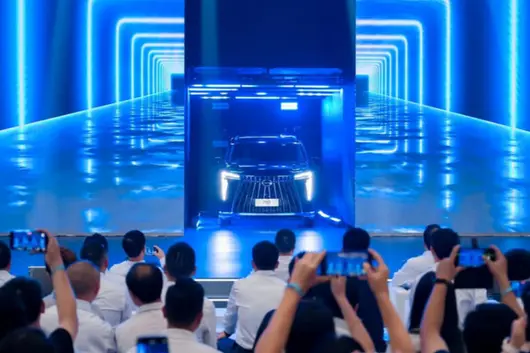

On July 16, GAC Group's 30 million user appreciation event was held at the GAC Trumpchi factory. From the first complete vehicle coming off the assembly line to the delivery of the 30 millionth vehicle, GAC has undergone 29 years of development. Behind this number 30 million is GAC's long-term determination to maintain quality and safety, the determination to transform towards electrification and intelligence, and also a microcosm of China's automotive industry growing from large to strong and from scale expansion to value leap.

At the event venue, GAC's global multi-site production bases were connected synchronously. GAC Honda P7, GAC Toyota Platinum 7, Enjun GT7, GAC AION N60, and GAC Hyper S600 came off the assembly line sequentially as the 29,999,995th to 29,999,999th vehicles of GAC. Finally, the right-hand drive version of GAC Trumpchi M8 PHEV made a dazzling debut on the on-site stage as the 30 millionth complete vehicle. The collective appearance of the new energy vehicles on the full line became an intuitive verification of GAC's full-speed promotion of electrification and intelligence transformation.

Subsequently, GAC Group Chairman Feng Xingya handed the key to the 30 millionth vehicle to Thai owner Mr. Tony Jaa. This moment not only froze a number but also the warm witness of GAC and global users "moving towards each other".

This trust spanning mountains and seas is GAC's confidence to break out in the industry transformation. In the first half of this year, GAC Group's sales volume reached 773,100 vehicles, a year-on-year increase of 2.35%, among which the sales volume of new energy vehicles increased by 68.8% year-on-year; overseas exports broke through 120,000 vehicles, a significant year-on-year increase of 132%, running a steady rhythm in the industry's deep reshaping period.

"Quality is the bottom line GAC will never surrender." Feng Xingya stated in the summary address. In GAC's development, scale growth has always been based on quality. From R&D to manufacturing, GAC has established a strict quality control system for the whole chain: before the launch of each new car, it must undergo extreme environment tests of "five highs, one mountain, one dust" including high cold, high heat, high altitude, high humidity, high corrosion, mountainous areas, and dust; complete "two winters and one summer" on-site road tests; using test grounds and laboratories covering 12 major categories and over 1,500 verification sub-items of the whole vehicle to achieve systematic quality verification; GAC AION Intelligent Ecology Factory, as the "Global First New Energy Vehicle Lighthouse Factory", guarantees stable mass product quality with a digital intelligent manufacturing system.

In the core safety technology level, the Star Intelligence Security Protection System builds four protection dimensions. Eight key systems adopt dual redundancy design, having protected nearly 2 million users and avoided 6.28 million potential travel risks; Magazine Batteries cumulatively equipped 1.5 million vehicles, with safe driving mileage exceeding 160 billion kilometers; the service side simultaneously increased guarantees, GAC launched the proprietary brand "Three Responsibilities" policy in the industry first, proactively providing a safety net for user concerns about batteries and intelligent driving assistance, dispelling user concerns about using cars. It is precisely these lines of safety defense and itemized service commitments that support the brand confidence behind GAC's 30 million sales.
"What users care about, we keep in mind; what users expect, we do our best." Feng Xingya stated. This user-centric concept has long been deeply integrated into the development gene of GAC Group. For many years, GAC Group has always adhered to the corporate concept of "People First, Trust as the Way, Innovation First", among which the core meaning of "People First" is putting users first.

On the one hand, to face problems directly and listen to the user voice, GAC regularly holds User Open Mic events, inviting users to "home" for face-to-face communication. At the same time, establishing a full-process closed-loop management mechanism ensures that every suggestion can be properly handled, and common problems are optimized for all users first.
On the other hand, the service network is accelerating penetration simultaneously. In the channel end, service network sinking to counties is promoted, with plans to build 1,000 county-level authorized stores in the year; in the response end, "Super Butler" service was launched, achieving 5-second response and 2-hour request handling, ensuring user requests are handled directly and quickly. In the charging end, "9 Vertical and 10 Horizontal" charging network is being built, already covering 31 provinces and 213 cities nationwide, achieving "a station every straight 1 kilometer" in core urban areas, with self-operated charging piles exceeding 27,000, among which supercharging piles exceed 20,000, providing convenient charging services for new energy car owners.
The core theme of this appreciation event is to pay sincere feedback and gratitude to the long-term support of 30 million users. At the event, Feng Xingya announced that effective immediately, GAC officially launches the "GAC Group 30 Millionth Vehicle Delivery • Renewed Gratitude Season", GAC Honda, GAC Toyota, GAC Trumpchi, GAC AION, GAC Hyper and Enjun Automotive six passenger car brands will launch characteristic policies around new purchase, trade-in to add-on purchase respectively, to reward every companion and support.

With 30 million as a new starting point, GAC will move towards a new journey of electrification and intelligence with innovation driving, making frontier technology truly transform into user-perceivable peace of mind and convenience.
In the power field, Star Source Power developed by the "National Distinguished Engineers Team", covering Star Source Extended Range, Star Source Plug-in Hybrid and Star Source Super Dual Engine three technologies, will be equipped in more vehicle mass production. Every product must undergo 100,000 hours of bench and whole vehicle verification, with equivalent mileage exceeding 10 million kilometers, ensuring that under all scenarios and all regions, performance remains as steady as a rock.

In the "Three Electrics" field, GAC continues to tackle industry pain points such as battery super fast charging and low-temperature range, having built an all-solid-state battery pilot production line, launched extreme energy consumption technology, the mass-produced Quark Electric Drive Motor maximum efficiency broke through 99%, achieving the highest level in the industry.
In the intelligent connectivity field, the Super Brain Star Intelligence Architecture continues to evolve, connecting six systems of intelligent driving assistance, intelligent cockpit, power, chassis, body, and vehicle networking, achieving "one brain unified command", comprehensive performance improved by 40%; Star River Intelligent Cockpit achieves Edge-Cloud Integration, making the car become a real "thinking, understanding people" partner. GAC will also fight side by side with top partners such as Huawei, CATL, Didi, Tencent, and Alibaba to build a more powerful AI intelligent ecosystem.
As of now, GAC Group's cumulative R&D investment exceeds 62 billion yuan, with a global R&D team exceeding 6,800 people. Continuous technical investment is pushing GAC's products to evolve from tools for transportation to intelligent travel partners, mobile smart spaces, and green energy ecosystems.
Looking to the future, GAC will continue to use technological innovation as the core driver, use global layout as the development path, accelerate towards eco-tech GAC advancement, and move towards a smarter, greener, and broader future with more users.

The long road is hard as iron, yet today we stride anew from the beginning.
The development of China's automotive industry, amid the backdrop where numerous global brands have already developed for decades to a century, has crossed numerous "iron passes" and paved a road of self-reliance: By the end of May, the Chinese automotive industry is about to cross a new milestone — SAIC Motor is about to deliver new vehicles to its 100 millionth user globally. This is a milestone as the first company in the history of China's automotive development to cumulatively produce and sell over 100 million vehicles, and has also become the eighth automotive group globally to achieve over 100 million in production and sales.

From "Crawling" to Leading
Today's "Made in China", which everyone is proud of, was not achieved overnight. SAIC Motor, the first to break the 100 million production and sales milestone, is also a microcosm of the history of China's automotive industry development — the accumulation of Chinese automotive enterprises all started from the most primitive tools. Taking SAIC Motor as an example: Calculated from the unveiling of the Shanghai Internal Combustion Engine Parts Manufacturing Company in 1955 to the successful trial of the first Phoenix sedan in 1958, it relied on automotive industry predecessors hammering out "handmade cars" in the most rustic alley workshops with hammers.
As the internet slang says, many things are "easy to understand from videos, but fail in practice". A car has tens of thousands of parts, relying solely on hammers and set squares is definitely not enough. By 1983, riding the easterly wind of Reform and Opening-up, SAIC pioneered the era of automotive joint ventures in China — Shanghai Volkswagen (predecessor of SAIC Volkswagen) assembled the first domestic Santana.

Of course, the current SAIC Volkswagen has entered the joint venture 2.0 era this year. The first range-extended flagship ID.ERA 9X, combining "German quality and Chinese wisdom", achieved a new "legend" of delivering 2,326 new cars in just 5 days since launch. But looking back, SAIC Motor went from nothing to something, from weak to strong, from "following and learning" to "innovation and leadership", over more than 70 years... The "process" is often not as exciting as it looks when the "result" explodes, but "excitement" without a "process" appears very thin due to lack of accumulation.
Today, SAIC Motor has built a global business landscape covering the entire industry chain. Vehicles, parts, mobility and services, finance, international operations, and innovative business major sectors are developing synergistically. Products and services are distributed across more than 170 countries and regions, entering the Fortune Global 500 21 times. It owns independent brands such as Roewe, MG, IM, Shangjie, Wuling, Baojun, Huajing, MAXUS, Yuejin, Sunwin, Hongyan, and IVECO, as well as joint venture brands such as Volkswagen, Audi, AUDI, Buick, and Cadillac, forming a full-domain product layout where passenger and commercial vehicles advance together, self-owned and joint ventures drive with dual wheels, and domestic and international markets progress side by side.

From Leading Domestically to Focusing Globally
The origin of Yangcheng Lake hairy crabs is very close to Shanghai, so actually Shanghainese love "eating crabs" more. Among Chinese automotive enterprises, SAIC Motor is a representative of "loving to eat crabs" — pioneering joint ventures, pioneering independent brands, pioneering overseas exports, pioneering overseas bases... Today, after eating so many "crabs", SAIC Motor has become a "crab-eating expert" — innovative leadership, and bearing fruit time and again: Production and sales have always led the domestic market, independent brands form a powerful growth pole, and "Going Out" allows the world to know Chinese cars.
In the just passed April, SAIC Motor achieved 328,000 unit total vehicle sales, continuing to be the sales champion among Chinese automakers. Under the relatively sluggish market in the early part of this year, SAIC Motor's cumulative sales in the first four months reached 1.302 million units. Among them, the independent brands performed exceptionally well. SAIC Motor Passenger Vehicles' sales surged by 40.4% in the first three months, IM Motors sales jumped by 96.9%. The proportion of independent brands under SAIC Motor in new car sales reached 67.6%, becoming the main growth pole. While leading in sales, SAIC Motor's Q1 2026 gross margin increased by 4.7% year-on-year to 12.83%; operating revenue was 138.52 billion yuan, up 0.61% year-on-year; net profit attributable to parents was 3.03 billion yuan, up 0.09% year-on-year; net cash flow from operating activities reached 31.99 billion yuan, surging by 699.67% year-on-year — the positive flow of benign cycle, reflecting that SAIC Motor is currently in a state of high-quality healthy development.

As one of the earliest Chinese automotive enterprises to "go out", since achieving passenger car exports for the first time in 2001, the current SAIC Motor's products and services are now distributed across more than 170 countries and regions, with cumulative overseas deliveries exceeding 7 million units.
More importantly, SAIC Motor has over 100 parts production bases and over 3,000 dealer networks overseas. Not only has it built 3 major R&D innovation centers including London, but it has also established 4 production manufacturing centers in Thailand, Indonesia, India, and Pakistan, as well as China's largest and globally leading self-operated vehicle logistics fleet.

In 2025, SAIC Motor officially released the overseas "Glocal Strategy", i.e., the "Global + Local" combination strategy. Relying on comprehensive and deep accumulation of new energy and smart connectivity technologies including solid-state batteries, it creates a full series of new overseas vehicle models, covering global mainstream sub-markets, and further building a global automotive brand and localized system ecosystem.
SAIC Motor's move is "eating crabs" again, wanting the world to know Chinese cars. Not only continuing to strive in total vehicle exports — 459,000 units in the first four months of 2026, surging 50.2% year-on-year. It also wants to achieve rooting in various important global markets like other global brands.

Taking another angle, it is not difficult to see from this year's Beijing International Automotive Exhibition that Chinese cars and Chinese technology have already caused a massive change in the entire automotive industry globally. Once "learning to walk", Chinese cars, precisely because of enterprises like SAIC Motor with deep accumulation and willingness to innovate, have already emerged in the global automotive industry.
The delivery of SAIC Motor's global 100 millionth new vehicle at the end of this month also adopts a global perspective: Shanghai North Bund World Living Room main venue as the origin, live signals will cross multiple continents, connecting delivery sites in multiple domestic cities and multiple foreign countries. At that time, brands under SAIC Motor will also make their full debut, becoming 1/100,000,000 of this historical moment... This is a historical milestone for China's automotive industry, and more importantly, a brand new beginning for "striding anew from the beginning"!
Author: Liu Jungang

On May 26, 2026, the National Intellectual Property Administration announced an invention patent—"A Method, Device, and Controller for Engine Diagnosis", applicant SAIC Group, publication number CN122082896A.
Two days later, on May 28, at the Shanghai North Bund World Living Room, SAIC delivered the first 100 millionth vehicle (IM LS9 Hyper) to Momenta CEO Cao Xudong. SAIC thereby became the first automotive group in China to exceed 100 million cumulative production and sales.
Notably, prior to reaching the 100 million milestone, the 99,999,999th vehicle of SAIC Group was the SAIC Volkswagen ID. ERA 9X. This model exceeded 7,000 deliveries just one month after launch, and in April, it ranked among the top 3 in the over 300,000 RMB extended-range large premium SUV segment. This is a brilliant achievement of the fusion of SAIC Volkswagen's "In China, For China" strategy and "Global Wisdom + China Speed".
The patent announcement and the 100 million delivery occurred in the same week; it is not entirely a coincidence.

What does 100 million vehicles mean? Over 70 years, nearly 4,000 vehicles produced per day on average. But what is more noteworthy is the structural change: The tens of millions added in recent years are mostly equipped with independent electronic control systems, capable of data collection and upload. They are scattered across over 170 countries and regions, driving in various real-world conditions such as plateaus, extreme cold, congestion, and high speeds. The engine operation data of every vehicle is a training sample in SAIC's R&D system; this is something no laboratory can replicate.
That engine diagnosis patent happens to provide a window for observation, pointing to a shifting logic: When a car manufacturer's cumulative ownership reaches the 100 million level, scale is no longer just a tool for diluting manufacturing costs, but will begin to feed back into technical R&D.
01 The Confidence of 100 Million Vehicles
To understand the technical meaning of 100 million vehicles, one must first look at how these 100 million were accumulated.
In 1958, Shanghai workers used hammers to produce the first "Phoenix" sedan, achieving a breakthrough from zero in Shanghai's car manufacturing. In 1983, the first Santana was assembled manually and rolled off the line, opening the era of joint venture cooperation and driving the establishment of a modern parts system. Over the following decades, SAIC deepened ties with Volkswagen, General Motors, etc., completing the original accumulation of manufacturing systems, supply chain management, and talent resources in the wave of "Market for Technology".
The real turning point occurred after the rise of independent brands. The Roewe brand was launched in 2006, the world's first internet car, Roewe RX5, debuted in 2016, and the premium intelligent electric brand IM Motors was established in 2020. By January to April 2026, SAIC had cumulatively sold 1.302 million vehicles, ranking first among Chinese car manufacturers for four consecutive months. Independent brand sales accounted for nearly 70%, overturning the past structure that long relied on joint ventures.

Meanwhile, SAIC's products and services have entered over 170 countries and regions, with cumulative overseas deliveries exceeding 7 million units. From the UK to Indonesia, from Thailand to Pakistan, SAIC has established 4 overseas manufacturing centers and 3 R&D innovation centers. SAIC Anji Logistics owns 42 ro-ro ships, with 8 international routes covering Southeast Asia, Europe, and the Americas.
Actually, more persuasive than the number itself of 100 million is the structural change. In 2015, SAIC's independent brand share was only about 38%, new energy share was almost negligible, and overseas sales share was about 10%. By the first four months of 2026, these three numbers had jumped to nearly 70%, 31.7%, and 35.3% respectively. This means that the tens of millions added to the 100 million in recent years are vehicles truly equipped with SAIC's independent electronic control systems, independent data collection architectures, and independent cloud platforms.

Over the past decade, SAIC has cumulatively invested more than 150 billion yuan in R&D, holding nearly 26,000 valid patents. Since the beginning of 2026 alone, nearly 100 new patents have been authorized. Behind these numbers is a "data-driven R&D" model that is taking shape.
Said plainly, SAIC's 100 million vehicles are the largest "mobile laboratory" in the world and the starting point of "data-defined technology". In the future, it will not be engineers guessing what problems users might encounter, but the operating data of users' vehicles directly telling engineers where the problem lies, what the priority is, and what the optimal solution is.
02 "Data Goldmine" in the Engine Diagnosis Patent
Returning to the patent itself, its technical solution doesn't sound flashy: Within a predetermined time period, when the conditions for both the first diagnostic strategy and the second diagnostic strategy are met simultaneously, only one fuel cut request is sent, and both diagnostic strategies are executed simultaneously within the same continuous time period where the engine is fuel-cut.

This effect has two layers: First, it can reduce the total number and duration of engine fuel cuts, thereby saving fuel consumption. Second, it can limit the diagnostic execution process to the shortest time period, reducing the duration of single fuel cuts, avoiding potential safety risks caused by fuel cuts lasting too long.
Traditional engine diagnosis adopts a "time-sharing diagnosis" logic. Simply put, it involves troubleshooting item by item. For each item checked, there is a brief fuel cut; there are many times and the duration is long. Previously, this might not have been obvious for fuel vehicles, but now hybrid vehicles frequently start and stop. Every fuel cut feels like a lurch in the car body, and power delivery lags half a beat. SAIC's patent solution is essentially merging multiple checks into a single fuel cut.

This solution works only if two capabilities are possessed: First, knowing which diagnostic items can be safely executed in parallel, meaning knowing which checks can be done together without issues; Second, setting the shortest and most appropriate time for each fuel cut for every engine model and usage scenario. These two capabilities both rely on sufficiently extensive real-world operating data. Laboratories may not be able to simulate all road conditions, but the real data generated by 100 million vehicles can.
This is what is called "scale feeding back into technology". 100 million vehicles generate data every moment. This data allows algorithm engineers to continuously optimize diagnostic strategies, and the optimized strategies are pushed to vehicles via OTA, bringing lower fuel consumption, a smoother driving experience, and more accurate fault diagnosis. Users barely notice the existence of the diagnosis, yet they genuinely enjoy the convenience brought by diagnostic optimization.
03 Why the Hybrid Era Needs More "Engine Understanding"
Against the backdrop of continuously rising penetration rates of pure electric vehicle models, a natural question arises: Why does a car manufacturer actively transforming towards electrification still invest resources to delve deep into engine diagnosis technology?
In 2025, SAIC launched the overseas "Glocal Strategy", and models equipped with the new HEV hybrid powertrain system will cover major global market segments. In March this year, MG held a technology day in Frankfurt, Germany, globally launching two core technologies: SolidCore semi-solid-state battery and Hybrid+ hybrid. The MG Hybrid+ hybrid technology, which balances low fuel consumption and high performance, has exceeded 20,000 units in overseas monthly sales. Meanwhile, SAIC's DMH Super Hybrid system has also been applied to multiple models including Roewe and MG, with its hybrid dedicated engine thermal efficiency exceeding 46.3%.
Similarly, including extended-range vehicle models, the EA211 Golden Range Extender equipped on SAIC Volkswagen ID. ERA 9X is essentially a high-efficiency engine power generation system. Its diagnostic strategy also requires precise control of fuel cut timing and duration. The ID. ERA 9X exceeded 7,000 deliveries one month after launch, indicating that user acceptance of this range-extending solution is not low, which also means the underlying engine diagnosis logic is being verified on a large scale.

One of the core technical challenges of hybrid vehicle models is the coordination of start-stop between the engine and the motor. Every start-stop involves the triggering and execution of diagnostic strategies. If the traditional "time-sharing diagnosis" logic is adopted, frequent fuel cut diagnostics will severely affect the smoothness of hybrid driving; users will feel inexplicable lurching or lag. At the same time, every fuel cut also means that the engine stops outputting power at that moment, and fuel economy will be discounted.
The characteristics of "reducing fuel cut times" and "shortening single fuel cut duration" in SAIC's patents are precisely to solve this major problem. This logic holds true for range-extender models as well. When the range extender starts, diagnostic efficiency directly relates to the smoothness of power generation.

From a broader perspective, internal combustion engines will not completely exit the historical stage due to electrification. Whether it is the demand for hybrid models in the European market or the preference for plug-in hybrid models by Chinese consumers, both point to the same conclusion: Engines will not disappear, but they will become more "intelligent". And what makes engines intelligent is precisely this data and diagnosis.
This also explains why SAIC's DMH hybrid dedicated engine could break through a 46.3% thermal efficiency. Optimizing solely at the mechanical level is actually approaching the physical limit. To break through further, one must rely on precise diagnosis and adjustment; every item depends on support from massive amounts of real-world operating data.

Standing at the new starting point of 100 million vehicles, the problem SAIC faces is direct: Can these massive data assets be transformed into perceptible user experience and technical barriers? The engine diagnosis patent is just a cross-section; it is small, but also deep enough. When technical competition shifts from hardware strength to algorithms and data, what determines victory or defeat may no longer be which company produced a better prototype in the laboratory, but which company's algorithm is more reliable in actual use.
100 million vehicles are not even the endpoint. They are 100 million data sources, 100 million units of user trust, and also the new starting point for SAIC to enter a new stage. From 1955 to 2026, the reason SAIC has lasted more than 70 years is not due to a hit vehicle model or a star technology, but the ability to understand technology and, more importantly, understand users.
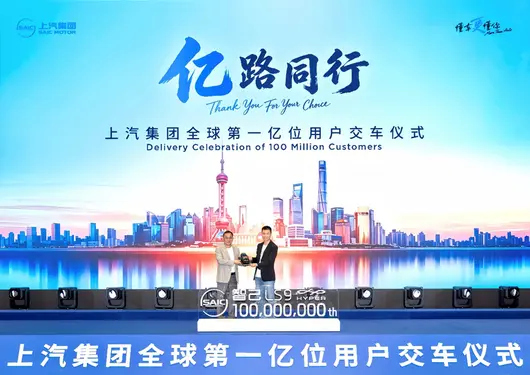

On the afternoon of May 28, 2026, at the World Living Room at North Bund, Shanghai, one IM LS9 Hyper was officially delivered, and SAIC Group welcomed its 100 millionth global user. Accompanying this "global relay delivery"—15 brands and 19 models under its umbrella were delivered synchronously both domestically and overseas—SAIC became the first automaker group in the history of China's automotive industry to accumulate production and sales exceeding 100 million vehicles, the eighth automaker globally to join the "Hundred-Million Club".

This is not a simple breakthrough of a set of sales figures. From the first Phoenix brand sedan hammered out by workers with hammers in 1958 to the cumulative global delivery of 100 million vehicles today, SAIC's growth trajectory of over 70 years is almost a microcosm of the entire Chinese automotive industry developing from nothing to something, and from weak to strong. What truly gives the 100 million vehicles industry research value is the full industrial chain system SAIC has gradually built over these years—coordinated operation of various sectors including complete vehicles, parts, mobility, finance, international operations, and innovative businesses, entered the Fortune Global 500 for 21 consecutive years, ranking 7th globally in 2025 with sales of 4.508 million vehicles, with a year-on-year growth of 12.33%.

100 million vehicles is a weighty threshold, but what deserves more attention than this number is the two fundamentals distinguishing SAIC from most domestic automakers: overseas layout and technology accumulation.

In terms of overseas markets, SAIC is one of the earliest and largest Chinese automotive enterprises to "go out." First achieving passenger car exports in 2001, now its products and services cover more than 170 countries and regions globally, and cumulative overseas deliveries exceed 7 million vehicles. Overseas, SAIC owns more than 100 parts production bases, over 3,000 dealer networks, built 3 major R&D innovation centers including London, and 4 production manufacturing centers in Thailand, Indonesia, India, Pakistan, and established China's largest self-operated vehicle logistics fleet. In 2025, SAIC's annual exports and overseas market sales reached 1.071 million vehicles, the MG brand ranked 1st in European sales among Chinese brands for 11 consecutive years, and entered the top 10 in passenger car market sales in 18 countries in regions such as Australia-New Zealand, Middle East, Latin America, Southeast Asia. During the 2025 Shanghai Auto Show, SAIC released Overseas Strategy 3.0 - "Glocal Strategy" (Global + Local combination strategy), planning to build 17 new overseas models including SUVs, sedans, MPVs, and pickup trucks in the next 3 years, gradually implementing HEV hybrid and solid-state battery technologies into global mainstream markets. From product export to value chain export, this road has taken more than 20 years, the system is built, the next step is to look at the brand power and depth of localized operations.

On the technology level, there are several key advances worth mentioning. In January 2026, the first mass-produced semi-solid-state battery model of the MG brand started delivery, to date, the delivery volume has broken through 1,000 units, the 2026 MG4 launched at the April 2026 Beijing Auto Show equipped with semi-solid-state battery, starting price under 70,000 yuan, bringing frontier technology down to the mainstream consumption market, which is rare in the industry. IM AD Intelligent Driving System cooperates with Momenta, has covered all five continents globally, including markets in Thailand, Mexico, UK, Australia, Nepal, Egypt, Singapore, Norway, New Zealand, UAE, etc., adopting a mapless end-to-end solution, possessing strong global scene adaptability. In addition, from a data perspective, SAIC's R&D investment in new energy and intelligent connected fields has accumulated to over 150 billion yuan, effective patents nearing 26,000 items, NEV sales share jumped from less than 0.1% in 2014 to over one-third in 2025.

Of course, 100 million vehicles is a reflection of historical accumulation, the real test lies in the upcoming market competition. SAIC internally calls this node the starting line of the second entrepreneurship, the direction is leaping from scale leadership to quality leadership, technology leadership, and ecosystem leadership. Previously, the comment of Cui Dongshu, Secretary-General of the China Passenger Car Association, also hit the key point: "'These 100 million vehicles are not the end point, but a springboard for China's automotive industry to create another glory'." China's automotive industry has moved from following to running parallel or even leading in local areas, whether SAIC can continue to produce competitive products on the three fronts of new energy, intelligence, and globalization is the key to determining how many years the next 100 million vehicles will take. But one thing is certain: When a car company experiences a technical transformation and global layout throughout a complete industry cycle, the system capabilities it accumulates cannot be measured by simple sales figures.
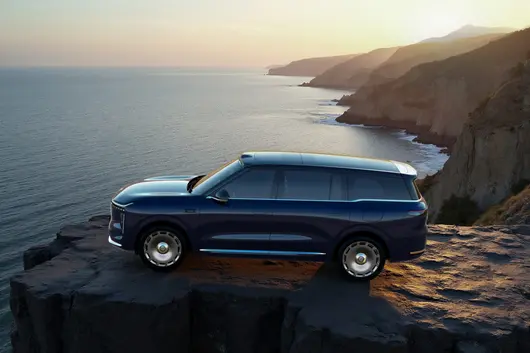


SAIC's "Small Goal", A Milestone of China's Automotive Industry
Written by | Daye
Edited by | Routers
On May 28, at the World Living Room of the North Bund in Shanghai, SAIC Motor (hereinafter referred to as "SAIC") grandly held the ceremony for delivering the vehicle to its global 100 millionth user. The 15 complete vehicle brands and 19 models under SAIC completed delivery synchronously in multiple cities nationwide and globally with the unique form of "Countdown + Continuous Delivery", and Dragon TV broadcast it globally throughout.
SAIC has become the first automotive group in the history of China's automotive industry to achieve a production and sales scale of 100 million vehicles while simultaneously achieving the delivery of the 100 millionth user. This time, SAIC also adopted a new form and new gameplay of "Global Relay Delivery" within the industry, and pioneered a new narrative method for Chinese car brands.
So, what kind of milestone did SAIC exactly cast for the development history of China's automotive industry? What does this historical achievement that leads the industry, as well as brand narrative innovation, mean?
To accurately answer these questions, we must return to the three internal logics behind SAIC casting the 100 million vehicle milestone—that is, what SAIC has done and done well in terms of users, brands, and technology—SAIC's continuous renewal and redefinition of user-centric enterprises, brand and trust assets, and technology and standards, to see clearly what new ideas and inspirations SAIC has brought for the future development path of Chinese automobiles.
I. The User Always in the Center
Throughout the entire live broadcast process, there were no speeches by leaders, no product presentations, nor product data displays, thoroughly saying goodbye to the fixed presentation mode of the "Enterprise Show" commonly seen in the industry in the past, and also placing the "User" in the absolute Center Stage of the delivery activity.
This attempt and innovation of global relay and online live broadcast delivery by users in multiple domestic locations and overseas countries has at least three highlights.
First, the essence of the delivery form innovation is the "return" of the user, this main character.
Unlike traditional enterprise press conferences which focus on leader speeches, product parameters, and highlight displays, this time SAIC left all the time of the event for the core action of "Delivery", allowing users to change from "Witnesses" to "Main Characters".
For example, from grassroots fighters to public welfare guardians, behind the delivery of every new car is a true and moving story: The bulk users of commercial vehicles cover logistics, infrastructure, public transport, and tourism; every commercial vehicle is a "wealth creation tool" for fighters; A public welfare blogger who cut hair and provided companionship to left-behind children in the mountains of Guangxi for five consecutive years was moved by the "Full Score Cockpit" of Buick Zhijing E7, etc.
These true life stories of these "Main Characters" gave exclusive memory and brand warmth to the cold industrial machinery and delivery numbers. Allowing users to become "Main Characters" from "Witnesses", what is delivered is no longer just a car, but a life story that is respected.
Secondly, the "Decentralized" global relay delivery is the release of user expression rights.
SAIC also broke the time-space limitations of a single stage, connected delivery scenes of different skin colors, different languages, and different car models through Dragon TV's global live broadcast. Under the same theme, including 19 models of 15 brands, wide coverage from 60,000 level to 500,000 level, completing marathon-style relay delivery from commercial to passenger use. This "Decentralized" process design makes every delivery site become an equal and transparent brand narrative node, and also makes every user a vivid and lively narrator of brand history and culture.
Thirdly, expand the concept of "User", from understanding the new generation to embracing ecosystem partners.
Car owners Yang Chen, the 99,999,999th, located at the Shanghai Anting delivery site, and Natalia, the 100,000,001th, an intern doctor, located at the UK London delivery site, witnessed the deep understanding, insight, and response capabilities of two international brands that have been deeply localized for many years—Volkswagen and MG—for the personalized needs of new era, new generation users.
Among them, the 100 millionth user who connects the past and future—IM LS9 Hyper car owner is Momenta CEO Cao Xudong. This exquisite arrangement and design profoundly interprets an ecological concept of beauty shared and mutual pursuit—in the smart electric era, enterprises, users, and partners are no longer the supply and demand relationship of the traditional industrial chain, but a value community of symbiotic growth.
In the opinion of Routers, the successful holding and format innovation of this delivery gala is also a dimension upgrade of the "Understand Cars, Understand You Better" brand and user concept proposed at the "2025 SAIC Night", and also a self-evolution and proactive renewal around building a user-centric enterprise.
Tightly focusing on the action of "Delivery", the event unfolded with "Users" as the main characters, is not only a vivid footnote to SAIC's deep transformation from "Manufacturing Enterprise" to "User-centric Enterprise", but also clearly conveys a signal to the outside world—that in the new era, SAIC possesses the underlying cognition and system capabilities to redefine and build a "User-centric Enterprise".
II. Trust is the Biggest Brand Asset
From "Product Delivery" to "User Return", essentially, this process is also a "Delivery of Trust". 100 million vehicles are not just production and sales numbers, but also a brand trust asset that has been continuously accumulated. Thus, what SAIC has built is far more than a milestone of the manufacturing system, but a dimension upgrade of a brand value logic set—centered on users, a review and renewal of brand trust assets.
This courage of bold innovation and sincerity of active dimension upgrade is also the confidence and confidence behind SAIC moving towards the next 100 million vehicles. This move achieved at least two significant effects that refreshed industry cognition.
First, such a "Cross-Space-Time" delivery, first in the industry, requires enterprises to have complete capabilities such as full brand matrix, full category products, global layout, and full industry chain system, all of which are indispensable.

Thus, SAIC concretely demonstrated the "Family Bucket" capability of mobilizing "Full Brand Matrix, Full Category Products, Global Layout, Full Industry Chain System". At the same time, it also proved to the outside world with actions that, so far, only SAIC possesses the scale and strength of "Global Relay Delivery".
Secondly, Product is History, User is History. Through the method of global live broadcast, the process of delivering every car to the hands of every user, actually, is also opening a "Miniature History of the Evolution of China's Automotive Industry" concretely to the global market through each user's concrete story and individual memory.
Thus, an innovation of brand narrative was achieved—from the one-way preaching mode commonly seen in traditional enterprise activities in the past, upgraded to a "Mobile Public Lesson" about SAIC or even the history of China's automotive industry.
From another perspective, what SAIC has accumulated over its 70-plus years of development history is already not just the brand assets built by the 15 brand matrix, but also the continuous accumulation of enterprise "Trust Assets". Thus, SAIC has also become a benchmark, demonstration, and sample for Chinese brands going global in 2026 to "Value Chain Going Global".
For example, in this delivery gala, independent and joint-venture brands under SAIC gathered, passenger and commercial vehicles advanced together, and domestic and overseas markets were linked, fully displaying a brand and enterprise "Trust Asset" that covers the widest age group, the broadest customer group, and the widest market.
This valuable trust asset has not only translated into SAIC's overwhelming lead in domestic sales, but also into its unparalleled performance and pioneering spirit in the overseas market.
Data shows that in January-April 2026, SAIC sold a cumulative 1.302 million units, ranking first among Chinese automotive companies in sales for four consecutive months. Among them, independent brand sales reached 910,000 units, accounting for nearly 70%; New energy vehicle sales reached 412,000 units, firmly maintaining the industry forefront; Overseas market sales reached 459,000 units, surging 50.2% year-on-year.

As the leading pioneer of Chinese car companies with the earliest steps and biggest strides going out, SAIC's influence globally is of course far more than the repeatedly broken sales records—Products and services spreading over more than 170 countries and regions around the world, cumulative overseas market sales breaking the scale of 7 million units, MG consecutive 11 years as the sales champion of Chinese brands in Europe, and the first Chinese car brand to break 1 million cumulative sales in Europe and the UK, is even more a systemic layout—SAIC has built more than 100 parts production bases overseas, more than 3000 dealer networks, possesses 3 major R&D innovation centers such as London, and 4 production centers in Thailand, Indonesia, India, Pakistan, and has formed China's first, globally leading independent vehicle logistics fleet.
The travel choices of 100 million families globally not only witness the growth and expansion of China's automotive industry, but also represent SAIC leading the output and expansion of Chinese automobiles facing globalization. The effective establishment and continuous renewal of this brand and enterprise "Trust" asset is the result of SAIC building a national brand with one hand and a global brand with the other, the two dialectically developing and complementing each other.
III. The Witness and Promoter of Technological Leap
Only with the big data demand mining and precise insight of 100 million+ retained users, and the brand "Trust Assets" built synchronously covering the whole country, the whole world, and even all age group users, can SAIC's full industry chain system and full value chain closed-loop underlying capabilities continuously promote every generation of technological leap, and achieve rapid mass production and implementation in all brands and all price bands.
Furthermore, every moment of fulfilling the original intention of "Understanding You" is also the continuous advancement and comprehensive implementation of SAIC's "Understanding Cars" capabilities—keeping pace with the times, continuously renewing the core capabilities of technology and product definition.
In every historical stage, in every window period of technological change, SAIC firmly holds the definition rights of technology and products.
From 1958, when SAIC workers hammered out the first "Phoenix" sedan with a hammer, achieving the "Zero Breakthrough" of Shanghai sedan manufacturing, to today's cross-border open cooperative ecosystem, SAIC collaborates and co-creates with Chinese Tech Companies such as Huawei Qiankun, Momenta, OPPO, Doubao, Horizon Robotics, etc., carrying out exploration and expansion of "Software Defined Vehicles". It can be said that the development history of SAIC,串连起来 by one by one technological leaps and mass production implementation, is a condensed history of technical progress in China's automotive industry.

This year, new products and new technologies released and launched by SAIC domestically and internationally, especially the new products with multiple brands, multiple categories, and diverse technological paths unveiled at this delivery event, also have the most concentrated and cutting-edge presentation.
For example, unlike the logic of localization and domesticization when global models were introduced to the domestic market in the Joint Venture 1.0 stage which used European and American technology and standards as a reference system, as the latest result of joint venture enterprises in the "Joint Venture 2.0" stage, new models such as Audi E7X, Buick Zhijing Family, etc., are all based on the current local supply chain of the Chinese market, and a deep co-creation with multinational partners covering intelligence, digitalization, and customization, becoming a vivid footnote of Chinese automobiles from "Market for Technology" to "Technology Co-creation".
For example, in 2025, the overseas "Glocal Strategy" (Global + Local) was released, and SAIC comprehensively promoted a strategic upgrade from product export to full value chain output, allowing "Made in China" to quickly go global.
Based on this strategic concept, in March 2026, MG globally premiered the SolidCore semi-solid state battery and Hybrid+ hybrid technology at Frankfurt, Germany, and landed in the European market. Currently, MG models equipped with Hybrid+ hybrid technology have surpassed 20,000 units in monthly sales overseas, becoming a new business card of "Made in China" in the overseas market.

For example, as the 100 millionth new car delivered this time, and also the focus of the entire delivery gala, IM LS9 Hyper is the collection of SAIC's 70-plus years of technological accumulation, and at the same time, it is also a top-level technology new flagship of the "Software Defined Vehicle" era.
The new car is fully equipped with the industry's most cutting-edge leading technologies in all dimensions such as power, chassis, smart cockpit, smart driving, safety, including Stellar Super Extended Range and Whole Domain 800V High Voltage Platform, Gecko Digital Chassis 3.0 and Three-Motor Vector Four-Wheel Drive System, Full Wire-Controlled Steering Technology, 520-Line Super-View LiDAR and Momenta R7 Smart Driving Large Model, as well as the "Intrinsic Safety" technology jointly developed by Zijinshan Laboratory, etc., becoming a hardcore footnote of Chinese car companies from "Following Running" to "Defining Standards".

As seen above, SAIC's three major "Technology Bases" in the three core technology fields of Smart Cockpit & Driving, Car Body & Chassis, and Power System—Smart Brain, Healthy Body, Powerful Heart, are not exhibits and samples staying in the laboratory, nor "Futures" in marketing and public relations rhetoric, but batch mass production and implementation across all brands and all price bands. At this point, SAIC has also walked out of the unique development path of "Defining Products by Technology, Verifying Technology by Blockbusters" and leads the industry.
Epilogue
Placed in the "Century-Old Unprecedented Changes" in the automotive industry, 2026 is the "Year One" of AI Agent entering cars, and also the year of the outbreak of Physical AI. At this time, SAIC welcomes the historic moment of delivering the first 100 millionth user, and also casts the first "100 Million Car Enterprise" milestone in the history of China's automotive industry.
Every leap of SAIC in the dimensions of users, trust, and technology is proving: Who can always stand on the user's standpoint to think and practice, who can accumulate trust assets through full industry chain layout, who can embrace new technology and define new standards with the times, who can stand at the forefront of history, know the origin, and understand the future.
For over 70 years, SAIC, relying on this vision, breadth, and temperament of embracing rivers and seas, has become the trendsetter of China's automotive industry, and is reshaping the new global coordinates of Chinese automobiles at this new turning point in the history of the global automotive industry.
-END-
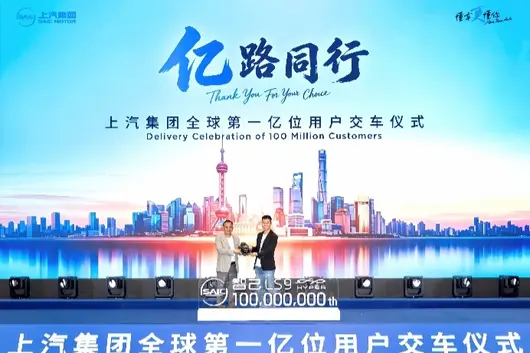

On May 28, 2026, the SAIC Motor Group's "Global 100 Millionth User Handover Ceremony" was held at the North Bund World Living Room in Shanghai. Over ten vehicle brands and nineteen models under SAIC, through "global relay delivery," crossed mountains and seas, spanned continents, and linked up globally. SAIC Motor Group thus became the first Chinese automotive group to break the 100 million cumulative production and sales milestone, casting a new milestone for China's automotive industry.

From "Phoenix" to "IM": 100 Million Units Witness the Striving and Original Aspiration of China's Automotive Industry
In 1955, the Shanghai Internal Combustion Engine Parts Manufacturing Company was established, marking the start of Shanghai's automotive industry. In 1958, workers hammered out the first "Phoenix" sedan, achieving a "zero breakthrough" in Shanghai sedan manufacturing. Over seven decades, SAIC has personally experienced and promoted the entire process of China's automotive industry from nothing to something, from weak to strong: In 1983, the first Santana was assembled and rolled out, opening the road of joint cooperation, and driving the establishment of China's modern automotive parts system; In 1997, Shanghai GM was established, creating the "Shanghai Speed" of 23 months from factory construction to car delivery, and simultaneously building China's first joint venture professional automotive design and R&D center; In 2006, the independent brand Roewe was born; In 2016, the world's first internet car Roewe RX5 was launched; In 2020, the high-end smart electric brand IM Motors was established, fully advancing into the smart and electrified era.
Underpinning this journey is SAIC's consistent user philosophy: "Know Cars, Know You Better." Knowing cars is the ultimate pursuit of core technology; knowing you is precisely landing every frontier technology into a perceived and enjoyable mobility experience for users. To practice this philosophy, SAIC has always gathered global wisdom with an open attitude of "beauty in unity": early on, deep cooperation with world-class vehicle and parts partners brought world-class quality mobility experiences to Chinese users; in the smart and electrified era, deep collaboration with top Chinese tech partners brings leading mechanical quality and smart mobility solutions to global users. From the Santana localization community to Joint Venture 2.0 technology co-creation, from internet cars to full-by-wire chassis, solid/semi-solid state batteries, and AI large models on board—each leap is an advancement in "knowing cars" capability and a continuity of the original aspiration of "knowing you". 100 million units is a measure of numbers, but also the concentrated fulfillment of trust from 100 million users.

100 Millionth Vehicle: IM LS9 Hyper, Gathering the Great Achievement of SAIC's 70+ Years of Technology
Amid the brilliant starlight of global relay delivery, the focus of the 100 Millionth Vehicle handover was set within the main venue of the North Bund World Living Room in Shanghai, where the IM LS9 Hyper made a shining appearance. The IM LS9 Hyper is precisely the culmination of SAIC's 70+ years of technological accumulation, pushing the strength of SAIC's flagship to a new height, and also opening a new era for new energy vehicle "new major components". It is equipped with next-generation chassis technology, the industry-first full-by-wire four-wheel steering; next-generation smart driving hardware, 520-line super-vision LiDAR + NVIDIA Thor chip, next-generation three-electric systems — global 800V high-voltage platform and Star Super Range Extension. It fully pre-embedded redundant capabilities for continuous evolution towards L3 and above high-end smart driving. At the same time, the IM LS9 Hyper is the first to equip SAIC's Golden Badge Hurricane Tri-Motor, comfortably joining the performance 3-second club; together with Purple Mountain Laboratories, it globally launched "endogenous security" technology, expanding automotive safety boundaries from "physical security" to "information and system security", becoming a necessary safety cornerstone for the AI era.

It is worth mentioning that the 100 Millionth User, Momenta CEO Cao Xudong, is precisely SAIC's core strategic partner in the field of smart driving. The smart driving technology jointly created by the two parties has empowered independent and joint venture brands, jointly driving the automotive industry to accelerate towards the vast world of smart mobility. This time "partner becomes owner", not only is it a satisfying delivery from manufacturer to user, but also a deep resonance between intelligent automotive ecosystem partners.
System Strength: Global Relay Delivery of SAIC's Full Brand Matrix
Behind the 100 million units is the deep industrial chain system and leading innovation chain layout built by SAIC over 70+ years of deep cultivation — covering six major sectors: vehicles, parts, mobility and services, finance, international business, and innovative technology, tightly collaborating, empowering each other, and integrated development, forming a full value-chain closed loop. This is where SAIC's core competitiveness lies.
Technological breakthroughs must ultimately translate into market recognition and user trust. Behind the 100 million units is SAIC Group's thorough accumulation of the strength of the full domain system. From January to April 2026, SAIC Motor Group cumulatively sold 1.302 million units, ranking first in China's auto sales for four consecutive months. Among them, independent brand sales were 910,000 units, accounting for nearly 70%; new energy vehicle sales were 412,000 units, firmly remaining in the industry's top tier; overseas sales were 459,000 units, surging 50.2% year-on-year.

At the delivery ceremony site, SAIC's full brands and full product matrix worked together to complete relay deliveries in many locations globally. Independent brands launched on all fronts, with both passenger and commercial lines advancing together: Shangjie Z7, Huajing S, Roewe M7 Black Horse Edition, MG4 Semi-Solid State Battery Edition, Wuling Starlight 560, Maxus eDeliver 5, Hongyan iJieshi, Yuejin Dan T1, Sunwin Pure Electric City Bus, IVECO Joystar EV, etc., were delivered successively, targeting diverse scenarios such as personal mobility, family life, commercial operations, urban traffic, and logistics transportation, achieving full product coverage.

Joint venture brands displayed "Joint Venture 2.0" results centrally: Volkswagen ID. ERA 9X, AUDI E7X, Cadillac Kaiweide, Buick Zhijing E7, Buick Zhijing Family, etc., all appeared on stage, becoming vivid footnotes to SAIC's role transition from "market for technology" to "technology co-creation". The Volkswagen ID. ERA 9X will globally launch first equipped with Momenta R7 Reinforced Learning World Model, with cumulative deliveries exceeding 7,000 units one month after launch; AUDI E7X plans to become the first model by Audi globally to achieve landing of L3-level autonomous driving; Buick Zhijing E7 is built based on the million-level "Xiaoyao" Super Fusion Architecture, with cumulative deliveries breaking 10,000 units one month after launch. In the Joint Venture 2.0 era, SAIC's technical role has moved from "local adaptation" to "technology definition".

Setting off from the Shanghai main venue, crossing the Eurasian continent, delivery scenes in Nanjing, Yangzhou, Liuzhou, Taiyuan and other domestic cities and countries like the UK, Indonesia, and Singapore were lit up successively, witnessed by a global audience through live streaming. This large-scale "Global Delivery Relay" with China as the origin and connecting the globe creates a flowing painting of the China's automotive industry's striving, and also pioneers a new narrative method for China's automotive brands.
From "Know Cars" to "Know You": A Delivery Ceremony Where Users are the Stars
Supporting this grand delivery was not only scale and systems, but also vivid users. The ultimate landing point of "Know Cars, Know You Better" is not technical parameters, not sales numbers, but the mobility life of every real user.
Tech self-media bloggers were moved by Huawei's smart driving in the Shangjie Z7; Luo Zhenyu, founder of the Get APP, was named Huajing S's No. 001 Experience Officer, from praising Huawei Qiankun Smart Driving in the annual New Year's speech to entering the factory to witness rollout; former German national team soccer player Yang Chen chose the ID.ERA 9X, because its Golden Range Extension and long-termism coincided; London intern doctor Natalia inherited her grandfather's MG sentiment; a couple returning to the country brought their MG memories from the UK back to China; automotive culture blogger Tang Xinzong faithfully reconstructed the Cadillac evolution road for 30 years; after Cao Kailiang's family ordered cars, his idol Jay Chou happened to become the Buick MPV family spokesperson; DHL, Jiading Bus, Henglongsheng Industry & Trade, Dishangtie, Henan Zhonglian Tourism, and other batch users covered logistics, infrastructure, public transport, and tourism, every commercial vehicle is a "wealth creation tool" for fighters; public welfare blogger Liu Jia continuously combed hair and accompanied left-behind children in Guangxi mountains for five years, Buick provided assistance immediately, he was moved by Buick Zhijing E7's "Full Score Cabin" — this original intention of protecting the micro-glows resonates with Buick Zhijing.

From self-media bloggers to national athletes, from couples returning home to village party secretaries, from public welfare guardians to logistics enterprises — every user is a microcosm of real life, and every car carries a unique life story. This is the most vivid interpretation of "Know Cars, Know You Better": SAIC not only understands technology, but also understands the life behind every user.

Global Layout: From Product Going Global to Value Chain Output
The delivery scenes spread globally during the ceremony also allowed people to see the deep foundation of SAIC's global layout. SAIC is the representative with the earliest steps and largest scale of "going out" among Chinese automotive enterprises. Currently, SAIC has over 100 parts production bases overseas, over 3,000 dealer networks, built three R&D innovation centers including London and four production and manufacturing centers in Thailand, Indonesia, India, Pakistan, and assembled China's number one, globally leading vehicle logistics self-operated ship fleet — Anji Logistics owns 42 various Ro-Ro ships, 8 international routes covering Southeast Asia, Europe, Americas and other major markets.
Today, SAIC's products and services have spread to over 170 countries and regions, with cumulative overseas sales breaking 7 million units. In the European market, SAIC MG has been the sales champion of Chinese brands in Europe for 11 consecutive years, with European annual sales breaking 300,000 units in 2025, becoming the first Chinese automotive brand to break one million cumulative sales in Europe and the UK; From January to April 2026, MG sold 120,000 units in Europe, up 22% year-on-year. In March this year, MG held a Technology Day in Frankfurt, Germany, globally launching SolidCore Semi-Solid State Battery and Hybrid+ Hybrid two core technologies, winning high praise from European media. MG Hybrid+ hybrid technology, considering both low fuel consumption and high performance, is deeply recognized by the market, with overseas monthly sales already breaking 20,000 units, becoming a new name card for Chinese intelligence manufacturing.
While leading the market with technology, SAIC is accelerating from "Product Going Global" to "Value Chain Going Global". MG is the first in the world to mass-produce semi-solid state batteries, IM IM AD Intelligent Driving System now covers five continents globally, overseas mobility i-Smart system global activation volume broke one million. In 2025, SAIC released the overseas "Glocal Strategy" (Global + Local), fully promoting the strategic upgrade from product export to value chain output, continuously improving the overseas product matrix covering SUV, sedan, MPV, pickup and other full categories, letting "Chinese Intelligence Manufacturing" further go to the world.

100 million units is a phased answer to SAIC's 70+ years of development, and is also SAIC's new starting line for "second entrepreneurial" towards the smart and electrified future. In 2014, SAIC actively implemented the important instruction "Developing new energy vehicles is the only way for China to move from a big car country to a strong car country", taking the lead in comprehensive transformation. Twelve years later, from "being in the lead" of smart and electrified transformation to "ten thousand horses galloping" of independent joint ventures, passenger commercial, domestic and overseas, SAIC will continue to take "Know Cars, Know You Better" as the user philosophy, letting technological innovation truly benefit every user.
From 1955 to 2026, from the first user to the 100 millionth user, from startup exploration to industry leadership — SAIC will continue to partner with global users and global partners for 100 million miles together, creating a new future for beautiful mobility.
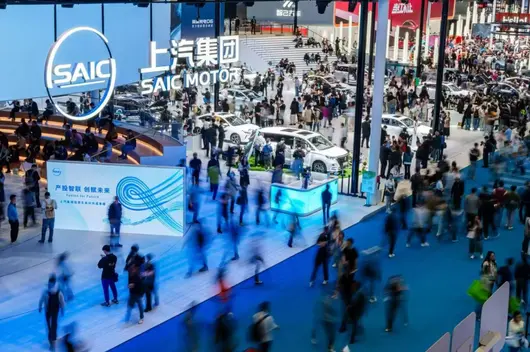

On May 28, 2026, the World Living Room at the North Bund in Shanghai witnessed a historic moment for China's automotive industry. SAIC Motor's '100 Millionth Global User Delivery Ceremony' grandly launched, relying on a global brand matrix covering the globe, initiating a global relay delivery across cities and continents. Thus, SAIC Motor officially became the first company in China's automotive industry with cumulative production and sales exceeding 100 million vehicles, setting a new record in China's automotive industry development, and carving a new milestone in the leapfrog development of the national automotive industry.

Behind the production and sales of 100 million complete vehicles is SAIC's unwavering commitment to industry over more than 70 years, the transformation upgrade from a stumbling start to global leadership, and the best witness of trust from tens of millions of users and partners walking globally. From hand-crafting the first sedan to mass-producing 100 million-level vehicles, from joint venture exploration to independent brand rise, from leading in traditional fuel cars to breaking through in smart new energy, SAIC has completely experienced and promoted the entire process of China's automotive industry from nothing to something, from weak to strong, from establishing itself domestically to roaming globally.
70 Years of Passing the Torch, Witnessing China's Automotive Industry's Striving Journey
SAIC's development context is a condensed history of China's national automotive industry growth. In 1955, Shanghai Internal Combustion Engine Parts Manufacturing Company was established, pulling open the curtain for Shanghai automotive industry development; in 1958, generations of automotive predecessors, relying on craftsmanship and perseverance, knocked out the first 'Phoenix' sedan with hand hammers, achieving a 'zero breakthrough' in Shanghai sedan manufacturing, planting the seed of original intention for the national car-making cause.

Since the Reform and Opening-up, SAIC has boldly stood at the forefront of the industry, leading the way in opening up to the outside world and innovation exploration. In 1983, the Santana officially rolled off the line, opening a new chapter for China's automotive industry joint venture cooperation, accelerating the industrialization and standardization process of domestic automobiles; in 1997, Shanghai GM landed and went into production, with a surprising speed of 23 months from factory construction to car production, creating the 'Shanghai Speed' renowned in the industry, setting new records for global auto companies' factory construction and production.

Entering the New Era, SAIC targeted the independent innovation track, continuously breaking technical barriers. In 2006, the independent brand Roewe was born, raising the flag of innovation for national automobile brands; in 2016, the world's first internet car Roewe RX5 was launched, leading the wave of automotive intelligent transformation; in 2020, the high-end smart electric brand IM Motors was established, precisely laying out the high-level smart electric track, assisting China's automotive brands in advancing towards high-end and technological levels.

Over 70 years of wind and rain, SAIC has always adhered to the core user concept 'Knows Cars, Knows You Better'. 'Knows Cars' means the extreme pursuit of deepening core technologies and polishing product quality, from Santana localization technology attacks to joint venture 2.0 era technology co-creation, to the landing of cutting-edge technologies such as full-steer-by-wire chassis, solid-state/semi-solid-state batteries, AI large model vehicle applications, etc.; every technology iteration shows hardcore car-making strength; 'Knows You Better' means always standing on user needs, converting cutting-edge technology into perceptible and experienced beautiful travel scenarios, letting technology serve people and technology warm the travel. The 100 million production and sales milestone is essentially the concentrated fulfillment of 100 million user trusts, the best proof of SAIC's unchanged original intention.
100-Million-Level Benchmark Model Lands, Gathering Industry Top Technology Achievements
The global 100 millionth vehicle delivered this time is SAIC's painstakingly crafted IM LS9 Hyper. This model condenses SAIC's 70+ years of car-making technology accumulation, is a masterpiece of brand technology iteration, officially opening the new era of new energy vehicles 'new three major components', redefining high-end smart electric travel standards.
In the core hardware layer, IM LS9 Hyper is equipped with next-generation top technology configurations, with strength reaching industry benchmark standards. Chassis level, equipped with the first-ever full-steer-by-wire four-wheel steering technology in its class, balancing handling precision and driving stability; Intelligent Driving level, equipped with 520-line ultra-vision LiDAR and NVIDIA Thor chip, building an all-around, high-precision intelligent perception system, fully pre-embedding L3 and above high-level intelligent driving continuous iteration redundancy capabilities; Three-electric level, relying on full-domain 800V high-voltage platform and Star Super Range Extender System, achieving dual breakthroughs in energy efficiency and range.

Performance and safety fields, the model has numerous highlights. The new car first equips SAIC Gold Badge Hurricane Three-Motor, successfully entering the Performance 3-Second Club, bringing ultimate driving experience; at the same time, collaborating with Purple Mountain Laboratories, globally launching 'Intrinsic Safety' technology, expanding the automobile safety boundary from traditional physical safety to information and system safety, building a solid foundation for automobile safety in the AI intelligent era, protecting users' all-scenario travel.
Worth noting is that the first 100 millionth user this time was Momenta CEO Cao Xudong. As a core strategic partner of SAIC in the intelligent driving field, the intelligent driving technology co-created deeply between the two sides has fully empowered SAIC's independent and joint venture multiple brands, realizing technology landing and user inclusiveness. The special delivery of 'Partner becomes Car Owner' is not only a simple new car delivery, but also a vivid embodiment of intelligent car ecosystem collaborative win-win and deep resonance of technology concepts.

Full Chain and Full Domain Empowerment, Building a Global Hardcore System Strength
The 100 million production and sales miracle is by no means a breakthrough of a single product or single market, but the concentrated manifestation of SAIC's full value chain, full brand, and global system strength. For many years, SAIC has built a complete closed loop of coordinated development of six major segments: vehicles, parts, mobility and service, finance, international operations, and innovation technology, forming a stable, efficient, and sustainable industrial ecosystem.
Market data confirms strong strength; January-April 2026, SAIC's cumulative sales reached 1.302 million units, ranking first in China's automotive industry sales for four consecutive months. Among them, independent brand sales were 910,000 units, accounting for nearly 70%, independent brand rise trend is significant; new energy vehicle sales 412,000 units, continuing to lead the new energy track; overseas market sales 459,000 units, a year-on-year increase of 50.2%, global development momentum is rapid.

During this global relay delivery ceremony, SAIC's full brand matrix appeared together and exerted effort in coordination. Independent brands fully covered diverse travel scenarios, Shangjie Z7, Huajing S, Roewe M7, MG4 semi-solid-state battery version, Wuling Starlight 560, Maxus eDeliver5, Hongyan Heavy Truck, etc., more than 10 models were delivered centrally, covering personal commuting, family travel, commercial operation, logistics transportation and other full-scenario needs. Joint venture brands heavily showed 'Joint Venture 2.0' innovation results, Volkswagen ID. ERA 9X, AUDI E7X, Buick Zhijing E7, etc., new models, relying on high-level intelligent driving, super architecture, ultimate cockpit advantages, were hot sellers from the time of listing, showing new vitality of joint venture transformation.
Starting from the Shanghai main venue, delivery signals were lit synchronously in Nanjing, Liuzhou, Taiyuan and other domestic multiple cities, as well as overseas countries such as UK, Indonesia, Singapore, creating a new narrative for China's automotive industry global delivery. As a pioneer of China's automotive industry 'Going Global', SAIC has deepened overseas markets for many years, laying out more than 100 overseas parts production bases, over 3000 global dealer networks, built 3 overseas R&D and innovation centers, 4 overseas production and manufacturing centers, relying on 42 roll-on roll-off ships, 8 international routes, building a global logistics system covering Southeast Asia, Europe, and America.
Currently, SAIC products and services are distributed in over 170 countries and regions worldwide, overseas cumulative sales exceeded 7 million units. The underling MG brand has ranked first in China's brand European sales for 11 consecutive years, leading the breakthrough of cumulative sales of over 1 million in Europe and UK markets. Relying on the 'Glocal Global Localization Strategy', SAIC is accelerating the leap from 'Product Going Global' to 'Value Chain Going Global', making China's smart manufacturing, China's standards, and China's services go to the world.
User-Centric, Writing a Warm Travel Report
70+ years of deep cultivation, SAIC has always adhered to the original intention of 'Knows Cars, Knows You Better', integrating user needs into R&D, production, sales, service full chain, making every product fit real life, every service warm user travel. This delivery ceremony, many users of different identities and fields became the best witnesses of SAIC's original intention.

Dedao APP Founder Luo Zhenyu in the capacity of Huajing S No. 001 Experience Officer, personally witnessed SAIC's car-making strength; Former National Team Player Yang Chen favored Volkswagen ID. ERA 9X's hardcore quality, consistent with the brand's long-termism concept; Public Welfare Blogger Liu Jia deep cultivated mountain area public welfare, moved by Buick Zhijing E7's full-score cockpit humanistic design; there are also countless ordinary users such as social media creators, village party secretaries, logistics practitioners, etc., choosing SAIC due to trust, rushing to walk together due to love. Every user's choice is a vivid interpretation of SAIC 'Knows Technology, Knows Life Better'.
100 million vehicles is SAIC's 70+ years of struggle and forward progress stage answer, more is the brand moving towards smart electric drive new era, starting a new starting line for 'second entrepreneurship'. Since 2014 leading the new energy transformation layout, SAIC has always closely followed national industry strategy, deep cultivating smart electric innovation, persisting in technology breakthrough, achieving the leap from single point breakthrough to full domain leading, forming a prosperous development pattern of independent and joint venture parallel, passenger and commercial coordination, domestic and overseas linkage.
From 1955 initial startup to 2026 100-million summit, from first user to 100-million users, from local exploration to global navigation, SAIC used over 70 years of time to write the striving legend of China's automotive industry. Standing on a new starting point, SAIC will continue to adhere to original intention, deep cultivate innovation, walk together with global users and industry partners on the 100-million journey, continuously empowering travel upgrades with hardcore technology, assisting industry takeoff with China's smart manufacturing, co-creating a new future of global beautiful travel.
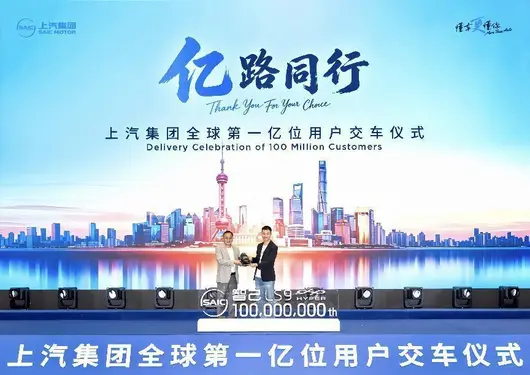

On June 9, Changan Automobile's Thailand Rayong Factory welcomed a crucial milestone in its development journey. The factory's 20,000th vehicle successfully went off the line, with the all-new Qiyuan Q05 (overseas name NEVO Q05) emerging as the undisputed main model. This achievement not only confirms the strong production capacity and market recognition of this overseas factory but also signifies Changan Automobile has formally completed the key transition from single-product exports to full industry chain globalization, writing a brilliant answer for Chinese new energy vehicles to deeply cultivate the Southeast Asian market.

As Changan's first overseas new energy vehicle manufacturing base, the Rayong Factory is located in the core area of Thailand's Eastern Economic Corridor. Since officially starting production in May 2025, it has always adhered to the construction philosophy of green and intelligent manufacturing, building a highly competitive modern car enterprise in Southeast Asia. The factory sets up five intelligent workshops: welding, coating, final assembly, engine, and battery assembly. The automation rate of core quality control workstations is as high as 90%, fully landing mature Chinese intelligent manufacturing standards overseas to ensure the quality level of every complete vehicle.
Now, the Rayong Factory has grown into Changan's manufacturing hub in Southeast Asia, a global right-hand drive vehicle supply base, and an overseas spare parts center. It can achieve localized production of multiple popular right-hand drive models such as Avatr 11/12, Deepal S05/S07, and Qiyuan Q05, building an integrated global service system of production, sales, and after-sales. Regarding capacity, the factory's first phase plans for an annual output of 100,000 units, with sufficient space for future expansion, potentially rising to a maximum of 200,000 units, enough to continuously meet the consumption demand of the Southeast Asian and surrounding markets.
Relying on the factory's localization advantages, the main model Qiyuan Q05 performed very brightly in the Thailand market. The car officially landed in the Thailand market this May. Within just three days of launch, orders exceeded 3,000 units, quickly gaining favor from local consumers with outstanding product strength. The hot sales of Qiyuan Q05 reflect from the side that Changan precisely grasped Southeast Asian user travel needs, and also allowed the Rayong Factory's capacity value to be fully released.
From production start to 20,000 complete vehicles going off the line, in just over a year, the Rayong Factory submitted an excellent scorecard. It is not only an important fulcrum of Changan's globalization strategy but also a microcosm of the Chinese automotive industry going global. In the future, Changan Automobile will continue to rely on overseas manufacturing bases, continuously output high-quality new energy products and advanced manufacturing technologies, constantly broadening the development landscape of Chinese car companies in the global market.

When SAIC Motor reached a cumulative production and sales breakthrough of 100 million vehicles, becoming the first member of the "100 Million Club" in the history of China's automotive industry, the spotlight should not only shine on the world's first smart car and high-end independent brand passenger cars, but also on the silent force that supported modern logistics, public transportation, and infrastructure pillars, and completed the five-vehicle relay delivery at this grand event — SAIC Commercial Vehicles segment.

In the second half of the hundred-year change in the automotive industry, the new energy transformation of commercial vehicles is not only a key battle for the "Dual Carbon" goals, but also the core ruler to measure a country's automotive industry green competitiveness. SAIC Commercial Vehicles, carrying five brands including Maxus, Yuejin, IVECO, Hongyan, and SINOWO, submitted a highly valuable report card: the overall new energy penetration rate reached 35%, leading far ahead of traditional commercial vehicle enterprises, and injecting powerful "green momentum" into SAIC Motor's 100 million monument with its full-scenario product matrix, global top partner endorsements, and full-dimension user ecosystem. Behind this number is the profound transformation of China's commercial vehicles from "scale expansion" to "value leadership".

Structural Leadership: How does 35% penetration break the commercial vehicle "high emission, difficult decarbonization" curse?
For a long time, commercial vehicles were regarded as a "hard bone" for new energy transformation due to complex usage scenarios, high cost sensitivity, and high range requirements. However, SAIC Commercial Vehicles proved that this "bone" could be chewed up with a 35% overall new energy penetration rate. This number far exceeds the industry average, marking that its new energy strategy has crossed the policy-driven stage and entered the "harvest period" driven by the market.
This leading position is built on a complete and layered technical implementation logic.

First, there is the saturated coverage of "all energy routes". Unlike some companies betting on a single technical route, SAIC Commercial Vehicles has achieved a comprehensive layout of fuel, pure electric, plug-in hybrid, range extender, and hydrogen fuel. Especially at the 2026 Beijing Auto Show, "Maxus Da Na Super Range Extender", the "industry's first super range-extending large light commercial vehicle" launched by Maxus, accurately cut into the core pain points of city distribution logistics with the "large battery + small range extender" collaborative mode. Its CLTC comprehensive range exceeded 1,260 kilometers, pure electric range 312 kilometers, and the energy consumption per 100 kilometers was as low as 2.65L. This technical "precision calculation" directly translates into the "economic account" in users' hands, which is the key to the large-scale popularization of new energy commercial vehicles.
Second, the "penetration rate flying together" of core brands. The 35% overall data is composed of a solid base formed by multiple points blooming across brands. SINOWO buses achieved 100% comprehensive electrification, becoming a benchmark for urban public transportation zero-carbon transformation; the Yuejin brand's new energy light truck proportion approached 57% in all of 2025, meaning that for every two light trucks sold, one was new energy; Maxus's domestic new energy penetration rate frequently broke through 50% in single months, especially in its traditional strong light commercial vehicle sector, achieving a switch from "quantity" to "quality". This full-brand collaborative penetration, rather than reliance on a single "sharp spear" advance, has built SAIC Commercial Vehicles' irreproducible systematic advantage.

Finally, deep co-research in the industrial chain. The strategic cooperation with CATL's "technical co-research, ecosystem co-construction" has allowed SAIC Commercial Vehicles to occupy the commanding height in the core battery link. The equipped CATL Tianxing battery not only has an extremely low failure rate of one in a billion levels, but also provides a cycle life of 7,000 cycles and warranty of 8 years or 600,000 kilometers, which hits the fundamental concerns of commercial vehicle users on "reliability and residual value". Solving user anxiety from the bottom layer technology, SAIC Commercial Vehicles' new energy leading is the successful conversion of technical dividends to market dividends.
From "Product Overseas Expansion" to "Solution Export": Brand Dimension War Behind Globalization
On the global automotive stage, the internationalization degree of commercial vehicles is a direct embodiment of measuring a country's automotive industry competitiveness. SAIC Commercial Vehicles not only leads the new energy transformation in the domestic market, but also reshapes the gold content of "Made in China" in the global market. The core of its globalization story has upgraded from early "selling products" to "exporting systems, standards, and ecosystems".
Data is the most intuitive proof. In 2025, SAIC Commercial Vehicles exported 103,000 vehicles overseas, with a year-on-year growth of over 25%, and light commercial vehicle exports ranked first among Chinese brands, with pickups ranking second. Entering 2026, this momentum has increased, with overseas sales breaking through 10,000 vehicles in April alone, a year-on-year increase of 40%. This is not only an increase in quantity but a qualitative leap. In markets such as Australia, Chile, and Malaysia, SAIC Commercial Vehicles' new energy products not only secured large orders but also occupied over 50% of the market share for pure electric commercial vehicles in Chile. This simultaneous breakthrough in developed countries and "Belt and Road" market lines proves that its products have reached global leading levels in quality, safety, and adaptability.
"Return orders" from global top customers are the best endorsement of brand power. At the SAIC Group 100 million vehicle delivery ceremony, international logistics giant DHL once again became the focus customer, receiving the Maxus delivered eDeliver 5. Since the cooperation in 2017, Maxus not only won DHL's largest procurement order in the European region but also became its preferred partner for global green logistics transformation. From DHL, FedEx, OnRoad, to SF Express, these industry giants who are picky about operating efficiency and TCO (Total Cost of Ownership) continuously choosing SAIC Commercial Vehicles is itself the highest evaluation of its product reliability, economic efficiency, and service support capabilities.

More worth noting is that SAIC Commercial Vehicles is completing the strategic dimension upgrade of the overseas expansion model. During the 2026 Beijing Auto Show, over 200 overseas dealers from more than 100 countries and regions gathered together to witness its four core strengths of "Quality, Technology, Ecosystem, Globalization". This marks that its overseas strategy has shifted from simple trade relations to a new stage of deep localization and full-scenario business solution export. By establishing overseas service centers, perfecting terminal sales networks, and initiating global modification ecosystem alliances, SAIC Commercial Vehicles is building a symbiotic and win-win global business ecosystem. It is not only selling a vehicle but exporting a green transport solution integrating vehicles, finance, services, and data. This transformation from "product output" to "capability output" is the inevitable path for China's commercial vehicles to truly walk to the center of the global stage.
Full-Scenario Coverage and User Value Reconstruction: From "Production Tools" to "Livelihood Partners" Dimension Upgrade
Commercial vehicles naturally have the attribute of "production tools", but SAIC Commercial Vehicles, by building a full-scenario product matrix and full-lifecycle user ecosystem, is redefining its social role. It is both the "wealth creation tool" of thousands of industries and the "warm partner" connecting livelihood.
In the product dimension, its coverage breadth is impressive. From heavy trucks supporting infrastructure projects, passenger cars serving city buses, to light trucks and light commercial vehicles deepening city distribution logistics, to pickups serving both commercial and outdoor needs, MPVs satisfying business and families, and even RVs carrying poetry and distance, SAIC Commercial Vehicles has built a full-scenario matrix of 7 car series. This "no blind spot" coverage ability enables it to provide highly customized solutions for different users. For example, in this 100 million vehicle delivery, IVECO Juxing EV broke through the mountainous passenger transportation range problem with its 100-degree large capacity battery, serving Henan Zhonglian Tourism; Hongyan i Jieshi Dump Trucks rode the complex road conditions of Shanxi with military-grade quality, escorting Hengtong Sheng Industry & Trade Company's infrastructure project. This precise scenario matching is the best embodiment of its product power.

In the value dimension, its service ecosystem construction goes beyond traditional buying and selling relationships. The "Lingju Capacity" built "Vehicle, Cargo, People, Data" integrated smart logistics ecosystem, and the "Star Plan" invested 15 million in farmer assistance funds, indicating SAIC Commercial Vehicles is thinking about how to help users better "make money". It is no longer passively providing transportation tools, but actively intervening in users' operation processes, lowering TCO through data empowerment and improving operational efficiency. Especially the "Star Plan" Motuo Action, assisted high-altitude area agricultural product transportation with pickup capacity, integrating commercial value and social responsibility, exploring a new path for rural revitalization of "Cars to the Countryside + Agricultural Products Going Up".
In the social responsibility dimension, its public welfare actions show enterprise warmth. Launching the AED Worry-Free Rescue Fund, creating the country's first commercial vehicle mobile AED public welfare fleet, this measure upgrades commercial vehicles from simple transport tools to mobile "Life Guardians". When vehicles become mobile emergency nodes, SAIC Commercial Vehicles' social value has achieved a qualitative leap. The landing of the 8S User Super Experience Center broke the traditional 4S Dealership boundary, providing integrated experiences of sales, service, ecosystem, and co-creation. This is itself a profound reconstruction of user relationships, shifting from the end of transactions to the starting point of relationships.
Conclusion:
SAIC Motor's 100 million vehicles is a period for an era, and more like a colon for the next journey. Behind this heavy milestone, SAIC Commercial Vehicles, with its 35% new energy penetration rate, full-scenario product strength, global brand influence, and warm user ecosystem, has strongly proved that it is not only the "ballast stone" for the group scale's summit, but also the "engine" leading the green transformation of China's commercial vehicle industry.
100 million users are not the end point, but a new starting point of trust. When the original intention of "serving livelihood, linking the world, driving the future" meets the era tide of new energy and globalization, SAIC Commercial Vehicles is driving China's commercial vehicle industry from scale leadership to value and brand full-range leadership with its systematic competitive advantages. On the map of the global green transport revolution, it has already become a key force that cannot be ignored.
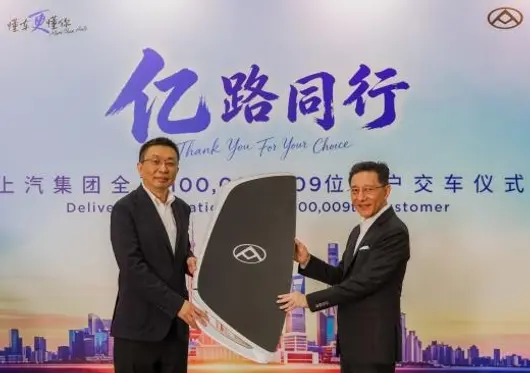


On May 28, 2026, with the formal delivery of the key to an IM LS9 Hyper model into the user's hands, the Chinese automotive industry welcomed an important milestone in its development process — SAIC Group's cumulative production and sales officially broke through 100 million vehicles, becoming the first domestic automotive group to achieve this level.
Just a few days later, SAIC Group released May sales data: single-month sales of 349,000 vehicles, cumulative Jan-May sales of 1.651 million vehicles, continuing to lead China's automotive industry. Independent brand share broke 70% for the first time, new energy vehicles surged 46.5%, and overseas sales surged 45.9%. The historical milestone and current leading trends together outline the complete picture of SAIC from past to present.

This is not a simple stacking of numbers, but an industrial narrative spanning more than 70 years: SAIC's growth trajectory has always resonated with China's industrial modernization process.
Relying on Shanghai, a century-old open port, and leveraging the open genes of the Huangpu River estuary, SAIC walked a unique advanced path for China's leading auto companies. Its development process can be divided into three stages: knowing the world, integrating into the world, and changing the world. This is not only the growth lineage of a company, but also accurately outlines the identity leap of China's automotive industry in the global landscape — from marginal participants to active integrators, and then to rule definer.
Knowing the World: Building a Foundation with Openness, Constructing the Underlying System of China's Automotive Industry
The beginning of China's modern automotive industry, core is a journey of learning outward and benchmarking the world. As early as the 1950s, China's automotive industry was still in a blank stage, Shanghai workers hand-built the first Phoenix sedan. Although the process was simple and capacity was limited, it sowed the seed of independent car manufacturing in China, entrusting the original intention of local manufacturing breakthroughs. And the real modernization transformation was achieved through systematic openness after reform and opening-up.

Unlike the shallow development model of "import and assemble, simple replication" in the early industry, SAIC took joint ventures and cooperation as a key opportunity to build a complete industrial ecosystem and solidify local car manufacturing capabilities from the beginning.
In 1983, the first Volkswagen Santana rolled off the line in Shanghai. Initially, the localization rate was less than 3%, almost relying entirely on imported knock-down kits. But SAIC was not satisfied with this. Under the state's clear requirement to "never settle for substitutes", it pushed to establish a rigorous parts certification system, forcing local suppliers to improve process standards.
Within a short few years, the Santana localization rate jumped to over 90%, directly driving hundreds of local suppliers to complete technical iteration and quality upgrade, successfully building the first domestic automotive supply chain system conforming to international standards, and completely ending the backward and scattered development situation of China's sedan industry.

This thought of "promote reform with openness, promote capability with cooperation" also became the core methodology of SAIC's steady development over decades. Whether establishing a joint venture with GM in 1997 or integrating Wuling to form the "China-Outside-China" model in 2002, SAIC always emphasized "initiative in cooperation": not passively accepting foreign technology input, but actively participating in product definition, manufacturing process, and localization adaptation.
For example, the Wuling Sunshine and Hongguang models launched by SAIC-GM-Wuling were not simple copies of foreign platforms, but were redesigned based on the actual needs of Chinese urban and rural users. Finally, relying on high adaptability and high practicality, they established themselves in the market, achieving the brand reputation of "What people need, Wuling makes".
The core value of this stage lies in SAIC laying the foundation of "system capability" for China's automotive industry. It proved that openness is the means, growth is the core; technology introduction is the starting point, independent self-sustaining is the ultimate goal.
Through deeply embedding into the global division of labor system, SAIC not only thoroughly understood complete vehicle manufacturing technology but also mastered the complete operational logic of large-scale complex industrial industries, covering R&D, procurement, production, and quality control across the full chain. This solid system capability also became the underlying support for SAIC's subsequent independent breakthrough and global layout.
Integrating into the World: Independent Breakthrough from Borrowing Ships to Go Global to Brand Globalization
Entering the 21st century, the global automotive industry landscape began to loosen, emerging markets rose, and the waves of electrification and intelligence first appeared. SAIC then faced a critical choice: continue to rely on joint venture dividends, or actively build independent brands? The answer was quickly revealed.
In 2004, SAIC started the Rover project. Although it did not complete the overall acquisition of the enterprise, it successfully obtained core car-making intellectual property, and launched the Roewe brand based on this foundation. This layout was regarded by the industry as a landmark event of "technological self-awareness" in China's automotive industry. Since then, SAIC completely got rid of foreign technology dependency, possessed its own product definition, technical iteration, and brand shaping capabilities, and was no longer the localization OEM of international car companies.
The return of the century-old British brand MG further improved SAIC's autonomous global layout. SAIC endowed MG with a brand new positioning of younger and electrification, making it the main brand for going global, thus starting a new stage of China's automotive deeply cultivating global mainstream markets.
Early China car companies going global mostly focused on trial in low-end markets and inventory clearance, lacking long-term planning. SAIC, starting from 2010, completely broke this model, elevating going global to a core strategy, no longer limited to developing country markets, fully advancing into Europe, Australia & New Zealand and other global mainstream mature markets, competing directly with international first-tier brands.
Market data was enough to prove its strength: In 2019, MG UK sales surpassed Honda and Mazda; in 2022, it joined the top ten in Europe's pure electric market; in 2025, one out of every three EV models sold in the European market came from MG.
Behind the bright results is the support of hardcore product power. MG4, relying on a pure rear-drive platform, high safety battery technology, and localization smart cockpit configuration, precisely fit European consumer demands, successfully established itself in the global mainstream new energy market.

More importantly, SAIC's globalization is not a single product export, but a complete systematic output. Currently, SAIC has already built modern production bases in countries such as Thailand, Indonesia, India, Mexico, arranged overseas R&D centers in London, Silicon Valley, Tel Aviv, and relied on SAIC Logistics' self-operated RoRo fleet to build an overseas industrial ecosystem integrating "R&D, production, sales, service, logistics". At the same time, adhering to global localization operations, optimize product configurations for different regional markets, such as local voice assistants exclusive to the India market, Brazil version MG ZS EV optimized tropical climate battery thermal management system, winning global user recognition through deep adaptation.
In this development stage, SAIC completed a major leap from "Made in China export" to "Independent brand globalization". It proved that Chinese car companies do not rely on low-price involution, but only by technical differentiation, ecosystem synergy capabilities, and refined localization operations, can they establish themselves in global mainstream markets, and also pave a new globalization path for China's automotive industry different from Japan and Korea car companies.
Changing the World: Hundred-Million Level Volume Starts a New Chapter, From Industry Follower to Rule Leader
The achievement of 100 million vehicles is, on the surface, a victory of scale, but in substance, a comprehensive leap of system competitiveness. Today's SAIC is no longer the student who needs to look up to international giants, but a leader who can reverse empower global partners and define technical directions.
The most significant change has occurred in the technical field. In the past, joint venture enterprises were the main channel for technology input; now, SAIC's independent innovation results feed back to joint venture brands.

In 2024, SAIC signed a deep cooperation agreement with Audi, not only jointly developing new cars but also setting up an Audi Innovation Technology Center in Shanghai, focusing on smart cockpits, electronic and electrical architecture, and advanced intelligent driving. This means that future Audi models will deeply integrate Chinese R&D technical modules. Similarly, Volkswagen ID.ERA 9X premiered the Momenta R7 World Model, and Audi E7X will become the world's first L3 level autonomous driving production model — these technical foundations all originate from SAIC and its ecosystem partners.
In May, SAIC's joint venture new energy also welcomed a strong recovery, joint venture new energy strong recovery in May. SAIC-GM new energy vehicles sold 13,000 units in May, soaring 75% year-on-year, with Zhijing E7 deliveries breaking 10,000 in the first month of listing. SAIC Volkswagen new energy vehicles sales reached nearly 10,000 units in May, increasing by 34.3% year-on-year; the newly listed ID.ERA 9X cumulative delivery exceeded 7,000 units; at the Greater Bay Area Auto Show at the end of May, Tiguan L ePro, Passat ePro equipped with brand new generation "Golden Super Hybrid" technology, and Audi Smart Performance Flagship SUV AUDI E7X were listed continuously.
In the new energy and intelligence track, SAIC's independent brands are even more at the forefront. In 2016, Roewe RX5, as the world's first Internet car, pioneered the trend of "software defined cars"; in 2024, "Zero-Burn Magic Cube Battery" won the National Science and Technology Progress Second Prize, solving the high-nickel battery thermal runaway problem; in 2025, MG became the world's first mass-produced semi-solid state battery car brand; in 2026, IM LS9 Hyper equipped with full steer-by-wire, Thor Chip, and Star Super Extended Range System, representing the highest level of China's high-end intelligent electric vehicles.
These are not isolated technical breakthroughs, but a complete technical stack covering batteries, electric drives, chips, operating systems, and AI large models, which are technical barriers difficult for opponents to copy.
Besides technology leading, SAIC's "Glocal" Global Localization Strategy is also reshaping operational rules in the global automotive industry. On the basis of unified global technical platforms, promoting localization agile iteration by adapting to local conditions, this development concept has been recognized and referenced by many multinational car companies. At the same time, SAIC built a complete industrial ecosystem covering intelligent driving, core computing power, and hydrogen energy by laying out high-quality enterprises such as Momenta, Horizon, and Jieqing Technology, forming a dual competitive advantage of "Complete vehicle manufacturing + Core ecosystem".

Standing on a brand new starting point of 100 million vehicles, SAIC will fully advance from "Scale leading" to "Ecosystem leading", thoroughly saying goodbye to extensive scale growth, focusing on three major core directions: high-quality going global, high-value brands, and high-resilience supply chain. The company officially announced that it will invest 300 billion yuan in R&D funds in the next five years, with 70% of resources key investing in electrification, intelligence, and internationalization core tracks. This is not only the enterprise's strategic choice, but also a firm bet on the future direction of China's automobiles.
Conclusion: 100 Million Vehicle Journey, Writing the Era's Answer of Made in China
From hand hammering by the bank of Huangpu River to user delivery in over 170 countries globally; from the localization breakthrough of Santana to the technology leading of IM high-end intelligent electric vehicles, SAIC's 100 million vehicle journey is the microcosm of China's automobile from weakness to strength.

It tells us: True industrial rise does not lie in temporary scale explosion, but in whether it can build sustainable system capability; True globalization does not lie in how many cars are sold, but in whether it can export technology, standards, and values; True independent innovation does not lie in working in isolation, but in integrating global resources with an open mindset, and then reconstructing value chains with local wisdom.
Today, standing on the new starting point of 100 million vehicles, SAIC's mission has gone beyond the enterprise itself. What it represents is the possibility of Made in China from "Following run" to "Parallel run" to "Leading run". This 100 million vehicles is also a powerful answer to the historical question of "Can China build a car powerhouse".
The future has come. This time, China is no longer just the world's factory, but the definer of future mobility. And SAIC will also continuously rely on technical innovation and global layout, continuing to write a brand new chapter belonging to China's automobiles.
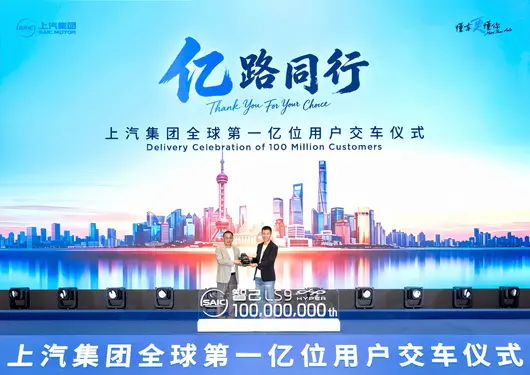
© 2024 Bitauto.com. All Rights Reserved.
Bitauto (www.yiche.com and www.bitauto.com) is one of the most visited automotive websites in China. We provide detailed info on Chinese car brands available in your area. Please note that the information provided on this website is based on publicly available data and is for reference only. It may not be fully updated or accurate at all times.

Help us improve our website


