

HomeMitsubishi Lancer

Search History
Popular Searches
Dealer Login / Sign Up

If there is anything in the September car market that keeps competitors awake at night, Geely's report card certainly counts as one: 292,168 units in a single month, new energy vehicles account for 65%, and overseas exports surged 162% year-on-year. What is even tougher is that it is not one car fighting alone—Zeekr, Lynk & Co, Galaxy, and China Star are advancing on four fronts, recording double increases in both year-on-year and month-on-month figures for 7 consecutive months. BYD competitors should be careful; Geely is broadening the frontline with One Geely. Next, from three dimensions of brand, overseas, and technology, we will see how it invades deep waters.

1. 290,000 units is just the opening; Geely invades deep waters
September sales were 292,168 units, up 7% year-on-year, up 8% month-on-month. At first glance, numbers are peaking; in detail, it is a structural shift. January–September cumulative 2,235,481 units, setting a historic high for the same period, up 3% year-on-year; new energy cumulative 1,326,364 units, up 14% year-on-year. September new energy 190,868 units, up 16% year-on-year, accounting for 65%, setting a historic single-month new energy sales record. This means Geely no longer relies solely on fuel vehicles, but fuel, hybrid, pure electric, and high-end pure electric are all firing together. China Star sold 105,980 units in September, holding the base; Geely Galaxy sold 130,479 units, carrying mainstream new energy; Lynk & Co and Zeekr attack upwards, raising price bands and brand momentum together. My judgment is that scale is the moat, structure is the siege hammer. More noteworthy is overseas: September exports 106,685 units, new energy exports account for 69%. Domestic market competes on configurations, overseas market competes on systems; Geely advances on both fronts simultaneously. 290,000 units is not the climax, more like a starting whistle.


2. Three brands rise together, who is carrying the growth banner?
Zeekr carries the premium flag. September deliveries were 37,216 units, up 104% year-on-year; January to September deliveries totaled 288,404 units, up 101% year-on-year. Zeekr 9X firmly holds first place in sales, reputation, and resale value in the 500,000+ large SUV market; Zeekr 7X delivered over 10,000 units for 3 consecutive months, with global cumulative sales exceeding 200,000 units. The 2027 model Zeekr 7X will launch in Q4 this year, adding an 85kWh Gold Brick battery version. Lynk & Co carries the flag for personality and sportiness. September sales were 18,493 units, up 9% month-on-month, with 17,039 new energy units; January to September cumulative sales were 196,117 units, with 140,209 new energy units. Lynk & Co 08 EM-P cumulative global deliveries near 200,000 units, Lynk & Co 06 global sales exceed 300,000 units, Lynk & Co 07GT deliveries broke 10,000 units, taking the first place in the Chinese station wagon market share in 26 provinces/cities in August. The all-new Lynk & Co 20 had 14,633 major orders within 1 hour of launch. Geely Galaxy carries the flag for mainstream volume. September 130,479 units, Xingyuan 60,871 units, Xingjian 7 22,059 units, E5 12,695 units. Galaxy Battleship 700 pre-sale broke 10,000 units in 9 minutes, broke 43,900 units in 60 minutes. China Star holds the top spot in fuel vehicles. Luxury, premium, mainstream, and base; four cards played separately, yet forming one Geely.


3. Going overseas is not just selling cars, it is opening factories there
September overseas exports were 106,685 units, up 162% year-on-year, exceeding 100,000 units for 4 consecutive months; January to September exports were 797,670 units, up 169% year-on-year. New energy exports were 73,664 units, surging 403% year-on-year, accounting for 69%; January to September 484,086 units, surging 531% year-on-year, accounting for 61%. Behind this data is an upgrade in Geely's overseas logic: not just selling products, but building channels, manufacturing, and building brands. Zeekr 9X shipped to the UAE, with a local price exceeding 800,000 RMB; Zeekr 009 retained the pure electric MPV championship title in Thailand and Malaysia. Lynk & Co secured front positions in premium niche markets in Ecuador, Tunisia, and Mexico. Geely brand continues to penetrate Australia, Panama, Brazil, and the UK. On September 15, the first Brazil-localized manufactured Geely Galaxy Xingjian 7 went off the line, and the local ecosystem system started to operate. Geely also signed with KKS Mobility in Cyprus and reached a Lynk & Co European commercial cooperation agreement with Volvo, from January 2027 Volvo will become the exclusive distributor for Lynk & Co in Europe. At the technology level, Qianli Haohan ADAS is carried by a million units, with an activation rate of 93.8%; Geely Smart Charging single gun peak 2250 kW, battery cycle life improved by 20%. Chinese car companies going overseas fight not for tickets, but for the ability to take root in the map.
Conclusion: Geely in September was not a one-time surge, but a centralized release of system capabilities. Three-brand synergy, new energy growth, global rooting, and AI technology implementation give it the qualification to set higher targets. For competitors like BYD, the real pressure is not 290,000 units, but that Geely has already found a methodology for sustainable growth. The next breakout point may still be overseas.
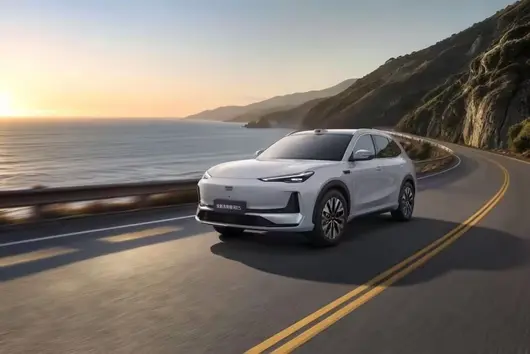
In the SUV market in Malaysia, many buyers compare the Toyota Corolla Cross and Mazda CX-60 when choosing a car. These two cars are quite close in price and positioning. Today we will do a detailed comparison from multiple aspects to help you save time on research.
The OTR price of Toyota Corolla Cross in Malaysia is RM 133,800 - 148,800, with a total of 3 versions, including 2026 HEV 1.8L GR Sport (RM 148,800), 2026 HEV 1.8L Standard (RM 140,800), 2026 1.8L Standard (RM 133,800), etc.
The OTR price of Mazda CX-60 in Malaysia is RM 200,510 - 252,873, with a total of 2 versions, including 2026 3.3T 4WD High Plus (RM 252,873), 2025 2.5L 2WD High (RM 200,510), etc.
From a price perspective, the starting price of Toyota Corolla Cross is indeed RM 66,710 cheaper than Mazda CX-60. If your budget is limited, the Toyota entry-level version is already sufficient for daily needs. However, also note that the cheaper few thousand might involve compromises in features, which depends on your specific needs.

Toyota Corolla Cross is equipped with a 1.5L Turbo, 140 hp. Official fuel consumption 7.0 L/100km.
Mazda CX-60 is equipped with a 2.0L 4-cyl, 170 hp. Official fuel consumption 8.0 L/100km.
In terms of power, the Mazda CX-60's 2.0L 4-cyl has 30 more horsepower than the Toyota Corolla Cross's 1.5L Turbo. However, for daily driving in the city, the power of both cars is sufficient and won't feel lacking.

Toyota Corolla Cross warranty 5 years/unlimited mileage, maintenance interval every 10,000km or 6 months.
Mazda CX-60 warranty 5 years/150,000km, maintenance interval every 10,000km or 6 months.

Toyota Corolla Cross and Mazda CX-60 are both mainstream choices in the Malaysian market, suitable for family use and daily commuting. If you value brand reputation and resale price more, you can prioritize the one with better reputation; if you care more about value for money and features, choose the one with richer configuration. Ultimately, it is recommended to test drive both, as experiencing it personally is the most important.

In summary, Toyota Corolla Cross and Mazda CX-60 are both very good car models in the Malaysian market. Which one to choose depends mainly on your personal needs and budget. It is recommended to do your research, compare quotes from several dealerships, and then test drive to make the final decision. Buying a car is a big matter, spending some time on research will never go wrong.



撰文 | 涂彥平
編輯 | 張南
設計 | 荆芥
今年9 月,格羅方德廣州辦公室啟用。透過同中國本土晶圓廠廣州增芯科技嘅合作,呢間公司正將面向中國客戶嘅服務進一步延伸到生產環節。
呢處新據點,係格羅方德全球佈局中嘅一環。
格羅方德(GlobalFoundries,簡稱 GF)係全球主要晶圓代工企業之一,總部位於美國紐約州,2009 年由阿聯酋主權財富基金穆巴達拉(Mubadala)同 AMD 共同成立。
佢嘅核心業務,係為客戶提供芯片製造工藝同晶圓生產服務,技術佈局覆蓋射頻、矽光子、電源管理、低功耗計算等領域,服務於汽車、智能移動設備、工業物聯網同數據中心等市場。
研究機構 TrendForce 嘅數據顯示,格羅方德係全球第五大、美國第一大晶圓代工廠。2026 年第二季,格羅方德喺全球前十大晶圓代工廠中營收排名第五,僅次於台積電、三星、中芯國際同聯電。
格羅方德嘅製造網絡橫跨美洲、歐洲同亞洲:美國紐約州馬爾他、佛蒙特州伯靈頓,德國德累斯頓以及新加坡,構成其主要晶圓製造基地;印度班加羅爾同馬來西亞檳城嘅製造支援中心,透過遠程工程、數據分析同工藝優化,為各地工廠提供支持;喺中國,公司則透過同廣州本土企業嘅製造合作,拓展本地生產同交付能力。

近年來,格羅方德一直喺加碼美國製造。2025 年6 月,公司宣布擴大美國投資計劃,整體規模達到160 億美元,涵蓋半導體製造、先進封裝同相關研發。
全球佈局畀咗格羅方德服務不同市場嘅條件,亦令佢必須面對各地不同嘅政策環境同供應鏈要求。尤其喺中國,客戶選擇供應商時,除咗性能同價格,越來越關注芯片喺邊度製造、可否長期供貨。
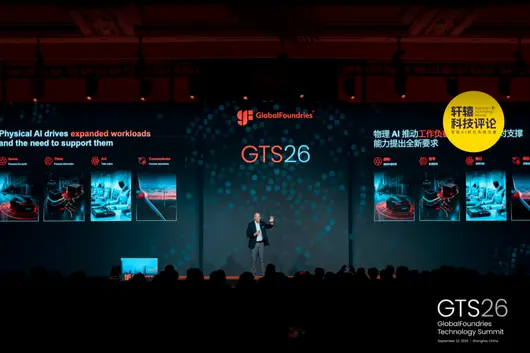
“中國市場肯定係我哋最重要、最關注嘅市場之一。”喺9 月22 日舉行嘅格羅方德2026 年技術峰會中國站媒體溝通會上,格羅方德中國區總裁胡維多(Victor Hu)表示,公司而家覆蓋以及未來長期覆蓋嘅好多工藝,都同中國嘅汽車、工業、通信等 AI 相關嘅領域緊密相關。

12 年前,格羅方德就開始喺中國市場有所投入,目前喺上海、武漢、北京、廣州等地均有相關佈局。廣州辦公室嘅設立以及同增芯科技嘅合作,係佢對中國市場嘅持續押注。
不過,呢啲仲唔足以回答格羅方德喺中國嘅長期發展問題。佢需要拿出客戶願意採用嘅技術,亦需要讓客戶相信,呢啲技術背後有可以持續執行嘅交付安排。
01
AI 嘅機會藏喺運算力周圍
談到 AI 芯片,人們最先諗到嘅往往係處理器同先進製程。格羅方德更關注嘅,係支撐呢啲處理器高效運作嘅其他環節。

喺格羅方德光子同射頻業務高級副總裁 Shankaran Janardhanan 睇來,隨著 AI 集群規模擴大,互連同供電正成為關鍵瓶頸。GPU 數量增加之後,數據能否及時送達、電力能否高效供應,會直接影響整個系統嘅表現。
佢喺訪問中提到,行業正推動單通道傳輸速率從200Gbps 向400Gbps 演變,同時降低每比特傳輸嘅能耗。對應呢啲需求,格羅方德以矽光子同矽鍺技術參與高速連接,並持續投入電源管理技術同異構集成,希望進一步改善系統能效。
呢度有一筆好容易俾運算力指標遮蓋嘅賬目:處理器計得再快,如果數據傳輸唔趕得上,或者互連同供電消耗過大,系統仍然難以充分發揮性能。光電轉換、電力輸送同高速連接都有各自嘅器件要求,亦為特色工藝留下咗發揮空間。
呢啲方向正在成為格羅方德爭取增長嘅重要著力點。公司喺2026 年第二季業績公告中表示,AI 數據中心光網絡等業務嘅客戶需求同收入持續增長。同年7 月,公司完成對 Photeon Technologies 集成穩壓器業務嘅收購,繼續補充面向 AI 數據中心嘅供電能力。
從整體經營情況睇,格羅方德第二季實現營收17.86 億美元,按年同比增長約6%、按季環比增長約9%;毛利率為28.3%,高於上年同季嘅24.2%。按國際財務報告準則(IFRS)計算,純利潤為1.67 億美元,低於上年同季嘅2.28 億美元。第二季營收同毛利率同比改善,但 IFRS 純利潤同比下降約27%。
呢啲數字亦為理解公司嘅技術投入提供咗背景:格羅方德既需要經營好現有製造業務,亦喺尋找能夠帶來更多需求嘅新應用。互連、供電同邊緣運算,正係佢希望發揮特色工藝價值嘅地方。
但全球業務中嘅技術進展,仍需逐一轉化為中國市場嘅客戶項目。邊啲產品可以採用、如何完成驗證、由邊度生產,都需要具體安排。技術上有需求,只係合作嘅第一步。
02
MIPS 補上從軟件到芯片嘅能力
當 AI 從數據中心進入汽車、機器人同工業設備,芯片面對嘅問題亦變咗。格羅方德為之補充嘅一項重要能力,來自 MIPS。
MIPS 係一家擁有四十多年技術積累嘅處理器 IP 企業。佢向客戶提供處理器內核等可重用地設計,以及相應嘅軟件工具,客戶可據此開發自己嘅芯片。如今,RISC-V 處理器 IP、AI 計算同面向具體應用嘅定制方案,係佢業務發展嘅重點。
2025 年8 月14 日,格羅方德完成對 MIPS 嘅收購,MIPS 成為其旗下業務,並保留 IP 授權模式。2026 年6 月2 日,格羅方德又完成對新思科技(Synopsys)ARC 處理器 IP 解決方案業務嘅收購,將其同 MIPS 整合,進一步擴充處理器、軟件工具同定制設計能力。
據 MIPS 喺此次媒體溝通會上嘅介紹,整合 ARC 後,公司已成為全球第一大 RISC-V IP 供應商、僅次於 Arm 嘅全球第二大處理器 IP 廠商。喺格羅方德體系中,MIPS 承擔著將處理器設計、軟件開發同芯片製造連接起黎嘅任務。
這與格羅方德所看好嘅物理 AI 需求緊密相關。一臺機器人需要感知周圍環境、作出判斷、驅動馬達,仲要同其他設備交換資訊。呢啲任務對運算力嘅要求並唔相同,實時響應、功耗同安全性卻貫穿始終。
MIPS 行政總裁 Sameer Wasson 將呢個過程概括為“感知—推理—執行—通信”。喺佢睇來,物理 AI 將需要大量分布式智能,各類處理、感應同供電能力也需要更緊密地配合。

格羅方德已有嘅 FDX 低功耗平台、感應同連接技術、電源管理工藝,可以參與其中嘅不同環節。MIPS 同 ARC 嘅加入,則令公司能夠喺工藝同製造服務之外,同客戶一齊考慮工作負載、處理器 IP、軟件開發同最終嘅芯片交付。
Sameer Wasson 表示,IP 授權仍然係 MIPS 嘅重要業務,但公司希望進一步提供全棧技術解決方案,並將定制芯片及流片後嘅客戶交付作為業務拓展方向。
對於希望優化自身產品又缺乏完整芯片開發團隊嘅企業,呢類服務有實際吸引力。佢哋需要把應用做出嚟,而從軟件到芯片再到量產,中間有許多需要銜接嘅工作。
MIPS 喺今年9 月初發布,並喺此次溝通會上介紹嘅 Acies、Actus 同 Aegis 三款平台,分別面向 AI 推理、實時事件處理同安全關鍵應用,試圖圍繞具體任務組織軟件硬件能力,讓客戶更方便地開展開發同驗證。
不過,MIPS 同晶圓代工業務嘅結合,亦帶來一個需要處理好嘅關係:內部協同越深入,外部客戶是否仲有充分嘅選擇空間?
對呢個,MIPS 方面喺回答媒體提問時表示,其處理器 IP 保持代工廠獨立性,客戶可以選擇其他製造夥伴。
MIPS 需要服務廣泛嘅客戶,格羅方德則希望透過 IP 同工藝協同爭取更多業務。客戶是否願意採用呢套組合,最終仲要睇佢能節省多少開發時間、改善多少功耗,以及交付是否順利。
03
從汽車到機器人
格羅方德睇重中國市場,同呢度嘅汽車產業需求密切相關。
格羅方德全球高級副總裁 Faisal Saleem 喺訪問中提到,汽車感知能力增強、軟件功能擴展、區域架構演進同電氣化,正在帶來更豐富嘅芯片需求。攝像頭同雷達需要採集資訊,網絡芯片負責傳輸,MCU 參與控制,電源管理芯片則承擔不同部件嘅供電任務。

格羅方德希望以低功耗計算、電源管理等技術覆蓋呢啲應用,並透過 AutoPro 提供相應嘅技術、製造同質量支援,將汽車行業嘅要求落實到產品開發同生產過程中。
車用芯片尤其考驗耐心。進入一款產品需要驗證,進入供應鏈之後,仲要經得起長期使用。工藝參數可以幫助供應商獲得評估機會,質量一致性、持續供貨同維護能力,則決定合作能行幾遠。
48 伏供電架構就係一個例子。Faisal Saleem 認為,隨著 ADAS、中央計算同區域控制器等用電需求增加,車載低壓供電系統從12 伏向48 伏演變具有明確驅動力,但呢一轉換仍處喺早期。12 伏系統已經使用多年,唔同整車廠、唔同車型都有自己嘅轉換節奏。
因此,供應商唔能只著重一個新技術方向,仲需要跟住客戶嘅產品週期推進。完成設計、驗證,再逐步導入量產,先會形成實際業務。
汽車領域積累嘅能力,亦可能延伸到機器人。
格羅方德亞太製造同新加坡廠區高級副總裁同總經理陳耀光(Yew Kong Tan)表示:我哋嘅能力其實同物理 AI 世界係非常相關嘅。“人形機器人要同人日常相處,所以安全好重要。我哋關注嘅 MCU 唔單止用於電動汽車,亦用於人形機器人。”

據 MIPS 方面介紹,已有客戶最初面向 ADAS 開發產品,隨後發現相關產品同樣適用於機器人。感應、實時控制同低功耗處理上嘅共通需求,使兩類應用之間存在技術重用嘅空間。
這畀格羅方德提供咗繼續拓展嘅機會,亦提出咗相同嘅要求:每進入一個新場景,都要把技術優勢落實到客戶嘅產品入面。
04
最終要落到本地交付
技術討論最終會回到一個現實問題:芯片邊度生產,喺邊度生產,又能夠供應幾耐?
Faisal Saleem 表示,客戶希望同時擁有全球供應計劃同本地供應計劃,汽車電子嘅本地化需求尤其明確。格羅方德同增芯科技嘅合作,正係喺回應呢一需求。佢同時指出,唔同客戶對應住唔同嘅驗證同製造計劃。
由此看,廣州辦公室嘅意義喺令生產支援同客戶協作更近啲。客戶遇到問題時,需要能夠及時溝通、推進項目嘅人,亦需要明確嘅驗證同製造安排。這亦係落實格羅方德“喺中國,為中國”策略嘅重要一步。

格羅方德對中國製造合作嘅公開定位,包含三類需求:為中國客戶提供本地生產選擇,為中國客戶嘅國際業務提供海外製造支援,以及服務需要喺中國本地採購芯片嘅全球客戶。
呢三類需求亦說明,本地化同全球業務仍然相互關聯。中國企業可能需要進入海外市場,跨國企業亦需要更深入地服務中國。製造佈局越能適應呢啲唔同需求,供應商就越有機會留喺客戶嘅長期規劃中。
今年2 月,格羅方德同瑞薩公布嘅擴大製造合作,就同時包含咗呢啲考慮。雙方強調加強美國半導體生產,亦將德國、新加坡以及格羅方德喺中國嘅製造合作納入佈局。同一項合作,承擔住唔同地區對供應保障嘅要求。
當然,呢種商業安排始終需要面對政策邊界。格羅方德喺2025 年年報中已將出口管制、制裁同貿易政策變化列為業務風險,並說明呢啲因素會影響供應鏈同業務策略。本地生產可以縮短供應距離、改善響應效率,具體合作仍然取決於技術、客戶同相關監管要求。
正係呢點令格羅方德中國業務最考驗經營判斷嘅地方。全球製造網絡同 MIPS 嘅加入,令佢手中有咗更多可以畀客戶嘅技術同服務;點樣喺唔同市場嘅規則同需求之間,將呢啲能力組織成長期可靠嘅供應,仲要透過一個個項目嚟證明。
對於準備投入數年開發一款汽車或工業產品嘅客戶而言,揀選芯片供應商,意味著將一部分產品未來畀對方。格羅方德能否做深中國生意,要睇佢能否讓客戶喺作出呢個決定時,多一分把穩。

喺馬來西亞嘅 SUV 市場,好多買家喺揀車嘅時候都會拎豐田 Yaris Cross 同三菱 Xforce 嚟做比較。兩款車喺價位同定位上都好啱啱接近,今日我哋就由多啲方面做一個詳細嘅對比,幫你慳晒做功課嘅時間。
豐田 Yaris Cross 喺馬來西亞嘅 OTR 售價係 RM 99,900 - 109,900,一共係 2 個版本,包括 2026 1.5L Standard(RM 99,900)、2026 HEV 1.5L Standard(RM 109,900)等。
三菱 Xforce 喺馬來西亞嘅 OTR 售價係 RM 109,930 - 119,930,一共係 2 個版本,包括 2026 1.5L Ultimate(RM 119,930)、2026 1.5L Urban(RM 109,930)等。
由價錢睇,豐田 Yaris Cross 嘅起步價確實比三菱 Xforce 平咗 RM 10,030。如果你預算有限,豐田嘅入門版已經滿足到日常需求。但都要注意,平嗰幾千蚊,可能喺配備上有取舍,具體要睇你嘅需求。

豐田 Yaris Cross 嘅安全評級係 5★ (ASEAN NCAP),主動安全系統包括 TSS。
三菱 Xforce 嘅安全評級係 5★ (ASEAN NCAP),主動安全系統包括 MI-PILOT。
兩款車嘅安全評級一樣,喺呢個級別裡面安全配備都算好齊全。而家嘅新車安全性都唔差,唔使太擔心這一點。

豐田 Yaris Cross 車身長 4400 mm,後備廂 400 L。
三菱 Xforce 車身長 4400 mm,後備廂 400 L。
兩款車嘅尺寸幾乎一樣,車內空間分別唔大。呢個級別嘅車,日常使用完全夠用。

豐田 Yaris Cross 同三菱 Xforce 都係馬來西亞市場嘅主流選擇,適合家庭使用、日常通勤。如果你更睇重品牌口碑同二手價,可以優先考慮口碑更好嗰款;如果你更在意性價比同配備,那就揀配置更豐富嗰款。始終建議兩款都去試駕,親身體驗先係最重要嘅。

總體嚟講,豐田 Yaris Cross 同三菱 Xforce 都係馬來西亞市場好好睇嘅車型。揀邊一輛,關鍵都要睇你嘅個人需求同預算。建議大家做好功課,多比較幾間車行嘅報價,再去試駕做最終決定。買車係件大事,花點時間做功課肯定唔會錯。


In Malaysia's SUV market, many buyers compare Toyota Yaris Cross and Mazda CX-5 when choosing a car. These two models are quite close in price and positioning. Today we will make a detailed comparison from multiple aspects to help you save time doing research.
Toyota Yaris Cross OTR selling price in Malaysia is RM 99,900 - 109,900, total 2 versions, including 2026 1.5L Standard (RM 99,900), 2026 HEV 1.5L Standard (RM 109,900), etc.
Mazda CX-5 OTR selling price in Malaysia is RM 135,469 - 166,760, total 3 versions, including 2025 2.0L AT 35th Anniversary (RM 316,154), 2025 2.0L AT (RM 296,154), 2025 2.0L MT (RM 294,154), etc.
From a price perspective, the starting price of the Toyota Yaris Cross is indeed RM 35,569 cheaper than the Mazda CX-5. If your budget is limited, Toyota's entry-level version can already meet daily needs. However, keep in mind that the cheaper few thousand might involve trade-offs in features, depending on your needs.
Toyota Yaris Cross is equipped with 1.5L 4-cyl, 105 hp. Official fuel consumption is 6.0 L/100km.
Mazda CX-5 is equipped with 1.5L Turbo, 140 hp. Official fuel consumption is 7.0 L/100km.
In terms of power, the Mazda CX-5's 1.5L Turbo has 35 hp more than the Toyota Yaris Cross's 1.5L 4-cyl. However, for daily city driving, the power of both cars is sufficient and won't feel lacking.
Toyota Yaris Cross body length is 4400 mm, trunk is 400 L.
Mazda CX-5 body length is 4500 mm, trunk is 450 L.
Regarding space, the Mazda CX-5 body is 100 mm longer than the Toyota Yaris Cross, offering an advantage in seating space. However, the Toyota Yaris Cross is a bit more flexible for parking in the city, each has its trade-offs.
Toyota Yaris Cross adopts FWD drive type.
Mazda CX-5 adopts FWD drive type.
Both cars have the same drive type, both are FWD, there won't be a big difference in daily driving experience.

Toyota Yaris Cross warranty is 5 years/unlimited mileage, maintenance interval every 10,000km or 6 months.
Mazda CX-5 warranty is 5 years/150,000km, maintenance interval every 10,000km or 6 months.

Overall, Toyota Yaris Cross and Mazda CX-5 are both very good models in the Malaysia market. Which one to choose depends on your personal needs and budget. It is recommended to do your research, compare quotes from several dealerships, and test drive before making a final decision. Buying a car is a big thing, spending time doing research will never be wrong.

In the SUV market in Malaysia, many buyers compare Toyota Yaris Cross and Mazda CX-30 when choosing a car. These two cars are quite close in price and positioning, so today we will do a detailed comparison from multiple aspects to help you save time on research.
The OTR price of Toyota Yaris Cross in Malaysia is RM 99,900 - 109,900, with a total of 2 versions, including 2026 1.5L Standard (RM 99,900), 2026 HEV 1.5L Standard (RM 109,900), etc.
The OTR price of Mazda CX-30 in Malaysia is RM 122,409 - 146,409, with a total of 4 versions, including 2025 2.0L High+ Premium (RM 146,409), 2025 2.0L High+ (RM 138,409), 2025 2.0L High (RM 130,409), etc.
From a price perspective, the starting price of Toyota Yaris Cross is indeed RM 22,509 cheaper than Mazda CX-30. If your budget is limited, Toyota's entry-level version can already meet daily needs. But keep in mind, the few thousand cheaper might involve trade-offs in features, it depends on your specific needs.
The safety rating of Toyota Yaris Cross is 5★ (ASEAN NCAP), active safety systems include TSS.
The safety rating of Mazda CX-30 is 5★ (ASEAN NCAP), active safety systems include i-Activsense.
Both cars have the same safety rating, safety features are quite complete in this class. Safety of new cars nowadays is not bad, no need to worry too much about this point.
The Toyota Yaris Cross body length is 4400 mm, trunk 400 L.
The Mazda CX-30 body length is 4500 mm, trunk 450 L.
In terms of space, the Mazda CX-30 body is 100 mm longer than Toyota Yaris Cross, offering better passenger space. However, Toyota Yaris Cross is more flexible for parking in the city, each has its trade-offs.
Both Toyota Yaris Cross and Mazda CX-30 are mainstream choices in the Malaysia market, suitable for family use and daily commuting. If you value brand reputation and resale price more, prioritize the one with better reputation; if you care more about cost-performance and features, choose the one with richer configurations. Ultimately, it is recommended to test drive both, experiencing them personally is the most important.

Overall, Toyota Yaris Cross and Mazda CX-30 are both very good models in the Malaysia market. Choosing which one depends on your personal needs and budget. It is suggested to do your homework, compare quotes from several dealerships, and then test drive to make a final decision. Buying a car is a big matter, spending time doing research is never wrong.

喺馬來西亞嘅 SUV 市場,好多買家喺揀車嗰陣都會用 Honda CR-V 同 BMW X3 嚟比較。呢兩款車喺價位同定位上都幾接近,今日我哋就從多個方面做一個詳細嘅比較,幫你想唔使咁多時間做功課。
Honda CR-V 喺馬來西亞嘅 OTR 售價係 RM 178,200 - 195,900,一共有 4 個版本,包括 2026 e:HEV 2.0L 2WD RS(RM 195,900)、2026 1.5T 4WD V(RM 181,900)、2026 e:HEV 2.0L 2WD E(RM 178,200) 等。
BMW X3 喺馬來西亞嘅 OTR 售價係 RM 325,800 - 358,800,一共有 2 個版本,包括 xDrive20i(RM 320,000)、xDrive30e(RM 360,000) 等。
由價錢睇,Honda CR-V 嘅起步價真係比 BMW X3 平咗 RM 147,600。如果你預算有限,Honda 嘅入門版已經可以滿足日常需求。但都要留意,平嗰幾千蚊,喺配備上可能會有取舍,具體就要睇你嘅需求。

Honda CR-V 配備 2.0L 4 缸,馬力 170 hp。官方油耗 8.0 L/100km。
BMW X3 配備 2.0L Turbo,馬力 220 hp。官方油耗 9.5 L/100km。
動力方面,BMW X3 嘅 2.0L Turbo 比 Honda CR-V 嘅 2.0L 4 缸多出 50 匹馬力。不過日常喺市區開,兩款車嘅動力都夠用,唔會覺得唔夠力。

Honda CR-V 保養 5 年/無限里程,保養間隔 每 10,000km 或 6 個月。
BMW X3 保養 5 年/無限里程,保養間隔 每 10,000km 或 6 個月。

Honda CR-V 同 BMW X3 都係馬來西亞市場嘅主流揀擇,適合家庭使用、日常通勤。如果你更重視品牌口碑同二手價,可以優先考慮口碑更好嗰款;如果你更在意性價比同配備,就揀配備更豐富嗰款。最終都建議兩款都去試開,親身體驗先最重要。

總體嚟講,Honda CR-V 同 BMW X3 都係馬來西亞市場好唔錯嘅車型。揀邊一輛,關鍵都要睇你嘅個人需求同預算。建議大家做足功課,多比較幾間車行嘅報價,再去試開做最終決定。買車係件大事,花少少時間做功課絕對無錯。


喺馬來西亞嘅 SUV 市場,好多買家喺揀車嘅時候都會拿 Honda CR-V 同 Volvo XC60 嚟比較。這兩款車喺價錢位同定位上都好接近,今日我哋就從多個方面做一個詳細嘅比較,幫你省咗做功課嘅時間。
Honda CR-V 喺馬來西亞嘅 OTR 售價係 RM 178,200 - 195,900,一共有 4 個版本,包括 2026 e:HEV 2.0L 2WD RS(RM 195,900)、2026 1.5T 4WD V(RM 181,900)、2026 e:HEV 2.0L 2WD E(RM 178,200) 等。
Volvo XC60 喺馬來西亞嘅 OTR 售價係 RM 328,888 - 328,888,一共有 1 個版本,包括 2025 2.0T Core(RM 328,888) 等。
由車價睇,Honda CR-V 嘅起步價確實比 Volvo XC60 平咗 RM 150,688。如果你預算有限,Honda 嘅入門版已經可以滿足日常需求。但都要注意,平嗰幾千蚊,可能喺配備上面會有取捨,具體要看你嘅需求。
Honda CR-V 搭載 2.0L 4-cyl,馬力 170 hp。官方油耗 8.0 L/100km。
Volvo XC60 搭載 2.0L Turbo,馬力 220 hp。官方油耗 9.5 L/100km。
動力方面,Volvo XC60 嘅 2.0L Turbo 比 Honda CR-V 嘅 2.0L 4-cyl 多咗 50 匹馬力。不過日常喺市區行,兩款車嘅動力都夠用,唔會覺得唔夠力。
Honda CR-V 車身長 4500 mm,行李箱 450 L。
Volvo XC60 車身長 4400 mm,行李箱 400 L。
空間方面,Honda CR-V 嘅車身比 Volvo XC60 長咗 100 mm,車內乘坐空間會稍微寬敞啲,尤其係後座腿部空間。如果你經常載家人或者需要放嬰兒車,大啲嘅車身的確更實用。
Honda CR-V 保養 5 年/無限里程,保養間隔 每 10,000km 或 6 個月。
Volvo XC60 保養 5 年/無限里程,保養間隔 每 10,000km 或 6 個月。

總體嚟講,Honda CR-V 同 Volvo XC60 都係馬來西亞市場幾唔錯嘅車型。揀邊一部,關鍵都係要看你嘅個人需求同預算。建議大家做好功課,多比較幾間車行嘅報價,再去試駕先做最終決定。買車係件大事,花少少時間做功課絕對唔錯。

喺馬來西亞嘅 SUV 市場,好買家喺揀車嗰陣都會拿本田 CR-V 同 富豪 XC40 來比較。這兩款車喺價位同定位上都好接近,今日我哋就從多個方面做一個詳細比較,幫你節省做功課嘅時間。
本田 CR-V 喺馬來西亞嘅 OTR 售價係 RM 178,200 - 195,900,一共有 4 個版本,包括 2026 e:HEV 2.0L 2WD RS(RM 195,900)、2026 1.5T 4WD V(RM 181,900)、2026 e:HEV 2.0L 2WD E(RM 178,200) 等。
富豪 XC40 喺馬來西亞嘅 OTR 售價係 RM 278,888 - 278,888,一共有 1 個版本,包括 2025 2.0T Plus(RM 278,888) 等。
由價錢睇落,本田 CR-V 嘅起步價確實比 富豪 XC40 平咗 RM 100,688。如果你預算有限,本田嘅入門版已經可以滿足日常需要。但都要注意,便宜嘅幾千蚊,可能喺配備上有取捨,具體就要睇你嘅需求。
本田 CR-V 嘅安全評級係 5★ (ASEAN NCAP),主動安全系統包括本田 SENSING (ACC, CMBS, LKAS, RDM)。
富豪 XC40 嘅安全評級係 5★ (Euro NCAP),主動安全系統包括 Pilot Assist, City Safety (標準)。
安全配備方面,兩款車都拿到唔錯嘅評級。不過本田 CR-V 嘅本田 SENSING (ACC, CMBS, LKAS, RDM) 同 富豪 XC40 嘅 Pilot Assist, City Safety (標準) 喺功能上有啲差異,如果你比較重視主動安全嘅話,可以仔細比較下兩者嘅功能列表。
本田 CR-V 車身長 4500 mm,尾箱 450 L。
富豪 XC40 車身長 4400 mm,尾箱 400 L。
空間方面,本田 CR-V 嘅車身比 富豪 XC40 長咗 100 mm,車內乘坐空間會稍微寬裕啲,尤其係後排腿部空間。如果你經常載家人或者需要放嬰兒車,大啲嘅車身確實更實用。
本田 CR-V 保修 5 年/無限里程,保養間隔 每 10,000km 或 6 個月。
富豪 XC40 保修 5 年/無限里程,保養間隔 每 10,000km 或 6 個月。

總括嚟講,本田 CR-V 同 富豪 XC40 都係馬來西亞市場幾唔錯嘅車型。揀邊輛,關鍵仲係要睇你嘅個人需求同預算。建議大家做好功課,多比較幾間車行嘅報價,再去試駕做最終決定。買車係件大事,花少少時間做功課絕對無錯。
近日,零跑辦咗第七屆技術日。今年嘅主題只有兩個字:底氣。
這兩個字放喺當下嘅行業語境入面,好有意思。而家開發佈會,大部分品牌都喺講「遙遙領先」「行業第一」,零跑偏偏用一個睇落去有點「土」嘅詞。但睇完這場發佈會,你會發現呢個詞選得好準——佢唔係喺喊口號,係喺把 11 年攞落嚟嘅嘢,一件件擺出來俾你睇。

睇一組數字:月銷突破 10 萬輛,累計交付近 180 萬輛,連續三個半年度盈利,2026 年上半年歸母淨利潤 2.1 億元。
喺新能源行業,盈利唔係一件容易嘅事。大部分新勢力仲喺虧損,零跑憑什麼能賺錢?答案藏喺「全域自研、深度自制」呢八個字入面。
零跑自主掌握咗 65% 嘅整車成本。咩意思?一台車嘅大部分核心部件,從電芯到電池包、從電機到控制器、從元器件到車燈,零跑都係自己整嘅。佢建咗 18 座零部件工廠,平台通用化率達到 90%。呢套體系嘅邏輯好簡單:把核心部件握喺自己手入面,成本就能壓落嚟,品質就能控住,配置就能往上堆。
講白啲,零跑走嘅係「薄利多銷、以量攤本」嘅路子。呢條路唔性感,但行得通。連續盈利就係最好嘅證明。
但真正值得關注嘅,係這次技術日發佈嘅嘢。

零跑這次發佈咗一套整車架構加三大核心技術,加上四葉草 5.0 中央域控,構成咗五大體系化創新。我哋唔堆參數,挑三個最能說明問題嘅聊。
第一個,LEAP 5.0 新移動空間架構。
零跑這次把「得房率」呢個概念做到極致。通過超級集成空調一體機同動力總成後置,座艙縱向長度提升咗 19%;通過減振器直立佈局,前排腿部寬度提升咗 37.5%;通過純平低地板同一體化智能升頂,艙內高度提升咗 63.7%。講白啲就係呢台車可以讓你喺車入面站起嚟。
這背後嘅邏輯係什麼?當智能化讓汽車越來越似「第三移動空間」,傳統燃油車嗰套佈局——發動機佔前艙、傳動軸穿座艙、減振塔擠輪拱——就顯得過時咗。零跑選擇從零重構,把機械佔掉嘅空間還畀座艙。2027 年亮相嘅第二品牌產品,就係基於呢套架構打造。
第二個,LWM 世界模型智駕。
智駕而家係行業最卷嘅賽道,但卷嘅方向大都係「堆算力」。零跑走嘅係一條唔同嘅路:唔靠 BEV 感知,唔依賴規則代碼,用世界模型來做決策。
通俗講,傳統智駕靠規則——看到紅燈剎車、看到行人避讓,一條條寫入去。世界模型靠學習——系統喺雲端見過大量場景後,能理解物理規律,能預判事物嘅發展,似一個有經驗嘅老司機。
更關鍵嘅係成本控制。呢套系統可以喺 200TOPS、640TOPS、1280TOPS 唔同算力平台上部署,10 萬以內嘅車型都能搭載。零跑仲承諾,為 35 萬輛激光雷達版車型免費升級到世界模型智駕,終身免費使用。最早嗰一萬多激光雷達版用戶,雖然硬件平台唔一致,算法移植需要花 5000 萬,零跑同樣畀升。
呢個態度,比技術本身更值得講。
第三個,CTC3.0 高低壓融合電池。
呢個技術解決嘅係一個「百年難題」:汽車從燃油時代開始,就一直帶住一塊獨立嘅低壓蓄電池,用來畀車燈、車機供電。呢塊電池每隔幾年就要換一次,幾百蚊,而且鉛酸電池廢棄後會污染环境。
零跑嘅做法係:取消獨立低壓蓄電池,把低壓電池功能集成到大電池包入面。低壓電量提升咗 7 倍,終身免維護,用車成本節省 2000 蚊以上。
更值得講嘅係,零跑把呢項技術嘅專利向全行業開源咗。呢個動作喺汽車行業少見,但它傳遞嘅信號好清楚:零跑唔靠技術封鎖賺錢,靠嘅係把技術做出嚟、把規模做上去、把成本降落嚟。

回到技術日嘅主題。零跑嘅底氣,唔係單一技術嘅突破,而係體系化嘅能力。
佢有 9500 人嘅工程師團隊,電驅專利 841 件位居新勢力第一。佢從 2019 年首款八合一電驅量產,到 2022 年國內首款 200kW 油冷電驅,再到這次發佈嘅 MM-i 多模混動電驅——比同級輕 40%、體積小 25%、動力強 28%,係當前行業體積最小嘅混動電驅。佢完成咗「純電 + 增程 + 插混」全動力佈局,覆蓋 A0 到 D 級全品類。
呢套體系能力帶來嘅結果,體現喺海外市場入面。零跑已經進入全球 45 個國家同地區,海外門店超過 1000 家,出海兩年累計出口超 20 萬輛。2026 年 1 到 6 月,零跑喺意大利累計上牌 24269 台,同比暴漲 1448.8%,連續六個月蟬聯意大利純電市場第一。
依托 Stellantis 嘅歐洲經銷商網絡同 140 個物流中心,零跑實現咗「一日三配」嘅零部件供應保障。西班牙 CKD 工廠計劃 2026 年 10 月投產,馬來西亞同緬甸工廠已經量產。
呢些數字說明一件事:零跑唔只係一家整車廠,佢正喺成為一家有能力向行業輸出技術嘅頭部供應商。電子系統獲 5 家合作,電驅系統獲 8 家合作,電池系統獲 10 家合作,整車級技術賦能一汽、Stellantis 等合作夥伴。

汽車網評:
LEAP 5.0 架構、世界模型智駕、MM-i 混動電驅、CTC3.0 電池,呢五項技術無一項係為了「炫技」而做嘅。佢哋解決嘅都係實際問題:空間唔夠、智駕太貴、混動太重、蓄電池要換。
呢大抵就係零跑理解嘅「技術底氣」——讓更多嘅主流消費者,用得上更好嘅配置同功能體驗。2027 年第二品牌產品亮相,零跑要做嘅唔係「喺傳統汽車上做加法」,而係用「智能手機替代功能機」嘅思維,重新定義汽車。

In the Malaysian SUV market, many buyers compare the Honda CR-V and Hyundai Tucson when choosing a car. These two models are quite close in price and positioning. Today, we will make a detailed comparison from multiple aspects to help you save time doing your research.
The OTR price of the Honda CR-V in Malaysia is RM 178,200 - 195,900, with a total of 4 versions, including the 2026 e:HEV 2.0L 2WD RS (RM 195,900), 2026 1.5T 4WD V (RM 181,900), 2026 e:HEV 2.0L 2WD E (RM 178,200), etc.
The OTR price of the Hyundai Tucson in Malaysia is RM 143,888 - 197,888, with a total of 5 versions, including the 2025 HEV 1.6T AT 2WD Prestige (RM 197,888), 2025 1.6T DCT 4WD Prestige (RM 186,888), 2025 1.6T DCT 2WD Prime (RM 164,888), etc.
From the price perspective, the Hyundai Tucson's starting price is RM 34,312 cheaper than the Honda CR-V. Honestly, in this price range, a difference of a few thousand is actually not significant; the key lies in the overall value for money and long-term usage costs.
Honda CR-V body length is 4500 mm, trunk 450 L.
Hyundai Tucson body length is 4400 mm, trunk 400 L.
In terms of space, the Honda CR-V body is 100 mm longer than the Hyundai Tucson, offering slightly more spacious interior seating, especially rear legroom. If you often carry family or need to fit a stroller, the larger body is indeed more practical.
Honda CR-V warranty 5 years/unlimited mileage, maintenance interval every 10,000km or 6 months.
Hyundai Tucson warranty 5 years/300,000km, maintenance interval every 10,000km or 6 months.
Both Honda CR-V and Hyundai Tucson are mainstream choices in the Malaysian market, suitable for family use and daily commuting. If you value brand reputation and resale value more, prioritize the one with better reputation; if you care more about value for money and features, choose the one with richer configuration. Ultimately, it is recommended to test drive both, as experiencing it firsthand is the most important.

Overall, both Honda CR-V and Hyundai Tucson are excellent models in the Malaysian market. Which one to choose depends on your personal needs and budget. It is recommended to do your research, compare quotes from multiple dealerships, and then test drive to make the final decision. Buying a car is a big matter, spending time doing research will never be wrong.

Dalam pasaran SUV Malaysia, ramai pembeli membandingkan Honda CR-V dan Mitsubishi Xforce ketika memilih kereta. Kedua-dua kereta ini mempunyai harga dan kedudukan yang agak hampir, hari ini kita akan membuat perbandingan terperinci dari pelbagai aspek, membantu anda menjimatkan masa membuat kajian.
Harga OTR Honda CR-V di Malaysia adalah RM 178,200 - 195,900, terdapat 4 varian, termasuk 2026 e:HEV 2.0L 2WD RS (RM 195,900), 2026 1.5T 4WD V (RM 181,900), 2026 e:HEV 2.0L 2WD E (RM 178,200) dan lain-lain.
Harga OTR Mitsubishi Xforce di Malaysia adalah RM 109,930 - 119,930, terdapat 2 varian, termasuk 2026 1.5L Ultimate (RM 119,930), 2026 1.5L Urban (RM 109,930) dan lain-lain.
Dari segi harga, harga permulaan Mitsubishi Xforce lebih murah RM 68,270 berbanding Honda CR-V. Jujur berkata, dalam julat harga ini, jurang beribu-ribu ringgit sebenarnya tidak besar, yang penting adalah melihat nisbah nilai untuk wang keseluruhan dan kos penggunaan jangka panjang.
Honda CR-V dilengkapi enjin 2.0L 4-silinder, kuasa 170 hp. Penggunaan bahan api rasmi 8.0 L/100km.
Mitsubishi Xforce dilengkapi enjin 1.5L Turbo, kuasa 140 hp. Penggunaan bahan api rasmi 7.0 L/100km.
Dari segi kuasa, enjin 2.0L 4-silinder Honda CR-V memiliki 30 hp lebih banyak daripada enjin 1.5L Turbo Mitsubishi Xforce, memberikan keyakinan lebih pada pecutan pertengahan, terutama ketika menyalip di lebuh raya. Namun, penggunaan bahan api Mitsubishi Xforce mungkin lebih jimat, perbezaan untuk perjalanan harian dalam bandar tidak akan terlalu besar.
Penarafan keselamatan Honda CR-V adalah 5★ (ASEAN NCAP), sistem keselamatan aktif termasuk Honda SENSING (ACC, CMBS, LKAS, RDM).
Penarafan keselamatan Mitsubishi Xforce adalah 5★ (ASEAN NCAP), sistem keselamatan aktif termasuk MI-PILOT.
Penarafan keselamatan kedua-dua kereta adalah sama, peralatan keselamatan pada tahap ini dianggap lengkap. Keselamatan kereta baharu masa kini tidak buruk, tiada perlu risau terlalu banyak mengenai hal ini.
Honda CR-V menggunakan cara pemacu FWD.
Mitsubishi Xforce menggunakan cara pemacu FWD.
Cara pemacu kedua-dua kereta adalah sama, keduanya FWD, pengalaman memandu harian tidak akan ada perbezaan besar.
Honda CR-V dan Mitsubishi Xforce sama-sama pilihan utama dalam pasaran Malaysia, sesuai untuk kegunaan keluarga, perjalanan harian. Jika anda lebih mementingkan reputasi merek dan harga kereta terpakai, boleh utamakan yang lebih mempunyai reputasi baik; jika anda lebih mementingkan nisbah nilai untuk wang dan pelengkapan, pilih yang mempunyai pelengkapan lebih lengkap. Pada akhirnya, disarankan untuk mencuba memandu kedua-dua kereta, pengalaman peribadi adalah yang paling penting.
Secara keseluruhan, Honda CR-V dan Mitsubishi Xforce sama-sama model kereta yang sangat baik dalam pasaran Malaysia. Memilih yang mana, penting untuk melihat keperluan dan bajet peribadi anda. Disarankan untuk membuat kajian terlebih dahulu, bandingkan harga dari beberapa dealer, kemudian cuba memandu untuk membuat keputusan akhir. Membeli kereta adalah perkara besar, menghabiskan masa untuk membuat kajian tidak akan salah.

In the Malaysian SUV market, many buyers compare the Honda CR-V and Mitsubishi Xforce when choosing a car. These two cars are quite close in price and positioning, so today we will make a detailed comparison from multiple aspects to help you save time on research.
The OTR price of the Honda CR-V in Malaysia is RM 178,200 - 195,900, with a total of 4 versions, including 2026 e:HEV 2.0L 2WD RS (RM 195,900), 2026 1.5T 4WD V (RM 181,900), 2026 e:HEV 2.0L 2WD E (RM 178,200), etc.
The OTR price of the Mitsubishi Xforce in Malaysia is RM 109,930 - 119,930, with a total of 2 versions, including 2026 1.5L Ultimate (RM 119,930), 2026 1.5L Urban (RM 109,930), etc.
Looking at the price, the starting price of the Mitsubishi Xforce is RM 68,270 cheaper than the Honda CR-V. Honestly, in this price range, a difference of a few thousand dollars is not really that big; the key is to look at overall value for money and long-term running costs.
The safety rating of the Honda CR-V is 5★ (ASEAN NCAP), and active safety systems include Honda SENSING (ACC, CMBS, LKAS, RDM).
The safety rating of the Mitsubishi Xforce is 5★ (ASEAN NCAP), and active safety systems include MI-PILOT.
Both cars have the same safety rating, and safety features are quite comprehensive in this class. New cars in general have good safety, so there is no need to worry too much about this.
Honda CR-V warranty is 5 years/unlimited mileage, maintenance interval every 10,000km or 6 months.
Mitsubishi Xforce warranty is 3 years/100,000km, maintenance interval every 10,000km or 6 months.
Both the Honda CR-V and Mitsubishi Xforce are mainstream choices in the Malaysian market, suitable for family use and daily commuting. If you value brand reputation and resale value more, you can prioritize the one with a better reputation; if you value value for money and features more, choose the one with richer configuration. In the end, it is recommended to test drive both, as the personal experience is the most important.
Overall, both the Honda CR-V and Mitsubishi Xforce are very good models in the Malaysian market. Which one to choose mainly depends on your personal needs and budget. It is recommended to do your homework, compare quotes from several showrooms, and then test drive to make the final decision. Buying a car is a big matter, spending some time doing research will never be wrong.

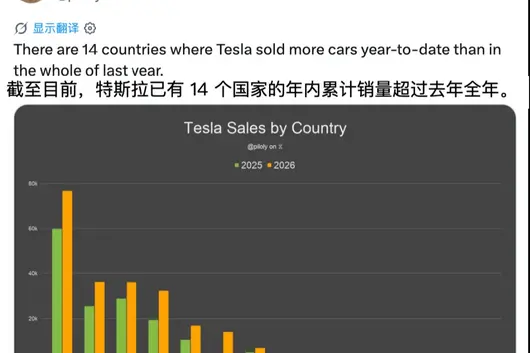
According to the latest sales data statistics by overseas blogger @piloly, as of August 2026, Tesla's cumulative sales in 14 countries globally this year have all exceeded the full year of 2025.
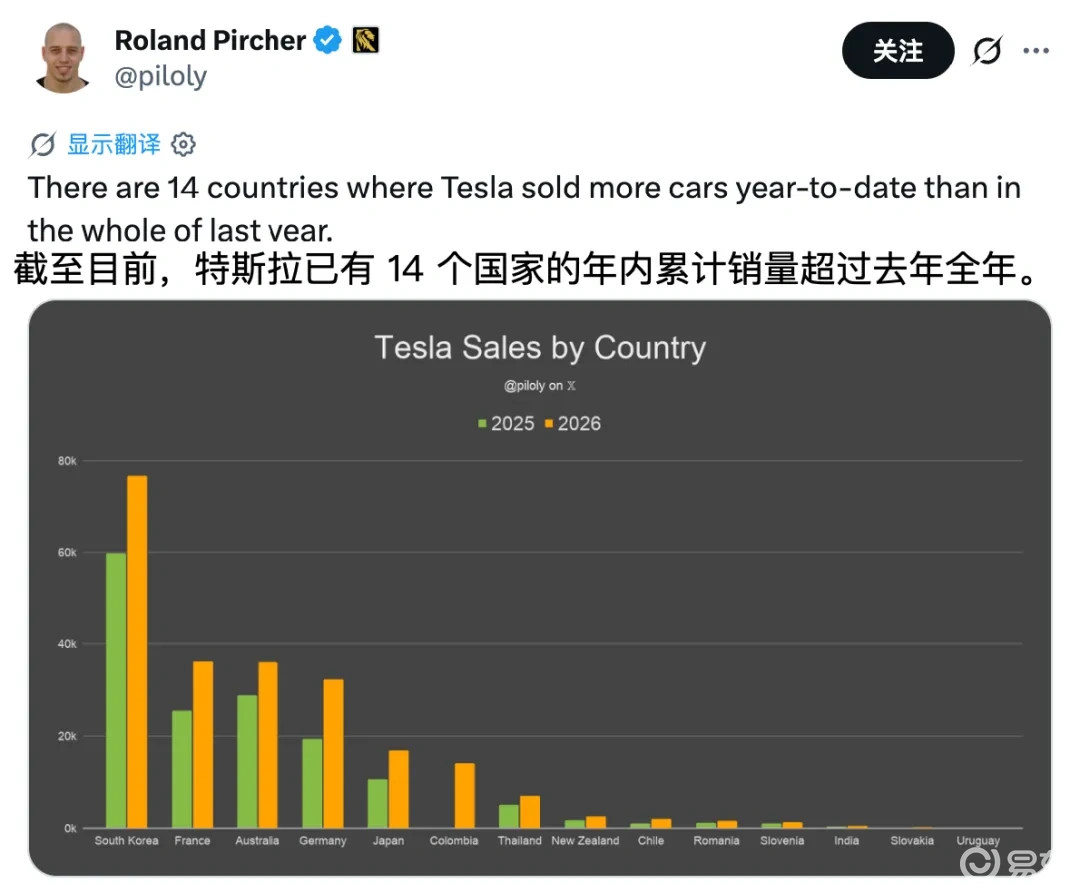
Specifically, these 14 countries include South Korea, France, Australia, Germany, Japan, Colombia, Thailand, New Zealand, etc., covering multiple regions such as Asia, Europe, Oceania, and South America.
Among them, as of August this year, Tesla's cumulative sales in the South Korean market have surpassed 76,000 units, with monthly sales again breaking 10,000, and ranking first in South Korean imported car sales for 7 consecutive months starting from February this year. In August, the Model Y also surpassed multiple popular local South Korean models, becoming the best-selling passenger car locally.
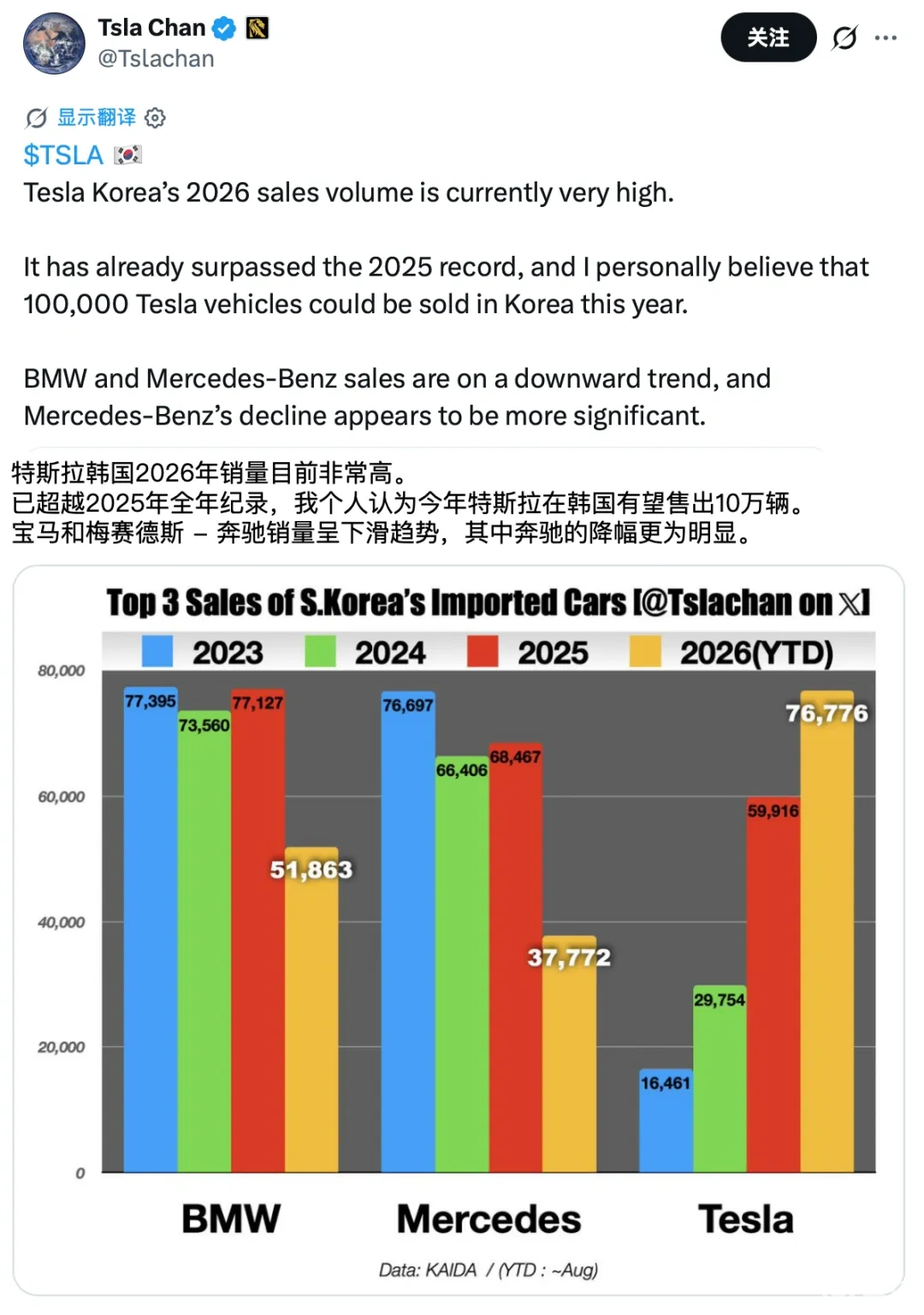
Similar to the South Korean market, the French market was previously dominated for a long time by French local brands such as Renault. Tesla has achieved rapid sales growth with strong product capabilities. From January to August 2026, Tesla's cumulative sales in France reached 36,000 units, a year-on-year growth of 148%. The Model Y became the best-selling model across all categories in France twice in June and August this year.

In the Australian market, Tesla's total delivery volume in August increased by 163% compared to the same period last year. This year, the Model Y became the best-selling model across all categories in the Australian market three times in May, June, and August successively.

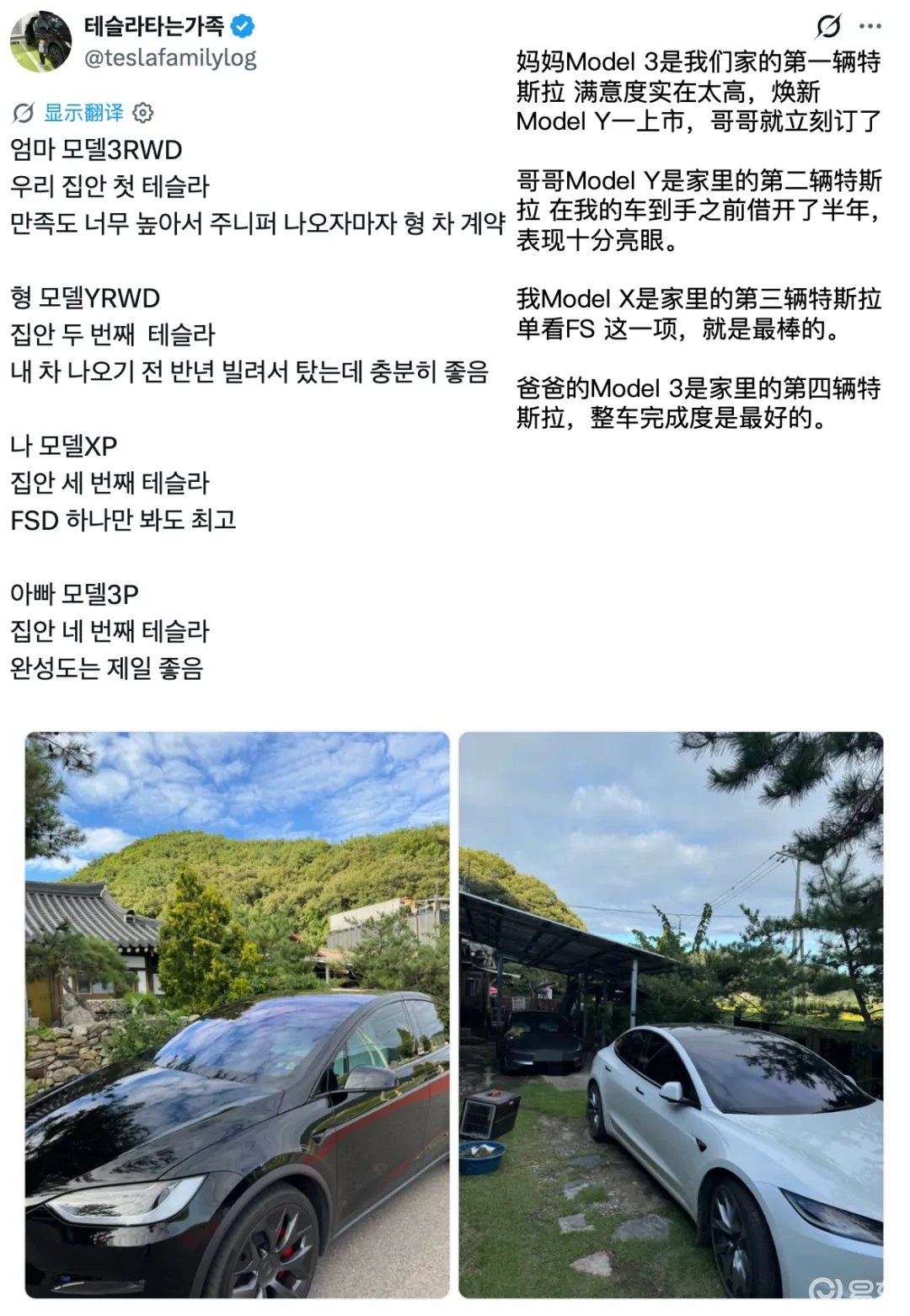
Apart from solid sales data, the real choices of owners also continue to prove Tesla's hot-selling strength. Owner @teslafamilylog shared their family experience: Since mom bought the first Model 3, the whole family quickly became fans of Tesla. He and his brother and dad then purchased 3 more cars successively, and the four cars directly covered the whole family's travel.

Dalam pasaran SUV di Malaysia, ramai pembeli ketika memilih kereta akan membandingkan Honda CR-V dan Chery Tiggo 8 PHEV. Kedua-dua kereta ini agak hampir dari segi harga dan penjenamaan, hari ini kita akan membuat perbandingan terperinci dari pelbagai aspek untuk membantu anda menjimatkan masa membuat penyelidikan.
Harga OTR Honda CR-V di Malaysia ialah RM 178,200 - 195,900, terdapat sebanyak 4 varian, termasuk 2026 e:HEV 2.0L 2WD RS (RM 195,900), 2026 1.5T 4WD V (RM 181,900), 2026 e:HEV 2.0L 2WD E (RM 178,200) dan lain-lain.
Harga OTR Chery Tiggo 8 PHEV di Malaysia ialah RM 159,750 - 159,750, terdapat 2 varian, termasuk 1.6L Turbo Standard (RM 130,000), 1.6L Turbo Premium (RM 145,000) dan lain-lain.
Dari segi harga, harga permulaan Chery Tiggo 8 PHEV lebih murah RM 18,450 berbanding Honda CR-V. Jujur berkata, dalam segmen harga ini, beza beberapa ribu ringgit sebenarnya tidak besar, yang penting lihat nisbah faedah kos keseluruhan dan kos penggunaan jangka panjang.
Panjang badan Honda CR-V 4500 mm, tempat kargo 450 L.
Panjang badan Chery Tiggo 8 PHEV 4400 mm, tempat kargo 400 L.
Dari segi ruang, badan Honda CR-V 100 mm lebih panjang daripada Chery Tiggo 8 PHEV, ruang duduk di dalam kereta akan sedikit lebih luas, terutamanya ruang kaki bangku belakang. Jika anda sering membawa keluarga atau perlu meletakkan stroller, badan kereta yang lebih besar memang lebih praktikal.
Honda CR-V menggunakan cara pemacu FWD.
Chery Tiggo 8 PHEV menggunakan cara pemacu FWD.
Cara pemacu kedua-dua kereta adalah sama, iaitu FWD, rasa memandu harian tiada perbezaan besar.
Honda CR-V dan Chery Tiggo 8 PHEV adalah pilihan utama dalam pasaran Malaysia, sesuai untuk kegunaan keluarga dan perjalanan harian. Jika anda lebih memprioritaskan reputasi jenama dan harga kereta terpakai, anda boleh memilih yang mempunyai reputasi lebih baik; jika anda lebih mengutamakan nisbah faedah kos dan spesifikasi, pilih yang lebih lengkap. Akhir sekali, disarankan untuk membandingkan kedua-dua model, pengalaman peribadi adalah yang paling penting.
Secara keseluruhannya, Honda CR-V dan Chery Tiggo 8 PHEV adalah model kereta yang sangat baik di pasaran Malaysia. Memilih mana satu, penting untuk melihat keperluan dan bajet anda sendiri. Disarankan untuk membuat penyelidikan, bandingkan harga di beberapa kedai kereta, kemudian uji memandu untuk membuat keputusan akhir. Membeli kereta adalah perkara besar, meluangkan masa untuk membuat penyelidikan tidak akan salah.

喺馬來西亞嘅 SUV 市場,好多買家喺揀車嘅時候都會拿 Honda CR-V 同 Chery Tiggo 9 嚟做比較。這兩款車喺價位同定位上都好接近,今日我哋就從多個方面做一次詳細嘅比較,幫你省返做功課嘅時間。
Honda CR-V 喺馬來西亞嘅 OTR 售價係 RM 178,200 - 195,900,一共有 4 個版本,包括 2026 e:HEV 2.0L 2WD RS(RM 195,900)、2026 1.5T 4WD V(RM 181,900)、2026 e:HEV 2.0L 2WD E(RM 178,200) 等。
Chery Tiggo 9 喺馬來西亞嘅 OTR 售價係 RM 166,800 - 179,800,一共有 1 個版本,包括 2026 2.0T Standard(RM 179,750) 等。
從價錢睇落,Chery Tiggo 9 嘅起步價比 Honda CR-V 平咗 RM 11,400。坦白講,喺呢個價位段,幾千蚊嘅差距其實唔算大,關鍵仲係睇整體嘅性價比同長期使用成本。
Honda CR-V 搭載 2.0L 4-cyl,馬力 170 hp。官方油耗 8.0 L/100km。
Chery Tiggo 9 搭載 2.0L 4-cyl,馬力 170 hp。官方油耗 8.0 L/100km。
兩款車用咗同一套動力系統,日常開起嚟嘅感覺基本冇乜分別。油耗方面都差唔多,唔使太糾結呢一點。
Honda CR-V 嘅安全評級係 5★ (ASEAN NCAP),主動安全系統包括 Honda SENSING (ACC, CMBS, LKAS, RDM)。
Chery Tiggo 9 嘅安全評級係 TBD,主動安全系統包括 Basic。
安全配備方面,兩款車都拿到唔錯嘅評級。不過 Honda CR-V 嘅 Honda SENSING (ACC, CMBS, LKAS, RDM) 同 Chery Tiggo 9 嘅 Basic 喺功能上啲分別,如果你比較睇重主動安全嘅話,可以仔細對比吓兩者嘅功能列表。
Honda CR-V 車身長 4500 mm,尾箱 450 L。
Chery Tiggo 9 車身長 4400 mm,尾箱 400 L。
空間方面,Honda CR-V 嘅車身比 Chery Tiggo 9 長咗 100 mm,車內乘坐空間會稍微闊落啲,尤其係後座腿部空間。如果你經常載家人或者需要放嬰兒車,大啲嘅車身確實更實用。

Honda CR-V 保修 5 年/無限制里程,保養間隔 每 10,000km 或 6 個月。
Chery Tiggo 9 保修 3 年/100,000km,保養間隔 每 10,000km 或 6 個月。
總嘅嚟講,Honda CR-V 同 Chery Tiggo 9 都係馬來西亞市場好好嘅車型。揀邊一輛,關鍵仲係要睇你個人需求同預算。建議大家做好功課,多比較幾間車行嘅報價,再落去試車先做最後決定。買車係件大事,花少少時間做功課絕對無錯。

In the Malaysia SUV market, many buyers compare Honda CR-V and Chery Tiggo 7 Pro when choosing a car. Both cars are quite close in price and positioning. Today, we will make a detailed comparison from multiple aspects to help you save time on research.
Honda CR-V's OTR price in Malaysia is RM 178,200 - 195,900, with a total of 4 versions, including 2026 e:HEV 2.0L 2WD RS (RM 195,900), 2026 1.5T 4WD V (RM 181,900), 2026 e:HEV 2.0L 2WD E (RM 178,200), etc.
Chery Tiggo 7 Pro's OTR price in Malaysia is RM 123,750 - 123,750, with a total of 2 versions, including 1.6L Turbo Standard (RM 125,000), 1.6L Turbo Premium (RM 140,000), etc.
Looking at the price, Chery Tiggo 7 Pro's starting price is RM 54,450 cheaper than Honda CR-V. Honestly, at this price point, a difference of a few thousand is actually not significant. The key is to look at the overall value for money and long-term maintenance costs.
Honda CR-V's safety rating is 5★ (ASEAN NCAP), and active safety systems include Honda SENSING (ACC, CMBS, LKAS, RDM).
Chery Tiggo 7 Pro's safety rating is TBD, and active safety systems include Basic.
In terms of safety features, both cars have received good ratings. However, there are some differences in functionality between Honda CR-V's Honda SENSING (ACC, CMBS, LKAS, RDM) and Chery Tiggo 7 Pro's Basic. If you value active safety more, you can carefully compare the feature lists of both.
Honda CR-V adopts FWD drive mode.
Chery Tiggo 7 Pro adopts FWD drive mode.
Both cars have the same drive mode, both are FWD, and there will not be much difference in daily driving experience.
Honda CR-V warranty is 5 years/unlimited mileage, maintenance interval every 10,000km or 6 months.
Chery Tiggo 7 Pro warranty is 3 years/100,000km, maintenance interval every 10,000km or 6 months.
Overall, both Honda CR-V and Chery Tiggo 7 Pro are very good models in the Malaysia market. Choosing which one depends on your personal needs and budget. We recommend doing your homework, comparing quotes from several car dealerships, and test driving before making a final decision. Buying a car is a major event, spending some time on research is never wrong.

Di pasaran SUV di Malaysia, ramai pembeli membandingkan Honda CR-V dan Mazda CX-5 ketika memilih kereta. Kedua-dua model ini hampir sama dari segi harga dan kategori, hari ini kita akan membuat perbandingan terperinci dari pelbagai aspek untuk membantu anda menjimatkan masa membuat penyelidikan.
Harga OTR Honda CR-V di Malaysia ialah RM 178,200 - 195,900, terdapat sebanyak 4 versi, termasuk 2026 e:HEV 2.0L 2WD RS (RM 195,900), 2026 1.5T 4WD V (RM 181,900), 2026 e:HEV 2.0L 2WD E (RM 178,200) dan lain-lain.
Harga OTR Mazda CX-5 di Malaysia ialah RM 135,469 - 166,760, terdapat sebanyak 3 versi, termasuk 2025 2.0L AT 35th Anniversary (RM 316,154), 2025 2.0L AT (RM 296,154), 2025 2.0L MT (RM 294,154) dan lain-lain.
Dari segi harga, harga permulaan Mazda CX-5 adalah lebih murah RM 42,731 berbanding Honda CR-V. Jujur, dalam julat harga ini, perbezaan beberapa ribu sebenarnya tidak besar, yang penting adalah melihat keseluruhan nisbah harga dan prestasi serta kos penggunaan jangka panjang.
Panjang badan Honda CR-V ialah 4500 mm, ruang bagasi 450 L.
Panjang badan Mazda CX-5 ialah 4500 mm, ruang bagasi 450 L.
Saiz kedua-dua kereta hampir sama, ruang dalaman kereta juga tidak banyak berbeza. Kereta kelas ini, penggunaan harian sudah mencukupi.
Honda CR-V menggunakan sistem pemacu FWD.
Mazda CX-5 menggunakan sistem pemacu FWD.
Sistem pemacu kedua-dua kereta sama, iaitu FWD, pengalaman memandu harian tidak akan berbeza banyak.
Honda CR-V dan Mazda CX-5 adalah pilihan utama di pasaran Malaysia, sesuai untuk kegunaan keluarga dan perjalanan harian. Jika anda lebih mementingkan reputasi jenama dan harga barang terpakai, anda boleh utamakan yang mempunyai reputasi lebih baik; jika anda lebih mementingkan nisbah harga dan kelengkapan, maka pilih yang mempunyai konfigurasi lebih lengkap. Pada akhirnya, disarankan untuk mencuba kedua-dua model, pengalaman sendiri adalah yang paling penting.
Secara keseluruhan, Honda CR-V dan Mazda CX-5 adalah model kereta yang sangat bagus di pasaran Malaysia. Memilih yang mana, kuncinya bergantung kepada keperluan dan bajet peribadi anda. Disarankan untuk membuat penyelidikan yang baik, bandingkan kutipan harga beberapa pengedar kereta, kemudian buat ujian memandu untuk membuat keputusan akhir. Membeli kereta adalah perkara besar, meluangkan masa membuat penyelidikan tidak akan salah.


$100,000, no need to buy a car, no need to build a technical team… can do the unmanned delivery capacity business in a city.
After two years, Ji Shi Intelligence held a strategic launch event again. This time, it threw out the "franchise" olive branch.
On September 10, at Ji Shi's 2026 strategic launch event, Founder & CEO Kong Qi, Co-founder & CCO Zhou Qing, and VP of Capacity Operations Fu Yulong took the stage one after another, and the entire event was extremely high in information density.
Covering 20+ countries, landing in 300+ cities, actual operating mileage exceeding 250 million km, fleet size exceeding 30,000 units... After announcing a series of achievements, Kong Qi revealed that Ji Shi began to think: for Level 4 autonomous driving, what exactly is the product?

Ji Shi CEO Kong Qi announces company strategic upgrade
His answer is: city-level Physical AI solutions. Because customers truly buy, is service.
Thus, Ji Shi announced the completion of the "City-level Physical AI" strategic upgrade, starting to move from vehicles to capacity. At the same time, launching the "Ji Shi Car Rental" business targeting express logistics, commercial distribution, urban shuttle and other scenarios, providing flexible rental methods such as daily, monthly, and annual rentals, and opening up city unmanned capacity franchise nationwide.
Kong Qi specially reminded that under the current trend of unmanned freight moving towards large-scale implementation, the operating cost of high-level autonomous driving vehicles is very heavy. "It's not like we buy a Tesla or other passenger vehicles, where assisted driving is on or off, for users and manufacturers, there is absolutely no cost."
Whether comprehensive operating costs can be pressed down low enough directly determines whether the Level 4 business chain is positive. Currently, Ji Shi's comprehensive operating costs, including network, remote safety officers, etc., have been pressed very low, and can achieve positive cash flow and gross margin per vehicle.
Thus, Ji Shi launched the "Ji Shi Car Rental" business.

Ji Shi Car Rental Business Map
"Customers don't need to own a vehicle first to have stable capacity." Zhou Qing introduced, Ji Shi developed two major platforms for this: Capacity Management Platform, from intelligent dispatch, flexible pricing to orders, vehicles and settlements, etc., stringing together key links in unmanned capacity operations to form a complete operational closed loop; Operations Monitoring Platform, to grasp vehicle location, status, etc., in real time. "It can be understood as the front-end vehicle is responsible for running, the back-end system is responsible for managing."
He further explained the confidence to do this: Technologically, launching L4-level scaled production without maps solution, deployment completed in the fastest one day; In hardware, conducting L4 system design from two dimensions of functional safety and performance safety, cumulative verified mileage exceeding 100,000 km; In products, from five-party, ten-party to refrigerated series, then to cooperation models with Yutong, Dongfeng, etc., forming a product matrix covering different capacities, different scenarios.
So far, Ji Shi Car Rental has been piloted for a period of time, completing 300 clients' rental model pilot in 45 cities, cumulative 1,500+ orders.
The model is running through, next is to attract more people to join. Fu Yulong gave three numbers: urban distribution logistics annual revenue about 3 trillion, urban distribution vehicle stock 30 million vehicles, and the current penetration rate of China's unmanned delivery is only 1%.
"We have 99% of market space waiting to be dug out." He announced, Ji Shi Car Rental partner minimum $100,000 can join, rent-sale ratio 3:1, 4 vehicles can start, and supporting flexible exit, helping you acquire customers, operations management system, operation handbook and other support. "Ji Shi is looking for not the person with the strongest capital strength, but the person who is truly interested in this career, this track, willing to run it as a long-term career."

Ji Shi Partner Investment Policy
Before the launch, Cyber Auto dialogued with Zhou Qing. From the underlying logic and specific tactics of the rental business, to the cooperation model of Zelos Inside, to the landing progress of the mapless solution, the pace of overseas market expansion, and his judgment on the Physical AI competition landscape, he gave quite honest answers.
In the process, Zhou Qing repeatedly mentioned a word: threshold. Lower the threshold for customers to use unmanned driving, lower the threshold for franchisees to enter the capacity ecosystem, lower the threshold for AI to enter the real physical world, this is almost the common clue of Ji Shi's business model iteration every time in the past five years.
Following is the interview record of Zhou Qing in this exclusive interview (slightly edited).
01
Ji Shi Car Rental: Let Unmanned Driving Change from "Product" to "Productivity"
Q: Can you introduce the specific situation of the rental business?
Zhou Qing: We launched Ji Shi Car Rental this time, the core goal is to let more users be able to use unmanned driving capabilities and services more flexibly. For individuals and enterprises with distribution transport needs, including supermarket delivery, fresh food cold chain, park logistics, express last-mile and other scenarios, are all very suitable for planned, semi-planned and other relatively stable transport needs.
In the past, when people used unmanned vehicles, they often first thought of buying a car or renting a car. Now we hope to lower the threshold for users to use unmanned driving, let unmanned vehicles change from a product that needs to be purchased, gradually into a flexible productivity that can be used.
We not only provide full rental and time-sharing rental, but also provide order rental, rental by order, even rental by demand. Can meet daytime delivery, nighttime delivery, including idle capacity, can also be used for time-sensitive logistics delivery.
In Ji Shi Car Rental's operation model, there will be both Ji Shi's self-operated fleet and franchise fleet. Franchise fleets do not need to build their own technical teams, through our platform can obtain the same management capability as the self-operated fleet.
Q: Mainly based on our own built platform? Or also support suppliers to build platform?
Zhou Qing: Planned, semi-planned logistics are all on our platform; idle capacity or some part-time capacity, we can put them on other platforms.
Q: Why choose this time point to launch to the market?
Zhou Qing: We have a customer, agent Ah Gang in Kunshan, now is also a Ji Shi super partner. Early 2025, he bought four cars, and tried to rent the cars out, didn't expect this model ran up quickly. From four to dozens, then to the current 200+, he reorganized his capacity in excess of self-use through pooling orders, pooling time, now his overall business income every month is 5 times of the past.
In this process, we found that a part of customers are like Ah Gang, the concern is not "what car I want to buy", but "whether I have stable transport capability every day, whether this car can work according to my needs". So we thought, by building a platform, and then more partners like Ah Gang, turn unmanned capacity into the infrastructure of city services. Because we ourselves have technology, have platform, Ah Gang and others themselves have the motivation to do these things.

In the past period of time, we did not rush to push Ji Shi Car Rental to the market, but carried out pilots in different cities. To date, we have already carried out rental model pilots in 45 cities and 300 clients, completing more than 1,500 rental orders in total.
These real operational data are more important to us than any theoretical deduction. They verified a key conclusion: when the threshold for using unmanned driving is lowered, market demand will emerge quickly. Some customers may not want to buy, also don't want to rent full, they focus more on whether they can obtain stable, continuous transport capability in a more flexible way.
We are now launching Ji Shi Car Rental, also not just to do a simple unmanned vehicle rental service, but hope to further explore how to let unmanned driving capability be obtained, matched, organized, used more flexibly like other production factors. We also believe, this is the important step for unmanned driving to go from product to productivity.
Q: What kind of partners does the rental business need?
Zhou Qing: For our self-operated fleet, also including our franchisees, the whole capacity productivity ecosystem, to do the speculation, We need a group of people who truly understand the local market, understand customer needs, can organize transport services. For example, certain local customer resources and logistics scenarios, can find real transport demands.
Secondly, there needs to be certain operation and service capabilities, can do vehicle dispatch, daily management and customer maintenance well. In Ji Shi Car Rental platform, franchisees including self-operated fleet cities, can also achieve unmanned vehicle management through capacity platform management, such as dispatch, pricing and other full-link closed loops. Through capacity monitoring platform, we can also achieve safe and efficient operations, monitoring unmanned vehicles and remote intervention when necessary. We believe, in the future with the increase of franchisee quantity, city unmanned capacity will also operate more efficiently, at the same time idle vehicles can also be fully utilized, can also let more customers obtain unmanned driving capability with a lower threshold.
Q: Is the threshold for building a platform high? If other families want to imitate, is it difficult?
Zhou Qing: Actually, the difficulty of doing this platform is not high. Look at we now itself have vehicle sales, also have car rental. If car rental has a high threshold, it is also impossible to be with vehicle sales as the same type. To put it plainly, our different models face different customer groups, so there will not be too much competition inside.
The core of this rental model is still to find suitable franchisees, this is a core competitiveness. I have platform, not necessarily have franchisees who can trust Ji Shi's technology, willing to join. So the key, First is the manufacturer's technical capability, second is the platform's applicability, third is we have a batch of franchisees who trust technology, and at the same time can understand the local market.
Q: Can it be understood that the cost of building a platform is not particularly high, technically relatively not so difficult, more is to find the right person?
Zhou Qing: Yes.
Q: How to find so many suitable people?
Zhou Qing: For customers who are just starting to contact unmanned driving, he may first care about whether this technology can help me save people, can help me improve efficiency. At this time we hope is he can start using first, run first, use real operation results to verify this value. When customers truly start using it, transport demand becomes more and more stable, vehicle utilization rate becomes higher and higher, he will discover using this model is actually more appropriate. So we hope to form a relatively complete customer path: first lower the use threshold, then verify value, finally according to own business scale, choose the most appropriate way.
Q: Ji Shi quickly obtained large number of user support, what is the core point?
Zhou Qing: First most basic, we must have enough quantity, enough good technical strength, enough stable and safe technology. When car use is not stable enough or not safe enough, everything is very void, this is the most basic.
The second is that our platform must be good enough. For franchisees, if this platform cannot provide me with enough tools, I still need to invest more people to do this matter, this business cannot calculate the account, then I definitely will not do. For customers, actually is the concern he cares about, can I solve my transport problem with the lowest cost or not.
Q: After the rental business lands, startup cost is relatively low, will there be some customers who are original vehicle purchase or monthly rent, cutting into the relatively light asset investment?
Zhou Qing: Yes, will be. Before only could buy, this is suitable for customers with sufficient cash flow and certain profit margin, he wants to continue to use long-term investment to reduce cost, improve efficiency, this can be car special use. But this kind of customer is after all few. Most customers still may be: I can just solve my one time transport demand, each time fixed time transport demand I can solve, usually I don't need this car, using lower cost model is actually better choice.
Q: Behind this does not mean, Ji Shi itself needs to bear the cost will be heavier?
Zhou Qing: Yes, but we cannot just look at one vehicle's book depreciation, also need to look at how much value one vehicle can create in the whole lifecycle. If vehicles are just sold out, after the transaction is complete, value comes mainly from one-time sales, then actually is only one-time accounting, follow-up has no continuous income. For manufacturers, follow-up maintenance is definitely not so active, because I this time profit is actually calculated out.
But if entering rental and capacity service system, we need to further improve vehicle usage efficiency. We also hope it can continue to generate income in a longer lifecycle. In this case, cars run more and more full, fixed asset utilization rate will be higher and higher, created value will be higher, and it created value is definitely higher than our one-time car sales created value.
So, with fleet scale expansion, vehicles' BOM cost, maintenance, spare parts, including operation and other links will also gradually form economies of scale, our single vehicle operating cost will also be further reduced. So the main goal of rental business, is still through resource integration and scientific operation method, turn this asset into production data that can continuously create value.
Q: What is the business logic of Ji Shi Car Rental? Rental fee, or commission per order?
Zhou Qing: We afterwards may be commission, is what you just said full rental, including time-sharing by hour to collect, then including commission per order, actually is charging by order. Roughly these several kinds, follow-up will be diversified.
Q: From buying cars to renting, what is the logic behind Ji Shi's business model change?
Zhou Qing: If looking back at Ji Shi's business model changes in the past few years, every iteration is solving a very specific problem, rather than doing changes for the sake of pursuing business model innovation.
At the beginning we did vehicle sales, because customers first need a really good unmanned vehicle that can run well and work on real roads, solving the problem of product can be used. When products gradually mature, we started to explore financial services, including FSD subscription and other models, essentially is lowering customers' one-time investment threshold, let more customers be able to use Ji Shi's autonomous driving capability, solving the problem of wanting to use but entry threshold still high.
Until today to launch Ji Shi Car Rental, we see is further demand: some customers even don't need to own an unmanned vehicle, they truly need is stable, flexible transport productivity.
So these several changes look like from selling cars to subscription, then to car rental, but behind logic is actually the same, is constantly lowering the threshold for customers to use unmanned driving, let more customers be able to truly use it, and obtain value from use.
Future we also will not limit ourselves to a certain business model inside. Customers need to buy cars, we provide products; buying cars and using cars costs too high, we provide FSD subscription model; customers don't need to own this car, don't need car property rights, also don't need car special use, then we provide through flexible transport capability, provide car rental and capacity, is Ji Shi Car Rental this service. So for us, these services long-term view, may finally this service for Ji Shi obtained value higher.
Q: Are the several models mutually convertible? For example, from buy to rent, from rent to buy?
Zhou Qing: Yes, we can turn. For example I rent for a long time, then I can through depreciation method buy this car. Buy change to rent is the same, even we can provide combination, you can buy a part also can rent a part.
02
Zelos Inside: Technical base treat everyone equally, landing form dynamic adaptation
Q: This time also announced cooperation with GAC, overall logic is same with Dongfeng? Or will there be some differentiated things?
Zhou Qing: Our cooperation with GAC, in underlying logic is consistent with Dongfeng. Core is putting Ji Shi's mature L4-level autonomous driving capability, namely our Ji Shi brain and behind algorithms and software and hardware integrated solutions, open up, empower excellent automobile industry partners.
In this point, Ji Shi provides technical base and safety standards completely is treating everyone equally. However in specific landing form and production division, indeed will according to each car enterprise's own manufacturing advantages, capacity layout and supply chain characteristics do dynamic adaptation.
Both sides in product definition, technical development, engineering verification, actually have all done deep collaboration. Ji Shi also has mature L4-level autonomous driving technology and scaled mass production experience, car factories have mature vehicle whole research development manufacturing and quality system, both sides are complementary advantages. Just this industry inside different models, technical solutions and cooperation depth differences, now still don't have a unified standard. We finally still must take product safety quality and customer needs as premise. Not necessarily same, but overall large cycle, large time nodes may be about the same, details will definitely have some differences.

Q: Cooperation with Dongfeng from signing to delivery is 8 months, reason for quick landing?
Zhou Qing: Yes, we have already possessed mature L4 autonomous driving technology, also have scaled mass production experience. Dongfeng also has mature vehicle whole research, manufacturing and quality system. So in this case, we can reduce traditional cooperation mode inside repeated communication and development links. This speed actually cannot be simply copied, it extremely relies on both sides teams' efficient mutual trust and agile collaboration.
Traditional models are taking year as iteration time. But for autonomous driving, it more focuses on autonomous driving technology, actually it is a software iteration, this speed is faster than traditional cars. Because our chassis may not have to become very big, but our technology can do continuous iteration.
Q: Our this set technology regardless of with Dongfeng, GAC, or other families, can reach this speed?
Zhou Qing: Logic is the same, correct.
Q: Joint development, verification, delivery mode, but sounds very simple, but executing is not easy, how to deal with car enterprises always relatively strong attitude?
Zhou Qing: Yes, actually we need to change is also car enterprises' traditional ideas. Car enterprises traditionally, vehicle core carrier is still car. But for autonomous driving, unmanned cars, software and hardware actually is a status, chassis important, but its autonomous driving technology is also equally important. After such many years of industry development, each car enterprise also knows what they are more good at, actually we are also a particularly good complementary advantage resource for them.
So for us, Now many like Dongfeng, Yutong, GAC already found this point, already started taking us as an equal partner, come jointly do joint development together. Future I think this kind of car enterprises will be more and more.
Q: In landing process have some difficulties overcome experience can share?
Zhou Qing: This block actually has very many. Like chassis adaptation not to say, many chassis adaptations actually are normal work process. Like we do airport, need to focus on safety problems near aircraft, this for algorithms is also a very big challenge, because aircraft are much taller than cars, it cannot see the car's full picture. Actually we need to process in algorithms is special scenario dedicated cars encountering some long-tail problems, is not any obstacle, but needs enough many technical capabilities to polish.
Q: Safety, maintenance have unified rules?
Zhou Qing: Safety responsibility aspect, L2 and L4 responsibility logic is somewhat different. L2 stage still belongs to driving assistance, so drivers need to bear driving subject responsibility. And L4 unmanned driving core change, is vehicle assumes dynamic driving tasks under limited operation scenarios, therefore in responsibility specific division, will according to vehicle, autonomous driving system and operation and other links responsibilities do clarification.
We also will in cooperation initial stage clarify both sides responsibility boundaries with car factories, and establish corresponding safety and service mechanisms. Different car factories' product architecture and cooperation methods may be different, but Ji Shi in autonomous driving system research development, verification and safety management aspect standards and requirements are consistent, also will not because cooperation partner differences have different standards.
Q: For Inside mode, hope it finally made what appearance?
Zhou Qing: From longer term view, we more hope through Zelos Inside put Ji Shi's technology accumulated in autonomous driving field, software and scaled mass production capabilities, with host factory mature vehicle whole research, manufacturing, supply chain and service systems combined together, jointly create unmanned driving products facing different business scenarios.
We also hope Zelos Inside finally not just a single model cooperation mode, but able to form a complete set mature, reproducible industry cooperation system, further promote unmanned cars from point applications to scaled landing, truly realize let unmanned driving empower thousands of industries.
Q: Previously Inside mode like Huawei, latter with many host factories have capital level binding, we will have similar arrangements?
Zhou Qing: We and Huawei mode in cooperation concepts have certain similarities, are all hoping with host factories to conduct deeper joint development, then jointly create safe, competitive and cost-effective products.
But Ji Shi does not need rely on capital binding to push landing. We believe long-term cooperation finally still must return to products and customer values. Host factories and autonomous driving companies can continue cooperation, core lies in both sides can exert respective advantages, do products well, do markets well, and continuously create value for customers. Ji Shi also hopes rely on self in L4 autonomous driving technology, product mass production and scaled operation etc. capabilities, and host factories form long-term stable cooperation relations.
Of course, with both sides cooperation continuously deepening, future also not exclude explore deeper level cooperation methods, including establish joint ventures, capital operations these. Regardless adopting what kind of mode, product power and customer values is able to long-term continuous foundation.
Q: Huawei HI mode is not also completely equal, leading to in products time effect have differences, L4 not this will happen?
Zhou Qing: L2 is customers themselves actively choose whether to use, at the same time customers have bottoming for this system, it core still needs to rely on drivers. But for L4 opposite is not the same, completely is smart driving companies to do drivers decisions, it in customer experience on reflected is this car of mine opens well or not, safe or not, steady or not. For passenger vehicles maybe still not that different.
Q: If is all same, will there be some car enterprises mutual competition, exclusion agreements?
Zhou Qing: Won't, it after all and passenger vehicle logic still not that same, commercial vehicles plainly speak is I this goods actually can steady, on time fulfill.
Q: Can understand as, ultimately speaking it is a business behavior. We can provide same things, price is also same, but models have competitiveness, rely on car enterprises themselves to control costs, carry out market behavior, is correct?
Zhou Qing: Yes, yes, correct.
03
Strategic Upgrade: From Unmanned Delivery Cars to "City-level Physical AI Commercialization Creator"
Q: Strategy layer upgrade to "City-level Physical AI Commercialization Creator", why carry out dimension upgrade at this time point?
Zhou Qing: Ji Shi is not on today suddenly decide from unmanned delivery turn to physical AI, but past 5 years technical accumulation and commercial practice development to certain stage after, we to self positioning one time re-generalize.
In the past 5 years, Ji Shi first solved is a very specific problem, is let unmanned driving truly walk into real logistics scenarios. We from put technology make out, to realize full scenario, full time, full road condition operations, then to form global large-scale L4 commercial operation system. At the same time, we also discovered, Ji Shi truly accumulated down is not just unmanned delivery cars this one product, but a set of let AI perceive real world, understand real world, and in real world execute tasks capabilities.
This change actually has very specific business verification. On one hand, Ji Shi's Zelos Inside let Ji Shi's L4 capabilities start from logistics delivery walk into mine wells, airports, security, sanitation and other more industries. On the other hand, we with Dongfeng, Yutong, GAC and other automobile and industry partners together cooperate, also further verified Ji Shi's autonomous driving capabilities can through open cooperation enter more types of vehicles and scenarios.
Also because Ji Shi already from doing one unmanned car, walked to output a set can enter real physical world, serve different scenarios AI capabilities new stage. In this time node propose city-level Physical AI commercialization, also hope to further clarify Ji Shi next stage development direction, let AI through smart vehicles enter real cities, real industries and real commercial scenarios, and continuously create value, product forms will also from single unmanned delivery cars gradually to more city logistics and commercial service scenarios to expand.
Q: How to persuade market, this is real route upgrade, rather than a brand talk?
Zhou Qing: We are through unmanned delivery products, gradually accumulated AI in various scenarios perception, decision and task execution capabilities, this actually is a process of natural consequence.
Q: Future business also will further expand, for example towards humans direction go extension?
Zhou Qing: Short-term won't, because logistics this market already very big, has urban distribution, has trunk lines, we to do matters already very many. This market finish after, if have extra ability, we again to consider passenger carrying.
Q: Under new definition, market competition logic have changes?
Zhou Qing: I think competition logic indeed is currently changing. At the beginning everyone more compares is single item technical indicators, perception capabilities, algorithm capabilities or autonomous driving capabilities. Later everyone starts to compare autonomous driving commercialization capabilities, just compare who deliver quantity more. When technologies gradually walk into maturity, more important problems is can AI truly deploy to real world, and form scaled, sustainable commercial closed loop.
Ji Shi's advantages lie in we are not from laboratory directly walk to concept products, but already established from AI algorithms, autonomous driving systems, then to unmanned vehicle products, scaled mass production, then to real city operations complete link. Large amount of real roads and commercial scenarios also continuously for algorithms and products iteration provide feedback.
So we truly hope established competencies is not just a certain item technology lead, but technology, products, manufacturing, operations, data comprehensive capabilities. We are able to let AI faster, more stable, larger scaled deploy to city real scenarios, I think this is next stage Physical AI competition key.
Q: In strategic upgrade process, possible encountered biggest difficulties will be what?
Zhou Qing: This difficulties may be how I put technology, products, operations, data etc. comprehensive capabilities do improvement, is how maintain good technology, polish good products, at the same time how and operations combine do more efficient delivery, let users satisfied, at the same time we can through data to feed back my technology improvement. Actually whole cycle is a very key competitiveness.
04
Break-even: 50,000 units is phase goal, business model health degree more important
Q: Previously you mentioned, reaching 50,000 units around, can realize including R&D break-even. Currently still so?
Zhou Qing: Our current operating logic and previously actually is consistent, is with vehicle ownership and commercial scale continuous growth, economies of scale are also becoming more and more obvious.
Previously we mentioned about 50,000 units, is based on then business structure, R&D investment and scaled cost calculation get a phase goal, is not an absolutely fixed number. Now Ji Shi global operated vehicles already 30,000 units, distance this goal scale still have certain distance.
But more importantly, with product iteration, supply chain's continuous maturity and scaled manufacturing capability improvement, our single vehicle cost and R&D cost amortization efficiency actually are continuously improving. We current stage still will put R&D investment placed in very important position. For a company in rapid development stage tech company, short-term profits is not only goal, more importantly continuously build technology and products advantages, and through scaled, commercialization, finally realize healthy sustainable development.
Q: Can understand as, for example previously need 50,000 units reach break-even, now may based on our better business model, fewer than this number can realize?
Zhou Qing: Yes, correct.
Q: Vehicle costs also have space for decline?
Zhou Qing: Have. From cost side view, economies of scale and technology iteration actually also are simultaneously play acting role. With product sales and ownership quantity improvement, like parts procurement, manufacturing supply chain and R&D investment unit amortization actually will further decline. On the other hand, autonomous driving software and hardware also continuously iterate, will also continuously push sensors, computing platforms etc. core hardware cost optimization, at the same time improve algorithm running efficiency and vehicle running efficiency. Scale says, our future definitely will further reduce costs.
Decline space says, specific data maybe not particularly good to evaluate. But its decline amplitude is definitely we can expect, definitely is a year decline, and year will have a relatively considerable decline ratio.
Q: Overseas market progress how? For future growth expectations how is?
Zhou Qing: Now Ji Shi's overseas business currently still is in rapid expansion stage, current overseas ratio and growth also conform to expectations. For example we in Singapore market, our unmanned cars already and local largest supermarkets FairPrice reached hundred unit scale cooperation.
In global market current stage, we more focus on different markets actual commercialization conditions and customer needs. So we now globalization strategy generally can summarize to two paths: on one hand is to target overseas market own logistics and commercial demands establish localization cooperation; On the other hand is according to domestic customers and partners jointly do good globalization.
Of course, different countries may in road right regulations and environment needs also exist some differences, therefore we also will not use one set solutions replicate to all markets, but will according to local different localization demands do corresponding product logic.
For example in UAE, we with UAE Post established joint ventures. On one hand post itself has demands, on the other hand it also has expand road right capabilities. In South Korea, we are with Lotte Group in parks inside first to do cooperation. Different countries maybe still all not that different.
Q: Future overseas market growth pace, can further share?
Zhou Qing: I side have not specific data, now still is in expansion stage, but we are certain is, It future definitely is ratio will become larger and larger, because overseas after all still is a profit better market.
05
Mapless Solutions: Landing ratio near 90%, difficulties still long-tail
Q: Mapless solutions maturity and landing situation how?
Zhou Qing: Ji Shi's L4 mapless solutions have entered scaled application stage. Currently our new routes adopt mapless solutions ratio already near 90%, by end of month estimate can reach 95%. So for Ji Shi, mapless solutions on one hand greatly lowered map costs, originally adopting HD map solutions, map costs per kilometer just about several hundreds, now we lowered to approaching zero. On the other hand, unmanned vehicles possess stronger environment understanding and autonomous adaptation capabilities, thus further lowered entering new areas and new routes deployment threshold.
Q: You just said 90-95% is vehicle coverage, or route coverage?
Zhou Qing: Route coverage.
Q: Some routes no realized mapless reasons is what?
Zhou Qing: Some routes maybe scenarios are longer tail or more complex. For example, our mapless solutions for Chongqing this kind of mountain city maybe support degree doesn't so full, need iteration and upgrade after, can to further promote.
Q: Mapless solutions difficulties?
Zhou Qing: Actually it hardest place is all of us entering real physical world intelligent systems all will face these long-tail scenarios problems. Actually for this block says, all smart driving, whether L2, L3 below assist driving passenger car systems, or like our L4 level this kind of cargo carrying autonomous driving systems say, actually have a very big challenge.
Q: Got to quickly push mapless landing reasons?
Zhou Qing: Actually main still is data problems. Why like pure L4, actually did mapless not many, is because its data quantity is not enough. Like L2 or L3 say, actually it do mapless, even if it bottoms can't, it can lower up give people to do takeover. But for L4 say, cars already need to do last final bottoming. For this block says, is a relatively core problem.
Ji Shi's advantages lie in our road unmanned cars already enough many, so we can have enough many data. At the same time, we also established a set able to continuously discover, process and digest this kind long-tail problems system. With vehicle scale and actual operating mileage continuous growth, we every day will encounter large amount different roads, weather, traffic participants and special scenarios, then these real data will continuously feed back algorithms and products.
At the same time, we are also through simulation data mining and targeted training, put small amount probability extremely low scenarios into can continuously train and verify problems, put long-tail problems continuously converge, and let systems with scaled operations continuously evolve. Current Ji Shi already entered such a positive cycle.
Q: Track players continuously flood in, Ji Shi core advantages is what?
Zhou Qing: I think Ji Shi most core barriers is still scaled closed loop capabilities. Like data, technology, customers and ecosystems, actually are not mutually independent. Ji Shi through L4 autonomous driving technology and product capabilities obtain customers, then through scaled operations obtain large amount real road data. These data further promote algorithms and products iteration, product capability improvement after then able to enter more customers and scenarios. At the same time, with host factories, logistics enterprises and other industry partners cooperation, we also further perfected from R&D manufacturing to operations industrial chain links.
In AI industry, single direction advantages often difficult to form competition barriers. So technology, products then to mass production operation data then feedback to iteration, this complete closed loop is competition key. Scale is bigger, closed loop efficiency is higher, this is also we believe future truly able to long-term form competition barriers a point.
Of course, technology definitely is foundation.
Q: How to view new entrants?
Zhou Qing: We think now more and more excellent enterprises already started entering this field, this actually we are very welcome, this also proves this industry is walk towards maturity one very important performance. Like now new entrant these enterprises actually all have their own technical accumulation and industry advantages, so more participants come in, also will promote entire industrial chain further maturity.
Future we still will insist own pace, do products well, do customer services well, at the same time continuously improve technology and scaled capabilities. Industry finally compete still is long-term for customers create values capabilities, we always think so.
Q: Since Ji Shi founded, you feel which decisions are very key?
Zhou Qing: Looking back past 5 years, I think there are three decisions actually very key.
First is firmly chose L4 autonomous driving this track, and we long-term investment. We very early judged logistics and other business scenarios are L4 autonomous driving most likely first scaled landing fields, therefore didn't because short-term market changes change technology directions.
Second point is put scaled commercial operations as goals, rather than stay in technology verification stage. Only truly enter real cities, real roads and real customer scenarios, technologies have continuous iteration and verification opportunities.
Third point is continuously open industry cooperation, from with logistics enterprises cooperation to with host factories explore Inside mode. We also gradually realized, autonomous driving industry final is not one company's solo play, is technology, vehicle whole manufacturing, supply chain and operational capabilities a overall synergy.
If say these three decisions have any common points, that is always around one goal, is let L4 autonomous driving truly enter real world, and form scaled commercial values.
Q: Future hope others mention Ji Shi when, to its definition is what?
Zhou Qing: From underlying capabilities look, we hope become city-level physical foundation capabilities providers, through autonomous driving technology, intelligent vehicles and AI capabilities, empower host factories, logistics enterprises and more industry partners. At the same time, in some need deep participation business scenarios, we also through operations services help customers truly put unmanned cars use up.
Future Ji Shi will be a technology and product capabilities, plus industry synergy capabilities both have companies. We provide underlying intelligence capabilities, but final purpose not is own how many cars, but let AI truly enter city logistics, commercial and service systems.
If say future 5 years determine Ji Shi fate key variables, I think still is AI entering physical world efficiencies. Technologies can continue evolve, products can continue scaled, then our business models can continuously create customer values, will all return to a problem, is we can let AI safer, more efficient, and larger scaled in real world go running.
Q: This sees Ji Shi development situation, also sees entire industry technology iteration speeds?
Zhou Qing: Yes.
Q: Currently world have you relatively appreciate, you think Ji Shi can infinite close or surpass enterprises are?
Zhou Qing: We are hope can make a new, of course past templates inside like Huawei this kind of manufacturers actually still is relatively successful. But we also don't hope paste any kind label, more hope is still can make own poetry and distant places, walk own paths.

In Malaysia's SUV market, many buyers compare Honda CR-V and Mazda CX-3 when choosing a car.
Honda CR-V's OTR price in Malaysia is RM 178,200 - 195,900, with a total of 4 versions, including 2026 e:HEV 2.0L 2WD RS (RM 195,900), 2026 1.5T 4WD V (RM 181,900), 2026 e:HEV 2.0L 2WD E (RM 178,200), etc.
Mazda CX-3's OTR price in Malaysia is RM 126,159 - 139,159, with a total of 2 versions, including 2023 2.0L High (RM 139,159), 2023 2.0L Plus (RM 126,159), etc.
From a price perspective, the starting price of Mazda CX-3 is RM 52,041 cheaper than Honda CR-V. Honestly, in this price range, a difference of a few thousand isn't really significant; the key is to look at overall cost-performance and long-term usage costs.
Honda CR-V's safety rating is 5★ (ASEAN NCAP), active safety systems include Honda SENSING (ACC, CMBS, LKAS, RDM).
Mazda CX-3's safety rating is 5★ (ASEAN NCAP), active safety systems include i-Activsense.
Both cars have the same safety rating, and safety features are quite comprehensive in this segment. New cars nowadays generally have good safety, so there's no need to worry too much about this point.
Honda CR-V warranty 5 years/unlimited mileage, maintenance interval every 10,000km or 6 months.
Mazda CX-3 warranty 5 years/150,000km, maintenance interval every 10,000km or 6 months.
Both Honda CR-V and Mazda CX-3 are mainstream choices in the Malaysian market, suitable for family use and daily commuting. If you value brand reputation and resale value more, prioritize the one with better reputation; if you care more about cost-performance and features, choose the one with richer configuration. Ultimately, it is recommended to test drive both, as personal experience is the most important.

Overall, Honda CR-V and Mazda CX-3 are both quite good models in the Malaysian market. Which one to choose depends on your personal needs and budget. It is recommended to do your homework, compare quotes from multiple dealerships, and then test drive to make a final decision. Buying a car is a big matter, spending some time doing research will never be wrong.
© 2024 Bitauto.com. All Rights Reserved.
Bitauto (www.yiche.com and www.bitauto.com) is one of the most visited automotive websites in China. We provide detailed info on Chinese car brands available in your area. Please note that the information provided on this website is based on publicly available data and is for reference only. It may not be fully updated or accurate at all times.

Help us improve our website


