

HomeORA

Search History
Popular Searches
Dealer Login / Sign Up


Author | Klein
Produced by | Road Coffee in
Summary: The risk of a late mover lies in the market not necessarily giving you another chance.
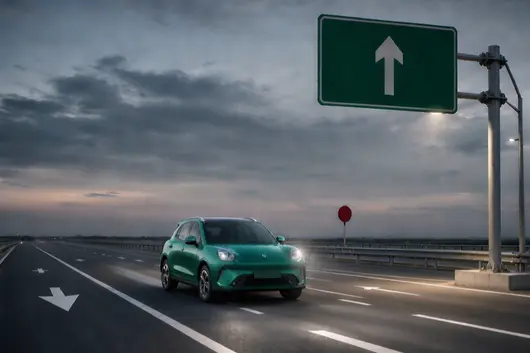
Ora, the former pure electric vehicle brand, has been selling gasoline cars for several months now.
March 12, 2026, Ora held the Ora 5 Series Global Multi-Power Launch Event in Thailand, showcasing Hybrid, Pure Electric, and Fuel powertrains simultaneously for the first time, and re-establishing the brand positioning as the "Global Fashionable Boutique Automotive Brand".
April 25, 2026, during the Beijing Auto Show, Ora officially launched the Ora 5 SUV Fuel Version and Hybrid Version. From this moment on, Ora was no longer a pure electric/New Energy vehicle brand.

In the Chinese automotive market, brands that start with pure electric and then expand to plug-in hybrid are numerous, such as XPeng, Zeekr; but with the "birth certificate" of a pure electric brand, turning back to build gasoline cars directly, Ora is the only one, even expanding its sights to the global market, which is also the only one.
The extent of Ora's strategic wavering is quite confusing, which is also a microcosm of Great Wall Motor's transformation. It created a pure electric brand as early as 2018, once became a market leader, and even started laying out battery cells in 2012, successfully incubating an industry-leading power battery company (SVOLT) within its own system, but Great Wall Motor's electrification transformation has remained lackluster.
Why is it so "bizarre"?
The "contradictory" Ora
To be honest, I was initially attracted by Ora's suddenly rebounding sales volume, but after careful research, I found that this is actually a "Gasoline Revival" play.

For the first three months of this year, Ora's monthly sales were still in a continuous decline, averaging around 2,000 units per month, but sales volume rebounded rapidly starting from April. June saw a smooth breakthrough of 10,000 units, and excellent monthly sales performance over 10,000 units was maintained in the following months. January-September, Ora's cumulative sales reached 59,400 units, doubling year-on-year, already exceeding last year's full-year sales (48,300 units).
There are two reasons for the rebound starting in April, first, the Ora 5 SUV Fuel Version launched on April 25, second, Ora's export volume grew rapidly starting from April, and the Fuel Version itself is one of the main export forces.

Starting from May, the wholesale volume of Ora 5 SUV Fuel Version accounted for over 30% of the brand's total sales volume, peaking at over 45%; while starting from June, Ora's monthly export volume accounted for over 55% of the monthly sales volume, with the highest moment approaching 65%. Among them, the Ora 5 SUV Fuel Version and Pure Electric Version were the two main export forces, each accounting for over 40%.
If we exclude the sales volume of the Fuel Version, Ora's cumulative sales volume for the first 9 months of this year was approximately 38,000 units, still maintaining a 27.6% year-on-year growth; if we exclude export volume, Ora's domestic cumulative sales volume for 9 months was about 28,900 units, flat compared to the same period last year; that is to say, if the Fuel Car and Export sales volumes are removed simultaneously, Ora's New Energy Vehicle market in China is still declining.
With such performance, it is hard to say whether the Ora "starting anew" has truly opened up a new situation. From a sales volume perspective, the overall scale of Ora has shown significant improvement, which is naturally good news; but from a transformation perspective, the New Energy brand recognition accumulated by this brand is constantly blurring.
A Transformation Road with Multiple Turns
Reviewing Ora's transformation road can be described as having multiple twists and turns.
In 2018, the Ora brand was born, entering the pure electric market with A00 class microcars such as Black Cat, White Cat. It precisely hit the route of high cost-performance commuting cars, rapidly achieved success. In 2021, sales volume reached 135,000 units, increasing 140% year-on-year, overwhelming Nio, XPeng, and Li Auto.

In 2022, due to the skyrocketing prices of power battery raw materials such as Lithium Carbonate, combined with chip shortages, the cost of pure electric vehicles surged, worsening corporate losses. Great Wall resolutely cut the Black Cat and White Cat series in February of that year, instead betting on higher positioning models.
Pity, due to insufficient product competitiveness, models with higher positioning such as Ballet Cat, Flash Cat failed to open up the situation.

At the same time, due to Great Wall Motor Chairman Wei Jianjun always believing that the pure electric vehicle business model itself has problems, it is difficult to achieve profitability, so after 2022, no resources were continuously invested in the Ora brand, causing Ora to begin declining, with sales volume dropping throughout 2023-2025.
Eighth years after brand birth, Ora's brand positioning has always been wavering. The starting point in 2018-early 2021 was "Urban Electric Mini Car". In March 2021, it announced to be the "Automotive Brand That Loves Women the Most". In October 2022, it claimed "For Both Men and Women". In April 2023, it swung back to "ALL IN on the Female Track". In June 2025, it shouted "Broader Youth" proposition, until March 2026 it determined "Global Fashionable Boutique Automotive Brand".
Changing brand positioning when it doesn't sell makes consumers always unable to remember who Ora is, and this time jumping directly to the Fuel Vehicle field makes it even harder for outsiders to understand Ora.
Strong Restraints of Profit Priority
Ora and the overall transformation dilemma of Great Wall Motor essentially come from its profit-oriented management philosophy. Wei Jianjun has emphasized multiple times that Chinese Electric Vehicles have no original advantages in core technologies such as batteries, motors, electronic controls, only industry chain advantages. Moreover, pure electric cars suffer serious losses and rely too much on capital infusion; he prefers diverse technology routes.
So besides pure electric, Great Wall Motor clearly plans more in Plug-in Hybrid. Haval, Wey, Tank, and Pickup brands all have Plug-in Hybrid models. Wey models on sale are switched entirely to Plug-in Hybrid models, becoming a "New Energy Vehicle Brand" more pure than Ora.

However, stemming from its profit-oriented concept, Great Wall's Plug-in Hybrid layout is also "unique". The most mainstream Haval brand has the lowest proportion. January-September New Energy penetration rate was only around 16%. Tank brand penetration rate is about 51%, while Wey is 100%.
Compared to mainstream industry solutions, Great Wall's Plug-in Hybrid layout presents a clear "High-End Priority" pattern, on Haval brand, the slogan "New Energy Only for Four-Wheel Drive" was shouted. This means even if Plug-in Hybrid is laid out in Haval brand, it will only appear on high-spec versions.
The reason for focusing on high-end models stems from the enterprise's profit-oriented concept. In terms of technical solutions, it is the higher-cost Hi4 series technology. This technical solution is more complex but has stronger versatility. It can meet daily use needs as well as hardcore off-road scenario requirements. Especially on off-road tracks with stronger performance requirements, this solution has unique advantages, allowing Great Wall to maintain leadership in the New Energy Hardcore Off-Road field.

However, conversely, because technical costs are relatively higher, only high-end models can support its integration, in the wider field of essential two-wheel drive city SUVs, this technology shows a side of "maladjustment". This is also the reason why Haval emphasizes carrying this technology only on four-wheel drive models.
This is equivalent to Haval directly abandoning the low-end Plug-in Hybrid SUV market, which will long-term affect its New Energy Vehicle penetration rate and subsequent scale, after all, the continuous contraction of gasoline cars has become an unavoidable trend. And since Haval remains the brand with the highest proportion in Great Wall, this will also make Great Wall's overall New Energy Vehicle penetration rate difficult to improve. Currently its penetration rate is around 28%, significantly lower than the market average.
Great Wall's Transformation Dilemma
Observing Great Wall's entire transformation history, this enterprise shows a very "stubborn" side: because the pure electric vehicle profitability path is not clear, it resolutely cuts hot-selling models at its peak; it has a power battery company within its system with cost advantages, but it would rather launch new gasoline cars than bet during the pure electric market explosion; knowing that the P1+P3+ Single-Geared DHT Plug-in Hybrid configuration is the simplest and most adapted for essential city SUV models, but insisting on multi-geared solutions without compromising to the market...

If one says Great Wall does not care about electrification transformation, but it has chewed the hard bone of independently developed and produced power batteries, and tolerated its long-term losses (of course, this may be related to SVOLT not being within Great Wall Motor's listed company system); if one says it cares about transformation, it has long been unwilling to "forward-looking" invest.
All of this can indeed be explained by Great Wall's profit-oriented management philosophy, but an inescapable fact is that to this day, Great Wall's transformation dilemma has shifted from a strategic willingness problem to a capability reserve problem.

In intelligent driving, the independently developed Himile essentially stalled in November 2025. Great Wall turned to Yuanrong Qixing, ZhuoYu, and Momenta, three external purchases spliced together. A company that insists on independently developing engines, transmissions, and batteries, only abandoning independent development on the "Soul".
On the pure electric vehicle side, SVOLT's Supercharging Battery is world-class level, but Ora 5 Pure Electric Version is still 400V platform, 30%–80% charging about 20 minutes, Great Wall still does not have a mass-produced 800V pure electric car, nor any self-built charging network.
Financially, the bills are also starting to mature. 2025 Deducted Non-Net Profit was 6.059 billion yuan, year-on-year -37.76%. First half of 2026 was 1.61 billion yuan, year-on-year -55.04%. Single vehicle net profit dropped from about 10,300 yuan in 2024 to about 4,300 yuan; Selling expenses surged 44% in 2025. Holding the existing market requires spending more and more money.
During the chaotic period of market involution, strategically avoiding involution and focusing on high-profit models is a viable strategy, but the risk of being a late mover always lies in the market not necessarily giving you a chance to act.
Pengarang | Klein
Dilancarkan | Road Coffee in
Ringkasan: Risiko menjadi pengikut adalah pasar mungkin tidak akan memberikan peluang lagi kepada anda.
Ora, jenama kereta elektrik tulen yang pernah wujud, telah menjual kereta petrol selama beberapa bulan.
12 Mac 2026, Ora menganjurkan pelancaran global pelbagai kuasa untuk siri Ora 5 di Thailand, menunjukkan untuk pertama kalinya bentuk kuasa hibrid petrol-listrik, elektrik tulen dan petrol secara serentak, dan menetapkan semula jenama sebagai "Jenama Kereta Modis dan Premium Global".
25 April 2026, semasa pameran kereta Beijing, Ora melancarkan Edisi Petrol dan Hibrid Petrol-Listrik Ora 5 SUV secara rasmi, dari saat ini, Ora bukan lagi jenama kereta elektrik tulen/kenderaan baharu.
Di pasaran kereta China, banyak jenama mula dengan elektrik tulen kemudian berkembang ke hibrid boleh cas, seperti XPeng, Zeekr; tetapi yang memikul "surat lahir" jenama kereta elektrik tulen, terus kembali buat kereta petrol, Ora adalah satu-satunya, malah meluaskan pandangan ke pasaran global, ini juga satu-satunya.
Sudut ayunan strategi Ora begitu besar, sangat mengelirukan, dan ini adalah gambaran singkat transformasi Great Wall Motors. Sejak 2018 telah membina jenama kereta elektrik tulen, pernah menjadi pemimpin pasaran, malah sejak 2012 telah melancarkan bateri, dan berjaya membiak syarikat bateri kuasa industri terkemuka di dalam sistemnya sendiri (Hive Energy), tetapi transformasi elektrifikasi Great Wall Motors sentiasa tidak menarik.
Mengapa menjadi begitu "aneh"?
"Mengelak" Ora
Jujur dikatakan, penulis awalnya ditarik oleh jualan Ora yang tiba-tiba hangat, hasil kajian terperinci, ini adalah drama "Pemulihan Petrol".
Tiga bulan pertama tahun ini, jualan bulanan Ora masih dalam keadaan turun, purata jualan bulanan sekitar 2,000 kenderaan, tetapi dari April jualan naik semula dengan cepat, Jun lebih mudah pecah 10,000, dan mengekalkan prestasi cemerlang jualan melebihi 10,000 dalam bulan seterusnya, 1-9 bulan Ora kumulatif jual 59,400 kenderaan, berkembang berganda tahun ke tahun, sudah mengatasi jualan sepanjang tahun lepas (48,300 kenderaan).
Sebab April mulai naik semula, ada dua sebab, yang pertama Edisi Petrol Ora 5 SUV dilancar 25 April, yang kedua mulai April jualan eksport Ora meningkat pesat, dan edisi petrol sendiri adalah salah satu utama eksport.
Mulai Mei, jumlah borong Edisi Petrol Ora 5 SUV melebihi 30% dari jumlah jualan jenama, tertinggi melebihi 45%; dan mulai Jun, jumlah eksport bulanan Ora melebihi 55% dari jualan bulanan, tertinggi hampir 65%, di mana Edisi Petrol dan Elektrik Tulen Ora 5 SUV adalah dua utama eksport, masing-masing melebihi 40%.
Jika membuang jualan model Edisi Petrol, kumulatif jualan 9 bulan pertama Ora tahun ini kira-kira 38,000 kenderaan, masih mengekalkan pertumbuhan 27.6% tahun ke tahun; jika buang jumlah eksport, jualan kumulatif dalam negeri 9 bulan Ora kira-kira 28,900 kenderaan, sama dengan tahun lepas; maksudnya jika serentak buang jualan kereta petrol dan eksport, pasaran kenderaan baharu Dalam Negeri Ora masih menurun.
Pencapaian begini, sukat untuk kata Ora yang "berangkat semula" sekali lagi, sudahkah membuka alam baharu. Jika dari sudut jualan, skala keseluruhan Ora ada peningkatan, ini tentu berita baik; tetapi jika dari sudut transformasi, pemahaman kenderaan baharu yang jenama ini kumpulkan dahulu semakin kabur.
Jalan transformasi dengan N belok
Melihat semula jalan transformasi Ora, boleh dihuraikan dengan N belok.
2018, jenama Ora dilahirkan, dan dengan Kucing Hitam, Kucing Putih dan lain-lain kenderaan mikro Kelas A00 masuk pasaran elektrik tulen, tepat ke arah kenderaan ganti murah berkesan, cepat berjaya, jualan 2021 capai 135,000 kenderaan, pertumbuhan 140% tahun ke tahun, kalah Nio, XPeng, Li Auto.
2022, kerana harga bahan mentah bateri kuasa seperti Lithium Karbonat naik mendadak, ditambah kekurangan cip, kos kereta elektrik tulen melambung, kerugian syarikat semakin teruk, Great Wall dengan tegas pada Februari tahun itu memotong dua siri Kucing Hitam dan Putih, beralih bertaruh pada model lebih mewah.
Malang, kerana kuasa produk tidak cukup, model lebih mewah seperti Ballet Cat, Lightning Cat tidak dapat membuka keadaan.
Seterusnya, kerana Pengerusi Great Wall Motors Wei Jianjun sentiasa berfikir model perniagaan kereta elektrik tulen sendiri ada masalah, sukar untung, jadi selepas 2022 tidak lagi melabur sumber pada jenama Ora, menyebabkan Ora mula turun, jualan 2023-2025 menurun sepanjang jalan.
8 tahun jenama lahir, penjenamaan Ora beralih-ali. 2018-awal 2021 mulanya "Kereta Elektrik Bandar", Mac 2021 buat "Jenama Kereta Kesukaan Wanita", Oktober 2022 kata "Lelaki Wanita Sama", April 2023 kembali "ALL IN Laluan Wanita", Jun 2025 teriak "Pendekatan Kesemua Umur Muda", sehingga Mac 2026 pasti "Jenama Kereta Modis dan Premium Global".
Jualan tidak laris tukar penjenamaan, menyebabkan pengguna tidak ingat siapa Ora, dan kali ini terus melompat ke bidang petrol, lebih sukar orang luar faham Ora.
Beban Kuat Prioriti Keuntungan
Konflik transformasi keseluruhan Ora dan Great Wall Motors, secara asalnya datang dari konsep perniagaan keuntungan berat, Wei Jianjun berkali-kali menekankan, kereta elektrik China tiada keunggulan asal pada teknologi teras seperti bateri, motor, kawalan kuasa, hanya keunggulan rantaian industri, dan kereta elektrik rugi teruk, terlalu bergantung suntikan modal, dia lebih cenderung laluan teknologi pelbagai.
Jadi di luar elektrik tulen, Great Wall Motors jelas lebih banyak melabur dalam hibrid boleh cas, Haval, WEY, Tank, Pickup empat jenama ada model hibrid boleh cas, model dijual WEY semua beralih ke model hibrid boleh cas, menjadi "jenama kenderaan baharu" lebih tulen daripada Ora.
Berbagai, kerana konsep keuntungan berat, layout hibrid boleh cas Great Wall juga "unik", Haval jenama utama paling rendah, 1-9 bulan penetrasi kenderaan baharu hanya 16%, Tank jenama penetrasi sekitar 51%, WEY adalah 100%.
Bandingkan dengan skema industri, layout hibrid boleh cas Great Wall menunjukkan "utamakan mewah", pada Haval, teriak "kenderaan baharu hanya empat roda", ini bermakna walaupun pada Haval layout hibrid boleh cas, akan ada pada versi tinggi.
Sebab fokus model mewah, sumbernya konsep keuntungan syarikat, dalam skema teknikal adalah teknologi Siri Hi4 kos lebih tinggi, skema ini lebih kompleks, tetapi keupayaan gabungan lebih kuat, boleh penuhi penggunaan harian, boleh penuhi keperluan skenario off-road keras, terutamanya pada laluan off-road prestasi lebih tinggi, skema ini mempunyai keistimewaan, Great Wall mengekalkan kepimpinan dalam off-road keras kenderaan baharu.
Walau bagaimanapun, sebaliknya, kerana kos teknikal lebih tinggi, hanya model mewah boleh dukung, dalam SUV Bandar dua roda yang luas, teknikal ini menunjukkan "tidak sesuai", ini sebab Haval tekankan hanya pada SUV empat roda dukung teknologi ini.
Ini seolah Haval terus buang pasaran SUV hibrid boleh cas rendah, jangka panjang kesan pada penetrasi kenderaan baharu dan saiz seterusnya, kerana kereta petrol susut tidak boleh dielakkan. Oleh kerana Haval masih jenama tertinggi Great Wall, ini juga menyebabkan penetrasi kenderaan baharu Great Wall sukat naik, semasa penetrasi sekitar 28%, jauh di bawah pasaran.
Sesat transformasi Great Wall
Perhatikan seluruh proses transformasi Great Wall, syarikat ini menunjukkan "keras kepala": kerana jalan untung kereta elektrik tidak jelas, potong model laris di puncak; dalam sistem sendiri ada syarikat bateri, ada kelebihan kos, tapi lebih mahu bawa kereta petrol baru tidak mahu bertaruh masa pasaran elektrik meletup; tahu P1+P3+ DHT satu gear hibrid skema paling mudah paling sesuai SUV Bandar, tapi bersikeras banyak gear tidak kompromi dengan pasaran…
Jika Great Wall tidak peduli transformasi elektrifikasi, tapi dia makan batu keras bateri kuasa sendiri, toleransi rugi lama (mungkin dengan Hive Energy tidak dalam sistem syarikat tersenarai Great Wall); boleh kata ia peduli transformasi, tapi lama tidak mahu melabur "lebih awal".
Semua ini boleh diterangkan konsep keuntungan Great Wall, tapi fakta penting adalah, sehingga hari ini, konflik transformasi Great Wall dari masalah niat strategi, jadi masalah simpanan keupayaan.
Dalam pemanduan pintar, Hemao Zhixing sendiri henti November 2025, Great Wall beralih Yuanrong Qixing, Zhuoyu, Momenta tiga vendor, syarikat yang enjin, kotak gear, bateri bersikap sendiri,唯独 dalam "jiwa" buang sendiri.
Pada keseluruhan kereta elektrik, bateri super cas Hive tahap dunia, tetapi Ora 5 Edisi Elektrik masih platform 400V, 30%-80% cas sekitar 20 minit, Great Wall hingga kini tiada model 800V elektrik tulen, tiada rangkaian cas sendiri.
Dari kewangan, bil mula luput, 2025 keuntungan bersih 6.059 bilion Yuan -37.76% tahun ke tahun, Semester pertama 2026 1.61 bilion Yuan -55.04%, keuntungan kereta per unit dari 2024 sekitar 10,300 Yuan turun ke sekitar 4,300 Yuan; kos jualan 2025 naik 44%, pertahankan pasaran sedia ada perlu belanja lebih banyak wang.
Dalam kekeliruan persaingan pasaran, strategi elak persaingan fokus model keuntungan tinggi boleh, tetapi risiko pengikut tetap pada pasaran mungkin tidak beri peluang lagi.













© 2024 Bitauto.com. All Rights Reserved.
Bitauto (www.yiche.com and www.bitauto.com) is one of the most visited automotive websites in China. We provide detailed info on Chinese car brands available in your area. Please note that the information provided on this website is based on publicly available data and is for reference only. It may not be fully updated or accurate at all times.

Help us improve our website


