

HomeProton Ertiga

Search History
Popular Searches
Dealer Login / Sign Up

How are Chinese car brands performing in the Malaysian market?
Data is here: In April 2026, the total new car sales in Malaysia reached 78,100 units, a year-on-year increase of 20.9%, while the cumulative annual sales were 269,800 units, up 3.1% year-on-year.
Now Chinese car brands in Malaysia have shifted from "marginal players" to "main force," not only established a foothold but also started to exert substantial pressure on Japanese brands.
Below I will recap the highlights from last month (April 2026) and then look at the specific performance of Chinese cars.
 The Malaysian car market is now dominated by two local giants: Perodua (Second National Car) and Proton are taking nearly two-thirds (64.1%) of the business.
Especially Proton, backed by Geely, sales skyrocketed 47.9%, nearly doubling.
Previously, Chinese people traveling to Malaysia often saw Toyota, Honda, Suzuki, etc. everywhere on the streets, now their sales have all declined.
Among them Toyota sales dropped 9.7% last month, Honda dropped 8.3%. This illustrates a clear problem: people no longer blindly worship Japanese brands, they started turning to local and our Chinese brands.
Indeed, now Chinese cars in Malaysia are no longer fighting alone, but have become a "cluster" that can fight.
The ranking from this April shows the current momentum. Chery's sub-brand Omoda Jaecoo entered the top five for the first time, directly pushing down the traditional Japanese brands.
 In general, in the first four months of this year, Chinese car brands Chery Omoda and Jaecoo have already jumped to fifth place, sales 5,215, basically secured their seat in the first tier. BYD ranked eighth with a cumulative performance of 3,674 vehicles. Chinese brands in Malaysia have moved from "small-scale operations" to a new stage of "scale breakthrough".
Previously the Malaysian market was Perodua and Proton two local brands eating the meat, Toyota and Honda drinking the soup. Now Chinese brands (especially Omoda Jaecoo and BYD) squeezed into top five, top eight, directly causing Honda to drop 8%, showing our cars really snatched the Japanese brands' cake.
Did you notice? Just in the top ten, there are Omoda Jaecoo, BYD, Jetour these Chinese brands. If adding Chery, Great Wall, Chinese brands on the list are already very conspicuous. This coordinated effort effect will make consumers feel "Chinese cars are a reliable choice".
Especially Geely invested local brand Proton, its electric vehicle e.MAS series sells very well. Although Proton counts as a Malaysian local brand, its new energy technology comes from China. This is equivalent to Chinese car technology using "borrowing a chicken to hatch eggs", achieving leapfrog overtaking in Malaysia.
So in my opinion, our Chinese cars have new design, high configuration, good intelligent experience, plus Chery, BYD, Geely these big factories have already built factories in Malaysia, costs have come down, prices also have competitiveness.
But Japanese cars decades accumulated reputation (durable, high resale value) are hard to overturn at once. Moreover Malaysia's charging piles are not that many, pure electric cars to fully popularize still need to wait a bit.
In general, Chinese brands in Malaysia are already no longer a "niche choice", but have become one of the mainstream options. As long as maintaining current product power and cost-performance ratio, replacing Japanese cars to become the "third major player" is only a matter of time.
What do you think?


近日,國家市場監督管理總局正式公布首批國家質量標準實驗室培育建設名單。上汽通用五菱汽車股份有限公司申報的「新能汽車國家質量標準實驗室」成功入選,成為車企申報唯一獲批建設的國家質量標準實驗室。這標誌着企業在新能汽車質量技術體系建設方面邁入國家級新階段。
國家質量標準實驗室是依據《質量強國建設綱要》設立的國家級技術創新平台,主要承擔產業重大質量標準的基礎研究與應用、高水平質量標準的研制與推廣、以及質量標準人才的培養與集結等任務,對推動質量強國建設具有重要戰略意義。

【上汽通用五菱「新能汽車國家質量標準實驗室」成功入選】
上汽通用五菱獲批的「新能汽車國家質量標準實驗室」,匯聚了4000 餘名研發人員,涵蓋博士、碩士及外籍專家,設有博士後工作站、國家企業技術中心、國家級工業設計中心等多個國家級創新平台,擁有14 個國際一流水準的實驗室,涵蓋三電、碰撞、NVH、EMC、熱管理、智能聯網、輕量化材料等全鏈條驗證能力,已獲 CNAS 認可 275 項(其中包含 ECE 國際認可 81 項),具備從整車到零部件的全鏈路測試能力。
依托 3200 萬基盤用戶的場景數據及百萬輛級新能汽車大數據中心,實驗室能夠復現用戶真實使用工況,實現從研發試驗到用戶使用的全鏈條質量預判與閉環迭代,全面支撐新能汽車電智化技術的試驗驗證。

【整車試驗場】

【碰撞實驗室】

【三電系統實驗室】
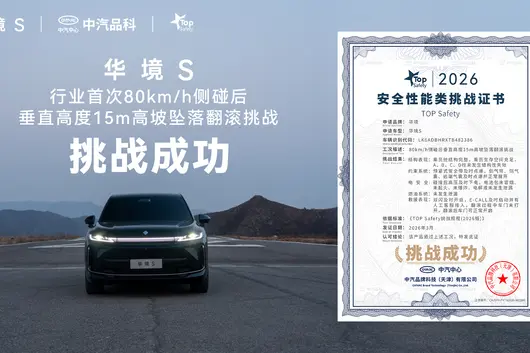
目前,實驗室已形成一批全球首創、國際領先、行業先進的標誌性成果,其中包括全球首創的智能島製造體系,入選國家首批「領航級智能工廠」培育名單;華境 S 通過行業首次 80km/h 側碰 15 米高坡墜落挑戰;神煉電池實現 766 億公里 0 自燃記錄。此外,五菱 Air ev 安全設計納入東盟官方技術規範,直流充電標準獲印尼 SNI 認證,實現中國車企在東盟標準制定領域「零的突破」,成功打破歐美日標準壁壘。

【華境 S 通過行業首次 80km/h 側碰 15 米高坡墜落挑戰】
此次入選首批國家質量標準實驗室,是上汽通用五菱長期堅持正向研發、深耕質量基礎設施建設的成果。它意味著企業的新能汽車質量技術標準將與國家級最高標桿對齊,實現從「造好車」到「定義好車標準」的關鍵一躍,真正做到技術自主、標準自主、質量自主、安全可控。與此同時,實驗室將通過創新質量管理與服務模式,實現技術攻關、標準引領、試驗驗證、產業賦能,讓「中國標準」沿著產業鏈出海,為「一帶一路」標準联通貢獻五菱力量。對用戶而言,國家質量標準實驗室將成為上汽通用五菱產品品質的「最高校驗場」——從三電安全到車身結構,從智能聯網到整車耐久,每一款車型都將在高標準、高起點的質量體系下完成嚴苛打磨。
面向未來,上汽通用五菱將以國家質量標準實驗室建設為戰略支撐,推動中國新能汽車從規模領先邁向標準領先,為全球消費者帶來更高品質的出行體驗。
© 2024 Bitauto.com. All Rights Reserved.
Bitauto (www.yiche.com and www.bitauto.com) is one of the most visited automotive websites in China. We provide detailed info on Chinese car brands available in your area. Please note that the information provided on this website is based on publicly available data and is for reference only. It may not be fully updated or accurate at all times.

Help us improve our website


