

HomeProton Iriz

Search History
Popular Searches
Dealer Login / Sign Up

In Malaysia's SUV market, many buyers compare Mazda CX-3 and Hyundai Tucson when choosing a car. These two cars are quite close in price and positioning, so today we will make a detailed comparison from multiple aspects to help you save time on research.
The OTR price of Mazda CX-3 in Malaysia is RM 126,159 - 139,159, there are a total of 2 versions, including 2023 2.0L High (RM 139,159), 2023 2.0L Plus (RM 126,159), etc.
The OTR price of Hyundai Tucson in Malaysia is RM 143,888 - 197,888, there are a total of 5 versions, including 2025 HEV 1.6T AT 2WD Prestige (RM 197,888), 2025 1.6T DCT 4WD Prestige (RM 186,888), 2025 1.6T DCT 2WD Prime (RM 164,888), etc.
In terms of price, the starting price of Mazda CX-3 is indeed RM 17,729 cheaper than Hyundai Tucson. If your budget is limited, Mazda's entry-level version is already enough to meet daily needs. But keep in mind, the few thousand cheaper, there might be trade-offs in equipment, it depends on your specific needs.

Mazda CX-3 uses FWD drive mode.
Hyundai Tucson uses FWD drive mode.
The drive modes of both cars are the same, both are FWD, there won't be a big difference in daily driving feel.

Mazda CX-3 offers a 5-year/150,000km warranty, maintenance interval is every 10,000km or 6 months.
Hyundai Tucson offers a 5-year/300,000km warranty, maintenance interval is every 10,000km or 6 months.

Mazda CX-3 and Hyundai Tucson are both mainstream choices in the Malaysian market, suitable for family use and daily commuting. If you value brand reputation and resale value more, you can prioritize the one with better reputation; if you care more about value for money and features, then choose the one with richer configuration. Finally, it is recommended to test drive both, as the personal experience is the most important.

Overall, Mazda CX-3 and Hyundai Tucson are both very good models in the Malaysian market. Which one to choose depends mainly on your personal needs and budget. We suggest doing your research, comparing quotes from multiple car dealerships, and then test driving to make the final decision. Buying a car is a big matter, spending time on research will definitely not be a mistake.


In the SUV market in Malaysia, many buyers compare Mazda CX-3 and Mitsubishi Xforce when choosing a car. These two cars are quite close in price and positioning. Today, we will do a detailed comparison from multiple aspects to help you save time on research.
Mazda CX-3 OTR price in Malaysia is RM 126,159 - 139,159, with a total of 2 versions, including 2023 2.0L High (RM 139,159), 2023 2.0L Plus (RM 126,159), etc.
Mitsubishi Xforce OTR price in Malaysia is RM 109,930 - 119,930, with a total of 2 versions, including 2026 1.5L Ultimate (RM 119,930), 2026 1.5L Urban (RM 109,930), etc.
In terms of price, the starting price of Mitsubishi Xforce is RM 16,229 cheaper than Mazda CX-3. To be honest, at this price point, the difference of a few thousand is actually not significant; the key is to look at the overall value for money and long-term usage costs.
Mazda CX-3 is equipped with 1.5L Turbo, 140 hp. Official fuel consumption 7.0 L/100km.
Mitsubishi Xforce is equipped with 1.5L Turbo, 140 hp. Official fuel consumption 7.0 L/100km.
Both cars use the same powertrain, and the driving experience feels basically the same daily. Fuel consumption is also similar, no need to worry too much about this point.
Mazda CX-3 safety rating is 5★ (ASEAN NCAP), active safety systems include i-Activsense.
Mitsubishi Xforce safety rating is 5★ (ASEAN NCAP), active safety systems include MI-PILOT.
Both cars have the same safety rating, and safety features are quite comprehensive in this class. New car safety nowadays is generally not bad, no need to worry too much about this.
Mazda CX-3 warranty 5 years/150,000km, maintenance interval every 10,000km or 6 months.
Mitsubishi Xforce warranty 3 years/100,000km, maintenance interval every 10,000km or 6 months.

Mazda CX-3 and Mitsubishi Xforce are both mainstream choices in the Malaysian market, suitable for family use and daily commuting. If you value brand reputation and resale value more, you can prioritize the one with better reputation; if you care more about value for money and features, choose the one with richer configurations. Ultimately, it is recommended to test drive both; personal experience is the most important.

Overall, Mazda CX-3 and Mitsubishi Xforce are both very good car models in the Malaysian market. Which one to choose depends on your personal needs and budget. It is recommended to do your homework, compare quotes from several dealerships, and then test drive to make a final decision. Buying a car is a major matter; spending time doing research is never wrong.

喺馬來西亞嘅 SUV 市場,好多揀車嘅買家都會用 Mazda CX-3 同 Kia Sportage 做比較。呢兩款車喺價錢同定位上都幾接近,今日我哋就由多個方面做個詳細比較,幫你節省咗做功課嘅時間。
Mazda CX-3 喺馬來西亞嘅 OTR 售價係 RM 126,159 至 139,159,一共有 2 個版本,包括 2023 年 2.0L High(RM 139,159)、2023 年 2.0L Plus(RM 126,159)等。
Kia Sportage 喺馬來西亞嘅 OTR 售價係 RM 129,639 至 179,320,一共有 4 個版本,包括 2025 年 1.6T DCT 4WD High(RM 179,320)、2025 年 1.6T DCT 2WD High(RM 159,320)、2025 年 2.0L AT 2WD High(RM 139,639)等。
從價錢睇,Mazda CX-3 嘅起步價確實比 Kia Sportage 平咗 RM 3,480。如果你預算有限,Mazda 嘅入門版已經滿足日常需要。但都要留意,平嗰幾千蚊,可能喺配備上會有取舍,具體要看你嘅需求。
Mazda CX-3 搭載 1.5L Turbo,馬力 140 hp。官方油耗 7.0 L/100km。
Kia Sportage 搭載 1.5L Turbo,馬力 140 hp。官方油耗 7.0 L/100km。
兩款車用嘅係同一套動力系統,日常開起嚟嘅感受基本冇乜分別。油耗方面都差不多,唔使太糾結呢一點。
Mazda CX-3 車身長 4500 mm,行李箱 450 L。
Kia Sportage 車身長 4400 mm,行李箱 400 L。
空間方面,Mazda CX-3 嘅車身比 Kia Sportage 長咗 100 mm,車內乘坐空間會稍微寬鬆啲,尤其係後座腿部空間。如果你經常載家人或者需要放嬰兒車,大一點嘅車身確實更實用。
Mazda CX-3 採用 FWD 驅動方式。
Kia Sportage 採用 FWD 驅動方式。
兩款車嘅驅動方式一樣,都係 FWD,日常駕駛感受唔會有太大分別。

總括嚟講,Mazda CX-3 同 Kia Sportage 都係馬來西亞市場好唔錯嘅車型。選擇邊一輛,關鍵都要睇你嘅個人需求同預算。建議大家做足功課,多比較幾間車行嘅報價,再去試駕做最終決定。買車係件大事,花點時間做功課絕對唔會錯。

喺馬來西亞嘅 SUV 市場,好多買家喺揀車嘅時候都會拿 Mazda CX-3 同 Hyundai Santa Fe 嚟做比較。呢兩款車喺價位同定位上都好接近,今日我哋就從多個方面做一個詳細嘅對比,幫你省下做功課嘅時間。
Mazda CX-3 喺馬來西亞嘅 OTR 售價係 RM 126,159 - 139,159,一共有 2 個版本,包括 2023 2.0L High(RM 139,159)、2023 2.0L Plus(RM 126,159)等。
Hyundai Santa Fe 喺馬來西亞嘅 OTR 售價係 RM 225,000 - 270,000,一共有 3 個版本,包括 2025 2.5T DCT 4WD Calligraphy 6 Seats(RM 270,000)、2025 HEV 1.6T AT 2WD Prestige 7 Seats(RM 245,000)、2025 HEV 1.6T AT 2WD Prime 7 Seats(RM 225,000)等。
從價錢睇,Mazda CX-3 嘅起步價確實比 Hyundai Santa Fe 平咗 RM 98,841。如果你預算有限,Mazda 嘅入門版已經可以滿足日常需要。但都要注意,平嗰幾千蚊,可能喺配備上會有取舍,具體要看你嘅需要。
Mazda CX-3 嘅安全評級係 5★ (ASEAN NCAP),主動安全系統包括 i-Activsense。
Hyundai Santa Fe 嘅安全評級係 TBD,主動安全系統包括 Basic。
安全配備方面,兩款車都拿到唔錯嘅評級。不過 Mazda CX-3 嘅 i-Activsense 同 Hyundai Santa Fe 嘅 Basic 喺功能上有些差異,如果你比較睇重主動安全嘅話,可以仔細對比一下兩者嘅功能列表。
Mazda CX-3 採用 FWD 驅動方式。
Hyundai Santa Fe 採用 FWD 驅動方式。
兩款車嘅驅動方式一樣,都係 FWD,日常駕駛感受唔會有太大分別。
Mazda CX-3 保養 5 年/150,000km,保養間隔 每 10,000km 或 6 個月。
Hyundai Santa Fe 保養 5 年/300,000km,保養間隔 每 10,000km 或 6 個月。

Mazda CX-3 同 Hyundai Santa Fe 都係馬來西亞市場嘅主流選擇,適合家庭使用、日常通勤。如果你更睇重品牌口碑同二手價,可以優先考慮口碑更好嗰一款;如果你更在意性價比同配備,那就選配備更豐富嗰款。最終都係建議兩款都去試駕,親身體驗先係最重要嘅。

總體嚟講,Mazda CX-3 同 Hyundai Santa Fe 都係馬來西亞市場幾唔錯嘅車型。選擇邊一輛,關鍵都要睇你嘅個人需要同預算。建議大家做好功課,多比較幾間車行嘅報價,再去試駕做最終決定。買車係一件大事,花少少時間做功課絕對唔會錯。

1月2日,2026马来西亚沙巴Borneo Safari国际雨林赛圆满收官。212越野车再度出征,连续两年登上这条雨林赛道。在历经8天残酷赛程后,知名汽车媒体人、212车队车手柯南(张程柯)驾驶全场比赛中唯一量产车型——2026款T01,在竞赛组别中顺利完赛并斩获国际车组亚军,再次以实战成绩证明212越野车的产品实力。

深入热带腹地,直面全球“雨林越野天花板”
马来西亚沙巴国际雨林赛,是东南亚历史最悠久、难度极高的越野赛事,被誉为全球“雨林越野天花板”。这里是世界上最古老的热带雨林之一,持续暴雨带来的深水河道、重度泥沼、长距离陡坡和密棘林道,对车辆的动力输出、四驱系统、底盘强度与涉水防护都提出了苛刻的要求。历届完赛率不足30%,极高的车辆损毁率与退赛率,使这场赛事成为检验车辆性能的试金石。

本届赛事共吸引全球650台车、1700余名参赛者报名。其中,212以2026款T01出战,是全场赛事中唯一保留原厂动力与底盘核心结构、仅做安全合规强化的量产车型。面对热带雨林的复杂工况,212越野车全程稳扎稳打,以扎实可靠的机械素质,充分彰显出中国硬派越野的实力。
无惧雨林险阻,以实力从容应战
能够在沙巴雨林顺利完赛,绝非偶然。2026款T01针对典型雨林环境,在严格遵守赛事量产组别改装规则的情况下,完成专项适配升级。车辆动力总成维持原厂量产状态,仅针对性升级全车防滚架、竞技减震、涉水防护、雨林越野胎等必要配件,并配备18000磅绞盘等脱困安全装置,在合规范围内强化雨林脱困、底盘防护与复杂地形适配能力,从容应战雨林中的重重考验。
在长达一周的赛程中,雨林赛道路况变化莫测,时刻考验着车辆性能。2026款T01依托非承载式车身和前后整体桥架构,能够保障车身稳定与车轮贴地抓附,在泥沼爬坡等场景下释放出可靠稳定的动力,脱困能力突出。车手柯南(张程柯)凭借精湛的越野驾驶技术,充分释放车辆性能,让212在一众强队中脱颖而出,再次交出一份极具分量的雨林实战答卷。

此次赛事的优异成绩,是212越野车赛级品质的又一次展现。2025年,212就已成为首个参加马来西亚沙巴国际雨林赛,并实现全程零故障完赛的中国越野车品牌。连续两年站上全球顶级雨林赛道,这本身就是中国硬派越野实力的最佳彰显。未来,212越野车将继续以实战打磨产品,面向全球越野爱好者,持续传递中国硬派越野精神,助力中国越野文化自信走向国际舞台。


當下嘅中國汽車產業,正處於一個充滿張力嘅歷史節點。中國汽車工業協會數據顯示,2025 年整車出口 709.8 萬輛,按年增長 21.1%;2026 年前三季度攀升至 820.5 萬輛,按年增長 65.8%,同期國內銷量卻按年下滑逾兩成。“內冷外熱”揭示咗一個新現實:中國汽車已經告別追趕階段,進入同歐美、日韓老牌工業強國同台博弈嘅時代,而海外市場不再係單純嘅增量空間。
行業入面長久流行一套簡單嘅線性敘事:電動化上半場、智能化下半場、出海上半場。呢樣分期話語傳播門檻低,卻喺潛移默化中扭曲咗產業嘅戰略判斷,把層層交織、多方博弈嘅全球化進程,簡化成一場按次序推進嘅賽跑。從政治經濟學角度睇,電動化、智能化、全球化好似三套長期並行、互相約束嘅系統;每個國家都係獨立嘅政治經濟體,有專屬嘅產業節奏、勞工結構、能源路線與選舉博弈,唔存在統一嘅全球賽程。出海冇清晰嘅階段切換點,只有持續嘅適配、協商與博弈。
變化嘅深層原因,藏喺呢個產業嘅本性入面。汽車係外部性極強嘅工業門類。佢承載住一個國家製造業嘅就業底盤、稅收來源、零部件集群、能源轉型路線、礦產分配、數據安全,同地方選票、本土資本嘅利益深度綁定。當中國汽車從補充性進口商品,轉變為對本土原有產業形成替代嘅力量,市場競爭就會升級為利益分配嘅博弈。

▲圖:上海外高橋汽車滾裝碼頭,待出口車輛密集停放,等待駛上滾裝船發往海外。圖片來源:新華社
以下四組觀察,構成讀懂出海政治經濟學嘅基本框架。
貿易工具背後嘅選票邏輯
冇任何一個經濟體願意公開接受本土汽車產業萎縮、藍領崗位流失、配套供應鏈衰退。歐盟 2024 年 10 月對華電動車反補貼終裁落地,各國本地含量要求層層加碼——紙面係貿易規則,底層係就業與選票導向嘅產業保護。睇懂呢一層,就會注意到一個常被忽略嘅份額現象:市場份額還小時,外來品牌被視作補充;份額持續擴大後,傳播若仍圍繞低價優勢,好容易被塑造成本土產業嘅掠奪者,成為貿易保護優先針對嘅對象。呢係敘事嘅變性點,與價格本身無關。
已經喺行動嘅企業把就業做成可核查嘅本地承諾。長城汽車收購巴西伊拉塞馬波利斯原奔馳工廠後,重新聘用約一成原廠技術骨幹,並同巴西國家級工業培訓機構 SENAI 共建技師培養項目;奇瑞喺南非嘅傳播重點,係產業復興與普惠就業。

▲圖:長城汽車巴西伊拉塞馬波利斯工廠員工喺車間合影。圖片來源:長城汽車(鳳凰網轉載)
工廠落地與股權安排都係風險答卷
東道國接納外資建廠,要嘅往往唔係多一座工廠,而係高附加值環節嘅留存——本土採購、研發落地、電池回收、持續嘅稅收與再投資。只做簡單組裝、核心部件全部外部輸入、利潤優先匯回母國嘅"飛地工廠"(同本地經濟幾無產業關聯嘅孤島式工廠),喺東道國嘅賬本上好容易被記為變相出口,政策收緊只係時間問題。把"海外建咗廠房、完成組裝"等同於本土化,係過去幾年最常见嘅認知錯位。
另一種做法係把產業鏈真係放落嚟。比亞迪喺泰國羅勇與巴西嘅基地,價值唔止整車產能,而係深度嵌入當地能源規劃、帶動配套集群成長,同東道國嘅碳中和目標對接。兩類項目喺順境入面差別唔大,保護情緒抬頭時,補貼取消、門檻提高、利潤匯出受限,會先落喺前一種頭上。
車企嘅重資產投資以十年為周期,好多國家嘅產業政策卻跟著選舉週期搖擺,三五年就可能轉向,靜態商業測算好難覆蓋呢種動態風險。喺這樣嘅背景入面回看股權選擇,會得出一個同直覺相反嘅判斷:喺高敏感市場堅持全資控股,意在牢牢掌握技術與管理權,實際效果係獨自承擔全部政治風險,缺少本土股東喺遊說、溝通、輿論層面嘅緩衝。股權安排本身就係風險對沖工具,一味追求完全控制權,有時等同於裸奔式出海。
區分合資還係高控股嘅變量,與其說係"政策穩唔穩定"——按上面嘅邏輯,冇市場稱得上穩定——不如說係退出成本:重資產、長周期、深嵌入嘅項目傾向合資共擔,輕資產散件組裝(KD)、可快速退出嘅業務往往保留更高控股。奇瑞西班牙項目提供咗前一種嘅樣本:同本土企業合作盤活閒置整車資產,保留本土品牌埃布羅(Ebro),讓本土資本與團隊共享收益,外來資本嘅對立色彩隨之淡化。

▲圖:2024 年 11 月 23 日,奇瑞與西班牙埃布羅合資工廠首款車型 S700 喺巴塞羅那下线。圖片來源:新華社
標準與數據都係政治變量
新能源汽車深度綁定各國能源戰略。歐洲以碳中和構建新嘅貿易門檻——碳邊境調節機制(CBAM)2026 年進入實繳期,歐盟電池法規嘅"電池護照"(電池全生命周期數字記錄)2027 年 2 月起適用。碳足跡、礦產溯源、報廢回收,看似技術標準,本質係新一輪全球產業價值分配嘅工具。
規則密集生成嘅階段,多數車企嘅慣性係等定稿再被動適配,議程桌上長久缺席。而本土老牌企業與零部件聯盟恰恰有充足動力推動有利於自身嘅標準——缺席者嘅合規成本與防守位置,係結構性嘅。也有頭部車企開始換一種參與方式:聯合本土高校、智庫、行業協會,圍繞碳核算、電池規範、智能聯網準入做聯合研究,把兼顧減排、產業發展與供應鏈安全嘅方案先擺上桌面。參與與否,兩三年後嘅成本曲線會給出答案。
智能汽車係移動嘅數據終端,路況、行車、地圖、用戶資訊乃至算法訓練數據,都觸及國家安全與隱私主權。好多針對智能車型嘅準入限制,並非產品缺陷,而係數字地緣博弈嘅直接體現。把數據合規當普通法務流程、滿足基礎備案即覺萬事大吉嘅做法,低估咗呢個議題嘅主權屬性;照搬國內數據閉環模式,則極易觸碰紅線。
小鵬喺歐洲嘅實踐提供咗觀察樣本:以同一套模型完成本地化驗證,喺德國、荷蘭公開智駕實測(歐洲監管許可預計 2027 年上半年落地),同時明確區別於"數據本地化、模型本地化"嘅行業常規路線。輸出能力與讓渡主權嘅邊界如何划,各家解法還沒收斂,呢個案例值得繼續睇。
品牌係共生沉澱落嚟嘅信任
政治經濟學嘅賬,最終要有人喺企業內部嚟算。本土人才培育、產業鏈扶持、行業共建、社區投入,見效慢,卻恰恰係長期韌性嘅根基。而當總部只以短期銷量與利潤考核海外業務時,海外團隊嘅行為會自然向沖量傾斜,預算收緊時最先被砍掉嘅,正係呢啲慢功夫。考核週期與投資週期嘅錯配,係好多"知道該點樣做、組織入面卻做唔到"嘅根源——把本地化率、本地就業、供應鏈培育寫入考核指標,本質係讓長期承諾喺組織內部有錨。

▲圖:2024 年 7 月 4 日,比亞迪泰國羅勇府工廠竣工,第 800 萬輛新能源汽車喺現場下线。圖片來源:新華社
行業常把品牌出海等同於廣告投放、車展造勢、流量營銷,實際邏輯恰好相反:廣告可以快速製造知名度,持續嘅利益兼容才能塑造公信力。領克歐洲嘅軌跡係一面鏡子——曾以訂閱出行模式切入,因獲客成本高、回購率低,2024 年底放棄純訂閱轉回傳統經銷,2026 年 9 月進一步簽約,2027 年 1 月起由沃爾沃擔任歐洲獨家經銷商。單點嘅商業模式創新,替代唔到利益結構嘅嵌入。比亞迪喺多國獲得政府與產業協會嘅正向背書、奇瑞突破歐洲保護壁壘、長城喺巴西扎根投產,說明係同一件事:海外品牌影響力,係長期利益共生沉澱落嚟嘅社會信任。缺少政治經濟學根基嘅品牌,只係空中樓閣。
需要留一分克制嘅係,上述框架來自近年案例嘅歸納,樣本仍在擴充,解釋力要交俾時間檢驗。選舉週期嘅波動、地緣關係嘅急轉,都可能改寫個案嘅走向。
未來數年,係中國汽車全球化嘅深水區與分水嶺。產品係入場券,技術係基礎,商業係表面,政治經濟學先係長期發展嘅底盤。中國汽車已經拿到咗走向世界嘅入場券,接下來,必須讀好、讀懂、讀通政治經濟學呢一堂課。佢決定咗呢一輪汽車產業全球化,我哋能夠走多遠、走多穩。
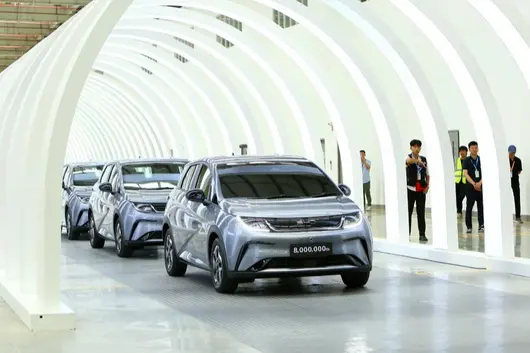

喺馬來西亞嘅 SUV 市場,好多買家喺揀車嗰陣都會拿馬自達 CX-3 同三菱 Xforce 嚟做比較。這兩款車喺價位同定位上都幾接近,今日我哋就喺多個方面做一個詳細嘅比較,幫你慳做足功課嘅時間。
馬自達 CX-3 喺馬來西亞嘅 OTR 售價係 RM 126,159 - 139,159,一共有 2 個版本,包括 2023 2.0L High(RM 139,159)、2023 2.0L Plus(RM 126,159) 等。
三菱 Xforce 喺馬來西亞嘅 OTR 售價係 RM 109,930 - 119,930,一共有 2 個版本,包括 2026 1.5L Ultimate(RM 119,930)、2026 1.5L Urban(RM 109,930) 等。
由價錢睇,三菱 Xforce 嘅起步價比馬自達 CX-3 平咗 RM 16,229。講真,喺呢個價位段,幾千蚊嘅差距其實唔算大,關鍵仲係睇整體嘅性價比同長遠使用成本。
馬自達 CX-3 搭載 1.5L Turbo,馬力 140 hp。官方油耗 7.0 L/100km。
三菱 Xforce 搭載 1.5L Turbo,馬力 140 hp。官方油耗 7.0 L/100km。
兩款車用緊同一套動力系統,日常開起嚟嘅感受基本冇分別。油耗方面都幾差唔多,唔使太糾結呢一點。
馬自達 CX-3 車身長 4500 mm,尾箱 450 L。
三菱 Xforce 車身長 4400 mm,尾箱 400 L。
空間方面,馬自達 CX-3 嘅車身比三菱 Xforce 長咗 100 mm,車內乘坐空間會稍微寬鬆啲,尤其係後座腿部空間。如果你經常載家人或者需要擺嬰兒手推車,大啲嘅車身的確更實用。
馬自達 CX-3 採用 FWD 驅動方式。
三菱 Xforce 採用 FWD 驅動方式。
兩款車嘅驅動方式一樣,都係 FWD,日常駕駛感受唔會有太大分別。
馬自達 CX-3 保修 5 年/150,000km,保養間隔 每 10,000km 或 6 個月。
三菱 Xforce 保修 3 年/100,000km,保養間隔 每 10,000km 或 6 個月。
總嘅嚟講,馬自達 CX-3 同三菱 Xforce 都係馬來西亞市場好唔錯嘅車型。揀邊一部,關鍵仲係要睇你嘅個人需求同預算。建議大家做足功課,多比較幾間車行嘅報價,再去試駕先做最終決定。買車係件大事,花少少時間做功課絕對唔會錯。

In Malaysia's SUV market, many buyers compare the Mazda CX-3 and MG MG HS when choosing a car. These two cars are quite close in price and positioning. Today, we will make a detailed comparison from multiple aspects to help you save time on research.
The Mazda CX-3's OTR price in Malaysia is RM 126,159 - 139,159, with a total of 2 versions, including 2023 2.0L High (RM 139,159), 2023 2.0L Plus (RM 126,159), etc.
The MG MG HS's OTR price in Malaysia is RM 130,450 - 146,450, with a total of 2 versions, including 1.5L Standard (RM 105,000), 1.5L Executive (RM 115,000), etc.
From a price perspective, the Mazda CX-3's starting price is indeed RM 4,291 cheaper than the MG MG HS. If your budget is limited, Mazda's entry-level version is sufficient for daily needs. However, note that the savings of a few thousand may involve trade-offs in equipment, which depends on your specific needs.
Mazda CX-3 body length is 4500 mm, trunk 450 L.
MG MG HS body length is 4400 mm, trunk 400 L.
In terms of space, the Mazda CX-3 body is 100 mm longer than the MG MG HS, providing slightly more seating space inside, especially legroom in the back row. If you frequently carry family members or need to fit a stroller, the larger body is indeed more practical.
Mazda CX-3 warranty is 5 years/150,000km, service interval every 10,000km or 6 months.
MG MG HS warranty is 7 years/150,000km, service interval every 10,000km or 6 months.
Mazda CX-3 and MG MG HS are both mainstream choices in the Malaysia market, suitable for family use and daily commuting. If you value brand reputation and resale value more, prioritize the one with the better reputation; if you care more about cost-performance and equipment, choose the one with richer configuration. Ultimately, it is recommended to test drive both, as personal experience is the most important.
Overall, Mazda CX-3 and MG MG HS are both very good car models in the Malaysia market. Which one to choose depends mainly on your personal needs and budget. We suggest doing your research, comparing quotes from multiple dealerships, and then test driving to make the final decision. Buying a car is a big matter, spending time on research will never be wrong.

In the SUV market in Malaysia, many buyers compare Mazda CX-3 and Chery Tiggo 9 when choosing a car. These two models are quite close in price and positioning. Today, we will conduct a detailed comparison from multiple aspects to help you save time on research.
Mazda CX-3 OTR price in Malaysia is RM 126,159 - 139,159, with a total of 2 versions, including 2023 2.0L High (RM 139,159), 2023 2.0L Plus (RM 126,159), etc.
Chery Tiggo 9 OTR price in Malaysia is RM 166,800 - 179,800, with a total of 1 version, including 2026 2.0T Standard (RM 179,750), etc.
From a price perspective, Mazda CX-3's starting price is indeed RM 40,641 cheaper than Chery Tiggo 9. If your budget is limited, Mazda's entry-level version can already meet daily needs. But be aware that the difference of a few thousand may involve trade-offs in equipment, it depends on your specific needs.
Mazda CX-3 is equipped with a 1.5L Turbo, 140 hp. Official fuel consumption 7.0 L/100km.
Chery Tiggo 9 is equipped with a 2.0L 4-cyl, 170 hp. Official fuel consumption 8.0 L/100km.
Regarding power, Chery Tiggo 9's 2.0L 4-cyl has 30 more horsepower than Mazda CX-3's 1.5L Turbo. However, for daily city driving, the power of both cars is sufficient and does not feel lacking.
Mazda CX-3 safety rating is 5★ (ASEAN NCAP), active safety systems include i-Activsense.
Chery Tiggo 9 safety rating is TBD, active safety systems include Basic.
Regarding safety equipment, both cars received good ratings. However, there are some differences in function between Mazda CX-3's i-Activsense and Chery Tiggo 9's Basic. If you value active safety highly, you can compare the feature lists of both in detail.
Mazda CX-3 adopts FWD drive type.
Chery Tiggo 9 adopts FWD drive type.
Both cars have the same drive type, FWD, so there will be no big difference in daily driving experience.

Mazda CX-3 and Chery Tiggo 9 are both mainstream choices in the Malaysian market, suitable for family use and daily commuting. If you value brand reputation and resale value more, prioritize the one with better reputation; if you care more about value for money and equipment, choose the one with richer configuration. Ultimately, it is recommended to test drive both, as personal experience is the most important.

In summary, Mazda CX-3 and Chery Tiggo 9 are both very good car models in the Malaysian market. Which one to choose depends mainly on your personal needs and budget. We suggest doing your research, comparing quotes from multiple dealerships, and then test driving to make the final decision. Buying a car is a big matter, spending time doing research will never be wrong.

Dalam pasaran SUV di Malaysia, ramai pembeli ketika memilih kereta akan membandingkan Mazda CX-3 dengan GWM Haval H6. Kedua-dua kereta ini mempunyai harga dan kedudukan pasaran yang agak hampir, hari ini kita akan buat perbandingan terperinci dari pelbagai aspek untuk membantu anda menjimatkan masa membuat kajian.
Mazda CX-3 di Malaysia dijual pada harga OTR RM 126,159 - 139,159, terdapat keseluruhan 2 varian, termasuk 2023 2.0L High (RM 139,159), 2023 2.0L Plus (RM 126,159) dan lain-lain.
GWM Haval H6 di Malaysia dijual pada harga OTR RM 139,750 - 139,750, terdapat keseluruhan 2 varian, termasuk 1.5L Turbo Standard (RM 140,000), 1.5L Turbo Premium (RM 155,000) dan lain-lain.
Dari segi harga, harga permulaan Mazda CX-3 memang lebih murah RM 13,591 berbanding GWM Haval H6. Jika bajet anda terhad, varian pemula Mazda sudah boleh memenuhi keperluan harian. Namun perlu diingat, ribuan ringgit yang lebih murah itu mungkin melibatkan pemilihan dalam kelengkapan, bergantung kepada keperluan anda.
Mazda CX-3 dilengkapi 1.5L Turbo, kuasa kuda 140 hp. Penjimatan bahan api rasmi 7.0 L/100km.
GWM Haval H6 dilengkapi Hybrid, kuasa kuda 170 hp. Penjimatan bahan api rasmi 4.5 L/100km.
Dari segi kuasa, Hybrid pada GWM Haval H6 mempunyai 30 kuasa kuda lebih daripada 1.5L Turbo Mazda CX-3. Namun untuk memandu sehari-hari di bandar, kuasa kedua-dua kereta ini sudah mencukupi, tidak akan rasa kurang kuasa.
Mazda CX-3 menggunakan cara pemacu FWD.
GWM Haval H6 menggunakan cara pemacu FWD.
Kedua-dua kereta ini mempunyai cara pemacu yang sama, semuanya FWD, pengalaman memandu sehari-hari tidak akan berbeza banyak.
Mazda CX-3 jaminan 5 tahun/150,000km, jarak penyelenggaraan setiap 10,000km atau 6 bulan.
GWM Haval H6 jaminan 7 tahun/150,000km, jarak penyelenggaraan setiap 10,000km atau 6 bulan.
Mazda CX-3 dan GWM Haval H6 kedua-duanya adalah pilihan utama di pasaran Malaysia, sesuai untuk kegunaan keluarga dan perjalanan harian. Jika anda lebih mengutamakan reputasi jenama dan harga jual semula, boleh utamakan yang mempunyai reputasi lebih baik; jika anda lebih perhatikan nisbah harga dan kelengkapan, pilih yang mempunyai kelengkapan lebih banyak. Akhir sekali, disarankan untuk memandu kedua-dua kereta ini, pengalaman sendiri adalah yang paling penting.
Secara keseluruhannya, Mazda CX-3 dan GWM Haval H6 kedua-duanya adalah model kereta yang sangat baik di pasaran Malaysia. Memilih yang mana satu, perkara utama bergantung kepada keperluan peribadi dan bajet anda. Disarankan anda membuat kajian, membandingkan beberapa tawaran harga daripada kedai kereta, kemudian memandu untuk membuat keputusan akhir. Membeli kereta adalah perkara besar, mengambil masa untuk membuat kajian tidak akan salah.

Di pasaran SUV di Malaysia, ramai pembeli akan membandingkan Mazda CX-3 dan GWM Haval H6 semasa memilih kereta. Kedua-dua model ini sangat hampir dari segi harga dan kategori. Hari ini, kita akan membuat perbandingan terperinci dari pelbagai aspek untuk membantu anda menjimatkan masa melakukan kajian.
Harga OTR Mazda CX-3 di Malaysia ialah RM 126,159 - 139,159, terdapat 2 varian, termasuk 2023 2.0L High (RM 139,159), 2023 2.0L Plus (RM 126,159) dan lain-lain.
Harga OTR GWM Haval H6 di Malaysia ialah RM 139,750 - 139,750, terdapat 2 varian, termasuk 1.5L Turbo Standard (RM 140,000), 1.5L Turbo Premium (RM 155,000) dan lain-lain.
Dari segi harga, harga permulaan Mazda CX-3 memang lebih murah RM 13,591 berbanding GWM Haval H6. Jika bajet anda terhad, versi masuk Mazda sudah boleh memenuhi keperluan harian. Tetapi perlu diingat, perbezaan harga yang sedikit itu mungkin melibatkan pengurangan ciri, bergantung pada keperluan anda.
Mazda CX-3 dilengkapi enjin 1.5L Turbo, kuasa 140 hp. Penggunaan bahan api rasmi 7.0 L/100km.
GWM Haval H6 dilengkapi Hybrid, kuasa 170 hp. Penggunaan bahan api rasmi 4.5 L/100km.
Dari segi kuasa, Hybrid GWM Haval H6 mempunyai 30 hp lebih daripada 1.5L Turbo Mazda CX-3. Namun dalam penggunaan harian di bandar, kuasa kedua-dua kereta sudah mencukupi, tiada rasa kurang kuasa.
Panjang badan Mazda CX-3 4500 mm, sukuan bagasi 450 L.
Panjang badan GWM Haval H6 4400 mm, sukuan bagasi 400 L.
Dari segi ruang, badan Mazda CX-3 lebih panjang 100 mm berbanding GWM Haval H6, ruang duduk dalam kereta lebih selesa sedikit, terutamanya ruang kaki di kerusi belakang. Jika anda kerap membawa keluarga atau perlu meletakkan kereta bayi, badan yang lebih besar memang lebih praktikal.
Mazda CX-3 menggunakan cara pemacu FWD.
GWM Haval H6 menggunakan cara pemacu FWD.
Kedua-dua kereta menggunakan cara pemacu yang sama, iaitu FWD, pengalaman memandu harian tiada perbezaan besar.
Secara keseluruhannya, Mazda CX-3 dan GWM Haval H6 adalah model kereta yang sangat baik di pasaran Malaysia. Memilih yang mana, kunci utama bergantung pada keperluan dan bajet peribadi anda. Disarankan untuk melakukan kajian, membandingkan tawaran daripada beberapa kedai kereta, kemudian buat ujian memandu untuk keputusan akhir. Membeli kereta adalah perkara besar, meluangkan masa untuk kajian tidak akan salah.

 Auto-First|Samar
The October car market, looked busy on the surface, but was cold on the inside. Profits are becoming the cruest sieve. Annual goal completion generally faces pressure, financial reports are more real than sales rankings, landscape differentiation accelerates, dealers struggle to sustain capital chain. The whole car market has endless glory, but also hidden currents, and even thorns.
①
The 'Silver October' is not really silver; the retail sector is still bottoming out.
CPCA estimated, October narrow passenger car retail about 1.6 million units, down 28.9% year-on-year, down 1.1% month-on-month. Wholesale side looks good, does not equal end-user sales boom, exports, channel restocking and inventory transfers exaggerated the surface numbers. For automakers, the real pressure is not 'how much was sold', but whether consumers are willing to pay now.
②
Do not just treat penetration rate as a victory slogan.
October new energy penetration rate approaches 70%, but this is a milestone under wholesale figures. Retail side new energy also grows, but total volume pressure means many increments come from substitution of fuel cars and same price competitors. The higher the penetration rate, the more it tests gross profit per vehicle, energy supply system, and software experience, cannot just treat penetration rate as a victory slogan.
③
Overseas strategy enters 2.0.
Major automakers rapidly promote from 'selling cars' to 'building factories locally', tariff bat and labor relations, supply chain reconstruction, compliance costs of environmental regulations, are pushing more Chinese automakers to start local factory operations. Leapmotor B10 went offline at Zaragoza, Spain factory, Chery South Africa Rosslyn factory plan to put into production mid-2027, GAC Yinpai Thailand battery factory put into production; BYD, Geely, SAIC advance on multiple fronts through self-built, joint ventures, acquisitions in Europe.
④
Great Wall Motor has been completely left behind by BYD, Geely, and Chery.
This year first three quarters, BYD, Geely Automobile and Great Wall Motor cumulative car sales are 3.1316 million units, 2.2355 million units, 920,300 units respectively. Regarding monthly sales, Great Wall Motor hovered between 100,000-120,000 units, and revenue increased but profit did not, first three quarters net profit dropped by more than half year-on-year, falling behind significantly. New force representative Leapmotor has already broken 100,000 units monthly sales for four consecutive months, surpassing Great Wall Motor is imminent. And Great Wall Motor domestic sales only left less than 50,000 units, several new forces including Leapmotor, Xpeng, Xiaomi monthly sales have already stood at 50,000 units.
⑤
Exchange rate fluctuations disturbed profits, but did not change Chery's overseas resilience.
October, Chery Group exported 200,600 units, year-on-year growth 58.7%, overseas sales share near 68%; first three quarters gross profit 39.004 billion yuan, year-on-year growth 32.38%, gross margin increased to 16.17%. Net profit attributable to shareholders slipped 2.8%, mainly not because selling cars not making money, but exchange gains/losses turned from gains of 2.974 billion yuan to losses of 3.171 billion yuan, forming over 6 billion yuan fluctuation, R&D expenses also year-on-year growth 40.21%. Excluding exchange gains/losses, Chery stated core profit exceeded 17 billion yuan, profit for period also slightly increased 0.65% year-on-year.
This indicates, exports remain a key engine for Chinese automakers' growth, exchange rate volatility does not change Chery's upward trend overseas.
⑥
Geely is becoming one of the most balanced domestic brands.
October Geely sales first time broke 300,000 units, Galaxy, Zeekr, Lynk & Co form new energy matrix, exports also for consecutive months remained high. Geely's advantage lies in not putting all eggs in one basket: scale relies on Galaxy, brand height relies on Zeekr, overseas relies on multi-brand synergy. Its challenge is how to continue to increase profit per vehicle amidst multi-brand parallelism.
⑦
High-end brands are gradually becoming a trend, represented by Zeekr and NIO.
Geely high-end brand Zeekr first 9 months sales doubled to 288,400 units, year-on-year growth 101%, in Geely total sales share is 12.9%, but revenue contribution exceeded 30%, year-on-year increase 13.6 percentage points, with 12.9% of sales volume contributed 31.3% of revenue. Q3 2026, NIO single quarter sales first time simultaneously exceeded Mercedes, BMW, Audi, NIO 111,638 units, BMW 107,219 units, Mercedes 86,800 units, Audi 94,597 units.
⑧
October several dark horses were very eye-catching.
SAIC MG and Changan Qiyuan are the unquestioned 'dark horses' of this month. SAIC MG brand global new energy sales over 85,000 units, among them domestic new energy sales over 31,000 units. Changan Qiyuan from September 46,507 units, to October single brand global sales 63,648 units. Among them, Changan Qiyuan Q06 launch month sales 10,152 units, became after Q05 again another big hit model.
⑨
Battery swapping and power battery supply underwent huge changes.
October, power battery second tier suppliers and battery swapping alliance had big changes. Xiaomi invested in Sunwoda, and with Li Auto same Sunwoda shareholder, CATL and NIO respectively 'formed gangs' to expand battery swapping alliance ranks, these two seemingly disjoint events, will to subsequent industry development continue to release impact.
⑩
Price war has passed the critical point of 'trading price for volume'.
Price cuts no longer bring transactions, only deeper observation. October discounted models average drop 38,000 yuan, overall drop 16.1%, but 44.6% of dealers reported transaction prices were falling, at same time 43.8% reported transaction rates also falling. A 200,000 yuan new car, manufacturer net profit pocketed about 3,000 yuan, net profit margin only 1.5%.

⑪
Dealer risk has changed from 'failing to meet tasks' to 'can cash flow last until year-end'. October inventory warning index 62.2%, year-on-year rise 9.6 percentage points, dealers reporting inventory 'growth' proportion within one month from 17.0% rose to 27.7%.
⑫
HIMA is not doing well. October HIMA, overall performance can only be described as 'bleak'. Its full series average transaction price exceeds 400,000 yuan, but delivery volume dropped 50.84% year-on-year, high unit price cannot hide loss of scale momentum. October deliveries 33,537 units, among them Aito delivered 22,105 units, Luxeed 6,090 units, year-on-year decline 52.5%. So, Maextro + Stark + Stelato left 5,342 units.
Behind this, naturally there is public opinion impact of 'brake incident' and ups and downs with Seres, but root cause lies in product itself. HIMA's Huawei halo cannot be said to be dimmed, but no longer so dazzling. With 'Jing' series volume increase and product layout and whole first 10 months car market nearly 600 new cars volume release, HIMA's five brands encountered strongest product encirclement in history, even powerful like Huawei and Qiankun Smart Driving ADS 5.0, hard to hide disappointment. Whether can pass bottleneck period, achieve Yu Chengdong previously set annual sales one million target, is a huge unknown.
⑬
Personnel adjustments inevitably follow sales volume and financial reports.
October automaker personnel adjustments dense, both involve strategic level personnel replacements, also pragmatic level for sales take blame of professional managers. Beijing Hyundai General Manager Li Fenggang will on November 1 officially resign. At this time from him 2025 November 10 take office this position, just full one year. October 22 Audi China announced, Zhang Jun November 1 take new, become Audi China first Chinese籍 President, predecessor Luo Yinghan return Germany HQ. October 16, Changan Automobile announced, Zhu Rongrong no longer concurrently listed company chairman, Zhao Fei take over, Ye Pei appointed as President. October 7, Chery disclosed new round division of labor, Zhang Guibing domestic business group and overseas business handle together, Li Xueyong focus on Jetour.
⑭
BBA belong to same camp, but coping strategies differ in style, whether together fall or synchronize differentiation, worth observing.
Audi adjustment most drastic. Announced new Audi China President, Audi split, North South divided, FAW Audi guards Four Rings brand, SAIC Audi focuses on AUDI letter brand brand. With Audi organizational restructuring different, BMW chose more steady, more bias manufacturing and supply chain path. New Chairman Niekevi took office after first visit China, in Shenyang witness 6th generation power battery in Shenyang mass production offline. BMW promised, to 2030 vehicles sold in China 95% or more achieve local production. Mercedes adjustment more bias seeking stability, smart driving to China delegate authority, but personnel localization still wavering.
⑮
New force landscape still in rapid flux.
October new force list drew three lines. 100,000 units is scale line, 50,000 units is head line, 30,000 units became crowded life/death line. Leapmotor cliff style lead, Xpeng and Xiaomi in second tier, others around 30,000 units cluster. Next truly determine seating, not some month sell more few thousand units, but who can continuously launch hits, open overseas market, and convert sales to healthy operating capability.
⑯
Leapmotor's 100,000 units, both ability and test.
Leapmotor consecutive four months break 100,000 units, rely on product coverage wide, price range probe and channel expansion. But low price model proportion increase, will drag down average selling price and gross margin; overseas rely on Stellantis channels volume increase, also未必 can fully convert to high profit. Scale lead after, Leapmotor must answer: Growth can more healthy.
⑰
Xpeng and Xiaomi stood at 50,000 units, but growth sources differ.
Xpeng October deliveries 50,237 units, overseas share significantly increased, overseas profitability higher than domestic, for it improve profit provided space. Xiaomi rely on Pengcheng series enter full delivery month, ecosystem synergy and capacity ramp-up become key. Both broke 50,000 units threshold, but one more rely on overseas, one more rely on new product cycle, subsequent stability still needs observation.
⑱
L3 Access Pilot Expansion.
October MIIT confirmed, second batch access pilot ongoing, first batch Changan and BAIC L3 products obtained conditional access. Technical level progress is real, but L3 commercialization bottleneck not in computing power or sensors, but in accident liability how divide, insurance products how price, automakers dare not in user manual write clearly 'system activate who responsible'.
⑲
Profits are becoming the cruest sieve.
Industry sales profit margin already dropped to low level, September single month even lower, vehicle companies by price war and cost rise squeezed. Some automakers rely on exports improve profit, some rely on high-end brands raise average price, some still trapped in 'sell more, earn less' cycle. Next, financial reports will be more real than sales ranking.
⑳
Annual target completion rate generally under pressure, Q4 may shift from volume sprint to ensuring health.
Most automakers first three quarters not complete annual target 75% theoretical pass line, Zeekr is few early finishers. If gap too large, terminal price concession, channel inventory control and profit safety become higher priority. Sales sprint still important, but blind inventory pressing cost will be higher.
Auto-First View: 2026 only left last two months, car market competition shifting from 'Product War' to 'System War'. Monthly hits can bring heat, but determine long-term seating is cost efficiency, globalization capability, smart foundation, supply chain security and organizational execution. October data already showed, who can hold profit in retail winter, who can stand firm in overseas storm, who can truly build barriers in technical deep water zone, only may survive until end.
(Image generated by AI)



Owl Auto News (ID:owlauto), Mitsubishi Motors announced on October 29 that the new Pajero will be officially launched in the Japanese domestic market on December 17, with a starting price of 6.19 million yen, approximately 261,900 RMB at the current exchange rate. This marks the Pajero's return to the Japanese market 6 years after production ceased in Japan in 2019, becoming Mitsubishi's most expensive model currently sold domestically. Mitsubishi regards the return of this flagship model as a crucial step towards revitalizing the brand's overall performance.
Four trim levels are available in the Japanese market (GLS, GSR, Exceed, Super Exceed), with a price range from 6.19 million to 7.95 million yen, equivalent to approximately 261,900 to 336,400 RMB. Among them, the top-spec Super Exceed starts at 7.95 million yen (approximately 336,400 RMB), and the GSR starts at 6.76 million yen (approximately 286,000 RMB); these two models will be delivered first in December; the cheaper versions and other models will not enter production until April 2027.
This pricing directly targets the Toyota Land Cruiser. The Pajero's starting price is approximately 400,000 yen (about 16,800 RMB) higher than the main Land Cruiser model "250", placing it overall between the Land Cruiser 250 and the larger flagship model "300". Mitsubishi did not choose to cut in with a low price, but instead focused differentiation on driving performance and the premium feel of the interior: the body is narrower than the Land Cruiser, steering is more flexible, and it can switch to rear-wheel drive on paved roads to improve fuel economy; regarding the interior, seats and the area around the driver are wrapped in genuine leather, the entire vehicle is equipped with sound-insulating glass, and the soundproofing materials are specially designed to maintain a quiet cabin on rough roads.
In terms of powertrain, the new Pajero is equipped with a 2.4-liter twin-turbo diesel engine, with a maximum power of 201 horsepower and a peak torque of 470 Nm, paired with a 6AT or 8AT transmission. The new vehicle is developed based on the Triton pickup platform and produced at a Thai factory, utilizing a body-on-frame chassis structure, returning to the core positioning of hardcore off-roading. The body-on-frame structure makes it more inclined towards traditional off-roading rather than a city SUV positioning.
Market feedback has exceeded expectations. Since reservations opened in October, orders for the Pajero in Japan have reached 5,500 units, with 70% of customers choosing the top-spec Super Exceed, and 80% of customers coming from other brands. Mitsubishi has set a domestic monthly sales target of 1,000 units for this model.
The return of the Pajero is set against the backdrop of a general resurgence in the Japanese off-road SUV market. Driven by sustained strong demand for outdoor travel, Toyota Land Cruiser series sales reached 45,000 units in Japan in 2025, presenting a pattern of one dominant player. Facing this demand, Nissan plans to launch the Patrol in the first half of 2027, while Honda plans to import from the US market starting from the second half of 2026. Among this round of new off-road SUVs, the Pajero is the first to hit the ground; whether it can convert reservation heat into sustained sales is the next challenge facing Mitsubishi.
The Pajero is Mitsubishi's signature model. Evolving over four generations since its birth in 1982, it has won 12 Dakar Rally championships and has built a long-term reputation in the off-road community. The first generation was launched in 1982 and won the overall title at the Paris-Dakar Rally in 1985, thereby gaining recognition. In 2019, due to declining sales and pressure from emission regulations, Mitsubishi stopped production of the Pajero in Japan. Six years later, this legendary off-road vehicle returns to the Japanese market with a new identity; in the market dominated by the Land Cruiser, whether it can carve out its own share will be the focus of market attention in the coming period.


Dalam pasaran SUV di Malaysia, ramai pembeli membandingkan Mazda CX-3 dan Chery Tiggo 7 PHEV ketika memilih kereta.
Mazda CX-3 di Malaysia harga OTR ialah RM 126,159 - 139,159, terdapat 2 varian, termasuk 2023 2.0L High (RM 139,159), 2023 2.0L Plus (RM 126,159) dan lain-lain.
Chery Tiggo 7 PHEV di Malaysia harga OTR ialah RM 129,750 - 129,750, terdapat 2 varian, termasuk 2025 1.5T 90km CSH (RM 129,750), Apakah kaedah pengecasan yang disokong oleh Tiggo 7 PHEV? Bolehkah ia dicas menggunakan soket kuasa rumah? (RM 117,478) dan lain-lain.
Dilihat dari harga, harga permulaan Mazda CX-3 memang RM 3,591 lebih murah daripada Chery Tiggo 7 PHEV. Jika bajet anda terhad, varian asas Mazda sudah boleh memenuhi keperluan harian. Namun perlu diingat, perbezaan harga ribuan ringgit ini mungkin ada pengorbanan pada kelengkapan, ia bergantung kepada keperluan anda.
Mazda CX-3 dilengkapi dengan enjin 1.5L Turbo, menghasilkan kuasa kuda 140 hp. Penggunaan minyak rasmi 7.0 L/100km.
Chery Tiggo 7 PHEV dilengkapi dengan Hybrid, menghasilkan kuasa kuda 170 hp. Penggunaan minyak rasmi 4.5 L/100km.
Dari segi kuasa, Hybrid Chery Tiggo 7 PHEV mempunyai 30 kuasa kuda lebih daripada 1.5L Turbo Mazda CX-3. Namun untuk memandu harian di bandar, kuasa kedua-dua kereta ini sudah memadai, tidak akan rasa kurang tenaga.
Mazda CX-3 panjang kenderaan 4500 mm, bak muatan 450 L.
Chery Tiggo 7 PHEV panjang kenderaan 4400 mm, bak muatan 400 L.
Dari segi ruang, kenderaan Mazda CX-3 100 mm lebih panjang daripada Chery Tiggo 7 PHEV, ruang dalam kereta akan lebih luas sedikit, terutamanya ruang kaki barisan belakang. Jika anda kerap membawa keluarga atau perlu letak kerusi bayi, kenderaan yang lebih besar memang lebih praktikal.
Mazda CX-3 menggunakan sistem pemacu FWD.
Chery Tiggo 7 PHEV menggunakan sistem pemacu FWD.
Kedua-dua kereta menggunakan cara pemacu yang sama, iaitu FWD, pengalaman memandu harian tidak akan berbeza banyak.

Mazda CX-3 jaminan 5 tahun/150,000km, selang penyelenggaraan setiap 10,000km atau 6 bulan.
Chery Tiggo 7 PHEV jaminan 3 tahun/100,000km, selang penyelenggaraan setiap 10,000km atau 6 bulan.

Secara keseluruhan, Mazda CX-3 dan Chery Tiggo 7 PHEV adalah model kereta yang sangat baik di pasaran Malaysia. Memilih yang mana, kuncinya bergantung pada keperluan dan bajet peribadi anda. Disarankan untuk melakukan penyelidikan, bandingkan beberapa tawaran dari dealer kereta, kemudian buat keputusan akhir selepas ujian memandu. Membeli kereta adalah perkara besar, meluangkan masa membuat penyelidikan tidak akan salah.

Dalam pasaran SUV di Malaysia, ramai pembeli apabila memilih kereta akan membandingkan Mazda CX-3 dan Chery Tiggo 7 PHEV. Kedua-dua kereta ini mempunyai harga dan kedudukan yang agak hampir, hari ini kita akan membuat perbandingan terperinci dari pelbagai aspek untuk membantu anda menjimatkan masa membuat kajian.
Mazda CX-3 dijual di Malaysia dengan harga OTR RM 126,159 - 139,159, tersedia 2 varian, termasuk 2023 2.0L High (RM 139,159), 2023 2.0L Plus (RM 126,159) dan lain-lain.
Chery Tiggo 7 PHEV dijual di Malaysia dengan harga OTR RM 129,750 - 129,750, tersedia 2 varian, termasuk 2025 1.5T 90km CSH (RM 129,750), Apakah kaedah pengecasan yang disokong oleh Tiggo 7 PHEV? Bolehkah ia dicas menggunakan soket kuasa rumah? (RM 117,478) dan lain-lain.
Dari segi harga, harga permulaan Mazda CX-3 memang RM 3,591 lebih murah daripada Chery Tiggo 7 PHEV. Jika bajet anda terhad, varian permulaan Mazda sudah boleh memenuhi keperluan harian. Tetapi perhatikan, bekaian ribuan ringgit yang lebih murah itu, mungkin ada pertukaran pada kelengkapan, ia bergantung pada keperluan anda.
Mazda CX-3 dilengkapi enjin 1.5L Turbo, kuasa 140 hp. Penggunaan minyak rasmi 7.0 L/100km.
Chery Tiggo 7 PHEV dilengkapi Hybrid, kuasa 170 hp. Penggunaan minyak rasmi 4.5 L/100km.
Dari segi kuasa, Hybrid pada Chery Tiggo 7 PHEV mempunyai 30 hp lebih daripada enjin 1.5L Turbo pada Mazda CX-3. Namun untuk pemanduan harian di bandar, kuasa kedua-dua kereta adalah mencukupi, tidak akan rasa kurang.
Pencapaian keselamatan Mazda CX-3 adalah 5★ (ASEAN NCAP), sistem keselamatan aktif termasuk i-Activsense.
Pencapaian keselamatan Chery Tiggo 7 PHEV adalah TBD, sistem keselamatan aktif termasuk Basic.
Dari segi kelengkapan keselamatan, kedua-dua kereta mendapat penilaian yang baik. Namun i-Activsense pada Mazda CX-3 dan Basic pada Chery Tiggo 7 PHEV mempunyai perbezaan fungsi. Jika anda lebih mementingkan keselamatan aktif, boleh bandingkan senarai fungsi kedua-duanya dengan teliti.
Panjang badan Mazda CX-3 4500 mm, ruang muatan 450 L.
Panjang badan Chery Tiggo 7 PHEV 4400 mm, ruang muatan 400 L.
Dari segi ruang, badan Mazda CX-3 100 mm lebih panjang daripada Chery Tiggo 7 PHEV, ruang penumpang dalam kenderaan sedikit lebih luas, terutamanya ruang kaki di tempat belakang. Jika anda sering membawa keluarga atau perlu meletakkan kereta bayi, badan yang lebih besar memang lebih praktikal.
Mazda CX-3 dan Chery Tiggo 7 PHEV kedua-duanya adalah pilihan utama pasaran Malaysia, sesuai untuk kegunaan keluarga dan perjalanan harian. Jika anda lebih mementingkan nama baik jenama dan harga jual semula, boleh utamakan jenama dengan nama baik lebih baik; jika anda lebih mementingkan nilai berbaloi dan kelengkapan, pilih yang mempunyai konfigurasi lebih lengkap. Akhir sekali disarankan untuk memandu ujian kedua-dua model, pengalaman langsung adalah yang paling penting.
Secara keseluruhannya, Mazda CX-3 dan Chery Tiggo 7 PHEV adalah model yang sangat baik di pasaran Malaysia. Memilih yang mana, kuncinya bergantung pada keperluan peribadi dan bajet anda. Disarankan membuat kajian terlebih dahulu, bandingkan lebih banyak tawaran dari pelbagai kedai kereta, baru buat ujian memandu untuk membuat keputusan akhir. Membeli kereta adalah perkara besar, meluangkan masa membuat kajian tidak akan salah.

喺馬來西亞嘅 SUV 市場,好多買家喺揀車嗰陣,都會拿 Mazda CX-3 同 GWM Haval H6 嚟比較。
Mazda CX-3 喺馬來西亞嘅 OTR 售價係 RM 126,159 - 139,159,合共有 2 個版本,包括 2023 2.0L High(RM 139,159)、2023 2.0L Plus(RM 126,159) 等等。
GWM Haval H6 喺馬來西亞嘅 OTR 售價係 RM 139,750 - 139,750,合共有 2 個版本,包括 1.5L Turbo Standard(RM 140,000)、1.5L Turbo Premium(RM 155,000) 等等。
由價錢睇,Mazda CX-3 嘅起步價真係比 GWM Haval H6 平咗 RM 13,591。如果你預算有限,Mazda 嘅入門版已經可以滿足日常需要。但都要注意,平嗰幾千蚊,可能喺配備上要有取舍,具體要看你嘅需求。
Mazda CX-3 採用 FWD 驅動方式。
GWM Haval H6 採用 FWD 驅動方式。
兩款車嘅驅動方式一樣,都係 FWD,日常駕駛感受唔會有太大分別。
Mazda CX-3 保修 5 年/150,000km,保養間隔 每 10,000km 或 6 個月。
GWM Haval H6 保修 7 年/150,000km,保養間隔 每 10,000km 或 6 個月。
Mazda CX-3 同 GWM Haval H6 都係馬來西亞市場嘅主流選擇,適合家庭用、日常通勤。如果你更看重品牌口碑同二手價,可以優先考慮口碑更好嗰款;如果你更在意性價比同配備,就揀配置更豐富嗰款。最後都建議兩款都去試駕,親身試先係最重要。
總括嚟講,Mazda CX-3 同 GWM Haval H6 都係馬來西亞市場幾唔錯嘅車型。揀邊輛,關鍵都要睇你嘅個人需求同預算。建議大家做好功課,多比較幾間車行嘅報價,先至去試駕做最後決定。買車係件大事,花少少時間做功課絕對唔會錯。

喺馬來西亞嘅 SUV 市場,好多買家喺選車嘅時候都會拿 Mazda CX-3 同 MG MG HS 嚟做比較。這兩款車喺價位同定位上都好接近,今日我哋就從多個方面做一個詳細嘅對比,幫你省做做功課嘅時間。
Mazda CX-3 喺馬來西亞嘅 OTR 售價係 RM 126,159 - 139,159,一共有 2 個版本,包括 2023 2.0L High(RM 139,159)、2023 2.0L Plus(RM 126,159)等。
MG MG HS 喺馬來西亞嘅 OTR 售價係 RM 130,450 - 146,450,一共有 2 個版本,包括 1.5L Standard(RM 105,000)、1.5L Executive(RM 115,000)等。
從價錢來看,Mazda CX-3 嘅起步價確實比 MG MG HS 平咗 RM 4,291。如果你預算有限,Mazda 嘅入門版已經可以满足日常需求。但都要注意,平嘅那幾千蚊,可能喺配備上會有取舍,具體要看你嘅需求。
Mazda CX-3 搭載 1.5L Turbo,馬力 140 hp。官方油耗 7.0 L/100km。
MG MG HS 搭載 1.5L Turbo,馬力 140 hp。官方油耗 7.0 L/100km。
兩款車用嘅係同一套動力系統,日常開起嚟嘅感受基本冇分別。油耗方面都差唔多,唔使太糾結這一點。
Mazda CX-3 嘅安全評級係 5★ (ASEAN NCAP),主動安全系統包括 i-Activsense。
MG MG HS 嘅安全評級係 TBD,主動安全系統包括 Basic。
安全配備方面,兩款車都拿到唔錯嘅評級。不過 Mazda CX-3 嘅 i-Activsense 同 MG MG HS 嘅 Basic 喺功能上有些差異,如果你比較看重主動安全嘅話,可以仔細對比一下兩者嘅功能列表。
Mazda CX-3 車身長 4500 mm,行李箱 450 L。
MG MG HS 車身長 4400 mm,行李箱 400 L。
空間方面,Mazda CX-3 嘅車身比 MG MG HS 長咗 100 mm,車內乘坐空間會稍微寬鬆啲,尤其係後座腿部空間。如果你經常載家人或者需要放嬰兒車,大啲嘅車身確實更實用。
Mazda CX-3 同 MG MG HS 都係馬來西亞市場嘅主流選擇,適合家庭使用、日常通勤。如果你更看重品牌口碑同二手價,可以優先考慮口碑更好嗰款;如果你更在意性價比同配備,那就揀配置更豐富嗰款。最終都係建議兩款都去試駕,親身體驗先係最重要嘅。
總體嚟講,Mazda CX-3 同 MG MG HS 都係馬來西亞市場幾唔錯嘅車型。揀邊一輛,關鍵仲係要看你嘅個人需求同預算。建議大家做好做功課,多比較幾間車行嘅報價,再去試駕做最終決定。買車係件大事,花少少時間做功課絕對唔會錯。

In the SUV market in Malaysia, many buyers compare the Mazda CX-3 and Chery Tiggo 8 PHEV when choosing a car. These two cars are quite close in price and positioning. Today we will make a detailed comparison from multiple aspects to help you save time doing research.
The OTR price of the Mazda CX-3 in Malaysia is RM 126,159 - 139,159, with a total of 2 versions, including 2023 2.0L High (RM 139,159), 2023 2.0L Plus (RM 126,159), etc.
The OTR price of the Chery Tiggo 8 PHEV in Malaysia is RM 159,750 - 159,750, with a total of 2 versions, including 1.6L Turbo Standard (RM 130,000), 1.6L Turbo Premium (RM 145,000), etc.
From a price perspective, the starting price of the Mazda CX-3 is indeed RM 33,591 cheaper than the Chery Tiggo 8 PHEV. If your budget is limited, the Mazda entry-level version can already meet daily needs. But keep in mind, the few thousand dollars cheaper might involve trade-offs in features, depending on your specific requirements.
The safety rating of the Mazda CX-3 is 5★ (ASEAN NCAP), with active safety systems including i-Activsense.
The safety rating of the Chery Tiggo 8 PHEV is TBD, with active safety systems including Basic.
Regarding safety features, both cars have received good ratings. However, there are some differences in functionality between Mazda CX-3's i-Activsense and Chery Tiggo 8 PHEV's Basic. If you value active safety, you can compare their feature lists carefully.
Mazda CX-3 warranty 5 years/150,000km, service interval every 10,000km or 6 months.
Chery Tiggo 8 PHEV warranty 3 years/100,000km, service interval every 10,000km or 6 months.
Both the Mazda CX-3 and Chery Tiggo 8 PHEV are mainstream choices in the Malaysian market, suitable for family use and daily commuting. If you value brand reputation and resale value more, you can prioritize the one with a better reputation; if you care more about cost-performance ratio and features, then choose the one with richer configurations. Ultimately, it is recommended to test drive both, as experiencing it personally is most important.
Overall, the Mazda CX-3 and Chery Tiggo 8 PHEV are both very good models in the Malaysian market. Which one to choose depends mainly on your personal needs and budget. We recommend doing your homework, comparing quotes from multiple dealerships, and then test driving to make a final decision. Buying a car is a big matter, spending some time doing research will never be wrong.

In the Malaysian SUV market, many buyers compare Mazda CX-3 and Chery Tiggo 8 Pro when choosing a car. These two cars are quite close in price and positioning, today we will make a detailed comparison from multiple aspects to help you save time on research.
The OTR price of Mazda CX-3 in Malaysia is RM 126,159 - 139,159, there are 2 versions in total, including 2023 2.0L High (RM 139,159), 2023 2.0L Plus (RM 126,159), etc.
The OTR price of Chery Tiggo 8 Pro in Malaysia is RM 159,750 - 159,750, there are 2 versions in total, including 1.6L Turbo Standard (RM 130,000), 1.6L Turbo Premium (RM 145,000), etc.
From a price perspective, the starting price of Mazda CX-3 is indeed RM 33,591 cheaper than Chery Tiggo 8 Pro. If your budget is limited, Mazda's entry-level version can already meet daily needs. But be aware, the few thousand cheaper, there might be trade-offs in features, it depends on your needs.
Mazda CX-3 is equipped with 1.5L Turbo, horsepower 140 hp. Official fuel consumption 7.0 L/100km.
Chery Tiggo 8 Pro is equipped with 2.0L 4-cyl, horsepower 170 hp. Official fuel consumption 8.0 L/100km.
In terms of power, Chery Tiggo 8 Pro's 2.0L 4-cyl has 30 more horsepower than Mazda CX-3's 1.5L Turbo. However, for daily driving in the city, the power of both cars is sufficient, you won't feel a lack of power.
Mazda CX-3 uses FWD drive mode.
Chery Tiggo 8 Pro uses FWD drive mode.
Both cars have the same drive mode, both are FWD, there won't be too much difference in daily driving feel.
Mazda CX-3 warranty 5 years/150,000km, maintenance interval every 10,000km or 6 months.
Chery Tiggo 8 Pro warranty 3 years/100,000km, maintenance interval every 10,000km or 6 months.
Mazda CX-3 and Chery Tiggo 8 Pro are both mainstream choices in the Malaysian market, suitable for family use, daily commuting. If you value brand reputation and resale value more, you can prioritize the one with better reputation; if you care more about cost-performance ratio and features, then choose the one with richer configurations. Ultimately, it is suggested to test drive both, personal experience is the most important.
Overall, Mazda CX-3 and Chery Tiggo 8 Pro are both very good models in the Malaysian market. Which one to choose depends mainly on your personal needs and budget. It is recommended to do your research, compare quotes from several car dealerships, then go for a test drive to make a final decision. Buying a car is a big matter, spending some time on research will never be wrong.


Changsha, 2 November 2026 /PR Newswire/ -- 1 November, Sany Group menganjurkan "Hari Dunia Yang Baik" dan Hari Amal Pertama Sany di Bangunan 5, Taman Perindustrian Changsha. Pada hari yang sama, melancarkan "Laporan Impak Sosial Global Sany Group" dan memperkenalkan Pelan Amal Global "SANY FOR GOOD" -- yang sebelumnya tersebar di dalam dan luar negara, berteras penyelamatan bencana, kini dikumpul menjadi satu sistem yang boleh ditiru dan dikongsi bersama.

Ucapan Pembuka oleh Pengarah Sany Group Fu Weizhong untuk Hari Amal Sany
Dipimpin oleh "Teknologi Untuk Manusia, Membangun Kebaikan Untuk Bertindak", laporan ini mendedahkan kejayaan lima kerangka tindakan utama: "Penyelamatan Mekanikal, Pendidikan Kejuruteraan, Komuniti Tangguh, Masa Depan Binaan Hijau, Ekosistem Pemberdayaan": Sehingga pelancaran, pelaburan amal kumulatif Sany melebihi 380 juta yuan; terlibat dalam lebih 100 operasi penyelamatan bencana besar di dalam dan luar negara, menggunakan lebih 2,000 unit peralatan, secara langsung atau tidak langsung memberi manfaat kepada lebih 5 juta orang; Projek Pendidikan Kejuruteraan seperti Pendidikan Tanke menjangkau lebih 110,000 pelajar, memberdayakan lebih 2,100 guru; pelaburan komuniti melebihi 40 juta yuan, memberi manfaat kepada lebih 32,000 orang; Platform "Sany Amal" mendaftarkan lebih 34,000 sukarelawan, jumlah masa perkhidmatan melebihi 38,000 jam; pelaburan impak mengurangkan karbon melebihi 6.82 juta tan.
Mengikut falsafah "Teknologi Untuk Manusia, Membangun Kebaikan Untuk Bertindak", Pelan Amal Global SANY FOR GOOD memajukan amal daripada pelaksanaan projek kepada sistem. Dua projek yang dilancarkan di tempat tersebut dimulakan secara proaktif oleh wilayah luar negara dan bahagian operasi, dikongsi bersama dengan Yayasan Sany: Projek CSR Luar Negara "Jaga Malam Gelap" dilaksanakan di Jerman, meningkatkan keselamatan perjalanan kanak-kanak komuniti dengan bahan pantulan cahaya; Projek CSR Dalam Negara "Jaga Perjalanan Selamat" dilancarkan oleh Sany Heavy Truck bersama Jabatan Pengangkutan Daerah Changsha, menjangkau seribu lori dalam batch pertama, melindungi perjalanan selamat.

Bagi syarikat pembuatan peralatan yang operasinya merentasi 180 negara dan wilayah di dunia, menaik taraf amal daripada "bantuan peralatan ketika bencana" kepada "sistem tanggungjawab tempatan yang boleh ditiru", merupakan pelaburan berdaya saing untuk tinggal dan berkembang bersama komuniti setempat. Kesamaan dua projek CSR ini ialah "Kecil dan Ringan" -- tidak bergantung pada aset berat, tetapi mengubah produk dan saluran Sany yang sedia ada menjadi peningkatan keselamatan yang kelihatan kepada komuniti.
Tempat sempena Hari Amal mengiktiraf rakan-rakan amal dan pekerja yang bekerjasama dengan Sany secara mendalam dalam bidang Penyelamatan Bencana, Pendidikan Tanke, dan Amal Korporat. Tiga kawasan pameran pengalaman di dalam kilang memecahkan amal abstrak menjadi tempat boleh disentuh dan dilibatkan: Zon NOW Manusia & Mesin menggunakan kerusi goyang VR untuk mensimulasikan getaran gempa bumi Tahap 8, dan menyediakan "Latihan Kecemasan 4 Minit Emas" CPR/AED serta Permainan Penyelamatan "Gali Remote Kontrol di Atas Papan Simulasi" -- membolehkan pengunjung mengalami sendiri bagaimana jentera kejuruteraan "berkaitan antara manusia dan mesin", menyelamatkan laluan kehidupan dari reruntuhan; Zon FUTURE Manusia & Teknologi menyediakan cabaran pembinaan kejuruteraan seperti janaan kuasa angin, angkutan ringan, garis pengeluaran industri, menyerahkan pemikiran kejuruteraan kepada tangan peserta; Zon TOGETHER Manusia & Manusia membolehkan peserta mengalami pendampingan pelari cacat pandang, membuat gelang pendamping larian, membuat "Pelekat Cerun Cahaya Malam" DIY, merakam "Pos Suara" kad pos, menjana kuasa dengan berbasikal, menjadikan kebaikan kepada jiran dan orang asing menjadi pengalaman interaktif yang boleh dilihat dan dirasai. Di luar kawasan pameran, dinding "Langkah Penerokaan Dunia Yang Baik" menyusun rekod besar amal Sany dari Penyelamatan Wenchuan 2008 hingga kini, memberikan koordinat masa kepada "mengapa melakukan amal".


Dalam hampir empat dekad, Sany menyertai proses pembangunan China dan dunia dengan jentera kejuruteraan, amal merupakan garis lanjutan hasrat aslinya. Daripada gempa bumi Wenchuan, lereng gunung runtuh Tibet di dalam negara, hingga operasi bantuan antarabangsa seperti bencana tambang Chile, gempa bumi Turki, banjir Indonesia, Sany sentiasa menggunakan kecerdasan kejuruteraan untuk menjawab cabaran bersama manusia. Seperti yang ditulis dalam pengantar laporan: "Apabila kekuatan jentera kejuruteraan ditanamkan dengan kebaikan dan wawasan, ia boleh menjadi enjin utama yang memacu kemajuan sosial dan menangani cabaran global."
Sany menyatakan, masa depan akan terus dipacu oleh strategi globalisasi, pendigitalan, dan pengurangan karbon, berganding bahu dengan rakan global, komuniti dan pekerja, bersama membina dunia yang lebih selamat, adil, sejahtera, hijau, lestari — Forging the Future Together.

© 2024 Bitauto.com. All Rights Reserved.
Bitauto (www.yiche.com and www.bitauto.com) is one of the most visited automotive websites in China. We provide detailed info on Chinese car brands available in your area. Please note that the information provided on this website is based on publicly available data and is for reference only. It may not be fully updated or accurate at all times.

Help us improve our website


