

HomeProton Satria

Search History
Popular Searches
Dealer Login / Sign Up

Due to the cancellation of the electric vehicle plan resulting in a $10 billion loss, Honda reported its fiscal year 2025 annual loss last Thursday, recording a net loss of 423.9 billion yen (approximately 18.2 billion RMB). This is the company's first annual loss in nearly 70 years since its listing on the Tokyo Stock Exchange in 1957.

At the same time, Honda expects a V-shaped turnaround in the next fiscal year, with an annual operating profit guidance of 500 billion yen (approximately 23.2 billion RMB). Honda emphasized that excluding the remaining 500 billion yen in electric vehicle-related losses to be accrued, the operating profit target for its core business is 1 trillion yen.
Honda's goal is to restore operating profits to a historical high of over 1.4 trillion yen by the fiscal year ending March 2029. Its core confidence comes from the profitability of fuel vehicles and hybrid businesses, including a reduction in electric vehicle impairment losses. Additionally, Honda's motorcycle business remains a cash cow, and is expected to continue breaking profit records in markets such as India and Brazil.
Honda CEO Toshihiro Mibe clearly stated at the press conference: "The loss in fiscal year 2025 is the result of actively liquidating old strategies. By recognizing asset impairment in one lump sum, we leave uncertainty in the past, ensuring a light start for the next fiscal year."

Honda CEO Toshihiro Mibe
To offset the impact of performance losses on the stock price and demonstrate robust cash flow, Honda announced an aggressive shareholder return policy: declaring the repurchase of up to 1.1 trillion yen (approximately 51 billion RMB) of stock, and expecting the fiscal year 2026 annual dividend to remain at 70 yen per share, flat with the previous fiscal year.
This is the largest buyback plan in Honda's history. The company stated that despite the net loss on the books, operating cash flow after deducting R&D adjustments reached as high as 2.66 trillion yen, and the equity ratio remained at a high level of 55%, with the financial status remaining extremely robust.
Based on optimistic earnings expectations, Honda's stock price actually rebounded significantly the next day. However, whether Honda can truly reverse the trend and achieve high-level profits still faces considerable obstacles.
Huge Losses Began with an All-In Gamble
The core reason for Honda encountering its first huge loss since listing lies in its all-in investment in electrification.
As one of the top five car manufacturers in the US by sales, Honda formulated an ambitious electrification investment plan during the Biden era, because the Biden government planned to significantly increase EV market penetration within the next decade. However, policies and markets change rapidly. After Trump took office, he overturned the previous "EV Mandate", leaving Honda's billions of dollars in R&D with no visible timeline for returns. Toshihiro Mibe stated: "If we continue to advance this project, it will definitely cause losses in the future."
Now, with the contraction of the electrification strategy in the North American market, Honda decided to focus on hybrid models, aiming to launch 15 new hybrid models by 2030.

Currently, Honda is developing three sets of new hybrid powertrains for small, medium, and large vehicles: a small hybrid system targeting the Japanese domestic market, with a volume reduced by 10% compared to the current model; a medium hybrid system targeting the North American market, equipped with a new 2.0-liter direct injection engine, matched with a new transmission, compact high-power battery, and optimized cooling structure, with overall volume reduced by 25%. This system will be equipped on a newly upgraded medium complete vehicle platform, with comprehensive upgrades to platform rigidity, crash prevention performance, and quietness, the complete vehicle weight reduced by 90 kilograms, and manufacturing costs adjusted down by 10%; and a large V6 hybrid system equipped on mid-to-large flagship models, with 30% fuel consumption optimization, 15% acceleration performance improvement, adopting a dual-motor four-wheel drive architecture, suitable for Odyssey MPV, Pilot, UR-V, and other mid-to-large off-road and home vehicle models.
The plan also includes a next-generation hybrid system and brand new hybrid vehicle models to be launched around 2027, which will ultimately adopt Honda's next-generation autonomous driving technology. However, according to "Nikkei News", Honda has delayed the launch date of this AI-driven driving system to 2028.
Honda's luxury brand Acura will go all out for a full hybrid era. The Acura hybrid SUV concept car unveiled in Tokyo recently foreshadows the shape of the new RDX, and the new car will be officially launched within two years. Meanwhile, the Honda main brand will strategically retain pure fuel vehicle models. In the entry-level passenger car market, fuel engines remain the key to maintaining pricing advantages. Honda will launch new generations of fuel-powered models as needed to solidify market share.

Honda North America Product Planning Director Gary Robinson stated that hybrid models will be the core pillar of the product offensive in the North American market. It is expected that before 2030, hybrid sales will surpass pure fuel vehicle models.
In addition, to focus resources on developing new-generation hybrid powertrains, Honda decided to extend the product life cycle of multiple best-selling core models, with the service cycle of some models exceeding even ten years. At least in the North American market, models such as Odyssey, Accord, HR-V, and Acura MDX will all have extended production cycles, with the earliest full replacement not expected until before 2030.
Common Dilemma of Traditional Multinational Car Companies:
How to Face the Fracture of the Two Core Global Markets
A rapid switch in power strategy can curb losses, but the situation Honda faces in the global market remains severe.
First, a sudden brake caused the previous $10 billion electrification supply chain investment to go down the drain. Honda had to urgently adjust the battery capacity from its joint venture with LG New Energy from supplying pure electric vehicles to supplying hybrids or energy storage batteries.
Secondly, Honda has to face the increasingly misaligned competitive pressure in the hybrid market with Toyota.
The US is Honda's profit base for fuel and hybrid models. In 1999, Honda successfully claimed the historical title of the first mass-produced hybrid car in the US by launching the first-generation Insight hybrid sedan months earlier than Toyota's Prius. Today, however, relying on the Prius for over twenty years of iterations, Toyota has successfully equated hybrid cars with Toyota in the hearts of North American consumers.

Especially during these few years when Honda actively bet on electrification, Toyota has already built an extremely terrifying product width in the hybrid field. From compact sedans like Corolla, Prius, mid-size sedan Camry, to SUVs and MPVs represented by RAV4, Highlander, Grand Highlander, almost the entire product line has been hybridized. The latest North American main models like the 9th generation Camry and some hardcore SUVs have directly cancelled the pure fuel version, with hybrid becoming standard across the entire series.
In the last fiscal year, Toyota's hybrid model sales in the same period reached 4.8 million, accounting for 43% of its total global sales, and occupied over 50% share in the US hybrid car market. Honda's total sales of global conventional hybrids and plug-in hybrids were 928,000 units, of which 791,000 units were in the North American market, accounting for a high of 85%, with hybrid model sales accounting for 23% of Honda's global total sales, a huge gap.
Although Honda's i-MMD hybrid system has excellent technical levels and is even more sporty in driving feel, it cannot compare to Toyota's volume in supply chain scale, which limits Honda's flexibility in pricing and overall profit margins.

Worse still, with the uncertainty of the election and tariff policies, Honda's supply chain in North America faces a pincer attack of high tariffs and subsidy cancellations. Honda must maintain high-cost localized production in North America to avoid tariffs, while also dealing with slowing demand, which tests profit margins extremely.
As for the Chinese market, it has now evolved into a bloody battlefield of advanced intelligent connectivity and new energy, with Honda's sales nearly halved within five years.
Many views hold that with the rise of intelligence, the dominance of the automotive manufacturing industry, which used to be topped by vehicle manufacturers with component companies connected layer by layer, is gradually shifting to tech companies with more advantages in chips, AI models, and electronic control systems. Future competition is not only in powertrains, but more so in software and ecosystem competition.
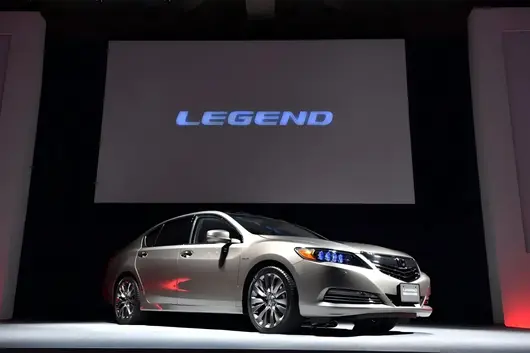
Honda also strongly promoted software-defined cars, being a "radical school" in the autonomous driving field, and is the first car manufacturer globally to equip L3-level autonomous driving technology on mass-produced cars (Japanese version Honda Legend). At this financial report meeting, Toshihiro Mibe clearly stated that Honda will increase software investment and apply electric vehicle and battery technologies to new hybrid models, which will enable Honda to produce pure electric vehicles at any time when consumer tastes change.

However, Honda has always lacked strength in software. Honda's early independently developed software system iterations were extremely slow, completely unable to form a counter-attack in front of Silicon Valley or Chinese tech giants. To make up for the software shortage, Honda established a new company with Sony as a joint venture, attempting to use Sony's software and entertainment ecosystem to build the Afeela smart sedan. However, as Honda comprehensively contracts the electrification front line, the development of the first Afeela model and its North American launch plan have also become victims of this strategic retreat, forced to be indefinitely suspended.
Lacking a strong smart software moat means that even if Honda retreats to the hybrid camp, its products still face "generation gap" threats when facing increasingly intelligent Chinese hybrid models or North American tech giants. In fact, in the Chinese market, Honda is also adopting strategic contraction and retreating to hybrids, basically meaning an active withdrawal from the core premium center of the Chinese market, and it will be very difficult to return to the peak in the future.
Facing the extremely competitive Chinese market and the policy-variable North American market, car companies must maintain flexibility. The question is, this is a common challenge faced by global multinational car companies. Overall, although Honda cleared historical burdens using one-off impairment at this year's financial report meeting and gave optimistic guidance of 500 billion yen profit for fiscal year 2027, its core business and global market structure show that the dilemma Honda faces is absolutely not something simple financial repair can cross; supply chain challenges and double-front battlefields are both difficulties.
Lost Two-Wheeler Market
Against this backdrop, Honda's motorcycle business, from which it made its fortune, is not smooth sailing either.
As the world's largest motorcycle manufacturer, Honda has long used the high profits from two-wheelers to subsidize the downturn of its automotive business. The impairment loss of the Honda automotive business in fiscal year 2025 reached as high as 423.9 billion yen, sustained by the profitable trillion-yen motorcycle business. However, according to recent reports from Nikkei Chinese, Chinese motorcycle brands such as Yadea, Aima, and Vietnamese pure EV company VinFast are launching a fierce pincer attack on Honda in the field of electric two-wheelers.
The Vietnamese government issued strict gasoline motorcycle regulation policies in 2025. The capital Hanoi plans to gradually restrict and ban gasoline motorcycle passage in the city center starting from July this year. This led to an instant explosion in Vietnam's electric two-wheeler market, with penetration rate skyrocketing from 10% in 2024 to 22% in 2025. In response, VinFast adopted a "radical strategy of disregarding profit and loss, low-price market seizure." In 2025, VinFast's electric motorcycle sales reached 400,000 units, surging 5.7 times year-on-year, grabbing 56% share of Vietnam's electric two-wheeler market, with sales soaring to second place in the Vietnamese market.
In response, a Honda executive frankly admitted: "We never expected the electrification process to be so rapid." Although Honda possesses absolute dominance in the traditional fuel motorcycle market in Vietnam, with 2.16 million units sold in 2025 and a comprehensive share of about 65%. However, on this key new track of electric motorcycles, Honda's share is a pitiful 1.4%, with a seriously slow response.

At the same time, Chinese electric two-wheeler giants represented by Yadea and Aima are reshaping the electric two-wheeler industry chain in Vietnam and Southeast Asia with mature industrial chains, further eating into Japanese shares.
Macquarie Transportation Research Director pointed out that Honda's two-wheeler electrification transformation actions in key markets such as Southeast Asia are "quite slow". The "god-like engines" and traditional after-sales networks Honda was once proud of are losing barriers in front of batteries and motors. The Nikkei report also mentioned that Honda was previously overly confident in its motorcycle engine advantages, leading to extreme fragility in defense when facing new environmental regulations.
To cope with the crisis, Honda has to start adopting not-so-fresh cost-reduction strategies — for example, starting to purchase a large amount of motorcycle parts from China, and planning to launch low-price electric motorcycles in Vietnam in June. This signals that the era of extremely high autonomous profits in Honda's two-wheeler business is coming to an end. Honda also plans to invest 500 billion yen to implement an electrification counterattack before 2030, with the goal of increasing annual electric motorcycle sales to 4 million units.
It should be known that the Vietnamese market alone accounts for about 10% of Honda's global motorcycle sales. If Vietnam, this "profit highland", is lost due to electrification, Honda will lose a steady financial backstop. More importantly, the Vietnamese market is not isolated. The Vietnamese government's success in pushing electrification through policy is becoming a model for neighboring countries. Indonesia and Thailand are also heavily subsidizing electric two-wheelers. If Honda cannot quickly plug the gap in Vietnam, the large-scale supply chain established by VinFast and Chinese brands like Yadea, Tailg in Vietnam will naturally radiate throughout ASEAN. At that time, Honda's market foundation throughout Southeast Asia will be shaken.

If the profit margin of this cash cow, the two-wheeler, declines, Honda's four-wheeled automotive transformation will also lose capital infusion.


又有一家專注礦區嘅無人駕駛公司申請上市。
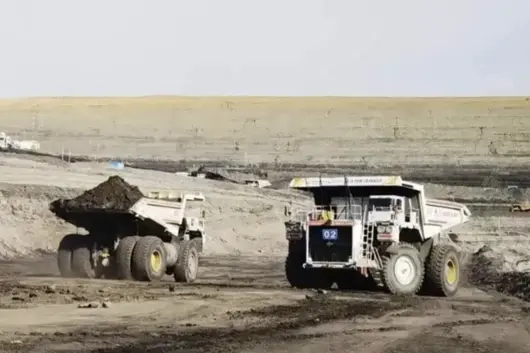
5 月 20 日,踏歌智行向港交所遞交招股書,華泰國際擔任獨家保薦人。
成立於 2016 年嘅踏歌智行,主要做礦山無人駕駛運輸技術同智慧礦山解決方案,核心產品係一套叫「曠谷」嘅「車—地—雲」系統。
招股書一公開,幾個關鍵數字迅速俾拎出嚟:2025 年營收 5.27 億,同比暴漲 246.7%;毛利率首次轉正,從 -45.5% 拉到 4.8%;經營現金流亦終於「由負轉正」,淨流入 3788 萬元。
但另一面數字同樣扎眼:過去三年累計虧損超過 8 個億,前五大客戶貢獻咗近九成收入,最大單一客戶佔比超過 40%。
呢家由北航教授創辦、國內排名前三、累計融資 15 億元嘅礦山無人駕駛公司,到底係一家點樣嘅企業?
01
一個北航教授,點解非要「落礦」?
故事要從 2016 年開始講起。
嗰一年,無人駕駛賽道好熱。放眼望去,好多創業公司將目標放喺 Robotaxi 度,試圖講「改變出行方式」嘅宏大故事,估值水漲船高。
但踏歌智行創辦人余貴珍,北京航空航天大學交通科學與工程學院嘅教授,做咗一個喺當時睇嚟「唔性感」嘅決定:唔去城市,落礦。

踏歌智行創辦人余貴珍
余貴珍並非一時衝動。創業之初,踏歌智行最先切入嘅其實係物流園區嘅無人駕駛場景。但很快佢發現,園區運輸「痛點唔夠痛」——司機相對好招,工作環境都算唔算惡劣。礦區嘅情況則完全唔同。
為咗搞清礦區到底需要咩,余貴珍用咗兩個多月時間,跑咗國內 20 多個露天礦。
佢睇到三個核心問題。
第一,人招唔到咗。礦上嘅司機幾乎冇有年輕人,清一色 50 歲以上。第二,職業病觸目驚心。第三,安全事故係最大嘅紅線。
於是,2017 年,經過團隊內部討論,余貴珍決定:All in 露天礦區。

踏歌智行部分融資情況。數據來源:企查查
當年,踏歌智行即獲得咗數千萬元 Pre-A 輪融資。
此後,公司經歷多輪融資。從 Pre-A 輪到 D 輪,累計融資規模約 15 億元,資方包括金沙江三期、寶通投資、前海投資、合肥產業、北航資管、北京國能、智雲云創、無錫鼎祺、浦信熠芯等。
股東結構方面,截至最後實際可行日期,余貴珍通過直接同間接持股(11.7%)、寧波動歌(7.18%)、同周華生一致行動(0.71%)及北航教育基金會一致行動(1.46%),合計控制公司 21.04% 股權,為單一最大股東集團。北京國能及新能科創合計持股 16.92%,為第二大股東。

踏歌智行股權結構
招股書顯示,此次 IPO 所得款項主要用於主營業務,包括研發活動、業務增長及擴張,以及一般營運資金用途。
02
最靚嘅成績單,同最扎眼嘅數字
此次招股書嘅披露,將踏歌智行最真實嘅一面攤喺桌面上。
先睇睇靚仔嘅數據。
2025 年,踏歌智行營業收入達到 5.27 億元,相較於 2024 年嘅 1.52 億元,同比增長 246.7%。

公司主要有三類業務:一係配備踏歌專用車輛嘅解決方案,即同 OEM 合作,銷售整合咗無人駕駛系統嘅礦用寬體車同配套地面設施同雲控平台;二係用於第三方車輛嘅解決方案,面向存量礦用寬體車同剛性礦卡進行改造;三係智能運營同其他服務,包括維運、技術服務以及按運輸量計費嘅智能運輸服務。
從收入結構嚟睇,「配備踏歌專用車輛嘅解決方案」已經係最核心嘅收入來源,2025 年貢獻咗 3.76 億元,佔總收入嘅 71.4%。這意味著市場對踏歌智行軟硬件一體化方案嘅接受度正在快速提升。
按 2025 年營收計算,踏歌智行喺中國矿山無人駕駛運輸解決方案市場排名第三,市場份額 13.3%,落後於公司 A(38.1%)同公司 B(21.0%)。

2025 年中國矿山無人駕駛供應商排名(以收入計)
更關鍵嘅信號係:毛利率喺 2025 年首次由負轉正,達到 4.8%;而 2023 年、2024 年毛損率分別為 24.8% 同 45.5%。對於一直處於高投入期嘅踏歌智行嚟講,這意味著「賣一臺虧一臺」嘅階段正在過去。
現金流亦係畀咗積極信號。2023 年同 2024 年,經營活動現金流分別淨流出 2.04 億同 1.77 億;去到 2025 年,呢個數字變咗淨流入 3788 萬元。公司終於開始自己「造血」咗。

但硬幣嘅另一面,同樣值得細睇。
虧損問題依然存在。2023 年至 2025 年,踏歌智行累計虧損約 8.22 億元。雖然 2025 年嘅虧損已經收窄到 1.64 億元,但距離真正嘅盈利仲有一段路要走。
毛利率太低係核心問題之一。4.8% 嘅毛利率意味着幾乎係「貼住成本線喺跑」。無人礦卡嘅核心硬件(如礦卡本體)好多係外采嘅,踏歌智行目前更多扮演嘅係「集成 + 軟件」嘅角色,溢價能力有限。
客戶集中度過高,呢個亦係好多創業公司共同嘅難題。2025 年,踏歌智行前五大客戶貢獻咗 88.2% 嘅收入,其中最大單一客戶佔比高達 40.5%。當然,呢個唔係踏歌一家嘅問題,矿区無人駕駛而家嘅商業模式,天然就係大客戶驅動型。
供應商集中度同樣高企。2025 年前五大供應商採購佔比達 84%,最大供應商佔比 44.8%。主要採購內容包括礦用寬體車、剛性礦卡同雷達等核心零部件。供應鏈過度集中,意味著議價能力受限,亦存在供應中斷嘅風險。
仲有另一個細節值得注意:政府補助喺利潤中嘅佔比唔低。2023 年至 2025 年,公司分別獲得 577 萬元、278 萬元、393 萬元政府補助,佔其他收入嘅比例分別為 77.5%、63.9% 同 57.6%。

截至 2025 年底,踏歌智行現金及等價物為 1.22 億元,相比 2024 年底嘅 285.5 萬元,增長約 41.73 倍。
03
557 輛礦卡背後嘅技術:「曠谷」系統
踏歌智行嘅核心競爭力,係一套叫「曠谷」嘅系統。

踏歌智行「曠谷」系統
呢套系統採用「車—地—雲」一體化架構,由三大 AI 大模型基座驅動,覆蓋端到端無人駕駛、多智能體調度控制、設備全生命週期健康管理等核心能力。通俗理解就係:畀礦車裝上「眼睛」同「大腦」,再透過雲端統一調度。
真正令「曠谷」形成壁壘嘅,係大規模集群調度能力。截至 2026 年 4 月,踏歌智行已經喺單一礦場部署超過 140 輛無人駕駛礦用寬體車。
喺產品適配上,踏歌智行都幾積極。佢支持嘅 12 款礦用寬體車涵蓋混合動力、純電動、甲醇動力等多種配置。2024 年自主研發嘅百噸級混合電動無人駕駛礦用寬體車 TG136HA,相對於傳統燃油車輛綜合能耗下降 30%,喺中國西北實現咗大規模部署。
客戶關係係踏歌智行另一個值得關注嘅點。佢哋嘅客戶名單幾乎係一份「國家隊」名錄:國家能源集團、國家電投集團、包鋼集團、江西銅業……呢啲大型央國企唔僅係客戶,有啲仲係股東。
截至 2025 年 12 月 31 日,踏歌智行喺中國曾經為 31 個智能露天採礦項目提供服務,項目遍及新疆、內蒙古、江西、廣東及黑龍江。

踏歌智行無人寬體車特點
車輛方面,截至 2025 年底,踏歌智行已經交付同服務 557 輛無人駕駛礦用運輸車,其中包括 114 輛無人駕駛剛性礦卡。
據灼識諮詢資料,踏歌智行已經交付同服務嘅無人駕駛剛性礦卡數量喺中國排名第二;已經交付同服務嘅無人駕駛礦用運輸車數量喺中國排名前四。
海外市場方面,踏歌智行亦已經有佈局。招股書顯示,截至 2025 年底,按合同價值及解決方案交付量計算,踏歌智行已經取得中國最大嘅海外商業訂單,涉及為超過 40 輛第三方剛性礦卡交付解決方案。
04
百億市場,同一群仲喺度虧錢嘅玩家
踏歌智行揀選喺呢個時間點衝刺港股,係唔係偶然嘅。
據灼識諮詢數據,全球矿山無人駕駛市場已經由 2021 年嘅 9 億元膨脹至 2025 年嘅 86 億元,預計 2030 年將達到 565 億元。其中,中亞、非洲、澳洲同南美係主要增長地區。

中國矿山無人駕駛解決方案市場規模
政策端亦都在持續加碼:國家要求 2026 年煤礦智能化產能佔比唔低於 60%,呢個為整個行業提供咗確定性嘅增量空間。
但呢亦係一個「贏家通食」味道好重嘅賽道,且競爭格局正在加速分化。
主機廠如徐工、宇通憑藉底盘制造優勢向下延伸;方案商們則喺爭相登陸資本市場——博雷頓喺 2025 年 5 月喺港交所掛牌上市,希迪智駕同年 12 月完成港股上市,成為「全球無人駕駛礦卡第一股」,易控智駕、伯镭科技亦已經遞交招股書。
踏歌智行嘅優勢喺於產學研背景帶嚟嘅技術沉澱。但喺純商業化交付規模同市場份額上,佢仲需要追趕。
另一個值得關注嘅信號係:整個行業都喺度「流血」狂奔。
希迪智駕上市後嘅首份財報顯示,2025 年全年營收 8.85 億元,同比增長 115.8%,但年內虧損高達 10.21 億元,較上年同期擴大 75.8%。易控智駕 2025 年前三季度營收 9.21 億元,期內虧損 4.42 億元。
呢說明咗咩?無人礦卡賽道而家仲係典型嘅「增收唔增利」階段。高額嘅研發投入、低毛利,叠加行業競爭內捲,使得即便營收暴漲,虧損依然難以快速收窄。
余貴珍曾將創業比作「求解方程式嘅過程」。
回頭睇,踏歌智行已經解出咗第一條題:技術落地。由 2018 年改造出中國第一台無人礦用寬體車,到 2020 年實現「安全員落車」,再到 2024 年百噸級混合動力寬體車大規模部署,踏歌用咗差不多十年時間,證明咗矿区無人駕駛呢條路行得通。

但第二條題先剛剛展開:
2025 年嘅財務數據畀咗積極信號——營收翻咗兩倍多、毛利率轉正、經營現金流轉正。但 4.8% 嘅毛利率、88.2% 嘅大客戶集中度、8 個多億嘅累計虧損,呢啲都係擺喺台面上嘅「硬骨頭」。
行業窗口正在打開。政策紅利、技術成熟、市場擴容,三重利好叠加。但窗口期唔會無限開放,當更多玩家湧入、當主機廠開始「兼容」、當大客戶開始自研,踏歌智行能唔能守住自己嘅陣地?
招股書入面,踏歌智行喺度講一個「AI+ 實業」嘅長期故事:用技術解決最危險嘅工作,用算法提升最傳統嘅礦業。呢個故事邏輯成立,但喺資本市場嘅聚光燈下,投資人更關心嘅係可能係幾時真正賺錢?
港股只係第一小考場。答卷,先剛剛展開。

[Dozhi Auto Industry] Let's review what major events happened in the automotive world on May 21, 2026.
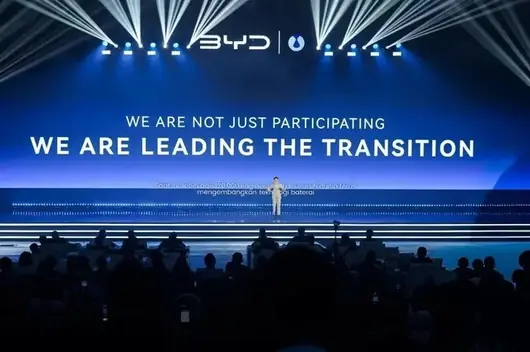
Car Event 1: BYD Launches DM Technology in Indonesia Market

May 18, Indonesia, Jakarta — BYD officially launched DM technology in the Indonesia market. Relying on more flexible energy management capabilities and higher energy efficiency performance, this technology will provide Indonesian consumers with new energy mobility solutions covering multiple scenarios.
BYD Group Vice President Liu Xueliang stated: "The global automotive industry is currently accelerating into the new energy era. Driven by changes in energy structure, environmental challenges, and the continuous upgrade of user mobility needs, BYD has always adhered to the technical route of EV and PHEV in parallel. Through more comprehensive technical layout, we meet the diverse needs of different markets, including the Indonesia market. We believe this technology will write a new milestone for the development of new energy vehicles in Indonesia."
Car Event 2: BMW Appoints Fang Yuan as Vice President of Corporate Affairs for China

BMW Group announced today the appointment of Ms. Fang Yuan as BMW China Vice President of Corporate Affairs, concurrently serving as BMW Brilliance Public Relations and Corporate Social Responsibility Vice President. The appointment takes effect officially from June 1, 2026.
Since Ms. Fang Yuan joined BMW Brilliance Automobile Co., Ltd. in 2012, she has held various management positions in fields such as product and technology communication, media relations, social media communication, and crisis management. Her rich experience accumulated in different business areas, deep understanding of the enterprise, and high sense of responsibility will provide a solid foundation for her to fulfill her new responsibilities.
Ms. Sourour Stanke, Vice President of Strategy, Services, Media Center, and International Market Communication at BMW Group, stated: "China is the strategic core of BMW Group's transformation and long-term development. Ms. Fang Yuan possesses mature management experience, excellent stakeholder communication skills, and deep insights into the Chinese market. We believe she will further enhance the strength of BMW China Corporate Affairs team in her new responsibilities."
Car Event 3: NVIDIA FY2027 Q1 Financial Report Revenue $81.62 Billion


Recently, NVIDIA released the Q1 financial report for FY2027. Revenue for Q1 ended April 26, 2026 was $81.6 billion, up 20% from the previous quarter and up 85% year-over-year. Quarterly GAAP and non-GAAP gross margins were 74.9% and 75.0% respectively. Quarterly GAAP and non-GAAP diluted earnings per share were $2.39 and $1.87 respectively.
NVIDIA Founder and CEO Jensen Huang stated: "The construction of AI factories is the largest infrastructure expansion in human history. This boom is advancing at an unprecedented pace. Agentic AI has arrived; it can work efficiently, create real value, and expand rapidly across enterprises in all industries. With unique advantages, NVIDIA is at the center of this transformation, being the only platform capable of running in all cloud environments, empowering various frontier and open-source models, and achieving comprehensive scaling from hyperscale data centers to the edge."
Car Event 4: NIO Q1 2026 Financial Report, Q1 Total Revenue 25.53 Billion CNY
On May 21, NIO released its Q1 2026 financial report. Q1 operating profit reached 66.8 million yuan, marking profits for two consecutive quarters. Q1 total revenue was 25.53 billion yuan, a year-over-year increase of 112.2%. Key data such as gross margin, cash flow, and cash reserves all reached the best performance in recent years, with overall operating quality continuously improving. Total gross profit was 4.86 billion yuan, a year-over-year increase of 428.4%. The company's comprehensive gross margin in Q1 was 19.0%, vehicle gross margin was 18.8%, growing quarter-over-quarter for four consecutive quarters, and other sales gross margin was 20.6%, both reaching a four-year high. Specific information is as follows:

Q1 cash reserves increased to 48.2 billion yuan, achieving positive operating cash flow for three consecutive quarters. Q1 deliveries reached 83,465 units, a year-over-year increase of 98.3%. Q2 2026 delivery guidance is 110,000 to 115,000 units, a year-over-year increase of 52.7% to 59.6%. Revenue guidance is 32.78 billion to 34.44 billion yuan, a year-over-year increase of 72.4% to 81.2%. As of March 31, 2026, NIO has globally built and completed 3,847 battery swap stations, 4,985 charging stations, and 28,505 charging piles.
"Daily Car News" features the latest automotive news for the day. Please continue to follow "Dozhi Auto".

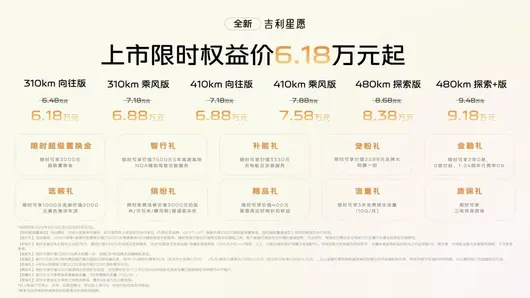
May 28, the all-new Geely Star Wish officially launched, with the entire series range receiving a comprehensive upgrade, 310 km upgraded to 410 km, 410 km upgraded to 480 km. The new car offers four models: 410km Aspiration Edition, 410km Ride Wind Edition, 480km Explorer Edition, and 480km Explorer Plus Edition, with a limited-time equity price ranging from 61,800 Yuan to 91,800 Yuan. To cater to different user driving scenarios, the 410km models provide a 310km range optional swap benefit; after selection, the price drops directly by 7,000 Yuan. From today onwards, users can place an order online via the Geely Galaxy APP or WeChat Mini Program, enjoying ten layers of car buying gifts and limited-time super trade-in cash benefits; completing a big deposit and locking the order before June 30, 2026, will also earn an additional 3,000 Yuan super trade-in cash.

Further Advancement Beyond Classics, Champion Strength Breakthroughs
As a market-recognized champion model, Geely Star Wish has led the way since its launch, with cumulative deliveries exceeding 700,000 units in 573 days, setting the fastest industry record, and winning the 2025 China Car Market Full Category Sales Champion. Entering 2026, brand momentum continues to climb, entering the global new energy sales top three in the first quarter, becoming the only model among Chinese brands to achieve this result. The all-new Star Wish arrives renewed, achieving over 100 product power upgrades and over 25 class-exclusive features, delivering cross-class experiences with generational leading technology. At the launch event, spokesperson Joey Yung attended in person, sharing real driving stories and witnessing this champion small car's advancement moment with 700,000 users.
The launch event was equally innovative and breakthrough, partnering with Xiaohongshu to create the nation's first mobile "Immersive Travel" car launch event, integrating beautiful travel scenes throughout the launch process. Simultaneously linking CATL, Capybara, Kerachi, Goodbaby, Merrylife and other crossover partners to create Harbor Home, Alley Home, Rainforest Home, Silk Road Home, and Nomadic Home five life scenarios, directly hitting user real driving needs, redefining pure electric small car value benchmarks with champion strength.
Powered by Native Architecture, Driving Control Experience Fully Upgrades

The all-new Geely Star Wish is built on Geely's first global native architecture, synchronously completing joint China-Germany track-level tuning, fundamentally reshaping pure electric small car driving control standards. As the first in class to adopt native architecture, the first with standard rear-wheel drive independent suspension, and the first to achieve global tuning, the new car brings users a light, agile yet stable and reliable driving and riding experience.
The R&D team completed full-dimension verification for complex road conditions in over 30 countries, achieving comprehensive upgrades in three core experiences: driving, steering, and braking. G-TCS 2.0 all-weather anti-slip system balances rear-wheel drive driving fun with driving stability, making skidding or oversteering unlikely on flat roads, slopes, and corners; the new brushless steering system response speed increased by one time, providing three steering modes and center-position self-learning function; G-CST 2.0 all-scenario comfort braking system simulates veteran driver feel, brake no nodding, driving less likely to cause car sickness. Extreme performance also underwent strict testing, becoming the only one in class to pass the Moose Test at 130 km/h, and the class first to complete the Moose Test at 80.7 km/h, handling performance comparable to 200,000-level sports coupes.
Three-Electric Power Maximized, Range and Fast Charging Dual Upgrade
Range and refueling have always been core concerns for pure electric users. The all-new Geely Star Wish achieves full series range upgrades, entry-level reaches 410 km, high-end models upgraded to 480 km, easily handling daily commuting and weekend outings. The new car is the only one in class with full series standard CATL battery cells, liquid cooling temperature control, and 11-in-1 highly integrated electric drive, with three-electric power strength firmly at the ceiling of the class.

Exclusive customized CATL next-generation battery cells energy density reaches 190Wh/kg, maximum CLTC range up to 480 km; matching the class-exclusive active grille shutter and low-drag wheels, aerodynamic drag reduced by 15 counts, actual range further increased by 10 km. Refueling efficiency also performs brightly, 30% to 80% fast charging only takes 19 minutes, full charge can start after one cup of coffee time; liquid cooling system and new BMS battery management system guarantee stable fast charging across full temperature range, charging speed-up without compromising battery life. Class-exclusive Star Rui AI Cloud Power 2.0 achieves full-link energy management, covering smart charging and discharging, valley electricity price recognition, battery temperature maintenance, energy consumption diagnosis, and battery maintenance functions, making every charging efficient and worry-free, every journey economical and reliable.
Smart Cockpit Evolution, Warm Interaction Understands Your Needs
The all-new Geely Star Wish integrates wisdom and warmth into cockpit design, creating a more usable, human-understanding smart travel space. The new car is equipped with Galaxy Flyme Auto 2 smart cockpit system, relying on 7nm automotive-grade Longying No. 1 chip and 16GB+128GB large storage, operation is smooth and silky, easy to drive after getting started. Cockpit supports custom map and wallpaper desktop, cute pet wallpapers also support interaction functions, adding fun and vitality to travel.

AI Eva smart voice assistant becomes a smart partner on the go, Hi EVA voice supports fuzzy command understanding and context memory, one command can complete vehicle control, Q&A, entertainment and other operations. Users only need to say "Hi Eva, I want to go home", the vehicle automatically calls latest AutoNavi Version 850 to plan optimal route. Vehicle machine adds CarPlay phone connectivity, compatible with iOS devices seamless connection, local apps rich, cloud 200+ apps optional choice. Invisibility mode, car wash mode, one-tap car find and other practical scenarios, matching personalized assistant, auto open navigation after work, adjust air conditioning, exclusive welcome ritual full of ceremony, from daily commute to long-distance travel, fully covering user travel needs.
Smart Driving Safety Upgrade, Effortlessly Drive Every Journey
The all-new Geely Star Wish is equipped with Qianli Haohan Assistive Driving H3 Solution with the same source as high-end models, covering diverse driving scenarios, with mature and reliable technology reducing driving burden and improving travel safety. The system has accumulated 1.38 billion km safe driving, user usage volume growth leads, relying on G-ASD smart driving foundation and Star Rui AI Large Model, achieving smarter the more you use, more worry-free the more you drive experience.

Highway and Viaduct NOA is not limited by roads or rain/fog weather, supports voice lane change, multi-scenario avoidance and automatic ramp entry/exit, users lightly hold steering wheel can easily complete long-distance driving, all-scenario MPI takeover rate over 200 km, equivalent to continuous driving 3 hours only one takeover needed. Parking capability fully adapts to all scenarios, APA parking assist supports one-tap parking, fingertip parking, remote parking, covering over 300 parking scenarios; aiming at new driver parking difficulty, female driver parking easily nervous pain points, HPA memory parking supports 2 km ultra-long route memory, centimeter-level precise positioning, one-time learning can fully auto parking in, has intelligent car following, auto spot finding, obstacle avoidance functions, temporary route change does not need re-learning. Additionally, DMS active fatigue detection monitors driver state in real-time, timely reminding fatigue or distracted behavior; Sentry Mode 24-hour guard parking safety, abnormal situations instant video and push to phone, from departure to arrival, full journey guard travel peace of mind.
Full Domain Safety Protection, Small Cars Have Hardcore Strength
Safety is Geely's commitment in the genes, regardless of vehicle size, all follow the same strict safety standard. Relying on investment exceeding 2 billion Yuan global full domain safety center, Geely released "Human, Vehicle, Road, Cloud, Star" integrated full domain safety 2.0 system, covering life, health, property, privacy four safety domains. The all-new Geely Star Wish upholds "Small Cars, Must Have Big Safety" concept, making small car safety to the extreme.

Passive safety level, create Five Vertical Eight Horizontal Star-Shell Cage Body, front-rear-left-right all-around reinforcement: front end three force transmission paths matching double "Clover" force release structure, side battery to threshold spacing 149mm and add double anti-collision longitudinal beams, rear end 750mm long overhang and double "Well-Shaped" rear subframe build sturdy barrier; roof crush strength increased to 3.4 times vehicle weight, AB pillars and roof crossbar core materials upgrade, rollover or heavy object on top cockpit stable, side curtain airbag pressure holding technology continuously protects head safety. Battery safety standard is 2 times national standard, 1000 cycles after battery capacity still retains 90.72%; actual driving 84,000 km Star Wish, successfully pass seawater corrosion, mud water scouring, rough road scraping, extreme fire six major serial extreme tests, pioneering the industry. Industry-leading BDMU high-voltage device deep integration technology, combines BMS battery management system and BDU high-voltage distribution unit all-in-one, reduce interfaces, improve reliability, from root lower battery sealing failure risk.
Safety test performance class-leading, May 12 partner with CCTV complete first in class and only in class frontal and side continuous crash test, high-voltage system timely power off, battery pack did not smoke or catch fire, passenger compartment structure intact, airbags deployed precisely, non-crash side door opens normally. Equipped with tire pressure direct display, DOW door opening warning, Sentry Mode, AEB active braking and AES emergency steering dual protection, successfully pass 120 km/h static vehicle brake stop, 130 km/h "Disappearing Lead Car" active avoidance test, safety strength far exceeds industry mainstream level.
Champion Strength Continues, From China Benchmark to Global Name Card
Since October 2024 launch, Geely Star Wish won market recognition with hardcore product power, cumulative deliveries exceed 700,000 units, equivalent to selling one unit per minute, becoming the fastest to achieve this result star model in the entire industry, instantly win 2025 China Car Market Full Category Sales Champion. 2026 first quarter, brand momentum continues release, enter global new energy sales top three, establish Chinese A0-class pure electric sedan new milestone.

While domestic market sales hot, Geely Star Wish overseas reputation also bright, already launched in over 30 countries and regions globally. Brazil launch two months sales exceed 2,300 units, Thailand auto show single week orders reach 3,300 units, sequentially win "Brazil Annual Best Compact Electric Vehicle", "Indonesia Auto Show Most Loved Electric Vehicle" double international awards, become walking world "China Smart Manufacturing" new name card.

The all-new Geely Star Wish advancement, lets Geely Galaxy in pure electric small car track once again raise "High Quality and Good Price" benchmark. In the future, Geely Galaxy will stick to "Build Smart Boutique Cars for Everyone" original intention, accurately understand user real needs, continuously bring products and services exceeding expectations to each sub-market.

Jualan motosikal global pada tahun 2025 adalah kira-kira 65.2 juta unit, di mana saiz pasaran dijangka hampir AS$180 bilion pada tahun 2030.

Jualan kawasan terbesar masing-masing ialah India (kira-kira 20.5 juta~20.7 juta unit), lima negara ASEAN (Indonesia, Vietnam, Thailand, Filipina, Malaysia, jumlah kira-kira 13.16 juta unit), jualan domestik China (8.602 juta unit) dan Amerika Latin (kira-kira 5.86 juta unit).
India dan Asia Tenggara utamakan kenderaan jalan raya sesi kecil 100~150cc, manakala Eropah dan Amerika lebih gemar motosikal jalanan sesi sederhana hingga besar, motosikal pelancongan dan motosikal kruiser.

Jumlah Stok Global lebih enam puluh peratus tertumpu di empat negara iaitu India, Indonesia, China, Vietnam. India mempunyai kira-kira 221 juta unit, Indonesia 125 juta~130 juta unit, China berdaftar kira-kira 100 juta unit, Vietnam 72 juta~77 juta unit.
Peta Jenama menunjukkan "Asia dominan jualan, Eropah dan Amerika monopoli kelas tinggi".

Empat gergasi Jepun (Honda, Yamaha, Suzuki, Kawasaki) menempati hampir separuh bahagian pasaran global, menguasai pasaran kenderaan jalan raya Asia Tenggara dan Amerika Latin; gergasi India (Hero, Bajaj, TVS) menguasai pasaran pengangkutan rendah di Asia Selatan dan Afrika; gergasi Eropah (BMW, Ducati, KTM) dan Amerika Harley mendominasi pasaran hiburan bernilai tinggi.
Ciri-ciri Pasaran China dan Impak PengElektrikan
Jualan domestik China menyumbang 13%~14% global, jika dikira eksport, jumlah pengeluaran global sekitar 30%, merupakan negara pembuatan dan eksport nombor satu di dunia.
Dikhalang oleh sekatan motosikal di hampir 200 bandar, pengangkutan bandar digantikan oleh kenderaan elektrik dua roda (kadar penembusan kenderaan elektrik dua roda di bandar bandingan besar melebihi 75%, kadar pengElektrikanan nasional melebihi 70%), tekanan pada jualan domestik kenderaan jalan raya bahan api, jualan domestik motosikal bahan api tahun 2025 adalah kira-kira 5.14 juta unit, menurun 6.18% tahun ke tahun. Tetapi model hiburan 250cc ke atas tumbuh berlawanan arus: jualan tahun 2025 adalah 0.95 juta unit, meningkat 25.87% tahun ke tahun, CAGR tiga tahun terakhir (Kadar Pertumbuhan Tahunan Berkomposisi) melebihi 20%, motosikal balapan, retro, ADV popular, atribut pengguna beralih ke rekreasional dan sosial.
Pasaran yang paling ketara terjejas oleh impak pengElektrikanan pada motosikal bahan api ialah China dan Vietnam. Kawasan bandar China hampir siap "menukar daripada bahan api ke elektrik"; Vietnam bahagian pendaftaran baharu motosikal elektrik pantas meningkat ke 13%~22%, merupakan pasaran penggantian minyak paling cepat di Asia Tenggara.
Penilaian Status dan Keupayaan Bersaing Syarikat China di Pentas Global
Tidak Perlu Merendahkan Diri
China memiliki rantaian industri motosikal paling lengkap di dunia. Eksport kenderaan lengkap tahun 2025 adalah 13.37 juta unit, nilai eksport AS$8.85 bilion, jumlah eksport merupakan bahagian penting perdagangan global, merupakan pembekal utama kenderaan jalan raya sesi kecil di Asia, Afrika, Amerika Latin.
Haojue, Loncin, Zongshen membina asas kukuh di Amerika Latin dan Afrika melalui harga dan kebolehpercayaan; CFMoto, QJMOTO, Voge terus mengejar dalam bidang sesi sederhana hingga besar, eksport model 250cc ke atas meningkat lebih 50% tahun ke tahun, jualan Voge Eropah pecah 80,000 unit (+89.35% tahun ke tahun), CFMoto menduduki pemimpin di pasaran ATV Eropah, perniagaan motosikalnya juga mencapai 5%~10% bahagian pasaran di beberapa negara Eropah. Dalam pasaran domestik sesi sederhana hingga besar, jenama tempatan lebih 80%, jelas menggerogoti bahagian import besar. Dalam bidang perlumbaan (WSBK, Dakar), pasukan China mula muncul, pasukan Keeway mendapat tempat ke-15 di Dakar 2025, Zhang Xue meraih juara lima berturut-turut di WSBK.
purata harga eksport terus meningkat, bahagian eksport jenama sendiri dianggarkan hampir 50%, industri sedang beralih dari "pembuatan kontrak volume tinggi" ke "teknologi + jenama ke luar negara".
Juga Tidak Boleh Sombong
Jumlah keuntungan bersih 10 besar industri motosikal China, masih tidak melebihi keuntungan satu perniagaan motosikal Honda, masih berada dalam fasa "besar tetapi tidak kuat".
Terdapat tiga kelemahan teras.
Pertama, perbezaan pelaburan R&D yang ketara.
Perbelanjaan penyelidikan Honda untuk perniagaan motosikal setahun lebih daripada jumlah pelaburan industri motosikal China, menyebabkan teknologi asas seperti kecekapan haba enjin, ketahanan, NVH masih wujud jurang generasi. Kadar penyelidikan sendiri sepenuhnya untuk enjin sesi besar 250cc ke atas kurang 30% (dalam beberapa tahun kebelakangan ini jenama baharu seperti Zhang Xue telah mencapai 100% penyelidikan komponen teras, tetapi belum mengubah keseluruhan corak industri).
Kedua, kawalan elektronik teras bergantung pada syarikat asing
Sistem suntikan bahan api elektronik, ABS, TC, IMU, dll. sistem kawalan elektronik kelas tinggi masih sangat bergantung pada pembekal asing seperti Bosch, Denso, kuasa suara komponen teras adalah lemah.
Ketiga, akar jenama dangkal, rangkaian luar negara tidak sempurna
Premium jenama jauh lebih rendah daripada Jepun, Eropah. Pada awal, persaingan harga rendah yang ganas pernah menyebabkan bahagian pasaran motosikal China di Asia Tenggara turun dari 90% ke kira-kira 1% (beberapa tahun kebelakangan ini meningkat semula, tetapi membina semula kepercayaan masih memerlukan masa). Di tanahair Jepun (Jepun, Thailand) dan pasaran kruiser Amerika Utara, jenama China hampir tiada kehadiran.
Syarikat China merupakan asas pembuatan yang tidak boleh diganti di dunia dan pengeluar utama kenderaan jalan raya, sesi sederhana hingga besar sedang menjadi garis pertumbuhan kedua, dan mula menunjukkan kecerdasan di Eropah dan Amerika, rantaian industri motosikal elektrik juga mempunyai kelebihan awal. Tetapi berbanding gergasi Jepun, dalam penguasaan teknologi teras, premium jenama global, keupayaan keuntungan kitaran penuh, masih ada jurang 5~10 tahun. Sama ada masa hadapan dapat memecahkan halangan penyelidikan sendiri kawalan elektronik dan enjin sesi besar, membina sistem selepas jualan luar negara, akan menentukan sama ada motosikal China naik taraf dari "Pabrik Dunia" kepada "Jenama Global", atau kekal dalam peranan pembuatan kontrak margin rendah untuk masa yang lama.
Apabila pengElektrikanan kenderaan jalan raya, pensesiaran besar motosikal hiburan, dan integrasi pintar dan rangkaian produk menjadi trend industri motosikal, syarikat motor China meningkatkan keupayaan penyelidikan, memanfaatkan kelebihan ekologi, integrasi ke pasaran global adalah jalan terbaik.
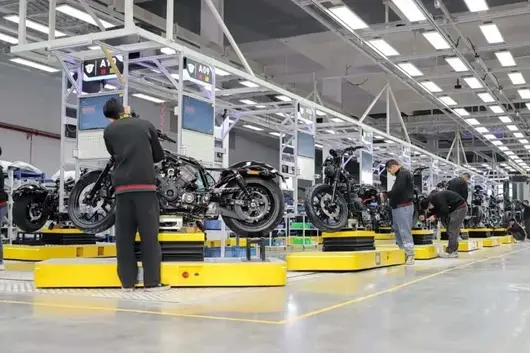

28 Mei, kenderaan baharu ke-100 juta oleh Kumpulan SAIC telah siap dihantar, menjadi kumpulan automotif domestik pertama yang jumlah pengeluaran dan jualan kumulatifnya mencapai 100 juta, memecahkan rekod pengeluaran dan jualan pengeluar automotif China.

Model yang dihantar kali ini ialah IM LS9 Hyper, versi tertinggi bagi IM LS9. Dilengkapi dengan sistem stereng empat roda kawalan penuh, dilengkapi lidar super visi 520 talian serta cip Nvidia Thor dan model AI pemanduan Momenta.
Dari segi kuasa, kenderaan ini dibina berdasarkan platform voltan tinggi 800V merentas, dilengkapi sistem peningkatan jarak super bintang, menggunakan tiga motor Hurricane Jenama Emas, kuasa puncak motor masing-masing mencapai 160kW (hadapan), 195kW (belakang kiri) dan 195kW (belakang kanan). Jarak larian gabungan melebihi 1400 kilometer.

Tahun 1955, Syarikat Pembuatan Komponen Enjin Nadi Shanghai ditubuhkan, industri automotif Shanghai mula secara rasmi; Tahun 1958, kereta "Jenama Phoenix" pertama keluar dari barisan pengeluaran, mencapainya sifar pembuatan kereta Shanghai. Pada dekad 1980-an, Kumpulan SAIC membawa masuk model Santana melalui kerjasama perniagaan, memacu pengembangan berskala industri kereta China. Tahun 1997 Shanghai General ditubuhkan, mencipta kelajuan membina kilang dan mengeluarkan kenderaan dalam tempoh 23 bulan. Tahun 2006 jenama Roewe dilahirkan, tahun 2016 melancarkan kereta internet pertama Roewe RX5. Tahun 2020 kereta IM ditubuhkan, melabur di trek elektronik pintar kelas atas.
Dari segi pasaran luar negara, Kumpulan SAIC telah mempunyai lebih 100 tapak pengeluaran komponen di luar negara, rangkaian lebih 3000 pengedar, produk dan perkhidmatan merangkumi lebih 170 negara dan wilayah di seluruh dunia. Selain itu, telah membina 3 pusat inovasi penyelidikan dan pembangunan utama seperti London serta 4 pusat pengeluaran dan pembuatan di Thailand, Indonesia, India, Pakistan. Logistik Anji milik sendiri mempunyai 42 kapal Ro-Ro pelbagai jenis, 8 laluan antarabangsa merangkumi Asia Tenggara, Eropah, Amerika.

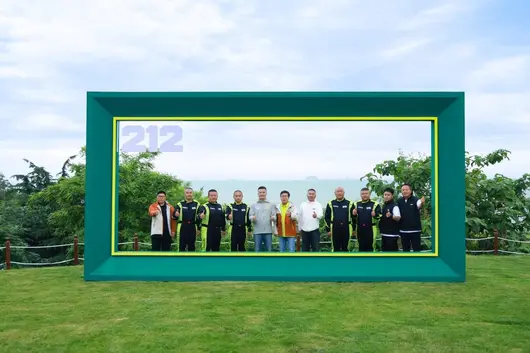
6月6日,212越野车在青岛举办环塔收官庆典。韩乔生、韩魏及212车队成员共同回顾了本届赛事历程。

在刚刚结束的2026中国环塔国际拉力赛中,212越野车队以接近原厂状态的量产车出战,总里程7500公里,完成“2.0T对阵3.0T”的越级挑战。在SS10至SS13赛段斩获两冠一亚,最终成为T2.1量产组厂商队唯一100%完赛的品牌,并获得该组别厂商队亚军。

参赛车辆T01未经重度赛事改装,搭载2.0T发动机与采埃孚8AT变速箱,配合博格华纳大分动器,4L模式下扭矩放大2.64倍。非承载式车身搭配前后整体桥,底盘经环塔路况专项调校,车身采用镀锌板。乘员舱顶部承载力提升16%,配备540°全景影像及紧急呼叫救援功能。

212宣布环塔改装套件即将登陆官方商城,包含底盘护甲、防脱轮毂、越野轮胎及脱困装备。212越野车营销公司总经理何兆鹏表示:“212要把越野文化普及,让更多人心里那颗关于远方和梦想的种子,有机会生根发芽。”
未来,212已规划达喀尔拉力赛、马来西亚沙巴国际雨林赛、阿拉善T3挑战赛及2027环塔等赛事,并启动2027环塔用户车手招募计划,将与韩魏联合成立冠军越野培训学院,提供系统化赛前指导。
© 2024 Bitauto.com. All Rights Reserved.
Bitauto (www.yiche.com and www.bitauto.com) is one of the most visited automotive websites in China. We provide detailed info on Chinese car brands available in your area. Please note that the information provided on this website is based on publicly available data and is for reference only. It may not be fully updated or accurate at all times.

Help us improve our website


