

HomeProton Wira

Search History
Popular Searches
Dealer Login / Sign Up

从泰国、意大利再到西班牙,比亚迪一路陪伴中国足球小将 2018 队,拿下一座又一座冠军。刚结束的西班牙 Brava 杯赛事里,巴萨、马竞等多家欧洲青训强队参赛,一共 67 支队伍角逐。小将们历经9轮比赛,小组赛四战全胜,淘汰赛两次逆转,半决赛击败西班牙人梯队,决赛通过点球大战战胜科尔内亚,以 9 战全胜的成绩夺冠。队里的韩承均(乔治)表现亮眼,9 场比赛打进 17 球,拿到赛事 MVP 和金靴。


比亚迪对青少年足球的支持,和做新能源汽车的思路一样,坚持长期主义。比亚迪在新能源领域深耕二十多年,持续投入研发,不追求短期热度。从 2024 年开始,比亚迪陆续组织两百多名足球少年,去往德国、日本、巴西等国家,和当地顶尖俱乐部交流比赛。去年这支队伍参加 Brava 杯止步八强,经过持续打磨,今年站上最高领奖台,这份坚持有了回报。


比亚迪自身在海外市场稳步发展,在欧洲、东南亚多地取得不错的销量成绩。同时品牌也在海外和曼城、国米、大巴黎等足球豪门开展合作,把国际足球资源带回国内,助力青训发展。此前小将们还前往意大利参观国米、现场观看意甲比赛,近距离感受职业足球氛围。

中国足球少年闪耀世界赛场!在比亚迪的支持下,已经有 3 名小将签约西甲职业梯队。足球和技术研发都没有捷径,持续扎根青少年足球,慢慢培养人才,才能为中国足球积蓄新生力量。未来比亚迪也会继续和小将并肩,在世界各地继续挑战,争取更多好成绩。


喺馬來西亞嘅 SUV 市場,好多買家喺揀車嘅時候都會拿本田 CR-V 同富士 Outback 做比較。呢兩款車喺價位同定位上都好接近,而家我哋就從多個方面做一次詳細嘅比較,幫你省返做功課嘅時間。
本田 CR-V 喺馬來西亞嘅 OTR 售價係 RM 178,200 - 195,900,一共有 4 個版本,包括 2026 e:HEV 2.0L 2WD RS(RM 195,900)、2026 1.5T 4WD V(RM 181,900)、2026 e:HEV 2.0L 2WD E(RM 178,200) 等。
富士 Outback 喺馬來西亞嘅 OTR 售價係 RM 260,000 - 280,000,一共有 2 個版本,包括 2025 2.4T R-Touring EyeSight(RM 310,340)、2025 2.5L Touring EyeSight(RM 280,340) 等。
從價錢嚟睇,本田 CR-V 嘅起步價確實比富士 Outback 平咗 RM 81,800。如果你預算有限,本田嘅入門版已經可以滿足日常需求。但都要留意,平嗰幾千蚊,可能喺配備上有取捨,具體要睇你嘅需求。

本田 CR-V 搭載 2.0L 4-cyl,馬力 170 hp。官方油耗 8.0 L/100km。
富士 Outback 搭載 2.0L Turbo,馬力 220 hp。官方油耗 9.5 L/100km。
動力方面,富士 Outback 嘅 2.0L Turbo 比本田 CR-V 嘅 2.0L 4-cyl 多咗 50 匹馬力。不過日常喺市區開,兩款車嘅動力都夠用,唔會覺得唔夠力。

本田 CR-V 嘅安全評級係 5★ (ASEAN NCAP),主動安全系統包括本田 SENSING (ACC, CMBS, LKAS, RDM)。
富士 Outback 嘅安全評級係 TBD,主動安全系統包括 Basic。
安全配備方面,兩款車都拿到唔錯嘅評級。不過本田 CR-V 嘅本田 SENSING (ACC, CMBS, LKAS, RDM) 同富士 Outback 嘅 Basic 喺功能上有啲分別,如果你比較重視主動安全嘅話,可以仔細比較吓兩者嘅功能列表。

本田 CR-V 採用 FWD 驅動方式。
富士 Outback 採用 FWD 驅動方式。
兩款車嘅驅動方式一樣,都係 FWD,日常駕駛感受唔會有太大分別。

總體嚟講,本田 CR-V 同富士 Outback 都係馬來西亞市場幾唔錯嘅車型。揀邊一輛,關鍵仲係睇你嘅個人需求同預算。建議大家做好功課,多比較幾間車行嘅報價,再去試駕做最終決定。買車係件大事,花少少時間做功課絕對唔會錯。


August 2026, Chery Group sold 280,128 cars, up 15.4% year-over-year. Among them, new energy vehicles reached 120,909, up 69.8%, breaking through 100,000 units for 5 consecutive months; exports were 196,984, up 52.1% year-over-year. Cumulative sales from January to August totaled 1,914,481, up 10.8% year-over-year.
The automotive market is fiercely competitive this year, with price wars lasting years showing no signs of fading. Joint ventures are retreating or shrinking, while some new entrants are still burning money to boost volume. In such an environment, Chery maintaining double-digit growth with both export and new energy lines performing well is indeed impressive.
However, looking closely, the core driving force behind these results lies not in marketing or price wars, but on the product side – it is the depth of the product matrix that supports synchronized growth in both domestic and overseas markets.
Stable output from the new energy series relies on "full price coverage"
In August, Chery New Energy sold 120,909 units, a 69.8% year-over-year increase, standing at the 100,000-unit milestone for the 5th consecutive month. Behind this number is not a breakout single model, but stable output from the entire new energy series.

Let's look at a few specific products.
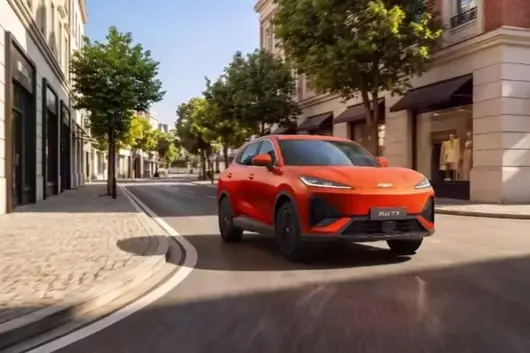
Fengyun T7, a global quality pure electric SUV launched in August. After 2 years of planning, 3 years of R&D, and over 6 million kilometers of global testing and validation, orders surpassed 23,000 within 24 hours of launch. As is well known, pure electric SUVs are currently the most competitive niche market, without a doubt. Being able to win in this red ocean to some extent proves that Fengyun T7's product positioning fits the needs of the target market.

All-new QQ, with sales breaking 10,000 for 5 consecutive months, locking in a spot as a star product in the A0 class. What does A0 class mean? Low unit price, thin margins, many competitors; it is the price segment that best tests cost control and product foundation. The fact that the All-new QQ can stand firm shows that Chery's system capability has been verified in the entry-level market.
Looking upwards, the Luxeed V9 cumulative deliveries exceeded 20,000 units, refreshing the fastest delivery record for the 500,000 RMB new energy MPV segment. The 500,000 RMB tier is a price band domestic brands once didn't dare to touch.
Putting these cars together, you will find: from the tens-of-thousands QQ, to the Fengyun series for mainstream families, to the 500,000 RMB Luxeed, Chery's new energy products cover different price segments, with family users, young users, and high-end users finding what they need. This is how the monthly domestic new energy penetration rate continuously breaks through 60%.
This is the difference between "series-based operations" and "single product blockbusters." Single product blockbusters rely on luck, while series output relies on the system.
Fuel and New Energy, Supporting Overseas Markets
Exports are Chery's real trump card. In August, Chery exported 196,984 units, up 52.1% year-over-year. From January to August this year, cumulative was 1,343,334 units, up 68.1% year-over-year. As of August this year, Chery Automobile cumulative exports have surpassed 7 million units, the first Chinese automaker to achieve this.
Why Chery? I think the answer comes down to two words: pragmatism.

Second, product matrix layered, adapting to local conditions. Consumers in different countries have different road conditions, usage habits, and purchasing budgets. Chery's approach is not to simply move domestic products abroad, but to perform localization adaptation, using a rich vehicle matrix to match market demands in different regions. Low-cost markets have economic products, mature markets have quality products, interconnected.
How is the effect? We can look at Chery's performance in the European market. Data shows, from January to July this year, Chery sold over 208,000 units in 24 European countries, up 201% year-over-year; among them new energy exceeded 101,000 units, up over 3.3 times. In the UK market, JAECOO 7, JAECOO 5, OMODA 5 three models broke into the UK top 10 best-selling vehicle list. According to China Passenger Car Association data, from January to July, Chery New Energy cumulative exports ranked second in the industry.

It is worth noting that Europe is one of the markets with the highest thresholds and most competition globally. This 201% growth rate indicates that Chery's product strength has passed the test of the most picky users.
Additionally, JAECOO 5 became the sales champion in the Australian niche market, and pure electric markets in Indonesia and Thailand; iCAUR V23 ranked first in niche markets in Thailand, South Africa, etc. This shows Chery's products have been validated by the market in multiple countries globally.
Product strength is the true moat
In the end, sales growth is essentially product strength being recognized by global users. Where does product strength come from? From R&D.
Chery is willing to spend on R&D. In 2025, Chery R&D investment was 14.715 billion yuan, up 39.6% year-over-year. This number ranks third among Chinese automakers, second only to BYD and SAIC.
Where was the money spent? Kunpeng Power, fuel, hybrid, pure electric, hydrogen energy four-in-one. Kunpeng Super Power Hybrid C-DM, thermal efficiency greater than 44.5%, fuel consumption per 100km with depleted battery as low as 4.2L, comprehensive range over 1,400 kilometers. On the intelligent level, Chery has Falcon Assist Drive, Lingxi Smart Cockpit, Flying Fish Digital Smart Chassis, etc., and these advanced technologies are already installed on mass-produced cars.

The effect is also visible. In full year 2025, Chery sold 903,847 new energy vehicles, up 54.9% year-over-year. Moreover, among all new products launched in 2025, new energy accounted for over 90%. Looking at Chery's August data again: new energy broke 100,000 for 5 consecutive months, exports up 52.1% year-over-year. This shows Chery's product matrix has continuous ability to generate vitality.
On the other hand, Chery New Energy is currently transitioning from scale expansion to a new stage of value growth. In the first half of 2026, Chery Automobile new energy business revenue reached 59.284 billion yuan, up 63.8% year-over-year, accounting for a share of total revenue rising from 25.6% to 41.4%.
R&D investment turns into technology, technology turns into products, products turn into sales. This closed loop is operational.
In the future, Chery will use intelligent electrification technology to stand firm in the global market. Domestically relying on new energy matrix to hold the position, overseas relying on fuel and new energy walking on two legs to expand the territory.
Product-oriented, let products speak. This sounds simple, but in today's automotive market relying on traffic, buzz, and subsidies, it turns out to be the most solid path. Chery's August scorecard proves one thing: Do products well, and the market will give you the answer.

In Malaysia's SUV market, many buyers compare Honda CR-V and Subaru Crosstrek when choosing a car. These two cars are quite close in price and positioning. Today we will make a detailed comparison from multiple aspects to help you save time on research.
The Honda CR-V OTR price in Malaysia is RM 178,200 - 195,900, with a total of 4 versions, including 2026 e:HEV 2.0L 2WD RS (RM 195,900), 2026 1.5T 4WD V (RM 181,900), 2026 e:HEV 2.0L 2WD E (RM 178,200), etc.
The Subaru Crosstrek OTR price in Malaysia is RM 145,000 - 160,000, with a total of 1 version, including 2.0L e-Boxer (RM 150,000), etc.
From a price perspective, Subaru Crosstrek's starting price is RM 33,200 cheaper than Honda CR-V. Honestly, in this price range, a difference of a few thousand is actually not big; the key is to look at overall value for money and long-term usage costs.
Honda CR-V is equipped with a 2.0L 4-cyl, 170 hp. Official fuel consumption 8.0 L/100km.
Subaru Crosstrek is equipped with a 1.5L Turbo, 140 hp. Official fuel consumption 7.0 L/100km.
In terms of power, Honda CR-V's 2.0L 4-cyl has 30 more horsepower than Subaru Crosstrek's 1.5L Turbo, providing more confidence in mid-range acceleration, especially when overtaking on highways. However, Subaru Crosstrek's fuel consumption might be friendlier; the difference in daily city commuting won't be very large.
Honda CR-V body length 4500 mm, trunk 450 L.
Subaru Crosstrek body length 4400 mm, trunk 400 L.
In terms of space, Honda CR-V's body is 100 mm longer than Subaru Crosstrek, with slightly more passenger space inside, especially rear legroom. If you often carry family or need to fit a stroller, a larger body is indeed more practical.
Honda CR-V and Subaru Crosstrek are both mainstream choices in the Malaysia market, suitable for family use, daily commuting. If you value brand reputation and resale value more, consider the one with better reputation first; if you care more about cost-performance ratio and features, choose the one with richer configuration. Ultimately, it is recommended to test drive both, experiencing it personally is the most important.

Overall, Honda CR-V and Subaru Crosstrek are both very good models in the Malaysia market. Which one to choose depends mainly on your personal needs and budget. We suggest doing your homework, comparing quotes from multiple car dealerships, and then test driving to make the final decision. Buying a car is a big matter; spending some time doing research will definitely not go wrong.

In Malaysia's SUV market, many buyers compare the Honda CR-V and Subaru Crosstrek when choosing a car. These two models are quite close in price and positioning. Today, we will make a detailed comparison from multiple aspects to help you save time on research.
The OTR price of Honda CR-V in Malaysia is RM 178,200 - 195,900, with a total of 4 versions, including 2026 e:HEV 2.0L 2WD RS (RM 195,900), 2026 1.5T 4WD V (RM 181,900), 2026 e:HEV 2.0L 2WD E (RM 178,200), etc.
The OTR price of Subaru Crosstrek in Malaysia is RM 145,000 - 160,000, with a total of 1 version, including 2.0L e-Boxer (RM 150,000), etc.
From the price perspective, the starting price of Subaru Crosstrek is RM 33,200 cheaper than Honda CR-V. Honestly, in this price range, the difference of a few thousand isn't really that big. The key is to look at overall value for money and long-term usage costs.
Honda CR-V uses FWD drive configuration.
Subaru Crosstrek uses FWD drive configuration.
Both cars have the same drive configuration, both are FWD, so the driving experience won't differ much in daily use.
Honda CR-V warranty 5 years/unlimited mileage, maintenance interval every 10,000km or 6 months.
Subaru Crosstrek warranty 3 years/100,000km, maintenance interval every 10,000km or 6 months.
Honda CR-V and Subaru Crosstrek are both mainstream choices in the Malaysian market, suitable for family use and daily commuting. If you value brand reputation and resale value more, you can prioritize the one with better reputation; if you care more about value for money and features, choose the one with richer specifications. Ultimately, it is recommended to test drive both, personal experience is the most important.
Overall, Honda CR-V and Subaru Crosstrek are both very good models in the Malaysian market. Which one to choose depends mainly on your personal needs and budget. It is recommended to do your research, compare quotes from several dealerships, and then go for a test drive to make the final decision. Buying a car is a big matter, spending some time on research will never go wrong.

In the Malaysia SUV market, many buyers compare the Honda CR-V and Subaru Forester when choosing a car. These two models are quite close in price and positioning. Today we will make a detailed comparison from multiple aspects to save you time on research.
The Honda CR-V OTR price in Malaysia is RM 178,200 - 195,900, with a total of 4 versions, including 2026 e:HEV 2.0L 2WD RS (RM 195,900), 2026 1.5T 4WD V (RM 181,900), 2026 e:HEV 2.0L 2WD E (RM 178,200) etc.
The Subaru Forester OTR price in Malaysia is RM 174,000 - 197,000, with a total of 3 versions, including 2024 2.0L S EyeSight GT Edition (RM 189,538), 2024 2.0L S EyeSight (RM 177,538), 2024 2.0L L EyeSight (RM 167,538) etc.
From the price perspective, the starting price of the Subaru Forester is RM 4,200 cheaper than the Honda CR-V. Honestly, in this price range, a difference of a few thousand is actually not big, the key is to look at the overall cost-performance ratio and long-term usage cost.
The Honda CR-V is equipped with a 2.0L 4-cyl engine, 170 hp. Official fuel consumption 8.0 L/100km.
The Subaru Forester is equipped with a 2.0L 4-cyl engine, 170 hp. Official fuel consumption 8.0 L/100km.
Both cars use the same powertrain system, the feeling when driving daily is basically no difference. Fuel consumption is also similar, no need to worry too much about this.
The Honda CR-V body length is 4500 mm, trunk 450 L.
The Subaru Forester body length is 4400 mm, trunk 400 L.
Regarding space, the Honda CR-V body is 100 mm longer than the Subaru Forester, the interior seating space will be slightly more spacious, especially the rear seat legroom. If you often carry family or need to put in a stroller, a larger body is indeed more practical.
The Honda CR-V adopts FWD drive mode.
The Subaru Forester adopts FWD drive mode.
Both cars have the same drive mode, both are FWD, daily driving experience will not be much different.

Honda CR-V warranty 5 years/unlimited mileage, maintenance interval every 10,000km or 6 months.
Subaru Forester warranty 3 years/100,000km, maintenance interval every 10,000km or 6 months.
Overall, the Honda CR-V and Subaru Forester are both very good models in the Malaysia market. Which one to choose depends on your personal needs and budget. We recommend doing your research, compare quotes from several dealerships, and go for a test drive to make the final decision. Buying a car is a big matter, spending time on research will definitely not be wrong.

Di pasaran SUV Malaysia, ramai pembeli membandingkan Honda CR-V dan Subaru Crosstrek semasa memilih kereta. Kedua-dua kereta ini hampir sama dari segi harga dan sasaran pasaran. Hari ini, kita akan membuat perbandingan terperinci dari pelbagai aspek untuk menjimatkan masa anda menyiapkan kajian.
Harga OTR Honda CR-V di Malaysia ialah RM 178,200 - 195,900, terdapat keseluruhan 4 versi, termasuk 2026 e:HEV 2.0L 2WD RS (RM 195,900), 2026 1.5T 4WD V (RM 181,900), 2026 e:HEV 2.0L 2WD E (RM 178,200) dan lain-lain.
Harga OTR Subaru Crosstrek di Malaysia ialah RM 145,000 - 160,000, terdapat keseluruhan 1 versi, termasuk 2.0L e-Boxer (RM 150,000) dan lain-lain.
Dari segi harga, harga permulaan Subaru Crosstrek lebih murah RM 33,200 berbanding Honda CR-V. Secara jujur, dalam julat harga ini, perbezaan beribu ringgit sebenarnya tidak besar, perkara penting adalah melihat keseluruhan nisbah harga dan kos penggunaan jangka panjang.
Honda CR-V dilengkapi enjin 2.0L 4-cyl, kuasa 170 hp. Penggunaan bahan api rasmi 8.0 L/100km.
Subaru Crosstrek dilengkapi enjin 1.5L Turbo, kuasa 140 hp. Penggunaan bahan api rasmi 7.0 L/100km.
Dari segi kuasa, enjin 2.0L 4-cyl Honda CR-V mempunyai 30 kuasa kuda lebih berbanding 1.5L Turbo Subaru Crosstrek, mempercepatan di tengah jalan lebih yakin, terutamanya semasa memotong di lebuh raya. Walau bagaimanapun, penggunaan bahan api Subaru Crosstrek mungkin lebih jimat, perbezaan untuk perjalanan harian dalam bandar tidak akan terlalu besar.
Penilaian keselamatan Honda CR-V ialah 5★ (ASEAN NCAP), sistem keselamatan aktif termasuk Honda SENSING (ACC, CMBS, LKAS, RDM).
Penilaian keselamatan Subaru Crosstrek ialah 5★ (Euro NCAP), sistem keselamatan aktif termasuk EyeSight.
Dari segi peralatan keselamatan, kedua-dua kereta telah menerima penilaian yang baik. Walau bagaimanapun, Honda SENSING (ACC, CMBS, LKAS, RDM) pada Honda CR-V dan EyeSight pada Subaru Crosstrek mempunyai perbezaan dari segi fungsi. Jika anda lebih mengutamakan keselamatan aktif, anda boleh membandingkan senarai fungsi kedua-duanya dengan teliti.
Panjang badan Honda CR-V 4500 mm, bak bagasi 450 L.
Panjang badan Subaru Crosstrek 4400 mm, bak bagasi 400 L.
Dari segi ruang, badan Honda CR-V lebih panjang 100 mm berbanding Subaru Crosstrek, ruang duduk dalam kenderaan sedikit lebih luas, terutamanya ruang kaki di kerusi belakang. Jika anda sering membawa keluarga atau perlu meletakkan kereta bayi, badan kereta yang lebih besar memang lebih praktikal.
Honda CR-V menggunakan cara pemacu FWD.
Subaru Crosstrek menggunakan cara pemacu FWD.
Cara pemacu kedua-dua kereta sama, semuanya FWD, pengalaman memandu harian tidak akan berbeza banyak.

Secara keseluruhan, Honda CR-V dan Subaru Crosstrek adalah model kereta yang sangat bagus di pasaran Malaysia. Memilih yang mana, perkara penting adalah melihat keperluan peribadi dan bajet anda. Kami cadangkan anda menyiapkan kajian, bandingkan kutipan harga di banyak dealer kereta, kemudian uji kenderaan untuk membuat keputusan akhir. Membeli kereta adalah perkara besar, meluangkan masa untuk membuat kajian tidak akan pernah salah.

Dalam pasaran SUV di Malaysia, ramai pembeli sering membandingkan Honda CR-V dan Subaru Forester semasa memilih kereta. Kedua-dua kereta ini mempunyai harga dan kedudukan pasaran yang sangat hampir, hari ini kita akan buat perbandingan terperinci dari pelbagai aspek untuk membantu anda menjimatkan masa mencari maklumat.
Harga OTR Honda CR-V di Malaysia adalah RM 178,200 - 195,900, terdapat sebanyak 4 varian, termasuk 2026 e:HEV 2.0L 2WD RS (RM 195,900), 2026 1.5T 4WD V (RM 181,900), 2026 e:HEV 2.0L 2WD E (RM 178,200), dan lain-lain.
Harga OTR Subaru Forester di Malaysia adalah RM 174,000 - 197,000, terdapat sebanyak 3 varian, termasuk 2024 2.0L S EyeSight GT Edition (RM 189,538), 2024 2.0L S EyeSight (RM 177,538), 2024 2.0L L EyeSight (RM 167,538), dan lain-lain.
Dari segi harga, harga permulaan Subaru Forester lebih murah RM 4,200 daripada Honda CR-V. Jujur berkata, pada julat harga ini, perbezaan beberapa ribu sebenarnya tidak besar, yang penting adalah nilai keseluruhan dan kos penggunaan jangka panjang.
Honda CR-V dilengkapi enjin 2.0L 4 silinder, kuasa 170 hp. Konsumsi bahan api rasmi 8.0 L/100km.
Subaru Forester dilengkapi enjin 2.0L 4 silinder, kuasa 170 hp. Konsumsi bahan api rasmi 8.0 L/100km.
Kedua-dua kereta menggunakan sistem kuasa yang sama, pengalaman memandu harian pada dasarnya tiada beza. Dari segi penggunaan bahan api juga hampir sama, tidak perlu terlalu bimbang tentang hal ini.
Honda CR-V panjang kenderaan 4500 mm, ruang bagasi 450 L.
Subaru Forester panjang kenderaan 4400 mm, ruang bagasi 400 L.
Dari segi ruang, badan Honda CR-V lebih panjang 100 mm berbanding Subaru Forester, ruang duduk di dalam kereta akan sedikit lebih lapang, terutamanya ruang kaki barisan belakang. Jika anda kerap membawa keluarga atau perlu letakkan kereta bayi, badan kereta yang lebih besar memang lebih praktikal.
Honda CR-V dan Subaru Forester kedua-duanya adalah pilihan utama di pasaran Malaysia, sesuai untuk kegunaan keluarga, perjalanan kerja harian. Jika anda lebih mengutamakan reputasi jenama dan harga kenderaan terpakai, anda boleh mempertimbangkan pilihan dengan reputasi lebih baik; jika anda lebih mementingkan nilai harga dan kelengkapan, maka pilih model dengan peralatan yang lebih lengkap. Pada akhirnya, disarankan untuk uji pandu kedua-dua model, pengalaman sendiri adalah yang paling penting.
Secara keseluruhan, Honda CR-V dan Subaru Forester kedua-duanya adalah model yang sangat bagus di pasaran Malaysia. Memilih yang mana, yang penting adalah bergantung pada keperluan dan belanjawan anda. Kami cadangkan anda menyiapkan kerja rumah, membandingkan beberapa tawaran dari dealer kereta berbeza, kemudian uji pandu untuk membuat keputusan akhir. Membeli kereta adalah perkara besar, meluangkan masa untuk mencari maklumat tidak akan salah.

Dalam pasaran SUV di Malaysia, ramai pembeli yang membandingkan Honda CR-V dan Volvo XC60 apabila memilih kereta. Kedua-dua kereta ini mempunyai julat harga dan posisi yang agak hampir, hari ini kita akan melakukan perbandingan terperinci dari pelbagai aspek untuk membantu anda menjimatkan masa membuat kajian.
Harga OTR Honda CR-V di Malaysia ialah RM 178,200 - 195,900, terdapat 4 varian, termasuk 2026 e:HEV 2.0L 2WD RS (RM 195,900), 2026 1.5T 4WD V (RM 181,900), 2026 e:HEV 2.0L 2WD E (RM 178,200) dan lain-lain.
Harga OTR Volvo XC60 di Malaysia ialah RM 328,888 - 328,888, terdapat 1 varian, termasuk 2025 2.0T Core (RM 328,888) dan lain-lain.
Dilihat dari harga, harga permulaan Honda CR-V memang lebih murah RM 150,688 berbanding Volvo XC60. Jika bajet anda terhad, varian asas Honda sudah boleh memenuhi keperluan harian. Namun, perlu diingat, perbezaan harga beberapa ribu ringgit itu mungkin melibatkan kompromi dalam kelengkapan, ia bergantung pada keperluan anda.
Honda CR-V dilengkapi enjin 2.0L 4-silinder, kuasa 170 hp. Konsumsi minyak rasmi 8.0 L/100km.
Volvo XC60 dilengkapi enjin 2.0L Turbo, kuasa 220 hp. Konsumsi minyak rasmi 9.5 L/100km.
Dari segi kuasa, 2.0L Turbo Volvo XC60 mempunyai 50 hp lebih banyak berbanding 2.0L 4-silinder Honda CR-V. Namun, untuk harian di bandar, kedua-dua kereta ini mempunyai kuasa yang mencukupi, tidak akan rasa kurang tenaga.
Panjang badan Honda CR-V 4500 mm, bagasi 450 L.
Panjang badan Volvo XC60 4400 mm, bagasi 400 L.
Dari segi ruang, badan Honda CR-V lebih panjang 100 mm daripada Volvo XC60, ruang duduk di dalam mungkin sedikit lebih luas, terutamanya ruang kaki di kerusi belakang. Jika anda sering membawa keluarga atau perlu meletakkan kerusi bayi, badan kereta yang lebih besar memang lebih praktikal.
Honda CR-V jaminan 5 tahun/Jarak tanpa had, selang penyelenggaraan setiap 10,000km atau 6 bulan.
Volvo XC60 jaminan 5 tahun/Jarak tanpa had, selang penyelenggaraan setiap 10,000km atau 6 bulan.

Secara keseluruhannya, Honda CR-V dan Volvo XC60 adalah model kereta yang sangat baik di pasaran Malaysia. Memilih yang mana satu, penting untuk melihat keperluan dan bajet peribadi anda. Kami sarankan anda membuat kajian terlebih dahulu, bandingkan beberapa sebut harga dari dealer kereta yang berbeza, kemudian uji pemanduan untuk membuat keputusan akhir. Membeli kereta adalah perkara besar, mengambil masa untuk membuat kajian tidak akan salah.

Dalam pasaran SUV di Malaysia, ramai pembeli membandingkan Honda CR-V dengan Volvo XC40 semasa memilih kereta. Kedua-dua model ini sangat hampir dari segi harga dan penempatan, hari ini kita akan membuat perbandingan terperinci dari pelbagai aspek untuk membantu anda menjimatkan masa menyiapkan tugasan.
Harga OTR Honda CR-V di Malaysia adalah RM 178,200 - 195,900, terdapat 4 varian, termasuk 2026 e:HEV 2.0L 2WD RS (RM 195,900), 2026 1.5T 4WD V (RM 181,900), 2026 e:HEV 2.0L 2WD E (RM 178,200) dan lain-lain.
Harga OTR Volvo XC40 di Malaysia adalah RM 278,888 - 278,888, terdapat 1 varian, termasuk 2025 2.0T Plus (RM 278,888) dan lain-lain.
Dari segi harga, harga permulaan Honda CR-V memang lebih murah RM 100,688 berbanding Volvo XC40. Jika bajet anda terhad, varian permulaan Honda sudah boleh memenuhi keperluan harian. Namun, perlu diingat, ribuan ringgit yang lebih murah itu mungkin ada kompromi pada kelengkapan, bergantung pada keperluan anda.
Honda CR-V dilengkapi enjin 2.0L 4-cyl, kuasa 170 hp. Penggunaan bahan api rasmi 8.0 L/100km.
Volvo XC40 dilengkapi enjin 2.0L Turbo, kuasa 220 hp. Penggunaan bahan api rasmi 9.5 L/100km.
Dari segi kuasa, 2.0L Turbo Volvo XC40 mempunyai 50 kuasa kuda lebih berbanding 2.0L 4-cyl Honda CR-V. Namun, untuk penggunaan harian di bandar, kuasa kedua-dua kereta adalah mencukupi, tidak rasa kurang bertenaga.
Gred keselamatan Honda CR-V adalah 5★ (ASEAN NCAP), sistem keselamatan aktif termasuk Honda SENSING (ACC, CMBS, LKAS, RDM).
Gred keselamatan Volvo XC40 adalah 5★ (Euro NCAP), sistem keselamatan aktif termasuk Pilot Assist, City Safety (Piawai).
Dari segi kelengkapan keselamatan, kedua-dua kereta telah menerima gred yang baik. Walau bagaimanapun, Honda SENSING (ACC, CMBS, LKAS, RDM) pada Honda CR-V dan Pilot Assist, City Safety (Piawai) pada Volvo XC40 mempunyai perbezaan dalam fungsi. Jika anda lebih mengutamakan keselamatan aktif, anda boleh membandingkan senarai fungsi kedua-duanya dengan teliti.
Honda CR-V mempunyai waranti 5 tahun/jarak tidak terhad, tempoh penyelenggaraan setiap 10,000km atau 6 bulan.
Volvo XC40 mempunyai waranti 5 tahun/jarak tidak terhad, tempoh penyelenggaraan setiap 10,000km atau 6 bulan.

Secara keseluruhannya, Honda CR-V dan Volvo XC40 kedua-duanya adalah model kereta yang sangat baik di pasaran Malaysia. Memilih yang mana satu, kuncinya bergantung pada keperluan dan bajet peribadi anda. Kami menasihatkan anda membuat kajian, membandingkan banyak tawaran dari beberapa pengedar, lalu melakukan ujian memandu untuk membuat keputusan akhir. Membeli kereta adalah urusan besar, meluangkan masa untuk membuat kajian pasti tidak akan salah.
喺馬來西亞嘅 SUV 市場,好多買家喺揀車嘅時候都會拿 Honda CR-V 同 Volvo XC60 嚟做比較。這兩款車喺價位同定位上都幾近,今日我哋就從多個方面做一個詳細嘅比較,幫你省返做功課嘅時間。
Honda CR-V 喺馬來西亞嘅 OTR 售價係 RM 178,200 - 195,900,合共有 4 個版本,包括 2026 e:HEV 2.0L 2WD RS(RM 195,900)、2026 1.5T 4WD V(RM 181,900)、2026 e:HEV 2.0L 2WD E(RM 178,200) 等。
Volvo XC60 喺馬來西亞嘅 OTR 售價係 RM 328,888 - 328,888,合共有 1 個版本,包括 2025 2.0T Core(RM 328,888) 等。
就價錢而言,Honda CR-V 嘅起價確實比 Volvo XC60 平咗 RM 150,688。如果你預算有限,Honda 嘅入門版已經可以滿足日常需求。但都要留意,平嘅幾千蚊,可能喺配備上會有取捨,具體要睇你嘅需求。
Honda CR-V 嘅安全評級係 5★ (ASEAN NCAP),主動安全系統包括 Honda SENSING (ACC, CMBS, LKAS, RDM)。
Volvo XC60 嘅安全評級係 5★ (Euro NCAP),主動安全系統包括 。
Honda CR-V 車身長 4500 mm,車廂尾箱 450 L。
Volvo XC60 車身長 4400 mm,車廂尾箱 400 L。
空間方面,Honda CR-V 嘅車身比 Volvo XC60 長咗 100 mm,車內乘坐空間會稍微寬裕啲,尤其係後座腿部空間。如果你經常載家人或者需要放嬰兒車,大啲嘅車身確實更實用。
Honda CR-V 同 Volvo XC60 都係馬來西亞市場嘅主流選擇,適合家庭用途、日常通勤。如果你更看重品牌聲譽同二手價,可以優先考慮聲譽更好嗰款;如果你更在意性價比同配備,嗰就揀配置更豐富嗰款。最終都建議兩款都去試駕,親身體驗先係最重要嘅。
總體嚟講,Honda CR-V 同 Volvo XC60 都係馬來西亞市場唔錯嘅車型。揀邊輛,關鍵都係要睇你嘅個人需求同預算。建議大家做足功課,多比較幾間車行嘅報價,先去試駕做最終決定。買車係件大事,花少少時間做功課絕對唔會錯。
In the Malaysian SUV market, many buyers often compare the Honda CR-V and Volkswagen Tiguan when choosing a car. The price and positioning of these two cars are quite close. Today we will make a detailed comparison from multiple aspects to save you time on research.
The Honda CR-V's OTR price in Malaysia is RM 178,200 - 195,900, with 4 versions in total, including 2026 e:HEV 2.0L 2WD RS (RM 195,900), 2026 1.5T 4WD V (RM 181,900), 2026 e:HEV 2.0L 2WD E (RM 178,200), etc.
The Volkswagen Tiguan's OTR price in Malaysia is RM 206,540 - 260,024, with 2 versions in total, including 2025 Allspace 2.0T R-Line (RM 260,024), 2025 Allspace 1.4T Elegance (RM 206,540), etc.
In terms of price, the starting price of the Honda CR-V is indeed RM 28,340 cheaper than the Volkswagen Tiguan. If your budget is limited, Honda's entry-level version can already meet daily needs. However, keep in mind that the cheaper price might involve compromises in equipment, depending on your specific needs.
The Honda CR-V uses FWD drive system.
The Volkswagen Tiguan uses FWD drive system.
Both cars share the same drive system, both are FWD, so there won't be much difference in the daily driving experience.
Honda CR-V warranty: 5 years / unlimited mileage, maintenance interval: every 10,000km or 6 months.
Volkswagen Tiguan warranty: 3 years / 100,000km, maintenance interval: every 10,000km or 6 months.
The Honda CR-V and Volkswagen Tiguan are both mainstream choices in the Malaysian market, suitable for family use and daily commuting. If you value brand reputation and resale value more, you can prioritize the one with better reputation; if you care more about cost-performance ratio and features, then choose the one with richer features. In the end, it is recommended to test drive both, as personal experience is the most important.

In general, the Honda CR-V and Volkswagen Tiguan are both very good models in the Malaysian market. Which one to choose mainly depends on your personal needs and budget. It is recommended to do your research, compare quotes from multiple dealerships, then test drive to make the final decision. Buying a car is a big matter, spending some time doing research will never be wrong.
In Malaysia's SUV market, many buyers compare Honda CR-V and Hyundai Santa Fe when choosing a car. These two cars are quite close in price and positioning, so today we will make a detailed comparison from multiple aspects to save you time on research.
Honda CR-V's OTR price in Malaysia is RM 178,200 - 195,900, with a total of 4 versions, including 2026 e:HEV 2.0L 2WD RS (RM 195,900), 2026 1.5T 4WD V (RM 181,900), 2026 e:HEV 2.0L 2WD E (RM 178,200), etc.
Hyundai Santa Fe's OTR price in Malaysia is RM 225,000 - 270,000, with a total of 3 versions, including 2025 2.5T DCT 4WD Calligraphy 6 Seats (RM 270,000), 2025 HEV 1.6T AT 2WD Prestige 7 Seats (RM 245,000), 2025 HEV 1.6T AT 2WD Prime 7 Seats (RM 225,000), etc.
From a price perspective, Honda CR-V's starting price is indeed RM 46,800 cheaper than Hyundai Santa Fe. If your budget is limited, Honda's entry-level model can already meet daily needs. But also note that the few thousand cheaper might involve trade-offs in features, which depends on your specific needs.
Honda CR-V is equipped with 2.0L 4-cyl, 170 hp. Official fuel consumption 8.0 L/100km.
Hyundai Santa Fe is equipped with 2.0L 4-cyl, 170 hp. Official fuel consumption 8.0 L/100km.
Both cars use the same powertrain, so the driving experience feels basically the same. Fuel consumption is also about the same, no need to worry too much about this.
Honda CR-V's safety rating is 5★ (ASEAN NCAP), active safety systems include Honda SENSING (ACC, CMBS, LKAS, RDM).
Hyundai Santa Fe's safety rating is TBD, active safety systems include Basic.
Regarding safety features, both cars have received good ratings. However, Honda CR-V's Honda SENSING (ACC, CMBS, LKAS, RDM) and Hyundai Santa Fe's Basic have some differences in functionality. If you value active safety, you can compare the function lists of both in detail.
Honda CR-V adopts FWD drive system.
Hyundai Santa Fe adopts FWD drive system.
Both cars have the same drive system, both are FWD, so there won't be much difference in daily driving experience.

Honda CR-V and Hyundai Santa Fe are both mainstream choices in the Malaysian market, suitable for family use and daily commuting. If you value brand reputation and resale value more, you can prioritize the one with better reputation; if you value cost-performance and features more, choose the one with richer configuration. Ultimately, it is recommended to test drive both, as personal experience is the most important.

Overall, Honda CR-V and Hyundai Santa Fe are both excellent models in the Malaysian market. Which one to choose mainly depends on your personal needs and budget. We suggest doing your research, comparing quotes from several dealerships, and test driving before making a final decision. Buying a car is a big matter, spending some time doing research will never be wrong.

In the Malaysian SUV market, many buyers compare Honda CR-V and Hyundai Santa Fe when choosing a car. These two models are quite close in price and positioning. Today we will conduct a detailed comparison from multiple aspects to save you time doing research.
The OTR price of Honda CR-V in Malaysia is RM 178,200 - 195,900, with a total of 4 versions, including 2026 e:HEV 2.0L 2WD RS (RM 195,900), 2026 1.5T 4WD V (RM 181,900), 2026 e:HEV 2.0L 2WD E (RM 178,200) etc.
The OTR price of Hyundai Santa Fe in Malaysia is RM 225,000 - 270,000, with a total of 3 versions, including 2025 2.5T DCT 4WD Calligraphy 6 Seats (RM 270,000), 2025 HEV 1.6T AT 2WD Prestige 7 Seats (RM 245,000), 2025 HEV 1.6T AT 2WD Prime 7 Seats (RM 225,000) etc.
From a price perspective, the starting price of Honda CR-V is indeed RM 46,800 cheaper than Hyundai Santa Fe. If your budget is limited, Honda's entry-level version can already meet daily needs. However, be aware that the few thousand dollars saved may involve compromises in features, depending on your specific needs.
Honda CR-V is equipped with 2.0L 4-cyl, 170 hp. Official fuel consumption 8.0 L/100km.
Hyundai Santa Fe is equipped with 2.0L 4-cyl, 170 hp. Official fuel consumption 8.0 L/100km.
Both cars use the same powertrain, and the daily driving experience is basically the same. Fuel consumption is also similar, so there is no need to worry too much about this.
Honda CR-V safety rating is 5★ (ASEAN NCAP), active safety systems include Honda SENSING (ACC, CMBS, LKAS, RDM).
Hyundai Santa Fe safety rating is TBD, active safety systems include Basic.
Regarding safety features, both cars have received good ratings. However, there are some differences in functionality between Honda CR-V's Honda SENSING (ACC, CMBS, LKAS, RDM) and Hyundai Santa Fe's Basic. If you value active safety, you can compare the feature lists of both carefully.
Honda CR-V adopts FWD drive mode.
Hyundai Santa Fe adopts FWD drive mode.
Both cars have the same drive mode, both are FWD, and there will not be much difference in daily driving experience.
Overall, both Honda CR-V and Hyundai Santa Fe are very good models in the Malaysian market. Which one to choose depends on your personal needs and budget. We suggest you do your homework, compare quotes from several car dealerships, and test drive before making the final decision. Buying a car is a major event, spending some time doing research will never be wrong.

Dalam pasaran SUV di Malaysia, ramai pembeli yang membandingkan Honda CR-V dan Volkswagen Tiguan ketika memilih kereta. Kedua-dua kereta ini mempunyai harga dan penempatan pasaran yang agak hampir, hari ini kita akan membuat perbandingan terperinci dari pelbagai aspek, membantu anda menjimatkan masa penyelidikan.
Honda CR-V di Malaysia mempunyai harga OTR RM 178,200 - 195,900, terdapat 4 varian, termasuk 2026 e:HEV 2.0L 2WD RS (RM 195,900), 2026 1.5T 4WD V (RM 181,900), 2026 e:HEV 2.0L 2WD E (RM 178,200) dan lain-lain.
Volkswagen Tiguan di Malaysia mempunyai harga OTR RM 206,540 - 260,024, terdapat 2 varian, termasuk 2025 Allspace 2.0T R-Line (RM 260,024), 2025 Allspace 1.4T Elegance (RM 206,540) dan lain-lain.
Dari segi harga, harga permulaan Honda CR-V memang lebih murah RM 28,340 berbanding Volkswagen Tiguan. Jika bajet anda terhad, varian pemula Honda sudah boleh memenuhi keperluan harian. Tetapi perlu diingat, perbezaan harga beberapa ribu ringgit ini mungkin melibatkan pertimbangan pada kelengkapan, bergantung pada keperluan anda.
Penilaian keselamatan Honda CR-V ialah 5★ (ASEAN NCAP), sistem keselamatan aktif termasuk Honda SENSING (ACC, CMBS, LKAS, RDM).
Penilaian keselamatan Volkswagen Tiguan ialah 5★ (Euro NCAP), sistem keselamatan aktif termasuk IQ.Drive.
Dari segi kelengkapan keselamatan, kedua-dua kereta mendapat penilaian yang baik. Namun, Honda SENSING (ACC, CMBS, LKAS, RDM) pada Honda CR-V dan IQ.Drive pada Volkswagen Tiguan mempunyai perbezaan dalam fungsi. Jika anda lebih mengutamakan keselamatan aktif, anda boleh membandingkan senarai fungsi kedua-duanya dengan teliti.
Honda CR-V mempunyai panjang badan 4500 mm, bak muatan 450 L.
Volkswagen Tiguan mempunyai panjang badan 4400 mm, bak muatan 400 L.
Dari segi ruang, badan Honda CR-V lebih panjang 100 mm berbanding Volkswagen Tiguan, ruang duduk di dalam akan sedikit lebih lapang, terutamanya ruang kaki di kerusi belakang. Jika anda kerap membawa keluarga atau perlu meletakkan tonggeng bayi, badan kereta yang lebih besar memang lebih praktikal.
Honda CR-V menawarkan jaminan 5 tahun/kilometra tanpa had, selang penyelenggaraan setiap 10,000km atau 6 bulan.
Volkswagen Tiguan menawarkan jaminan 3 tahun/100,000km, selang penyelenggaraan setiap 10,000km atau 6 bulan.
Secara keseluruhan, Honda CR-V dan Volkswagen Tiguan adalah model kereta yang sangat baik di pasaran Malaysia. Memilih yang mana bergantung kepada keperluan peribadi dan bajet anda. Kami menyarankan anda membuat penyelidikan, membandingkan kutipan harga dari beberapa pusat jualan kereta, kemudian uji kenderaan untuk membuat keputusan akhir. Membeli kereta adalah perkara besar, meluangkan masa untuk membuat penyelidikan adalah pasti tidak salah.

At the Nanning International Convention and Exhibition Center, on the opening day of the 23rd China-ASEAN Expo, SAIC-GM-Wuling's exhibition stands appeared simultaneously in two exhibition halls, the New Energy and Intelligent Connected Vehicle Exhibition Area and the Advanced Technology Exhibition Area. A flagship large six-seater Hua Jing S equipped with Huawei Qiankun technology was parked in a prominent position, next to which was the G20 Summit official vehicle Air ev. Walking further in, models of the three technology brands Tian, Ling, Shen and the I²MS Smart Island Manufacturing System occupied nearly half of the display space.

 Moving the manufacturing system into the auto show is a signal in itself. The theme of SAIC-GM-Wuling's participation this time is called 'Global Wuling Shines in ASEAN', but the core exhibit on the stand was not a single car, but a complete export logic, shifting from product output to full-chain ecosystem output.

This logic was named the Global 5 Global Strategy on site at the Expo. At the press conference, Zhao Xiaobin, Vice President of SAIC-GM-Wuling Motor Co., Ltd., did the math: cumulative global production and sales exceeded 32 million units, New Energy vehicle sales exceeded 4 million units, overseas exports grew for 10 consecutive years, cumulative exports exceeded 1.6 million units/sets. "From initially borrowing ships to go to sea, to today relying on the New Land-Sea Corridor in Western China, intelligent manufacturing, and green manufacturing advantages," he said, "we are no longer just selling cars overseas."

The '5' in Global 5 has five layers of meaning. Shi Jiangong, Vice President of SAIC-GM-Wuling's Overseas Division, broke down the implementation path of this strategy at the press conference: Five major strength bases, Five open cooperation models, Five major service guarantee systems, Five major regional market layouts, Five major development goals.

Among these, the design of the cooperation mode is most noteworthy. For the development stages and policy environments of different markets, SAIC-GM-Wuling launched five models: trade, distribution, production and sales, full industrial chain, and technology licensing, from shallow to deep, partners can choose freely. This means going overseas is no longer a single 'selling cars' logic, they can do only trade, build distribution networks, establish joint ventures, move the entire industrial chain over there, or even only output technology.
Supporting this flexibility is 'Five-Chain Collaboration': Smart Manufacturing Chain, Supply Chain, Sales Chain, Talent Chain, Financial Chain. Shi Jiangong summarized it as 'systematically transforming full-link self-research and self-construction capabilities into overseas market competitiveness'. Specifically on the product side, it is a full-category layout covering SUV, MPV, micro transportation, urban new energy, commercial vehicles, and other scenarios; on the technology side, it is the 'Tian-Ling-Shen' technology system; on the manufacturing side, it is the globally first I²MS Smart Island Manufacturing System, this system breaks the assembly line production method used for a century.

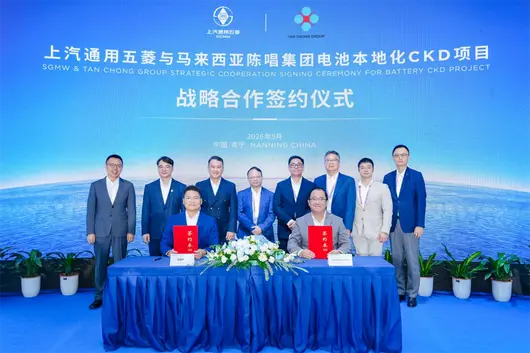
On the day the strategy was released, the first landing project was signed. SAIC-GM-Wuling signed a deep strategic cooperation agreement with Malaysia Chan Tong Group, launching the Malaysia localization industrial layout. Liu Zhijun, Director of the Marketing and Service Department of Liuzhou Sake Technology, and Yun Weishan, General Manager of TQWULING, signed on behalf of both parties. Shi Guoyong, Member of the Party Committee of SAIC-GM-Wuling, Party Secretary of Liuzhou Sake Technology, and Vice President, Executive Vice President Huang Yaosong, Vice President Zhao Xiaobin witnessed it together.
The key of this signing was not in the complete vehicle, but in the supply chain. Relying on the core parts supply chain going overseas, SAIC-GM-Wuling will build a local independent supply chain system in Malaysia. This is exactly the typical path from 'product going overseas' to 'ecosystem going overseas', not transporting cars made in China to sell there, but taking manufacturing capabilities, supply chain systems, talent, and financial services together over there, forming an industrial loop locally.

On the same day, a think tank report was also released. SAIC-GM-Wuling collaborated with People's Forum, inviting three industry experts to jointly release the 'New Paradigm for Collaborative Overseas Expansion of Green Manufacturing and Automotive Industry'. The report refined SAIC-GM-Wuling's practice into three major paths: 'New Quality Ecosystem, New Quality Brand, New Quality Product', and specifically mentioned the deep binding of corporate globalization paths with Guangxi's 'Beijing-Shanghai-Guangdong R&D + Guangxi Integration + ASEAN Application' development path.
Zhang Lei, Director of the Artificial Economy Research Room of the Institute of Economics, Chinese Academy of Social Sciences, said at the press conference, SAIC-GM-Wuling, through Five-Chain Collaboration, systematically transformed domestically accumulated technology, manufacturing, and supply chain advantages into global competitive advantages. Zhou Changping, Executive Vice President of the National Bamboo Industry Research Institute, paid attention to another detail: SAIC-GM-Wuling led the integration of the country's first auto parts 'Bamboo instead of Plastic' full industrial chain. Zhao Xinli, Dean of the School of Advertising and Branding at Communication University of China, interpreted from a brand perspective, believing that SAIC-GM-Wuling broke the low-end prejudice of overseas markets against Chinese brands with high cost-performance and deep scenario adaptation.


Looking at these pieces of information together, the goal of the Global 5 strategy becomes clear. According to the plan, SAIC-GM-Wuling will take ASEAN as a bridgehead, deepening the layout of five major markets in Asia, Africa, America, Europe, and Oceania, covering 150 countries in 3 years, expanding 500 strategic partners, achieving an annual sales growth rate of 50%, finally becoming a world leader in new energy brands and a pioneer in industrial upgrade and green development. Zhao Xiaobin called this layout the 'Two Wings Flying Together' of 'Wuling Development Wing' and 'Wuling Partner Wing'.
China's automotive overseas expansion has gone through several stages. Earliest was complete vehicle export, comparing who's cars were cheaper; later was building factories, doing localization, comparing who has stronger manufacturing capabilities; now it has reached the third stage, outputting standards, outputting supply chains, outputting ecosystems, comparing who can move a whole system overseas and make it run. What SAIC-GM-Wuling displayed at this ASEAN Expo, is exactly a sample of this stage.
Facing the '15th Five-Year Plan', how far this system can go depends on the actual landing effect of Five-Chain Collaboration in the overseas market, and also depends on whether the five cooperation models can truly adapt to the differentiated needs of different countries. But at least looking from the stand in Nanning, the narrative of China's automotive overseas expansion has changed, no longer 'where our cars are sold', but 'where our systems are operating'.

Pada pasaran SUV di Malaysia, ramai pembeli membandingkan Honda CR-V dan Ford Everest ketika memilih kereta. Kedua-dua kereta ini agak hampir dari segi harga dan penarafan, hari ini kita akan buat perbandingan terperinci dari pelbagai aspek, membantu anda menjimatkan masa membuat kajian.
Harga OTR Honda CR-V di Malaysia adalah RM 178,200 - 195,900, ada 4 versi, termasuk 2026 e:HEV 2.0L 2WD RS (RM 195,900), 2026 1.5T 4WD V (RM 181,900), 2026 e:HEV 2.0L 2WD E (RM 178,200) dan lain-lain.
Harga OTR Ford Everest di Malaysia adalah RM 266,338 - 430,838, ada 6 versi, termasuk 2026 3.0T 4WD Platinum (RM 430,838), 2026 2.0T 4WD Platinum (RM 348,838), 2026 2.0T 4WD Sport (RM 316,838) dan lain-lain.
Daripada segi harga, harga permulaan Honda CR-V memang lebih murah RM 88,138 daripada Ford Everest. Jika bajet anda terhad, versi asas Honda sudah boleh memenuhi keperluan harian. Tetapi perhatikan juga, beribu ringgit yang lebih murah itu, mungkin ada pemotongan dari segi kelengkapan, bergantung kepada keperluan anda.
Honda CR-V dilengkapi enjin 2.0L 4-cyl, kuasa 170 hp. Penggunaan bahan api rasmi 8.0 L/100km.
Ford Everest dilengkapi enjin 2.5L Diesel, kuasa 187 hp. Penggunaan bahan api rasmi 8.5 L/100km.
Daripada segi tenaga, 2.5L Diesel Ford Everest mempunyai 17 hp lebih daripada enjin 2.0L 4-cyl Honda CR-V. Namun sehari-hari di bandar, kuasa kedua-dua kereta sudah mencukupi, tidak rasa kekurangan tenaga.
Penarafan keselamatan Honda CR-V ialah 5★ (ASEAN NCAP), sistem keselamatan aktif termasuk Honda SENSING (ACC, CMBS, LKAS, RDM).
Penarafan keselamatan Ford Everest ialah 5★ (ASEAN NCAP), sistem keselamatan aktif termasuk Co-Pilot360.
Penarafan keselamatan kedua-dua kereta sama, dalam kategori ini kelengkapan keselamatan dikira cukup lengkap. Keselamatan kereta baru sekarang tidak buruk, tidak perlu terlalu risau tentang hal ini.
Jaminan Honda CR-V 5 tahun / tanpa had jarak, selang pemeliharaan setiap 10,000km atau 6 bulan.
Jaminan Ford Everest 3 tahun / 100,000km, selang pemeliharaan setiap 10,000km atau 6 bulan.

Secara keseluruhannya, Honda CR-V dan Ford Everest adalah model yang sangat bagus di pasaran Malaysia. Memilih mana satu, kunci utamanya masih bergantung kepada keperluan peribadi dan bajet anda. Disarankan anda membuat kajian terlebih dahulu, bandingkan sebut harga lebih daripada satu dealer, kemudian buat ujian memandu untuk membuat keputusan akhir. Membeli kereta adalah perkara besar, meluangkan masa membuat kajian pasti tidak salah.

喺馬來西亞嘅 SUV 市場,好多買家喺揀車嘅時候都會拿本田 CR-V 同福斯 Tiguan 嚟做比較。呢兩款車喺價位同定位上都幾接近,今日我哋就從多個方面做一個詳細嘅比較,幫你省返做功課嘅時間。
本田 CR-V 喺馬來西亞嘅 OTR 售價係 RM 178,200 - 195,900,一共計有 4 個版本,包括 2026 e:HEV 2.0L 2WD RS(RM 195,900)、2026 1.5T 4WD V(RM 181,900)、2026 e:HEV 2.0L 2WD E(RM 178,200) 等。
福斯 Tiguan 喺馬來西亞嘅 OTR 售價係 RM 206,540 - 260,024,一共計有 2 個版本,包括 2025 Allspace 2.0T R-Line(RM 260,024)、2025 Allspace 1.4T Elegance(RM 206,540) 等。
從價錢睇嚟,本田 CR-V 嘅起步價的確比福斯 Tiguan 平咗 RM 28,340。如果你預算有限,本田嘅入門版已經可以滿足日常需求。但都要注意,平嗰幾千蚊,可能喺配備上會有取捨,具體要看你嘅需求。
本田 CR-V 配備 2.0L 4-cyl,馬力 170 hp。官方油耗 8.0 L/100km。
福斯 Tiguan 配備 2.0L 4-cyl,馬力 170 hp。官方油耗 8.0 L/100km。
兩款車用緊同一套動力系統,日常開起嚟嘅感覺基本冇分別。油耗方面都差唔多,唔使太糾結這一點。
本田 CR-V 嘅安全評級係 5★ (ASEAN NCAP),主動安全系統包括本田 SENSING (ACC, CMBS, LKAS, RDM)。
福斯 Tiguan 嘅安全評級係 5★ (Euro NCAP),主動安全系統包括 IQ.Drive。
安全配備方面,兩款車都拿到唔錯嘅評級。不過本田 CR-V 嘅本田 SENSING (ACC, CMBS, LKAS, RDM) 同福斯 Tiguan 嘅 IQ.Drive 喺功能上有啲差異,如果你比較重視主動安全嘅話,可以仔細對比下兩者嘅功能列表。
本田 CR-V 保修 5 年/無限制里程,保養間隔 每 10,000km 或 6 個月。
福斯 Tiguan 保修 3 年/100,000km,保養間隔 每 10,000km 或 6 個月。
總嚟講,本田 CR-V 同福斯 Tiguan 都係馬來西亞市場幾唔錯嘅車型。揀邊一辆,關鍵都係睇你嘅個人需求同預算。建議大家做足功課,多比較幾間車行嘅報價,再去試駕先做最終決定。買車係件大事,花少啲時間做功課絕對錯唔咗。

喺馬來西亞嘅 SUV 市場,好多買家喺揀車嘅時候都會拎 Honda CR-V 同 Ford Everest 来做比較。呢兩部車喺價位同定位上都好接近,今日我哋就從多個方面做一个詳細比較,幫你省下做功課嘅時間。
Honda CR-V 喺馬來西亞嘅 OTR 售價係 RM 178,200 - 195,900,一共有 4 個版本,包括 2026 e:HEV 2.0L 2WD RS(RM 195,900)、2026 1.5T 4WD V(RM 181,900)、2026 e:HEV 2.0L 2WD E(RM 178,200) 等。
Ford Everest 喺馬來西亞嘅 OTR 售價係 RM 266,338 - 430,838,一共有 6 個版本,包括 2026 3.0T 4WD Platinum(RM 430,838)、2026 2.0T 4WD Platinum(RM 348,838)、2026 2.0T 4WD Sport(RM 316,838) 等。
從價錢來看,Honda CR-V 嘅起步價確實比 Ford Everest 平咗 RM 88,138。如果你預算有限,Honda 嘅入門版已經可以滿足日常需要。但都要注意,平嗰幾千塊,可能喺配備上會有取捨,具體睇你嘅需要。
Honda CR-V 搭載 2.0L 4-cyl,馬力 170 hp。官方油耗 8.0 L/100km。
Ford Everest 搭載 2.5L Diesel,馬力 187 hp。官方油耗 8.5 L/100km。
動力方面,Ford Everest 嘅 2.5L Diesel 比 Honda CR-V 嘅 2.0L 4-cyl 多咗 17 匹馬力。不過日常喺市區開,兩部車嘅動力都夠用,唔會覺得唔夠力。
Honda CR-V 嘅安全評級係 5★ (ASEAN NCAP),主動安全系統包括 Honda SENSING (ACC, CMBS, LKAS, RDM)。
Ford Everest 嘅安全評級係 5★ (ASEAN NCAP),主動安全系統包括 Co-Pilot360。
兩部車嘅安全評級一樣,喺呢個級別裡面安全配備都算給得好齊全。而家嘅新車安全性都唔差,唔使太擔心這一點。
Honda CR-V 採用 FWD 驅動方式。
Ford Everest 採用 FWD 驅動方式。
兩部車嘅驅動方式一樣,都係 FWD,日常駕駛感受唔會有太大分別。
Honda CR-V 同 Ford Everest 都係馬來西亞市場嘅主流選擇,適合家庭用、日常通勤。如果你更睇重品牌口碑同二手價,可以優先考慮口碑更好嗰一款;如果你更在意性價比同配備,那就揀配置更豐富嗰款。最後都係建議兩款都去試駕,親身體驗先係最重要嘅。

總體嚟講,Honda CR-V 同 Ford Everest 都係馬來西亞市場好唔錯嘅車型。揀邊一輛,關鍵都要睇你嘅個人需要同預算。建議大家做好功課,多比較幾間車行嘅報價,再去試駕做最終決定。買車係件大事,花少少時間做功課絕對唔會錯。

喺馬來西亞嘅 SUV 市場,好多買家喺揀車嘅時候都會拿 Honda CR-V 同 Hyundai Santa Fe 嚟做比較。呢兩款車喺價位同定位上都幾接近,而家我哋就從多個方面做一個詳細嘅比較,幫你省下做功課嘅時間。
Honda CR-V 喺馬來西亞嘅 OTR 售價係 RM 178,200 - 195,900,一共有 4 個版本,包括 2026 e:HEV 2.0L 2WD RS(RM 195,900)、2026 1.5T 4WD V(RM 181,900)、2026 e:HEV 2.0L 2WD E(RM 178,200) 等。
Hyundai Santa Fe 喺馬來西亞嘅 OTR 售價係 RM 225,000 - 270,000,一共有 3 個版本,包括 2025 2.5T DCT 4WD Calligraphy 6 Seats(RM 270,000)、2025 HEV 1.6T AT 2WD Prestige 7 Seats(RM 245,000)、2025 HEV 1.6T AT 2WD Prime 7 Seats(RM 225,000) 等。
由價錢嚟睇,Honda CR-V 嘅起步價確實比 Hyundai Santa Fe 平咗 RM 46,800。如果你預算有限,Honda 嘅入門版已經可以滿足日常需求。但要留意,平嗰幾千蚊,可能喺配備上有取舍,具體要睇你嘅需求。
Honda CR-V 嘅安全評級係 5★ (ASEAN NCAP),主動安全系統包括 Honda SENSING (ACC, CMBS, LKAS, RDM)。
Hyundai Santa Fe 嘅安全評級係 TBD,主動安全系統包括 Basic。
安全配備方面,兩款車都拿到咗唔錯嘅評級。不過 Honda CR-V 嘅 Honda SENSING (ACC, CMBS, LKAS, RDM) 同 Hyundai Santa Fe 嘅 Basic 喺功能上有啲差異,如果你比較看重主動安全嘅話,可以仔細對比吓兩者嘅功能列表。
Honda CR-V 採用 FWD 驅動方式。
Hyundai Santa Fe 採用 FWD 驅動方式。
兩款車嘅驅動方式一樣,都係 FWD,日常駕駛感受唔會有太大區別。
Honda CR-V 保修 5 年/無限制里程,保養間隔 每 10,000km 或 6 個月。
Hyundai Santa Fe 保修 5 年/300,000km,保養間隔 每 10,000km 或 6 個月。
Honda CR-V 同 Hyundai Santa Fe 都係馬來西亞市場嘅主流選擇,適合家庭使用、日常通勤。如果你更看重品牌口碑同二手價,可以優先考慮口碑更好嗰一款;如果你更在意性價比同配備,就揀配置更豐富嗰款。最終都係建議兩款都去試駕,親身體驗先係最重要。
總括嚟講,Honda CR-V 同 Hyundai Santa Fe 都係馬來西亞市場幾唔錯嘅車型。揀邊一輛,關鍵都要睇你嘅個人需求同預算。建議大家做好功課,多比較幾間車行之嘅報價,先去試駕做最終決定。買車係件大事,花少少時間做功課絕對唔會錯。
© 2024 Bitauto.com. All Rights Reserved.
Bitauto (www.yiche.com and www.bitauto.com) is one of the most visited automotive websites in China. We provide detailed info on Chinese car brands available in your area. Please note that the information provided on this website is based on publicly available data and is for reference only. It may not be fully updated or accurate at all times.

Help us improve our website


