

Homecybercab

Search History
Popular Searches
Dealer Login / Sign Up

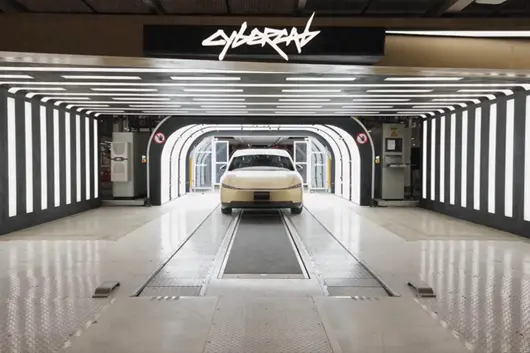
Tesla CEO Elon Musk posted on social media on the 9th local time, stating that redesigning the Cybercab production process achieved a production speed more than 5 times faster than traditional car manufacturing models. He explained that relying on the Unboxed (disassembly modular production) mode, various assembly modules are produced in parallel, and the entire vehicle is assembled at the final step; the production line footprint is halved, and output increases. The Cybercab, which started production at the Texas Gigafactory in February 2026, has become an industry focus again thanks to the astonishing production capacity achieved in just over half a year.

Of course, there are still unresolved issues. As of early September, only 45 Cybercabs are registered in Texas, accounting for 11% of the total 420 registered autonomous vehicles in Tesla's Texas. The effect of cost reduction remains to be verified by the actual utilization rate and final vehicle selling price. Drastic changes in production models are not exclusive to Tesla. Vehicle manufacturers like Ford and Hyundai Motor Group are reworking their assembly lines in their own ways. The century-old underlying logic of automobile manufacturing is wavering. This article reviews the technical routes of each company.

After Henry Ford, the iteration of production models
In 1913, Henry Ford introduced assembly line assembly at his Highland Park Plant in Michigan. The body moves along the conveyor belt, and workers at fixed stations repeatedly complete assigned tasks. The Model T went off the line in 90 minutes, and cars truly went to the masses. This model became the standard paradigm of the automotive industry for over a hundred years thereafter.
The electrification era is overturning this logic. Internal combustion engines and gearboxes are eliminated, and the number of parts is greatly reduced; simplified vehicle structures centered around batteries and motors have spawned new assembly processes. Starting with Tesla, Ford, Hyundai Motor Group, Toyota, Volkswagen, and BYD, each car manufacturer has offered different solutions. The focus of EV competition is shifting from batteries and software to the manufacturing process itself.

Tesla Abandoning Conveyor Belts
Tesla first unveiled the Unboxed modular production process on Investor Day in March 2023, redefining the concept of sequential assembly. Instead of completing the entire vehicle sequentially along a long assembly line, the 5 major modules—front cabin large die-cast parts, rear cabin large die-cast parts, structural battery pack, interior, and pre-painted exterior coverings—are manufactured synchronously on independent lines, and finally assembled into a complete vehicle at once in the final assembly area.

In traditional car manufacturing, painting is an independent process after the body is completed. The Unboxed mode directly colors the component panels in advance, eliminating the whole vehicle painting step. Tesla's goal is to reduce the Model Y production cost by nearly half and compress the single vehicle assembly time to 5-10 seconds. Referencing the 33-second production cycle of a single Model Y at Shanghai Gigafactory, the target speed is equivalent to more than 3 times the current level.
The United States Patent and Trademark Office granted Tesla the Unboxed process patent in September 2025. The first model to implement this process is the autonomous Robotaxi Cybercab, mass-produced at the Texas Gigafactory in February 2026. Existing mass-produced models such as Model 3, Model Y, and Cybertruck have not fully implemented this process yet. The planned budget-friendly new cars under $30,000 mass-produced in the middle of 2026 will also adopt this production method. However, there is also industry skepticism: Can this production line achieve multi-model co-line production? Referencing Tesla's past record of multiple production delays, whether this process can land stably on schedule remains to be seen.

Ford: Three-Path Split "Assembly Tree" Production Line
As the pioneer of assembly lines, Ford, after over a century, is personally deconstructing the production system it invented itself. Universal EV Production System (Universal EV Production System): Splits a single long production line into front, middle, and rear three branches, finally converging for final assembly, Ford calls this Assembly Tree (assembly tree). This architecture was made possible by eliminating internal combustion engine and gearbox assembly processes: The middle production line responsible for assembling batteries, seats, center consoles, and carpets serves as the main trunk, while front and rear cabin large aluminum die-cast parts are completed on independent lines and then merge into final assembly. Parts and tools are transported along the assembly tree to corresponding workstations, reducing workers' body twisting and large arm reaching actions.

This system was first implemented at Ford's Louisville Assembly Plant in Kentucky. Ford invested $2 billion to retrofit this plant and $3 billion in the Michigan battery plant, totaling an investment of $5 billion. The scrap metal from demolition reached 25,000 tons, and installing the new truss structure consumed a total weld length of 700 miles (about 1,126 km). The plant's first mass-produced model is the $30,000 level mid-size electric pickup Fathom. Ford stated that the assembly speed of this universal EV production system increased by 40% compared to traditional lines; the factory added dedicated workstations where software can be pre-flashed before module assembly; the plant's 5G network supports synchronized quality inspection during the assembly process. Parts mass production is scheduled for Q1 2027, and official mass production for consumers is expected in 2028.
Ford stopped electric pickup F-150 Lightning production in December 2025, with the official reason being the inability to find a viable profit path. This massive investment in the Louisville plant forms a sharp contrast with it, reflecting Ford's shift in electrification focus towards affordable high-volume models.

Hyundai Motor Group: Exploring Two Process Routes in Parallel
Hyundai Motor Group has not selected a single route but is synchronously advancing differentiated manufacturing innovation in Singapore, the US, and Ulsan.
The Hyundai Motor Group Global Innovation Center HMGICS located in Jurong, Singapore, directly abandons conveyor belts. The factory layout includes 27 oval independent work cells to achieve multi-model flexible mixed-line production. AGV unmanned transfer robots can carry up to 3 tons of car body, transporting between work cells, replacing conveyor belts. Boston Dynamics' quadruped robot Spot captures assembly points to complete quality inspection. The factory produces both IONIQ5 and autonomous Robotaxis simultaneously, with an annual capacity of over 30,000 units, leaning towards an experimental factory for small batches and multi-varieties.

The HMGMA (North American Gigafactory) in Ellaville, Georgia, US, scales the cell mode up to mass production scale. It adopts manufacturing platforms verified by HMGICS, with an annual capacity of 300,000 units; 161 Autonomous Mobile Robots (AMR) achieve logistics automation for interior assembly; the battery module factory is directly connected to the vehicle factory via a tunnel conveyor belt, improving logistics efficiency. The factory started producing the IONIQ5, added the Kia Sorento Hybrid model on June 2, 2026, and continues to expand co-line models.

The third route is in Ulsan, South Korea. Unlike 1996's Asan plant where Hyundai built a new vehicle plant, they chose to build a giant die-cast dedicated production line within the existing Ulsan factory. Using 6,000-ton or larger large-scale die-casting equipment to form car body parts in one piece, greatly reducing the number of parts and welding processes. Industry forecasts predict this process will be featured first on the 2026 large electric SUV Genesis GV90.

Hyundai Motor Group's route differs from Tesla and Ford, belonging to a dual-line parallel strategy: The Singapore factory focuses on the Cell cell mode for small batches and multi-varieties; the Georgia and Ulsan factories target large-scale mass production, developing large die-casting and automated logistics. Not pursuing a single standard answer, they implement multiple solutions in parallel based on production capacity scale and product goals.

Toyota, Volkswagen, BYD: Their Respective Routes?
Toyota still relies on the two pillars of the TPS Toyota Production System: Just-in-Time production and Jidoka (Autonomation), while conducting new trials. In June 2023, the Technical Workshop unveiled the self-driving assembly line: EVs rely on their own sensors to move autonomously through various processes, eliminating the need for conveyor belts. The goal is to reduce equipment investment and adapt to multi-variety, small-batch production. Meanwhile, next-generation EVs (prioritizing Lexus) will implement large die-casting processes starting from the 2026 model year, with the vehicle body split into three major parts (front, middle, rear) assembled integrally.

Volkswagen once launched the Trinity project benchmarking against Tesla, planning to build a new factory in Wolfsburg, compressing single-vehicle manufacturing time to 10 hours, only one-third of ID.3's current production duration. However, software R&D delays, management changes, and stagnant European EV demand led to repeated postponements. In 2026, Volkswagen is considering closing 4 factories in Germany and laying off up to 100,000 people. This case fully illustrates that even grand manufacturing innovation concepts are easily shelved in the face of financial crises.
Chinese BYD does not fuss over production line forms, focusing instead on vertical supply chain integration. 70-80% of core parts such as batteries, power semiconductors, motors, and electronic controls are developed and produced in-house, building a system immune to external supply chain fluctuations. The Shenzhen headquarters final assembly line produces a complete vehicle every 51 seconds. R&D of parts allows battery technology iterations to be synchronized to vehicle design and manufacturing processes quickly, which is the core reason behind its high cadence.

The Key in the End: Cost and Execution Capability
Each company's route is different, but the general direction is converging: Relying on large die-casting to reduce parts; abandoning fixed conveyor belts, shifting to flexible logistics with robots and AGVs; completing software flashing in advance during the assembly stage. Every company is utilizing the simplified vehicle structure brought by electrification to forge their own path.

But the implementation progress differs significantly among companies: Hyundai Motor Group operates a small-scale Singapore test line while advancing Georgia and Ulsan mass production lines, and has even integrated hybrid models into production. Tesla and Ford have set commercialization timelines using Cybercab and Fathom as explicit new vehicle carriers, but it still takes time to reach stable mass production. In contrast, Volkswagen proves that manufacturing innovation is easily downgraded due to corporate financial conditions.
Now, the EV markets in various global regions are cooling and heating differently, and manufacturing innovation has become a cost-reduction measure that determines the life or death of car companies. It cannot be determined yet which process will become the industry new standard, but the conveyor belt assembly line that has lasted for a hundred years is no longer the only solution.

特斯拉行政總裁埃隆・馬斯克於當地時間 9 日在社交媒體發文稱,重新設計 Cybercab 的生產流程,實現了相比傳統造車模式 5 倍以上嘅生產速度。佢介紹,依靠 Unboxed(拆解式模組化生產)模式,並行生產各類組裝模塊,喺最後一道工序完成整車總裝;生產線佔地面積縮減一半,產量反而得到提升。2026 年 2 月喺得州超級工廠投產嘅 Cybercab,憑借半年多就達成嘅驚人均產量,再次成為行業焦點。
當然目前仍存在待解決嘅課題。截至 9 月初,得州登記在冊嘅 Cybercab 僅有 45 台,佔特斯拉得州自動駕駛車輛登記總數 420 台嘅 11%。成本削減效果,仍有待實際開工率與最終整車售價嚟驗證。生產模式劇變並非只有特斯拉。福特、現代汽車集團等整車企業,都在以自己嘅方式重新改造組裝產線。延續百年嘅汽車製造底層邏輯正在搖動,本文梳理各家企業嘅技術路線。
亨利・福特之後,生產模式嘅迭代
1913 年,亨利・福特喺密歇根州海蘭帕克工廠引入流水線裝配。車身隨傳送帶移動,工人固定工位重複完成指定工序。T 型車 90 分鐘即可下線,汽車由此真正走向大眾。呢套模式喺此後百餘年成為汽車工業嘅標準範式。
電動化時代正在顛覆呢套邏輯。內燃機、變速箱被取消,零部件數量大幅減少;以電池、電機為核心嘅簡化整車結構,催生全新裝配工藝。以特斯拉為開端,福特、現代汽車集團、豐田、大眾、比亞迪,各家车企拿出唔同解決方案。電動車競爭嘅重心,正從電池、軟件,轉移至製造工藝本身。
拋棄傳送帶嘅特斯拉
特斯拉喺 2023 年 3 月投資者日首次公開 Unboxed 模組化生產工藝,重新定義咗順序裝配嘅概念。唔再沿著一條長流水線依次完成整車,而是將前艙大型壓鑄部件、後艙大型壓鑄部件、結構電池包、內飾、噴塗完成嘅外覆蓋件,共 5 大模塊,分別喺獨立產線上同步製造,最終喺總裝區域一次性合車。
傳統造車,噴塗係車身完工之後嘅獨立工序。Unboxed 模式直接對零部件面板預先完成上色,省去整車噴塗環節。特斯拉目標,依靠呢套工藝把 Model Y 生產成本降低近一半,單車裝配時間壓縮至 5‑10 秒。參考上海超級工廠 Model Y 單車 33 秒嘅生產節拍,目標速度相當於現有水平嘅 3 倍以上。
美國專利商標局 2025 年 9 月向特斯拉授予 Unboxed 工藝專利。該工藝首次落地車型為無人駕駛 Robotaxi Cybercab,2026 年 2 月於得州超級工廠量產。Model3、Model Y、Cybertruck 等現有量產車型,尚未完整落地呢套工藝。計劃 2026 年年中量產嘅 3 萬美元以下平價新車,也將採用呢套生產方式。但行業也存在質疑:呢套產線能否實現多車型共線生產?參考特斯拉過往多次產能延期記錄,呢套工藝能否如期穩定落地,仍有待觀察。
福特:三路分流嘅「裝配樹」產線
作為流水線嘅開創者,福特時隔百餘年,正在親手解構呢套自己發明嘅生產體系。 通用电動車生產系統(Universal EV Production System):將單條長產線拆分為前、中、後三條分支,最終匯流總裝,福特稱為裝配樹(Assembly Tree)。內燃機與變速箱裝配工序被取消才得以實現呢套架構:負責裝配電池、座椅、中控、地毯嘅中間產線作為主幹,前後艙大型鋁合金壓鑄件分別喺獨立產線完工後匯入總裝。零部件、工具沿着裝配樹輸送至對應工位,減少工人扭轉身體、大幅度伸手嘅作業動作。
呢套系統首次落地肯塔基州路易斯維爾組裝工廠。福特為改造該工廠投入 20 億美元,密歇根電池工廠投入 30 億美元,合計投資 50 億美元。拆除產生嘅廢金屬就達 25000 公噸,固定全新桁架結構耗费縫合總長 700 英里(約 1126 公里)。工廠首款量產車型為 3 萬美元級中型電動皮卡 Fathom。福特稱呢套通用电動車生產系統裝配速度相比傳統產線提升 40%;工廠新增專用工位,可喺模塊裝配前預刷寫軟件;廠區 5G 網絡支持裝配過程同步質檢。零部件量產定于 2027 年一季度,面向用戶嘅正式量產預計 2028 年。
福特已於 2025 年 12 月停止電動皮卡 F‑150 Lightning 生產,官方理由係無法搵到可行嘅盈利路徑。對路易斯維爾工廠嘅鉅額投入與之形成鮮明對比,體現福特電動化重心轉向平價走量車型。
現代汽車集團:兩套工藝並行探索
現代汽車集團沒有選定單一路線,喺新加坡、美國、蔚山同步推進差異化製造革新。
位於新加坡裕廊嘅現代汽車集團全球創新中心 HMGICS,直接捨棄傳送帶。廠區布置 27 個橢圓形獨立作業單元,實現多車型柔性混線生產。AGV 無人轉運機器人最多可承載 3 公噸車身,喺各個作業單元之間轉運,替代傳送帶。波士頓動力四足機器人 Spot 拍攝裝配點位完成質檢。工廠同時生產 IONIQ5 同無人駕駛 Robotaxi,年產能 3 萬台以上,偏向小批量多品種嘅實驗工廠。
美國佐治亞州埃拉維爾嘅 HMGMA(北美超級工廠),把單元模式放大到大批量生產規模。導入 HMGICS 驗證過嘅製造平台,年產能 30 萬台;161 台自主移動機器人 AMR 實現內飾裝配物流自動化;電池模組工廠與整車工廠通過隧道傳送帶直連,提升物流效率。工廠從生產 IONIQ5 起步,2026 年 06 月 02 日新增起亞獅鉑拓界混合動力車型,持續拓展共線車型。
第三條路線喺韓國蔚山。現代沒有像 1996 年牙山工廠那樣新建整車廠,選擇喺現有蔚山廠區內部建設巨型壓鑄專屬產線。採用 6000 公噸以上大型壓鑄設備一體成型車身部件,大幅減少零件數量與焊接工序,行業預測呢套工藝將率先搭載喺 2026 年大型電動 SUV 捷尼賽思 GV90。
現代汽車集團嘅路線同特斯拉、福特有所區別,屬於雙線並行策略:新加坡工廠主打小批量多品種嘅 Cell 單元模式;佐治亞、蔚山工廠面向大規模量產,發展大壓鑄與自動化物流。不追求唯一標準答案,根據產能規模、產品目標,並行落地多種方案。
豐田、大眾、比亞迪各自路線?
豐田依舊以 TPS 豐田生產方式兩大支柱:準時化生產、自動化為根基,同時開展全新嘗試。2023 年 6 月技術工坊公開自驅式裝配線:電動車依靠自身傳感器自主移動流轉各個工序,唔需要傳送帶。目標降低設備投入,適配多品種小批量生產。同時,下一代電動車(優先雷克薩斯)從 2026 年車型開始落地大壓鑄工藝,車身拆分為前、中、後三大部件一體裝配。
大眾曾經推出對標特斯拉嘅 Trinity 項目,計劃喺伍爾夫斯堡新建工廠,將單車製造時間壓縮至 10 小時,僅為 ID.3 現有生產時長嘅三分之一。但軟件研發延期、管理層更迭疊加歐洲電動車需求低迷,計劃一再推遲。2026 年嘅大眾,正考慮關閉德國 4 座工廠、最多裁員 10 萬人。呢一案例充分說明,再宏大嘅製造革新構想,喺財務危機面前也極易被擱置。
中國比亞迪並不糾結產線形式,重心放喺供應鏈垂直整合。電池、功率半導體、電機、電控等核心零部件 70‑80% 實現自研自產,構築唔受外部供應鏈波動影響嘅體系。深圳總部總裝產線,每 51 秒下線一台整車。自研零部件可以快速把電池技術迭代同步到整車設計與製造流程,呢係其高節拍背後嘅核心原因。
歸根結底嘅關鍵:成本與執行力
各家企業路線各唔相同,但大方向趨同:依靠大型壓鑄減少零部件;拋棄固定傳送帶,轉向機器人、AGV 嘅柔性物流;喺裝配階段提前完成軟件刷寫。各家都在利用電動化帶來嘅整車結構簡化,走出自己嘅道路。
但各家落地進度差距明顯:現代汽車集團一邊運營新加坡小規模試驗線,一邊推進佐治亞、蔚山大批量產線,甚至已經把混合動力車型納入產線。特斯拉、福特分別以 Cybercab、Fathom 作為明確新車載體定下商業化時間,但距離穩定大規模量產仲需要時間。反觀大眾,足以證明製造革新好容易受企業財務狀況影響而降級。
如今全球各區域電動車市場冷熱分化,製造革新已經成為決定車企生死嘅降本手段。而家仲不能斷定邊套工藝會成為行業新標準,但延續百年嘅傳送帶流水線,已經唔再係唯一解。

Pelaksana Tertinggi Tesla, Elon Musk, pada tarikh ke-9 mengikut masa tempatan memuat naik di media sosial bahawa menyelaraskan semula proses pengeluaran Cybercab, telah mencapai kelajuan pengeluaran lebih daripada 5 kali ganda berbanding mod pembuatan kereta tradisional. Beliau menjelaskan, dengan menggunakan mod Unboxed (pengeluaran modular terurai), mengilangkan pelbagai modul pemasangan secara selari, dan menyelesaikan pemasangan utama kenderaan lengkap pada langkah kerja akhir; kawasan tapak pengeluaran dikurangkan separuh, tetapi产量 meningkat. Cybercab yang mula beroperasi di Kilang Super Texas pada Februari 2026, dengan kapasiti pengeluaran yang mengejutkan dicapai dalam lebih enam bulan, sekali lagi menjadi tumpuan industri.
Tentu saja terdapat isu yang masih belum diselesaikan pada masa ini. Sehingga awal September, Cybercab yang berdaftar di Texas hanyalah 45 unit, mewakili 11% daripada jumlah 420 unit kenderaan kendiri自动驾驶 yang berdaftar di Tesla Texas. Efek penjimatan kos masih perlu disahkan dengan kadar operasi sebenar dan harga jualan kenderaan akhir. Perubahan drastik mod pengeluaran bukan hanya milik Tesla. Syarikat kenderaan lengkap seperti Ford, Kumpulan Hyundai, sedang mengubah suai laluan pemasangan dengan cara masing-masing. Logik asas pembuatan kenderaan yang berterusan selama lebih 100 tahun sedang goyah, artikel ini mengemaskini laluan teknologi syarikat masing-masing.
Selepas Henry Ford, iterasi mod pengeluaran
1913, Henry Ford memperkenalkan pemasangan loji lori di Kilang Highland Park, Michigan. Badan kenderaan bergerak di sepanjang konveyor, pekerja melakukan kerja yang ditetapkan secara berulang pada kedudukan tetap. Model T boleh siap dalam 90 minit, kereta kemudian benar-benar menuju ke khalayak. Mod ini menjadi piawai industri automotif selama lebih 100 tahun selepas itu.
Zaman elektrifikasi sedang menggangu logik ini. Enjin pembakaran dalam, pemgearan dibatalkan, bilangan komponen berkurangan dengan ketara; struktur kenderaan lengkap yang dipermudahkan dengan bateri dan motor sebagai teras, memunculkan proses pemasangan baharu. Bermula dengan Tesla, Ford, Kumpulan Hyundai, Toyota, Volkswagen, BYD, setiap syarikat mengeluarkan penyelesaian berbeza. Tumpuan persaingan kenderaan elektrik beralih daripada bateri, perisian, kepada proses pembuatan itu sendiri.
Tesla yang meninggalkan konveyor
Tesra menerangkan proses pengeluaran modular Unboxed pada Hari Pelabur Mac 2023, mentakrif semula konsep pemasangan selaras. Tidak lagi menyelesaikan kenderaan lengkap secara berurutan di sepanjang loji lori panjang, tetapi memisahkan 5 modul utama termasuk komponen dikanteran besar ruang hadapan, komponen dikanteran besar ruang belakang, paket bateri struktur, hiasan dalaman, dan penutup eksterior yang sudah dicat, untuk dihasilkan secara serentak di laluan pengeluaran bebas, dan disatukan sekali gus di zon pemasangan utama.
Dalam pembuatan kereta tradisional, pengecatan adalah proses bebas selepas badan kenderaan siap. Mod Unboxed terus mengecat panel komponen terlebih dahulu, menghilangkan proses pengecatan kenderaan lengkap. Sasaran Tesla, dengan proses ini kos pengeluaran Model Y dikurangkan hampir separuh, masa pemasangan setiap kenderaan dipendekkan kepada 5‑10 saat. Merujuk kepada irama pengeluaran Model Y Kilang Super Shanghai 33 saat setiap unit, kelajuan sasaran adalah lebih 3 kali ganda daripada tahap sedia ada.
Pejabat Paten dan Dagangan AS pada September 2025 memberikan paten proses Unboxed kepada Tesla. Model pertama yang menggunakan proses ini adalah Robotaxi tanpa pemandu Cybercab, pengeluaran besar-besaran di Kilang Super Texas pada Februari 2026. Model kenderaan yang sedang diproduksi sedia ada seperti Model 3, Model Y, Cybertruck, belum sepenuhnya menggunakan proses ini sepenuhnya. Kereta baharu murah di bawah 30,000 dolar AS yang dirancang untuk diproduksi pada pertengahan 2026 juga akan menggunakan cara pengeluaran ini. Tetapi industri juga mempunyai keraguan: Adakah laluan pengeluaran ini boleh melaksanakan pengeluaran pelbagai model dalam satu talian? Merujuk kepada rekod lewat pengeluaran Tesla yang berulang kali, sama ada proses ini boleh dilaksanakan secara stabil pada masa yang ditetapkan, masih perlu diperhatikan.
Ford: Lalian "Pokok Pemasangan" dengan Tiga Arus Aliran
Sebagai penubuh loji lori, Ford selama lebih 100 tahun sedang membongkar sistem pengeluaran yang diciptakan sendiri itu. Sistem Pengeluaran Kenderaan Elektrik Universal (Universal EV Production System): memecahkan satu laluan panjang menjadi tiga cabang depan, tengah dan belakang, akhirnya menyambung ke pemasangan utama, Ford memanggilnya Pokok Pemasangan (assembly tree). Proses pemasangan enjin pembakaran dalam dan pemgearan dibatalkan untuk merealisasikan struktur ini: laluan tengah yang bertanggungjawab memasang bateri, kerusi, pusat kawalan, permaidani menjadi batang utama, komponen dikanteran aloi aluminium besar ruang hadapan dan belakang diselesaikan di laluan bebas masing-masing lalu masuk ke pemasangan utama. Komponen, alat diangkut ke kedudukan kerja yang sepadan di sepanjang pokok pemasangan, mengurangkan pergerakan memutar badan pekerja, tindakan menjangkau tangan secara meluas.
Sistem ini pertama kali dilaksanakan di Loji Pemasangan Louisville, Kentucky. Ford melabur 2 bilion dolar AS untuk mengubah suai loji ini, melabur 3 bilion dolar AS di Kilang Bateri Michigan, jumlah pelaburan keseluruhan 5 bilion dolar AS. Logam buangan hasil pemecahan mencapai 25,000 tan, memasang struktur rangka baharu yang tetap memerlukan panjang las keseluruhan 700 batu (anggaran 1126 km). Model kenderaan pertama yang diproduksi di loji adalah Pickup Elektrik Sederhana Paras 30,000 Dolar AS Fathom. Ford menyatakan sistem Pengeluaran EV Universal ini meningkatkan kelajuan pemasangan 40% berbanding laluan tradisional; loji menambah kedudukan kerja khusus, boleh menulis semula perisian terlebih dahulu sebelum pemasangan modul; rangkaian 5G loji menyokong pemeriksaan kualiti selari semasa proses pemasangan. Pengeluaran komponen dijadualkan suku pertama 2027, pengeluaran rasmi untuk pengguna dijangka 2028.
Ford telah menghentikan pengeluaran Pickup Elektrik F‑150 Lightning pada Disember 2025, alasan rasmi ialah tidak dapat mencari laluan keuntungan yang boleh dilaksanakan. Pelaburan besar di Loji Louisville membentuk kontras jelas, menunjukkan peralihan tumpuan elektrifikasi Ford kepada model jualan besar harga rendah.
Kumpulan Hyundai: Dua Proses Eksplorasi Secara Paralel
Kumpulan Hyundai tidak memilih satu laluan sahaja, memajukan inovasi pembuatan berbeza secara serentak di Singapura, Amerika Syarikat, Ulsan.
Pusat Inovasi Global HMGICS Kumpulan Hyundai di Jurong, Singapura, terus meninggalkan konveyor. Loji menempatkan 27 unit operasi bebas berbentuk bujur, mencapai produksi pelbagai model secara fleksibel dalam satu talian. Robot Pengangkutan Tanpa Pemandu AGV boleh memuatkan badan kenderaan sehingga 3 tan, memindahkan di antara unit operasi, menggantikan konveyor. Robot Empat Kaki Boston Dynamics Spot mengambil gambar titik pemasangan untuk menyelesaikan pemeriksaan kualiti. Loji menghasilkan Model IONIQ 5 dan Robotaxi自动驾驶 serentak, kapasiti pengeluaran tahunan lebih 30,000 unit, lebih condong ke loji eksperimen jenis kecil pelbagai jenis.
Ellaville, Georgia, AS, HMGMA (Kilang Super Utara Amerika), membesarkan mod unit ke skala produksi besar. Memperkenalkan platform pengeluaran yang disahkan HMGICS, kapasiti pengeluaran tahunan 300,000 unit; 161 robot pergerakan autonomi AMR mencapai automatik logistik pemasangan dalaman; kilang modul bateri dan kilang kenderaan lengkap dihubungkan terus melalui konveyor terowong, meningkatkan kecekapan logistik. Loji bermula dengan menghasilkan IONIQ 5, pada 02 Jun 2026 menambah model hibrid Kia Sportage, berterusan mengembangkan model talian sama.
Laluan Ketiga di Ulsan, Korea. Hyundai tidak membina kilang kenderaan lengkap baharu seperti Kilang Yasan 1996, memilih membina laluan pengeluaran dikanteran gergasi khusus di kawasan loji Ulsan sedia ada. Menggunakan peralatan dikanteran besar lebih 6000 tan untuk membentuk komponen badan secara keseluruhan, mengurangkan bilangan komponen dan proses las dengan ketara, ramalan industri proses ini akan dipasang terdahulu pada SUV Elektrik Besar Genesis GV90 tahun 2026.
Laluan Kumpulan Hyundai berbeza dengan Tesla, Ford, tergolong dalam strategi dua laluan selari: Loji Singapura mengetuai mod Unit Sel jenis kecil pelbagai jenis; loji Georgia, Ulsan bertujuan produksi besar, mengembangkan dikanteran besar dan logistik automatik. Tidak mengejar jawapan piawai tunggal, berdasarkan skala kapasiti pengeluaran, sasaran produk, melaksanakan pelbagai penyelesaian secara selari.
Toyota, Volkswagen, BYD: Laluan Sendiri?
Toyota masih menggunakan dua tiang utama Cara Pengeluaran Toyota TPS: pengeluaran tepat pada masanya, automasi diri sebagai asas, pada masa yang sama melaksanakan cubaan baharu. Pada Jun 2023, Kedai Teknologi menerangkan laluan pemasangan berpanduan sendiri: kenderaan elektrik bergantung pada sensor sendiri untuk bergerak secara autonomi di setiap proses, tidak memerlukan konveyor. Sasaran mengurangkan pelaburan peralatan, menyesuaikan dengan produksi jenis pelbagai kecil. Pada masa sama, generasi kenderaan elektrik akan datang (utamakan Lexus) bermula model 2026 melaksanakan proses dikanteran besar, badan kenderaan dibahagikan kepada 3 komponen besar depan, tengah, belakang untuk dipasang secara keseluruhan.
Volkswagen pernah melancarkan projek Trinity untuk menyamai Tesla, merancang membina loji baharu di Wolfsburg, memendekkan masa pembuatan kenderaan kepada 10 jam, hanya seper tiga daripada jangka masa pengeluaran sedia ada ID.3. Tetapi lewat perisian, pergantian pengurusan, ditambah dengan permintaan kenderaan elektrik Eropah yang rendah, pelan ditangguh berulang kali. Volkswagen pada 2026, sedang mempertimbangkan menutup 4 kilang di Jerman, paling banyak PHR 100,000 orang. Kes ini sepenuhnya menjelaskan, sebarang rancangan inovasi pembuatan yang paling megah, di hadapan krisis kewangan juga mudah digantung.
BYD China tidak terkejar bentuk laluan, tumpuan diletakkan pada integrasi menegak rantai bekalan. Bateri, semikonduktor kuasa, motor, kawalan elektronik dan lain-lain komponen teras 70‑80% dicapai penyelidikan dan pengeluaran sendiri, membina sistem yang tidak terjejas oleh波动 rantai bekalan luar. Loji pemasangan utama ibu pejabat Shenzhen, satu kenderaan lengkap keluar setiap 51 saat. Komponen penyelidikan sendiri boleh dengan cepat mengemaskini teknologi bateri ke dalam proses reka bentuk dan pembuatan kenderaan lengkap, ini adalah sebab utama di sebalik irama tinggi tinggi.
Kunci Akhir: Kos dan Eksekusi
Setiap syarikat mempunyai laluan berbeza, tetapi arah besar sama: menggunakan dikanteran besar untuk mengurangkan komponen; meninggalkan konveyor tetap, beralih ke logistik fleksibel robot, AGV; pada peringkat pemasangan selesaikan penulisan semula perisian terlebih dahulu. Semua orang sedang memanfaatkan pemudahkan struktur kenderaan lengkap yang dibawa elektrifikasi, keluar jalan sendiri.
Tetapi perbezaan progres pelaksanaan setiap syarikat jelas: Kumpulan Hyundai di satu pihak beroperasi laluan eksperimen kecil Singapura, di satu pihak mendorong produksi besar Georgia, Ulsan, malah telah memasukkan model hibrid ke dalam laluan. Tesla, Ford masing-masing menetapkan masa komersialisasi dengan Cybercab, Fathom sebagai pembawa kereta baharu yang jelas, tetapi masih perlu masa untuk produksi besar stabil. Bertentangan dengan Volkswagen, cukup membuktikan inovasi pembuatan mudah mengalami pengurangan受 keadaan kewangan syarikat.
Kini pasaran kenderaan elektrik setiap kawasan global berbeza panas dan sejuk, inovasi pembuatan telah menjadi kaedah penjimatan kos yang menentukan kehidupan dan kematian syarikat automotif. Pada masa ini belum boleh menentukan proses mana yang akan menjadi piawai industri baharu, tetapi loji konveyor yang berterusan selama 100 tahun, sudah bukan lagi penyelesaian tunggal.

特斯拉首席执行官埃隆・马斯克于当地时间 9 日在社交媒体发文称,重新设计 Cybercab 的生产流程,实现了相比传统造车模式 5 倍以上的生产速度。 他介绍,依靠Unboxed(拆解式模块化生产)模式,并行生产各类组装模块,在最后一道工序完成整车总装;生产线占地面积缩减一半,产量反而得到提升。2026 年 2 月在得州超级工厂投产的 Cybercab,凭借半年多就达成的惊人产能,再次成为行业焦点。
当然目前仍存在待解决的课题。截至 9 月初,得州登记在册的 Cybercab 仅有 45 台,占特斯拉得州自动驾驶车辆登记总数 420 台的 11%。成本削减效果,仍有待实际开工率与最终整车售价来验证。 生产模式剧变并非只有特斯拉。福特、现代汽车集团等整车企业,都在以各自的方式重新改造组装产线。延续百年的汽车制造底层逻辑正在动摇,本文梳理各家企业的技术路线。
亨利・福特之后,生产模式的迭代
1913 年,亨利・福特在密歇根州海兰帕克工厂引入流水线装配。车身随传送带移动,工人固定工位重复完成指定工序。T 型车 90 分钟即可下线,汽车由此真正走向大众。这套模式在此后百余年成为汽车工业的标准范式。
电动化时代正在颠覆这套逻辑。内燃机、变速箱被取消,零部件数量大幅减少;以电池、电机为核心的简化整车结构,催生全新装配工艺。以特斯拉为开端,福特、现代汽车集团、丰田、大众、比亚迪,各家车企拿出不同解决方案。电动车竞争的重心,正从电池、软件,转移至制造工艺本身。
抛弃传送带的特斯拉
特斯拉在 2023 年 3 月投资者日首次公开 Unboxed 模块化生产工艺,重新定义了顺序装配的概念。 不再沿着一条长流水线依次完成整车,而是将前舱大型压铸部件、后舱大型压铸部件、结构电池包、内饰、喷涂完成的外覆盖件,共 5 大模块,分别在独立产线上同步制造,最终在总装区域一次性合车。
传统造车,喷涂是车身完工之后的独立工序。Unboxed 模式直接对零部件面板预先完成上色,省去整车喷涂环节。特斯拉目标,依靠这套工艺把 Model Y 生产成本降低近一半,单车装配时间压缩至 5‑10 秒。参考上海超级工厂 Model Y 单车 33 秒的生产节拍,目标速度相当于现有水平的 3 倍以上。
美国专利商标局 2025 年 9 月向特斯拉授予 Unboxed 工艺专利。该工艺首次落地车型为无人驾驶 Robotaxi Cybercab,2026 年 2 月于得州超级工厂量产。Model3、Model Y、Cybertruck 等现有量产车型,尚未完整落地这套工艺。计划 2026 年年中量产的 3 万美元以下平价新车,也将采用这套生产方式。 但行业也存在质疑:这套产线能否实现多车型共线生产?参考特斯拉过往多次产能延期记录,这套工艺能否如期稳定落地,仍有待观察。
福特:三路分流的 “装配树” 产线
作为流水线的开创者,福特时隔百余年,正在亲手解构这套自己发明的生产体系。 通用电动车生产系统(Universal EV Production System):将单条长产线拆分为前、中、后三条分支,最终汇流总装,福特称之为装配树(assembly tree)。 内燃机与变速箱装配工序被取消才得以实现这套架构:负责装配电池、座椅、中控、地毯的中间产线作为主干,前后舱大型铝合金压铸件分别在独立产线完工后汇入总装。零部件、工具沿着装配树输送至对应工位,减少工人扭转身体、大幅度伸手的作业动作。
这套系统首次落地肯塔基州路易斯维尔组装工厂。福特为改造该工厂投入 20 亿美元,密歇根电池工厂投入 30 亿美元,合计投资 50 亿美元。拆除产生的废金属就达 25000 吨,固定全新桁架结构耗费焊缝总长 700 英里(约 1126 公里)。 工厂首款量产车型为 3 万美元级中型电动皮卡 Fathom。福特称这套通用电动车生产系统装配速度相比传统产线提升 40%;工厂新增专用工位,可在模块装配前预刷写软件;厂区 5G 网络支持装配过程同步质检。零部件量产定于 2027 年一季度,面向用户的正式量产预计 2028 年。
福特已于 2025 年 12 月停止电动皮卡 F‑150 Lightning 生产,官方理由是无法找到可行的盈利路径。对路易斯维尔工厂的巨额投入与之形成鲜明对比,体现福特电动化重心转向平价走量车型。
现代汽车集团:两套工艺并行探索
现代汽车集团没有选定单一路线,在新加坡、美国、蔚山同步推进差异化制造革新。
位于新加坡裕廊的现代汽车集团全球创新中心 HMGICS,直接舍弃传送带。厂区布置 27 个椭圆形独立作业单元,实现多车型柔性混线生产。AGV 无人转运机器人最多可承载 3 吨车身,在各个作业单元之间转运,替代传送带。波士顿动力四足机器人 Spot 拍摄装配点位完成质检。工厂同时生产 IONIQ5 和自动驾驶 Robotaxi,年产能 3 万台以上,偏向小批量多品种的实验工厂。
美国佐治亚州埃拉维尔的 HMGMA(北美超级工厂),把单元模式放大到大批量生产规模。导入 HMGICS 验证过的制造平台,年产能 30 万台;161 台自主移动机器人 AMR 实现内饰装配物流自动化;电池模组工厂与整车工厂通过隧道传送带直连,提升物流效率。工厂从生产 IONIQ5 起步,2026‑06‑02 新增起亚狮铂拓界混动车型,持续拓展共线车型。
第三条路线在韩国蔚山。现代没有像 1996 年牙山工厂那样新建整车厂,选择在现有蔚山厂区内部建设巨型压铸专属产线。采用 6000 吨以上大型压铸设备一体成型车身部件,大幅减少零件数量与焊接工序,行业预测这套工艺将率先搭载在 2026 年大型电动 SUV 捷尼赛思 GV90。
现代汽车集团的路线和特斯拉、福特有所区别,属于双线并行策略:新加坡工厂主打小批量多品种的 Cell 单元模式;佐治亚、蔚山工厂面向大规模量产,发展大压铸与自动化物流。不追求唯一标准答案,根据产能规模、产品目标,并行落地多种方案。
丰田、大众、比亚迪各自路线?
丰田依旧以 TPS 丰田生产方式两大支柱:准时化生产、自働化为根基,同时开展全新尝试。2023 年 6 月技术工坊公开自驱式装配线:电动车依靠自身传感器自主移动流转各个工序,不需要传送带。目标降低设备投入,适配多品种小批量生产。同时,下一代电动车(优先雷克萨斯)从 2026 年车型开始落地大压铸工艺,车身拆分为前、中、后三大部件一体装配。
大众曾经推出对标特斯拉的 Trinity 项目,计划在沃尔夫斯堡新建工厂,将单车制造时间压缩至 10 小时,仅为 ID.3 现有生产时长的三分之一。但软件研发延期、管理层更迭叠加欧洲电动车需求低迷,计划一再推迟。2026 年的大众,正考虑关闭德国 4 座工厂、最多裁员 10 万人。这一案例充分说明,再宏大的制造革新构想,在财务危机面前也极易被搁置。
中国比亚迪并不纠结产线形式,重心放在供应链垂直整合。电池、功率半导体、电机、电控等核心零部件 70‑80% 实现自研自产,构筑不受外部供应链波动影响的体系。深圳总部总装产线,每 51 秒下线一台整车。自研零部件可以快速把电池技术迭代同步到整车设计与制造流程,这是其高节拍背后的核心原因。
归根结底的关键:成本与执行力
各家企业路线各不相同,但大方向趋同:依靠大型压铸减少零部件;抛弃固定传送带,转向机器人、AGV 的柔性物流;在装配阶段提前完成软件刷写。各家都在利用电动化带来的整车结构简化,走出自己的道路。
但各家落地进度差距明显:现代汽车集团一边运营新加坡小规模试验线,一边推进佐治亚、蔚山大批量产线,甚至已经把混动车型纳入产线。特斯拉、福特分别以 Cybercab、Fathom 作为明确新车载体定下商业化时间,但距离稳定大规模量产还需要时间。反观大众,足以证明制造革新很容易受企业财务状况影响而降级。
如今全球各区域电动车市场冷热分化,制造革新已经成为决定车企生死的降本手段。现在还不能断定哪套工艺会成为行业新标准,但延续百年的传送带流水线,已经不再是唯一解。


Written by | Zhang Linyu
Edited by | Zhang Nan
Designed by | Zhen Youmei
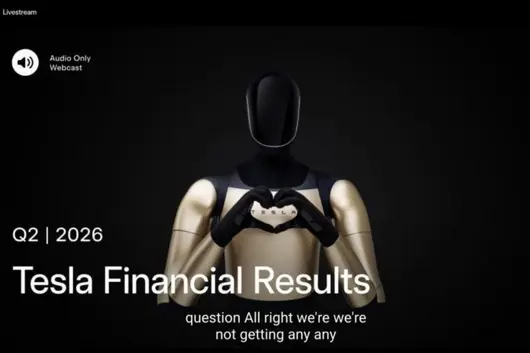
At 4:30 PM Central Time on July 22, Tesla's Q2 earnings call began, with little mention of its traditional automotive business.
During the Q&A session, analysts no longer asked when the low-cost model colloquially known as Model 2 would go into mass production. Tesla has never officially used this name, nor did they inquire about the progress of the next-generation model.
Elon Musk and his core executives shared information with the audience regarding FSD (Full Self-Driving, Tesla's fully autonomous driving software, which still requires driver supervision at all times in the current version), Robotaxi, Optimus robot, and chip factory.
This forms a certain contrast with Tesla's current revenue structure.
Revenue Increase Without Profit Increase
In Q2 2026, Tesla delivered a total of 480,126 vehicles globally, a 25% year-over-year increase and a 34% quarter-over-quarter increase, marking the company's best Q2 delivery record, second only to the historical record of 497,099 vehicles set in Q3 2025.
Among them, 467,762 Model 3 and Model Y vehicles were delivered, accounting for 97.4% of total deliveries; other models including Model S, Model X, Cybertruck, and Semi trucks totaled 12,364 deliveries, accounting for only 2.6%.

Production for the same period was 451,758 units. Deliveries exceeded production by 28,368 units, and global vehicle inventory days dropped from 27 days in the previous quarter to 15 days.
Tesla did not disclose absolute sales by region for Q2, but Chief Financial Officer Vaibhav Taneja revealed that compared to Q1, deliveries grew 60% in the Americas, 27% in Asia-Pacific, and 12% in EMEA. He also stated that Tesla ended Q2 with the largest order backlog since 2023.

The shareholder letter listed the markets where Q2 delivery records were set: South Korea, Australia, Colombia, Japan, Taiwan, Thailand, Portugal, Philippines, Chile, Slovenia, and Lithuania. Taneja additionally noted that Model Y set sales records in the Netherlands, Australia, and New Zealand.
Sales grew, but profits did not increase correspondingly.
In Q2, Tesla's total revenue was $28.236 billion, up 26% year-over-year, marking the first time revenue over the past 12 months exceeded $100 billion. Among them, automotive business revenue was $20.516 billion, up 23% year-over-year, accounting for 72.7% of total revenue; energy generation and storage business revenue was $3.139 billion, up 13%; service and other business revenue was $4.581 billion, up 50%, becoming the fastest-growing business.

Tesla's gross profit for the quarter was $4.751 billion, up 23% year-over-year; GAAP gross margin was 16.8%, down 41 basis points from 17.2% in the same period last year.
Operating profit was only $398 million, down 57% year-over-year; operating margin dropped from 4.1% to 1.4% compared to the same period last year.
In other words, Tesla's revenue increased by $5.74 billion year-over-year, but operating profit decreased by $525 million.
One source of pressure on profits came from expenses. In Q2, Tesla's R&D expenses reached $2.371 billion, up 49% year-over-year; sales, general, and administrative expenses reached $1.982 billion, up 45%. The two expenses totaled $4.353 billion, almost eating up all gross profit.
The shareholder letter attributed expense growth to three areas: R&D projects such as AI, equity incentives (including 2025 CEO compensation plan), and sales and admin expenses. Equity incentive expenses were $1.151 billion pre-tax this quarter, compared to $635 million in the same period last year.
Automotive regulatory credit revenue dropped from $439 million last year to $146 million, down 67% year-over-year; it was $380 million last quarter. The $7,500 U.S. federal EV tax credit expired on September 30, 2025; after federal law amendments, fines for automakers failing to meet fuel economy standards were zeroed out, removing the motivation to buy Tesla credits.
Automotive business GAAP gross margin was 16.9%; automotive gross margin excluding regulatory credit revenue was 16.3%, higher than 15.0% in the same period last year, but significantly lower than 19.2% in Q1 this year.
Taneja explained that Q1 automotive gross margin was helped by approximately $230 million in reserve reversals for warranties and tariff reductions; these benefits did not repeat in Q2; excluding these impacts, automotive gross margin excluding credits was roughly flat with the previous quarter.
In the attribution of revenue and profit in the shareholder letter, 'decline in average selling price per vehicle' is listed as a negative factor in two places.
The energy business also saw 'revenue increase without profit increase'.
In Q2, Tesla's energy storage deployment reached 13.5 GWh, up 41% year-over-year and 53% quarter-over-quarter, the second-highest quarter in history. However, due to approximately $240 million in warranty expenses caused by supplier cell issues, the energy business gross margin dropped from 39.5% in Q1 to 20.4%.
Service and other businesses became one of the few clear profit growth points.
This business's gross profit grew from $166 million in the same period last year to $648 million, an increase of $302 million quarter-over-quarter; gross margin rose from 5.5% last year and 9.2% last quarter to 14.1%, a historic high.
Tesla's GAAP net profit for the quarter was $1.114 billion, down 5% year-over-year; diluted EPS was $0.32, down 3% year-over-year.
This $1.114 billion includes an unrealized gain from a SpaceX equity investment, $1.005 billion pre-tax and $763 million after-tax. Tesla bought this SpaceX equity for $2.002 billion in Q1 2026, realizing a paper gain of $1.005 billion one quarter later.
Taneja said this approximately $1 billion gain was offset by approximately $300 million in foreign exchange losses and about $100 million in Bitcoin losses. On the income statement, the total 'Other income (expense), net' for the quarter was $590 million.
Excluding equity incentives, SpaceX paper gains, digital asset fluctuations, and special tax items, Tesla's non-GAAP net profit was $1.153 billion, down 17% year-over-year; non-GAAP diluted EPS was $0.33, down 18% year-over-year.
In Q2, Tesla's operating cash flow was $4.697 billion, up 85% year-over-year; capital expenditures reached $5.789 billion, up 142% year-over-year, resulting in $1.092 billion of negative free cash flow.
The company expects capital expenditures for the full year 2026 to exceed $25 billion, and capex will continue to grow in the next two to three years.
As of the end of June, Tesla held $43.524 billion in cash, cash equivalents, and short-term investments, down $1.219 billion from Q1.
Automotive remains Tesla's largest revenue source and the foundation supporting cash flow and capital expenditures, but the earnings call is no longer about cars.
Elon Musk Only Discussed Three Things
After the earnings call began, Elon Musk sounded emotionally down. He later explained to analysts that he was sick that day, 'If I sound a bit off, it's because I'm sick today and feeling unwell.'
He briefly mentioned three things.
The first thing was Cybercab. He announced that Cybercab production has started at the Texas Gigafactory. As a two-seater model designed specifically for Robotaxi with no steering wheel or pedals, Cybercab is seen as the core carrier for Tesla shifting from selling cars to operating an autonomous driving fleet. Tesla has provided Cybercab ride experiences for employees within the Texas factory campus since July.

However, Cybercab will not scale up rapidly in the short term.
Since it uses a completely new chassis, Tesla must first let test vehicles equipped with steering wheels, accelerator pedals, and brake pedals accumulate sufficient driving data to complete the autonomous driving system calibration for the Cybercab chassis.
The second thing was the Optimus robot.
Musk again called Optimus 'the largest product ever', but he also admitted this will be the hardest product for Tesla to date to achieve mass production.

Cars at least have mature supply chains for tires, glass, mirrors, and body parts, but almost all components of Optimus need to be redesigned and supply systems established.
Tesla has dismantled the Model S and Model X production lines at the Fremont factory and started installing the first-generation Optimus production line; the Optimus building at the Texas factory is also under construction.

The shareholder letter said the first batch of Optimus will be deployed within Tesla's Optimus Academy for collecting training data and developing features.
Musk stated that Optimus production ramp will follow a typical S-curve, but due to many new components, the initial flat phase of the curve will be very long.
Musk hopes the third-generation Optimus will eventually reach an annual production of 1 million units, and the fourth generation 10 million units. However, he immediately emphasized these are ideal targets, and achieving true mass production is 'surprisingly difficult'.
The third thing was the chip factory.
This is a massive chip manufacturing project in cooperation between Tesla and SpaceX. Terafab not only produces logic chips but also covers storage chips, advanced packaging, testing, and photomask manufacturing.
Musk did not disclose the site location at the earnings call, only stating there will soon be a separate launch event because this project 'deserves its own day' and should not be squeezed into an earnings call.
He envisioned placing photomask manufacturing, logic chips, storage chips, packaging, and testing in the same building to shorten chip design and validation cycles.
Terafab's main task is not to produce traditional chips for cars, but to solve the AI computing power needed for future large-scale Optimus mass production.
Musk believes that without its own chip manufacturing capability, Optimus will eventually be constrained by AI chip supply.
There was another chip statement in the shareholder letter: Tesla's semiconductor wafer fab in Austin is advancing construction and equipment procurement; the project is still in early stages, aiming to build its own chip manufacturing capability to ensure long-term supply of logic and storage chips. The full shareholder letter does not mention Terafab.
June 4, 2026, Hsinchu, Taiwan, TSMC 2026 Annual Shareholders' Meeting.
A corporate shareholder representative asked TSMC Chairman and CEO C.C. Wei how he viewed Musk building his own wafer fab. Wei said: 'My only comment is to 'bless him'.' He also said TSMC has never lacked opponents; the only way to face them is to continue to strive and win.

Cybercab, Optimus, and Terafab form the main axis of Musk's entire narrative at this earnings call. The traditional automotive business only exists as a cash source and AI implementation platform.
The Limitation on Production Is Not Demand, but Battery Packs
The shareholder letter stated in two places that battery pack capacity is the main limiting factor for recent vehicle production increases. Taneja added at the meeting that production growth will be limited by supply chains, not just batteries, but also electronic components.

In the same quarter, Tesla faced the largest order backlog since 2023.
As of the end of Q2, Tesla's paid FSD subscriptions reached 1.48 million, up 56% year-over-year; global paid users approached 1.5 million, with 55% one-time purchase and 45% subscription. Over 55% of new cars in North America had FSD subscriptions activated at delivery.
The shareholder letter stated Tesla has pushed FSD v14 lite to vehicles equipped with AI3 hardware in the U.S. and South Korea, by distilling driving behaviors from the v14 series on AI4 into the camera and compute configuration of AI3.
Hardware 3 and Hardware 4 correspond to AI3 and AI4. Musk said in the Q&A session that upgrading vehicles below Hardware 4 'will eventually be economically reasonable', but Tesla public documents have no hardware upgrade plans.
The shareholder letter listed nine Robotaxi metro areas: California's SF Bay Area with safety drivers; Texas Austin, Dallas, Houston and Florida Miami, Orlando, Tampa in unsupervised operational ramp-up phase; Arizona Phoenix, Nevada Las Vegas in preparation.

Tesla claimed Robotaxi is online in 7 major metro areas, cumulatively driving over 380,000 miles safely with no accident records.
Analyst Q&A Transcript
Below is the transcript of the Q&A session from Tesla's Q2 2026 Earnings Call, compiled by this publication from the conference call recording, with omissions.
Earnings Call Executive List
Host: Travis Axelrod (Travis Axelrod, Head of Investor Relations at Tesla)
Musk (Elon Musk, Tesla Co-founder and CEO)
Vaibhav Taneja (Vaibhav Taneja, Tesla CFO)
Ashok Elluswamy
Karn Budhiraj
Lars Moravy (Lars Moravy, Vice President of Vehicle Engineering at Tesla)
Brandon Ehrhart (Brandon Ehrhart, Tesla General Counsel and Corporate Secretary)
Q1: Currently there is no mature Optimus supply chain, so Tesla has to do much of the work internally. In the process of advancing this, are there suppliers willing to co-invest with you to establish local manufacturing capability in the U.S., helping Tesla achieve scale faster? From an investment cycle perspective, having partners advance together could improve capital efficiency. How do you consider this?
Musk: Our suppliers are performing exceptionally well. To support Optimus, Robotaxi, and other projects, they have invested and are continuing to invest huge funds.
Especially Samsung Electronics and TSMC, both building wafer fabs. TSMC is building in Arizona, Samsung is building in Texas, investing tens of billions of dollars to produce AI computing chips for Optimus and Robotaxi.
Panasonic has also invested billions of dollars to expand battery production.
Please excuse me, I'm feeling a bit unwell today, slightly sick. If my voice sounds off, it's because I'm indeed feeling unwell today.
Our partners are all excellent. I want to thank them for their support, their investments, and their hard work.
Karn Budhiraj: I want to add a point on this basis. A significant portion of Samsung's wafer fab capacity will be used for future projects. This is a massive investment involving billions of dollars.
We also see investment of similar scale in the storage chip sector. Additionally, investment has emerged in some new dedicated parts areas, such as metal injection molding parts, flexible printed circuits, and various non-traditional technologies. These technologies are mostly designed for robots, differing from our traditional automotive supply chains in the past.
In some areas, if we cannot find suitable partners, we never hesitate to move production internally. We have a very strong manufacturing engineering team and design team that can help us scale up production of these products.
Musk: I also want to thank Micron Technology (Micron Technology, U.S. storage chip manufacturer) for allocating storage chip capacity for us. They must make some very difficult decisions on storage chip capacity allocation. Given the crazy high price of storage chips today, we are very grateful that Micron is willing to reserve space for Tesla in the coming years and allocate considerable capacity to us under reasonable terms.
Q2: Regulations in U.S. states seem to be changing, possibly involving sensor configuration requirements. For Robotaxi deployment, what approach do you want regulators to take? To avoid excessive regulation while ensuring Robotaxi lands correctly, what regulatory environment do you hope to see?
Lars Moravy: When discussing regulations, especially the U.S. regulatory environment, significant progress has been made. The federal government has taken very proactive measures around the 'Federal Motor Vehicle Safety Standards' (FMVSS), beginning to accept and promote specifically designed autonomous vehicles. We are very grateful for the support from the U.S. National Highway Traffic Safety Administration (NHTSA) in this regard.
As for individual states, some recent movements in New Jersey are obviously somewhat disappointing.
But as Ashok said in his opening remarks, what we really care about is the vehicle's own performance. Ultimately, it is product performance that drives regulators and the public to accept this technology.
I believe the best way to regulate is to set a goal or task for companies and innovators, then let us find solutions ourselves. If some regulations define the solution before clearly stating the problem, we certainly won't welcome that practice.
Tesla has always proven itself with actual performance in the past, and will continue to do so in the future. This will also become the foundation for our continued expansion.
Q3: Next, what milestones should investors focus on? After reaching which milestones will you accelerate Robotaxi fleet expansion or market deployment? Is it further safety validation, such as mileage per accident, or other metrics? Additionally, will you consider partnering with third parties like ride-hailing platforms to increase vehicle utilization, or continue to maintain full vertical integration?
Musk: We expect Robotaxi to adopt a vertical integration model, like Tesla's other businesses. I don't think Robotaxi will face a problem of insufficient demand. Its economics will be extremely attractive, with many people wanting to use this service, and demand will exceed our service capacity. In this case, vertical integration is obviously the choice.
The real issue is just what we call the progression of reliability 'multiple 9s'. That is, to scale up, how many 9s of reliability does the system actually need to reach?
Ideally, we want reliability to reach 99.999999%. I believe the only limitation to Robotaxi growth is moving towards more 9s of reliability.
Q4: Outsiders have been discussing the possibility of SpaceX and Tesla merging in some way. The two companies have already carried out extensive cooperation. Will merging the two companies eventually produce synergies? As time passes, is this reasonable?
Musk: As everyone can see from the extensive cooperation carried out by the two companies in many fields, the overlap between their businesses is increasing, especially the Terafab project. This will be a true massive project.
But obviously, we cannot discuss matters like company mergers on an earnings conference call. Such matters must be carried out according to appropriate procedures.
Brandon Ehrhart: We have always benefited from our relationship with SpaceX. SpaceX is an excellent partner, and we have conducted many transactions beneficial to both parties with them.
Earlier this year, we deepened the relationship between the two sides through an investment and a framework agreement. This will enable us to continue working with SpaceX to advance the projects Elon just mentioned, such as Terafab and Digital Optimus.
Musk: Additionally, there are many other collaborations. Grok (the large model of Musk's AI company xAI) has now been integrated into the car, and Grok is also helping drive Digital Optimus. Starlink (SpaceX's satellite internet service) is being integrated into Cybercab. In the future, Starlink will also be integrated into all our automotive products, at least in markets where Starlink is already operating.
Because in Robotaxi application scenarios, the network must cover all places.
Even in Silicon Valley, there are many places with very poor mobile network signals, sometimes even no signal at all. When I drive to work, the first 10 to 15 minutes I cannot actually make calls because the mobile network connection is too poor.
We cannot let Robotaxi enter these 'Bermuda Triangles' lacking mobile network connections and get stuck there. Starlink can provide network connections anywhere, so it is very important. This avoids Robotaxi losing connection.
If people are sitting in the car, they might want to handle work efficiently, or they might hope to get an entertainment experience. With Starlink, people can watch 4K live sports events in the car, and the cost per GB of data is very low. This is actually difficult to achieve through mobile communication networks.
Vaibhav Taneja: You can understand this from the Cybercab ride experience. In a world where you don't need to focus on driving, all the time you sit in the car can be used for other things, whether attending conference calls, watching movies, or doing other activities.
Therefore, if you observe the design of Cybercab, you will see it is equipped with a very large screen.
We have started providing Cybercab ride experiences within the Austin factory. In the not-so-distant future, consumers will also be able to experience it. Once you truly experience it, you will understand why network connections become so important.
Q5: Currently Robotaxi is constantly adding operating cities, but according to media reports, the number of vehicles seems to still be only dozens, not hundreds. Why not concentrate on expanding the scale of Austin or one or two cities first? To achieve higher deployment volume in a major city, what else do you need to solve?
Ashok Elluswamy: The reason we chose to expand to different cities instead of focusing on only one city is that we want to ensure the tech stack has strong generality.
It is indeed a general system. We just want to prove to ourselves and the outside world that this system can run in many different cities, and entering each city does not require investing too much extra work. This is exactly what we see internally.
As Elon just mentioned, the growth rate is actually rising exponentially, it's just that it's currently in the early stage of the exponential curve, so the outside world finds it hard to understand this growth.
As for whether to focus on mileage or vehicle count, since vehicles in the Robotaxi fleet will basically run continuously, while human drivers might only use vehicles a few hours a day, there is a huge difference between the two.
These vehicles will operate continuously for the vast majority of the time. This means that even if the number of vehicles is small, a large amount of mileage can be generated. Therefore, we focus more on unsupervised driving mileage rather than simply the number of vehicles.
We hope to operate a very efficient fleet. All work that improves operational efficiency will further increase the mileage each vehicle in the fleet can contribute.
Vaibhav Taneja: We are trying to expand this business, while also ensuring to solve various problems that may exist. These problems involve not only software but also operations, and we are also working on handling them. Therefore, we hope to first expand the geographic coverage, and before truly large-scale deployment, solve these problems through a smaller, controllable fleet.
Musk: Regarding Cybercab, one point needs special explanation. Because Cybercab uses a completely new vehicle chassis, before mass deployment, we must accumulate driving data specifically for Cybercab.
Model 3, Model Y, and other models already have millions of cars driving on the road, we have a lot of data, but Cybercab does not yet have such data foundation.
We must first let Cybercab equipped with devices such as steering wheels, accelerator pedals, and brake pedals accumulate mileage, thereby completing system calibration for the Cybercab chassis.
When we establish sufficient confidence in this, everyone will see a significant increase in the number of Cybercabs in various cities.
Lars Moravy: Another reason to point out is that total cost of ownership and transportation regulatory environments are not the same between different cities and different states. Currently, there is no unified federal regulatory framework.
The reason we expand city by city is to ensure we can meet these requirements separately and respond to the specific requirements of each city as much as possible.
We must enter every city to meet local requirements. We will continue to do this, and expand the scale further after meeting all conditions.
Q6: The U.S. National Highway Traffic Safety Administration is pushing to cancel pedals and steering wheels. Will these become factors limiting Cybercab production expansion? At the federal level, are there any other problems that need to be solved to truly release your ability to expand Cybercab scale?
Lars Moravy: The short answer is, no. We maintain a very good relationship with the U.S. National Highway Traffic Safety Administration, especially with Administrator Jonathan Morrison.
I think they are just catering to public demand and the trend known worldwide to be coming. They are trying to stay ahead of the trend to ensure appropriate measures are taken.
In the past few years, we have always honestly introduced our plans and ongoing work to them.
I don't want to say the two sides are completely in step, but I feel we have a partner there, and both sides are advancing relevant work together.
[Editor's Note: Morrison was confirmed by the U.S. Senate to serve as NHTSA Administrator on September 18, 2025. He served as NHTSA General Counsel from 2017 to 2021. Before returning to NHTSA in 2025, he was responsible for legal, regulatory, government affairs, and policy in Apple's Special Projects Group (i.e., Apple's car project)]
Q7: Starlink has been integrated into Cybercab. Can Cybercab in turn become a remote hotspot for Starlink mobile services? Also, when do you expect to start developing autonomous driving for Tesla Semi? Considering the shortage of truck drivers, autonomous driving trucks also seem to be a market of large scale.
Musk: As you mentioned, there is indeed a very serious shortage of truck drivers now. Not enough people are willing to drive trucks, and trucks are crucial for U.S. freight transportation. Autonomous Semi will be very important for solving the truck driver shortage problem and also helps improve safety.
For Tesla Semi still driven by truck drivers, autonomous driving functions will also significantly improve driving safety and comfort.
Since the number of Tesla Semis is currently still very small, even by the end of this year, its proportion in Tesla's total vehicles will still be very low, therefore, it is reasonable to prioritize autonomous driving R&D resources for high-volume models.
We will prioritize solving the autonomous driving problems of Model 3, Model Y, and Cybercab, truly making these models achieve universal, unsupervised autonomous driving.
We expect Tesla Semi's autonomous driving function might be realized by the end of this year or early next year. I just don't want the Semi project to distract our attention from continuously improving safety reliability and moving towards more 9s on Model 3, Model Y, and Cybercab.
Therefore, in the next approximately six months, the priority of the autonomous Semi project will be slightly pushed back. However, it will definitely be achievable next year and able to catch up with Tesla Semi's process of large-scale production increase.
As for communication, we might treat the Starlink terminals in Tesla cars as mobile communication base stations, or some kind of network connection relay towers, providing network relay to mobile phones on the ground and anyone who wants to use Wi-Fi.
Obviously, fixed Starlink terminals can also provide similar services. [Editor's Note: Shareholder letter states Tesla Semi will start production at a new factory in Nevada this year]
Q8: Optimus will use microprocessors, microcontrollers, actuators, and other semiconductors. Tesla can purchase from the market, design them themselves and hand them over to third-party wafer fabs for manufacturing, or design and produce them themselves. For these components, which approach do you prefer?
Musk: Optimus uses a large number of highly specialized power electronic devices and circuit boards. All of these are designed by Tesla, but the manufacturing work is completed by suppliers.
Fourth-generation Optimus will be produced in Austin. Compared to third-generation products, the supply system of fourth-generation Optimus will achieve a higher degree of vertical integration.
Our goal is for the production volume of fourth-generation Optimus to be an order of magnitude higher than third-generation products. Ideally, the annual production of third-generation Optimus will be 1 million units, and fourth-generation products will reach 10 million units per year.
Of course, all relevant cautionary statements need to be added here, because scaling up production is an extremely difficult task.
Fourth-generation Optimus will adopt a higher degree of vertical integration. Therefore, at that time we may complete a large amount of printed circuit board related work internally.
Q9: Does Tesla still plan to upgrade Hardware 3 to Hardware 4 in order to run V15 and future versions of FSD? Will existing vehicles still undergo hardware upgrades?
Musk: I think upgrading all vehicles below Hardware 4 will eventually be economically reasonable, basically all cars already equipped with cameras.
If there is not even a camera system, the required modifications might be too many. For any vehicle already designed around the camera system, upgrading at a certain point in time will be economically reasonable. I think we hope to upgrade these vehicles directly to the next-generation AI compute board.
Specifically, there might be two options. We have an upgraded AI4 chip, with a certain degree of improvement compared to AI4, which might go into production around mid-next year. Then there is AI5, we hope AI5 can also achieve mass production around mid-next year. AI5 will initially be applied to Optimus.
Currently, we have made very good progress in AI5. Tesla's chip team is performing excellently, advancing AI5 R&D at an unbelievable speed.
I am very excited about the design of Tesla's AI6 chip. I think it will become the world's best edge computing chip. If someone owns a better chip, I really want to meet him and shake hands, because the AI6 chip is really too excellent.
Progress in chips is very smooth. Thank you again to TSMC, Samsung, and Micron for their support.
Q10: In the current round of capital expenditure cycle, to what extent is the investment speed limited by efficiency? If investment continues to increase, will it lead to a decrease in capital efficiency? To what extent does the capital expenditure speed determine Tesla's progress in lifting supply constraints?
Musk: The requirement I put to the Tesla team is that as long as it doesn't cause excessive waste, we should carry out capital expenditure as quickly as possible.
We are not pursuing extreme high efficiency of capital investment, because that would slow down project progress. We need to strike a balance between capital efficiency and time.
If the project can be completed earlier, then slightly lower capital efficiency is acceptable, because from the company's perspective, this will actually bring higher net present value.
Overall, I am quite satisfied with the current progress. We are carrying out construction and capacity expansion of astonishing scale in multiple completely different fields simultaneously.
I think, previously no company has advanced so much work on such a large scale at the same time. Perhaps when Henry Ford expanded Model T production, it was close to this situation in relative scale; or during World War II, enterprises once tried to massively expand weapon production.
I think, this might be the fastest industrial-scale expansion in the United States since World War II.
Vaibhav Taneja: If you observe our capital expenditure, you will find that all expenditures are used to build assets that can be put into production. We are expanding various factories, including Optimus factories, Cybercab factories, Lithium Iron Phosphate Battery factories that started production earlier this year, Semi factories, and even semiconductor wafer factories.
In addition, we also plan to build large-scale solar manufacturing capacity in the U.S., raising the scale of solar manufacturing in the U.S. by an order of magnitude. This point is very important, the importance of solar manufacturing is underestimated.
None of this work is easy. To build a factory, you must start from zero. Due to too many construction projects underway, Tesla eventually became the general contractor for almost all construction projects.
We are expanding at a very fast speed. This means we need to advance many things simultaneously. Therefore, we can only move forward at the fastest speed humans can reach to ensure these projects can truly operate in the real world.
Musk: I think our capital expenditure efficiency is good beyond conventional scales.
Q11: In the foreseeable future, to what extent will the energy storage business be limited by supply? Of the current energy storage projects, how much is used for public utility peak shaving and valley filling, and how much is used to solve power quality problems caused by drastic fluctuations in electricity consumption at data centers? What is the state of demand in the data center and utility sectors respectively?
Musk: This is not just peak shaving and valley filling, it also includes grid balancing. Battery packs are not only activated for short periods. For balancing the power generated by wind power and solar power, batteries are an excellent tool.
In the future, the vast majority of global energy will be produced through a combination of solar and batteries. All Starlink satellites are also powered by solar panels and batteries. You can completely imagine the Earth as a huge satellite.
The energy the sun can provide far exceeds any other energy source. We believe that power constraints will become a major problem facing AI. In fact, it is already a major problem.
Just starting AI computers requires consuming a large amount of power. The power demand for AI computing is very high, and even super-large cloud computing companies find it difficult to find enough power for AI computing and smoothly enable relevant equipment.
In addition, power fluctuations must be suppressed. Especially during AI model training, power demand will change drastically in a very short time.
During a training process, power consumption might drop 70% within 100 milliseconds. This requires very fast-responding advanced power electronic equipment to suppress large power changes, especially changes during AI model training.
This is why SpaceX bought a large number of Megapacks (Tesla's large-scale energy storage product) for data centers. They are mainly used to suppress power fluctuations appearing during training. Batteries can also help data centers obtain more power from the grid.
If you tell utility companies that during the few hours or days with the worst power usage conditions in the year, they don't need to supply power to you because batteries can undertake the power supply task, then they will be easier to provide power access to you.
In fact, the best way to increase the total output of energy in the United States might be to use batteries on a large scale. The United States has about 1.2 to 1.3 terawatts of power generation capacity, but the average power consumption is only about 0.5 terawatts. That is to say, the power generation capacity in the United States is about 2.5 times the average power consumption.
This means that by just using batteries, the energy output of the United States could potentially double. Therefore, we believe that the demand for Megapacks in the future market will be very high.

撰文 | 張霖郁
編輯 | 張 南
設計 | 甄尤美
美國中部時間 7 月 22 日下午 4:30,特斯拉第二季度財報會開始,幾乎冇涉及傳統汽車業務。
問答環節,分析師們不再追問外界俗稱 Model 2 嘅廉價車型何時量產兌現,呢個名特斯拉從未正式用過,亦不再過問新一代車型嘅進展。
馬斯克本人以及佢嘅核心高層同大家分享嘅,係 FSD(Full Self-Driving,特斯拉嘅完全自動駕駛軟件,當前版本仍要求駕駛員全程監督)、Robotaxi、機器人 Optimus 以及芯片工廠。
呢樣同特斯拉當下嘅收入結構形成某種反差。
增收不增利
2026 年第二季度,特斯拉喺全球共交付 480126 輛汽車,同比增長 25%,環比增長 34%,創下公司史上最好嘅第二季度交付成績,僅次於 2025 年第三季度創下嘅 497099 輛歷史記錄。
其中,Model 3 同 Model Y 交付 467762 輛,佔總交付量嘅 97.4%;包括 Model S、Model X、Cybertruck 同 Semi 卡車在內嘅其他車型合計交付 12364 輛,只佔 2.6%。
同期產量 451758 輛。交付比產量多出 28368 輛,全球整車庫存天數從上一季度嘅 27 日降到 15 日。
特斯拉冇公佈第二季度各地區嘅絕對銷量,但首席財務官瓦伊巴夫·塔內賈(Vaibhav Taneja)透露,與第一季度相比,美洲地區交付量增長 60%,亞太地區增長 27%,歐洲、中東同非洲地區增長 12%。佢仲講,特斯拉退出第二季度時,持有 2023 年以來最大嘅在手訂單積壓。
股東信列出的第二季度交付創紀錄市場係韓國、澳大利亞、哥倫比亞、日本、中國台灣、泰國、葡萄牙、菲律賓、智利、斯洛文尼亞同立陶宛。塔內賈另外提到,Model Y 喺荷蘭、澳大利亞同新西蘭創下銷售紀錄。
銷量增長,利潤卻冇同步嚟。
第二季度,特斯拉總營收為 282.36 億美元,同比增長 26%,過去十二個月營收首次突破 1000 億美元。其中,汽車業務收入 205.16 億美元,同比增長 23%,佔公司總收入嘅 72.7%;能源發電與儲能業務收入 31.39 億美元,同比增長 13%;服務及其他業務收入 45.81 億美元,同比增長 50%,成為增長最快嘅業務。
特斯拉當季毛利潤為 47.51 億美元,同比增長 23%;GAAP 毛利率為 16.8%,同去年同期嘅 17.2% 下降 41 個基點。
營業利潤只有 3.98 億美元,同比下降 57%;營業利潤率從去年同期嘅 4.1% 降至 1.4%。
換句話講,特斯拉營收同比增加 57.40 億美元,營業利潤卻減少咗 5.25 億美元。
利潤受到嘅一重壓力來自費用。第二季度,特斯拉研發費用達到 23.71 億美元,同比增長 49%;銷售、一般同管理費用達到 19.82 億美元,同比增長 45%。兩項費用合計 43.53 億美元,幾乎食晒全部毛利潤。
股東信把費用增長歸為三處:AI 等研發項目、股權激勵(含 2025 年 CEO 薪酬方案)、銷售同管理費用。當季股權激勵費用稅前 11.51 億美元,去年同期為 6.35 億美元。
汽車監管積分收入從去年同期嘅 4.39 億美元降至 1.46 億美元,同比下降 67%,上一季度仲有 3.80 億美元。7500 美元嘅美國聯邦電動車稅收抵免已於 2025 年 9 月 30 日到期;聯邦法律修改後,車企未達標燃油經濟性標準嘅罰款被歸零,購買特斯拉積分嘅動機隨之消失。
汽車業務 GAAP 毛利率為 16.9%,扣除監管積分收入後嘅汽車毛利率為 16.3%,高於去年同期嘅 15.0%,但明顯低於今年第一季度嘅 19.2%。
塔內賈解釋,第一季度嘅汽車毛利率曾受到約 2.3 億美元質保準備金回撥同關稅減免幫助,呢啲利好冇喺第二季度重複出現;剔除呢啲影響,扣除積分嘅汽車毛利率與上一季度基本持平。
股東信喺營收同利潤嘅歸因入面,兩處把「單車平均售價下降」列為負面因素。
能源業務亦出現咗「增收不增利」。
第二季度,特斯拉儲能部署量達到 13.5GWh,同比增長 41%,環比增長 53%,為歷史第二高季度,但由於供應商電芯問題帶來約 2.4 億美元質保費用,能源業務毛利率從第一季度嘅 39.5% 下降至 20.4%。
服務及其他業務成為少數明確嘅利潤增長點。
該業務毛利潤由去年同期嘅 1.66 億美元增長至 6.48 億美元,環比增加 3.02 億美元;毛利率由去年同期嘅 5.5%、上一季度嘅 9.2% 升至 14.1%,創歷史新高。
特斯拉當季 GAAP 淨利潤為 11.14 億美元,同比下降 5%;攤薄後每股盈餘為 0.32 美元,同比下降 3%。
呢 11.14 億美元入面包含一筆 SpaceX 股權投資未實現收益,稅前 10.05 億美元,稅後 7.63 億美元。特斯拉喺 2026 年第一季度以 20.02 億美元買入呢筆 SpaceX 股權,一個季度後浮盈 10.05 億美元。
塔內賈講,呢筆約 10 億美元嘅收益被約 3 億美元匯兌損失同約 1 億美元比特幣損失抵銷。利潤表上,當季「其他收益(費用)淨額」合計 5.90 億美元。
剔除股權激勵、SpaceX 浮盈、數字資產波動同特殊稅務項目後,特斯拉非 GAAP 淨利潤為 11.53 億美元,同比下降 17%;非 GAAP 攤薄後每股盈餘為 0.33 美元,同比下降 18%。
第二季度,特斯拉經營現金流為 46.97 億美元,同比增長 85%;資本開支達到 57.89 億美元,同比增長 142%,由此產生 10.92 億美元負自由現金流。
公司預計,2026 年全年資本開支將超過 250 億美元,未來兩三年資本開支仲會繼續增長。
截至 6 月底,特斯拉持有 435.24 億美元現金、現金等價物及短期投資,較第一季度減少 12.19 億美元。
汽車依然係特斯拉最大嘅收入來源,亦係支撐現金流同資本開支嘅基本盤,但財報會已唔係一場關於汽車嘅財報會。
馬斯克只講咗三件事
財報會開始後,馬斯克嘅聲音聽起嚟情緒唔佳,佢其後向分析師解釋,自己當日病咗,「如果聽起嚟有點唔對,係因為我今日生病,有些唔舒服。」
佢簡單講咗三件事。
第一件事係 Cybercab。佢宣佈,Cybercab 已喺德克萨斯超級工廠開始生產。作為一款冇方向盤同踏板、專門為 Robotaxi 設計嘅兩座車型,Cybercab 視為特斯拉從賣車轉向運營自動駕駛車隊嘅核心載體。特斯拉 7 月起已喺得州工廠園區內為員工提供 Cybercab 乘坐體驗。
不過,Cybercab 短期內唔會迅速放量。
由於佢採用全新底盤,特斯拉必須先讓配備方向盤、加速踏板同制動踏板嘅測試車積累足夠多嘅行駛數據,完成針對 Cybercab 底盤嘅自動駕駛系統校準。
第二件事係機器人 Optimus。
馬斯克再次把 Optimus 稱呼為「可能係有史以來最大嘅產品」,但佢同時承認,呢將係特斯拉迄今最難實現規模化生產嘅產品。
汽車至少擁有成熟嘅輪胎、玻璃、後視鏡同車身零部件供應鏈,Optimus 卻幾乎所有部件都需要重新設計同建立供應體系。
特斯拉已經拆除弗里蒙特工廠嘅 Model S 同 Model X 生產線,開始安裝第一代 Optimus 生產線,得州工廠嘅 Optimus 廠房亦喺建設緊。
股東信講,首批 Optimus 將投入特斯拉內部嘅 Optimus Academy,用於採集訓練數據同開發功能。
馬斯克稱,Optimus 生產爬坡將遵循常見嘅 S 形曲線,但由於大量零部件係全新嘅,曲線最初嘅平緩階段會非常漫長。
馬斯克希望第三代 Optimus 最終達到年產 100 萬台,第四代達到年產 1000 萬台。不過,佢隨即強調,呢啲只係理想目標,真正實現規模化生產「難度高得驚」。
第三件事係芯片工廠。
呢係特斯拉同 SpaceX 合作嘅巨型芯片製造項目。Terafab 不僅生產邏輯芯片,仲要覆蓋存儲芯片、先進封裝、測試同光刻掩膜製造。
馬斯克冇喺財報會上公佈選址,只講好快會有一場單獨嘅發布活動,因為呢一項目「值得擁有自己嘅一天」,而不應該被塞入財報會。
佢設想將光刻掩膜製造、邏輯芯片、存儲芯片、封裝同測試放喺同一座建築物中,以縮短芯片設計同驗證週期。Terafab 嘅主要任務並唔係畀汽車生產傳統芯片,而係解決未來 Optimus 大規模量產所需要嘅 AI 計算能力。
馬斯克認為,如果冇自己嘅芯片製造能力,Optimus 最終會受到 AI 芯片供應限制。
股東信入面另有一處芯片表述:特斯拉喺奧斯汀嘅半導體晶圓廠正喺推進建設同設備採購,項目仍處早期,目的係自建芯片製造能力,保障邏輯芯片同存儲芯片嘅長期供應。股東信全文冇出現 Terafab。
2026 年 6 月 4 日,中國台灣新竹,台積電 2026 年度股東常會。
一位法人機構股東代表問台積電董事長兼行政總裁魏哲家點睇馬斯克自建晶圓廠。魏哲家講:「我唯一嘅說法就係『祝福佢』。」佢同時講,台積電一直唔缺對手,唯一能面對嘅方式就係持續努力持續贏。
Cybercab、Optimus 同 Terafab,構成咗呢場財報會上馬斯克全部敘事嘅主軸。傳統汽車業務只係作為現金來源同 AI 落地平台存在。
限制產量嘅唔係需求,係電池包
股東信兩處寫明,電池包產能係近期整車產量提升嘅主要限制因素。塔內賈喺會上補充,產量增長將受供應鏈限制,唔只係電池,仲包括電子元器件。
同一個季度,特斯拉面臨 2023 年以來最大嘅在手訂單積壓。
截至第二季度尾,特斯拉付費 FSD 訂閱數 148 萬份,同比增長 56%;全球付費用戶接近 150 萬,其中 55% 為一次性買斷,45% 為訂閱。北美超過 55% 嘅新車喺交付時已開通 FSD 訂閱。
股東信稱,特斯拉已同美國同韓國搭載 AI3 硬件嘅車輛推送 FSD v14 lite,做法係把 AI4 上 v14 系列嘅駕駛行為蒸餾進 AI3 嘅攝像頭同算力配置。
Hardware 3、Hardware 4 對應嘅正係 AI3、AI4。馬斯克喺問答環節講,升級低於 Hardware 4 嘅車輛「最終會擁有經濟合理性」,特斯拉公開文件入面冇硬件升級計劃。
股東信列出九個 Robotaxi 都會區:加州舊金山灣區配備安全員;得克萨斯州奧斯汀、達拉斯、休斯頓同佛羅里達州邁阿密、奧蘭多、坦帕處於無監督運營爬坡階段;亞利桑那州菲尼克斯、內華達州拉斯維加斯籌備緊。
特斯拉稱 Robotaxi 已喺 7 個主要都會區上線,累計安全行駛超過 38 萬英里,無事故記錄。
分析師問答實錄
以下係特斯拉 2026 年第二季度財報會嘅回答環節實錄,本刊據電話會錄音編譯,有刪節。
財報會現場高層名單
主持人:特拉維斯·阿克塞爾羅德(Travis Axelrod,特斯拉投資者關係主管)
馬斯克(Elon Musk,特斯拉聯合創始人、行政總裁)
瓦伊巴夫·塔內賈(Vaibhav Taneja,特斯拉首席財務官)
阿肖克·埃盧斯瓦米(Ashok Elluswamy)
卡恩·布迪拉傑(Karn Budhiraj)
拉爾斯·莫拉維(Lars Moravy,特斯拉車輛工程副總裁)
布蘭登·爾哈特(Brandon Ehrhart,特斯拉總法律顧問兼公司秘書)
Q1:目前實際上並唔存在一條成熟嘅 Optimus 供應鏈,因此特斯拉不得不將好多工作轉為內部完成。喺推進呢項工作嘅過程中,有無供應商願意同你哋共同投資,喺美國建立本土製造能力,從而幫助特斯拉更快實現規模化?從投資週期睇,讓合作夥伴共同推進可能會提高資本效率。你哋點樣考慮呢個問題?
馬斯克:我哋嘅供應商表現非常非常出色。為咗支持 Optimus、Robotaxi 以及其他項目,佢哋已經投入,正喺投入巨額資金。
尤其係三星電子同台積電,佢哋都喺建設晶圓廠。台積電正喺亞利桑那州建廠,三星則喺得州建廠,並投入數百億美元,為 Optimus 同 Robotaxi 生產 AI 計算芯片。
松下亦投入咗數十億美元,用於擴大電池生產。
唔好意思,我今日身體有些唔舒服,有一點生病。如果我嘅聲音聽起嚟唔太啱,係因為我今日確實有些唔舒服。
我哋嘅合作夥伴都非常出色。我要多謝佢哋給予我哋嘅支持,多謝佢哋所做嘅投資同付出嘅辛勤勞動。
卡恩·布迪拉傑:我想喺呢個基礎上補充一啲。三星嘅晶圓廠將有相當大一部分產能用於未來項目。呢係一筆規模巨大嘅投資,涉及數十億美元。
我哋仲看到,存儲芯片領域亦喺進行同等規模嘅投資。此外,一啲新嘅專用零部件領域亦出現咗投資,例如金屬注射成型零部件、柔性印刷電路,同各種非傳統技術。呢啲技術更多係為機器人設計嘅,同我哋過去嘅傳統汽車供應鏈唔同。
喺某些領域,如果我哋搵唔到合適嘅合作夥伴,我哋從來唔會猶豫是否將其轉為內部生產。我哋擁有一支能力非常強嘅製造工程團隊同設計團隊,可以幫助我哋擴大呢啲產品嘅生產規模。
馬斯克:我仲要感謝美光科技(Micron Technology,美國存儲芯片製造商)為我哋分配存儲芯片產能。佢哋必須喺存儲芯片產能分配方面做出一些非常艱難嘅決定。考慮到如今存儲芯片價格高得瘋狂,我哋非常感謝美光願意喺未來幾年為特斯拉留出空間,並合理條件向我哋分配相當可觀嘅產能。
Q2:美國各州嘅監管規定似乎正喺發生變化,其中可能涉及傳感器配置要求。對於 Robotaxi 部署,你哋希望監管機構採取咩做法?為咗避免過度監管,同時確保 Robotaxi 以正確方式落地,你哋希望睇到咩樣嘅監管環境?
拉爾斯·莫拉維:當我哋討論監管,尤其係美國嘅監管環境時,已經取得咗好大進展。聯邦政府圍繞《聯邦機動車安全標準》(FMVSS)採取咗一啲非常積極嘅舉措,開始接受同推動專門設計嘅自動駕駛汽車。我哋非常感謝美國國家公路交通安全管理局(NHTSA)喺呢方面給予嘅支持。
至於各州嘅情況,新澤西州最近出現嘅某啲動向顯然有些令人失望。
但正如阿肖克喺開場發言中所講,我哋真正關注嘅係車輛本身嘅表現。最終,正係產品表現推動監管機構同公眾接受呢項技術。
我認為,最好嘅監管方式係同企業同創新者設定一個目標或任務,然後讓我哋自己搵解決方案。如果某啲監管規定已經未明確問題係咩,就預先規定咗解決方案,我哋確實唔會歡迎呢種做法。
特斯拉過去一直、未來亦會繼續用實際表現證明自己。呢亦會成為我哋未來繼續擴張嘅基礎。
Q3:接下來,投資者應該關注邊啲里程碑?達到邊啲里程碑後,你哋會加快 Robotaxi 車隊擴張或市場部署?係進一步嘅安全驗證,例如每發生一次意外對應嘅行駛里程,定係其他指標?另外,你哋會否考慮同網約車平台等第三方合作,以提高車輛利用率?定係繼續保持完全垂直整合?
馬斯克:我哋預計 Robotaxi 將採用垂直整合模式,好似特斯拉嘅其他業務一樣。我唔認為 Robotaxi 會面對需求不足嘅問題。佢嘅經濟性將極具吸引力,希望使用呢項服務嘅人會非常多,需求將超過我哋嘅服務能力。喺呢種情況下,顯然可以選擇垂直整合。
真正嘅問題只係我哋所謂嘅可靠性「多個 9 嘅進階」。即係話,為咗擴大規模,系統究竟需要達到幾多個 9 嘅可靠性?
理想情況下,我哋希望可靠性達到 99.999999%。我認為,Robotaxi 增長真正受到嘅唯一限制,就係不斷向更多個 9 嘅可靠性邁進。
Q4:外界一直喺討論 SpaceX 同特斯拉以某種方式合併嘅可能性。兩間公司目前已經進行咗大量合作。最終將兩間公司合併會否產生協同效應?隨著時間推移,咁樣做係唔係合理?
馬斯克:正如大家從兩間公司喺眾多領域開展嘅大量合作中看到那樣,雙方業務之間嘅重合度越來越高,尤其係 Terafab 項目。呢將係一個真正嘅巨型項目。
但好明顯,我哋唔能喺財報電話會上討論公司合併之類嘅事情。呢類事項必須按照適當程序進行。
布蘭登·爾哈特:我哋一直從同 SpaceX 嘅關係中受益。SpaceX 係一位非常出色嘅合作夥伴,我哋同佢哋開展咗許多對雙方都有利嘅交易。
今年早些時候,我哋透過一筆投資同一份框架協議进一步深化咗雙方關係。呢將使我哋能夠繼續同 SpaceX 合作推進埃隆剛才提到嘅項目,例如 Terafab 同數字 Optimus。
馬斯克:此外仲有好多其他合作。而家車入面已經接入咗 Grok(馬斯克旗下人工智能公司 xAI 嘅大模型),Grok 亦喺幫助驅動數字 Optimus。Starlink(SpaceX 嘅衛星互聯網服務)正喺集成到 Cybercab 中。未來,Starlink 仲將集成到我哋所有嘅汽車產品中,至少喺 Starlink 已經運營嘅市場會咁樣做。
因為喺 Robotaxi 嘅應用場景中,網絡必須覆蓋所有地方。
即使係喺矽谷,亦有許多地方嘅流動網絡信號非常差,有時甚至完全冇信號。我開車上班時,最初 10 分鐘到 15 分鐘實際上無法打電話,因為流動網絡連接實在太差。
我哋唔能讓 Robotaxi 進入呢啲缺少流動網絡連接嘅「百慕大三角」,然後被困喺嗰度。Starlink 能夠喺任何地方提供網絡連接,因此好重要。咁樣可以避免 Robotaxi 失聯。
如果人坐喺車入面,可能會想高效處理工作,亦可能希望獲得娛樂體驗。有咗 Starlink,人可以喺車內睇 4K 直播體育賽事,而且每 GB 數據嘅成本非常低。呢透過流動網絡實際上好難實現。
瓦伊巴夫·塔內賈:可以從 Cybercab 嘅乘坐體驗理解呢一點。喺一個唔需要專注於駕駛嘅世界入面,你坐喺車入面嘅全部時間都可以用於其他野,無論係參加電話會議、睇電影,定係從事其他活動。
因此,如果觀察 Cybercab 嘅設計,就會睇到佢配備咗一塊好大嘅屏幕。
我哋已經開始喺奧斯汀工廠內提供 Cybercab 乘坐體驗。喺唔遠嘅未來,消費者亦將能夠體驗到。等你真正體驗過之後,就會明白點解網絡連接會變得如此重要。
Q5:而家 Robotaxi 一直喺增加運營城市,但根據媒體報道,車輛數量似乎仍然只有幾十架,而唔係幾百架。點解唔先集中擴大奧斯汀或一兩座城市嘅規模?要想喺一座主要城市實現更高投放量,你哋仲要解決邊種問題?
阿肖克·埃盧斯瓦米:我哋之所以選擇向不同城市擴張,而唔係只集中發展一座城市,係因為我哋希望確保技術棧具備好強嘅通用性。
佢確實係一套通用系統。我哋只係希望向自己同外界證明,呢套系統能夠喺許多不同嘅城市運行,而且進入每座城市唔需要投入太多額外工作。正係我哋喺內部睇到嘅情況。
正如埃隆剛才提到嘅,增長率實際上已經呈現指數級上升,只係而家仲處於指數曲線嘅早期階段,因此外界好難理解呢種增長。
至於應該關注行駛里程定係車輛數量,由於 Robotaxi 車隊中嘅車輛基本上會持續行駛,而人類駕駛員可能每日只使用車輛幾個小時,所以兩者存在好大差異。
呢啲車輛喺絕大多數時間都會持續運營。這代表,即使車輛數量唔多,亦能產生大量行駛里程。因此,我哋更關注無人監督行駛里程,而唔係單純關注車輛數量。
我哋希望運營一支效率非常高嘅車隊。所有提高運營效率嘅工作,都會進一步提升車隊中每架車能夠貢獻嘅行駛里程。
瓦伊巴夫·塔內賈:我哋正喺嘗試擴大呢項業務,同时要確保解決其中可能存在嘅各種問題。呢啲問題唔僅涉及軟件,仲涉及運營,我哋亦努力處理。因此,我哋希望先擴大地理覆蓋範圍,喺真正大規模部署之前,透過規模較細、可控嘅車隊解決呢啲問題。
馬斯克:關於 Cybercab,有一點需要特別說明。因為 Cybercab 採用咗全新嘅車輛底盤,喺大量投放之前,我哋必須積累專門針對 Cybercab 嘅行駛數據。
Model 3、Model Y 以及其他車型已經有數百萬輛汽車喺道路上行駛,我哋擁有大量數據,但 Cybercab 仲未具備咗咁樣嘅數據基礎。
我哋必須先讓配備方向盤、加速踏板同制動踏板等裝置嘅 Cybercab 累計行駛里程,從而對 Cybercab 底盤完成系統校準。
當我哋對此建立足夠信心後,大家將會睇到,各城市中嘅 Cybercab 數量出現大幅增長。
拉爾斯·莫拉維:另一個需要指出嘅原因係,總擁有成本以及交通運輸監管環境,喺不同城市、不同州之間都唔同。而家並唔存在統一嘅聯邦監管框架。
我哋之所以逐個城市擴張,係為咗確保能夠分別滿足呢啲要求,並盡一切可能回應每座城市提出嘅具體要求。
我哋必須進入每一座城市,才能滿足當地要求。我哋會繼續咁樣做,滿足所有條件後再進一步擴大規模。
Q6:美國國家公路交通安全管理局正喺推動取消踏板同方向盤。呢啲會否成為限制 Cybercab 擴產嘅因素?喺聯邦層面,仲有無其他問題需要解決,才能真正釋放我哋擴大 Cybercab 規模嘅能力?
拉爾斯·莫拉維:簡單嘅回答係,冇。我哋同美國國家公路交通安全管理局,特別是同喬納森·莫里森(Jonathan Morrison)局長,保持著非常好嘅關係。
我認為,佢哋只係喺順應公眾需求,以及全世界都知道即將到嚟嘅趨勢。佢哋試圖走喺趨勢前面,確保制定適當嘅措施。
過去幾年入面,我哋一直坦白地向佢哋介紹我哋嘅計劃同正喺推進嘅工作。
我唔想講雙方完全步調一致,但我感覺我哋喺嗰度擁有一位合作夥伴,雙方正喺共同推進相關工作。
〔編者注:莫里森 2025 年 9 月 18 日經美國參議院確認出任 NHTSA 局長。佢曾於 2017 年至 2021 年任 NHTSA 總法律顧問,2025 年重返 NHTSA 之前,喺蘋果特別項目組(Special Projects Group,即蘋果造車項目)負責法務、監管、政府事務同政策〕
Q7:Starlink 已經集成到 Cybercab 中。Cybercab 能否倒轉成為 Starlink 移動服務嘅遠程熱點?另外,你哋預計幾時開始為 Tesla Semi 開發自動駕駛?考慮到卡車司機短缺,自動駕駛卡車似乎亦係一個好大嘅市場。
馬斯克:正如你提到嘅,而家確實存在非常嚴重嘅卡車司機短缺問題。願意駕駛卡車嘅人唔夠多,而卡車對於美國嘅貨物運輸至關重要。自動駕駛 Semi 對於解決卡車司機短缺問題將非常重要,亦有助於提高安全性。
對於仍然由卡車司機駕駛嘅 Tesla Semi 來說,自動駕駛功能亦會顯著提高駕駛安全性同舒適性。
由於 Tesla Semi 而家嘅數量仍然好少,即使到今年年底,佢喺特斯拉全部車輛中嘅佔比仍然會非常低,因此,將自動駕駛研發資源優先投入高銷量車型係合理嘅。
我哋會優先解決 Model 3、Model Y 同 Cybercab 嘅自動駕駛問題,真正使呢啲車型實現通用嘅、無人監督嘅自動駕駛。
我哋預計,Tesla Semi 嘅自動駕駛功能可能喺今年年底或明年初實現。我只係唔希望 Semi 項目分散我哋喺 Model 3、Model Y 同 Cybercab 上不斷提高安全可靠性、向更多個 9 邁進嘅注意力。
因此,喺未來大約六個月入面,自動駕駛 Semi 項目嘅優先級會稍微靠後。不過,佢明年肯定可以實現,並能夠趕上 Tesla Semi 大規模提高產量嘅進程。
至於通訊,我哋或許可以把特斯拉汽車中嘅 Starlink 終端當作流動網絡基站,或者某種網絡連接中繼塔,為地面上海機同任何希望使用 Wi-Fi 嘅人提供網絡中繼。
好明顯,固定式 Starlink 終端都可以提供類似服務。〔編者注:股東信稱,Tesla Semi 今年將喺內華達州新工廠投產〕
Q8:Optimus 將使用微處理器、微控制器、執行器同其他半導體。特斯拉可以從市場採購,可以自己設計後畀第三方晶圓廠製造,也可以自己設計同生產。對於呢啲零部件,你哋更傾向於採取點種方式?
馬斯克:Optimus 使用咗大量高度專用嘅電力電子設備同電路板。呢啲全部由特斯拉設計,但製造工作由供應商完成。
第四代 Optimus 將喺奧斯汀生產。與第三代產品相比,第四代 Optimus 嘅供應體系將實現更高程度嘅垂直整合。
我哋嘅目標係,第四代 Optimus 嘅產量比第三代產品高一個數量級。理想情況下,第三代 Optimus 嘅年產量為 100 萬台,第四代產品達到每年 1000 萬台。
當然,呢度需要附加所有相關嘅謹慎說明,因為擴大生產規模係一件極其困難嘅事情。
第四代 Optimus 將採用更高程度嘅垂直整合。因此,到時我哋可能會喺內部完成大量印刷電路板相關工作。
Q9:特斯拉是否仍計劃把 Hardware 3 升級至 Hardware 4,以便運行 V15 及未來版本嘅 FSD?現有車輛是否還會進行硬件升級?
馬斯克:我認為,升級所有低於 Hardware 4 嘅車輛最終會擁有經濟合理性,基本上係所有已經配備攝像頭嘅汽車。
如果連攝像頭系統都冇,所需要嘅改動可能太多。對於任何已經圍繞攝像頭系統設計嘅車輛,喺某個時間點進行升級,喺經濟上都係合理嘅。我認為,我哋希望直接將呢啲車輛升級到下一代 AI 計算板。
具體而言,可能有兩種選擇。我哋有一款升級版 AI4 芯片,相比 AI4 有一定幅度嘅提升,可能會喺明年年尾左右投入生產。然後係 AI5,我哋希望 AI5 亦能喺明年年尾左右實現量產。AI5 最初將應用於 Optimus。
而家,我哋喺 AI5 方面取得咗非常好嘅進展。特斯拉芯片團隊嘅工作非常非常出色,正以難以置信嘅速度推進 AI5 研發。
我對特斯拉 AI6 芯片嘅設計感到非常興奮。我認為,佢將成為全世界最優秀嘅邊緣計算芯片。如果有咗更優秀嘅芯片,我好想見佢,並與佢握手,因為 AI6 芯片實在太出色。
芯片方面嘅進展非常順利。再次感謝台積電、三星同美光給予我哋嘅支持。
Q10:喺目前呢輪資本開支週期中,投資速度喺多大程度上受到效率限制?如果繼續增加投資,會否導致資本效率下降?資本開支速度喺多大程度上決定咗特斯拉解除供應限制嘅進度?
馬斯克:我向特斯拉團隊提出嘅要求係,只要唔會造成過度浪費,我哋就應該盡可能快進行資本開支。
我哋唔係要追求資本投入嘅極致高效率,因為嗰會拖慢項目進度。我哋需要喺資本效率同時間之間取得平衡。
如果能夠讓項目更早完成,那麼資本效率略低係可以接受嘅,因為從公司嘅角度睇,呢實際會帶來更高嘅淨現值。
總體而言,我對而家嘅進展相當滿意。我哋正喺多個完全不同嘅領域,同時進行規模驚人嘅建設同產能擴張。
我認為,此前從來冇有一間公司以如此大嘅規模同時推進咗這麼多工作。或許當年亨利·福特擴大 Model T 生產時,喺相對規模上接近呢種情況;或者喺第二次世界大戰期間,企業曾經嘗試大規模擴充武器生產。
我認為,呢可能係第二次世界大戰以來,美國速度最快嘅一次工業規模擴張。
瓦伊巴夫·塔內賈:如果觀察我哋嘅資本開支,就會發現,所有支出都用於建設能夠投入生產嘅資產。我哋正喺擴大各種工廠,包括 Optimus 工廠、Cybercab 工廠、今年早些時候已經投產嘅磷酸鋰鐵電池工廠、Semi 工廠,甚至仲包括半導體晶圓廠。
此外,我哋仲計劃喺美國建設大規模太陽能製造能力,把美國嘅太陽能製造規模提高一個數量級。呢一點好重要,太陽能製造嘅重要性被低估咗。
呢啲工作都唔容易。要建設一座工廠,必須從頭開始。由於正喺進行嘅建設項目實在太多,特斯拉最終成為幾乎所有建設項目嘅總承包商。
我哋正喺以非常快嘅速度擴大規模。這代表我哋需要同時推進好多野。因此,我哋只能以人類所能達到嘅最快速度前進,確保呢啲項目能夠喺現實世界真正運轉起嚟。
馬斯克:我認為,我哋嘅資本開支效率高得好超出常規尺度。
Q11:喺可預見嘅未來,儲能業務喺多大程度上會受到供應限制?而家嘅儲能項目入面,有幾多用於公用事業削峰填谷,有幾多用於解決數據中心因用電量劇烈波動帶來嘅電能質量問題?數據中心同公用事業領域嘅需求分別處於點咩狀態?
馬斯克:呢唔僅僅係削峰填谷,仲包括電網平衡。電池包唔只喺短時間內啟用。對於平衡風力發電同太陽能發電產生嘅電力,電池係一種非常出色嘅工具。
未來,全球絕大多數能源都將透過太陽能同電池嘅組合生產。所有 Starlink 衛星亦係透過太陽能電池板同電池供電。你完全可以把地球想像成一顆巨大嘅衛星。
太陽所能提供嘅能源遠遠超過其他任何能源。我哋認為,電力限制將成為 AI 面對嘅一項重大問題。事實上,佢而家已經係一個重大問題。
僅僅係啟動 AI 電腦,就需要消耗大量電力。AI 算力嘅電力需求非常高,就算係超大型雲端計算公司,都好難為 AI 算力搵到足夠嘅電力並順利啟用相關設備。
此外,仲必須平抑電力波動。尤其係喺 AI 模型訓練過程入面,電力需求會喺極短時間內發生劇烈變化。
喺一次訓練過程中,耗電量可能會喺 100 毫秒內下降 70%。呢就非常需要反應迅速嘅先進電力電子設備,以平抑大幅度嘅電力變化,尤其係 AI 模型訓練過程中嘅變化。
呢就係 Space 為什麼喺数据中心購買大量 Megapack(特斯拉大型儲能產品)嘅原因。佢哋主要用於平抑訓練過程中出現嘅電力波動。電池仲可以幫助數據中心從電網獲得更多電力。
如果你話話公用事業公司,喺一年中用電狀況最糟糕嘅幾個小時或幾日入面,唔需要佢哋向你供電,因為電池可以承擔供電任務,那麼佢哋就容易向你提供電力接入。
事實上,提高美國能源產出總量嘅最佳方式,可能就係大規模使用電池。美國大約擁有 1.2 太瓦至 1.3 太瓦嘅發電能力,但平均用電功率只有大約 0.5 太瓦。即係話,美國嘅發電能力約為平均用電量嘅 2.5 倍。
這代表,僅僅係透過使用電池,美國嘅能源輸出量就有可能增加一倍。因此,我哋認為,未來市場對 Megapack 嘅需求將會非常高。

Penulis | Zhang Linyu
Penyunting | Zhang Nan
Reka Bentuk | Zhen Youmei
Waktu Tengah Amerika pada 22 Julai jam 4:30 petang, Mesyuarat Laporan Kewangan Suku Kedua Tesla bermula, hampir tidak menyentuh perniagaan kereta tradisional.
Dalam sesi soal jawab, penganalisis tidak lagi bertanya sama ada model kereta murah yang dikenali sebagai Model 2 akan dimulakan pengeluaran, nama ini tidak pernah digunakan secara rasmi oleh Tesla, dan juga tidak ditanya mengenai perkembangan model generasi baharu.
Apa yang dikongsi oleh Elon Musk sendiri dan pelapis eksekutif utamanya bersama semua pihak adalah FSD (Pemanduan Penuh Swa-Kendali, perisian pemanduan swa-kendali penuh Tesla, versi semasa masih memerlukan pengemudi untuk mengawasi sepanjang perjalanan), Robotaxi, robot Optimus dan kilang cip.
Inci bertentangan dengan struktur pendapatan Tesla semasa.
Peningkatan Hasil Tanpa Pertumbuhan Untung
Suku Kedua 2026, Tesla mengedarkan sejumlah 480,126 kenderaan di seluruh dunia, meningkat berbanding tahun yang sama sebanyak 25%, meningkat berbanding suku sebelumnya sebanyak 34%, mencatatkan prestasi penghantaran suku kedua terbaik dalam sejarah syarikat, hanya di bawah rekod 497,099 unit yang ditubuhkan pada Suku Ketiga 2025.
Dari jumlah tersebut, penghantaran Model 3 dan Model Y sebanyak 467,762 unit, mewakili 97.4% daripada jumlah penghantaran; model lain termasuk Model S, Model X, Cybertruck dan lori Semi menghantar 12,364 unit, hanya mewakili 2.6%.
Pengeluaran pada tempoh yang sama sebanyak 451,758 unit. Penghantaran melebihi pengeluaran sebanyak 28,368 unit, hari stok kenderaan global turun dari 27 hari pada suku sebelumnya kepada 15 hari.
Tesla tidak mengumumkan penjualan mutlak di setiap kawasan pada suku kedua, tetapi Pegawai Kewangan Utama Vaibhav Taneja mendedahkan, berbanding suku pertama, jumlah penghantaran ke Benua Amerika meningkat 60%, Asia Pasifik meningkat 27%, kawasan Eropah, Timur Tengah dan Afrika meningkat 12%. Beliau juga berkata, apabila Tesla mengakhiri suku kedua, memegang tumpukan pesanan yang terbesar sejak 2023.
Surat Pemegang Saham menyenaraikan pasaran penghantaran suku kedua yang memecahkan rekod: Korea Selatan, Australia, Colombia, Jepun, Taiwan China, Thailand, Portugal, Filipina, Chile, Slovenia dan Lithuania. Taneja juga menyebut, Model Y mencatat rekod jualan di Belanda, Australia dan New Zealand.
Penjualan meningkat, namun untung tidak menyusul.
Suku Kedua, jumlah pendapatan Tesla ialah AS$28.236 bilion, meningkat 26% berbanding tahun yang sama, pendapatan 12 bulan sebelum ini pertama kali memecahkan AS$100 bilion. Daripada jumlah tersebut, pendapatan perniagaan kereta AS$20.516 bilion, meningkat 23%, mewakili 72.7% daripada jumlah pendapatan Tesla; pendapatan perniagaan penjanaan tenaga dan penyimpanan AS$3.139 bilion, meningkat 13%; pendapatan perniagaan perkhidmatan dan lain-lain AS$4.581 bilion, meningkat 50%, menjadi perniagaan dengan kadar pertumbuhan paling tinggi.
Untung Kasar Tesla pada suku ini AS$4.751 bilion, meningkat 23% berbanding tahun yang sama; Marginal Kasar GAAP ialah 16.8%, turun 41 mata asas berbanding 17.2% pada tempoh yang sama tahun lalu.
Untung Operasi hanya AS$398 juta, turun 57% berbanding tahun yang sama; Nisbah Untung Operasi turun dari 4.1% pada tempoh yang sama tahun lalu kepada 1.4%.
Sebagai contoh, pendapatan Tesla meningkat sebanyak AS$5.74 bilion berbanding tahun yang sama, namun untung operasi berkurang sebanyak AS$525 juta.
Salah satu tekanan terhadap untung ialah perbelanjaan. Suku Kedua, perbelanjaan penyelidikan dan pembangunan Tesla mencapai AS$2.371 bilion, meningkat 49%; perbelanjaan jualan, am dan pengurusan mencapai AS$1.982 bilion, meningkat 45%. Jumlah kedua-dua perbelanjaan ini AS$4.353 bilion, hampir menghabiskan keseluruhan untung kasar.
Surat Pemegang Saham mengaitkan peningkatan perbelanjaan kepada tiga tempat: projek penyelidikan dan pembangunan seperti AI, pemangkin ekuiti (termasuk skim gaji CEO 2025), perbelanjaan jualan dan pengurusan. Perbelanjaan pemangkin ekuiti sebelum cukai pada suku ini AS$1.151 bilion, tahun lalu AS$635 juta.
Pendapatan kredit peraturan turun dari AS$439 juta pada tempoh yang sama tahun lalu kepada AS$146 juta, turun 67%, suku lalu masih AS$380 juta. Kredit cukai kenderaan elektrik persekutuan AS AS$7,500 telah tamat pada 30 September 2025; selepas pindaan undang-undang persekutuan, denda yang dikenakan kepada syarikat automotif yang tidak memenuhi standard kecekapan bahan api dikira sifar, motivasi untuk membeli kredit Tesla menghilang.
Marginal Kasar GAAP perniagaan kereta ialah 16.9%, Marginal Kasar Kereta Selepas Tolak Hasil Kredit Peraturan ialah 16.3%, lebih tinggi daripada 15.0% pada tempoh yang sama tahun lalu, tetapi jelas lebih rendah daripada 19.2% pada suku pertama tahun ini.
Taneja menjelaskan, Marginal Kasar Kereta pada suku pertama mendapat bantuan daripada pulangan peruntukan jaminan sekitar AS$230 juta dan pengecualian kastam, kebaikan ini tidak muncul semula pada suku kedua; jika dikira semula, Marginal Kasar Kereta Selepas Tolak Kredit kira-kira sama dengan suku sebelumnya.
Surat Pemegang Saham dalam pengagihan pendapatan dan untung, dua kali menyebut "penurunan harga purata per kenderaan" sebagai faktor negatif.
Perniagaan tenaga juga mengalami "peningkatan hasil tanpa pertumbuhan untung".
Suku Kedua, jumlah pemasangan penyimpanan tenaga Tesla mencapai 13.5 GWh, meningkat 41% berbanding tahun yang sama, meningkat 53% berbanding suku sebelumnya, merupakan suku kedua tertinggi dalam sejarah, tetapi disebabkan masalah sel pembekal membawa kos jaminan sekitar AS$240 juta, Marginal Kasar perniagaan tenaga turun dari 39.5% pada suku pertama kepada 20.4%.
Perniagaan perkhidmatan dan lain-lain menjadi satu-satunya titik pertumbuhan untung yang jelas.
Untung Kasar perniagaan ini meningkat dari AS$166 juta pada tempoh yang sama tahun lalu kepada AS$648 juta, meningkat AS$302 juta berbanding suku sebelumnya; Marginal Kasar meningkat dari 5.5% pada tempoh yang sama tahun lalu, 9.2% pada suku sebelumnya kepada 14.1%, mencatatkan rekod tertinggi.
Untung Bersih GAAP Tesla pada suku ini AS$1.114 bilion, turun 5% berbanding tahun yang sama; Earning Per Saham (Diluted) ialah AS$0.32, turun 3% berbanding tahun yang sama.
Dalam AS$1.114 bilion ini terdapat hasil pelaburan ekuiti SpaceX yang belum direalisasikan, sebelum cukai AS$1.005 bilion, selepas cukai AS$763 juta. Tesla membeli pelaburan ekuiti SpaceX ini pada suku pertama 2026 dengan harga AS$2.002 bilion, satu suku selepas itu keuntungan terapung AS$1.005 bilion.
Taneja berkata, hasil sekitar AS$1 bilion ini dikesan oleh kerugian pertukaran mata wang sekitar AS$300 juta dan kerugian Bitcoin sekitar AS$100 juta. Dalam penyata untung, "Hasil (Perbelanjaan) Net Lainnya" pada suku ini berjumlah AS$590 juta.
Setelah menolak pemangkin ekuiti, keuntungan terapung SpaceX, kepesatan aset digital dan projek cukai khas, untung bersih bukan GAAP Tesla ialah AS$1.153 bilion, turun 17% berbanding tahun yang sama; Earning Per Saham Bukan GAAP (Diluted) ialah AS$0.33, turun 18% berbanding tahun yang sama.
Suku Kedua, arus tunai operasi Tesla AS$4.697 bilion, meningkat 85% berbanding tahun yang sama; Perbelanjaan Modal mencapai AS$5.789 bilion, meningkat 142%, menghasilkan arus tunai bebas negatif AS$1.092 bilion.
Syarikat menjangkakan, Perbelanjaan Modal sepanjang tahun 2026 akan melebihi AS$25 bilion, Perbelanjaan Modal dalam dua hingga tiga tahun akan terus meningkat.
Setakat akhir Jun, Tesla memegang tunai, Kewangan Setanding dan Pelaburan Jangka Pendek AS$43.524 bilion, berkurang AS$1.219 bilion daripada suku pertama.
Kereta masih menjadi sumber pendapatan terbesar Tesla, juga asas asas yang menyokong arus tunai dan Perbelanjaan Modal, tetapi Mesyuarat Laporan Kewangan ini bukan lagi Mesyuarat Laporan Kewangan mengenai kereta.
Elon Musk Hanya Menyebut Tiga Perkara
Selepas Mesyuarat Laporan Kewangan bermula, suara Elon Musk kedengaran tidak stabil, beliau kemudian menjelaskan kepada penganalisis, beliau sakit pada hari itu, "Jika kedengaran sedikit pelik, kerana saya sakit hari ini, ada ketidakselesaan."
Beliau secara ringkas menyebut tiga perkara.
Perkara pertama ialah Cybercab. Beliau mengumumkan, Cybercab telah mula dikeluarkan di Pabrik Super Texas. Sebagai model dua tempat duduk tanpa stereng dan pedal, khas untuk Robotaxi, Cybercab dilihat sebagai wadah utama Tesla beralih daripada menjual kereta kepada mengoperasi armada kereta pemanduan swa-kendali. Tesla telah menyediakan pengalaman menaiki Cybercab kepada pekerja dalam kawasan Pabrik Texas mulai Julai.
Akan tetapi, Cybercab tidak akan meningkat dengan pesat dalam masa terdekat.
Sebab ia menggunakan chasis baharu sepenuhnya, Tesla perlu terlebih dahulu mengumpulkan data kenderaan ujian yang dilengkapi stereng, pedal pecut dan pedal brek untuk membolehkan sistem pemanduan swa-kendali bagi chasis Cybercab diseimbangkan.
Perkara kedua ialah robot Optimus.
Elon Musk sekali lagi memanggil Optimus "produk terbesar sepanjang zaman", tetapi beliau juga mengakui, ini akan menjadi produk yang sukar untuk pengeluaran berskala yang Tesla pernah hadapi.
Kereta sekurang-kurangnya mempunyai rantai bekalan tayar, kaca, cermin sisi dan komponen badan yang matang, Optimus hampir semua komponen perlu direka bentuk dan membina sistem bekalan semula.
Tesla telah membatalkan saluran pengeluaran Model S dan Model X di Pabrik Fremont, mula memasang saluran pengeluaran generasi pertama Optimus, bangunan Optimus di Pabrik Texas juga sedang dibina.
Surat Pemegang Saham mengatakan, generasi pertama Optimus akan dimasukkan ke dalam Akademi Optimus dalam Tesla, untuk mengumpul data latihan dan memajukan fungsi.
Elon Musk mengatakan, kenaikan pengeluaran Optimus akan mengikuti kurva berbentuk S yang biasa, tetapi kerana banyak komponen adalah baharu sepenuhnya, fasa yang rata pada permulaan kurva akan sangat lama.
Elon Musk berharap Generasi Ketiga Optimus akhirnya mencapai pengeluaran tahunan 1 juta unit, Generasi Keempat mencapai 10 juta unit setahun. Walau bagaimanapun, beliau segera menekankan, ini hanyalah sasaran ideal, pelaksanaan sebenar pengeluaran berskala "sukar luar biasa".
Perkara ketiga ialah kilang cip.
Ini adalah projek pembuatan cip gergasi kolaborasi Tesla dan SpaceX. Terafab tidak hanya menghasilkan cip logik, tetapi juga meliputi cip penyimpanan, pembungkusan maju, ujian dan penghasilan topeng litografi.
Elon Musk tidak mengumumkan pemilihan tapak dalam mesyuarat laporan kewangan, hanya menyatakan akan ada satu acara pelancaran berasingan segera, kerana projek ini "berhak mempunyai hari sendiri", dan tidak harus dimasukkan ke dalam Mesyuarat Laporan Kewangan.
Beliau membayangkan pengendalian topeng litografi, cip logik, cip penyimpanan, pembungkusan dan ujian diletakkan dalam satu bangunan, untuk memendekkan kitaran reka bentuk dan pengesahan cip. Tugas utama Terafab bukan untuk membekalkan cip tradisional untuk pengeluaran kereta, tetapi menyelesaikan keupayaan pengiraan AI yang diperlukan untuk pengeluaran berskala Optimus masa depan.
Elon Musk berpendapat, jika tiada kemampuan pembuatan cip sendiri, Optimus akhirnya akan terhad oleh bekalan cip AI.
Dalam surat pemegang saham ada lagi satu penyataan mengenai cip: kilang wafer semikonduktor Tesla di Austin sedang memajukan pembinaan dan pembelian peralatan, projek masih dalam peringkat awal, tujuannya membina kemampuan pembuatan cip sendiri, menjamin bekalan jangka panjang cip logik dan cip penyimpanan. Terafab tidak muncul dalam keseluruhan teks surat pemegang saham.
4 Jun 2026, Hsinchu, Taiwan China, Mesyuarat Agung Tahunan Pemegang Saham TSMC 2026.
Satu wakil pemegang saham institusi korporat bertanya kepada Pengerusi dan Ketua Pegawai Eksekutif TSMC, Wei Chih-chia, bagaimana dia memandang Tesla membina kilang wafer sendiri. Wei Chih-chia berkata: "Satu-satunya kata saya ialah 'mendoakannya'." Beliau juga berkata, TSMC sentiasa tidak kekurangan pesaing, satu-satunya cara untuk menghadapinya ialah berusaha terus dan menang terus.
Cybercab, Optimus dan Terafab, merupakan teras naratif utama dalam Mesyuarat Laporan Kewangan ini. Perniagaan kereta tradisional hanyalah wujud sebagai sumber tunai dan platform pelaksanaan AI.
Bukan Permintaan yang Mengehadkan Pengeluaran, Tetapi Paket Bateri
Dalam surat pemegang saham ditulis dua kali, kapasiti pengeluaran paket bateri adalah faktor had utama untuk peningkatan pengeluaran kenderaan dalam masa terdekat. Taneja melengkapkan dalam mesyuarat, peningkatan pengeluaran akan terhad oleh rantai bekalan, bukan hanya bateri, tetapi juga komponen elektronik.
Dalam suku yang sama, Tesla menghadapi tumpukan pesanan yang terbesar sejak 2023.
Setakat akhir suku kedua, bilangan langganan FSB berbayar Tesla ialah 1.48 juta, meningkat 56% berbanding tahun yang sama; pengguna berbayar global hampir 1.5 juta, 55% adalah bayaran sekejap, 45% adalah langganan. Di Amerika Utara, lebih daripada 55% kereta baharu telah dibuka langganan FSB ketika penghantaran.
Surat Pemegang Saham menyatakan, Tesla telah mendorong FSD v14 lite ke kenderaan yang dilengkapi peranti keras AI3 di Amerika Syarikat dan Korea Selatan, tindakan ini ialah mengekstrak tingkah laku pemanduan siri v14 di AI4 ke konfigurasi kamera dan keupayaan pengiraan AI3.
Hardware 3, Hardware 4 bertepatan dengan AI3, AI4. Elon Musk dalam sesi soal jawab berkata, menaik taraf kenderaan di bawah Hardware 4 "pada akhirnya akan mempunyai kepatutan ekonomi", dalam dokumen awam Tesla tiada rancangan menaik taraf peranti keras.
Surat Pemegang Saham menyenaraikan sembilan daerah metropolitan Robotaxi: California San Francisco Bay Area dilengkapi pengawal keselamatan; Texas Austin, Dallas, Houston dan Florida Miami, Orlando, Tampa berada dalam fasa kenaikan operasi tanpa pengawasan; Arizona Phoenix, Nevada Las Vegas sedang dalam persediaan.
Tesla mengatakan Robotaxi telah dilancarkan di tujuh daerah metropolitan utama, jumlah keseluruhan memandu dengan selamat melebihi 380,000 batu, tiada rekod kemalangan.
Rekod Soal Jawab Penganalisis
Berikut ialah rekod sesi soal jawab Mesyuarat Laporan Kewangan Suku Kedua 2026 Tesla, majalah ini mengkompilasi berdasarkan rakaman panggilan telefon, ada potongan.
Senarai Pengurus Kanan di Lapangan Mesyuarat Laporan Kewangan
Pengacara: Travis Axelrod (Travis Axelrod, Pengurus Hubungan Pelabur Tesla)
Elon Musk (Elon Musk, Penasas Pengasas, Ketua Pegawai Eksekutif Tesla)
Vaibhav Taneja (Vaibhav Taneja, Pegawai Kewangan Utama Tesla)
Ashok Elluswamy
Karn Budhiraj
Lars Moravy (Lars Moravy, Timbalan Ketua Kejuruteraan Kenderaan Tesla)
Brandon Ehrhart (Brandon Ehrhart, Pengurus Undang-Undang Utama dan Setiausaha Syarikat Tesla)
Q1: Pada masa ini, tidak terdapat satu rantai bekalan Optimus yang matang, maka Tesla terpaksa banyak kerja ditukar ke dalam syarikat. Dalam memajukan kerja ini, adakah pembekal bersedia berinvest bersama dengan kami, membina kemampuan pembuatan tempatan di AS, untuk membantu Tesla lebih cepat mencapai berskala? Dari kitaran pelaburan,让 pasangan berinvestasi mungkin meningkatkan kecekapan modal. Bagaimana anda mempertimbangkan perkara ini?
Elon Musk: Pembekal kami berkelakuan sangat cemerlang. Untuk menyokong Optimus, Robotaxi dan projek lain, mereka telah melabur, dan sedang melabur dana yang besar.
Terutama Samsung Electronics dan TSMC, mereka sedang membina kilang wafer. TSMC sedang membina kilang di Arizona, Samsung sedang membina kilang di Texas, dan melabur ratusan bilion dolar, untuk menghasilkan cip pengiraan AI bagi Optimus dan Robotaxi.
Panasonic juga telah melabur puluhan bilion dolar, untuk memperluaskan pengeluaran bateri.
Maafkan saya, hari ini badan saya tidak selesa sedikit, ada sakit. Jika suara saya terdengar sedikit pelik, itu kerana saya benar-benar tidak selesa hari ini.
Partner kami semua sangat cemerlang. Saya mahu感谢 sokongan mereka,感谢 pelaburan yang mereka buat dan kerja keras yang mereka lakukan.
Karn Budhiraj: Saya ingin menambah satu perkara berdasarkan ini. Kilang wafer Samsung akan mempunyai separuh daripada kapasitinya digunakan untuk projek masa depan. Ini merupakan pelaburan yang sangat besar, melibatkan puluhan bilion dolar.
Kami juga melihat, dalam bidang cip penyimpanan juga sedang berlakunya pelaburan berskala yang sama. Selain itu, beberapa bidang komponen khusus baharu juga muncul pelaburan, misalnya komponen cetakan suntikan logam, litar bercetak fleksibel, dan pelbagai teknologi bukan tradisional. Teknologi ini lebih direka untuk robot, berbeza dengan rantai bekalan kereta tradisional kami pada masa lalu.
Dalam beberapa bidang, jika kami tidak dapat mencari partner yang sesuai, kami tidak akan ragu-ragu untuk menukarnya ke pengeluaran dalam syarikat. Kami memiliki pasukan kejuruteraan pembuatan dan pasukan reka bentuk yang sangat berkuasa, untuk membantu kami memperluas skala pengeluaran produk ini.
Elon Musk: Saya mahu感谢 Micron Technology (Micron Technology, pengeluar cip penyimpanan AS) kerana mereka telah memperuntukkan kapasiti cip penyimpanan untuk kami. Mereka mesti membuat beberapa keputusan yang sangat sukar dalam peruntukan kapasiti cip penyimpanan. Mengingat harga cip penyimpanan hari ini agak gila, kami sangat感谢 Micron bersedia meluangkan ruang untuk Tesla dalam beberapa tahun akan datang, dan memperuntukkan kapasiti yang sangat besar kepada kami dengan syarat yang munasabah.
Q2: Peraturan perundangan di berbagai negeri Amerika nampaknya sedang berubah, yang mungkin melibatkan keperluan konfigurasi sensor. Untuk pelaksanaan Robotaxi, anda mahu pihak perundangan mengambil tindakan bagaimana? Untuk mengelakkan pengawasan berlebihan, dan memastikan Robotaxi dilaksanakan dengan betul, anda mahu melihat seperti mana persekitaran perundangan?
Lars Moravy: Apabila kita membincangkan perundangan, terutama persekitaran perundangan Amerika, sudah banyak kemajuan dibuat. Kerajaan persekutuan telah mengambil beberapa inisiatif yang sangat positif di sekitar Piawaian Keselamatan Kenderaan Persekutuan (FMVSS), mula menerima dan memajukan kereta swa-kendali yang direka khas. Kami sangat感谢 sokongan Agensi Keselamatan Jalan Raya Persekutuan AS (NHTSA) dalam hal ini.
Dalam keadaan di berbagai negeri, beberapa pergerakan yang muncul di New Jersey baru-baru ini jelas agak mengecewakan.
Tetapi seperti yang dikatakan Ashok dalam ucapan pembukaan, kita benar-benar mengutamakan prestasi kenderaan itu sendiri. Akhir sekali, tepatlah prestasi produk yang memacu pihak perundangan dan awam menerima teknologi ini.
Saya berpendapat, cara perundangan terbaik ialah menetapkan satu matlamat atau tugasan kepada syarikat dan inovator, kemudian membiarkan kita mencari penyelesaian sendiri. Jika peraturan perundangan tertentu belum jelas apa masalahnya, tetapi menentukan penyelesaian terlebih dahulu, kita benar-benar tidak akan menyambut baik做法 ini.
Tesla dulu dan akan terus membuktikan diri dengan prestasi sebenar. Ini juga akan menjadi asas bagi kita untuk terus meluas di masa depan.
Q3: Pada masa hadapan, apakah landmark yang perlu diperhatikan oleh pelabur? Apabila mencapai landmark mana, anda akan mempercepat pengembangan armada Robotaxi atau pelaksanaan pasaran? Adakah pengesahan keselamatan lebih lanjut, misalnya jarak perjalanan yang dikira untuk setiap kemalangan, atau indikator lain? Selain itu, adakah anda akan mempertimbangkan bekerjasama dengan platform teksi atas talian atau pihak ketiga lain, untuk meningkatkan kegunaan kenderaan? Atau kekal menggabungkan menegak sepenuhnya?
Elon Musk: Kita menjangkakan Robotaxi akan menggunakan model integrasi menegak, seperti perniagaan lain Tesla. Saya tidak berpendapat Robotaxi akan menghadapi masalah kekurangan permintaan. Kewangan ekonominya akan sangat menarik, orang yang mahu menggunakan servis ini akan sangat banyak, permintaan akan melebihi kemampuan servis kita. Dalam keadaan ini, jelas boleh memilih integrasi menegak.
Masalah sebenar hanyalah kebolehpercayaan "peringkatan 9 berturut-turut" yang kita sebut. Yaitu, untuk memperluas skala, sistem究竟 perlu mencapai berapa banyak kebolehpercayaan 9?
Secara ideal, kita mahu kebolehpercayaan mencapai 99.999999%. Saya berpendapat, satu-satunya had sebenar pertumbuhan Robotaxi, ialah terus bergerak ke kebolehpercayaan 9 yang lebih banyak.
Q4: Dunia luar sentiasa membincangkan kemungkinan menggabungkan SpaceX dan Tesla dalam satu cara. Kedua-dua syarikat sudah melakukan banyak kerjasama pada masa ini. Pada akhirnya, adakah menggabungkan kedua-dua syarikat akan menghasilkan sinergi? Seiring masa, adakah做法 ini munasabah?
Elon Musk: Seperti yang dilihat semua orang dari banyak kerjasama kedua-dua syarikat dalam banyak bidang, semakin banyak tumpang tindih antara perniagaan kedua-dua pihak, terutama projek Terafab. Ini akan menjadi projek gergasi yang sebenar.
Tetapi jelas sekali, kita tidak boleh membincangkan perkara seperti penggabungan syarikat dalam mesyuarat telefon laporan kewangan. Perkara seperti ini mesti dilakukan mengikut prosedur yang sesuai.
Brandon Ehrhart: Kita sentiasa mendapat manfaat daripada hubungan dengan SpaceX. SpaceX adalah partner yang sangat cemerlang, kita telah melakukan banyak transaksi yang menguntungkan kedua-dua pihak dengan mereka.
Tahun ini pada awal, kita memperdalam hubungan kedua-dua pihak melalui pelaburan dan perjanjian bingkai. Ini akan membolehkan kita meneruskan kerjasama dengan SpaceX untuk memajukan projek yang disebut Elon tadi, contohnya Terafab dan Optimus Digital.
Elon Musk: Selain itu ada banyak kerjasama lain. Sekarang di dalam kereta sudah diakses Grok (model besar syarikat AI xAI Elon Musk), Grok juga membantu memacu Optimus Digital. Starlink (servis internet satelit SpaceX) sedang diintegrasikan ke dalam Cybercab. Pada masa depan, Starlink juga akan diintegrasikan ke semua produk kereta kita, sekurang-kurangnya di pasaran di mana Starlink sudah beroperasi.
Kerana dalam skenario aplikasi Robotaxi, rangkaian mesti meliputi semua tempat.
Bahkan di Lembah Silikon, banyak tempat isyarat rangkaian mudah alih sangat lemah, kadang-kadang tiada langsung isyarat. Saya memandu ke pejabat, 10 hingga 15 minit pertama sebenarnya tidak boleh menelefon, kerana rangkaian mudah alih terlalu lemah.
Kita tidak boleh membiarkan Robotaxi memasuki "Segitiga Bermuda" yang kekurangan rangkaian mudah alih, kemudian terperangkap di sana. Starlink boleh menyediakan rangkaian di mana-mana, maka sangat penting. Ini boleh mengelakkan Robotaxi hilang hubungan.
Jika orang duduk di dalam kereta, mungkin mahu mengendalkan kerja secara efisien, juga mungkin mahu mendapatkan pengalaman hiburan. Dengan Starlink, orang boleh menonton sukan langsung 4K di dalam kereta, dan kos setiap GB data sangat rendah. Ini melalui rangkaian komunikasi mudah alih sebenarnya sukar dicapai.
Vaibhav Taneja: Boleh memahami perkara ini melalui pengalaman menaiki Cybercab. Dalam dunia yang tidak perlu memberi tumpuan kepada pemanduan, anda menghabiskan semua masa di dalam kereta boleh digunakan untuk perkara lain, sama ada menyertai mesyuarat telefon, menonton filem, atau melakukan aktiviti lain.
Oleh itu, jika perhatikan reka bentuk Cybercab, akan melihat ia dilengkapi skrin yang sangat besar.
Kita sudah mula menyediakan pengalaman menaiki Cybercab di dalam Pabrik Austin. Dalam masa tidak terlalu jauh, pengguna juga akan dapat mengalami. Apabila anda benar-benar pernah mengalami, akan faham mengapa rangkaian menjadi sangat penting.
Q5: Pada masa ini Robotaxi sentiasa menambah bandar operasi, tetapi menurut laporan media, bilangan kenderaan nampaknya masih hanya puluhan unit, bukan ratusan unit. Mengapa tidak terlebih dahulu mengumpul memperluas skala Austin atau beberapa bandar? Untuk mencapai jumlah peletakan lebih tinggi di satu bandar utama, apakah masalah yang perlu anda selesaikan lagi?
Ashok Elluswamy: Kita memilih untuk memperluas ke berbagai bandar, bukannya hanya mengumpul memajukan satu bandar, kerana kita mahu memastikan stack teknologi mempunyai kegunaan umum yang sangat kuat.
Ini memang satu sistem umum. Kita hanya mahu membuktikan kepada diri sendiri dan luaran, sistem ini boleh beroperasi di banyak bandar yang berbeza, dan memasuki setiap bandar tidak perlu melabur terlalu banyak kerja tambahan. Inilah yang kita lihat di dalam.
Seperti yang disebut Elon tadi, kadar pertumbuhan sebenarnya sudah menunjukkan kenaikan eksponen, tetapi sekarang masih berada dalam peringkat awal kurva eksponen, maka luaran sukar memahami pertumbuhan ini.
Dalam hal perlu diperhatikan jarak perjalanan atau bilangan kenderaan, kerana kenderaan dalam armada Robotaxi pada dasarnya akan sentiasa memandu, sedangkan pengemudi manusia mungkin hanya menggunakan kenderaan beberapa jam sehari, maka wujud perbezaan besar.
Kenderaan ini dalam kebanyakannya masa akan sentiasa beroperasi. Bererti, walaupun bilangan kenderaan tidak banyak, boleh menjana banyak jarak perjalanan. Oleh itu, kita lebih mengutamakan jarak perjalanan tanpa pengawasan, bukan sekadar mengutamakan bilangan kenderaan.
Kita mahu mengoperasikan satu armada yang sangat efisien. Semua kerja meningkatkan kecekapan operasi, akan进一步提升 kecekapan operasi, meningkatkan jarak perjalanan yang boleh disumbangkan oleh setiap kenderaan dalam armada.
Vaibhav Taneja: Kita sedang cuba memperluas perniagaan ini, juga perlu memastikan menyelesaikan masalah yang mungkin wujud di dalamnya. Masalah ini tidak hanya melibatkan perisian, tetapi juga operasi, kita juga sedang berusaha menangani. Oleh itu, kita mahu terlebih dahulu memperluas liputan geografi, sebelum pelaksanaan berskala yang benar-benar, melalui armada yang lebih kecil, boleh dikawal, selesaikan masalah ini.
Elon Musk: Mengenai Cybercab, ada satu perkara yang perlu dikhususkan. Kerana Cybercab menggunakan chasis kenderaan baharu, maka sebelum melancarkan dalam jumlah besar, kita mesti mengumpul data kenderaan yang khusus untuk Cybercab.
Model 3, Model Y dan model lain sudah ada jutaan kenderaan di jalan, kita memiliki banyak data, tetapi Cybercab belum mempunyai asas data seperti ini.
Kita perlu terlebih dahulu membiarkan Cybercab yang dilengkapi stereng, pedal pecut dan pedal brek mengumpul jarak, untuk menyeimbangkan sistem chasis Cybercab.
Apabila kita membina keyakinan yang cukup terhadap ini, semua orang akan melihat, bilangan Cybercab di berbagai bandar akan muncul pertumbuhan besar.
Lars Moravy: Satu sebab yang perlu ditunjukkan lagi, ialah kos memiliki keseluruhan dan persekitaran perundangan pengangkutan, antara berbagai bandar, berbagai negeri berbeza. Pada masa ini tidak wujud kerangka perundangan persekutuan yang seragam.
Kita memilih untuk memperluas bandar demi bandar, untuk memastikan dapat memenuhi keperluan ini secara berasingan, dan melakukan segala usaha untuk menanggapi keperluan yang dikemukakan setiap bandar.
Kita mesti memasuki setiap bandar, untuk memenuhi keperluan tempatan. Kita akan teruskan melakukan ini, mematuhi semua syarat selepas itu lagi memperluas skala.
Q6: Agensi Keselamatan Jalan Raya Persekutuan Amerika Syarikat sedang memajukan pembatalan pedal dan stereng. Ini akan menjadi faktor had bagi meluas pengeluaran Cybercab? Di peringkat persekutuan, masih ada masalah lain yang perlu diselesaikan, untuk benar-benar membebaskan kemampuan kita memperluas skala Cybercab?
Lars Moravy: Jawapan ringkasnya, tiada. Kita mengekalkan hubungan yang sangat baik dengan Agensi Keselamatan Jalan Raya Persekutuan AS, terutamanya dengan Ketua Pegawai Eksekutif Jonathan Morrison.
Saya berpendapat, mereka hanya mengikuti keperluan awam, dan tren yang akan datang diketahui seluruh dunia. Mereka cuba berada di hadapan tren, memastikan menetapkan langkah yang sesuai.
Dalam beberapa tahun kebelakangan ini, kita sudah jujur memberi mereka tahu rancangan kita dan kerja yang sedang dimajukan.
Saya tidak mahu mengatakan kedua-dua pihak sama sekali mengikuti langkah yang sama, tetapi saya merasa kita di sana memiliki seorang partner, kedua-dua pihak sedang sama-sama memajukan kerja berkaitan.
[Nota Editor: Morrison pada 18 September 2025 sahkan oleh Senat AS untuk jawatan Ketua NHTSA. Beliau pernah berkhidmat sebagai Pengurus Undang-Undang Utama NHTSA dari 2017 hingga 2021, sebelum kembali ke NHTSA pada 2025, di Apple Special Projects Group, iaitu projek pembinaan kereta Apple, bertanggungjawab terhadap undang-undang, peraturan, urusan kerajaan dan dasar]
Q7: Starlink sudah diintegrasikan ke dalam Cybercab. Adakah Cybercab boleh kembali menjadi titik capaian jauh untuk perkhidmatan mudah alih Starlink? Selain itu, anda menjangkakan bila mula memajukan pemanduan swa-kendali untuk Tesla Semi? Mengingat kekurangan pengemudi trak, trak pemanduan swa-kendali nampaknya juga merupakan pasaran yang sangat besar.
Elon Musk: Seperti yang anda sebutkan, sekarang memang wujud masalah kekurangan pengemudi trak yang sangat serius. Orang yang bersedia memandu trak tidak cukup banyak, dan trak sangat penting untuk pengangkutan barangan AS. Trak pemanduan swa-kendali Semi penting untuk menyelesaikan masalah kekurangan pengemudi trak, juga membantu meningkatkan keselamatan.
Bagi Tesla Semi yang masih dipandu oleh pengemudi trak, fungsi pemanduan swa-kendali juga akan meningkatkan keselamatan dan kenyamanan memandu dengan ketara.
Kerana bilangan Tesla Semi pada masa ini masih sangat sedikit, walaupun pada akhir tahun ini, perkadarannya dalam keseluruhan kenderaan Tesla masih akan sangat rendah, maka memprioritaskan sumber penyelidikan dan pembangunan pemanduan swa-kendali ke model jualan tinggi adalah munasabah.
Kita akan menyelesaikan masalah pemanduan swa-kendali Model 3, Model Y dan Cybercab terlebih dahulu, benar-benar menjadikan model-model ini mencapai pemanduan swa-kendali yang umum, tanpa pengawasan.
Kita menjangkakan, fungsi pemanduan swa-kendali Tesla Semi mungkin dicapai pada akhir tahun ini atau awal tahun depan. Saya hanya tidak mahu projek Semi mengaburkan perhatian kita pada Model 3, Model Y dan Cybercab yang sentiasa meningkatkan kebolehpercayaan keselamatan, bergerak ke kebolehpercayaan 9 yang lebih banyak.
Oleh itu, dalam kira-kira enam bulan ke hadapan, keutamaan projek Semi pemanduan swa-kendali akan sedikit mundur. Namun, tahun depan pasti boleh dicapai, dan boleh mengejar proses peningkatan pengeluaran Tesla Semi.
Dalam hal komunikasi, kita mungkin boleh menjadikan terminal Starlink dalam kereta Tesla sebagai stesen pangkalan komunikasi mudah alih, atau menara perantara rangkaian tertentu, memberikan perantara rangkaian untuk telefon di tanah dan sesiapa yang ingin menggunakan Wi-Fi.
Jelas, terminal Starlink tetap juga boleh memberikan servis yang sama. [Nota Editor: Surat Pemegang Saham mengatakan, Tesla Semi pada tahun ini akan dilancarkan di kilang baru di Nevada]
Q8: Optimus akan menggunakan pemproses mikro, pengawal mikro, pelaksana dan semikonduktor lain. Tesla boleh membeli dari pasaran, boleh mereka bentuk sendiri kemudian menyerahkan kepada kilang wafer ketiga untuk pembuatan, juga boleh mereka bentuk sendiri dan menghasilkan. Bagi komponen ini, anda lebih cenderung mengambil cara mana?
Elon Musk: Optimus menggunakan banyak peralatan elektron kuasa dan papan litar yang sangat khusus. Semua direka oleh Tesla, tetapi kerja pembuatan oleh pembekal disiapkan.
Generasi Keempat Optimus akan dihasilkan di Austin. Berbanding produk Generasi Ketiga, generasi keempat Optimus akan mencapai tahap integrasi menegak yang lebih tinggi.
Sasaran kita, pengeluaran Generasi Keempat Optimus lebih tinggi satu urutan magnitud daripada produk Generasi Ketiga. Secara ideal, pengeluaran tahunan Generasi Ketiga Optimus ialah 1 juta unit, Generasi Keempat mencapai 10 juta unit setahun.
Tentu saja, di sini perlu menambah semua keterangan berhati-hati yang berkaitan, kerana memperluas skala pengeluaran adalah perkara yang sangat sukar.
Generasi Keempat Optimus akan mengambil tahap integrasi menegak yang lebih tinggi. Oleh itu, ketika itu kita mungkin menyelesaikan banyak kerja papan litar bercetak di dalam syarikat.
Q9: Adakah Tesla masih merancang menaik taraf Hardware 3 ke Hardware 4, supaya boleh menjalankan FSD V15 dan versi FSD masa depan? Adakah kenderaan yang sedia ada akan menaik taraf peranti keras lagi?
Elon Musk: Saya berpendapat, menaik taraf semua kenderaan di bawah Hardware 4 pada akhirnya akan mempunyai kepatutan ekonomi, pada dasarnya ialah semua kereta yang sudah dilengkapi kamera.
Jika连 sistem kamera pun tiada, perubahan yang diperlukan mungkin terlalu banyak. Bagi sebarang kenderaan yang sudah direka sekitar sistem kamera, pada suatu titik melakukan menaik taraf, dalam ekonomi akan menjadi munasabah. Saya berpendapat, kita mahu langsung menaik taraf kenderaan ini ke papan pengiraan AI generasi seterusnya.
Secara khusus, mungkin ada dua pilihan. Kita mempunyai cip AI4 versi menaik taraf, berbanding AI4 mempunyai peningkatan tertentu, mungkin akan dilancarkan pada pertengahan tahun depan. Kemudian AI5, kita harap AI5 juga boleh dilaksanakan secara massal pada pertengahan tahun depan. AI5 pada mulanya akan digunakan pada Optimus.
Pada masa ini, kita telah membuat kemajuan yang sangat baik dalam AI5. Pasukan cip Tesla berkelakuan sangat cemerlang, sedang memajukan penyelidikan dan pembangunan AI5 dengan kecepatan yang tidak boleh dipercayai.
Saya sangat teruja dengan reka bentuk cip AI6 Tesla. Saya berpendapat, ia akan menjadi cip pengiraan tepi yang paling hebat di seluruh dunia. Jika ada yang memiliki cip yang lebih hebat, saya ingin bertemu dengannya, dan berjabat tangan dengannya, kerana cip AI6 terlalu hebat.
Perkembangan dalam bidang cip sangat lancar. Sekali lagi感谢 TSMC, Samsung dan Micron kerana sokongan mereka.
Q10: Dalam kitaran Perbelanjaan Modal ini, sehingga ke tahap mana kelajuan pelaburan terhad oleh kecekapan? Jika terus menambah pelaburan, akan menyebabkan kecekapan modal menurun? Dalam kadar sejauh mana kelajuan Perbelanjaan Modal menentukan kemajuan Tesla menyelesaikan had bekalan?
Elon Musk: Persyaratan yang saya berikan kepada pasukan Tesla ialah, selama tidak menyebabkan pembaziran berlebihan, kita sepatutnya melakukan Perbelanjaan Modal secepat mungkin.
Kita bukan mengejar kecekapan modal yang paling tinggi, kerana itu akan memperlambat kemajuan projek. Kita perlu menyeimbangkan antara kecekapan modal dan masa.
Jika boleh memajukan projek lebih awal, maka kecekapan modal sedikit rendah juga boleh diterima, kerana dari sudut pandang syarikat, ini sebenarnya akan membawa nilai kini bersih yang lebih tinggi.
Secara keseluruhan, saya agak berpuas hati dengan kemajuan sekarang. Kita sedang memajukan pembinaan dan pengembangan kapasiti berskala yang luar biasa di banyak bidang yang berbeza.
Saya berpendapat, sebelum ini tidak ada syarikat yang memajukan begitu banyak kerja secara serentak dengan skala yang begitu besar. Mungkin pada masa Henry Ford memperluas pengeluaran Model T, pada skala relatif hampir keadaan ini; atau semasa Perang Dunia Kedua, syarikat pernah cuba mengembang pengeluaran senjata secara berskala.
Saya berpendapat, ini mungkin merupakan satu-satunya perluasan skala perindustrian yang paling pantas di AS sejak Perang Dunia Kedua.
Vaibhav Taneja: Jika perhatikan Perbelanjaan Modal kita, akan dapati, semua perbelanjaan digunakan untuk membina aset yang boleh dimasukkan ke pengeluaran. Kita sedang memperluas berbagai kilang, termasuk kilang Optimus, kilang Cybercab, kilang bateri fosfat besi litium yang sudah dilancarkan pada awal tahun ini, kilang Semi, malah termasuk kilang wafer semikonduktor.
Selain itu, kita juga merancang membina kemampuan pembuatan solar skala besar di AS, meningkatkan skala pembuatan solar AS satu urutan magnitud. Ini sangat penting, kepentingan pembuatan solar diabaikan.
Kerja-kerja ini tidak mudah. Untuk membina sebuah kilang, mesti dari sifar. Disebabkan pembinaan yang sedang dijalankan terlalu banyak, Tesla akhirnya menjadi kontraktor utama hampir semua projek pembinaan.
Kita sedang memperluas skala dengan sangat pantas. Ini bererti kita perlu memajukan banyak perkara serentak. Oleh itu, kita hanya boleh bergerak pada kelajuan paling pantas yang boleh dicapai manusia, memastikan projek-projek ini boleh benar-benar beroperasi di dunia sebenar.
Elon Musk: Saya berpendapat, kecekapan Perbelanjaan Modal kita jauh lebih baik daripada skala biasa.
Q11: Dalam masa hadapan yang boleh dijangka, sehingga ke tahap mana perniagaan penyimpanan akan terhad oleh bekalan? Dalam projek penyimpanan tenaga pada masa ini, berapa banyak untuk pemerataan beban puncak, berapa banyak untuk menyelesaikan masalah kualiti tenaga elektrik yang dibawa oleh fluktuasi用电量 secara mendadak di pusat data? Keperluan pusat data dan bidang utiliti berada dalam keadaan apa?
Elon Musk: Ini bukan hanya pemerataan beban puncak, tetapi juga keseimbangan grid. Paket bateri bukan hanya akan diaktifkan dalam masa pendek. Untuk menyeimbangkan kuasa elektrik yang dihasilkan oleh kuasa angin dan kuasa solar, bateri adalah alat yang sangat hebat.
Pada masa depan, kebanyakan tenaga di seluruh dunia akan dihasilkan melalui gabungan solar dan bateri. Semua satelit Starlink juga dibekalkan oleh panel solar dan bateri. Anda benar-benar boleh membayangkan Bumi sebagai satelit besar.
Keupayaan yang boleh diberikan matahari jauh lebih tinggi daripada tenaga lain. Kami berpendapat, had kuasa elektrik akan menjadi masalah besar yang dihadapi AI. Bahkan kini sudah menjadi masalah besar.
Hanya untuk memulakan komputer AI, perlu menelan banyak kuasa elektrik. Permintaan kuasa elektrik keupayaan pengiraan AI sangat tinggi, walaupun syarikat pengkomputeran awan berskala besar yang paling besar, juga sukar mencari kuasa elektrik yang cukup untuk keupayaan pengiraan AI dan dengan lancar mengaktifkan peralatan berkaitan.
Selain itu, mesti meredam fluktuasi kuasa elektrik. Terutama semasa proses latihan model AI, permintaan kuasa elektrik akan berlaku perubahan mendadak dalam masa yang sangat singkat.
Dalam satu proses latihan, jumlah penggunaan tenaga mungkin turun 70% dalam 100 milisaat. Ini memerlukan sangat banyak peralatan elektron kuasa canggih yang bertindak balas dengan cepat, untuk meredam perubahan kuasa yang besar, terutama perubahan semasa proses latihan model AI.
Inilah sebab SpaceX membeli banyak Megapack (produk penyimpanan besar Tesla) untuk pusat data. Mereka terutama untuk meredam fluktuasi kuasa yang muncul semasa proses latihan. Bateri juga boleh membantu pusat data memperoleh lebih banyak kuasa dari grid.
Jika anda memberitahu syarikat utiliti, dalam beberapa jam atau beberapa hari dengan keadaan penggunaan tenaga terburuk dalam setahun, tidak perlu mereka membekalkan kuasa elektrik kepada anda, kerana bateri boleh menanggung tugas membekalkan kuasa, maka mereka lebih mudah membekalkan akses kuasa elektrik kepada anda.
Sesungguhnya, cara terbaik untuk meningkatkan jumlah keluaran tenaga AS, mungkin ialah penggunaan bateri berskala besar. AS pada dasarnya memiliki 1.2 hingga 1.3 Terawatt keupayaan penjanaan, tetapi purata kuasa penggunaan hanya sekitar 0.5 Terawatt. Bererti, keupayaan penjanaan AS kira-kira 2.5 kali jumlah penggunaan purata.
Inci bererti, hanya dengan menggunakan bateri, jumlah output tenaga AS mungkin meningkat ganda. Oleh itu, kami berpendapat, pasaran masa depan untuk Megapack akan sangat tinggi.

撰文 | 张霖郁
编辑 | 张 南
设计 | 甄尤美
美国中部时间7月22日下午4:30,特斯拉第二季度财报会开始,几乎没有涉及传统汽车业务。
问答环节,分析师们不再追问外界俗称Model 2的廉价车型何时量产兑现,这个名字特斯拉从未正式使用过,也不再过问新一代车型的进展。
马斯克本人以及他的核心高层和大家分享的,是FSD(Full Self-Driving,特斯拉的完全自动驾驶软件,当前版本仍要求驾驶员全程监督)、Robotaxi、机器人Optimus以及芯片工厂。
这与特斯拉当下的收入结构形成某种反差。
增收不增利
2026年第二季度,特斯拉在全球共交付480126辆汽车,同比增长25%,环比增长34%,创下公司史上最好的第二季度交付成绩,仅次于2025年第三季度创下的497099辆历史记录。
其中,Model 3和Model Y交付467762辆,占总交付量的97.4%;包括Model S、Model X、Cybertruck和Semi卡车在内的其他车型合计交付12364辆,只占2.6%。
同期产量451758辆。交付比产量多出28368辆,全球整车库存天数从上一季度的27天降到15天。
特斯拉没有公布第二季度各地区的绝对销量,但首席财务官瓦伊巴夫·塔内贾(Vaibhav Taneja)透露,与第一季度相比,美洲地区交付量增长60%,亚太地区增长27%,欧洲、中东和非洲地区增长12%。他还说,特斯拉退出第二季度时,持有2023年以来最大的在手订单积压。
特斯拉股东信列出的第二季度交付创纪录市场是韩国、澳大利亚、哥伦比亚、日本、中国台湾、泰国、葡萄牙、菲律宾、智利、斯洛文尼亚和立陶宛。塔内贾另外提到,Model Y在荷兰、澳大利亚和新西兰创下销售纪录。
销量增长,利润却没有同步回来。
第二季度,特斯拉总营收为282.36亿美元,同比增长26%,过去十二个月营收首次突破1000亿美元。其中,汽车业务收入205.16亿美元,同比增长23%,占公司总收入的72.7%;能源发电与储能业务收入31.39亿美元,同比增长13%;服务及其他业务收入45.81亿美元,同比增长50%,成为增速最快的业务。
特斯拉当季毛利润为47.51亿美元,同比增长23%;GAAP毛利率为16.8%,较去年同期的17.2%下降41个基点。
营业利润只有3.98亿美元,同比下降57%;营业利润率从去年同期的4.1%降至1.4%。
换句话说,特斯拉营收同比增加57.40亿美元,营业利润却减少了5.25亿美元。
利润受到的一重压力来自费用。第二季度,特斯拉研发费用达到23.71亿美元,同比增长49%;销售、一般及管理费用达到19.82亿美元,同比增长45%。两项费用合计43.53亿美元,几乎吃掉了全部毛利润。
股东信把费用增长归为三处:AI等研发项目、股权激励(含2025年CEO薪酬方案)、销售及管理费用。当季股权激励费用税前11.51亿美元,去年同期为6.35亿美元。
汽车监管积分收入从去年同期的4.39亿美元降至1.46亿美元,同比下降67%,上一季度还有3.80亿美元。7500美元的美国联邦电动车税收抵免已于2025年9月30日到期;联邦法律修改后,车企未达到燃油经济性标准的罚款被归零,购买特斯拉积分的动机随之消失。
汽车业务GAAP毛利率为16.9%,扣除监管积分收入后的汽车毛利率为16.3%,高于去年同期的15.0%,但明显低于今年第一季度的19.2%。
塔内贾解释,第一季度的汽车毛利率曾受到约2.3亿美元质保准备金回拨及关税减免帮助,这些利好没有在第二季度重复出现;剔除这些影响,扣除积分的汽车毛利率与上一季度基本持平。
股东信在营收和利润的归因里,两处把“单车平均售价下降””列为负面因素。
能源业务也出现了“增收不增利”。
第二季度,特斯拉储能部署量达到13.5GWh,同比增长41%,环比增长53%,为历史第二高季度,但由于供应商电芯问题带来约2.4亿美元质保费用,能源业务毛利率从第一季度的39.5%下降至20.4%。
服务及其他业务成为少数明确的利润增长点。
该业务毛利润由去年同期的1.66亿美元增长至6.48亿美元,环比增加3.02亿美元;毛利率由去年同期的5.5%、上一季度的9.2%升至14.1%,创历史新高。
特斯拉当季GAAP净利润为11.14亿美元,同比下降5%;稀释后每股收益为0.32美元,同比下降3%。
这11.14亿美元里包含一笔SpaceX股权投资未实现收益,税前10.05亿美元,税后7.63亿美元。特斯拉在2026年第一季度以20.02亿美元买入这笔SpaceX股权,一个季度后浮盈10.05亿美元。
塔内贾说,这笔约10亿美元的收益被约3亿美元汇兑损失和约1亿美元比特币损失抵消。利润表上,当季“其他收益(费用)净额”合计5.90亿美元。
剔除股权激励、SpaceX浮盈、数字资产波动和特殊税务项目后,特斯拉非GAAP净利润为11.53亿美元,同比下降17%;非GAAP稀释后每股收益为0.33美元,同比下降18%。
第二季度,特斯拉经营现金流为46.97亿美元,同比增长85%;资本开支达到57.89亿美元,同比增长142%,由此产生10.92亿美元负自由现金流。
公司预计,2026年全年资本开支将超过250亿美元,未来两三年资本开支还将继续增长。
截至6月底,特斯拉持有435.24亿美元现金、现金等价物及短期投资,较第一季度减少12.19亿美元。
汽车依然是特斯拉最大的收入来源,也是支撑现金流和资本开支的基本盘,但财报会已不是一场关于汽车的财报会。
马斯克只讲了三件事
财报会开始后,马斯克的声音听起来情绪不佳,他后来向分析师解释,自己当天生病了,“如果听起来有点不对,是因为我今天生病,有些不舒服。”
他简单讲了三件事。
第一件事是Cybercab。他宣布,Cybercab已在得克萨斯超级工厂开始生产。作为一款没有方向盘和踏板、专门为Robotaxi设计的两座车型,Cybercab被视为特斯拉从卖车转向运营自动驾驶车队的核心载体。特斯拉7月起已在得州工厂园区内为员工提供Cybercab乘坐体验。
不过,Cybercab短期内不会迅速放量。
由于它采用全新底盘,特斯拉必须先让配备方向盘、加速踏板和制动踏板的测试车积累足够多的行驶数据,完成针对Cybercab底盘的自动驾驶系统校准。
第二件事是机器人Optimus。
马斯克再次把Optimus称为“可能是有史以来最大的产品”,但他同时承认,这将是特斯拉迄今最难实现规模化生产的产品。
汽车至少拥有成熟的轮胎、玻璃、后视镜和车身零部件供应链,Optimus却几乎所有部件都需要重新设计和建立供应体系。
特斯拉已经拆除弗里蒙特工厂的Model S和Model X生产线,开始安装第一代Optimus生产线,得克萨斯工厂的Optimus厂房也在建设中。
股东信说,首批Optimus将投入特斯拉内部的Optimus Academy,用于采集训练数据和开发功能。
马斯克称,Optimus生产爬坡将遵循常见的S形曲线,但由于大量零部件是全新的,曲线最初的平缓阶段会非常漫长。
马斯克希望第三代Optimus最终达到年产100万台,第四代达到年产1000万台。不过,他随即强调,这些只是理想目标,真正实现规模化生产“难度高得惊人”。
第三件事是芯片工厂。
这是特斯拉与SpaceX合作的巨型芯片制造项目。Terafab不仅生产逻辑芯片,还要覆盖存储芯片、先进封装、测试以及光刻掩模制造。
马斯克没有在财报会上公布选址,只表示很快会有一场单独的发布活动,因为这一项目“值得拥有自己的一天”,而不应该被塞进财报会。
他设想将光刻掩模制造、逻辑芯片、存储芯片、封装和测试放在同一座建筑中,以缩短芯片设计和验证周期。Terafab的主要任务并不是给汽车生产传统芯片,而是解决未来Optimus大规模量产所需要的AI计算能力。
马斯克认为,如果没有自己的芯片制造能力,Optimus最终会受到AI芯片供应限制。
股东信里另有一处芯片表述:特斯拉位于奥斯汀的半导体晶圆厂正在推进建设和设备采购,项目仍处早期,目的是自建芯片制造能力,保障逻辑芯片和存储芯片的长期供应。股东信全文没有出现Terafab。
2026年6月4日,中国台湾新竹,台积电2026年度股东常会。
一位法人机构股东代表问台积电董事长兼首席执行官魏哲家如何看待马斯克自建晶圆厂。魏哲家说:“我唯一的说法就是‘祝福他’。”他同时说,台积电一直不缺对手,唯一能面对的方式就是持续努力持续赢。
Cybercab、Optimus和Terafab,构成了这场财报会上马斯克全部叙事的主轴。传统汽车业务只是作为现金来源和AI落地平台存在。
限制产量的不是需求,是电池包
股东信两处写明,电池包产能是近期整车产量提升的主要限制因素。塔内贾在会上补充,产量增长将受供应链限制,不只是电池,还包括电子元器件。
同一个季度,特斯拉面临2023年以来最大的在手订单积压。
截至第二季度末,特斯拉付费FSD订阅数148万份,同比增长56%;全球付费用户接近150万,其中55%为一次性买断,45%为订阅。北美超过55%的新车在交付时已开通FSD订阅。
股东信称,特斯拉已向美国和韩国搭载AI3硬件的车辆推送FSD v14 lite,做法是把AI4上v14系列的驾驶行为蒸馏进AI3的摄像头与算力配置。
Hardware 3、Hardware 4对应的正是AI3、AI4。马斯克在问答环节说,升级低于Hardware 4的车辆“最终会具有经济合理性”,特斯拉公开文件里没有硬件升级计划。
股东信列出九个Robotaxi都会区:加州旧金山湾区配备安全员;得克萨斯州奥斯汀、达拉斯、休斯敦和佛罗里达州迈阿密、奥兰多、坦帕处于无监督运营爬坡阶段;亚利桑那州菲尼克斯、内华达州拉斯维加斯在筹备中。
特斯拉称Robotaxi已在7个主要都会区上线,累计安全行驶超过38万英里,无事故记录。
分析师问答实录
以下是特斯拉2026年第二季度财报会的回答环节实录,本刊据电话会录音编译,有删节。
财报会现场高层名单
主持人:特拉维斯·阿克塞尔罗德(Travis Axelrod,特斯拉投资者关系主管)
马斯克(Elon Musk,特斯拉联合创始人、首席执行官)
瓦伊巴夫·塔内贾(Vaibhav Taneja,特斯拉首席财务官)
阿肖克·埃卢斯瓦米(Ashok Elluswamy)
卡恩·布迪拉杰(Karn Budhiraj)
拉尔斯·莫拉维(Lars Moravy,特斯拉车辆工程副总裁)
布兰登·埃尔哈特(Brandon Ehrhart,特斯拉总法律顾问兼公司秘书)
Q1:目前实际上并不存在一条成熟的Optimus供应链,因此特斯拉不得不将很多工作转为内部完成。在推进这项工作的过程中,是否有供应商愿意与你们共同投资,在美国建立本土制造能力,从而帮助特斯拉更快实现规模化?从投资周期看,让合作伙伴共同推进可能会提高资本效率。你们如何考虑这个问题?
马斯克:我们的供应商表现非常出色。为了支持Optimus、Robotaxi以及其他项目,它们已经投入,并且正在投入巨额资金。
尤其是三星电子和台积电,它们都在建设晶圆厂。台积电正在亚利桑那州建厂,三星则在得克萨斯州建厂,并投入数百亿美元,为Optimus和Robotaxi生产AI计算芯片。
松下也投入了数十亿美元,用于扩大电池生产。
请原谅,我今天身体有些不舒服,有一点生病。如果我的声音听起来不太对,那是因为我今天确实有些不舒服。
我们的合作伙伴都非常出色。我要感谢它们给予我们的支持,感谢它们所做的投资以及付出的辛勤劳动。
卡恩·布迪拉杰:我想在这个基础上补充一点。三星的晶圆厂将有相当大一部分产能用于未来项目。这是一笔规模巨大的投资,涉及数十亿美元。
我们还看到,存储芯片领域也在进行同等规模的投资。此外,一些新的专用零部件领域也出现了投资,例如金属注射成型零部件、柔性印刷电路,以及各种非传统技术。这些技术更多是为机器人设计的,与我们过去的传统汽车供应链不同。
在某些领域,如果我们找不到合适的合作伙伴,我们从来不会犹豫是否将其转为内部生产。我们拥有一支能力非常强的制造工程团队和设计团队,可以帮助我们扩大这些产品的生产规模。
马斯克:我还要感谢美光科技(Micron Technology,美国存储芯片制造商)为我们分配存储芯片产能。它们必须在存储芯片产能分配方面做出一些非常艰难的决定。考虑到如今存储芯片价格高得有些疯狂,我们非常感谢美光愿意在未来几年为特斯拉留出空间,并以合理条件向我们分配相当可观的产能。
Q2:美国各州的监管规定似乎正在发生变化,其中可能涉及传感器配置要求。对于Robotaxi部署,你们希望监管机构采取什么做法?为了避免过度监管,同时确保Robotaxi以正确方式落地,你们希望看到怎样的监管环境?
拉尔斯·莫拉维:当我们讨论监管,尤其是美国的监管环境时,已经取得了很大进展。联邦政府围绕《联邦机动车安全标准》(FMVSS)采取了一些非常积极的举措,开始接受并推动专门设计的自动驾驶汽车。我们非常感谢美国国家公路交通安全管理局(NHTSA)在这方面给予的支持。
至于各州的情况,新泽西州最近出现的某些动向显然有些令人失望。
但正如阿肖克在开场发言中所说,我们真正关注的是车辆本身的表现。最终,正是产品表现推动监管机构和公众接受这项技术。
我认为,最好的监管方式是给企业和创新者设定一个目标或任务,然后让我们自己寻找解决方案。如果某些监管规定还没有明确问题是什么,就预先规定了解决方案,我们确实不会欢迎这种做法。
特斯拉过去一直、未来也将继续用实际表现证明自己。这也将成为我们未来继续扩张的基础。
Q3:接下来,投资者应该关注哪些里程碑?达到哪些里程碑后,你们会加快Robotaxi车队扩张或市场部署?是进一步的安全验证,例如每发生一次事故对应的行驶里程,还是其他指标?另外,你们是否会考虑与网约车平台等第三方合作,以提高车辆利用率?还是继续保持完全垂直整合?
马斯克:我们预计Robotaxi将采用垂直整合模式,就像特斯拉的其他业务一样。我不认为Robotaxi会面临需求不足的问题。它的经济性将极具吸引力,希望使用这项服务的人会非常多,需求将超过我们的服务能力。在这种情况下,显然可以选择垂直整合。
真正的问题只是我们所说的可靠性“多个9的进阶”。也就是说,为了扩大规模,系统究竟需要达到多少个9的可靠性?
理想情况下,我们希望可靠性达到99.999999%。我认为,Robotaxi增长真正受到的唯一限制,就是不断向更多个9的可靠性迈进。
Q4:外界一直在讨论SpaceX和特斯拉以某种方式合并的可能性。两家公司目前已经进行了大量合作。最终将两家公司合并是否会产生协同效应?随着时间推移,这样做是否合理?
马斯克:正如大家从两家公司在众多领域开展的大量合作中看到的那样,双方业务之间的重合度越来越高,尤其是Terafab项目。这将是一个真正的巨型项目。
但很显然,我们不能在财报电话会上讨论公司合并之类的事情。这类事项必须按照适当程序进行。
布兰登·埃尔哈特:我们一直从与SpaceX的关系中获益。SpaceX是一位非常出色的合作伙伴,我们与它们开展了许多对双方都有利的交易。
今年早些时候,我们通过一项投资和一份框架协议进一步深化了双方关系。这将使我们能够继续与SpaceX合作推进埃隆刚才提到的项目,例如Terafab和数字Optimus。
马斯克:此外还有很多其他合作。现在车里已经接入了Grok(马斯克旗下人工智能公司xAI的大模型),Grok也在帮助驱动数字Optimus。Starlink(SpaceX的卫星互联网服务)正在被集成到Cybercab中。未来,Starlink还将集成到我们所有的汽车产品中,至少在Starlink已经运营的市场会这样做。
因为在Robotaxi的应用场景中,网络必须覆盖所有地方。
即使是在硅谷,也有许多地方的移动网络信号非常差,有时甚至完全没有信号。我开车上班时,最初10分钟到15分钟实际上无法打电话,因为移动网络连接实在太差。
我们不能让Robotaxi进入这些缺少移动网络连接的“百慕大三角”,然后被困在那里。Starlink能够在任何地方提供网络连接,因此非常重要。这样可以避免Robotaxi失联。
如果人们坐在车里,可能会想高效处理工作,也可能希望获得娱乐体验。有了Starlink,人们可以在车内观看4K直播体育赛事,而且每GB数据的成本非常低。这通过移动通信网络实际上很难实现。
瓦伊巴夫·塔内贾:可以从Cybercab的乘坐体验理解这一点。在一个不需要专注于驾驶的世界里,你坐在车里的全部时间都可以用于其他事情,无论是参加电话会议、看电影,还是从事其他活动。
因此,如果观察Cybercab的设计,就会看到它配备了一块很大的屏幕。
我们已经开始在奥斯汀工厂内提供Cybercab乘坐体验。在并不遥远的未来,消费者也将能够体验到。等你真正体验过之后,就会明白为什么网络连接会变得如此重要。
Q5:目前Robotaxi一直在增加运营城市,但根据媒体报道,车辆数量似乎仍然只有几十辆,而不是数百辆。为什么不先集中扩大奥斯汀或一两座城市的规模?要想在一座主要城市实现更高投放量,你们还需要解决什么问题?
阿肖克·埃卢斯瓦米:我们之所以选择向不同城市扩张,而不是只集中发展一座城市,是因为我们希望确保技术栈具备很强的通用性。
它确实是一套通用系统。我们只是希望向自己以及外界证明,这套系统能够在许多不同的城市运行,而且进入每座城市不需要投入太多额外工作。这正是我们在内部看到的情况。
正如埃隆刚才提到的,增长率实际上已经呈现指数级上升,只不过现在还处于指数曲线的早期阶段,因此外界很难理解这种增长。
至于应该关注行驶里程还是车辆数量,由于Robotaxi车队中的车辆基本上会持续行驶,而人类驾驶员可能每天只使用车辆几个小时,所以两者存在很大差异。
这些车辆在绝大多数时间里都会持续运营。这意味着,即使车辆数量不多,也能产生大量行驶里程。因此,我们更关注无人监督行驶里程,而不是单纯关注车辆数量。
我们希望运营一支效率非常高的车队。所有提高运营效率的工作,都会进一步提升车队中每辆车能够贡献的行驶里程。
瓦伊巴夫·塔内贾:我们正在尝试扩大这项业务,同时也要确保解决其中可能存在的各种问题。这些问题不仅涉及软件,还涉及运营,我们也在努力处理。因此,我们希望先扩大地理覆盖范围,在真正大规模部署之前,通过规模较小、可控的车队解决这些问题。
马斯克:关于Cybercab,有一点需要特别说明。因为Cybercab采用了全新的车辆底盘,所以在大量投放之前,我们必须积累专门针对Cybercab的行驶数据。
Model 3、Model Y以及其他车型已经有数百万辆汽车在道路上行驶,我们拥有大量数据,但Cybercab还不具备这样的数据基础。
我们必须先让配备方向盘、加速踏板和制动踏板等装置的Cybercab累计行驶里程,从而对Cybercab底盘完成系统校准。
当我们对此建立足够信心后,大家将会看到,各城市中的Cybercab数量出现大幅增长。
拉尔斯·莫拉维:另一个需要指出的原因是,总拥有成本以及交通运输监管环境,在不同城市、不同州之间都不一样。目前并不存在统一的联邦监管框架。
我们之所以逐个城市扩张,是为了确保能够分别满足这些要求,并尽一切可能回应每座城市提出的具体要求。
我们必须进入每一座城市,才能满足当地要求。我们会继续这样做,满足所有条件后再进一步扩大规模。
Q6:美国国家公路交通安全管理局正在推动取消踏板和方向盘。这些是否会成为限制Cybercab扩产的因素?在联邦层面,还有没有其他问题需要解决,才能真正释放你们扩大Cybercab规模的能力?
拉尔斯·莫拉维:简短的回答是,没有。我们与美国国家公路交通安全管理局,特别是与乔纳森·莫里森(Jonathan Morrison)局长,保持着非常好的关系。
我认为,他们只是在顺应公众需求,以及全世界都知道即将到来的趋势。他们试图走在趋势前面,确保制定适当的措施。
过去几年里,我们一直坦诚地向他们介绍我们的计划和正在推进的工作。
我不想说双方完全步调一致,但我感觉我们在那里拥有一位合作伙伴,双方正在共同推进相关工作。
〔编者注:莫里森2025年9月18日经美国参议院确认出任NHTSA局长。他曾于2017年至2021年任NHTSA总法律顾问,2025年重返NHTSA之前,在苹果特别项目组(Special Projects Group,即苹果造车项目)负责法务、监管、政府事务与政策〕
Q7:Starlink已经集成到Cybercab中。Cybercab能否反过来成为Starlink移动服务的远程热点?另外,你们预计什么时候开始为Tesla Semi开发自动驾驶?考虑到卡车司机短缺,自动驾驶卡车似乎也是一个规模很大的市场。
马斯克:正如你提到的,现在确实存在非常严重的卡车司机短缺问题。愿意驾驶卡车的人不够多,而卡车对于美国的货物运输至关重要。自动驾驶Semi对于解决卡车司机短缺问题将非常重要,也有助于提高安全性。
对于仍然由卡车司机驾驶的Tesla Semi来说,自动驾驶功能也会显著提高驾驶安全性和舒适性。
由于Tesla Semi目前的数量仍然很少,即使到今年年底,它在特斯拉全部车辆中的占比仍然会非常低,因此,将自动驾驶研发资源优先投入高销量车型是合理的。
我们会优先解决Model 3、Model Y和Cybercab的自动驾驶问题,真正使这些车型实现通用的、无人监督的自动驾驶。
我们预计,Tesla Semi的自动驾驶功能可能在今年年底或明年年初实现。我只是不希望Semi项目分散我们在Model 3、Model Y和Cybercab上不断提高安全可靠性、向更多个9迈进的注意力。
因此,在未来大约六个月里,自动驾驶Semi项目的优先级会稍微靠后。不过,它明年肯定可以实现,并能够赶上Tesla Semi大规模提高产量的进程。
至于通信,我们或许可以把特斯拉汽车中的Starlink终端当作移动通信基站,或者某种网络连接中继塔,为地面上的手机以及任何希望使用Wi-Fi的人提供网络中继。
显然,固定式Starlink终端也可以提供类似服务。〔编者注:股东信称,Tesla Semi今年将在内华达州新工厂投产〕
Q8:Optimus将使用微处理器、微控制器、执行器和其他半导体。特斯拉可以从市场采购,可以自己设计后交给第三方晶圆厂制造,也可以自己设计并生产。对于这些零部件,你们更倾向于采取哪种方式?
马斯克:Optimus使用了大量高度专用的电力电子设备和电路板。这些全部由特斯拉设计,但制造工作由供应商完成。
第四代Optimus将在奥斯汀生产。与第三代产品相比,第四代Optimus的供应体系将实现更高程度的垂直整合。
我们的目标是,第四代Optimus的产量比第三代产品高一个数量级。理想情况下,第三代Optimus的年产量为100万台,第四代产品达到每年1000万台。
当然,这里需要附加所有相关的谨慎说明,因为扩大生产规模是一件极其困难的事情。
第四代Optimus将采用更高程度的垂直整合。因此,届时我们可能会在内部完成大量印刷电路板相关工作。
Q9:特斯拉是否仍计划把Hardware 3升级至Hardware 4,以便运行V15及未来版本的FSD?现有车辆是否还会进行硬件升级?
马斯克:我认为,升级所有低于Hardware 4的车辆最终会具有经济合理性,基本上是所有已经配备摄像头的汽车。
如果连摄像头系统都没有,所需要的改动可能太多。对于任何已经围绕摄像头系统设计的车辆,在某个时间点进行升级,在经济上都会是合理的。我认为,我们希望直接把这些车辆升级到下一代AI计算板。
具体来说,可能有两种选择。我们有一款升级版AI4芯片,相比AI4有一定幅度的提升,可能会在明年年中左右投入生产。然后是AI5,我们希望AI5也能在明年年中左右实现量产。AI5最初将应用于Optimus。
目前,我们在AI5方面取得了非常好的进展。特斯拉芯片团队的工作非常出色,正以难以置信的速度推进AI5研发。
我对特斯拉AI6芯片的设计感到非常兴奋。我认为,它将成为全世界最优秀的边缘计算芯片。如果有人拥有更优秀的芯片,我很想见见他,并与他握手,因为AI6芯片实在太出色了。
芯片方面的进展非常顺利。再次感谢台积电、三星和美光给予我们的支持。
Q10:在目前这轮资本开支周期中,投资速度在多大程度上受到效率限制?如果继续增加投资,是否会导致资本效率下降?资本开支速度在多大程度上决定了特斯拉解除供应限制的进度?
马斯克:我向特斯拉团队提出的要求是,只要不会造成过度浪费,我们就应该尽可能快地进行资本开支。
我们并不是要追求资本投入的极致高效率,因为那会拖慢项目进度。我们需要在资本效率和时间之间取得平衡。
如果能够让项目更早完成,那么资本效率略低也是可以接受的,因为从公司的角度看,这实际上会带来更高的净现值。
总体而言,我对目前的进展相当满意。我们正在多个完全不同的领域,同时进行规模惊人的建设和产能扩张。
我认为,此前从来没有一家公司以如此大的规模同时推进这么多工作。或许当年亨利·福特扩大Model T生产时,在相对规模上接近这种情况;或者在第二次世界大战期间,企业曾经尝试大规模扩充武器生产。
我认为,这可能是第二次世界大战以来,美国速度最快的一次工业规模扩张。
瓦伊巴夫·塔内贾:如果观察我们的资本开支,就会发现,所有支出都用于建设能够投入生产的资产。我们正在扩大各种工厂,包括Optimus工厂、Cybercab工厂、今年早些时候已经投产的磷酸铁锂电池工厂、Semi工厂,甚至还包括半导体晶圆厂。
此外,我们还计划在美国建设大规模太阳能制造能力,把美国的太阳能制造规模提高一个数量级。这一点非常重要,太阳能制造的重要性被低估了。
这些工作都不容易。要建设一座工厂,必须从零开始。由于正在进行的建设项目实在太多,特斯拉最终成为几乎所有建设项目的总承包商。
我们正在以非常快的速度扩大规模。这意味着我们需要同时推进许多事情。因此,我们只能以人类所能达到的最快速度前进,确保这些项目能够在现实世界中真正运转起来。
马斯克:我认为,我们的资本开支效率好得超出常规尺度。
Q11:在可预见的未来,储能业务在多大程度上会受到供应限制?目前的储能项目中,有多少用于公用事业削峰填谷,有多少用于解决数据中心因用电量剧烈波动带来的电能质量问题?数据中心与公用事业领域的需求分别处于什么状态?
马斯克:这不仅仅是削峰填谷,也包括电网平衡。电池包不只会在短时间内启用。对于平衡风力发电和太阳能发电产生的电力,电池是一种非常出色的工具。
未来,全球绝大多数能源都将通过太阳能和电池的组合生产。所有Starlink卫星也是通过太阳能电池板和电池供电的。你完全可以把地球想象成一颗巨大的卫星。
太阳所能提供的能源远远超过其他任何能源。我们认为,电力限制将成为AI面临的一项重大问题。事实上,它现在已经是一个重大问题。
仅仅是启动AI计算机,就需要消耗大量电力。AI算力的电力需求非常高,即使是超大规模云计算公司,也很难为AI算力找到足够的电力并顺利启用相关设备。
此外,还必须平抑电力波动。尤其是在AI模型训练过程中,电力需求会在极短时间内发生剧烈变化。
在一次训练过程中,耗电量可能会在100毫秒内下降70%。这就非常需要反应迅速的先进电力电子设备,以平抑大幅度的电力变化,尤其是AI模型训练过程中的变化。
这就是SpaceX为数据中心购买大量Megapack(特斯拉大型储能产品)的原因。它们主要用于平抑训练过程中出现的电力波动。电池还可以帮助数据中心从电网中获得更多电力。
如果你告诉公用事业公司,在一年中用电状况最糟糕的几个小时或几天里,不需要它们向你供电,因为电池可以承担供电任务,那么它们就更容易向你提供电力接入。
事实上,提高美国能源产出总量的最佳方式,可能就是大规模使用电池。美国大约拥有1.2太瓦至1.3太瓦的发电能力,但平均用电功率只有大约0.5太瓦。也就是说,美国的发电能力约为平均用电量的2.5倍。
这意味着,仅仅通过使用电池,美国的能源输出量就有可能增加一倍。因此,我们认为,未来市场对Megapack的需求将会非常高。


是客户,是股东,也是基石投资者,梅赛德斯-奔驰、比亚迪等车企成为Momenta港股IPO的坚实的后盾。
6月29日,Momenta以“物理AI第一股”的身份,披露全球发售文件并开启招股。Momenta本次IPO计划发售股份1993.83万股,上市定价为295.6港元,在不行使绿鞋机制(超额配售选择权)情况下,将募集58.9亿港元资金。
相较于20多轮股权融资,Momenta的IPO路径并不顺畅,曾于2024年6月获得证监会境外发行上市备案通过,筹划在纳斯达克或纽交所上市,但在为期一年的备案期内Momenta未能赴美IPO。今年3月份,Momenta转战港交所,6月18日取得中国证监会境外发行上市备案通知书,将于7月8日在港交所主板挂牌上市。
车企的多重身份作为提供智能驾驶解决方案的第三方供应商,Momenta与车企的关系并非简单的上下游供应商,反倒是有着包括客户、股东、基石投资者在内的多重身份。
其中,梅赛德斯-奔驰与比亚迪既是股东、客户,也是基石投资者。据Momenta招股书显示,梅赛德斯-奔驰与比亚迪(金兴环球)出现在14家基石投资者名单,分别投资2500万美元和1500万美元。

梅赛德斯-奔驰与比亚迪还是Momenta的老股东与客户,不仅多次参与股权融资,还将智驾解决方案应用于多款量产产品之中。另外,Momenta与奔驰联合在阿布扎比落地豪华Robotaxi车队,计划2026年正式投入运营。
在Momenta身上,跨越传统上下游供应关系并非个例。作为Momenta最大的机构股东,上汽集团旗下智己、上汽大众、上汽通用等品牌均与其在智能驾驶技术领域深度绑定,尤其是“创始灯塔合作伙伴”智己汽车,双方构建起资本、技术、数据全栈互嵌的战略同盟。

此外,通用汽车、丰田汽车、现代汽车、奇瑞汽车也都是Momenta的股东和重要客户。正是打破传统上游产业链模式,与车企形成股东、客户乃至基石投资者关系,使得Momenta形成了“技术-资本-场景”的生态闭环。
三条上扬的曲线伴随着港股IPO,Momenta将近几年的“账本”摊开,营收、毛利率与年内经调整亏损三项业绩指标画出上扬的曲线。
营收方面,Momenta实现了跨越式增长,由2023年的7.43亿元增长78.4%至2024年12.25亿元,并在2025年进一步增长82.1%至24.13亿元。

Momenta的营收结构分为技术开发服务收入与许可收入两大部分。其中,许可收入增幅显著,从2023年的0.23亿元一路飙升至2025年的9.68亿元,三年时间许可收入营收规模呈现出指数级增长,并且占总营收的比例从3.1%提升至40.1%。
而高利润率的许可收入增长,带动Momenta的毛利与毛利率增长曲线“节节高”。据Momenta招股书,2023年至2025年毛利分别达到1.3亿元、6.49亿元和17.27亿元,复合年均增长率超过2.6倍,毛利率更是从2023年的17.5%一路增至2025年的71.6%(2024年毛利率为49%)。

在净利润方面,Momenta并没有摆脱亏损局面,2023年至2025年累计净利润亏损超过92亿元(2023年净亏损25.70亿元、2024年净亏损32.06亿元、2025年净亏损34.58亿元)。若加上以股权为基础的薪酬开支等事项,Momenta经调整后净利润亏损从2023年的10.93亿元收窄至2024年的9.59亿元,2025年进一步收窄至3亿元,呈现出反向“上扬”曲线。

营收、毛利与毛利率的高速上涨和调整后净亏损的快速收窄,源自Momenta较高的市场占有率。Momenta在招股书引用灼识咨询的资料,2025年3月至2026年2月间,Momenta以64.5%的市场份额成为全球第一大独立城市NOA解决方案提供商,较第二名高出三倍多。而在全球独立高速NOA及城市NOA解决方案提供商中,Momenta以27.4%的市场份额,位居首位。
56亿港元募资干4件事
此次Momenta港股IPO计划募集资金达到58.9亿港元,扣除发行相关费用,预计募集资金净额为56.15亿港元。
Momenta计划使用募集资金净额的60%(约33.69亿港元)用于加强核心基础设施、扩大研发能力,推进新一代高端智能驾驶解决方案的研发投入。这一部分投入包括核心算法、自动化工具链以及Momenta核心平台,进一步巩固其在智能驾驶行业技术创新方面的领先优势。

同时,Momenta还将使用募集资金净额的20%(约11.23亿港元),用于加速本公司自动驾驶出租车(Robotaxi)服务解决方案的商业化进程和规模化发展。
Momenta在招股书中表示,未来五年内,将选定国内外多个城市(如上海、慕尼黑、新加坡、雅加达和吉隆坡)设立并运营车队运营站点。预计到2027年底,L4级车辆的车队累计规模将达到约5000辆,并将继续以倍数速度快速增长至2030年底,海外部署预计将占总车队规模的50%以上。

剩余20%募集资金金额(约1123亿港币)将分别用于巩固量产车解决方案和运营资金两件事。在巩固量产车解决方案中,Momenta将组建及扩充量产解决方案团队,优化提升向车企交付解决方案的流程,进一步深化与全球整车厂的长期合作。
汽势观:淘汰赛的起点Momenta创始人曹旭东在2025年世界智能网联汽车大会上预测,“汽车辅助驾驶竞争将在2026年结束,国内最终只会有三家参与者胜出。”虽然Momenta上市撞上港股科技板块低迷期,估值较之前有所回落,但从智驾赛道格局与融资环境来看,Momenta拿到了入场券。
然而,拿到入场券并不意味着高枕无忧。随着越来越多车企自研或多方布局智驾技术,叠加硬件的短板,Momenta不但面临客户与订单缩水,还在成本控制和技术壁垒上面临挑战。港交所那一声清脆的锣声,或许仅仅是Momenta征战淘汰赛的序曲。

[Lead: After years of technical iteration, policy pilot programs, and market refinement, the global Robotaxi industry is gradually leaving behind the initial phase of experimental exploration and has officially entered the critical window period for commercialization and scaled expansion. Under the resonance of policies, costs, and technology, the domestic and overseas markets show differentiated development trends, and the industry's short-term operational logic and medium-to-long-term industrial transformation trends are becoming increasingly clear.]
Author: Zhang Dachuan
Recently, Zeekr's native L4-level autonomous driving vehicle Ojai, custom-built for Waymo, officially began passenger operations in San Francisco. Against the backdrop of the United States continuing to impose restrictions on the Chinese electric vehicle industry, this landing is a milestone breakthrough, indicating that Chinese automakers already possess significant influence in the global Robotaxi race.

△Zeekr's native L4-level autonomous driving vehicle Ojai, custom-built for Waymo, officially began passenger operations in San Francisco
Looking at the industry trend, the global autonomous driving regulatory system is accelerating improvement, the cost of vehicles and perception hardware continues to decline, and 2026 is the critical year for Robotaxi to shift from demonstration operations to scaled commercial landing. Numerous signs indicate that the industry has broken out of the long-term loss-making trial operation status and has officially entered a new development stage where commercial landing and global expansion run parallel.
Domestic Robotaxi Commercial Landing Accelerates
In 2026, the construction of the domestic Robotaxi-related regulatory system entered a fast lane. The Ministry of Industry and Information Technology issued a draft for mandatory national standards for L4-level autonomous driving, clarifying the entry threshold for mass-produced vehicles around core indicators such as vehicle computing power, perception equipment, and system redundancy. The Ministry of Public Security simultaneously issued autonomous driving road traffic regulations, which will be implemented in July, unifying the road rules, accident liability determination, and traffic management requirements for L3 and L4 level vehicles. Currently, 26 cities nationwide have opened qualifications for charge-free safety Robotaxi commercial chargeable operations, and local areas are also launching special policies to help industry development. Among them, Shenzhen took the lead in landing local legislation for intelligent connected vehicles and strictly implemented the requirements for localized management of autonomous driving data.
With the support of policy dividends, the industry has welcomed the critical turning point of scaled commercialization, with mobility technology enterprises and vehicle manufacturers exerting force simultaneously, forming a development pattern where mass production landing and operation expansion are advanced in both directions.

△The first domestically produced front-mass-produced Robotaxi prototype built according to L4-level autonomous driving standards—Xpeng GX has entered mass production
Except for the L4 model Ojai custom-developed by Zeekr for Waymo, other domestic top players are also active. Baidu Apollo Go has expanded its operation map to 22 cities, with daily order volume maintaining steady growth; Pony.ai has obtained commercial operation qualifications throughout Shenzhen, achieving single-vehicle profitability first in Guangzhou and Shenzhen, and partnered with Toyota to promote the mass production of customized Robotaxis. The automaker camps are also accelerating layout: the first domestically produced Robotaxi prototype built according to L4-level autonomous driving standards and achieving front-mass production—Xpeng GX has entered mass production; Geely, relying on its subsidiary Caocao Mobility, deployed dedicated Robotaxis without steering wheels in Hangzhou for demonstration operations. In addition, WeRide continues to deepen multi-city commercial projects, with multiple routes carrying passengers on a normalized basis; DiDi Autonomous Driving has also expanded the scale of unmanned vehicle fleets in multiple places, continuously refining operational service capabilities, and the commercial landing rhythm of the entire industry has accelerated comprehensively.

△Pony.ai achieved single-vehicle profitability first in Guangzhou and Shenzhen
Countries gradually improve regulatory systems to protect Robotaxi
The development of the domestic Robotaxi market is booming, and 2026 has also become an important node for autonomous driving regulations landing in many overseas countries. Taking the US as an example, the "2026 Autonomous Driving Act" has entered the deliberation stage, significantly relaxing the production exemption restrictions for dedicated Robotaxis without steering wheels. Previously, US state-level regulatory rules were scattered and inconsistent, but this federal law will clear obstacles comprehensively, helping autonomous driving vehicles to be deployed across states on a large scale. The EU, based on the existing "Artificial Intelligence Act" and autonomous driving exemption rules, gradually opened L4-level autonomous driving commercial operation permissions in core European cities. Major European countries such as the UK, Germany, and France have also successively refined clauses on traffic accident rights and responsibilities definition. Countries such as Japan, South Korea, and the UAE also continue to improve access norms, delineate commercial demonstration operation areas, and strive to maintain competitiveness in the unmanned driving race.
At the same time as policies landed, global automakers and technology enterprises are also accelerating layout and attacking hard.
Waymo, equipped with Zeekr's dedicated pure electric chassis, completed the mass production assembly of the sixth-generation autonomous driving system in the US factory, significantly reducing overall manufacturing costs. The vehicle discards the steering wheel and pedal structure, making it a truly fully unmanned vehicle. Waymo plans to start from San Francisco and gradually cover multiple cities in the US, pushing for a target of tens of thousands of capacity within the year, while promoting landing operations in overseas cities such as London and Tokyo.
As Waymo's core competitor in North America, Tesla is also increasing the effort, having launched a safety-free Robotaxi service at its headquarters in Austin, and plans to expand to Dallas, Houston, and other Texas cities within the year. Relying on the pure visual technology route, the Tesla Robotaxi model—Cybercab has obvious cost advantages; combined with the background of no new models being released at the present stage, the company will center its focus entirely on autonomous driving mobility business. Cruise, which completed restructuring, has re-obtained California road test licenses and steadily resumed demonstration operations. Uber continues to expand its autonomous driving fleet. Currently, Uber has launched Robotaxi hailing services in multiple places in North America and the Middle East, accelerating its transformation from a traditional ride-hailing platform to an autonomous driving mobility aggregation platform.

The US Robotaxi market has also presented a situation of blooming flowers
In addition, Hyundai partnered with Motional to launch autonomous driving paid pilots in Seoul; Nissan partnered with Uber to cooperate with the UK team and Waymo to promote the landing of Tokyo unmanned taxis; multiple Chinese autonomous driving enterprises have also completed commercial preparation in Singapore and South Korea. The overseas market as a whole is moving from road tests to normalized chargeable operation stages. The global layout of Chinese autonomous driving enterprises is also full of highlights. Regarding the European market, WeRide launched the first local commercial Robotaxi service in Madrid, Spain on June 3. This is the 12th city for its global landing; Pony.ai partnered with Uber to land operations in Zagreb, Croatia, creating the first full-domain chargeable Robotaxi project in Europe. Dubai in the Middle East, relying on loose industrial policies, has concentrated on landing fully unmanned operation projects for Baidu, WeRide, and Pony.ai, gradually building a regional autonomous driving industry hub.

△Japanese and South Korean automaker giants are also continuing to promote the commercial landing of Robotaxi
Robotaxi Future is Promising
Data forecasts that the global Robotaxi market size may break through $400 billion in 2035, and the domestic market size will also enter the hundreds of billions of yuan level, with broad development prospects for the industry.
On the policy level, in the next 3 to 8 years, global autonomous driving regulations will complete the transition from pilot details to unified legislation. China will successively issue national unified L4-level autonomous driving vehicle access, accident liability determination, and data security management related regulations, gradually opening up fully unmanned operation permissions for highways and cross-city road sections. Overseas markets such as Europe, America, Japan, and South Korea will also continue to relax controls, removing legal obstacles for the commercial landing of fully unmanned autonomous driving. Regulatory authorities of various countries relaxing policies on the premise of strictly safeguarding the safety bottom line can not only enhance the global competitiveness of local automakers but also lay a solid institutional foundation for the long-term development of the industry.
On the cost side, good news has also arrived. With the scaled mass production of on-board large models, domestic LiDAR, and steer-by-wire chassis, Robotaxi hardware costs continue to go down. Currently, the Leapmotor A10 sells for as low as 86,800 yuan, which is already a model equipped with LiDAR as standard; it is expected that before and around 2027, the cost of mainstream domestic models with Robotaxi capabilities will drop to 150,000—200,000 yuan. At the same time, Robotaxi operating cost per kilometer is better than traditional ride-hailing cars, and the industry is about to welcome the node of scaled profitability. As the operation map continues to expand, the scale effect will be further highlighted. Meanwhile, the massive road test data accumulated from the increase in vehicle inventory will continuously optimize the autonomous driving system's ability to cope with complex road conditions, making the vehicle accident rate significantly lower than manual driving, and public acceptance will also improve steadily.

△With technological progress and scale expansion, Robotaxi hardware costs continue to go down
For automakers, B-end mobility services and C-end retail will become two independent tracks in the future, and Robotaxi has become a clear development direction in the mobility field. All parties in the industry chain will accelerate deep collaboration, with vehicle manufacturers, algorithm vendors, mobility platforms, and component suppliers joining hands to build a vertically integrated industry alliance. Currently, automakers relying on mobility business to gain incremental orders, if they fail to complete business layout and resource integration in time, may face the problem of B-end order shrinkage subsequently. In addition, the overseas rhythm of domestic automakers and autonomous driving enterprises will also continue to accelerate. Technology licensing + local fleet cooperation will become the mainstream mode for rapid volume expansion in overseas markets. In this process, protecting core intellectual property and data security, adapting to autonomous driving regulations in various overseas regions, and exploring sustainable profit models are equally critical.

△Robotaxi has become one of the clear development directions in the mobility field
Comment
Overall, Robotaxi has completed technology verification, and the three core drivers of policy improvement, cost reduction, and demand landing are fully mature. The global track pattern is clear: China relies on the layered regulatory system and complete industrial chain to achieve breakthroughs in both commercialization landing and going overseas; Europe and America relax controls on local industries through legislation while limiting foreign entrants with strict data compliance barriers. In the short term, the industry will focus on refined operations in core cities and polish stable profit models; in the medium-to-long term, with the scaled landing of L4 native autonomous driving vehicles, Robotaxi will deeply integrate into urban public mobility and reshape the industry pattern of traditional ride-hailing cars and taxis.
(This article is originally from 'He Yan Auto Review', unauthorized reproduction is prohibited)
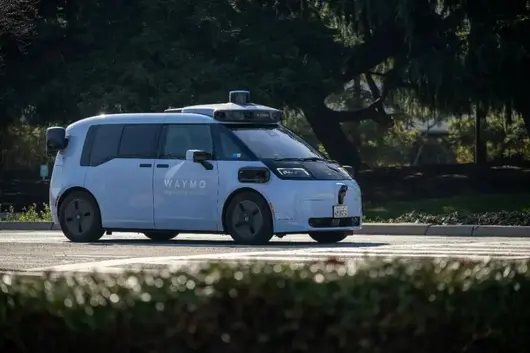

【導語:歷經多年技術迭代、政策試點與市場打磨,全球 Robotaxi 行業逐漸告別試驗探索初期,正式邁入商業化落地與規模化擴張的關鍵窗口期。在政策、成本、技術的多重共鳴下,海內外市場呈現差異化發展態勢,行業短期的運營邏輯與中長期的產業變革趨勢愈發清晰。】
作者:張大川
日前,極氪為 Waymo 量身打造的原生 L4 級自動駕駛車型 Ojai,於舊金山正式投入載客運營。在美國持續對中國電動車產業實施限制的背景下,此次落地堪稱里程碑式突破,也意味著中國車企在全球 Robotaxi 賽道已擁有舉足輕重的話語權。
△極氪為 Waymo 量身打造的原生 L4 級自動駕駛車型 Ojai 於舊金山正式載客運營
放眼行業大勢,全球自動駕駛法規體系加速完善,整車與感知硬件成本持續走低,2026 年成為 Robotaxi 從示範運營轉向規模化商業落地的關鍵之年。諸多跡象表明,行業已擺脫長期虧損的試運營狀態,正式邁入商業落地與全球化擴張並行的全新发展階段。
國內 Robotaxi 商業化落地加速
2026 年,國內 Robotaxi 相關法規體系建設駛入快車道。工信部發布 L4 級自動駕駛強制性國家標準徵求意見稿,圍繞整車算力、感知設備、系統冗餘等核心指標,明確量產車型的準入門檻。公安部同步出台自動駕駛道路通行規範,該文件將於 7 月正式施行,統一了 L3、L4 級別車輛的上路規則、事故責任判定及交管管理要求。目前全國已有 26 座城市開放無安全員 Robotaxi 商業化收費運營資質,各地也紛紛出台專項政策助力產業發展。其中深圳率先落地智能網聯汽車地方立法,嚴格落實自動駕駛數據屬地化管理要求。
政策紅利加持下,行業迎來規模化商業化的關鍵轉折點,出行科技企業與整車廠商同步發力,形成量產落地與運營拓展雙向推進的發展格局。
△國內首款按照 L4 級自動駕駛標準打造的前裝量產 Robotaxi 原型車——小鵬 GX 已經量產
除極氪為 Waymo 定制研發的 L4 車型 Ojai 之外,其他國內頭部玩家也動作頻頻。百度蘿蔔快跑運營版圖已拓展至 22 座城市,日均訂單量保持穩步增長;小馬智行取得深圳全域商業化運營資質,率先在广州、深圳實現單車盈利,並攜手豐田推進定制款 Robotaxi 量產落地。車企陣營同樣加速布局:國內首款按照 L4 級自動駕駛標準打造並實現前裝量產的 Robotaxi 原型車——小鵬 GX 已經量產;吉利依托旗下曹操出行,在杭州投放無方向盤專屬 Robotaxi 開展示範運營。此外,文遠知行持續深耕多城商業化項目,多條線路常態化載客;滴滴自動駕駛也在多地擴大無人車隊規模,持續打磨運營服務能力,全行業商業化落地節奏全面提速。
△小馬智行率先在广州、深圳實現單車盈利
各國逐漸完善法規體系為 Robotaxi 護航
國內 Robotaxi 市場發展如火如荼,2026 年也成為海外多國自動駕駛法規落地的重要節點。以美國為例,《2026 自動駕駛法案》進入審議階段,大幅放寬無方向盤專用 Robotaxi 的量產豁免限制。此前美國各州監管規則零散不一,而這部聯邦法案將徹底掃清障礙,助力自動駕駛車輛跨州規模化投放。歐盟則在現有《人工智能法案》及自動駕駛豁免規則基礎上,逐步開放歐洲核心城區 L4 級自動駕駛商業化運營權限,英國、德國、法國等主要歐洲國家也相繼細化交通事故權責界定條款。日本、韓國、阿聯酋等國同樣持續完善准入規範,劃定商業化示範運營區域,力爭在無人駕駛賽道中保持競爭力。
政策落地的同時,全球車企與科技企業也在加速布局、全力攻堅。
Waymo 搭載極氪純電專屬底盤,在美國工廠完成第六代自動駕駛系統的量產裝配,整體製造成本顯著降低。該車型摒棄方向盤與腳踏結構,是真正的全無人駕駛車輛。Waymo 計劃從舊金山起步,逐步覆蓋美國多個城市,年內衝刺數萬台產能目標,同時推進倫敦、東京等海外城市的落地運營。
作為 Waymo 在北美核心競品,特斯拉同樣加碼發力,已在總部奧斯汀推出無安全員 Robotaxi 服務,並計劃年內拓展至達拉斯、休斯頓等德州城市。依托純視覺技術路線,特斯拉 Robotaxi 車型——Cybercab 具備明顯的成本優勢;加碼現階段暫無新車型發布的背景,企業將重心全面押注於自動駕駛出行業務。完成重組的 Cruise 重新取得加州道路測試牌照,穩步重啟示範運營。Uber 則持續擴充自動駕駛車隊,目前已在北美、中東多地上線 Robotaxi 約車服務,加速從傳統網約車平台向自動駕駛出行聚合平台轉型。
美國 Robotaxi 市場同樣出現了百花齊放的局面
除此之外,現代聯合 Motional 在首爾開啟自動駕駛付費試點;日產攜手 Uber、英國團隊配合 Waymo 推進東京無人計程車落地;多家中國自動駕駛企業也完成新加坡、韓國的商業化籌備,海外市場整體正從道路測試邁入常態化收費運營階段。中國自動駕駛企業的全球化布局同樣亮點紛呈。歐洲市場方面,文遠知行於 6 月 3 日在西班牙馬德里上線當地首個商業化 Robotaxi 服務,這也是其全球落地的第 12 座城市;小馬智行聯合 Uber 在克羅地亞薩格勒布落地運營,打造歐洲首個全域收費 Robotaxi 項目。中東迪拜憑藉寬鬆的產業政策,集中落地百度、文遠知行、小馬智行的全無人運營項目,逐步構建起區域性自動駕駛產業樞紐。
△日韓車企巨頭也在持續推進 Robotaxi 的商業化落地
Robotaxi 未來可期
數據預測,2035 年全球 Robotaxi 市場規模或將突破 4000 億美元,國內市場規模也將邁入千億量級,行業發展前景廣闊。
政策層面,未來 3 至 8 年,全球自動駕駛法規將完成從試點細則到統一立法的過渡。國內將陸續出台全國統一的 L4 級自動駕駛車輛准入、事故責任判定、數據安全管理相關法規,逐步開放高速、跨城路段的全無人運營權限。歐美、日韓等海外市場也將持續鬆綁管控,破除全無人自動駕駛商業化落地的法律障礙。各國監管方在嚴守安全底線的前提下放寬政策,既能提升本土車企的全球競爭力,也為行業長期發展夯實制度基礎。
成本端同樣迎來利好。伴隨車載大模型、國產激光雷達、線控底盤實現規模化量產,Robotaxi 硬件成本不斷下行。目前零跑 A10 售價低至 8.68 萬元,已是標配激光雷達的車型;預計 2027 年前後,國內具備 Robotaxi 能力的主流車型造價將下探至 15—20 萬元。與此同時,Robotaxi 單公里運營成本優於傳統網約車,行業即將迎來規模化盈利節點。隨著運營版圖持續擴張,規模效應將進一步凸顯。而車輛保有量提升積累的海量路測數據,還會持續優化自動駕駛系統應對複雜路況的能力,讓車輛事故率顯著低於人工駕駛,大眾接受度也將穩步提升。
△隨著技術進步以及規模擴大,Robotaxi 硬件成本不斷下行
對車企而言,未來 B 端出行服務與 C 端零售將成為兩條獨立賽道,Robotaxi 已成出行領域明確的發展方向。產業鏈各方將加速深度協作,整車企業、算法廠商、出行平台與零部件供應商攜手構建垂直整合的產業聯盟。現階段依托出行業務獲取增量訂單的車企,若未能及時完成業務布局與資源整合,後續或將面臨 B 端訂單萎縮的問題。此外,國內車企與自動駕駛企業的出海節奏也將持續加快。技術授權 + 本地車隊合作,會成為海外市場快速拓量的主流模式。在此過程中,核心知識產權與數據安全保護、適配海外各地自動駕駛法規,與探索可持續盈利模式同等關鍵。
△Robotaxi 成為出行領域明確的發展方向之一
點評
總體來看,Robotaxi 已完成技術驗證,政策完善、成本下探、需求落地三大核心驅動全面成熟。全球賽道格局清晰:國內依托分層監管體系與完整產業鏈,實現商業化落地與出海雙向突破;歐美通過立法鬆綁本土產業,同時以嚴苛的數據合規壁壘限制外來入局者。短期行業將聚焦核心城市精緻化運營,打磨穩定盈利模式;中長期隨著 L4 原生自動駕駛車型規模化落地,Robotaxi 將深度融入城市公共出行,重塑傳統網約車、計程車的行業格局。
(本文係《禾顏閱車》原創,未經授權,不得轉載)

【导语:历经多年技术迭代、政策试点与市场打磨,全球Robotaxi行业逐渐告别试验探索初期,正式迈入商业化落地与规模化扩张的关键窗口期。在政策、成本、技术的多重共振下,海内外市场呈现差异化发展态势,行业短期的运营逻辑与中长期的产业变革趋势愈发清晰。】
作者:张大川
日前,极氪为Waymo量身打造的原生L4级自动驾驶车型Ojai,于旧金山正式投入载客运营。在美国持续对中国电动汽车产业实施限制的背景下,此次落地堪称里程碑式突破,也意味着中国车企在全球 Robotaxi 赛道已拥有举足轻重的话语权。
△极氪为Waymo量身打造的原生L4级自动驾驶车型Ojai于旧金山正式载客运营
放眼行业大势,全球自动驾驶法规体系加速完善,整车与感知硬件成本持续走低,2026年成为 Robotaxi从示范运营转向规模化商业落地的关键之年。诸多迹象表明,行业已摆脱长期亏损的试运营状态,正式迈入商业落地与全球化扩张并行的全新发展阶段。
国内Robotaxi商业化落地加速
2026年,国内Robotaxi相关法规体系建设驶入快车道。工信部发布L4级自动驾驶强制性国家标准征求意见稿,围绕整车算力、感知设备、系统冗余等核心指标,明确量产车型的准入门槛。公安部同步出台自动驾驶道路通行规范,该文件将于7月正式施行,统一了L3、L4级别车辆的上路规则、事故责任判定及交管管理要求。目前全国已有26座城市开放无安全员 Robotaxi 商业化收费运营资质,各地也纷纷出台专项政策助力产业发展。其中深圳率先落地智能网联汽车地方立法,严格落实自动驾驶数据属地化管理要求。
政策红利加持下,行业迎来规模化商业化的关键转折点,出行科技企业与整车厂商同步发力,形成量产落地与运营拓展双向推进的发展格局。
△国内首款按照L4级自动驾驶标准打造的前装量产Robotaxi原型车——小鹏GX已经量产
除极氪为Waymo定制研发的L4车型Ojai之外,其他国内头部玩家也动作频频。百度萝卜快跑运营版图已拓展至22座城市,日均订单量保持稳步增长;小马智行取得深圳全域商业化运营资质,率先在广州、深圳实现单车盈利,并携手丰田推进定制款 Robotaxi量产落地。车企阵营同样加速布局:国内首款按照L4级自动驾驶标准打造并实现前装量产的Robotaxi原型车——小鹏GX已经量产;吉利依托旗下曹操出行,在杭州投放无方向盘专属 Robotaxi 开展示范运营。此外,文远知行持续深耕多城商业化项目,多条线路常态化载客;滴滴自动驾驶也在多地扩大无人车队规模,持续打磨运营服务能力,全行业商业化落地节奏全面提速。
△小马智行率先在广州、深圳实现单车盈利
各国逐渐完善法规体系为Robotaxi 护航
国内Robotaxi市场发展如火如荼,2026年也成为海外多国自动驾驶法规落地的重要节点。以美国为例,《2026 自动驾驶法案》进入审议阶段,大幅放宽无方向盘专用 Robotaxi 的量产豁免限制。此前美国各州监管规则零散不一,而这部联邦法案将彻底扫清障碍,助力自动驾驶车辆跨州规模化投放。欧盟则在现有《人工智能法案》及自动驾驶豁免规则基础上,逐步开放欧洲核心城区L4级自动驾驶商业化运营权限,英国、德国、法国等主要欧洲国家也相继细化交通事故权责界定条款。日本、韩国、阿联酋等国同样持续完善准入规范,划定商业化示范运营区域,力争在无人驾驶赛道中保持竞争力。
政策落地的同时,全球车企与科技企业也在加速布局、全力攻坚。
Waymo搭载极氪纯电专属底盘,在美国工厂完成第六代自动驾驶系统的量产装配,整体制造成本显著降低。该车型摒弃方向盘与脚踏结构,是真正的全无人驾驶车辆。Waymo计划从旧金山起步,逐步覆盖美国多个城市,年内冲刺数万台产能目标,同时推进伦敦、东京等海外城市的落地运营。
作为Waymo在北美的核心竞品,特斯拉同样加码发力,已在总部奥斯汀推出无安全员 Robotaxi 服务,并计划年内拓展至达拉斯、休斯顿等德州城市。依托纯视觉技术路线,特斯拉Robotaxi车型——Cybercab具备明显的成本优势;叠加现阶段暂无新车型发布的背景,企业将重心全面押注于自动驾驶出行业务。完成重组的Cruise重新取得加州道路测试牌照,稳步重启示范运营。Uber 则持续扩充自动驾驶车队,目前已在北美、中东多地上线Robotaxi约车服务,加速从传统网约车平台向自动驾驶出行聚合平台转型。
美国Robotaxi市场同样出现了百花齐放的局面
除此之外,现代联合Motional在首尔开启自动驾驶付费试点;日产携手Uber、英国团队配合 Waymo推进东京无人出租车落地;多家中国自动驾驶企业也完成新加坡、韩国的商业化筹备,海外市场整体正从道路测试迈入常态化收费运营阶段。中国自动驾驶企业的全球化布局同样亮点纷呈。欧洲市场方面,文远知行于6月3日在西班牙马德里上线当地首个商业化 Robotaxi 服务,这也是其全球落地的第12座城市;小马智行联合Uber在克罗地亚萨格勒布落地运营,打造欧洲首个全域收费 Robotaxi项目。中东迪拜凭借宽松的产业政策,集中落地百度、文远知行、小马智行的全无人运营项目,逐步构建起区域性自动驾驶产业枢纽。
△日韩车企巨头也在持续推进Robotaxi的商业化落地
Robotaxi未来可期
数据预测,2035年全球Robotaxi市场规模或将突破4000亿美元,国内市场规模也将迈入千亿量级,行业发展前景广阔。
政策层面,未来3至8年,全球自动驾驶法规将完成从试点细则到统一立法的过渡。国内将陆续出台全国统一的L4级自动驾驶车辆准入、事故责任判定、数据安全管理相关法规,逐步开放高速、跨城路段的全无人运营权限。欧美、日韩等海外市场也将持续松绑管控,破除全无人自动驾驶商业化落地的法律阻碍。各国监管方在严守安全底线的前提下放宽政策,既能提升本土车企的全球竞争力,也为行业长期发展夯实制度基础。
成本端同样迎来利好。伴随车载大模型、国产激光雷达、线控底盘实现规模化量产,Robotaxi硬件成本不断下行。目前零跑A10售价低至8.68万元,已是标配激光雷达的车型;预计2027年前后,国内具备Robotaxi能力的主流车型造价将下探至15—20万元。与此同时,Robotaxi单公里运营成本优于传统网约车,行业即将迎来规模化盈利节点。随着运营版图持续扩张,规模效应将进一步凸显。而车辆保有量提升积累的海量路测数据,还会持续优化自动驾驶系统应对复杂路况的能力,让车辆事故率显著低于人工驾驶,大众接受度也将稳步提升。
△随着技术进步以及规模扩大,Robotaxi 硬件成本不断下行
对车企而言,未来B端出行服务与C端零售将成为两条独立赛道,Robotaxi 已成出行领域明确的发展方向。产业链各方将加速深度协作,整车企业、算法厂商、出行平台与零部件供应商携手构建垂直整合的产业联盟。现阶段依托出行业务获取增量订单的车企,若未能及时完成业务布局与资源整合,后续或将面临B端订单萎缩的问题。此外,国内车企与自动驾驶企业的出海节奏也将持续加快。技术授权+本地车队合作,会成为海外市场快速拓量的主流模式。在此过程中,核心知识产权与数据安全保护、适配海外各地自动驾驶法规,与探索可持续盈利模式同等关键。
△Robotaxi 成为出行领域明确的发展方向之一
点评
总体来看,Robotaxi已完成技术验证,政策完善、成本下探、需求落地三大核心驱动全面成熟。全球赛道格局清晰:国内依托分层监管体系与完整产业链,实现商业化落地与出海双向突破;欧美通过立法松绑本土产业,同时以严苛的数据合规壁垒限制外来入局者。短期行业将聚焦核心城市精细化运营,打磨稳定盈利模式;中长期随着L4原生自动驾驶车型规模化落地,Robotaxi将深度融入城市公共出行,重塑传统网约车、出租车的行业格局。
(本文系《禾颜阅车》原创,未经授权,不得转载)
© 2024 Bitauto.com. All Rights Reserved.
Bitauto (www.yiche.com and www.bitauto.com) is one of the most visited automotive websites in China. We provide detailed info on Chinese car brands available in your area. Please note that the information provided on this website is based on publicly available data and is for reference only. It may not be fully updated or accurate at all times.

Help us improve our website


