

Homediversity

Search History
Popular Searches
Dealer Login / Sign Up

Di pasaran SUV Malaysia, ramai pembeli membandingkan Honda WR-V dan Mazda CX-8 semasa memilih kereta. Kedua-dua model ini memiliki harga dan lokasi pasaran yang agak dekat, hari ini kita akan buat perbandingan terperinci dari pelbagai aspek, membantu anda menjimatkan masa membuat kajian.
Harga OTR Honda WR-V di Malaysia ialah RM 89,900 - 107,900, ada 4 varian, termasuk 2023 1.5L V (RM 99,900), 2023 1.5L E (RM 95,900), 2023 1.5L S (RM 89,900) dan lain-lain.
Harga OTR Mazda CX-8 di Malaysia ialah RM 165,360 - 201,360, ada 5 varian, termasuk 2025 2.5T 4WD High Plus Petrol (RM 201,360), 2025 2.2L 2WD High Plus Diesel (RM 193,123), 2025 2.5L 2WD High Plus Petrol (RM 186,360) dan lain-lain.
Dari segi harga, permulaan Honda WR-V memang lebih murah RM 75,460 berbanding Mazda CX-8. Jika bajet terhad, versi dasar Honda sudah cukup untuk keperluan harian. Tapi ingat, ribuan ringgit yang lebih murah ini, mungkin ada kompromi dari segi kelengkapan, bergantung pada keperluan anda.

Honda WR-V dilengkapi enjin 1.5L 4-silinder, kuasa 105 hp. Penggunaan minyak rasmi 6.0 L/100km.
Mazda CX-8 dilengkapi enjin 2.0L 4-silinder, kuasa 170 hp. Penggunaan minyak rasmi 8.0 L/100km.
Dari segi kuasa, enjin 2.0L 4-silinder Mazda CX-8 mempunyai 65 kuasa kuda lebih berbanding enjin 1.5L 4-silinder Honda WR-V. Namun sehari-hari di bandar, kuasa kedua-dua kereta sudah cukup, tidak akan berasa kurang tenaga.

Honda WR-V panjang badan 4400 mm, bagasi 400 L.
Mazda CX-8 panjang badan 4500 mm, bagasi 450 L.
Dari segi ruang, badan Mazda CX-8 lebih panjang 100 mm berbanding Honda WR-V, ruang duduk lebih menguntungkan. Namun Honda WR-V lebih fleksibel ketika parkir di bandar, masing-masing ada kompromi.

Honda WR-V menggunakan cara penggerak FWD.
Mazda CX-8 menggunakan cara penggerak FWD.
Kedua-dua kereta sama-sama menggunakan FWD, rasa pemanduan harian tiada perbezaan besar.

Honda WR-V jaminan 5 tahun / tiada had jarak, selang penyelenggaraan setiap 10,000km atau 6 bulan.
Mazda CX-8 jaminan 5 tahun / 150,000km, selang penyelenggaraan setiap 10,000km atau 6 bulan.

Secara keseluruhan, Honda WR-V dan Mazda CX-8 kedua-duanya model kereta yang cukup bagus di pasaran Malaysia. Memilih yang mana, utama sekali bergantung pada keperluan dan bajet peribadi anda. Disarankan sediakan kajian, bandingkan beberapa kutipan harga kedai kereta, baru buat ujian uji jalan untuk buat keputusan akhir. Membeli kereta adalah urusan besar, luangkan masa membuat kajian pastinya tidak salah.

喺馬來西亞嘅 SUV 市場,好多買家喺揀車嘅時候都會拿 Honda WR-V 同 Chery Tiggo 8 嚟做比較。這兩款車喺價位同定位上都幾接近,今日我哋就從多個方面做一個詳細比較,幫你省下做功課嘅時間。
Honda WR-V 喺馬來西亞嘅 OTR 售價係 RM 89,900 - 107,900,一共有 4 個版本,包括 2023 1.5L V(RM 99,900)、2023 1.5L E(RM 95,900)、2023 1.5L S(RM 89,900) 等。
Chery Tiggo 8 喺馬來西亞嘅 OTR 售價係 RM 129,750 - 129,750,一共有 1 個版本,包括 2026 1.6T Standard(RM 129,750) 等。
由價錢睇,Honda WR-V 嘅入門價確實比 Chery Tiggo 8 平咗 RM 39,850。如果你預算有限,Honda 嘅入門版已經可以滿足日常需要。但都要注意,平嗰幾千蚊,可能喺配備上會有取舍,具體要看你嘅需要。
Honda WR-V 搭載 1.5L 4-cyl,馬力 105 hp。官方油耗 6.0 L/100km。
Chery Tiggo 8 搭載 1.5L Turbo,馬力 140 hp。官方油耗 7.0 L/100km。
動力方面,Chery Tiggo 8 嘅 1.5L Turbo 比 Honda WR-V 嘅 1.5L 4-cyl 多咗 35 匹馬力。不過日常喺市區開,兩款車嘅動力都夠用,唔會覺得唔夠力。
Honda WR-V 保修 5 年/無限里程,保養間隔 每 10,000km 或 6 個月。
Chery Tiggo 8 保修 3 年/100,000km,保養間隔 每 10,000km 或 6 個月。
Honda WR-V 同 Chery Tiggo 8 都係馬來西亞市場嘅主流選擇,適合家庭使用、日常通勤。如果你更看重品牌口碑同二手價,可以優先考慮口碑更好嗰款;如果你更在意性價比同配備,那就選配置更豐富嗰款。最後始終建議兩款都去試駕,親身體驗先至最重要。

總括嚟講,Honda WR-V 同 Chery Tiggo 8 都係馬來西亞市場好好嘅車款。揀邊輛,關鍵都要睇你嘅個人需要同預算。建議大家做好功課,多比較幾間車行嘅報價,先至去試駕做最終決定。買車係件大事,花少少時間做功課絕對唔會錯。

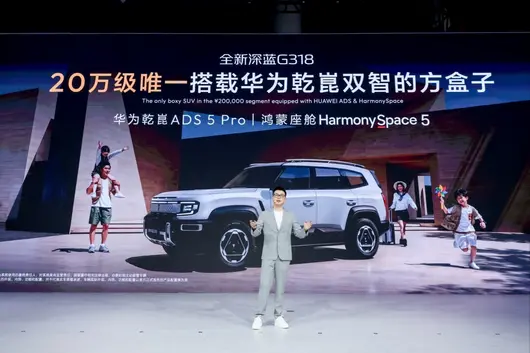
Pada Hari Media Pameran Kereta Chengdu, stan kereta Deepal dikelilingi sesak padu. Keseruan ini tidak mengejutkan, memandangkan Deepal G318 Baharu memaparkan dua kelebihan utama: gaya kotak, ditambah sistem Kecerdasan Ganda Huawei Qiankun yang unik dalam segmen 200,000 Yuan.
Lihat dahulu harga. Deepal G318 Baharu dengan harga promosi terhad 196,800 Yuan hingga 236,800 Yuan, terdapat tiga konfigurasi: Edisi Qiankun Comfort Penggerak Empat Roda, Edisi Tiandu Comfort Penggerak Empat Roda, Edisi Qiankun Suspensi Udara Penggerak Empat Roda. Tempahan juga mendapat pakej hadiah berharga sehingga 44,159 Yuan. Jujurlah, pada julat harga ini boleh membeli SUV berbentuk kotak dengan Huawei Qiankun ADS 5 Pro dan Kokpit HarmonySpace, dua tahun lalu tidak terfikir langsung.

Dari "Mainan Litar Off-road" ke "Kereta Keluarga Serba Boleh", G318 Mendefinisikan Semula Kereta Bentuk Kotak
Penentuan kedudukan Deepal G318 Baharu sangat menarik "9 Bandar 1 Alam", 90% masa untuk pengangkutan bandar, 10% masa untuk jelajah alam. Penentuan ini tepat membetulkan keperluan sebenar kebanyakan pengguna keluarga: mahu sebuah kereta nampak tegar, selesa digunakan, kadang-kadang boleh keluar alam, tetapi tidak mahu berkorang kenyamanan 90% bandar demi 10% skenario luar.
Badan lebih 5 meter, ruang selesa berkat pelantar panjang, kerusi belakang rata boleh lipat menjadi katil besar 1.8 meter, butiran ini memberi isyarat: kereta ini pertama melayani kehidupan harian keluarga. Sementara motor dwi penggerak empat roda sebenar, dua kunci beza, sistem ET All-terrain, menjamin 10% skenario luar tidak gagal. 450 kuasa kuda, 552N·m tork puncak, pecutan 0-100 5 saat, bekalan kuasa cukup hadapi semua keadaan jalan.
Kecerdasan Huawei Qiankun Turun ke Bawah, Kereta Kotak Segmen 200,000 Akhirnya Mempunyai Otak Cerdas
Pemanduan terbesar Deepal G318 Baharu kali ini, membawa Huawei Qiankun ADS 5 Pro dan Kokpit HarmonySpace 5 ke pasaran kereta kotak segmen 200,000 Yuan. 27 sensor peleburan persepsi, ditambah arkitektur WEWA 2.0, Pemimpin Bandar NCA, Pemimpin Lebuh NCA, Bantuan Parkir Cerdas Seluruh Kawasan semuanya disediakan.

Masalah paling memeningkan lalu lintas bandar bulatan, belok kiri tanpa perlindungan, laluan sempit elak lecur, sesak elak menyela, sistem boleh hadap sendiri. Kedudukan penerangan Laser LiDAR dalam kabin juga patut disebut, dipasang dalam kabin bermaksud tiada rintangan udara, tidak nampak terhalang, tidak takut kotor, cuaca hujan, terowong, cahaya gelap, cahaya songsang tetap bekerja. Kenal pasti 116 meter lebih awal rintangan kecil 30cm×30cm, jarak persepsi ini sudah melebihi batas reaksi pemandu berpengalaman.
Sistem Pencegahan Perlanggaran All-Dimensi CAS benamkan 24 keupayaan keselamatan aktif ke dalam rantaian keputusan, 4 skenario keselamatan teras mencapai kependahuluan merentas generasi dalam kelasnya. Kecepatan reaksi mesin lebih pantas dari manusia, ini fakta objektif, terutamanya dalam keadaan kecemasan, perbezaan keputusan milisaik mungkin garis pemisah elak bahaya dan kemalangan.
Pengalaman Kokpit HarmonySpace tidak perlu banyak diterangkan, log masuk akaun Huawei sama selepas telefon hampiri skrin kereta sambung sendiri, kandungan lintasan sambung tanpa henti. Setering 15.6 inci Huawei menyokong kawalan kereta 3D masa nyata, operasi lancar tanpa lengah. Arkitektur Model Besar MoLA interaksi suara sokong 10 arahan bercampur, loghat Sichuan, Kantonis dll 10 loghat boleh kenali. Pelayan navigasi faham "kopi di sebelah lapangan terbang" jenis ungkapan kabur, pembetulan automatik tersalah sebut rancang laluan optimum. Butiran inilah yang paling nyata kegunaan dalam penggunaan harian.

"Suspensi Udara + CDC + Magic Carpet" Set Kenyamanan Tiga, Kereta Kotak Juga Boleh Sangat Selesa
Dari segi lantai kereta, Deepal G318 Baharu dilengkapi gabungan "Suspensi Udara + CDC + Magic Carpet" unik dalam kelas, ditambah dua garpu + pelbagai batang suspensi bebas. Nilai sistem ini pada pengaturan redaman milisaik, keadaan jalan bandar lembut sunyi, luar bandar permukaan tidak diperkeras lebih rata. Masa lalu SUV kotak disalahkan paling banyak soal kualiti duduk "keras kasar", skema lantai G318 ini boleh katakan melengkapi kenyamanan.

Permulaan Deepal L06 Edisi Istimewa: Mainan Litar Tekanan Turun 1000N
Pada dewan pameran, model lain perlu dikaji ialah Deepal L06 Baharu Edisi Istimewa. Kereta ini sendiri sudah berdiri di pasaran 150,000 Yuan, jualan Julai 7,267 unit, berturut-turut 5 bulan pecah 5,000, duduk aman Juara jualan kereta sederhana baharu elektrik dalam 200,000 Yuan.
Edisi istimewa kali ini tambah pakatan perlumbaan litar: kepala kereta pemangkin udara 3D ditambah pelat depan satu badan, pelindung sisi pemangkin udara, sayap belakang besar karbon tetap. Tekanan turun maksimum keseluruhan kereta capai 1000N, pusing lebih segar, laju lebih stabil. Suspensi magnetorheological sama model Ferrari 3 Juta merupakan kartu teras L06, pakatan ini lebih membesar gen sukan. Muda mahu "selesa harian, aura litar" permintaan bercanggah, L06 Edisi Istimewa boleh kata beri penyelesaian.

Deepal S05 dan S07: Turunkan LiDAR dan Suspensi Udara ke Harga Lebih Rendah
Pada dewan pameran ada Deepal S05 Baharu yang baru dirombak, harga promosi terhad bermula 115,900 Yuan, dapat LiDAR, algoritma satu bahagian hujung-hujung, cip kokpit 3nm, FSD+HRS suspensi adaptif berubah. Kereta ini sudah masuk 73 negara dan wilayah global, 250,000+ pengguna, Hadiah Reka Bentuk iF Jerman, Hadiah Kereta Tahunan Thailand dapat banyak, merupakan penyokong jualan Deepal keluar luar negara.

Deepal S07 Baharu capai "Elektrik Sepenuh + Range Extender" dua bentuk kuasa liputan penuh panduan bantuan pintar LiDAR, bawa pengalaman panduan pintar segmen 300,000 ke pasaran 150,000 Yuan. Skema Huawei Qiankun Pemimpin Bandar liputan penuh, ditambah FSD+HRS suspensi adaptif berubah standard semua model, skema konfigurasi ini memang jarang dalam harga sama.

Jualan Dekat Juta, Kekuatan Teknikal Deepal Semakin Tebal
2026 Januari-Julai, Deepal global kumulatif jualan 193,369 unit, naik tahun ke tahun 13.48%. Jualan luar negara 44,508 unit, naik tahun ke tahun 87.48%. Sehingga Julai kumulatif jualan pecah 910,000 unit, tahun ini impak garis juta tiada syak wasangka.
Pengumpulan teknikal Deepal juga menebal. Penggerak Elektrik Super Original kumulatif 45 bulan lebih 1 juta unit keluar talian, kecekapan sistem keseluruhan 94.13% nombor satu global. Baterai Jin Zhong Zhao terima 2 Hadiah Kemajuan Sains Teknologi Negara, 600,000 km penurunan tiada kesan. Pemanasan Denyut Frekuensi Tinggi Teras Mikro terima Hadiah Emas Paten China. Separuh kedua model elektrik berturutan naik platform Voltan Tinggi 800V, sokong Caj Super 6C, 10 minit isi semula 30%-80%.
Kesimpulan:
Masa lalu kotak要么是 pemain off-road keras mainan kecil,要么是 hiasan bandar kosong. Deepal G318 Baharu pilih jalan sederhana — guna logik produk "9 Bandar 1 Alam", sokongan pintar Kecerdasan Ganda Huawei Qiankun, ditambah lantai selesa Suspensi Udara CDC, bawa kategori ini betul-betul ke pengguna keluarga.
Apabila kotak segmen 200,000 Yuan boleh penuhi selesa dan pintar keperluan harian, dan boleh bawa semua keluarga keluar alam hujung minggu, siling pasaran ini mungkin perlu lihat semula. Hak teknologi, inovasi kategori pun, akhirnya pembeli ialah pengguna, pasaran akan bagi jawapan. 21 Ogos hingga 30, Bilik 11 Chengdu West Expo Deepal Booth, berminat boleh pergi sentuh kereta sebenar.

喺馬來西亞嘅 SUV 市場,好多買家喺揀車嗰陣,都會拿 Honda WR-V 同 Chery Tiggo Cross 嚟比較。呢兩款車喺價錢同定位上都好接近,今日我哋就從多個方面做詳細嘅對比,幫你省翻做功課嘅時間。
Honda WR-V 喺馬來西亞嘅 OTR 售價係 RM 89,900 - 107,900,合共有 4 個版本,包括 2023 1.5L V(RM 99,900)、2023 1.5L E(RM 95,900)、2023 1.5L S(RM 89,900)等。
Chery Tiggo Cross 喺馬來西亞嘅 OTR 售價係 RM 88,750 - 99,750,合共有 2 個版本,包括 2025 HEV 1.5L CSH(RM 99,750)、2025 1.5T Standard(RM 88,750)等。
由價錢睇,Chery Tiggo Cross 嘅起步價比 Honda WR-V 平咗 RM 1,150。老實講,喺呢個價位段,幾千蚊嘅差距其實唔算大,關鍵仲係睇整體嘅性價比同長期使用成本。
Honda WR-V 嘅安全評級係 5★ (ASEAN NCAP),主動安全系統包括 Honda SENSING。
Chery Tiggo Cross 嘅安全評級係 TBD,主動安全系統包括 Basic。
安全配備方面,兩款車都拿到唔錯嘅評級。不過 Honda WR-V 嘅 Honda SENSING 同 Chery Tiggo Cross 嘅 Basic 喺功能上有啲分別,如果你比較睇重主動安全嘅話,可以仔細對比一下佢哋嘅功能列表。
Honda WR-V 採納 FWD 驅動方式。
Chery Tiggo Cross 採納 FWD 驅動方式。
兩款車嘅驅動方式一樣,都係 FWD,日常駕駛感受唔會有太大分別。
Honda WR-V 同 Chery Tiggo Cross 都係馬來西亞市場嘅主流選擇,適合家庭使用、日常通勤。如果你更睇重品牌口碑同二手價,可以優先考慮口碑更好嗰款;如果你更在意性價比同配備,就揀配置更豐富嗰款。最終仲係建議兩款都去試駕,親身體驗先係最重要嘅。

總體嚟講,Honda WR-V 同 Chery Tiggo Cross 都係馬來西亞市場幾唔錯嘅車款。揀邊一輛,關鍵仲係要睇你嘅個人需求同預算。建議大家做足功課,多比較幾間車行嘅報價,先去試駕先落最終決定。買車係件大事,花少少時間做功課絕對唔會錯。

喺馬來西亞嘅 SUV 市場,好多買家揀車嗰陣都會拎本田 WR-V 同馬自達 CX-5 嚟比較。這兩款車喺價位同定位上都好接近,而家我哋就從多個方面做個詳細對比,幫你節省做功課嘅時間。
本田 WR-V 喺馬來西亞嘅 OTR 售價係 RM 89,900 - 107,900,合共 4 個版本,包括 2023 1.5L V(RM 99,900)、2023 1.5L E(RM 95,900)、2023 1.5L S(RM 89,900) 等等。
馬自達 CX-5 喺馬來西亞嘅 OTR 售價係 RM 135,469 - 166,760,合共 3 個版本,包括 2025 2.0L AT 35 週年紀念版(RM 316,154)、2025 2.0L AT(RM 296,154)、2025 2.0L MT(RM 294,154) 等等。
睇落價錢,本田 WR-V 嘅起步價真係比馬自達 CX-5 平咗 RM 45,569。如果你預算有限,本田嘅入門級已經可以满足日常需要。但都要注意,平嗰幾千塊,喺配備上可能有取捨,具體要睇你嘅需求。
本田 WR-V 嘅安全評級係 5★ (ASEAN NCAP),主動安全系統包括本田 SENSING。
馬自達 CX-5 嘅安全評級係 5★ (ASEAN NCAP),主動安全系統包括 。
兩款車嘅安全評級一樣,喺呢個級別入面,安全配備都算好齊全。依家嘅新車安全性都唔錯,唔使太擔心呢一點。
本田 WR-V 採用 FWD 驅動方式。
馬自達 CX-5 採用 FWD 驅動方式。
兩款車嘅驅動方式一樣,都係 FWD,日常駕駛感覺唔會有太大分別。
本田 WR-V 保修 5 年/無限里程,保養間隔 每 10,000km 或 6 個月。
馬自達 CX-5 保修 5 年/150,000km,保養間隔 每 10,000km 或 6 個月。

總而言之,本田 WR-V 同馬自達 CX-5 都係馬來西亞市場幾唔錯嘅車型。揀邊一輛,關鍵都要睇你嘅個人需求同預算。建議大家做好功課,多比較幾間車行嘅報價,再先去試駕先做最終決定。買車係件大事,花少少時間做功課絕對唔會錯。

In the SUV market in Malaysia, many buyers compare Honda WR-V and Toyota Yaris Cross when choosing a car. These two cars are quite close in price and positioning. Today we will do a detailed comparison from multiple aspects to help you save time on research.
Honda WR-V's OTR price in Malaysia is RM 89,900 - 107,900, with a total of 4 versions, including 2023 1.5L V (RM 99,900), 2023 1.5L E (RM 95,900), 2023 1.5L S (RM 89,900) etc.
Toyota Yaris Cross's OTR price in Malaysia is RM 99,900 - 109,900, with a total of 2 versions, including 2026 1.5L Standard (RM 99,900), 2026 HEV 1.5L Standard (RM 109,900) etc.
From the price perspective, Honda WR-V's starting price is indeed RM 10,000 cheaper than Toyota Yaris Cross. If your budget is limited, Honda's entry-level version can already meet daily needs. But also note, that difference of a few thousand might involve trade-offs in features, it depends on your specific needs.
Honda WR-V is equipped with 1.5L 4-cyl, horsepower 105 hp. Official fuel consumption 6.0 L/100km.
Toyota Yaris Cross is equipped with 1.5L 4-cyl, horsepower 105 hp. Official fuel consumption 6.0 L/100km.
Both cars use the same powertrain, the driving experience feels basically the same. Fuel economy is also similar, no need to worry too much about this point.
Honda WR-V adopts FWD drive mode.
Toyota Yaris Cross adopts FWD drive mode.
Both cars have the same drive mode, both are FWD, daily driving experience will not be very different.
Honda WR-V warranty 5 years/unlimited mileage, maintenance interval every 10,000km or 6 months.
Toyota Yaris Cross warranty 5 years/unlimited mileage, maintenance interval every 10,000km or 6 months.
Warranty conditions for both cars are the same, no need to worry about this. Actual maintenance cost also depends on the brand's service network and parts prices, suggest asking real owners in car clubs for their experience.

Honda WR-V and Toyota Yaris Cross are both mainstream choices in the Malaysian market, suitable for family use and daily commuting. If you value brand reputation and resale value more, you can prioritize the one with better reputation; if you care more about cost-performance and features, choose the one with richer configuration. In the end, it is recommended to test drive both, personal experience is the most important.

Overall, Honda WR-V and Toyota Yaris Cross are both very good models in the Malaysian market. Choosing which one depends mainly on your personal needs and budget. We suggest doing your homework, comparing quotes from several dealers, and then test driving to make the final decision. Buying a car is a big matter, spending time doing homework will definitely not be wrong.

In Malaysia's SUV market, many buyers compare the Proton X90 and Hyundai Tucson when choosing a car. These two models are quite close in price and positioning. Today, we will make a detailed comparison from multiple aspects to help you save time on research.
The Proton X90 OTR price in Malaysia is RM 106,800 - 122,800, with a total of 4 versions, including 2026 1.5T Prime X (RM 122,800), 2026 1.5T Prime (RM 116,800), 2026 1.5T Lite (RM 106,800), etc.
The Hyundai Tucson OTR price in Malaysia is RM 143,888 - 197,888, with a total of 5 versions, including 2025 HEV 1.6T AT 2WD Prestige (RM 197,888), 2025 1.6T DCT 4WD Prestige (RM 186,888), 2025 1.6T DCT 2WD Prime (RM 164,888), etc.
From a price perspective, the Proton X90's starting price is indeed RM 37,088 cheaper than the Hyundai Tucson. If your budget is limited, Proton's entry-level version can already meet daily needs. But be aware that the few thousand difference might involve compromises in features, depending on your specific needs.

Proton X90 is equipped with a 1.5L Turbo, 140 hp. Official fuel consumption 7.0 L/100km.
Hyundai Tucson is equipped with a 1.5L Turbo, 140 hp. Official fuel consumption 7.0 L/100km.
Both cars use the same powertrain, and the driving experience feels basically the same daily. Fuel consumption is also similar, so there's no need to worry too much about this point.

Proton X90 body length 4400 mm, trunk 400 L.
Hyundai Tucson body length 4400 mm, trunk 400 L.
The dimensions of both cars are almost identical, and the interior space difference is not significant. For this class of car, it is fully sufficient for daily use.

Proton X90 uses FWD drive mode.
Hyundai Tucson uses FWD drive mode.
The drive mode of both cars is the same, both are FWD, and the daily driving experience will not have too much difference.

Overall, Proton X90 and Hyundai Tucson are both very good car models in the Malaysia market. Which one to choose depends mainly on your personal needs and budget. We suggest doing your homework well, comparing quotes from several dealerships, and test driving before making a final decision. Buying a car is a big matter, spending some time on research will definitely not be wrong.


Dalam pasaran SUV di Malaysia, ramai pembeli membuat perbandingan antara Proton X90 dan Hyundai Tucson semasa memilih kereta. Kedua-dua kereta ini mempunyai harga dan kedudukan pasaran yang agak hampir, hari ini kita akan membuat perbandingan terperinci dari pelbagai aspek untuk membantu anda menjimatkan masa dalam membuat kajian.
Proton X90 dijual di Malaysia dengan harga OTR adalah RM 106,800 - 122,800, terdapat keseluruhan 4 varian, termasuk 2026 1.5T Prime X (RM 122,800), 2026 1.5T Prime (RM 116,800), 2026 1.5T Lite (RM 106,800) dan lain-lain.
Hyundai Tucson dijual di Malaysia dengan harga OTR adalah RM 143,888 - 197,888, terdapat keseluruhan 5 varian, termasuk 2025 HEV 1.6T AT 2WD Prestige (RM 197,888), 2025 1.6T DCT 4WD Prestige (RM 186,888), 2025 1.6T DCT 2WD Prime (RM 164,888) dan lain-lain.
Dari segi harga, harga permulaan Proton X90 memang lebih murah RM 37,088 berbanding Hyundai Tucson. Jika bajet anda terhad, varian permulaan Proton sudah boleh memenuhi keperluan harian. Namun, perlu diingat, perbezaan harga beribu ringgit itu mungkin melibatkan ketiadaan beberapa kelengkapan, bergantung kepada keperluan anda.
Gred keselamatan Proton X90 adalah 5★ (ASEAN NCAP), sistem keselamatan aktif termasuk ADAS (ACC, AEB, LKA, LDA, BSM, RCTA).
Gred keselamatan Hyundai Tucson adalah 5★ (ASEAN NCAP), sistem keselamatan aktif termasuk SmartSense.
Pengevaluasian keselamatan kedua-dua kereta adalah sama, kelengkapan keselamatan dalam kelas ini dianggap cukup lengkap. Keselamatan kereta baharu sekarang tidak teruk, tidak perlu terlalu risau tentang hal ini.
Panjang badan kenderaan Proton X90 adalah 4400 mm, kompartmen bagasi 400 L.
Panjang badan kenderaan Hyundai Tucson adalah 4400 mm, kompartmen bagasi 400 L.
Saiz kedua-dua kereta hampir sama, ruang dalaman tidak banyak perbezaan. Untuk kereta kelas ini, sudah cukup untuk penggunaan harian.
Proton X90 jaminan 5 tahun/150,000km, selang penyelenggaraan setiap 10,000km atau 6 bulan.
Hyundai Tucson jaminan 5 tahun/300,000km, selang penyelenggaraan setiap 10,000km atau 6 bulan.
Proton X90 dan Hyundai Tucson adalah pilihan utama di pasaran Malaysia, sesuai untuk kegunaan keluarga dan perjalanan harian. Jika anda lebih mementingkan reputasi jenama dan harga jualan semula, anda boleh memprioritaskan yang mempunyai reputasi lebih baik; jika anda lebih mengutamakan nisbah harga dan kelengkapan, pilih yang mempunyai konfigurasi lebih lengkap. Pada akhirnya, disarankan untuk mencuba kedua-dua model, pengalaman sendiri adalah yang paling penting.

Secara keseluruhannya, Proton X90 dan Hyundai Tucson adalah model kereta yang baik di pasaran Malaysia. Memilih mana satu, perkara utamanya bergantung kepada keperluan dan bajet peribadi anda. Kami mengesyorkan supaya anda membuat kajian, membandingkan beberapa tawaran harga dari dealer kereta, kemudian buat ujian memandu untuk membuat keputusan akhir. Membeli kereta adalah perkara besar, meluangkan masa membuat kajian tidak akan salah.

Di pasaran SUV Malaysia, ramai pembeli yang membandingkan Proton X90 dan Hyundai Tucson semasa memilih kereta. Kedua-dua model ini mempunyai julat harga dan kedudukan pasaran yang hampir sama, hari ini kami akan membuat perbandingan terperinci dari pelbagai aspek, membantu anda menjimatkan masa membuat kajian.
Proton X90 dijual di Malaysia pada harga OTR RM 106,800 - 122,800, terdapat 4 varian, termasuk 2026 1.5T Prime X (RM 122,800), 2026 1.5T Prime (RM 116,800), 2026 1.5T Lite (RM 106,800) dan sebagainya.
Hyundai Tucson dijual di Malaysia pada harga OTR RM 143,888 - 197,888, terdapat 5 varian, termasuk 2025 HEV 1.6T AT 2WD Prestige (RM 197,888), 2025 1.6T DCT 4WD Prestige (RM 186,888), 2025 1.6T DCT 2WD Prime (RM 164,888) dan sebagainya.
Dari segi harga, harga permulaan Proton X90 memang RM 37,088 lebih murah daripada Hyundai Tucson. Jika bajet anda terhad, varian paling asas Proton sudah boleh memuaskan keperluan harian. Tetapi perlu diingat, perbezaan harga beberapa ribu mungkin ada kompromi pada kelengkapan, bergantung pada keperluan anda.
Proton X90 mempunyai panjang badan 4400 mm, bak bagasi 400 L.
Hyundai Tucson mempunyai panjang badan 4400 mm, bak bagasi 400 L.
Dimensi kedua-dua kereta hampir sama, ruang dalam beza sedikit. Untuk kelas kereta ini, penggunaan harian sudah memadai.
Proton X90 menggunakan enjin hadapan (FWD).
Hyundai Tucson menggunakan enjin hadapan (FWD).
Kedua-dua kereta menggunakan enjin hadapan (FWD) yang sama, pengalaman pemanduan harian tidak akan berbeza banyak.
Proton X90 dan Hyundai Tucson kedua-duanya adalah pilihan utama di pasaran Malaysia, sesuai untuk kegunaan keluarga dan perjalanan harian. Jika anda lebih mementingkan reputasi jenama dan nilai jual semula, anda boleh mempertimbangkan mana satu lebih berprestij; jika anda lebih mementingkan nisbah harga dan prestasi, pilih yang mempunyai kelengkapan lebih banyak. Akhir sekali disyorkan untuk uji memandu kedua-duanya, pengalaman peribadi adalah yang paling penting.
Secara keseluruhan, Proton X90 dan Hyundai Tucson adalah model yang sangat baik di pasaran Malaysia. Memilih kereta mana adalah kunci bergantung pada keperluan peribadi dan bajet anda. Kami cadangkan untuk melakukan kajian terlebih dahulu, bandingkan harga di lebih banyak kedai kereta, kemudian uji memandu untuk membuat keputusan akhir. Membeli kereta adalah urusan besar, mengambil masa untuk membuat kajian tidak akan rugi.

喺馬來西亞嘅 SUV 市場,好多買家喺揀車嘅時候都會拿 Proton X90 同 Kia Sportage 嚟做比較。呢兩款車喺價位同定位上都幾接近,今日我哋就會由多個方面做詳細嘅比較,幫你節省咗做功課嘅時間。
Proton X90 喺馬來西亞嘅 OTR 售價係 RM 106,800 - 122,800,合共 4 個版本,包括 2026 1.5T Prime X(RM 122,800)、2026 1.5T Prime(RM 116,800)、2026 1.5T Lite(RM 106,800)等。
Kia Sportage 喺馬來西亞嘅 OTR 售價係 RM 129,639 - 179,320,合共 4 個版本,包括 2025 1.6T DCT 4WD High(RM 179,320)、2025 1.6T DCT 2WD High(RM 159,320)、2025 2.0L AT 2WD High(RM 139,639)等。
由價錢睇,Proton X90 嘅起步價確實較 Kia Sportage 平咗 RM 22,839。如果你預算有限,Proton 嘅入門版已經可以滿足日常需要。但亦要留意,便宜嗰幾千塊,可能喺配備上會有取捨,具體要看你嘅需要。
Proton X90 搭載 1.5L Turbo,馬力 140 hp。官方油耗 7.0 L/100km。
Kia Sportage 搭載 1.5L Turbo,馬力 140 hp。官方油耗 7.0 L/100km。
兩款車用緊同一套動力系統,日常開起嚟嘅感受基本冇分別。油耗方面都差唔多,唔使太糾結這一點。
Proton X90 嘅安全評級係 5★ (ASEAN NCAP),主動安全系統包括 ADAS (ACC, AEB, LKA, LDA, BSM, RCTA)。
Kia Sportage 嘅安全評級係 5★ (ASEAN NCAP),主動安全系統包括 Drive Wise。
兩款車嘅安全評級一樣,喺呢個級別入面安全配備都算好齊全。而家新車安全性都唔錯,唔使太擔心這一點。
Proton X90 車身長 4400 mm,後尾箱 400 L。
Kia Sportage 車身長 4400 mm,後尾箱 400 L。
兩款車嘅尺寸差唔多,車廂空間分別唔大。呢個級別嘅車,日常使用完全夠用。

Proton X90 採用 FWD 驅動方式。
Kia Sportage 採用 FWD 驅動方式。
兩款車嘅驅動方式一樣,都係 FWD,日常駕駛感受唔會有太大分別。

總體嚟講,Proton X90 同 Kia Sportage 都係馬來西亞市場好唔錯嘅車型。揀邊一輛,關鍵仲係要看你嘅個人需要同預算。我哋建議大家做好功課,多比較幾間車行嘅報價,先至去試駕做最終決定。買車係件大事,花少少時間做功課絕對唔會錯。

In the Malaysian SUV market, many buyers compare Proton X90 and MG MG HS when choosing a car. These two cars are quite close in price and positioning, so today we will make a detailed comparison from multiple aspects to help you save research time.
The OTR price of Proton X90 in Malaysia is RM 106,800 - 122,800, with a total of 4 versions, including 2026 1.5T Prime X (RM 122,800), 2026 1.5T Prime (RM 116,800), 2026 1.5T Lite (RM 106,800), etc.
The OTR price of MG MG HS in Malaysia is RM 130,450 - 146,450, with a total of 2 versions, including 1.5L Standard (RM 105,000), 1.5L Executive (RM 115,000), etc.
From a price perspective, the starting price of Proton X90 is indeed RM 23,650 cheaper than MG MG HS. If your budget is limited, Proton's entry-level version can already meet daily needs. But keep in mind, the few thousand cheaper, there might be trade-offs in features, depending on your specific needs.
Proton X90 is equipped with 1.5L Turbo, 140 hp. Official fuel consumption 7.0 L/100km.
MG MG HS is equipped with 1.5L Turbo, 140 hp. Official fuel consumption 7.0 L/100km.
Both cars use the same powertrain, the driving feel in daily use is basically the same. Fuel consumption is also similar, no need to worry too much about this point.
The safety rating of Proton X90 is 5★ (ASEAN NCAP), active safety systems include ADAS (ACC, AEB, LKA, LDA, BSM, RCTA).
The safety rating of MG MG HS is TBD, active safety systems include Basic.
In terms of safety features, both cars received good ratings. However, Proton X90's ADAS (ACC, AEB, LKA, LDA, BSM, RCTA) and MG MG HS's Basic have some differences in functionality. If you value active safety, you can compare the function lists of both in detail.
Proton X90 adopts FWD drive mode.
MG MG HS adopts FWD drive mode.
Both cars have the same drive mode, both are FWD, the daily driving experience will not be significantly different.
Proton X90 and MG MG HS are both mainstream choices in the Malaysia market, suitable for family use and daily commuting. If you value brand reputation and second-hand price more, you can prioritize the one with better reputation; if you care more about cost-performance and features, choose the one with richer configuration. In the end, it is recommended to test drive both, personal experience is the most important.
Overall, Proton X90 and MG MG HS are both very good models in the Malaysia market. Which one to choose depends mainly on your personal needs and budget. It is recommended to do your homework, compare quotes from more car dealers, and then test drive to make the final decision. Buying a car is a big matter, spending some time doing homework is never wrong.
In the Malaysian SUV market, many buyers compare Proton X90 and Chery Tiggo 7 PHEV when choosing a car. Both cars are quite close in price and positioning. Today, we will make a detailed comparison from multiple aspects to help you save time on research.
Proton X90 OTR price in Malaysia is RM 106,800 - 122,800, with a total of 4 versions, including 2026 1.5T Prime X (RM 122,800), 2026 1.5T Prime (RM 116,800), 2026 1.5T Lite (RM 106,800), etc.
Chery Tiggo 7 PHEV OTR price in Malaysia is RM 129,750 - 129,750, with a total of 2 versions, including 2025 1.5T 90km CSH (RM 129,750), What charging methods does the Tiggo 7 PHEV support? Can it be charged using a home power socket? (RM 117,478), etc.
From a price perspective, Proton X90 starting price is indeed RM 22,950 cheaper than Chery Tiggo 7 PHEV. If your budget is limited, Proton's entry-level version can meet daily needs. But note that the few thousand cheaper might involve trade-offs in features, it depends on your specific needs.
Proton X90 Safety Rating is 5★ (ASEAN NCAP), Active Safety Systems include ADAS (ACC, AEB, LKA, LDA, BSM, RCTA).
Chery Tiggo 7 PHEV Safety Rating is TBD, Active Safety Systems include Basic.
In terms of safety features, both cars have received good ratings. However, Proton X90's ADAS (ACC, AEB, LKA, LDA, BSM, RCTA) and Chery Tiggo 7 PHEV's Basic have some differences in functionality. If you value active safety, you can compare the feature lists of both.
Proton X90 Warranty 5 years/150,000km, Maintenance Interval Every 10,000km or 6 months.
Chery Tiggo 7 PHEV Warranty 3 years/100,000km, Maintenance Interval Every 10,000km or 6 months.
Proton X90 and Chery Tiggo 7 PHEV are both mainstream choices in the Malaysian market, suitable for family use and daily commuting. If you value brand reputation and resale value more, prioritize the one with better reputation; if you value cost-performance ratio and features more, choose the one with richer configuration. In the end, it is recommended to test drive both, personal experience is the most important.

Overall, Proton X90 and Chery Tiggo 7 PHEV are both very good models in the Malaysian market. Which one to choose depends on your personal needs and budget. We suggest doing your homework, compare quotes from several car dealerships, and then test drive to make a final decision. Buying a car is a big matter, taking time to do research will never be wrong.

喺馬來西亞嘅 SUV 市場,好多買家喺揀車嘅時候都會拿 Proton X90 同 GWM Haval H6 做比較。這兩款車喺價位同定位上都幾近,今日我哋就從多個方面做一個詳細嘅比較,幫你省下做功課嘅時間。
Proton X90 喺馬來西亞嘅 OTR 售價係 RM 106,800 - 122,800,一總共有 4 個版本,包括 2026 1.5T Prime X(RM 122,800)、2026 1.5T Prime(RM 116,800)、2026 1.5T Lite(RM 106,800) 等。
GWM Haval H6 喺馬來西亞嘅 OTR 售價係 RM 139,750 - 139,750,一總共有 2 個版本,包括 1.5L Turbo Standard(RM 140,000)、1.5L Turbo Premium(RM 155,000) 等。
從價錢睇,Proton X90 嘅起步價確實比 GWM Haval H6 平咗 RM 32,950。如果你預算有限,Proton 嘅入門版已經可以滿足日常需要。但亦都要注意,平嗰幾千蚊,可能喺配備上會有取捨,具體要看你嘅需要。
Proton X90 車身長 4400 mm,後備箱 400 L。
GWM Haval H6 車身長 4400 mm,後備箱 400 L。
兩款車嘅尺寸幾乎一樣,車內空間差別唔大。呢個級別嘅車,日常使用完全足夠。
Proton X90 保修 5 年/150,000km,保養間隔 每 10,000km 或 6 個月。
GWM Haval H6 保修 7 年/150,000km,保養間隔 每 10,000km 或 6 個月。
Proton X90 同 GWM Haval H6 都係馬來西亞市場嘅主流選擇,適合家庭使用、日常通勤。如果你更加重視品牌口碑同二手價,可以優先考慮口碑更好嗰一款;如果你更加在意性價比同配備,嗰就揀配置更豐富嗰款。最終都係建議兩款都去試駕,親身體驗先係最重要嘅。
總體嚟講,Proton X90 同 GWM Haval H6 都係馬來西亞市場好唔錯嘅車型。揀邊輛,關鍵係要睇你嘅個人需要同預算。建議大家做好功課,多比較幾間車行嘅報價,再去試駕先做最終決定。買車係件大事,花啲時間做功課絕對唔會錯。

喺馬來西亞嘅 SUV 市場,好多買家喺揀車嗰陣都會用 Proton X90 同 MG MG HS 做比較。呢兩部車喺價錢同定位上都幾接近,今日我哋就從多個方面做個詳細比較,幫你省返做功課嘅時間。
Proton X90 喺馬來西亞嘅 OTR 售價係 RM 106,800 - 122,800,一共有 4 個版本,包括 2026 1.5T Prime X(RM 122,800)、2026 1.5T Prime(RM 116,800)、2026 1.5T Lite(RM 106,800) 等。
MG MG HS 喺馬來西亞嘅 OTR 售價係 RM 130,450 - 146,450,一共有 2 個版本,包括 1.5L Standard(RM 105,000)、1.5L Executive(RM 115,000) 等。
從價錢嚟睇,Proton X90 嘅起步價確實比 MG MG HS 平咗 RM 23,650。如果你預算有限,Proton 嘅入門版已經可以滿足日常需要。但都要留意,便宜嗰幾千蚊,可能喺配備上會有取舍,具體要睇你嘅需要。
Proton X90 搭載 1.5L Turbo,馬力 140 hp。官方油耗 7.0 L/100km。
MG MG HS 搭載 1.5L Turbo,馬力 140 hp。官方油耗 7.0 L/100km。
兩部車用緊同一套動力系統,日常開落嚟嘅感覺基本冇分別。油耗方面都幾近,唔使太糾結呢一點。
Proton X90 嘅安全評級係 5★ (ASEAN NCAP),主動安全系統包括 ADAS (ACC, AEB, LKA, LDA, BSM, RCTA)。
MG MG HS 嘅安全評級係 TBD,主動安全系統包括 Basic。
安全配備方面,兩部車都拿到唔錯嘅評級。不過 Proton X90 嘅 ADAS (ACC, AEB, LKA, LDA, BSM, RCTA) 同 MG MG HS 嘅 Basic 喺功能上有啲差異,如果你比較睇重主動安全嘅話,可以仔細比較下兩者嘅功能列表。
Proton X90 保修 5 年/150,000km,保養間隔 每 10,000km 或 6 個月。
MG MG HS 保修 7 年/150,000km,保養間隔 每 10,000km 或 6 個月。
總嚟講,Proton X90 同 MG MG HS 都係馬來西亞市場好唔錯嘅車型。揀邊部,關鍵始終都要睇你嘅個人需要同預算。建議大家做好功課,多比較幾間車行嘅報價,再去試車做最後決定。買車係件大事,花啲時間做下功課絕對唔會錯。

In the Malaysian SUV market, many buyers compare Proton X90 and Chery Tiggo 8 when choosing a car. These two cars are quite close in price and positioning. Today we will make a detailed comparison from multiple aspects to help you save time on research.
Proton X90 OTR price in Malaysia is RM 106,800 - 122,800, with a total of 4 versions, including 2026 1.5T Prime X (RM 122,800), 2026 1.5T Prime (RM 116,800), 2026 1.5T Lite (RM 106,800) etc.
Chery Tiggo 8 OTR price in Malaysia is RM 129,750 - 129,750, with a total of 1 version, including 2026 1.6T Standard (RM 129,750) etc.
From the price perspective, Proton X90's starting price is indeed RM 22,950 cheaper than Chery Tiggo 8. If your budget is limited, Proton's entry-level version can already meet daily needs. However, note that the lower price of a few thousand might involve trade-offs in equipment, specifically depends on your needs.
Proton X90 safety rating is 5★ (ASEAN NCAP), active safety systems include ADAS (ACC, AEB, LKA, LDA, BSM, RCTA).
Chery Tiggo 8 safety rating is TBD, active safety systems include Basic.
In terms of safety features, both cars have received good ratings. However, there are differences in functionality between Proton X90's ADAS (ACC, AEB, LKA, LDA, BSM, RCTA) and Chery Tiggo 8's Basic. If you value active safety, you can compare their feature lists carefully.
Proton X90 body length 4400 mm, trunk 400 L.
Chery Tiggo 8 body length 4400 mm, trunk 400 L.
The dimensions of both cars are almost identical, interior space difference is not big. For this level of car, daily use is fully sufficient.
Both Proton X90 and Chery Tiggo 8 are mainstream choices in the Malaysian market, suitable for family use, daily commuting. If you value brand reputation and resale value more, you can prioritize the one with better reputation; if you care more about value for money and equipment, choose the one with richer configuration. Ultimately it is recommended to test drive both, personal experience is the most important.
Overall, Proton X90 and Chery Tiggo 8 are both very good models in the Malaysian market. Which one to choose depends on your personal needs and budget. It is recommended to do your research, compare quotes from several dealerships, and then test drive to make a final decision. Buying a car is a big matter, spending time researching will definitely not go wrong.

The new energy vehicle market is becoming increasingly competitive. Many new cars are rushed to the market, compressing R&D testing cycles. Paper specifications look impressive, but facing different climates and complex road conditions, long-term reliability is often overlooked. "Rapid car building" is gradually becoming a major discussion point in the industry. The Fengyun T7, pre-sale launched on August 12, proposes making good cars through slow craftsmanship, not pursuing a quick market launch. This also reflects that home electric vehicles no longer just compete on configuration numbers; quality and durability are becoming the new core of competition.

Unlike many domestic models developed and simply modified for export, this one follows the path of overseas verification first, then domestic launch. The project planning took two years, R&D took three years. From the outset, it benchmarked against the strict overseas 2026 version E-NCAP safety standards. The same-source model Lepas L6 has already been launched in Thailand and South Africa. Only after undergoing actual use testing by local consumers did it return to the domestic market to open pre-sales.

The "slow" mentioned here does not mean low R&D efficiency, but rather investing energy into many testing phases that consumers cannot see. Completing 1.45 million kilometers of durability road tests, running to all parts of the world for on-site assessments. Nordic freezing cold, Southeast Asian heavy rain and high humidity, Middle East continuous sun exposure, Brazilian pothole-ridden roads, all actually driven. Meanwhile, collecting opinions from over 5,000 global users, visiting 15 countries, incorporating real local driving habits into the design in advance, rather than waiting until after launch to fix problems.

Focusing on domestic family daily use, it targets the real pain points of most car owners. Many home electric vehicles now require extra payment for long range, and require increased budget for a full set of safety configurations; it is difficult to concentrate all advantages in one vehicle. Fengyun T7 makes 600km range standard across the entire series. High percentage high-strength steel body, nine airbags, multi-layer protective battery, without making cuts between trim levels. The chassis is tuned with participation from overseas engineers, balancing city commuting and off-road self-driving. Cabin space, storage, and camping mode are all fully equipped, minimizing constant compromises consumers have to make when buying a car.

This product logic relies on Chery's experience accumulated from long-term overseas exports. Export rankings have remained high for more than twenty consecutive years, serving over 20 million overseas users, settling into a complete set of R&D, manufacturing, and verification processes. The so-called global car is not just a slogan; it means the vehicle must withstand regulations of various countries, withstand extreme cold and heat, muddy and bumpy various real-world road conditions.

The industry price war has lasted for a long time; simply piling up specifications makes it hard to create a gap. For ordinary families, a car is used for many years. They care more about stability after three to five years of use, whether it can be used normally in extreme weather. Fengyun T7 offers another problem-solving approach: compared to rapid updates, solidifying reliability is the foundation for domestic brands going global and establishing themselves in the market in the long run.

On August 10, General Motors officially responded to the news of "Chevrolet exiting the Chinese market". It stated that SAIC General Motors will continue to produce Chevrolet domestically and actively explore overseas market opportunities outside the United States.
This official stance indicates that Chevrolet produced by SAIC General Motors has indeed undergone strategic adjustments and will gradually stop sales in the Chinese market in the future, shifting the focus of development to overseas exports. Referencing sales data statistics from relevant platforms, this strategy has actually been in execution for some time.
In 2025, Chevrolet's annual retail sales volume in the domestic market was only 1,978 vehicles. Entering 2026, the statistical scope of Chevrolet sales may have already shown a gap. At this time, comparing with data from the China Passenger Car Association, Chevrolet's export sales reached 17,159 vehicles in 2024 and 15,917 vehicles in 2025, far exceeding domestic sales.
"Sales suspended, but production continues," understood in a positive light, can be interpreted as multinational automakers redefining the role of their Chinese factories.
Behind the shift from "Produced for China" to "Produced in China, Supplied to the World" lies the absolute advantage of China's manufacturing industry. As a country possessing the world's most complete and efficient automotive industry chain and cost advantages, stopping the production lines of Chevrolet's domestic factories will inevitably cause huge resource wastage.
But looking at it from another direction, part of the public opinion regards this as an ultimate microcosm of the current overcapacity dilemma in China's automotive industry.

So back to a topic that the industry has long focused on: Is the capacity of China's automotive industry really "overcapacity"?
First, focus on the overall capacity utilization rate. Here, we must first clarify the question of "How much is the total capacity of China's automotive industry?"
An article sourced from the CPPCC Network mentioned that in 2025, the total capacity of China's automotive industry was about 48.7 million vehicles; in an analysis article by Da Gong International, according to data from the China Association of Automobile Manufacturers, in 2025, China's automobile production volume reached 34.53 million vehicles, with an annual capacity utilization rate of 73.20%—deriving the total capacity to be about 47.17 million vehicles.
Therefore, we can define the total capacity of China's automotive industry in 2025 within the range of 47 million - 49 million vehicles. Combining with the 34.531 million vehicle production that year, it is deduced that the overall capacity utilization rate of China's automotive industry in 2025 is approximately within the range of 70.5%-73.4%.
Some viewpoints expressed that this value has not reached the internationally recognized healthy range of 80%-85%. However, many people did not continue to ask, "Where does this 'internationally recognized' concept come from?"
In an article titled "On the Reasonable Level of China's Industrial Capacity Utilization" published in the Journal of Renmin University of China, it shows: Currently, the so-called "international standard" for capacity utilization, which is relatively popular, takes around 80% as the reasonable level. This viewpoint essentially stems from research on "Non-Accelerating Inflation Capacity Utilization" in the latter half of the 20th century in the United States.
The article also mentioned that because there are differences in statistical methods and development stages of capacity utilization between China and the United States, and the trend of US capacity utilization is downward, the applicability of the "international standard" to the current United States is questionable, let alone serving as a basis for judging the reasonable level of China's industrial capacity utilization.
At the same time, using empirical discovery methods similar to those concluding the "international standard", the article found that the reasonable level of China's industrial capacity utilization is approximately 75.5%-77.2%.
This value differs little from the "70.5%-73.4%" mentioned above, thus a superficial conclusion can be drawn: The capacity of China's automotive industry is not really "overcapacity".
Furthermore, an automotive industry research report released by Huayuan Securities shows: The average capacity utilization rate of China's automotive manufacturing industry in 2025 was 73%. Compared with the same period, the average capacity utilization rates for US automobiles and their parts / US automobiles and light motor vehicles were 66%/61% respectively, while the capacity utilization rate for Thailand's automotive manufacturing was 51% during the same period.
Therefore, defining public opinion in the overall perspective as "China's automotive industry capacity has fallen into the overcapacity dilemma" is purely nonsense.

Secondly, we must focus on whether the average utilization rate hides the truth of capacity showing "ice and fire" extremes, which can immediately throw out a conclusion: There definitely is.
Although no specific statistics related to capacity in different market segments of China's automotive industry have been queried, reference can be made to the remarks of Su Bo, former Vice Minister of the Ministry of Industry and Information Technology, at the China Electric Vehicle 100 People's Forum (2025).
He mentioned at the time that existing fuel vehicle capacity is at least over 30 million vehicles, while the more than 20 million vehicles capacity for new energy vehicles mostly consists of newly built ones, and the fuel-electric conversion has only absorbed 2 million to 3 million vehicles of fuel vehicle capacity.
"Currently, fuel vehicle production and sales volumes and profit rates have dropped significantly. Capacity is largely idle, facing a major crisis of life and death. Some enterprises have already ceased business and closed down. Automotive industry ecological reconstruction is imminent." What Su Bo said at the time has already manifested in reality.
Then, taking its speech content as a relatively authoritative data source, broadly set the fuel vehicle market segment capacity of China's automotive industry in 2025 at 30 million vehicles, and the new energy vehicle market segment capacity at 20 million vehicles. Further combine with the 2025 production volume where China completed 17.905 million vehicles for fuel vehicles and 16.626 million vehicles for new energy vehicles.
The result is that in 2025, the capacity utilization rate for the fuel vehicle market segment was approximately 59.7%, and the capacity utilization rate for the new energy vehicle market segment was approximately 83.1%.
This indicates that the capacity issue of China's automotive industry is more caused by structural factors, rather than absolute overcapacity in total volume. Structural overcapacity will not necessarily be the key factor to immediately clear idle capacity, because the automotive industry is always a cyclical industry including macro cycles, policy cycles, model cycles, etc. Retaining this portion of idle capacity can be considered a reasonable practice of "fixing the roof while the sky is clear".
However, because part of the public opinion excessively intensified the contradiction of "overcapacity", a period of time ago also made the false news that "MIIT Announcement No. 408 will remove 8 automotive enterprises including FAW Tianjin Xiali, Brilliance Auto, Zotye, Cheetah, Lifan, Huatai, BAIC Yinxiang (Hunsu), and Old Haima from the automotive enterprise list, freezing and permanently invalidating their complete vehicle production qualifications" quickly triggered widespread attention.
So how to dispose of overcapacity? Actually, it can be done like Chevrolet, Nissan, Hyundai, and Kia, making China a base for global exports. And here, we have to introduce a relatively sensitive political topic again, which is the narrative of "China dumping overcapacity onto the world" being repeatedly packaged by Western public opinion.
In response to this, on July 28, the Ministry of Commerce specially issued the document "China's Position on the So-Called 'Overcapacity' Problem", directly pointing out the erroneous conduct of relevant countries politicizing economic and trade issues and adding economic and trade restrictions on China under the pretext of "China's overcapacity".
The document clearly pointed out the fundamental error of the "Overcapacity Theory", which lies in that the standard for "overcapacity" has not yet been defined. It should be measured according to different development stages and development levels to assess the overcapacity situation of different economies and industries.
So returning to China's automotive industry, I sincerely suggest that the commentators who repeatedly emphasize "overcapacity" take a break.

Then let's explore the relationship between overcapacity and profitability.
Currently, there is a common attitude in the industry, which directly links overcapacity to automaker losses. Actually, this logic is inappropriate, equivalent to treating "fever" as the "cause of illness".
What truly determines whether an automaker loses money is three more fundamental capabilities: Product definition capability (whether premium prices can be sold), Supply chain control capability (whether costs can be pressed down), and Technology iteration capability (whether it can be kept up with).
Overcapacity has never been the cause of losses, but rather the "exposure mechanism" of losses. It exposes all the insufficient product power, uncontrolled costs, and strategic mistakes that were covered up in the up cycle during the down cycle.
An automaker that can produce good products and control costs, even if the capacity utilization rate is only 50%, can find space to survive through exports, OEM, customization, etc.; An automaker with mediocre products and uncontrolled costs, even if production lines are fully utilized, will still lose money with every vehicle sold.
Especially at the current time when the domestic capacity deployment of auto manufacturers is expected to have passed the peak period, the core issue at present is not "whether to say goodbye to capacity", but "how to accelerate the clearance of backward capacity while supporting the expansion of advanced capacity".

Finally, let's talk about a relatively emotional topic, which is that people and capacity are most deeply bound.
When old capacity exits, people cannot be scrapped directly like equipment. How to enable this generation of industrial workers to complete skill migration with dignity is a responsibility that every auto manufacturer must shoulder during the process of completing capacity "repair".
Saying goodbye to capacity is not about "dumping" overcapacity out, nor is it forcibly shutting down with administrative orders. It should be an orderly, warm, and institutionally designed structural restructuring.
Let those who should withdraw withdraw, let those who should enter enter, and let the industrial workers who have accompanied the capacity have a dignified destination.

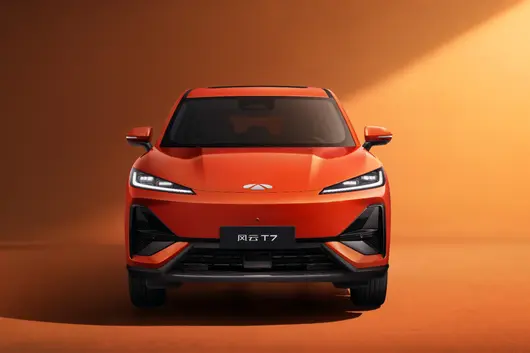
Guys, today let's talk about a car that goes abroad for a stroll first, then comes back to see old friends and neighbors — Chery Fengyun T7. On August 12, this car officially started pre-selling, the launch theme is quite interesting: "Slow work builds a good car, long wait". It sounds like: "Don't rush, I'm brewing a big move".

First, let's say something counter-intuitive: this car is not built domestically first then thought about selling abroad, but the same-platform model Lepas L6 has already started selling in South Africa and Thailand, and is next going to the EU, Australia and New Zealand, and the UK. In other words, they let global users be quality inspectors first, going through various weird road conditions and extreme weather, before coming back to face us. Chery has been first in exports for 23 consecutive years, backed by 20 million global users; this global car-building system indeed has some substance.

So the durability of this car might be a bit tougher than we imagined. For example, the Rhino battery standard on all trims, CLTC range given as 600km, actual test can run 667km+, reverse false labeling confirmed. IP68 waterproofing is 96 times the national standard, charging from 30% to 80% takes only 20 minutes, time it takes to drink a cup of coffee.
Safety also willing to invest, 80% high-strength steel + 18.84% hot-formed steel, nine horizontal and five vertical cage body, developed according to 2026 version E-NCAP five-star standard, this standard has not been officially implemented yet. Also all trims given 9 airbags, even rear side airbags and 48L far-end airbags are arranged, this is indeed rare at the same price point.

Smart cockpit used 4nm process 8775 chip, 72 TOPS computing power, response speed 80ms, smoothness no need to worry. 15.6-inch 2.5K large screen, CarPlay, HiCar, CarLink fully supported. Regarding intelligent driving, 22 sensors, supports 300+ scenarios automatic parking and cross-floor memory parking, very friendly to beginners.

Regarding space, wheelbase 2700mm, rear pure flat floor, folded down is 1955mm pure flat big bed, camping and lunch break enough. Chassis operated by Maserati front chassis tuning expert team, 50.8:49.2 golden axle load ratio, highway not floating, cornering stable.

Most reassuring is actually the bottom-line benefits Chery gives: power battery thermal runaway destruction due to its own reasons, directly compensate new car; accidents due to intelligent driving system reasons within one year of car purchase, max compensate 5 million yuan. Plus whole vehicle lifetime warranty (including three-electric systems), basically blocked off all worries.
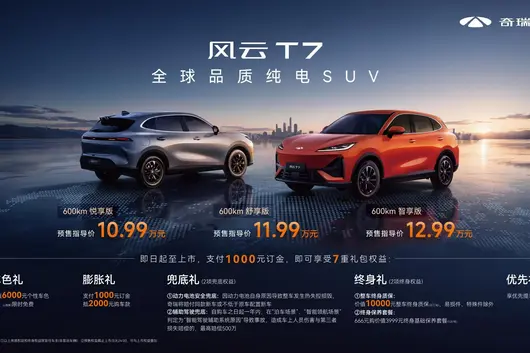
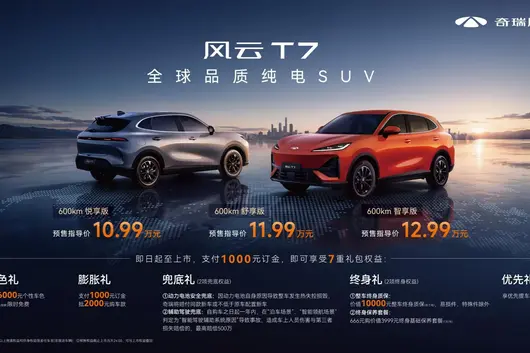
Back to price, this time launched 3 trims, pre-sale price 109,900 yuan to 129,900 yuan. Entry level immediately 600km range, don't do that low spec cutting range trick, this point deserves a like.

In this era, Chery chose to spend 5 years polishing a global car, indeed seems a bit stubborn. But precisely this slowness makes Fengyun T7 at this 100,000 yuan price level, give you a global standard base and configuration. Interested friends can go to the store to book a test drive to feel it personally, see how this car is.

August 12 evening, Chery Fengyun T7 officially started pre-sale, with pre-sale prices for three trims ranging from 109,900 yuan to 129,900 yuan. This launch event, themed "Slow work builds good cars, sorry to keep you waiting", aptly reflects Chery's situation — in the 100,000-150,000 yuan range pure electric SUV segment, which is already crowded, the slightly late Fengyun T7, how much market can it truly leverage?

I. An "All-Series 600km" Ace Card
The core differentiated strategy of Fengyun T7 is that the entire series is standard-equipped with 600km CLTC range. The three trims — Enjoy Edition 109,900 yuan, Comfort Edition 119,900 yuan, Smart Edition 129,900 yuan — all batteries are 65.05kWh Rhinoceros Lithium Iron Phosphate batteries, avoiding the industry common problem of "reduced range in low trims".

The power of this strategy lies in precisely hitting pain points. What 100,000 yuan range pure electric SUV consumers fear most is spending money but only getting 400km range. While peer competitors still use range to divide configuration gradients, Fengyun T7 directly pulls the entry-level to 600km, essentially redefining the "range baseline" for this price segment. 30%-80% fast charging takes only 20 minutes, and energy replenishment efficiency also reaches mainstream 400V platform levels.
Regarding dimensions, Fengyun T7 has length/width/height 4570/1852/1694mm, wheelbase 2700mm. Interior space utilization rate 84%, flat floor in the second row, rear seats folded down can form 1955mm flat large bed — for family users, this is a very practical space solution.

II. Competitor Siege: Who Can Withstand This Wave of Impact?
BYD Yuan PLUS (119,900-149,900 yuan) is a benchmark that cannot be avoided. The 3rd Generation Yuan PLUS is equipped with 2nd Generation Blade Battery, providing 540km and 630km two range options, motor power 200kW. Brand awareness and ownership volume are the moats of Yuan PLUS, but Fengyun T7 is 10,000 yuan lower in starting price, and the all-series 600km range strategy is also more attractive than Yuan PLUS's 540km entry version.
Deepal S05 (115,900-144,900 yuan) just completed its换代 in August 6, the entire series standard equipped with 3C supercharge, 30%-80% charging takes only 15 minutes, 620km version pricing starts at 119,900 yuan, motor power 200kW. Deepal S05's advantages lie in charging speed and intelligence, but Fengyun T7 is about 10,000 yuan cheaper in price.
AION Y (99,800-145,800 yuan) is the competitor with the lowest price floor, after terminal discounts the entry version can be as low as 86,800 yuan. But AION Y 510km version's guidance price is 136,800 yuan, there is a gap in range compared to Fengyun T7's 600km.
Geely Galaxy E5 (109,800-145,800 yuan) provides 610km range, price highly overlaps with Fengyun T7. Leapmotor C10 (125,800-142,800 yuan) pure electric version range 660km, equipped with 800V platform, is the only competitor in range parameters that can press Fengyun T7, but starting price is also about 16,000 yuan higher.
Overall, Fengyun T7's price positioning is quite precise: cheaper than Yuan PLUS and Deepal S05, range is not losing; slightly more expensive than AION Y, but range advantage is obvious. In this price-sensitive market of 100,000-150,000 yuan, the logic of "spend 10,000 less, run 100km more" is sufficiently persuasive.
III. Invisible Competitiveness: Global Car Identity and Safety Redundancy
Fengyun T7 has another easily overlooked differentiated label — global car. Its overseas version Lepas L6 has already launched in markets like Thailand, South Africa, etc. Relying on Chery's 23 years of global technology accumulation, the whole vehicle is designed according to 2026 version E-NCAP 5-star safety standards, 80% high-strength steel body, 18.84% hot-formed steel, 9 airbags. Rhinoceros battery has IP68 waterproof (96 times national standard) and 31-layer protection structure.
For home vehicle consumers, "Global Validation" means a higher reliability threshold. During the pre-sale period, it also provided rights such as whole vehicle lifetime warranty for the three-electric systems, power battery safety bottom line, and intelligent driving accident compensation up to 5 million, further reducing users' decision risks.

Regarding intelligence, Fengyun T7 is equipped with 4nm process Qualcomm SA8775 cockpit-integrated driving chip, 15.6-inch 2.5K floating central control screen, Lingxi Smart Cockpit 2.0 and Doubao Large Model voice. On the intelligent driving level, 22 sensors are equipped, high trims support highway NOA. Compared to Deepal S05's LiDAR solution, Fengyun T7 is not radical in intelligent driving hardware, but in the 100,000 yuan level, the coverage of highway NOA itself is already a bonus.
IV. Where Are the Real Challenges?
Fengyun T7 does not have no shortcomings. The 2700mm wheelbase is not outstanding among competitors — Yuan PLUS wheelbase 2720mm, AION Y wheelbase 2750mm. Deepal S05 and Galaxy E5 are also larger in body dimensions. Space is not Fengyun T7's weakness, but also not an advantage.
The bigger challenge lies in brand perception. In the 100,000-150,000 yuan pure electric SUV market, BYD, AION, Deepal have already established a considerable user base. Fengyun as Chery's new energy series, brand awareness and channel penetration still need time accumulation. Chery sales lead in overseas markets, but new energy awareness in the domestic market still needs to be improved.

Conclusion
Fengyun T7's competitiveness can be summarized in one sentence: re-anchoring the value standard of 100,000 yuan range pure electric SUV with all-series 600km range, reducing consumer decision risk with global car quality.
It did not reach the extreme in any single item — space is not the largest, intelligent driving is not the strongest, brand is not the loudest — but it made "range" the most core indicator of home pure electric SUV fully unified, and at the same time pushed the price below competitors. For those consumers with limited budget, rigid demand for range, and hope to buy a reliable home vehicle, Fengyun T7 provides a choice that is almost impossible to ignore.
Chery, "Slow work builds good cars", this time finally put the effort where it counts.

8 月 12 日,奇瑞風雲 T7 正式開啟預售。這場以「慢工造好車,久等咗」為主題嘅發布會,與其話係一次產品亮相,唔如話係奇瑞對當下行業「速成造車」風潮嘅一次明確回應。
新車共推出 3 款版型,預售指導價 10.99 萬元至 12.99 萬元。全系標配 600km 續航(CLTC)、艙駕一體 8775 晶片、獵鷹 500 駕駛輔助系統——當呢啲配置集中喺一款 10 萬級純電 SUV 上時,風雲 T7 嘅產品邏輯已經足夠清晰:用全球標準做車,用國民價格賣車。
「反向出海」:先經世界檢驗,再返中國上市
風雲 T7 最值得關注嘅,唔係某項配置嘅堆砌,而係佢嘅開發路線。
當下唔少車型走嘅係「內地首發、再推海外」嘅常規路線。風雲 T7 走嘅卻係一條相反嘅路線——其同源車型 Lepas L6 已率先喺南非、泰國等海外市場上市,並收穫咗海外用戶嘅認可。在完成海外市場嘅實車驗證之後,風雲 T7 先落地國內開啟預售。

呢種「先接受全球市場檢驗,再落地國內發售」嘅反向輸入節奏,喺本土車企中並唔多見。奇瑞執行副總裁李學喦喺預售發布會上坦言,風雲 T7 歷經兩年策劃、三年研發,「快唔到一點」。佢強調,汽車關係到千萬家庭嘅安全,扛住係全球不同路況、氣候、習慣嘅考驗,「有啲時間真係唔敢省」。
呢種「慢」,體喺數字上就係:項目投入 81 台專屬耐用車同步路試,整車累計測試里程超 600 萬公里,耐用專項實測 145 萬公里。測試覆蓋東南亞雨季、中東高溫暴曬(40℃-55℃)、印尼高濕、北歐極寒等上百種極限工況。
六大剛需:一款車點樣回應所有家庭期待
風雲 T7 嘅產品定義邏輯亦都幾清晰——圍繞家庭用戶嘅「六大剛需」展開:顏值、安全、出行、智能、舒享、安心。
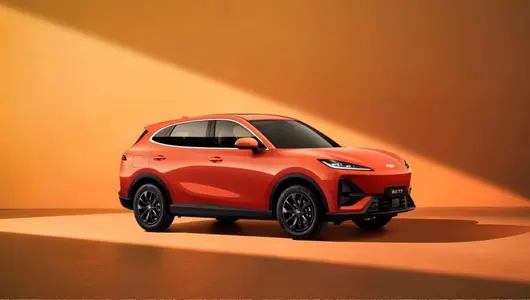
顏值剛需方面,新車由奇瑞 10 大全球設計中心參與設計,5000 餘名海內外用戶全程共創。同源車型 Lepas L6 曾亮相米蘭設計週。外觀採御風前臉、風塑綢緞車身、天際霞光尾門設計,提供熾焰橙、山煙紫、雲粉米、流光銀、青竹灰、墨石黑 6 款配色。內飾分溫暖黑棕、極夜黑曜兩種風格,所有內飾皮革、密封條、塑膠件均按唔易硬化褪色嘅標準選材。
安全剛需係風雲 T7 最硬核嘅底牌。新車對標 2026 版 E-NCAP 五星安全標準設計,功能安全達到 ASIL D 最高等級。車身採用 80% 高強度鋼、18.84% 熱成型鋼打造九橫五縱籠式車身,配備 shotgun 結構、雙框副車架+Pack 防撞梁。全車搭載 9 個安全氣囊,含 48L 雙腔遠端氣囊同後排側氣囊。全系標配犀牛電池,具備超強 6D 防護結構,IP68 防水等級為國標 96 倍。

出行剛需方面,風雲 T7 實現「續航平權」——全系標配 65.05kWh 犀牛電池,CLTC 續航 600km,實測續航達 667km 以上。30% 充至 80% 僅需 20 分鐘。搭載全域一體化熱管理雙源寬熱泵空調+高壓 PTC,-30℃至 55℃超寬溫域穩定運轉。配合全系標配嘅 AGS 智能進氣格柵與 14 項低風阻優化,高低溫能耗更穩定。
智能剛需方面,風雲 T7 搭載同級首发嘅 4nm 製程艙駕一體 8775 晶片,NPU 運算力 72TOPS,響應仅需 80ms。配備 15.6 英寸 2.5K 高清大屏幕,支援 CarPlay、HUAWEI HiCar、CarLink 無線連接,覆蓋市面上 99% 以上手機投屏。靈犀智艙 2.0 內置小憩、露營、寵物、醒神等六大場景模式。智駕方面搭載獵鷹 500 駕駛輔助系統,集成 3 顆毫米波雷達、7 個高性能攝錄頭、12 個超聲波雷達,總計 22 顆高精度感應器,支援 300 餘種全場景自動泊車,覆蓋死路泊車、一鍵循跡倒車、跨樓層泊車等場景。
舒享剛需方面,整車尺寸 4570×1852×1694mm,軸距 2700mm,車內得房率 84%。後排純平地台,腿部空間 911mm。後排放倒可拓展為 1955mm 純平空間,尾箱容積 450L、拓展至 1550L。9 層雲感座椅配備通風加熱功能,-20℃環境下 5 分鐘可速熱至 30℃。全車 38 處儲物空間,配備 4 個最大承重 300kg 的鉚環同 2 個最大承重 3kg 的掛鈎。底盤由國際化團隊調校,軸荷比 50.8:49.2。
安心剛需方面,奇瑞推出兩大兜底保障同兩項終身權益。兩大兜底:動力電池因自身原因導致熱失控損毀,賠償同款新車;購車一年內因智駕系統原因導致事故,最高賠償 500 萬元。兩項終身權益:整車終身質保(含三電);666 元購價值 3999 元終身基礎保養套餐。
補齊風雲序列純電版圖,直面紅海競爭
風雲 T7 的推出,補齊咗奇瑞風雲序列插混、增程、純電三條技術路線的最後一塊版圖。按照規劃,奇瑞風雲未來三年將推出 12 款全新車型。風雲 T7 則係純電 SUV 類別的首發之作。
不過,10 萬至 15 萬元純電緊湊型 SUV 市場,恰係中國新能源車市競爭最激烈的細分市場之一。比亞迪元 PLUS、深藍 S05、長安啟源 Q05 等均係直接競爭對手。風雲 T7 能否喺「慢工造車」同「快速回應市場」之間搵到平衡,係奇瑞需要持續回答的命題。
但有咗一點可以確定:當一款歷經全球 600 萬公里驗證、對標 E-NCAP 五星安全、全系標配 600km 續航同 8775 晶片的純電 SUV,把預售價定喺 10.99 萬元時,佢所定義的已唔止係一款產品的價值,更係一種造車理念的回歸——好的產品,值得慢工細活。
風雲 T7 預計 8 月底正式上市。屆時,款「生而全球,淬煉而歸」的純電 SUV,將正式接受中國消費者的檢驗。
© 2024 Bitauto.com. All Rights Reserved.
Bitauto (www.yiche.com and www.bitauto.com) is one of the most visited automotive websites in China. We provide detailed info on Chinese car brands available in your area. Please note that the information provided on this website is based on publicly available data and is for reference only. It may not be fully updated or accurate at all times.

Help us improve our website


