

Homediversity

Search History
Popular Searches
Dealer Login / Sign Up

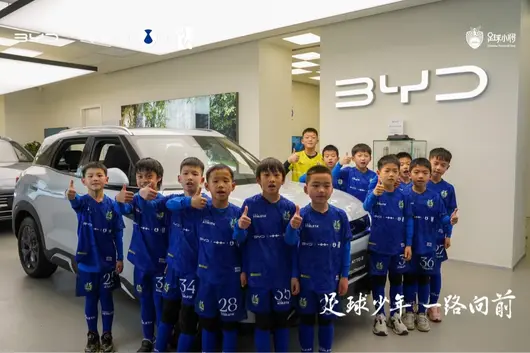
2026年9月12日至13日,绿茵场上再次传来振奋人心的消息:在豪门青训球队云集的西班牙Brava杯赛中,比亚迪鼎力支持的中国足球小将2018队以9战全胜的不败战绩,问鼎冠军宝座!这项赛事汇聚了巴萨、马竞、西班牙人等顶级青训梯队,共67支劲旅参赛,含金量十足。

回顾夺冠之路,小将们展现出了超乎年龄的成熟与韧性。小组赛阶段,他们势如破竹,豪取4连胜。进入淘汰赛,小将们更是在逆境中爆发,两次上演惊天大逆转。半决赛力克强敌西班牙人梯队,决赛更是通过点球大战以5:4战胜梅西旗下的科尔内亚队,完美登顶。其中,核心球员乔治(韩承均)表现惊艳,9场比赛狂轰17球,将赛事MVP与金靴奖双双收入囊中,绽放东方少年锋芒。
从泰国的“亚洲青年冠军杯”,到意大利的“小世界杯”,再到如今的西班牙Brava杯,比亚迪一路相随,见证了中国足球小将从亚洲走向世界舞台中心的过程。在没有掌声的寂寥时刻,比亚迪选择了坚定的支持与看好。如今,这群意气风发的少年用一个个冠军打破了外界的偏见,让五星红旗在国际赛场上迎风飘扬。

去年,比亚迪支持小将征战Brava杯虽遗憾止步八强,但今年他们卷土重来,成功登顶。这正是对“长期主义”最好的诠释。比亚迪对足球青训的支持,与其在造车研发领域的理念不谋而合。在动力电池和新能源赛道深耕二十余年,累计研发投入超2700亿元,比亚迪深知,无论是造车还是青训,都没有捷径可走。正如比亚迪品牌及公关处总经理李云飞所言:“短期只是热闹,长期坚守才是热爱。” 沉下心来,厚积薄发,终将迎来属于自己的荣光。
为了这份长期主义的承诺,自2024年起,比亚迪持续助力中国足球少年“走出去”,先后组织超200人次前往德国、日本、西班牙、泰国、意大利、巴西等地,与海外顶级俱乐部进行交流切磋。不为短期的流量,只为让孩子们在更广阔的舞台上磨砺成长。
比亚迪在海外持续发力,与曼城、国米、大巴黎等足球豪门建立合作,并亮相欧洲杯、美洲杯等国际顶级赛事。同时,比亚迪也不忘将这些优质的全球足球资源反哺国内青训事业。今年初,比亚迪就组织中国足球小将远赴意大利,探访国米俱乐部,与球星面对面交流,本届赛事MVP小乔治也参与其中。在比亚迪的支持下,目前已有3名小球员成功签约西甲职业梯队(李昊炎加盟巴萨梯队,刘凯源签约比利亚雷亚尔梯队,吕孟洋签约西甲梯队)。

在国际市场上,比亚迪凭借过硬的产品实力,在欧洲、东南亚、南美等多个国家和地区(包括西班牙、意大利、泰国)成为新能源销量冠军。如今,比亚迪正以自身的“海外冠军”之势,全力护航中国足球小将远征全球。未来,比亚迪将继续携手小将,在世界各地的绿茵场上,标记更多属于中国足球的冠军时刻! 支持青少年足球,就是支持中国足球的未来。

喺馬來西亞嘅 SUV 市場,好多買家喺揀車嗰陣都會攞 Honda CR-V 同 Volkswagen Tiguan 嚟比較。這兩款車喺價錢同定位上都幾接近,今日我哋就由多個方面做一個詳細嘅對比,幫你省返做功課嘅時間。
Honda CR-V 喺馬來西亞嘅 OTR 售價係 RM 178,200 - 195,900,一共有 4 個版本,包括 2026 e:HEV 2.0L 2WD RS(RM 195,900)、2026 1.5T 4WD V(RM 181,900)、2026 e:HEV 2.0L 2WD E(RM 178,200) 等。
Volkswagen Tiguan 喺馬來西亞嘅 OTR 售價係 RM 206,540 - 260,024,一共有 2 個版本,包括 2025 Allspace 2.0T R-Line(RM 260,024)、2025 Allspace 1.4T Elegance(RM 206,540) 等。
由價錢睇,Honda CR-V 嘅起價確實比 Volkswagen Tiguan 平咗 RM 28,340。如果你預算有限,Honda 嘅入門版已經可以滿足日常需要。但要留意,平嘅嗰幾千塊,可能喺配備上會有取舍,具體就要睇你嘅需求。

Honda CR-V 搭載 2.0L 4-cyl,馬力 170 hp。官方油耗 8.0 L/100km。
Volkswagen Tiguan 搭載 2.0L 4-cyl,馬力 170 hp。官方油耗 8.0 L/100km。
兩款車用嘅係同一套動力系統,日常行車嘅感覺基本上冇分別。油耗方面都差唔多,唔使太糾結呢一點。

Honda CR-V 車身長 4500 mm,行李廂 450 L。
Volkswagen Tiguan 車身長 4400 mm,行李廂 400 L。
空間方面,Honda CR-V 嘅車身比 Volkswagen Tiguan 長咗 100 mm,車內乘坐空間會稍微闊綽啲,尤其係後座腳部空間。如果你經常載家人或者需要放嬰兒車,大一點嘅車身確實更實用。

Honda CR-V 同 Volkswagen Tiguan 都係馬來西亞市場嘅主流選擇,適合家庭使用、日常通勤。如果你更重視品牌口碑同二手價,可以優先考慮口碑更好嗰一款;如果你更在意性價比同配備,就揀配置更豐富嗰款。最終都係建議兩款都去試駕,親身體驗先係最緊要。

總體嚟講,Honda CR-V 同 Volkswagen Tiguan 都係馬來西亞市場幾唔錯嘅車款。揀邊一輛,關鍵都係睇你嘅個人需求同預算。建議大家做好功課,多比較幾間車行嘅報價,先嚟試駕做最後決定。買車係件大件事,花少少時間做功課絕對唔會錯。


Dalam pasaran SUV di Malaysia, banyak pembeli membandingkan Honda CR-V dan Mitsubishi Xforce ketika memilih kereta.
Harga OTR Honda CR-V di Malaysia ialah RM 178,200 - 195,900, terdapat 4 versi, termasuk 2026 e:HEV 2.0L 2WD RS (RM 195,900), 2026 1.5T 4WD V (RM 181,900), 2026 e:HEV 2.0L 2WD E (RM 178,200) dan lain-lain.
Harga OTR Mitsubishi Xforce di Malaysia ialah RM 109,930 - 119,930, terdapat 2 versi, termasuk 2026 1.5L Ultimate (RM 119,930), 2026 1.5L Urban (RM 109,930) dan lain-lain.
Dari segi harga, harga permulaan Mitsubishi Xforce lebih murah RM 68,270 berbanding Honda CR-V. Secara jujur, pada julat harga ini, jurang beberapa ribu sebenarnya tidak besar, yang penting lihat nisbah harga-kepada-kualiti keseluruhan dan kos penggunaan jangka panjang.
Honda CR-V dilengkapi enjin 2.0L 4-cyl, kuasa 170 hp. Kecekapan bahan api rasmi 8.0 L/100km.
Mitsubishi Xforce dilengkapi enjin 1.5L Turbo, kuasa 140 hp. Kecekapan bahan api rasmi 7.0 L/100km.
Dari segi kuasa, enjin 2.0L 4-cyl Honda CR-V mempunyai 30 hp lebih daripada 1.5L Turbo Mitsubishi Xforce, memberikan keyakinan lebih dalam pecutan tengah, terutamanya semasa memotong di lebuh raya. Walau bagaimanapun, kecekapan bahan api Mitsubishi Xforce mungkin lebih mesra, perbezaannya semasa perjalanan harian di bandar tidak akan terlalu besar.
Panjang badan Honda CR-V 4500 mm, tempat simpanan beg 450 L.
Panjang badan Mitsubishi Xforce 4400 mm, tempat simpanan beg 400 L.
Dari segi ruang, badan Honda CR-V adalah 100 mm lebih panjang daripada Mitsubishi Xforce, ruang duduk di dalam kereta akan sedikit lebih lapang, terutamanya ruang kaki di kerusi belakang. Jika anda sering mengangkut keluarga atau perlu meletakkan kerusi kanak-kanak, badan yang lebih besar memang lebih praktikal.
Honda CR-V menggunakan cara pemacu FWD.
Mitsubishi Xforce menggunakan cara pemacu FWD.
Kedua-dua kereta menggunakan cara pemacu yang sama, iaitu FWD, rasa memandu harian tidak akan terlalu berbeza.

Honda CR-V dan Mitsubishi Xforce kedua-duanya adalah pilihan utama pasaran Malaysia, sesuai untuk kegunaan keluarga, perjalanan harian. Jika anda lebih menghargai reputasi jenama dan harga second-hand, boleh utamakan yang lebih baik reputasinya; jika anda lebih prihatin tentang nisbah harga-kualiti dan peralatan, maka pilih yang lebih kaya dengan persembahan. Akhirnya disyorkan kedua-dua model untuk dicuba uji, pengalaman langsung adalah yang paling penting.

Secara keseluruhannya, Honda CR-V dan Mitsubishi Xforce kedua-duanya adalah model kereta yang sangat baik di pasaran Malaysia. Memilih mana satu, perkara penting adalah lihat keperluan dan bajet peribadi anda. Kami cadangkan buat kerja rumah dengan baik, bandingkan lebih banyak sebutan harga dari pelbagai kedai kereta, kemudian buat ujian memandu untuk membuat keputusan akhir. Membeli kereta adalah perkara besar, meluangkan masa membuat kerja rumah tidak akan salah.

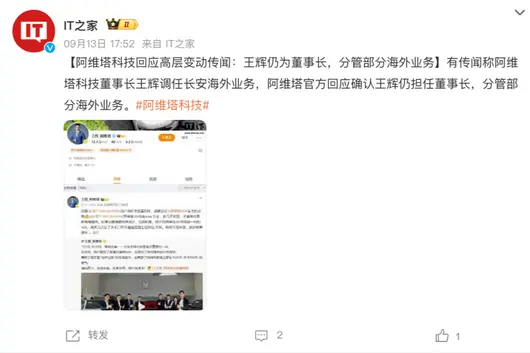
Recently, Avatr officially responded to rumors of a leadership change: "Wang Hui remains Chairman of Avatr Technology and Executive Vice President of Changan Automobile, overseeing part of its overseas business."

Previously, reports suggested that Wang Hui, Chairman of Avatr Technology, would be reassigned to exclusively manage overseas operations for the Changan Automobile Group, focusing on Southeast Asian and Central and South American markets, leading to claims of Wang Hui's departure and a leadership change at Avatr.

Public resume indicates Wang Hui joined Changan in 2003, with extensive overseas operational experience. He once led the construction of Changan's Thailand factory and served as head of the Overseas Business Development Department and Southeast Asia Business Division. In September 2025, Wang Hui assumed the role of Avatr Chairman, overseeing brand strategy and global operations.

The more tangible pressure on Avatr currently lies in sales volume. Delivered 8,082 units in August, a 6% month-over-month increase, rising for three consecutive months, but still short of the 10,000-unit milestone. Cumulative deliveries from January to August reached 43,327 units, a year-over-year decline of approximately 40%. The completion rate of the 220,000-unit annual target is less than 20%.
Overseas markets remain a bright spot. According to the prospectus disclosed, from January–May 2026, Avatr's overseas sales were 2,949 units, up 33.4% year-over-year. Markets have expanded to 43 countries and regions, with distribution points increasing to 95. The company plans to officially enter the European market in 2026. The scale is still small but progress continues.
Next, market focus will fall on the flagship model T09, launching in the fourth quarter. This large six-seater SUV, benchmarked against the Li Auto L9 and AITO M9, is the first model from the full cooperation between Avatr and Huawei Qiankun. For Avatr, this is both a lever to drive sales and a test to verify if its high-end positioning can hold.
Source: Auto Observer

Di pasaran SUV Malaysia, ramai pembeli apabila memilih kenderaan akan membandingkan Honda CR-V dan MG MG HS. Kedua-dua kereta ini sangat hampir dari segi harga dan kedudukan pasaran, hari ini kita akan membuat perbandingan terperinci dari pelbagai aspek, membantu anda menjimatkan masa membuat kajian.
Harga OTR Honda CR-V di Malaysia ialah RM 178,200 - 195,900, terdapat 4 versi, termasuk 2026 e:HEV 2.0L 2WD RS (RM 195,900), 2026 1.5T 4WD V (RM 181,900), 2026 e:HEV 2.0L 2WD E (RM 178,200) dan lain-lain.
Harga OTR MG MG HS di Malaysia ialah RM 130,450 - 146,450, terdapat 2 versi, termasuk 1.5L Standard (RM 105,000), 1.5L Executive (RM 115,000) dan lain-lain.
Dari segi harga, harga permulaan MG MG HS lebih murah RM 47,750 berbanding Honda CR-V. Jujur, dalam julat harga ini, perbezaan beberapa ribu sebenarnya tidak besar, yang penting adalah melihat nisbah kegunaan dan kos penggunaan jangka panjang secara keseluruhan.
Gred keselamatan Honda CR-V adalah 5★ (ASEAN NCAP), sistem keselamatan aktif termasuk Honda SENSING (ACC, CMBS, LKAS, RDM).
Gred keselamatan MG MG HS adalah TBD, sistem keselamatan aktif termasuk Basic.
Dari segi kelengkapan keselamatan, kedua-dua kereta telah mendapat gred yang baik. Walau bagaimanapun, Honda SENSING (ACC, CMBS, LKAS, RDM) pada Honda CR-V dan Basic pada MG MG HS mempunyai beberapa perbezaan dari segi fungsi. Jika anda lebih mementingkan keselamatan aktif, anda boleh membandingkan senarai fungsi kedua-duanya dengan teliti.
Honda CR-V menggunakan penggerak FWD.
MG MG HS menggunakan penggerak FWD.
Gaya pemanduan kedua-dua kereta adalah sama, iaitu FWD, pengalaman memandu harian tiada perbezaan besar.
Honda CR-V dan MG MG HS adalah pilihan utama di pasaran Malaysia, sesuai untuk kegunaan keluarga, perjalanan harian. Jika anda lebih mementingkan reputasi jenama dan harga kereta terpakai, utamakan yang mempunyai reputasi lebih baik; jika anda lebih mementingkan nisbah kegunaan dan kelengkapan, pilih yang mempunyai konfigurasi lebih kaya. Akhir sekali disarakan untuk mencuba pemanduan kedua-dua model, pengalaman sendiri adalah yang paling penting.
Secara keseluruhannya, Honda CR-V dan MG MG HS adalah model kereta yang sangat baik di pasaran Malaysia. Memilih mana satu, yang penting adalah melihat keperluan dan bajet anda sendiri. Disarankan membuat kajian terlebih dahulu, bandingkan lebih banyak sebutan harga dari kedai kereta, kemudian uji pemanduan untuk membuat keputusan akhir. Membeli kereta adalah perkara besar, menghabiskan masa membuat kajian pasti tidak akan salah.

Dalam pasaran SUV di Malaysia, ramai pembeli membandingkan Honda CR-V dan Chery Tiggo 9 semasa memilih kereta. Kedua-dua kereta ini mempunyai harga dan posisi yang agak hampir, hari ini kita akan membuat perbandingan terperinci dari pelbagai aspek, membantu anda menjimatkan masa melakukan kajian.
Harga OTR Honda CR-V di Malaysia ialah RM 178,200 - 195,900, terdapat 4 varian, termasuk 2026 e:HEV 2.0L 2WD RS (RM 195,900), 2026 1.5T 4WD V (RM 181,900), 2026 e:HEV 2.0L 2WD E (RM 178,200) dan lain-lain.
Harga OTR Chery Tiggo 9 di Malaysia ialah RM 166,800 - 179,800, terdapat 1 varian, termasuk 2026 2.0T Standard (RM 179,750) dan lain-lain.
Dari segi harga, harga permulaan Chery Tiggo 9 lebih murah RM 11,400 berbanding Honda CR-V. Secara jujur, pada julat harga ini, perbezaan beberapa ribu ringgit sebenarnya tidak besar, penting melihat nisbah harga-keperluan keseluruhan dan kos penggunaan jangka panjang.
Penilaian keselamatan Honda CR-V ialah 5★ (ASEAN NCAP), sistem keselamatan aktif termasuk Honda SENSING (ACC, CMBS, LKAS, RDM).
Penilaian keselamatan Chery Tiggo 9 ialah TBD, sistem keselamatan aktif termasuk Basic.
Dari segi peralatan keselamatan, kedua-dua kereta mendapat penilaian yang baik. Walau bagaimanapun, Honda SENSING (ACC, CMBS, LKAS, RDM) Honda CR-V dan Basic Chery Tiggo 9 mempunyai perbezaan dari segi fungsi, jika anda lebih mengutamakan keselamatan aktif, anda boleh membandingkan senarai fungsi kedua-duanya dengan teliti.
Honda CR-V jaminan 5 tahun/tanpa had jarak, selang penyelenggaraan setiap 10,000km atau 6 bulan.
Chery Tiggo 9 jaminan 3 tahun/100,000km, selang penyelenggaraan setiap 10,000km atau 6 bulan.
Honda CR-V dan Chery Tiggo 9 adalah pilihan utama pasaran Malaysia, sesuai untuk kegunaan keluarga dan perjalanan harian. Jika anda lebih mengutamakan reputasi jenama dan harga jual semasa, boleh pertimbangkan yang mempunyai reputasi lebih baik; jika anda lebih memprihatinkan nisbah harga-keperluan dan kelengkapan, pilih model yang lebih lengkap. Pada akhirnya disyorkan untuk mencuba kedua-dua model, pengalaman langsung adalah yang paling penting.

Secara keseluruhan, Honda CR-V dan Chery Tiggo 9 adalah model kereta yang sangat baik di pasaran Malaysia. Memilih mana satu, penting bergantung pada keperluan dan bajet peribadi anda. Disyorkan anda melakukan kajian, membandingkan sebut harga daripada beberapa kedai kereta, kemudian membuat keputusan akhir selepas mencuba. Membeli kereta adalah perkara besar, meluangkan masa membuat kajian tidak akan rugi.

Amerika Syarikat sekali lagi bertindak tegas. Kali ini, mereka tidak lagi hanya memfokuskan diri kepada China. Satu siasatan import besar yang merangkumi seluruh dunia dan meliputi semua kategori tayar, kini sedang dibawa ke meja perundingan. Bagi syarikat tayar domestik yang menganggap "membina kilang di luar negara" sebagai strategi cerdik mengelakkan cukai, ini mungkin hambatan paling berbahaya dalam hampir satu dekad.
Amerika Syarikat Menasar Kilang Tayar China di Luar Negara
14 September, Presiden Antarabangsa Kesatuan Pekerja Keluli Amerika (USW) Roxanne Brown menghantar surat kepada Wakil Perdagangan Amerika Jamie Greer, secara rasmi mengemukakan permohonan berat: mengikut Seksyen 201 Akta Perdagangan 1974, melancarkan siasatan jaminan perlindungan global untuk import tayar semua kategori.
Berbeza dengan anti-dumping dan anti-subsidi, serta jaminan khas yang sudah biasa diketahui, perubahan terbesar dalam permohonan kali ini ialah melupakan idea tradisional "menyasar negara tertentu", mencakupi Tayar Kereta Persendirian&Tayar Truk Ringan, Tayar Truk & Bas, Tayar Off-Road, dan Tayar Kapal Terbang ke dalam lingkaran siasatan.
Serikat pekerja secara terang-terangan, langkah perlindungan perdagangan yang berselerak dan terfragmentasi pada masa lalu, sudah tidak mampu mengikuti realiti pemindahan industri.

Ringkasnya: Dulu Amerika Syarikat mengenakan cukai ke atas tayar Negara A, syarikat kemudian memindahkan kapasiti produksi ke Negara B yang tidak terikat cukai, menukar tempat asal untuk terus eksport ke Amerika. Penghalang cukai dapat mengelakkan pemindahan kapasiti dengan mudah.
Data surat tersebut menunjukkan, peningkatan tertinggi dalam eksport tayar ke Amerika dari negara seperti Serbia, Kemboja, Peru, mencapai 429%. Inilah "kitaran kekosongan" yang paling ditakuti oleh USW.
Terutamanya, banyak syarikat tayar China memilih membina kilang di luar negara untuk mengelakkan penghalang perdagangan asal. Dan permohonan Klausul 201 kali ini, menyasar laluan keluar tidak langsung ini.
Krisis Industri dalam Perkataan Serikat Pekerja Amerika
USW dalam surat terbuka berulang kali menekankan, industri tayar domestik Amerika Syarikat telah terjerumus dalam krisis, malah mengiktiraf pembuatan tayar kepada tahap keselamatan negara. Tayar adalah jaminan asas bagi pengangkutan, pertanian, perlombongan, dan operasi industri, penurunan kapasiti domestik berterusan akan terus menggugat keselamatan rantaian bekalan.
Satu set data teras perlu diberi perhatian:
China adalah teras hujah serikat pekerja. Menurut surat USW, kapasiti China terus membesar – pada tahun 2025 output tayar kereta dianggarkan 865 juta helai, kapasiti keseluruhan melebihi 1,000 juta helai.

Melihat semula sejarah, seawal tahun 2009 USW telah memacu kes Jaminan Khas 421 menentang tayar China, juga satu-satunya kes berjayaan klausa ini, tetapi langkah itu tamat tempoh pada tahun 2012. Kes anti-dumping yang dikemukakan selepas ini, semuanya menghadapi satu masalah yang sama: membatasi eksport satu negara, kapasiti berpindah dengan cepat, kesan sekatan perdagangan berkurang secara ketara.
Sebab itulah, serikat pekerja tidak lagi berpuas hati dengan serangan titik tunggal, tuntutan disingkatkan ke had global had import berperingkat, serentak menyokong pelan industri domestik, termasuk subsidi modal pengeluaran domestik, kerajaan membeli tayar domestik secara keutamaan, dll.
Kesan Import Tayar Turun Sedikit, Tetapi Risiko Bukan Jangka Pendek
Statistik kastam terkini, 7 bulan pertama tahun 2026 import tayar Amerika Syarikat jumlah keseluruhan 162.34 juta helai, turun 3.9% dari tahun ke tahun.
Tayar Kereta Persendirian: 98.02 juta helai, turun 2%
Tayar Truk & Bas: 34.52 juta helai, turun 8%
Tayar Kapal Terbang: 183,000 helai, naik 18%
Tayar Motosikal: 2.07 juta helai, turun 9%
Tayar Basikal: 4.67 juta helai, naik 20%
Persatuan Pengeluar Tayar Amerika (USTMA) ramalan Julai, tahun 2026 jumlah eksport tayar Amerika Syarikat 330.3 juta helai, turun 1.8% dari tahun ke tahun, permintaan pasaran sendiri agak lemah.
USW juga faham, data import jangka pendek ada turun, tetapi yang mereka perhatikan ialah goncangan bekalan jangka panjang yang dibawa oleh pemindahan kapasiti, bukan naik turun tahun tunggal. Selagi kapasiti berlebihan global boleh terus berpindah ke negara tanpa penghalang, trend penutupan kilang domestik Amerika Syarikat sukar diubah.
Kesan ke atas Syarikat Tayar Domestik, Mesti Faham
Kini siasatan hanya permohonan serikat pekerja, belum masuk kes secara rasmi. Seterusnya perlu melalui penilaian USTR, siasatan kerosakan industri ITC, langkah akhir dilaksanakan oleh Presiden Amerika Syarikat, keseluruhan mempunyai ketidakpastian yang besar.
Tetapi jika masuk kes dan dilaksanakan langkah jaminan, kesan jauh melebihi geseran perdagangan sebelum ini. Berbeza dengan anti-dumping antarabangsa, jaminan khas, Klausul 201 adalah jaminan perlindungan global, tidak mengira tempat asal, tayar China domestik, tayar yang dihasilkan di tapak luar negara China seperti Thailand/Kamboja/Serbia, eksport ke Amerika semuanya akan dibatasi seragam, menggangu teruk model teras "membina kilang di luar negara, elakan cukai peralihan" yang diikuti industri selama sepuluh tahun.
Kilang tayar domestik yang sudah terhad dengan cukai tinggi China, kesan langsung terhad; kapasiti luar negara milik China akan menjadi subjek tertekan utama.

Lebih penting, siasatan 201 kali ini adalah selepas 232 (Cukai 25%), 301 cukai, alat teras ketiga dalam penghalang perdagangan tayar Amerika. Jika USTR memproses masuk kes, akan membentuk struktur penghalang cukai 232+301+201 tiga kali, menyebabkan eksport tayar domestik dan luar negara ke Amerika terjebak risiko sistematik.
Sebab itu Mexico, Kanada bergantung perjanjian USMCA menikmati kelebihan豁免 perdagangan, corak bekalan tayar Amerika Utara atau akan diulang susun semula. Keputusan masuk kes USTR 30 hari akan datang, adalah pemboleh ubah penting utama menentukan arah perdagangan tayar global.
Penutup
Dari tahun 2009 jaminan khas satu negara sahaja, kini merancang siasatan jaminan tayar semua kategori di seluruh dunia, lagi ke kemungkinan "struktur tiga kali cukai", rangkaian perlindungan perdagangan tayar Amerika, semakin diperluas rapat.
Ini bukan lagi geseran perdagangan mudah menyasar negara tertentu, tetapi cuba membina satu rangkaian perlindungan merangkumi global, menyekat lubang pemindahan kapasiti. Bagi industri tayar domestik, ini satu amaran berat. Pelan ke luar negara, tidak boleh lagi hanya menganggap "menukar tempat asal" sebagai satu-satunya langkah mengelak risiko.
Pertarungan pasaran masih berterusan, langkah masuk kes, siasatan, putusan seterusnya, setiap langkah, patut pemantau tayar terus memantau rapat.


喺馬來西亞嘅 SUV 市場,好多買家喺揀車嗰陣都會拿本田 CR-V 同奇瑞 Tiggo 7 PHEV 嚟比較。呢兩部車喺價位同定位上都好接近,今日我哋就由多個方面做一個詳細嘅比較,幫你節省做功課嘅時間。
本田 CR-V 喺馬來西亞嘅 OTR 售價係 178,200 令吉 - 195,900 令吉,合共有 4 個版本,包括 2026 e:HEV 2.0L 2WD RS(195,900 令吉)、2026 1.5T 4WD V(181,900 令吉)、2026 e:HEV 2.0L 2WD E(178,200 令吉) 等。
奇瑞 Tiggo 7 PHEV 喺馬來西亞嘅 OTR 售價係 129,750 令吉 - 129,750 令吉,合共有 2 個版本,包括 2025 1.5T 90km CSH(129,750 令吉)、Tiggo 7 PHEV 支援哪些充電方式?能否使用家用電源插座充電?(117,478 令吉) 等。
由價錢嚟睇,奇瑞 Tiggo 7 PHEV 嘅起標價比本田 CR-V 平咗 48,450 令吉。坦白講,喺呢個價位段,幾千塊嘅差距其實唔算大,關鍵仲要睇整體嘅性價比同長期使用成本。
本田 CR-V 嘅安全評級係 5 星 (ASEAN NCAP),主動安全系統包括本田 SENSING (ACC, CMBS, LKAS, RDM)。
奇瑞 Tiggo 7 PHEV 嘅安全評級係 待定,主動安全系統包括 基本。
安全配備方面,兩部車都揾到唔錯嘅評級。不過本田 CR-V 嘅本田 SENSING (ACC, CMBS, LKAS, RDM) 同奇瑞 Tiggo 7 PHEV 嘅 基本 喺功能上有少少分別,如果你比較重視主動安全嘅話,可以仔細比較下兩者嘅功能列表。
本田 CR-V 採用 FWD 驅動方式。
奇瑞 Tiggo 7 PHEV 採用 FWD 驅動方式。
兩部車嘅驅動方式一樣,都係 前輪驅動,日常駕駛感受唔會有太大分別。
本田 CR-V 保養保修 5 年/無限制里程,保養間隔 每 10,000 公里或 6 個月。
奇瑞 Tiggo 7 PHEV 保養保修 3 年/100,000 公里,保養間隔 每 10,000 公里或 6 個月。

總體嚟講,本田 CR-V 同奇瑞 Tiggo 7 PHEV 都係馬來西亞市場好唔錯嘅車型。揀邊一部,關鍵仲要睇你嘅個人需求同預算。建議大家做好功課,多比較幾間車行嘅報價,然後去試駕先至做出最終決定。買車係件大事,費啲時間做功課絕對唔會錯。

喺馬來西亞嘅 SUV 市場,好多买家喺揀車嗰陣都會拿本田 CR-V 同奇瑞 Tiggo 7 PHEV 嚟做比較。呢兩款車喺價位同定位上都幾接近,今日我哋就從多個方面做一個詳細嘅比較,幫你慳咗做功課嘅時間。
本田 CR-V 喺馬來西亞嘅 OTR 售價係 RM 178,200 - 195,900,一共有 4 個版本,包括 2026 e:HEV 2.0L 2WD RS(RM 195,900)、2026 1.5T 4WD V(RM 181,900)、2026 e:HEV 2.0L 2WD E(RM 178,200) 等。
奇瑞 Tiggo 7 PHEV 喺馬來西亞嘅 OTR 售價係 RM 129,750 - 129,750,一共有 2 個版本,包括 2025 1.5T 90km CSH(RM 129,750)、「Tiggo 7 PHEV 支援邊幾種充電方法?家用插座可以充電嗎?」(RM 117,478) 等。
從價錢嚟睇,奇瑞 Tiggo 7 PHEV 嘅起步價比本田 CR-V 平咗 RM 48,450。講真,喺呢個價位段,千幾萬蚊嘅差距其實唔算大,關鍵仲係睇整體嘅性價比同長期使用成本。
本田 CR-V 搭載 2.0L 4-cyl,馬力 170 hp。官方油耗 8.0 L/100km。
奇瑞 Tiggo 7 PHEV 搭載 Hybrid,馬力 170 hp。官方油耗 4.5 L/100km。
動力方面,奇瑞 Tiggo 7 PHEV 嘅 Hybrid 比本田 CR-V 嘅 2.0L 4-cyl 多咗 0 匹馬力。不過日常喺市區開,兩款車嘅動力都夠用,唔會覺得唔夠力。
本田 CR-V 保養 5 年/無限里程,保養間隔 每 10,000km 或 6 個月。
奇瑞 Tiggo 7 PHEV 保養 3 年/100,000km,保養間隔 每 10,000km 或 6 個月。
本田 CR-V 同奇瑞 Tiggo 7 PHEV 都係馬來西亞市場嘅主流選擇,適合家庭使用、日常通勤。如果你更睇重品牌口碑同二手價,可以優先考慮口碑更好嗰款;如果你更在意性價比同配備,那就揀配備更豐富嗰款。最後始終建議兩款都去試駕,親身體驗先係最重要。
總體嚟講,本田 CR-V 同奇瑞 Tiggo 7 PHEV 都係馬來西亞市場好唔錯嘅車型。揀邊一部,關鍵仲係要睇你個人嘅需求同預算。建議大家做足功課,多比較幾間車行嘅報價,先去試駕先至做最終決定。買車係件大事,花少少時間做功課絕對唔會錯。


Written by | Zhang Linyu
Edited by | Huang Dalu
Designed by | Zhen Youmei
Many global automakers have different realities in China and the rest of the world.
For example, Renault, a brand that has lost its presence in China, is thriving in Europe, much like Geely is in China.
Similarly, Hyundai and Kia have struggled in China for years, but in the US, Europe, and other markets, they have long been one of the major choices for local consumers when buying cars.
Hyundai Motor Group is undervalued in China, but this is also related to its own strategy and the broader environment. Today, as Chinese automakers go global, Hyundai and Kia could be a sample worth studying.
Hyundai, Kia, and Genesis target different consumers, retaining their own product and brand expressions while sharing the group's platforms, R&D, procurement, and manufacturing resources.
According to the sales announcements released by the two companies on July 1, 2026, in the first half of the year, Hyundai Motor Company including Genesis had a global sales volume of approximately 1.966 million vehicles; Kia had approximately 1.631 million vehicles, with a combined total of approximately 3.597 million vehicles. Among them, Hyundai Motor Company's sales decreased by 4.9% year-on-year, while Kia increased by 2.7%, setting a record for its first-half sales.

During the same period, Hyundai Motor Company's sales in South Korea were approximately 317,000 vehicles, and Kia's were approximately 296,000 vehicles. The Korean local market provides a stable business foundation for the group, but the larger sales volume comes from overseas.
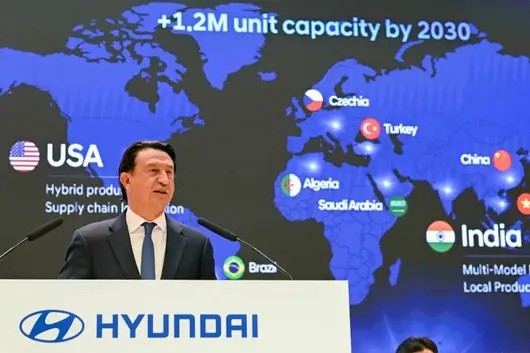
Hyundai and Kia operate products and channels separately in the US, supply through manufacturing bases in the Czech Republic, Turkey, and Slovakia in Europe, and have established local production systems in India. The two brands share the group's technology and procurement resources while competing against different users.
The Hyundai and Kia we see in China obviously do not represent the whole picture of this group. However, global scale has not allowed the two companies to escape profit pressure.
In the second quarter of 2026, Hyundai Motor Company's revenue was 49.22 trillion Korean won, up 1.9% year-on-year; operating profit was 2.85 trillion Korean won, down 20.8% year-on-year, with an operating profit margin of 5.8%. Kia's revenue for the same period was 33.03 trillion Korean won, up 12.6% year-on-year; operating profit was 2.62 trillion Korean won, down 4.9% year-on-year, resulting in an operating profit margin of approximately 7.9%.

Kia's revenue growth and operating profit margin were higher than Hyundai Motor Company, but both companies faced declining operating profit despite revenue growth. Different brands and product combinations presented different operating results within the same group.
Global layout gave Hyundai and Kia multiple market pivots but did not eliminate the pressure brought by costs, products, and competition.

Their lack of development in China does not hinder the study of how they established global business and how they succeeded globally. But at the same time, this system also faces challenges in the new automotive era.

Hyundai and Kia Going Global

The reason for Hyundai going global was first that the South Korean market is too small.
Chinese car companies that do well in their local market may reach millions of vehicles in scale and complete iterations of technology relying on China's supply chain. Hyundai does not have such conditions.
Established in 1967, it began producing the Ford Cortina in 1968, exported the Pony to Ecuador in 1976, and entered the US with Excel in 1986. While learning to build cars, it had to find overseas buyers.
For latecomers to the automotive industry, platforms, molds, R&D, and factories are investments that need to be spread across a scale. Local demand in South Korea determines that if Hyundai wants to become a large automobile enterprise, it cannot wait until all capabilities are mature before considering overseas expansion.
The global market has been a constraint it has had to face since early on in establishing its industrial capabilities.
This makes the growth conditions for Chinese and Korean car companies different.
Chinese enterprises can rely on the huge domestic market to perfect products and accumulate scale before expanding overseas business. Hyundai needed to learn how to enter other people's markets much earlier, understanding price tolerance, aesthetics, roads, and consumption habits. This difference does not determine who is more advanced but influences how enterprises later allocate resources and power.
Hyundai initially also relied on low prices. But the US market quickly made it understand that low prices can bring the first purchase, but quality and service bring the second.
In 1998, Hyundai Motor America introduced a coverage plan for 1999 model new cars, including a limited 10-year or 100,000-mile powertrain warranty. This was a concrete action to establish credit.
Within the scope covered by warranty terms, it transferred the reliability risks consumers worried about back to the manufacturer and required manufacturing, repair, and quality management to catch up. Whether a strange brand can stand, it needs to make consumers believe that someone is still responsible for problems that occur after buying the car.
The 1998 acquisition of Kia was another important node for Hyundai to establish today's global system. The two brands gradually expanded the sharing of platforms and procurement while retaining their own design and market expressions.
In 2005, the Hyundai Alabama plant went into production, and Kia subsequently established a production base in Georgia. Hyundai and Kia gradually changed from import brands to become local employers, purchasers, and investors, establishing long-term relationships with suppliers, dealers, and local governments.
Hyundai's Palisade and Kia's Telluride等大型 SUVs respond to family travel needs, hybrid models respond to usage costs, and Genesis bears the task of brand upward mobility. Two mass-market brands plus a luxury brand allow the group to compete between different prices and needs.
Hyundai and Kia in the US are not just Korean models with a few more configurations added. Local needs entered product definition, and car buying finance, leasing, and services entered the daily lives of consumers.
India took another path.
Hyundai established business in India in 1996, launched the Santro in 1998, and began local production, gradually expanding from small cars to compact SUVs. Price, space, fuel consumption, and maintenance convenience constitute the more realistic car buying judgment for local families.

Kia later entered India, establishing business through local production and products such as SUVs and MPVs. The two brands forming different product combinations in the same market also further increased India's weight in the group's global layout.
Hyundai India disclosed in its performance exchange in February 2026 that the localization level has reached 84%. As local procurement and manufacturing capabilities continue to deepen, India concurrently takes on the role of sales market, manufacturing base, and regional export center, supplying to the Middle East, Africa, Latin America, and other Asia-Pacific markets.
Europe had different requirements.
Hyundai established local R&D capabilities and supplied through Czech and Turkish factories, while Kia formed a manufacturing pivot in Slovakia. Body forms, driving feel, safety, and emission requirements need to be solved in the development stage. Channels, repair, and parts supply familiar to consumers determine whether products can be operated continuously after launch.
Localization in Brazil even went directly into the power system.
The Hyundai Brazil plant put into production in 2012 and the HB20 developed for the local market need to adapt to the ethanol fuel system, purchasing power, and usage environment. The Middle East and Africa rely more on distribution partners to establish coverage, then deepen assembly and procurement according to demand and policy. The Asia-Pacific market's demand for multi-person travel provided product space for MPVs and SUVs different from Europe.
These markets were not treated by Hyundai and Kia as different sales addresses for the same set of models.
South Korean local provides R&D, platform, and manufacturing foundations, with each region forming its own product combinations, supply chains, and business relationships. The group shares resources, brands face consumers separately, and regional business handles local needs.
The change Hyundai and Kia completed is that different markets gradually entered the enterprise, participating in deciding what this group produces, how it is produced, and how it serves users.

Undervalued Design

The role of design is often obscured by the impression of cost-performance ratio.
In the past, when people talked about Korean cars, the first thing that came to mind was value for money.
Today, Hyundai's IONIQ 5 pixel lights and Kia's EV9 geometric contours are all turning brands into recognizable product languages. Hyundai and Kia absorb global design talent and gradually form their own expressions. The experience of South Korean consumer electronics, home furnishings, retail, and cultural industries facing global consumers also provides a background for understanding such aesthetic expressions.
For automobiles, culture can be reflected in proportions, materials, colors, spaces, and interfaces, and does not need to become a prominent traditional symbol every time. The place Hyundai and Kia are worth studying is how to make people from different cultural backgrounds understand their designs while willing to pay for them.
After sharing platforms and technologies, the two brands still need to retain their respective appearances. Technical synergies can spread costs, but design and product positioning need to give consumers different reasons to choose.
When batteries, motors, chips, and screens are increasingly easy to obtain, product differences will not naturally disappear, but relying solely on configuration tables to build advantages will become more and more difficult. Design, usability, and overall experience will affect whether a brand can escape price competition.
Of course, Hyundai and Kia did not invent globalization. Toyota completed much of the work on this path earlier.
In 1984, Toyota and General Motors established NUMMI, i.e., New United Motor Manufacturing Inc., accumulated experience in organizing production and handling labor relations in the US, and then expanded its own manufacturing system. The IMV, i.e., Innovative International Multi-purpose Vehicle project, launched in 2004, incorporated bases such as Thailand, Indonesia, South Africa, and Argentina into common platforms and transnational division of labor, allowing a country's factory to serve multiple markets.
The advantage Toyota established was reliability, production management, repair networks, and long-term usage costs. As a later entrant, Hyundai and Kia needed to make up for quality while closing the brand gap through design, configuration, and price combinations.
They both value local operations, but Hyundai and Kia's experience is closer to the situation Chinese car companies are facing today: products already have competitiveness, why do consumers still unwilling to switch brands?
This is also where this sample is most valuable when comparing Chery, Geely, and BYD.
Chery entered emerging markets earlier, relying on high cost-performance products, local dealers, and co-assembly to expand coverage, then deepening manufacturing and brand investment. This path has similarities with Hyundai and Kia.
The next test is to convert the expansion speed brought by different partners into stable quality, spare parts, and service standards. The more countries, brands, and models, the higher the difficulty of channel management.
Geely relies more on capital shareholding or acquisition and technical cooperation.
Volvo and the cooperation with Renault in Brazil brought different forms of brand, R&D, factory, and regional relationships, and also brought Chinese technology into the existing global network. It needs to solve how brand autonomy and platform sharing get along, and whether complex equity and cooperation relationships can truly improve efficiency.
BYD relies on synergies between batteries, electric drive, entire vehicles, and plug-in hybrid technologies to push the scale and cost advantages formed in the Chinese market overseas.
The Thailand factory places local sales and regional exports together, reflecting the idea of a production network. The next test is, after increasing investment in overseas factory construction, local procurement, and channel services, how much cost advantage BYD can still maintain, and whether it can convert product competitiveness into dealer profits and users' long-term trust. Repair efficiency, spare parts supply, and used car residual value all need to be accumulated through continuous operation.
The experience Hyundai and Kia provide is that the assessment of going global must ultimately fall on local operations. Whether cars sold after entering channels are sold to users, whether dealers can make money, how long spare parts take to arrive, and whether financing costs are acceptable explain business quality more than announcing entering how many countries.
Localization also requires power to follow responsibility.
If a region is to be responsible for sales and profits, it must be able to influence product definition, configuration, launch rhythm, and partner selection. The headquarters retains platforms, quality, and safety standards, and local teams need the ability to respond to the market.

New Automotive Era

China is changing the value structure of automobiles. New energy platforms, batteries, smart cockpits, assisted driving, and rapid updates have formed a high-intensity innovation environment.
New functions and product concepts can quickly enter a large number of models, being verified, improved, or eliminated in real competition.
Chinese car companies have thus obtained a high upper limit for product experience. But a smart car that is highly mature in China may not be able to completely retain this experience in other markets.
Maps, accounts, music, payments, cloud services, and AI applications need to be reconnected; data permissions, privacy settings, and proactive recommendations need to be redesigned. A service that can be completed by voice in the country, overseas, may not have corresponding service providers, or may need to re-obtain user authorization. Whether local users need it also cannot be presumed in advance.
Past localization mainly revolved around regulations, chassis, power, and language. Today, it is increasingly deepening into the automobile's software structure and business relationships. The deeper China's digital ecosystem is integrated, the more parts may need to be re-developed and coordinated when migrating overseas.
China's intelligent advantage needs to be realized overseas through another set of organizational capabilities. How many functions are added should be determined by local needs; to what extent users hope the system is proactive also needs research. Cannot directly equate the high configuration density of the Chinese market with high satisfaction in all markets.
Hyundai and Kia have long faced multiple markets and accumulated experience in handling regional differences. This experience may help them adapt to different digital ecosystems.
But whether they already possess a good enough software architecture, development efficiency, and application experience is another problem still to be tested.
Assisted driving will further increase the difficulty.
Non-motor vehicles in Shanghai, roundabouts in Paris, and parking yield in US suburbs involve different road environments and driving habits formed over the long term. Completing a large number of verifications in China does not mean overseas local verification can be skipped.
Whether data can be collected, where it is stored, and how it is used for training are also affected by rules in different regions. Automobile platforms can be as unified as possible, but the data closed loop needs to possess regional capabilities. For Chinese car companies, this increases the cost of globalization; for Hyundai and Kia, sales scattered around the world will not automatically convert to usable assisted driving data.
Hyundai and Kia's failure in China serves as a reminder that global capabilities accumulated in the past also have boundaries.
Beijing Hyundai once broke through an annual sales volume of one million vehicles in 2013, and Kia also once had a much higher market presence in China than today. Local factories, joint venture partners, and channels were once complete, but when Chinese brands continued to advance in quality, design, SUVs, and new energy, the original reasons for purchasing for Korean brands gradually weakened. External shocks around 2017 exacerbated the decline, but were not enough to explain the long-term slump thereafter.
Manufacturing has been localized, but technology choices and product deployment still need to keep up with changes in the Chinese market. When consumers start evaluating cars with cockpits, assisted driving, and update speeds, past fuel vehicle credit cannot automatically become the attraction of new products.
Therefore, China's significance to Hyundai Motor Group cannot be just restoring sales volume. It also needs to re-enter the innovation system here.
Hyundai has begun introducing the technical capabilities of Chinese partners. In the China strategy announced in 2026, it includes collaborating with Momenta to develop assisted driving systems and introducing the Doubao Large Language Model in the smart cockpit. Whether these cooperations can improve product experience still needs to be verified by mass production performance and continuous updates. Source: Hyundai Motor China Strategy Explanation
Toyota adopting Momenta technology on China models, Nissan and Mazda also promoting new energy products through Chinese teams or partners, all show that China's significance to global automakers is extending from sales markets to the input end of technical and product capabilities.
Hyundai and Kia's Chinese joint venture companies also have new roles.
Yueda Kia's Yancheng factory has become part of the global export network, but manufacturing export is just one layer. China's supply chain and R&D speed can also support product development, then enter other markets through the group's regulations, quality, and brand systems.
Beijing Hyundai ELEXIO has begun moving overseas along this path. This electric SUV was produced by Beijing Hyundai, launched first in the Chinese market in October 2025, and then entered the Australian market, a product under Hyundai's "Made in China, For China, Going Global" strategy.
But after ELEXIO's launch in China, sales were low, and the situation has not yet opened up. China development and manufacturing, using group channels to enter overseas, show the product has connected to the global network; whether it has enough competitiveness still needs to be answered by the market.
ELEXIO's test therefore has two layers: In China, it needs to re-establish consumers' reasons to choose Hyundai electric vehicles; overseas, it needs to prove that after local adaptation, this set of products can obtain continuous sales and reasonable profits. The slump in the Chinese market cannot directly predict overseas results, but equally cannot be covered up by overseas deployment news.
This requires global companies to have the ability to judge which Chinese innovations can be migrated, which need adjustment, and which are only suitable for China. Discovering and verifying innovation in China, then making it adapt to users in different countries is the capability Hyundai Motor Group needs to further establish.
Whether it can complete this step will directly affect how Hyundai and Kia respond to the overseas challenges of Chinese car companies.

New Competition in Global Markets

Competition in Europe has fallen on pure electric, plug-in hybrid, price, and software experience simultaneously.
Hyundai and Kia's respective electric vehicle products expanded the group's market coverage and allowed the two brands to compete for users with different designs and models. But owning electric vehicle products does not mean the market is already held. Chinese brands are still making up for production and channels, while Hyundai and Kia need to face competition on costs and experience.
Competition in South America and Southeast Asia is more direct.
Chinese car companies bring battery and plug-in hybrid advantages to the local area, also building factories, channels, and service systems. Plug-in hybrids especially may change some markets where public charging facilities are insufficient: for consumers with daily charging conditions, they do not need to wait for public charging networks to be fully mature to obtain daily electric driving experiences. How much usage costs can be reduced depends on local gasoline and electricity prices and actual charging and driving situations.
Hyundai and Kia need to judge how long fuel vehicles and regular hybrids can support, and at what speed pure electric, plug-in hybrid, and extended range should enter. Investing too slowly will lose users, while too quickly may bear idle capacity. The Middle East and Africa cannot be processed generally; purchasing power, energy prices, and infrastructure differences vary greatly between the Gulf and other markets.
The US and India provide different degrees of buffer.
US access restrictions, India's investment environment and local industry relationships all increase the difficulty for Chinese car companies to enter directly. But Hyundai and Kia still have to face Toyota, US local enterprises, and India's Maruti Suzuki, Tata, and Mahindra. Policies can influence the time competition occurs but cannot solve cost, product, and demand problems for enterprises.
Both companies' product and investment choices have already reflected this judgment.
Hyundai Motor Company continues to expand capacity in North America and India, strengthen hybrids, and plans to launch its first batch of extended range models starting from the first half of 2027. Kia, in addition to expanding pure electric and hybrid products, takes PBV dedicated vehicle business as a new growth direction. The group's common technical foundation is being used for product arrangements of different brands and markets. Source: Hyundai Motor 2026 Investor Day Announcement, Kia 2026 Investor Day Announcement
What is truly difficult is that multiple technology routes require money and also require organizations to undertake.
Fuel, hybrid, pure electric, and extended range are all invested in simultaneously, old and new factories need coordination, and software, autonomous driving, and robots are vying for R&D resources. The group is promoting Pleos cockpits and software-defined cars. With related systems entering mass production, development, verification, and continuous update efficiency will accept the test of actual use.
Processes that helped it establish global scale in the past may also increase time and costs in new competitions. The more regional businesses there are, the more important unified architecture is; the greater market differences, the more important local autonomy is. How to divide work between the two is something global automotive companies must repeatedly adjust in the future.
Hyundai Motor Company set a sales target of 5.55 million vehicles and an operating profit margin target of over 9% for 2030; Kia set a sales target of 4.13 million vehicles and a 10% operating profit margin target. The combined sales volume targets of the two companies are approximately 9.68 million vehicles. Achieving these targets requires improving product structure, costs, and capacity utilization simultaneously. Source: Hyundai Motor Target, Kia Target
If Chinese competitors continuously improve cost-performance ratios, and Hyundai and Kia can only increase discounts, scale targets and profit targets will constrain each other. Sharing technology and procurement can spread investment but cannot replace each brand establishing a purchase reason in the local market.
Hyundai and Kia have previously proven they are good at absorbing external capabilities and putting these capabilities into their own global systems. The next step, they still need to prove whether they can create new product experiences faster. The task for Chinese car companies is to make the already formed innovative capabilities continue to hold in different regulations, cultures, and digital ecosystems.
Therefore, what Hyundai Motor Group is most worth Chinese car companies learning is how to let an enterprise growing from a local base continue to operate in many countries, letting local users be willing to buy, use for a long time, and choose it again. This capability needs to be implemented in products, factories, suppliers, channels, and every after-sales service.
And the new exam question China gives is, when the technical and experience standards of automobiles are increasingly formed in China, can it bring these changes into the global system in time.
Hyundai and Kia have already proven how to become a global car company, next they still need to prove how to continue to do well as this group after cars are redefined.

撰文 | 张霖郁
编辑 | 黄大路
设计 | 甄尤美
很多全球车企,在中国和在世界其他地方是两种现状。
比如雷诺,一个在中国已失去存在感的品牌,在欧洲却像吉利之于中国,正生机勃勃。
再比如现代、起亚,已多年在中国直不起腰来,但在美国、欧洲乃至其他市场,长期是当地消费者购车的重要选择之一。
现代汽车集团在中国被低估,但这也与它自身战略以及大环境有关。今天的中国车企纷纷出海,现代起亚或是一个值得研究的样本。
现代、起亚和捷尼赛思面向不同消费者,保留各自的产品与品牌表达,同时共享集团的平台、研发、采购和制造资源。
根据两家公司2026年7月1日发布的销售公告,上半年,现代汽车公司包含捷尼赛思在内,全球销量约196.6万辆;起亚约163.1万辆,两者合计约359.7万辆。其中,现代汽车公司销量同比下降4.9%,起亚增长2.7%,创下其上半年销量纪录。
同期,现代汽车公司韩国销量约31.7万辆,起亚约29.6万辆。韩国本土为集团提供了稳定的业务基础,但更大的销量来自海外。
现代和起亚在美国分别经营产品与渠道,在欧洲通过捷克、土耳其和斯洛伐克等制造基地供货,在印度也各自建立了本地生产体系。两个品牌共享集团的技术与采购资源,同时面对不同的用户展开竞争。
我们在中国看到的现代起亚,显然不足以代表这个集团的全貌。但全球规模也没有让两家公司摆脱利润压力。
2026年第二季度,现代汽车公司收入49.22万亿韩元,同比增长1.9%;营业利润2.85万亿韩元,同比下降20.8%,营业利润率5.8%。起亚同期收入33.03万亿韩元,同比增长12.6%;营业利润2.62万亿韩元,同比下降4.9%,按此计算营业利润率约7.9%。
起亚的收入增幅和营业利润率高于现代汽车公司,但两家公司都面临收入增长、营业利润下降的情况。不同品牌、不同产品组合,在同一个集团内部呈现出不同的经营结果。
全球布局让现代起亚拥有多个市场支点,却没有消除成本、产品和竞争带来的压力。
它们在中国没有发展好,并不妨碍研究它们怎样建立全球业务、如何在全球取得成功。但同时,这套体系也面临着新汽车时代的挑战。
现代起亚出海
现代出海的起因,首先是韩国市场太小。
中国车企只要把本土市场做好,就可能达到数百万辆规模,并依靠中国供应链完成一轮又一轮技术迭代。现代没有这样的条件。
1967年成立,1968年开始生产福特Cortina,1976年把Pony出口到厄瓜多尔,1986年让Excel进入美国。它在学习造车的同时,就必须寻找海外买家。
对于后发汽车工业,平台、模具、研发和工厂都是需要规模分摊的投入。韩国本土需求决定了,现代如果想成为大型汽车企业,就不能等到所有能力成熟后才考虑海外。
全球市场从很早开始,就是它建立工业能力时必须面对的约束。
这使中韩车企的成长条件有所不同。
中国企业可以依托庞大的国内市场完善产品、积累规模,再扩大海外业务。现代则更早需要学习怎样进入别人的市场,理解别人的价格承受能力、审美、道路和消费习惯。这种差异并不决定谁更先进,却影响了企业后来怎样分配资源和权力。
现代最初同样依赖低价。但美国市场很快让它明白,低价能够带来第一次购买,质量和服务才能带来第二次。
1998年,现代汽车美国公司为1999年款新车推出包括10年或10万英里动力总成有限保修在内的保障方案。这是一次建立信用的具体行动。
在保修条款覆盖的范围内,它把消费者担心的部分可靠性风险转回厂家,也要求制造、维修和质量管理跟上。一个陌生品牌能否站住脚,需要让消费者相信,买车之后发生的问题仍然有人负责。
1998年收购起亚,是现代建立今天这套全球体系的另一个重要节点。两个品牌逐渐扩大平台和采购的共享,同时保留各自的设计与市场表达。
2005年,现代阿拉巴马工厂投产,起亚随后在佐治亚州建立生产基地。现代、起亚由进口品牌逐渐成为当地雇主、采购方和投资者,与供应商、经销商及地方政府建立长期关系。
现代的Palisade、起亚的Telluride等大型SUV回应了家庭出行需求,混动车型回应使用成本,捷尼赛思则承担品牌向上的任务。两个大众品牌加上豪华品牌,让集团能够在不同价格和需求之间展开竞争。
美国的现代起亚,不只是韩国车型增加几个配置。当地需求进入了产品定义,购车金融、租赁和服务则进入了消费者的日常生活。
印度走的是另一条路。
现代1996年设立印度业务,1998年推出Santro并展开本地生产,从小型车逐步扩展至紧凑型SUV。价格、空间、油耗和维修便利性,构成了当地家庭更现实的购车判断。
起亚后来进入印度,通过当地生产和SUV、MPV等产品建立业务。两个品牌在同一个市场形成不同的产品组合,也让印度在集团全球布局中的分量进一步增加。
现代印度在2026年2月的业绩交流中披露,本地化水平已达到84%。随着当地采购与制造能力不断深化,印度同时承担销售市场、制造基地和区域出口中心的角色,向中东、非洲、中南美及亚太其他市场供货。
欧洲又有不同的要求。
现代建立当地研发能力,通过捷克和土耳其工厂供货,起亚在斯洛伐克形成制造支点。车身形式、驾驶感受、安全和排放要求,需要在开发阶段解决。消费者熟悉的渠道、维修和配件供应,则决定产品上市后能否持续经营。
巴西的本地化甚至直接进入动力系统。
2012年投产的现代巴西工厂和面向当地开发的HB20,需要适应乙醇燃料体系、购买力与使用环境。中东和非洲更多依靠分销伙伴建立覆盖,再根据需求和政策深化组装、采购。亚太市场对多人出行的需求,则为MPV和SUV提供了不同于欧洲的产品空间。
这些市场没有被现代起亚当成同一套车型的不同销售地址。
韩国本土提供研发、平台和制造基础,各地区形成自己的产品组合、供应链和经营关系。集团共享资源,品牌分别面对消费者,地区业务则处理当地需求。
现代起亚完成的变化,是不同市场逐渐进入企业内部,参与决定这家集团生产什么、怎样生产,以及怎样服务用户。
被低估的设计
设计在其中的作用,往往被性价比的印象遮住。
过去人们谈韩国车,首先想到性价比。
今天,现代IONIQ 5的像素灯、起亚EV9的几何轮廓,都在把品牌变成可识别的产品语言。现代起亚吸收全球设计人才,也逐步形成自己的表达。韩国消费电子、家居、零售和文化产业面向全球消费者的经历,也为理解这种审美表达提供了背景。
对于汽车,文化可以体现在比例、材质、色彩、空间和界面中,并不需要每次都变成一个显眼的传统符号。现代起亚值得研究的地方,是怎样让不同文化背景的人理解它们的设计,同时愿意为之付费。
共享平台和技术之后,两个品牌仍然需要保留各自的面貌。技术协同能够分摊成本,设计与产品定位则需要给消费者不同的选择理由。
当电池、电机、芯片和屏幕越来越容易获得,产品差异不会自然消失,但只依靠配置表建立优势会越来越难。设计、易用性与整体体验,将影响品牌能否摆脱价格竞争。
当然,现代起亚并没有发明全球化。丰田更早完成了这条路上的许多工作。
1984年,丰田与通用成立NUMMI,即新联合汽车制造公司,积累在美国组织生产和处理劳动关系的经验,再扩大自己的制造体系。2004年开始投放车型的IMV,即创新型国际多用途汽车项目,则把泰国、印尼、南非、阿根廷等基地纳入共同平台和跨国分工,让一个国家的工厂服务多个市场。
丰田建立的优势,是可靠性、生产管理、维修网络和长期使用成本。现代起亚作为更晚的进入者,需要一边补品质,一边通过设计、配置和价格组合缩小品牌差距。
它们都重视本地经营,现代起亚的经历则更接近中国车企今天正面对的处境:产品已有竞争力,消费者为什么仍然不愿意换品牌?
这也是对比奇瑞、吉利和比亚迪时,这个样本最有价值的地方。
奇瑞较早进入新兴市场,依靠高性价比产品、当地经销商和合作组装扩大覆盖,再深化制造与品牌投入。这条路径与现代起亚有相近之处。
接下来的考验,是把不同合作伙伴带来的扩张速度,转化为稳定的质量、备件和服务标准。国家、品牌和车型越多,渠道管理的难度越高。
吉利更多借助资本入股或收购以及技术合作。
沃尔沃以及与雷诺在巴西的合作,带来了不同形式的品牌、研发、工厂和区域关系,也让中国技术进入已有的全球网络。它需要解决的,是品牌自治与平台共享怎样相处,以及复杂的股权和合作关系能否真正提高效率。
比亚迪则依靠电池、电驱、整车和插混技术之间的协同,把中国市场形成的规模与成本优势推向海外。
泰国工厂把当地销售与区域出口放在一起,已体现了生产网络的思路。接下来的考验,是海外建厂、本地采购和渠道服务增加投入之后,比亚迪还能保持多大的成本优势,以及能否把产品竞争力转化为经销商的利润和用户的长期信任。维修效率、备件供应和二手车残值,都需要持续经营来积累。
现代起亚提供的经验,是出海的考核最终必须落到当地经营上。汽车发进渠道之后有没有卖给用户,经销商能否赚钱,备件多久到达,融资成本能否接受,比宣布进入多少个国家更能说明业务质量。
本地化也需要权力跟着责任走。
一个地区要对销量和利润负责,就必须能够影响产品定义、配置、上市节奏和合作伙伴选择。总部保留平台、质量与安全标准,当地团队则需要有能力回应市场。
新汽车时代
中国正在改变汽车的价值结构。新能源平台、电池、智能座舱、辅助驾驶和快速更新,已形成一个高强度的创新环境。
新的功能和产品概念可以迅速进入大量车型,在真实竞争中被验证、改进或者淘汰。
中国车企因此获得了很高的产品体验上限。但一辆在中国高度成熟的智能汽车,到了其他市场,未必能够完整保留这套体验。
地图、账号、音乐、支付、云服务和AI应用需要重新连接;数据权限、隐私设置和主动推荐需要重新设计。一项在国内可以通过语音完成的服务,到了海外,可能没有相应的服务商,也可能需要重新取得用户授权。当地用户是否需要它,同样不能预先假定。
过去的本地化主要围绕法规、底盘、动力和语言展开。今天,它越来越深入汽车的软件结构和商业关系。中国数字生态整合得越深,海外迁移时需要重新开发和协调的部分,也可能越多。
中国智能化的优势,需要通过另一套组织能力才能在海外兑现。功能增加多少,应由当地需求决定;用户希望系统主动到什么程度,也需要研究。不能把中国市场的高配置密度,直接等同于所有市场的高满意度。
现代起亚长期面对多个市场,积累了处理地区差异的经验。这种经验可能有助于它们适应不同的数字生态。
但是否已经具备足够好的软件架构、开发效率和应用体验,是另一个仍待检验的问题。
辅助驾驶会把难度进一步提高。
上海的非机动车、巴黎的环岛、美国郊区的停车让行,涉及不同道路环境和长期形成的驾驶习惯。在中国完成大量验证,不意味着可以跳过海外的本地验证。
数据能否采集、存储在哪里、怎样用于训练,也受到不同地区规则的影响。汽车平台可以尽量统一,数据闭环却需要具备区域能力。对于中国车企,这增加了全球化成本;对于现代起亚,遍布全球的销量也不会自动转化为可用的辅助驾驶数据。
现代起亚在中国的失利,恰好提醒它们,过去积累的全球能力也有边界。
北京现代曾在2013年突破百万辆年销量,起亚也曾在中国拥有远高于今天的市场存在感。本地工厂、合资伙伴和渠道一度齐备,但当中国品牌在品质、设计、SUV以及新能源上持续推进,韩国品牌原有的购买理由逐渐变弱。2017年前后的外部冲击加剧了下滑,却不足以解释此后的长期低迷。
制造已经本地化,技术选择和产品投放却仍需持续跟上中国市场的变化。当消费者开始用座舱、辅助驾驶和更新速度评价汽车,过去的燃油车信用无法自动变成新产品的吸引力。
因此,中国对现代汽车集团的意义,也不能只剩下恢复销量。它还需要重新进入这里的创新体系。
现代已开始引入中国伙伴的技术能力。2026年公布的中国战略中,包括与Momenta合作开发辅助驾驶系统,以及在智能座舱中引入豆包大语言模型。这些合作能否改善产品体验,还需要量产表现与持续更新来验证。来源:现代汽车中国战略说明
丰田在中国车型上采用Momenta技术,日产和马自达也通过中国团队或合作伙伴推进新能源产品,都说明中国对全球车企的意义,正在从销售市场延伸至技术和产品能力的输入端。
现代、起亚的中国合资公司,也有了新的角色。
悦达起亚盐城工厂已成为全球出口网络的一部分,但制造出口只是其中一层。中国供应链和研发速度,还可以支持产品开发,再通过集团的法规、质量和品牌体系进入其他市场。
北京现代羿欧(ELEXIO)已经开始沿着这条路径走向海外。这款电动SUV由北京现代生产,于2025年10月率先在中国市场推出,随后进入澳大利亚市场,是现代“在中国、为中国、走向全球”战略下的产品。
但羿欧在中国上市后销量低迷,尚未打开局面。中国开发和制造、借助集团渠道进入海外,说明产品已经接入全球网络;它是否具有足够的竞争力,仍需由市场回答。
羿欧的考验因此有两层:在中国,它需要重新建立消费者选择现代电动车的理由;在海外,它需要证明,经过当地适配之后,这套产品能否获得持续销量和合理利润。中国市场的低迷不能直接预判海外结果,但同样不能被海外投放的消息掩盖。
这要求全球公司有能力判断,哪些中国创新可以迁移,哪些需要调整,哪些只适合中国。在中国发现和验证创新,再让它适应不同国家的用户,是现代汽车集团需要进一步建立的能力。
它能否完成这一步,将直接影响现代起亚怎样应对中国车企的海外挑战。
全球市场的新竞争
欧洲的竞争已同时落在纯电、插混、价格和软件体验上。
现代和起亚各自的电动车产品扩展了集团的市场覆盖,也使两个品牌能够以不同设计和车型争取用户。但拥有电动车产品,并不意味着已守住市场。中国品牌还在补生产和渠道,现代起亚则需要应对成本与体验上的竞争。
南美和东南亚的竞争更直接。
中国车企把电池和插混优势带到当地,也在建设工厂、渠道和服务体系。插混尤其可能改变一些公共充电设施尚不充分的市场:对于具备日常充电条件的消费者,不必等到公共充电网络完全成熟,就能获得日常电动驾驶体验。使用成本能降低多少,则取决于当地油电价格和实际充电、行驶情况。
现代起亚需要判断,燃油车和普通混动还能支撑多久,纯电、插混和增程应以什么速度进入。投入太慢会失去用户,太快则可能承担闲置产能。中东和非洲也不能笼统处理,海湾与其他市场的购买力、能源价格和基础设施差异很大。
美国和印度提供了不同程度的缓冲。
美国的准入限制,印度的投资环境和本地产业关系,都提高了中国车企直接进入的难度。但现代起亚仍要面对丰田、美国本土企业,以及印度的马鲁蒂铃木、塔塔和马恒达。政策可以影响竞争发生的时间,却不能替企业解决成本、产品和需求问题。
两家公司的产品与投资选择,已经体现了这种判断。
现代汽车公司继续扩大北美和印度产能,加强混动,并计划从2027年上半年开始推出首批增程车型。起亚则在扩展纯电、混动产品之外,把PBV专用车辆业务作为新的增长方向。集团的共同技术基础,正在被用于不同品牌、不同市场的产品安排。来源:现代汽车2026年投资者日公告、起亚2026年投资者日公告
真正困难的是,多条技术路线都需要钱,也都需要组织承接。
燃油、混动、纯电和增程同时投入,新旧工厂需要协调,软件、自动驾驶和机器人又在争取研发资源。集团正在推进Pleos座舱和软件定义汽车,随着相关系统进入量产,开发、验证及持续更新的效率将接受实际使用的检验。
过去帮助它建立全球规模的流程,在新竞争中也可能增加时间和成本。地区业务越多,统一架构越重要;市场差异越大,当地自主权也越重要。两者之间怎样分工,是全球汽车公司今后必须反复调整的事情。
现代汽车公司为2030年设定了555万辆销量和超过9%的营业利润率目标;起亚设定了413万辆销量和10%的营业利润率目标。两家公司的销量目标合计约968万辆,实现这些目标需要同时改善产品结构、成本和产能利用率。来源:现代汽车目标、起亚目标
如果中国竞争者不断提高性价比,而现代起亚只能增加折扣,规模目标与利润目标就会彼此牵制。共享技术和采购可以分摊投入,但不能替代每个品牌在当地市场建立购买理由。
现代起亚过去已证明,它们善于吸收外部能力,并把这些能力放进自己的全球体系。下一步,它们还需要证明自己能否更快创造新的产品体验。中国车企的任务则是,让已经形成的创新能力,在不同法规、文化和数字生态中继续成立。
因此,现代汽车集团最值得中国车企学习的,是怎样让一家从本土成长起来的企业,在许多国家持续经营,让当地用户愿意购买、长期使用,再次选择它。这种能力要落实到产品、工厂、供应商、渠道和每一次售后服务中。
而中国给它出的新考题是,当汽车的技术和体验标准越来越多地在中国形成,它能否把这些变化及时带入全球体系。
现代起亚已经证明了怎样成为一家全球车企,接下来还要证明,怎样在汽车被重新定义之后,继续做好这家集团。

Di pasaran SUV Malaysia, ramai pembeli apabila memilih kereta akan membandingkan Honda CR-V dan Mazda CX-60. Kedua-dua kereta ini agak dekat dari segi harga dan penjenamaan. Hari ini kita akan buat perbandingan terperinci dari pelbagai aspek untuk membantu anda menjimatkan masa membuat penyelidikan.
Honda CR-V di Malaysia berharga OTR RM 178,200 - 195,900, terdapat 4 versi, termasuk 2026 e:HEV 2.0L 2WD RS (RM 195,900), 2026 1.5T 4WD V (RM 181,900), 2026 e:HEV 2.0L 2WD E (RM 178,200) dan lain-lain.
Mazda CX-60 di Malaysia berharga OTR RM 200,510 - 252,873, terdapat 2 versi, termasuk 2026 3.3T 4WD High Plus (RM 252,873), 2025 2.5L 2WD High (RM 200,510) dan lain-lain.
Dari segi harga, harga permulaan Honda CR-V memang lebih murah RM 22,310 berbanding Mazda CX-60. Jika bajet anda terhad, versi permulaan Honda sudah boleh memenuhi keperluan harian. Namun perlu diingat, beberapa ribu ringgit yang murah itu mungkin ada kompromi dari segi kelengkapan, bergantung kepada keperluan anda.
Honda CR-V dilengkapi enjin 2.0L 4-silinder, kuasa 170 hp. Penggunaan minyak rasmi 8.0 L/100km.
Mazda CX-60 dilengkapi enjin 2.0L 4-silinder, kuasa 170 hp. Penggunaan minyak rasmi 8.0 L/100km.
Kedua-dua kereta menggunakan sistem kuasa yang sama, perasaan memandu harian hampir tiada perbezaan. Dari segi penggunaan minyak juga serupa, tidak perlu terlalu bimbang mengenainya.
Honda CR-V menggunakan cara pemacu FWD.
Mazda CX-60 menggunakan cara pemacu FWD.
Kedua-dua kereta ini mempunyai cara pemacu yang sama, iaitu FWD, perasaan memandu harian tidak akan ada perbezaan besar.
Honda CR-V jaminan 5 tahun/kilometer tanpa had, selang servis setiap 10,000km atau 6 bulan.
Mazda CX-60 jaminan 5 tahun/150,000km, selang servis setiap 10,000km atau 6 bulan.

Honda CR-V dan Mazda CX-60 adalah pilihan utama di pasaran Malaysia, sesuai untuk penggunaan keluarga dan perjalanan harian. Jika anda lebih mengutamakan reputasi jenama dan harga kereta terpakai, boleh优先考虑 yang mempunyai reputasi lebih baik. Jika anda lebih mengutamakan nilai dan kelengkapan, maka pilih yang lebih lengkap. Pada akhirnya disarankan untuk mencuba memandu kedua-duanya, pengalaman peribadi adalah yang paling penting.

Secara keseluruhannya, Honda CR-V dan Mazda CX-60 adalah model kereta yang sangat baik di pasaran Malaysia. Memilih yang mana, kuncinya adalah melihat keperluan dan bajet peribadi anda. Disarankan untuk membuat penyelidikan, bandingkan beberapa sebut harga dari dealer, baru buat keputusan akhir selepas ujian memandu. Membeli kereta adalah perkara besar, meluangkan masa untuk membuat penyelidikan tidak akan salah.

Dalam pasaran SUV di Malaysia, ramai pembeli membandingkan Honda CR-V dan Mazda CX-5 semasa memilih kereta. Kedua-dua kereta ini hampir sama dari segi harga dan kedudukan pasaran, hari ini kami akan membuat perbandingan terperinci dari pelbagai aspek, membantu anda menjimatkan masa membuat kajian.
Harga OTR Honda CR-V di Malaysia ialah RM 178,200 - 195,900, terdapat 4 varian, termasuk 2026 e:HEV 2.0L 2WD RS (RM 195,900), 2026 1.5T 4WD V (RM 181,900), 2026 e:HEV 2.0L 2WD E (RM 178,200) dan lain-lain.
Harga OTR Mazda CX-5 di Malaysia ialah RM 135,469 - 166,760, terdapat 3 varian, termasuk 2025 2.0L AT 35th Anniversary (RM 316,154), 2025 2.0L AT (RM 296,154), 2025 2.0L MT (RM 294,154) dan lain-lain.
Dari segi harga, harga permulaan Mazda CX-5 lebih murah RM 42,731 berbanding Honda CR-V. Jujur mengatakan, dalam julat harga ini, perbezaan beberapa ribu ringgit sebenarnya tidak besar, yang penting ialah nilai keseluruhan dan kos penggunaan jangka panjang.
Honda CR-V dilengkapi enjin 2.0L 4-silinder, kuasa 170 hp. Konsumsi bahan api rasmi 8.0 L/100km.
Mazda CX-5 dilengkapi enjin 1.5L Turbo, kuasa 140 hp. Konsumsi bahan api rasmi 7.0 L/100km.
Dari segi kuasa, 2.0L 4-silinder Honda CR-V mempunyai 30 hp lebih berbanding 1.5L Turbo Mazda CX-5, lebih berdaya semasa pecutan tengah, terutamanya ketika memotong di lebuh raya. Namun, konsumsi bahan api Mazda CX-5 mungkin lebih menjimatkan, beza semasa penghantaran bandar harian tidak akan terlalu besar.
Penggredian keselamatan Honda CR-V adalah 5★ (ASEAN NCAP), sistem keselamatan aktif termasuk Honda SENSING (ACC, CMBS, LKAS, RDM).
Penggredian keselamatan Mazda CX-5 adalah 5★ (ASEAN NCAP), sistem keselamatan aktif termasuk .
Penggredian keselamatan kedua-dua kereta adalah sama, dalam kelas ini kelengkapan keselamatan cukup lengkap. Keselamatan kereta baharu sekarang tidak buruk, tiada perlu risau mengenai perkara ini.
Jaminan Honda CR-V 5 tahun / tanpa had jarak, jarak penyelenggaraan setiap 10,000km atau 6 bulan.
Jaminan Mazda CX-5 5 tahun/150,000km, jarak penyelenggaraan setiap 10,000km atau 6 bulan.

Honda CR-V dan Mazda CX-5 adalah pilihan utama dalam pasaran Malaysia, sesuai untuk kegunaan keluarga dan penghantaran harian. Jika anda lebih mengutamakan reputasi jenama dan nilai semula, boleh pilih yang lebih popular; jika anda lebih mementingkan nilai dan kelengkapan, pilih yang lebih lengkap. Akhir sekali, disarankan untuk memandu kedua-dua kereta untuk pengalaman peribadi yang terbaik.

Secara keseluruhan, Honda CR-V dan Mazda CX-5 adalah model yang sangat baik dalam pasaran Malaysia. Memilih mana-mana, ia bergantung kepada keperluan dan bajet peribadi anda. Disarankan untuk membuat kajian, membandingkan beberapa tawaran kedai kereta, kemudian memandu sebelum membuat keputusan akhir. Membeli kereta adalah perkara besar, mengambil masa untuk kajian tidak akan salah.

Dalam pasaran SUV di Malaysia, ramai pembeli semasa memilih kereta akan membandingkan Honda CR-V dan Mazda CX-30. Kedua-dua kereta ini agak hampir dari segi harga dan posisi pasaran, hari ini kita akan buat perbandingan terperinci dari pelbagai aspek, membantu anda menjimatkan masa membuat kajian.
Honda CR-V mempunyai harga OTR di Malaysia iaitu RM 178,200 - 195,900, jumlah ada 4 varian, termasuk 2026 e:HEV 2.0L 2WD RS (RM 195,900), 2026 1.5T 4WD V (RM 181,900), 2026 e:HEV 2.0L 2WD E (RM 178,200) dan lain-lain.
Mazda CX-30 mempunyai harga OTR di Malaysia iaitu RM 122,409 - 146,409, jumlah ada 4 varian, termasuk 2025 2.0L High+ Premium (RM 146,409), 2025 2.0L High+ (RM 138,409), 2025 2.0L High (RM 130,409) dan lain-lain.
Dilihat dari segi harga, harga permulaan Mazda CX-30 lebih murah RM 55,791 berbanding Honda CR-V. Jujur dikatakan, dalam julat harga ini, perbezaan beberapa ribu sebenarnya tidak terlalu besar, kuncinya tetap lihat pada nisbah harga dan prestasi serta kos penggunaan jangka panjang.
Honda CR-V dilengkapkan dengan enjin 2.0L 4-cyl, kuasa 170 hp. Penggunaan bahan api rasmi 8.0 L/100km.
Mazda CX-30 dilengkapkan dengan enjin 1.5L Turbo, kuasa 140 hp. Penggunaan bahan api rasmi 7.0 L/100km.
Dari segi kuasa, enjin 2.0L 4-cyl Honda CR-V mempunyai 30 kuasa kuda lebih berbanding enjin 1.5L Turbo Mazda CX-30, pecutan pertengahan lebih meyakinkan, terutamanya ketika memotong di lebuh raya. Namun penggunaan bahan api Mazda CX-30 mungkin lebih baik, perbezaan untuk perjalanan bandar harian tidak akan terlalu besar.
Gred keselamatan Honda CR-V ialah 5★ (ASEAN NCAP), sistem keselamatan aktif termasuk Honda SENSING (ACC, CMBS, LKAS, RDM).
Gred keselamatan Mazda CX-30 ialah 5★ (ASEAN NCAP), sistem keselamatan aktif termasuk i-Activsense.
Kedua-dua kereta mempunyai gred keselamatan yang sama, dalam kelas ini kelengkapan keselamatan dikira sangat lengkap. Keselamatan kereta baharu masa kini tidak terlalu buruk, tidak perlu terlalu bimbang tentang perkara ini.
Honda CR-V mempunyai jaminan 5 tahun / tanpa had kilometer, selang penyelenggaraan setiap 10,000km atau 6 bulan.
Mazda CX-30 mempunyai jaminan 5 tahun / 150,000km, selang penyelenggaraan setiap 10,000km atau 6 bulan.

Secara keseluruhannya, Honda CR-V dan Mazda CX-30 adalah kedua-dua model kereta yang sangat baik di pasaran Malaysia. Memilih yang mana satu, kuncinya masih bergantung pada keperluan dan bajet peribadi anda. Kami mencadangkan anda membuat kajian, bandingkan penawaran dari beberapa dealer kereta, kemudian buat ujian drive untuk membuat keputusan akhir. Membeli kereta adalah perkara besar, meluangkan masa membuat kajian tidak akan salah.

喺馬來西亞嘅 SUV 市場,好多買家喺揀車嘅時候都會拿 Honda CR-V 同 Mazda CX-5 嚟比較。呢兩款車喺價位同定位上都好接近,我哋今日就從多個方面做一次詳細比較,幫你節省做功課嘅時間。
Honda CR-V 喺馬來西亞嘅 OTR 售價係 RM 178,200 - 195,900,一共有 4 個版本,包括 2026 e:HEV 2.0L 2WD RS(RM 195,900)、2026 1.5T 4WD V(RM 181,900)、2026 e:HEV 2.0L 2WD E(RM 178,200) 等。
Mazda CX-5 喺馬來西亞嘅 OTR 售價係 RM 135,469 - 166,760,一共有 3 個版本,包括 2025 2.0L AT 35th Anniversary(RM 316,154)、2025 2.0L AT(RM 296,154)、2025 2.0L MT(RM 294,154) 等。
從價錢睇落,Mazda CX-5 嘅入門價比 Honda CR-V 平咗 RM 42,731。坦白講,喺呢個價位段,幾千蚊嘅差距其實唔算大,關鍵仲係睇整體嘅性價比同長期使用成本。
Honda CR-V 嘅安全評級係 5★ (ASEAN NCAP),主動安全系統包括 Honda SENSING (ACC, CMBS, LKAS, RDM)。
Mazda CX-5 嘅安全評級係 5★ (ASEAN NCAP),主動安全系統包括 。
兩款車嘅安全評級一樣,喺呢個級別入面安全配備都算好齊全。依家嘅新車安全性都幾好,唔使太擔心呢一點。
Honda CR-V 車身長 4500 mm,車尾箱 450 L。
Mazda CX-5 車身長 4500 mm,車尾箱 450 L。
兩款車嘅尺寸幾乎一樣,車內空間差別唔大。呢個級別嘅車,日常使用完全夠用。
Honda CR-V 同 Mazda CX-5 都係馬來西亞市場嘅主流選擇,適合家庭使用、日常通勤。如果你更睇重品牌口碑同二手價,可以優先考慮口碑更好嗰款;如果你更在意性價比同配備,就揀配置更豐富嗰款。始終建議兩款車都去試駕,親身體驗先係最緊要。
總括嚟講,Honda CR-V 同 Mazda CX-5 都係馬來西亞市場好唔錯嘅車款。揀邊一輛,關鍵仲係睇你嘅個人需求同預算。建議大家做足功課,多比較幾間車行嘅報價,先至去試駕做最後決定。買車係件大事,花啲時間做功課絕對唔會錯。

In the Malaysian SUV market, many buyers compare Honda CR-V and Toyota Corolla Cross when choosing a car. These two models are quite close in price and positioning. Today, we will make a detailed comparison from multiple aspects to help you save time on research.
Honda CR-V OTR price in Malaysia is RM 178,200 - 195,900, with a total of 4 variants, including 2026 e:HEV 2.0L 2WD RS (RM 195,900), 2026 1.5T 4WD V (RM 181,900), 2026 e:HEV 2.0L 2WD E (RM 178,200), etc.
Toyota Corolla Cross OTR price in Malaysia is RM 133,800 - 148,800, with a total of 3 variants, including 2026 HEV 1.8L GR Sport (RM 148,800), 2026 HEV 1.8L Standard (RM 140,800), 2026 1.8L Standard (RM 133,800), etc.
Looking at the price, the starting price of Toyota Corolla Cross is RM 44,400 cheaper than Honda CR-V. Honestly, in this price range, a difference of a few thousand is not really significant, the key is still to look at overall cost-performance and long-term usage costs.
Honda CR-V is equipped with 2.0L 4-cyl, power 170 hp. Official fuel consumption 8.0 L/100km.
Toyota Corolla Cross is equipped with 1.5L Turbo, power 140 hp. Official fuel consumption 7.0 L/100km.
In terms of power, the 2.0L 4-cyl of Honda CR-V has 30 horsepower more than the 1.5L Turbo of Toyota Corolla Cross, offering more confidence in mid-range acceleration, especially when overtaking on highways. However, Toyota Corolla Cross's fuel consumption might be friendlier, and the difference for daily city commuting won't be too large.
Honda CR-V uses FWD drivetrain.
Toyota Corolla Cross uses FWD drivetrain.
Both cars use the same drivetrain, both are FWD, there won't be a big difference in daily driving feel.
Honda CR-V warranty 5 years/unlimited mileage, service interval every 10,000km or 6 months.
Toyota Corolla Cross warranty 5 years/unlimited mileage, service interval every 10,000km or 6 months.
Both cars have the same warranty conditions, no need to worry about this aspect. Actual maintenance costs also depend on the brand's service network and parts prices, it is recommended to ask real owners in car owner communities for experience.

Honda CR-V and Toyota Corolla Cross are both mainstream choices in the Malaysian market, suitable for family use and daily commuting. If you value brand reputation and resale value more, you can prioritize the one with better reputation; if you care more about cost-performance and features, then choose the model with richer configuration. Ultimately, it is recommended to test drive both models, personal experience is the most important.

Overall, Honda CR-V and Toyota Corolla Cross are both very good models in the Malaysian market. Which one to choose depends mainly on your personal needs and budget. It is recommended that everyone do their research, compare quotes from several dealerships, and then test drive to make the final decision. Buying a car is a big matter, spending some time doing research will definitely not be wrong.

Dalam pasaran SUV di Malaysia, ramai pembeli membandingkan Honda CR-V dan Toyota Harrier ketika memilih kereta. Kedua-dua kereta ini mempunyai harga dan kedudukan yang agak hampir, hari ini kita akan membuat perbandingan terperinci dari pelbagai aspek untuk membantu anda menjimatkan masa membuat penyelidikan.
Honda CR-V di Malaysia mempunyai harga OTR RM 178,200 - 195,900, terdapat 4 varian, termasuk 2026 e:HEV 2.0L 2WD RS (RM 195,900), 2026 1.5T 4WD V (RM 181,900), 2026 e:HEV 2.0L 2WD E (RM 178,200) dan lain-lain.
Toyota Harrier di Malaysia mempunyai harga OTR RM 289,000 - 289,000, terdapat 1 varian, termasuk 2026 HEV 2.5L Standard (RM 289,000) dan lain-lain.
Dari segi harga, harga permulaan Honda CR-V memang lebih murah RM 110,800 berbanding Toyota Harrier. Jika bajet anda terhad, versi masuk Honda sudah boleh memenuhi keperluan harian. Tetapi perlu diingat, perbezaan harga beberapa ribu itu mungkin ada pertimbangan pada kelengkapan, bergantung pada keperluan anda.
Honda CR-V menggunakan enjin 2.0L 4-silinder, kuasa 170 hp. Kecekapan bahan api rasmi 8.0 L/100km.
Toyota Harrier menggunakan enjin 2.0L Turbo, kuasa 220 hp. Kecekapan bahan api rasmi 9.5 L/100km.
Dari segi kuasa, 2.0L Turbo Toyota Harrier mempunyai 50 hp lebih daripada 2.0L 4-silinder Honda CR-V. Namun untuk memandu harian di bandar, kedua-dua kereta ini mempunyai kuasa yang mencukupi, tidak akan terasa kurang tenaga.
Kadar keselamatan Honda CR-V ialah 5★ (ASEAN NCAP), sistem keselamatan aktif termasuk Honda SENSING (ACC, CMBS, LKAS, RDM).
Kadar keselamatan Toyota Harrier ialah 5★ (ASEAN NCAP), sistem keselamatan aktif termasuk Brand ADAS.
Kadar keselamatan kedua-dua kereta sama, kelengkapan keselamatan di kategori ini dianggap lengkap. Keselamatan kereta baharu sekarang tidak buruk, tidak perlu terlalu bimbang tentang hal ini.
Honda CR-V menggunakan kaedah pemacu FWD.
Toyota Harrier menggunakan kaedah pemacu FWD.
Kaedah pemacu kedua-dua kereta sama, semuanya FWD, pengalaman memandu harian tidak akan berbeza banyak.

Secara keseluruhan, Honda CR-V dan Toyota Harrier adalah model kereta yang sangat baik di pasaran Malaysia. Memilih yang mana, kunci utamanya adalah melihat keperluan dan bajet anda sendiri. Disarankan untuk membuat penyelidikan terlebih dahulu, bandingkan beberapa tawaran dari dealer kereta yang berbeza, kemudian buat ujian memandu untuk keputusan akhir. Membeli kereta adalah perkara besar, meluangkan masa membuat penyelidikan tidak akan salah.

喺馬來西亞嘅 SUV 市場,好多買家喺揀車嘅時候都會拿 Honda CR-V 同 Mazda CX-3 嚟做比較。這兩款車喺價位同定位上都好接近,今日我哋就從多個方面做一個詳細嘅比較,幫你省咗做功課嘅時間。
Honda CR-V 喺馬來西亞嘅 OTR 售價係 RM 178,200 - 195,900,合共 4 個版本,包括 2026 e:HEV 2.0L 2WD RS(RM 195,900)、2026 1.5T 4WD V(RM 181,900)、2026 e:HEV 2.0L 2WD E(RM 178,200) 等等。
Mazda CX-3 喺馬來西亞嘅 OTR 售價係 RM 126,159 - 139,159,合共 2 個版本,包括 2023 2.0L High(RM 139,159)、2023 2.0L Plus(RM 126,159) 等等。
睇返價錢,Mazda CX-3 嘅起步價比 Honda CR-V 平咗 RM 52,041。坦白講,喺呢個價位段,幾千蚊嘅差距其實唔算大,關鍵仲係睇整體嘅性價比同長期使用成本。
Honda CR-V 搭載 2.0L 4-cyl,馬力 170 hp。官方油耗 8.0 L/100km。
Mazda CX-3 搭載 1.5L Turbo,馬力 140 hp。官方油耗 7.0 L/100km。
動力方面,Honda CR-V 嘅 2.0L 4-cyl 比 Mazda CX-3 嘅 1.5L Turbo 多咗 30 匹馬力,中段加速更有信心,尤其係行高速超車嗰陣。不過 Mazda CX-3 嘅油耗可能更抵,日常市區通勤差距唔會太大。
Honda CR-V 廠方保養 5 年/無限里程,保養間隔 每 10,000km 或 6 個月。
Mazda CX-3 廠方保養 5 年/150,000km,保養間隔 每 10,000km 或 6 個月。
Honda CR-V 同 Mazda CX-3 都係馬來西亞市場嘅主流選擇,適合家庭用車、日常通勤。如果你更重視品牌口碑同二手價,可以優先考慮口碑更好嗰款;如果你更重視性價比同配備,就揀配備更豐富嗰款。最終仲係建議兩款都去試駕,親身體驗先係最緊要。

總體嚟講,Honda CR-V 同 Mazda CX-3 都係馬來西亞市場幾唔錯嘅車款。揀邊輛,關鍵仲係睇你嘅個人需求同預算。建議大家做足功課,多比較幾間車行嘅報價,再去試駕做最後決定。買車係件大事,花少少時間做功課絕對唔會錯。

In the Malaysian SUV market, many buyers compare Honda HR-V and Mitsubishi Xforce when choosing a car. These two vehicles are quite close in price and positioning. Today, we will make a detailed comparison from multiple aspects to help you save time on research.
Honda HR-V has an OTR price in Malaysia of RM 115,900 - 143,900, with a total of 4 versions, including 2026 e:HEV 1.5L RS (RM 143,900), 2026 1.5T V (RM 137,900), 2026 1.5T E (RM 130,900), etc.
Mitsubishi Xforce has an OTR price in Malaysia of RM 109,930 - 119,930, with a total of 2 versions, including 2026 1.5L Ultimate (RM 119,930), 2026 1.5L Urban (RM 109,930), etc.
In terms of price, Mitsubishi Xforce's starting price is RM 5,970 cheaper than Honda HR-V. Honestly, in this price bracket, a difference of a few thousand is not really significant; the key is still to look at overall value for money and long-term ownership costs.

Honda HR-V is equipped with a 1.5L Turbo, 140 hp. Official fuel consumption 7.0 L/100km.
Mitsubishi Xforce is equipped with a 1.5L Turbo, 140 hp. Official fuel consumption 7.0 L/100km.
Both cars use the same powertrain system, and the daily driving feel is basically the same. Fuel consumption is also similar, no need to fuss too much about this point.
Honda HR-V body length 4500 mm, trunk 450 L.
Mitsubishi Xforce body length 4400 mm, trunk 400 L.
Regarding space, Honda HR-V's body is 100 mm longer than Mitsubishi Xforce, so the interior seating space will be slightly more spacious, especially the rear legroom. If you often carry family or need to fit a stroller, a larger body is indeed more practical.
Honda HR-V adopts FWD drive mode.
Mitsubishi Xforce adopts FWD drive mode.
Both cars have the same drive mode, both are FWD, and the daily driving experience will not differ significantly.
Honda HR-V and Mitsubishi Xforce are both popular choices in the Malaysian market, suitable for family use and daily commuting. If you value brand reputation and resale value more, you can prioritize the one with better reputation; if you care more about cost-performance and equipment, then choose the one with richer features. Ultimately, it is suggested to test drive both, and personal experience is the most important.
Overall, Honda HR-V and Mitsubishi Xforce are both very good models in the Malaysian market. Which one to choose depends on your personal needs and budget. It is recommended that everyone do their research, compare quotes from several dealerships, and then test drive to make the final decision. Buying a car is a major decision; spending some time on research will never be wrong.


Di pasaran SUV Malaysia, ramai pembeli membandingkan Honda HR-V dan Kia Sportage ketika memilih kereta. Kedua-dua kereta ini mempunyai harga dan kedudukan pasaran yang agak dekat, hari ini kami akan melakukan perbandingan terperinci dari pelbagai aspek, membantu anda menjimatkan masa untuk penyelidikan.
Honda HR-V mempunyai harga OTR di Malaysia ialah RM 115,900 - 143,900, terdapat keseluruhan 4 varian, termasuk 2026 e:HEV 1.5L RS (RM 143,900), 2026 1.5T V (RM 137,900), 2026 1.5T E (RM 130,900) dan lain-lain.
Kia Sportage mempunyai harga OTR di Malaysia ialah RM 129,639 - 179,320, terdapat keseluruhan 4 varian, termasuk 2025 1.6T DCT 4WD High (RM 179,320), 2025 1.6T DCT 2WD High (RM 159,320), 2025 2.0L AT 2WD High (RM 139,639) dan lain-lain.
Dari segi harga, harga permulaan Honda HR-V memang lebih murah RM 13,739 berbanding Kia Sportage. Jika bajet anda terhad, versi masuk Honda sudah boleh memenuhi keperluan harian. Namun, perlu diingat, beberapa ribu ringgit yang lebih murah ini mungkin ada kompromi dalam kelengkapan, bergantung pada keperluan anda.
Honda HR-V dilengkapi 1.5L Turbo, kuasa kuda 140 hp. Penggunaan minyak rasmi 7.0 L/100km.
Kia Sportage dilengkapi 1.5L Turbo, kuasa kuda 140 hp. Penggunaan minyak rasmi 7.0 L/100km.
Kedua-dua kereta menggunakan sistem pemacu yang sama, perasaan memandu dalam harian hampir tiada perbezaan. Dari segi penggunaan minyak juga hampir sama, tidak perlu terlalu bimbang tentang hal ini.
Penarafan keselamatan Honda HR-V ialah 5★ (ASEAN NCAP), sistem keselamatan aktif termasuk Honda SENSING (ACC, CMBS, LKAS, RDM).
Penarafan keselamatan Kia Sportage ialah 5★ (ASEAN NCAP), sistem keselamatan aktif termasuk Drive Wise.
Penarafan keselamatan kedua-dua kereta sama, dalam kategori ini kelengkapan keselamatan dianggap cukup lengkap. Keselamatan kereta baharu sekarang tidak buruk, tidak perlu terlalu risau tentang hal ini.
Honda HR-V waranti 5 tahun/kilometre tanpa had, selang penyelenggaraan setiap 10,000km atau 6 bulan.
Kia Sportage waranti 5 tahun/300,000km, selang penyelenggaraan setiap 10,000km atau 6 bulan.

Secara keseluruhan, Honda HR-V dan Kia Sportage adalah model kereta yang sangat baik di pasaran Malaysia. Memilih yang mana, kunci utama masih bergantung pada keperluan dan bajet anda sendiri. Kami cadangkan untuk membuat penyelidikan dengan baik, bandingkan lebih banyak tawaran dari kedai-kedai kereta, kemudian pergi buat ujian memandu untuk membuat keputusan akhir. Membeli kereta adalah perkara besar, mengambil masa untuk membuat penyelidikan tidak akan salah.
© 2024 Bitauto.com. All Rights Reserved.
Bitauto (www.yiche.com and www.bitauto.com) is one of the most visited automotive websites in China. We provide detailed info on Chinese car brands available in your area. Please note that the information provided on this website is based on publicly available data and is for reference only. It may not be fully updated or accurate at all times.

Help us improve our website


