

Homeguide

Search History
Popular Searches
Dealer Login / Sign Up

June 13, the Xi'an auto circle welcomed a bustling event! Beijing Off-road Xi'an Huarui Store held an honorary owner collective delivery ceremony, simultaneously launched the 618 group buying event, completed centralized delivery for 5 batches of owners on the spot, and officially welcomed the 20,000th owner in the store. The atmosphere of the entire event was top-notch!

The ceremony venue was decorated with full sincerity. Every owner picking up a car received exclusive delivery gifts. The 20,000th owner even received an exclusive honor commemorative certificate, with joy overflowing. Many owners also shared their insights on car selection and purchase on the spot.
Owner Ms. Sun admitted that choosing Beijing Off-road was not just choosing a car, but choosing a lifestyle she aspired to. This thoughtfully prepared delivery ceremony also made her truly feel the brand's warmth.
New owner Mr. Fan even said it was lucky to become the 20,000th store owner, which was particularly meaningful. He specifically praised the BJ30 Traveler, noting that both the product strength and trade-in policy were very attractive. Moreover, the store service was professional and considerate. From viewing the car to picking it up, the entire process was smooth. Next, he looks forward to traveling with fellow car enthusiasts to explore more beautiful scenery.

As a premier store of Beijing Off-road with 15 years of deep cultivation, Xi'an Huarui Store has always put owner experience first. Relying on meticulous and thoughtful service, it has gained recognition from a large number of car friends.
Speaking of the BJ30 Traveler that everyone is grabbing this time, its strength is really not to be underestimated. It is the model in the domestic light off-road SUV that fastest broke through 150,000 units in sales. Relying on Beijing Off-road's 60-plus years of vehicle manufacturing heritage, it highlights three major advantages: super wild, super large, and super saving. It perfectly combines family use and off-roading. Now, the entire series also has heavy benefits: 30,000 yuan trade-in policy, trade-in price starting as low as 69,900 yuan. Buying at 618 offers directly maximized cost-performance!
First, let's talk about its "Super Wild" strength. The BJ30 Traveler is the first model in domestic boxy SUVs to be equipped with HEV hybrid technology, featuring an industry-leading triple-engine four-wheel drive six-mode hybrid architecture. The hybrid engine, front and rear dual motors, each play their own part, balancing long-distance energy saving and instant power; intelligent four-wheel drive response is only 30 milliseconds, 0.5 seconds to explode peak torque, matching multiple terrain control systems, mud, sand and other complex road conditions can be easily handled, driving it outdoors to play is completely stress-free.

Next look at the "Super Large" space, perfectly adapted for family travel. The vehicle wheelbase is 2820mm, adopting a 3-row 7-seat layout, space utilization is extremely high. Trunk volume reaches 1,496 liters, after folding down the rear seats, directly transforms into a 1.92-meter large bed, enough for camping rest. Even if an adult of 1.8 meters sits in the third row, they won't feel cramped. The whole car also has 38 storage compartments, big and small personal items can be properly placed, families traveling no longer need to worry about space.

The most surprising thing is "Super Saving". Earlier, automotive bloggers from five countries including South Africa, Indonesia, UAE, etc., jointly tested fuel consumption. The BJ30 Traveler's fuel consumption per 100 kilometers was surprisingly under 5 liters! One tank of gas easily breaks through 1,000 kilometers range! Moreover, it is HEV hybrid, no need to specially find charging piles, just fill up and go, daily commuting is very convenient. Additionally, the first owner can enjoy lifetime warranty for the whole vehicle, caring for and using the car later is exceptionally worry-free.
Capable of both city commuting and rushing to mountains for off-roading, the versatile BJ30 Traveler stands out among the crowd of light off-road SUVs.


Another Japanese automaker is on the brink of a collapse.
On May 20, Subaru officially released its fiscal 2025 (April 2025 – March 2026) financial report.
Data shows Subaru's operating profit plunged 90.1% — from 405.3 billion yen in the previous fiscal year to 40.1 billion yen. Net profit also fell from 338.1 billion yen to 90.8 billion yen, a drop of 73.1%.

Despite a slight revenue increase of 2.1% for the year, the operating margin contracted cliff-like: plummeting from 8.6% to 0.8%. This means for every 100 yen of revenue Subaru generates, the final profit left is less than 1 yen, completely a case of 'losing money just to drum up business'.
Additionally, in fiscal 2025, global production fell 7% year-on-year to 880,000 units; global sales declined 4.3% to 896,000 units.
Profits, production, and sales all declined comprehensively, trapping Subaru in a 'triple kill'. For a brand selling less than a million units annually, it is walking on the 'edge of life and death'.
However, Subaru's profit avalanche is far from an isolated case; it sounds more like an alarm for the entire Japanese automaker camp losing speed during the global industry shift, also predicting that the past profit models of Japanese automakers face severe and profound reshaping.

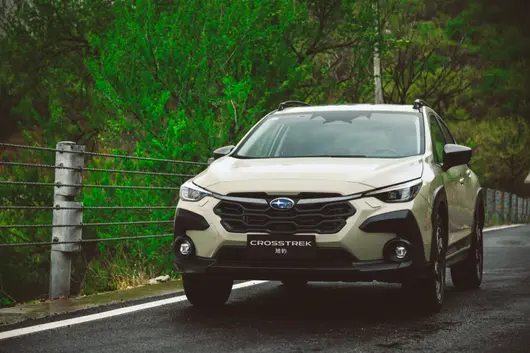
In the internal combustion engine era, Subaru built a unique brand identity with its boxer engine and all-wheel-drive system. 'Buy Toyota if you don't know cars, buy Subaru if you do' once became a famous saying in the car circle. Models such as Forester (Forester) and Outback (Outback) accumulated a large number of loyal users in the North American and Asian markets.

Among them, the Forester launched in 1997 has accumulated over 5 million units in global sales to date. It remains Subaru's sales powerhouse to this day.
However, with the advent of the new energy era, Subaru's global sales peak was fixed in 2019.
That year, Subaru's global sales reached 1.042 million units. Among them, the North American market contributed about 700,000 units, accounting for over two-thirds.
This deep 'bond' continued to this day — in fiscal 2025, of Subaru's 896,000 global sales, the North American market alone accounted for 708,000 units, nearly 7 times that of the Japanese domestic market.
It is worth knowing that in 2011, Subaru's best-selling year in the Chinese market, it only sold 57,000 units. As a niche Japanese brand, this sales volume was outstanding, but clearly, compared to the North American market, Subaru's presence in China was still too weak.
It is precisely this heavy reliance on the North American market that led to the current suffering for Subaru.
Regarding the huge losses in fiscal 2025, Subaru stated it was mainly due to the impact of additional tariffs imposed by the United States and investments in pure electric vehicles.
Last April, the tariff rate on Japanese imports imposed by the United States rose sharply to 27.5%. Subsequently, in September, although tariffs were lowered to 15%, they were still 6 times the original 2.5% tariff rate for Japanese automakers.
Subaru was directly impacted; just tariffs caused a profit loss of nearly 240 billion yen.
At the same time, steel, aluminum, and logistics shipping prices continued to rise, further squeezing Subaru's profit margins. In response, Subaru President Atsushi Osaki admitted that profit changes were the result of tariffs, exchange rates, raw materials, sales decline, and electrification expenses acting together.
Additionally, Subaru accrued a 57.8 billion yen impairment loss related to pure electric vehicles, mainly due to initial electrification investments not meeting expectations. Previously, Subaru planned to invest about 150 billion yen for electrification transformation, but currently only disbursed about 30 billion yen. However, because its new energy products did not meet market expectations, considering this, it postponed its self-developed pure electric vehicle plan originally scheduled for 2028, and at the same time, completely transferred R&D resources back to the internal combustion engine product line.
It is worth mentioning that Subaru once hoped the pure electric SUV 'Solterra' built on the same platform as Toyota bZ4X — the vehicle was introduced to China in 2023, the 2026 model was released at the 2025 New York Auto Show, but market performance never met expectations.

This strategic turn was also the main reason for Subaru's production decline — to promote pure electric production line renovation, a production line at Subaru Japan's Yajima Factory temporarily halted.
Now, Subaru's pure electric vehicle sales target is completely lost, and related investments are basically gone.

The reason behind it is also highly similar to Honda — electrification demand in markets such as North America cooled off significantly, while North America is also one of Subaru's most important markets.
Previously, Ford CEO Jim Farley had issued a warning — the U.S. federal government's $7,500 electric vehicle tax credit policy expired on September 30, 2025, and the market share of pure electric vehicles in the United States could see 'halving'.
Facts proved him right. In the fourth quarter of 2025, EV sales in the United States fell 36% year-on-year, the lowest level for the same period since the third quarter of 2022. Among them, Tesla's U.S. market sales in November 2025 were only 39,800 units, a 23% year-on-year decline, setting a new low in nearly 4 years.
Slightly comforting for Subaru is that this policy also caused heavy losses for American traditional automakers — Ford Motor announced in December 2025 to shift focus comprehensively from pure electric cars to hybrid and extended range, accounting for impairment expenditures of up to $19.5 billion. General Motors also transferred all equity in its Lansing Battery Plant in Michigan to its partner LG Energy.
However, looking at the entire Japanese automaker camp, Subaru's profit collapse is not an isolated case.
Honda mentioned earlier, its fiscal 2025 net loss was 414.3 billion yen, setting a first annual loss in nearly 70 years since listing. The main reason was electrification business losses exceeding 1.5 trillion yen, directly dragging down the annual performance.
Nissan Motor also posted huge net losses for two consecutive fiscal years. Fiscal 2025 loss was 533.1 billion yen, forced to cut jobs and shut down factories globally.
Toyota is the only enterprise in the Japanese category that maintained profit resilience, but its fiscal 2025 net profit also dropped 19.2% year-on-year, and fiscal 2026 is expected to drop another 22%.
And according to 'Nikkei Asia Review', mainly impacted by Middle East geopolitical conflict, 7 major Japanese automakers including Toyota, Honda, Nissan, Suzuki, Mazda, Subaru and Mitsubishi Motors are expected to see profits plummet in fiscal 2026 — in the fiscal year from April 2026 to March 2027, these automakers will realize a combined net profit of 3.9 trillion yen, this data dropped 48% from the historical record high of 7.54 trillion yen in fiscal 2023, nearly halved.
It is reported that the Middle East situation led to shipping blockades in the Strait of Hormuz, pushing up prices of steel, aluminum, petrochemical plastics and precious metals, directly raising costs for automotive steel sheets, interiors, bumpers, tires, etc.
Previously, Toyota stated in the financial report release that, calculated with the USD to JPY exchange rate at 1 to 150, Middle East-related factors will collectively drag operating profit down by 670 billion yen. Nissan Motor also listed the rise in petroleum derivative material costs as one of the reasons for its expected profit decline of 15 billion yen.

Additionally, S&P Global Corporation's analysis report said that in 2025, Japanese automakers' new car sales in 10 Middle Eastern countries such as the UAE and Iran broke through 870,000 units, accounting for about 30% of the market share in the region. Obstructed passage in the Strait of Hormuz also directly affected Japanese automakers' sales in the Middle Eastern market.
At the same time, Japanese automakers' overall market share in the Chinese market and Southeast Asian market also declined.
In the Chinese market, Nissan sales have declined for 7 consecutive years, Honda for 5 consecutive years, even Toyota, sales in China have also declined for 3 consecutive years, to date sales remain lower than in 2020.
In the Southeast Asian market, among the six major ASEAN countries including Indonesia, Malaysia, Thailand, Vietnam, Philippines, and Singapore, Japanese car new sales in 2025 declined by 22% overall compared to 2019.
And in the Australian market, in the first 4 months of this year, Australia's imports of cars from China reached 107,200 units, a 60% surge year-on-year; while imports of Japanese cars were only 94,500 units, a 23% plunge year-on-year.
It is worth mentioning that Japan lost the status of the largest car import source country in Australia for the first time since 1998.

The Japanese brand falling behind in the new energy era reflects the electrification landscape of ice and fire under global differentiation.
In 2025, global new energy vehicle sales reached 22.71 million units, a 27% year-on-year increase, penetration rate rose to 23.5%.
Among them, China has become the undisputed leader. New energy vehicle sales in 2025 reached 15.8 million units, penetration rate broke through 48%. Even BYD surpassed Tesla with 2.2567 million pure electric sales, topping the global pure electric sales champion.
However, although China is almost pulling new energy popularity with its own strength, for Japanese automakers, to hold core markets, they still need to rely on internal combustion engines and traditional markets such as Europe and the US in the short term, where pure electricity is not the mainstream.
Referencing peak data from 2022, the basic platform of Japanese automakers' traditional internal combustion engines highly relies on the North American market (sales share 38%, far higher than China's 17%), combined with 13% contribution from the European market, European and American markets combined share exceeded half, becoming their important overseas pillar.
But the reality is, driven by strict carbon emission policies, Europe's new energy penetration rate is still less than 30%; while the US market is even lower, only 17%. Policy fluctuations and weak demand further amplified Japanese automakers' passivity and risk during the comprehensive industry shift period, and also became the main driver for Subaru, Honda, and other automakers to temporarily abandon pure electricity.
In fact, not only Japanese cars, multiple global automakers are also slowing down the pace of pure electricity — Volkswagen delayed pure electric capacity expansion, BMW and Mercedes also contracted their lines, retreating to defend the higher profit high-end pure electric market; Toyota insists on 'Hybrid + Hydrogen + Pure Electric', not letting any go.
The core contradiction behind this lies in: R&D and production line renovation costs that often run into billions, encountering the global price involution led by Chinese automakers, in the situation where pure electric business is generally loss-making, blind radicalism will only drag down financial reports.
Therefore, automakers can only temporarily set aside long-term layouts, prioritizing guaranteed short-term profitability.
However, if the perspective is lowered, the Japanese dilemma has its unique structural problems: As a car power, why has Japan never been able to wait for a disruptive new car power?
The answer is actually in the mystery — Toyota, Honda and other automakers, with supply chain giants like Aisin, Denso, etc., after decades of global layout, have formed a highly closed monopoly system from supply chain to sales channels.
This huge and solidified vested interest structure leads to its capital logic being extremely conservative — in electrification transformation, traditional transmission, engine technologies are replaced by batteries, motors, control systems, traditional technology advantages instead become a burden for transformation.
Therefore, capital prefers to maintain the existing giant basic platform, rather than risking bets on startups with unclear prospects.
Excessive maintenance of stock interests has solidified the innovation soil of the Japanese automotive industry, making it difficult for new forces to grow and break out.

Additionally, since the 1970s, Japan has begun researching hydrogen fuel cells, leading to a lack of support for the pure electric route in both policy and consumer end, and Japanese consumers prefer K-Car (Mini Cars) and mature hybrid technology, combined with high battery costs, low adoption rate of charging facilities, pure electric models insufficient attraction to consumers.
As of February 2026, the proportion of Japanese pure electric vehicle new car registrations in the overall passenger car market is only 1.4%. Almost negligible.
Overall, Japanese automakers have not completely lost technical depth, their hesitation and falling behind in the new energy era, the root lies in the lack of motivation for self-disruption.
Joint factors such as giant vested interests, government hydrogen energy policy orientation, low market acceptance of pure electricity, plus capital's natural avoidance of risk, jointly led to the 'New Force Model' being difficult to survive in Japan.
Currently Toyota, Nissan, etc. also fill the short board by importing Chinese pure electric models, but under the background of monopoly system not broken, market electrification transformation slow, Japanese survival by defense path is still difficult.

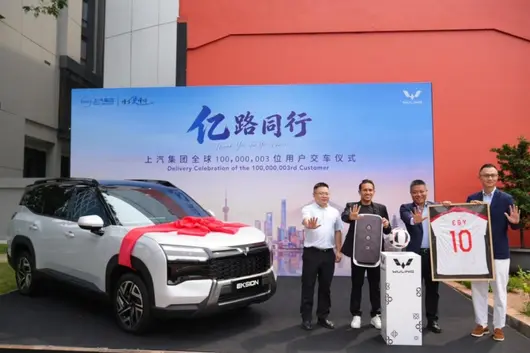
28 Mei, SAIC Group menyambut penghantaran keseluruhan 100 juta kenderaan pertama di dunia, menjadi kumpulan automotif pertama di China yang mempunyai jualan dan pengeluaran kumulatif melebihi 100 juta unit. Daripada jumlah tersebut, SAIC-GM-Wuling menyumbang kumulatif melebihi 32 juta unit. Pada hari itu, Kereta Global SAIC-GM-Wuling EKSION diserahkan kepada pengguna sulung di Jakarta, Indonesia.

[Penghantaran Keseluruhan Kenderaan ke-100,000,003 SAIC Group di Jakarta, Indonesia]
“Apabila rakyat memerlukan sesuatu, Wuling akan membuatnya.” SAIC-GM-Wuling tepat melihat pasaran, menggunakan produk yang laris untuk menjawab keperluan pengguna. Wuling Hongguang dengan sifat universal “sesuai untuk perniagaan dan kekeluargaan, kukuh dan tahan lasak”, menjadi pilihan utama bagi ramai usahawan dan keluarga. Seiring dengan peningkatan gaya hidup kualiti dalam pengguna, Baojun 730 dengan ruang fleksibel dan nisbah harga dan prestasi yang tinggi, telah memecahkan monopoli jenama patuh ke atas pasaran kenderaan guna sendiri (MPV). Pada tahun 2020, pada tempoh peluang transformasi tenaga baharu dalam industri automotif China, Hongguang MINIEV yang dilancarkan menjadi salah satu pelopor dalam bidang kenderaan pengangkutan tenaga baharu dalam negara. Mei tahun ini, SAIC-GM-Wuling dan Huawei Qiankun bekerjasama untuk membangun SUV 6 tempat duduk flagship teknologi pertama, Huajing S secara rasmi dilancarkan, dengan amalan inovasi sinergi merentas industri, memecahkan halangan premium teknologi pemanduan pintar bertaraf tinggi.
 [Huajing S 6 Tempat Duduk Flagship Teknologi Huawei Qiankun yang Dilengkapi]
SAIC-GM-Wuling mempercepatkan pelan tenaga baharu dan kecerdasan, semasa memajukan penambahbaikan elektrifikasi dan kecerdasan produk, pelan pasaran global juga berjalan lebih mendalam dan nyata. Pada masa ini, jumlah jualan luar negara SAIC-GM-Wuling telah melebihi 1.5 juta unit, perniagaan meliputi lebih daripada 110 negara dan wilayah di seluruh dunia.
Syarikat membina daya saing teras pada semua dimensi yang merangkumi sistem pembuatan pintar, matriks produk dan ekosistem industri. Pertama, sistem pembuatan 'Smart Island' pertama di dunia, dengan mod pembuatan pintar fleksibel "kenderaan mencari station kerja, bahan mencari kenderaan", mencapai lompatan pada kecekapan, kualiti dan kos pada semua dimensi; Kedua, matriks produk pelbagai yang disesuaikan dengan pasaran global, model-model seperti EKSION (Starlight 560), DARION (Starlight 730), BINGO (Wuling Bingo), BINGO S (Bingo S) telah berturut-turut mendarat di luar negara, meliputi SUV, MPV, kereta sedan dan kategori utama lain, memenuhi keperluan perbezaan出行 bagi negara yang berbeza dan kumpulan pengguna yang berbeza; Ketiga, mod globalisasi unik "Pindahan Rantai Pembuatan ke Luar Negara", melalui sinergi mendalam lima rantai seperti rantai pembuatan [img] rantai, rantai bekalan, rantai jualan, rantai kewangan, rantai bakat, memecahkan laluan tunggal perdagangan produk tradisional ke luar negara, mempromosikan sistem pembuatan pintar China dan piawai ke seluruh dunia.

[Sistem Pembuatan 'Smart Island' Pertama Di Dunia (I²MS)]
Kereta Global EKSION yang diserahkan di Indonesia kali ini merupakan nota terbaru bagi strategi globalisasi Wuling yang semakin mendalam. Bergantung pada cawangan Indonesia sebagai titik sokongan utama, SAIC-GM-Wuling berterusan memperdalam strategi rantau "Integrasi Indonesia-Malaysia-Thailand", meliputi secara menyeluruh produk tenaga baharu dan sistem rantaian bekalan setempat ke Malaysia dan Thailand, dan secara beransur-ansur merambah ke negara ASEAN seperti Vietnam dan Filipina, membentuk corak globalisasi perkembangan serantau yang bersinergi dan berkembang beransur.
© 2024 Bitauto.com. All Rights Reserved.
Bitauto (www.yiche.com and www.bitauto.com) is one of the most visited automotive websites in China. We provide detailed info on Chinese car brands available in your area. Please note that the information provided on this website is based on publicly available data and is for reference only. It may not be fully updated or accurate at all times.

Help us improve our website


