

Homeoutdoor

Search History
Popular Searches
Dealer Login / Sign Up

In the Malaysian SUV market, many buyers compare Proton X90 and Mazda CX-60 when choosing a car. These two models are quite close in price and positioning. Today we will make a detailed comparison from multiple aspects to help you save time on research.
Proton X90 OTR price in Malaysia is RM 106,800 - 122,800, with a total of 4 versions, including 2026 1.5T Prime X (RM 122,800), 2026 1.5T Prime (RM 116,800), 2026 1.5T Lite (RM 106,800), etc.
Mazda CX-60 OTR price in Malaysia is RM 200,510 - 252,873, with a total of 2 versions, including 2026 3.3T 4WD High Plus (RM 252,873), 2025 2.5L 2WD High (RM 200,510), etc.
In terms of price, the Proton X90's starting price is indeed RM 93,710 cheaper than the Mazda CX-60. If your budget is limited, the Proton entry-level version can already meet daily needs. However, also note that saving those few thousand might involve trade-offs in features, depending on your specific requirements.

Proton X90 equipped with 1.5L Turbo, 140 hp. Official fuel consumption 7.0 L/100km.
Mazda CX-60 equipped with 2.0L 4-cyl, 170 hp. Official fuel consumption 8.0 L/100km.
In terms of power, the Mazda CX-60's 2.0L 4-cyl has 30 more horsepower than the Proton X90's 1.5L Turbo. However, for daily city driving, both cars have sufficient power and you won't feel underpowered.

Proton X90 warranty 5 years/150,000km, maintenance interval every 10,000km or 6 months.
Mazda CX-60 warranty 5 years/150,000km, maintenance interval every 10,000km or 6 months.
The warranty terms for both cars are the same, so no need to worry about this. Actual maintenance costs depend on the brand's service network and parts prices. It is suggested to ask real owners in car owner groups for their experiences.

Proton X90 and Mazda CX-60 are both mainstream choices in the Malaysian market, suitable for family use and daily commuting. If you value brand reputation and resale value more, consider the one with better reputation; if you care more about cost-performance ratio and features, choose the one with richer configuration. Finally, it is recommended to test drive both, personal experience is most important.

Overall, Proton X90 and Mazda CX-60 are both very good car models in the Malaysian market. Choosing which one depends on your personal needs and budget. It is recommended to do your homework, compare quotes from several car dealers, then test drive to make a final decision. Buying a car is a big matter, spending time on research will never be wrong.


In the Malaysian SUV market, many buyers compare Proton X90 and Mazda CX-5 when choosing a car. These two cars are quite close in price and positioning. Today we will make a detailed comparison from multiple aspects to help you save time on research.
Proton X90's OTR price in Malaysia is RM 106,800 - 122,800, with 4 versions in total, including 2026 1.5T Prime X (RM 122,800), 2026 1.5T Prime (RM 116,800), 2026 1.5T Lite (RM 106,800), etc.
Mazda CX-5's OTR price in Malaysia is RM 135,469 - 166,760, with 3 versions in total, including 2025 2.0L AT 35th Anniversary (RM 316,154), 2025 2.0L AT (RM 296,154), 2025 2.0L MT (RM 294,154), etc.
From a price perspective, the starting price of Proton X90 is indeed RM 28,669 cheaper than Mazda CX-5. If your budget is limited, Proton's entry-level version can already meet daily needs. But also note, the few thousand bucks saved might involve trade-offs in features, depends on your specific needs.
Proton X90 comes with a 1.5L Turbo, 140 hp. Official fuel consumption 7.0 L/100km.
Mazda CX-5 comes with a 1.5L Turbo, 140 hp. Official fuel consumption 7.0 L/100km.
Both cars use the same powertrain system, the driving feel is basically no difference in daily use. Fuel consumption is also similar, no need to worry too much about this point.
Proton X90 Warranty 5 years/150,000km, Maintenance interval 10,000km or 6 months.
Mazda CX-5 Warranty 5 years/150,000km, Maintenance interval 10,000km or 6 months.
Both cars have the same warranty conditions, no need to worry about this aspect. Actual maintenance costs depend on the brand's service network and parts prices, recommended to ask real owners in car owner groups for experience.
Proton X90 and Mazda CX-5 are both mainstream choices in the Malaysian market, suitable for family use and daily commuting. If you value brand reputation and resale value more, you can prioritize the one with better reputation; if you care more about value for money and features, then choose the model with richer configuration. Finally, it is recommended to test drive both, personal experience is the most important.

Overall, Proton X90 and Mazda CX-5 are both very good models in the Malaysian market. Which one to choose depends on your personal needs and budget. We suggest doing research first, compare quotes from several dealerships, then test drive to make the final decision. Buying a car is a big thing, spending time doing research will never be wrong.

喺馬來西亞嘅 SUV 市場,好多買家在揀車嘅時候都會拿 Proton X90 同 Mazda CX-60 嚟做比較。呢兩款車喺價錢同定位上都幾接近,今日我哋就從多個方面做一個詳細嘅比較,幫你省返做功課嘅時間。
Proton X90 喺馬來西亞嘅 OTR 售價係 RM 106,800 - 122,800,一共有 4 個版本,包括 2026 1.5T Prime X(RM 122,800)、2026 1.5T Prime(RM 116,800)、2026 1.5T Lite(RM 106,800)等。
Mazda CX-60 喺馬來西亞嘅 OTR 售價係 RM 200,510 - 252,873,一共有 2 個版本,包括 2026 3.3T 4WD High Plus(RM 252,873)、2025 2.5L 2WD High(RM 200,510)等。
從價錢來看,Proton X90 嘅入門價確實比 Mazda CX-60 平咗 RM 93,710。如果你預算有限,Proton 嘅入門版已經可以滿足日常需要。但都要留意,平嗰啲幾千蚊,可能喺配備上要有取捨,具體就要睇你嘅需要。
Proton X90 嘅安全評級係 5★ (ASEAN NCAP),主動安全系統包括 ADAS (ACC, AEB, LKA, LDA, BSM, RCTA)。
Mazda CX-60 嘅安全評級係 5★ (Euro NCAP),主動安全系統包括 i-Activsense Pro。
安全配備方面,兩款車都拿到唔錯嘅評級。不過 Proton X90 嘅 ADAS (ACC, AEB, LKA, LDA, BSM, RCTA) 同 Mazda CX-60 嘅 i-Activsense Pro 喺功能上有啲差異,如果你比較重視主動安全嘅話,可以仔細比較吓兩者嘅功能列表。
Proton X90 車身長 4400 mm,行李廂 400 L。
Mazda CX-60 車身長 4500 mm,行李廂 450 L。
空間方面,Mazda CX-60 嘅車身比 Proton X90 長咗 100 mm,乘坐空間更有優勢。不過 Proton X90 喺城市入面泊車會靈活啲,各有取捨。
Proton X90 採用 FWD 驅動方式。
Mazda CX-60 採用 FWD 驅動方式。
兩款車嘅驅動方式一樣,都係 FWD,日常駕駛感受唔會有太大分別。
總體嚟講,Proton X90 同 Mazda CX-60 都係馬來西亞市場好唔錯嘅車型。揀邊一部,關鍵仲要睇你嘅個人需要同預算。建議大家做好功課,多比較幾間車行嘅報價,再試駕先做最終決定。買車係件大事,花少少時間做功課絕對唔會錯。

2026中国汽车论坛上,北京现代总经理李凤刚公开批评部分品牌为加快上市节奏删减必要测试环节,让消费者变相充当“试车员”。几乎同时,全国汽车标准化技术委员会拟将新能源车可靠性行驶试验总里程提升至3万公里。两件事指向同一个方向——“速成车”正在被叫停。

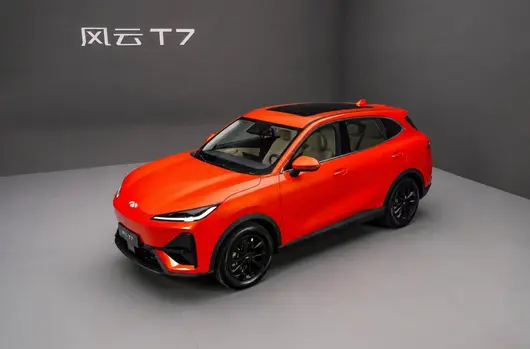
就在这个节骨眼上,风云T7成了“显眼包”:别人12到18个月走完研发到上市全流程,这台车从2022年预研到现在才准备预售。
那么,为什么风云T7这么“慢”?用奇瑞汽车执行副总裁李学用的话来说,那就是研发快不了、测试快不了、共创快不了。

先看研发。风云T7不是一台“中国特供车”,海外叫LEPAS L6,南非已预售、泰国已上市,后续还要登陆欧盟、澳新、英国等130多个国家和地区。全球十大研发设计中心、百余名设计师协同打造,1000+全球用户深度共创。要适配不同国家的法规标准、路况条件、气候环境,研发周期压缩不了。

再看测试。风云T7累计投入963台试验车,全球耐久测试里程达145万公里。测试路线覆盖欧盟、澳洲、南美、中东、东南亚、俄罗斯,历经高温、高寒、高湿、高盐碱多种极限环境。这不是在实验室里跑出来的数据,是在真实极端环境里一寸一寸磨出来的。同时全套评测涵盖安全驾驶、碰撞规避、碰撞保护、碰撞后安全四大维度:这些测试环节,一个都不能省,也一个都快不了。

最后看共创。风云T7拥有1000+全球用户深度参与研发过程,用户的真实反馈、不同市场的实际需求,都融进了产品定义里。这种共创模式本身就需要时间,急不来。
说句实话,现在行业里有些车之所以能“快”,靠的是压缩测试、简化验证。但造车不是造手机,一台车关乎一家人少则几年、多则十几年的出行安全。与其上市后让用户当“试车员”发现问题,不如在上市前把所有问题都解决掉。风云T7在全球极端环境里实打实地跑了145万公里,这份“慢”,是对用户负责的慢。

说白了,风云T7的“慢”,不是效率低,是正向开发的必经之路。它不是在国内造好了再改吧改吧卖到国外,而是从第一天起就按照全球标准来打造:先在全球跑了一圈验证品质,再回到国内市场。这种“先出海、再归国”的路径,本身就需要比“速成”多出几倍的时间。
可以说,风云T7的“慢”,是面对全球市场时的那份敬畏:对安全的敬畏、对品质的敬畏、对用户的敬畏。这份“慢”,值得。

Di pasaran SUV Malaysia, ramai pembeli yang membandingkan Proton X90 dan Honda HR-V semasa memilih kereta. Kedua-dua model ini mempunyai julat harga dan posisi pasaran yang agak hampir, hari ini kita akan buat perbandingan terperinci dari pelbagai aspek untuk membantu anda menjimatkan masa membuat kajian.
Proton X90 di Malaysia dijual pada harga OTR RM 106,800 - 122,800, terdapat 4 versi, termasuk 2026 1.5T Prime X (RM 122,800), 2026 1.5T Prime (RM 116,800), 2026 1.5T Lite (RM 106,800) dan lain-lain.
Honda HR-V di Malaysia dijual pada harga OTR RM 115,900 - 143,900, terdapat 4 versi, termasuk 2026 e:HEV 1.5L RS (RM 143,900), 2026 1.5T V (RM 137,900), 2026 1.5T E (RM 130,900) dan lain-lain.
Dari segi harga, harga permulaan Proton X90 memang lebih murah RM 9,100 berbanding Honda HR-V. Jika anggaran anda terhad, versi permulaan Proton sudah boleh memenuhi keperluan harian. Tetapi perlu diingat, perbezaan harga tersebut mungkin melibatkan pertukaran pada kelengkapan, bergantung pada keperluan anda.
Penarafan keselamatan Proton X90 ialah 5★ (ASEAN NCAP), sistem keselamatan aktif termasuk ADAS (ACC, AEB, LKA, LDA, BSM, RCTA).
Penarafan keselamatan Honda HR-V ialah 5★ (ASEAN NCAP), sistem keselamatan aktif termasuk Honda SENSING (ACC, CMBS, LKAS, RDM).
Kedua-dua model mempunyai penarafan keselamatan yang sama, kelengkapan keselamatan di kelas ini sudah sangat lengkap. Keselamatan kereta baharu sekarang umumnya tidak kurang, anda tidak perlu risau tentang perkara ini.
Proton X90 panjang badan 4400 mm, ruang muatan 400 L.
Honda HR-V panjang badan 4500 mm, ruang muatan 450 L.
Dari segi ruang, badan Honda HR-V lebih panjang 100 mm berbanding Proton X90, ruang penumpang lebih unggul. Namun, Proton X90 lebih fleksibel untuk memarkir di bandar, kedua-duanya mempunyai kompromi.
Proton X90 menggunakan cara pemacu FWD.
Honda HR-V menggunakan cara pemacu FWD.
Kedua-dua model mempunyai cara pemacu yang sama, iaitu FWD, pengalaman memandu harian tidak akan berbeza banyak.

Secara keseluruhannya, Proton X90 dan Honda HR-V kedua-duanya adalah model yang sangat bagus di pasaran Malaysia. Memilih salah satu daripada kedua-duanya bergantung kepada keperluan dan anggaran peribadi anda. Kami menasihatkan anda membuat kajian terlebih dahulu, bandingkan harga di beberapa pusat jualan kereta, kemudian buat ujian jalan untuk membuat keputusan akhir. Membeli kereta adalah perkara besar, meluangkan masa membuat kajian pasti tidak salah.

喺馬來西亞嘅 SUV 市場,好多買家在揀車嘅時候都會用 Proton X90 同 Honda HR-V 做比較。呢兩款車喺價位同定位上都幾接近,今日我哋就由多個方面做一個詳細比較,幫你省咗做功課嘅時間。
Proton X90 喺馬來西亞嘅 OTR 售價係 RM 106,800 - 122,800,一共有 4 個版本,包括 2026 1.5T Prime X(RM 122,800)、2026 1.5T Prime(RM 116,800)、2026 1.5T Lite(RM 106,800) 等。
Honda HR-V 喺馬來西亞嘅 OTR 售價係 RM 115,900 - 143,900,一共有 4 個版本,包括 2026 e:HEV 1.5L RS(RM 143,900)、2026 1.5T V(RM 137,900)、2026 1.5T E(RM 130,900) 等。
由價錢睇,Proton X90 嘅起步價確實比 Honda HR-V 平咗 RM 9,100。如果你預算有限,Proton 嘅入門版已經可以滿足日常需求。但都要注意,平嗰幾千蚊,可能會喺配備上有取舍,具體要睇你嘅需求。
Proton X90 搭載 1.5L Turbo,馬力 140 hp。官方油耗 7.0 L/100km。
Honda HR-V 搭載 1.5L Turbo,馬力 140 hp。官方油耗 7.0 L/100km。
兩款車用緊同一套動力系統,日常開落嚟嘅感受基本上無分別。油耗方面都差不多,唔使太糾結呢一點。
Proton X90 嘅安全評級係 5★ (ASEAN NCAP),主動安全系統包括 ADAS (ACC, AEB, LKA, LDA, BSM, RCTA)。
Honda HR-V 嘅安全評級係 5★ (ASEAN NCAP),主動安全系統包括 Honda SENSING (ACC, CMBS, LKAS, RDM)。
兩款車嘅安全評級一樣,喺呢個級數裡面安全配備都算畀得好齊全。而家嘅新車安全性都唔差,唔使太擔心呢一點。
Proton X90 車身長 4400 mm,尾箱 400 L。
Honda HR-V 車身長 4500 mm,尾箱 450 L。
空間方面,Honda HR-V 嘅車身比 Proton X90 長咗 100 mm,乘坐空間更有優勢。不過 Proton X90 喺城市入面停車會靈活啲,各有取捨。
Proton X90 同 Honda HR-V 都係馬來西亞市場嘅主流選擇,適合家庭使用、日常通勤。如果你更睇重品牌同口碑同二手價,可以優先考慮口碑更好嗰一款;如果你更在意性價比同配備,就揀配置更豐富嗰款。最尾始終建議兩款都去試駕,親自體驗先係最重要。
總體嚟講,Proton X90 同 Honda HR-V 都係馬來西亞市場好唔錯嘅車型。揀邊一部,關鍵都要睇你個人同需求同預算。建議大家做好功課,多比較幾間車行之報價,再去試駕做最終決定。買車係件大事,花少少時間做功課絕對唔會錯。

In the Malaysian SUV market, many buyers compare Proton X70 and Volkswagen Tiguan when choosing a car. These two cars are quite close in price and positioning. Today, we will conduct a detailed comparison from multiple aspects to help you save time on research.
The OTR price for Proton X70 in Malaysia is RM 106,800 - 122,300, with a total of 3 versions, including 1.5L Standard 2WD (RM 106,800), 1.5L Executive 2WD (RM 115,800), 1.5L Premium 2WD (RM 122,300), etc.
The OTR price for Volkswagen Tiguan in Malaysia is RM 206,540 - 260,024, with a total of 2 versions, including 2025 Allspace 2.0T R-Line (RM 260,024), 2025 Allspace 1.4T Elegance (RM 206,540), etc.
In terms of price, the starting price of Proton X70 is indeed RM 99,740 cheaper than Volkswagen Tiguan. If your budget is limited, Proton's entry-level version can already meet daily needs. However, also note that the savings of a few thousand may involve trade-offs in features, depending on your specific needs.

The safety rating of Proton X70 is 5★ (ASEAN NCAP), with active safety systems including ADAS (ACC, AEB, LKA, LDA, BSM, RCTA).
The safety rating of Volkswagen Tiguan is 5★ (Euro NCAP), with active safety systems including IQ.Drive.
In terms of safety features, both cars have achieved good ratings. However, there are some differences in functionality between Proton X70's ADAS (ACC, AEB, LKA, LDA, BSM, RCTA) and Volkswagen Tiguan's IQ.Drive. If you value active safety, you can carefully compare the feature lists of both.

Proton X70 uses FWD drive configuration.
Volkswagen Tiguan uses FWD drive configuration.
The drive configuration of both cars is the same, both are FWD, and there will be no significant difference in daily driving experience.

Proton X70 warranty is 5 years/150,000km, maintenance interval is every 10,000km or 6 months.
Volkswagen Tiguan warranty is 3 years/100,000km, maintenance interval is every 10,000km or 6 months.
Overall, Proton X70 and Volkswagen Tiguan are both excellent models in the Malaysian market. Which one to choose depends mainly on your personal needs and budget. It is recommended to do your research, compare quotes from multiple car dealerships, and then test drive to make the final decision. Buying a car is a big matter, spending time on research will never be wrong.


Pada pasaran SUV di Malaysia, ramai pembeli yang semasa memilih kereta akan membandingkan Proton X70 dan Subaru Forester. Kedua-dua kereta ini dalam hal harga dan kedudukannya agak hampir, hari ini kita akan buat perbandingan terperinci dari pelbagai aspek, bantu anda jimat masa membuat kajian.
Proton X70 di Malaysia harga OTR adalah RM 106,800 - 122,300, terdapat 3 varian, termasuk 1.5L Standard 2WD (RM 106,800), 1.5L Executive 2WD (RM 115,800), 1.5L Premium 2WD (RM 122,300) dan lain-lain.
Subaru Forester di Malaysia harga OTR adalah RM 174,000 - 197,000, terdapat 3 varian, termasuk 2024 2.0L S EyeSight GT Edition (RM 189,538), 2024 2.0L S EyeSight (RM 177,538), 2024 2.0L L EyeSight (RM 167,538) dan lain-lain.
Dari segi harga, harga permulaan Proton X70 memang lebih murah RM 67,200 berbanding Subaru Forester. Jika bajet anda terhad, versi masuk Proton sudah boleh penuhi keperluan harian. Tetapi perlu perhatikan, lebih murah beberapa ribu itu, mungkin dalam kelengkapan ada pengorbanan, bergantung pada keperluan anda.

Proton X70 padan enjin 1.5L Turbo, kuasa 140 hp. Penggunaan bahan api rasmi 7.0 L/100km.
Subaru Forester padan enjin 2.0L 4-cyl, kuasa 170 hp. Penggunaan bahan api rasmi 8.0 L/100km.
Dari segi kuasa, Subaru Forester 2.0L 4-cyl daripada Proton X70 1.5L Turbo tambah 30 hp. Namun harian di bandar dibuka, kuasa kedua-dua kereta sudah cukup, tidak terasa kurang tenaga.

Proton X70 guna FWD cara pemacu.
Subaru Forester guna FWD cara pemacu.
Kedua-dua kereta cara pemacu sama, semua FWD, pengalaman memandu harian tiada bezak jauh.

Proton X70 waranti 5 tahun/150,000km, selang penyelenggaraan setiap 10,000km atau 6 bulan.
Subaru Forester waranti 3 tahun/100,000km, selang penyelenggaraan setiap 10,000km atau 6 bulan.
Proton X70 dan Subaru Forester semua pilihan utama pasaran Malaysia, sesuai untuk kegunaan keluarga, perjalanan harian. Jika anda lebih hargai reputasi jenama dan harga semula, boleh utamakan yang reputasi lebih baik; jika anda lebih pentingkan nisbah harga dan kelengkapan, pilih yang spesifikasi lebih lengkap. Akhir sekali cadangan kedua-dua kena uji memandu, pengalaman sendiri paling penting.
Secara umum, Proton X70 dan Subaru Forester semua model kereta bagus di pasaran Malaysia. Pilih mana satu, kunci masih tengok keperluan peribadi dan bajet anda. Kami cadangkan buat kajian, bandingkan tawaran harga lebih banyak kedai kereta, baru uji memandu buat keputusan akhir. Beli kereta perkara besar, habiskan masa buat kajian pasti tidak salah.


In the Malaysian SUV market, many buyers compare the Proton X70 and MG MG HS when choosing a car. Both cars are quite close in price and positioning, so today we will make a detailed comparison from multiple aspects to help you save time on research.
The Proton X70 OTR price in Malaysia is RM 106,800 - 122,300, with a total of 3 versions, including 1.5L Standard 2WD (RM 106,800), 1.5L Executive 2WD (RM 115,800), 1.5L Premium 2WD (RM 122,300) etc.
The MG MG HS OTR price in Malaysia is RM 130,450 - 146,450, with a total of 2 versions, including 1.5L Standard (RM 105,000), 1.5L Executive (RM 115,000) etc.
From a price perspective, the Proton X70 starting price is indeed RM 23,650 cheaper than the MG MG HS. If your budget is limited, the Proton entry-level version can already meet daily needs. However, be aware that the cheaper thousands may involve trade-offs in equipment, depending on your specific requirements.
The Proton X70 safety rating is 5★ (ASEAN NCAP), active safety systems include ADAS (ACC, AEB, LKA, LDA, BSM, RCTA).
The MG MG HS safety rating is TBD, active safety systems include Basic.
Regarding safety features, both cars have received decent ratings. However, there are some functional differences between the Proton X70 ADAS (ACC, AEB, LKA, LDA, BSM, RCTA) and the MG MG HS Basic. If you value active safety highly, you can compare their function lists carefully.
Proton X70 body length 4400 mm, trunk 400 L.
MG MG HS body length 4400 mm, trunk 400 L.
The dimensions of both cars are almost the same, with little difference in interior space. Cars in this class are fully sufficient for daily use.
Proton X70 warranty 5 years/150,000km, maintenance interval every 10,000km or 6 months.
MG MG HS warranty 7 years/150,000km, maintenance interval every 10,000km or 6 months.
Overall, Proton X70 and MG MG HS are both excellent models in the Malaysian market. Which one to choose depends mainly on your personal needs and budget. We suggest doing your homework, comparing quotes from multiple dealerships, and then going for a test drive to make a final decision. Buying a car is a major event, and spending time doing research will never be wrong.

In the Malaysian SUV market, many buyers often compare the Proton X70 and the MG HS when choosing a car. These two cars are quite close in price and positioning, so today we will compare them in detail from multiple aspects to help you save time doing homework.
The Proton X70 is priced at RM 106,800 - 122,300 OTR in Malaysia, with a total of 3 versions, including 1.5L Standard 2WD (RM 106,800), 1.5L Executive 2WD (RM 115,800), 1.5L Premium 2WD (RM 122,300) and more.
The MG HS is priced at RM 130,450 - 146,450 OTR in Malaysia, with a total of 2 versions, including 1.5L Standard (RM 105,000), 1.5L Executive (RM 115,000) and more.
From a price perspective, the Proton X70's starting price is indeed RM 23,650 cheaper than the MG HS. If your budget is limited, Proton's entry-level version is already sufficient for daily needs. However, keep in mind that the few thousand savings may involve trade-offs in features, so it depends on your specific needs.
The Proton X70 comes with a 1.5L Turbo, with 140 hp. Official fuel consumption is 7.0 L/100km.
The MG HS comes with a 1.5L Turbo, with 140 hp. Official fuel consumption is 7.0 L/100km.
Both cars use the same powertrain, and the driving feel is basically the same. Fuel consumption is also similar, so no need to worry too much about this point.
The Proton X70 has a body length of 4400 mm and a trunk of 400 L.
The MG HS has a body length of 4400 mm and a trunk of 400 L.
The dimensions of both cars are almost the same, and the interior space does not differ much. For this class of cars, daily use is more than sufficient.
Both the Proton X70 and the MG HS are popular choices in the Malaysian market, suitable for family use and daily commuting. If you value brand reputation and resale value more, you might prioritize the one with better reputation; if you care more about value for money and features, then choose the one with richer configurations. Ultimately, it is recommended to test drive both, as personal experience is the most important.
In general, both the Proton X70 and the MG HS are very good car models in the Malaysian market. Which one to choose depends mainly on your personal needs and budget. We suggest doing your research, comparing quotations from multiple dealerships, and then test driving to make a final decision. Buying a car is a big matter, and spending time doing research will never go wrong.

August 4, GAC Group released the July 2026 production and sales summary. Data shows, this July, GAC Group's monthly car production was 103,284 units, down 19.62% YoY; sales were 112,934 units, down 5.48% YoY; Jan-July cumulative production was 900,062 units, down 3.24% YoY; cumulative sales were 886,019 units, up 1.28% YoY.
The new energy segment remains the core driving force. In July, the group's new energy vehicle sales were 51,520 units, up 54.20% YoY; cumulative sales for the first 7 months reached 311,678 units, a YoY increase of 66.20%, with new energy penetration rate rising from about 28% last year to about 35%. Additionally, the combined proportion of fuel-saving and new energy vehicles has risen to 63.96%.

Image Source: GAC Group
Domestic Brand Growth Leads, Joint Venture Camp Shows Divergence
Domestic brands have become the main growth pole of GAC Group. Jan-July, GAC's domestic brand cumulative sales exceeded 400,000 units, up 33.31% YoY; July single-month sales exceeded 54,200 units, up 19.91% YoY.
GAC AION July sales were 28,807 units, up 36.37% YoY; Jan-July cumulative sales 210,386 units, up 62.08% YoY. AION Y series monthly sales maintained over 10,000 level; AION V series listed for two months cumulative deliveries broke 12,000 units, occupying 73.3% share in the 100,000-150,000 RMB class LIDAR smart driving pure electric SUV market. In July, AION officially released the new Ray series models, Hyper S600 also started deliveries simultaneously.
GAC Trumpchi July sales were 22,739 units, down 5.57% YoY, but Jan-July cumulative sales still reached 187,112 units, up 9.83% YoY. This month Trumpchi Wish S7 PHEV launched for sale, fifth-generation GS4 entered the market with starting price of 79,800 RMB.
The high-end smart electric brand Qijing Automotive co-created by GAC and Huawei Kunlun, first model GT7 listed at end of June, July started user delivery, first month sales 2,658 units. Nationwide over 90 cities have established nearly 300 stores, second model GX7 planned release within the year, product matrix gradually taking shape.
Regarding the joint venture sector, GAC Toyota July sales were 46,500 units, down 19.84% YoY; Jan-July cumulative sales 402,500 units, basically flat YoY. Camry, Highlander, Sienna three flagship models July combined sales 22,843 units, accounting for 49% of Toyota brand sales that month. Toyota bZ series new energy vehicles July sales 12,002 units, proportion over 25%, among which Toyota bZ 3X monthly sales 9,546 units, ranking at the forefront of joint venture NEV sales for consecutive months.
GAC Honda July sales were 11,686 units, down 27.11% YoY; Jan-July cumulative sales 80,004 units, down 53.13% YoY. In terms of residual value, Accord ranked first among joint venture mid-size sedans with 55.90% three-year residual value, Breeze ranked second among joint venture compact SUVs with 58.19% three-year residual value.
Worth mentioning, in July, GAC Honda cumulative sales broke 11 million units, both shareholders signed extension agreement extending cooperation period to 2038, and plan to launch 5 new cars in the next two years, including two localized new energy vehicles and iterative hybrid products.
Exports Up 130% YoY, Investment and Charging Ecology Advance Simultaneously
Export business continues high growth trend. July, GAC domestic brand export volume 23,575 units, up 119% YoY; Jan-July cumulative exports 145,000 units, YoY increase reached 130%, already exceeding total export volume of 2025 full year.

GAC GS8 rolled off production line at Kazakhstan production base; Image Source: GAC Group
Looking by region, July Americas market terminal sales up 139% YoY, Uruguay, Costa Rica, Colombia, Brazil markets sales all achieved multiple-fold growth, GAC simultaneously approved to join Brazil "Green Mobility and Innovation Plan". CIS region terminal sales up 112% YoY, global 7th KD factory put into production in Kazakhstan, GS8 model rolled off line. Asia-Pacific market terminal sales up 78% YoY, Thailand Rayong factory cumulative roll-off total vehicles over 10,000; Philippines multiple new cars completed introduction. Middle East and Africa region terminal sales up 51% YoY, July officially entered Morocco market, first batch launched three SUVs, covering fuel, hybrid, plug-in hybrid. Europe side, in Greece pure electric passenger car market, GAC market share increased to 7.7%, ranked second, multiple countries models in launch preparation phase.
As of now, GAC international business has covered 110 countries and regions globally, built 6 overseas production factories, 9 overseas parts warehouses and over 746 sales service outlets, planned to expand to 1000 outlets within the year.
At the industrial chain investment level, GAC Group continues layout around chips, autonomous driving, embodied intelligence, aerospace and other fields. July 27, GAC invested in 2021 domestic DRAM storage chip company CXMT listed on STAR Market, created A-share annual and STAR Market largest fundraising record. Same month, early invested SiC power device manufacturer Basic Semiconductor, autonomous driving company Momenta both listed on HKEX, navigation positioning chip manufacturer Herun Electronics ChiNext IPO accepted.
As of now, GAC has invested in including Horizon Robotics, Yixin Semiconductor, Pony.ai, WeRide, Qingtao Energy etc. over 140 enterprises, accumulated cultivating at least 48 invested enterprises successfully listed.
Charging infrastructure construction accelerating simultaneously. GAC "9 Vertical 10 Horizontal" charging network has covered 31 provinces 213 cities nationwide, achieved core urban area "straight 1 km must have station" density; self-operated charging piles over 27,000, among which supercharging piles broke 20,000. In addition, multiple charging pile products first obtained 3C certification, covering public fast charging, heavy truck charging, destination slow charging etc. scenarios.
According to plan, second half of this year GAC will launch Trumpchi first hard-core off-road SUV, AION new pure electric coupé, Qijing GX7 etc. multiple new models. Facing industry stock competition intensified and new energy penetration rate continuous climbing trend, GAC Group is simultaneously advancing "Stabilize Joint Venture, Strengthen Domestic Brand, Expand Ecology" three major tasks, with overseas expansion and industrial chain deep layout solidify mid-to-long term competitiveness foundation.
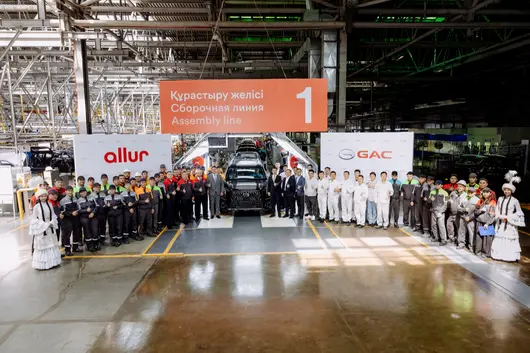

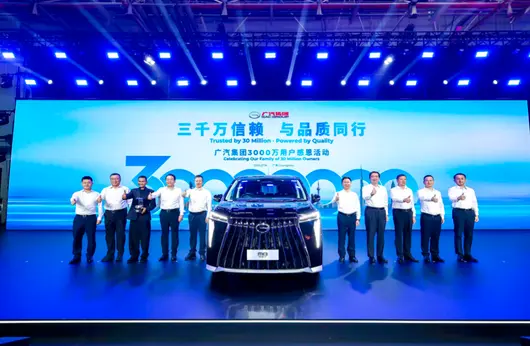
July 16, GAC Group welcomed the roll-off of its 30 millionth vehicle, entering a new milestone moment.
Different from the single vehicle roll-off of other brands in the past, the roll-off of GAC Group's 30 millionth vehicles included GAC Honda P7, GAC Toyota BZ7, Qijing GT7, GAC AION N60, GAC Hyper S600, and the finale right-hand drive version GAC Trumpchi M8 PHEV.

The roll-off of star models from all brands under GAC Group simultaneously also indicates its anchoring on electrification, intelligence, and internationalization strategic routes, entering a deeper level of strategic transformation in electrification, intelligence, and internationalization.


Subsequently, Feng Xingya handed the key of the 30 millionth vehicle to Thai owner Mr. Tony Jaa. This moment froze not just a number, but a warm witness of the "two-way rush" between GAC and global users.

This trust spanning mountains and seas is the confidence with which GAC broke through amidst industry changes. In the first half of this year, GAC Group sales reached 773,100 vehicles, a 2.35% year-on-year increase. Among them, new energy vehicle sales increased by 68.8% year-on-year; overseas exports broke through 120,000 vehicles, a 132% surge year-on-year, running a steady rhythm during the industry's deep restructuring period.
Quality as the Foundation, Building the Confidence of 10 Million Users' Travel
"Quality is the bottom line that GAC will never cede," Feng Xingya said in the closing remarks. In GAC's development, scale growth has always been based on quality. For years, GAC Group has adhered to the "Quality First" concept, integrating Honda Total Quality Management (TQM), Toyota Production System (TPS), and Lingnan culture, constructing a quality management model centered on "Integrated Innovation". The bottom line of everything is to build good cars that allow users to drive with peace of mind, use with peace of mind, and sit with comfort.


From the R&D end to the manufacturing end, GAC has established a strict quality control system for the whole chain: Before every new car launch, it must undergo extreme environment tests of "Five Highs, One Mountain, One Dust" such as high cold, high heat, high altitude, high humidity, high corrosion, mountain areas, and sand and dust, completing "Two Winters and One Summer" field road tests; aided by test fields and laboratories covering 12 major categories and over 1,500 verification sub-items of the whole vehicle, achieving systematic quality verification; GAC AION Smart Ecological Factory, as the "World's First New Energy Vehicle Lighthouse Factory", guarantees mass product quality stability with a digital intelligent manufacturing system.

At the core safety technology level, the Xingling Safety Protection System constructs four protection dimensions, with eight key systems adopting dual redundancy design. It has protected nearly 2 million users and avoided 6.28 million potential travel risks; the Dart Battery has cumulatively installed 1.5 million vehicles, with a safe driving mileage of over 160 billion kilometers; the service side synchronously adds guarantees. GAC took the lead in the industry to launch the independent brand "Three Responsibilities" policy, taking the initiative to cover battery and intelligent driving assistance issues of user concern, eliminating user concerns about vehicle use. It is precisely these lines of security defense and service commitments that support the brand confidence behind GAC's 30 million sales.
User-Oriented, Building a Full-Cycle Warm Service System
"What users care about, we keep in our hearts; what users expect, we go all out." Feng Xingya stated that this user-centric concept has long been deeply integrated into the development gene of GAC Group. For many years, GAC Group has always adhered to the corporate concept of "People as the Basis, Integrity as the Way, Innovation as the Priority". The core essence of "People as the Basis" is people-oriented.

On one hand, to face problems directly and listen to user voices, GAC regularly holds user open mic events, inviting users to the "home" for face-to-face communication. At the same time, establish a full-process closed-loop management mechanism to ensure that every suggestion can be properly handled, and common problems are optimized for all users at the first time.
In addition, GAC has also established exclusive user insight departments and promoted full-process changes from problem discovery to resolution, ensuring user requests have responses and matters have results from an organizational mechanism perspective.
On the other hand, the service network accelerates penetration simultaneously. At the channel end, promote service network sinking into counties, planning to add 1,000 county authorized stores this year; at the response end, launch "Super Butler" service, achieving 5-second response and 2-hour request completion, ensuring user requests are handled quickly and directly. At the energy replenishment end, build a "9 Vertical and 10 Horizontal" energy replenishment network, already covering 31 provinces and 213 cities nationwide, achieving "a station every 1km straight line" in core urban areas. Self-operated charging piles exceed 27,000, among which super charging piles break through 20,000, providing convenient energy replenishment services for new energy car owners.

The core theme of this gratitude activity is to express sincere return and thanks to the long-term support of 30 million users. At the event scene, Feng Xingya announced that from now on, GAC officially launches the "GAC Group 30 Millionth Vehicle Roll-off · Renewal Gratitude Season". GAC Honda, GAC Toyota, GAC Trumpchi, GAC AION, GAC Hyper, and Qijing Automobile six passenger car brands will launch characteristic policies around new purchase, trade-in to additional purchase respectively, to return every bit of companionship and support.

Tech-Centric, Empowering Real Travel with Frontier Technology
With 30 million as a new starting point, GAC will drive innovation, move towards a new journey of electrification and intelligence, and let frontier technology truly transform into user-perceivable peace of mind and convenience.
In the power field, Xingyuan Power developed by the "National Excellent Engineer Team" covers Xingyuan Extended Range, Xingyuan PHEV, and Xingyuan Super Dual Engine three technologies, which will be mass-produced with more models. Every product needs to pass 100,000 hours bench and whole vehicle validation, equivalent mileage exceeds 10 million kilometers, ensuring that performance remains steady as a rock under all scenarios and all regions.

In the "Three-Electricity" field, GAC continues to attack battery super-fast charging, low-temperature range and other industry pain points. It has built an all-solid-state battery pilot production line, launched ultimate energy consumption technology. The mass-produced Quark Electric Drive Motor's maximum efficiency breaks through 99%, the highest level in the industry.
In the intelligent connectivity field, the Super Brain Xingling Architecture continues to evolve, connecting intelligent driving assistance, intelligent cockpit, power, chassis, body, and vehicle networking six systems, achieving "One Brain Unified Command", comprehensive performance improvement by 40%; Galaxy Smart Cockpit achieves terminal-cloud integration, making the car become a real "thinking, understanding human heart" partner. GAC will also fight shoulder-to-shoulder with top partners such as Huawei, CATL, Didi, Tencent, Alibaba to build a more powerful AI intelligent ecosystem.
As of now, GAC Group's cumulative R&D investment exceeds 62 billion yuan, and the global R&D team exceeds 6,800 people. Continuous technical investment is driving GAC's products to evolve from commuting tools to intelligent travel partners, mobile smart spaces, and green energy ecosystems.
Looking to the future, GAC will continue to use user needs as anchors, quality as the foundation, technological innovation as the core driver, and global layout as the development path, accelerating to advance towards an ecological tech GAC, walking side by side with more users, achieving each other, and rushing towards a smarter, greener, and broader future together.

喺馬來西亞嘅 SUV 市場,好多買家喺揀車嗰陣都會拎 Perodua Aruz 同 Proton X50 嚟比較。呢兩部車喺價位同定位上都好接近,今日我哋就由多個方面做一個詳細比較,幫你慳返做足功課嘅時間。
Perodua Aruz 喺馬來西亞嘅 OTR 售價係 RM 72,900 - 77,900,合共 2 個版本,包括 1.5L X(RM 72,900)、1.5L AV(RM 77,900) 等。
Proton X50 喺馬來西亞嘅 OTR 售價係 RM 89,800 - 113,300,合共 4 個版本,包括 1.5T Executive(RM 89,800)、1.5T Premium(RM 101,800)、1.5T Flagship(RM 113,300) 等。
由價錢睇,Perodua Aruz 嘅起步價的確比 Proton X50 平咗 RM 16,900。如果你預算有限,Perodua 嘅入門版已經可以滿足日常需要。但都要小心,平嗰幾千蚊,可能喺配備上會有取捨,具體要睇你嘅需要。

Perodua Aruz 車身長 4400 mm,行李廂 400 L。
Proton X50 車身長 4400 mm,行李廂 400 L。
兩部車嘅尺寸幾近一樣,車內空間分別唔大。呢個級別嘅車,日常使用完全夠用。

Perodua Aruz 採用 FWD 驅動方式。
Proton X50 採用 4WD 驅動方式。
Perodua 嘅 FWD 同 Proton 嘅 4WD 喺操控上會有唔同感覺,建議試駕比較。

Perodua Aruz 同 Proton X50 都係馬來西亞市場嘅主流選擇,適合家庭使用、日常通勤。如果你更重視品牌口碑同二手價,可以優先考慮口碑更好嗰部;如果你更重視性價比同配備,那就揀配備更豐富嗰部。最後始終建議兩部都去試駕,親身體驗先係最重要。

總體嚟講,Perodua Aruz 同 Proton X50 都係馬來西亞市場幾唔錯嘅車型。揀邊一部,關鍵始終係睇你嘅個人需要同預算。建議大家做足功課,多比較幾間車行嘅報價,先去試駕先至最後決定。買車係大件事,花少少時間做功課絕對唔會錯。

In Malaysia's SUV market, many buyers compare the Perodua Ativa and Chery Tiggo Cross when choosing a car. These two cars are quite close in price and positioning. Today, we will do a detailed comparison from multiple aspects to help you save time on research.
The Perodua Ativa's OTR price in Malaysia is RM 62,500 - 73,400, with a total of 3 versions, including 1.0L Turbo X (RM 62,500), 1.0L Turbo H (RM 67,300), 1.0L Turbo AV (RM 73,400), etc.
The Chery Tiggo Cross's OTR price in Malaysia is RM 88,750 - 99,750, with a total of 2 versions, including 2025 HEV 1.5L CSH (RM 99,750), 2025 1.5T Standard (RM 88,750), etc.
Looking at the price, the Perodua Ativa's starting price is indeed RM 26,250 cheaper than the Chery Tiggo Cross. If your budget is limited, the Perodua entry-level version can already meet daily needs. However, keep in mind that the few thousand ringgit difference might involve trade-offs in features, which depends on your specific requirements.

The Perodua Ativa is equipped with 1.5L 4-cyl, 105 hp. Official fuel consumption 6.0 L/100km.
The Chery Tiggo Cross is equipped with 1.5L 4-cyl, 105 hp. Official fuel consumption 6.0 L/100km.
Both cars use the same powertrain system, and the driving feel is basically the same in daily use. Fuel consumption is also similar, so there is no need to worry too much about this point.

The Perodua Ativa body length is 4400 mm, trunk 400 L.
The Chery Tiggo Cross body length is 4400 mm, trunk 400 L.
The dimensions of both cars are almost the same, and the interior space difference is not significant. Cars in this class are more than enough for daily use.
The Perodua Ativa adopts FWD drive mode.
The Chery Tiggo Cross adopts FWD drive mode.
The drive modes of both cars are the same, both FWD, and the daily driving feel will not differ significantly.

Overall, both the Perodua Ativa and Chery Tiggo Cross are very good models in the Malaysian market. Which one to choose ultimately depends on your personal needs and budget. It is recommended that you do your research, compare quotes from several car dealerships, and then go for a test drive to make the final decision. Buying a car is a major decision, and taking time to do research will never be wrong.


In the Malaysian SUV market, many buyers compare the Perodua Ativa and the Chery Tiggo Cross when choosing a car. These two cars are quite close in price and positioning, so today we will make a detailed comparison from multiple aspects to help you save time on research.
Perodua Ativa OTR price in Malaysia is RM 62,500 - 73,400, with a total of 3 versions, including 1.0L Turbo X (RM 62,500), 1.0L Turbo H (RM 67,300), 1.0L Turbo AV (RM 73,400), etc.
Chery Tiggo Cross OTR price in Malaysia is RM 88,750 - 99,750, with a total of 2 versions, including 2025 HEV 1.5L CSH (RM 99,750), 2025 1.5T Standard (RM 88,750), etc.
In terms of price, Perodua Ativa's starting price is indeed RM 26,250 cheaper than Chery Tiggo Cross. If your budget is limited, Perodua's entry-level version can already meet daily needs. But keep in mind, the few thousand cheaper amount, might involve trade-offs in features, depending on your specific needs.
Perodua Ativa is equipped with a 1.5L 4-cyl engine, 105 hp. Official fuel economy 6.0 L/100km.
Chery Tiggo Cross is equipped with a 1.5L 4-cyl engine, 105 hp. Official fuel economy 6.0 L/100km.
Both cars use the same powertrain system, the driving experience is basically the same. Fuel economy is also similar, no need to worry too much about this.
Perodua Ativa safety rating is 5★ (ASEAN NCAP), active safety systems include ASA 3.0 + ACC + LDA + LKA + BSM + RCTA.
Chery Tiggo Cross safety rating is TBD, active safety systems include Basic.
In terms of safety features, both cars have achieved good ratings. However, Perodua Ativa's ASA 3.0 + ACC + LDA + LKA + BSM + RCTA and Chery Tiggo Cross's Basic differ somewhat in functionality. If you value active safety highly, you can compare their feature lists carefully.
Perodua Ativa adopts FWD drive mode.
Chery Tiggo Cross adopts FWD drive mode.
Both cars have the same drive mode, both are FWD, there won't be much difference in daily driving experience.
Both Perodua Ativa and Chery Tiggo Cross are mainstream choices in the Malaysian market, suitable for family use and daily commuting. If you value brand reputation and resale value more, you can prioritize the one with a better reputation; if you care more about value for money and features, choose the one with richer configuration. Ultimately, it is recommended to test drive both, as personal experience is the most important.
Overall, Perodua Ativa and Chery Tiggo Cross are both excellent models in the Malaysian market. Which one to choose depends mainly on your personal needs and budget. It is recommended to do your research, compare quotes from several dealerships, and then test drive to make a final decision. Buying a car is a big matter, spending some time on research will never go wrong.

In Malaysia's SUV market, many buyers compare Proton X70 and Chery Tiggo 9 when choosing a car. These two cars are quite close in price and positioning. Today, we will do a detailed comparison from multiple aspects to help you save time on research.
Proton X70's OTR price in Malaysia is RM 106,800 - 122,300, with a total of 3 versions, including 1.5L Standard 2WD (RM 106,800), 1.5L Executive 2WD (RM 115,800), and 1.5L Premium 2WD (RM 122,300), etc.
Chery Tiggo 9's OTR price in Malaysia is RM 166,800 - 179,800, with a total of 1 version, including 2026 2.0T Standard (RM 179,750), etc.
From a price perspective, Proton X70's starting price is indeed RM 60,000 cheaper than Chery Tiggo 9. If your budget is limited, Proton's entry-level version can already meet daily needs. But note that the few thousand cheaper price might involve compromises in features, depending on your needs.

Proton X70 body length is 4400 mm, trunk is 400 L.
Chery Tiggo 9 body length is 4400 mm, trunk is 400 L.
The dimensions of both cars are almost the same, and the interior space difference is not significant. For this level of car, it is completely sufficient for daily use.
Proton X70 warranty is 5 years/150,000km, maintenance interval every 10,000km or 6 months.
Chery Tiggo 9 warranty is 3 years/100,000km, maintenance interval every 10,000km or 6 months.
Proton X70 and Chery Tiggo 9 are both mainstream choices in the Malaysia market, suitable for family use and daily commuting. If you value brand reputation and resale value more, you can prioritize the one with better reputation; if you care more about cost-performance and features, then choose the one with richer configuration. Ultimately it is recommended to test drive both models, as personal experience is the most important.
Overall, Proton X70 and Chery Tiggo 9 are both very good car models in the Malaysia market. Which one to choose depends mainly on your personal needs and budget. We suggest you do your research, compare quotes from several dealerships, and then test drive to make the final decision. Buying a car is a big matter, spending some time doing research will definitely not go wrong.


In the Malaysian SUV market, many buyers often compare the Proton X70 and Chery Tiggo 8 PHEV when choosing a car. These two cars are quite close in price and positioning. Today we will make a detailed comparison from multiple aspects to help you save time on research.
The OTR price of the Proton X70 in Malaysia is RM 106,800 - 122,300. There are 3 versions in total, including 1.5L Standard 2WD (RM 106,800), 1.5L Executive 2WD (RM 115,800), 1.5L Premium 2WD (RM 122,300), etc.
The OTR price of the Chery Tiggo 8 PHEV in Malaysia is RM 159,750 - 159,750. There are 2 versions in total, including 1.6L Turbo Standard (RM 130,000), 1.6L Turbo Premium (RM 145,000), etc.
From a price perspective, the Proton X70's starting price is indeed RM 52,950 cheaper than the Chery Tiggo 8 PHEV. If your budget is limited, the Proton's entry-level version can already meet daily needs. However, please note that the few thousand RM difference may involve trade-offs in features, depending on your specific requirements.
The Proton X70's safety rating is 5★ (ASEAN NCAP). The active safety systems include ADAS (ACC, AEB, LKA, LDA, BSM, RCTA).
The Chery Tiggo 8 PHEV's safety rating is TBD. The active safety systems include Basic.
In terms of safety features, both cars have received good ratings. However, there are some differences in functionality between the Proton X70's ADAS (ACC, AEB, LKA, LDA, BSM, RCTA) and the Chery Tiggo 8 PHEV's Basic. If you value active safety, you can carefully compare the feature lists of both.
The Proton X70 adopts FWD drive mode.
The Chery Tiggo 8 PHEV adopts FWD drive mode.
The drive mode of both cars is the same, both are FWD, so there won't be much difference in daily driving experience.
Proton X70 warranty is 5 years/150,000km, maintenance interval is every 10,000km or 6 months.
Chery Tiggo 8 PHEV warranty is 3 years/100,000km, maintenance interval is every 10,000km or 6 months.
Overall, both the Proton X70 and Chery Tiggo 8 PHEV are excellent models in the Malaysian market. Which one to choose depends mainly on your personal needs and budget. It is recommended to do your homework, compare quotes from several car dealerships, and then test drive to make the final decision. Buying a car is a big matter, spending some time doing research will never go wrong.
In the Malaysian SUV market, many buyers compare Proton X70 and Chery Tiggo 8 when choosing a car.
The OTR price of Proton X70 in Malaysia is RM 106,800 - 122,300, with a total of 3 versions, including 1.5L Standard 2WD (RM 106,800), 1.5L Executive 2WD (RM 115,800), 1.5L Premium 2WD (RM 122,300), etc.
The OTR price of Chery Tiggo 8 in Malaysia is RM 129,750 - 129,750, with a total of 1 version, including 2026 1.6T Standard (RM 129,750), etc.
From the price perspective, the starting price of Proton X70 is indeed RM 22,950 cheaper than Chery Tiggo 8. If your budget is limited, Proton's entry-level version can already meet daily needs. But be aware that the few thousand difference might involve compromises in features, depending on your specific needs.

Proton X70 comes with 1.5L Turbo, 140 hp. Official fuel consumption 7.0 L/100km.
Chery Tiggo 8 comes with 1.5L Turbo, 140 hp. Official fuel consumption 7.0 L/100km.
Both cars use the same powertrain, the daily driving feel is basically no difference. Fuel consumption is also similar, no need to worry too much about this.
Proton X70 safety rating is 5★ (ASEAN NCAP), active safety systems include ADAS (ACC, AEB, LKA, LDA, BSM, RCTA).
Chery Tiggo 8 safety rating is TBD, active safety systems include Basic.
Regarding safety features, both cars have received good ratings. However, Proton X70's ADAS (ACC, AEB, LKA, LDA, BSM, RCTA) and Chery Tiggo 8's Basic have some differences in functionality. If you value active safety, you can carefully compare the feature lists of both.

Proton X70 body length 4400 mm, trunk 400 L.
Chery Tiggo 8 body length 4400 mm, trunk 400 L.
The dimensions of both cars are almost the same, interior space difference is not large. For this class of car, daily use is completely sufficient.
Proton X70 adopts FWD drive method.
Chery Tiggo 8 adopts FWD drive method.
Both cars have the same drive method, both are FWD, daily driving feel will not have too much difference.
Overall, Proton X70 and Chery Tiggo 8 are both very good car models in the Malaysian market. Choosing which one depends mainly on your personal needs and budget. It is recommended to do your homework, compare quotes from a few dealerships, and then go for a test drive to make a final decision. Buying a car is a big matter, spending time on research will never be wrong.


In the Malaysian SUV market, many buyers compare Perodua Aruz and Proton X70 when choosing a car. These two models are quite close in price and positioning. Today, we will make a detailed comparison from multiple aspects to help you save time on research.
Perodua Aruz has an OTR price in Malaysia of RM 72,900 - 77,900, with a total of 2 versions, including 1.5L X (RM 72,900), 1.5L AV (RM 77,900), etc.
Proton X70 has an OTR price in Malaysia of RM 106,800 - 122,300, with a total of 3 versions, including 1.5L Standard 2WD (RM 106,800), 1.5L Executive 2WD (RM 115,800), 1.5L Premium 2WD (RM 122,300), etc.
From a price perspective, the starting price of Perodua Aruz is indeed RM 33,900 cheaper than Proton X70. If your budget is limited, Perodua's entry-level version is sufficient for daily needs. However, be aware that the savings of a few thousand Ringgit might involve trade-offs in features, depending on your specific requirements.
Perodua Aruz is equipped with a 1.5L 4-cyl, 105 hp. Official fuel consumption 6.0 L/100km.
Proton X70 is equipped with a 1.5L Turbo, 140 hp. Official fuel consumption 7.0 L/100km.
In terms of power, Proton X70's 1.5L Turbo has 35 more horsepower than Perodua Aruz's 1.5L 4-cyl. However, for daily city driving, both cars have sufficient power, you won't feel lacking.
Perodua Aruz body length 4400 mm, trunk 400 L.
Proton X70 body length 4400 mm, trunk 400 L.
The dimensions of the two cars are almost the same, interior space difference is not significant. Cars at this level are more than enough for daily use.
Perodua Aruz adopts FWD drive mode.
Proton X70 adopts FWD drive mode.
The drive mode of the two cars is the same, both are FWD, daily driving experience will not be much different.
Perodua Aruz warranty 5 years/150,000km, maintenance interval every 10,000km or 6 months.
Proton X70 warranty 5 years/150,000km, maintenance interval every 10,000km or 6 months.
The warranty conditions for the two cars are the same, no need to worry about this. Actual maintenance cost also depends on the brand's service network and parts prices, suggested to ask real owners in car owner groups for experience.
Overall, Perodua Aruz and Proton X70 are both very good models in the Malaysian market. Which one to choose depends on your personal needs and budget. We suggest doing your research, compare quotes from several dealerships, and test drive before making a final decision. Buying a car is a big matter, spending time on research will definitely not be wrong.

In Malaysia's SUV market, many buyers compare Perodua Aruz and Proton X90 when choosing a car. These two models are quite close in price and positioning. Today, we will make a detailed comparison from multiple aspects to help you save time doing research.
Perodua Aruz's OTR price in Malaysia is RM 72,900 - 77,900, with 2 variants, including 1.5L X (RM 72,900), 1.5L AV (RM 77,900), etc.
Proton X90's OTR price in Malaysia is RM 106,800 - 122,800, with 4 variants, including 2026 1.5T Prime X (RM 122,800), 2026 1.5T Prime (RM 116,800), 2026 1.5T Lite (RM 106,800), etc.
From the price perspective, Perodua Aruz's starting price is indeed RM 33,900 cheaper than Proton X90. If your budget is limited, Perodua's entry version can already meet daily needs. But note, that few thousand savings might involve trade-offs in features, depends on your needs.
Perodua Aruz's safety rating is 5★ (ASEAN NCAP), active safety systems include .
Proton X90's safety rating is 5★ (ASEAN NCAP), active safety systems include ADAS (ACC, AEB, LKA, LDA, BSM, RCTA).
Both cars have the same safety rating, safety equipment is quite comprehensive in this class. New car safety is not bad nowadays, no need to worry too much about this point.
Perodua Aruz body length 4400 mm, trunk 400 L.
Proton X90 body length 4400 mm, trunk 400 L.
Both cars dimensions are almost the same, interior space difference is not big. For this class of cars, daily use is completely sufficient.
Perodua Aruz warranty 5 years/150,000km, maintenance interval every 10,000km or 6 months.
Proton X90 warranty 5 years/150,000km, maintenance interval every 10,000km or 6 months.
Both cars warranty conditions are the same, no need to dwell on this. Actual maintenance cost depends on brand service network and parts price, suggest asking real owners in car owner groups for experience.
Perodua Aruz and Proton X90 are both mainstream choices in Malaysia market, suitable for family use, daily commuting. If you value brand reputation and resale value more, prioritize the one with better reputation; if you care more about value for money and features, choose the one with richer configuration. Finally suggest test driving both, personal experience is the most important.
Overall, Perodua Aruz and Proton X90 are both very good car models in Malaysia market. Which one to choose, key is still looking at your personal needs and budget. Everyone suggests do research, compare quotes from a few dealerships, then go test drive for final decision. Buying a car is a big matter, spending time doing research will never be wrong.
© 2024 Bitauto.com. All Rights Reserved.
Bitauto (www.yiche.com and www.bitauto.com) is one of the most visited automotive websites in China. We provide detailed info on Chinese car brands available in your area. Please note that the information provided on this website is based on publicly available data and is for reference only. It may not be fully updated or accurate at all times.

Help us improve our website


