

Homesharing

Search History
Popular Searches
Dealer Login / Sign Up

In the Malaysia SUV market, many buyers compare the Honda WR-V and Mazda CX-5 when choosing a car. These two cars are quite close in price and positioning. Today, we will make a detailed comparison from multiple aspects to help you save time on research.
The OTR price of the Honda WR-V in Malaysia is RM 89,900 - 107,900, with a total of 4 versions, including 2023 1.5L V (RM 99,900), 2023 1.5L E (RM 95,900), 2023 1.5L S (RM 89,900), etc.
The OTR price of the Mazda CX-5 in Malaysia is RM 135,469 - 166,760, with a total of 3 versions, including 2025 2.0L AT 35th Anniversary (RM 316,154), 2025 2.0L AT (RM 296,154), 2025 2.0L MT (RM 294,154), etc.
From a price perspective, the starting price of the Honda WR-V is indeed RM 45,569 cheaper than the Mazda CX-5. If your budget is limited, Honda's entry-level version can already meet daily needs. But also note that the fewer thousand cheaper might have trade-offs in features, it depends on your needs.

The safety rating of the Honda WR-V is 5★ (ASEAN NCAP), active safety systems include Honda SENSING.
The safety rating of the Mazda CX-5 is 5★ (ASEAN NCAP), active safety systems include .
Both cars have the same safety rating, safety features are quite comprehensive in this class. New cars nowadays have good safety, no need to worry too much about this.

Honda WR-V body length 4400 mm, boot 400 L.
Mazda CX-5 body length 4500 mm, boot 450 L.
Regarding space, the Mazda CX-5 body is 100 mm longer than the Honda WR-V, giving it an advantage in seating space. However, the Honda WR-V is a bit more flexible for parking in the city, each has its trade-offs.

Honda WR-V warranty 5 years/unlimited mileage, service intervals every 10,000km or 6 months.
Mazda CX-5 warranty 5 years/150,000km, service intervals every 10,000km or 6 months.

Honda WR-V and Mazda CX-5 are both mainstream choices in the Malaysia market, suitable for family use and daily commuting. If you value brand reputation and resale value more, consider the one with better reputation first; if you care more about value and features, choose the one with richer configuration. Ultimately, it is recommended to test drive both, personal experience is the most important.

Overall, the Honda WR-V and Mazda CX-5 are both very good models in the Malaysia market. Which one to choose depends on your personal needs and budget. It is recommended that everyone do their homework, compare quotes from several dealerships, and test drive to make the final decision. Buying a car is a big matter, spending some time on research will never go wrong.

In the Malaysian SUV market, many buyers compare Honda WR-V and Mazda CX-5 when selecting a car. These two cars are quite close in price and positioning. Today we will make a detailed comparison from multiple aspects to help you save time on research.
The OTR selling price for Honda WR-V in Malaysia is RM 89,900 - 107,900, with a total of 4 variants, including 2023 1.5L V (RM 99,900), 2023 1.5L E (RM 95,900), 2023 1.5L S (RM 89,900) etc.
The OTR selling price for Mazda CX-5 in Malaysia is RM 135,469 - 166,760, with a total of 3 variants, including 2025 2.0L AT 35th Anniversary (RM 316,154), 2025 2.0L AT (RM 296,154), 2025 2.0L MT (RM 294,154) etc.
Looking at the price, Honda WR-V's entry price is indeed RM 45,569 cheaper than Mazda CX-5. If your budget is limited, Honda's entry version can already meet daily needs. But also note that the lower price may involve trade-offs in features, specifically depending on your requirements.
Honda WR-V is equipped with 1.5L 4-cyl, 105 hp. Official fuel consumption 6.0 L/100km.
Mazda CX-5 is equipped with 1.5L Turbo, 140 hp. Official fuel consumption 7.0 L/100km.
Regarding power, Mazda CX-5's 1.5L Turbo has 35 more horsepower than Honda WR-V's 1.5L 4-cyl. However, for daily driving in the city, the power of both cars is sufficient and you won't feel underpowered.
Honda WR-V's safety rating is 5★ (ASEAN NCAP), active safety system includes Honda SENSING.
Mazda CX-5's safety rating is 5★ (ASEAN NCAP), active safety system includes.
Both cars have the same safety rating. Safety features in this class are quite complete. New car safety is generally not bad, so there is no need to worry too much about this.
Honda WR-V Warranty 5 years / unlimited mileage, Maintenance interval 10,000km or 6 months.
Mazda CX-5 Warranty 5 years / 150,000km, Maintenance interval 10,000km or 6 months.
Overall, Honda WR-V and Mazda CX-5 are both very good models in the Malaysian market. Which one to choose depends mainly on your personal needs and budget. We suggest doing your research, comparing quotes from several dealerships, and then going for a test drive to make the final decision. Buying a car is a big deal, spending time on research is never wrong.

In the Malaysia SUV market, many buyers compare the Honda WR-V and Mazda CX-3 when choosing a car. These two cars are quite close in price and positioning. Today we will make a detailed comparison from multiple aspects to help you save time on research.
The Honda WR-V OTR price in Malaysia is RM 89,900 - 107,900, with a total of 4 versions, including 2023 1.5L V (RM 99,900), 2023 1.5L E (RM 95,900), 2023 1.5L S (RM 89,900), etc.
The Mazda CX-3 OTR price in Malaysia is RM 126,159 - 139,159, with a total of 2 versions, including 2023 2.0L High (RM 139,159), 2023 2.0L Plus (RM 126,159), etc.
From a price perspective, the Honda WR-V starting price is indeed RM 36,259 cheaper than the Mazda CX-3. If your budget is limited, Honda's entry-level version can already meet daily needs. However, be aware that the few thousand cheaper might involve trade-offs in features, depending on your specific needs.
Honda WR-V is equipped with a 1.5L 4-cyl, 105 hp. Official fuel consumption 6.0 L/100km.
Mazda CX-3 is equipped with a 1.5L Turbo, 140 hp. Official fuel consumption 7.0 L/100km.
Regarding power, the Mazda CX-3 1.5L Turbo has 35 hp more than the Honda WR-V 1.5L 4-cyl. However, for daily city driving, both cars have sufficient power and won't feel underpowered.
Honda WR-V adopts FWD drive mode.
Mazda CX-3 adopts FWD drive mode.
Both cars have the same drive mode, which is FWD, so there won't be a significant difference in daily driving experience.
Honda WR-V warranty 5 years/unlimited mileage, maintenance interval every 10,000km or 6 months.
Mazda CX-3 warranty 5 years/150,000km, maintenance interval every 10,000km or 6 months.

Both the Honda WR-V and Mazda CX-3 are mainstream choices in the Malaysia market, suitable for family use and daily commuting. If you value brand reputation and resale value more, prioritize the one with the better reputation; if you care more about cost-performance and features, choose the one with richer configuration. Ultimately, it is suggested to test drive both, as personal experience is the most important.

In general, both the Honda WR-V and Mazda CX-3 are very good models in the Malaysia market. Which one to choose depends mainly on your personal needs and budget. We suggest doing your research, compare quotes from several dealerships, and then test drive to make a final decision. Buying a car is a big matter, spending some time on research will never be wrong.

Dalam pasaran SUV di Malaysia, banyak pembeli yang akan membandingkan Honda WR-V dan Mazda CX-5 semasa memilih kereta. Kedua-dua kereta ini mempunyai harga dan kedudukan yang agak hampir, hari ini kita akan buat perbandingan terperinci dari pelbagai aspek, membantu anda menjimatkan masa menyiapkan tugasan.
Harga OTR Honda WR-V di Malaysia adalah RM 89,900 - 107,900, terdapat 4 varian, termasuk 2023 1.5L V (RM 99,900), 2023 1.5L E (RM 95,900), 2023 1.5L S (RM 89,900) dan lain-lain.
Harga OTR Mazda CX-5 di Malaysia adalah RM 135,469 - 166,760, terdapat 3 varian, termasuk 2025 2.0L AT 35th Anniversary (RM 316,154), 2025 2.0L AT (RM 296,154), 2025 2.0L MT (RM 294,154) dan lain-lain.
Dilihat dari segi harga, harga permulaan Honda WR-V memang lebih murah RM 45,569 berbanding Mazda CX-5. Jika bajet anda terhad, versi pengenalan Honda sudah cukup memenuhi keperluan harian. Tetapi perlu juga diambil perhatian, ribuan ringgit yang lebih murah itu, mungkin ada kompromi dalam kelengkapan, bergantung kepada keperluan anda.
Penarafan keselamatan Honda WR-V ialah 5★ (ASEAN NCAP), sistem keselamatan aktif termasuk Honda SENSING.
Penarafan keselamatan Mazda CX-5 ialah 5★ (ASEAN NCAP), sistem keselamatan aktif termasuk.
Penarafan keselamatan kedua-dua kereta adalah sama, pada tahap ini persediaan keselamatan dianggap cukup lengkap. Keselamatan kereta baru kini tidak buruk, tidak perlu terlalu risau tentang perkara ini.
Honda WR-V menggunakan cara penggerak FWD.
Mazda CX-5 menggunakan cara penggerak FWD.
Cara penggerak kedua-dua kereta adalah sama, semuanya FWD, pengalaman memandu harian tidak akan banyak berbeza.
Honda WR-V Jaminan 5 tahun/jarak tanpa had, selang servis setiap 10,000km atau 6 bulan.
Mazda CX-5 Jaminan 5 tahun/150,000km, selang servis setiap 10,000km atau 6 bulan.
Secara keseluruhannya, Honda WR-V dan Mazda CX-5 kedua-duanya adalah model kereta yang cukup bagus di pasaran Malaysia. Membuat pilihan mana satu, kuncinya tetap melihat keperluan dan bajet peribadi anda. Disarankan agar anda membuat persiapan yang baik, membandingkan lebih banyak tawaran kedai kereta, kemudian melakukan ujian memandu untuk membuat keputusan akhir. Membeli kereta adalah perkara besar, meluangkan masa membuat persiapan tidak akan salah.

喺馬來西亞嘅 SUV 市場,好多買家喺揀車嗰陣都會拿本田 WR-V 同馬自達 CX-8 嚟做比較。呢兩款車喺價位同定位上都好接近,今日我哋就由多個方面做一個詳細嘅對比,幫你節省做功課嘅時間。
本田 WR-V 喺馬來西亞嘅 OTR 售價係 RM 89,900 - 107,900,一共 4 個版本,包括 2023 1.5L V(RM 99,900)、2023 1.5L E(RM 95,900)、2023 1.5L S(RM 89,900)等。
馬自達 CX-8 喺馬來西亞嘅 OTR 售價係 RM 165,360 - 201,360,一共 5 個版本,包括 2025 2.5T 4WD High Plus Petrol(RM 201,360)、2025 2.2L 2WD High Plus Diesel(RM 193,123)、2025 2.5L 2WD High Plus Petrol(RM 186,360)等。
由價錢嚟睇,本田 WR-V 嘅入門價確實比馬自達 CX-8 平咗 RM 75,460。如果你預算有限,本田嘅入門版已經可以滿足日常需要。但都要注意,平嗰幾千塊,可能喺配備上會有取舍,具體要睇你嘅需要。
本田 WR-V 搭載 1.5L 4-cyl,馬力 105 hp。官方油耗 6.0 L/100km。
馬自達 CX-8 搭載 2.0L 4-cyl,馬力 170 hp。官方油耗 8.0 L/100km。
動力方面,馬自達 CX-8 嘅 2.0L 4-cyl 比本田 WR-V 嘅 1.5L 4-cyl 多咗 65 匹馬力。不過日常喺市區行,兩款車嘅動力都夠用,唔會覺得唔夠力。
本田 WR-V 車身長 4400 mm,尾箱 400 L。
馬自達 CX-8 車身長 4500 mm,尾箱 450 L。
空間方面,馬自達 CX-8 嘅車身比本田 WR-V 長咗 100 mm,乘坐空間更有優勢。不過本田 WR-V 喺城市入面停車會靈活少少,各有利弊。
本田 WR-V 保養保修 5 年/里程無限,保養間隔 每 10,000km 或 6 個月。
馬自達 CX-8 保養保修 5 年/150,000km,保養間隔 每 10,000km 或 6 個月。

總括嚟講,本田 WR-V 同馬自達 CX-8 都係馬來西亞市場唔錯嘅車型。揀邊一輛,關鍵始終係睇你嘅個人需要同預算。建議大家做足功課,多比較幾間車行嘅報價,先去試駕做最後決定。買車係件大事,花少少時間做功課絕對唔會錯。

In the Malaysian SUV market, many buyers compare the Proton X90 and Subaru Crosstrek when choosing a car. These two models are quite close in price and positioning, so today we will make a detailed comparison from multiple aspects to help you save time on research.
The OTR price of the Proton X90 in Malaysia is RM 106,800 - 122,800, with a total of 4 variants, including 2026 1.5T Prime X (RM 122,800), 2026 1.5T Prime (RM 116,800), 2026 1.5T Lite (RM 106,800), etc.
The OTR price of the Subaru Crosstrek in Malaysia is RM 145,000 - 160,000, with a total of 1 variant, including 2.0L e-Boxer (RM 150,000), etc.
From a pricing perspective, the starting price of the Proton X90 is indeed RM 38,200 cheaper than the Subaru Crosstrek. If your budget is limited, the entry-level version from Proton is already sufficient for daily needs. However, be aware that the few thousand difference might involve trade-offs in features, depending on your specific needs.

The Proton X90 safety rating is 5★ (ASEAN NCAP), and active safety systems include ADAS (ACC, AEB, LKA, LDA, BSM, RCTA).
The Subaru Crosstrek safety rating is 5★ (Euro NCAP), and active safety systems include EyeSight.
Regarding safety features, both cars received good ratings. However, there are some functional differences between the Proton X90's ADAS (ACC, AEB, LKA, LDA, BSM, RCTA) and the Subaru Crosstrek's EyeSight. If you value active safety more, you can carefully compare the feature lists of both.

Proton X90 body length 4400 mm, trunk 400 L.
Subaru Crosstrek body length 4400 mm, trunk 400 L.
The dimensions of both cars are almost identical, with little difference in interior space. For vehicles of this class, it is fully sufficient for daily use.
The Proton X90 adopts FWD drive mode.
The Subaru Crosstrek adopts FWD drive mode.
Both cars use the same drive mode, both are FWD, so there will not be a huge difference in daily driving experience.

In summary, both Proton X90 and Subaru Crosstrek are very good models in the Malaysian market. Choosing which one depends mainly on your personal needs and budget. It is recommended to do your homework, compare quotes from several dealerships, and go for a test drive to make the final decision. Buying a car is a big matter, spending time on research will never be wrong.


In the Malaysian SUV market, many buyers compare Proton X90 and Subaru Forester when choosing a car. These two cars are quite close in price and positioning, so today we will do a detailed comparison from multiple aspects to help you save time doing your research.
The Proton X90 OTR price in Malaysia is RM 106,800 - 122,800, with a total of 4 versions, including 2026 1.5T Prime X (RM 122,800), 2026 1.5T Prime (RM 116,800), 2026 1.5T Lite (RM 106,800), etc.
The Subaru Forester OTR price in Malaysia is RM 174,000 - 197,000, with a total of 3 versions, including 2024 2.0L S EyeSight GT Edition (RM 189,538), 2024 2.0L S EyeSight (RM 177,538), 2024 2.0L L EyeSight (RM 167,538), etc.
Looking at the price, the starting price of Proton X90 is indeed RM 67,200 cheaper than Subaru Forester. If your budget is limited, Proton's entry-level version is already sufficient for daily needs. But be aware that saving those few thousand might mean compromises in features, depending on your specific needs.
Proton X90 body length is 4400 mm, trunk 400 L.
Subaru Forester body length is 4400 mm, trunk 400 L.
The dimensions of both cars are almost the same, interior space differences are not significant. Cars of this level are completely sufficient for daily use.
Proton X90 warranty 5 years/150,000km, maintenance interval every 10,000km or 6 months.
Subaru Forester warranty 3 years/100,000km, maintenance interval every 10,000km or 6 months.
Proton X90 and Subaru Forester are both mainstream choices in the Malaysian market, suitable for family use and daily commuting. If you value brand reputation and resale value more, you can prioritize the one with better reputation; if you care more about cost-performance ratio and features, then choose the model with richer configurations. Finally, it is suggested to test drive both models, experiencing it personally is the most important.

Overall, Proton X90 and Subaru Forester are both very good car models in the Malaysian market. Which one to choose mainly depends on your personal needs and budget. It is recommended that everyone do their research, compare quotes from several car dealerships, and then test drive to make the final decision. Buying a car is a big matter, spending some time doing research will definitely not be a mistake.

在时尚圈,高定(Haute Couture)从来不是单纯的奢侈品标签,而是美学与工艺的终极代名词。
时尚圈的高级定制,不同于高级成衣、私人定制,它是双向的奔赴与选择,是设计师与穿着者之间的审美共振。它拒绝工业流水线的千篇一律,以世间罕有的顶级材质、数十道手工工序的精工细作,为独一无二的个体表达而创作。每一件高定作品,都烙印着设计师最私人的美学判断,是极少数人才能触及的审美巅峰,更是红毯之上、名流圈层心照不宣的专属浪漫。
长久以来,这份极致美学只活跃在时尚领域,汽车行业的联名,大多停留在贴标、简单更换车身颜色等,借外部IP做浅层背书,徒有豪华外壳,缺少高定内核。当消费者为“联名版” 买单,常常发现只是换汤不换药,看不到设计师真正的设计思考和高定内核。

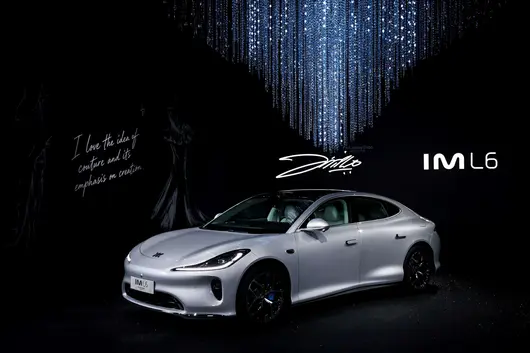
直到今天,全新一代智己L6高定限量版的出现,彻底改写了高定联名的规则。世界级⼤师Prof. JimmyChoo周仰杰,出任全新一代智己L6高定设计大师,这也是他从业六十载来第一次跨界参与整车汽车设计。
他定义了全球时尚六十载,第一次把名字刻进一辆中国车
Prof. JimmyChoo这个名字的分量,无需赘言。

他是戴安娜王妃御⽤鞋履设计师,是《Vogue》史⽆前例用8页版面专题报道的第⼀⼈。他是打破欧美垄断的第⼀位授勋设计师,首位获英女王伊丽莎白二世亲自颁发大英帝国官佐勋章(OBE)的华人设计师,亦是马来西亚最高元首亲授的拿督(Datuk)头衔拥有者。好莱坞红毯上,从凯特·布兰切特到赞达亚,无数明星脚踏他的作品闪耀全球镜头——他是他们最青睐的设计师,更是全球时尚规则的定义者。
对于时尚界⽽⾔,“JimmyChoo”早已不只是⼀个设计师名字,⽽是⼀种关于⾃信、优雅与登场时刻的流⾏⽂化符号——是女性穿上它那一刻,整个世界为之让路的仪式感。
这一次全新一代智己L6和Prof. JimmyChoo的双向奔赴,不是简单借名营销,而是时尚艺术与汽车设计的深度共创,打造出国产新能源高定第一车,携手将中国原创高定设计推向了新的高度。

此次全新一代智己L6 Prof. JimmyChoo高定限量版也正式开启预售,权益价23.49万元-24.99万元,首批限量开放1000名购车名额;全新一代智己L6预售价则为21.99万元-26.99万元。
六十年高定的美学与匠心,打造中国原创高定设计新高度
全新一代智己L6高定限量版的诞生,Prof. JimmyChoo没有对整车基底做粗暴改造,而是在原有轿跑姿态之上,融入了高定设计语言。
水晶,向来是超豪华高定车型的身份符号,劳斯莱斯水晶欢庆女神、宾利水晶飞翼车标皆是如此。Prof. JimmyChoo将他六十年来在高定鞋履设计中锤炼至臻的水晶切割工艺,铸成全新一代智己L6高定限量版专属的水晶车标。光影流转之间,每一道切割面都在诉说手工的温度。

不止车头标识,翼子板摄像头盖板同样以水晶雕琢,在保障传感硬件功能的前提下,消解了汽车零部件冰冷的工业感,化作车身上精致的“高定配饰”。
轮下则藏着另一重惊喜:高定蓝专属刹车卡钳,镌刻着Prof. JimmyChoo的亲笔签名,让高定艺术顺着车身,一直延伸到车轮。
高定的质感,从来离不开对材质的偏执和严苛择选。当你打开全新一代智己L6的车门,高定蓝丝感珠光皮革在光影中流转不同的情绪表达;脚下是澳洲羊毛定制脚垫,触感温润如高级定制礼服的内衬。从面料到辅料,全部沿用时尚高定配饰的严苛选材逻辑,拒绝廉价仿感材质。
而细节,更是拉开高定与普通豪华之间鸿沟的终极标尺。座舱之内,空调出风口按键、中控台饰板,处处延续水晶雕琢工艺;仪表台、座椅头枕处则采用了精致的刺绣工艺,烙印着Prof. Jimmy Choo的专属标识;就连车机交互界面,也定制了高定蓝水晶梦幻主题——从视觉到触觉,从物理空间到数字世界,高定美学渗透到人车交互的每一个瞬间。六十年来打磨一双高定鞋履的严谨和匠心,在全新一代智己L6高定限量版座舱里被无限放大。
全球首款全系标配线控底盘轿跑,惊艳之下是满配实力
但这辆车远不止惊艳,更把这个时代最前沿的科技统统越级配齐——它懂都市精致男女的审美品位,更懂他们的生活态度。

全新一代智己L6全系标配线控底盘,这也是全球首款全系标配全线控底盘的轿跑,方向盘半圈即可打满,灵活优雅;结合同级唯一双向18度四轮转向、4.39米最小转弯半径和大范围可变转向比——窄路掉头一把过、地库盘旋不尴尬、侧方泊车不再反复腾挪。无论是穿梭于CBD的写字楼群,还是驶入老城区的窄巷弄堂,它都能让你从容如行云流水。

同时新车还配备了全域800V高压平台,双电机峰值功率500千瓦、峰值扭矩800牛·米,四驱⾼配⻋型零百加速2秒级,93度的“宁王”黄金高效大电池,让其纯电综合续航最高达到了850公里,城市通勤游刃有余,周末出逃说走就走。
它不只是一件可以日常驾驶的流动高定艺术品,更是一台真正懂都市精英出行哲学的智能座驾。
事实上,很多豪华品牌车型为了迎合更广泛的消费群体,不断向大众化、同质化妥协,追求“人人都能接受”的审美。但真正的高定,本就不是为所有人而生。
全新一代智己L6高定限量版,跳出 “讨好大众” 的产品逻辑,不做全民通吃的流量产物。它将高定的时尚设计思维融入车身、外观、内饰的方方面面,用户选择它,从来不是在购买一款营销联名车,而是拥有一件可以日常驾驶、独属于自己的流动高定艺术品。
Not for everyone. For someone who knows.

如果你最近喺搵 MPV,一定睇咗魏牌高山呢個名,2026 年 1-7 月新能源 MPV 銷量冠軍。8 月,高山推出手限時新優惠,優惠力度再加碼。
8 月限時新優惠,有多抵玩?喺原有全品牌 1.2 萬增換購補貼、保險補貼、5000 抵 8000 現金膨脹禮等優惠基礎上,新增貸 5 免 3 融資方案與“長城一家人嘅汽车品牌”優惠(同一家庭名下擁有長城汽車任意品牌車輛,1 台享 3000 元、2 台享 5000 元、3 台享 8000 元、4 台及以上享 10000 元額外買車補貼)。

將呢幾項疊加算落嚟,換購補貼、現金膨脹、保險補貼、家庭權益,綜合優惠力度相當可觀。而且政策只限 8 月,錯過就要等下一輪。
而家買車,優勢喺邊?銷冠背書,11 萬家庭嘅選擇。2026 年上半年,高山累計銷量 34227 輛,同比增長 256%,反超嵐圖夢想家、騰勢 D9、別克 GL8 插混等熱銷車型。截至上半年,高山家族累計銷量突破 11 萬輛。高山家庭用戶佔比高達 78%,係行業平均水平的兩倍。

全係滿配,唔玩套路。好多 MPV 低配減配嚴重,但高山全係標配 Hi4 性能版智能四驅,綜合功率 337kW、峰值扭矩 644N·m、零百加速 5.7 秒。同價位好多競品想要四驅只能加錢上頂配。二、三排 1845mm 超長共軌設計,支援大四座與七座靈活切換。標配 Coffee Pilot Ultra 智駕系統,集成 128 線激光雷達,支援高速/城市 NOA。

全球市場驗證。高山喺泰國、馬來西亞等地上市即熱銷,連巴西總統都試乘點讚。喺國內銷量領跑的同時實現海外擴張。

作為新能源 MPV 嘅領跑者,高山透過 7、8、9 三款车型形成梯度產品矩陣,覆蓋 28-36 萬新能源 MPV 市場。淨推薦值(NPS)76.9 分,位居新能源中大型混動 MPV 細分市場第一。
8 月限時優惠疊加,加上銷冠口碑、全係滿配的產品力,以及全球市場的驗證,而家入手魏牌高山,真係係價值最高的時候。政策到 8 月 31 日截止,不妨趁呢幾日去店度實際感受下。

In the Malaysian SUV market, many buyers compare Proton X90 and Mitsubishi Xforce when choosing a car. These two cars are quite close in price and positioning. Today, we will make a detailed comparison from multiple aspects to help you save time on research.
The Proton X90 OTR price in Malaysia is RM 106,800 - 122,800, with a total of 4 versions, including 2026 1.5T Prime X (RM 122,800), 2026 1.5T Prime (RM 116,800), 2026 1.5T Lite (RM 106,800), etc.
The Mitsubishi Xforce OTR price in Malaysia is RM 109,930 - 119,930, with a total of 2 versions, including 2026 1.5L Ultimate (RM 119,930), 2026 1.5L Urban (RM 109,930), etc.
In terms of price, the starting price of the Proton X90 is indeed RM 3,130 cheaper than the Mitsubishi Xforce. If your budget is limited, the Proton entry-level version can already meet daily needs. But also note that the savings of a few thousand might involve compromises on features, depending on your specific needs.
The Proton X90 is equipped with a 1.5L Turbo engine, 140 hp. Official fuel consumption 7.0 L/100km.
The Mitsubishi Xforce is equipped with a 1.5L Turbo engine, 140 hp. Official fuel consumption 7.0 L/100km.
Both cars use the same powertrain, the driving experience in daily use is basically the same. Fuel consumption is also about the same, no need to worry too much about this.
The Proton X90 safety rating is 5★ (ASEAN NCAP), active safety systems include ADAS (ACC, AEB, LKA, LDA, BSM, RCTA).
The Mitsubishi Xforce safety rating is 5★ (ASEAN NCAP), active safety systems include MI-PILOT.
Both cars have the same safety rating, safety features in this class are considered quite comprehensive. New cars nowadays have good safety, no need to worry too much about this.
The Proton X90 uses FWD drive.
The Mitsubishi Xforce uses FWD drive.
Both cars have the same drive, both are FWD, there won't be much difference in daily driving experience.

Overall, both the Proton X90 and Mitsubishi Xforce are excellent models in the Malaysian market. Which one to choose depends mainly on your personal needs and budget. We recommend doing your research, comparing quotes from several dealerships, and test driving before making the final decision. Buying a car is a major matter, spending some time doing research will never go wrong.

Dalam pasaran SUV di Malaysia, ramai pembeli semasa memilih kereta akan membandingkan Proton X90 dan Kia Sportage. Kedua-dua kereta ini mempunyai kadar harga dan kelas yang sangat hampir. Hari ini kami akan membuat perbandingan terperinci dari pelbagai aspek, membantu anda menjimatkan masa untuk melakukan penyelidikan.
Proton X90 di Malaysia mempunyai harga OTR dari RM 106,800 - 122,800, secara keseluruhan ada 4 versi, termasuk 2026 1.5T Prime X (RM 122,800), 2026 1.5T Prime (RM 116,800), 2026 1.5T Lite (RM 106,800) dan lain-lain.
Kia Sportage di Malaysia mempunyai harga OTR dari RM 129,639 - 179,320, secara keseluruhan ada 4 versi, termasuk 2025 1.6T DCT 4WD High (RM 179,320), 2025 1.6T DCT 2WD High (RM 159,320), 2025 2.0L AT 2WD High (RM 139,639) dan lain-lain.
Dari segi harga, harga permulaan Proton X90 memang lebih murah RM 22,839 berbanding Kia Sportage. Jika bajet anda terhad, versi asas Proton sudah boleh memenuhi keperluan harian. Tetapi perlu diingat, perbezaan harga yang beberapa ribu ringgit itu mungkin melibatkan kompromi dari segi kelengkapan, bergantung pada keperluan anda.
Proton X90 dilengkapi enjin Turbo 1.5L, kuasa 140 hp. Penggunaan bahan api rasmi 7.0 L/100km.
Kia Sportage dilengkapi enjin Turbo 1.5L, kuasa 140 hp. Penggunaan bahan api rasmi 7.0 L/100km.
Kedua-dua kereta menggunakan sistem kuasa yang sama, perasaan ketika memandu sehari-hari hampir tiada perbezaan. Dari segi penggunaan bahan api juga sama, tidak perlu terlalu bimbang mengenai hal ini.
Penarafan keselamatan Proton X90 adalah 5★ (ASEAN NCAP), sistem keselamatan aktif termasuk ADAS (ACC, AEB, LKA, LDA, BSM, RCTA).
Penarafan keselamatan Kia Sportage adalah 5★ (ASEAN NCAP), sistem keselamatan aktif termasuk Drive Wise.
Penarafan keselamatan kedua-dua kereta sama, kelengkapan keselamatan dalam kategori ini sudah cukup lengkap. Keselamatan kereta baharu masa kini tidak kurang, tidak perlu terlalu bimbang mengenai hal ini.
Proton X90 panjang badan 4400 mm, tempat letak barang belakang 400 L.
Kia Sportage panjang badan 4400 mm, tempat letak barang belakang 400 L.
Saiz kedua-dua kereta hampir sama, ruang dalaman tidak banyak perbezaan. Kereta dalam kategori ini, penggunaan harian sudah mencukupi.

Proton X90 menggunakan sistem pemacu FWD.
Kia Sportage menggunakan sistem pemacu FWD.
Sistem pemacu kedua-dua kereta sama, semua FWD, perasaan memandu sehari-hari tidak akan ada perbezaan yang besar.

Secara keseluruhannya, Proton X90 dan Kia Sportage kedua-duanya adalah model kereta yang sangat bagus di pasaran Malaysia. Memilih yang mana satu, kunci utamanya bergantung pada keperluan dan bajet peribadi anda. Disarankan untuk melakukan penyelidikan, bandingkan beberapa tawaran dari dealer kereta, kemudian buat ujian pemandu dan buat keputusan akhir. Membeli kereta adalah perkara besar, meluangkan masa melakukan penyelidikan tidak akan salah.

符蓉 見習生 方煒博 程思語
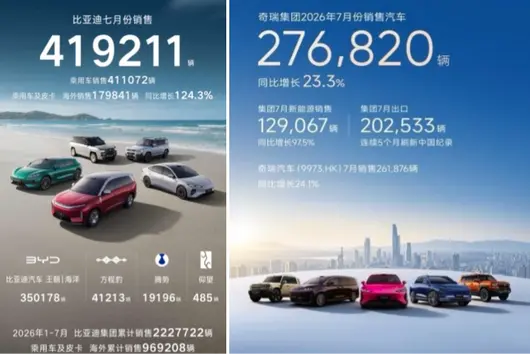
據全國乘聯會數據,7月國內汽車銷量持續承壓下滑,而海外市場則保持較大增長,尤其係幾家頭部車企嘅海外市場已佔據佢哋總銷量嘅“半壁江山”。汽車出海,已從之前嘅補充渠道躍升為車企消化產能、保持增長嘅核心引擎。
從7月數據睇:奇瑞控股總銷量27.68萬輛,出口20.25萬輛,海外銷量佔比高達73%,係國內市場嘅近3倍;比亞迪總銷量41.92萬輛,出口17.98萬輛,海外佔比42.8%;吉利汽車銷量25.02萬輛,出口10.67萬輛,佔比42.6%;上汽集團銷量33.86萬輛,出口14.17萬輛,佔比41.9%。相比之下,各家車企喺國內市場嘅銷量則出現咗唔同幅度嘅下滑,一升一降,讓海外市場從曾經嘅“小透明”,一躍成為主流車企支撐業績增長嘅支柱。

據中國汽車工業協會數據,7月國內汽車銷量為154.1萬輛,環比下降13.1%,同比下降23.6%。中國汽車流通協會嘅數據則顯示,當月汽車經銷商庫存預警指數攀升至61.1%,遠超50%嘅榮枯線,超六成經銷商對下半年市場走勢難言樂觀,行業去庫存壓力大增。
形成鮮明對比嘅係,同期海外市場一路飄紅,實施咗出海戰略嘅主流車企,海外銷量均出現咗較大幅度增長。同樣係來自中國汽車工業協會嘅數據:7月,中國汽車出口量達104.3萬輛,同比大漲81.3%,連續兩個月突破百萬輛大關。其中,新能源汽車出口55.3萬輛,同比激增145.5%,佢哋佔比已連續兩個月超過50%,成為出口嘅絕對主力。1至7月,中國汽車累計出口614萬輛,同比增長66.8%,其中新能源汽車出口量同比增長1.2倍。
呢一結構性變化嘅背後,係頭部車企全球化戰略嘅深遠佈局。中國車企嘅出海模式正從“整車出口”逐漸向“產業扎根”相結合。比亞迪嘅巴西、泰國工廠已相繼投產;奇瑞喺西班牙、越南等地多基地並行推進;長安汽車嘅巴西工廠也已竣工投產。頭部車企正透過建廠、鋪設渠道、整合供應鏈“三位一體”嘅方式,喺全球核心市場深度扎根。歐洲、東南亞、南美已成為中國車企全球化嘅三大核心支點。展望未來,關稅壁壘同本地化運營能力將成為競爭嘅分水嶺。由滿足內需到驅動全球,一場由“中國製造”向“中國全球化”嘅深刻變革正在上演。

Di pasaran SUV Malaysia, ramai pembeli semasa memilih kereta selalunya membandingkan Proton X90 dengan Hyundai Tucson. Kedua-dua kereta ini memiliki harga dan kedudukan pasaran yang hampir sama. Hari ini, kita akan membuat perbandingan terperinci dari pelbagai aspek untuk membantu anda menjimatkan masa membuat kajian.
Proton X90 harga OTR di Malaysia adalah RM 106,800 - 122,800, terdapat 4 versi, termasuk 2026 1.5T Prime X (RM 122,800), 2026 1.5T Prime (RM 116,800), 2026 1.5T Lite (RM 106,800) dan lain-lain.
Hyundai Tucson harga OTR di Malaysia adalah RM 143,888 - 197,888, terdapat 5 versi, termasuk 2025 HEV 1.6T AT 2WD Prestige (RM 197,888), 2025 1.6T DCT 4WD Prestige (RM 186,888), 2025 1.6T DCT 2WD Prime (RM 164,888) dan lain-lain.
Dari segi harga, harga permulaan Proton X90 memang RM 37,088 lebih murah daripada Hyundai Tucson. Jika bajet anda terhad, versi permulaan Proton sudah dapat memenuhi keperluan harian. Namun perlu diingat, perbezaan harga ribuan ringgit yang lebih murah ini, mungkin ada kompromi dari segi kelengkapan, bergantung sepenuhnya kepada keperluan anda.
Gred keselamatan Proton X90 adalah 5★ (ASEAN NCAP), sistem keselamatan aktif termasuk ADAS (ACC, AEB, LKA, LDA, BSM, RCTA).
Gred keselamatan Hyundai Tucson adalah 5★ (ASEAN NCAP), sistem keselamatan aktif termasuk SmartSense.
Gred keselamatan kedua-dua kereta adalah sama, dalam kelas ini kelengkapan keselamatan dianggap sangat lengkap. Keselamatan kereta baharu sekarang tidak buruk, tiada perlu bimbang terlalu banyak tentang hal ini.
Proton X90 menggunakan cara penggerak FWD.
Hyundai Tucson menggunakan cara penggerak FWD.
Cara penggerak kedua-dua kereta adalah sama, iaitu FWD, rasa memandu harian tidak akan terlalu berbeza.
Proton X90 jaminan 5 tahun/150,000km, selang servis setiap 10,000km atau 6 bulan.
Hyundai Tucson jaminan 5 tahun/300,000km, selang servis setiap 10,000km atau 6 bulan.

Secara keseluruhan, Proton X90 dan Hyundai Tucson adalah model kereta yang sangat baik di pasaran Malaysia. Memilih yang mana satu, kuncinya adalah melihat keperluan dan bajet peribadi anda. Kami cadangkan anda membuat kajian, bandingkan sebut harga daripada beberapa dealer kereta, kemudian uji memandu untuk membuat keputusan akhir. Membeli kereta adalah perkara penting, meluangkan masa untuk membuat kajian tidak akan salah.


纯电A0级市场的竞争逻辑,似乎向来都是以“低价高配”获取市场注意力。
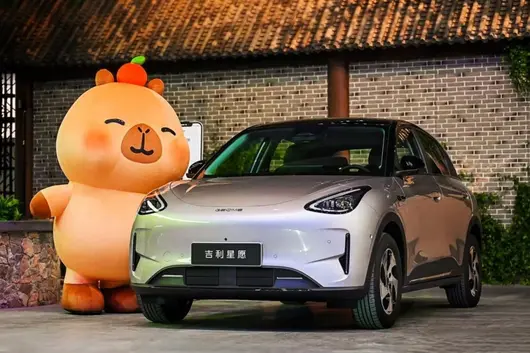
然而,当一款热门小车走出上市红利期之后,又该如何保持市场活跃度?作为2025年的中国车市全品类销冠,吉利星愿给出了一个不一样的A0级解法,那就是用品质构建信任,再将信任转化为长跑的动力。

限时权益价在6.18万-9.18万区间的星愿,并不是一台以低价抢市场的车型。但是,它在上市21个月以来,累计销量已经突破80万台;并后劲十足,以5.5万台的7月销量,实现连续2个月销量突破5万台,在细分市场保持着绝对的领先地位。如此旺盛的生命力与持续力,不由得让人想近距离看一看星愿的长跑姿态。

畅销80万台,并不是星愿长跑的结果
从市场数据看,星愿的表现已经不能用“畅销”简单概括。因为如今,星愿的市占率已经超过30%,每卖出3辆纯电A0级车,就有一辆是星愿。
即便是在海外市场,星愿目前也已进入全球30余个国家,在巴西上市五个月销量破万,6月在泰国新能源市场排名第一,8月登陆澳大利亚,三季度还计划进入欧盟和英国。这种海内外同步增长,足以证明星愿现象不是单一市场的短期爆发,而是长期累积起来的用户口碑复利效应。

无论是东北地区需要在极端低温下用车的车主,还是对空间舒适性有更高需求的带娃宝妈……绝大多数星愿车主,无论需求如何、用车场景如何,都对这款车给予了极高的评价。

显而易见的是,在A0级市场普遍专注颜值与配置的当下,星愿没有把用户需求做成单选题。这款车在续航、空间、操控、安全等高频触点上,都给出了相对均衡的解决方案。这种“全能”不是靠堆配置,而是基于用户思维做取舍,把成本花在用户日常能感知的地方,而不是制造参数表上的兴奋点。

我们也不难看出,当星愿全系标配宁德时代电芯、独立悬架等核心配置后,这台车也大幅减少了用户“开盲盒”的焦虑。也正因如此,星愿的80万销量里程碑,并非一次性爆发,而是口碑叠加后的持续性高质量转化。
大舒适与大安全,本该是小车的日常
在众多用户给到的好评中,我们可以发现“舒适”与“安全”是两个被提及的超高频词汇。当越来越多的小车以低价高配来吸引用户关注时,星愿做出了不一样的选择。
如果只看参数,星愿的每一项数据都不是绝对第一,但组合起来却切中了A0级用户最在意的舒适性与安全性痛点,这也构成了星愿在细分市场中的差异化优势。

在以往,A0级纯电最大的束缚,往往在于局促的空间与偏低的舒适性,这也大幅削弱了传统A0级纯电车型的场景适应能力。而星愿在空间上,做出了不少既讨巧又实用的设计,如四轮四角布局和2650mm长轴距,带来了接近B级车的空间,让呼朋引伴出行不再是小车用户的奢望。

除此之外,同级领先的70L前备厢、10L抽屉式手套箱,再辅以厚实的人体工程学座椅和丰富的舒适性配置,也让星愿更进一步切中了购物、通勤、带娃、露营等多种真实场景。

除了大空间高配置以外,星愿更懂如何让人开得舒适,其搭载的千里浩瀚H3辅助驾驶系统,不仅支持高速领航辅助,同时还支持面向全场景的泊车辅助功能。例如在停入狭窄车位时,驾驶员和乘客可以先下车,再通过遥控泊车把车辆轻松停入车位;而在无标准车位线的情况下,驾驶者也可以通过指尖泊车,快速把车辆停入指定位置。无疑,星愿正在让本就好开的小车变得更轻松,这种轻松体验也真正转化成了日常出行时的舒心与便利。

当然了,对于广大用户来说,星愿就是要让舒心更多、让操心更少。对此,星愿还更进一步地打破了“小车不安全”的传统。比如在主动安全性上,星愿搭载的千里浩瀚H3方案,还支持AEB紧急制动与AES紧急避让功能。

除了丰富的主动安全配置外,星愿在被动安全方面做得也足够扎实,例如一位成都车主在遇到货车追尾后,哪怕星愿近乎全损,但坚实的骨架也撑起了充裕的车内生存空间,让这位车主在车辆全损后选择继续相信星愿。而且在吉利与央视联合的碰撞测试中,星愿抗住了正面50km/h与侧面55km/h连续碰撞。

这样的主被动安全表现,再加上低气味环保材质、半隐藏式门把手和高压剪线方案带来的全维安全,星愿显然对得起精品小车的定位。而在汽车消费者越来越理性的当下,这样的品质比任何宣传都更具说服力。
好电池与好操控,让双大厂背书成为小车分水岭
在纯电A0级市场中,无论是车企还是用户,都对价格高度敏感。但对于真正想要买一台好车的用户来说,大家害怕的不是“买贵”,而是“买错”。谁也不想买一台电池衰减快、售后无门、开起来又飘又松散的车。所以,星愿的另一大差异化特征,拥有吉利与宁德时代的双大厂背书,无论是三电还是操控,都能让大家感受到切实的好品质。

在A0级纯电小车细分市场中,电池混装已经成为常态。在一些车型的不同批次中,虽然电池容量一样、标称续航都一样,但续航达成率甚至电池耐用度都有明显差异,这样的做法显然也会导致用户信任度的下降,让纯电代步车成为大家眼里的“快消品”。
但在吉利看来,汽车本该是长期耐用品,所以星愿直接全系标配头部供应商宁德时代提供的电芯。PPB级别电芯品质加持,再加上双方联合开发、深度调校,不仅实现了100%续航达成率,让东北用户也能放心用,同时这样的电池品质,更在长期耐用性与安全性方面为用户兜底。根据测试数据来看,星愿在完成1000次循环后,电池容量仍保持90.72%,在纯电小车市场可谓难逢对手。

而且在电驱层面,星愿也采用了吉利自研的行业首款11合1智能电驱。对比同级车型常用的6合1、8合1电驱,星愿的11合1电驱不仅拥有同级领先的89.2%电驱效率,更通过了中汽研《高可靠电驱》权威认证。

正因如此,吉利也为星愿的首任非运营车主提供了三电终身质保政策,车企兜底终身保,也足以见证吉利对星愿电池电驱品质的自信。
更值得一提的是,吉利的大厂赋能,不仅为星愿提供了扎实的三电表现,同时在底盘结构与调校方面,更展现出吉利的整车制造底蕴。

在开发初期,星愿就深度共享“一个吉利”的研发、生产与供应链体系,譬如在底盘设计上,星愿有着近乎越级的表现。从结构来看,星愿采用了A0级小车中非常罕见的后置后驱加多连杆独悬布局,在用料上可以说不计成本。

更重要的是,星愿除了有一副好底子外,它还依托吉利遍布全球的工程技术团队,实现了中德联合底盘调校,并与路特斯工程团队在瑞典零下30摄氏度的冰雪环境中完成多轮标定。所以,星愿的底盘也不仅仅是更好开、更舒适那么简单,在温州车主两次紧急避让的真实经历中,正是AES紧急避让功能与扎实底盘的共同发挥,才守住了安全底线。

所以对于星愿这样的小车而言,背后的大厂体系赋能,也能让小车具备大品质。而这样的品质当然也不止于产品,更在补能、售前售后、道路救援等服务体系上展现出了大厂的全维保障。从产品到服务的立体化保障,可以说真正构建起了星愿与用户的“信任闭环”。
结语:
不少车企都会认为“小车造起来很简单,就是省点成本、压点用料的事儿”,但对于吉利来说,星愿这样的小车在开发过程中,甚至比一些豪华车的开发难度更大。因为小车用户,在乎的不只是单一产品卖点,更是这台车是否安全、品质是否扎实、电池是否经久耐用……所以,当星愿把这些问题全部整合出一个明确的答案之后,这台小车的含金量还在持续上升。
当然了,星愿的含金量,也远不止于“高质优价”的产品力,更在于这款车能够把用户最在意的底线,做成产品最稳固的地基。所以21个月80万台的销量成就,对星愿来说还不是终点,它的目标,是走向“长青国民车”。

喺馬來西亞嘅 SUV 市場,好多買家喺揀車嘅時候都會拿 Proton X90 同 Hyundai Tucson 做比較。呢兩台車喺價位同定位上都幾接近,今日我哋就從多個方面做一個詳細對比,幫你省咗做功課嘅時間。
Proton X90 喺馬來西亞嘅 OTR 售價係 RM 106,800 - 122,800,合共 4 個版本,包括 2026 1.5T Prime X(RM 122,800)、2026 1.5T Prime(RM 116,800)、2026 1.5T Lite(RM 106,800)等等。
Hyundai Tucson 喺馬來西亞嘅 OTR 售價係 RM 143,888 - 197,888,合共 5 個版本,包括 2025 HEV 1.6T AT 2WD Prestige(RM 197,888)、2025 1.6T DCT 4WD Prestige(RM 186,888)、2025 1.6T DCT 2WD Prime(RM 164,888)等等。
由價錢睇,Proton X90 嘅起價確實比 Hyundai Tucson 平咗 RM 37,088。如果你預算有限,Proton 嘅入門版已經可以滿足日常需要。但都要留意,平嗰幾千蚊,可能喺配備上要有取捨,具體要看你嘅需求。
Proton X90 搭載 1.5L Turbo,馬力 140 hp。官方油耗 7.0 L/100km。
Hyundai Tucson 搭載 1.5L Turbo,馬力 140 hp。官方油耗 7.0 L/100km。
兩台車用緊同一套動力系統,日常開起嚟嘅感覺基本無咩分別。油耗方面都差不多,唔使太糾結呢點。
Proton X90 嘅安全評級係 5★ (ASEAN NCAP),主動安全系統包括 ADAS (ACC, AEB, LKA, LDA, BSM, RCTA)。
Hyundai Tucson 嘅安全評級係 5★ (ASEAN NCAP),主動安全系統包括 SmartSense。
兩台車嘅安全評級一樣,喺呢個級別入面安全配備都算好齊全。而家嘅新車安全性都幾唔錯,唔使太擔心呢點。
Proton X90 車身長 4400 mm,後尾箱 400 L。
Hyundai Tucson 車身長 4400 mm,後尾箱 400 L。
兩台車嘅尺寸幾乎一樣,車內空間分別唔大。呢個級別嘅車,日常使用完全夠用。
Proton X90 採用 FWD 驅動方式。
Hyundai Tucson 採用 FWD 驅動方式。
兩台車嘅驅動方式一樣,都係 FWD,日常駕駛感覺唔會有太大分別。

總括嚟講,Proton X90 同 Hyundai Tucson 都係馬來西亞市場幾唔錯嘅車型。揀邊台,關鍵都要睇你嘅個人需求同預算。建議大家做好功課,多比較幾間車行嘅報價,再去試駕做最終決定。買車係件大事,花少少時間做功課絕對無錯。

喺馬來西亞嘅 SUV 市場,好多買家喺揀車嘅時候都係會拿 Proton X90 同 Hyundai Tucson 嚟做比較。呢兩款車喺價位同定位上都好接近,今日我哋就由多個方面做一個詳細嘅比較,幫你節省做功課嘅時間。
Proton X90 喺馬來西亞嘅 OTR 售價係 RM 106,800 - 122,800,總共 4 個版本,包括 2026 1.5T Prime X(RM 122,800)、2026 1.5T Prime(RM 116,800)、2026 1.5T Lite(RM 106,800) 等。
Hyundai Tucson 喺馬來西亞嘅 OTR 售價係 RM 143,888 - 197,888,總共 5 個版本,包括 2025 HEV 1.6T AT 2WD Prestige(RM 197,888)、2025 1.6T DCT 4WD Prestige(RM 186,888)、2025 1.6T DCT 2WD Prime(RM 164,888) 等。
由價格睇,Proton X90 嘅起價確實比 Hyundai Tucson 平咗 RM 37,088。如果你預算有限,Proton 嘅入門版已經可以滿足日常需要。但都要注意,平少少嘅幾千蚊,可能喺配備上會有取捨,具體要睇你嘅需要。
Proton X90 嘅安全評級係 5★ (ASEAN NCAP),主動安全系統包括 ADAS (ACC, AEB, LKA, LDA, BSM, RCTA)。
Hyundai Tucson 嘅安全評級係 5★ (ASEAN NCAP),主動安全系統包括 SmartSense。
兩款車嘅安全評級一樣,喺呢個級別裡面安全配備都算好齊全。而家嘅新車安全性都唔差,唔使太擔心呢一點。
Proton X90 車身長度 4400 mm,行李箱 400 L。
Hyundai Tucson 車身長度 4400 mm,行李箱 400 L。
兩款車嘅尺寸幾近一樣,車內空間分別唔大。呢個級別嘅車,日常使用完全夠用。
Proton X90 保修 5 年/150,000km,保養間隔 每 10,000km 或 6 個月。
Hyundai Tucson 保修 5 年/300,000km,保養間隔 每 10,000km 或 6 個月。
總括嚟講,Proton X90 同 Hyundai Tucson 都係馬來西亞市場幾唔錯嘅車款。揀邊一款,關鍵仲係要睇你嘅個人需要同預算。建議大家做好功課,多比較幾間車行嘅報價,再去試駕做最終決定。買車係件大事,花少少時間做功課絕對唔會錯。

Written by | Li Hezi
Edited by Huang Dalu
Designed by Zhen Youmei
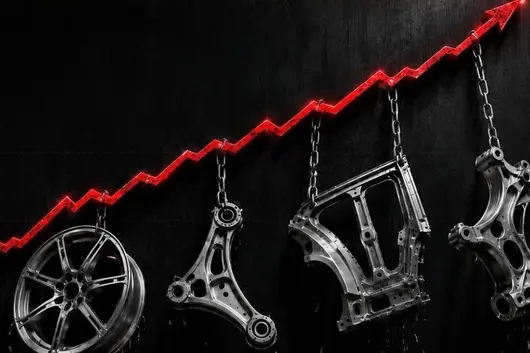
Costs rose directly by nearly 40%, and we are no longer facing an impact, but a question of how to survive." With aluminum prices doubling over the past few years, this entrepreneur focused on aluminum auto parts found it unbearable; at the end of June 2026, he told Automotive Commercial Review.
In 2020, domestic electrolytic aluminum prices were around 12,000 yuan/ton. Over the following years, aluminum prices climbed continuously: in 2025, domestic electrolytic aluminum prices broke through the 20,000 yuan/ton threshold; since 2026, aluminum prices have further surged to a high range of 24,000 to 25,000 yuan/ton, with March even briefly exceeding 25,000 yuan/ton, reaching a new high in recent years.
The continued rise in aluminum prices is transmitting downward along the automotive industry chain.
Data from the Global New Automotive Ecology Association shows that the proportion of aluminum in body part costs has increased from around 12% in 2020 to over 22% currently. A typical medium-sized intelligent electric vehicle requires about 200 kg of aluminum; from November 2025 to January 2026 alone, the aluminum material cost per vehicle increased by about 600 yuan.
An aluminum processing company interviewed by Automotive Commercial Review, with an annual output of 60,000 to 70,000 tons, incurred nearly 100 million yuan in additional procurement costs due to the rise in the base aluminum price in the first five months of 2026 alone, most of which the company still had to digest itself.
However, costs did not transmit smoothly along the industry chain. Upstream electrolytic aluminum capacity is constrained by a 45 million-ton capacity ceiling; midstream processing enterprises find it difficult to fully pass on rising raw material costs, while downstream vehicle manufacturers continue to propose annual cost reduction requirements for suppliers, constantly compressing profit margins.
At the same time, although new cars are getting heavier (see the article "Weight Reduction, The Biggest Lie of New Energy Vehicles" published in Automotive Commercial Review on June 25, 2026 at Weight Reduction, The Biggest Lie of New Energy Vehicles), the trend of automotive lightweighting has not slowed. Using aluminum alloys to replace traditional steel to achieve body weight reduction is currently the mainstream lightweighting solution for auto enterprises.
Under cost pressure, manufacturing cost-reduction technologies represented by integrated die-casting are accelerating adoption, and the rise in aluminum prices is amplifying another side of it: while this technology reduces manufacturing costs, it also raises maintenance costs; insurance companies and car owners are bearing new costs for the automakers' "cost reduction".
Setting aside the price increase of memory chips, the ongoing rise in aluminum prices further leverages a series of deep-seated contradictions in China's new energy intelligent network automotive industry chain: rigid capacity upstream, imbalance in bargaining power midstream, limits in cost reduction downstream, and the chain reactions brought by technological route adjustments.
Why Aluminum Prices Can't Be Contained

Chart: Automotive Commercial Review
The continuous rise in aluminum prices first stems from the supply side.
"The ceiling for electrolytic aluminum capacity in China is 45 million tons, and currently the overall state is a tight balance." Cheng Haifeng, General Manager of Nannan Aluminum, an aluminum processing enterprise, told Automotive Commercial Review.
In 2017, multiple departments of the state jointly released the "Special Action Work Plan for Cleaning Up and Rectifying Illegal and Non-compliant Projects in the Electrolytic Aluminum Industry", setting 45 million tons as a rigid upper limit and drawing a red line for the disorderly expansion of the electrolytic aluminum industry; the mechanism of equivalent or reduced capacity replacement is strictly enforced, and enterprises wishing to add new capacity must first shut down or purchase backward capacity of the same scale.
This policy red line has remained firm until now. In March 2025, the National Development and Reform Commission, Ministry of Industry and Information Technology, and ten other departments jointly issued the "Implementation Plan for High-Quality Development of the Aluminum Industry (2025-2027)", once again emphasizing "insisting on the total capacity constraint of electrolytic aluminum".
As of the end of February 2026, domestic operating capacity was close to 44.91 million tons, capacity utilization exceeded 97%, and industry capacity was basically running at full load.
Under the constraint of the 45 million-ton capacity red line, this global largest electrolytic aluminum producing country, China, has seen its capacity growth nearly stall. At the same time, the growth rate of global aluminum output is also slowing down. Global primary aluminum output in 2025 was about 73.78 million tons, with the growth rate slowing dramatically from 3.24% in 2024 to 1.1%.
While capacity is capped, demand is expanding.
New energy vehicles are the most active field for aluminum use. Aluminum materials are widely used in battery pack casings, body structural parts, wheel hubs, and thermal management systems. Automotive Commercial Review learned that traditional fuel vehicles use about 120 to 150 kg of aluminum per vehicle, while new energy vehicles have broken through 200 kg, and high-end models reach over 300 kg.
In April 2026, the retail penetration rate of new energy vehicles in the domestic passenger car market broke through 60% for the first time, and this single item is expected to contribute a million-ton level increase in aluminum demand.
"Downstream fields using aluminum like new energy vehicles are actually still booming," Cheng Haifeng said.
The demand for aluminum from new energy does not come only from automobiles, but also from fields such as photovoltaics. Each GW of photovoltaic installation uses about 12,000 tons of aluminum; global new photovoltaic installation in 2026 is expected to be about 400 GW, corresponding to aluminum demand of about 4.8 million tons; energy storage fields are expected to bring about 570,000 tons of aluminum demand. Combined, these exceed 5 million tons.
With the systemic substitution of "aluminum replacing copper" in fields like new energy vehicle high-voltage wire harnesses and power grid transmission, the aluminum demand structure is shifting from "mainly construction" to "high-end manufacturing + new energy".
Last October, Huatai Securities predicted that in 2026, global electrolytic aluminum supply growth would be about 1.93%, demand growth about 2.3%, and the supply-demand gap might expand to over 800,000 tons. After the outbreak of the Middle East conflict, multiple institutions further downgraded production expectations, making the supply-demand gap potentially larger.
"The rise in aluminum prices is mainly structural," another aluminum auto parts entrepreneur told Automotive Commercial Review.
He continued, "The real reason for the price increase is the supply-demand contradiction between the rapid rise in aluminum demand led by the new energy industry and the domestic 45 million-ton electrolytic aluminum capacity red line."
If the domestic capacity ceiling is the "internal cause" of the aluminum price rise, then the continuous shocks on the global supply side are the "external cause".
In late May 2026, Guinea, the world's largest bauxite producing country, announced it would officially introduce bauxite export control policies in June. The market generally predicts that the total upper limit of Guinea's bauxite exports in 2026 will be 150 million tons, a decrease of about 33 million tons compared to 183 million tons in 2025, a drop of 18%.
Guinea accounts for more than one-third of the global bauxite supply, and China's dependence on it is even higher. From January to April 2026, China accumulated imports of 77.728 million tons of bauxite, of which 62.946 million tons were imported from Guinea, accounting for 81%.
As of the end of June, the policy has not officially landed, but mine shipment volumes have voluntarily contracted. According to preliminary research and estimates by aluminum industry research institution Aladdin (ALD), shipments from 19 mining enterprises in Guinea in June were about 16 million wet tons, a decrease of about 5 million tons compared to the peak in March.
Over the past two years, Guinea has continuously launched a series of policy "combinations" such as raising export tariffs, clearing out idle mining rights, establishing pricing indexes, and mandating foreign mining enterprises to build alumina plants locally. This is also a microcosm of the global "resource nationalism" wave—from Indonesia's nickel export ban to Zimbabwe's lithium concentrate export restrictions, resource countries are shifting from "price takers" to "rule makers".
More violent shocks come from the Middle East.
The six Middle Eastern countries have a combined electrolytic aluminum capacity of about 7 million tons/year, accounting for 9.2% of global total capacity, with actual production in 2025 of about 6.95 million tons. However, on February 28 this year, the US and Israel launched a military strike on Iran; Iran subsequently implemented retaliatory measures and blockaded the Strait of Hormuz.
This region's industry relies heavily on strait transportation, with an alumina self-sufficiency rate of only 34%, and over 90% of alumina imports must pass through the Strait of Hormuz. After the conflict broke out, regional aluminum enterprises fell into a triple crisis of facility damage, raw material supply interruption, and energy shortage.
In early March, the Qatar Qatalum aluminum plant was forced to suspend production comprehensively due to natural gas supply interruption. The plant has a nominal primary aluminum annual capacity of 636,000 tons, belonging to one of the marginal capacities with lower costs globally. Official statements indicate that if production is fully suspended, full resumption may take 6 to 12 months.

Qatar Qatalum Aluminum Plant
In the same month, one of the largest single aluminum smelting plants in the world, Bahrain Alba Aluminum (annual capacity about 1.6 million tons), announced encountering force majeure due to blockage of the Strait of Hormuz shipping channel.
As of early May, the Middle East had cumulatively affected electrolytic aluminum capacity exceeding 2 million tons/year. Automotive Commercial Review believes that the increase in global electrolytic aluminum production in 2026 cannot cover the scale of production cuts.
Cheng Haifeng views the Middle East conflict as the direct driver of this round of aluminum prices surging to 25,000 yuan/ton: "After the US-Iran conflict, aluminum prices were immediately boosted." In the fourth quarter of last year, domestic aluminum prices were still operating in the range of 21,000 to 22,000 yuan/ton. Since the beginning of this year, aluminum prices have started to rise with fluctuations, and after the outbreak of the conflict, prices jumped to over 25,000 yuan/ton.
Domestic capacity capped, Guinea tightening export valves, Middle East conflict cutting off supply, the three combined forces pushed aluminum prices to historical highs.
As of June 9, the annual average price of electrolytic aluminum reached 24,219 yuan/ton, an increase of 16.9% over 2025, reaching a high of 25,260 yuan/ton on March 12. On the futures market, the SHFE Aluminum main contract soared to 26,185 yuan/ton in January and then stalled repeatedly in the 24,000 to 26,000 yuan/ton range for nearly four months.
"It might not return to the original price level." Regarding future trends, Cheng Haifeng talked about his judgment.
He predicts that prices in the third quarter may slightly fall from 24,000 yuan to 23,000 yuan, and drop to 22,000 yuan in the fourth quarter, but the level of around 21,000 yuan last year "should not be reachable".
The rigid constraints on the supply side are locking aluminum prices into an unprecedented high level range. And this price has only just begun to transmit downward along the industry chain.
Who Is "Squeezed"?

Aluminum prices rose from 12,000 yuan to 24,000 yuan, and every link on the industry chain is under pressure, but the ways and degrees of bearing pressure are different.
The first to feel the impact is the upstream aluminum processing enterprises.
"Prices simply cannot be transmitted down," Cheng Haifeng told Automotive Commercial Review; the pricing model for aluminum processing enterprises is usually "aluminum ingot price + processing fee", where the aluminum ingot price refers to the market average price of the few months or first half of the year before signing. That is to say, spot price increases will not immediately reflect in selling prices.
This means there is a time lag between aluminum price increases and transmission to customers.
But even entering the transmission cycle, aluminum processing enterprises find it hard to fully pass on costs. Cheng Haifeng described in detail the complexity of the transmission mechanism: when aluminum prices are in an upward cycle, losses in the first three months are borne by aluminum plants; after three months, contracts are renegotiated, aluminum prices are locked at high levels, pressure on aluminum plants eases, and car manufacturers begin to bear high prices. When aluminum prices fall, car manufacturers will refuse to pay according to the high contract prices on the grounds that the current market price is lower.
"When aluminum prices rise, aluminum plants bear everything; when aluminum prices fall, aluminum plants bear nearly more than half."
More tricky is the bargaining power of car manufacturers. Cheng Haifeng said that every year car manufacturers require price reductions of 7% to 10%; even so, they still receive complaints from car manufacturers: "Quality defects that could originally be accepted are easy to become unacceptable quality defects under the aluminum base price game; price fluctuations amplify quality problems, demanding returns."
Aluminum processing enterprises are thus in a situation of "pressure from both ends". Upstream aluminum ingot prices rise rigidly; downstream car manufacturers use quality determination and bargaining power to constantly compress profit margins.
Taking Guangdong Hongtu as an example, this leading domestic aluminum alloy die-casting enterprise had operating revenue of 9.198 billion yuan in 2025, a year-on-year increase of 14.22%, but net profit attributable to the parent company was 362 million yuan, a year-on-year decrease of 12.74%. Another aluminum alloy casting enterprise, Wenchuan Shares, faced a more severe situation; net profit attributable to the parent company in 2025 was a loss of 348 million yuan, a year-on-year decrease of 402%.
Similarly, aluminum processing enterprises, other enterprises faced completely different situations.
An business manager of another aluminum product processing enterprise backed by a large automotive group told Automotive Commercial Review that his perception of the aluminum price rise was "actually not bad". The reason is that most car manufacturers use "aluminum price floating calculation" for heavy parts.
That is, when pricing the contract, material costs are locked at the then aluminum prices; subsequent aluminum price increases are calculated based on weight and the latest aluminum prices. Taking aluminum wheels as an example, a wheel is 350 yuan, of which one-quarter is processing fee, and the remaining 75% is material fee. If aluminum prices rise from 20,000 yuan/ton to 25,000 yuan/ton, material fees are calculated by weight multiplied by 25,000 yuan. "We mainly earn processing fees, and aluminum price fluctuations have limited impact on our profits."
The main impact of aluminum price rises on this enterprise is at the capital level. "Originally, preparing 600 million yuan per month was enough; now about 1 billion yuan per month is needed," he said. "Capital risks are increasing, but the benefit is that the business scale is also growing."
But as a subsidiary of a large automotive group, capital is not his biggest concern; "it is better to find shade under a big tree".
Despite this, cost reduction pressure exists within the group as well. "There are cost reduction requirements every year," he said, "but the results reached are relatively reasonable, nothing too outrageous. It's like bargaining, the other party quotes a high price first, and finally both parties can accept the negotiated price."
Similarly aluminum processing enterprises, one independent, one backed by a group. The difference in situation illustrates a reality: under the impact of aluminum price rises, whether one can respond relatively calmly depends not only on cost control capabilities but also largely on the position of the enterprise in the industry chain.
Further downstream, independent parts suppliers face the most difficult situation.
The aforementioned aluminum auto parts entrepreneur told Automotive Commercial Review: "Downstream car manufacturers rarely adjust prices according to market conditions for price linkage; either they directly disagree, or they don't give an answer and drag on, but our suppliers must guarantee delivery, so losses are inevitable."
He continued analyzing; aluminum part suppliers' processes mainly involve melting, die-casting, stamping, extrusion, welding, assembly connection; except for melting where one can consider setting up factories in areas with cheaper electricity to fight for a cost space of hundreds of yuan per ton, other processes have almost no room for cost reduction. "Between the best and worst suppliers in the industry, production costs will not differ by more than two percentage points."

"Most suppliers can't roll anymore," he said, "New project bidding will add the aluminum price increase to costs; if the target price is low, we'd rather not do it."
This "rather not do it" mentality is spreading. Automotive Commercial Review learned that an automotive supplier told a new automotive power that they could only deliver 10,000 units of a certain key part per month, while the other party's demand was 30,000 units. The supplier's reason was "insufficient capacity, shortage of workers", but the root cause was that according to the current contract price, supplying means losing money.
This part is not an aluminum product; it belongs to a key component, making it difficult for car companies to find qualified alternative suppliers in the short term, so they are forced into a passive position. However, even for aluminum products, car companies will increasingly find it difficult to find downstreamers willing to accept orders at low prices; supplying means losing money, and in the long run, no one can stand it.
Anxiety from car manufacturers is also heating up.
According to data from the China Passenger Car Association, from January to May 2026, the profit margin of China's automotive industry dropped to 3.4%, lower than the average level of 6.1% for downstream industry. Price increases in raw materials such as lithium carbonate, copper, and aluminum are one of the main reasons. Nio founder, Chairman and CEO Li Bin revealed that affected by price increases in raw materials such as memory chips, lithium carbonate, copper, and aluminum, Nio's single vehicle cost increased by about 10,000 yuan. Among them, just copper and aluminum raw materials pushed up the single vehicle cost by several thousand yuan.
Since the beginning of 2026, over 15 car companies have announced price increases or reduced discounts for products. BYD's optional packages for some models rose by 2,100 yuan; Xiaomi SU7 full series raised prices by 4,000 yuan. For a mainstream 200,000 yuan level new energy vehicle, comprehensive manufacturing costs increased by 6,000 to 14,000 yuan compared to the same period last year.
European and American car companies are also under pressure; Stellantis CEO warned that if raw material prices continue to stay high, additional cost increases will approach 1% of company revenue; Ford also estimated that this year's bulk commodity costs will exceed 2 billion USD.
But car manufacturer pressure has not transformed into understanding for suppliers.
Automotive Commercial Review learned that many car manufacturers are still proposing annual cost reduction requirements of 10% or even 15% to suppliers. The aforementioned aluminum auto parts entrepreneur in the squeeze judged: "What needs to be truly solved is the problem of the entire automotive industry; when car manufacturers stop price rolling, configuration rolling, and parameter rolling, focusing on brands, design, service, and reputation, having reasonable added value, will suppliers return to normal development."
The rise in aluminum prices is exposing a long-hidden structural problem in China's automotive industry chain: when industry profit distribution highly leans towards car manufacturers or some core parts suppliers, while most parts suppliers are in a state of micro-profits or losses for a long time, any raw material price shock could become the last straw that crushes these suppliers.
The "Paradox" of Lightweighting

The continuous rise in aluminum prices is pushing the new energy vehicle lightweighting strategy into an awkward situation.
Lightweighting is a proposition that new energy vehicles cannot avoid. Vehicle weight affects energy consumption, and for every kilogram of body weight reduced, it can directly translate to range improvement. Due to characteristics such as low density, high specific strength, and corrosion resistance of aluminum alloys, it becomes the most mainstream lightweight material choice.
The China Society of Automotive Engineers proposed in the "Energy Saving and New Energy Vehicle Technology Roadmap" released as early as 2017 that the target for single vehicle aluminum usage would reach 250 kg in 2025 and 350 kg in 2030. According to market research company DuckerFrontier predictions, single vehicle aluminum net weight in North America may reach 570 pounds (about 259 kg) in 2030; taking Ford F-150 as an example, it accounts for about 10% of curb weight.
But aluminum prices have already risen from 12,000 yuan to 24,000 yuan. Liu Qing, Chinese Regional Director of Novelis, the world's largest aluminum rolling enterprise, told Automotive Commercial Review that lightweighting "not only considers one-time usage costs but also requires full lifecycle cost assessment". And when aluminum prices double, the scale of this assessment is shifting.
The aforementioned aluminum auto parts entrepreneur revealed that due to rising aluminum prices, some car manufacturers have already switched back to steel on low-priced models. "The wide application of aluminum was originally to replace steel for lightweighting, and the popularity of new energy vehicles brought the demand for lightweighting," he said. Now with high aluminum prices, this trend is partially reversing.
But the greater contradiction is not in "using aluminum or not", but in "how to use aluminum".
Industry hands have long had a path to reduce manufacturing costs—integrated die-casting. The adoption of this technology preceded this round of aluminum price rises, but high aluminum prices are simultaneously amplifying its benefits and costs.
This technology was first widely applied by Tesla, using ultra-large die-casting machines to die-cast body structural parts originally welded from dozens or even hundreds of parts into a single shape at once. Integrated die-casting significantly improved production efficiency; Model Y rear floor production time was shortened from 1 to 2 hours to 3 to 5 minutes, reducing more than 700 weld points.

From Tesla to NIO, XPeng, Xiaomi, Zeekr, more and more new car makers are using it as a core technology selling point. According to predictions by Western Securities at the end of last year, integrated die-casting penetration rate is expected to exceed 10% in 2025 and over 30% in 2030.
Integrated die-casting does reduce costs on the manufacturing side, at least in production efficiency. But this "cost reduction" answer is creating a new problem.
Automotive Commercial Review learned that although integrated die-casting saves a large number of parts and labor hours, maintenance costs will increase exponentially once an accident occurs.
The problem lies in the maintenance link. Traditional bodies follow the principle of "repair where damaged", replace the part where it is damaged. But integrated die-casting integrates dozens of parts into a single overall structural part; once damaged, it cannot be locally repaired or replaced, only the whole can be replaced.
Great Wall Motor Chairman Wei Jianjun once publicly criticized this technology. He stated at a press conference in December 2025 that integrated die-casting uses more aluminum alloy materials; once a collision occurs, aluminum material is prone to "brittle" fracture, unable to be locally shaped and repaired like steel components, often requiring overall replacement, significantly pushing up maintenance costs. According to official information from Great Wall Motor, maintenance costs for integrated die-casting are 4 times that of traditional structural parts.
Data from the China Insurance Association shows that vehicle models adopting integrated die-casting technology have mean accident repair costs reaching 3.8 times that of traditional structural vehicles. Based on this calculation, for the same medium-level accident, if traditional structural vehicle repair costs are around 30,000 yuan, integrated die-casting vehicles could exceed 110,000 yuan.
This is not repair shops "intentionally replacing more", but the technology itself determines individual parts cannot be replaced alone.
This "cheaper to build, more expensive to repair" contradiction is spreading across the industry. In June 2026, the Ministry of Commerce and eight other departments jointly issued the "Notice on Cultivating and Strengthening Automotive Aftermarket Consumption Measures", specifically addressing the high cost of new energy vehicle maintenance. The document explicitly proposes three measures: "do not exempt enterprise 'three guarantees' responsibility because consumers choose third-party maintenance services"; "guide whole vehicles and battery enterprises to open maintenance technology authorization to third parties"; "encourage promotion of 'repair instead of replacement'".
The issuance of the policy itself is a signal: maintenance cost problems have become serious enough to require top-level intervention.
The surge in maintenance costs directly transmits to the insurance side. In 2025, the new energy vehicle insurance premium income of the entire industry reached 190 billion yuan, a year-on-year increase of 34.8%, accounting for the first time for over 20% of the proportion of total vehicle insurance premiums. But in the same period, the new energy vehicle insurance industry had underwriting losses of 5.6 billion yuan, and 143 car models had claim ratios exceeding 100%.
Data from the China Institute of Actuaries shows that the average risk cost for new energy vehicle insurance is about 2.2 times that of fuel vehicles, while premiums are only 1.7 times that of fuel vehicles.
A report by the China Insurance Automotive Technology Research Institute points out that integrated die-casting integrates hundreds of parts into a single component; minor scratches can only be replaced as a whole; combined with "hardware plus calibration" dual costs of perception components like LiDAR, traditional actuarial models can no longer cover.
"The saved oil money has all been paid as insurance premiums", this sentence is transforming from a joke into reality. Integrated die-casting reduces car company manufacturing costs but transfers the high maintenance burden to consumers and insurance companies.
Liu Qing views this problem from a more macro perspective: "Integrated die-casting and aluminum alloy rolling sheet used in stamping have essential differences in the production process and application fields... it can be foreseen that future development in the automotive industry will definitely be accompanied by more rolling, casting, forging, extrusion aluminum alloy applications." He does not believe integrated die-casting itself is the wrong direction, but emphasizes the need for "full lifecycle cost assessment".
Faced with structural high aluminum prices, the industry is not just able to endure hard; two exits have surfaced.
The first is recycled aluminum. Recycled aluminum production energy consumption is only about 5% of electrolytic aluminum, and it is not constrained by the 45 million-ton capacity red line. The aforementioned ten departments' "Implementation Plan for High-Quality Development of the Aluminum Industry (2025-2027)" explicitly proposed that by 2027, domestic recycled aluminum production will reach above 15 million tons.
The second is financial hedging. Aluminum is one of the most mature varieties in the domestic futures market; multiple listed parts enterprises have announced conducting aluminum futures hedging, locking procurement costs and smoothing price fluctuations through SHFE Aluminum contracts.
But hedging offsets volatility, not trends. When the aluminum price center systematically rises from 12,000 yuan/ton to 24,000 yuan/ton, hedging can only delay cost transmission, not eliminate it. Moreover, hedging requires professional teams and margin occupation; for small and medium suppliers with already micro-profits, this threshold is not low.
In the view of the aforementioned aluminum auto parts entrepreneur, the technical barrier of aluminum parts itself is not high; "more dependent on the development of the matched car manufacturers for development".
The real problem perhaps does not lie in material technology, but in the industrial ecosystem. When car manufacturers transmit cost reduction pressure layer by layer to suppliers, while not willing to bear profit losses brought by raw material price increases, the entire industry chain falls into a deadlock of "no one has profits, everyone endures hard".
When "low price involution" meets the structural rise in raw material prices, pressure transmission eventually reaches limits. When all profits are squeezed out, the next thing to "brittle fracture" in collisions might not be integrated die-casting aluminum parts, but China's auto industry's originally proud local supply chain.

In the Malaysian SUV market, many buyers compare Proton X90 and Chery Tiggo 7 PHEV when choosing a car. These two cars are quite close in price and positioning. Today, we will make a detailed comparison from multiple aspects to help you save time on research.
The OTR price for Proton X90 in Malaysia is RM 106,800 - 122,800. There are 4 versions in total, including 2026 1.5T Prime X (RM 122,800), 2026 1.5T Prime (RM 116,800), 2026 1.5T Lite (RM 106,800), etc.
The OTR price for Chery Tiggo 7 PHEV in Malaysia is RM 129,750 - 129,750. There are 2 versions in total, including 2025 1.5T 90km CSH (RM 129,750), What charging methods does the Tiggo 7 PHEV support? Can it be charged using a home power socket? (RM 117,478), etc.
From a price perspective, the starting price of Proton X90 is indeed RM 22,950 cheaper than Chery Tiggo 7 PHEV. If your budget is limited, Proton's entry-level version can already meet daily needs. However, note that the few thousand cheaper might involve trade-offs in features, depending on your specific needs.
Proton X90 safety rating is 5★ (ASEAN NCAP), active safety systems include ADAS (ACC, AEB, LKA, LDA, BSM, RCTA).
Chery Tiggo 7 PHEV safety rating is TBD, active safety systems include Basic.
Regarding safety features, both cars received good ratings. However, there are some differences between Proton X90's ADAS (ACC, AEB, LKA, LDA, BSM, RCTA) and Chery Tiggo 7 PHEV's Basic in terms of functionality. If you value active safety highly, you can compare their feature lists carefully.
Proton X90 body length is 4400 mm, trunk 400 L.
Chery Tiggo 7 PHEV body length is 4400 mm, trunk 400 L.
The dimensions of both cars are almost identical, with little difference in interior space. For this class of cars, it is fully sufficient for daily use.
Proton X90 warranty is 5 years/150,000km, maintenance interval every 10,000km or 6 months.
Chery Tiggo 7 PHEV warranty is 3 years/100,000km, maintenance interval every 10,000km or 6 months.

Both Proton X90 and Chery Tiggo 7 PHEV are mainstream choices in the Malaysian market, suitable for family use and daily commuting. If you value brand reputation and resale value more, prioritize the one with better reputation; if you care more about cost-performance and features, choose the one with richer configuration. Finally, it is recommended to test drive both, personal experience is the most important.

Overall, both Proton X90 and Chery Tiggo 7 PHEV are very good models in the Malaysian market. Which one to choose depends on your personal needs and budget. It is recommended to do your homework, compare quotes from several car dealers, and then test drive to make the final decision. Buying a car is a big matter, spending time on research will never be wrong.

In Malaysia's SUV market, many buyers compare Proton X90 and Chery Tiggo 7 PHEV when choosing a car. These two models are quite close in price and positioning. Today, we will make a detailed comparison from multiple aspects to save you time doing research.
Proton X90 OTR price in Malaysia is RM 106,800 - 122,800, with a total of 4 versions, including 2026 1.5T Prime X (RM 122,800), 2026 1.5T Prime (RM 116,800), 2026 1.5T Lite (RM 106,800), etc.
Chery Tiggo 7 PHEV OTR price in Malaysia is RM 129,750 - 129,750, with a total of 2 versions, including 2025 1.5T 90km CSH (RM 129,750), What charging methods does the Tiggo 7 PHEV support? Can it be charged using a home power socket? (RM 117,478), etc.
From a price perspective, Proton X90's starting price is indeed RM 22,950 cheaper than Chery Tiggo 7 PHEV. If your budget is limited, Proton's entry-level version can already meet daily needs. But also note, the few thousand dollars saved may involve compromises in features, depending on your specific needs.
Proton X90 safety rating is 5★ (ASEAN NCAP), active safety systems include ADAS (ACC, AEB, LKA, LDA, BSM, RCTA).
Chery Tiggo 7 PHEV safety rating is TBD, active safety systems include Basic.
In terms of safety features, both cars have received good ratings. However, there are some differences in function between Proton X90's ADAS (ACC, AEB, LKA, LDA, BSM, RCTA) and Chery Tiggo 7 PHEV's Basic. If you value active safety highly, you can compare their feature lists carefully.
Proton X90 body length is 4400 mm, trunk 400 L.
Chery Tiggo 7 PHEV body length is 4400 mm, trunk 400 L.
The dimensions of both cars are almost identical, with little difference in interior space. For this class of car, it is completely sufficient for daily use.
Both Proton X90 and Chery Tiggo 7 PHEV are mainstream choices in the Malaysian market, suitable for family use and daily commuting. If you value brand reputation and resale value more, prioritize the one with better reputation; if you care more about cost-performance and features, choose the one with richer configurations. Ultimately, it is recommended to test drive both, as personal experience is the most important.
Overall, Proton X90 and Chery Tiggo 7 PHEV are both very good models in the Malaysian market. Which one to choose depends mainly on your personal needs and budget. It is recommended to do your homework, compare quotes from several dealerships, and then test drive to make the final decision. Buying a car is a big matter, spending time on research is never wrong.
In Malaysia's SUV market, many buyers compare Proton X90 and Chery Tiggo 8 PHEV when choosing a car. These two models are quite close in price and positioning. Today, we will make a detailed comparison from multiple aspects to help you save time on research.
Proton X90 OTR price in Malaysia is RM 106,800 - 122,800, with 4 versions in total, including 2026 1.5T Prime X (RM 122,800), 2026 1.5T Prime (RM 116,800), 2026 1.5T Lite (RM 106,800), etc.
Chery Tiggo 8 PHEV OTR price in Malaysia is RM 159,750 - 159,750, with 2 versions in total, including 1.6L Turbo Standard (RM 130,000), 1.6L Turbo Premium (RM 145,000), etc.
From a price perspective, Proton X90's starting price is indeed RM 52,950 cheaper than Chery Tiggo 8 PHEV. If your budget is limited, Proton's entry version already meets daily needs. But also note, the few thousand difference might involve compromises in equipment, depending on your specific needs.
Proton X90 is equipped with 1.5L Turbo, 140 hp. Official fuel consumption 7.0 L/100km.
Chery Tiggo 8 PHEV is equipped with Hybrid, 170 hp. Official fuel consumption 4.5 L/100km.
Regarding power, Chery Tiggo 8 PHEV's Hybrid has 30 more horsepower than Proton X90's 1.5L Turbo. However, for daily city driving, both cars have enough power and won't feel underpowered.
Proton X90 body length 4400 mm, trunk 400 L.
Chery Tiggo 8 PHEV body length 4400 mm, trunk 400 L.
The dimensions of both cars are almost the same, interior space difference is not significant. For this class of cars, daily use is completely sufficient.
Proton X90 adopts FWD drive mode.
Chery Tiggo 8 PHEV adopts FWD drive mode.
Both cars have the same drive mode, both are FWD, daily driving experience won't be much different.
Proton X90 warranty 5 years/150,000km, service interval every 10,000km or 6 months.
Chery Tiggo 8 PHEV warranty 3 years/100,000km, service interval every 10,000km or 6 months.
Overall, Proton X90 and Chery Tiggo 8 PHEV are both very good models in the Malaysian market. Which one to choose mainly depends on your personal needs and budget. We suggest doing research, comparing quotes from more car dealerships, then test driving to make the final decision. Buying a car is a big matter, spending some time on research will definitely not be wrong.
© 2024 Bitauto.com. All Rights Reserved.
Bitauto (www.yiche.com and www.bitauto.com) is one of the most visited automotive websites in China. We provide detailed info on Chinese car brands available in your area. Please note that the information provided on this website is based on publicly available data and is for reference only. It may not be fully updated or accurate at all times.

Help us improve our website


