Download App
Follow Us
  • Facebook
  • YouTube
  • Instagram
  • TikTok
  • X
HomeCompareProton e.MAS 5 vs Toyota Fortuner

Proton e.MAS 5 vs Toyota Fortuner: Price, Specs & Which to Buy

Last updated: 22 Nov 2026 · Malaysia Market
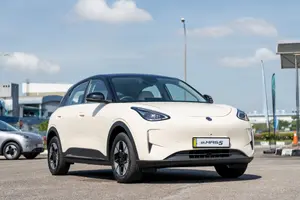
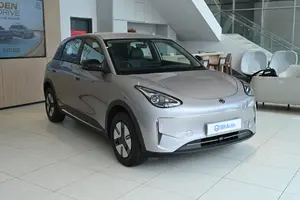
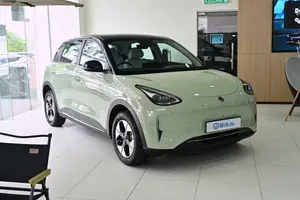
Proton e.MAS 5
Proton e.MAS 5
RM 59,750
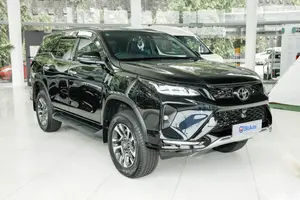
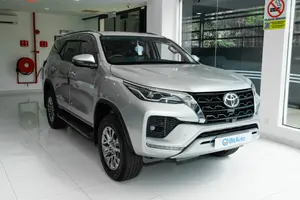
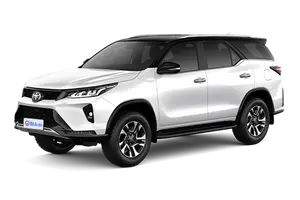
Toyota Fortuner
Toyota Fortuner
RM 195,880

Verdict: Which Car Should You Buy?

One is electric and one runs on petrol — the split comes down to how you charge and how far you drive. The e.MAS 5 is the cheaper way in at RM 59,750, undercutting the Fortuner by RM 136,130. The Fortuner earns its premium on size and power.

Key Differences

  • Price: e.MAS 5 RM 59,750; Fortuner RM 195,880
  • Powertrain & range: e.MAS 5 30.12 kWh / 285 km; Fortuner 2.4L
  • Power: e.MAS 5 78 hp; Fortuner 150 hp
  • Length: e.MAS 5 4135 mm; Fortuner 4795 mm

Pros & Cons

Proton e.MAS 5 225km Prime (2026)

Pros

  • Lower price at RM 59,750

Cons

  • Less power

Toyota Fortuner 2.4L Standard Diesel (2024)

Pros

  • Stronger 150 hp

Cons

  • Higher entry price

Find the Right Car

Choose the e.MAS 5 if you want...

  • the lowest purchase price (RM 59,750)
  • a compact body that's easy to park and thread through traffic
  • near-zero fuel cost on home charging

Choose the Fortuner if you want...

  • stronger 150 hp performance
  • refuels anywhere in minutes
  • a 2.4-litre engine

Which car suits your lifestyle best?

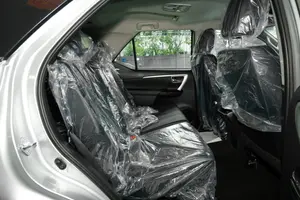
  • Family buyers: Fortuner — 7 seats suits family duty better
  • Daily commuters: e.MAS 5 — the lower price and compact dimensions that are easy to park make it an easy city EV
  • Long-distance drivers: Fortuner — refuels anywhere with no charging stops
  • Performance seekers: Fortuner — 150 hp beats the e.MAS 5's 78 hp

Price & Ownership Costs

ParameterProton e.MAS 5Toyota Fortuner
Price RM 59,750 ✓RM 195,880
Body Type / Seats 5 door Hatchback · 5 seats5 door SUV · 7 seats
Assembly CBUCKD
Annual Road Tax RM 30 ✓RM 754.40

Energy & Consumption

ParameterProton e.MAS 5Toyota Fortuner
Fuel Type BEVDiesel
Max Range (Full Tank/Charge) 285 km · NEDC-

The e.MAS 5 runs on electricity alone; the Fortuner burns petrol.

Power & Performance

ParameterProton e.MAS 5Toyota Fortuner
Motor Rear-
Max Power -150 Ps
Max Torque -400 N·m
Drivetrain RWD4WD
Transmission Fixed Gear RatioAT

Dimensions

ParameterProton e.MAS 5Toyota Fortuner
Length 4,135 mm4,795 mm ✓
Width 1,805 mm1,855 mm ✓
Height 1,580 mm1,835 mm ✓
Wheelbase 2,650 mm2,745 mm ✓
Boot Capacity 375-1320 L-

The Fortuner is the longer car — 660 mm up at 4795 mm versus 4135 mm. The Fortuner also leads on wheelbase, 2745 mm versus 2650 mm. The Fortuner seats 7.

Comfort & Technology

e.MAS 5

  • 14.6" central touchscreen + 8.8" digital cluster
  • Automatic climate control
  • Remote charging management

Fortuner

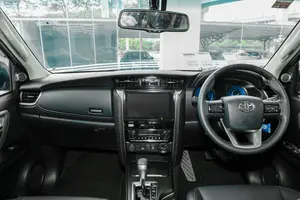
  • 9" touchscreen with Apple CarPlay / Android Auto
  • Manual air conditioning
  • Wireless phone charging
  • Power-folding door mirrors

Key Specs Compared

ParameterProton e.MAS 5Toyota Fortuner
Overview
Price RM 59,750 ✓RM 195,880
Body Type 5 door Hatchback5 door SUV
Seats 5 seats7 seats ✓
Assembly CBUCKD
Performance
Motor Rear-
Max Power -150 Ps
Max Power -110 kW
Max Torque -400 N·m
Drivetrain RWD4WD
Transmission Fixed Gear RatioAT
Battery & Charging
Battery Type LFP battery-
Battery Capacity 30.12 kWh-
Electric Range 285 km · NEDC-
AC Charging Time 4.3 h-
DC Charging Time 21 min-
Dimensions
Length 4,135 mm4,795 mm ✓
Width 1,805 mm1,855 mm ✓
Height 1,580 mm1,835 mm ✓
Wheelbase 2,650 mm2,745 mm ✓
Kerb Weight 1,230 kg2,110 kg
Boot Capacity 375-1320 L-

Image Gallery

FAQs

Is the e.MAS 5 or Fortuner better?

The e.MAS 5 is the cheaper of the two at RM 59,750, but the Fortuner answers back with more equipment for the money.

What is the price difference between the e.MAS 5 and Fortuner?

The e.MAS 5 starts at RM 59,750, the Fortuner at RM 195,880 — about RM 136,130 in favour of the e.MAS 5.

Which one is more powerful?

The Fortuner is more powerful — 150 hp against 78 hp.

Which is bigger?

The Fortuner is longer, at 4795 mm against 4135 mm.

Do both cars come with advanced driver assistance?

Both list blind-spot monitoring.

Feedback