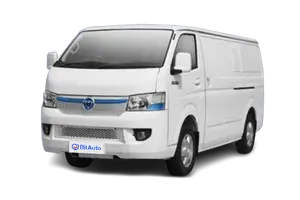
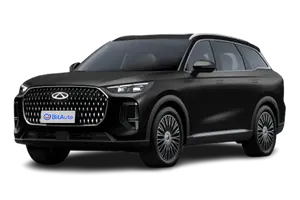
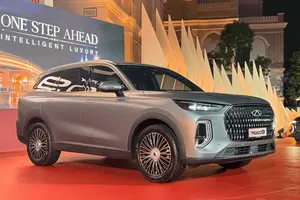
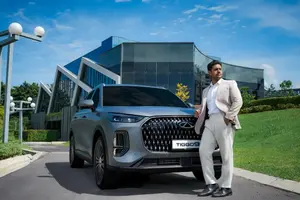
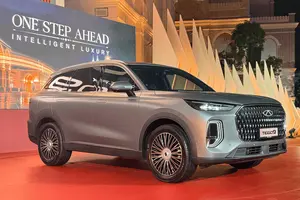
One is electric and one runs on petrol — the split comes down to how you charge and how far you drive. The Tiggo 9 is the cheaper way in at RM 179,750, undercutting the Iblue EV by RM 23,235. With no clear hardware advantage to justify the difference, the Iblue EV is harder to recommend.
a compact body that's easy to park and thread through traffic
stronger 256 hp performance
refuels anywhere in minutes
a 360-degree camera as standard
Which car suits your lifestyle best?
Family buyers: Tiggo 9 — 7 seats suits family duty better
Daily commuters: Tiggo 9 — the lower price and compact dimensions that are easy to park make it a cheap city runabout
Long-distance drivers: Tiggo 9 — refuels anywhere with no charging stops
Performance seekers: Tiggo 9 — 256 hp beats the Iblue EV's 114 hp
Price & Ownership Costs
ParameterFoton Iblue EVChery Tiggo 9
PriceRM 202,985RM 179,750 ✓
Body Type / Seats5 door Van · 2 seats5 door SUV · 7 seats
AssemblyCKDCKD
Annual Road Tax-RM 439.20
Over five years the Tiggo 9's RM 23,235 head start is unlikely to be erased by running costs — five-year ownership still lands about RM 16,215 in the Tiggo 9's favour. The deciding factor is your annual mileage and whether you can charge at home.
Energy & Consumption
ParameterFoton Iblue EVChery Tiggo 9
Fuel TypeBEVPetrol
Consumption-8.3 L/100km
Max Range (Full Tank/Charge)235 km · NEDC-
The Iblue EV runs on electricity alone; the Tiggo 9 burns petrol. Home-charged electricity costs roughly 43% less per kilometre than petrol. Refuelling the Tiggo 9 takes minutes and covers about 783 km per fill, against 235 km per charge for the Iblue EV.
Power & Performance
ParameterFoton Iblue EVChery Tiggo 9
MotorRear-
Max Power-256 Ps
Max Torque-390 N·m
DrivetrainRWD4WD
TransmissionFixed Gear RatioDCT
Dimensions
ParameterFoton Iblue EVChery Tiggo 9
Length5,320 mm ✓4,810 mm
Width1,695 mm1,925 mm ✓
Height1,990 mm ✓1,741 mm
Wheelbase3,050 mm ✓2,800 mm
Boot Capacity-143-2065 L
The Iblue EV is the longer car — 510 mm up at 5320 mm versus 4810 mm. The Iblue EV also leads on wheelbase, 3050 mm versus 2800 mm. The Tiggo 9 seats 7.
Comfort & Technology
Iblue EV
Manual air conditioning
Tiggo 9
15.6" central touchscreen + 10.25" digital cluster
Dual-zone automatic climate control
Ventilated front seats
Panoramic sunroof
50W wireless phone charging
Sales Comparison
Monthly new car sales in Malaysia, with data for the past 6 or 12 months, or the full sales history since launch.
Monthly Sales Trend (Malaysia)
Loading sales data…
Monthly Registrations
Monthly Registrations
Data is based on vehicle registration and transaction records from Road Transport Department (JPJ), updated on the 10th of each month. It covers car sales by brand and model, as well as EV sales across Malaysia.
Key Specs Compared
ParameterFoton Iblue EVChery Tiggo 9
Overview
PriceRM 202,985RM 179,750 ✓
Body Type5 door Van5 door SUV
Seats2 seats7 seats ✓
AssemblyCKDCKD
Performance
MotorRear-
Max Power-256 Ps
Max Power-187 kW
Max Torque-390 N·m
DrivetrainRWD4WD
TransmissionFixed Gear RatioDCT
Battery & Charging
Battery TypeLFP battery-
Battery Capacity50.23 kWh-
Electric Range235 km · NEDC-
AC Charging Time5 h-
DC Charging Time40 min-
Dimensions
Length5,320 mm ✓4,810 mm
Width1,695 mm1,925 mm ✓
Height1,990 mm ✓1,741 mm
Wheelbase3,050 mm ✓2,800 mm
Kerb Weight-1,887 kg
Boot Capacity-143-2065 L
FAQs
Is the Tiggo 9 or Iblue EV better?
The Tiggo 9 is the cheaper pick at RM 179,750 and also adds power. The Iblue EV has to justify its premium elsewhere.
What is the price difference between the Tiggo 9 and Iblue EV?
The Tiggo 9 starts at RM 179,750, the Iblue EV at RM 202,985 — about RM 23,235 in favour of the Tiggo 9.
Which one is more powerful?
The Tiggo 9 is more powerful — 256 hp against 114 hp.
Which is bigger?
The Iblue EV is longer, at 5320 mm against 4810 mm.





 Jetour T2
 Honda CR-V
 Toyota Fortuner

