In the Malaysian Japanese SUV market, the Toyota Harrier occupies a rather intriguing position: as a vehicle priced around RM280k, its physical footprint is comparable to many RM200,000 segment alternatives. However, the level of refinement and premium quality it offers is something few competitors at similar price points can match.
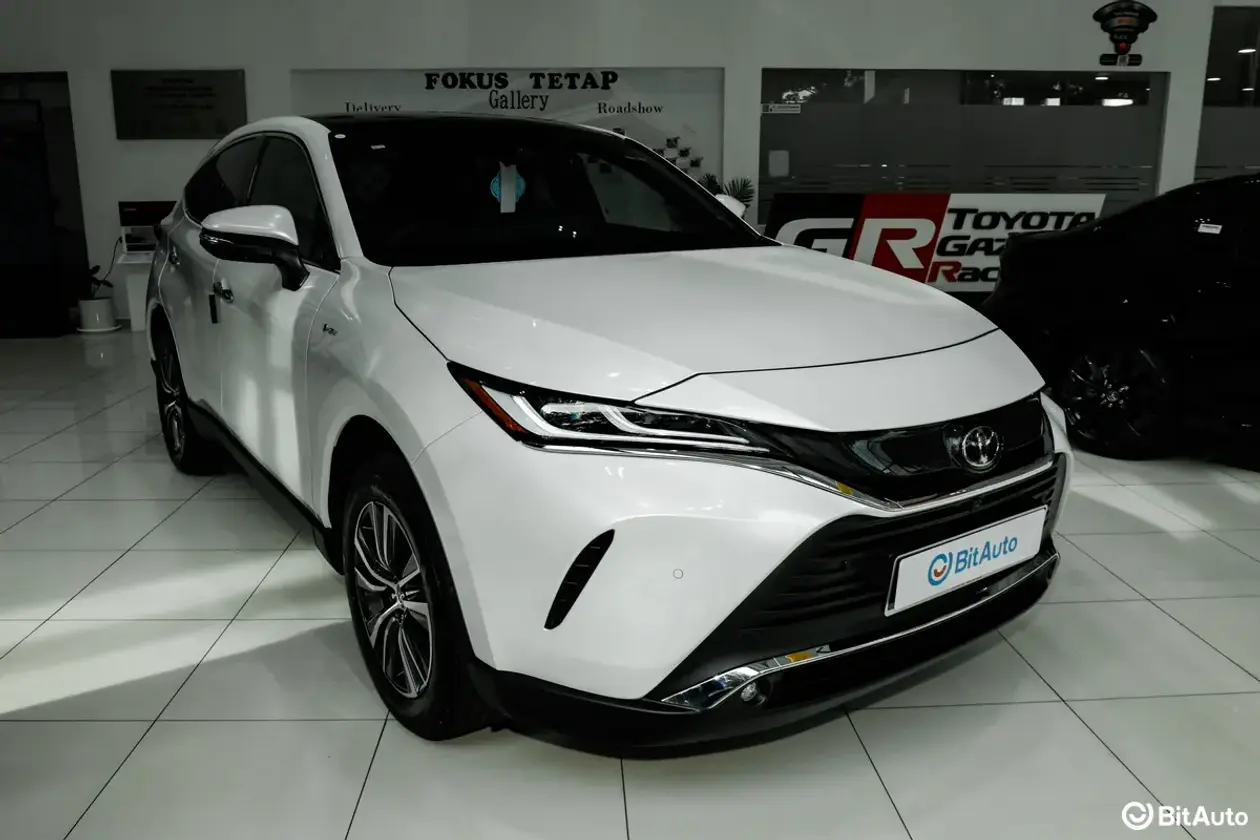
Its market positioning essentially bridges the gap between mainstream, value-driven models in the RM150,000 to RM200,000 bracket and the luxury marques around RM400,000. In Malaysia, the Harrier is offered in a single variant: the 2.5 HEV, officially priced at RM289,000. What exactly does this model bring to the table?
Let’s start with the fundamental aspect that buyers must establish before shortlisting: the Harrier is strictly a five-seater mid-size SUV. It measures 4,740 mm in length, 1,855 mm in width, and 1,660 mm in height, with a 2,690 mm wheelbase. There is no third-row seating, nor is it engineered for off-roading.
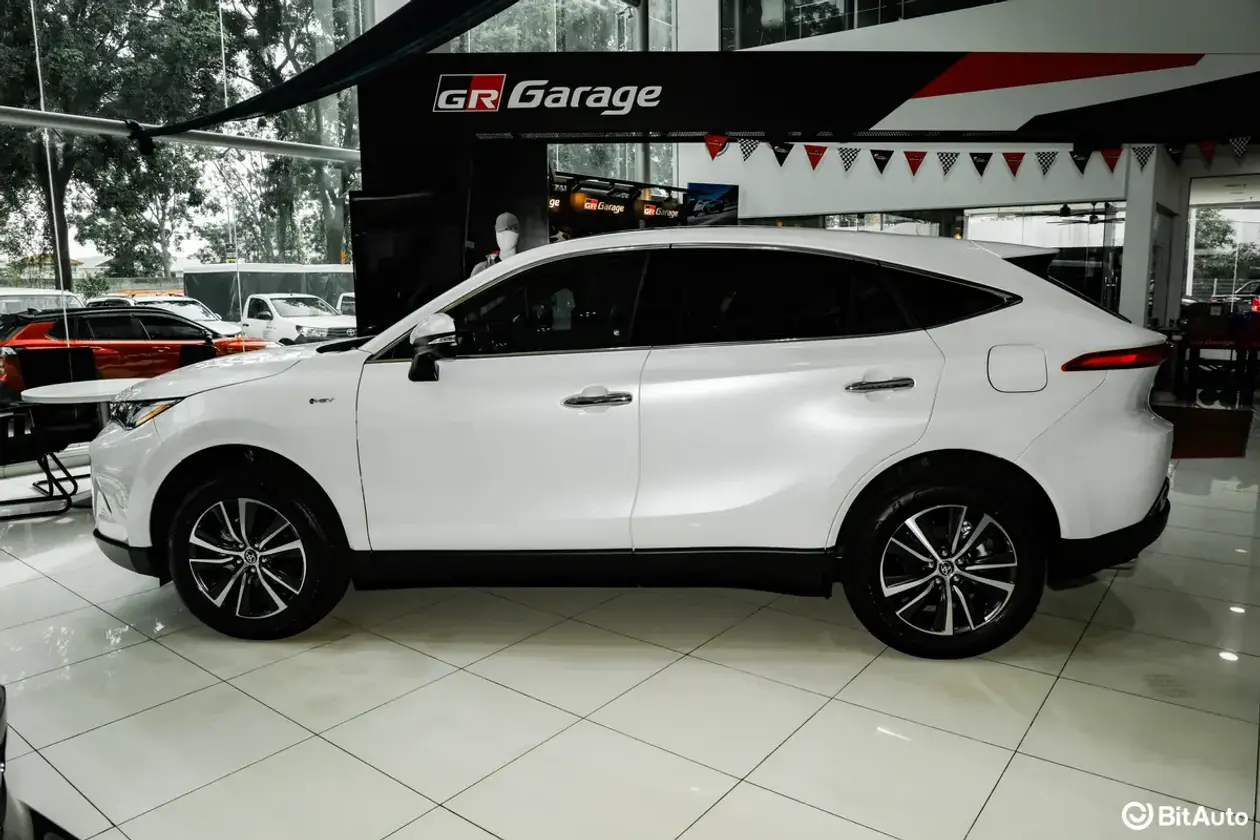
Many may cross-shop it against similarly priced seven-seater SUVs or ponder whether they should simply make the jump to a Lexus. However, the Harrier does not compete on sheer space or pure value-for-money metrics; its core strengths, as mentioned earlier, are focused entirely on cabin refinement, NVH insulation, ride comfort, and fuel efficiency.
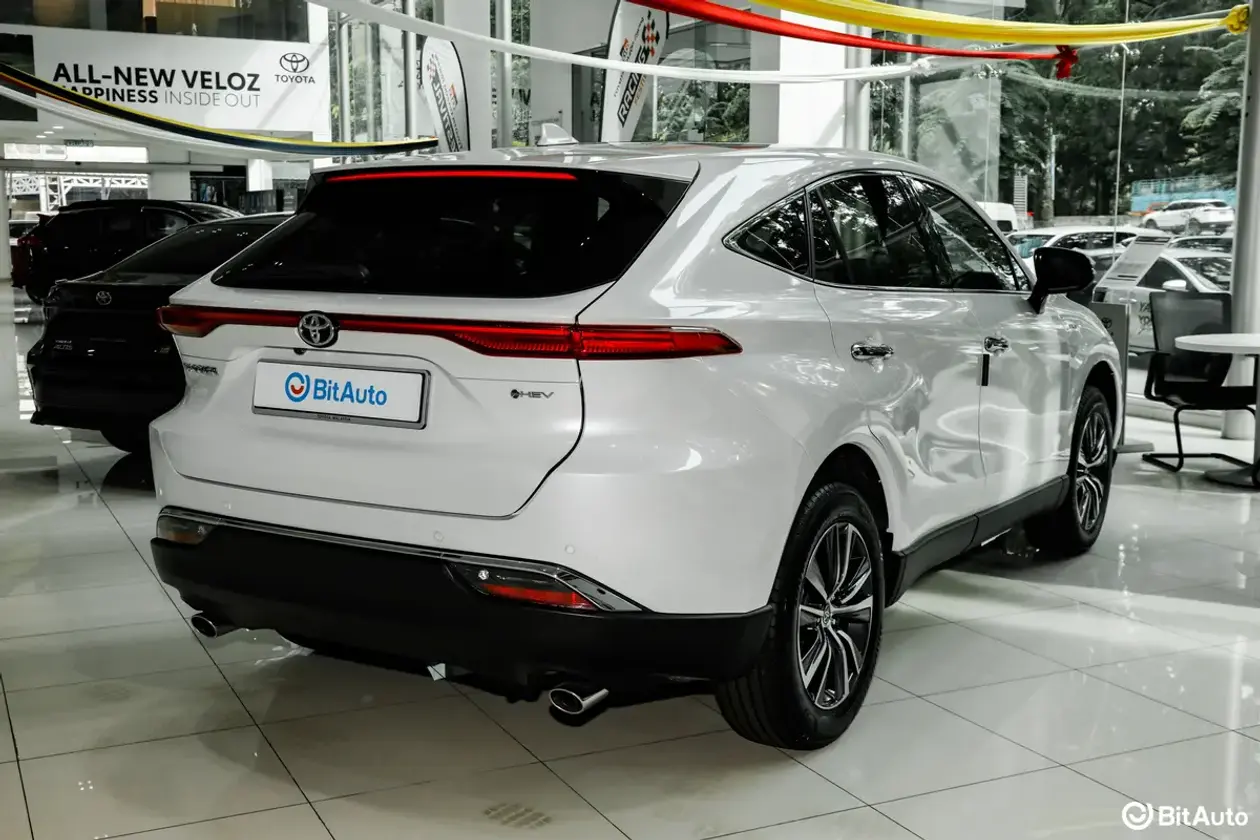
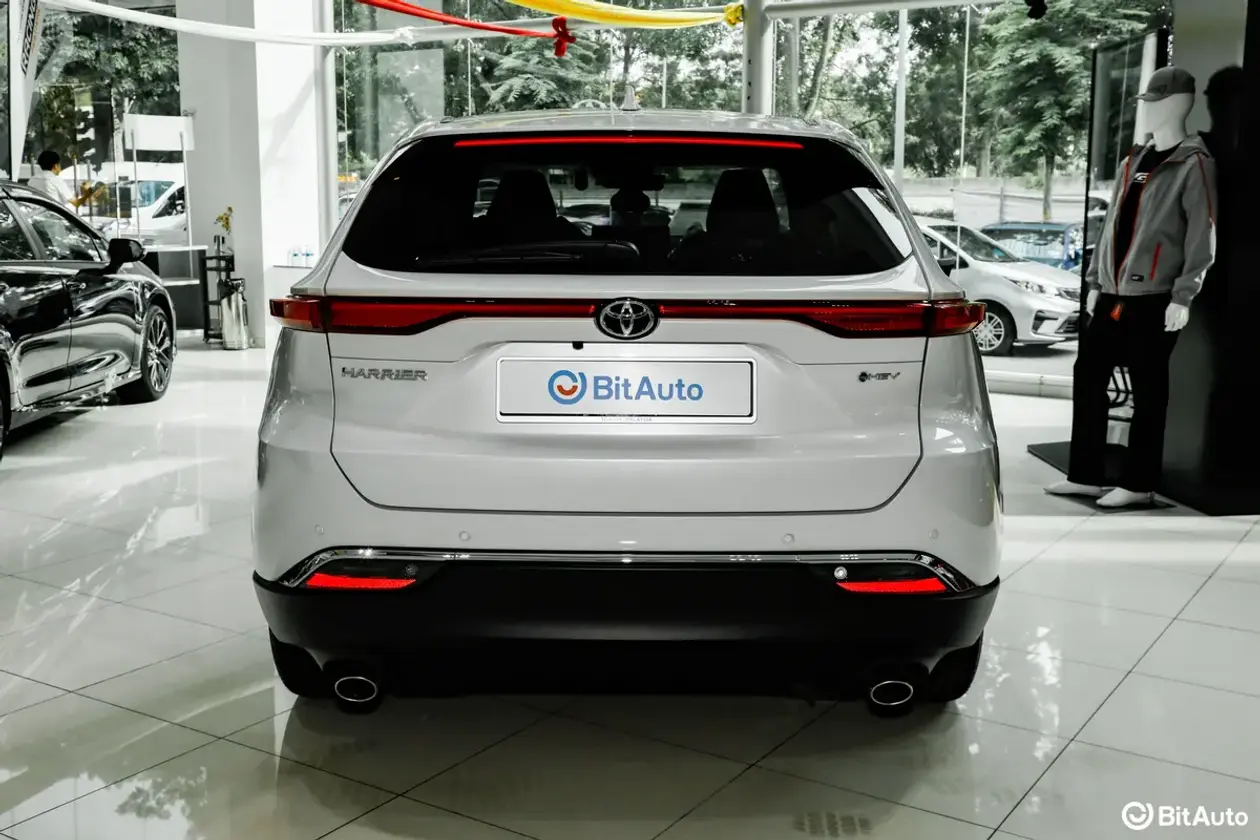
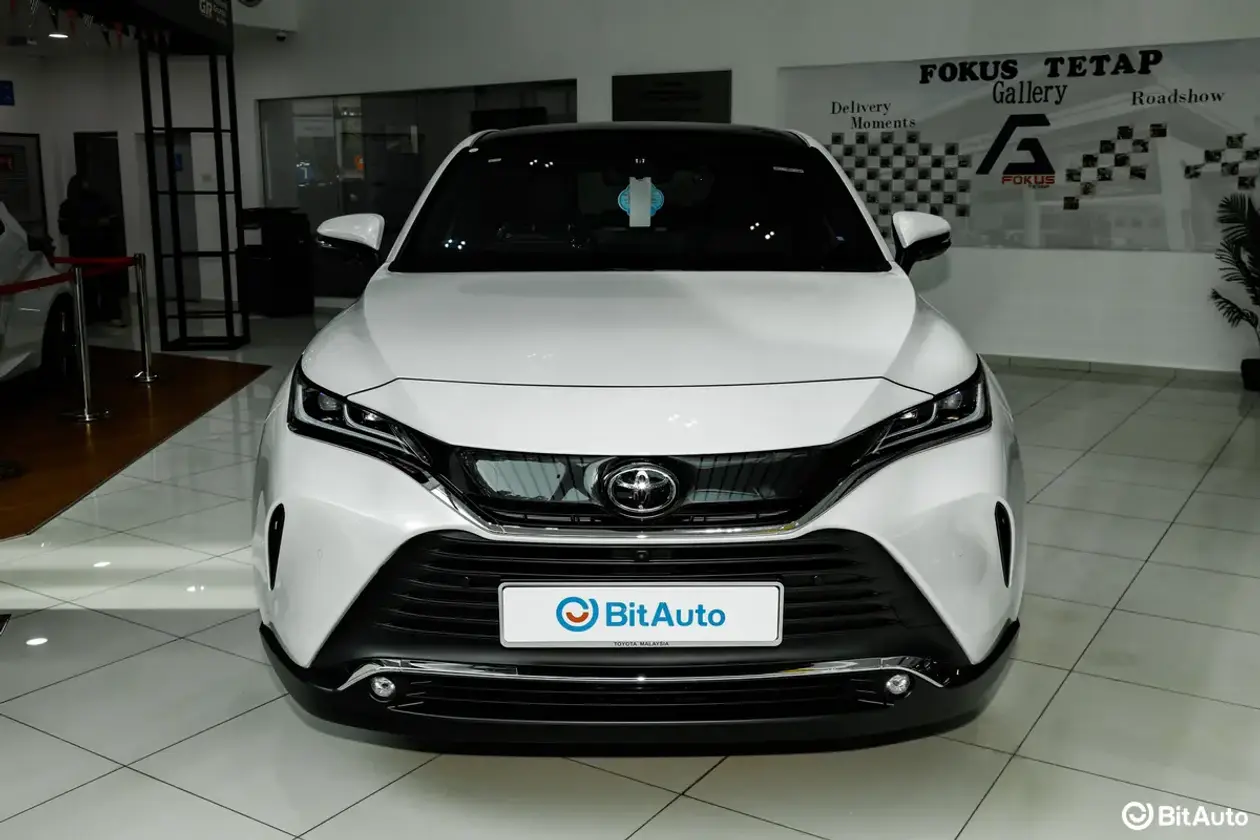
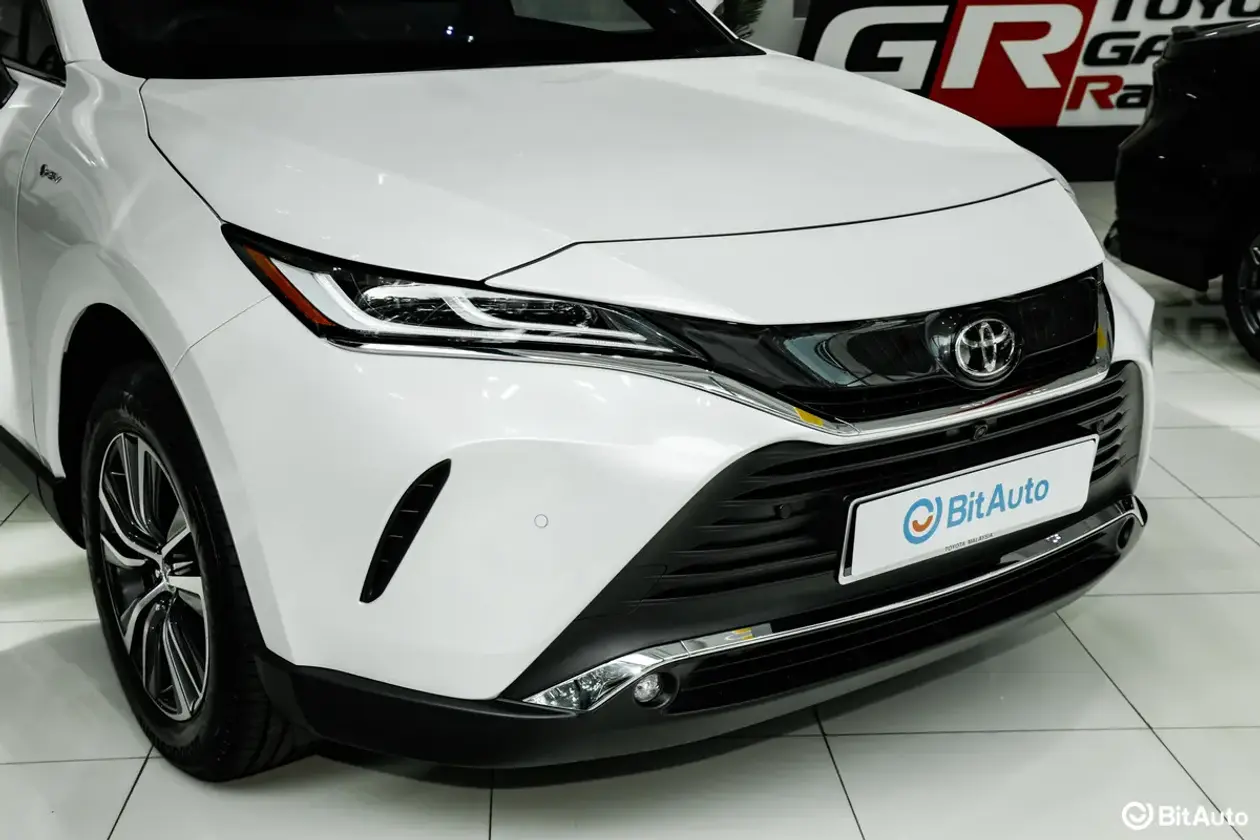
The design of this generation adopts an understated, executive aesthetic—composed and sleek, featuring a sloping roofline reminiscent of a coupe-SUV and an unmistakable full-width LED light bar at the rear. With just a single official variant on offer, the exterior specification is fixed. Standard equipment includes Bi-LED projector headlamps with LED turn indicators, LED daytime running lights (DRLs), and Adaptive High-beam System (AHS).
Also standard are LED front and rear fog lamps, full-LED rear combination lamps, puddle lights, an electrochromic fixed panoramic glass roof (switchable between clear and frosted modes at the touch of a button), a hands-free powered tailgate with kick sensor, rain-sensing wipers, and auto-folding side mirrors with integrated signal lights and courtesy lamps.
As older Harrier units might still be available at select dealerships, telling an official HEV apart from older purely petrol-powered units is straightforward: the hybrid variant features an "HEV" badge on the right side of the tailgate. Colour options comprise Platinum White Pearl, Precious Metal, and Attitude Black—all safe, widely accepted shades that incur no price penalty.
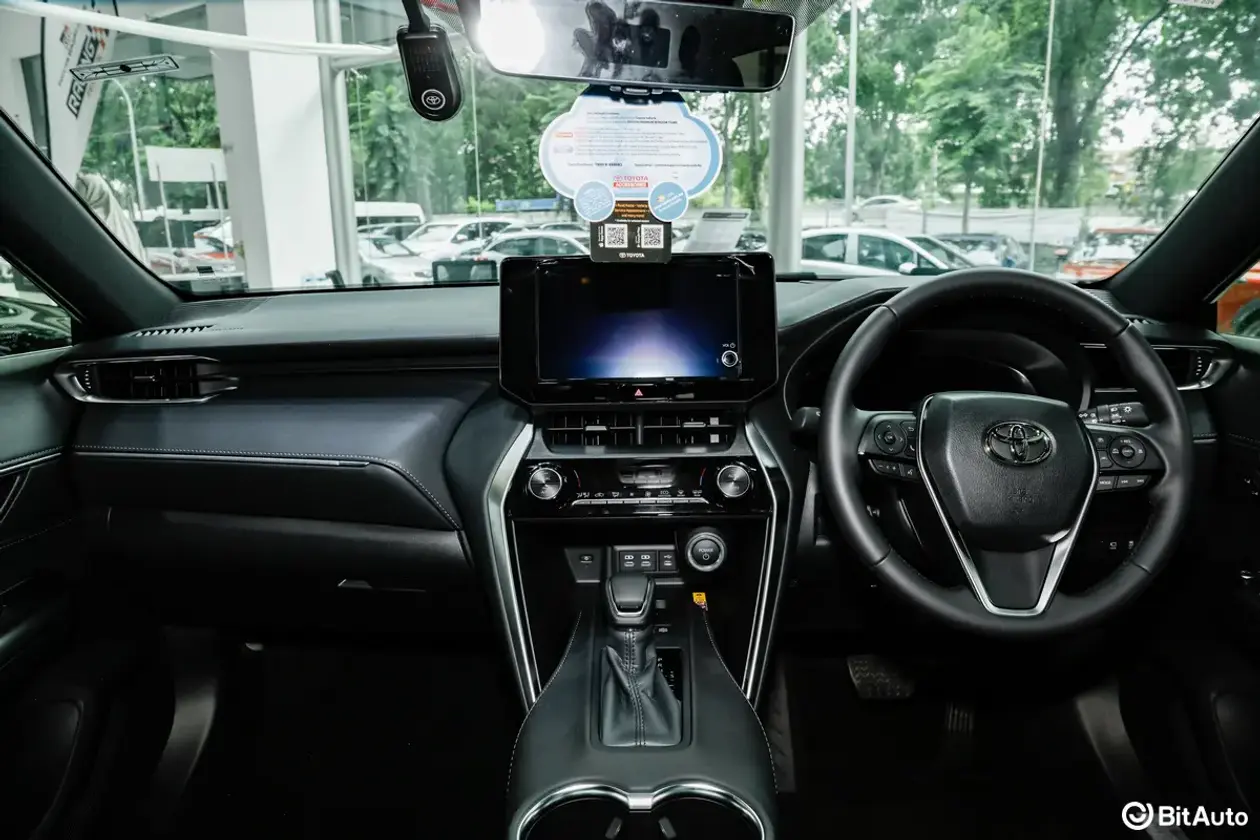
The premium ambiance within the cabin is immediately noticeable. Key appointments include a 12.3-inch fully digital instrument cluster, a 10.5-inch colour Head-Up Display (HUD), an 8-inch Display Audio touchscreen infotainment unit, dual-zone automatic climate control, a Qi wireless charging pad, five USB-C charging ports, and a panoramic glass roof with an electric sunshade.
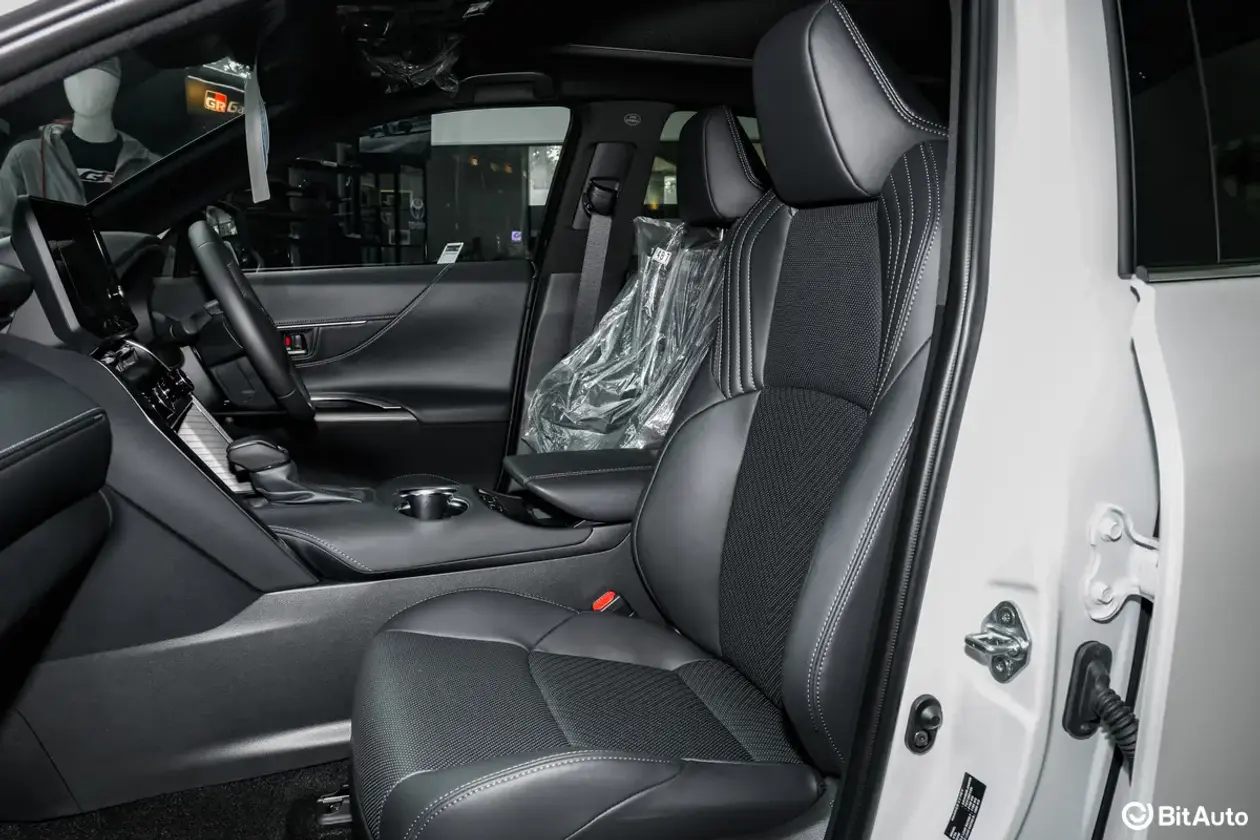
The seats represent one of the cabin's standout highlights: the driver enjoys 12-way power adjustability with two memory settings, while the front passenger gets 4-way power adjustment. Crucially, both front seats are equipped with both ventilation and heating functions—the former being an indispensable feature in Malaysia's hot and humid tropical climate.
However, it is worth pointing out that the 8-inch infotainment touchscreen feels somewhat modest by modern standards, where 10-inch or larger screens are becoming the norm. Furthermore, Apple CarPlay operates wirelessly, while Android Auto still requires a wired connection—a slightly peculiar split setup.
Sitting on a 2,690 mm wheelbase, the Harrier's cabin space aligns with expectations for a five-seater mid-size SUV. Rear legroom easily accommodates a typical family of four or five, with a relatively flat rear floor providing reasonable comfort for three adults across the bench. Boot capacity is rated at 396 litres, expanding to a flat loading deck via 60:40 split-folding rear seats, sufficient for routine errands, airport runs, or brief road trips.
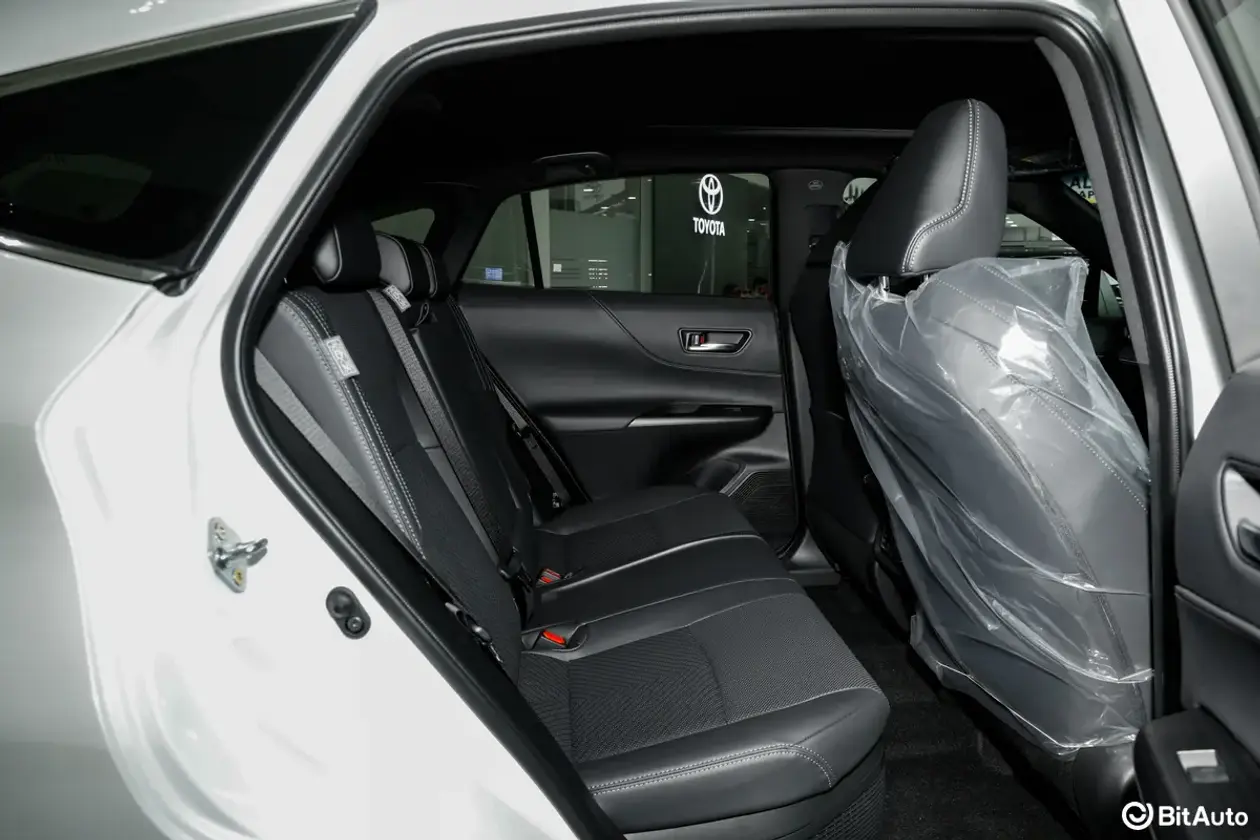
That said, 396 litres of boot space is relatively modest for this segment. Families frequently travelling with heavy luggage, baby strollers, or outdoor camping gear may find the cargo hold slightly less accommodating than what rivals like the Mazda CX-5 or Honda CR-V provide.
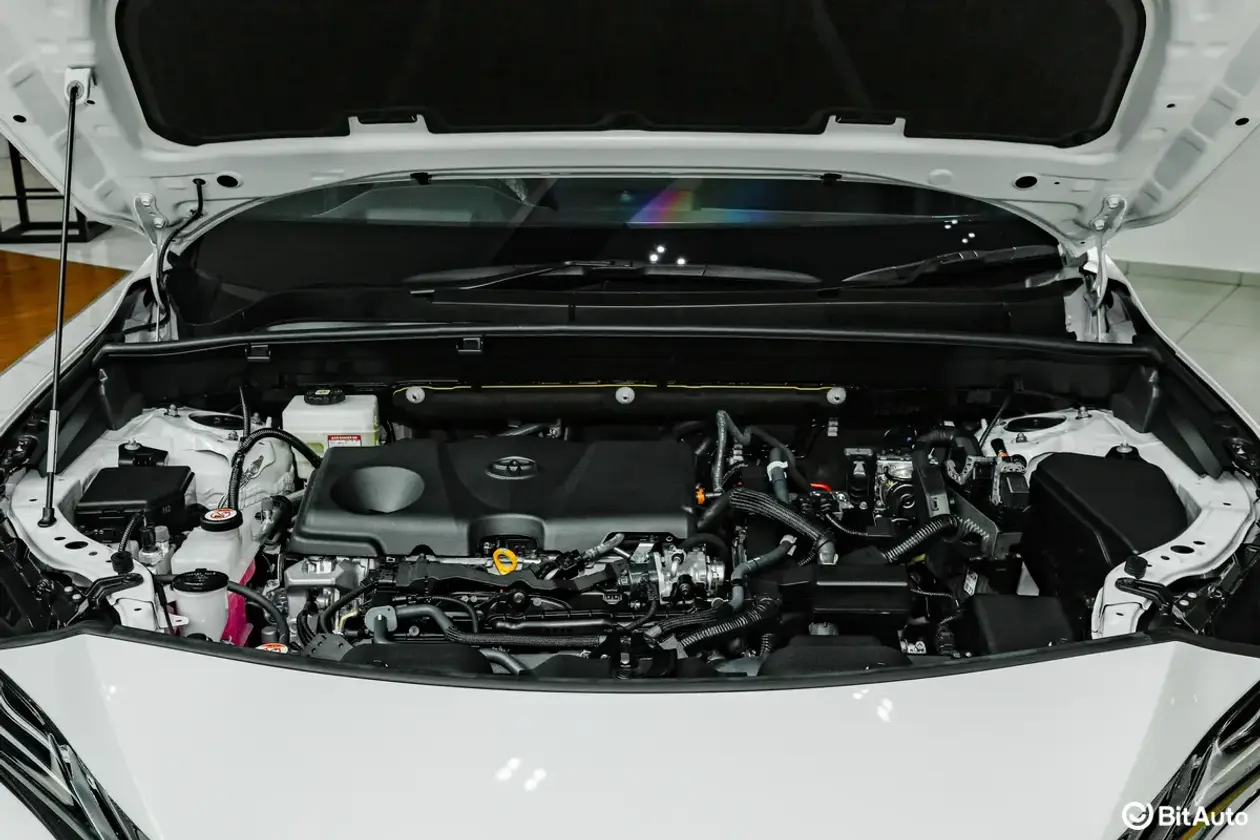
The Harrier relies on Toyota’s proven hybrid electric vehicle (HEV) powertrain, pairing a 178 PS 2.5-litre naturally aspirated engine with a 120 PS electric motor. Total system output stands at 217 PS, sent to the front wheels via Toyota’s proprietary e-CVT gearbox (which operates mechanically very differently from conventional belt-driven CVTs). The primary strength of this setup lies in its operating efficiency.
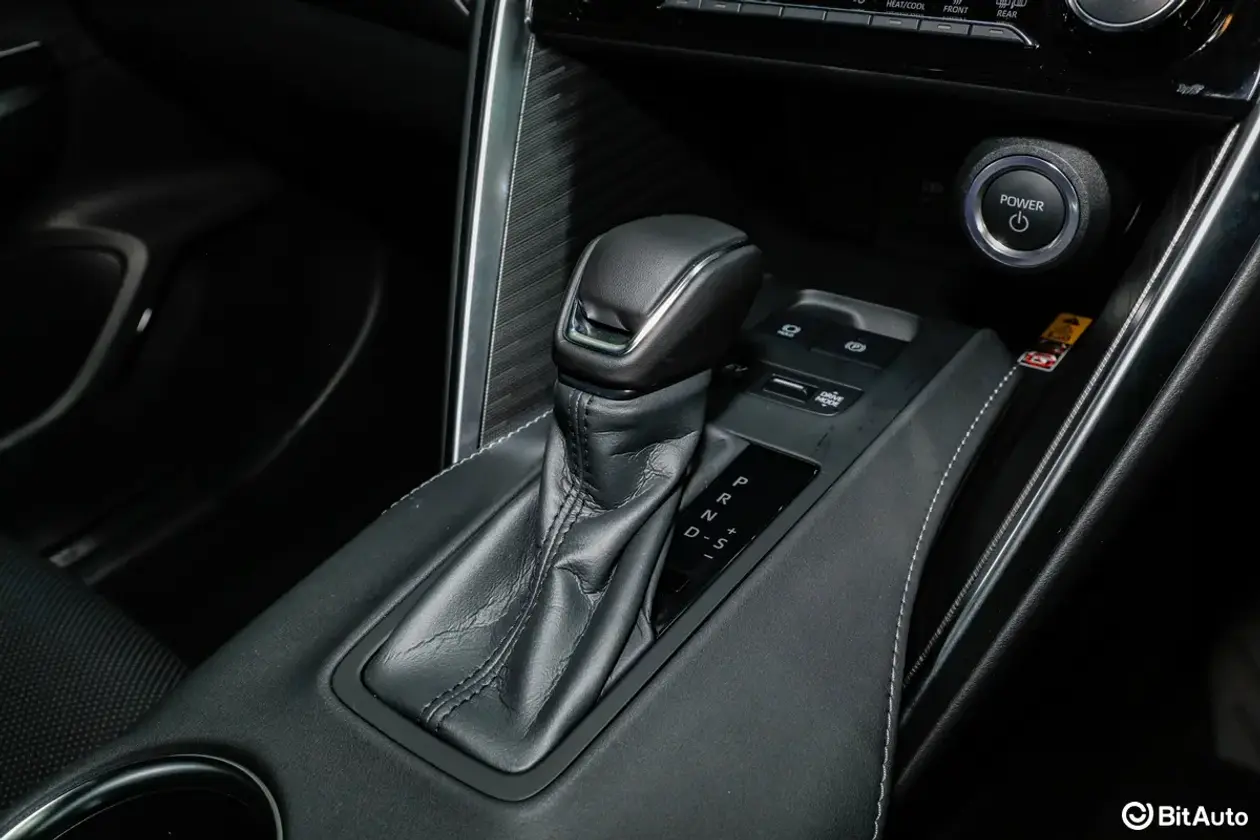
Compared to the previous-generation 2.0-litre petrol variant that averaged around 6.5 L/100 km, the current hybrid powertrain achieves savings of close to 2 litres per 100 km. Based on an average annual mileage of 20,000 km running on RON 95 petrol, this translates to annual fuel savings exceeding RM700.
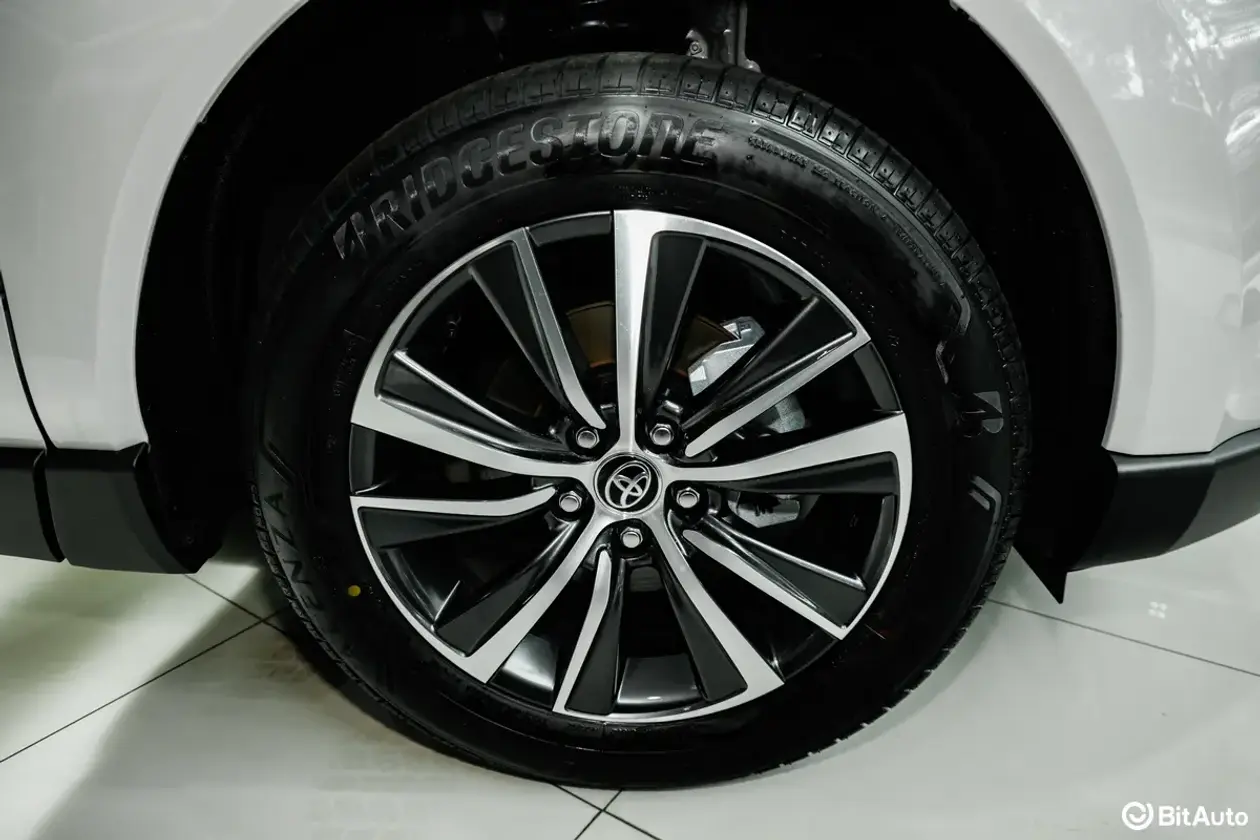
Passive safety is well-covered with 7 SRS airbags (dual front, front side, driver’s knee, and full-length curtain airbags). The active suite is governed by Toyota Safety Sense 3.0, incorporating Pre-Collision System (PCS with autonomous emergency braking), Full-Speed Range Dynamic Radar Cruise Control (DRCC), Lane Tracing Assist (LTA), Lane Departure Alert (LDA), Adaptive High-beam System (AHS), Road Sign Assist (RSA), Blind Spot Monitor (BSM), Rear Cross Traffic Alert with auto brake (RCTA), and Parking Support Brake (PKSB). The model also holds a full 5-star ASEAN NCAP safety rating.
In short, the active safety and driver assistance list leaves practically nothing to be desired.
Ultimately, the officially imported Toyota Harrier 2.5 HEV presents a remarkably straightforward buying proposition: there is only one variant, and one price tag. The sole consideration for prospective buyers is whether the vehicle aligns with their personal lifestyle and priorities.
For its target demographic, it represents strong value: a serene, exceptionally frugal, plush, and dependable five-seater SUV backed by full factory warranty support that proves effortless to live with daily. Conversely, buyers requiring third-row seating, prioritising class-leading cargo space, or seeking an engaging, sporty drive will likely find the RM289,000 asking price hard to justify, leading them elsewhere.
If you fall squarely into the former camp, this officially supported Harrier generation may well be the most compelling iteration yet. Before placing a booking, a proper showroom test drive is strongly recommended—paying particular attention to rear-seat comfort levels and the near-silent pull-away characteristics of the hybrid drive.
Leave your number, an advisor will contact you


Your go-to source for all things automotive in Malaysia. 🚗 Latest reviews, breaking news, launches & industry trends.
+ Follow Exports of the all-new 2027 Mitsubishi Pajero from Thailand begins, with Japan being the first market. How, Mitsubishi Motors Malaysia any chance for us? hehe 😜
#mitsubishi #pajero #triton #xforce 1 minute ago
 Perak EV owners, will this be your new go-to pit stop? 1 minute ago
 GTA 6 countdown: 13 years have passed since GTA 5 released, and today, many gamers will not be going out of their house. But let's wind the clock back to see what has happened in the Malaysian automotive space in that time frame...
#gta6 #gta6countdown #ps5 #proton #toyota #honda #perodua 1 minute ago
Get the latest car news first!
Your go-to source for all things automotive in Malaysia. 🚗 Latest reviews, breaking news, launches & industry trends.
Exports of the all-new 2027 Mitsubishi Pajero from Thailand begins, with Japan being the first market. How, Mitsubishi Motors Malaysia any chance for us? hehe 😜
#mitsubishi #pajero #triton #xforce 1 minute ago Perak EV owners, will this be your new go-to pit stop? 1 minute ago GTA 6 countdown: 13 years have passed since GTA 5 released, and today, many gamers will not be going out of their house. But let's wind the clock back to see what has happened in the Malaysian automotive space in that time frame...
#gta6 #gta6countdown #ps5 #proton #toyota #honda #perodua 1 minute ago 
© 2024 Bitauto.com. All Rights Reserved.
Bitauto (www.yiche.com and www.bitauto.com) is one of the most visited automotive websites in China. We provide detailed info on Chinese car brands available in your area. Please note that the information provided on this website is based on publicly available data and is for reference only. It may not be fully updated or accurate at all times.

Help us improve our website


