

HomeAsia

Search History
Popular Searches
Dealer Login / Sign Up

在马来西亚的汽车市场,很多买家在选车的时候都会拿 Mercedes-Benz GLE 和 Land Rover Discovery Sport 来做比较。今天我们从多个方面做一个详细的对比,帮你省下做功课的时间。


Mercedes-Benz GLE 在马来西亚的 OTR 售价是 RM 544,888 - 544,888,一共有 1 个版本,包括 Standard(RM 544,888) 等。
Land Rover Discovery Sport 在马来西亚的 OTR 售价是 RM 499,800 - 499,800,一共有 1 个版本,包括 Standard(RM 499,800) 等。
从价钱来看,Land Rover Discovery Sport 的起步价比 Mercedes-Benz GLE 便宜了 RM 45,088。老实讲,在这个价位段,几千块的差距其实不算大,关键还是看整体的性价比和长期使用成本。

Mercedes-Benz GLE 搭载 3.0L Turbo,马力 350 hp。官方油耗 12.0 L/100km。
Land Rover Discovery Sport 搭载 3.0L Turbo,马力 350 hp。官方油耗 12.0 L/100km。
两款车用的是同一套动力系统,所以日常开起来的感受基本没有差别。油耗方面也差不多,不用太纠结这一点。

Mercedes-Benz GLE 的安全评级是 5★ (Euro NCAP),主动安全系统包括 Premium ADAS。
Land Rover Discovery Sport 的安全评级是 TBD,主动安全系统包括 Basic。
安全配备方面,两款车都拿到了不错的评级。不过 Mercedes-Benz GLE 的 Premium ADAS 和 Land Rover Discovery Sport 的 Basic 在功能上有些差异,如果你比较看重主动安全的话,可以仔细对比一下两者的功能列表。

Mercedes-Benz GLE 保修 3年/100,000km,保养间隔 每10,000km或6个月。
Land Rover Discovery Sport 保修 3年/100,000km,保养间隔 每10,000km或6个月。
两款车的保修条件一样,这方面不用纠结。实际保养成本还要看品牌的服务网络和零件价格,建议去车友群问问真实车主的经验。

总的来说,Mercedes-Benz GLE 和 Land Rover Discovery Sport 都是马来西亚市场很不错的车型。选择哪一辆,关键还是要看你的个人需求和预算。建议大家做好功课,多比较几间车行的报价,再去试驾做最终决定。买车是件大事,花点时间做功课绝对不会错。


在马来西亚的轿车市场,很多买家在选车的时候都会拿 Volkswagen Golf GTI 和 Mercedes-Benz C-Class AMG 来做比较。这两款车在价位和定位上都蛮接近的,今天我们就从多个方面做一个详细的对比,帮你省下做功课的时间。
Volkswagen Golf GTI 在马来西亚的 OTR 售价是 RM 256,962 - 256,962,一共有 3 个版本,包括 2025 2.0T Sepang Edition(RM 262,990)、2025 2.0T Standard(RM 256,962)、DCT(RM 219,800) 等。
Mercedes-Benz C-Class AMG 在马来西亚的 OTR 售价是 RM 443,888 - 443,888,一共有 2 个版本,包括 C 200 Avantgarde(RM 260,000)、C 300 AMG Line(RM 310,000) 等。
从价钱来看,Volkswagen Golf GTI 的起步价确实比 Mercedes-Benz C-Class AMG 便宜了 RM 186,926。如果你预算有限,Volkswagen 的入门版已经可以满足日常需求。但也要注意,便宜的那几千块,可能在配备上会有取舍,具体要看你的需求。

Volkswagen Golf GTI 搭载 2.0L Turbo,马力 220 hp。官方油耗 9.5 L/100km。
Mercedes-Benz C-Class AMG 搭载 3.0L Turbo,马力 350 hp。官方油耗 12.0 L/100km。
动力方面,Mercedes-Benz C-Class AMG 的 3.0L Turbo 比 Volkswagen Golf GTI 的 2.0L Turbo 多了 130 匹马力。不过日常在市区开,两款车的动力都够用,不会觉得不够力。

Volkswagen Golf GTI 车身长 4400 mm,后备箱 400 L。
Mercedes-Benz C-Class AMG 车身长 4400 mm,后备箱 400 L。
两款车的尺寸几乎一样,车内空间差别不大。这个级别的车,日常使用完全够用。

Volkswagen Golf GTI 采用 FWD 驱动方式。
Mercedes-Benz C-Class AMG 采用 FWD 驱动方式。
两款车的驱动方式一样,都是 FWD,日常驾驶感受不会有太大区别。

Volkswagen Golf GTI 保修 3年/100,000km,保养间隔 每10,000km或6个月。
Mercedes-Benz C-Class AMG 保修 3年/100,000km,保养间隔 每10,000km或6个月。
两款车的保修条件一样,这方面不用纠结。实际保养成本还要看品牌的服务网络和零件价格,建议去车友群问问真实车主的经验。

总的来说,Volkswagen Golf GTI 和 Mercedes-Benz C-Class AMG 都是马来西亚市场很不错的车型。选择哪一辆,关键还是要看你的个人需求和预算。建议大家做好功课,多比较几间车行的报价,再去试驾做最终决定。买车是件大事,花点时间做功课绝对不会错。


在马来西亚的轿车市场,很多买家在选车的时候都会拿 Volkswagen Golf GTI 和 Mercedes-Benz E-Class PHEV 来做比较。这两款车在价位和定位上都蛮接近的,今天我们就从多个方面做一个详细的对比,帮你省下做功课的时间。
Volkswagen Golf GTI 在马来西亚的 OTR 售价是 RM 256,962 - 256,962,一共有 3 个版本,包括 2025 2.0T Sepang Edition(RM 262,990)、2025 2.0T Standard(RM 256,962)、DCT(RM 219,800) 等。
Mercedes-Benz E-Class PHEV 在马来西亚的 OTR 售价是 RM 427,888 - 427,888,一共有 2 个版本,包括 E 200 Avantgarde(RM 350,000)、E 300 AMG Line(RM 400,000) 等。
从价钱来看,Volkswagen Golf GTI 的起步价确实比 Mercedes-Benz E-Class PHEV 便宜了 RM 170,926。如果你预算有限,Volkswagen 的入门版已经可以满足日常需求。但也要注意,便宜的那几千块,可能在配备上会有取舍,具体要看你的需求。
Volkswagen Golf GTI 搭载 2.0L Turbo,马力 220 hp。官方油耗 9.5 L/100km。
Mercedes-Benz E-Class PHEV 搭载 Hybrid,马力 170 hp。官方油耗 4.5 L/100km。
动力方面,Volkswagen Golf GTI 的 2.0L Turbo 比 Mercedes-Benz E-Class PHEV 的 Hybrid 多了 50 匹马力,中段加速更有信心,尤其是跑高速公路超车的时候。不过 Mercedes-Benz E-Class PHEV 的油耗可能更友好,日常市区通勤差别不会太大。
Volkswagen Golf GTI 采用 FWD 驱动方式。
Mercedes-Benz E-Class PHEV 采用 FWD 驱动方式。
两款车的驱动方式一样,都是 FWD,日常驾驶感受不会有太大区别。
Volkswagen Golf GTI 保修 3年/100,000km,保养间隔 每10,000km或6个月。
Mercedes-Benz E-Class PHEV 保修 3年/100,000km,保养间隔 每10,000km或6个月。
两款车的保修条件一样,这方面不用纠结。实际保养成本还要看品牌的服务网络和零件价格,建议去车友群问问真实车主的经验。

Volkswagen Golf GTI 和 Mercedes-Benz E-Class PHEV 都是马来西亚市场的主流选择,适合家庭使用、日常通勤。如果你更看重品牌口碑和二手价,可以优先考虑口碑更好的那一款;如果你更在意性价比和配备,那就选配置更丰富的那款。最终还是建议两款都去试驾,亲身体验才是最重要的。

总的来说,Volkswagen Golf GTI 和 Mercedes-Benz E-Class PHEV 都是马来西亚市场很不错的车型。选择哪一辆,关键还是要看你的个人需求和预算。建议大家做好功课,多比较几间车行的报价,再去试驾做最终决定。买车是件大事,花点时间做功课绝对不会错。

在马来西亚的SUV市场,很多买家在选车的时候都会拿 Mercedes-Benz Maybach GLS 和 Land Rover Range Rover Sport 来做比较。这两款车在价位和定位上都蛮接近的,今天我们就从多个方面做一个详细的对比,帮你省下做功课的时间。
Mercedes-Benz Maybach GLS 在马来西亚的 OTR 售价是 RM 1,918,888 - 1,918,888,一共有 1 个版本,包括 Standard(RM 1,918,888) 等。
Land Rover Range Rover Sport 在马来西亚的 OTR 售价是 RM 1,698,000 - 2,500,000,一共有 1 个版本,包括 Standard(RM 1,698,000) 等。
从价钱来看,Land Rover Range Rover Sport 的起步价比 Mercedes-Benz Maybach GLS 便宜了 RM 220,888。老实讲,在这个价位段,几千块的差距其实不算大,关键还是看整体的性价比和长期使用成本。

Mercedes-Benz Maybach GLS 搭载 3.0L Turbo,马力 350 hp。官方油耗 12.0 L/100km。
Land Rover Range Rover Sport 搭载 3.0L Turbo,马力 350 hp。官方油耗 12.0 L/100km。
两款车用的是同一套动力系统,日常开起来的感受基本没有差别。油耗方面也差不多,不用太纠结这一点。

Mercedes-Benz Maybach GLS 的安全评级是 5★ (Euro NCAP),主动安全系统包括 Premium ADAS。
Land Rover Range Rover Sport 的安全评级是 TBD,主动安全系统包括 Basic。
安全配备方面,两款车都拿到了不错的评级。不过 Mercedes-Benz Maybach GLS 的 Premium ADAS 和 Land Rover Range Rover Sport 的 Basic 在功能上有些差异,如果你比较看重主动安全的话,可以仔细对比一下两者的功能列表。

Mercedes-Benz Maybach GLS 保修 3年/100,000km,保养间隔 每10,000km或6个月。
Land Rover Range Rover Sport 保修 3年/100,000km,保养间隔 每10,000km或6个月。
两款车的保修条件一样,这方面不用纠结。实际保养成本还要看品牌的服务网络和零件价格,建议去车友群问问真实车主的经验。

Mercedes-Benz Maybach GLS 和 Land Rover Range Rover Sport 都是马来西亚市场的主流选择,适合家庭使用、日常通勤。如果你更看重品牌口碑和二手价,可以优先考虑口碑更好的那一款;如果你更在意性价比和配备,那就选配置更丰富的那款。最终还是建议两款都去试驾,亲身体验才是最重要的。
总的来说,Mercedes-Benz Maybach GLS 和 Land Rover Range Rover Sport 都是马来西亚市场很不错的车型。选择哪一辆,关键还是要看你的个人需求和预算。建议大家做好功课,多比较几间车行的报价,再去试驾做最终决定。买车是件大事,花点时间做功课绝对不会错。

在马来西亚的SUV市场,很多买家在选车的时候都会拿 Mercedes-Benz GLC 和 Land Rover Discovery Sport 来做比较。这两款车在价位和定位上都蛮接近的,今天我们就从多个方面做一个详细的对比,帮你省下做功课的时间。
Mercedes-Benz GLC 在马来西亚的 OTR 售价是 RM 336,888 - 336,888,一共有 2 个版本,包括 GLC 200(RM 290,000)、GLC 300(RM 340,000) 等。
Land Rover Discovery Sport 在马来西亚的 OTR 售价是 RM 499,800 - 499,800,一共有 1 个版本,包括 Standard(RM 499,800) 等。
从价钱来看,Mercedes-Benz GLC 的起步价确实比 Land Rover Discovery Sport 便宜了 RM 162,912。如果你预算有限,Mercedes-Benz 的入门版已经可以满足日常需求。但也要注意,便宜的那几千块,可能在配备上会有取舍,具体要看你的需求。
Mercedes-Benz GLC 搭载 2.0L Turbo,马力 220 hp。官方油耗 9.5 L/100km。
Land Rover Discovery Sport 搭载 3.0L Turbo,马力 350 hp。官方油耗 12.0 L/100km。
动力方面,Land Rover Discovery Sport 的 3.0L Turbo 比 Mercedes-Benz GLC 的 2.0L Turbo 多了 130 匹马力。不过日常在市区开,两款车的动力都够用,不会觉得不够力。
Mercedes-Benz GLC 车身长 4400 mm,后备箱 400 L。
Land Rover Discovery Sport 车身长 4400 mm,后备箱 400 L。
两款车的尺寸几乎一样,车内空间差别不大。这个级别的车,日常使用完全够用。
Mercedes-Benz GLC 和 Land Rover Discovery Sport 都是马来西亚市场的主流选择,适合家庭使用、日常通勤。如果你更看重品牌口碑和二手价,可以优先考虑口碑更好的那一款;如果你更在意性价比和配备,那就选配置更丰富的那款。最终还是建议两款都去试驾,亲身体验才是最重要的。
总的来说,Mercedes-Benz GLC 和 Land Rover Discovery Sport 都是马来西亚市场很不错的车型。选择哪一辆,关键还是要看你的个人需求和预算。建议大家做好功课,多比较几间车行的报价,再去试驾做最终决定。买车是件大事,花点时间做功课绝对不会错。


在马来西亚的SUV市场,很多买家在选车的时候都会拿 Mercedes-Benz GLA 和 Land Rover Discovery Sport 来做比较。这两款车在价位和定位上都蛮接近的,今天我们就从多个方面做一个详细的对比,帮你省下做功课的时间。
Mercedes-Benz GLA 在马来西亚的 OTR 售价是 RM 258,888 - 295,888,一共有 1 个版本,包括 Standard(RM 258,888) 等。
Land Rover Discovery Sport 在马来西亚的 OTR 售价是 RM 499,800 - 499,800,一共有 1 个版本,包括 Standard(RM 499,800) 等。
从价钱来看,Mercedes-Benz GLA 的起步价确实比 Land Rover Discovery Sport 便宜了 RM 240,912。如果你预算有限,Mercedes-Benz 的入门版已经可以满足日常需求。但也要注意,便宜的那几千块,可能在配备上会有取舍,具体要看你的需求。

Mercedes-Benz GLA 的安全评级是 5★ (Euro NCAP),主动安全系统包括 Premium ADAS。
Land Rover Discovery Sport 的安全评级是 TBD,主动安全系统包括 Basic。
安全配备方面,两款车都拿到了不错的评级。不过 Mercedes-Benz GLA 的 Premium ADAS 和 Land Rover Discovery Sport 的 Basic 在功能上有些差异,如果你比较看重主动安全的话,可以仔细对比一下两者的功能列表。

Mercedes-Benz GLA 车身长 4400 mm,后备箱 400 L。
Land Rover Discovery Sport 车身长 4400 mm,后备箱 400 L。
两款车的尺寸几乎一样,车内空间差别不大。这个级别的车,日常使用完全够用。

Mercedes-Benz GLA 采用 FWD 驱动方式。
Land Rover Discovery Sport 采用 4WD 驱动方式。
Mercedes-Benz 的 FWD 和 Land Rover 的 4WD 在操控上会有不同感受,建议试驾对比。
总的来说,Mercedes-Benz GLA 和 Land Rover Discovery Sport 都是马来西亚市场很不错的车型。选择哪一辆,关键还是要看你的个人需求和预算。建议大家做好功课,多比较几间车行的报价,再去试驾做最终决定。买车是件大事,花点时间做功课绝对不会错。

車型概覽

三菱戈藍 值唔值得買,關鍵唔係佢睇落有幾吸引,而係佢係咪解決到你嘅真實用車需求。呢篇文章會放喺重點放喺版本之間嘅取捨。
版本方面,三菱戈藍 而家可以圍繞 2025 標準版 嚟比較。
購車價格指南
評估 三菱戈藍 嘅購車預算嗰陣,建議先從版本定位同埋後續用車成本入手。價格唔係唯一重點,真正決定係咪划算嘅係每日會唔會用到嗰啲配置。
如果你喺幾個版本之間猶豫,可以將 2025 標準版 放喺同一張清單入面比較。日常通勤買家優先睇舒適同安全,常跑高速嘅買家則更應重視動力、輔助駕駛同座艙便利。
核心參數匯總
睇 三菱戈藍 嘅核心規格,最重要係將數字翻譯成生活裡面嘅感覺。
三菱戈藍 嘅核心價值應回到日常場景判斷:佢要負責通勤、家庭出行、長途,定係作為更有個性嘅選擇。
優缺點分析
三菱戈藍 嘅優點唔使誇張,真正有价值嘅係佢係咪讓日常使用更省心:車型定位清楚,適合做同級比較嘅對象。
需要留意嘅係,最終取捨會落喺版本配置、保險同長期保養成本。呢啲唔係扣分項,而係落訂前應該諗清楚嘅生活細節。
購車常見問題解答
購買 三菱戈藍 之前,買家最常問嘅唔係單一規格,而係佢係咪融入到佢哋嘅生活。
呢部車適合邊個?適合將版本之間嘅取捨放喺首位嘅買家。 家庭用戶睇咗啲乜?優先睇後排乘坐、兒童座椅、行李同埋日常上落車係唔係順手。 每日行會唔會麻煩?如果能源成本、停車便利同埋版本配置都符合你嘅生活節奏,佢會比較容易相處。
競品對比內容
把 三菱戈藍 放喺同級車名單嗰陣,唔建議只睇品牌或外形。真正有用嘅比較順序係:先由版本定位、品牌售後同日常用途開始比較。
咁樣篩選出來嘅結果更貼近日常生活。你會更清楚佢係適合城市通勤、家庭代步、長途巡航,定係更加適合作為一輛講求個性嘅選擇。
用車全週期指南
擁有 三菱戈藍 嘅重點,係確認保險、路稅、保養同輪胎成本都喺可接受範圍內。買車唔係一次付款結束,而係每日都要相處。
如果你常跑南北大道,動力同座艙舒適度會比單純低價更重要;如果主要喺市區,停車靈活性、視野同低速順滑度會更影響心情。


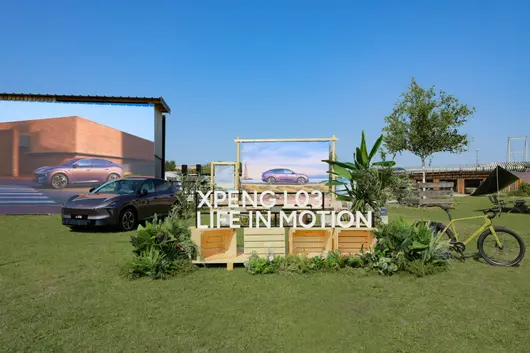
16 Julai 2026, Munich, Jerman Showpalast, Hari Jenama Xpeng "XPENG LIVE: PHYSICAL AI FOR ALL" sekaligus Pelancaran Global MONA L03 dimulakan seperti yang dijanjikan. Di kawasan industri utama BMW, Audi, dan Volkswagen, Xpeng secara rasmi melancarkan SUV Global Asli pertama mereka - MONA L03, dijual bermula dari 123,800 Yuan di China, memasuki 65 negara dan wilayah pada tahun ini. Berbeza dengan irama pelepasan tradisional industri "Dalam negara dahulu, luar negara kemudian", kereta ini sejak awal pembangunan telah dikunci pada pasaran global, dengan reka bentuk seragam, pandu pintar, keselamatan, dan standard tenaga, menyelesaikan lompatan penting bagi syarikat automotif elektrik baru China dari "eksport produk" kepada "keluaran teknologi penuh". Sebagai profesional media industri automotif, selepas menyaksikan pelancaran ini, saya dengan jelas sedar: MONA L03 bukan sekadar SUV pintar harga mampu milik untuk belia, tetapi juga produk ikonik bagi teknologi Fizikal AI Xpeng yang dilaksanakan di seluruh dunia dan kelajuan tinggi keluaran automotif China.

Pembangunan Rangka Depan SUV Global, Keupayaan Produk Melampaui Kelas Menyerang Masalah Utama Pengguna Belia Global
Xpeng MONA L03 diposisikan sebagai "SUV Pintar Fesyen Pertama untuk Belia", dipandu oleh Juanma Lopez, Ketua Reka Bentuk Luar Ferrari Bekas, bersama pasukan reka bentuk global, dengan "Vital Flow (Energi Kehidupan yang Mengalir)" sebagai teras reka bentuk, sepenuhnya mematahkan imejan tradisional SUV yang kotak dan kaku. Sikap Coupé badan luas rendah, pintu tanpa bingkai, pemegang pintu separuh tersembunyi, kaca pandang belakang kelengkungan super besar 1.1㎡ bergabung, 22 pengoptimuman aerodinamik pada seluruh badan, pekali rintangan angin serendah Cd0.228, masuk ke dalam lima teratas SUV Keluaran Massal Elektrik Baru di seluruh dunia, menggabungkan estetika global dan kecekapan jarak perjalanan. Cat badan menggunakan proses cat tahap 300,000 asas BASF yang sama dengan Porsche, enam warna khusus seperti Ungu Aurora, Jus Plam Hitam, memenuhi tepat keperluan estetika peribadi kumpulan belia global.

Dari segi kokpit, kereta baru secara langsung menurunkan konfigurasi mewah tahap 300,000 kepada julat harga 120,000 hingga 150,000, menciptakan pengalaman Light Luxury tanpa beza merentasi wilayah. Tutupan soft interior lebih daripada 72%, secara standard dilengkapi bumbut simulasi suede, penutup speaker logam bersilat; W-HUD super besar 26.8 inci, paparan tengah 15.6 inci 2.5K, sistem audio AI 1kW 20 speaker membentuk sistem audio video tiga skrin, pertama industri Lapangan Suara Binaural Celupan AI. Kerusi pijat 14 titik pada barisan depan sepenuhnya, pelawat kanan dilengkapi sandaran kaki graviti sifar, lampu suasana gelombang lembut 256 warna memberikan nilai emosi yang sangat kuat.

Reka bentuk ruang sepenuhnya mempertimbangkan senario hidup pelbagai global, 40 titik penyimpanan pada seluruh badan, 23 antara muka pengembangan, menyokong pemasangan DIY magnet, ulir, papan berlobang. Versi Elektrik Murni dilengkapi dengan bekas depan 102L dengan saliran, bekas belakang biasa 539L, melebar hingga 1640L selepas duduk belakang dilipat, boleh memuatkan papan selancar, peralatan berkhemah, peralatan menggambar, sesuai sepenuhnya dengan gaya hidup utama belia global seperti perjalanan kerja bandar, berkhemah luar, penciptaan kandungan. Vlogger sukan terkenal Pamela sebagai pegawai pengalaman produk menilai di lokasi, MONA L03 menggabungkan penampilan dan kepraktisan, benar-benar mencapai "membawa ruang selesa bergerak ke atas kereta".

Satu Kereta, Dua Tenaga Dua Tenaga, Merangkumi Infrastruktur Tenaga Berbeza di Seluruh Dunia
Struktur tenaga dan keadaan pengisian di pasaran global sangat berbeza, Xpeng MONA L03 mengeluarkan dua pelan tenaga Elektrik Murni dan Super Range Extender, menyelesaikan kekhawatiran jarak pengguna berbeza wilayah.
Versi Elektrik Murni menyediakan dua jarak CLTC 550km/650km, penggunaan elektrik 100km serendah 11.5kWh, sepenuhnya Cas Pantas 3C, cas 10%-80% hanya butuh 19.1 minit, sesuai dengan pengguna perjalanan kerja bandar yang mempunyai rangkaian cas lengkap di Eropah dan China.
Versi Super Range Extender jarak CLTC Elektrik Murni 325km, jarak gabungan tertinggi 1380km, penggunaan bahan api WLTC daya kosong hanya 4.96L/100km, pecutan 0-100 6.8 saat, prestasi setanding SUV bahan api tahap 300,000. Sistem Range Extender dilengkapi sepenuhnya Penawar Kebisingan Aktif RNC, suara memandu daya kosong berbeza kurang daripada 1dB dengan mod elektrik murni, disambungkan dengan fungsi pelepasan kuasa luar 6kW, sesuai sepenuhnya dengan lebuh raya jauh Eropah, keadaan kompleks di kawasan terpencil yang sukar isi tenaga, musim sejuk bekuku Eropah Utara, benar-benar mencapai "elektrik bandar, tanpa kekhawatiran jauh".

Harga di China merangkumi 123,800 hingga 156,800 Yuan, Elektrik Murni dan Range Extender berkongsi harga mula, Plus/Max/Ultra SE gradient konfigurasi tiga tahap jelas, pada masa yang sama mengeluarkan hak pembelian terhad masa: tempahan sebelum 31 Ogos, warna luar, kerusi selesa, Chassis AI, sistem audio 20 speaker, penawar kebisingan aktif semua secara percuma tingkatkan, mengurangkan secara besar-besaran halangan konfigurasi tinggi pengguna belia. Set Tema Khusus ROAM bernilai 20,000 Yuan terhad masa 6,999 Yuan, mengandungi pelipis sukan 20 inci, kulit Nappa tulen, penanda dalaman dan luaran khusus, memenuhi keperluan pemasangan peribadi.
Terobosan Utama: Satu Model Pandu Pintar Turing VLA2.0 Menyambungkan China dan Eropah, Pandu Pintar Canggih China Keluar Secara Rasmi
Titik menarik paling bermakna penanda molek industri dalam pelancaran kali ini, adalah Model Pandu Pintar VLA Jenama Kedua Xpeng Turing mencapai keserasian China-Eropah, Xpeng menjadi syarikat automotif China pertama yang bergantung pada satu model yang sama untuk menyambungkan dua pasaran besar ini. Berbeza dengan mod pembangunan pandu pintar tradisional yang bergantung pada data khusus wilayah dan peta ketepatan tinggi, VLA2.0 menggunakan pengertian dunia fizikal sebagai logik asas, bergantung pada model dunia untuk menghasilkan data latihan simulasi besar, meningkatkan secara besar keupayaan generasi jalan merentasi wilayah.
He Xiaopeng dan Liu Xianming, Ketua Pusat Kecerdasan Umum menyelesaikan ujian penerimaan tempatan di Munich, model yang dilatih pada keadaan jalan kompleks China ini, tidak memerlukan latihan semula data tempatan Eropah secara besar-besar, boleh menangani dengan lancar lorong sempit Eropah, belokan kelengkungan besar, bundaran, persimpangan banyak pejalan kaki, mengenal pasti tanda jalan berbilang negara dengan tepat, secara aktif mengikuti peraturan jalan tersembunyi Eropah seperti "prioriti pejalan kaki", "beri kanan". Model Max dihantar versi distilasi VLA2.0 pada suku ketiga, Ultra SE dilengkapi Pandu Pintar Canggih Lengkap, menyokong jelajah bandar tanpa navigasi, dari tempat parkir ke tempat parkir 2.0, mula terus NGP Gear P dan fungsi terdepan lain, Cip Turing Direka Sendiri 1500TOPS, untuk pertama kali membawa kuasa komputasi ibu negara ke pasaran SUV tahap 150,000, spesifikasi keras panduan pintar melampaui model ibu negara luar tahap 500,000.

Sistem kokpit juga menyelesaikan penyesuaian global, sistem XOS 6 versi luar menyokong pengenalan campuran berbilang bahasa Inggeris, Jerman, Perancis, percakapan bahasa berasingan penumpang berbeza tidak perlu pertukaran manual; pada masa yang sama menjadi syarikat automotif pertama Asia-Pasifik akses asli SDK Google Maps Auto, ekosistem navigasi luar negara sepenuhnya sesuai dengan kebiasaan pengguna tempatan, dari 2027 Xpeng akan menghantar secara jisim sistem Panduan Pintar NGP tempatan ke pasaran global, secara rasmi membuka era pelaksanaan berskala Panduan Pintar China di seluruh dunia.

Piawaian Keselamatan Bintang Lima Global Tanpa Penurunan, Keselamatan Aktif Seluruh Senario Penuh Garis Dasar Keluar
Sebagai model untuk dijual di seluruh dunia, MONA L03 memenuhi piawaian pembangunan keselamatan C-NCAP China, E-NCAP Eropah, A-NCAP Australia serentak, boleh melalui 42 ujian tabrakan ketat, konfigurasi pasaran global tidak berkurang. Badan menggunakan tangki depan perisai mengeluk, kabin penumpang baja pembentukan panas, balok penghalang aluminium, sepenuhnya standard 7 Airbag, mengandungi airbag pelawat kanan 120L isipadu besar dan airbag jauh tiga ruang.

Konfigurasi keselamatan aktif unik di kelasnya: Sistem Tayar Pecah Stabil seluruh senario menyokong sehingga 180km/h, tayar pecah satu roda, dua roda, belokan boleh menstabilkan badan mengurangkan kelajuan; Sistem Bantuan Kegagalan Pemacu tiga tahap campur tangan, apabila berlaku ketidaksejahteraan fizikal secara automatik ke pinggir, panggilan kecemasan; Pengeluaran Pertama Industri AES Pusingan Kecemasan Salji/Eskal, dalam 130km/h boleh secara aktif mengelak kenderaan diam, rintangan jalan, sesuai dengan keadaan jalan ekstrem seperti permukaan salji, jalan basah licin. Bateri memenuhi 24 piawaian keselamatan terbaru negara, tidak terbakar atau meledak di bawah ujian ketat piawaian negara 4.65 kali, disambung dengan Monitor Awan 24 Jam Doktor Bateri AI, merangkumi pelbagai alam sekitar iklim global seperti suhu sangat sejuk, suhu sangat panas, kelembapan tinggi.
Hardware Chassis menanding SUV mewah sederhana tahap 300,000, depan MacPherson + belakang 5-rod suspensi, DCC Pengurungan Damping Boleh Ubah, Sistem Brek IPB Generasi Baru Bosch standard, Chassis Preview AI dapat mengenal pasti permukaan jalan sejauh 120 meter, mod anti mabuk pintar unik di kelasnya, secara besar mengurangkan rasa pening akibat getaran, belokan berterusan, menggabungkan pengawalan dan kenyamanan.
Susunan Global Berstruktur Terbentuk, Xpeng Membuka Era Keluar Automotif China 2.0
Pelancaran Global MONA L03, di sebalik ialah sokongan sistem servis R&D, Pengeluaran, Jualan yang Xpeng kembangkan selama bertahun-tahun di seluruh dunia, melompat terkeluar sepenuhnya daripada fasa 1.0 eksperimen perdagangan harga rendah industri, masuk ke dalam paradigma baru 2.0 "teknologi, produk, ekosistem serentak".
Dari segi R&D, Xpeng menyusun 8 pusat R&D global, pusat R&D bebas Munich menyesuaikan khas peraturan Eropah, keadaan jalan, iklim; dari segi pengeluaran, kerja sama dengan Pabrik Magna Austria mencapai pengeluaran tempatan Eropah, pangkalan luar negara Indonesia, Malaysia sama-sama berusaha; rantaian bekalan bersama Bosch, Continental, ZF dan syarikat utama global bersinergi dalam; dari segi saluran, rangkaian jualan global merangkumi 65 negara, lebih 1200 kedai, Eropah 28 negara susun 290 pengeksport, G6, G9 telah meraih jualan kategori pertama jenama China di Jerman, Perancis, Norway dan banyak negara; rangkaian pengisian merangkumi 31 negara, akses 2.7 juta stesen cas awam, menyelesaikan masalah utama pengguna luar negara.

Seketakat ini, jualan kumpul global Xpeng melebihi 1.2 juta unit, pada masa yang sama bergantung pada pangkalan Fizikal AI Direka Sendiri Penuh, menyusun tiga litar utama Kereta AI, Robot Berwajah Manusia, Kereta Terbang, kecakapan teknologi mendapat pengiktirafan Kumpulan Volkswagen, yang terakhir menjadi pelanggan pelancaran pertama global Model VLA Kedua, menandakan teknologi intelijen asas syarikat automotif China mencapai output luar sebaliknya.

Pemerhatian Industri: MONA L03 Bukan Hanya SUV Jualan Tinggi, Tetapi Jawapan Global Inklusif Teknologi
Masa lalu kelajuan keluar automotif elektrik baru China, sentiasa bergantung pada kelebihan harga merebut pasaran rendah, pintar, teknologi direka sendiri sukar membentuk keupayaan bersaing teras. Tetapi Xpeng MONA L03 memberikan pendekatan penyelesaian baru: tidak bergantung pada persaingan harga rendah, dengan piawaian global bersatu, semua teknologi Fizikal AI direka sendiri, konfigurasi mewah melampaui kelas, menjadikan model tahap 120,000 memiliki pengalaman panduan pintar dan kokpit ibu negara, mencapai "kebersamaan teknologi".
Dari dimensi industri, satu model panduan pintar sesuai dua sistem pengangkutan China dan Eropah yang sangat berbeza, adalah teknologi memandu automatik canggih China pertama kali mengesahkan dalam pasaran ketat global secara langsung, memecah monopoli panjang merek luar dalam bidang memandu pintar. Dari dimensi jenama, pada pelancaran di rumah merek mewah Jerman SUV Global Asli, membuktikan kereta pintar China sudah mempunyai keupayaan produk dan sistem untuk berhadapan dengan pasaran utama global.

Menghadapi masa depan, Xpeng akan bermula dengan MONA L03, terus menerus推进 Fizikal AI Teknologi Pelaksanaan Global, pada 2027 Panduan Pintar Canggih Luar Negara sepenuhnya menghantar, Robot Berwajah Manusia Komersial, Pengeluaran Massal Kereta Terbang, satu pangkalan AI bersatu menyambungkan Terminal Pintar Pelbagai Jenis. Bagi seluruh industri automotif China, kedatangan Xpeng MONA L03, bermakna kelajuan keluar syarikat automotif China secara rasmi berpisah dari "eksport produk", menuju teknologi, ekosistem, jenama output penuh segi, membawa susunan persaingan baru untuk pasaran automotif elektrik global.

【CNMO科技消息】7月23日,@特斯拉 发布2026年第二季度财报。重点如下:

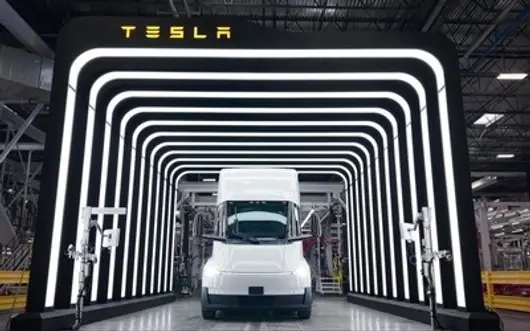
特斯拉赛博无人驾驶电动车Cybercab已在得州超级工厂投产;
特斯拉电动卡车Semi将按计划于今年在内华达的新工厂启动量产;
电池包产能扩张持续取得进展,电池包产能是近期电动车产量提升的主要限制因素;
得州储能超级工厂接近完工,并计划于今年启动生产;
越来越多客户选择在购车时订阅特斯拉辅助驾驶软件;
特斯拉无人驾驶网约车服务范围持续扩大,目前已在美国7个主要城市上线;
在Model S与Model X产线退役后,弗里蒙特工厂开始建设特斯拉人形机器人产线,计划于今年晚些时候投产。
电动车业务方面,特斯拉多个市场交付量创下历史新高:韩国、澳大利亚、哥伦比亚、日本、泰国、葡萄牙、菲律宾、智利、斯洛文尼亚和立陶宛等。

能源生产与存储方面,上海储能超级工厂产量创新高,带动EMEA(欧洲、中东及非洲)市场储能装机量创下历史新高;上海储能超级工厂仍在持续推进产能爬坡。位于得州的新储能超级工厂将按计划于今年开始生产第三代Megapack和Megablock两款储能系统。

人形机器人业务方面,特斯拉正在弗里蒙特工厂安装特斯拉人形机器人的第一代产线,预计将很快启动生产。首批特斯拉人形机器人将用于我们的Optimus Academy,用来收集训练数据并进一步开发新功能。此外,特斯拉继续推进得州超级工厂的场地开发,目前建筑施工已全面展开。

Dalam pasaran SUV di Malaysia, banyak pembeli yang membandingkan Proton X50 dan Mazda CX-3 semasa memilih kereta. Kedua-dua kereta ini mempunyai harga dan penempatan yang hampir sama, hari ini kita akan buat perbandingan terperinci dari pelbagai aspek, membantu anda menjimatkan masa membuat penyelidikan.
Proton X50 harga OTR di Malaysia adalah RM 89,800 - 113,300, terdapat 4 versi, termasuk 1.5T Executive (RM 89,800), 1.5T Premium (RM 101,800), 1.5T Flagship (RM 113,300) dan lain-lain.
Mazda CX-3 harga OTR di Malaysia adalah RM 126,159 - 139,159, terdapat 2 versi, termasuk 2023 2.0L High (RM 139,159), 2023 2.0L Plus (RM 126,159) dan lain-lain.
Dari segi harga, harga permulaan Proton X50 memang lebih murah RM 36,359 berbanding Mazda CX-3. Jika bajet anda terhad, versi pemula Proton sudah boleh memenuhi keperluan harian. Namun, perlu diambil perhatian, perbezaan harga beberapa ribu ringgit itu mungkin melibatkan kompromi pada kelengkapan, bergantung kepada keperluan anda.

Penilaian keselamatan Proton X50 adalah 5★ (ASEAN NCAP), sistem keselamatan aktif termasuk ADAS (ACC, AEB, LKA, LDA, BSM, RCTA).
Penilaian keselamatan Mazda CX-3 adalah 5★ (ASEAN NCAP), sistem keselamatan aktif termasuk i-Activsense.
Penilaian keselamatan kedua-dua kereta adalah sama, dalam kelas ini kelengkapan keselamatan dianggap cukup lengkap. Keselamatan kereta baharu sekarang tidak buruk, tidak perlu risau tentang perkara ini.

Proton X50 waranti 5 tahun/150,000km, jarak penyelenggaraan setiap 10,000km atau 6 bulan.
Mazda CX-3 waranti 5 tahun/150,000km, jarak penyelenggaraan setiap 10,000km atau 6 bulan.
Keadaan waranti kedua-dua kereta adalah sama, tidak perlu bimbang tentang ini. Kos penyelenggaraan sebenar bergantung pada rangkaian servis jenama dan harga komponen, disyorkan bertanya dalam kumpulan pemilik kereta untuk pengalaman pemilik sebenar.

Proton X50 dan Mazda CX-3 kedua-duanya adalah pilihan utama di pasaran Malaysia, sesuai untuk kegunaan keluarga dan perjalanan harian. Jika anda lebih mementingkan reputasi jenama dan harga jualan semula, boleh utamakan model dengan reputasi lebih baik; jika anda lebih mementingkan nisbah harga dan kelengkapan, pilih model yang mempunyai konfigurasi lebih kaya. Pada akhirnya, disarankan untuk memandu kedua-dua model, pengalaman sendiri adalah yang paling penting.

Secara keseluruhan, Proton X50 dan Mazda CX-3 kedua-duanya adalah model yang sangat baik di pasaran Malaysia. Memilih mana satu, kuncinya adalah bergantung pada keperluan dan bajet peribadi anda. Disarankan membuat penyelidikan terlebih dahulu, bandingkan beberapa tawaran daripada beberapa dealer kereta, kemudian buat ujian memandu untuk membuat keputusan akhir. Membeli kereta adalah perkara penting, meluangkan masa untuk membuat penyelidikan tidak akan rugi.


Di pasaran SUV di Malaysia, banyak pembeli akan membandingkan Proton X50 dan Honda CR-V ketika memilih kereta. Kedua-dua kereta ini agak hampir dari segi harga dan penentuan pasaran. Hari ini kita akan membuat perbandingan terperinci dari pelbagai aspek, membantu anda menjimatkan masa membuat kajian.
Harga OTR Proton X50 di Malaysia adalah RM 89,800 - 113,300, terdapat 4 versi, termasuk 1.5T Executive (RM 89,800), 1.5T Premium (RM 101,800), 1.5T Flagship (RM 113,300) dan lain-lain.
Harga OTR Honda CR-V di Malaysia adalah RM 178,200 - 195,900, terdapat 4 versi, termasuk 2026 e:HEV 2.0L 2WD RS (RM 195,900), 2026 1.5T 4WD V (RM 181,900), 2026 e:HEV 2.0L 2WD E (RM 178,200) dan lain-lain.
Dari segi harga, harga permulaan Proton X50 memang RM 88,400 lebih murah daripada Honda CR-V. Jika bajet anda terhad, versi pengenalan Proton sudah boleh memenuhi keperluan harian. Tetapi perlu diingat, beribu ringgit yang lebih murah itu, mungkin ada pertimbangan dari segi kelengkapan, ia bergantung pada keperluan anda.
Proton X50 dilengkapi enjin 1.5L 4-silinder, kuasa 105 hp. Penggunaan minyak rasmi 6.0 L/100km.
Honda CR-V dilengkapi enjin 2.0L 4-silinder, kuasa 170 hp. Penggunaan minyak rasmi 8.0 L/100km.
Dari segi kuasa, enjin 2.0L 4-silinder Honda CR-V mempunyai 65 kuasa kuda lebih daripada enjin 1.5L 4-silinder Proton X50. Namun untuk memandu sehari-hari di bandar, kuasa kedua-dua kereta ini sudah memadai, anda tidak akan rasa kurang kuasa.
Proton X50 panjang kenderaan 4400 mm, ruang bonet 400 L.
Honda CR-V panjang kenderaan 4500 mm, ruang bonet 450 L.
Dari segi ruang, badan Honda CR-V lebih panjang 100 mm daripada Proton X50, ruang duduk lebih menguntungkan. Namun Proton X50 lebih fleksibel untuk parkir di bandar, setiap ada pertimbangan.
Proton X50 menggunakan cara pemanduan 4WD.
Honda CR-V menggunakan cara pemanduan FWD.
Perasaan mengemudi akan berbeza antara 4WD Proton dan FWD Honda, disyorkan untuk membandingkan melalui uji jalan.

Proton X50 dan Honda CR-V adalah pilihan utama di pasaran Malaysia, sesuai untuk penggunaan keluarga, pengangkutan harian. Jika anda lebih mementingkan reputasi jenama dan harga kedua, pilih yang lebih baik reputasinya; jika anda lebih peduli nilai dan kelengkapan, pilih yang lebih lengkap kelengkapan. Pada akhirnya disarankan untuk membuat uji jalan pada kedua-dua model, pengalaman sendiri yang paling penting.

Secara keseluruhan, Proton X50 dan Honda CR-V adalah model kereta yang sangat bagus di pasaran Malaysia. Memilih yang mana satu, kunci utama adalah keperluan dan bajet peribadi anda. Disarankan anda buat kajian, bandingkan beberapa tawaran kedai kereta, kemudian buat keputusan akhir melalui uji jalan. Membeli kereta adalah perkara penting, meluangkan masa membuat kajian tidak akan salah.
Dalam pasaran SUV di Malaysia, ramai pembeli membandingkan Proton X50 dan Honda CR-V ketika memilih kenderaan. Kedua-dua kereta ini sangat hampir dari segi harga dan sasaran pasaran. Hari ini, kita akan membuat perbandingan terperinci dari pelbagai aspek untuk menjimatkan masa anda membuat penyelidikan.
Harga OTR Proton X50 di Malaysia ialah RM 89,800 - 113,300, terdapat 4 versi, termasuk 1.5T Executive (RM 89,800), 1.5T Premium (RM 101,800), 1.5T Flagship (RM 113,300) dan lain-lain.
Harga OTR Honda CR-V di Malaysia ialah RM 178,200 - 195,900, terdapat 4 versi, termasuk 2026 e:HEV 2.0L 2WD RS (RM 195,900), 2026 1.5T 4WD V (RM 181,900), 2026 e:HEV 2.0L 2WD E (RM 178,200) dan lain-lain.
Dilihat dari segi harga, harga permulaan Proton X50 memang lebih murah RM 88,400 daripada Honda CR-V. Jika anda terhad bajet, versi permulaan Proton sudah boleh memenuhi keperluan harian. Namun, perlu diingat, ribuan ringgit yang murah itu mungkin melibatkan pengecualian dalam peralatan, bergantung pada keperluan anda.
Proton X50 menggunakan enjin 1.5L 4-silinder, kuasa 105 hp. Konsumsi bahan api rasmi 6.0 L/100km.
Honda CR-V menggunakan enjin 2.0L 4-silinder, kuasa 170 hp. Konsumsi bahan api rasmi 8.0 L/100km.
Dari segi kuasa, 2.0L 4-silinder Honda CR-V mempunyai 65 hp lebih daripada 1.5L 4-silinder Proton X50. Walau bagaimanapun, untuk penggunaan harian di bandar, kuasa kedua-dua kereta adalah mencukupi, anda tidak akan terasa kurang tenaga.
Panjang badan Proton X50 ialah 4400 mm, ruang bagasi 400 L.
Panjang badan Honda CR-V ialah 4500 mm, ruang bagasi 450 L.
Dari segi ruang, badan Honda CR-V lebih panjang 100 mm daripada Proton X50, ruang penumpang lebih unggul. Namun, Proton X50 lebih mudah diparkir di bandar, kedua-duanya ada kelebihan dan kekurangan.
Proton X50 dan Honda CR-V kedua-duanya merupakan pilihan utama di pasaran Malaysia, sesuai untuk kegunaan keluarga dan perjalanan harian. Jika anda lebih menghargai reputasi jenama dan harga pasaran kedua, sila pertimbangkan model dengan reputasi yang lebih baik; jika anda lebih mementingkan nisbah nilai dan peralatan, maka pilih model yang lebih lengkap. Akhir sekali, disyorkan untuk memandu kedua-dua model tersebut, pengalaman peribadi adalah yang paling penting.
Secara keseluruhan, Proton X50 dan Honda CR-V adalah model yang sangat baik di pasaran Malaysia. Memilih mana satu, kuncinya bergantung pada keperluan dan bajet peribadi anda. Kami cadangkan anda melakukan penyelidikan terlebih dahulu, bandingkan tawaran daripada beberapa dealer kereta, kemudian test drive sebelum membuat keputusan akhir. Membeli kereta adalah perkara besar, meluangkan masa untuk membuat penyelidikan pasti tidak akan salah.

On July 16, 2026, under the spotlight of the GAC Group Trumpchi Factory, the 30 millionth vehicle — the GAC Trumpchi M8 PHEV slowly rolled off the production line, delivered into the hands of international action star Tony Jaa. This scene lacks flowery rhetoric, but it was like a heavy hammer, ringing out a strong note of Made in China.

30 million vehicles are not cold numbers, but the solid footprints GAC has made over 29 years, stepping forward with every step in the wave of electrification and intelligence. Behind this lies a story of trust co-authored by countless owners and GAC, and even more a vivid microcosm of China's automotive industry moving from a "catcher" to a "leader".
Hardcore Vehicle Dismantling Reveals "Made with Chinese Quality"
GAC Group has engraved "Quality First" into its corporate genes, constructing a rigorous full-chain quality control system covering R&D, production, and supply chains. As GAC's star model, the first generation of GAC Trumpchi GS4 once created a record of "running 500,000 kilometers without major repairs." In the recent hardcore dismantling experiment in GAC's livestream room, this GS4, driven over 500,000 kilometers, was verified after dismantling; core components such as the engine and transmission are still in good condition, confirming the reliable quality of GAC products with ironclad facts.

This extreme pursuit of product durability stems from GAC's relentless refinement of manufacturing processes: adopting globally leading intelligent manufacturing technology, every vehicle must simulate ten years of user driving at the test site, from the extreme cold of Mohe to the intense heat of Turpan, from cobblestone roads to steep slopes, not missing a single one. It is precisely this "dedication" that makes GAC cars the "Trumpchi that can't be broken" in the eyes of users.

Under the wave of electrification and intelligence, GAC continues to consolidate its quality advantages through technological innovation. GAC AION's "Magazine Battery" system achieves a breakthrough in battery safety performance through structural optimization and material innovation, remaining fire-free and explosion-free in penetration tests; GAC's "Star Spirit Safety Protection System" integrates intelligent driving and passive safety technologies to create all-around protection for users. It is precisely this long-term adherence to quality that has allowed GAC to win market reputation in both fuel and new energy vehicle sectors, becoming a cornerstone of user trust.
Systematic Global Expansion: From Product Export to Value Export
In the Southeast Asian market, GAC precisely identifies local needs and launches adapted models; in the European market, GAC focuses on high-end intelligent electric vehicle models, seizing market heights with technical strength. GAC's global expansion is not simply "selling cars", but taking technology, standards, and even service teams to take root together.

Many people only see that GAC's global expansion speed is fast, but fail to see how stable its foundation is. In recent years, many Chinese brands have expanded overseas, but many are just in a "porter" model. Although this model shows results quickly in the short term, it has a clear ceiling in the long run, and its "pressure resistance" is very low; once a price war breaks out, it completely loses its advantage.
Meanwhile, GAC Group deeply integrates into the local ecosystem, establishing new energy factories in Thailand and jointly building charging networks with local partners to achieve "local R&D, local production, and local sales." This seemingly "clumsy work" can stabilize the market in the long run, achieving a breakthrough after long accumulation.

Guided by the "1551" overseas strategy and the "Panyu Action" three-year plan, GAC International has consistently adhered to winning through value, persisting in "Quality Globalization", "Technology Globalization", "Service Globalization", and "Ecosystem Globalization", forging a high-quality globalization path with GAC characteristics. GAC's globalization practice provides a model for Chinese automakers, moving from "going out" to "going up", and pushes China's automotive industry from "product export" to a new stage of "value export".

As GAC Group Chairman Feng Xingya said at this event: "Our cars have already driven from Guangzhou to the world; by the end of this year, 1,000 overseas sales and service outlets will be established. The consecutive commissioning of overseas factories has allowed GAC Intelligent Manufacturing to truly take its place on the world stage."
Long-termism Brand Management
If a systematized layout is the basic platform for building sustained growth, then long-termism is the brand core that determines how far it can go. Facing the challenge of new energy transformation, GAC adheres to a dual-track approach of "Fuel Vehicles + New Energy Vehicles", stabilizing the foundation with classic models while heavily investing in electrification R&D, launching multiple pure electric SUVs, and accelerating intelligence-electrification transformation. In the field of intelligence, GAC cooperates deeply with technology companies such as Huawei, tackling core technologies like autonomous driving and vehicle networking to ensure technological leadership.

GAC further fulfills brand responsibility through social responsibility, actively promoting green manufacturing. Its factories widely apply technical processes such as PV + Energy Storage, Digital Twin, and "Lights-Out Production" to reduce production carbon footprints. This long-term investment in technology, environment, and user value allows GAC to always maintain the initiative in industry transformation, building a moat that transcends the economic cycle.
Final Thoughts
Looking back from the new starting point of 30 million vehicles, GAC's success has no secret: it treats users as family, quality as life, and technology as a weapon. From the 500,000 km journey of Trumpchi GS4 to the technical breakthrough of AION's Magazine Battery; from the trust of 30 million users to the deep cultivation of the global market, GAC has interpreted the true meaning of "Long-termism" with 29 years of time.

In the future, GAC Group will continue to be driven by innovation, accelerating forward on the new tracks of electrification and intelligence, allowing the quality, technology, and brand of Chinese cars to shine globally, and returning the trust of 30 million users with more excellent products and services to create a better mobile life for global users. The off-the-line of 30 million vehicles is just the beginning, but also another bugle call for GAC's globalization journey.
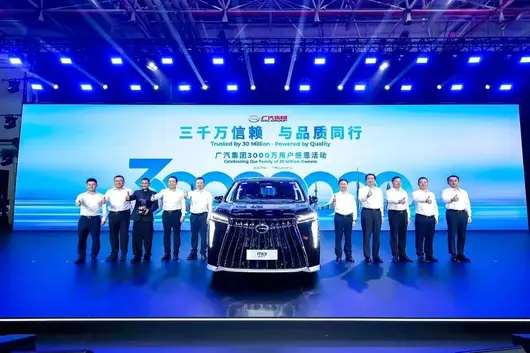

Pada 16 Julai, GAC rasmi menyambut tonggak penting serahan terkumpul 30 juta unit, serentak melancarkan acara balas Budi pengguna 30 juta semua jenama. 29 tahun dedikasi di industri kereta, dari sifar hingga meraih kepercayaan 30 juta pengguna, pencapaian cemerlang ini bukan sahaja hasil GAC mempertahankan idealisme kualiti jangka panjang, tetapi juga pantulan sebenar pembangunan berkualiti tinggi industri kereta China.

Merasa 30 juta pemilik kereta memilih selama ini, asas utamanya terletak pada sistem kawalan kualiti ketat GAC yang berterusan. Semua kereta baharu sebelum pelancaran mesti melalui ujian had jangka panjang "Dua Musim Sejuk Satu Musim Panas", dan perlu pergi ke kawasan "Lima Kawasan Tinggi, Satu Gunung, Satu Kawasan Debu" seperti suhu tinggi, suhu amat sejuk, ketinggian tinggi, berdebu untuk pengesahan skenario seluruh wilayah; bergantung pada terowong angin kereta global bersepadu, Padang Uji Komprehensif Standard Tinggi Tempatan dan Kilang Mercu Tanda Tenaga Baharu Global AION, GAC mencapai pengurusan digital menyeluruh dari reka bentuk, ujian, hingga pengeluaran, bengkel pengelasan ratusan robot perindustrian dipadankan dengan pengesanan visual AI, ribuan titik pemegang badan kereta data boleh dilacak seumur hidup, dari sumber mengawal ketepatan pembuatan.
Dari segi keselamatan, GAC membina sistem perlindungan menyeluruh yang lengkap. Bateri Magasin terkumpul dipasangkan 1.5 juta unit, jarak laluan terkumpul melampaui 160 bilion kilometer; sejak sistem perlindungan keselamatan Star Spirit dilancarkan, terkumpul mengelak 6.28 juta risiko memandu potensial. Pengumuman perkhidmatan "Tanggungjawab Tiga" industri pertama,针对 tiga kebimbangan utama pengguna iaitu pembakaran diri tiga kuasa, pereputan bateri berlebihan, kemalangan parkir pintar memberikan jaminan asas, dipadankan dengan badan kerangka sangkar standard tinggi, baja kekuatan tinggi peratusan tinggi, mengantar keselamatan sepanjang kitaran hidup kenderaan. Kualiti ketat jangka panjang juga meraih pengiktirafan berwenang, GAC meraih Anugerah Penghargaan Kualiti China, di bawah banyak jenama sepanjang tahun menduduki terhad kadar pulangan nilai kategori kecil dan senarai kualiti.

Pelaburan penyelidikan dan pembangunan yang berterusan dan besar adalah keyakinan GAC kualiti terus bertingkat. Sehingga akhir 2025, GAC penyelidikan dan pembangunan sendiri terkumpul melabur lebih 62 bilion yuan, jumlah permohonan paten突破 24,900 unit, paten penemu melebihi 11,200 unit. Arsitektur Xingling 4.0, Kabin Pintar Xinghe, Kuasa Xingyuan, Badan Xingjian empat teknologi teras penyelidikan sendiri sepenuhnya dilaksanakan, serentak bekerjasama Huawei Qiankun membina Enjing GT dan lain-lain kenderaan pintar kelas atasan, mencapai penemuan serentak teknologi pemanduan pintar, kabin, kuasa, menyeimbangkan kenyamanan rumah tangga dan teknologi terulung, membolehkan pengguna bajet berbeza menikmati produk standard tinggi.

Jika kualiti kukuh adalah asas dalaman GAC, maka strategi globalisasi sistematik adalah lengkung pertumbuhan kedua syarikat. Berbeza dengan eksport kereta lengkap mudah, GAC bergantung pada strategi "One GAC 2.0", mencapai penyelidikan, pengeluaran, rantai bekalan, perkhidmatan jualan seluruh nilai rantaian berakar umbi di luar negara, sepenuhnya melepaskan modus pelabuhan tradisional menjual kereta sahaja. Sekarang GAC perniagaan merangkumi Asia Pasifik, Timur Tengah, Amerika, Eropah lima bahagian utama sebanyak 110 negara, menubuhkan 7 pangkalan pengeluaran luar negara, 9 gudang komponen, 746 unit perkhidmatan jualan luar negara, sistem operasi tempatan yang lengkap membantu produk menyesuaikan dengan undang-undang dan keperluan pengguna setiap negara.
Pasaran luar negara pertumbuhan momentum sangat pesat, setengah awal 2026 GAC jenama sendiri eksport mencapai 121,500 unit, berbanding tahun sebelumnya melonjak 132%, jualan enam bulan sudah hampir paras tahun 2025 seluruh. Pasaran rantau beberapa titik mekar, Thailand pasaran Jun jualan perbandingan bulan lalu meningkat 207%, pasaran Eropah kenderaan tenaga baharu stabil dilancarkan, Brazil, Colombia dan lain-lain negara Amerika jualan kenderaan berkembang berganda. Menghadap masa depan, GAC menentukan sasaran globalisasi yang jelas: tahun 2030 perniagaan merangkumi 120 negara, luar negara titik bawah tanah melangkaui 2,000 unit, jualan tahunan luar negara menembusi 1 juta unit, membiarkan "Pembuatan GAC" terus meluaskan bahagian pasaran global.

Untuk membalas 30 juta pemilik kereta global, 16 Julai hingga 31 Ogos, GAC bawah GAC Honda, GAC Toyota, GAC Trumpchi, AION, Hyper, Enjing enam jenama serentak melancarkan faedah pembelian kereta, pembelian baharu potongan terus, kewangan faedah rendah, pertukaran jumlah tinggi, pembelian tambahan keluarga pelbagai kemudahan bertindan, mencakupi bahan api, hibrid, elektrik tulen, pembesaran seluruh kelas kenderaan, berbilang model utama serentak keluar kilang dalam dan luar negara, Enjing GT7, Trumpchi M8 PHEV, AION N60 dan lain-lain produk berat muncul serentak, secara langsung memaparkan GAC kekuatan produk matriks lengkap.

Melihat ke belakang 29 tahun pembangunan, GAC melalui patungan mula, bangun sendiri, transformasi elektrik pintar, ekosistem global perkembangan empat kali penjenamaan lompatan, titik perigi serahan 30 juta unit bukan hujung, tetapi permulaan baharu. Masa depan GAC akan terus mempertahankan idealisme kualiti terukir jangka panjang, terus menambah teknologi teras penyelidikan sendiri, serentak memperdalam perancangan globalisasi seluruh rantaian nilai, dengan produk boleh dipercayai, perkhidmatan lengkap menuju全球, terus memoles nama industri pembuatan kereta China.
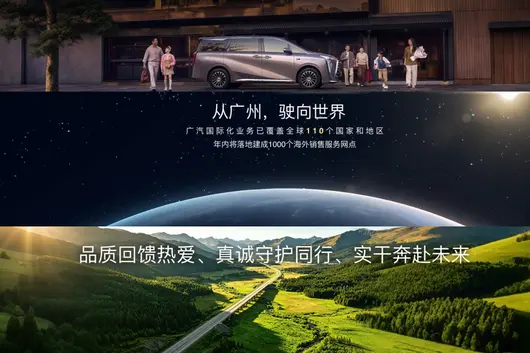

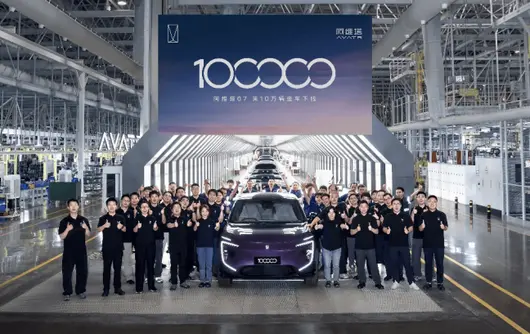
On July 8, the 100,000th Avatr 07 vehicle rolled off the production line at Chongqing Digital Intelligence Factory. This milestone model is the right-hand drive overseas version, marking the main model's leap from a domestic blockbuster to a global product. With a delivery scale of 100,000 units, simultaneous overseas layout, and dual-model matrix implementation, this reflects three clear industrialization upgrade paths for China's high-end new energy vehicle industry—manufacturing, technology, and globalization—providing a replicable development model for the industry.
From the dimension of manufacturing industrialization, the core confidence behind the 100,000 units comes from the full-domain intelligent factory system. Currently, the domestic new energy market has entered a stage of stock competition, where price wars compress profits, making stable, low-cost, and high-quality mass production capabilities the bottom line for brand survival. The Chongqing Digital Intelligence Factory supporting Avatr 07 production is the world's first full-domain 5G+AI flexible whole vehicle manufacturing base, integrating over 40 cutting-edge technologies such as digital twins, full-process automated welding, and digital quality control. Annual production capacity can stably support the synchronous production of multiple models, with a supporting capability of up to 200 units per year, achieving a balance between personalized customization and mass production.

This intelligent manufacturing system co-built by Changan, Huawei, and China Unicom solves the challenge of mass production consistency for high-end models. In the past, high-end new energy vehicles commonly faced the pain points of low-volume, hard-to-mass-produce customization. Avatr connects the R&D, production, and quality control full-link through a three-party collaborative supply chain, rapidly transforming frontier laboratory technologies into standardized products. The stable delivery of 100,000 units proves that domestic high-end new energy has shaken off the label of "niche concept cars", completed industrialization landing, and moved away from the fragile model relying on a single blockbuster for short-term volume.
Secondly, technological collaborative industrialization is the core competitiveness of Avatr 07 to secure its position in the 200,000-300,000 RMB high-end track. Unlike the single automaker self-research model, Avatr integrates core resources from the three-party industry chain, forming a complete technical closed loop: Huawei provides Kunqun ADS 4 intelligent driving and HarmonyOS Cockpit, CATL outputs Shenxing Supercharging battery, Changan is responsible for the whole vehicle chassis and whole vehicle manufacturing. The six major core technologies are fully independently controllable, with no risk of core components being externally choked off.
In the current era of homogeneous industry configurations, a complete industry chain collaborative system builds differentiated barriers. The model has successively won the USA IDA and German iF International Design Awards; its original appearance design possesses global aesthetic adaptability; 90-second fast recharging, full-scenario advanced intelligent driving, and extended-range pure electric dual powertrain solutions cater to both domestic commuting and overseas diverse road condition needs. This integrated collaborative model of whole vehicle, intelligence, and battery/electric/powertrain represents a new division of labor for China's new energy industry: automakers coordinate and integrate, tech companies output intelligent software and hardware, battery enterprises provide energy solutions. The industry chain functions in its respective role with deep binding, marking a significant sign of industry maturity.
Third, global industrialization layout opens up new growth space for the industry, and the right-hand drive milestone model releases a clear industry signal. The domestic market volume has peaked, going overseas has become a mandatory question for all new energy automakers, while industrial overseas expansion has long moved away from simple vehicle exports, turning to integrated layout of products, capacity, and channels. The 100,000th vehicle rolled off the line this time is the right-hand drive model, specifically adapting to massive right-hand drive markets such as Southeast Asia, the Middle East, and the Commonwealth. It is not simply changing the steering wheel layout, but achieving full-dimension localization adaptation from chassis calibration, infotainment interaction, to safety regulations.

Currently, Avatr products have landed in markets such as Singapore, Thailand, UAE, etc., with channels covering 43 countries. Planned to enter Europe in 2026, covering over 110 countries by 2030. Compared to the scattered exports of most automakers, Avatr completed the synchronous R&D and mass production of right-hand drive models in advance, directly connecting domestic and overseas dual-market supply at the manufacturing end. Relying on mature domestic production capacity bases to radiate globally, avoiding high investments in building factories overseas, using local super factories as global production capacity pivots. This is a more cost-effective industrialization overseas route.
At the same time, Avatr 07L has simultaneously started pre-sale. 07 and 07L form a dual-car matrix, perfecting the coverage of segmented markets, completing the industrial iteration from a single blockbuster to a product matrix. The 100,000 units sales of a single model is just the starting point. Dual-model parallelism can dilute R&D, production, and supply chain costs, further amplifying scale advantages, and hedging against market cycle fluctuations.
Against the backdrop of the overall transformation of the automotive industry, the rolling off of the line of 100,000 Avatr 07 right-hand drive whole vehicles is not just a brand milestone, but also a microcosm of the maturity of the domestic new energy industry. Intelligent manufacturing builds a solid mass production base, the whole industry chain collaboration creates technical barriers, and the simultaneous layout of domestic and overseas dual markets expands the growth ceiling. The three industrialization paths support each other, allowing Chinese high-end electric vehicles to break free from low-price involution and truly possess the strength to compete globally with international luxury brands. In the future, as domestic automakers continuously deepen industry chain integration and perfect global product layout, the new energy vehicle industry will complete the qualitative change from scale leadership to all-around leadership in technology, manufacturing, and brand.

Di pasaran SUV Malaysia, ramai pembeli membandingkan Perodua Aruz dan Chery Tiggo 8 semasa memilih kereta. Kedua-dua model ini mempunyai julat harga dan kedudukan pasaran yang hampir sama. Hari ini, kita akan membuat perbandingan terperinci dari pelbagai aspek untuk membantu anda menjimatkan masa penelitian.
Harga OTR Perodua Aruz di Malaysia ialah RM 72,900 - 77,900, dengan 2 varian, termasuk 1.5L X (RM 72,900), 1.5L AV (RM 77,900) dan lain-lain.
Harga OTR Chery Tiggo 8 di Malaysia ialah RM 129,750 - 129,750, dengan 1 varian, termasuk 2026 1.6T Standard (RM 129,750) dan lain-lain.
Dari segi harga, Perodua Aruz lebih murah RM 56,850 berbanding Chery Tiggo 8. Jika bajet anda terhad, varian asas Perodua sudah boleh memenuhi keperluan harian. Namun, perhatikan, perbezaan harga yang sedikit ini mungkin melibatkan kompromi pada kelengkapan, bergantung pada keperluan anda.

Pengelasan keselamatan Perodua Aruz adalah 5★ (ASEAN NCAP), sistem keselamatan aktif termasuk.
Pengelasan keselamatan Chery Tiggo 8 adalah TBD, sistem keselamatan aktif termasuk Basic.
Perodua Aruz mempunyai panjang badan 4400 mm, ruang bagasi 400 L.
Chery Tiggo 8 mempunyai panjang badan 4400 mm, ruang bagasi 400 L.
Saiz kedua-dua kereta hampir sama, ruang dalaman tidak berbeza banyak. Kereta dalam kelas ini cukup untuk kegunaan harian.

Perodua Aruz jaminan 5 tahun/150,000km, jarak penyelenggaraan setiap 10,000km atau 6 bulan.
Chery Tiggo 8 jaminan 3 tahun/100,000km, jarak penyelenggaraan setiap 10,000km atau 6 bulan.

Perodua Aruz dan Chery Tiggo 8 adalah pilihan utama di pasaran Malaysia, sesuai untuk kegunaan keluarga dan perjalanan harian. Jika anda lebih menghargai reputasi jenama dan harga jualan semula, berilah keutamaan kepada model dengan reputasi lebih baik; jika anda lebih mementingkan nilai harga dan kelengkapan, pilih model yang mempunyai kelengkapan lebih banyak. Akhir sekali, disarankan untuk ujian memandu kedua-duanya, pengalaman langsung adalah yang paling penting.

Secara keseluruhan, Perodua Aruz dan Chery Tiggo 8 adalah model kereta yang sangat baik di pasaran Malaysia. Memilih yang mana satu, kuncinya bergantung pada keperluan peribadi dan bajet anda. Kami menasihatkan anda menyediakan diri, membandingkan sebutan harga dari beberapa peniaga kereta, kemudian buat ujian memandu sebelum membuat keputusan akhir. Membeli kereta adalah perkara besar, meluangkan masa untuk penyiasatan pasti tidak akan salah.

Dalam pasaran SUV di Malaysia, banyak pembeli membuat perbandingan antara Perodua Aruz dan Chery Tiggo Cross semasa memilih kereta. Kedua-dua kereta ini mempunyai kedudukan dan harga yang agak sama, hari ini kami akan membuat perbandingan terperinci dari pelbagai aspek, membantu anda menjimatkan masa membuat kajian.
Harga OTR Perodua Aruz di Malaysia ialah RM 72,900 - 77,900, terdapat 2 versi, di antaranya 1.5L X (RM 72,900), 1.5L AV (RM 77,900) dan lain-lain.
Harga OTR Chery Tiggo Cross di Malaysia ialah RM 88,750 - 99,750, terdapat 2 versi, di antaranya 2025 HEV 1.5L CSH (RM 99,750), 2025 1.5T Standard (RM 88,750) dan lain-lain.
Dari segi harga, harga permulaan Perodua Aruz memang lebih murah RM 15,850 berbanding Chery Tiggo Cross. Jika bajet anda terhad, versi asas Perodua sudah boleh memenuhi keperluan harian. Namun, perlu diambil perhatian, perbezaan harga beberapa ribu itu mungkin melibatkan pengecualian dalam pelengkapan, bergantung pada keperluan anda.
Perodua Aruz dilengkapi enjin 1.5L 4-silinder, kuasa 105 hp. Kadar penggunaan minyak rasmi 6.0 L/100km.
Chery Tiggo Cross dilengkapi enjin 1.5L 4-silinder, kuasa 105 hp. Kadar penggunaan minyak rasmi 6.0 L/100km.
Kedua-dua kereta menggunakan sistem pemacu yang sama, pengalaman memandu harian hampir tiada perbezaan. Penggunaan minyak juga serupa, tidak perlu terlalu bimbang mengenai hal ini.
Perodua Aruz waranti 5 tahun/150,000km, selang servis setiap 10,000km atau 6 bulan.
Chery Tiggo Cross waranti 3 tahun/100,000km, selang servis setiap 10,000km atau 6 bulan.
Perodua Aruz dan Chery Tiggo Cross adalah pilihan utama dalam pasaran Malaysia, sesuai untuk kegunaan keluarga dan perjalanan harian. Jika anda lebih menumpukan perhatian kepada reputasi jenama dan nilai jualan semula, pertimbangkan yang mempunyai reputasi lebih baik; jika anda lebih mengutamakan nilai wang dan pelengkapan, pilih model dengan konfigurasi lebih lengkap. Akhir sekali, disarankan untuk memandu uji kedua-dua model tersebut, pengalaman sendiri adalah yang paling penting.

Secara keseluruhannya, Perodua Aruz dan Chery Tiggo Cross adalah model kereta yang sangat baik dalam pasaran Malaysia. Memilih mana satu, kuncinya bergantung pada keperluan dan bajet peribadi anda. Disarankan anda buat kajian terlebih dahulu, bandingkan sebutan harga beberapa dealer, dan memandu uji sebelum membuat keputusan akhir. Membeli kereta adalah perkara besar, meluangkan masa untuk membuat kajian tidak akan salah.


Pada hari MOMENTA IPO, industri automotif bertindak luar biasa.
Lebih daripada dua puluh pengeluar kereta pada hari yang sama mengeluarkan poster untuk mengucapkan tahniah kepada MOMENTA IPO. Termasuk BMW, Mercedes, Audi, Cadillac, SAIC, GAC, dan lain-lain, pemandangan ini benar-benar megah.
CEO Mercedes-Benz Beijing, Li Desi, pada pelancaran Mercedes-Benz GLC Elektrik secara khusus menyebut MOMENTA IPO, berpendapat ini adalah tanda aras penting untuk menentukan masa depan pergerakan pintar. CEO SAIC Volkswagen, Tao Hailong, juga secara bersendirian mengucapkan tahniah kepada MOMENTA IPO.

Industri automotif bersama-sama 'Membina Pasukan', sangat jarang.
Pertama, dalam industri automotif China yang begitu kompetitif hari ini, pengeluar kereta saling bersaing sebagai pesaing, berdiri menyokong syarikat yang sama, sudah cukup sukar.
Penampilan 'Kesatuan Besar' terakhir dalam industri automotif, apabila ulang tahun ke-140 Mercedes, barulah dapat mengumpulkan banyak jenama untuk meraikan hari jadinya.
Kedua, pelbagai pengeluar kereta mengeluarkan poster untuk menyokong pembekal yang sama, merayakan senarainya yang sangat kreatif, merupakan kali pertama dalam industri automotif China.
MOMENTA dapat menerima layanan istimewa dari majoriti pengeluar kereta utama, menunjukkan hubungan MOMENTA dengan pengeluar kereta, berbeza daripada hubungan tradisional pembekal dan pengguna. Dalam era kereta pintar, MOMENTA berpindah dari pembekal pengeluar kereta kepada 'penyedia infrastruktur'.
Dalam hal ini, semua telah bersetuju: Pemanduan pintar jenama besar akan menjadikan kereta lebih mudah dijual.
Kemampuan MOMENTA untuk IPO hanyalah maklumat luaran, buku akaun, kandungan, dan kedudukan MOMENTA yang menopang IPO-nya, ialah parit pelindung industrinya.
01, Buku Akaun MOMENTA, Tiga Keistimewaan
IPO adalah peluang terbaik untuk melihat data kewangan teras pasukan pertama pemanduan pintar.
Membuka buku akaun MOMENTA, Pertama, data kewangan MOMENTA sangat sihat, dan lebih hampir kepada titik impas daripada yang dibayangkan pihak luar.
Dari 2023 hingga 2025, MOMENTA mengekalkan lonjakan tiga kali dalam pendapatan, dan margin kasar, pendapatan syarikat meningkat dari 743 juta pada 2023 kepada 2.413 bilion pada 2025, purata pertumbuhan pendapatan tahunan melebihi 80%.
Sementara itu, margin kasar MOMENTA meningkat berturut-turut selama tiga tahun, dari 17.5% pada 2023 hingga 71.6% pada 2025.
Satu perincian perlu diberi perhatian, sumber pendapatan MOMENTA telah berubah dengan ketara. Sebelum 2024, MOMENTA terutamen perkhidmatan pembangunan teknologi dengan kos projek sekali, menentukan pendapatan syarikat adalah jumlah projek yang diterima dalam setahun.

Titik persimpangan berlaku pada 2024, selepas itu pendapatan utama MOMENTA menjadi pendapatan perkhidmatan lesen perisian. Syarikat dapat terus mendapat manfaat berdasarkan jualan pengeluar kereta secara berterusan. Ini bermaksud, MOMENTA boleh membesar seperti bola salji dengan pembelian semula pengeluar kereta.
Perubahan struktur pendapatan membawa kepada perbaikan struktur keuntungan, ini adalah permulaan kitaran roda perniagaan berputar.
Oleh itu, pada 2025 kerugian bersih MOMENTA yang disesuaikan hanya 303 juta, hampir titik impas. Dengan kadar ini diunjurkan, tercepat tahun ini MOMENTA boleh mencapai keuntungan terlebih dahulu.

Kedua, adalah pada skala IPO kali ini yang sangat besar.
IPO MOMENTA kali ini memungut modal sebanyak 5.89 bilion Dolar HK, merupakan IPO terkemuka dari segi skala di pasaran saham Hong Kong, 14 pelabur asas dengan lineup mewah.
Dana Kedaulatan Singapura GIC di dalamnya, perlu diterangkan dengan terperinci. Gaya GIC sangat konservatif, jarang terlibat dalam pelaburan asas untuk saham baru, tetapi kali ini GIC melabur 100 juta USD, menjadi syarikat dengan saham terbesar dalam pelabur asas, tekadnya boleh dilihat.
Oleh itu MOMENTA dalam IPO sebelum sudah dilantik terlebih dahulu, 14 pelabur asas bersama-sama berlangganan 375.75 juta USD, mewakili hampir 50% saham yang ditawarkan.

Ketiga, ciri khas pelanggan iaitu pelabur sangat ketara.
Di kalangan pelabur asas, nama Mercedes dan BYD kelihatan sangat jelas.
Kedua-dua pengeluar kereta ini adalah pelanggan MOMENTA, juga pelabur.Data menunjukkan, Mercedes melabur 25 juta USD, BYD melabur 15 juta USD melalui entiti berkaitan.
Mercedes adalah wakil yang paling kritis terhadap piawaian pembuatan kelas dunia, BYD adalah wakil pengeluaran berskala terbesar untuk tenaga baharu di dunia.
Dua pengeluar kereta utama dengan gaya berbeza, serentak memilih pembekal yang sama sebagai objektif pelaburan modal, serentak bertaruh pada aset yang sama, bermakna pengeluar kereta terkemuka telah memilih pemenang dengan wang sebenar.
Diperkaya dengan 40 juta USD, ada unsur penguncian timbal balik.
Setakat hari ini, pemanduan pintar MOMENTA bukan item kos, tetapi item keuntungan. Pengeluar kereta sedar bahawa pemanduan pintar malah AI Fizikal akan menjadi keupayaan kompetitif teras, hanya dengan cepat membentuk komuniti kepentingan dengan pembekal menggunakan modal, barulah boleh merampas inisiatif.
02, Roda Data sahaja boleh mengangkat AI Fizikal
Selepas IPO MOMENTA, satu perkataan yang paling berkesan daripada Cao Xudong ialah: 「Saya benar-benar percaya roda data」.
Cao Xudong berpendapat ada dua jenis kepercayaan: Satu ialah 'percaya', satu lagi ialah 'benar-benar percaya'.
'Percaya' bermula mundur ke kaedah lama apabila menghadapi masalah tanpa cuba habis,
'Benar-benar percaya' bermaksud apabila menghadapi semua masalah, cari cara ubah struktur dan sistem dahulu, supaya pemacu data berfungsi.
Falsafah yang tidak berubah sepanjang 10 tahun lalu MOMENTA ialah roda data.

Roda data boleh dibahagikan kepada tiga lapisan:
Lapisan pertama ialah 'Satu Roda, Dua Kaki' dari segi perniagaan.
Melalui roda data untuk menyokong dua laluan perniagaan MOMENTA, yang satu adalah perniagaan kuantiti, L2+ pemanduan bantuan lanjutan, L4 pemanduan automatik. Yang kedua adalah Scalebale Robo, termasuk Robovan, Robotruck dan Robotaxi.
Roda data boleh带动 dua perniagaan ini, kerana falsafah teknologi yang dipacu data sendiri mempunyai keumuman.
Cao Xudong pernah menyatakan, MOMENTA telah mengesahkan pada Model Dunia R7 bahawa satu set yang sama boleh menyokong pelbagai aplikasi hilir.
Lapisan kedua ialah 'Percepatan Roda Data' yang dihasilkan daripada pemacu data.
Dari 2023 hingga 2026, teknologi MOMENTA mengalami empat fasa: Kawalan Peraturan, Kawalan Pembelajaran Mendalam, Enkap-end-end Penuh, Model Pembelajaran Pengukuhan R6 hingga Model Dunia R7.
Logik asas adalah sama, semua peningkatan prestasi yang lebih boleh dipercayai dan boleh diramal yang dibawa oleh model di bawah pemacu data.
Peningkatan ini mempunyai ciri 'percepatan'. Menurut Cao Xudong, kini model yang dilihat dalaman dua tahun lalu 'peningkatan 10 kali ganda dalam 2 tahun', tetapi penilaian terkini ialah 'peningkatan 10 kali ganda setiap tahun'.
Diunjurkan akhir tahun, Model Dunia R7 akan setaraf dengan prestasi Tesla FSD terkini.
Lapisan ketiga ialah roda data mengangkat AI Fizikal.
Roda data juga akan menjadi cara operasi asas AI Fizikal.
AI dibahagikan kepada dua kategori, satu ialah AI Digital, input dan output yang diproses adalah maklumat simbolik, seperti ChatGPT. Satu lagi ialah AI Fizikal, semua berinteraksi dengan dunia fizikal sebenar, seperti Model Dunia MOMENTA adalah dengan memahami peraturan dan pengetahuan umum dunia fizikal, untuk meramal dan menolak apa yang akan berlaku pada masa hadapan.
Sebab AI Digital mempunyai 'Momen ChatGPT' terlebih dahulu, kerana data internet lebih mudah diperoleh.
MOMENTA disenaraikan sebagai saham pertama AI Fizikal, ialah percaya 'Momen GPT' AI Fizikal hampir tiba.
Roda data ialah baja untuk Model Dunia, menggunakan data melimpah dunia fizikal, supaya model mempunyai pengetahuan umum, seterusnya boleh digunakan semula ke pelapisan perniagaan AI Fizikal yang berbeza.
Tetapi seperti kata Jensen Huang 'Dunia Fizikal mungkin adalah bahagian yang lebih besar'.
Keupayaan saingan AI Fizikal, berlumba siapa yang mengumpul data interaksi fizikal sebenar lebih banyak dan lebih awal, model lebih boleh dipercayai. Jika roda data dilaksanakan sepenuhnya, keupayaan nilai AI Fizikal lebih tinggi.
03, Jendela saingan pemanduan pintar lanjutan, sedang ditutup
IPO MOMENTA mengumumkan, jendela saingan pemanduan pintar lanjutan sedang ditutup, pintu menuju AI Fizikal sedang dibuka.
2-3 tahun akan datang, skala pengeluaran pengeluar terkemuka pemanduan automatik akan meningkat secara eksponen, memasuki peringkat pendapatan perniagaan menyokong penyelidikan robot.
Sebab utamanya, syarikat terkemuka yang mempunyai kelebihan awal dan skala telah menentukan struktur industri, selepas 2026, industri menuju kepada konsolidasi, bahagian kepala akan semakin meluas.
Dari tren MOMENTA sekarang boleh dilihat sedikit.
Model pengeluaran yang dipasang dengan cadangan pemanduan bantuan MOMENTA melebihi 10 juta unit, jumlah model yang ditentukan lebih daripada 210 model.
Berdasarkan Laporan Biru Industri Pemanduan Automatik oleh CIC Zhi Shi Consultants menunjukkan, Mac 2025 hingga Februari 2026, dalam pasaran pembekal NOA bandar pihak ketiga China, kadar pasaran jualan MOMENTA 65%, dalam 10 pengeluar kereta utama dunia, 9 daripadanya sudah bekerjasama dengannya.

Satu penilaian ialah skala sendiri akan lapuk, tetapi kadar faedah majmuk skala tidak akan.
Cemerlang MOMENTA bukan sahaja pada skala, tetapi pada kadar faedah majmuk pertumbuhan eksponen.
Dari 2017 hingga 2024, MOMENTA berkumpul tenaga selama 8 tahun, sehingga akhir 2024 melangkaui titik kritikal dan meletus secara penuh, pada tahun itu berjaya mendapatkan semua perniagaan kereta elektrik dan petrol Mercedes.
2022 pengeluaran 1 model, 2023 kira-kira 8 model, 2024 jumlah 20+ model dihantar. Setakat ini, model yang ditentukan dalam tangan melebihi 200. Dengan kadar ini diunjurkan, diunjurkan 2029 boleh menyervis 10 juta model pengeluaran.
Jendela untuk pemain pinggang menantang status kepala secara terus, sedang mengecil dengan cepat.
Dari sudut pandangan yang lebih jauh, IPO MOMENTA kali ini, memberi amaran arah tindakan industri seterusnya — 2025 hingga 2027 adalah puncak masa pemasangan pemanduan pintar lanjutan, selepas 2027, industri akan memasuki peringkat pendapatan pemanduan pintar menyokong penyelidikan robot.
Industri robot sangat meriah pada masa ini, tetapi terutamanya bergantung pada iterasi Demo dan pembiayaan besar untuk memajukan.
Cao Xudong berpendapat, dibatasi oleh had kuasa kiraan sisi hujung dan kematangan rantai industri robot, Robot keluarga akan berskala sehingga 2027, Untuk membuat robot yang baik, sekurang-kurangnya perlu melabur 10 bilion USD.
Cara MOMENTA sangat jelas.
Di satu pihak, tingkatkan kemampuan model pangkalan, pancing prestasi aplikasi bawah AI Fizikal.
Di satu pihak lain, dengan kesan Matthew yang semakin berleluasa dalam pemanduan pintar, syarikat pemanduan pintar terkemuka boleh melabur pendapatan dan margin kasar untuk penyelidikan robot, model penyelidikan lebih sihat.
Boleh diramal, kerana mempunyai keumuman teknologi, aliran tunai, dalam industri benar-benar menanti, sebenarnya pengeluar kereta dan pemain pemanduan pintar.


Di pasaran SUV di Malaysia, ramai pembeli membandingkan Perodua Ativa dan Honda HR-V apabila memilih kereta. Kedua-dua model ini hampir sama dari segi harga dan pasaran sasaran, jadi hari ini kita akan membuat perbandingan terperinci dari pelbagai aspek untuk membantu anda menjimatkan masa melakukan kajian.
Harga OTR Perodua Ativa di Malaysia ialah RM 62,500 - 73,400, terdapat 3 varian termasuk 1.0L Turbo X (RM 62,500), 1.0L Turbo H (RM 67,300), 1.0L Turbo AV (RM 73,400), dan lain-lain.
Harga OTR Honda HR-V di Malaysia ialah RM 115,900 - 143,900, terdapat 4 varian termasuk 2026 e:HEV 1.5L RS (RM 143,900), 2026 1.5T V (RM 137,900), 2026 1.5T E (RM 130,900), dan lain-lain.
Daripada segi harga, harga permulaan Perodua Ativa memang lebih murah RM 53,400 berbanding Honda HR-V. Jika bajet anda terhad, varian asas Perodua sudah boleh memenuhi keperluan harian. Tetapi perlu diingat, perbezaan harga beberapa ribu itu mungkin ada kompromi dari segi spesifikasi, bergantung kepada keperluan anda.

Perodua Ativa dilengkapi enjin 1.5L 4-silinder, kuasa 105 hp. Penggunaan minyak rasmi 6.0 L/100km.
Honda HR-V dilengkapi enjin 1.5L Turbo, kuasa 140 hp. Penggunaan minyak rasmi 7.0 L/100km.
Daripada segi kuasa, enjin 1.5L Turbo Honda HR-V mempunyai 35 hp lebih berbanding enjin 1.5L 4-silinder Perodua Ativa. Namun, untuk penggunaan harian di bandar, kedua-dua kereta ini mempunyai kuasa yang mencukupi dan tidak terasa kurang tenaga.
Penarafan keselamatan Perodua Ativa ialah 5★ (ASEAN NCAP), sistem keselamatan aktif termasuk ASA 3.0 + ACC + LDA + LKA + BSM + RCTA.
Penarafan keselamatan Honda HR-V ialah 5★ (ASEAN NCAP), sistem keselamatan aktif termasuk Honda SENSING (ACC, CMBS, LKAS, RDM).
Penarafan keselamatan kedua-dua kereta ini sama, dan pelengkapan keselamatan dalam segmen ini dianggap cukup lengkap. Keselamatan kereta baharu sekarang tidak terlalu rendah, tidak perlu risau terlalu banyak mengenai hal ini.
Perodua Ativa panjang badan 4400 mm, ruang bonet 400 L.
Honda HR-V panjang badan 4500 mm, ruang bonet 450 L.
Daripada segi ruang, badan Honda HR-V lebih panjang 100 mm berbanding Perodua Ativa, memberikan kelebihan dalam ruang duduk. Namun, Perodua Ativa lebih fleksibel untuk diparking di bandar, masing-masing ada kompromi.

Perodua Ativa dan Honda HR-V kedua-duanya adalah pilihan utama di pasaran Malaysia, sesuai untuk kegunaan keluarga dan perjalanan harian. Jika anda lebih mementingkan reputasi jenama dan harga jualan semula, utamakan model yang lebih baik reputasinya; jika anda lebih mementingkan nisbah harga-keperforman dan spesifikasi, pilih model dengan spesifikasi lebih lengkap. Akhir sekali, disarankan untuk memandu uji kedua-duanya, pengalaman peribadi adalah yang paling penting.

Secara keseluruhannya, Perodua Ativa dan Honda HR-V kedua-duanya adalah model yang sangat baik di pasaran Malaysia. Memilih mana satu, kunci utamanya bergantung pada keperluan peribadi dan bajet anda. Disarankan anda membuat kajian terlebih dahulu, bandingkan harga daripada beberapa penjual kereta, kemudian pergi memandu uji untuk membuat keputusan akhir. Membeli kereta adalah perkara besar, meluangkan masa untuk kajian pasti tidak salah.


全球汽車行業正迎來電動化、智能化、全球化深度變革,行業競爭不再侷限於產品比拼,而是延伸至技術研發、品牌建設、產業鏈佈局與海外市場的全方位較量。作為國內骨幹汽車央企,東風汽車穩步推進「東方風起 2030」戰略,在 2026 年「十五五」規劃開局之年,依託前沿技術、多元新能源產品與全球化佈局,上半年市場表現亮眼,實現銷量「五個跑贏」,在激烈行業競爭中凸顯發展韌性,走出一條向新、向上、向全球的高質量發展路徑。

2026 年上半年,東風汽車累計整車銷量 102.1 萬輛,五大核心指標全面跑贏行業大盤。整體銷量增速優於行業 1.1 個百分點;國內市場累計售出 83.1 萬輛,增速高出行業 9.6 個百分點,牢牢穩住本土基本盤;新能源車型銷量 49.3 萬輛,同比增長 27.5%,增速領先行業 21.2 個百分點,綠色轉型成效顯著;自主品牌銷量 72.5 萬輛,同比上漲 13.6%,增速超行業 13.2 個百分點,自主向上戰略落地見效;海外出口同比大漲 97%,全球化佈局進入快速兌現階段。亮眼的數據並非短期市場紅利,而是東風長期深耕智能自研、綠色賽道、全球渠道三大領域,持續深耕攻堅的成果。
2026 年定為東風汽車「技術兌現年」,企業以「天元智能」計劃為抓手,持續突破智能化核心技術,搭建自主可控的智能汽車底層體系。座艙領域,東風推出完整天元智艙產品矩陣,覆蓋高端到主流全部細分市場。其中天元智艙 Plus 是國內首款國產艙駕一體平台,融合 3D 沉浸式車控交互、智駕 SR 渲染技術,搭載自研 AI 大模型,打造出直觀易懂、操作便捷的新一代智能座艙,將批量搭載於全國產芯片標桿車型。人工智能領域,自研「以太大模型」通過國家网信辦生成式 AI 備案,與天元整車架構、車載操作系統深度協同,在落地 AI 上車的同時築牢智能安全防線。同時,東風發布 OpenWorld 多模態真實道路數據集開放計劃,向行業開放海量實測路況數據,為自動駕駛世界模型、車載具身智能研發提供重要支撐,助力國內智能駕駛產業協同發展。

車規芯片是智能化的核心硬件底座,東風持續攻關芯片國產化,多款自研產品填補國內空白。全國產高性能車規 MCU 芯片 DF30 完成驗證,適配引擎 ECU,已搭載奕派 007、猛士 M817 等車型推進量產;車規高邊驅動芯片 INH025X 性能對標國際一線產品,入選央企科創成果目錄,累計裝車超 35 萬台,大幅降低核心零部件對外依賴。智能化升級同步落地製造端,今年 1 月,全球最大 16000T 一體化壓鑄產線投產,用於電池箱體生產,東風也成為行業唯一實現整車前中後全段一體化壓鑄佈局的車企。產線搭載大量工業機器人和自研智能系統,既能降本增效,又提升電池碰撞防護能力,率先應用於奕派 M8。同期投產的全球單體最大中重型商用車智慧工廠配備 288 台協作機器人,焊接、塗裝自動化率 100%,依託數字孿生、AI 質檢技術,生產效率較傳統工廠提升 30%,智能制造實力穩居行業前列。
綠色低碳是汽車產業轉型核心方向,東風落地「天淨零碳」計劃,堅持「純電築基、氫能領航、多元佈局」路線,打造覆蓋全動力類型的新能源產品矩陣,適配各類出行場景。上半年多款新品集中上市,全面覆蓋各細分市場。高端新能源板塊,嵐圖泰山 Ultra、泰山 X8 完成交付,鞏固高端品牌定位;猛士 M817 打破豪華越野舒適、智能、性能難以兼顧的行業瓶頸;全新品牌奕境推出旗艦六座 SUV 奕境 X9,從安全、舒享、駕控三大維度樹立新一代車型標準。家用市場中,奕派 M8 六座 SUV 直擊多孩家庭出行痛點,預售首日訂單破萬;2026 款風神 L7 EV 夯實 10 萬級純電 SUV 市場;納米 06 智趣版下放智能配置,降低購車門檻;風行星海 T5、星海 V6 主打親民通勤市場,豐富大眾綠色出行選擇。

氫能業務依託二十餘年技術積澱形成差異化優勢,東風搭建 20kW 至 400kW 全覆蓋氫動力平台,手握千餘項氫能發明專利,技術持續轉化為商業化訂單。自研 400kW 燃料電池電堆 5 月通過國標萬小時耐久測試,成為國內首個獲評「耐久之星」的金屬雙極板電堆。商業化落地提速,3 月簽下 1500 台氫能重卡大單,6 月批量投入三峽水運工程,推動氫能重卡走進幹線物流、港口、環衛、基建等場景。目前東風氫燃料整車累計銷量超 9000 台,示範運營覆蓋全國 40 餘城,運營規模行業第一。研發體系同步升級,2026 年東風成立基礎與先行技術研究院,全球設計中心投用,「三國六地」研發網絡成型;牽頭組建湖北固態電池創新聯合體,聯合 18 家產學研單位攻關下一代電池技術,落地省內首個新能源汽車院士工作站,依託頂尖團隊攻關汽車新材料,夯實長期綠色技術競爭力。
圍繞「天際揚帆」全球化戰略,東風創新海外合作模式,完善研產銷一體化海外佈局。今年 5 月,東風與 Stellantis 集團簽署深化戰略協作協議,為進軍歐洲新能源市場鋪路。國內層面,六方合計注資超 80 億元賦能神龍汽車,推動品牌智能化、綠色化轉型;海外規劃雙方共建歐洲合資公司,統籌新能源車型當地研發、生產、分銷與採購,搭建穩定出海平台。物流保障方面,東風與中遠海運續簽戰略合作,強化跨境整車與零部件物流,提升全球供應鏈抗風險能力。

乘用車出海實施高低端雙線佈局,平價車型與高端品牌同步發力。DONGFENG BOX、007、MAGE 等車型憑藉高性價比,熱銷歐洲、拉美、非洲市場;嵐圖、猛士進軍沙特、阿聯酋、埃及等中東國家,針對當地高溫沙塵環境完成專屬調校,嵐圖以新中式豪華俘獲高端用戶,猛士越野性能收穫海外愛好者青睞。商用車堅持一地一策、場景定製:為沙特长途物流定製 V5 牽引車;針對秘魯鮮果運輸推出兩款差異化配送車型;東南亞投放全系列輕重卡,馬來西亞單批交付 830 台、簽約 500 台;適配澳洲右舵法規推出輕型物流車 CAPTAIN.45。渠道網絡持續擴張,東風海外授權營銷網點達 1600 家,覆蓋全球 150 多個國家,30 多個海外市場銷量實現翻倍,海外渠道深耕成效凸顯。
站在「十五五」開局新起點,東風汽車以「天元智能」、「天淨零碳」、「天際揚帆」三大計劃為核心抓手,穩步推進四大產業生態建設。下一步,企業將持續深耕產品迭代、核心技術自主研發、全球市場拓展,不斷豐富新能源產品矩陣,突破智能汽車軟硬件關鍵技術,完善全球產銷渠道,全力塑造科技化、國際化、年輕化品牌形象,在全球汽車產業變革浪潮中搶抓發展機遇,以央企責任助力國內汽車產業高質量轉型升級。
© 2024 Bitauto.com. All Rights Reserved.
Bitauto (www.yiche.com and www.bitauto.com) is one of the most visited automotive websites in China. We provide detailed info on Chinese car brands available in your area. Please note that the information provided on this website is based on publicly available data and is for reference only. It may not be fully updated or accurate at all times.

Help us improve our website


