

HomeBMW iX3

Search History
Popular Searches
Dealer Login / Sign Up

At the recently concluded Shenyang November International Auto Show, BMW Brilliance was absent. Previously, BMW occupied nearly half of an exhibition hall at the Shenyang local auto show and was a must-visit booth for many attendees. However, the absence of BMW in the exhibition hall does not mean it is slowing down in the Chinese market. On the contrary, BMW is setting up a bigger chessboard.

Recently, at the 2026 Capital Markets Day event, BMW revealed its future product planning and strategic layout in China. From new vehicle density to the depth of localization, strong signals of "increasing investment in China" were released. Facing the increasingly competitive domestic market, BMW chose to respond with denser product launches and more thorough localization.
More Than 10 New Models in Two Years, Product Offensive Accelerates
According to the officially released product roadmap, BMW will launch 7 key new models in the Chinese market next year. Among them, the iX3 Long Wheelbase Version will be launched in the fourth quarter of this year; the i3 Long Wheelbase Version, new 7 Series, all-electric i7, all-new X5, and all-electric iX5 will be launched intensively in the first quarter of next year. Another 4 models are planned to be launched from the second quarter to the fourth quarter of next year, and specific models have not yet been announced.

Officials also revealed that 5 brand new mysterious new cars will wait for release in 2028. Calculated, within the next two and a half years, BMW will see the dense landing of more than 10 new models in China, covering fuel, all-electric, and replaced models. Such a release rhythm is not common in BMW's history in China.
iX3 Leads the Charge: 900 km Range, Starting at 269,900 RMB
As the "vanguard" of this offensive, the new BMW iX3 Long Wheelbase Version was launched at the end of August, offering 3 models with prices ranging from 269,900 to 339,900 RMB, with delivery starting in the fourth quarter.

This car is the first model of BMW's New Generation, with the exterior largely continuing the overseas design. The front features a 3D Illuminated Grille and an integrated headlight group outlined by Digital Angel Eye Illumination, with high recognizability. The body is equipped with domestically exclusive semi-hidden external door handles, integrating electric and physical dual-mode opening, different from the pop-out design of the overseas version.
Powertrain is the biggest highlight. It is equipped with the 6th generation BMW eDrive electric drive technology, built on an 800V high-voltage architecture, with a CLTC pure electric range exceeding 900 km. The 50L version is equipped with a front asynchronous + rear excitation synchronous dual motor, with a combined power of 477 hp (351 kW). Such data ranks first tier in the current new energy market. With a starting price of 269,900, plus a 900 km range and BMW's brand appeal, the market performance of the iX3 Long Wheelbase Version will largely determine the quality of this product offensive.
95% Localization + Export to Southeast Asia, Shenyang Role Upgraded
More worthy of attention than the new car planning are two key moves by BMW at the strategic level: 95% localization production and export to Southeast Asia.
Officials plan that by the end of 2029, vehicles sold in China will achieve 95% localization production, and launch export business to the Southeast Asian market, pushing China-special Long Wheelbase models overseas. This means that future BMW models specifically "stretched" for Chinese consumers will no longer be exclusive to the Chinese market, but will start from China and be sold to Southeast Asian countries such as Thailand, Malaysia, and Indonesia.

As the headquarters of BMW Brilliance, Shenyang's role has also upgraded—from a production base serving the Chinese market to an export hub radiating to Southeast Asia. This is a solid benefit for Shenyang's automotive industry chain. BMW deeply rooting in China is not only to sell cars, but to integrate China's supply chain and R&D capabilities into the global system.
Proactive Adjustment Under Sales Pressure, BMW Fights a Systemic Battle
Why is BMW so determined? Data provides the answer. In the first half of this year, BMW Group's operating revenue was 62.266 billion EUR, a year-on-year decline of 8.01%; pre-tax profit was 4.045 billion EUR, a year-on-year decline of 29.4%. In terms of sales, a total of 1.1567 million new cars were delivered globally, a year-on-year decline of 4.2%. Among them, the sales volume in the Chinese market was 261,773 units, a year-on-year decline of 20.4%.

The intensity of competition in the domestic market is undeniable. Rising new car forces, local high-end brands launching price wars, and consumer demand is no longer limited to traditional luxury brands. Under the influence of multiple factors, the market share of luxury brands is being squeezed. BMW officials have stated that affected by the decline of the Chinese market and the increasingly severe global operating environment, they are accelerating and intensifying the implementation of various measures. BMW CEO Milan Nedelicovic also stated straightly: "These plans will help BMW cope with the increasingly fierce competition that will determine the direction of the automotive industry in the coming years."

From product to production, from R&D to export, BMW is fighting a "systemic battle". It is no longer just about bringing global models to China to sell, but allowing Chinese R&D, Chinese manufacturing, and China-special models to be exported back. If this deep localization strategy can be implemented smoothly, it will help BMW gain new advantages in cost, efficiency, and market responsiveness.
Juelo Observations
BMW's product planning for this round is clear: stabilize the fuel vehicle base with denser new car launches, compete in the new energy market with New Generation electric models, and then reduce costs and expand space with deep localization and export strategies. The three moves are interlinked, showing that BMW's importance to the Chinese market has not changed, only the tactics have changed.
However, it should also be seen that the competition in the Chinese market has long since passed the stage where "launching a few more cars" could easily win. New forces are moving faster in intelligence, user operations, and experience innovation. For traditional luxury brands to catch up, they need not only solid product power but also need to lower their posture and solidify the experience. No matter how good the new car is, if consumers cannot touch, try, or feel it, the communication effect will be discounted.
BMW has brand heritage, manufacturing advantages of the Shenyang base, and strong systemic capabilities. What needs to be done next is to convert these advantages into experiences that consumers can truly perceive. Over 10 new models in two years is just the beginning. The real test lies in whether, after each car lands, it can enter the hearts of more ordinary consumers.
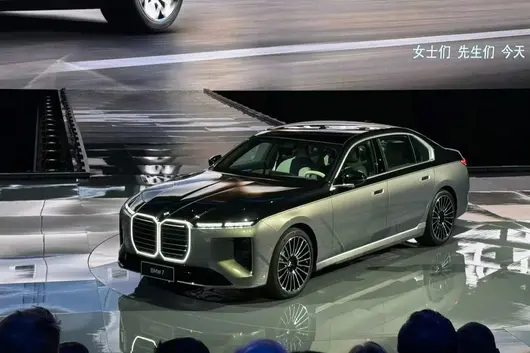

Pameran Kereta Antarabangsa Ke-11 Shenyang yang baru sahaja bersara, Brilliance BMW tidak hadir.
Baru-baru ini, BMW mendedahkan perancangan produk dan strategi pembentangan masa depan di China semasa acara Hari Modal 2026.
Lebih 10 Kereta Baharu Dalam Dua Tahun, Butang Pecutan Strategi Produk Ditekan
Pada masa lalu, BMW menduduki hampir separuh pavilion di pameran kereta tempatan Shenyang, menjadi stan wajib lawatan ramai pengunjung. Walau bagaimanapun, ketidakhadiran BMW di dalam pavilion tidak bermaksud ia melambatkan langkah di pasaran China. Sebaliknya, BMW sedang merancang strategi yang lebih besar.
Di Pameran Kereta Antarabangsa Shenyang ke-11 yang baru sahaja bersara, Brilliance BMW tidak hadir.
Dari ketumpatan kereta baharu hingga kedalaman tempatanisasi, isyarat "menambah modal China" yang kuat telah dikeluarkan. Menghadapi pasaran domestik yang semakin kompetitif, BMW memilih untuk menjawab dengan produk yang lebih padat dan tempatanisasi yang lebih menyeluruh.
Menurut peta jalan produk yang dikeluarkan rasmi, BMW akan melancarkan 7 kereta baharu utama di pasaran China pada tahun hadapan. Diantaranya, versi jarak roda panjang iX3 dikeluarkan pada suku tahun keempat tahun ini; BMW i3 jarak roda panjang, siri 7 baharu serta versi elektrik penuh i7, X5 baharu dan versi elektrik penuh iX5 akan dilancarkan secara padat pada suku pertama tahun hadapan. Terdapat 4 model lain yang dirancang untuk dilancarkan daripada suku kedua hingga suku keempat tahun hadapan, model khusus belum diumumkan.
Rasmi juga mendedahkan, pada tahun 2028, 5 kereta baharu sepenuhnya yang misteri akan menunggu untuk dilancarkan. Dikira semula, dalam tempoh lebih dua tahun akan datang, BMW akan melihat pendaratan padat lebih 10 kereta baharu di China, meliputi bahan api, elektrik penuh dan model ganti. Irama pelancaran sebegini, tidak biasa dalam sejarah BMW di China.
iX3 Memimpin Serangan: Jarak Bateri 900km, Bermula 269,900 Yuan
Sebagai pasukan terdepan serangan ini, BMW iX3 jarak roda panjang baharu telah dilancarkan pada akhir bulan Ogos, menjumlahkan 3 model, harga bermula 269,900 hingga 339,900 Yuan, penghantaran dibuka pada suku keempat.
Kereta ini merupakan model pertama siri baharu BMW, reka bentuk luaran terutamanya meneruskan versi antarabangsa, bahagian hadapan menggunakan kisi cahaya 3D dan lampu integral yang digariskan oleh cahaya malaikat digital, pengenalannya sangat tinggi. Kereta dilengkapi pemegang pintu luar model separa tersembunyi khusus domestik, mengintegrasikan pembukaan dua mod elektrik dan fizikal, berbeza dengan reka bentuk tersembunyi pada versi antarabangsa.
Kuasa adalah tarikan utama. Ia dilengkapi teknologi eDrive elektrik generasi keenam BMW, dibina berdasarkan arkitektur voltan tinggi 800V, jarak bateri elektrik penuh CLTC melebihi 900 kilometer. Antara itu, versi 50L dilengkapi dua enjin sinkron magnetik belakang + asinkron depan, kuasa gabungan 477 bhp (351 kW). Data sedemikian, dalam pasaran tenaga baharu semasa tergolong dalam tahap pertama. Harga permulaan 269,900 Yuan, ditambah jarak bateri 900km dan daya tarikan jenama BMW, prestasi pasaran iX3 jarak roda panjang, akan menentukan kualiti serangan produk ini pada tahap yang besar.
95% Tempatanisasi + Eksport ke Asia Tenggara, Peranan Shenyang Dinaikkan
Yang lebih menarik minat daripada perancangan kereta baharu, adalah dua tindakan utama BMW pada peringkat strategik: pengeluaran 95% tempatan dan eksport ke Asia Tenggara.
Rancangan rasmi hingga akhir 2029, kenderaan yang dijual di China akan mencapai 95% pengeluaran tempatan, dan memulakan perniagaan eksport ke pasaran Asia Tenggara, mendorong model jarak roda panjang khas China ke luar negara. Ini bermakna, model BMW yang "diperpanjang" khusus untuk pengguna China pada masa depan, tidak akan khusus pasaran China sahaja, tetapi bermula dari China, dijual ke Thailand, Malaysia, Indonesia dan negara Asia Tenggara lainnya.
Shenyang sebagai ibu pejabat Brilliance BMW, peranannya turut ditingkatkan — daripada tapak pengeluaran yang melayani pasaran China, berubah menjadi hab eksport yang merentasi Asia Tenggara. Ini merupakan kebaikan nyata bagi rantaian industri automotif Shenyang. BMW berakar umbi dalam di China, bukan sahaja untuk menjual kereta, tetapi juga untuk memasukkan rangkaian bekalan dan keupayaan penyelidikan China ke dalam sistem global.
Penyesuaian Aktif Di Bawah Tekanan Jualan, BMW Memainkan Strategi Sistem
Mengapa BMW bekerja seberat ini? Data memberikan jawapan. Pada suku pertama tahun ini, pendapatan kumpulan BMW ialah 622.66 bilion Euro, turun 8.01% berbanding tahun lalu; keuntungan sebelum cukai ialah 40.45 bilion Euro, turun 29.4% berbanding tahun lalu. Dari segi jualan, secara global pengumpulan 115.67 juta unit kereta baharu telah diserahkan, turun 4.2% berbanding tahun lalu. Di antara itu, jualan pasaran China ialah 261,773 unit, turun 20.4% berbanding tahun lalu.
Tahap persaingan dalam pasaran domestik dapat dilihat bersama. Kumpulan baharu pembuatan kereta bangkit, jenama tinggi tempatan melancarkan perang harga, keperluan pengguna juga tidak lagi terhad kepada jenama mewah tradisional. Di bawah pengaruh pelbagai faktor, bahagian pasaran jenama mewah menerima tekanan. Rasmi BMW pernah menyatakan, dipengaruhi oleh kejatuhan pasaran China, keadaan operasi global yang semakin rumit, sedang mempercepat dan memperkukuh pelaksanaan pelbagai langkah. CEO BMW Milan Nedeljkovic juga berkata secara terang-terangan: "Rancangan ini akan membantu BMW menghadapi persaingan yang semakin sengit yang akan menentukan arah industri automotif pada tahun-tahun akan datang."
Dari produk ke pengeluaran, dari penyelidikan dan pembangunan ke eksport, BMW sedang memperjuangkan satu "pertarungan sistem". Ia bukan sahaja membawa model global untuk dijual di China, tetapi membiarkan penyelidikan China, pembuatan China, model khas China dieksport secara songsang. Strategi tempatanisasi mendalam ini, jika berjaya dilaksanakan, akan membantu BMW memperoleh kelebihan baharu dari segi kos, kecekapan dan kelajuan respons pasaran.
Perhatian Jueluo
Perancangan produk BMW ini, arahannya jelas: gunakan pelancaran kereta baharu yang lebih padat untuk menstabilkan asas kereta bahan api, gunakan model elektrik penuh generasi baharu untuk rebut pasaran tenaga baharu, kemudian guna tempatanisasi mendalam dan strategi eksport untuk kurangkan kos, luaskan ruang. Tiga langkah saling berkaitan, kelihatan kepentingan BMW terhadap pasaran China tidak berubah, hanya strategi permainan berubah.
Tetapi kita juga perlu melihat, persaingan pasaran China sudah bukan tahap "dorong beberapa kereta lagi" yang boleh menang dengan mudah. Kumpulan baharu bergerak lebih laju dalam kecerdasan, operasi pengguna dan inovasi pengalaman, jenama mewah tradisional mahu mengejar, tidak sahaja memerlukan kekuatan produk yang kukuh, tetapi juga memerlukan menundukkan sikap, memperbaiki pengalaman. Kereta baharu sehebat mana pun, jika pengguna tidak boleh sentuh, uji, atau rasai, kesan penyebaran akan berkurang.
BMW mempunyai asas jenama, kelebihan pembuatan tapak Shenyang, dan keupayaan sistem yang kuat. Langkah seterusnya ialah menukar kelebihan ini kepada pengalaman yang boleh dirasai dengan jelas oleh pengguna. Lebih 10 kereta baharu dalam dua tahun, hanyalah permulaan. Ujian sebenar, selepas setiap kereta dilancarkan, adakah ia boleh masuk ke dalam hati lebih ramai pengguna biasa.

In just a few months, the BMW Group Debrecen Factory in Hungary has already mass-produced 50,000 new generation iX3s, this is the fastest capacity increase speed since the new factory! Booming continuously globally, order volume has exceeded 100,000 units! At the same time, this BMW has also won major honors such as the 2026 World Car of the Year&World Electric Vehicle of the Year, Germany's "Golden Steering Wheel" Award, UK Top Gear 2026 Car of the Year, etc., and now the new generation BMW iX3 Long Wheelbase version has officially opened pre-booking, the price is:


Regarding the design of the exterior and interior, I believe everyone has seen enough, no need to elaborate, let's review the other main product highlights!
The Soul of the New Generation: Super Driving Control Brain


The goal of the new generation BMW is to redefine the driving pleasure of pure electric vehicles, which relies on the function of the super driving control brain, which achieves millisecond-level synchronization of the accelerator, brake, and steering for the first time, using one brain to unify all actions; meanwhile 98% of driving scenarios do not require mechanical brake intervention, relying solely on kinetic energy recovery, which means the wear on brake pads will be very small, achieving up to 100,000 kilometers without needing brake pad replacement.


Besides kinetic energy recovery, another impressive point is the seamless brake stop, I have experienced it, simply amazing, 0 brake noise, 0 brake shake, the car understands your action one step faster than you think, just as you have the thought underfoot, power is immediately in place, this is a brake that makes everyone in the car comfortable, and is also the smoothest brake experience in BMW history.
Reliable Three-Electric System

The new generation BMW iX3 Long Wheelbase version adopts a global 800V high-voltage architecture, equipped with BMW's latest large cylindrical battery, its standard is far higher than industry standards, its main characteristics are strong power, low energy consumption, and slow aging! Its CLTC maximum range reaches 919km, official testing of BMW iX3 50L from Shenyang production base to Beijing R&D center, no charging throughout the process, finally completed 1,030.2 kilometers driving mileage, when reaching the destination the vehicle still has 5% remaining battery, pure electric BMW models have always had solid range, there is absolutely no need for everyone to worry about this point.

Its maximum charging power is 400 kW, charging from 10% to 80% takes only 21 minutes, if at a highway service area it's just a trip to the restroom or buying a cup of coffee, 10 minutes can replenish over 400 kilometers; moreover, BMW's control over quality is very strict, even after years of use, battery degradation is relatively weak, and health is high.
Safety is not a configuration, but the bottom line


First is the safety of the battery pack, it uses a nickel-plated steel shell, which is both anti-corrosion and high-temperature high-pressure resistant, a downward pressure relief valve is designed at the bottom, in case of accident, gas and heat can be directed outside the car, further improving safety; new generation iX3 has undergone global top-tier simulation testing + two winters and two summers real car actual ultra-long testing; strengthened body transverse lateral structure, reserved redundant space for the battery system, higher floor protection; battery pack has undergone over 1,000 tests, each cell is 100% AI and X-ray full-process inspection.

These might all be invisible to us, and the most obvious visible part is the door handle, the domestic long wheelbase version has become semi-hidden, fully complying with regulations to be implemented in the country, it also has three layers of protection, first is high-voltage battery direct power supply, second is backup battery power supply, third is mechanical switch, if the vehicle loses power, the door can be opened via mechanical structure.
Smart Cockpit and Intelligent Driving


The layout inside the cabin is the focus of the new generation BMW, still a driver-centric design, but traditional instrument cluster is cancelled, using the Visual Cone Concept to run through four interaction interfaces, far-middle-near three-screen linkage. At the same time, Brilliance BMW also integrated the car machine with Alibaba+DeepSeek large language models, customized Amap navigation, BMW Digital Key/Huawei HiCar and MyBMW App based on HarmonyOS NEXT, personalized custom application components, etc., not only can listen to music, watch videos, but also sing karaoke, play games.

And in terms of intelligent driving, it is naturally indispensable, Brilliance BMW and Momenta jointly developed a set of assistive driving, based on Momenta R7 Reinforcement Learning + World Model, achieving BMW specially tuned intelligent driving style from vehicle perception, decision-making, millisecond-level execution, further improving safety and comfort.

Previously, many people complained that the new generation BMW iX3 came too slowly, but BMW is a global automaker, and has its own qualification certification system, to welcome the arrival of the new generation, BMW attaches more importance to deep collaboration with supplier partners in early R&D, engineering verification, quality management and mass production introduction in China, currently BMW has over 480 local tier-1 suppliers in China, and after the new generation BMW iX3 Long Wheelbase version is mass-produced in large quantities, it will be exported to Thailand, Malaysia, Indonesia, India and other international markets.
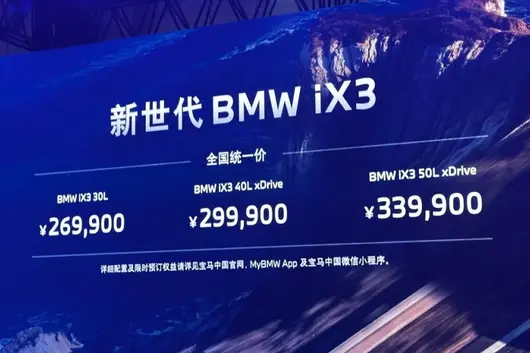

Hanya beberapa bulan, Kilang BMW Group di Debrecen, Hungary telah menghasilkan 50,000 unit BMW iX3 Generasi Baharu, ini adalah kelajuan peningkatan kapasiti paling pantas dalam sejarah kilang baharu ini! Di seluruh dunia terus panas, jumlah tempahan telah melepasi 100,000 unit! Sementara itu, BMW ini juga telah menerima Anugerah Kereta Tahunan Dunia 2026 & Kereta Elektrik Tahunan Dunia, Anugerah 'Stereng Emas' Jerman, Top Gear UK - Kereta Terbaik 2026, dan sekarang edisi BMW iX3 Generasi Baharu Paksi Panjang telah rasmi dibuka tempahan, harganya adalah:
Dari aspek reka bentuk luaran dan dalaman, saya yakin anda sudah biasa melihatnya, tidak perlu diterangkan lagi, mari kita melihat semula ciri-ciri utama produk yang lain!
Jiwa Generasi Baharu: Otak Pemanduan Super
Matlamat BMW Generasi Baharu adalah mendefinisikan semula keseronokan memandu kereta tulen elektrik, ini tidak dapat dipisahkan daripada peranan Otak Pemanduan Super, ia kali pertama mencapai frekuensi yang sama pedal minyak, breki dan stereng dalam skala milisaat, menggunakan satu otak untuk memproses semua tindakan secara seragam; Serentak itu 98% senario memandu tidak memerlukan campur tangan breki mekanikal, hanya bergantung pada pemulihan tenaga kinetik sahaja, ini bermaksud keausan kampas breki akan sangat kecil, boleh mencapai 100,000 km tanpa perlu bertukar kampas breki.
Selain pemulihan tenaga kinetik, titik lain yang memberi kesan mendalam ialah berhenti tanpa rasa breki, saya pernah merasakannya, sungguh luar biasa, 0 bunyi breki, 0 getaran breki, kereta faham tindakan anda lebih pantas daripada yang anda fikirkan, begitu kaki ada niat, kuasa terus disediakan, ini adalah breki yang selesa untuk semua penumpang, juga merupakan pengalaman breki BMW yang paling lancar sepanjang sejarah.
Sistem Tiga Elektrik yang Boleh Dipercayai
BMW iX3 Generasi Baharu Paksi Panjang menggunakan arsitektur voltan tinggi 800V merangkumi keseluruhan, memasang bateri silinder besar terbaru BMW, piawaiannya jauh lebih tinggi daripada piawai industri, ciri utamanya ialah kuasa kuat, penggunaan tenaga rendah, penuaan perlahan! Jarak larian maksimum CLTCnya mencapai 919 km, ujian rasmi BMW iX3 50L dari Pangkalan Pengeluaran Shenyang ke Pusat R&D Beijing, sepanjang perjalanan tidak dicas, akhirnya menempuh jarak perjalanan 1030.2 km, apabila tiba di destinasi kenderaan masih terdapat 5% tenaga bateri, jarak larian model BMW tulen elektrik sentiasa kukuh, titik ini sepenuhnya tidak perlu dikhuatiri oleh semua orang.
Kuasa cas maksimumnya 400 kW, dari 10% ke 80% hanya memerlukan 21 minit, jika di khidmat jalan raya hanya pergi tandas atau beli secawan kopi, 10 minit boleh isi semula tenaga lebih 400 km; dan BMW mengawal kualiti sangat ketat, walaupun selepas bertahun-tahun penggunaan, penurunan bateri adalah agak lemah, tahap kesihatan tinggi.
Keselamatan bukan konfigurasi, tetapi asas
Adalah pertama keselamatan aspek kumpulan bateri, ia menggunakan sarung keluli dilapik nikel, kedua-menyangkal kakisan dan tahan haba tinggi tekanan tinggi, bahagian bawah direka mempunyai valv pelepasan tekanan ke bawah, dalam keadaan kecemasan boleh membawa gas, haba ke luar kenderaan, meningkatkan lagi keselamatan; Generasi Baharu iX3 telah melalui ujian simulasi terpantas dunia + dua musim sejuk dua musim panas ujian sebenar kenderaan jangka panjang; diperkukuh struktur sisi kenderaan, ruang berlebihan disimpan untuk sistem bateri, perlindungan papan bawah lebih tinggi; beg bateri telah melalui lebih 1,000 ujian, setiap sel bateri adalah 100% AI dan sinar-X ujian keseluruhan proses.
Ini mungkin semua perkara yang kita tidak dapat lihat, yang paling jelas dapat dilihat adalah pemegang pintu, edisi Paksi Panjang domestik telah menjadi setengah tersembunyi, sepenuhnya mematuhi undang-undang yang akan dilaksanakan di pasaran domestik, ia mempunyai tiga jaminan, pertama kuasa terus bateri tinggi voltan, kedua kuasa bateri simpanan, ketiga suis mekanikal, jika kenderaan putus kuasa, pintu kenderaan boleh dibuka melalui struktur mekanikal.
Kompartmen Pintar dan Pemanduan Pintar
Tata letak dalaman kabin adalah fokus BMW Generasi Baharu, masih menggunakan reka bentuk berpusatkan pemandu, tetapi membatalkan papan instrumen tradisional, menggunakan konsep kon visual untuk merangkumi empat antaramuka interaksi, skrin jauh tengah dekat tiga skrin berhubung serentak. Serentak itu BMW Brilliance juga mengintegrasikan sistem kereta dengan Model Bahasa Besar Alibaba + DeepSeek, navigasi Gaode versi khas, Kunci Digital BMW berasaskan HarmonyOS NEXT / Huawei HiCar dan MyBMW App, komponen aplikasi yang disesuaikan khusus, dan sebagainya, tidak hanya boleh dengar lagu, lihat video, boleh juga menyanyi K, bermain permainan.
Dalam aspek pemanduan pintar sememangnya juga tidak boleh ditiadakan, BMW Brilliance dan Momenta bekerjasama membangunkan satu set pemanduan bantuan, berdasarkan Momenta R7 pembelajaran pengukuhan + model dunia, dari kesemua pengesanan kenderaan, keputusan, pelaksanaan skala milisaat mencapai gaya pemanduan pintar BMW yang khas, meningkatkan lagi keselamatan dan keselesaan.
Sebelum ini ramai yang mengeluh BMW iX3 Generasi Baharu datang terlalu perlahan, tetapi BMW adalah sebuah syarikat kereta global, dan mempunyai sistem penyahujian sendiri, untuk menyambut kedatangan Generasi Baharu, BMW di China lebih mengutamakan kerjasama mendalam dengan rakan-rakan pembekal dalam penyelidikan awal awal, pengesahan kejuruteraan, pengurusan kualiti dan pengedaran pengeluaran massal, saat ini BMW di China mempunyai lebih 480 pembekal tahap utama tempatan, dan selepas BMW iX3 Generasi Baharu Paksi Panjang menghasilkan pengeluaran massal besar-besaran, seterusnya akan dieksport ke Thailand, Malaysia, Indonesia dan India dan pasaran antarabangsa yang lain.



The most "BMW" car is no longer BMW's most important car.
By|Hu Chengxu Edit|Mao Shiyan
Auto Pixel (ID:autopix)Original
BMW's best news and worst news arrived at almost the same time.
At the end of July, BMW reached a milestone in Debrecen, Hungary. The group's first all-electric exclusive factory produced its 50,000th Neue Klasse iX3.
Orders are growing faster than production ramp-up. From production start to the 50,000th unit roll-off, it took only nine months, while iX3 orders in Europe are approaching 100,000. BMW disclosed that for every three new electric vehicle orders in Europe, one belongs to the iX3.
To catch up with demand, the Debrecen factory started a second shift earlier, and hundreds of employees were transferred from the China factory for support.
In the first half of 2026, the iX3 also swept the World Car of the Year and World Electric Vehicle awards.

This is probably BMW's best new product start in the last decade. However, within the same period, several other things happened.
On July 29, BMW reached an agreement with the Works Council to launch a voluntary redundancy plan starting in October, cutting approximately 8,000 jobs globally by the end of 2027, accounting for 5.2% of its 154,500 employees. The cuts fell on R&D, planning, and functional departments in Germany, effectively slicing off one-fifth of BMW's white-collar jobs in Germany.
On July 30, BMW released its financial report for the first half of 2026. Net profit attributable to shareholders was 2.858 billion euros, down 25.75%. Pre-tax profit in the second quarter was 1.7 billion euros, a year-on-year decline of 35.1%.
The automotive business operating profit margin dropped by more than half year-on-year, and free cash flow decreased by 73.4%. These factors caused BMW's stock price to fall by about 39% this year, touching a 52-week low in late July.
The huge hole dragging down BMW's performance is in China. In the first half, BMW China's sales fell 20.4% year-on-year, and the second quarter's decline widened to 30.2%. With sales continuing to lose speed, China's record of consistently being BMW's largest single market for 12 consecutive years was ended, and its share of BMW's global sales dropped from a peak of 33.5% to 25.5%.
But in China, where BMW's new energy transformation needs to be tested the most, new cars arrived the latest. The domestic version of iX3 will be launched in the fourth quarter of this year.
Thus, strong sales in Europe are a good start, but it cannot yet prove it is the answer. The old market is losing speed, and the new anchor has not yet completed the hardest verification.
01
BMW Once Only Needed One Car
The last time BMW used the name "Neue Klasse" was in 1962. That time, it saved the company.
Before that, BMW had walked to the edge of being absorbed. Daimler-Benz proposed a takeover and restructuring plan. Before the December 1959 shareholder meeting, the deal was once considered a foregone conclusion. It was not until minority shareholders and employee representatives opposed it on the spot that the plan was vetoed, and BMW barely retained independence.
At that time, its product line was almost severed in the middle. One end was cheap micro-cars and motorcycles like the Isetta, while the other end was expensive V8 sedans like the 501 and 502. In the middle, there was no mainstream product that could contribute scale and profits simultaneously.
Marketing Director Paul Hahnemann saw this gap: a family sedan with displacement between 1.5 and 2.0 liters, high quality, and a sports character.
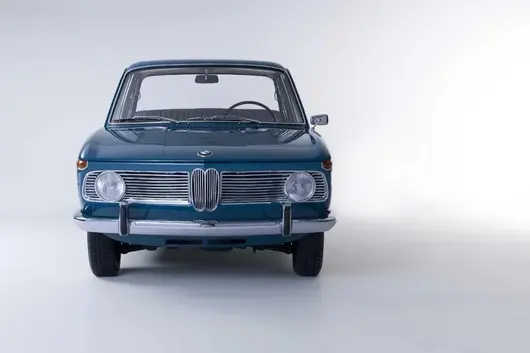
At the 1961 Frankfurt Motor Show, the BMW 1500 made its debut. This series was called "Neue Klasse".

▍BMW 1500 at the 1961 Frankfurt Motor Show
The four-door body abandoned the 501's elaborate styling and turned towards a more restrained, function-focused design. Von Falkenhausen developed the M10 engine for it and persuaded management to increase the displacement from the initial idea of 1.3 liters to 1.5 liters, while leaving space for expansion to 2.0 liters.
On the rear side of this car, at the junction of the C-pillar and the body, the "Hofmeister kink", a fold line turning forward, appeared for the first time, which later became BMW's signature.
But these elements that later defined BMW did not immediately bring a sales legend. The 1500 was produced for over two years, with full lifecycle sales of 23,800 units. What truly changed BMW's fate was the product template it provided. The four-door Neue Klasse was produced cumulatively for 339,800 units. The 02 series, shortened and simplified from it, sold over 820,000 units.
From 1960 to 1970, BMW's sales tripled, and revenue growth exceeded seven times. In 1963, nearly two decades after the dividend suspension, BMW resumed dividends to shareholders.
The M10 engine was produced until 1988, cumulatively exceeding 3.5 million units, and later spawned M12 and M13 turbocharged models for the F1 arena. In 1966, it lapped the Nürburgring Nordschleife in under 10 minutes.
That same year, BMW put the Neue Klasse technology and sports character into a more compact and cheaper car, and the 02 series was born. In 1975, its successor officially adopted a new name: the 3 Series.
From 1975 to now, the 3 Series has cumulatively sold over 16 million units, making it BMW's best-selling series. Luxury mid-size sedans have long used the 3 Series as the benchmark; Audi A4, Mercedes-Benz C-Class, Lexus IS, and even the later NIO ET5 all treated it as an archnrival.
More importantly, it turned sports character into a product logic that BMW could replicate generation after generation.
BMW's official positioning of the 3 Series has always been clear. In 2024, the wording was that for nearly 50 years, the 3 Series has always represented the core (the core of the BMW brand) of the BMW brand; in 2022, it was called the heart (the heart of the BMW brand) of the brand; when the new i3 was released in 2026, the 3 Series was still emphasized as the essence (the essence of the BMW brand) of the BMW brand.
These are not just rhetoric. Over the past few decades, many of BMW's key technologies and product concepts first became complete cars on the 3 Series before spreading to other products.
In 1985, the second-generation 3 Series E30 launched the 325iX, becoming BMW's first four-wheel-drive sedan, laying the starting point for the xDrive that later covered the entire series.

▍Third-generation 3 Series from 1990 to 1998
By the third-generation 3 Series E36, the 3 Series began to define BMW's driving experience more deeply. The Z-link multi-link rear suspension was extended to sedan, two-door, and wagon versions, and the center console was also significantly tilted towards the driver. "Driver-oriented" was established as a replicable cockpit layout.
In the past six decades, BMW's method of expanding its product line was essentially to replicate the 3 Series, scale it up to 5 Series and 7 Series, scale it down to 1 Series, and elevate it to X3 and X5. As long as the answer of the 3 Series stands, BMW's product line stands.
But in the EV era, BMW took the premiere rights of "Neue Klasse" from the 3 Series, and also took away the power to define the next generation of BMW.
02
The Next Generation BMW,
No Longer Starting with the 3 Series
In September 2025, BMW reactivated the "Neue Klasse" name at the Munich IAA. But the first car was not the i3, but the iX3. Six months later, the i3 was released, officially referred to only as the "second Neue Klasse model".
Technical premiere rights were also moved. The Driving Super Brain Heart of Joy, which best embodies BMW's differentiation, as well as sixth-generation electric drive, large-format cylindrical cells, and Panoramic iDrive, were all first deployed on the iX3.
The i3 launched next year, every technology it receives, was received by the iX3 first.
In terms of wording, the change in status can even be seen. For example, for a certain function, the official wording for the iX3 was "the smoothest parking process in BMW history", while the i3 was described as "the smoothest parking process in 3 Series history", the scope was proactively narrowed.

In Q1 2026, global deliveries of the 3 Series and 4 Series totaled 103,800 units, down 11.8% year-on-year; X3 grew by 18.5% year-on-year, of which a considerable proportion came from the iX3. Analysts believe the iX3 could push the X3 family to the top of BMW's sales list by the end of 2026.
BMW's definition of the i3 has also regressed from "defining the entire series" back to "continuing 3 Series DNA", and the task of defining the next generation of products has been handed over to the SUV.
BMW is not the first to do this.
Tesla had the sedan Model 3 first in 2017, and the SUV form Model Y only in 2020, but the latter is the anchor that determines Tesla's product configuration. Model Y is not only Tesla's best-selling car globally, but also the foundation for its subsequent products, such as Cybercab.
Li Auto is even more thorough, and has not yet launched a sedan.
Behind this is first the engineering reality. The BEV platform lays a battery about 10 cm thick under the floor, which is naturally more suitable for higher-bodied SUVs. The battery gives SUVs the low center of gravity that sedans once had exclusively, but it does not give sedans the space of SUVs. Therefore, the mainstream configuration of the new energy era tilts towards SUVs.
But more importantly, the "driving dynamics" represented by sedans could almost support all of BMW's value in the ICE era; in the EV era, it is still important, but only one layer of product capability. Space, comfort, and cockpit experience, SUVs are rather easier to make comprehensive.
This means the 3 Series can no longer represent the Neue Class BMW. But the 3 Series stepping down does not mean the iX3 has completed the succession.
Beyond driving dynamics, the intelligent driving, cockpit, and ecosystem that determine the victory or defeat of new energy vehicles in China, BMW relies heavily on public suppliers. The China-spec iX3 adopts Momenta intelligent driving, while Momenta also supplies Mercedes, Audi, and IM Motors. In the capabilities consumers value most, BMW stands on the same foundation as rivals.
To re-establish differentiation, BMW almost rewrote the domestic iX3. 70% of the OS code was rewritten by the Chinese team, intelligent driving was co-developed again, and the cockpit integrated Alibaba, DeepSeek, Huawei, and Gaode.
The trade-off was time. The overseas version was delivered this March, and the domestic version will be launched in the fourth quarter.

Peculiarly, the market where BMW has the deepest problems, the new product arrived the latest. Mercedes has already compressed the pure electric GLC to 299,900 yuan, and Chinese new EV players have also completed several rounds of iteration in the same price range.
Meanwhile, starting from July this year, the domestic i3 and iX1 entered the production halt process, and i5 production was suspended. BMW cleaned up the previous generation of electric products to free up production lines and resources for the Neue Class models.
This led to it having virtually no domestic pure electric models for sale, with a new energy penetration rate in China of only about 6% in the first quarter, while the overall market in China has already exceeded 50%.
So, the iX3 has not yet taken the most critical exam. Its success in Europe can only prove that BMW made a decent car, but it has not yet proven in the global competition's most fierce and cutting-edge new energy market that it is sufficient to become the anchor of the next generation of BMW.
03
iX3 Is Not Yet The New Anchor
In 2020, BMW also made an iX3.
It rolled off the line at the Shenyang Dadong Plant, it was BMW Brilliance's first truly global model. All iX3s sold worldwide came from the same plant and were all the same car.
Six years later, the new generation iX3 has two versions. The standard wheelbase version is produced in Debrecen, Hungary, for Europe and the US; the long wheelbase version is produced in Shenyang, for China, as well as India, Thailand, Indonesia, and Malaysia.
With the same car name, selling one car globally has become two distinctly different products.
In the ICE era, domestic BMWs would also be lengthened. At that time, the long wheelbase version and standard wheelbase version still shared the same core technology, just different dimensions. Now operating systems, intelligent driving solutions, AI engines, and ecosystem systems have all gone down different paths.
The fundamental divergence is demand. The 3 Series can be unified globally because the market demand for good-handling mid-size sedans is consistent. For the new energy market where the iX3 belongs, the demands on both sides are already different; the Chinese market values intelligence, rear seat experience, and ecosystem connectivity more.
This also pushes the problem to a deeper level. If a car entrusted with a global anchor role must be rewritten after entering the most competitive market, can it still represent globally?
Furthermore, the victory won by the iX3 in Europe, the time may not be plentiful.

In April this year, the sales share of Chinese brands in the European electric vehicle market exceeded 15% for the first time, and the overall market share rose to 9.8%. In May, monthly new car registrations of Chinese automakers in Europe exceeded Japanese automakers for the first time. In the first quarter, exports to Europe reached 438,400 units, a year-on-year increase of 84.7%.
What mainly blocks domestic carmakers is tariffs. The combined tax rate for some domestic new energy vehicles in Europe reaches up to 45.3%. Even bearing high tariffs, the BYD Dolphin Surf (corresponds to the domestic Dolphin) is still cheaper than the same-class Renault 5 in Germany.
And this barrier is being bypassed. BYD, Chery, and Geely are turning tariffs from long-term barriers into phased costs by building factories in Europe or utilizing existing capacity.
More critically, the iX3 is absent from not just an ordinary market, but a place where global new energy competition premiered early. The demand changes happening in China today may well be the preview for other markets in the coming years.
This consolidation has already begun. Geely's G-ASD became the first Chinese driver assistance system to pass EU certification; XPeng has also brought intelligence into Europe as a lever for future competition.
They are betting on Europe's next stage. After electrification, competition will continue to migrate towards intelligence, and gradually approach today's China.
This means the China-spec iX3 is not just BMW's catch-up for a regional market, but also verifying the answer for the next round of global competition for it. The problem is that this verification has not started, and the time and profit space left for BMW have tightened simultaneously.
The semi-annual report released on July 30 maintained the automotive business profit margin guidance of 1% to 3%, this range was significantly reduced from 4% to 6% in June.
BMW's "voluntary redundancy plan" will last from October this year to the end of 2027, and true improvement in profitability will not come until 2028. The product battle that decides victory or defeat, however, has already started from Q4 2026.
BMW is not without the conditions to make long-term decisions. In 1962, Herbert Quandt dared to bet the entire company, and the governance structure relied upon that by stable family holding, allowing enterprises to bet across cycles still exists, and the Quandt family still holds about half of BMW's shares.
But things have changed.
In 1962, BMW had just walked out from the edge of being acquired. The Neue Class of that year was its all-in direction.
In 2025, BMW's global deliveries were about 2.17 million units. The iX3 is just the first of 40 future Neue Class products.
Today's BMW can no longer complete its transformation by relying on one car, one market, and one set of answers. This is where BMW is safer than in 1962, and also where it is harder than in 1962.

This article is original content from Auto Pixel (autopix)
Unauthorized reproduction is prohibited

Kereta yang paling BMW, bukan lagi kereta paling penting bagi BMW.
Penulis|Hu Chengxu Editor|Mao Shiyang
Pixel Kereta (ID:autopix)Asli
Berita terbaik dan terburuk BMW hampir tiba pada masa yang sama.
Akhir Julai, BMW melonjak di Debrecen, Hungary untuk mencapai satu titik. Kilang khusus elektrikal sepenuhnya bagi kumpulan itu, telah melancarkan unit ke-50,000 generasi baharu iX3.
Lebih cepat daripada peningkatan output ialah pesanan. Dari mula pengeluaran ke unit ke-50,000 yang lepas, hanya mengambil masa sembilan bulan, dan pesanan iX3 di Eropah hampir mencecah 100,000 unit. BMW mendedahkan, bagi setiap tiga pesanan model elektrikal baharu yang bertambah di pasaran Eropah, satu daripadanya adalah untuk iX3.
Untuk mengejar permintaan, kilang Debrecen telah menambah kelas kedua lebih awal, dan mengirim ratusan pekerja dari kilang China untuk menyokong.
Semester pertama 2026, iX3 telah merampas dua anugerah besar, Kereta Tahun Dunia dan Kereta Elektrik Dunia.
Ini kira-kira permulaan produk baharu terbaik BMW dalam tempoh sepuluh tahun terdekat. Tetapi dalam kitaran yang sama, beberapa perkara lain juga berlaku.
29 Julai, BMW bersetuju dengan Jawatankuasa Buruh, bermula Oktober akan memulakan Pelan Pencen Sukarela, untuk memotong kira-kira 8,000 jawatan di seluruh dunia pada hujung 2027, bersamaan dengan 5.2% daripada 154,500 pekerjanya. Pisau tajam jatuh pada bahagian penyelidikan, perancangan dan fungsi di Jerman, yang sama dengan memotong satu per lima jawatan "kerah putih" BMW di Jerman.
30 Julai, BMW mengeluarkan laporan kewangan semester pertama 2026. Keuntungan bersih induk 2.858 bilion Euro, menurun 25.75%. Keuntungan sebelum cukai suku kedua 1.7 bilion Euro, menurun 35.1% dari tahun ke tahun.
Margin keuntungan operasi perniagaan kereta jatuh separuh lebih dari tahun ke tahun, aliran tunai bebas menurun 73.4%. Ini menyebabkan harga saham BMW turun kira-kira 39% tahun ini, dan pada hujung Julai mencapai paras 52 minggu terendah.
Lubang besar yang menjerumun prestasi BMW adalah di China. Semester pertama, jualan BMW China menurun 20.4% dari tahun ke tahun, dan penurunan suku kedua semakin meluas hingga 30.2%. Dengan jualan yang terus terdesak, rekod China sebagai pasaran tunggal terbesar BMW yang menduduki puncak selama 12 tahun berturutan telah ditamatkan, dan bahagian jualan global BMW telah menurun dari paras puncak 33.5% kepada 25.5%.
Tetapi di China yang memerlukan ujian sebenar keberkesanan transformasi tenaga baharu BMW, kereta baharu hanya datang paling lewat. Versi tempatan iX3 hanya akan dilancarkan pada suku keempat tahun ini.
Sehingga itu, kejayaan panas di Eropah adalah permulaan yang baik, tetapi belum membuktikan ia adalah jawapan. Pasaran lama sedang terdesak, namun pengikat baharu belum menyelesaikan pengujian yang paling sukar.
01
BMW pernah hanya memerlukan satu kereta
Last kali BMW menggunakan nama "Generasi Baru (Neue Klasse)", adalah pada tahun 1962. Kali itu, ia menyelamatkan syarikat ini.
Sebelum itu, BMW sudah sampai ke tepi untuk digabungkan. Daimler-Benz mencadangkan pelan pengambilalihan dan penyusunan semula, sebelum Mesyuarat Agung Pemegang Saham pada Disember 1959, transaksi dianggap sudah pasti. Sehingga pemegang saham minoriti dan wakil pekerja menentang secara langsung, pelan itu ditolak, dan BMW terselamat untuk mengekalkan kemerdekaan.
Pada masa itu, produknya hampir terputus dari tengah. Satu hujung ialah kereta mikro murah seperti Isetta dan motosikal, hujung yang lain ialah sedan V8 mahal seperti 501 dan 502, tiada satu pun produk utama di tengah yang boleh menyumbang saiz dan keuntungan serentak.
Pengurus pemasaran Paul Hahneim melihat kekosongan ini, sebuah sedan keluarga dengan kualiti tinggi, berpersonaliti sukan, dan sesaran 1.5 hingga 2.0 liter.
Pameran Frankfurt 1961, BMW 1500 dipaparkan. Siri ini dipanggil "Generasi Baru".
▍BMW 1500 pada Pameran Frankfurt 1961
Kesan badan empat pintu melepaskan gaya rumit dari 501, beralih kepada reka bentuk yang lebih terkawal, lebih menekankan fungsi. Von Falkenhausen mengembangkannya enjin M10, dan membujuk pengurusan untuk meningkatkan sesaran dari 1.3 liter yang dirancang asal kepada 1.5 liter, sambil mengasingkan ruang untuk meluas kepada 2.0 liter.
Di bahagian belakang kereta ini, tempat bersambung C-pillar dengan badan, untuk pertama kalinya muncul "Sudut Hofmeister" yang kemudian menjadi logo BMW, satu garis patah yang melengkung ke hadapan.
Tetapi elemen yang kemudian mendefinisikan BMW, tidak serta-merta membawa mitos jualan. 1500 hanya dihasilkan lebih daripada dua tahun, jualan kitaran hayat penuh 23,800 unit. Yang benar-benar mengubah nasib BMW ialah templat produk yang ia tawarkan. Empat pintu Neue Klasse dihasilkan keseluruhan 339,800 unit, siri 02 yang dipendekkan dan dipermudahkan berasas dari situ, menjual lebih daripada 820,000 unit.
1960 hingga 1970 selama sepuluh tahun, jualan BMW naik tiga kali ganda, pendapatan bertambah lebih tujuh kali. Tahun 1963, BMW untuk pertama kalinya dalam hampir dua puluh tahun, kembali memberi dividen kepada pemegang saham.
Enjin M10 terus dihasilkan sehingga 1988, lebih daripada 3.5 juta unit keseluruhan, kemudian juga terbitan model turbo M12 dan M13 di litar F1. Tahun 1966 berjaya memintas Nurburgring Utara dalam 10 minit.
Tahun yang sama, BMW menekan teknologi dan personaliti sukan Generasi Baru ke dalam kereta yang lebih padat dan murah, siri 02 terhasil. Tahun 1975, penggantinya secara rasmi menggunakan nama baharu: Siri 3.
1975 hingga kini, jualan kumulatif Siri 3 lebih daripada 16 juta unit, merupakan siri jualan tertinggi BMW. Sedan kelas mewah menengah selama tempoh panjang menggunakan Siri 3 sebagai pembaris, Audi A4, Mercedes C-Class, Lexus IS, malah NIO ET5 kemudian, menganggapnya sebagai rakan palsu.
Yang lebih penting, ia menjadikan personaliti sukan sebagai susunan produk yang boleh disalin generasi demi generasi BMW.
Penempatan rasmi BMW untuk Siri 3 sentiasa jelas. Pernyataan 2024, selama hampir 50 tahun, Siri 3 sentiasa mewakili teras jenama BMW (the core of the BMW brand); tahun 2022 mengatakan ia adalah jantung jenama (the heart of the BMW brand); apabila i3 baharu 2026 dilancarkan, tetap menekankan Siri 3 adalah essensi jenama BMW (the essence of the BMW brand).
Ini bukan sekadar retorik. Dalam beberapa dekad lepas, banyak teknologi kunci dan konsep produk BMW, dulu di Siri 3 menjadi sebuah kereta lengkap, kemudian merebak ke produk lain.
1985, Siri 3 kedua E30 melancarkan 325iX, menjadi sedan quattro pertama BMW, meletakkan asas bagi xDrive yang kemudian meliputi seluruh siri.
▍Siri 3 ketiga 1990 hingga 1998
Apabila Siri 3 ketiga E36, Siri 3 mula mendefinisikan cara memandu BMW lebih dalam. Suspen belakang multitie jenis-Z diletakkan ke versi sedan, dua pintu dan estate, panel tengah juga condong jelas ke arah pemandu. "Berpusat pada pemandu" didirikan menjadi susun atur kabin yang boleh disalin.
Enam puluh tahun lepas, kaedah BMW mengembangkan barisan produk pada asalnya menyalin Siri 3, membesarkannya menjadi Siri 5 dan Siri 7, mengecilkannya menjadi Siri 1, menaikkan menjadi X3 dan X5. Selama jawapan Siri 3 betul, barisan produk BMW adalah betul.
Tetapi apabila zaman tenaga baharu, BMW mengambil kuasa pelancaran "Generasi Baru" dari tangan Siri 3, dan mengambil kuasa mendefinisikan BMW generasi akan datang.
02
BMW generasi akan datang,
Bukan bermula dengan Siri 3
September 2025, BMW di IAA Munich menghidupkan semula nama "Generasi Baru". Tetapi kereta pertama bukan i3, sebaliknya iX3. Setengah tahun kemudian i3 dilancarkan, pihak rasmi hanya memanggilnya "model Generasi Baru yang kedua".
Yang dipindahkan adalah kuasa pelancaran teknologi. Super otak kawalan perbezaan BMW yang paling menonjolkan Heart of Joy, serta kuasa elektrik generasi keenam, sel bateri silinder besar dan iDrive Panorama, semua jatuh pertama kali di iX3.
Tahun depan dilancarkan i3, setiap teknologi yang diambil adalah apa yang iX3 ambil terlebih dahulu.
Bahkan dalam perenggan boleh melihat perubahan status. Contohnya untuk satu fungsi, laluan rasmi iX3 ialah "proses parkir paling lancar dalam sejarah BMW", i3 diterangkan sebagai "proses parkir paling lancar dalam sejarah Siri 3", lingkungan secara aktif dipersempit.
Suku pertama 2026, Siri 3 dan Siri 4 dihantar seluruh dunia 103,800 unit, menurun 11.8% dari tahun ke tahun; X3 meningkat 18.5%, bahagian相当 besar datang dari iX3. Ada analisis berpendapat, iX3 mungkin dalam hujung 2026 dapat menolak keluarga X3 ke puncak jualan BMW.
Definisi BMW terhadap i3, sudah kembali dari "mendefinisikan keseluruhan siri" kepada "melanjutkan DNA Siri 3", tugas mendefinisikan produk generasi akan datang diserahkan kepada SUV.
BMW bukan pertama berbuat begitu.
Tesla pada 2017 dahulu ada sedan Model 3, 2020 barulah ada bentuk SUV Model Y, tetapi selepas itu adalah pengikat yang menentukan konfigurasi produk Tesla. Model Y bukan sahaja kereta paling laris Tesla di seluruh dunia, malah menjadi tapak bagi produk seterusnya, seperti Cybercab.
Li Auto lebih tegas, sehingga kini belum melancarkan sedan.
Di sebalik ini pertama sekali ialah realiti kejuruteraan. Platform elektrikal sepenuhnya meratakan bateri tebal kira-kira 10 cm di bawah lantai, secara semulajadi lebih sesuai untuk badan SUV yang lebih tinggi. Bateri memberikan SUV keratan rendah yang dulu hanya ada pada sedan, tetapi tidak memberi sedan ruang SUV. Konfigurasi utama zaman tenaga baharu karena itu condong ke SUV.
Tetapi yang lebih penting, "kawalan memandu" yang diwakili oleh sedan, hampir boleh menyokong semua nilai BMW zaman燃油; apabila zaman tenaga baharu, ia masih penting, tetapi hanya satu lapisan keupayaan produk. Ruang, keselesaan dan pengalaman kabin, SUV sebaliknya lebih mudah dilakukan lengkap.
Ini bermakna, Siri 3 tidak boleh lagi mewakili BMW Generasi Baru. Tetapi Siri 3 meletak jawatan, tidak bermakna iX3 telah selesai mengambil alih.
Luar kawalan memandu, penentuan kemenangan dan kekalahan kereta tenaga baharu China ialah pemandu pintar, kabin dan ekosistem, BMW banyak bergantung kepada pembekal awam. Versi China iX3 menggunakan pemandu pintar Momenta, dan Momenta juga membekal Mercedes, Audi dan IM Motors. Pada keupayaan yang paling diutamakan pengguna, BMW dan lawan berdiri di bawah asas yang sama.
Untuk menghasilkan perbezaan semula, BMW hampir menulis semula versi tempatan iX3. 70% kod sistem operasi ditulis semula oleh pasukan China, pemandu pintar dikembangkan semula bersama, kabin masuk ke Ali, DeepSeek, Huawei dan Amap.
Harga yang perlu ditanggung ialah masa. Versi luar negara sudah dihantar pada Mac tahun ini, versi tempatan hanya akan dilancarkan pada suku keempat.
Keadaan BMW paling masalah di pasaran, produk baharu datang paling lewat. Mercedes telah menekan纯电 GLC kepada 299,900 Yuan, kekuatan baharu China juga pada jalur harga yang sama telah menyiapkan beberapa pusingan ulang kaji.
Serentak, dari Julai tahun ini, versi tempatan i3 dan iX1 masuk ke proses penghentian pengeluaran, i5 berhenti daripada jadual pengeluaran. BMW telah membersihkan produk elektrikal generasi lalu, untuk menjayakan ruang dan sumber ke produk Generasi Baharu.
Ini menyebabkan ia hampir tiada model elektrikal tempatan untuk dijual, kuartal pertama dalam kadar penembusan tenaga baharu China hanya kira-kira 6%, manakala pasaran China keseluruhan sudah melebihi 50%.
Oleh itu, iX3 belum menyertai ujian paling penting. Kejayaannya di Eropah hanya boleh membuktikan BMW telah membuat sebuah kereta yang baik, tetapi masih belum membuktikan dalam pasaran tenaga baharu yang paling sengit dan avant-garde di seluruh dunia, cukup untuk menjadi pengikat BMW generasi akan datang.
03
iX3 bukan pengikat baharu
2020, BMW juga pernah membuat sebuah iX3.
Ia dilepaskan di Kilang Dadong Shenyang, merupakan model global pertama Brilliance BMW yang sebenarnya. Semua iX3 yang dijual seluruh dunia, datang dari satu kilang yang sama, dan semuanya kereta yang sama.
Enam tahun kemudian, generasi baharu iX3 mempunyai dua versi. Versi gandar pendek dihasilkan di Debrecen, Hungary, membekal Eropah dan Amerika; Versi gandar panjang dihasilkan di Shenyang, membekal China, serta India, Thailand, Indonesia dan Malaysia.
Nama kereta yang sama, dari satu kereta dijual seluruh dunia, menjadi dua set produk yang sangat berbeza.
Zaman燃油, versi tempatan BMW juga akan panjangkan. Versi gandar panjang dan gandar pendek masa itu masih berkongsi satu set teknologi teras yang sama, hanya saiz berbeza. Sekarang sistem operasi, penyelesaian pemandu pintar, enjin AI dan ekosistem, semuanya sudah menuju ke laluan berbeza.
Perselisihan yang lebih asas ialah permintaan. Siri 3 boleh bersatu di seluruh dunia, kerana permintaan pasaran terhadap sedan menengah yang mudah dipandu adalah konsisten. Pasaran tenaga baharu yang iX3 berada di dalamnya, permintaan kedua-dua belah sudah tidak sama, pasaran China lebih menekankan kecerdasan, pengalaman belakang dan ekosistem bersambung.
Inilah yang menolak masalah ke lapisan lebih dalam. Sebuah kereta yang diberi peranan pengikat global, jika masuk ke pasaran yang paling sengit mesti ditulis semula, ia masih boleh mewakili global?
Kepada lagi, satu jualan yang dimenangi iX3 di Eropah, masa mungkin tidak luas.
April tahun ini, bahagian jualan pasaran kereta elektrik China di Eropah kali pertama melebihi 15%, bahagian pasaran keseluruhan meningkat ke 9.8%. Mei, jumlah pendaftaran kereta baharu bulanan syarikat China di Eropah kali pertama melebihi syarikat kereta Jepun. Suku pertama eksport China ke Eropah 438,400 unit, meningkat 84.7% dari tahun ke tahun.
Yang terutamanya menghalang syarikat kereta China ialah tarif. Sebahagian model elektrikal China di Eropah kadar gabungan tertinggi sehingga 45.3%, walaupun menanggung tarif tinggi, BYD Dolphin Surf (koresponden dengan Dolphin di China) di Jerman masih lebih murah daripada Renault 5 kelas yang sama.
Dan gerbang ini sedang diterobos. BYD, Chery dan Geely sedang melalui pembinaan kilang di Eropah atau menggunakan kapasiti sedia ada, menjadikan tarif dari halangan jangka panjang menjadi kos peralihan.
Yang lebih penting, iX3 yang tidak hadir bukan satu pasaran biasa, malah tempat di mana persaingan tenaga baharu dunia dimainkan lebih awal. Perubahan permintaan yang berlaku di China hari ini, mungkin adalah ujian untuk pasaran lain beberapa tahun akan datang.
Pengeratan ini sudah bermula. G-ASD Geely menjadi sistem pemandu pintar China pertama yang lulus pengesahan EU; XPeng juga membawa kecerdasan ke Eropah, sebagai pegangan persaingan masa depan.
Mereka bertaruh pada fasa seterusnya Eropah, selepas elektrifikasi, persaingan akan berterusan berpindah ke kecerdasan, dan secara beransur-ansur mendekati China hari ini.
Ini bermakna, versi China iX3 bukan sahaja untuk menambah ilmu satu pasaran rantau bagi BMW, juga untuk menyokong jawapan persaingan global pusingan seterusnya. Masalahnya, pengujian ini belum bermula, masa dan ruang keuntungan yang ditinggalkan untuk BMW sudah mengecil serentak.
Pelaporan separuh tahun yang dikeluarkan 30 Julai mengekalkan garis panduan margin keuntungan perniagaan kereta 1% hingga 3%, julat ini pada Jun sudah diturunkan secara besar-besaran dari 4% hingga 6%.
Pelan "pencen sukarela" BMW akan berterusan dari Oktober tahun ini hingga hujung 2027, benar-benar memperbaiki keupayaan keuntungan tunggu 2028. Perang produk penentu kemenangan, sudah bermula dari suku keempat 2026.
BMW bukan tanpa syarat membuat keputusan jangka panjang. Tahun 1962 Herbert Quandt berani mempertaruhkan seluruh syarikat, struktur tadbir yang bergantung kepada pemegang saham keluarga stabil, yang membolehkan syarikat bertaruh merentas kitaran masih wujud, keluarga Quandt sehingga kini masih memegang kira-kira separuh saham BMW.
Tetapi ada yang berubah.
1962, BMW baru keluar dari tepi untuk diakuisisi, Generasi Baru tahun itu adalah arah yang ia pertaruhkan sekali.
2025, jualan global jenama BMW kira-kira 2.17 juta unit, iX3 hanya model pertama daripada 40 model Generasi Baharu masa depan.
BMW hari ini, sudah tidak boleh lagi bergantung kepada satu kereta, satu pasaran dan satu jawapan untuk menyelesaikan transformasi. Ini adalah tempat BMW lebih selamat daripada 1962, juga tempat ia lebih sukar daripada 1962.
Artikel ini oleh Pixel Kereta (autopix)Kandungan Asli
Tanpa kebenaran, jangan terjemah













© 2024 Bitauto.com. All Rights Reserved.
Bitauto (www.yiche.com and www.bitauto.com) is one of the most visited automotive websites in China. We provide detailed info on Chinese car brands available in your area. Please note that the information provided on this website is based on publicly available data and is for reference only. It may not be fully updated or accurate at all times.

Help us improve our website


