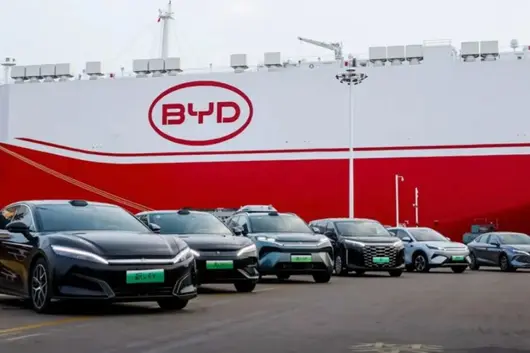
In May, China's new energy vehicle penetration rate hit a new high again, reaching 62.9%. In early June, the single-week rate even broke 70%. BYD exerted efforts in both technology and products. In May, the brand alone secured 330,000 sales, leading by a landslide. From January to May, BYD brand cumulative sales reached 1.208 million units, still firmly holding the top spot. Not just the brand, according to automotive group classification, BYD remains first, still leading by a landslide. Perhaps we are accustomed to BYD topping the charts, yet most people fail to combine these two facts. 1.208 million units is just the tip of the iceberg; more terrifying giants are actually beneath the surface.


In the past, BYD had also lost the single-month sales championship, such as during the off-season of January and February. At that time, no matter which brand surged up, it was only temporary. More importantly, the brand that surged up did not play an obvious driving role. BYD is different; during its surge, it drives the rise of new energy penetration rates. Previously, when Qin Plus DM-i emerged, it was like this. New energy penetration rose from less than 30% at that time to over 50%.
In the first half of this year, especially after the flash charging technology was released on March 5th, BYD welcomed another explosion. On the surface, it's a monthly sales figure of over 300,000, but what is truly terrifying are those unfulfilled orders. The second-generation Blade Battery is too in demand, so Denza and Fang Cheng Bao are both fighting the Dynasty and Ocean Networks for batteries. Even though the FinDreams factory has already been working overtime, the delivery speed still can't keep up with the order growth rate.

More noteworthy is that this wave of BYD's sales surge did not rely on price wars. I analyze two main reasons: First is flash charging technology, fully charged in 5 minutes, fully powered in 9 minutes, even at -30 degrees, it takes only 3 minutes more. It solves not only the pain point of slow charging, but also due to the popularity of flash charging piles, it directly widens the core gap with other brand electric vehicles. For pure electric models, your usage experience and my usage experience are completely different. The quantitative change in charging speed has developed into a qualitative change in experience. So many consumers would rather wait than choose models without flash charging. This is a technology war, a value war!

Even more ruthless is the ADAS safety net strategy. After the strategy release, the selection of God's Eye B increased, and usage volume surged even more. More importantly, the safety net strategy replaced promotion with action. Who has better ADAS, don't look at what is said, look at what the car companies do! I dare to guarantee smart parking, dare to guarantee urban navigation pilot! This is not just technical confidence, bringing us one step closer to L3, but also a rectification of marketing in the automotive industry. You claim you're in the first tier, you claim you are far ahead. Come on, I'm covering the risk, will you follow? Consumers are not fools. What you say is flowery, it is not as good as BYD's actual actions. This is a cognition war, a service war!

BYD calls itself a leader in new energy vehicles, not just talk. It is indeed pulling the industry forward, and also leads by example, guiding industry progress. After BYD launched DM-i, everyone followed up with plug-in hybrids, which is indeed keeping up, and also took away a lot of low-price market occupied by BYD. Now BYD has accelerated again. Flash charging technology is a large technical threshold. From PPT to implementation on vehicles, it takes considerable time. Plus flash charging piles are already all over the country, making it harder for followers to catch up.
And ADAS guarantee is a clear strategy, testing not only peers' technical level but also overall vehicle integration capability and service quality. If technology isn't good, you can make two pages of PPT to confuse consumer cognition, but promises are written in black on white, not just talk. And until now, no one dares to follow up solidly.

Currently, BYD's growth engine has started. Not only are domestic orders surging, overseas is also full of good news. In May, BYD passenger cars and pickups overseas sales hit a new high, year-on-year increase exceeded 80%, Jan-May cumulative exports exceeded 610,000 units. From Seagull, Yuan PLUS such civilian models, to SHARK pickup, to Denza high-end product line, BYD's full category models are continuously selling well in the global market. In dozens of countries such as Thailand, Brazil, Italy, BYD has firmly held the top spot in new energy sales, brand recognition and market share rising in sync.
Many people don't know, BYD's pricing overseas is far higher than domestic: Yuan PLUS price in UK is comparable to BMW 3 Series, Denza Z9GT pricing in Europe benchmarks Porsche Taycan.

Even more worth looking forward to, this is far from BYD's full strength. In the second half of the year, BYD will welcome a new round of product year: Dynasty Network's Da Tang, Da Han will welcome flagship updates, Ocean Network's Seal 08, Sea Lion 08 will complete mainstream market product line, Denza Z Hypercar will land Goodwood for global premiere, Fang Cheng Bao S series will also launch in Q3 to challenge the performance market. These models will all be equipped with second-generation Blade Battery and God's Eye ADAS system, and the speed of technology downgrading is still accelerating.
BYD's speed is "Chinese Speed", it is setting standards for the industry with its own actions. All competitors have no other choice, either keep up or get eliminated. With a big boss like BYD here, the elimination round is about to start.

May 2026, China's auto market delivered a rather divided report card. Overall passenger vehicle retail sales declined by 22.1% year-on-year, with fuel-powered vehicles plummeting even more by 39%. However, amidst this "decline", BYD achieved a monthly sales volume of 383,000 units, with a cumulative 1.405 million units from January to May, firmly securing the top spot for both Chinese car brands and new energy vehicle sales.
This number itself is not surprising — after all, BYD has ranked first in domestic new energy vehicles for 60 consecutive months. The real question worth asking is: in a market overall declining with fading policy dividends, why is it still them?
Behind the sales figures lie two underestimated structural changes
First change: The market logic has changed. Car market competition is no longer a rough game of "whoever gets more subsidies sells better". Starting January 2026, new energy vehicle purchase tax was changed from full exemption to half-tax collection, marking the recession of policy dividends. Consumers began to truly focus on charging efficiency, intelligent experience, product reliability, and the brand's long-term service capabilities. In other words, the marginal effect of price wars is diminishing, while the war of technology and experience is just beginning.
BYD's total sales from January to May were 1.405 million units, a 20.32% decline year-on-year — this "decline" needs to be understood in a specific context: The sales volume in the same period last year was built upon borrowed demand due to full tax exemption. Excluding this one-time factor, BYD's "real demand" foundation has not loosened. The single-month sales volume in May grew by 19.4% month-over-month, and year-on-year figures have turned positive, indicating the market is returning to a normal track.
Second change: Growth engines are switching. In May, BYD's overseas sales reached 160,600 units, a year-on-year increase of 80.4%, with the overseas sales ratio already reaching 41.9%. Overseas cumulative sales from January to May were 616,900 units, a year-on-year increase of 64.9%. While domestic sales declined by 24.1% year-on-year, overseas sales grew at a rate of over 80%, filling the gap. BYD is transforming from a "Chinese new energy car company" to a "Global new energy car company" — this transformation is far more important than monthly sales fluctuations.

Flash Charging: Solving Anxiety, Changing the Landscape
From a technical perspective, what deserves the most attention is not those dazzling parameters, but that BYD solved a fatal experience pain point for electric vehicles.
The second-generation Blade Battery takes only 5 minutes to charge from 10% to 70% at room temperature, and 9 minutes to charge from 10% to 97%. In an environment of minus 30°C, charging from 20% to 97% takes only 3 minutes more than at room temperature. This is not a pile-up of parameters, but a systematic conquest of the two world-wide electrification difficulties: "slow charging" and "difficulty in low-temperature charging".
More critically, it is the speed of implementation. As of May 2026, BYD has built over 6,100 flash charging stations, with the goal of reaching 20,000 by year-end. Models equipped with flash charging technology, such as the 3rd Gen Yuan PLUS, Fang Cheng Bao Bao 5/8 Flash Charging Edition, and Denza N9 Flash Charging Edition, have been launched intensively. CITIC Securities predicts that the second-generation flash charging models may achieve a monthly delivery increase of 20,000 to 30,000 units in the second half of the year, accounting for about 30% of the annual sales.
The logic of this combination of moves is very clear: Use technology to solve users' real anxiety, use infrastructure to eliminate users' charging concerns, and then use the product matrix to convert technical dividends into sales. It is not competing with opponents to see who cuts prices more, but redefining what an "electric vehicle should look like".

Intelligent Driving: The "Data Flywheel" of 3.15 Million Vehicles
The competition in intelligence is, in essence, a competition in data.
As of May 28, BYD's assisted driving vehicle ownership exceeded 3.15 million units, and "Sky Eye" generates over 200 million kilometers of data daily. What do these two numbers mean? They mean BYD possesses the largest pool of real road condition data among Chinese car companies. The more data, the faster the algorithm iteration; the better the algorithm, the better the user experience; the better the experience, the more people are willing to use it — this is a typical "Data Flywheel".
On May 28, BYD held an intelligent strategy launch event, announcing that all series models can be equipped with the "Sky Eye B" assisted driving LiDAR version, with an option price of 12,000 yuan. More critically, BYD was the first to commit to guaranteeing safety for city pilot for one year. The subtext of this action is: I not only let you "dare to use", but I also "guarantee safety" for you. At a time when intelligent driving accidents occur frequently and users are cautious, this is more effective in eliminating consumer defenses than any technical parameter.
Going Global: From "Selling Out" to "Taking Root"
Overseas sales exceeded 160,000 units, a year-on-year increase of 80.7% — the value of this number lies not in the "quantity", but in "how it was achieved".
BYD's global expansion is no longer simple product export. The Brazil factory was renovated from an old Ford factory, with the first vehicle coming off the line in 2025; The Thailand factory went into production in 2024 with an annual capacity of 150,000 units; The Hungary factory also serves as the European headquarters. Plans are also being laid out in Indonesia, Uzbekistan, and other places. This is not "selling cars", this is "building a system".
In product strategy, BYD adopts "one region, one policy": Promoting Seagull in Southeast Asia, Bao 5 in the Middle East, and Song PLUS EV in Europe. The SHARK pickup truck exceeded 4,000 units in sales for two consecutive months. The ability to precisely match regional needs is backed by a globalized operational capability integrating supply chain, manufacturing, and channels.
Of course, risks exist as well. EU tariffs hikes, some countries setting localization production thresholds, and the cost of building overseas after-sales service systems are all real challenges. But BYD's choice is clear: rather than passively responding to trade barriers, it is better to proactively localize. Acquiring existing factories and collaborating with locals to build plants is essentially a strategic choice of "trading time for space".

On May 21, the BYD Third-generation Yuan PLUS officially launched. The new car offers 4 models, with a price range of 119,900-149,900 RMB. As a replacement product, the new car will be built on the e-Platform 3.0 Evo, adopting rear-wheel drive and featuring standard 2nd-generation Blade Battery + Flash Charging technology. In addition, the vehicle appearance and interior have both been significantly upgraded, and it offers God's Eye B High-level Intelligent Driving.

Let's first talk about what everyone cares about most: Range and Charging, which is also the new car's biggest highlight. The Third-generation Yuan PLUS comes standard with the 2nd-generation Blade Battery across the entire series; safety and durability go without saying, as it is BYD's signature technology. The range offers two versions: 540 km and 630 km. It is completely sufficient for daily commuting and weekend trips around the area, and there is no need to panic even when running mid-to-long distances.

Regarding charging, it directly solves the pain points of pure electric vehicles. The new car comes standard with BYD Flash Charging technology, official data is very solid: 5 minutes to charge enough, 9 minutes to charge fully. Even in extreme cold weather at minus 30 degrees, it only takes 3 minutes longer than room temperature. Equipped with a user-friendly zero-gravity flash charging gun, charging does not require bending over or exerting effort. It also supports invisible payment; just walk away after charging without operating the phone.

Currently, BYD nationwide flash charging stations have exceeded 6,000. Along the way when going out, fast charging points can basically be found. The new car also comes with 1 year of free flash charging rights. Daily usage costs are lower, completely saying goodbye to the troubles of "charging slow, finding piles difficult".
Intelligent driving and parking are also arranged very well. The Third-generation Yuan PLUS can be optionally equipped with God's Eye B - Assistance Driving Laser Edition, which is DiPilot 300, paired with the latest God's Eye 5.0. It has stronger learning capabilities, can achieve pilot assistance on city roads and highways, handles traffic jams and complex road conditions easily, making driving easier.

Third-generation Yuan Plus
The new car is built based on the BYD e-Platform 3.0 Evo architecture. The biggest structural change is switching completely from the current front-wheel drive layout to a rear-wheel drive layout. It offers two motor versions: 200kW and 240kW, with a maximum torque reaching 310N · m. The chassis is synchronously upgraded to front MacPherson rear five-link independent suspension. High-spec models are equipped with DiSus-C Intelligent Damping Body Control System and iTAC Intelligent Torque Control System. The entire series comes standard with the 2nd-generation Blade Battery and 800V High-voltage Flash Charging technology, greatly relieving users' energy replenishment anxiety.

Body dimensions are comprehensively expanded. The new car's length, width, and height are 4665 × 1895 × 1675mm respectively. The wheelbase reaches 2770mm, longer by 210mm and 50mm than the current model respectively. Trunk capacity is 750L, with a new 180L electric front trunk added, a total of 39 storage spaces are set for the whole vehicle. Appearance continues the Dragon Face design language, offering 6 brand new car colors including Dream Pink, Playful Blue, Aura Green, etc., and two-tone versions, equipped with semi-hidden door handles and horizontal wave tail lights.

Interior is upgraded to a minimalist tech style, replacing with a brand new dual-spoke steering wheel and electronic column gear shift. The center console adds a wireless charging panel, retaining some physical buttons. In terms of comfort configuration, it offers Queen's Co-pilot (electric leg rest + ventilation heating), intelligent warm/cold refrigerator, 16-speaker audio system, and 256-color ambient lighting, etc. In terms of safety, it is equipped with 7 airbags, TBC High-speed Tire Blowout Stabilization System, and Far-end Airbag.

In terms of the intelligent cockpit, the new car comes standard with DiLink 150 Intelligent Cockpit System and a 15.6-inch adaptive rotating floating screen. In terms of intelligent driving, it comes standard with God's Eye C Assistance Driving System (DiPilot 100), supporting Full-speed Adaptive Cruise Control, AEB Automatic Emergency Braking, and LKA Lane Keeping Assist, etc. High-spec models can optionally upgrade the LiDAR to God's Eye B Intelligent Driving System, supporting City NOA and High-level Automatic Parking.
Auto Circle Car Review
When BYD Yuan PLUS was just launched in 2022, the domestic pure electric compact SUV market was still in a blue ocean market. The competitors it faced were only models like AION Y and Geometry C. Therefore, it quickly won the market, achieving sales of over 10,000 in its first full delivery month, and only took 14 months to reach the 300,000 unit milestone, dominating the sales champion list of the same level for a long time, establishing a benchmark status. It is worth mentioning that it is also BYD's first global model, becoming a bridgehead product for entering the overseas market.
As of April 24, 2026, BYD Yuan PLUS (Overseas Name ATTO 3) has covered 116 countries and regions and achieved sales of over 1.1 million units in the global market, including overseas markets such as Thailand, Singapore, Australia, Sweden, and Israel, where it has achieved sales champion status in the local new energy market, successfully helping BYD open the door to the overseas market. However, in the domestic market, with the constant arrival of new same-level competitors in the past 2 years, Yuan PLUS's market influence has gradually been affected.
Actually, at BYD's technology launch event in March this year, the Third-generation Yuan PLUS did not appear in the lineup of the first batch of 11 models equipped with 2nd-generation Blade Battery and Megawatt Flash Charging technology. At that time, I also had a doubt, that whether this technology could be applied to products around 100,000 RMB, and when it would be applied. Unexpectedly, in just two months, the Third-generation Yuan PLUS arrived. After a full-dimensional upgrade in product power, its price is basically flat with the old models. What kind of market performance it will achieve, and how competitors will respond, let us wait and see.


Recently, during a media event in Melbourne, Australia, BYD Vice President Liu Xueliang was asked by the media whether the company would assemble new cars locally. He stated that the company remains open to producing automotive parts and even complete vehicle assembly locally in the future, playfully throwing out the phrase "Anything is possible!", sparking speculation.
According to media reports, Australian Prime Minister Anthony Albanese recently stated that the technological changes brought by the wave of electric vehicles could become an opportunity for Australia to revitalize its automotive manufacturing industry. However, when asked whether BYD has discussed relevant plans with the Australian government, Liu Xueliang responded that the relevant projects have not yet been included in formal planning.
"At this stage, this is not in our plans. Our primary task remains to expand sales and meet consumer demands. However, BYD always remains open to opportunities, so anything is possible to happen."
When Liu Xueliang attended the relevant event, BYD's exclusive car transport fleet, the "Zhengzhou", had just arrived at Melbourne Port and began unloading 4,309 new cars shipped from Shanghai. He also revealed that future development focus for BYD in the Australian market would not be limited to the passenger car sector but would further expand into the commercial vehicle market.

"Everyone has seen BYD's energy storage system products, but in the future what we bring includes not only passenger cars but also more commercial vehicle products. I believe many commercial vehicle practitioners currently face significant pressure because diesel prices have risen significantly."
Relying on a highly vertically integrated supply chain system, BYD has obvious advantages in cost control. The company controls most supply chain resources from batteries to key components, helping to improve production efficiency and reduce manufacturing costs.
In the Australian market, BYD has now risen to become the second largest selling car brand locally, second only to Toyota. Besides production bases in China, BYD also has automotive production facilities in Thailand, Brazil, and Uzbekistan, while operating a battery factory in California, USA, and plans to build multiple production bases in Europe in the future.

In fact, Australia and China signed a Free Trade Agreement (FTA) as early as 2015. At that time, Australia's automotive manufacturing industry was gradually exiting the historical stage. Ford closed its local production business in 2016, while Holden and Toyota ended their Australian manufacturing businesses in 2017 respectively.
Benefiting from the Free Trade Agreement, imported Chinese cars currently enter the Australian market without paying tariffs or import taxes, enjoying the same treatment as imported vehicles from countries such as Japan and Thailand that have also signed free trade agreements with Australia.
Although BYD does not currently have a specific timeline for setting up a factory in Australia, judging from the management's statement that "anything is possible to happen", the possibility of producing parts or even CKD assembly locally in the future is obviously not excluded.


Snatching Toyota.
Writer|Hu Chengxu Editor|Mao Shiyang
Auto Pixel (ID:autopix)Original
June 9, like in previous years, BYD held its 2025 Annual Shareholders' Meeting at its headquarters in Pingshan, Shenzhen.
More people came than in previous years, so the company temporarily moved the venue from a meeting room to the hall usually used for press conferences. Wang Chuanfu said on stage that nearly 1,000 people attended today, the most in history.
During the Q&A session, a long-term shareholder with heavy stakes stood up. He wanted to know where the company would head next.
In Wang Chuanfu's answer, a word appeared for the first time: "Global No. 1". He said that in the next three to five years, BYD will continue to grow. After five years, in terms of scale, it will achieve "true Global No. 1".
Not No. 1 in New Energy, not No. 1 in China, but No. 1 in total vehicle scale including Toyota, Volkswagen, Hyundai Kia, etc.
When saying this, BYD was experiencing the biggest deceleration since the New Energy era. In the first five months of 2026, BYD sold 788,000 vehicles domestically, down 43.3% year-on-year. The Chinese market is becoming increasingly difficult to provide the incremental growth it enjoyed in the past.
So Wang Chuanfu's goal truly points to overseas.
Take a closer look at what BYD has done in the past two to three years, this goal is not strange. Its playbook no longer resembles that of a company only wanting a seat at the table overseas.
01
What BYD Wants to Grab,
is the Base of Toyota, Hyundai, et al.
To understand how far BYD is from its goal, one must first look at the gap.
Today, the global No. 1 in auto sales is Toyota, selling a bit over 10 million a year; BYD sold 4.6 million vehicles in 2025, ranking sixth globally. There is a gap of more than 5 million vehicles in between, roughly equivalent to creating another BYD of today's scale on top of its existing volume.
As for this extra 5 million-plus vehicles, what is certain is that most of it will not come from the domestic market.
In 2025, China's New Energy penetration rate reached 53.9%, approaching the ceiling; BYD's domestic sales that year fell instead of rose, down by over 300,000 vehicles compared to 2024.
Geely, Chery, and Changan are all chasing, and this local board is nearly at its peak, with limited incremental growth left to extract. The growth gap is thus pushed overseas as a whole. Outside China, the global New Energy penetration rate is still just over 11%.
But "overseas" is never a single block; its biggest chunks happen to be where BYD cannot enter. The US uses tariff and regulatory barriers to seal off the world's largest and most profitable market; Japan and South Korea are fortresses of local brands, hard for outsiders to pry open; India blocks Chinese cars out with high tariffs and entry barriers.
What remains available are South America, Southeast Asia, Central Asia, Australia, the UK, Gulf States, as well as parts of Europe and Mexico. The market set is smaller, and the share burden for each location to reach is heavier.
And these open markets are none of them empty fields.

Southeast Asia is Toyota's home court, where it holds nearly 40% share; BYD has only just squeezed into the top 3 in Thailand. Australia is even more extreme, with Toyota holding sales No. 1 for 23 consecutive years, sales at two and a half times the second place; Gulf States are the common dominion of Toyota and Hyundai Kia, where Toyota's market share is champion in countries like Saudi Arabia, UAE, and Oman.
Only in Brazil is the stock held by Stellantis, Volkswagen, Hyundai Kia, and Renault.
List the owners of these markets one by one, names will repeat constantly; the most frequent is Toyota, followed by Hyundai Kia, then Volkswagen, Stellantis, and other European automakers.
So the overseas granary BYD wants to grab is a very specific existing stock, the base built up over decades of fuel cars by Japanese and Korean automakers.
What it truly wants to replace is RAV4, Corolla, Elantra, Creta and similar economy, durable, high-volume cars sold for decades, using its own DM-i PHEV and Blade Battery EV to replace them one by one within the highest-volume price bands in each market.
Straighten out the chain, and the slogan "Global No. 1" landing on the ground is actually a simpler sentence: BYD must take the home base they've sold for decades within the Toyota and Hyundai Kia base.
This is a ruthless fight; how many opportunities does it have?
02
Wang Chuanfu Writes Growth into a Production Schedule
Faced with questions like "how to go from sixth to first", Wang Chuanfu's habit is to rewrite it as a supply-side arithmetic problem.
On June 9, what he talked about most was not the market, but production capacity. He said how many cars can be sold this year depends on how many batteries can be built; the capacity of the 2nd Gen Blade Battery is climbing month by month, adding 20,000 to 30,000 sets each month; production capacity will be released on a large scale by 2027, and both domestic and overseas markets will see volume increases.
An issue that should be about market and product was interpreted by him as "how much I can make". In his narrative, demand seems assumed sufficient, and the bottleneck lies on his production lines.
Wang Chuanfu seems to believe that if the technology curve of domestic New Energy in the past three years reenacts overseas, the remaining problems can be left to the production schedule.
This logic can explain BYD's overseas layout over the past two years.

It has at least six factories under construction or planned overseas: the Brazil Camaçari plant is a renovation of an old factory exited by Ford, secured in 2023, with the first car rolling off the line in July 2025, targeting 300,000 capacity by end of 2026; the Thailand plant started production in 2024, with an annual capacity of 150,000; the Hungary Szeged plant serves as Europe HQ; Turkey plans to invest 1 billion USD (potentially delayed); Uzbekistan and Indonesia each have points set up.
BYD's playbook's starting point is a bet on speed.
Looking back at BYD's rise domestically, it relied on technology first. In 2021, the 4th Gen DM-i made PHEV the same price as same-level fuel cars with lower fuel consumption; the Blade Battery simultaneously solved safety and cost, with PHEV annual sales jumping from 270,000 to over 2 million vehicles in two or three years.
During those years, China's New Energy market was almost empty; whoever put electric cars that were easy to use and cheap on shelves first could capture whole chunks of incremental growth.
This playbook continues to now. At this year's shareholders' meeting, Wang Chuanfu said "I spend about half my time every week swimming in the ocean of technology", believing he is "one of the 120,000 engineers inside BYD".
But now this playbook's process of converting to sales is not so smooth. Geely, Chery, Leapmotor have caught up one by one; DM-i is no longer a secret technique; not just BYD makes Flash Charge.
Technology is becoming more homogeneous, approaching the physical ceiling further; taking half a step forward brings less and less sales.
Overseas is another matter. Outside China, New Energy is still at the starting point BYD faced years ago: low penetration, few good cars, high prices, most markets still dominated by fuel cars.
The technology curve that once lifted BYD to sixth globally has barely started climbing overseas. What BYD wants to do is take the most advantageous position before this curve rises, copying the success already verified domestically exactly onto a larger plate.
This explains why the overseas game is played heavily and urgently. BYD judges the window period is limited; once overseas New Energy also ramps up, pursuers will flood in as they did domestically, and the time left for first movers might not be longer.
It is unwilling to spend time waiting for the market to mature, and even less willing to hand over initiative.
This June, foreign media claimed BYD is considering acquiring an old European factory, having looked at "many factories" in Europe and is talking with automakers including Stellantis.
BYD prefers independently operated factories; it wants to take over brownfield factories that can be quickly renovated and operated independently with clear ownership and operational boundaries, rather than getting stuck again in existing European auto JV, leasing, or multi-party interest structures.

Key factories and supply chain self-led; distribution and brand also controlled by self as much as possible, serving efficiency and speed. It would rather not have risk-sharing partners first, and have a decision chain that can drive the fastest.
The Brazil old factory renovation took only 16 months from groundbreaking to first car off the line. Export modules are the same; a 6 to 8-ship fleet brings overseas logistics into its own hands. On the channel end, BYD took an equity stake in a Thai local dealer, bound a dealer group with over 100 stores in Latin America; UK authorized stores increased from 52 to 125 in one year, and signed a 100,000 unit deal with Uber.
Following this logic, overseas moves connect into a line. The strategy Wang Chuanfu launched is a replicable template; this is why when asked about sales, he answers with "production schedule" logic.
Whether it holds ultimately rests on that most fundamental judgment: the technology-pulled market curve, how steep it was domestically in recent years, will be equally steep in many overseas markets in coming years.
As long as this judgment holds, simplifying the problem into a production schedule is the fastest solution.
03
BYD VS Geely
Same Overseas Expansion, Different Betting Methods
A easily occurring misunderstanding is summarizing BYD's overseas expansion as "more valued" than Chery or Geely.
In terms of aggressiveness, all three are actually neck and neck. In terms of overseas volume, Chery sold 1.34 million vehicles overseas in 2025, nearly 300,000 more than BYD, sitting on the Chinese passenger vehicle export champion spot for over 20 consecutive years; in terms of capital courage, Geely has bought all the way from Volvo, Lotus, Polestar to a powertrain JV with Renault.
The real difference is not in the degree of aggressiveness, but in the strategic judgment behind the aggressiveness.
Chery bets on export breadth: complete vehicle export plus semi-knocked-down assembly, spreading cars to corners others can't reach, essentially an asset-light playbook.
Geely bets on capital and alliances; Li Shufu is more like an allocator. He grabs core capabilities on one side, polishing smart and New Energy tech to optimal; on the other side, he takes shares and makes allies, seeking leverage at the factory and channel levels.

▍Li Shufu
This year, Geely's Qianli Haohan G-ASD obtained EU UN R171 certification, becoming the first Chinese ADAS system to pass this regulatory certification; equipped models can be sold in the EU without country-by-country re-certification.
At the same time, Geely integrated Gothenburg and Frankfurt R&D teams, established Geely Technology Europe, planning to compress the launch time gap between China and overseas models from over a year to within 6 months.
Also this year, Lynk & Co's Europe sales reuse Volvo resources; Geely in South Korea and South America reuses Renault resources. Gan Jiayue of Geely Automobile has said, Chinese brands going overseas is not to "conquer", but to "walk in", local JVs, reusing local resources to make win-wins, this is the natural expression of this logic.
Behind the three choices are three strategic judgments, and also three judgments on where the moat should be built.
Geely's judgment on tech replacement is not so anxious. In March this year, at the Geely Holding FY2025 performance press conference, CEO Gui Shengyue said the future economy passenger car market will likely be replaced by robotaxis. Shortly after, Geely became one of Nvidia's automotive partners.
This judgment shows Geely does not see today's New Energy competition as the final outcome. It believes there will be longer tech rearrangements after the auto industry, so it is more willing to keep elasticity using cooperation and capital allocation.
Because of this difference, Geely is not anxious to raise "No. 1", nor will it compress the time to first to five years. It is more like betting on the future rather than pressing all chips on this current New Energy replacement round. So Geely's choices overseas are almost the opposite of BYD's: willing to accept slower, more dispersed, more complex.
BYD wants to maximize scale with batteries, factories, fleets, and channels; Geely is more willing to take more positions in tech routes, regional markets, and partnership relationships.
04
The Other Side of the Production Schedule
Reaching No. 1 in scale is a goal setting, a strategic judgment, and will eventually become a structure.
In 2026, Geely, Chery, Changan, Great Wall almost all offered oil-electric hybrids, to grab Toyota THS share in markets with inconvenient charging,唯独 BYD absent.
Technically it is not incapable. This round of HEV by Chinese automakers is not replicating Toyota THS. It bypasses engines, planetary gears, and long-term calibration that old auto giants are good at, pulling the battlefield back to electric drive systems more familiar to Chinese automakers, downsizing batteries, removing external charging, keeping the PHEV low fuel logic, becoming a hybrid that doesn't need charging.
But BYD chose not to do it, turning to laying charging facilities overseas.

In March this year, BYD booked a stadium with 18,000 seats to launch the 2nd Gen Blade Battery, simultaneously launching the plan "Flash Charge China, Change the World". Wang Chuanfu spoke alone for an hour and a half; the press conference dragged from two hours to three hours; it set a year-end goal to build 20,000 flash charge stations domestically, with capital expenditure in the billions, and changed flash charge stations to integrated storage and charging solutions with built-in storage cabinets, bypassing the trouble of applying to the grid for capacity expansion, deploying on three parking spots.
From year-end, these piles will start spreading overseas; the MW-level network in Europe has already been demonstrated at the Munich Auto Show.
Building charging piles in target markets is the latest chapter in BYD's overseas line, possibly the most money-burning chapter. BYD bets that once the charging network is laid out, the transitional form matters less. Others keep hybrids; BYD chooses not to bet on multiple fields, pressing all chips on this New Energy transition round.
Put these together, it is a consistent logic: growth is punched out section by section from factories, technology, and charging piles.
BYD is almost the only domestic automaker highly controlling everything from supply chain vertical integration to overseas assets. This heavy asset model makes scale a must-do; in this dimension, sales "No. 1" is just a byproduct.
Vertical integration is only worth it when spread to world-class scale; maintaining a fleet requires enough exports to fill it; building cell capacity at that level requires enough whole vehicles to digest it; investing billions to lay 20,000 charging piles requires enough installed base to feed it.
Chery can stop at export champion; Geely can be a large enough multi-brand group; if BYD's scale is not larger than them, the efficiency of this setup cannot be guaranteed.
This gives BYD the possibility to challenge for Global No. 1, and makes it very hard to accept a "not big enough" result.

This article is original content of Auto Pixel (autopix)
Unauthorized reproduction is prohibited


BYD has confirmed it will soon export its "Fang Cheng Bao Titanium 7" luxury 7-seater SUV from the domestic market to international markets, but it will be launched in international markets under the name BYD Ti7, and it has been confirmed that a right-hand drive version will be available.
Fang Cheng Bao is a sub-brand of BYD Group positioned as luxury high-end in the domestic market. The Denza B8 released in Malaysia recently is actually a rebadged version of the "Fang Cheng Bao Leopard 8", and this time the BYD Ti7 is based on the "Fang Cheng Bao Titanium 7". Both are box-shaped 7-seater SUVs, but there are some differences in details and product positioning.


In terms of appearance, the silhouettes of the two look similar, but a closer look reveals the BYD Ti7's headlight group features an upgraded two-stage L-shaped LED daytime running light, while the Denza B8 has a complete C-shape design. Additionally, details such as the front bumper, side C-pillar, door handles, and taillight design are also different, but both adopt a rear-mounted spare tire.


There are also differences in body dimensions. The specific dimensions of the BYD Ti7 are 5016×1995×1865mm (Length x Width x Height), with a wheelbase of 2920mm. While the Denza B8 is 5195×1994×1905mm, the wheelbase is the same at 2920mm, so apart from the wheelbase, there is a discrepancy in body length and height.
Another difference lies in the chassis and body structure. The Denza B8 (Leopard 8) adopts a body-on-frame chassis design, which generally handles off-road requirements better; while the Ti7 (Titanium 7) adopts a unibody structure, with the benefit of better comfort and suitability for general road driving, but in off-road aspects, it is inferior to body-on-frame chassis due to inherent conditions.
In terms of power, Ti7 is equipped with BYD Group's DMO plug-in hybrid (PHEV) system, consisting of a 1.5L four-cylinder turbocharged petrol engine paired with two motors to form an AWD four-wheel drive system. Comprehensive horsepower reaches 489PS, comprehensive torque 630Nm. The manufacturer announced its 0-100km/h acceleration time is 4.8 seconds, with a top speed of 190km/h.

Regarding the battery part, BYD Ti7 offers two battery capacity options: 26.6 and 35.6kWh. The former can achieve 80km (WLTP Standard) pure electric range, while the latter can achieve 127km pure electric range. Moreover, the manufacturer claims both battery capacities support DC fast charging and can charge from 30% to 80% within 17.5 minutes.
Regarding equipment, BYD Ti7 will come standard with a 15.6-inch central control screen head unit, 10.25-inch fully digital instrument cluster, 26-inch color Head-Up Display (HUD), electric seats with heating and air conditioning ventilation, active sound system composed of 16 speakers, small refrigerator integrated in the front center armrest box, etc. These features have almost become standard equipment in the current domestic high-end new energy vehicle market.


It should be noted that the domestic original model "Fang Cheng Bao Titanium 7" of BYD Ti7, besides the PHEV hybrid version, also launched a pure electric version. It has single motor and dual motor configurations, paired with 92 or 105.7kWh batteries, with ranges reaching 675 and 755 kilometers respectively. However, currently only the PHEV hybrid version Ti7 is confirmed to be exported to international markets, and there is no official information regarding the export of the pure electric version for now.

As the 2026 USA, Canada, and Mexico World Cup approaches, Chinese football achieves a highlight moment on the distant European stage. The team that won the championship is the Chinese "Boy Football" Football Juniors 2014 (U12) team.

On June 2 Beijing Time, the Italy SIGISMONDI International Youth Cup concluded. Led by Dong Lu, the Chinese Football Juniors 2014 (U12) team went through seven grueling matches, defeating the Premier League powerhouse Everton youth squad 5-4 in a penalty shootout. With a dominant performance of seven wins from seven games, 21 goals scored and only 2 conceded, they lifted the championship trophy, becoming the first Asian team to reach the summit since the event was founded, with the Five-Star Red Flag flying high on the European U12 "Little World Cup" stage.

This tournament brought together 48 top youth training teams from around the world. Youth squads from multiple long-established European clubs such as Everton, Fiorentina, Copenhagen, and Braga all participated, making the tournament highly competitive. In the group stage, the Chinese Juniors surged forward, defeating Italy TTT 2-0, sweeping Denmark Copenhagen 5-0, and crushing GGR 7-0. They kept a clean sheet in three matches, scoring 14 goals, and advanced strongly to the knockout stage as group winners.

Entering the knockout stage, the team continued to play steadily, displaying maturity and resilience beyond their years.
They defeated the Italy Serie A Fiorentina squad 3-1 in the Round of 16 and secured a 1-0 win against Braga in the Portuguese Super League in the Quarter-finals. They defeated Copenhagen 2-0 again in the Semi-finals. With 6 matches played and only 1 goal conceded, they strongly entered the final. The final was a showdown of champions. Everton scored first in regular time. Just as everyone thought victory was slipping away, the Chinese Juniors quickly leveled the score within 6 minutes, dragging the match into a grueling penalty shootout.

Finally defeating the Everton U12 squad, they won the tournament championship with seven wins in seven matches, using their impressive record to validate the growth potential of grassroots youth training.

About the Chinese Football Juniors 2014 Team
The Chinese Football Juniors 2014 Team is composed of a group of young players born in 2014 (currently 12 years old). The English alias is Chinese Football Boy 2014. It is a grassroots youth training boys' football team founded by Dong Lu in 2017.
Unlike the selection mode of various sports schools and football association squads, the members of the Football Juniors 2014 Team are recruited through open nationwide auditions. Selection has no restrictions on household registration or region. Children of appropriate age from all over the country can sign up for trials.

Players selected for the team do not need to pay training fees. The club will not sign restrictive long-term bundled contracts that limit player development, reserving the children's right to choose themselves to the maximum extent.
In terms of daily training mode, the team adopts a characteristic mode of dispersed schooling and phased concentration. Young players stay in their registered residence to attend school normally, and daily basic training relies on local venues and coaches. The whole team organizes a centralized training camp every three to four months. After the training ends, they move to domestic and foreign events in a batch, adhering to the training philosophy of using matches as training.

BYD Makes a Great Contribution
Behind the Chinese Football Juniors winning the championship is a new energy vehicle brand providing silent support, using green transportation to escort the dream.
Team operating funds do not rely on government allocation, mainly supported by revenue sharing from event streaming platforms and corporate commercial sponsorships. BYD, as a core partner sponsor, has long-term supported and guaranteed the team's expenses for away competitions and training camps.
Since officially sponsoring the Chinese Football Juniors in 2025, BYD has supported grassroots youth training with solid actions. Every time the Football Juniors go abroad to play matches, besides regular transportation vehicles which are all handled by BYD, BYD also connects with high-quality overseas football resources like the Italian Serie A to help children broaden their horizons and accumulate international match experience.

Earlier this month, BYD escorted another batch of Chinese Football Juniors to depart for Brazil and Mexico, continuing their overseas study and training journey. This attitude of "doing practical work" is exactly BYD's consistent approach.
Football and cars, seemingly two unrelated fields, have surprising similarities—both require technical accumulation and long-term persistence and long-term investment, neither has a shortcut.
BYD's support for football, like R&D, is a long-term strategic layout, definitely not a short-term game, investing in the future of Chinese football.

Nowadays, BYD has become the world's largest electric vehicle manufacturer. Products have entered 119 countries and regions globally. The overseas dealer network has exceeded 2,000 stores. The European market achieves a dual-line layout for mass and high-end consumers.
May 2026 new energy vehicle exports 160,644 units, accounting for 41.9% of the total sales of 383,453 units in the month, an 80.7% year-on-year increase, creating a historical high for monthly exports. January to May BYD overseas cumulative sales reached 614,470 units. At the same time, established production bases in Thailand, Brazil, Hungary, etc. 2026 export target adjusted from 1.3 million units to 1.5 million units.

Regarding overseas production bases, BYD has already formed four core manufacturing bases:
① Thailand Rayong Factory (Production started July 2024, annual capacity 150,000 units) focuses on right-hand drive models radiating ASEAN, localization rate reaches 70%, employee localization exceeds 90%;
② Brazil Camaçari Factory (Production started July 2025) covers 4 million square meters, initial capacity 150,000 units. By the end of 2026, it will expand to 300,000 units, becoming the largest EV manufacturing center in Latin America;
③ Hungary Szeged Factory (Production started Q1 2026) serving as the European headquarters, annual capacity 150,000 units, can avoid EU 38.1% anti-subsidy tariff, delivery cycle shortened from 45 days to 15 days; Uzbekistan Factory Phase 1 capacity 50,000 units, Phase 3 plan reaches 300,000 units, covering Central Asia and Eastern Europe markets.


In terms of logistics, BYD has formed a self-operated RoRo fleet, having invested 8 large RoRo ships (including 3 with 9,200 vehicle slots, the largest in the world). Annual capacity exceeds 1 million units. It has already shed reliance on third-party logistics, significantly reducing sea freight costs (by approximately 50%) and improving delivery efficiency.
As the 2026 USA-Canada-Mexico World Cup approaches, the Chinese Football Juniors' championship victory has shown us a spark of hope. And BYD's staunch support is adding fuel to this spark, so that one day it can ignite into a vast fire, illuminating the future path of Chinese football.

BYD, the English abbreviation for BYD originally means "Build Your Dream", implying the construction of travel dreams, and in the capital market, it has also won the favor of many investors with its strong development potential. After listing on the A-share market in 2011, BYD's stock price fluctuated multiple times. In 2022, it surged to 350 to 360 yuan at one point, and the company's total market value successfully broke through the trillion yuan threshold. Affected by the continuous price war in the domestic car market and the decline in market demand in the first quarter of this year, currently BYD's A-share stock price fluctuates around 90 yuan, and the total market value is maintained in the range of 831.4 billion to 850 billion yuan. Now BYD ranks firmly in the top three globally among automakers by market value, standing shoulder to shoulder with Tesla and Toyota, but compared to Tesla's market value of over 1.5 trillion US dollars, there is still a considerable gap between the two sides. On June 9, BYD held its 2025 Annual General Meeting. Facing shareholders' doubts, Chairman Wang Chuanfu stated that the company's performance would continue to improve, the enterprise will adhere to technology innovation-driven development, advance steadily with forward-looking layout, and strive to create more considerable returns for shareholders.

At the annual general meeting, many investors were very concerned about the upper limit of BYD's market value, frequently asking if the company could aim for a market value of 10 trillion and narrow the gap with Tesla. In response, Wang Chuanfu has always regarded technology as the core confidence for enterprise progress. He stated that solid technology is the foundation for long-term development of enterprises. BYD possesses a large-scale, top-tier engineering team. The enterprise adheres to a long-term development route and relies on solid technological accumulation to expand steadily. Unlike some enterprises that rely on capital stories to boost market value, BYD deepens the essence of manufacturing, and a steady technological layout also makes the company's market value development more resilient. Reviewing the development history, it is not hard to discover that a series of core technologies such as Blade Battery, DM-i hybrid, Yi Si Fang, and Global Kilovolt High-Voltage Architecture. Every implementation drives a simultaneous rise in BYD's sales and market value.
Since the beginning of this year, BYD has continued to exert strength in the technology field, successively launching the second-generation Blade Battery, Flash Charge technology, and the industry's first 4-nanometer Xuanji A3 intelligent driving chip, continuously solidifying the technological barrier. In the field of intelligent driving, BYD's achievements are equally bright. Currently, the number of vehicles under the brand equipped with assisted driving functions has exceeded 3.15 million units, with daily intelligent driving travel data exceeding 200 million kilometers, and the intelligent driving R&D team size exceeds 5,000 people. Relying on the computing power cluster composed of three Xuanji A3 chips, the total vehicle computing power can reach 2,100 trillion operations per second, sufficient to support the operation of L3, L4 level high-order autonomous driving. Wang Chuanfu judged that with the help of artificial intelligence technology, the implementation speed of high-order autonomous driving will be faster than expected. BYD has completed full-chain technology reserves. Once relevant regulations are officially issued, it will launch compliant new cars immediately and promote global implementation synchronously. On the path of brand premiumization, BYD also insists on speaking with technology and products, abandoning flashy marketing, and winning the recognition of high-end consumers with hardcore strength. The increase in high-end model sales will also gradually solve the enterprise gross profit and single vehicle profit issues.

Faced with the status quo of sluggish growth in the domestic market, BYD chose to deepen internally and expand externally; the overseas market has already become a new growth pole. In May this year, BYD ended the trend of declining sales, with overall sales breaking through 380,000 units. Among them, overseas sales exceeded 160,000 units, a year-on-year surge of 80%. The high customer unit price in the overseas market effectively alleviated the profit pressure brought by the domestic price war. Currently, BYD's global production layout has been fully rolled out. Thailand and Indonesia factories take root in Southeast Asia, Brazil base deepens the Latin American market, Hungary factory lands in Europe, and Mexico base is also preparing intensively. The global map is gradually perfecting. Regarding charging support, BYD plans to build 20,000 Flash Charging Piles domestically this year, while launching European charging pile network construction, paving the way for the popularization of Flash Charge technology. The Denza Z9GT equipped with second-generation Blade Battery and Flash Charge technology landing in Europe has also further established the brand's high-end reputation.
Previously, BYD set a goal of 1.5 million overseas sales in 2026. Combining with the current market performance, Wang Chuanfu believes this goal is expected to be exceeded. Looking forward to the next three to five years, BYD is expected to maintain stable growth, relying on iteratively upgraded core technologies to achieve dual-wheel drive for domestic and international markets. According to the plan, by 2030, BYD is expected to become the world's largest automotive enterprise by scale. Adhering to the original intention of technology, exerting effort in the global market, this Chinese automotive enterprise is steadily moving towards the goal of "becoming the best company in the world".

According to the latest production and sales data for BYD's May 2026 obtained by "Zao Dong Che", 383,453 new energy vehicles were sold that month, continuing to claim the champion of new energy vehicle sales among Chinese automakers. BYD has now maintained the top spot in domestic new energy vehicle monthly sales for 60 consecutive months. As of now, BYD's cumulative new energy vehicle sales have exceeded 16.5 million units, continuously consolidating its industry-leading advantage.

In detail, BYD's Dynasty Series and Ocean Network continued to sell well, selling a total of 330,215 units in May, continuing to become the core force for BYD's sales growth. Regarding high-end brands, Fang Cheng Bao and Denza sold a combined 46,489 units in May. Among them, Fang Cheng Bao sold 30,186 units, up 139.7% year-on-year, reaching a new high for the year; Denza sold 16,303 units, continuing to maintain a growth trend; YangWang sold 286 units, up 105.8% year-on-year. The full matrix working together drove continuous growth in BYD Group's sales.

In terms of intelligence, as of May 28, the number of vehicles equipped with assisted driving exceeded 3.15 million, with Di Tian Yan generating over 200 million kilometers of data daily. On May 28, BYD announced the launch of Urban Pilot Safety Backstop Service, becoming the world's first automaker to simultaneously achieve "dual backstop" for Urban Pilot and Smart Parking. Smart driving that dares to backstop is truly reliable.

Within three days after the press conference, daily active user count for City Pilot on vehicles equipped with Di Tian Yan A and B assisted driving systems increased by 50%. Prior to the launch of Smart Parking Safety Backstop, the usage rate had increased from 21% to over 90%. BYD Group Chairman and President Wang Chuanfu stated: “Daring to backstop is true safety.”
Since the launch of Smart Parking Safety Backstop last July, the usage rate of Di Tian Yan Smart Parking function has increased from an initial 21% to 93% now, and the Smart Parking accident rate is almost zero. Based on confidence in Di Tian Yan technology and a commitment to consumers, BYD has once again taken the lead in promising to backstop Urban Pilot Safety: Starting today, within one year, for new users from the day they pick up the vehicle, and for old owners upgrading to Di Tian Yan 5.0 via OTA, all will enjoy 1 year of Urban Pilot Backstop. When users use Urban Pilot functions compliantly, if a traffic accident with liability occurs, direct economic losses that should be borne by the vehicle (including vehicle repair costs, third-party property damage, personal injury losses) will be directly compensated by BYD.

Comparing to common smart driving insurance in the industry, BYD's Urban Pilot Backstop is entirely free, has no limit, and will not affect commercial insurance premiums for the following year. Since then, BYD has become the world's first enterprise to have "dual backstop" for Urban Pilot and Smart Parking safety, using concrete actions to make assisted driving truly integrate into users' daily travel and life, enabling users to gain safety experiences.
BYD's technical confidence to dare to backstop comes from the three unique advantages of Di Tian Yan: First is the scale advantage, with BYD's assisted driving vehicles exceeding 3.15 million units, ranking first among Chinese automakers; second is the data advantage, with Di Tian Yan generating over 200 million kilometers of data daily, ranking first among Chinese automakers; and last is the R&D advantage, with the assisted driving R&D team having over 5,000 engineers, with the team size ranking first among Chinese automakers.

Technical innovation continues to transform into product competitiveness. After the launch of the 2nd Gen Blade Battery and Flash Charge Technology, models such as the 3rd Gen Yuan PLUS, Fang Cheng Bao Leopard 5 Flash Charge Version, Leopard 8 Flash Charge Version, and Denza N9 Flash Charge Version have successively launched. Meanwhile, the Tang on Dynasty Network will launch in mid-June, and Denza N8L Flash Charge Version, Seal 08, and Sealion 08 will also launch successively, further expanding BYD's Flash Charge product matrix.
In the just passed May, BYD's overseas market continued to maintain high-speed growth. Passenger cars and pickup trucks sold 160,177 units overseas, up 80.7% year-on-year, creating a new historical high. Models such as Seagull, Song PLUS, and the Yuan Series continued to sell well, and the SHARK Pickup truck exceeded 4,000 units for two consecutive months. As the product matrix continues to enrich and the global layout deepens, BYD's globalization process will continue to advance rapidly.

On May 18, 2026, BYD officially launched DM Technology in the Indonesia market. With more flexible energy management capabilities and higher energy efficiency performance, this technology will provide new energy mobility solutions covering multiple scenarios for Indonesian consumers.
According to Zhao Yue, General Manager of BYD Indonesia Branch: "Since the passenger car business entered the Indonesia market in January 2024, BYD has gained wide recognition from local users, with about 90,000 new energy vehicles currently driving on Indonesia's streets and alleys. Under the double drive of government policy support and market demand growth, the Indonesia new energy vehicle market continues to expand, with EV penetration rate increasing from less than 1% in 2022 to about 20% in the first quarter of 2026, and the electrification process significantly accelerating. The introduction of DM Technology means that BYD is no longer just providing products of a single energy form in Indonesia, but is starting to provide a more complete mobility choice logic. We hope to enable users to no longer need to choose between city commuting and long-distance travel through DM Technology, making it a daily travel mode that can be used without pressure."
It is understood that Indonesia is vast in area, inter-city travel demand is frequent, and charging infrastructure is still in the process of continuous improvement, so consumer demand for multi-scenario new energy vehicle models that can balance daily commuting and long-distance travel continues to rise.
DM Technology uses electric drive as the core driving logic, presenting pure-electric-like quietness and efficiency in city commuting; in long-distance travel, it collaboratively guarantees range and travel freedom through an intelligent energy management system, thereby achieving comprehensive coverage of multi-scenario travel needs.

And in the crossover field, on local time May 21, Denza joined hands with Swiss luxury jewelry and watch brand Chopard to create the global unique Denza Z9GT Chopard Edition with exquisite craftsmanship, donated to the 32nd Cannes amfAR Charity Gala. As a highly anticipated charity event during the Cannes Film Festival, the gala aims to raise funds for AIDS research. On that night, the Denza Z9GT Chopard Edition was hammered down at 700,000 Euros (approx. 5.55 million RMB), becoming one of the most anticipated auction items on site.

Adhering to Denza's concept of "Extraordinary Technology, Driving Luxury", Z9GT becomes an ideal carrier for the excellent dialogue between Chinese tech performance and Swiss craftsmanship. Denza brings flagship GT models, frontier innovative technology, and the Yi San Fang Platform; Chopard adds splendor to this work with its inherent luxury style, profound heritage, and exquisite craftsmanship, turning the whole vehicle into a jewelry art piece in motion.

Interestingly, on local time May 14, BYD partnered with European famous independent film production company Mediawan to establish an award aimed at inspiring new film talents — Dream Building Award (Build Your Dream Award) in Cannes, France. The award ceremony is held concurrently with the Cannes Film Festival, annually awarding the best feature film debut released in French theaters within the past 1 year. The jury is chaired by famous Chinese director Chen Kaige, with members including French famous actor, director, and screenwriter Mélanie Laurent, French actor Hafsia Herzi, and other international film industry authorities.
Chen Kaige serves as the Chairman of the Dream Building Award Jury. Since the 1980s, Chen Kaige has gained international fame for his outstanding artistic achievements and has become an important representative figure promoting the development and evolution of Chinese cinema. In 1993, his film "Farewell My Concubine" won the highest award of the Cannes Film Festival — the Palme d'Or. Chen Kaige stated: "There are countless young people around the world harboring the dream of becoming film directors. Holding the Dream Building Award during the Cannes Film Festival, this award set specifically for new film talents, is a highly meaningful and precious thing for them."
From sales growth to overseas breakthrough, from tech innovation to intelligent popularization, the scorecard delivered by BYD in May reflects the continuous upward development trend of China's new energy vehicle industry. As the new energy vehicle industry accelerates development, the global competitiveness of Chinese brands is rapidly improving.

June 9, BYD Chairman Wang Chuanfu clearly stated at the 2025 annual general meeting: In 5 years, BYD strives to become the largest globally in terms of scale, achieving annual production and sales of 10 million vehicles by 2030.

Goal: Benchmarking Toyota, Doubling in 5 Years
Wang Chuanfu stated that BYD's goal is to achieve annual production and sales of 10 million vehicles by 2030, at which point it will become the largest automotive group in the world. For reference, Toyota Motor Group's global sales in 2025 were 11.3226 million vehicles, while BYD's 2025 sales were 4.6 million vehicles, marking its first entry into the top 5 global automotive companies. This means BYD needs to more than double its sales within 5 years.

BYD's sales grew rapidly over the past 5 years: 730,000 in 2021, 1.87 million in 2022, 3.02 million in 2023, 4.27 million in 2024, 4.6 million in 2025. From 427,000 to 4.6 million, BYD's 5-year compound growth rate exceeded 60%.
Overseas Market: Original Target Expected to Be Exceeded

In 2025, BYD's overseas sales reached 1.0496 million vehicles, a year-on-year increase of over 145%, breaking through the 1 million mark for the first time. From January to May 2026, overseas sales of passenger cars and pickup trucks reached 614,500. Wang Chuanfu revealed that BYD has raised its 2026 overseas sales target from 1.3 million to 1.5 million vehicles, and is expected to exceed the 1.6 million target set at the beginning of the year. Currently, BYD has put overseas factories in Thailand, Brazil, Hungary, etc., into production or under construction, and plans to fully deploy fast-charging stations overseas in Q4 2026.
Capacity Bottleneck: This Year's Sales Depend on Batteries

"BYD's 2026 sales depend on battery production", Wang Chuanfu stated plainly. After the launch of the second-generation Blade Battery and fast-charging technology, orders surged, but capacity is still ramping up. Currently, second-generation Blade Battery capacity is steadily increasing at an increment of 20,000-30,000 vehicles per month, and the company is working "day and night" to meet the challenges. Wang Chuanfu expects larger capacity release in 2027, at which time both domestic and international markets will be empowered simultaneously.
Intelligence: 3.15 Million Vehicles Creating a Data Moat
BYD's investment in the field of intelligent driving is beginning to show results. Currently, BYD has deployed 3.15 million intelligent driving models globally, generating approximately 200 million kilometers of driving data daily. There are over 5,000 intelligent driving R&D engineers, with cumulative investment reaching 100 billion yuan. Wang Chuanfu predicts that L3, L4 level intelligent driving will definitely be implemented earlier. BYD has prepared in terms of chips, algorithms, data, ecosystems, etc., and will quickly launch relevant products once regulations are implemented.

On June 9, BYD held the 2025 Annual Shareholders' Meeting. Chairman and President Wang Chuanfu's speech also coveredshort-term performance, technical R&D, intelligent driving, overseas strategy, and long-term goalsand many other aspects.

"During the first quarter of this year, new energy vehicles experienced their darkest moment."
Starting from January 2026, the purchase tax policy for new energy vehicles was halved, leading to front-loaded demand at the end of last year, causing a significant drop in the retail penetration rate of new energy passenger cars. Since BYD only produces new energy vehicles, it was inevitably affected.
"The worst is over."
With the release of the 2nd Gen Blade Battery and Flash Charging technology in March, BYD orders began to recover. Sales in May started to turn positive, and operating cash flow is expected to gradually recover to a good level by the end of the year.
"This year's sales depend on battery capacity."
The 2nd Gen Blade Battery capacity is still insufficient and is currently ramping up by an increase of 20,000 to 30,000 units per month. After our capacity ramps up next year, we believe we will focus on both the domestic and international markets.
II. Regarding Long-term Goals: Achieving Global No. 1 in Five Years"Five years later, in terms of scale, BYD will be able to become the true global No. 1."
In the next three to five years, BYD will continue to maintain sustained growth. Relying on the 2nd Gen Blade Battery, Flash Charging technology, and new technologies to be launched in the coming years, the domestic and foreign markets are expected to achieve dual-wheel drive, forming a virtuous interaction, and taking Chinese technology to the global stage.
III. Regarding Technical Philosophy and Flash Charging Openness"The automotive industry was once filled with various flashy trends, but actually, cars are transportation tools involving safety."
Less trickery, less flashiness. Return to the basics, perfect technology and products, to gain recognition from mid-to-high-end consumers.
"BYD will not 'hoard' the Flash Charging technology."
BYD Logo will not be displayed on charging piles; the Flash Charging ecosystem will serve all car brands and all consumers. Good technology should serve not only BYD but also the entire industry. The cooperation with Sinopec will greatly promote the expansion of Flash Charging technology.
IV. Regarding Intelligence and L3 Preparation"Vehicle intelligence is Embodied AI."
BYD already has 3.15 million intelligent driving vehicles deployed globally, generating over 200 million kilometers of intelligent driving related driving data daily. The scale of intelligent driving R&D engineers exceeds 5,000. Cumulative future investment will exceed 100 billion.
"L3 and L4 in the future will definitely land earlier."
BYD has already made sufficient preparations in chips (the 4nm intelligent driving chip Xuanji A3 was just released recently), algorithms, data, and ecosystems, including training centers in Europe, South America, Southeast Asia, the Middle East, etc. Once regulations come into effect, BYD will launch a full series of products meeting L3 requirements.
V. Regarding Globalization and Overseas Markets"The overseas sales target of 1.5 million vehicles set for 2026 at the beginning of the year is now expected to be surpassed."
Chinese car companies represented by BYD have already surpassed many local peers in product competitiveness, price, experience, and technology.
"Localization must be done well in overseas markets."
BYD has built a production base mainly in Brazil in South America. The Hungary factory in Europe is about to start production, and the Thailand factory in Southeast Asia has already started production. Exports should not only grow but also maintain localized services to achieve win-win and co-development with local partners.
VI. Regarding Engineer Culture and Corporate Values"BYD has 120,000 engineers; this is the company's true wealth."
The engineer culture has successors, so no need to worry. I spend half of my week participating in technical meetings and communicating with engineers. "Swimming in the ocean of technology" is what interests me most.

May 2026, data from the China Association of Automobile Manufacturers refocused the industry's attention overseas. From January to May, cumulative exports of Chinese automobiles exceeded 4.25 million vehicles, a year-on-year increase of over 50%. Annual exports are expected to break through the 10 million mark.
Last year, Chinese automobiles with a total export volume of 7.098 million units (data from CAAM) suppressed Japan for the third consecutive year, reclaiming the global first place, surpassing Japan's historical export record of 6.85 million units set in 1985.

Previously, logos of Toyota, Honda, and Nissan were found everywhere in streets and alleys across Southeast Asia. Suzuki dominated the South Asian market, while Mazda was highly sought after in Europe. Japanese cars relied on a reputation for reliability, fuel efficiency, and value retention to weave a global sales network over the course of four decades.
Now, this network is being torn apart by Chinese carmakers one opening at a time.
BYD, Geely, Chery, three Chinese carmakers with annual sales exceeding 1 million vehicles, are launching a "group charge" in overseas markets. Why these three? Because their internationalization paths are quite representative in different fields: one attacks Europe with strong vertical integration of new energy technology, one weaves a brand matrix through global M&A, and one ground out export volume first through the hard work of building channels overseas for twenty years.
This is no longer a question of "whether China can export", but "among the fleet of Chinese carmakers going overseas, who is the most capable"?
But at the same time, the volume of exports is just one side of a mirror. The final victory in the battlefield lies in: among these three export "giants" BYD, Geely, and Chery, who can be the first to complete the qualitative change from "trade export" to "industrial export" and become a new generation of global car giants? The answer to this question will determine the final move of the Chinese automotive industry in the world map.
# Overseas Markets, Chinese Cars Successively Take Positions #
From importing complete vehicles in the early 21st century to establishing joint ventures in the 2010s, Chinese automobiles went through a long and helpless period of "trading market access for technology". For 30 years, domestic carmakers were technology importers, and reverse exports were basically zero.
But in recent years, this trend is reversing. In 2025, Chinese automobile exports reached 7.098 million vehicles, a year-on-year increase of 21.1%. Among them, new energy vehicle exports reached 2.615 million vehicles, doubling year-on-year, accounting for about 36.8% of the total export volume; traditional fuel vehicles were 4.483 million vehicles, a decrease of 2% year-on-year. Under the CAAM statistical caliber, in 2025, the share of complete vehicle exports in wholesale exceeded 20% for the first time.
Entering 2026, the export growth rate accelerated further. From January to May 2026, cumulative passenger vehicle exports reached 2.649 million vehicles, a year-on-year increase of 61.7%. Among them, new energy passenger vehicle exports were 1.732 million vehicles, a year-on-year increase of 117.3%. The proportion in passenger vehicle exports jumped from about 37% in 2025 to over 65%.

In May alone, new energy passenger vehicle exports reached 424,000 vehicles, a year-on-year increase of 112.6%, accounting for 54.1% of passenger vehicle exports. For every 10 vehicles exported, more than 5 are electric vehicles. At the same time, the average price per exported vehicle has risen from about 100,000 yuan five years ago to the 300,000 yuan level. Export products are accelerating towards mid-to-high ends.
Except for the growth in volume, Chinese car exports have moved from "single dependence" to "blooming in multiple points".
In 2025, the top ten destinations for Chinese passenger vehicle exports were: Russia (555,400 vehicles, -46.1% YoY), UAE (539,700 vehicles, +74.3%), Mexico (490,800 vehicles, +44.2%), UK (320,800 vehicles, +70.3%), Brazil (299,900 vehicles, +34.6%), Belgium (289,500 vehicles, +4.5%), Saudi Arabia (250,500 vehicles, +11.2%), Australia (246,200 vehicles, +59.3%), Kazakhstan (187,000 vehicles, +74.3%), Iran (164,100 vehicles, -31.6%).
Except for exports to the CIS region dominated by Russia, which declined due to policy and inventory impacts, other regions showed a growth trend: exports to Europe reached 1.51 million vehicles, a 32% increase year-on-year; exports to the Middle East and West Asia reached 1.27 million vehicles, a 48% increase year-on-year; exports to South and Central America reached 1.01 million vehicles, a 49% increase year-on-year; exports to Southeast Asia reached 1.98 million vehicles, a 57% surge year-on-year; exports to Africa reached 800,000 vehicles, a 119% increase year-on-year.
Europe, as a critical breakthrough market, saw Chinese exports to the EU exceed 1 million vehicles for the first time in 2025, reaching 1.0062 million vehicles, a year-on-year increase of 30.7%, with an export value of 13.72 billion euros.
Currently, China is the number one source of automobile imports in the EU region, and also the fifth largest supply source for the European automotive market. In statistics with a broader caliber, it is shown that in 2025, Chinese brand automobiles sales in the European market reached 811,000 vehicles, a year-on-year increase of 99%, with market share rising to above 7%.
The Middle East, currently arguably one of the important markets for Chinese carmakers to earn high profits. In 2025, Chinese exports to the Middle East region reached 1.4 million vehicles, among which 570,000 in UAE and 300,000 in Saudi Arabia combined contributed over 60% share. The market share of Chinese carmakers in this market has approached 30%. Benefiting from the high unit price market characteristics, the profit margin of Chinese carmakers in this market is significantly higher than in other countries and regions.

The Mexico market in the Latin America region, surpassed Russia last year to become China's largest export country. In 2025, Mexico's cumulative exports reached 625,200 vehicles. Mexico has always been regarded as an important stepping stone for Chinese cars to enter the Americas market, and now has an increasingly higher proportion.
As for Southeast Asia, Japanese carmakers have previously established market barriers belonging to them, but now the entry of Chinese cars is eroding the inherent market share of Japanese cars. Data shows that the market share of Japanese brands in Thailand has dropped from 90% to 70%. The main reason for this data change is the entry of Chinese cars; furthermore, the share of Japanese brands in Indonesia fell below 81%, while Chinese brands reached 14%. Currently, the number of Chinese automobile exports accounts for about 27% of the sales in the Southeast Asian market.
Currently, the overseas expansion of Chinese carmakers is basically concentrated in the top few, such as Chery, SAIC, BYD, Geely, etc. Among them, as representative of private enterprises, BYD, Chery, and Geely actually have different overseas strategies, and also represent three paths of Chinese cars going overseas at present.
# Rivalry of the Three Powers, Who Will Be the Future Overseas Leader? #
Chery is currently the leader in Chinese car exports and also the carmaker with the largest export volume.
In Q1 2026, Chery exported 393,000 vehicles, a year-on-year increase of 54%, with an export proportion as high as 67%. Such a number means that in Chery's sales structure, overseas sales have exceeded domestic sales, and its average price per vehicle at the export end reached 121,600 yuan, about 14,700 yuan higher than domestic. The performance of the overseas market is directly linked to Chery's profitability.
According to different market regions, Chery's advantage in the European market is quite prominent. From January to April 2026, Chery's export volume in Europe reached 147,000 vehicles, firmly occupying the first tier of Chinese brands. The European market grew year-on-year by over 200% for the full year and has entered 16 countries including the UK and Italy.

In the Middle East market, Chery still took the export top spot with 56,000 vehicles in the first quarter. As for the Southeast Asian market, Chery exported 24,000 vehicles from January to April 2026, a year-on-year increase of 18.2%. Chery's export path is mainly "fuel + hybrid" side-by-side. Among the current exported models, the Tiggo series is very competitive in the Russian and Latin American markets, while OMODA and JAECOO are accelerating penetration into the European market.
BYD ranked second to Chery in export volume in May this year, with a strong potential to surpass. First, look at the data. BYD's overseas sales reached about 1.1 million vehicles in 2025. This year's first quarter exports were about 320,000 vehicles, with an export proportion exceeding 46%. On this basis, BYD has increased its 2026 export target to 1.5 million vehicles, which is the most aggressive target among the three.

BYD's overseas exports not only grew in scale but also optimized in structure. Currently, Brazil is its largest overseas market. From January to April, export volume reached as high as 148,000 vehicles, among which pure electric and plug-in hybrid accounted for almost half each. The European market exported nearly 100,000 vehicles from January to April, a year-on-year increase of 29.7%; the Middle East market exported 26,000 vehicles from January to February; in terms of Southeast Asia, BYD exported 32,000 vehicles from January to April, a year-on-year decrease of 25%.
As for Geely, it is exchanging quality for quantity. If looking at shipment volume alone, Geely cannot compare with Chery and BYD. In May 2026, Geely exported 85,100 vehicles, a year-on-year increase of 183.7%; cumulative exports from January to May reached 371,400 vehicles, a year-on-year increase of 157.7%. Its export plan for this year is 750,000 vehicles.

But it is worth noting that Geely's average price per overseas vehicle has approached 180,000 yuan, and the export gross profit margin is 9 percentage points higher than domestic. The average price per vehicle in the first quarter reached 118,100 yuan, a year-on-year increase of nearly 15,000 yuan, with growth leading among domestic brands.
In terms of overseas regional distribution, Geely is the most balanced among the three. In the North American Mexico market, it grew over 3 times with 16,000 vehicles; in South America Brazil, it first broke 7,000 vehicles; in Southeast Asia, it firmly occupies the Chinese brand top spot with 46,000 vehicles export volume from January to April leading Chinese brands; in Europe, Geely exported 40,500 vehicles from January to April, a year-on-year increase of 63.6%, and the absolute volume of exports is still rising rapidly.
# Three Paths, Three Strategies? #
Combining the previous content, we will find that these three carmakers represent the three mainstream internationalization models currently domestic, they each have their focus on the overseas path, and the strategies are completely different.
BYD takes the new energy full supply chain overseas route, which is closely related to its brand development path. Currently, its exported models are mainly pure electric and plug-in hybrid, with a price range covering 15,000 to 80,000 Euros.
BYD's logic is very clear: utilize China's full supply chain advantage in the electrification field to quickly seize the overseas market with technological leadership and cost advantage. In the two electrification frontier markets of Europe and Southeast Asia, BYD chose the asset-heavy model of self-built factories plus own channels.

The advantage of this model is strong brand control and complete profit chain. The disadvantages are large investment, long return cycle, and high sensitivity to local policy environments. The electric vehicle tariff policy just implemented in Europe might be the greatest uncertainty BYD faces for a period of time.
Geely takes the multi-brand matrix + overseas brand leveraging route. Through acquiring Volvo, investing in smart, and establishing Polestar as a joint venture, Geely has already possessed a brand matrix spanning Europe, Asia, and the Americas.
This matrix allows Geely to send different brands for different markets. Europe is led by Volvo and Polestar, Southeast Asia by Geely's mother brand and Proton, smart serves as global urban premium EVs, while the Middle East and Latin America are promoted synchronously by Geely's mother brand and Lynk & Co.

This model allows Geely to rapidly enter the high-end market by leveraging Volvo's dealer network, after-sales system, and brand premium, while using the Geely main brand and Lynk & Co to fight for the mainstream market. However, multi-brand synergy itself is a high-difficulty management art. If brand differentiation is unclear, left-hand vs right-hand fighting may occur.
Chery takes the high cost-performance fuel vehicle + wide channel coverage route. Export main force is still fuel SUVs, with a price range concentrated between 12,000 to 25,000 USD.
Chery's advantage lies in its product pricing and developing countries' purchasing power matching highly. These markets like South America, Middle East, Russia, North Africa have imperfect charging infrastructure, consumers are highly sensitive to price, and brand loyalty has not solidified. Chery has almost no direct electrification competitors here.

The export route is the simplest, but also the easiest to replicate. When more Chinese brands bring fuel vehicles of similar high cost-performance to flood these markets, Chery's first-mover advantage will sooner or later be diluted. Chery is trying to open new space with new energy products like Exeed, but from the current situation, the proportion of new energy in Chery's total exports is still far lower than BYD and Geely.
As for these three overseas paths, who can win the future overseas center spot battle, it cannot be easily concluded.
Chery's biggest advantage is the largest export base, difficult to surpass in the short term. But it also has concerns, such as its current export structure, which is highly dependent on the Middle East and Eastern European markets. Once geopolitical or trade policy changes, the impact may come.
Geely's overseas profit level is relatively the highest, and multi-brand differentiation overseas is also the most mature. Its problem lies in whether it can form true confrontation with BYD and Chery in scale. Even if the 2026 export target is increased to 750,000 vehicles, there is still a significant gap compared to BYD's 1.5 million.
BYD has the strongest long-term momentum for overseas expansion because it is not just selling cars, but exporting the standards of the new energy industry chain globally. As long as new factories are built in markets, the cost efficiency advantage of "Made in China" can quickly convert to cost-performance advantage. The uncertainty is BYD's overseas brand recognition. Among mainstream consumer groups in Western Europe, BYD's brand premium has not yet been established. Once trade barriers are encountered, whether BYD can maintain profit levels per vehicle overseas still poses a challenge.
# Overseas Localization Level Determines Future Ranking #
Global largest car exporter, this laurel was previously hanging on the head of the Japanese automotive industry. But from 2023, it finally changed hands, and China surged to become the world's largest car exporter. In the subsequent 2024 and 2025, this status remained firmly in place.
This is a milestone event. At the same time, we also need to clearly recognize that this overseas expansion is just the first step for Chinese cars to go international. And regarding the issue of complete internationalization, there is still a gap compared to Japanese brands.
Why say this? Setting aside the single data of export volume, there are many other data determining whether internationalization is successful. A very important point is overseas capacity.

Through data showing 2025 full year, Chinese carmakers' overseas production was 8 million units. Although this data rose relatively clearly compared to before, looking at Japanese carmakers' overseas capacity, it was as high as 20.4 million units. Although Chinese cars' total volume went up, it was more relied on domestic markets and whole vehicle exports to absorb, far from the complete overseas production system of Japanese carmakers.
So how important is overseas localized production?
A simple example can figure it out. For example, it's the same opening a restaurant. Relying purely on imports requires making food into finished products and transporting them completely to the local place. This involves not only considering transportation quality but also even higher costs. If using locally available ingredients and cooking on site, costs are not only lower, but taste will also be more suitable for local consumers.
The automotive market is the same. Taking Toyota as an example, according to the group's externally announced news, in 2025 Toyota Group's global total sales reached 11.323 million units. Among them, Toyota and Lexus brand Japan domestic sales were 1.5013 million units, overseas sales were 9.0355 million units. If counting all sub-brands like Daihatsu, Hino, etc., overall overseas sales would increase further, overall scale approaching 10 million units, accounting for about 85% of the group's total sales.
It is known that although Toyota currently appeared profit decline, it is still the world's most profitable carmaker without question. A very important point in this is its global localized system ecosystem.
At this stage, most of our independent brands' overseas localization layout is mostly an "extension" of exports. For example, many factories are mainly assembly, core component supply is still exported from domestic to local, and sales networks are also slightly thin. There is still a distance from a complete industry ecosystem.
As for the future, establishing local system ecosystems will naturally be the focus. As for BYD, it has already had three mass production complete vehicle factories in Thailand, Uzbekistan, and Brazil. As for the Hungary factory, it is a key step for BYD to enter Europe. Planned annual capacity 150,000 vehicles. After production starts in Q2 2026, it will achieve zero tariff entry to Europe, cost reduced by 20%-30%. The Indonesia factory also plans to start production in 2026.
BYD's global factory map covers the three core regions of Asia, Europe, and South America. It is the Chinese carmaker with the most active overseas capacity.
Geely has a mature production system overseas. Malaysia's Proton factory has been deeply localized for many years and has launched new energy Proton X70; Belarus BELGEE joint venture CKD factory annual capacity 60,000 units, can directly radiate Russia and Eastern European markets.
Geely is currently investing in Renault Brazil factory. In 2026, Geely brand models are expected to be produced. Factories in Belgium and the UK are more focused on high-end model localization. Geely is not simply newly building capacity but cutting into global layout with existing capacity renovation + equity investment hybrid mode. Cost controllability is stronger.
Chery has established a complete full process and CKD factory matrix overseas. It has four major production bases in Russia; Brazil has two CKD factories with a combined annual capacity of 236,000 vehicles; Spain has an European Industrial Base; Iran, Thailand, and Vietnam also have layouts. Among them, the Vietnam factory claims to be the largest in ASEAN. Chery is also seeking strategic alliances with Renault in Colombia and Argentina to further expand the Latin American market.
BYD invests heavily in new factories to quickly seize zero tariff channels; Geely is good at integrating existing resources to quickly revitalize existing capacity through equity cooperation; Chery relies on early cultivation to form capacity networks in key regions. The three can be said to have their own focuses. Regarding the future, localization speed will determine the sustainability of overseas sales. Currently, it looks like BYD invests the heaviest, determination is greatest; Geely leverages the most, model is most flexible; Chery outlets are densest, but depth needs strengthening.

This Chinese car internationalization competition is not a sprint but a global marathon spanning several years.
Short term, Chery is the champion of current scale. Million-vehicle level export volume, twenty years of overseas deep cultivation, no one can match in the short term; Medium term, growth rate and brand momentum are these two key points. BYD is quickly catching up. The global wave of new energy is its biggest tailwind; Long term, system capability is Geely's advantage. Brand matrix, Volvo's global layout, Proton's Southeast Asian foundation, construct a relatively balanced and risk-resistant globalization system.
Ultimately, who can take the lead depends on a deeper question. Who can truly win hearts after selling to the globe?
Chinese carmakers have proved we can conquer the market with cost and efficiency. But we have not yet fully proved we can conquer users with brands and trust. Toyota's globalization took half a century, Volkswagen's European foundation took decades. Chinese carmakers' overseas expansion has just begun.
In this sense, the competition between BYD, Geely, and Chery is not who defeats who, but who can win a true position for Chinese automobiles in global consumers' minds.
The fundamental victory of Chinese carmakers going overseas is not export volume surpassing Japan. It is when global consumers choose a premium electric car, "Chinese Brand" can sit on equal footing with "Made in Germany" and "Made in Japan". In this critical period of moving from an automotive big power to a powerhouse, for every solid stake Chinese carmakers drive overseas, it means shortening the distance from a big power to a powerhouse.

It can no longer be concealed. Recently, the viral Denza Z9 GT Chopard Edition has pushed BYD's bespoke journey to a new height.


As a unique top-tier bespoke one-of-a-kind piece, this car debuted at the Cannes amfAR Charity Gala and was sold via auction hammer at a high price of 700,000 Euros (approximately 5.5256 million RMB), allowing Chinese automotive bespoke craftsmanship to officially gain recognition from the global ultra-luxury circle.
For reference, the Denza Z9 GT domestic price starts at 269,800, while the European price starts at 117,500 Euros (approx. 927,500 RMB).

Chopard was founded in 1860, specializing in high-end watch and jewelry design and production, renowned for its exquisite craftsmanship and fashionable dynamic design style. Co-created with Chopard, the Denza Z9 GT Chopard also became a "jewelry artwork on wheels".
[Denza Z9 GT Chopard]
The Denza Z9 GT Chopard features Chopard exclusive gold strips accenting the exterior appearance, possessing the shimmering texture of top-tier jewelry.
The interior is inlaid with Chopard-sourced precious amethyst, fully revealing luxury under the play of light and shadow.
Additionally, seat headrests use exquisite hand embroidery, engraved with the iconic "C" logo; welcome light carpet, wireless charging panel, center control theme interface and other details also fully integrate Chopard brand exclusive elements.

Furthermore, Chopard specifically presented two timepieces, forming an "His & Hers" exclusive watch set.
Both timepieces are crafted in rose 18K gold, jointly interpreting precision, elegance, and contemporary luxury.
Among them, the dial of the Happy Sport series 36mm watch features brilliant diamonds adorned with snow setting craftsmanship, and integrated with Denza Z9GT patterns; the Alpine Eagle series 41mm watch uses a vintage minimalist classic design, and integrates Denza exclusive elements on the case back.

Additionally, leather designer Shiro also handcrafted exclusive luggage sets for it, making Z9GT beyond the vehicle itself, becoming part of a complete luxurious lifestyle and artistic vision.

[Entering a Favorable Phase]
From the Z9GT launch at Paris Opera this April to this appearance at Cannes amfAR Charity Gala, Denza in the European market is not just talking about specifications and parameters, but using luxurious lifestyle as a link to knock open the door of European celebrity circles.
And the 700,000 Euro sky-high transaction price is even better proof of Chinese high-end new energy vehicle strength.

Of course, we also know that Denza Z9 GT Chopard is not BYD's first attempt in the bespoke market.
As the pinnacle work of YangWang Automotive, YangWang U9 Xtreme is globally limited to 30 units, with a price exceeding 20 million RMB. Upon debut, it was snapped up by global top collectors, with Thai private collector Mr. Pratarnwong Phornprapha, Brazilian famous racer Leo Sanchez and other international celebrities all being its owners.

When domestic high-end models can fetch high prices in the international market, when Chinese brand customization capability rivals world top levels, the high-end era belonging to Chinese cars has already arrived.
From YangWang U9 Xtreme creating collectible supercars with ultimate performance, to Denza Z9 GT Chopard Edition reaching the top of the global ultra-luxury circle with international collaboration, BYD's bespoke journey advances layer by layer, clear and firm, and will surely bloom more brilliance of Eastern luxury in the future.

June 9, 2026, at the BYD 2025 Annual General Meeting, Chairman Wang Chuanfu stated firmly: "Five years later, BYD will be able to achieve true global number one in terms of scale." Wang Chuanfu also announced that BYD has officially entered the field of humanoid robots. Looking from 2026, the "Five-Year Global First" vision outlined by BYD at the annual general meeting, what are the logic and challenges behind it?

Review of the Last Three Years: From China's Sales Champion to the Top Five Globally
In the past three years, BYD has completed an incredible leap.
In 2023, BYD's global sales exceeded 3.02 million units, breaking into the top ten global automakers' sales for the first time, ranking ninth.
In 2024, BYD achieved revenue of 777.1 billion yuan, a year-on-year increase of 29%, with net profit attributable to shareholders of 40.25 billion yuan, and total vehicle sales exceeding 4.27 million.

In 2025, BYD's global sales reached 4.6 million units, jumping to the fifth position globally. Pure electric vehicle sales exceeded Tesla for the first time, topping the global pure electric sales leader. In terms of sales figures, BYD's 4.6 million in 2025 compared to Toyota's 11.32 million, the gap is about 6.72 million. But if looking at growth rates, the gap is clear: BYD maintained high growth of over 40% in the past three years, while Toyota's annual growth rate hovered between 4% and 6%.
2030 Global First: The Gap Between Vision and Reality
What exactly does Wang Chuanfu's "Global Scale Number One" mean? Latest data shows the goal he speaks of points to achieving an annual production and sales volume of 10 million units by 2030.
Calculated from the growth path, BYD's 4.6 million in 2025 to 10 million in 2030 requires an annual growth rate of about 17% - while this growth rate is significantly lower than in previous years, it is still very considerable given the base of millions of vehicles sold annually. There are three key variables supporting Wang Chuanfu's confidence:

Technology Moat - Second-generation Blade Battery and Flash Charging completely end energy replenishment anxiety. In March 2026, BYD launched the second-generation Blade Battery and Flash Charging technology, achieving charging from 10% to 70% in just 5 minutes, and 10% to 97% in just 9 minutes, setting a new record for global mass-produced power battery charging speeds. Wang Chuanfu further revealed at the annual general meeting that new technologies would be launched in the next couple of years, and under the dual-wheel drive of domestic and international markets, positive synergy is expected to be formed.

Overseas map fully unfolded - from selling products to selling systems. Currently, factories in Thailand, Uzbekistan, and Brazil are already in production, the Hungary Europe factory is expected to start production in 2026, and the Turkey factory is also in planning. Overseas sales this year are expected to exceed the original target of 1.6 million units. Wang Chuanfu further proposed a long-term goal: by 2030, overseas sales should account for 50% of total sales - this means overseas annual sales will need to leap from the million level to the 5 million level within five years.

Supply chain integration advantage - full-stack self-research from battery to chip. Behind the flash charging of the second-generation Blade Battery, core support is provided by the self-developed AFE analog front-end chip. The initiative over the entire power battery cost structure and capacity control lies in BYD's hands.
Challenges are equally impossible to ignore. JPMorgan analysts predict BYD sales in 2030 will be around 7 million units, which is a relatively conservative prediction; Morgan Stanley and other overseas institutions believe BYD is expected to catch up with Toyota in scale by 2030.

According to growth rate model calculations, if BYD maintains an average annual growth of about 15%, sales around 2030 are expected to exceed 10 million units, keeping pace with Toyota; if Toyota simultaneously experiences a significant decline, the point of surpassing could be brought forward further.

Looking at realistic resistance, tariff barriers remain high in the European and American markets, brand awareness in overseas markets still needs time to settle, and the global layout of the supply chain also faces potential disturbances from geopolitics. In addition, the going-out strategy also requires extreme restraint - as Wang Chuanfu warned, internationalization cannot be eager for quick success and instant benefits, it must uphold long-termism, and achieve win-win with local markets through deep localization services.

Comprehensive judgment, the probability of BYD achieving global sales number one in 2030 is **over 50%**, but "victory" is likely to be a very narrow lead over Toyota.

If BYD Tops the Rankings, How Will the Chinese Auto Industry Landscape be Reshaped
Behind BYD's topping, it is inevitable that the Matthew Effect of the strong getting stronger is at play. Referencing China Passenger Car Association data for the first five months of 2026, BYD's position in the domestic new energy market is already a lead by a wide margin - ranking first for 60 consecutive months.

While exerting efforts overseas simultaneously, Geely, with monthly sales of 109,000 units, firmly ranks second among Chinese brands and also breaks into the global top ten ranks; Changan ranks third with 63,000 units. The entire Chinese brand camp has begun systematic efforts simultaneously. UBS analysts' judgment is more macro: The combined share of Volkswagen and Toyota in key global markets will drop from the current 81% to 58% by 2030, with Chinese brands becoming the main force to fill this gap.

The Sword of Damocles also hangs over traditional joint venture companies simultaneously. Joint venture camps represented by SAIC-GM, Brilliance BMW, etc., will continue to have their market share in China squeezed - this trend has already been clearly reflected in the significant contraction of fuel vehicle sales in 2025. The accelerated differentiation where the strong become stronger will become the norm for the Chinese auto market in the next five years.
2030 Global Auto Sales Top Ten Ranking Speculation
Combining current growth trends and predictions from major institutions, Auto Wheels predicts the following scenario may emerge in the ranking of the global top ten automakers in 2030:

Tesla's 2030 market share forecast is 8%, sales are expected to reach 7 million units, but due to base differences, it is most likely to remain in the fourth to fifth interval in global rankings. Toyota drops to 9-10 million units, Volkswagen maintains 7-8 million units. Ford and Honda may be squeezed out of the top ten list.
Historical Significance of BYD Topping the Rankings: The Global Auto Industry Center of Gravity Shifts East
If BYD tops the global first in 2030, the significance will go beyond the enterprise itself - this will be the first time in nearly a century that a non-European, American, or Japanese automaker has crowned the summit of the global auto industry.
First, Chinese brands turn the tables on technical definition rights. For a long time, standards for core technologies such as engines and transmissions have been written by European, American, Japanese, and German enterprises. But BYD, relying on the dual-wheel drive system of pure electric plus plug-in hybrid, exports electric drive technologies defined by China to the global industrial system, driving the comprehensive globalization of the industrial chain - batteries, electronic control, smart cockpits, intelligent driving solutions, etc., will all be led by Chinese standards.

Secondly, the overseas expansion of Chinese automobiles welcomes a historic new pattern. If BYD tops in 2030, it will effectively change the global consumers' stereotyped prejudice against Chinese automobiles as "cheap and low quality", opening up the space for brand premium for all Chinese automakers. At the same time, the underlying logic of Chinese complete vehicle export has been fully upgraded from "complete vehicle trade" to the dual-drive model of "technology export plus capacity export" - in emerging markets such as Southeast Asia, Middle East, South America, the reputation and sales of Chinese new energy brands will further form a network effect.
Greater strategic increases are still behind. Energy transformation and the wave of intelligence are the greatest changes the global auto industry has not seen in a century. The day BYD tops the list is not only a milestone for a company, but also means the axis of the global auto industry has shifted from the Atlantic shores to the Pacific shores. The era when Chinese automakers go from following to leading may come faster than everyone imagines.


In May 2026, Daniel Craig, the former 007 actor who occupies a special place in the hearts of film fans worldwide, drove the Denza Z9 GT in an ad campaign that sparked heated discussion abroad, vividly interpreting the slogan "Technology Drives Elegance".

Even more stunning was the hammer strike of a unique crossover customized vehicle at the Cannes amfAR Charity Gala, the globally unique Denza Z9GT Chopard Edition, which was sold for 700,000 euros (approximately 5.55 million yuan).
When Chinese cars begin to define "elegance" and "scarcity", shouldn't the world update its mindset as well?
At the same time, another piece of news was more influential.

Not long ago, Kantar BrandZ released the global brand value ranking: BYD ranked fifth globally among automotive brands with a brand value of 20.362 billion USD, spiking 41% year-on-year, with the fastest growth for two consecutive years, just a step away from fourth-place Mercedes-Benz.
From the elegance of 007 to the hammer strike at Cannes, and then to the dazzling data of BrandZ, a series of "Global Moments" connected together, outlining a new landscape of the automotive industry led by Chinese brands.
Past: The Sower: That Underrated Decade
The narrative of BYD's "Global Time" must begin with a long decade of sowing.

Time returns to the 2010s, when the industry generally believed that Chinese cars could only fight price wars domestically, but BYD K9 electric buses drove into London, Paris, and Tokyo. It not only obtained strict European entry certifications but also was the first to enter the Japanese market. K9, which became the first global business card for China's new energy vehicles.
Diligence in technology would later evolve into a series of "Global Safety Stories" that went viral.

In 2026, in Jerusalem, a Yuan PLUS encountered a missile attack, the entire vehicle was overturned, the windows shattered, but the A, B, and C pillars were intact, the battery system did not experience thermal runaway, and the 5 people inside safely escaped.
In another incident, a Song PLUS DM-i belonging to a Brazilian owner was shot at by bandits with firearms, bullets failed to penetrate the car body, the driver escaped safely, and later remarked on social media: "It was BYD that saved my life."
"Safety is the ultimate luxury". BYD turned a series of deadly and real battlefield crises into a creed that wins the heart of the whole world.

The accumulation of technology was finally reflected in a full explosion in sales. In 2023, BYD surpassed Tesla to win the global new energy vehicle sales championship for the first time. In April 2026, BYD's 16 millionth new energy vehicle came off the line, from 10 million to 16 million took only 17 months.
The running speed of China's automotive industry on the global racecourse has never been so amazing. But on the world map, what BYD sowed earlier was not just products.
In 2021, BYD's first Southeast Asia factory started production in Thailand; in 2023, the Camaçari, Brazil factory was reborn; in 2025, the Hungary factory rose in Europe. Every move laid solid support for the explosion of the overseas market in the next few years.
Present: 2026, the year of global coronation
In April 2026, the global car market welcomed a historic moment. BYD topped the sales chart for all categories in Brazilian automotive retail with monthly retail sales of 14,911 units and a market share of 12.8%. Volkswagen's 20-year rule in Brazil was ended. Brazilian President Lula also became a BYD owner.

At the same time, the European battlefield was unstoppable. In Italy, BYD surpassed Volkswagen and Tesla to take the top spot in the sub-segment for the first time; in Germany, sales volume grew by more than 647% year-on-year; in the UK and Spain, year-on-year growth exceeded 600%. The Hungary factory is fully operational, with an annual capacity of 150,000 units, becoming the largest Chinese car factory in Europe.

In Southeast Asia, for every 3 pure electric vehicles sold in Thailand, at least 1 is from BYD. The Thailand factory has an annual capacity of 150,000 units, and through the ASEAN internal zero-tariff circulation system, the product touch extends to the entire Southeast Asia region.

Looking globally, in April 2026, BYD overseas sales reached 134,500 units, a year-on-year growth of 70.9%, setting a new record. Cumulative overseas sales from January to April reached 454,300 units, and overseas sales have accounted for more than 40% of the group's total sales. Penetration, scale, growth rate — all three mastered.
Brand Transformation: From Crazy Boasts to a Reality to Be Admired
Once upon a time, many people's impression of BYD stayed on "low-end" and "cheap". Do you remember in 2007, Wang Chuanfu once declared "will be No. 1 globally by 2025", when the audience was full of laughter. But when BYD surpassed Tesla in 2023 to become the global new energy vehicle sales champion, that seemingly crazy boast has been fulfilled ahead of schedule.

When Yangwang U9 Xtreme broke the global mass-produced car speed record with an actual measured top speed of 496.22 km/h, ran 6 minutes 59 seconds on the Nürburgring to become the first pure electric mass-produced vehicle to break the 7-minute mark, with a selling price of over 20 million and truly delivered to users, people's cognition underwent a thorough turnaround. Chinese cars have finally gained pricing power in the supercar field for the first time.
At the same time, the 5th Generation DM hybrid system was further evolved, with NEDC low-battery fuel consumption per 100km dropping to 2.6 liters, a full tank and full battery combined range of 2,100 kilometers, achieving "a tank of fuel from Beijing straight to Shenzhen".

The 2nd Generation Blade Battery and Flash Charge technology launched in March 2026 dropped a bombshell in the recharging link. Wang Chuanfu boldly declared on the spot: "5 minutes to full charge, 9 minutes to full, plus only 3 minutes at minus 30 degrees."

The leap in brand value is the most direct evidence. From appearing on the BrandZ Global Automotive list for the first time in 2022 ranked eighth, to reaching fifth place in 2026, BYD has used four years to grow from a "newcomer" to a core role in the global automotive brand camp.
Conclusion
Brand, Performance, Market, Cultural Premium — BYD is rewriting the landscape of the global automotive industry simultaneously on four dimensions. Boundaries between traditional and non-traditional are dissolving, ecological niches of innovators and vested interests are being reshaped.

In the pinnacle showdown of this "King of Industries", no Chinese enterprise has ever walked so deeply and so confidently.
In the past, the world saw BYD; now, the world chooses BYD; in the future, the world will watch BYD together.
This is BYD's Global Time.

The May car sales rankings have been released one by one. The domestic sales landscape is basically set, with little highlights. The most crucial part is the surge in overseas exports. BYD exceeded 160,000 units, closely chasing Chery's 180,000 units. Chery is an old export powerhouse, and is now quickly to be overtaken by BYD.
Thrilling!
Regarding overseas exports, both strategies differ, but looking at this May data alone, Chery temporarily held the throne, but BYD chased very aggressively.
Chery: The Foundation of a 'Veteran'
Chery exported 181,900 units in May, leaving other opponents far behind.
Chery has deepened cultivation in places like Russia, Brazil, and the Middle East for nearly 20 years. Channels and reputation are very solid. It's like running a restaurant; Chery is an old brand with stable repeat customers, and now the taste (product power) has also upgraded, so sales exploded suddenly.
Feature: Fuel cars are the main force and the foundation for making money; new energy is also catching up now.
BYD: The Impact of a 'Rising Star'
BYD exported 160,600 units in May. Although fewer than Chery by over 20,000 units, the growth rate and momentum are stronger.
BYD is the global new energy sales champion, with high brand popularity. Especially in Southeast Asia (Thailand, Singapore) and South America (Brazil), BYD's electric vehicles delivered an overwhelming advantage, grabbing quite a bit of the market.
Feature: All new energy, conforming to future trends, with very strong follow-up power.
Let's look at the May domestic car brand export data. I made a table, it's more intuitive:
Geely this time is worth mentioning separately:
Geely's 85,100 units, although the absolute value hasn't caught up to Chery and BYD yet, the 184% year-on-year growth rate is the highest in the field.
And there is a detail especially worth noting: Geely's exported new energy vehicles in May accounted for 47.9%, almost half were electric cars.
This indicates Geely is not just relying on fuel cars to boost volume overseas; new energy exports have truly taken off. This contrasts with BYD relying mainly on new energy and Chery relying mainly on fuel cars, forming the three main routes for automotive exports currently.
Additionally, Zeekr under Geely delivered 34,377 units in May, with year-on-year growth of 82%. The path of high-end electric car exports went quite smoothly. Lynk & Co 08 EM-P has already launched and delivered in Kazakhstan. Geely's new energy layout overseas is becoming more comprehensive.
Simply summarize the current landscape:
Chery: Total volume No. 1, deep foundation, fuel cars are the baseline
BYD: Total volume No. 2, pure electric and hybrid both strong, momentum fierce
Geely: Growth rate No. 1, highest new energy export ratio, high potential
These three companies' current tactics each have characteristics: Chery plays the 'All-rounder card', BYD plays the 'New Energy card', Geely plays the 'High-end Growth card'. The May export rankings are clear, but who grows faster in the second half, is really hard to say.
And regarding the champion fight, the author believes this battle is not just two car companies fighting, it also represents two export models:
Chery is an 'All-rounder': Grasps both fuel and electric cars, deep foundation in traditional markets. For May, Chery was the undisputed No. 1.
BYD is a 'Specialist Genius': Specializes in new energy, breaking through like bamboo in emerging markets. Although the single month hasn't surpassed Chery yet, adding up January to May, Chery exported 753,000 units. BYD hasn't released cumulative data yet, but based on the single month of 160,000, the total volume gap is rapidly narrowing.
To give an example: This is like a football match. Chery is a traditional strong team, leading all through the first half (past few years), defense is stable; BYD is a rising star with a top striker (EV technology), currently attacking fiercely.
Currently, although Chery leads, the match is far from over. As long as BYD maintains this growth rate, who sits on the 'Number One' seat by the end of this year is really hard to say.

Influenced by disturbances in the Middle East situation and a sharp rise in international fuel prices, the Australian automotive market is undergoing profound structural changes. Local residents' vehicle usage costs and living costs continue to rise, driving consumer demand to accelerate towards high cost-performance electric models.
Against this backdrop, Chinese automakers quickly seize the market with mature new energy technologies and affordable pricing, achieving significant sales growth and continuously squeezing the survival space of Japanese automakers. This year, Australia's vehicle imports from China exceeded imports from Japan for the first time, marking a fundamental shift in the Australian car market landscape that has persisted for many years.
Chinese Automakers Break Through Strongly, Traditional Japanese Advantages Continue to Loosen
The Australian car market has long been dominated by Japanese brands like Toyota, but market influence has accelerated in changing since the beginning of this year. Data from automotive research institution Cox Automotive shows that from January to April this year, BYD became the automaker with the largest sales growth in Australia, selling 13,269 more new cars year-on-year. Chery, Geely, Great Wall, and Jaecoo followed closely, jointly joining the top five spots for sales growth in Australia.

Sealion 7; Image Source: BYD
In stark contrast, Toyota, the market leader in Australia, saw a significant drop in sales, decreasing by 17,502 year-on-year, the largest decline in the industry. Japanese brands such as Mitsubishi, Nissan, and Mazda, as well as American Ford, all experienced varying degrees of sales contraction.
In recent years, the layout pace of Chinese automakers in Australia has continued to accelerate, with market penetration achieving leapfrog growth. From 2022 to date, the number of Chinese models on sale in Australia has grown more than five times, reaching 70 models, with a total of 11 Chinese automakers and 22 brands taking root in the local market.
From January to April this year, the overall sales share of Chinese brands in Australia rose to 25%, a significant leap from less than 15% in the same period last year. In contrast, Japanese automakers, despite occupying 40% of the Australian market share in the first four months of this year, having deep roots, and Toyota remaining the highest-selling automotive brand in Australia, growth has basically stalled under the continuous impact of Chinese cars, and market share is being gradually eroded.

Image Source: Toyota
The trend of changing the global automotive industry landscape is becoming increasingly obvious: this year, the total volume of cars imported by Australia from China exceeded the number imported from Japan for the first time, which includes both domestic Chinese brand models and foreign brand models produced in factories in China.
In the first four months of this year, Australia imported 107,196 vehicles from China, up 60% year-on-year; imported 94,500 vehicles from Japan, down 23% year-on-year; China surpassed Japan for the first time to become Australia's largest automotive import source country; meanwhile, Australia imported 72,689, 47,492, and 17,569 vehicles from Thailand, South Korea, and Germany respectively, all lower than the import scale from China, and the market competitiveness of Chinese cars significantly improved.
Cox Automotive analyst Mike Costello analyzes that Australia's new car annual sales are stable at around 1.2 million units, the market volume is solid, and with more Chinese automakers continuing to enter the field, the market share of traditional automakers will be further squeezed. "Chinese rise, Japanese decline" has become one of the core trends of the Australian car market.
Mike Costello said: "Simply put, the current market pattern shows the characteristics of rising market share for Chinese automakers and declining market share for Japanese automakers. Japanese brands still have substantial overall depth, but the overall growth rate of the Australian car market is only a few percentage points."
Oil Prices and Cost-Performance Resonate, Chinese Enterprises Lead the Australian New Energy Track
In this round of market changes, new energy vehicles have become the core force leveraging the change in the pattern. Previously, Australia's electrification progress lagged behind the global mainstream market for a long time, with consumers preferring traditional fuel vehicles. However, the skyrocketing oil prices triggered by the Middle East situation, combined with government car purchase subsidy policies, significantly activated local new energy consumption potential, and the electric vehicle market welcomed explosive growth.
In March this year, sales of electric vehicles in Australia accounted for nearly 20% of total passenger car and SUV sales, and market penetration speed significantly accelerated. Industry predictions suggest that sales of electric vehicles in Australia in 2026 are expected to reach 150,000 units, achieving an increase of about 50% compared to last year.
Relying on dual advantages of technology and price, Chinese automakers have already occupied a dominant position in the Australian new energy track. Data shows that Chinese automakers hold a 54% share of the Australian pure electric vehicle market, and the share in the plug-in hybrid market is as high as 76%.
In terms of specific sales dimensions, Tesla Model Y slightly leads the pure electric vehicle sales list, with BYD Sealion 07 (Sealion 7) following closely; in the overall electric vehicle sales list, BYD leads by a wide margin with cumulative sales of 14,406 units, leading the second-place Tesla's 8,485 units.

Image Source: Tesla
The new energy trend has covered the entire market of new and used cars. According to data from the Australian Automobile Dealers Association, the transaction volume of local used electric vehicles doubled in March compared to February, and market consumption heat continued to heat up.
James Voortman, CEO of the Australian Automobile Dealers Association, stated that rising oil prices, policy subsidy support, combined with the entry of a large number of high cost-performance Chinese electric vehicles, multiple factors jointly accelerated the popularization process of local pure electric and hybrid models.
James Voortman said: "Many people ignore one point: electric vehicles pouring into the Australian market have seen a significant price drop, and one core reason is the entry of a large number of high cost-performance Chinese models. Lowering the threshold for car purchase, no need to bear high fuel costs daily, and combined with policy subsidies, for consumers planning to buy new or used cars, electric models already possess extremely strong purchase attraction."
Compared to the high usage costs of traditional fuel vehicles, Chinese hybrid and pure electric models balance the core advantages of low purchase price and low-cost maintenance, precisely matching the current Australian public's need to reduce living expenses.
Mike Costello stated: "Currently, there is increased pressure on people's living costs, and more and more people tend to choose electric vehicles, and Chinese automaker products just fit these two major market demands. Chinese vehicle pricing is generally more advantageous, hybrid and pure electric vehicle technologies are mature, and product strength is outstanding."
From a market logic perspective, the fuel-saving and durability advantages of Japanese fuel vehicles are gradually being offset by the comprehensive cost-performance of electric vehicles in the era of high oil prices, which is also one of the core underlying logics of the continued weakness of Japanese brands and the rapid rise of Chinese automakers. As the electrification wave continues to deepen, the market position of Chinese brands in the Australian market is expected to be further consolidated.

May 29 to June 7, 2026 (30th) Greater Bay Area Auto Show opens. BYD occupies Hall 1, creating an exclusive brand pavilion. BYD Commercial Vehicles makes its debut for the first time with a full matrix and full category lineup, comprehensively displaying the full scenario new energy traffic ecosystem layout.
As a global leader in new energy commercial vehicles, BYD Commercial Vehicles relies on the Group's core Three-Electric technology and whole industry chain advantages, builds a mature product system. This exhibition features two core categories: new energy buses and new energy trucks, establishing a benchmark for commercial green travel with hard-core technology, reliable products, and quality services.

In the truck sector, BYD debuts core models including pure electric light truck T5, sedan-truck T4, tractor Q3, water sprinkler truck T18, etc. The product line covers 3.5 tons to 31 tons, adapting to different scenario needs. Among them, the sedan-truck T4 adopts low resistance and lightweight design, achieving 100km electricity consumption of 18.5kWh (CLTC condition), balancing small truck practicality with sedan comfort, redefining pure electric sedan-truck. Since its domestic launch, the market response has been enthusiastic, and it has now successfully entered overseas markets such as Japan, Mexico, and Singapore. The 4.5-ton light truck T5 offers two choices: pure electric and hybrid, matching different bodies such as cargo fence, refrigerated, and box vehicles. Along with T4, it serves as a core model in the light commercial sector, adapting to logistics scenarios such as express delivery, supermarkets, and cold chain.

Pure electric tractor Q3 is equipped with multiple battery capacity versions, applicable to industrial parks, ports, and mid-to-short distance logistics transport, fully covering yard operations, short-distance distribution, and special transport. Pure electric water sprinkler truck T18 is equipped with a large capacity battery, maximum gradient exceeds 30%, easily adapting to various road conditions. The same series sanitation vehicles have escorted national ceremonies three times in ten years, demonstrating the hard power and green responsibility of Chinese new energy technology to the world with the highest recognition of new energy technology and quality.

As a global leader in bus electrification, BYD pure electric bus products cover 6 meters to 27 meters. On site, two major models pure electric bus B12 (European version) and C11 debut. Among them, the new bus C11 is built on the e-BUS platform 3.0, equipped with Blade Battery, CTC battery chassis integration, bus YunNian A, full-domain 1000V high voltage architecture and other core technologies, achieving comprehensive upgrades in safety, efficiency, and intelligence, creating a new high-quality travel choice for the road passenger transport sector.

As of now, BYD Commercial Vehicles global cumulative sales exceed 203,000 units, footprints cover 6 continents and over 70 countries and regions, being the first Chinese car brand to enter developed markets in Europe, America, Japan, and South Korea. In the future, BYD Commercial Vehicles will continue to leverage passenger-commercial synergy advantages, driving global commercial vehicle electrification development with technological innovation, helping build a green low-carbon traffic system.


【Lead: May 2026, BYD delivered a sales report of over 380,000 units, among which overseas sales exceeded 160,000 for the first time; however, BYD's single-month sales historical peak remained at 514,800 units in December 2024, with 57,200 units exported that month. These two sets of data reflect that BYD, sitting in the top chair of the new energy sector, is undergoing structural changes. BYD that grabbed the export dividend, exports soared; meanwhile, the domestic car market is experiencing a change from incremental to stock even possibly to shrinking volume. Even BYD cannot escape the pain of involution, presenting the "double life" of the industry leader, half smooth, half rough.】
Author: Li Suwan
According to April imported new car registration data released by the Korean Association of Import Cars (KAIDA), Chinese brand registration volume surpassed Japanese brands in the South Korean market for the first time, ranking in the top three countries for imported car sales. Of note, BYD's sales of 2,023 units exceeded the combined sales of the three Japanese brands Lexus (1,079 units), Toyota (829 units), and Honda (66 units) (1,974 units). Korean media generally regard this ranking as an important signal of the shift in the structure of the imported car market in South Korea.

Directly raising the cloud sail to cross the vast sea, BYD's overseas market continued to maintain high growth in May this year. Passenger cars and pickups overseas sales reached 160,177 units, an 80.7% increase year-on-year, setting a new historical record. Seagull, Song PLUS, Yuan Series and other models continued to sell well, with SHARK pickup truck volume exceeding 4,000 units for two consecutive months. With the product matrix continuously enriching and the global layout continuing to deepen, BYD's globalization process is advancing rapidly.
Benefiting from overseas market pull, BYD's total sales increased slightly by 0.26% year-on-year in May this year, ending the consecutive 8 months of year-on-year decline, and continued to win the champion of Chinese automotive enterprises' new energy vehicle sales with 383,453 units. Thus far, BYD has remained in the first place of domestic new energy vehicle monthly sales for a consecutive 60 months.

Relying on the "systematic ecological export" strategy from technology, production, channels to brand, BYD is becoming more and more brave in the overseas market. However, BYD's life situation at this time is like two sides of a coin. It advances boldly in the overseas market, but encounters cruel new tests in the domestic market. The current monthly sales in China are almost halved compared to the peak period. Structural adjustments are a mixture of joy and worry, and BYD is once again standing at a critical crossroads.
Can BYD Weld the Highlight Moment?
In the new energy track, BYD is the undisputed "Di King" in China and even globally. So far, its cumulative new energy vehicle sales have exceeded 16.5 million units. In recent years, while a group of international traditional car giants failed in the transition to electrification, leading enterprises such as "Di King" drove China's automotive industry to accelerate overtaking on a bend.
BYD's boss Wang Chuanfu has a forward-looking strategic vision, allowing this car company to catch the dividends of new energy and export two wind vane points. Relying on Blade Battery, DM-i Super Hybrid, e Platform and other full-stack self-developed systems, BYD has built cost moats that many car companies cannot cross through vertical integration of the industry chain, quickly grabbing the pure electric and hybrid market, gradually mastering strong pricing power in the 100,000-200,000 yuan main force model market, and further diluting R&D and production costs with scale effects, constantly pushing the cost advantage to the extreme.
While holding the "Price Slaughter Knife" to expand in the domestic car market, BYD also accelerated its extension of its entire industry chain layout, full-stack self-research, and cost advantages to the overseas market, precisely adapting to the needs of global diversified markets with a full price product matrix. In Southeast Asia/South America/Middle East markets, Yuan PLUS (ATTO3), Seagull focus on entry-level commuting, cost-performance ratio crushes Japanese fuel small cars, BYD's market share in Brazil's EV market exceeds 70%; in European and other markets, Seal, Song PLUS, Sea Lion 07EV constitute a core competitive matrix against Volkswagen ID series, Tesla Model 3/Model YCore Competitive Matrix. BYD's high-end models are gradually breaking the overseas market's stereotype that "Chinese cars rely on low prices", such as Denza focusing on European mid-to-high-end niche markets. Also, BYD commercial vehicle coordination, electric buses, forklifts go out simultaneously, such as Singapore electric bus market share exceeds 60%, passenger vehicles + commercial vehicles double pull local reputation.

Not only did products go out, BYD also accelerated localization of production globally, breaking tariff and delivery problems. Its four complete vehicle factories in Thailand, Brazil, Hungary, and Uzbekistan have started production, with Malaysia and Cambodia under construction. In addition, BYD's own RoRo fleet guarantees stable export capacity, solving industry sea transport bottlenecks, and signed top local automotive groups in each country as agents, gradually building thousands of brand direct + authorized stores in Europe, Southeast Asia, Middle East, and Latin America. With a set of combinations hitting, BYD's export has obviously accelerated.
After exports increased by about 1.4 times year-on-year in 2025 and broke the one million unit threshold for the first time, BYD's sales overseas continued to rise this year, largely buffering the pressure of BYD's sales decline in the domestic car market. However, for BYD to weld the highlight moment or even sprint to higher goals, it is inevitable to withstand the current cruel tests of domestic price wars backlash, narrowing technology advantages, and brand upward obstacles, breaking the dilemma of "defenders".

Can we find the key to value upward?
This year's domestic car market, how can it be described with a single word "hard". According to CPCA weekly report, national passenger car market retail in May was 1.545 million units, down 20% year-on-year, cumulative retail in the first 5 months of this year was 7.15 million units, down 19% year-on-year.
Due to weak consumption and car market shrinkage, car companies were forced to cut prices to grab market share, dozens of models collectively cut prices, exchanging price for volume diluted profits. At the same time, car companies also encountered unfavorable factors such as price increases in upstream lithium carbonate, non-ferrous metals and other raw materials. Price wars, high costs and weak demand are like three big mountains, further squeezing the profit space of the automotive industry. January to April 2026, automotive industry profit margin 3.4%, total profit 111.9 billion yuan, down 17% year-on-year, profitability pressure is still relatively large. In such a big environment, as the Leader BYD cannot be immune. In the first quarter this year, the company's net profit attributable to shareholders of the listed company was 4.085 billion yuan, down 55.38% from 9.155 billion yuan in the same period last year.
In the most competitive Chinese car market globally, in white-hot competition, BYD faces competitors like Geely Galaxy with nearly "pixel-level" benchmarking, plus the fierce attacks of new forces such as Leapmotor and Xiaomi, the difficulty to break the situation is not small. For example, Geely Galaxy's Xingyuan grabbed the Seagull's sales champion in the under 100,000 yuan niche market in 2025, in the 100,000 to 200,000 yuan core area, BYD even encountered more fierce encirclement and suppression by Leapmotor and other brands. Previously, BYD relied on Blade Battery and Super Hybrid to laugh off the Jianghu, but now Geely has Thor EM-i Super Electric Hybrid, SAIC has DMH, plus CATL's Qilin Battery, Shenhang Battery, Xiaoyao Battery and other technologies and products empowering many car companies, new energy sector hundreds of flowers blooming, BYD's technology is no longer unique. In addition, BYD also faces the challenge of user demand iteration. With new energy penetration rate exceeding 50%, the market moves from "trying new things" to "picky" stage, consumer car buying logic is also changing. BYD has room for improvement in smart cockpit, chassis tuning and other details, and its ride-hailing image is also difficult to support higher brand premium.
How to break the situation? BYD launches a combo, besides accelerating the promotion of globalization process, the more important measure is to focus on internal improvements, accelerate the iteration and upgrade of various technologies. In terms of intelligence, as of May 28, the number of BYD vehicles with assisted driving has exceeded 3.15 million units, Heavenly Eyes generates more than 200 million kilometers of data daily. On May 28, BYD announced the launch of urban pilot safety backup service, becoming the first car company in the world to realize both urban pilot and intelligent parking "double backup" at the same time. Three days after the conference, the daily active user volume of urban pilot for models equipped with Heavenly Eyes A, B assisted driving system increased by 50%. Previously, after the intelligent parking safety backup was launched, the function usage rate has increased from 21% to more than 90%. Wang Chuanfu said: "Dare to back it up, is true safety."

In the field of power technology, after the launch of the second-generation Blade Battery and Flash Charge technology, BYD is tightly rolling to continuously convert technological innovation into product competitiveness. Third-generation Yuan PLUS, Fang Cheng Bao Bao 5 Flash Charge version, Bao 8 Flash Charge version, Denza N9 Flash Charge version and other models have successively launched. At the same time, Dynasty Network Great Tang will be launched in mid-June, Denza N8L Flash Charge version, Seal 08, Sea Lion 08 will also be launched successively, further expanding BYD's Flash Charge product matrix.

In addition, BYD increased the intensity of high-endization, Denza, Fang Cheng Bao and Yangwang gradually have results, May Fang Cheng Bao, Denza combined sales 46,489 units. Among them, Fang Cheng Bao sales 30,186 units, up 139.7% year-on-year, creating a new high this year; Denza sales 16,303 units, continuing to maintain growth trend; Yangwang sales 286 units, up 105.8% year-on-year. The three high-end brands join forces, finally breaking the bottleneck of their proportion in BYD's total sales of less than one tenth.
Although the cruel fact is if export volume is excluded, BYD's sales in the domestic market in May are still far from the peak period, but its total sales year-on-year bottoming out slightly rising is still a positive signal. BYD is empowering products through new technologies such as second-generation Blade Battery and Flash Charge. With the "Great Tang" known as the most cruel "Value Assassin" in the full-scale market, holding 100,000 pre-sale orders, coming soon, and other new models successively launched, BYD is launching a new round of offensive value upward. It has come to a critical crossroads again, needing to use patience, wisdom and courage different from the past to deal with this profound change from "Scale Priority" to "Value Supreme", even not limited to the car making field. Recently, BYD announced making humanoid robots, perhaps starting to speed up the exploration and transformation towards technology companies outside the automotive congestion space, wanting to catch the new trend of AI.
Review
Currently, the domestic car market is declining, car prices are falling, and car company profits are declining. In such a big environment, car companies led by BYD face severe challenges while opening up a new round of continuous upward exploration of China's new energy vehicle industry. Going overseas is one of the breakthrough paths, but more importantly, how to find the key to value upward through technical innovation in this most competitive market in China.
(This article is original to "Heyan Yueche", without authorization, shall not be reproduced)

On June 9, at the Shenzhen Pingshan headquarters, BYD held its 2025 Annual General Meeting. Nearly a thousand shareholders and shareholder representatives attended in person, setting a new record for on-site attendance at the company's previous shareholder meetings. During the meeting, BYD Chairman Wang Chuanfu and other executive team members further addressed shareholder concerns regarding sales volume, production capacity, intelligent development progress, overseas layout, and stock price controversies, among other issues.

1. Regarding Sales Fluctuations
Among these, regarding the cyclical fluctuations in sales volume caused by adjustments in the new energy vehicle purchase tax policy in the first quarter of this year, Wang Chuanfu stated: "The worst is already behind us."
As a Chinese automotive enterprise that focuses exclusively on new energy vehicles and does not produce fuel-powered cars, data shows that in the first quarter of this year, BYD's total sales volume was approximately 700,000 units, a year-on-year decrease of 30.01%. Affected by the decline in sales, BYD's revenue and net profit in the first quarter also declined, with net profit attributable to shareholders decreasing by 55.38% year-on-year.
It is worth noting that although policy adjustments brought significant impact, the overall decline in the first quarter of this year was not due to insufficient internal momentum within BYD, but rather more due to external environmental influences. As the penetration rate of new energy gradually increases, and the transition to Gen-2 Blade Battery and Flash Charging technologies progresses, BYD has gradually returned to a state of positive growth.
In March this year, BYD released the second-generation Blade Battery and Flash Charging technologies. As key technologies to conclude the first half of electrification for BYD, the two technologies directly address the core refueling anxiety of electric vehicle users. Immediately after their release, they quickly received recognition from domestic and international markets, causing orders to surge. After active adjustments in March and April, in May, BYD's sales volume returned to positive growth.
2. Regarding Gen-2 Blade Battery Production Capacity Increase
Of course, the current Gen-2 Blade Battery still faces challenges of production bottlenecks. Due to the huge difference in internal structure between the Gen-2 Blade Battery production line and the first generation, the original production lines need to be modified and upgraded, and capacity ramp-up requires a certain period. Regarding the current "supply falling short of demand" for the second-generation Blade Battery, Wang Chuanfu also gave a positive response at this annual general meeting: the capacity for the Gen-2 Blade Battery is currently rising month by month, with an increase of 20,000 to 30,000 units per month.

"How many cars BYD can sell this year does not depend on orders, but depends on battery production volume." Wang Chuanfu stated that a larger release of production capacity will occur in 2027, at which time both domestic and international markets will exert effort simultaneously.
3. Regarding Overseas Market Growth
Especially worth noting is that in BYD's sales structure this year, as the second growth curve, the growth momentum of BYD's overseas market is gradually being realized. In 2025, BYD's cumulative overseas sales exceeded one million units. From January to May this year, BYD's overseas sales of passenger cars and pickup trucks have reached 614,500 units, with overseas sales continuously setting new records.
Based on this momentum, Wang Chuanfu also clearly stated that this year, BYD is expected to exceed its overseas sales target of 1.6 million units. Regarding the development of the overseas market, Wang Chuanfu also clearly emphasized that BYD's exports should not only pursue growth but must also adhere to the principle of localization, maintain long-term stability, and achieve win-win results with the local area.
Wang Chuanfu also sorted out the global production capacity map one by one at the annual general meeting: South America uses Brazil as the main production base; the European Hungary factory has entered the production phase in 2026; the Southeast Asia Thailand factory is already in production, and the Indonesia factory is about to enter mass production. Demand in the Middle East market is strong, and the Australian market is growing steadily. BYD plans to comprehensively layout Flash Charging stations overseas in the fourth quarter of 2026, and has already completed intelligent driving R&D and technical layout in each core market.
4. Regarding the Layout of the Second Half of Intelligentization
Supporting BYD's comprehensive blossoming both domestically and overseas, the core keyword remains "Technology".
After releasing the second-generation Blade Battery and Flash Charging technologies in March this year, in May, BYD also held a strategy conference on intelligentization, officially proposing three goals for the second half of intelligentization: zero traffic accidents, Super Driver, and Super Secretary. This launched the era of city navigation for everyone and released several major technologies including China's first 4nm intelligent driving chip Xuanji A3, L3/L4 technology, DiDi Xia intelligent agent, etc.

At the press conference, Wang Chuanfu announced that BYD will continue to invest over 100 billion yuan in R&D funds to solve traffic safety issues. At this annual general meeting, Wang Chuanfu judged that according to the current speed of AI technology development, L3 and L4 autonomous driving will definitely land earlier. Addressing concerns about L3 implementation, Wang Chuanfu also responded that BYD has made sufficient preparations in various dimensions such as chips, computing power, data, and ecosystems. Once regulations land, BYD will take off quickly.
5. Regarding the Challenge of Brand Premiumization
BYD's brand premiumization has always been one of the topics most concerned by the outside world. At this annual general meeting, regarding the premiumization transformation that shareholders were concerned about, Wang Chuanfu's response was also very straightforward.
He believes that cars are transportation tools involving life safety and cannot rely solely on "flashy traffic". The competition of premiumization must eventually return to the source of technology and products to build user trust. To this end, he proposed the "Three No Principles": never disparaging competitors, never complaining about the external environment, and never sacrificing technology investment for short-term interests.
Wang Chuanfu also revealed that in the coming two years, BYD will launch a batch of more stunning new technologies to win reputation in the mid-to-high-end market. Currently, BYD's premiumization has made corresponding progress in the overseas market.
6. Regarding Raw Material Cost Increases
Due to the rise in raw material costs, in recent times, several domestic automotive companies have successively raised terminal selling prices, and BYD is one of them. Regarding this round of price hikes, BYD Board Secretary Li Qian provided BYD's four response strategies:
Continuously create cost advantages relying on technological innovation;
Accelerate the premiumization of product structure to dilute material costs with higher profit per vehicle;
Promote overseas market expansion, overseas profit per vehicle is significantly better than domestic;
Rely on scale advantages to continue volume sales, spreading out fixed costs.
7. Regarding Undervaluation of Stock Price
Controversies over stock price and valuation have always plagued BYD. The 2025 financial report shows that BYD's revenue exceeded 800 billion yuan, with a net profit attributable to shareholders of 32.6 billion yuan. The gross profit margin of new energy vehicles was 28.8%, far exceeding Tesla's 17.8% for the same period, but the price-to-earnings ratio has long been below the industry average, and the HK stock market capitalization is only about 1/14 of Tesla's.

Facing questions about "high sales volume, low valuation", Wang Chuanfu stated, "Everyone agrees on BYD's potential, but the current stock price has not yet reflected it." In this regard, Wang Chuanfu also hopes shareholders will remain patience and engage in value investment.
8. Regarding the Goals for the Next Five Years
In memory, BYD rarely discussed sales targets in public occasions, but at this annual general meeting, Wang Chuanfu made a firm and clear commitment: "Five years later, in terms of scale, BYD will be able to achieve true global number one." Regarding specific sales targets, Wang Chuanfu stated that by 2030, BYD will strive to achieve an annual production and sales volume of 10 million units.
To achieve this goal, the dual-wheel drive of domestic and overseas markets, Gen-2 Blade Battery and Flash Charging technologies, more stunning technologies to be launched in the coming two years, the ramp-up of overseas factory capacity, and the gradual breakthrough in premiumization will all be sources of confidence for BYD to rush towards this long-term goal.