

HomeBYD

Search History
Popular Searches
Dealer Login / Sign Up


The runner-up sold 190,000 units, while BYD achieved 440,000 in a single month! This isn't just a sales ranking; this is a complete domination in action!

On September 1st, when the "August 2026 China Automobile Market Vehicle Manufacturer/Group [New Energy Vehicles] Sales Ranking" was announced, the auto industry was truly shocked!

BYD sold 440,000 units in a single month, leading the second place by nearly 250,000 units. SAIC about 190,000 units, Geely about 175,000 units, Chery about 120,000 units... To put it more clearly, the combined sales of the second, third, and fourth place only exceed BYD by 48,000 units! This gap is no longer about who sold a few thousand more; it's that they are not even on the same level.
Sales reaching a new milestone might be news for other brands, but for BYD, it's just daily business!

In fact, for 63 consecutive months, BYD has been the Top One in new energy sales every month! But the market 63 months ago was completely different from today. Back then, new energy penetration rate had just crossed 10%, and now it's heading towards 50%. As the market grew, BYD's market share did not drop but rose, which proves exactly that it is not cashing in on the new energy vehicle bonus, but rather the one defining the track.
BYD's high-end brands are also gaining volume. In August, Fangchengbao sold 42,000 units, a 155.6% year-on-year increase, with single-month sales exceeding Zeekr, Li Auto, AITO, and Xiaomi, ranking first among new forces in the 200,000+ category. Denza 16,000 units, up 33.4%. The two brands combined 58,000 units, more than doubling. This set of numbers keeps increasing the premium value of BYD's sales figures.

What is even more impressive about BYD is not domestic sales, but the overseas market!
In August, exports reached 189,000 units, up 134.6% year-on-year, setting a record for 5 consecutive months. In the first 8 months of 2026, overseas sales accumulated to 1.158 million units, whereas last year's full overseas total was 1.05 million units; this year exceeded that record in just 8 months! At this pace, annual sales must be heading towards 1.5 million units! All brands have been shouting the slogan of globalization for so many years, but now BYD is truly setting sail! It doesn't just sell cars in overseas markets; it is defining global new energy vehicles with technical standards!

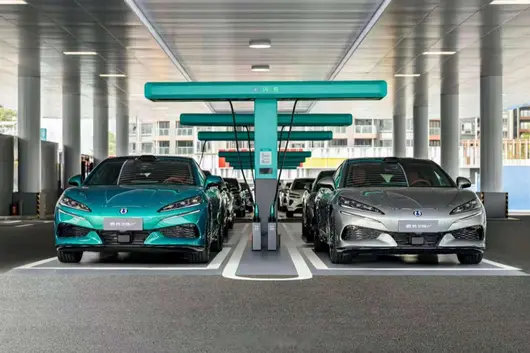
The second-generation Blade Battery and Flash Charge technology enable new energy vehicles to achieve "5 minutes charged, 9 minutes fully charged" under normal temperature conditions, and the ability to add only 3 minutes to charging time in a -30°C environment, completely eliminating the last shred of consumer hesitation when buying new energy vehicles. As of August 28th, BYD's Flash Charge stations have surpassed 10,000, covering 332 cities. From "having technology but no chargers" to "having chargers, cars, and buyers", only by laying out the charging network quickly can sales increase substantially.
Now, Flash Charge stations have been built to the foot of Mount Everest, the Thailand factory is in production, the Brazil factory is under construction, and the European market is being laid out. While others are still studying how to go global, the BYD fleet is already driving cars all over the world on the ocean.

Consecutive 63 months as Number One in new energy; more worth noting than the record is BYD's product structure. The overseas proportion is rising, high-end models are rising, the technological moat is deepening! When its monthly sales head towards 500,000, BYD has already pushed the starting line of Chinese brands to the front of those foreign traditional automakers.
How much do you think BYD's sales will reach this year? Let's chat.

Penyebut kedua menjual 190,000 unit, manakala BYD berjaya 440,000 unit dalam sebulan! Bukan lagi carta jualan biasa, ini adalah medan serangan dimensi!
Pada 1 September, apabila "Kedudukan Jualan Kenderaan Tenaga Baharu Syarikat/Kumpulan [Kenderaan Tenaga Baharu] Pasaran Kereta China 2026 Ogos" diumumkan, industri automotif benar-benar tercengang!
BYD berjaya 440,000 unit dalam sebulan, mendahului penyebut kedua hampir 250,000 unit. SAIC kira-kira 190,000 unit, Geely kira-kira 175,000 unit, Chery kira-kira 120,000 unit... Untuk kata yang lebih jelas, gabungan penyebut kedua, ketiga, dan keempat hanya lebih 48,000 unit daripada BYD! Jurang ini bukan lagi tentang siapa menjual beberapa ribu unit lebih, tetapi sama sekali tidak dalam tahap yang sama.
Pencapaian tahap jualan baharu, pada jenama lain mungkin berita, tetapi pada BYD, ia adalah rutin harian!
Sebenarnya, selama 63 bulan berturut-turut, BYD adalah Teratas jualan tenaga baharu setiap bulan! Tetapi pasaran sebelum 63 bulan itu, benar-benar dua dunia berbeza dengan sekarang. Ketika itu, penembusan tenaga baharu baru melebihi 10%, kini sudah menuju 50%. Pasaran membesar, bahagian pasaran BYD tidak turun malah naik, justru membuktikan ia bukan sekadar menikmati kelebihan kenderaan tenaga baharu, tetapi yang mendefinisikan trek tersebut.
Jenama premium BYD juga meningkat. Ogos, Fang Cheng Bao menjual 42,000 unit, meningkat 155.6% YOY, jualan sebulan melebihi Zeekr, Li Auto, AITO, dan Xiaomi, teratas dalam kumpulan baharu di atas 200,000. Denza 16,000 unit, naik 33.4%. Gabungan dua jenama ini 58,000 unit, lebih daripada dua kali ganda. Angka-angka ini, menjadikan nilai jualan BYD semakin meningkat.
Yang lebih hebat BYD bukan jualan domestik, tetapi pasaran luar negara!
Eksport Ogos 189,000 unit, meningkat 134.6% YOY, memecahkan rekod 5 bulan berturut-turut. 8 bulan pertama 2026 di pasaran luar negara, sudah terkumpul jual 1,158,000 unit, manakala seluruh tahun lepas di luar negara jual 1,050,000 unit, tahun ini hanya 8 bulan sudah lampaui rekod ini! Mengikut kelajuan ini, jualan sepanjang tahun tidak menuju 1,500,000 unit? Setiap jenama mengiikkan seruan globalisasi sudah berbilang tahun, BYD kini betul-betul sudah melancarkan bot! Ia bukan sahaja menjual kereta di pasaran luar negara, malah menggunakan piawaian teknologi untuk mendefinisikan kenderaan tenaga baharu global!
Bateri Pisau Generasi Kedua dan teknologi cas kilat, membolehkan kenderaan tenaga baharu melaksanakan "cas siap 5 minit, cas penuh 9 minit" dalam suhu biasa, masa cas dalam persekitaran -30 C hanya bertambah 3 minit, sekali gus menghapuskan keraguan terakhir pengguna membeli kenderaan tenaga baharu. Sehingga 28 Ogos, stesen cas kilat BYD sudah lalui 10,000 stesen, meliputi 332 bandar. Dari "ada teknologi tiada tiang" ke "ada tiang ada kenderaan ada pembeli", rangkaian cas tersebar cepat, jualan hanya boleh meningkat secara nyata.
Kini, stesen cas kilat sudah dibina di kaki Gunung Everest, kilang Thailand sudah beroperasi, kilang Brazil sedang dibina, pasaran Eropah sedang diperluaskan. Apabila orang lain masih mengkaji cara meluas ke luar negara, armada BYD sudah berlari di laut menarik kereta ke seluruh dunia.
Pertama tenaga baharu 63 bulan berturut-turut, lebih bernilai untuk dikaji daripada rekod adalah struktur produk BYD. Bahagian luar negara meningkat, model premium meningkat, parit pertahanan teknologi semakin dalam! Apabila jualan bulanan menuju 500,000, BYD sudah tolak garisan permulaan jenama China ke hadapan syarikat kereta lama luar negara itu.
Menurut anda, berapa jualan BYD tahun ini boleh capai? Mari berborak.










The 1st of every month has become an unshakeable "Sales Release Day" in the auto industry. On September 1st, new energy vehicle manufacturers revealed their August sales figures. When seeing the number 440,293 units for BYD, everyone took a deep breath. This isn't just leading, it's a "cliff-like" presence.

What is the concept of 440,000 units? Let's put it this way, the sum of the 2nd to 4th on the leaderboard has only just touched its taillights. Sales reached a new milestone again, BYD, without controversy, once again took the sales champion of Chinese automakers and new energy sales champion, more strongly continuing the record of "No. 1 for consecutive 63 months".
In today's global auto market, why can BYD still sell so much? This is no longer just a product power issue, but a comprehensive overwhelm of system power. In short, BYD has almost "welded" various vehicle usage needs of global users into its product matrix.

What we see most daily is still the Dynasty and Ocean series, regulars for city commuting, grocery shopping and picking up kids. The newly listed Qin MAX broke 10,000 in its first month, indicating that A-segment family sedan users who were debating Sylphy and Lavida find it hard not to be moved after seeing the space and fuel consumption of Qin MAX.
What is more interesting is high-endization. Fang Cheng Bao sold 42,000 units in a single month, a 155.6% surge year-on-year, actually reaching first place among new EV brands with an average price of over 200,000 yuan. Denza is even more capable, 16,000 units in August, managing to stand firm in the MPV and luxury sedan market, with higher value.

The most surprising is exports. 189,000 units in August, 5 consecutive months of record highs, cumulative 1.158 million units in the first 8 months, already exceeding last year's full year. In countries like Thailand, Brazil, Israel, Dolphin and Song PLUS have become street cars, BYD has become a synonym for Chinese cars abroad.
Of course, the sales behind cannot be separated from the technical moat. The 2nd Gen Blade Battery and Flash Charging technology released in March this year, have received widespread recognition. As of August 28, 10,000 charging stations have covered 332 cities. "5 minutes to charge well, 9 minutes to charge full", this saying is not false.

This means in the time it takes to go to the service area to use the toilet, buy a coffee, the battery is full, range anxiety is being quickly diluted before the flash charge speed and flash charge network. This forward-looking technical strength and super-fast charging station construction speed, gave the market and users great confidence, is the confidence for BYD to continuously rise.
August is just the mid-game. With Denza Z9S, Denza Han starting pre-sales, Sealion 08, Denza N8L Pure Electric version, Fang Cheng Bao S series launching in September, plus the new cars like 3rd Gen Tang, Ti 9 etc. bombing sequentially, this chess game in the second half, BYD obviously still needs to continue expanding results.

Final Thoughts
When an automaker presses the gas pedal simultaneously on product, technology, brand, and overseas dimensions, the competitors behind it see not just a gap, but a chasm difficult to cross in the short term. For consumers, this might be a good thing. After all, that era of "fuel and electricity same price" or even "electricity lower than fuel", was really driven by it to this extent. To summarize in one sentence: BYD's best performance is still ahead.
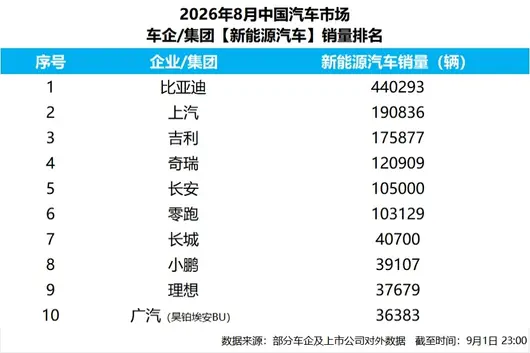
Setiap bulan tarikh 1, telah menjadi "hari pengumuman" yang tetap tidak berubah dalam industri automotif. 1 September, pelbagai pengeluar kenderaan tenaga baru mula memaparkan rekod Ogos mereka. Apabila melihat angka BYD 440,293 unit, semua orang menarik nafas dalam-dalam. Ini bukan sekadar kepimpinan, ini adalah kehadiran "jurang besar".
440,000 unit itu apa konsepnya? Katakanlah, tempat kedua hingga keempat dalam senarai ditambah bersama, baru sahaja menyentuh lampu belakangnya. Jualan kembali mencapai tangga baharu, BYD tanpa keraguan sekali lagi meraih kejuaraan jualan pengeluar kereta China dan kejuaraan jualan kenderaan tenaga baharu, malah meneruskan rekod "Juara Berturut-turut Selama 63 Bulan" dengan kuat.
Dalam pasaran automotif global semasa, kenapa BYD masih boleh menjual sebanyak ini? Ini bukan lagi masalah kuasa produk yang mudah, tetapi keseluruhan sistem kuasa. Pada dasarnya, BYD telah "melengkapkan" pelbagai keperluan penggunaan pengguna global hampir ke dalam matriks produk mereka sendiri.
Yang paling biasa kita lihat, masih merupakan Siri Dinasti dan Lautan, pengguna tetap untuk perjalanan komuter bandar, membeli-belanja dan mengambil anak. Qin MAX yang baru dilancarkan pada bulan pertama telah melebihi 10,000 unit, menunjukkan pengguna kereta keluarga kelas A yang bimbang antara Sylphy dan Lavida, selepas masuk kedai melihat ruang dan penggunaan bahan api Qin MAX, sukar tidak tertolak.
Lebih menarik untuk dimainkan adalah penghijauan ke tahap tinggi. Fang Cheng Bao menjual 42,000 unit sebulan, meningkat 155.6% berbanding tahun sama, dalam kekuatan baharu baru dengan purata harga lebih 200,000, telah mencapai tempat pertama. Denza lebih hebat lagi, 16,000 unit pada Ogos, dalam pasaran MPV dan kereta mewah juga telah berdiri teguh, nilai yang lebih tinggi.
Yang paling mengejutkan ialah eksport. 189,000 unit Ogos, secara berturut-turut 5 bulan mencapai rekod baharu, 8 bulan pertama kumpul 1.158 juta unit, telah melebihi keseluruhan tahun lepas. Di negara seperti Thailand, Brazil, Israel, Dolphin dan Song PLUS sudah menjadi kereta biasa, BYD telah menjadi sinonim automotif China di luar negara.
Tentu saja, di belakang jualan tidak terlepas dari parit teknologi. Bateri pisau generasi kedua dan teknologi cas pantas yang dikeluarkan Mac tahun ini, telah mendapat pengiktirafan umum. Sehingga 28 Ogos, 10,000 stesen cas pantas telah merangkumi 332 bandar. "Cas penuh 5 minit, cas 9 minit", perkataan ini tidak palsu.
Ini bermakna dalam masa rehat masuk pusat perkhidmatan ke tandas, beli secawan kopi, elektrik sudah penuh, kebimbangan jarak perjalanan di hadapan kelajuan cas pantas dan rangkaian cas pantas sedang dicairkan dengan cepat. Kuasa teknologi yang terawal dan kelajuan pembinaan stesen cas pantas yang sangat cepat ini, memberikan keyakinan besar kepada pasaran dan pengguna, inilah asas daya tahan BYD untuk terus menaikkan.
Ogos hanyalah perang separuh masa. Dengan Denza Z9S, Han Besar mula pra-penjualan, Sea Lion 08, Denza N8L Edition Elektrik Penuh, Fang Cheng S Siri akan dilancarkan pasaran pada September, ditambah lagi Tang Generasi Ketiga, Titanium 9 dan kenderaan baharu lain bergilir-gilir, separuh tahun permainan ini, BYD jelas akan terus memperluaskan hasil perang.
Ditulis di Akhir
Apabila sebuah pengeluar kereta pada produk, teknologi, jenama, luar negara empat dimensi serentak menginjak gas, rakan sekerja di belakangnya melihat bukan sekadar jurang, malah satu jurang sukar dilewati dalam jangka pendek. Bagi pengguna, ini mungkin perkara baik. Lagipun, era "harga minyak dan elektrik sama" malah "elektrik lebih rendah daripada minyak", benar-benar telah tercipta melalui persaingan. Satu ayat ringkasan: Pentas menarik BYD, masih ada di hadapan.


© 2024 Bitauto.com. All Rights Reserved.
Bitauto (www.yiche.com and www.bitauto.com) is one of the most visited automotive websites in China. We provide detailed info on Chinese car brands available in your area. Please note that the information provided on this website is based on publicly available data and is for reference only. It may not be fully updated or accurate at all times.

Help us improve our website


