

HomeBYD

Search History
Popular Searches
Dealer Login / Sign Up

Zhiliao Auto/Chen Yi
Recently, Fortune Magazine released the latest Fortune Global 500 list, Chery Automobile ranked 383rd with revenue of 41.778 billion US dollars.

Actually, Chery was already on the Fortune 500 last year, with an even higher rank then, 233rd. The difference is that this year Chery was evaluated independently as a listed company entity. That is to say, although it has been on the Fortune 500 for two consecutive years, the value is different. This year, Chery needs to undergo comprehensive scrutiny from the capital market and the industrial system.
It is worth mentioning that there are 10 Chinese car companies and automotive parts companies that entered the Fortune 500 this year. In addition to Chery, there are BYD, CATL, Geely, SAIC, etc., all of which are well-known. Among them, BYD has the highest rank, with revenue of 111.853 billion US dollars, ranking 91st.

Domestically, BYD is now the truly deserved "number one". Cars sell well, and profits are high. Last year, BYD's new energy vehicle sales reached 4.6 million, topping global new energy vehicle sales for consecutive years, annual revenue was 804 billion yuan, net profit 32.6 billion yuan.
Moreover, it is willing to invest heavily in R&D. For example, in 2025, BYD invested as high as 63.4 billion yuan in R&D, ranking first among A-share listed companies for two consecutive years. So far, BYD's cumulative R&D investment has exceeded 250 billion yuan.

The key point is that BYD's batteries, chips, motors, electronic controls, etc., are all manufactured by itself. Previously, people thought this "doing everything yourself" model was too asset-heavy and too slow. But facts have proven that as long as you can weather the storm, you can use economies of scale to further reduce costs.
What is BYD's moat? Cost and scale. Others spend 100 yuan to build a car, BYD might only need 80; others sell 100 cars a year, BYD can sell 200.
What about Chery? It is another model.

Starting from 2001, Chery had already started selling cars overseas. At that time, most Chinese car companies were still competing domestically. So strictly speaking, Chery can be considered one of the first batch of "going global" Chinese car companies.
Of course, it was indeed difficult at first. In 2001, Chery's export volume did not even exceed 100 units. But it proceeded steadily, continuously expanding its overseas footprint. So far, Chery's business has covered more than 130 countries and regions worldwide, ranking first in export volume of Chinese brand passenger cars for 23 consecutive years.
Chery's "going global" is not a one-off deal. It has 16 production bases worldwide, with over 3,100 overseas dealer outlets. Local manufacturing networks for Chery exist in places like Brazil, Indonesia, Thailand, Malaysia, etc.

Foreign media summarize Chery's "going global" model as "encircling cities from the countryside", which is not wrong. After all, it first established brand awareness in markets with lower thresholds such as the Middle East, Latin America, and Southeast Asia, selling mature fuel vehicle models like Tiggo and Arrizo, before penetrating into high-regulation markets like Europe.
In 2025, Chery exported 1.344 million vehicles, equivalent to one Chery being sold overseas every 23 seconds on average. Total annual revenue was 300.29 billion yuan, breaking the 300 billion yuan threshold for the first time. Net profit was 19.51 billion yuan, overseas revenue was 157.42 billion yuan.
Simply put, Chery has become a Chinese car company where "half of the car sales rely on overseas markets".

More notably, Chery's overall average vehicle price is about 103,500 yuan, while the overseas average vehicle price is 121,600 yuan. For the same car, selling it overseas is nearly 20,000 yuan more expensive than domestically.
So you see, Chery's success logic is simple: if you can't compete domestically, sell it abroad. The path to success is never singular.
Zhiliao Auto original article, please contact us if you need to reprint.
*Images sourced from the internet, if infringed please contact the author for deletion*


The electrification window of the global official vehicle market is being torn open by Chinese brands.
In the past, official vehicle procurement was the exclusive domain of joint ventures and foreign brands, especially in scenarios like police work, foreign affairs, and government reception, where requirements for reliability, total lifecycle costs, and after-sales systems are extremely high. Now, BYD is completing bidirectional breakthroughs domestically and internationally on this most valuable track.

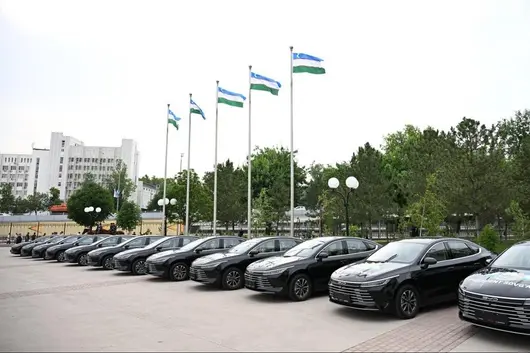
First, let's look abroad. The President of Uzbekistan signed a presidential decree, awarding the BYD team the Friendship Medal, which is national-level endorsement. More importantly, the start of the local new energy factory and the selection of BYD for Presidential Palace official vehicles indicate that it has moved from product output to deep system rooting. Over nearly 100 pure electric official vehicles were delivered in Pakistan, marking the first large-scale procurement of new energy official vehicles by the country; the Cape Verde government official vehicle fleet has fully switched to BYD; Hungary and Austria have also integrated BYD into official vehicle systems for foreign affairs reception and police patrols. These orders are not simply selling cars, but rather China's new energy vehicles gaining institutional trust in the overseas government market.

Police vehicles are even more of a touchstone. Philippine police received Dolphin police cars, and Mexican police forces equipped Destroyer 05, and police in many parts of Mexico have already purchased BYD SHARK pickups, Seal, Yuan UP, Seagull, and other models. Police cars must face daily patrols, high-speed pursuits, harsh road conditions, and high-load operations, posing comprehensive tests for three-electric systems, chassis, and active/passive safety. BYD achieving the transition from single-point demonstration to scaled and normalized application indicates that its professional modification capabilities, technology platform reliability, and local service capabilities have been verified through actual combat.

The technical foundation supports all of this. BYD has a dual-line layout of pure electric and hybrid, with second-generation Blade Battery and Flash Charging technology, DM-i hybrid, Sky Eyes ADAS, etc., covering different official scenarios. More noteworthy is the full-category matrix: from Dolphin, Destroyer 05 and other sedans, to Seal, Yuan UP, Seagull and other SUVs and entry-level models, to SHARK pickups, Fang Cheng Bao Titan 7 and other hard-core off-road and police vehicles, BYD achieved seamless coverage from administrative reception, security patrols to emergency response and outdoor rescue. Government vehicle demand is highly complex, a single hit model is not enough, systematized response is the moat.

The domestic market is also stable. Announcements from the China Government Procurement Network show that since the second half of the year, government agencies in many parts of the country have completed bulk procurement of BYD official vehicles. Following the first half of the year where it retained the number one spot in domestic new energy official vehicle government procurement sales with over 22% market share, BYD continues to expand. In the police field, Fang Cheng Bao Titan 7 and other police vehicles have been delivered in bulk in many parts of the country. From being monopolized by joint venture brands to becoming the Chinese option for government electrification, this change is of landmark significance.

Let's look at the global baseline. BYD's 2026 first-half financial report shows overseas sales near 790,000 units, up 67.9% year-on-year, with business covering over 120 countries and regions, topping new energy vehicle brand sales in core markets like the UK, Brazil, Thailand, and winning the domestic new energy vehicle sales champion for four consecutive years. The significance of the official vehicle business is not just incremental sales, but also an amplifier of brand credibility. Once official procurement builds a reputation, it will influence the civilian market's perception of safety, quality, and retention value in reverse.

BYD's official vehicle business has formed a dual-wheel drive of overseas benchmark leadership and domestic continuous expansion: overseas using national-level orders and police field practice to build a high-end image, domestically using government procurement and police matrix to consolidate the baseline. For the automotive industry, official vehicle electrification is not an edge market, but a strategic highland for brand upward trend. BYD is writing Chinese Intelligent Manufacturing into the global government travel system with technical hard power and a full-scenario product matrix. The end point of this road is not just more orders, but the discourse power of Chinese automotive brands on the global high-end track.

Zhiliau Automotive/Chen Yi
Baru-baru ini, Majalah Fortune menerbitkan senarai Fortune 500 terkini, Chery Automotive diletakkan di tempat ke-383 dengan pendapatan sebanyak 41.778 bilion dolar AS.
Sebenarnya tahun lepas Chery sudah menjadi Fortune 500, peringkat masa itu adalah lebih tinggi, tempat ke-233, bezanya, tahun ini Chery adalah sebagai entiti berdaftar secara berasingan untuk penilaian.Maksudnya, walaupun dua tahun berturut-turut merupakan Fortune 500, nilainya berbeza, tahun ini Chery perlu menerima pemeriksaan menyeluruh dari pasaran modal dan sistem industri.
Perlu disebut, syarikat kereta dan komponen automotif China yang memasuki Fortune 500 tahun ini, sebanyak 10 buah, selain Chery, ada juga BYD, CATL, Geely, SAIC dan lain-lain, semua nama yang sudah dikenali ramai, di mana, BYD paling tinggi peningkatannya, pendapatan 111.853 bilion dolar, diletakkan di tempat ke-91.
Di dalam negara, BYD sekarang adalah pemimpin yang sah, jualan kereta baik, hasil untung banyak, tahun lepas jualan kenderaan baharu BYD 4.6 juta unit, mempertahankan gelaran juara jualan kenderaan baharu global, pendapatan keseluruhan tahun 804 bilion Yuan, untung bersih 32.6 bilion Yuan.
Selalu, ia juga sangat berani melabur dalam penyelidikan dan pembangunan, seperti tahun 2025, BYD dalam pelaburan penyelidikan dan pembangunan sehingga 63.4 bilion Yuan, selama dua tahun berturut-turut di kalangan syarikat yang disenaraikan di pasaran saham A berada di tempat pertama, sehingga sekarang, pelaburan terkumpul BYD sudah melebihi 250 bilion Yuan.
Buruk apa, bateri BYD, cip, motor, kawalan elektronik dan sebagainya, semuanya dihasilkan sendiri, sebelum ini orang ramai rasa, model "buat semuanya sendiri" ini terlalu berat aset dan terlalu perlahan, tetapi bukti membuktikan, selama anda dapat bertahan, anda boleh tekan kos lebih rendah lagi dengan kesan skala.
Mengapah benteng BYD? Kos dan skala, orang lain buat satu kereta belanja 100 Yuan, BYD mungkin hanya perlu 80 Yuan; orang lain jual 100 kereta setahun, BYD boleh jual 200 kereta.
Chery pula? Ia adalah model lain.
Dari tahun 2001, Chery sudah menjual kereta ke luar negara, zaman itu kebanyakan syarikat kereta China masih saling bersaing di dalam negara, jadi secara ketat, Chery dikira sebagai salah satu syarikat kereta China pertama "keluar laut".
Memang benar, pada permulaan memang susah, tahun 2001 jumlah eksport Chery malah tidak melebihi 100 unit, tetapi ia berjalan kukuh, terus berkembang版图 luar negara, sehingga kini, perniagaan Chery sudah meliputi lebih 130 negara dan wilayah, selama 23 tahun berturut-turut kekal sebagai yang pertama dalam eksport kereta domestik China.
Eksport Chery bukan transaksi sekali gus, ia mempunyai 16 tempat pengeluaran di seluruh dunia, rangkaian dealer luar negara lebih 3100, Brazil, Indonesia, Thailand, Malaysia dan tempat lain semuanya ada rangkaian pengeluaran tempatan Chery.
Media asing merumuskan model "keluar laut" Chery adalah "luar bandar membungkus bandar", begini cakap memang tidak salah, kerana ia dulu ke Timur Tengah, Amerika Latin, Asia Tenggara pasar yang lebih rendah ambang untuk kenamaan, jual Tiger, Arrizo model petrol matang ini, kemudian baru ke Eropah dan pasaran undang-undang tinggi lain.
Tahun 2025, Chery jumlah eksport kereta 1.344 juta unit, sama dengan purata 23 saat ada satu kereta Chery dijual ke luar negara, pendapatan keseluruhan tahun 300.29 bilion Yuan, kali pertama melangkaui ambang 300 bilion Yuan, untung bersih 19.51 bilion Yuan, pendapatan luar negara 157.42 bilion Yuan.
Memang boleh cakap, Chery sudah sepenuhnya menjadi syarikat kereta China "jual kereta separuh bergantung pada luar negara".
Lebih menarik untuk diperhatikan, purata harga setiap kereta Chery keseluruhan sekitar 103,500 Yuan, purata harga setiap kereta luar negara 121,600 Yuan, satu kereta yang sama, jual ke luar negara lebih mahal hampir 20,000 Yuan berbanding dalam negara.
Maka anda lihat, logik kejayaan Chery sangat mudah, di dalam negara tidak mampu bersaing maka jual keluar. Jalan kejayaan sentiasa bukan tunggal.
Artikel asal Zhiliau Automotive, jika perlu cetakan sila hubungi kami
*Gambar dari internet, jika melanggar hak cipta sila hubungi pengarang untuk memadam*

According to BYD's 2026 first-half financial report, its overseas passenger car and pickup sales reached nearly 790,000 units in the first half of the year, surging 67.9% year-on-year. Its business covers more than 120 countries and regions worldwide, securing sales leadership in new energy vehicles in core markets such as the UK, Brazil, and Thailand. Building on the high growth of the overall overseas market, BYD is gradually joining official rosters overseas, and the new energy government vehicle business is launching a "flourishing at multiple points" development pattern both domestically and internationally: there is national-level authoritative recognition in Uzbekistan, as well as bulk implementation in markets like Pakistan and Mexico; there is centralized procurement by domestic capital government agencies, and the police vehicle product matrix is continuously being perfected. The government vehicle expansion path of "overseas benchmarking leading, domestic continuous expansion" is becoming increasingly clear.
In my opinion, government and police vehicles represent the highest standards of quality, safety, and reliability for automotive products at the official level of a country. Being able to enter the government procurement systems of various countries is a greater test of a car company's comprehensive strength than selling well in the ordinary civilian market. Recently, President of the Republic of Uzbekistan Shavkat Mirziyoyev signed a presidential decree to award the BYD team the country's national-level medal—the "Medal of Friendship". This honor is the best evidence of BYD's deep cultivation of the Central Asian market. Following the start of production of the local new energy factory and the selection of BYD models for presidential fleet vehicles, this is another high-level recognition given to BYD by the Uzbekistan official, and a vivid example of Chinese new energy vehicles gaining trust in overseas government markets with hard power.

The recognition from Uzbekistan is not an isolated case; BYD's overseas government vehicle layout is extending from benchmark markets to broader regions. Nearly 100 BYD pure electric government vehicles have been delivered and put into use in Pakistan. This is the first time Pakistan has purchased new energy government vehicles on a large scale, making Pakistan a benchmark market for BYD's overseas police vehicle cooperation. At the same time, Cape Verde government fleet has been fully replaced with BYD models, and Hungary, Austria and other countries have also included BYD models in official vehicle systems such as foreign affairs reception.

For the professional niche of police vehicles, working conditions are complex, usage intensity is high, and rigorous requirements are placed on the comprehensive performance of vehicles. BYD's overseas implementation pace continues to accelerate, which is enough to show that the acceptance of domestic new energy products by overseas officials is improving substantially. In September, a batch of Dolphin police cars were delivered to the Philippine police, helping to advance the electrification of local official vehicles. Recently, dozens of Destroyer 05 units officially went into service with the Mexican police force. As of now, multiple models such as BYD SHARK pickups, Seal, Yuan UP, and Seagull have been delivered to police forces in many places in Mexico, adapting to various duty work. The consecutive landing of projects in the Philippines and Mexico marks that BYD new energy police vehicles have moved from single-point demonstration to the stage of scale and normalized application.

In terms of the domestic market, BYD continues to hold the first tier of new energy government vehicle procurement. Information published on the China Government Procurement Network shows that in the second half of the year, government agencies in many places across the country have successively completed bulk procurement of BYD government vehicles. In the first half of the year, BYD secured the first place in domestic new energy government vehicle government procurement sales with a market share of over 22%. The continued procurement in the second half of the year once again reflects the domestic government market's affirmation of the brand.
In the field of police vehicles, police vehicles such as Explorer Ti 7 have been delivered and put into service in many places across the country. BYD has built a full-category product matrix covering sedans, SUVs, and pickups, which can fully adapt to diverse police scenarios such as security patrol, traffic police law enforcement, and emergency response, empowering the electrification upgrade of police travel.

For a long period of time in the past, the global government vehicle track was basically firmly held by overseas joint venture brands; now the situation is changing. I always feel that breaking through the government vehicle market is the important signal for the Chinese automotive industry to truly go global and enter the high-end market. Once long monopolized by joint venture brands, BYD has now become the representative of the Chinese solution for global government electrification. Relying on solid technical strength and good brand credibility, BYD continues to write a new chapter of Chinese intelligent manufacturing, and continues to accelerate the layout pace of Chinese new energy vehicles in the global government market.

Berdasarkan laporan kewangan BYD bagi paruh pertama 2026, dapat dilihat bahawa jualan kenderaan penumpang dan pikap di luar negara pada paruh pertama hampir 790,000 unit, mencatat peningkatan 67.9% berbanding tahun lalu, perniagaan merangkumi lebih 120 negara dan wilayah di seluruh dunia, dan menangi kejuaraan jenama kenderaan tenaga baharu di pasaran teras seperti United Kingdom, Brazil, dan Thailand. Di atas asas pertumbuhan pantas pasaran luar negara, BYD secara berperingkat masuk ke dalam senarai rasmi, perniagaan kenderaan pentadbiran tenaga baharu membuka corak pembangunan "berbilang titik mekar" di dalam dan luar negara: ada pengiktirafan autoriti tahap negara dari Uzbekistan, ada juga pelaksanaan kuantiti besar di pasaran seperti Pakistan, Mexico; ada juga pembelian secara pukal oleh agensi ibu negara dalam negara, matriks produk kenderaan polis juga sedang dipermaklumkan, laluan pengembangan kenderaan pentadbiran "pemandu contoh luar negara, pengembangan berterusan dalam negara" semakin jelas.
Dalam pandangan saya, kenderaan pentadbiran dan polis mewakili piawaian tertinggi kerajaan negara terhadap kualiti, keselamatan dan kebolehpercayaan produk automobil. Mampu masuk ke dalam sistem perolehan kerajaan negara berbeza, jauh lebih menguji kekuatan menyeluruh sebuah pengeluar kenderaan berbanding menjual dengan baik di pasaran awam biasa. Tidak lama dahulu, Presiden Republik Uzbekistan, Shavkat Mirziyoyev, menandatangani arahan presiden, menganugerahkan pingat tahap negara negara tersebut kepada pasukan BYD — "Pingat Persahabatan". Kehormatan ini adalah pengesahan terbaik BYD mengorek pasaran Asia Tengah. Selepas kilang tenaga baharu tempatan mula beroperasi dan kenderaan pentadbiran Rumah Presiden memilih model BYD, ini adalah pengiktirafan aras tinggi seterusnya dari pihak rasmi Uzbekistan kepada BYD, juga merupakan contoh hidup bagi kenderaan tenaga baharu China meraih kepercayaan pasaran pentadbiran luar negara dengan kekuatan nyata.
Pengiktirafan Uzbekistan bukan contoh terpencil, pengaturcaraan kenderaan pentadbiran luar negara BYD sedang berkembang dari pasaran teladan ke kawasan yang lebih luas. Hampir 100 unit kenderaan pentadbiran elektrik tulen BYD Pakistan telah disiapkan penghantaran dan digunakan secara besar-besaran, ini adalah kali pertama Pakistan membeli kenderaan pentadbiran tenaga baharu secara besar-besaran, juga menjadikan Pakistan pasaran teladan kerjasama kenderaan polis luar negara BYD. Pada masa yang sama, armada kenderaan pentadbiran kerajaan Cape Verde telah diganti sepenuhnya dengan model BYD, Hungary, Austria dan negara lain juga telah memasukkan model BYD ke dalam sistem kenderaan rasmi seperti perkenan diplomatik.
Lajur berspesialisasi ini, kenderaan polis, keadaan kerja kompleks, tahap penggunaan tinggi, memberikan tuntutan ketat kepada prestasi menyeluruh kenderaan, langkah BYD di luar negara terus dipercepat, juga cukup menunjukkan penerimaan rasmi luar negara terhadap produk tenaga baharu negara asal sedang bertambah secara nyata. September, serangkaian polis kenderaan Lumba-lumba disiapkan penghantaran kepada pihak polis Filipina, membantu mendorong pengelectrican kenderaan awam tempatan ke hadapan. Baru-baru ini, puluhan kenderaan Destroyer 05 mula berkhidmat rasmi kepada pasukan polis Mexico. Sampai kini, pelbagai model seperti BYD SHARK Pikap, Anjing Laut, Yuan UP, Burung Laut telah dihantar kepada pihak polis di banyak tempat Mexico, sesuai untuk kerja pengawalan pelbagai jenis. Projek Filipina dan Mexico terus selesai, menandakan kenderaan polis tenaga baharu BYD telah bergerak dari demonstrasi titik tunggal, ke tahap aplikasi berskala besar dan rutin.
Dari segi pasaran dalam negara, BYD kekal teguh di barisan pertama perolehan kenderaan pentadbiran tenaga baharu. Maklumat yang dipaparkan di laman web perolehan kerajaan China menunjukkan, pada paruh kedua tahun ini, banyak agensi kerajaan di seluruh negara telah selesai secara berperingkat pembelian pukal kenderaan pentadbiran BYD. Manakala pada paruh pertama, BYD dengan lebih dari 22% bahagian pasaran telah mengambil kedudukan pertama jualan perolehan kerajaan kenderaan pentadbiran tenaga baharu dalam negara, pembelian berterusan di pelbagai tempat pada paruh kedua, sekali lagi mewujudkan pengiktirafan pasaran pentadbiran dalam negara terhadap jenama.
Dalam bidang kenderaan polis, kenderaan polis seperti Fang Cheng Bao Titanium 7 telah dihantar secara pukal dan mula berkhidmat di banyak tempat dalam negara. BYD membina matriks produk merangkumi Sedan, SUV, Pikap, boleh disesuaikan sepenuhnya dengan pelbagai skenario polis seperti rondaan keselamatan, penguatkuasaan polis trafik, pengurusan kecemasan, memberi daya kepada pengelectrican perjalanan polis.
Untuk masa yang lama dahulu, lajur kenderaan pentadbiran global hampir dikuasai oleh merek patungan luar negara, kini keadaan sedang berubah. Saya sentiasa rasa, terobosan pasaran kenderaan pentadbiran, barulah merupakan isyarat penting industri automotif China benar-benar bergerak ke pasaran premium global. Dahulu lama dikuasai oleh merek patungan, kini BYD telah menjadi wakil China bagi elektrifikasi pentadbiran global. Berbekalkan kekuatan teknologi yang kukuh dan kredibiliti jenama yang baik, BYD sentiasa menulis bab baharu pembuatan pintar China, mempercepatkan pengaturcaraan kenderaan tenaga baharu China di pasaran pentadbiran global.

BYD's financial report data for the first half of 2026 shows that the company's overseas sales of passenger cars and pickups approached 790,000 units, surging by 67.9% year-on-year. The business footprint has expanded to over 120 countries and regions, claiming the sales crown for new energy vehicles in key markets such as the UK, Brazil, and Thailand. Relying on a strong overseas market foundation, BYD's new energy official vehicle business achieved synchronous breakthroughs domestically and overseas, charting a development path of "building benchmarks overseas and continuously expanding capacity domestically". Batch implementation of projects was achieved in multiple overseas countries, while the domestic government procurement market also firmly remained at the forefront.
Central Asian Market Receives Highest Level Recognition
Not long ago, Uzbekistan President Mirziyoyev signed a presidential decree, awarding the national-level "Medal of Friendship" to the BYD team. This supreme honor is strong proof of BYD's deep cultivation of the Central Asian market. Previously, BYD had realized the production of local new energy factories, and the Presidential Palace also selected BYD models as official vehicles. This medal award is another high-level recognition from Uzbekistan officials to BYD, and also a typical case of Chinese new energy vehicles winning the trust of overseas government markets with solid strength.

Overseas Official Vehicle Map Continues to Expand
Uzbekistan is not an isolated case; BYD's overseas official vehicle footprint continues to radiate outward. Pakistan completed the large-scale delivery of nearly 100 BYD pure electric official vehicles, which was also the first time in the country's history to purchase new energy official vehicles in bulk. Pakistan thereby became an important benchmark market for BYD's overseas police vehicle cooperation. The Cape Verde government official vehicle fleet has fully switched to BYD models; European countries such as Hungary and Austria have also included BYD cars in their official vehicle sequences for foreign affairs reception.

Police Vehicles Enter a New Stage of Scale
As an important sub-track of official vehicles, BYD's overseas implementation rhythm continues to accelerate. In September, a batch of BYD Dolphin police cars completed delivery to the Philippine police force, aiding the local official travel electrification transformation. Recently, dozens of Destroyer 05s were officially equipped to the Mexican police force. Currently, BYD has delivered multiple models including SHARK pickups, Seals, Yuan UPs, and Seagulls to police forces in multiple places in Mexico, fully meeting the needs of various duty work. The continuous landing of projects in the Philippines and Mexico means that BYD new energy police vehicles have moved from scattered demonstrations to a new stage of scaled and normalized application.

Domestic Market Firmly Stands in the First Echelon of Procurement
Turning attention back to the domestic market, BYD still firmly occupies the first echelon of new energy official vehicle procurement. According to public information on the China Government Procurement Network, in the second half of the year, government units in many places domestically completed the bulk procurement of BYD official vehicles. As early as the first half of this year, BYD secured the top spot in domestic new energy official vehicle government procurement sales with a market share of over 22%. Centralized procurement in various places in the second half of the year once again confirmed the high recognition of the government market for the brand.
In the field of police equipment, Fang Cheng Bao Titanium 7 Police Edition was put into use in batches in many places nationwide. Now BYD has built a full-category product matrix complete with sedans, SUVs, and pickups, adapting to various police work scenarios such as security patrol, traffic police law enforcement, and emergency handling, etc., helping domestic police travel complete electrification iteration and upgrading.

Once upon a time, the domestic official vehicle market was long occupied by joint venture brands; today, BYD has grown into a high-quality Chinese solution for global government electrification. The official vehicle track tests product power, safety, and brand credibility. Relying on hardcore technical strength, BYD continues to expand the global government market, showcasing the power of Chinese Smart Manufacturing to the world.

Data Laporan Kewangan BYD Paruh Pertama 2026 menunjukkan jualan kenderaan persendirian dan pikap di luar negara syarikat hampir 790,000 unit, mencapai kenaikan 67.9% berbanding tahun sebelumnya, skop perniagaan meluas ke lebih 120 negara dan wilayah di seluruh dunia, memperoleh kejuaraan jualan kenderaan tenaga baharu di pasaran utama seperti UK, Brazil, Thailand. Bertumpu kepada asas pasaran luar negara yang kukuh, bisnes kereta rasmi tenaga baharu BYD mencapai penembusan serentak dalam dan luar negara, mengikuti jalan pembangunan "mengukuhkan sandaran di luar negara, melanjutkan pengembangan di dalam negara", berbilang negara luar negara telah melaksanakan proyek secara beramai-ramai, pasaran perolehan pentadbiran dalam negara juga menduduki tempat teratas.
Pasaran Tengah Asia Menerima Pengiktirafan Tahap Tertinggi
Baru-baru ini, Presiden Uzbekistan Mirziyoyev menandatangani perintah presiden, menghadiahkan "Pingat Persahabatan" peringkat kebangsaan kepada pasukan BYD. Penghormatan tertinggi ini adalah bukti kukuh BYD menenun pasaran Tengah Asia. Sebelum ini, BYD telah memulakan pelaksanaan produksi kilang tenaga baharu setempat, Istana Presiden juga memilih model BYD sebagai kenderaan rasmi, penghantaran pingat kali ini adalah pengiktirafan tahap tinggi seterusnya dari rasmi Uzbekistan kepada BYD, juga contoh klasik bagi kereta tenaga baharu China yang mendapatkan kepercayaan pasaran pentadbiran luar negara melalui kekuatan yang kukuh.
Skop Kereta Rasmi Luar Negara Terus Berkembang
Uzbekistan bukanlah kes terasing, skop BYD terus meluas ke luar. Pakistan menyelesaikan penghantaran besar-besaran hampir 100 unit kenderaan rasmi BYD tulen elektrik, ini juga merupakan pembelian pukal pertama dalam sejarah negara tersebut, Pakistan menjadi pasaran sandaran penting untuk kerjasama kenderaan polis luar negara BYD. Armada rasmi kerajaan Cape Verde telah bertukar sepenuhnya kepada model BYD; negara-negara Eropah seperti Hungary, Austria, juga memasukkan kereta BYD ke dalam siri kenderaan rasmi urusan luar negara.
Kenderaan Polis Memasuki Fasa Baharu Berskala Besar
Sebagai sektor perincian penting kenderaan rasmi bagi kenderaan polis, tempoh pelancaran BYD di luar negara semakin pantas. September, sejumlah kereta polis BYD Lumba-lumba siap diserahkan kepada pihak polis Filipina, membantu transformasi elektrik pengangkutan rasmi setempat. Baru-baru ini, puluhan unit Pemusnah 05 telah secara rasmi dilengkapi kepada pasukan polis Mexico. Pada masa ini, BYD telah menghantar model Hiup, Harimau Laut, Yuan UP, Burung Laut ke pelbagai pihak polis Mexico, memenuhi keperluan pelbagai tugas pengawalan. Projek Filipina dan Mexico berjaya dilaksanakan berturut-turut, bermaksud kenderaan polis tenaga baharu BYD, telah bergerak dari demonstrasi terpencil ke fasa aplikasi berskala besar dan berterusan yang baharu.
Pasaran Dalam Negara Duduki Barisan Pertama Perolehan dengan Mantap
Memalingkan pandangan semula ke dalam negara, BYD masih menduduki barisan pertama perolehan kereta rasmi tenaga baharu. Berdasarkan maklumat terbuka Laman Web Perolehan Kerajaan Cina, Semenjak paruh kedua, pelbagai unit kerajaan di pelbagai negeri telah menyelesaikan pembelian pukal kenderaan rasmi BYD. Awal pada paruh pertama tahun ini, BYD telah menduduki puncak jualan perolehan kerajaan kenderaan rasmi tenaga baharu dalam negara dengan lebih daripada 22% bahagian pasaran, perolehan pusat di seluruh negeri pada paruh kedua, sekali lagi mengesahkan pengiktirafan tinggi pasaran pentadbiran terhadap jenama.
Bidang Peralatan Polis, Versi Polis Fang Cheng Bao Ti 7 digunakan secara pukal di pelbagai tempat di seluruh negara. Hari ini, BYD telah membina matriks produk kelas penuh yang lengkap dengan sedan, SUV, dan pikap, sesuai untuk pelbagai senario kerja polis seperti rondaan keselamatan awam, penegakan undang-undang lalu lintas, dan tindak balas kecemasan, membantu pengangkutan polis dalam negara menyelesaikan peningkatan evolusi elektrik.
Pada suatu ketika dahulu, pasaran kenderaan rasmi dalam negara telah lama didominasi oleh jenama patungan, sekarang BYD telah berkembang menjadi penyelesaian Cina yang baik untuk elektrikisasi pentadbiran global. Laluan kenderaan rasmi menguji kekuatan produk, keselamatan, dan kepercayaan jenama, BYD dengan kekuatan teknologi teras, terus mengembangkan pasaran pentadbiran global, memaparkan kuasa pembuatan Cina di peringkat dunia.

Jendela elektrifikasi dalam pasaran kenderaan rasmi global sedang dibuka oleh jenama China.
Pada masa lalu, pembelian kenderaan rasmi adalah 'tanah milik sendiri' jenama gabungan dan asing, terutamanya dalam senario polis, urusan luar negara, dan jamuan kerajaan, di mana keperluan terhadap kebolehpercayaan, kos kitaran hayat penuh, dan sistem perkhidmatan selepas jualan adalah sangat tinggi. Kini, BYD sedang berada di trek bernilai tertinggi ini, melaksanakan langkah maju dua hala di dalam dan luar negara.
Lihat dahulu luar negara. Presiden Uzbekistan menandatangani perintah presiden, menganugerahkan 'Pingat Persahabatan' kepada pasukan BYD, ini adalah sokongan taraf negara. Lebih penting lagi, sebelum ini kilang tenaga baharu tempatan ditubuhkan, kenderaan rasmi Istana Presiden memilih BYD, menunjukkan ia telah bergerak dari pengeluaran produk menuju ke penanaman sistem. Pakistan menerima hampir 100 buah kenderaan rasmi elektrik tulen secara besar-besaran, merupakan pembelian besar-besaran kenderaan rasmi tenaga baharu pertama negara itu; kerajaan Cape Verde menukar seluruh armada kenderaan rasmi kepada BYD; Hungary dan Austria juga memasukkan BYD ke dalam sistem kenderaan rasmi seperti jemuan luar negara, patroli polis. Pesanan ini bukan menjual kenderaan sahaja, tetapi kepercayaan institusi yang diperoleh oleh kenderaan baharu China dalam pasaran pentadbiran luar negara.
Kenderaan polis adalah 'batu uji'. Polis Filipina menerima kenderaan polis Dolphin, pasukan polis Mexico melengkapkan Destroyer 05, dan polis pelbagai wilayah Mexico telah membeli pelbagai model seperti BYD SHARK pick-up, Seal, Yuan UP, Seagull dan lain-lain. Kenderaan polis perlu menghadapi patroli harian, pengejaran kelajuan tinggi, keadaan jalan yang teruk dan operasi beban tinggi, ini adalah ujian komprehensif terhadap sistem kuasa, chasis dan keselamatan aktif serta pasif. BYD mampu merealisasikan daripada demonstrasi titik tunggal kepada aplikasi berskala dan biasa, menunjukkan keupayaan pengubahsuaian profesional, kebolehpercayaan platform teknologi dan keupayaan perkhidmatan tempatan, telah disahkan melalui praktik sebenar.
Asas teknologi adalah sokongan bagi semua ini. BYD melancarkan dua laluan elektrik tulen dan hibrid, Bateri Bilah Generasi Kedua dan teknologi cas pantas, DM-i hibrid, bantuan pemanduan Mata Dewa dan lain-lain, meliputi pelbagai senario rasmi. Yang lebih menarik ialah matriks semua kategori: daripada Dolphin, Destroyer 05 seperti sedan, hingga Seal, Yuan UP, Seagull seperti SUV dan model pemula, hingga ke SHARK pick-up, Fang Cheng Bao Titan 7 seperti off-road kukuh dan kenderaan polis, BYD mencapai penutup tanpa sempadan dari jemuan pentadbiran, patroli keselamatan, kepada tindakan kecemasan dan penyelamatan alam bebas. Keperluan kenderaan pentadbiran sangat kompleks, satu model hit tidak mencukupi, respons berasaskan sistem adalah parit pertahanan.
Pasaran domestik juga stabil. Pengumuman Laman Web Perolehan Kerajaan China menunjukkan, sejak separuh kedua tahun ini, pelbagai kerajaan di seluruh negara telah menyiapkan pembelian pukal kenderaan rasmi BYD. Selepas memegang tempat pertama jualan perolehan kerajaan kenderaan rasmi tenaga baharu China di pasaran domestik pada separuh pertama tahun ini dengan saiz pasaran melebihi 22%, BYD terus meluaskan. Dalam bidang polis, kenderaan polis seperti Fang Cheng Bao Titan 7 telah diserahkan secara pukal di pelbagai wilayah negara. Dari dipegang monopoli oleh jenama gabungan, kepada menjadi pilihan China untuk elektrifikasi pentadbiran, perubahan ini mempunyai maksud penting.
Lihat semula asas global. Laporan kewangan BYD pada separuh pertama tahun 2026 menunjukkan, jualan luar negara hampir 790,000 unit, meningkat 67.9% tahun ke tahun, perniagaan meliputi lebih 120 negara dan wilayah, mencapai puncak jualan jenama kenderaan baharu dalam pasaran teras seperti United Kingdom, Brazil, Thailand, dan terus memegang tempat pertama jualan kenderaan baharu China selama empat tahun berturut-turut. Erti perniagaan kenderaan rasmi, bukan sahaja jualan tambahan, tetapi juga pengeras kredibiliti jenama. Perolehan rasmi selepas itu membentuk reputasi, akan mempengaruhi semula persepsi pasaran awam terhadap keselamatan, kualiti dan nilai jualan semula.
Perniagaan kenderaan rasmi BYD telah membentuk pendorong ganda 'pimpinan standard luar negara, peluasan berterusan dalam negara': luar negara menggunakan pesanan taraf negara dan praktik polis untuk membina imej premium, dalam negara menggunakan perolehan kerajaan dan matriks polis untuk mengukuhkan asas. Bagi industri automobil, elektrifikasi kenderaan rasmi bukan pasaran pinggir, tetapi tinggi strategik untuk jenama naik. BYD menggunakan kekuatan teknologi keras dan matriks produk semua senario, sedang menulis 'Ciptaan China' ke dalam sistem pengangkutan pentadbiran global. Hujung jalan ini, bukan sahaja lebih banyak pesanan, tetapi suara jenama automotif China pada trek tinggi global.

BYD's 2026 first-half financial report shows, during the first half, overseas sales of BYD passenger cars and pickups approached 790,000 units, up 67.9% year-on-year, business covering over 120 countries and regions globally, topping the new energy vehicle brand sales chart in core markets such as the UK, Brazil, and Thailand. On top of the rapidly growing global baseline, BYD's new energy government vehicle business is entering a new stage of "blossoming at multiple points" domestically and internationally: from receiving "national-level" recognition from Uzbekistan, to mass implementation in markets such as Pakistan and Mexico; from bulk procurement by capital city agencies to the gradual perfection of the police vehicle matrix, this "overseas benchmark leading, continuous domestic expansion" government vehicle expansion path is becoming increasingly clear.
Recently, President Shavkat Mirziyoyev of the Republic of Uzbekistan signed a presidential decree, awarding the BYD team the Republic of Uzbekistan's national-level medal - "Friendship Medal". This honor becomes the most powerful testament to BYD's deep cultivation of the Central Asian market. This is following the commissioning of the local new energy factory and the selection of BYD models for presidential official vehicles, another high-level endorsement given by the country's authorities to BYD, and also becoming a vivid microcosm of Chinese new energy vehicles winning trust in the overseas government market through strength.

Recognition in Uzbekistan is not an isolated case, BYD's overseas government vehicle layout is penetrating from benchmark markets to a wider scope. Nearly 100 BYD pure electric government vehicle orders in Pakistan have been delivered and put into use on a large scale, this is Pakistan's first large-scale procurement of new energy government vehicles, marking Pakistan as a landmark market for BYD's overseas police vehicle cooperation. In addition, the Cape Verde government official vehicle fleet has fully switched to BYD, Hungary, Austria and other countries have also successively included BYD models in official vehicle systems such as diplomatic reception.

In this specialized segment of police vehicles, BYD's overseas layout is accelerating further. In September, BYD delivered a batch of Dolphin police cars to the Philippine police, promoting the continued electrification of public official vehicles in the Philippines. Recently, dozens of Destroyer 05s were also formally added to the Mexican police force as police vehicles. So far, BYD has delivered multiple models including BYD SHARK pickup, Seal, Yuan UP, Seagull, etc. to police in multiple places in Mexico, covering diverse duty requirements. The continuous implementation in the two markets marks that BYD's new energy police vehicles are moving from single-point demonstration to large-scale and normalized application.

In the domestic market, BYD also firmly stays at the top position of new energy government vehicle procurement. An announcement on the China Government Procurement Network shows that since the second half of the year, government agencies in many places across the country have completed bulk procurement of BYD government vehicles, this is following BYD retaining the first place in domestic new energy government vehicle government procurement sales with a market share of over 22% in the first half of the year, another affirmation given by the domestic government market.
In the field of police vehicles, Fang Cheng Bao Titanium 7 and other police vehicles have also completed bulk delivery in many places across the country. BYD has built a full-category product matrix covering sedans, SUVs to pickups, capable of fully adapting to diverse police scenarios such as security patrols, traffic police enforcement, emergency response, etc., helping upgrade police transportation to electrification.

From being monopolized by joint venture brands to becoming the Chinese option for global government electrification, BYD is writing a new testament for Chinese manufacturing with hard strength. On this high-end track measuring the comprehensive strength of automobile brands, accelerating the global government layout of Chinese new energy vehicles with technical hard strength and brand credibility.
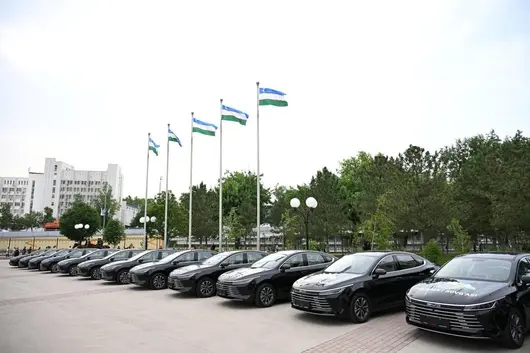

Laporan kewangan Semester Pertama 2026 BYD menunjukkan bahawa pada semester pertama tahun ini, jualan kenderaan persendirian dan pikap BYD di luar negara hampir mencapai 790,000 unit, meningkat 67.9% berbanding tahun lalu. Operasi perniagaannya merangkumi lebih 120 negara dan wilayah di seluruh dunia, menduduki tempat teratas jenama kenderaan elektrik baharu di pasaran utama seperti United Kingdom, Brazil, dan Thailand. Di atas asas pasaran global yang berkembang pesat, perniagaan kenderaan rasmi elektrik baharu BYD memasuki fasa baharu "berbilang lokasi berkembang": dari mendapat pengiktirafan "tahap negara" Uzbekistan, ke pelaksanaan pukal di pasaran Pakistan, Meksiko; dari pembelian pukal institusi ibu negara, ke penyempurnaan matriks kenderaan polis. Laluan pengembangan kenderaan rasmi ini "pencapaian luar negara memimpin, pengembangan dalam negara berterusan" semakin jelas.
Tidak lama dahulu, Presiden Republik Uzbekistan, Shavkat Mirziyoyev, menandatangani perintah presiden, menganugerahkan Pasukan BYD dengan Darjah Kebesaran Negara Republik Uzbekistan - "Darjah Persahabatan". Kehormatan ini menjadi bukti kukuh BYD mendalami pasaran Asia Tengah. Ini adalah sokongan peringkat tinggi seterusnya daripada pihak rasmi negara tersebut selepas kilang kenderaan elektrik baharu tempatan beroperasi dan kereta rasmi Istana Presiden menggunakan model BYD. Ia juga menjadi gambaran hidup bagi kenderaan elektrik baharu China memenangi kepercayaan pasaran awam luar negara atas kekuatan sebenar.
Pengiktirafan Uzbekistan bukan satu-satunya contoh, rancangan kenderaan rasmi luar negara BYD kini meresap dari pasaran panduan ke kawasan lebih luas. Pesanan hampir 100 unit kenderaan rasmi murni elektrik BYD Pakistan telah diserahkan dan digunakan secara besar-besaran. Ini adalah pembelian pukal pertama kenderaan rasmi elektrik baharu Pakistan, menandakan Pakistan menjadi pasaran tanda tangan kerjasama kenderaan polis luar negara BYD. Selain itu, armada kenderaan rasmi kerajaan Tanjung Verde telah sepenuhnya bertukar kepada BYD, Hungary, Austria juga telah memasukkan model BYD ke dalam sistem kenderaan rasmi termasuk penerimaan diplomatik.
Dalam bidang khusus kenderaan polis ini, rancangan luar negara BYD semakin dipercepatkan. Pada September, BYD menyerahkan beberapa kereta polis Dolphin kepada polis Filipina, mendorong elektrifikasi kenderaan rasmi Filipina. Baru-baru ini, puluhan unit Destroyer 05 juga telah dimasukkan secara rasmi ke dalam pasukan polis Meksiko sebagai kereta polis. Setakat kini, BYD telah menyerahkan pelbagai model seperti BYD SHARK pikap, Seal, Yuan UP, Seagull kepada polis pelbagai wilayah di Mexico, memenuhi pelbagai keperluan tugas. Penerapan berterusan di dua pasaran ini menandakan kenderaan polis elektrik baharu BYD bergerak dari demonstrasi tunggal kepada aplikasi berskala dan amalan berterusan.
Pasaran dalam negara, BYD juga kekal di kedudukan teratas pembelian kenderaan rasmi elektrik baharu. Pengumuman Laman Web Perolehan Kerajaan China menunjukkan, sejak pertengahan tahun, banyak agensi kerajaan di seluruh negara telah menyelesaikan pembelian pukal kenderaan rasmi BYD. Ini adalah pengesahan seterusnya daripada pasaran awam domestik selepas BYD mempertahankan nombor satu jualan perolehan kerajaan kenderaan rasmi elektrik baharu dalam negeri dengan pasaran lebih 22% pada semester pertama.
Dalam bidang kenderaan polis, Fang Cheng Bao Titan 7 dan kenderaan polis lain juga telah menyelesaikan penyerahan pukal di banyak wilayah negara. BYD telah membina matriks produk pelbagai kategori merangkumi kenderaan sedan, SUV hingga pikap, boleh menyesuaikan dengan pelbagai senario polis seperti rondaan keselamatan, penguatkuasaan trafik, tindak balas kecemasan, membantu peningkatan elektrifikasi perjalanan polis.
Dari yang didominasi oleh merek gabungan, menjadi pilihan China bagi elektrifikasi awam global, BYD sedang menulis catatan baharu Pembuatan Pintar China dengan kekuatan sebenar. Di segmen bertaraf tinggi yang mengukur kekuatan komprehensif jenama automotif ini, dengan kekuatan teknologi dan kepercayaan jenama, mempercepatkan pengembangan perancangan global kenderaan elektrik baharu China.

In September just passed, BYD stood on the sales champion podium again.
However, behind the crown's glory, the comparison of data is striking: domestic sales dropped nearly 13%, overseas sales surged over 153%. BYD's growth engine, from the fierce red ocean competition domestically, shifted to the high-risk blue ocean market overseas.
Wang Chuanfu steers BYD towards the deep blue, but ahead waiting for him are two major challenges that must be overcome.

In September just passed, BYD sales remained very hot.
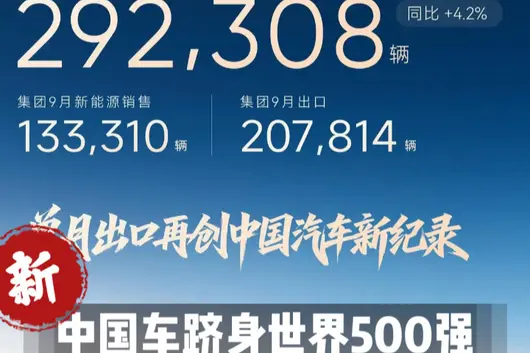
Sales and production bulletin shows, in this year September BYD new energy vehicles sold 463,600 units, compared to 396,300 units of the same period last year, a year-on-year surge of 16.99%.
Such dazzling achievements keep BYD far ahead in the industry. At the same time, SAIC Group 406,000 units, nearly 60,000 units less than BYD.
Also Chery 292,300 units, Geely 292,200 units, Changan 228,900 units, Great Wall 114,900 units, all are far from BYD.

It is worth noting that, among BYD's 463,600 units total sales, domestic sales 282,900 units, year-on-year decline 12.97%; overseas sales 180,700 units, year-on-year surge 153.59%.
CPCA data shows, domestic car market September sales year-on-year decline about 25%.
Although BYD domestic sales ran ahead of the general market, the strong contrast of their domestic and overseas sales rise and fall also indicates, when domestic price war sees no end, and plug-in hybrid bonus accelerates to vanish, overseas is no longer a "side plot" to add icing on the cake, but a "main quest" concerning future survival.
Sales growth focus shifts outward, BYD enters a new battlefield.
2. From Making Cars to Making ShipsLeading BYD into this new overseas battlefield, Wang Chuanfu faces two challenges. The first challenge, ships are not enough. Who would have thought, BYD's biggest bottleneck going overseas currently is not cars but ships.
BYD is very hot overseas, if not for transport capacity limits, sales could be increased significantly. To some extent, this is a sweet burden.
As early as 2022, Wang Chuanfu invested 5 billion yuan to order Ro-Ro ships, building a proprietary fleet. January 2024, the first "Pioneer 1" made first voyage to Europe.
Since then, Changzhou, Hefei, Shenzhen, Xi'an, Changsha, Zhengzhou, Jinan ships joined sequentially. A total of 8 ships, annual capacity over 1 million units.

But for today's BYD, such capacity is already far from enough.
This year BYD car export target, jumped from 1.5 million units to 2 million units, next year is as high as 2.5 million units. Existing capacity is like a small boat crossing a river, hard to carry massive volume.
So BYD added again, ordered 10 more Ro-Ro ships, 2027 to 2029 batch delivery.
At that time, BYD's own car transport fleet will expand to 18 ships, annual transport capacity from current 1 million level, jump to 2.5 million level. Export sales constrained by capacity limits, BYD must win this "capacity battle".
3. The Road to Globalization is Still LongTransport ships transport cars manufactured domestically to overseas markets, building factories abroad means directly making cars locally and selling directly.
With Chinese cars becoming more and more powerful, causing certain impact on car markets in multiple overseas countries, they started requiring Chinese car companies to build factories locally, make cars locally and sell locally, keeping jobs, taxes, etc., also locally.
BYD and other Chinese car companies, while transporting Chinese cars out overseas, also need to invest heavily in building factories overseas.
Toyota with annual sales exceeding 10 million units, why becoming the world's largest car company, mainly rooted in it having factories, suppliers, dealers, financial services and after-sales networks everywhere in the world.

Including Europe, Japan, India and other multiple major car markets, currently all have obvious entry barriers for Chinese cars.
They mainly target vehicles entering local markets from China in export form, surrounding and intercepting Chinese cars through tariffs and other measures.
Japanese car companies like Toyota, when going global back then, also encountered such entry barriers. In the 20th century Japanese cars entered the US at the beginning, also encountered huge political resistance.
So Toyota no longer stuck to the old path of "Made in Japan, Sold Globally", but spread production lines overseas, completing manufacturing and sales locally.

BYD currently also walks this path, accelerating overseas factory investment and construction, such as Thailand and Indonesia factories in Southeast Asia, Hungary factory in Europe, Brazil factory in the Americas, etc.
This is letting BYD take root locally, from "Chinese export car company" changing to "Local car manufacturer". Of course, investing and building car factories is just the first step.
Whether R&D management can integrate, whether after-sales can keep up, whether products can adapt to regulations, unions and consumption habits... BYD has many more things to do.
From "BYD of China" to "World BYD", BYD's globalization speed is fast, but compared to giants like Toyota, there is still a long road to go.


Pada bulan September yang baru berlalu, BYD sekali lagi naik ke pentas juara jualan.
Tetapi di sebalik cahaya mahkota, perbandingan sekumpulan data sangat jelas: Jualan domestik turun hampir 13%, jualan luar negara melonjak melebihi 153%. Enjin pertumbuhan BYD, dari 'laut merah' yang ganas di dalam negeri, beralih ke 'laut biru' yang bergelora di luar negara.
Wang Chuanfu mengarahkan BYD menuju biru gelap, tetapi yang menantinya di hadapan adalah dua cabaran besar yang perlu dikalahkan.
Pada bulan September yang baru berlalu, jualan BYD masih sangat tinggi.
Laporan pantas pengeluaran dan jualan menunjukkan, pada September tahun ini BYD menjual 463,600 unit kereta elektrik baharu, berbanding 396,300 unit pada tempoh yang sama tahun lalu, meningkat 16.99% secara tahun ke tahun.
Prestasi cemerlang seperti ini membuatkan BYD masih jauh memimpin dalam industri. Pada tempoh sama, SAIC Group 406,000 unit, hampir 60,000 unit kurang daripada BYD.
Seterusnya Chery 292,300 unit, Geely 292,200 unit, Changan 228,900 unit, Great Wall 114,900 unit, semua jauh berbeza daripada BYD.
Perlu dicatat, daripada jumlah jualan 463,600 unit BYD, jualan domestik 282,900 unit turun 12.97% tahun ke tahun; jualan luar negara 180,700 unit melonjak 153.59% tahun ke tahun.
Data Persatuan Kereta Penumpang China menunjukkan, jualan pasaran kereta domestik pada September turun kira-kira 25% tahun ke tahun.
Walaupun jualan domestik BYD mengalahkan pasaran besar, perbandingan jelas di mana satu naik satu turun antara jualan domestik dan luar negara juga menunjukkan, apabila perang harga domestik tiada akhir dan kelebihan hibrid plug-in bertambahnya, luar negara bukan lagi "plot sampingan" yang menyempurnakan, tetapi "tugas utama" yang berkaitan dengan kelangsungan hidup masa depan.
Fokus pertumbuhan jualan beralih ke luar, BYD memasuki medan baharu.
2. Dari Membuat Kereta ke Membuat Kapal LautMemimpin BYD memasuki medan baharu luar negara ini, Wang Chuanfu menghadapi dua cabaran. Cabaran pertama, kapal tidak cukup. Siapa sangka, halangan terbesar BYD pergi ke luar negara bukan kereta tetapi kapal pengangkut.
BYD sangat popular di luar negara, sekiranya tiada had keupayaan pengangkutan, jualan boleh ditingkatkan dengan ketara. Dalam satu erti kata, ini adalah bebanan yang manis.
Sejak tahun 2022, Wang Chuanfu melabur 5 bilion yuan untuk memesan kapal pengangkut kenderaan, membina armada sendiri. Januari 2024, kapal pertama "Pelopor 1" melakukan perjalanan sulung ke Eropah.
Seterusnya, Changzhou, Hefei, Shenzhen, Xi'an, Changsha, Zhengzhou, Jinan mengikuti satu demi satu. Jumlah 8 kapal, keupayaan tahunan melebihi 1 juta unit.
Tetapi bagi BYD sekarang, keupayaan begini sudah tidak cukup.
Sasaran eksport kereta BYD tahun ini meningkat dari 1.5 juta unit ke 2 juta unit, tahun depan lagi setinggi 2.5 juta unit. Keupayaan sedia ada seperti sampan menyeberangi sungai, suka menampung ribuan tentera.
Maka BYD menambah lagi, memesan tambahan 10 kapal pengangkut, diedarkan secara bertahap dari 2027 hingga 2029.
Pada ketika itu, armada pengangkutan kereta sendiri BYD akan mengembang ke 18 kapal, keupayaan pengangkutan tahunan dari tahap 1 juta unit sekarang, meningkat ke tahap 2.5 juta unit. Jualan eksport terhad oleh keupayaan pengangkutan, BYD mesti menang "perang keupayaan" ini.
3. Laluan Globalisasi Masih PanjangKapal pengangkut membawa kereta yang dibuat di dalam negara ke luar negara, membina kilang di luar negara bermaksud membuat dan menjual terus di tempat tersebut.
Bersama-sama kereta China semakin kuat, memberi kejutan tertentu kepada pasaran kereta di banyak negara luar, mereka mula meminta syarikat kereta China membina kilang di tempat tersebut, membuat dan menjual kereta di tempat tersebut, mengekalkan pekerjaan, cukai dan lain-lain di tempat itu.
Syarikat kereta China seperti BYD, selain membawa kereta China pergi ke luar negara, juga perlu melabur dan membina kilang dengan kuat di luar negara.
Toyota yang jualan tahunan melebihi 10 juta unit, menjadi syarikat kereta terbesar di dunia, utamanya kerana berakar umbi pada ia mempunyai kilang, pembekal, pengedar, perkhidmatan kewangan dan rangkaian selepas jualan di seluruh dunia.
Disebutkan termasuk Eropah, Jepun, India dan beberapa pasaran kereta utama lain, kini mempunyai halangan masuk yang jelas terhadap kereta China.
Mereka utamanya menyasarkan kenderaan China yang memasuki pasaran tempatan melalui bentuk eksport, melalui cukai dan pelbagai langkah lain untuk menyekat kereta China.
Syarikat kereta Jepun seperti Toyota dahulu apabila menuju global, juga menghadapi halangan masuk begini. Pada permulaan kereta Jepun masuk Amerika Syarikat pada abad lalu, juga mengalami rintangan politik yang besar.
Maka Toyota tidak lagi berpegang pada jalan lama "Buatan Jepun, Jual Global", sebaliknya meletakkan barisan pengeluaran ke luar negara, melengkapkan pembuatan dan jualan di tempat tersebut.
BYD kini juga berjalan di jalan seperti ini, mempercepatkan pelaburan dan pembinaan kilang luar negara, contohnya Thailand, Indonesia di Asia Tenggara, Hungary di Eropah, Brazil di Amerika, dan lain-lain.
Ini membolehkan BYD berakar di tempat tersebut, berubah dari "Syarikat Eksport Kereta China" kepada "Pengilang Kereta Tempatan". Tentu saja, melabur dan membina kilang kereta hanyalah langkah pertama.
Adakah pengurusan penyelidikan dan pembangunan boleh diintegrasikan, adakah pasca jualan boleh mengikut, adakah produk boleh disesuaikan dengan peraturan, serikat pekerja dan tabiat pengguna... Banyak lagi perkara yang perlu dilakukan BYD.
Dari "BYD China" ke "BYD Dunia", kelajuan globalisasi BYD sangat pantas, tetapi berbanding raksasa seperti Toyota, masih ada jalan yang panjang perlu dilalui.

Recently, BYD executives made a bold statement: within 5 years, they aim to surpass Volkswagen and Toyota to become the world's number one automaker.
As soon as this statement was made, many people were shocked: Is BYD that arrogant? Although sales in the Chinese market are decent, the sales gap is undeniable.
Looking at the data, last year, Toyota remained the global number one for the sixth consecutive year with sales of over 10 million units, selling 11.32 million. Volkswagen, Hyundai, and GM ranked second to fourth, selling 8.98, 7.27, and 6.18 million respectively. Stellantis ranked fifth with 5.48 million. BYD ranked sixth globally with sales of 4.602 million, surpassing Ford for the first time and setting the highest historical ranking for a Chinese automaker.
Although the growth rate is fast, from the data perspective, BYD's global sales are still less than half of Toyota's. With such a gap, how can BYD catch up?
However, there is good news. BYD's overseas expansion is accelerating. In the first half of 2026, BYD's global sales reached 1.809 million, ranking sixth globally with a 4.8% market share. Overseas sales were 789,000, a year-on-year increase of 68%, accounting for over 43% of total sales. Brazil is BYD's largest overseas market, with exports of 194,700 in the first half, both pure EV and PHEV routes proving viable. Thailand's pure EV market share reached as high as 78%, while Australia, Philippines, and UAE also achieved scaled output.
Capacity layout is also accelerating. The Szeged factory in Hungary started assembling cars in the fourth quarter. This is BYD's first passenger car factory in Europe. A second European factory is being selected, with France and Spain on the candidate list, planned to be finalized by the end of 2026.
Morgan Stanley predicts BYD's overseas sales in 2026 will reach 1.6 to 1.8 million, a year-on-year increase of 68% to 89%. If this growth rate can be maintained, breaking 5 million in overseas sales within five years is not impossible.
For BYD to overtake Toyota and Volkswagen, it must first face a cruel reality: in terms of profit, the gap is much larger than the sales gap.
In the first half of 2026, Toyota's global sales were about 5.39 million, Volkswagen about 4.126 million, and BYD 1.809 million ranking sixth. In terms of sales, BYD is about one-third of the leader.
But what about profits? Toyota's operating profit for the 2026 fiscal year was about 3.76 trillion yen, equivalent to about 180 billion RMB. Just the first quarter's net profit attributable to shareholders was about 72.37 billion RMB, about 6 times that of BYD, the most profitable Chinese automaker, and also exceeding the combined profits of all 15 listed Chinese automakers.
The gap in profit per vehicle is more intuitive. Toyota's net profit per vehicle is about 17,000 to 22,700 RMB, while BYD's is less than 7,000 RMB. For selling one car, Toyota earns more than twice as much as BYD.
Volkswagen's situation is much worse than Toyota's, with operating profit margin falling to 3.8% in the first half, and net profit after tax down more than 30% year-on-year. But VW's scale remains there — delivering about 4.13 million globally in the first half, still more than double BYD.
This means one thing: For BYD to overtake Toyota and Volkswagen within five years, it's not just about increasing sales; it's about increasing profits alongside sales. Profit improvement relies on brand premium, technical barriers, and global operational efficiency; these things cannot be rushed.
Li Ke specifically mentioned at the summit: BYD is "severely undervalued" on the Hong Kong Stock Market because "BYD is fundamentally an engineering and technology company, not just an automotive company." Placed in this context, this actually means: Don't judge me using traditional automaker valuation frameworks. But whether the capital market buys into it is another story.
Breaking down BYD's goal to overtake Toyota and Volkswagen within five years, several things need to be achieved simultaneously.
First, overseas sales must continue to grow at a high speed. Overseas sales are expected to be 1.6 to 1.8 million in 2026. To support the global number one sales scale in five years, overseas annual sales must reach at least 5 million. This requires full production of European factories, deep cultivation of Southeast Asian and South American markets, and opening up more right-hand drive markets.
Second, profit per vehicle must increase. Currently, profit per vehicle of less than 7,000 RMB cannot support the profit model of the world's number one automaker. Profit per vehicle in overseas markets is typically higher than domestic, which is one of the reasons BYD is fighting hard to go overseas. Morgan Stanley believes that with increased overseas capacity and higher overseas sales ratio, gross margin will see a positive push.
Third, and the hardest point: maintaining a determined pace in an uncertain world. Li Ke has already said, geopolitics is the number one challenge. Markets that can be sold today might be restricted tomorrow; licenses that can be obtained today might be rejected tomorrow. BYD's choice to temporarily abandon the US market is essentially removing uncertainty from the equation and doing only what it can control.
But the strategy of "doing only certain things" comes with a cost: you never know if the markets you actively abandon will become key variables that decide the outcome later. The US market is at a level of 10 million annual sales, and the European market is accelerating its electrification. If the global landscape changes drastically after five years, will lacking a North American hand become a weakness on the path to the top?
Li Ke did not answer this question. She only said: "We hope the operating environment has certainty, clear prospects, only in this way can BYD master the initiative."

We will see in five years. But what is more worth focusing on now is not whether BYD can overtake Toyota, but whether it can achieve both "sales growth" and "profit improvement" under the premise of bypassing the US. The former tests execution, the latter tests brand power. For a Chinese brand to win both battles in the global market at the same time is much harder than competing on price in the domestic market.
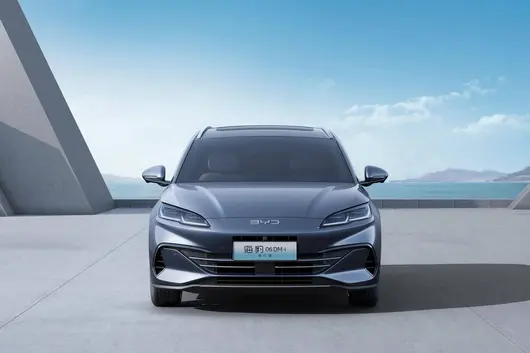

Baru-baru ini, eksekutif BYD melancarkan satu kenyataan berani, dalam masa 5 tahun, ingin mengatasi Volkswagen dan Toyota, menjadi syarikat automoter nombor satu di seluruh dunia.
Selepas kenyataan ini dikeluarkan, ramai yang terkejut, adakah BYD begitu angkuh? Walaupun jualan di pasaran China agak baik, namun, jurang jualan adalah nyata.
Lihat data, tahun lalu, Toyota Automobile masih menjuarai dunia selama enam tahun berturut-turut dengan jualan melebihi 10 juta unit, menjual 11.32 juta unit, Volkswagen, Hyundai, dan General Motors menduduki posisi dua hingga empat, masing-masing menjual 8.98, 7.27, 6.18 juta unit, Stellantis berada di kelima menjual 5.48 juta unit. BYD dengan 4.602 juta unit jualan global menduduki keenam, erstmals melampaui Ford, mencipta ranking tertinggi sejarah syarikat automoter China.
Walaupun kadar pertumbuhan agak cepat, dari segi data, jualan global BYD masih kurang daripada separuh Toyota. Jurang sebegini, bagaimanakah BYD hendak mengejar?
Namun, tidak semua berita buruk, pelan global BYD sedang dipercepatkan, suku pertama 2026, jualan global BYD 1.809 juta unit, ranking keenam di dunia, pangsa pasaran 4.8%. Di mana jualan luar negara 789,000 unit, meningkat secara tahun ke tahun 68%, lebih daripada 43% daripada jumlah jualan. Brazil adalah pasaran luar negara terbesar BYD, dieksport 194,700 unit separuh tahun pertama, kedua-dua laluan elektrik tulen dan plug-in hybrid berjaya. Thailand pangsa pasaran elektrik tulen mencecah 78%, Australia, Filipina, Emiriah Arab Bersatu juga telah merealisasikan pengeluaran berskala besar.
Susunan keupayaan pengeluaran juga sedang dipercepatkan. Kilang Szeged Hungary bermula merakit kereta pada suku keempat, ini adalah kilang kereta penumpang pertama BYD di Eropah. Kilang Eropah kedua sedang mencari lokasi, Perancis dan Sepanyol masuk senarai calon, dirancang untuk ditentukan sebelum akhir 2026.
Morgan Stanley meramalkan, jualan luar negara BYD tahun 2026 akan mencapai 1.6 juta hingga 1.8 juta unit, meningkat 68% hingga 89% secara tahun ke tahun. Jika kadar pertumbuhan ini dapat dikekalkan,突破 jualan luar negara 5 juta unit dalam lima tahun bukan mimpi.
Untuk mengikut dan mengatasi Toyota dan Volkswagen, BYD mesti melihat jelas satu realiti yang kejam: dari segi keuntungan, jurang jauh lebih besar daripada jualan.
Suku pertama 2026, jualan global Toyota kira-kira 5.39 juta unit, Volkswagen kira-kira 4.126 juta unit, BYD 1.809 juta unit menduduki keenam. Dari segi jualan, BYD kira-kira sepertiga daripada juara.
Tetapi bagaimana dengan keuntungan? Keuntungan operasi Toyota tahun kewangan 2026 kira-kira 3.76 trilion Yen, ditukar ke Yuan kira-kira 180 bilion. Hanya pendapatan bersih suku tahun pertama kira-kira 72.37 bilion Yuan, kira-kira 6 kali ganda daripada syarikat automoter China yang paling untung iaitu BYD, juga melebihi jumlah keuntungan kesemua 15 syarikat automoter China yang disenaraikan.
Jurang keuntungan setiap kereta lebih jelas. Keuntungan bersih setiap kereta Toyota kira-kira 17,000 hingga 22,700 Yuan, keuntungan bersih setiap kereta BYD kurang daripada 7,000 Yuan. Dengan menjual satu kereta sama, duit yang diperoleh Toyota lebih daripada dua kali ganda BYD.
Kedudukan Volkswagen lebih buruk daripada Toyota, margin keuntungan operasi jatuh ke 3.8% separuh tahun, keuntungan selepas cukai menurun melebihi 30% secara tahun ke tahun. Namun saiz Volkswagen masih berada di sana - penghantaran global separuh tahun kira-kira 4.13 juta unit, masih lebih daripada dua kali ganda BYD.
Ini bermaksud satu perkara: Untuk mengikut dan mengatasi Toyota Volkswagen dalam lima tahun, bukan sekadar masalah menaikkan jualan, tetapi sambil menaikkan jualan, keuntungan juga mesti dinaikkan. Dan peningkatan keuntungan bergantung kepada premium jenama, halangan teknologi dan kecekapan operasi global, perkara-perkara ini tidak boleh tergesa-gesa.
Li Ke dalam mesyuarat puncak secara khusus menyebut satu perkara: BYD di pasaran saham Hong Kong di'undervalu'kan secara teruk, kerana "dari asalnya BYD adalah sebuah syarikat kejuruteraan teknikal, bukan syarikat automoter". Kalimat ini dalam konteks ini, sebenarnya bermaksud: Jangan lihat saya dengan kerangka penilaian syarikat automoter tradisional. Tetapi sama ada pasaran modal membacanya atau tidak, itu lain cerita.
Membuka objektif BYD, untuk mengikut dan mengatasi Toyota Volkswagen dalam lima tahun, perlu melakukan beberapa perkara serentak.
Pertama, jualan luar negara terus berkembang pesat. Dianggarkan 1.6 juta hingga 1.8 juta unit luar negara tahun 2026, lima tahun selepas itu perlu menyokong saiz jualan nombor satu dunia, jualan tahunan luar negara sekurang-kurangnya mesti mencapai lebih daripada 5 juta unit. Ini memerlukan kilang Eropah untuk beroperasi sepenuhnya, pasaran Tenggara Asia dan Amerika Selatan digali secara berterusan, lebih banyak pasaran stereng kanan dibuka.
Kedua, keuntungan setiap kereta mesti ditingkatkan. Keuntungan setiap kereta yang belum sampai 7,000 Yuan, tidak boleh menyokong model keuntungan syarikat automoter nombor satu dunia. Keuntungan setiap kereta pasaran luar negara biasanya lebih tinggi daripada domestik, ini juga salah satu sebab BYD bertungkus-lumus keluar luar negara. Morgan Stanley berpendapat, dengan peningkatan keupayaan pengeluaran luar negara dan peningkatan nisbah jualan luar negara, margin kasar mempunyai pendorongan positif.
Ketiga, dan juga satu perkara yang paling sukar: Dalam dunia yang tidak pasti, kekalkan irama yang pasti. Li Ke telah berkata, geopolitik adalah cabaran nombor satu. Hari ini yang boleh dijual pasaran, mungkin ada had esok; hari ini yang boleh diambil lesen, mungkin ditolak esok. BYD memilih untuk sementara meninggalkan Amerika Syarikat, secara asasnya membuang ketidakpastian daripada persamaan, hanya melakukan perkara yang boleh dikawal sendiri.
Tetapi strategi "hanya lakukan perkara pasti" ini, ada satu harga: Selamanya tidak tahu, pasaran yang dilepaskan secara aktif itu, nanti tidak akan menjadi pembolehubah penting yang menentukan kemenangan. Pasaran Amerika Syarikat peringkat jualan tahunan 10 juta unit, pasaran Eropah sedang mempercepatkan elektrifikasi, jika 5 tahun lagi struktur global berubah drastik, BYD kehilangan satu kad Amerika Utara, tidak akan menjadi kelemahan di jalan menuju puncak?
Soalan ini, Li Ke tidak menjawab. Dia hanya berkata: "Kami mahu persekitaran operasi mempunyai kepastian, masa depan jelas, hanya dengan itu BYD dapat menguasai inisiatif."
Lihat hasilnya selepas 5 tahun. Tetapi sekarang lebih menarik perhatian, bukan sama ada BYD boleh mengatasi Toyota, tetapi sama ada ia boleh buat dua perkara "pertumbuhan jualan" dan "peningkatan keuntungan" serentak dengan syarat mengelakkan Amerika. Yang pertama menguji pelaksanaan, yang kedua menguji kekuatan jenama. Satu jenama China untuk menang kedua-dua perang ini di pasaran global serentak, lebih sukar daripada berebut harga di pasaran domestik.

BYD Vice President Li Ke clarified the company's global strategic goals for the next phase at a summit in Singapore.

The gist is:
Plan to become the world's largest car manufacturer within the next five years, surpassing Toyota Motor and Volkswagen Group; BYD will adhere to the going global strategy and continuously expand into European, Central American, South American, Asian, and Oceania markets. BYD leads in multiple fields such as energy storage, photovoltaics, and batteries; battery technology is its core competitiveness, not just having advantages in the automotive field. BYD will not enter the US market temporarily, Li Ke stated that BYD hopes for a business environment with certainty and clear prospects; only then can BYD grasp the initiative for investment.
The above are Li Ke's views. Li Ke is not only the Vice President of BYD but also the wife of BYD Chairman Wang Chuanfu; the weight of her expressed views is evident.

Currently, Toyota Motor is the number one car manufacturer in global sales, and the second is Volkswagen Group.
The ranking of the top ten global car manufacturers by sales for the first half of 2026 is as follows:
There are three Chinese car companies among the top ten, and BYD is indeed one of them.
However, looking at the sales data for the first half of the year alone, there is still a big gap between BYD and Volkswagen Group (Germany) in second place; the latter's sales are 2.28 times that of BYD for the same period; meanwhile, Toyota Motor (Japan), ranked first, sold 2.98 times the volume of BYD for the same period, the gap is obvious.

Moreover, the market share of joint venture car brands in China has declined significantly at this stage. The combined market share of the four major German brands (Volkswagen, Audi, BMW, and Mercedes-Benz) has fallen to below 20%, and the Japanese brands are slightly lower. The data shows that the market share of Toyota Motor and Volkswagen Group in major global markets is not to be underestimated. Furthermore, the domestic market has entered a stock stage. Therefore, whether it is BYD, Volkswagen, or Toyota Motor, the main battlefield for their next phase will be the expansion of overseas markets.
For Toyota Motor and Volkswagen Motor, which already occupy a large share of the overseas market, the natural task for the next phase is to fight a battle to protect market share.

Relying on the first-mover advantage in new energy vehicles and the policy advantage of the electrification of China's domestic automotive industry, BYD has successfully become the car company with the highest sales volume in China currently. However, overseas market environments inevitably have significant differences, and the energy structures of different countries and regions also vary significantly. As for the technological moat of electric vehicles, it is objectively not wide enough. Currently, the main advantage of China's new energy vehicles is still the advantage of a complete industrial scale and system.
As Wei Jianjun of Great Wall Motor stated: Automobile electrification is a China strategy, not a strategy of other countries. Therefore, it is impossible to predict now whether BYD can become the world's number one car company within five years as Li Ke predicted. We can only wait and see.

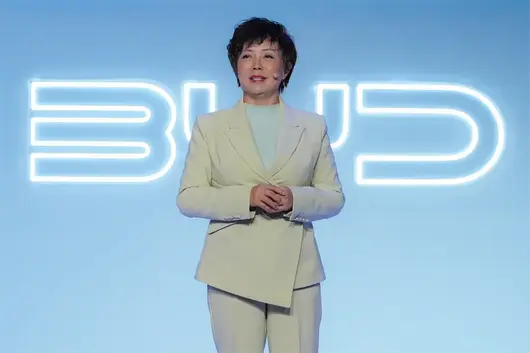

Timbalan Presiden BYD Li Ke memperjelaskan strategi global perusahaan untuk peringkat seterusnya pada satu persidangan di Singapura.
Intipati maksudnya:
Rancangan untuk menjadi pengeluar kenderaan terbesar di dunia dalam lima tahun akan datang, mengatasi Toyota Motor dan Kumpulan Volkswagen; BYD akan mengekalkan strategi pengembangan pasaran luar negara, dan secara berterusan membuka pasaran di Eropah, Amerika Tengah, Amerika Selatan, Asia dan Australia. BYD telah memimpin dalam pelbagai bidang seperti penyimpanan tenaga, photovoltaik, dan bateri, teknologi bateri merupakan keupayan teras yang tidak hanya unggul dalam bidang automotif. BYD sementara tidak akan memasuki pasaran Amerika Syarikat, Li Ke menyatakan BYD ingin persekitaran perniagaan mempunyai kepastian, prospek yang jelas, hanya dengan cara ini BYD dapat menguasai inisiatif untuk pelaburan.
Inilah pandangan Li Ke, Li Ke bukan sahaja Timbalan Presiden BYD, tetapi juga isteri Pengerusi BYD Wang Chuanfu, berat pandangan yang diunjukkannya dapat dilihat.
Sekarang pengeluar kenderaan nombor satu jualan global adalah Toyota Motor, nama kedua adalah Kumpulan Volkswagen.
Peringkat sepuluh teratas jualan kenderaan global syarikat automotif pada separuh pertama tahun 2026 adalah:
Dalam sepuluh teratas, terdapat tiga syarikat automotif China, dan BYD memang ada di dalamnya.
Namun, berdasarkan data jualan separuh tahun sahaja, BYD masih mempunyai jurang yang besar jika dibandingkan dengan Kumpulan Volkswagen Jerman yang menduduki tempat kedua; yang terakhir adalah 2.28 kali ganda jualan BYD pada tempoh yang sama; dan jualan Toyota Motor Jepun yang menduduki tempat pertama adalah 2.98 kali ganda jualan BYD pada tempoh yang sama, jurang tersebut adalah nyata.
Dan pada peringkat semasa, kepenyetan pasaran jenama kereta gabungan milik China telah menurun dengan ketara, jumlah kepenyetan pasaran empat jenama utama Volkswagen, Audi, BMW dan Mercedes dalam kereta Jerman sudah kurang daripada 20%, kereta Jepun adalah sedikit lebih rendah; melalui data boleh dilihat bahawa kepenyetan pasaran Toyota Motor dan Kumpulan Volkswagen di pasaran global yang besar adalah tidak boleh dipandang ringan, sementara pasaran domestik telah memasuki peringkat stok tetap, jadi sama ada BYD, Volkswagen atau Toyota Motor, medan tempur utama peringkat seterusnya adalah pada pengembangan pasaran luar negara.
Bagi Toyota Motor dan Volkswagen yang telah menguasai sebahagian besar pasaran luar negara, langkah seterusnya semestinya adalah memperjuangkan pertahanan kepenyetan pasaran.
BYD bergantung kepada kelebihan mula pertama kenderaan baharu dan kelebihan dasar peng elektrikan industri automotif domestik, berjaya menjadi pengeluar kereta dengan jualan tertinggi di China; namun persekitaran pasaran luar negara sememangnya berbeza secara ketara, struktur tenaga negara dan kawasan yang berbeza juga mempunyai perbezaan besar; mengenai parit teknologi kenderaan elektrik, secara objektif memang tidak cukup lebar, kelebihan utama kenderaan baharu China semasa adalah saiz dan sistem industri yang lengkap.
Seperti yang diceritakan oleh Wei Jianjun dari Kenderaan Great Wall: Elektrifikasi automotif adalah strategi China, bukan strategi negara lain. Oleh itu, sekarang tidak dapat meramalkan sama ada BYD boleh seperti ramalan Li Ke, iaitu menjadi pengeluar kereta nombor satu global dalam tempoh lima tahun, boleh hanya berkata tunggu dan lihat sahaja.

From Chinese Speed to Global Systems, the Real Test Has Just Begun
If we view the global automotive industry as a mountain, Toyota has stood at the summit for many years.

Now, BYD has set its sights on the very top of that mountain.
Reuters reported on October 6 that BYD founder Wang Chuanfu stated at an investor meeting in June this year that the company aims to become the world's largest automotive manufacturer around 2030. This means BYD ultimately cannot bypass Toyota—this automotive group which sold approximately 11 million units last year and has been operating globally for decades.
But the question truly worth discussing is not: When can BYD sell 11 million units?
But: Even if BYD surpasses Toyota in sales figures one day, has it truly surpassed Toyota?
The answer is far more complex than a ranking list.
The Chinese Market Has Proven BYD Can Produce More Cars, Faster
BYD's first exam in the Chinese market was mass manufacturing.
In September 2026, BYD's global new energy vehicle sales reached 463,561 units, up 17% year-on-year. Among them, overseas sales of passenger cars and pickup trucks reached 179,877 units, up 153.9% year-on-year. Exports are becoming an important lever for BYD to hedge against domestic competition.
These figures show that BYD is not only the largest new energy vehicle enterprise in China but also begins to possess the ability to continuously expand overseas.

Its biggest pressure point for traditional automakers in the past was speed.
Product development is fast, supply chain response is fast, integration of batteries and electric drives is fast, model updates are fast, and price adjustments are also fast. The fierce competition in the Chinese market has pushed this speed to unprecedented levels.
But the hardest thing in the automotive industry has never been expanding sales volume in a familiar market, but taking the same capabilities to completely different countries and still being able to make stable profits.
What Toyota is Truly Good At Has Never Been the Number 11 Million
If Toyota's strength was only sales, catching up would not be as difficult as imagined for BYD.
Toyota's moat is the global system behind 11 million units.
It can sell cars in the US, in Japan, in Europe, Southeast Asia, the Middle East, and Latin America; more importantly, it doesn't just load cars produced in Japan onto ships to ship out, but has factories, suppliers, dealers, financial services, and after-sales networks in many countries.
After consumers buy a Toyota, they can still find parts, repair personnel, and second-hand car buyers years later. When local governments discuss trade policies, they must also consider the employment, tax revenue, and industrial chain already created by Toyota.
This system was built over decades. It turned Toyota from a Japanese brand into part of the automotive industry in many countries.

What BYD is challenging now is exactly this layer of capability.
BYD's First Wall: The World is Not as Open as the Chinese Market
Reuters analysis points out that three major automotive markets, the US, Japan, and India, currently have obvious entry barriers for BYD, accounting for about one-quarter of global passenger car sales combined.
Europe has already added extra tariffs on BYD cars manufactured in China, Brazil has increased the tax burden on imported new energy vehicles, and the UK is also discussing stricter protective measures.
This means the closer BYD gets to Toyota, the greater the resistance it might encounter.
Toyota also encountered trade friction when going global in the past. In the 1980s, the large influx of Japanese cars into the US also triggered political pressure. Toyota's key choice later was to stop just shipping cars made in Japan globally, but to go globally to manufacture cars.
BYD is walking the same path. Overseas production layouts like Hungary and Brazil are not only to save transportation costs, but also to transform BYD from a "Chinese export enterprise" to a "local automotive manufacturer".

But building an assembly plant is just the starting point. Whether suppliers are localized, whether R&D and management can integrate locally, whether after-sales support keeps up, and whether products can meet local regulations, unions, and consumer habits, will all determine whether this factory ultimately becomes a real overseas business.
Second Wall: Brand Residual Value and Long-term Trust
One of the strongest competitive methods of Chinese new energy vehicles is rapid updates.
Annual model changes, biennial model replacements, configurations constantly increasing, prices constantly dropping. In the Chinese market, this speed stimulates consumers and forces automakers to continuously improve.
But in mature automotive markets, consumers consider not only how cheap it is to buy today, but also ask: How much is it worth in three years? Can it still be repaired in five years? Are parts easy to find? Will dealerships exit? Will the brand continue to operate?
One of Toyota's true strengths is that consumers believe its cars still have value years later, and repair networks won't suddenly disappear.
This trust cannot be built with a single launch event. It requires long-term ownership volume, stable services, and cross-cycle brand management to support.
BYD is rapidly accumulating overseas sales, but overseas ownership volume, second-hand car residual value, financial systems, and dealer profitability all need time to verify.
Third Wall: Can Chinese Speed Become Global Speed
In China, one decision can rapidly cover the whole country; globally, every market has its own rules.
Crash regulations, data security, software certification, union systems, dealer laws, environmental requirements, and consumer habits will all slow down product development and operating rhythms.
This is not a matter of efficiency levels, but that globalization itself requires more coordination costs.
BYD must prove not only how many cars Chinese speed can produce, but whether this speed can run simultaneously in dozens of countries, maintain quality under different regulatory environments, and deliver stably when local supply chains are not mature.
This is also the gap most companies face most easily when going from domestic to global: domestic advantages are fast decision-making and fast manufacturing, while overseas competition requires compliance, organization, channels, and services to speed up together.
The Final Exam: Can We Make Stable Profits
The automotive industry is ultimately not a sales competition, but a business competition.

If a car sold out doesn't make money, the larger the quantity, the greater the cash flow pressure sometimes can be. Toyota has experienced oil crises, financial crises, yen fluctuations, chip shortages, and the pandemic, yet still retains cross-cycle operating capabilities. This is the part most difficult for it to replicate.
BYD is still in a high-speed expansion stage, while simultaneously dealing with price competition in the Chinese market, overseas factory investment costs, and trade costs in different countries. Even in the future if news appears of "BYD sales surpassing Toyota", what the industry truly cares about won't be just who is number one in sales.
Everyone will continue to ask: Whose profit is more stable? Whose overseas factories are more mature? Whose dealers are more willing to follow? Whose second-hand cars hold value better? Who can continue to invest in R&D and service in the next crisis?
These questions determine who the real global number one is.
What BYD Truly Needs to Overcome is Toyota's Globalization Capability
Forty years ago, China's automotive industry research looked at Japan; twenty years ago, Chinese consumers bought Japanese cars in large numbers; today, Japanese automakers start adopting Chinese new energy supply chains, while BYD openly discusses when to surpass Toyota.
This looks like a story of "student challenging teacher", but the automotive industry has no graduation exam, nor is there a sales figure that can declare who will win forever.
The most important lesson Toyota leaves for China's automotive industry might be exactly this: Being global number one is never about selling the most cars in a single year, but that decades later, there are your factories in the US, your suppliers in Europe, your dealers in Southeast Asia, and after consumers buy the first car, they are willing to come back to buy a second one.
So, the day BYD truly surpasses Toyota is not when monthly sales first cross a certain number, but when an ordinary consumer in Brazil, Germany, the UK, Thailand, or the Middle East is preparing to buy a car, they will naturally put BYD into their selection list as they did with Toyota in the past.
Only then will the Chinese automotive industry have truly climbed over the mountain of Japanese automobiles.
Now, BYD has reached the steepest part at the foot of the mountain. The next challenge is not to build more cars, but to turn a Chinese enterprise into a real global automotive group.
Follow Independent Auto Network.
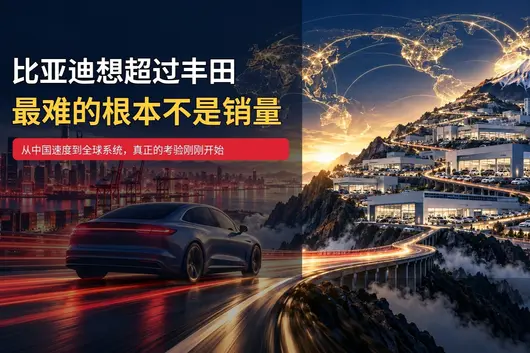

Dari Kecepatan China ke Sistem Global, Ujian Sejati Baru Bermula
Jika industri automoten global dianggap sebagai sebuah gunung, Toyota sudah berdiri di puncaknya selama bertahun-tahun.
Sekarang, BYD menargetkan puncak tertinggi gunung tersebut.
Lapor Reuters pada 6 Oktober, pengasas BYD Wang Chuanfu menyatakan pada mesyuarat pelabur pada Jun tahun ini, sasaran syarikat adalah untuk menjadi pengeluar kenderaan terbesar di dunia sekitar tahun 2030. Ini bermaksud, BYD pada akhirnya tidak dapat mengelak Toyota — kumpulan automobil global yang mencapai penjualan sekitar 11 juta unit tahun lalu dan beroperasi selama beberapa dekad di seluruh dunia.
tetapi isu yang benar-benar layak dibincangkan bukanlah: bila BYD boleh menjual sebanyak 11 juta unit?
malah: walaupun BYD suatu hari nanti melebihi Toyota dalam angka penjualan, adakah ia benar-benar telah mengatasi Toyota?
Jawapannya jauh lebih rumit daripada satu carta kedudukan.
Pasar China telah membuktikan, BYD boleh membuat lebih banyak kereta, lebih pantas
Ujian pertama yang disiapkan BYD di pasar China adalah pembuatan berskala besar.
Pada September 2026, penjualan kereta baharu elektrik global BYD mencapai 463,561 unit, meningkat 17% berbanding tahun lalu. Di antaranya, penjualan luar negara untuk kenderaan penumpang dan pikap mencapai 179,877 unit, meningkat 153.9%. Ekspor semakin menjadi titik sokongan penting bagi BYD untuk mengimbangi persaingan domestik.
Angka-angka ini menunjukkan, BYD bukan lagi hanya syarikat kereta baharu elektrik terbesar di China, tetapi juga mula mempunyai kemampuan untuk berkembang ke luar negara secara berterusan.
Tempat yang dahulu paling membuatkan pengeluar kenderaan tradisional berasa tertekan, ialah kelajuan.
Pengembangan produk pantas, tindak balas rantai bekalan pantas, integrasi bateri dan pam elektrik pantas, kemas kini model pantas, pelarasan harga juga pantas. Persaingan sengit di pasar China, telah mendorong kelajuan ini ke tahap yang belum pernah berlaku sebelum ini.
Tetapi perkara paling sukar dalam industri automoten, bukanlah memperbesarkan jumlah jualan di pasar yang dikenali, sebaliknya membawa satu set kebolehan yang sama ke negara yang sangat berbeza, dan masih boleh menjana keuntungan dengan stabil.
Sesungguhnya kekuatan Toyota, bukanlah nombor 11 juta unit ini
Jika kekuatan Toyota hanyalah jualan, BYD untuk mengejarnya tidak sesusah seperti dalam fikiran.
Sungai pelindung Toyota, ialah sistem global di sebalik 11 juta unit tersebut.
ia boleh menjual kenderaan di Amerika Syarikat, di Jepun, di Eropah, Asia Tenggara, Timur Tengah dan Amerika Latin; yang lebih penting, ia tidak hanya menghantar kenderaan buatan Jepun dengan kapal, tetapi mempunyai kilang, pembekal, pengedar, perkhidmatan kewangan dan rangkaian posjualan di banyak negara.
Selepas pengguna membeli sebuah Toyota, beberapa tahun kemudian masih boleh mencari komponen, orang baik pulih dan pembeli kenderaan terpakai. Apabila kerajaan tempatan membincangkan dasar perdagangan, mereka juga mesti mengambil kira pekerjaan, cukai dan rantaian industri yang telah dicipta oleh Toyota.
Sistem ini diambil masa beberapa dekad untuk dibina. Ia menjadikan Toyota dari satu merek Jepun, menjadi sebahagian daripada industri automoten banyak negara.
Apa yang BYD kini perlu cabar, ialah kebolehan ini tepat.
Dinding pertama yang dihadapi BYD, ialah dunia tidak se terbuka seperti pasar China
Analisis Reuters menunjukkan, tiga pasaran automoten besar iaitu Amerika Syarikat, Jepun dan India, kini mempunyai halangan masuk yang jelas terhadap BYD, jumlah mereka mewakili kira-kira suku daripada jualan kenderaan penumpang global.
Eropah telah mengenakan tambahan tarif untuk kenderaan BYD buatan China, Brazil meningkatkan beban cukai import kereta baharu elektrik, United Kingdom juga sedang membincangkan langkah perlindungan yang lebih ketat.
Ini bermaksud, semakin BYD hampir ke Toyota, rintangan yang dihadapi mungkin semakin besar.
Ketika Toyota bergerak ke global, ia juga pernah menghadapi geseran perdagangan. Pada tahun 1980-an, kenderaan Jepun memasuki Amerika secara besar-besaran, juga mencetuskan tekanan politik. Keputusan penting yang dibuat oleh Toyota kemudian, ialah tidak lagi hanya mengimport kenderaan buatan Jepun ke seluruh dunia, sebaliknya pergi ke seluruh dunia untuk membuat kenderaan.
BYD juga sedang berjalan di jalan yang sama. Susun atur pengeluaran luar negara seperti Hungary, Brazil, tujuannya bukan hanya menjimatkan kos pengangkutan, tetapi lebih untuk menjadikan BYD dari "syarikat eksport China" menjadi "pengeluar kenderaan tempatan".
Tetapi membina sebuah kilang pemasangan akhir hanyalah permulaan. Sama ada pembekal dilokalkan, sama ada penyelidikan pembangunan dan pengurusan dapat diintegrasikan ke tempatan, sama ada pasca jualan dapat mengikut, sama ada produk dapat memenuhi undang-undang tempatan, serikat pekerja dan tabiat pengguna, akan menentukan sama ada kilang ini akhirnya merupakan perniagaan luar negara yang sejati.
Dinding kedua, ialah nilai sisa merek dan kepercayaan jangka panjang
Salah satu cara persaingan terkuat bagi kereta baharu elektrik China, ialah kemas kini pantas.
Penukaran reka bentuk setahun, penukaran model dua tahun, konfigurasi semakin bertambah, harga semakin menurun. Di pasar China, kelajuan ini akan merangsang pengguna, dan juga memaksa pengeluar kenderaan untuk terus maju.
Tetapi di pasar automoten yang matang, pengguna mempertimbangkan bukan sahaja sama ada beli hari ini murah, tetapi juga bertanya: tiga tahun kemudian berapa nilainya? Lima tahun kemudian masih boleh dibaiki? Komponen sama ada mudah dicari? Adakah pengedar akan keluar? Adakah merek ini akan terus beroperasi?
Salah satu tempat yang benar-benar kuat bagi Toyota, ialah pengguna percaya kenderaannya masih bernilai beberapa tahun kemudian, rangkaian baik pulih juga tidak akan hilang secara tiba-tiba.
Kepercayaan ini tidak boleh dibina hanya melalui satu sidang akhbar. Ia memerlukan jumlah pemilikan jangka panjang, perkhidmatan stabil dan pengurusan merek merentasi kitaran untuk disokong.
BYD sedang dengan pantas mengumpul jualan luar negara, tetapi jumlah pemilikan luar negara, nilai sisa kenderaan terpakai, sistem kewangan dan kebolehan keuntungan pengedar, masih memerlukan masa untuk disahkan.
Dinding ketiga, ialah sama ada Kelajuan China boleh berubah menjadi Kelajuan Global
Di China, satu set keputusan boleh dengan cepat meliputi seluruh negara; di global, setiap pasaran mempunyai peraturan sendiri.
Undang-undang perlanggaran, keselamatan data, pensijilan perisian, sistem serikat pekerja, undang-undang pengedar, keperluan alam sekitar dan tabiat pengguna, akan membuatkan irama pembangunan produk dan pengoperasian menjadi perlahan.
Ini bukanlah masalah sama ada tinggi atau rendahnya kecekapan, sebaliknya globalisasi sendiri memerlukan lebih banyak kos koordinasi.
Apa yang BYD mesti buktikan, bukan sahaja berapa banyak kenderaan yang boleh dibuat oleh Kelajuan China, tetapi adakah kelajuan ini boleh beroperasi serentak di puluhan negara, adakah boleh mengekalkan kualiti di bawah persekitaran pengawasan berbeza, adakah boleh menghantar secara stabil jika rantai bekalan tempatan tidak matang.
Inilah jurang yang paling mudah dihadapi oleh banyak syarikat ketika bergerak dari domestik ke global: Kelebihan domestik adalah keputusan pantas, pembuatan pantas, persaingan luar negara pula memerlukan pematuhan, organisasi, laluan dan perkhidmatan berubah menjadi cepat.
Ujian akhir, ialah sama ada boleh menjana keuntungan dengan stabil
Pada akhir, industri automoten bukan pertandingan jualan, sebaliknya pertandingan perniagaan.
Sebuah kenderaan terjual, jika tidak untung, semakin besar jumlahnya, tekanan tunai aliran kadang-kadang juga semakin besar. Toyota pernah mengalami krisis minyak, krisis kewangan, ayunan yen, kekurangan cip dan wabak, masih mengekalkan kemampuan pengoperasian merentasi kitaran, inilah bahagian yang paling sukar untuk ditiru.
BYD masih berada dalam fasa pengembangan pantas, selain itu juga perlu menghadapi persaingan harga pasar China, pelaburan kilang luar negara dan kos perdagangan negara berbeza. Masa depan walaupun muncul berita "Jualan BYD melebihi Toyota", industri yang benar-benar mahu tahu bukan sahaja siapa yang nombor satu dalam jualan.
Orang ramai juga akan terus bertanya: Siapakah yang keuntungan lebih stabil? Siapakah yang kilang luar negara lebih matang? Siapakah yang pengedar lebih mahu ikut? Siapakah yang kenderaan terpakai lebih bernilai? Siapakah yang boleh terus melabur penyelidikan pembangunan dan perkhidmatan dalam krisis seterusnya?
Masalah-masalah ini, barulah menentukan siapa yang benar-benar nombor satu global.
Apa yang BYD benar-benar perlu panjat, ialah kebolehan globalisasi Toyota
Empat puluh tahun lalu, industri automoten China mengkaji Jepun; dua puluh tahun lalu, pengguna China membeli banyak kenderaan Jepun; hari ini, pengeluar automoten Jepun mula menggunakan rantai bekalan baharu elektrik China, BYD pula membincangkan secara terbuka bila untuk melebihi Toyota.
Ini nampak seperti satu cerita "pelajar mencabar guru", tetapi industri automoten tidak ada peperiksaan penamat, dan tiada angka jualan yang boleh mengisytiharkan siapa yang menang kekal.
Satu pengajaran paling penting yang ditinggalkan Toyota untuk automoten China, mungkin adalah: Nombor satu global bukan sahaja kenderaan terjual paling banyak dalam satu tahun, tetapi beberapa dekad kemudian, Amerika Syarikat masih ada kilang anda, Eropah masih ada pembekal anda, Asia Tenggara masih ada pengedar anda, pengguna selepas membeli yang pertama, masih bersedia datang membeli yang kedua.
Jadi, hari yang BYD benar-benar melebihi Toyota, bukanlah apabila jualan bulanan pertama kali melangkaui nombor tertentu, sebaliknya apabila pengguna biasa di Brazil, Jerman, United Kingdom, Thailand atau Timur Tengah bersedia membeli kenderaan, ia akan secara semula jadi memasukkan BYD ke dalam senarai pilihan seperti dulu ia memikirkan Toyota.
Hari itu, automoten China baru dianggap benar-benar telah melepasi gunung automoten Jepun.
Sekarang, BYD telah sampai ke tempat paling curam di kaki gunung. Kesukaran seterusnya, bukan membuat lebih banyak kenderaan, sebaliknya mengubah satu syarikat China menjadi sebuah kumpulan automoten global yang sebenar.
Ikuti Pusat Web Kereta Bebas.

Previously, at a delivery ceremony that wasn't very grand. BYD Vice President Liu Xueliang and Japanese Company President Atsushi Tokufuji stood in the store and handed the key of the 10,000th car to the owner. This car is the Sealion 06.
10,000 units. This number placed in the domestic market is not enough for BYD Ocean Network to sell in one hour. In BYD's September monthly sales of 396,000 units, it doesn't even count as a fraction. But the weight of these 10,000 units lies not in the numbers, but on the land of "Japan".

The Graveyard for Outsiders
First, a piece of trivia: Over the past 30 years, the share of imported cars in the Japanese market has never exceeded 10%.
Japan is the most closed car market in the world, without a doubt. Toyota, Honda, Nissan, Suzuki, and these local brands hold over 70% of the share. Consumers have a trust bordering on faith in cars from their own country. Ford withdrew, Vauxhall withdrew, Hyundai also withdrew. These giants, who rule the roost globally, came up with nothing in Japan.
What's more troublesome is electrification. Japan's pure electric penetration rate is only around 1.4%, charging facilities are few, consumers are conservative, and subsidy policies favor local brands. Selling EVs here is like selling umbrellas in a desert—you have to create the demand yourself.
In January 2023, BYD opened its first store in such a market.
A Curve of Constant Acceleration
Then look at the report card BYD submitted.
2023, 1,446 units. 2024, 2,221 units. 2025, 3,742 units, up 68% year-on-year. Entering 2026, the pace sped up significantly: First half registration volume 2,334 units, up 42.7% year-on-year. August single month orders 1,260 units, setting a new historical record.
Three years of consecutive growth, and the acceleration is getting faster. The shape of this curve is more important than any single data point—it shows that Japanese consumers' acceptance of BYD is not a novelty pulse, but trust accumulated through word-of-mouth and step-by-step.
Trust is the most scarce currency in Japan. Japanese consumers don't look at ads for cars, they look at reputation. A brand must survive a long observation period before being added to the car buying list. BYD survived this observation period in three years and nine months. Liu Xueliang said at the ceremony that the first 10,000 units took nearly four years, the next 10,000 will be much faster. These words are not mere pleasantries; the curve has already been drawn.

The Gap Torn Open by the Seal
BYD's turning point in Japan is the Seal.
This coupe launched in Japan in June 2024, priced from 5.28 million Yen, competing neck-and-neck with the Tesla Model 3. It did not take the low-price route; it went straight into the main battlefield of Japanese sedans.
What happened next even Japanese people didn't expect. The Seal won the grand championship of the "Japan EV Awards" for two consecutive years, and was selected for the top 10 "Japan Car of the Year 2024-2025"—alongside it on the list were Toyota Land Cruiser 250, Lexus LBX, these local giants. Blade Battery plus CTB body structure was awarded the "Annual Technology Award" by the Japan Automotive Research and Journalism Conference, scoring the highest score.
What's most exaggerated is Nikkei BP Inc. This largest professional publishing house in Japan tore a Seal apart inside out, wrote a 494-page report, priced at 880,000 Yen—over 40,000 RMB, enough to buy half a Qin. Selling a book at this price became industry news, showing the Japanese industry really wants to understand: where exactly Chinese EVs are advanced.
Sales can be accumulated slowly, but professional recognition cannot be bought. What the Seal helped BYD get is something deeper than orders—respect.
The Otter, Aimed at the Japanese Core
If the Seal was a key, then the Otter Racco launched late July walked straight into Japanese households.
What is a K-car? A unique Japanese lightweight vehicle specification, selling 1.67 million units a year, accounting for 30-40% of the entire new car market. This is an exclusive territory Japanese car companies have cultivated for decades, foreign brands have never touched—not that they didn't want to, they couldn't. Regulations, dimensions, usage scenarios are all Japanese characteristics. Without developing a car specifically for it, there isn't even an entry ticket.
BYD truly developed a car for it from scratch. The Otter is not a revamped Chinese model; it is designed from scratch strictly according to K-car regulations, unique among global foreign brands. Orders broke 1,000 in two weeks post-launch, accumulated about 1,500 units by end of August. August single month contributed about 80% of BYD's orders in Japan. Two months post-launch, orders are about to break 2,000 units. Top-spec version share is as high as 85%—Japanese people aren't looking for a bargain, they truly like it.
More worth pondering is the next step: Otter has officially announced going out of Japan, first to Macau, China and Sri Lanka. Subsequently will expand gradually with RHD markets as the core.
Understand? Japan is not just a sales market, it has become BYD's RHD strategy R&D base and touchstone. A car that can be developed through K-car regulations, going to RHD markets in Southeast Asia, South Asia, Oceania is a dominating strike.
Putting These 10,000 Units into the Big Picture
September, BYD New Energy sales 396,000 units, among which overseas sales 71,000 units, doubling year-on-year growth 107%. First nine months, overseas cumulative sales have exceeded 700,000 units, accounting for more than 20% of total sales. First half year overseas revenue 181.3 billion Yuan, accounting for 52.6% of total revenue, exceeding domestic for the first time. Management revealed, overseas unit profit about 20,000 Yuan, far higher than domestic sales. 2027, overseas target is 2.5 million units.
In this big plate, Japan's 10,000 units is less than 0.2%.
But overseas expansion has two types. One is loading cars onto ships to ship out, sell if it moves, switch places if it doesn't, this is trade. The other is diving into a country, researching its regulations, its streets, its consumers, building cars specifically for it, building channels, building after-sales, building trust, this is rooting.
The former produces volume, the latter produces brands. BYD building factories in Brazil, Indonesia, Hungary solves capacity and tariffs; in Japan sticking to K-car, solves another issue—proving it has the ability to forward-develop and operate locally in the world's most picky market. Once this capability runs through, it can be replicated to any market in the world.

Auto Web Review: So the significance of these 10,000 units has never been in Japan itself. The ceiling of the Japanese market is visible to the naked eye, but what BYD practiced here has no ceiling: A forward-development process for unfamiliar markets, a methodology from "exporting Chinese models" to "providing customized solutions for the local area", and a signboard of extremely high value—Even Japanese people recognize Chinese EVs, do consumers in other markets still need to hesitate?
Three years and nine months, 10,000 units. BYD, in the world's most closed market, used the clumsiest but most solid method to gnaw the hardest bone. The next 10,000 units will come much faster. And what is more worth looking forward to than the next 10,000 units is the day the Otters swim towards global RHD markets. Looking back then, this small delivery ceremony in Hiratsuka City will be a prologue to a bigger story.

Terdahulu, dalam majlis penyampaian yang tidak terlalu meriah. Timbalan Presiden BYD, Liu Xueliang dan Presiden syarikat Jepun, Atsugi Tohokuji berdiri di dalam kedai, dan menyerahkan kunci kereta kesepuluh ribu pertama kepada pemiliknya. Kereta ini adalah Seal 06.
10,000 unit. Angka ini jika diletakkan di negara asal, tidak cukup untuk dijual oleh Jaringan Maritim BYD selama sejam. Dalam jualan bulanan September BYD sebanyak 396,000 unit, ia tidak pun dikira sebagai baki. Namun berat 10,000 unit ini, bukan pada nombor, tetapi di atas tanah "Jepun" ini.
Kubur Orang Asing
Pertama sekali, satu fakta menarik: Selama 30 tahun lalu, pangsa pasaran kereta import di pasaran Jepun tidak pernah melebihi 10%.
Jepun adalah pasaran kereta paling tertutup di dunia, tiada tandingan. Syarikat tempatan seperti Toyota, Honda, Nissan, Suzuki menguasai lebih tujuh puluh peratus pasaran, pengguna mempunyai kepercayaan hampir seperti agama terhadap kereta negara sendiri. Ford telah menarik diri, Opel telah menarik diri, Hyundai juga telah menarik diri. Raksasa yang mendominasi dunia ini, semuanya menghadapi kegagalan di Jepun.
Lebih rumit ialah elektrifikasi. Kadar penembusan EV tulen di Jepun hanya sekitar 1.4%, kemudahan pengecasan kurang, pengguna konservatif, dasar subsidi condong ke arah jenama tempatan. Menjual kereta elektrik di sini, sama seperti menjual payung di padang pasir — permintaan perlu diwujudkan sendiri.
Januari 2023, BYD telah membuka kedai pertama dalam pasaran sedemikian.
Garis Kelajuan yang Semakin Bertambah
Kemudian lihat semula prestasi yang diserahkan BYD.
2023, 1,446 unit. 2024, 2,221 unit. 2025, 3,742 unit, meningkat 68% berbanding tahun sebelumnya. Memasuki 2026, irama jelas dipercepat: pendaftaran semester pertama 2,334 unit, meningkat 42.7% berbanding tahun sebelumnya, pesanan bulan Ogos tunggal 1,260 unit, mencatat sejarah tertinggi.
Pertumbuhan selama tiga tahun berturut-turut, dan pecutan semakin laju. Bentuk garis ini lebih penting daripada sebarang nombor tunggal — ia menunjukkan penerimaan pengguna Jepun terhadap BYD, bukan sekadar cubaan awal, tetapi kepercayaan yang diwar-warkan dari mulut ke mulut dan dikumpulkan langkah demi langkah.
Kepercayaan di Jepun adalah mata wang paling langka. Orang Jepun membeli kereta tidak lihat iklan tetapi lihat reputasi, sebuah jenama perlu melalui tempoh pemerhatian yang panjang, baru akan dimasukkan dalam senarai pembelian kereta. BYD telah melalui tempoh pemerhatian ini selama tiga tahun sembilan bulan. Liu Xueliang berkata dalam majlis itu, 10,000 unit pertama mengambil masa hampir empat tahun, 10,000 unit seterusnya akan jauh lebih pantas. Kata-kata ini bukan sekadar sopan santun, ia kerana garis sudah dilukis.
Celah Dibelah oleh Seal
Titik persilihan BYD di Jepun ialah Seal.
Kereta coupe sedan yang dilancarkan di Jepun pada Jun 2024 ini, bermula dengan harga 5.28 juta yen, hampir bertindih dengan Tesla Model 3. Ia tidak mengambil jalan harga rendah, terus menyerang ke medan utama sedan Jepun.
Apa yang berlaku seterusnya, orang Jepun sendiri tidak sangka. Seal menang juara utama "Anugerah EV Tahunan Jepun" selama dua tahun berturut-turut, terpilih dalam Top 10 Kereta Paling Menarik Jepun 2024-2025 — bersamanya dalam senarai ialah Toyota Land Cruiser 250, Lexus LBX dan hartanah tempatan lain. Bateri Pisau ditambah struktur badan CTB, dinilai oleh Persidangan Penyelidik dan wartawan Kereta Jepun sebagai Anugerah Teknologi Tahunan, malah mendapat markah tertinggi.
Yang paling luar biasa ialah Nihon Keizai BP. Penerbit profesional terbesar Jepun ini, membongkar sebuah Seal sehinggalah ke hulu ke hilir, menulis laporan setebal 494 muka surat, dengan harga 880,000 yen — lebih 40,000 Yuan RMB, boleh beli setengah Qin. Satu buku dijual harga ini menjadi berita industri, menunjukkan sektor industri Jepun benar-benar mahu memahami: sebenarnya di mana elektrik China ini lebih maju.
Jualan boleh dikumpulkan perlahan-lahan, tetapi pengiktirafan industri profesional tidak boleh dibeli. Apa yang Seal capai untuk BYD, adalah sesuatu yang lebih dalam daripada pesanan — hormat.
Lutrot, Menyerang Teras Jepun
Jika Seal adalah batu loncat pintu, maka Sea Otter Racco yang dilancarkan akhir Julai itu, terus menuju ke rumah orang Jepun.
Apa itu K-car? Spesifikasi kereta ringan unik Jepun, menjual 1.67 juta unit setahun, menduduki tiga hingga empat puluh peratus pasaran kereta baharu keseluruhan. Ini adalah tanah simpanan yang diusahakan oleh syarikat automotif Jepun selama beberapa dekad, jenama asing tidak pernah mencubanya — bukan tidak mahu, tidak boleh. Peraturan, dimensi, skenario penggunaan semuanya ciri Jepun. Jika tidak membangunkan sebuah kereta khusus untuknya, tiada tiket masuk.
BYD benar-benar membangunkan sebuah kereta khusus untuknya. Sea Otter bukan versi kemaskini model China, direka dari sifar secara ketat mengikut peraturan K-car, satu-satunya di kalangan jenama asing global. Pesanan memecahkan 1,000 dalam dua minggu selepas pelancaran, hingga akhir Ogos kumulatif kira-kira 1,500 unit, sumbangan tunggal bulan Ogos terhadap pesanan BYD di Jepun sekitar lapan puluh peratus. Sudah dua bulan pelancaran, pesanan akan memecahkan 2,000 unit, versi tertinggi mencapai 85% — orang Jepun bukan cari murah, tetapi benar-benar suka.
Yang lebih berbalai untuk difikirkan ialah langkah seterusnya: Sea Otter sudah mengumumkan akan keluar Jepun, pergi Macau dan Sri Lanka dahulu, seterusnya berkembang secara berperingkat dengan pasaran stereng kanan sebagai teras.
Sudah jelas nampak? Jepun bukan sekadar pasaran jualan, ia telah menjadi tapak pembangunan strategi stereng kanan BYD dan batu uji. Kereta yang berjaya keluar dari peraturan K-car, pergi ke pasaran stereng kanan Asia Tenggara, Asia Selatan, Oceania, iaitu serangan dimensi yang direduksi.
Lihat 10,000 Unit Ini dalam Piring Besar
September, jualan bahagian baharu BYD 396,000 unit, di mana jualan luar negara 71,000 unit, meningkat dua kali ganda 107% berbanding tahun sama. Sembilan bulan pertama, jualan luar negara kumulatif melebihi 700,000 unit, menyokong lebih dua puluh peratus jualan keseluruhan. Pendapatan luar negara semester pertama 181.3 bilion yuan, menyumbang 52.6% pendapatan keseluruhan, buat pertama kali melebihi dalam negara. Pengurusan mendedahkan, keuntungan seunit luar negara sekitar 20,000 yuan, jauh lebih tinggi daripada jualan dalam negara. 2027, sasaran luar negara ialah 2.5 juta unit.
Dalam piringan besar ini, 10,000 unit Jepun, tidak sampai 0.2%.
Tetapi pengembangan luar negara ada dua cara. Satu adalah mengangkut kereta naik kapal, jual jika boleh, tukar tempat jika tidak boleh jual, ini perdagangan. Satu lagi adalah menanamkan diri dalam sebuah negara, mengkaji peraturannya, jalannya, konsumennya, membuat kereta khusus untuknya, membina saluran, membina pasca jual, membina kepercayaan, ini berakar.
Pertama boleh menghasilkan kuantiti, kedua boleh menghasilkan jenama.
BYD membina kilang di Brazil, Indonesia, Hungary, menyelesaikan kapasiti dan cukai; di Jepun keras kepala dengan K-car, menyelesaikan perkara lain — membuktikan diri mempunyai kemampuan untuk pembangunan dari sifar dan pengurusan tempatan dalam pasaran paling pilih-pilih di dunia. Kekuatan ini sekali berjaya, boleh disalin ke mana-mana pasaran di seluruh dunia.
Komen Peninjau Kereta: Maka makna 10,000 unit ini, tidak pernah terletak pada Jepun itu sendiri. Langit-langit pasaran Jepun boleh dilihat dengan mata kasar, tetapi apa yang dilatih BYD di sini tiada had: satu proses pembangunan dari sifar untuk pasaran asing, satu metodologi daripada 'mengekspor model China' kepada 'menyesuaikan penyelesaian tempatan', dan satu papan tanda sangat bernilai — orang Jepun pun mengakui elektrik China, adakah pengguna pasaran lain perlu ragu-ragu?
Tiga tahun sembilan bulan, 10,000 unit. Dalam pasaran paling tertutup di dunia, dengan cara paling bodoh tetapi paling kukuh, BYD menggigit tulang paling keras. 10,000 unit seterusnya, akan datang jauh lebih laju. Dan lebih berharga untuk dinanti daripada 10,000 unit seterusnya, ialah hari apabila Sea Otter berenang menuju pasaran stereng kanan global. Apabila melihat ke belakang pada masa itu, majlis penyampaian kecil di Bandar Hiratsuka ini, akan menjadi prolog kepada cerita yang lebih besar.
© 2024 Bitauto.com. All Rights Reserved.
Bitauto (www.yiche.com and www.bitauto.com) is one of the most visited automotive websites in China. We provide detailed info on Chinese car brands available in your area. Please note that the information provided on this website is based on publicly available data and is for reference only. It may not be fully updated or accurate at all times.

Help us improve our website


