

HomeCATL

Search History
Popular Searches
Dealer Login / Sign Up

Zhiliao Auto/Fed

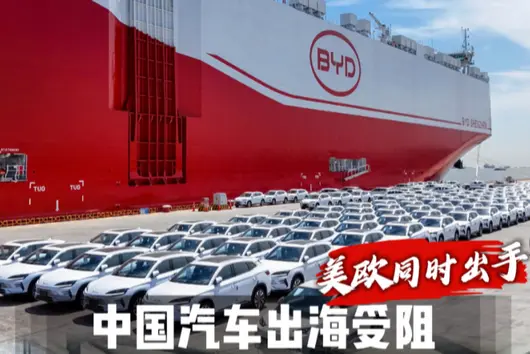
September 2026, US Transportation Secretary Sean Duffy sent a letter to Ford Motor CEO Jim Farley, requesting Ford abandon its strategic partnership with Chinese companies. The letter directly targets Ford's use of CATL-licensed lithium iron phosphate battery technology at its Marshall plant in Michigan.

In past years, restrictions by Europe and US on China's auto industry focused mainly on complete vehicles. In October 2024, the EU added countervailing duties on EVs produced in China on top of 10% import tariffs, with comprehensive rates reaching up to 45.3%.
However, the US approach follows FEOC rules under the Inflation Reduction Act. Starting from 2026, over 60% of cell material costs must come from eligible companies to qualify for tax credits, rising to 75% by 2030.

These barriers previously only focused on "where the car comes from", now they also manage "where the technology comes from".
Ford employs about 1700 American workers at its Michigan plant, the plant is fully owned and operated by Ford, but solely because battery technology comes from CATL via licensing agreement, it was deemed "deeply concerning" by the US Department of Transportation.

EU countervailing duties also brought high costs for Chinese car makers. BYD was levied 17.0% countervailing duties, Geely 18.8%, SAIC Motor reached 35.3%. A Chinese EV priced at 38,000 euros, just tariff cost exceeds 10,000 euros.
But the price commitment mechanism agreed between China and EU in January 2026 provided a buffer channel. Chinese car makers can replace high countervailing duties by committing to minimum import prices and annual export quotas.

This practice of sacrificing some pricing freedom to exchange for qualification to stay in the European market is essentially a strategy of exchanging space for time, but indicators do not treat the root cause.
Take the cooperation between Ford and CATL for example. Ford stated this is not a joint venture, nor foreign manufacturing business, CATL only provides technology licensing and training services, Ford owns the plant and controls operations. But even so, the US government does not allow it.

Of course, from the US government perspective, this concern has its logic. After all, CATL was listed on the so-called "Chinese Military Enterprise List" by the US Department of Defense as early as 2025. Such policy environment, even just technology licensing, faces various uncertainties.
Despite such harsh environment, Chinese auto export data remains strong. First 8 months of 2026, passenger car cumulative exports 6.098 million units, YoY growth 75.7%, annual export volume expected to reach 11.5 to 12 million units.

But export volume is one thing, global capability is another.
Report by global consultancy AlixPartners shows Chinese car makers plan to layout production bases in at least 16 overseas countries. By 2030, overseas production expected to rise from about 1.2 million units in 2025 to 3.4 million. BYD has layouted factories in Thailand, Brazil, Hungary, etc., where Hungary factory expected to produce in 2026, annual capacity 150,000 units. SAIC Thailand factory local content rate has broken 80%.

Actually not only Chinese enterprises, this practice of localizing core supply chain links as much as possible is a general strategy for many multinational car makers to cope with policy risks.
To put it plainly, Chinese car makers doing this is forced by EU/US restrictions on Chinese auto supply chains. Tariffs are one aspect, various technology source reviews, localization rate requirements, and supply chain security rules are deeper constraints.
Chinese car makers' advantages in battery technology, manufacturing costs, and product iteration speed still exist, but now looking, to convert these advantages into global market share, it's not just about selling cars, must build manufacturing, supply chain, and service systems into target markets.

So, this new round of competition triggered by Chinese NEV industry going overseas, is shifting from the product itself to who can build a complete operational system in more markets.
Zhiliao Auto original article, please contact us if reprinting.
*Pictures from internet, please contact author to delete if infringing*

Zhiliao Auto/Faide
September 2026, Menteri Pengangkutan Amerika Syarikat Sean Duffy menghantar surat kepada Ketua Pegawai Eksekutif Ford Jim Farley, meminta Ford melepaskan rakan strategik dengan syarikat China. Surat ini secara langsung merujuk kepada penggunaan teknologi baterai LiFePO4 yang dilisensikan oleh CATL di Pabrik Marshall, Michigan oleh Ford.
Beberapa tahun kebelakangan ini, sekatan Eropah dan Amerika terhadap industri automotif China tertumpu pada peringkat kenderaan siap. Pada Oktober 2024, Kesatuan Eropah mengenakan cukai anti-subsidi di atas eksport kenderaan elektrik buatan China dengan kadar cukai import 10%, mencapai kadar gabungan maksimum 45.3%.
Tetapi tindakan Amerika adalah berdasarkan peraturan FEOC di bawah Akta Penurunan Inflasi. Sejak 2026, kos bahan sel bateri mesti lebih daripada 60% datang daripada syarikat patuh syarat untuk layak menerima kredit cukai, dan nisbah ini akan meningkat kepada 75% menjelang tahun 2030.
Halangan ini sebelum ini hanya menumpu pada "daripada mana kereta datang", sekarang juga perlu mengawal "daripada mana teknologi datang".
Ford mempekerjakan kira-kira 1,700 pekerja di Pabrik Michigan. Pabrik ini dimiliki dan dioperasi sepenuhnya oleh Ford, tetapi hanya kerana teknologi bateri datang melalui perjanjian lisensi dari CATL, ia telah ditentukan oleh Jabatan Pengangkutan Amerika sebagai "sangat membimbangkan".
Cukai anti-subsidi Kesatuan Eropah juga membawa kos yang tinggi kepada syarikat automotif China. BYD dikenakan cukai anti-subsidi 17.0%, Geely 18.8%, dan SAIC mencapai 35.3%. Untuk sebuah kenderaan elektrik China berharga 38,000 Euro, kos cukai import sahaja melebihi 10,000 Euro.
Tetapi mekanisme janji harga yang dicapai antara China dan Eropah pada Januari 2026 menyediakan saluran penimbal. Syarikat automotif China boleh menggantikan cukai anti-subsidi yang tinggi dengan berjanji menetapkan harga import minimum dan kuota eksport tahunan.
Tindakan menyerahkan sebahagian kebebasan penetapan harga untuk mendapatkan kelayakan pasar Eropah ini, secara asasnya adalah strategi menukar ruang dengan masa, tetapi indikator ini tidak menyelesaikan punca masalah.
Ambil kerjasama Ford dengan CATL sebagai contoh. Ford telah berkata, ini bukan syarikat milik bersama, bukan juga bisnis pembuatan asing, CATL hanya menyediakan perkhidmatan lisensi dan latihan teknologi, Ford memiliki pabrik dan mengawal operasi. Tetapi walaupun begitu, kerajaan Amerika tidak mengizinkannya.
Tentu saja, dari sudut pandangan kerajaan Amerika, kebimbangan ini mempunyai logiknya.毕竟 CATL telah dimasukkan ke dalam apa yang dipanggil "Senarai Syarikat Militer China" oleh Kementerian Pertahanan Amerika sejak 2025, persekitaran dasar ini, walaupun hanya lisensi teknologi akan menghadapi berbagai ketidakpastian.
Walaupun persekitaran begitu buruk, data eksport automotif China tetap kuat. Pada 8 bulan pertama tahun 2026, jumlah eksport kenderaan penumpang kumulatif mencapai 6.098 juta unit, meningkat 75.7% tahun ke tahun, dan jumlah eksport tahunan dijangka mencapai 11.5 juta hingga 12 juta unit.
Tetapi jumlah eksport adalah satu hal, keupayaan globalisasi adalah hal lain.
Laporan dari Alvarez & Marsal, syarikat perundingan global, menunjukkan bahawa syarikat automotif China merancang untuk menubuhkan tapak pengeluaran di sekurang-kurangnya 16 negara di luar negara. Dianggarkan menjelang 2030, pengeluaran luar negara akan meningkat dari kira-kira 1.2 juta unit pada 2025 kepada 3.4 juta unit. BYD telah mengagihkan pabrik di Thailand, Brazil, Hungary, dll. Pabrik Hungary dijangka beroperasi pada 2026 dengan kapasiti tahunan 150,000 unit. Kadar sokongan tempatan pabrik Thailand SAIC telah melepasi 80%.
Sebenarnya bukan hanya syarikat China, amalan menepatkan komponen rantaian bekalan teras sebanyak mungkin di tempatan adalah strategi umum digunakan oleh banyak syarikat automotif multinasional untuk menghadapi risiko dasar.
Berdasarkan cakap kasar, syarikat automotif China melakukannya, semua dipaksa oleh sekatan Eropah dan Amerika terhadap rantaian bekalan automotif China. Cukai import adalah satu aspek, pelbagai pemeriksaan sumber teknologi, tuntutan kadar pendudukan tempatan dan peraturan keselamatan rantaian bekalan adalah pembatasan yang lebih mendalam.
Kelebihan syarikat automotif China dalam teknologi bateri, kos pembuatan dan kecepatan pengulangan produk masih wujud, tetapi sekarang dilihat, kelebihan ini hendak ditukar menjadi bahagian pasaran global, bukan sahaja boleh menjual kereta, tetapi juga mesti membina sistem pembuatan, rantaian bekalan dan perkhidmatan di pasaran sasaran.
Oleh itu, pertandingan baharu yang dipicu oleh eksport industri kenderaan elektrik baharu China ini, kini berubah dari produk itu sendiri kepada siapa yang boleh membina sistem operasi lengkap di lebih banyak pasaran.
Artikel Asal Zhiliao Auto, jika perlu terjemahkan sila hubungi kami
*Gambar diambil dari internet, jika ada kesalahan sila hubungi penulis untuk pemadaman*


Penulis | He Wen
Penyunting | Kumpulan Maklumat Bisnes Qujie
Kitaran ini pengeluar kereta membina bateri sendiri, mungkin bukan sahaja senarai pembekal yang diubah, tetapi juga model keuntungan CATL yang bergantung pada sistem bateri lengkap untuk mendapatkan nilai lebih.
Malam 18 September, selepas pelancaran Xpeng G9L, pengasas Xpeng, He Xiaopeng ketika menjawab soalan media mengenai sama ada akan membuat penyelidikan bateri sendiri, menyatakan, "Mulai tahun ini, bateri Xpeng semuanya kami buat sendiri"; Sebelum ini, Li Auto juga mengumumkan bahawa pembuatan bateri sendiri akan secara beransur-ansur merangkumi semua model kereta.
Pernyataan pengeluar kereta mempercepatkan masuk ke bidang pembuatan bateri, dengan segera membentuk maklum balas di pasaran modal. 18 September, bahag CATL (Saham A) ditutup pada 301.95 Yuan/saham, penurunan melebihi 35% berbanding titik tinggi tahun ini pada 7 Mei pada 467.34 Yuan, Saham Hong Kong ditutup pada 507 Dollar Hong Kong/saham, merupakan paras terendah intra-perdagangan sejak 10 Mac, jumlah nilai pasaran saham A+H menguap melebihi 700 Miliar Yuan berbanding titik tertinggi.

Sumber gambar: Tangkapan skrin Baidu
Pasaran umumnya melihat pembangunan bateri sendiri oleh pengeluar kereta sebagai dua perkara: menjimatkan kos dan menjamin bekalan. Namun perubahan yang berlaku dalam industri jauh lebih daripada sekadar menukar pembekal, pengeluar kereta berusaha mengambil semula kuasa definisi produk bateri, laluan keuntungan CATL yang dahulu bergantung pada sistem bateri lengkap untuk mendapatkan premium, sedang terjejas, model perniagaan asal kini mengalami penstrukturan semula.
1. Kuasa definisi beralih, kuasa pembuatan kekalPertama, lihat jelas apa yang sebenarnya dilakukan oleh pengeluar kereta. Mereka tidak membina kilang sel bateri secara menyeluruh sendiri, melainkan mereka memegang kuasa definisi produk seperti formula bateri, logik cas pantas, strategi BMS, piawaian integrasi kenderaan lengkap dalam tangan mereka sendiri, peringkat pembuatan sel bateri diserahkan kepada pembekal bateri untuk diselesaikan.
Contohnya, 'Bateri Longjia' Xiaomi, dimanfaatkan oleh Xiaomi untuk definisi produk dan reka bentuk pembangunan pakej bateri, CALB dan Sunwoda membuat sel bateri khusus mengikut piawaian Xiaomi; pembangunan bateri Li Auto sendiri, pakej bateri direka dan dibuat sendiri, sel bateri dihasilkan oleh Sunwoda dan CALB; Xpeng pula mengambil semula keseluruhan rantaian pakej bateri, hanya mengekalkan pembelian sel bateri dari luar.
Ini tepat mengenai sumber utama keuntungan tinggi CATL. Dahulu, ia menghantar satu set 'solusi bateri + bekalan terikat eksklusif', dalam satu pesanan sekaligus memperoleh teknologi, sistem solusi, serta kelebihan tawar-menawar dari bekalan eksklusif. Kini pengeluar kereta memegang faktor-faktor seperti formula, struktur, integrasi kenderaan lengkap dalam tangan mereka sendiri, hanya membeli sel bateri khusus dari pengilang bateri, ruang perniagaan CATL bergantung pada pakej bateri lengkap untuk mendapatkan premium, kini menghadapi tekanan ketara.
Perubahan juga tercermin dalam data laporan kewangan. Setengah tahun pertama 2026, sumber pendapatan terbesar CATL — margin keuntungan sistem bateri tenaga telah turun ke 20.63%, turun 1.78 poin peratusan berbanding tahun sebelumnya.

Sumber gambar: Tangkapan skrin laporan separuh tahun
Logik kemunculan pengilang bateri tahap kedua menjadi jelas, selain dari pertukaran teknologinya sendiri, yang lebih penting adalah kesediaan untuk menyesuaikan dengan definisi produk pengeluar kereta, menerima pembangunan penyesuaian mendalam. Li Auto menambah modal Sunwoda sebanyak 2.65 Miliar Yuan, menjadi pemegang saham kedua terbesarnya, CALB juga berkembang menjadi pembekal utama Xpeng. Dalam struktur rantaian industri semasa, pengilang yang boleh melaksanakan solusi sel bateri penyesuaian pengeluar kereta, mempunyai harapan mendapat bahagian tambahan yang dibebaskan oleh CATL.
2. 'Bisa membina kereta, belum tentu bisa membina bateri'Pengambilalisan semula kuasa definisi oleh pengeluar kereta, pada hakikatnya adalah satu pembahagian semula keuntungan.
Dalam beberapa tahun kebelakangan ini, keuntungan industri rantaian tenaga baru telah menumpu banyak ke peringkat bateri. Setengah tahun pertama 2026, keuntungan bersih CATL adalah 43.284 Miliar Yuan, berdasarkan statistik, keuntungan bersih 15 pengeluar kereta terkemuka yang disenaraikan seperti BYD, SAIC, Geely, Chery berjumlah 21.048 Miliar Yuan, tidak melebihi separuh daripada syarikat itu sendiri. Sejak tahun 2022, Pengerusi GAC Group, Zeng Qinghong, telah mengeluh secara terbuka: "Bateri mengambil 60% kos kenderaan lengkap, bukankah saya hanya bekerja untuk CATL?"

Sumber gambar: Tangkapan skrin laporan separuh tahun
Kitaran ini pengeluar kereta membuat penyelidikan sendiri dan menyokong beberapa pembekal, matlamatnya adalah menekan keuntungan lebihan peringkat bateri, memacu keuntungan kembali ke peringkat kenderaan lengkap. Industri bateri litium mungkin dari keuntungan tinggi peringkat tertentu dahulu, kembali kepada tahap keuntungan yang lebih adil dalam pembuatan.
Tetapi membuat kesimpulan bahawa 'CATL akan digantikan' masih terlalu awal. Pembangunan bateri sendiri oleh pengeluar kereta mempunyai had semula jadi, He Xiaopeng dengan jelas menyatakan dalam temu bual bahawa Xpeng bukan untuk menghasilkan sel bateri sendiri, pelaburan sel bateri pada akhirnya masih milik orang lain.
Pengeluar kereta mahir dalam definisi produk kenderaan lengkap dan integrasi sistem, tetapi menghadapi ambang yang lebih tinggi dalam kecacatan, keseragaman, dan pengawalan kos pengeluaran skala besar sel bateri; pembuatan sel bateri adalah industri aset berat, hanya dengan skala yang cukup boleh mengurangkan kos, sekali jualan berosilasi, keupayaan aset berat akan menyeret kebelakang carta akaun pengeluar kereta. Pegawai Pembuatan Utama CATL, Ni Jun, pernah berkata dengan terang-terangan: 'Mampu membina kereta, belum tentu mampu membina bateri, masih perlu orang pakar, buat kerja pakar.'
Kuasa definisi boleh diperebutkan, tetapi halangan pembuatan berskala besar sukar dipindahkan dengan cepat. Setengah tahun pertama ini, kadar kegunaan keupayaan sistem bateri CATL mencapai 94.86%, keupayaan sedang dalam pembinaan adalah 764GWh; kilang Jerman telah mencapai keuntungan, pangkalan Hungary, Sepanyol, Indonesia telah berturutan direalisasikan. Berdasarkan data yang dikeluarkan oleh organisasi kajian pasaran Korea SNE Research, Januari hingga Mei 2026, bahagian pasaran sistem bateri tenaga global CATL untuk pertama kali melampaui 40%, mencapai 40.2%.

Sumber gambar: Tangkapan skrin laporan separuh tahun
CATL bahkan telah mula berebut kuasa definisi secara songsang, ia memperkenalkan blok penukaran bateri piawai 75# untuk trak berat, mengatur dasar cakerawala satu unit untuk kenderaan ringan, membungkus 'bateri + chassis' menjadi penyelesaian piawai yang boleh dibeli oleh pengeluar kenderaan lengkap, cuba mengubah dirinya semula menjadi 'orang yang menetapkan piawai'. Pada model premium di atas 300,000 Yuan, Kirin dan ShenXing Super Charge masih menjadi penyelesaian teknologi utama pada tahap prestasi dan keselamatan. Walaupun pengeluar kereta secara umum memperkenankan pembekal kedua, ketiga, untuk pelbagai susun atur rantaian bekalan, tetapi model flaghip premium yang terjual utama, kebanyakan masih mengekalkan CATL dalam senarai pembekal.
Jadi industri kemungkinan besar tidak akan menuju penggantian mudah, di trek sistem bateri tenaga domestik, lebih mungkin membentuk struktur keseimbangan dua hala: pengeluar kereta memperjuangkan kuasa definisi produk, mendorong lebih banyak keuntungan rantaian industri kembali ke peringkat kenderaan lengkap; CATL mempertahankan keupayaan teras pembuatan bertaraf tinggi.
Namun cabaran masih wujud secara objektif. Jika model premium lain mendominasi definisi bateri secara mendalam pada masa hadapan, kelebihan prestasi produk pengilang bateri utama secara beransur-ansur berubah menjadi keupayaan umum industri, premium produk sedia ada CATL masih mempunyai kemungkinan terus ditekan.
Menghadapi tekanan permainan di pasaran domestik, CATL juga tidak meletakkan semua taruhan pada perniagaan sistem bateri tenaga pengeluar kereta domestik, pasaran luar negara dan perniagaan tenaga disimpan menjadi tulang belakang pertumbuhan penting. Setengah tahun pertama, perniagaan tenaga disimpan mencapai pendapatan 53.261 Miliar Yuan, meningkat 87.54% tahun ke tahun; pendapatan luar negeri 87.129 Miliar Yuan, meningkat 42.35% tahun ke tahun, margin keuntungan perniagaan luar negeri adalah 29.97%, jelas lebih tinggi daripada perniagaan dalam negeri yang 21.16%.
Bagi CATL, risiko sebenar tidak terletak pada digantikan sepenuhnya oleh pengeluar kereta, tetapi pada sama ada ia boleh menyesuaikan diri dengan margin keuntungan yang semakin nipis di pasaran domestik, bergantung pada kelebihan pembuatan, pelbagai susun atur global dan perniagaan tenaga disimpan, untuk terus memperoleh keuntungan yang munasabah.

Author | Hao Wen
Editor | Qujie Business News Group
In this round of car manufacturers developing batteries in-house, what might be rewritten is not just the supplier list, but also CATL's profit model relying on a complete battery system to obtain premiums.
On the evening of September 18, after the Xpeng G9L launch event, Xpeng founder He Xiaopeng stated in response to media inquiries about whether they would develop batteries in-house, "Starting this year, Xpeng will handle batteries entirely in-house;" previously, Li Auto also announced that self-developed batteries will gradually cover all models.
Car manufacturers' accelerated commitment to developing batteries quickly formed a response in the capital market. On September 18, CATL's A-share closed at 301.95 yuan/share, a drop of more than 35% from the year's high of 467.34 yuan on May 7. The HK share closed at 507 HKD/share, a new intraday low since March 10. The total market capitalization of A+H shares evaporated by more than 700 billion yuan from the peak.
Image Source: Baidu Screenshot
The market generally views car manufacturers developing batteries in-house as two things: saving costs and ensuring supply. But the changes happening in the industry are far more than just replacing suppliers. Car manufacturers are seeking to regain product definition rights over batteries. CATL's past profit path relying on complete battery system solutions to obtain premiums is being impacted, and the original business model is facing structural adjustments.
1. Definition Rights Shift Down, Manufacturing Rights Remain CentralFirst, clearly see what car manufacturers are actually doing. They are not fully building battery cell factories themselves, but are keeping product definition rights such as battery formulas, fast-charging logic, BMS strategies, and vehicle integration standards in their own hands, while handing over the battery cell manufacturing process to battery suppliers.
For example, Xiaomi's "Longjia Battery" involves Xiaomi responsible for product definition and battery pack design and development, with CALB and Sunwoda customizing battery cells according to Xiaomi standards; Li Auto's battery self-research involves self-developed and self-made battery packs, with cells produced by Sunwoda and CALB; Xpeng has taken back the entire battery pack chain, retaining only the procurement of battery cells.
This exactly hits CATL's core source of high gross margins. In the past, it delivered a complete set of "battery solutions + exclusive designated supply", obtaining technology, system solutions, and pricing dividends from exclusive supply in one order. Nowadays, car manufacturers hold formulas, structures, vehicle integration, and other links in their own hands, only purchasing customized battery cells from battery manufacturers. CATL's business space for obtaining premiums relying on complete battery packs is facing obvious squeezing.
Changes are also reflected in financial report data. In the first half of 2026, CATL's largest revenue source - power battery system gross margin dropped to 20.63%, a year-on-year decline of 1.78 percentage points.
Image Source: Semi-Annual Report Screenshot
The rising logic of second-tier battery factories has also become clear. In addition to their own technology iterations, the key lies in being willing to adapt to car manufacturers' product definitions and undertake deep customization development. Li Auto injected 2.65 billion yuan to increase capital in Sunwoda, becoming its second-largest shareholder. CALB has also grown into Xpeng's main supplier. Under the current industry chain pattern, manufacturers capable of implementing car manufacturer customized battery cell solutions are expected to capture the incremental share released by CATL.
2. "Know How to Build Cars, Not Necessarily How to Build Batteries"Car manufacturers regaining definition rights is essentially a redistribution of profits.
In the past few years, profits in the new energy vehicle industry chain have concentrated heavily on the battery segment. In the first half of 2026, CATL's net profit attributable to parent company was 43.284 billion yuan, while according to statistics, the combined net profit of 15 mainstream listed car manufacturers such as BYD, SAIC, Geely, Chery, etc., was 21.048 billion yuan, less than half of CATL alone. As early as 2022, GAC Group's then Chairman Zeng Qinghong openly complained: "Batteries account for 60% of the vehicle cost, aren't I just working for CATL?"
Image Source: Semi-Annual Report Screenshot
In this round, car manufacturers developing batteries in-house combined with multiple suppliers running in parallel, the goal is to squeeze excess profits in the battery segment and promote profits to flow back to the vehicle end. The lithium battery industry may return from past phased high returns to a relatively fair profit level of manufacturing.
But inferring "CATL will be replaced" based on this is still premature. Car manufacturers' battery self-research has a natural ceiling. He Xiaopeng explicitly stated in an interview that Xpeng does not intend to enter the production of battery cells itself; investing in battery cells is ultimately for others.
Car manufacturers are good at vehicle product definition and system integration, but face high thresholds in yield, consistency, and cost control of mass production of battery cells; battery cell manufacturing belongs to capital-intensive industries, only sufficient scale can dilute costs. Once sales fluctuate, capital-intensive capacity will drag down the car manufacturer's balance sheet. CATL's Chief Manufacturing Officer Ni Jun once openly stated: "Knowing how to build cars doesn't mean knowing how to build batteries, professionals should do professional things."
Definition rights can be contested, but barriers to mass production are difficult to migrate quickly. In the first half of this year, CATL's battery system capacity utilization rate reached 94.86%, with 764 GWh of capacity under construction; the German plant has already achieved profitability, and bases in Hungary, Spain, and Indonesia are landing successively. According to data released by Korean market research firm SNE Research, from January to May 2026, CATL's global power battery market share broke through 40% for the first time, reaching 40.2%.
Image Source: Semi-Annual Report Screenshot
CATL has even started to fight back for definition rights. It launched the 75# standardized battery swapping block for heavy trucks, laid out passenger car integrated smart chassis, packaged "battery + chassis" into a standardized solution that vehicle manufacturers can procure, trying to turn itself back into the "person who sets standards". On high-end models above 300,000 yuan, Qilin and Shenxing supercharging remain the mainstream technical solutions in terms of performance and safety. Although car manufacturers generally introduce second and third suppliers and carry out diversified supply chain layouts, for main-selling high-end flagship models, most will still keep CATL in the supplier list.
Therefore, the industry is unlikely to move towards simple substitution. In the domestic power battery track, a two-way check and balance pattern is more likely to form: car manufacturers strive for product definition rights, promoting more industry chain profits to flow back to the vehicle end; CATL guards the core capabilities of high-end manufacturing.
However, challenges still objectively exist. If more high-end models deeply dominate battery definitions later, the product performance advantages of leading battery enterprises gradually turn into industry general capabilities, and CATL's existing product premiums still have the possibility of being continuously compressed.
Facing the gaming pressure of the domestic market, CATL has not bet all its chips on domestic car manufacturers' power battery businesses. Overseas markets and energy storage businesses have become important growth pillars. In the first half of the year, the energy storage business achieved revenue of 53.261 billion yuan, a year-on-year increase of 87.54%; overseas revenue was 87.129 billion yuan, a year-on-year increase of 42.35%, with overseas business gross margin at 29.97%, significantly higher than the domestic business's 21.16%.
For CATL, the real risk does not lie in being completely replaced by car manufacturers, but in whether it can adapt to the gross margin in the domestic market that is tending to thin out, relying on manufacturing advantages, global layout, and energy storage business to continuously obtain reasonable returns.

Have you ever calculated this: For a new energy vehicle selling at 200,000, how much money can the car manufacturer keep in their pocket at the end?
The answer is possibly less than 10,000. And how much can the battery supplier take from these 200,000? More than 60,000. This isn't the most heartbreaking part. What truly makes the industry restless is that CATL earned 20.7 billion in the first quarter of this year, while the combined earnings of several top domestic car manufacturers are less than a fraction of that. Some joke that building cars nowadays isn't working for CATL, it's working for free for CATL. This sounds exaggerated, but looking at the freshly released Q1 report, most car manufacturers probably can't smile.
Car manufacturing profits all ran into the battery factory's pocketCATL's numbers for Q1 2026 are truly eye-catching, achieving 129.131 billion yuan in revenue, with a net profit attributable to shareholders of the listed company at 20.738 billion yuan, a year-on-year increase of 48.52%, earning a net profit of 230 million yuan daily. What does this concept mean? Just look at the report cards submitted by car manufacturers in the first quarter to understand.

In Q1, BYD achieved revenue of 150.225 billion yuan, with net profit attributable to shareholders of 4.085 billion yuan. Geely Automotive's Q1 revenue was 83.776 billion yuan, with net profit attributable only 4.166 billion yuan. Great Wall Motor's situation is similar, Q1 revenue 45.109 billion yuan, but net profit attributable is only 945 million yuan. Looking at Changan Automobile, Q1 revenue is about 32.706 billion yuan, net profit attributable to shareholders is only 351 million yuan.
That is to say, BYD's profit in three months is less than 4.1 billion, Geely less than 4.2 billion, Great Wall less than 1 billion, and Changan is only 351 million. CATL's single-quarter net profit is five times that of BYD, more than twice that of Geely and Great Wall combined, and Changan is left behind by an order of magnitude.
Putting these numbers into perspective, a more intuitive comparison comes from the industry as a whole. Cui Dongshu, Secretary General of CPCA, previously gave data showing that in Q1 2026, China's automotive industry revenue was 2.4128 trillion yuan, profit was 78.4 billion yuan, down 18% year-on-year, sales profit margin further dropped to 3.2%. And a year ago, the profit margin for the entire domestic automotive industry in the first half of the year had already been compressed to around 4.8%. Now it's not only not improved but worse.

According to industry data, the proportion of power batteries in the total cost of a vehicle has reached 30% to 40%. If the price of lithium is high, this proportion could be even higher. Considering the fierce price war in the new energy vehicle market price today, with an average drop of 38,000 yuan, the profit space for car manufacturers has been compressed to the extreme.
This is why many consumers find that new energy vehicles of the same level have small price differences, but configurations are getting more competitive. Because the only thing that can make a difference is remaining in intelligence and cockpit experience, while the most valuable batteries, everyone basically gets goods from the same supplier. A single quarter's profit of a battery supplier is higher than the combined profit of several top car manufacturers. Is this really a healthy industry ecosystem?
A car holds batteries, but more importantly, others' profitsZeng Qinghong of GAC Group said at the 2022 World Power Battery Conference that power battery costs account for 40% to 60% of the total vehicle cost. He joked saying "Am I not working for CATL now?". Fast forward nearly 4 years, this sentence remains a true portrayal of the entire industry.
When an ordinary car owner buys a car, they of course care most about range and reliability, and CATL's reputation in these two matters is indeed solid. But the greater the reputation, the harder it is for car manufacturers to break free from dependence. When a supplier accounts for over 43% of the power battery installation share in China, any car manufacturer wanting to switch supply plans has to consider whether consumers will approve. At the same time, battery companies have also unknowingly grasped pricing power and discourse power. Car manufacturers not only have to pay money but also queue up to pay prepayments to lock capacity. This kind of supply chain relationship was almost unimaginable in the traditional automobile industry era.

If we compare CATL with an engine-making enterprise, this contrast becomes clearer. Taking Weichai Power as an example, as the leading enterprise in the domestic engine field, 2025 full-year revenue was 231.8 billion yuan, net profit attributable to 10.9 billion yuan. While CATL's single-quarter net profit in 2026 alone exceeded 20 billion yuan, close to twice Weichai's full-year profit.

If Weichai represents the traditional internal combustion engine era still maintaining balance between vehicle manufacturers and parts suppliers, then in the power battery field, this balance has been completely broken. An owner might rarely ask what brand of engine is in the car when buying, but more and more people will actively check if this car uses CATL's battery. This is the power of consumer-end cognition, and this power in turn gives battery manufacturers greater bargaining confidence.
When battery manufacturers grasp the "steering wheel" of the industry, what do consumers feel?For ordinary consumers, changes in the profit structure of the industry upstream will eventually fall on the reality of car selection and driving experience. The most direct manifestation is the "breaking out" of battery brands. A few years ago, few people would care which company's cells an electric vehicle used, but now many potential car buyers will actively check which company is the battery supplier of a certain car when browsing forums or watching car reviews, or even take "CATL" as an important car purchasing decision factor. This cognitive migration objectively gives CATL greater market appeal and makes car manufacturers more cautious in supplier selection.

From a more realistic driving scenario, this trend of upstream profit centralization is also affecting product definition and pricing strategies. Batteries account for over 30% of the total vehicle cost, meaning that for car manufacturers to launch an affordable model, they must make trade-offs in battery capacity. This is why there are some entry-level models in the market with shorter range but guaranteed battery brands. It's not that car manufacturers don't want to give big batteries, but the batteries themselves are too expensive. For budget-limited family users, this sometimes becomes a dilemma: if you want long range, you have to accept a higher car price; if you want it cheap, range and battery brand may have to compromise.
Another noteworthy phenomenon is that car manufacturers, in order to cope with battery cost pressure, are ganging up to build their own battery production lines. Whether it is a car manufacturer like BYD which already has battery self-supply capability, or other car manufacturers that have entered or are entering the field, they are all trying to master the battery business themselves. But whether this practice can fundamentally change the profit distribution pattern is still hard to say. After all, building a complete battery production line requires throwing billions in, technology accumulation and yield ramp-up also require a long cycle, not every car manufacturer can afford it. And in this process, car manufacturers' R&D expenses continue to rise, while terminal prices drop again and again, and profits are squeezed even thinner.

This phenomenon of profit inversion between battery manufacturers and car manufacturers is unlikely to reverse in the short term. CATL's domestic installation share has risen to 47.7% in Q1 2026, increasing by another 3.4 percentage points year-on-year, and market concentration is further improving. For consumers who want to buy new energy vehicles, this means that battery brands will remain a realistic proposition that must be faced when selecting cars for a long time. And when the most cost item of a car is in the hands of one supplier, the discourse power of the entire industrial chain is also transferring quietly. This transfer will eventually reflect in the choices of every car buyer in terms of price, configuration, driving experience, etc.
To put it simply, the growth of the domestic new energy vehicle market now is not as crazy as the previous two years, the growth rate of new car registration volume is slowing down, the penetration rate in first and second-tier cities is gradually hitting the ceiling, and the consumer power of third and fourth-tier markets needs time to cultivate. In this situation, whether car manufacturers or battery manufacturers, they have to fight for meat in the stock market, and price wars will inevitably get fiercer, and profits will naturally become thinner. Although CATL's Q1 net profit of 20.7 billion yuan is eye-catching, this is behind the squeezed survival space of small and medium battery enterprises and vehicle manufacturers. If we only look at this domestic cake, sooner or later everyone will be unable to fight for it.

So, going overseas is the solution. Europe, Southeast Asia, the Middle East, South America, the penetration rate of new energy vehicles in these places is still very low, and the market space is much larger than in China. CATL has already built factories in Germany and Hungary, and recently there are reports that they intend to further layout in Spain or Indonesia. On the car manufacturer side, BYD, SAIC, Geely, etc., are also accelerating the landing of overseas factories and sales networks. Selling products and technology to the global market, making the global market capacity larger, only then will the entire industrial chain have the opportunity to move from "rolling profits" to "sharing increments".
If Chinese new energy vehicles and batteries can stand firm overseas, scale effects will further reduce costs, and domestic car prices are expected to become more reasonable. At the same time, the competitive environment of the overseas market forces enterprises to improve product quality and service standards, and the ultimate beneficiary is still the ordinary car buyer. Instead of consuming each other in the domestic red ocean, why not work together to make the cake bigger. The pattern of battery manufacturers eating meat and car manufacturers drinking soup will not change in a day, but when everyone turns their eyes to a wider world, at least the meat in this pot of soup will be much more than now.

Adakah anda pernah mengira: sebuah kenderaan baharu berharga 200,000 Yuan, berapa banyak sebenarnya pengeluar kereta dapat simpan di poket mereka pada akhirnya?
Jawapannya mungkin kurang dari 10,000 Yuan. Dan pengeluar bateri yang membekalkan untuk kereta ini, berapa banyak yang mereka ambil daripada 200,000 itu? Lebih 60,000 Yuan. Ini bukanlah perkara yang paling menyakitkan. Yang benar-benar membuat industri tidak tenang ialah, CATL telah untung 20.7 bilion pada suku pertama tahun ini, sementara beberapa pengeluar kereta terkemuka di dalam negara jika digabungkan, keuntungan yang diperoleh kurang daripada sebahagian kecil daripadanya. Ada yang berseloroh, sekarang orang yang membina kereta bukan bekerja untuk CATL, tetapi bekerja percuma untuk CATL. Ucapan ini kedengaran sedikit berlebihan, tetapi lihat laporan kuartal pertama yang baru keluar, dianggarkan kebanyakan pengeluar kereta tidak mampu tersenyum.
Keuntungan membina kereta, semuanya masuk ke poket kilang bateri
Angka CATL pada suku pertama 2026 benar-benar cemerlang, mencapai jualan sebanyak 129.131 bilion Yuan, keuntungan bersih untuk pemegang saham syarikat tersenarai ialah 20.738 bilion Yuan, kenaikan tahun ke tahun 48.52%, untung bersih sebanyak 2.3 bilion Yuan sehari. Apakah maksudnya ini? Lihatlah skor yang diserahkan oleh pelbagai pengeluar kereta pada suku pertama untuk memahaminya.
BYD mencapai jualan 150.225 bilion Yuan pada suku pertama, keuntungan bersih untuk pemegang saham syarikat tersenarai ialah 4.085 bilion Yuan. Jualan Geely Automobile pada suku pertama ialah 83.776 bilion Yuan, keuntungan bersih bagi pemegang saham induk hanya 4.166 bilion Yuan. Kedudukan Great Wall Motors juga serupa, jualan suku pertama 45.109 bilion Yuan, keuntungan bersih pemegang saham induk hanya 945 juta Yuan. Lihat Changan Automobile pula, jualan suku pertama sekitar 32.706 bilion Yuan, keuntungan bersih untuk pemegang saham syarikat tersenarai hanyalah 351 juta Yuan.
Maksudnya, keuntungan BYD selama tiga bulan kurang dari 4.1 bilion, Geely kurang dari 4.2 bilion, Great Wall kurang dari 1 bilion, Changan hanya 350 juta sahaja. Manakala keuntungan bersih CATL dalam satu kuartal, ialah lima kali ganda BYD, dua kali ganda lebih daripada gabungan Geely dan Great Wall, meninggalkan Changan satu tahap.
Jika melihat angka ini secara lebih besar, perbandingan yang lebih jelas berasal daripada keseluruhan industri. Data yang diberikan oleh Setiausaha Agung Persatuan Pemasaran Kenderaan China (CPCA), Cui Dongshu sebelum ini menunjukkan, pada suku pertama 2026, pendapatan industri automotif negara kita 241.28 bilion Yuan, keuntungan ialah 7.84 bilion Yuan, menurun 18% dari tahun ke tahun, kadar keuntungan jualan menurun lebih jauh ke 3.2%. Dan satu tahun lalu, kadar keuntungan industri automotif dalam negara di separuh tahun pertama telah dipampatkan ke sekitar 4.8%, kini tidak ada peningkatan, malah lebih buruk.
Mengikut data industri, bahagian bateri kuasa dalam kos keseluruhan kereta telah mencapai 30% hingga 40%. Jika berdepan dengan tempoh harga lithium tinggi, nisbah ini mungkin lebih tinggi. Dengan mengambil kira sekarang perang harga pasaran kenderaan baharu berjalan panas, purata penurunan mencapai 38,000 Yuan, ruang keuntungan pengeluar kereta telah dipampatkan sehingga ke had.
Itulah sebabnya banyak pengguna akan dapati, perbezaan harga kenderaan baharu pada tahap yang sama tidak begitu besar, tetapi kelengkapan semakin kompetitif. Kerana pembezaan yang sebenar hanya tinggal pada tahap kecerdasan, pengalaman kabin, manakala bateri yang paling berharga, orang ramai pada dasarnya membelinya dari pembekal yang sama. Untung satu kuartal seorang pembekal bateri, lebih tinggi daripada gabungan beberapa pengeluar kereta terkemuka, adakah ini benar-benar satu ekosistem industri yang sihat?
Satu kereta diisi dengan bateri, malah keuntungan orang lain
Zeng Qinghong dari Kumpulan GAC berkata pada Mesara Bateri Tenaga Sedunia 2022, kos bateri kuasa mewakili 40% hingga 60% kos keseluruhan kereta, dia menyindir diri sendiri berkata "Saya sekarang bukan bekerja untuk CATL kan?". Hampir 4 tahun berlalu, ucapan ini tetap gambaran sebenar keseluruhan industri.
Pemilik kereta biasa semasa membeli kereta tentu paling prihatin terhadap jarak lintasan dan kebolehpercayaan, manakala reputasi CATL pada dua perkara ini memang kukuh. Tetapi semakin besar reputasi, semakin sukar bagi pengeluar kereta untuk melepaskan diri daripada bergantung. Apabila seorang pembekal menyandang lebih daripada 43% bahagian pemasangan bateri kuasa dalam negara, sebarang pengeluar kereta yang ingin menukar pelan pembekalan, perlu menilai sama ada pengguna menerimanya. Pada masa yang sama, perusahaan bateri juga secara tidak sedar menguasai kuasa penentuan harga dan suara, pengeluar kereta tidak hanya perlu membayar, tetapi perlu beratur membayar wang tunai awal untuk mengunci kapasiti, hubungan rantaian bekalan ini hampir tidak boleh dibayangkan pada zaman industri automotif tradisional.
Jika membandingkan CATL dengan syarikat pembuat enjin, perbezaan ini lebih jelas. Ambil Weichai Power sebagai contoh, sebagai syarikat terkemuka dalam bidang enjin dalam negara, jualan keseluruhan 2025 ialah 231.8 bilion Yuan, keuntungan bersih pemegang saham induk 10.9 bilion Yuan. Manakala CATL hanya pada satu kuartal 2026 keuntungan bersih sudah melebihi 20 bilion Yuan, mendekati dua kali ganda keuntungan tahunan Weichai.
Jika zaman enjin pembakaran dalaman tradisional yang diwakili Weichai masih mengekalkan keseimbangan antara pengeluar kereta keseluruhan dan pembekal komponen, maka dalam bidang bateri kuasa, keseimbangan ini telah dipecahkan sepenuhnya. Seorang pemilik kereta semasa membeli mungkin jarang bertanya enjin jenama apa yang dipasang pada kereta ini, tetapi semakin ramai orang akan menyemak secara aktif sama ada kereta ini menggunakan bateri CATL, ini adalah kekuatan kesedaran pengguna, dan kekuatan ini sebaliknya memberikan keyakinan lebih besar kepada kilang bateri untuk bernegoisasi.
Apabila kilang bateri menguasai "pacu" industri, apakah yang dirasakan pengguna
Bagi pengguna biasa, perubahan struktur keuntungan hulu industri, akhirnya akan jatuh pada pilihan kereta sebenar dan pengalaman penggunaan. Pernyataan paling langsung ialah populariti jenama bateri. Beberapa tahun lalu, sangat sedikit orang yang akan mengambil tahu sel bateri kereta elektrik menggunakan dari mana, sekarang banyak calon pembeli ketika melawat forum, membaca ulasan kereta, akan menyemak secara aktif pembekal bateri untuk kereta tertentu, malah akan menjadikan "CATL" sebagai faktor penting dalam keputusan pembelian kereta. Perpindahan kesedaran ini, secara objektif memberikan CATL daya tarikan pasaran yang lebih besar, juga membuatkan pengeluar kereta lebih berhati-hati dalam pemilihan pembekal.
Dari sudut skenario penggunaan kereta yang lebih nyata, trend pemusatan keuntungan hulu ini juga mempengaruhi definisi produk dan strategi penetapan harga. Bateri mewakili lebih 30% kos kereta keseluruhan, bermaksud jika pengeluar kereta ingin melancarkan model harga mampu milik, mereka mesti membuat pemilihan dalam kapasiti bateri. Itulah sebabnya terdapat beberapa model masuk ke pasaran yang jarak lintasan agak pendek, tetapi jenama bateri terjamin. Bukan pengeluar kereta tidak mahu memberikan bateri besar, tetapi bateri sendiri terlalu mahal. Bagi pengguna rumah tangga dengan bajet terhad, ini kadangkala menjadi pilihan dilema: mahu jarak lintasan panjang, mesti terima harga kereta lebih tinggi; mahu murah, jarak lintasan dan jenama bateri mungkin perlu berkorban.
Salah satu fenomena yang patut diberi perhatian lain, pengeluar kereta untuk menangani tekanan kos bateri, sedang berkumpul membina garis pengeluaran bateri sendiri. Tidak kira pengeluar seperti BYD yang mempunyai keupayaan bekalan bateri sendiri, atau pengeluar lain yang sudah atau sedang masuk, mereka cuba menguasai perniagaan bateri ini. Tetapi sama ada amalan ini boleh mengubah struktur pembahagian keuntungan dari asasnya, sukar untuk mengatakan sekarang. Memang membina garis pengeluaran bateri lengkap memerlukan melab ratusan bilion, pengumpulan teknologi dan kenaikan kecekapan memerlukan tempoh lama, bukan setiap pengeluar boleh menanggung. Dan dalam proses ini, yuran R&D pengeluar terus meningkat, harga jualan akhir terus menurun, keuntungan dipampatkan semakin tipis.
Fenomena pembalikan keuntungan antara kilang bateri dan pengeluar kereta ini, sukar untuk dipulihkan dalam jangka pendek. Bahagian pemasangan domestik CATL pada suku pertama 2026 telah naik ke 47.7%, meningkat 3.4 peratus mata dari tahun ke tahun, kepekatan pasaran terus meningkat. Bagi pengguna yang mahu membeli kenderaan baharu, ini bermaksud jenama bateri dalam masa depan yang agak lama, tetap merupakan soalan realiti yang perlu dihadapi semasa memilih kereta. Dan apabila item kos utama satu kereta berada di tangan seorang pembekal, suara keseluruhan rantaian industri juga secara senyap berpindah. Pindahan ini, akhirnya akan terpantul dalam pilihan setiap pembeli kereta dalam bentuk harga, kelengkapan, pengalaman penggunaan, dsb.
Secara nyata, pertumbuhan pasaran kenderaan baharu dalam negara sekarang tidak lagi gila seperti dua tahun lalu, kecepatan pertumbuhan kenderaan baharu yang didaftarkan meningkat secara perlahan, kadar penetrasi bandar darjah satu dan dua secara beransur-ansur menyentuh siling, keupayaan pasaran bandar darjah tiga dan empat memerlukan masa untuk dibangunkan. Dalam situasi ini, baik pengeluar kereta mahupun kilang bateri, mesti berebut daging dalam pasaran sedia ada, perang harga pasti semakin ganas, keuntungan semestinya semakin nipis. Keuntungan bersih CATL suku pertama 20.7 bilion Yuan memang cemerlang, tapi di sebalik ini ialah ruang sara hidup syarikat bateri sederhana dan kecil serta pengeluar kereta keseluruhan yang sentiasa dipampatkan. Jika hanya melihat kek dalam negara ini, suatu hari nanti semua orang tidak mampu berebut.
Oleh itu, ke luar negara sahaja adalah jalan penyelesaian masalah. Eropah, Asia Tenggara, Timur Tengah, Amerika Selatan, kadar penetrasi kenderaan baharu di tempat ini masih rendah, ruang pasaran jauh lebih besar berbanding dalam negara. CATL telah membina kilang di Jerman, Hungary, baru-baru ini ada berita mengatakan mereka akan meluaskan lagi strategi di Sepanyol atau Indonesia. Sisi pengeluar kereta, BYD, SAIC, Geely juga mempercepatkan pelaksanaan kilang luar negara dan rangkaian jualan. Jual produk dan teknologi ke seluruh dunia, kembangkan kapasiti pasaran global, rantaian industri ada peluang untuk beralih dari "berebut keuntungan" ke "membahagikan pertambahan".
Jika kenderaan dan bateri baharu China boleh berdiri teguh di luar negara, kesan skala akan menurunkan kos lebih jauh, harga kereta dalam negara juga diharapkan menjadi lebih munasabah. Sementara itu, persekitaran persaingan pasaran luar negara memaksa perusahaan meningkatkan kualiti produk dan piawaian perkhidmatan, akhirnya yang mendapat manfaat ialah pembeli kereta biasa. Daripada saling menghabiskan diri dalam laut merah dalam negara, lebih baik berganding tenaga membesarkan kek. Struktur kilang bateri makan daging, pengeluar kereta minum sup tidak akan berubah dalam sehari, tetapi apabila semua orang menumpukan pandangan ke arah dunia yang lebih luas, sekurang-kurangnya daging dalam periuk sup ini, akan jauh lebih banyak daripada sekarang.

People's sorrows and joys are not shared.
This statement also applies to the automotive industry this year.
Chip price hikes, memory price hikes, precious metal price hikes...The three heavy mountains press the car manufacturers until they can't catch their breath.
The profit margin of complete vehicle manufacturing has dropped toa historical low of 1.5%,even lower than bank fixed deposits.
In contrast, neighbors CATL are experiencing an unprecedented performance explosion.
In the first half of this year, CATLreported revenue of 276.9 billion yuan,a year-on-year increase of 54.8%.What makes people even more envious isa net profit of over 43 billion yuananda profit margin of 15.6%.

After comparison, an old topic is brought up again:
Are car manufacturers working for battery factories? Why does CATL make money?
Actually, the answer lies in a very Chinese business logic - "Win hearts and minds through virtue". This is not empty emotion, but hard core strength in every link of the industry chain.
Today, we will discuss CATL using the semi-annual financial report.
01. Supply Chain System Must Withstand Pressure
In 2022, new energy vehicle sales exploded, but lithium mining couldn't keep up, leading to severe shortage. Battery-grade lithium carbonate reached a historical high of 550,000 yuan/ton;procurement prices shot up like rockets.
At that time, some owners complained:"If the car breaks, changing a battery might be more expensive than the residual value!"

This year, the rapidly rising AI industry not only boosted chips and memory, but also made energy storage batteries, which provide stable power, become a rigid standard for computing power systems.
Consequently, car manufacturers in the manufacturing sector had to fight directly with high-profit tech companies,using high prices to snatch battery capacity.
Combined with the levy of battery consumption tax on Sept 1 this year, battery factories producing in advance, and continuous growth in NEV production and sales, battery-grade lithium carbonate once soared from a low of 58,000 yuan/ton last year to nearly 200,000 yuan/ton,more than 3 times the price!

The new round of battery price hikes,made CATL the target of public criticism once again.
But CATL really shouldn't carry this burden.
According to financial report data, in the first half of this year, CATL battery unit price was about 0.56 yuan/Wh,basically flat with last year.However, the gross profit margin of power battery businesswas 20.6%,down 1.7 percentage points year-on-year, a new low since 2024.
This means,CATL did not raise prices opportunistically, instead yielding part of the profit,actively "blocking bullets" for car manufacturers.

The reason CATL can withstand pressure is partly because since 2021, it has participated in the operation of raw materials like lithium, nickel, cobalt, phosphorus and related industries through self-construction, equity participation, joint ventures, acquisitions, and other methods,
Apart from a few domestic mines and salt lakes, CATL has also made industrial layouts in North America, Congo, Indonesia, Bolivia and other countries and regions,and useslong-term supply agreementsto hedge against the impact of raw material fluctuations on costs.
Taking the cooperation between CATL and Australia's Pilbara Minerals and Indonesian nickel giant ANTAM,supply prices and real-time market prices are decoupled,determined half a year or even a year in advance.

On the other hand, the effectiveness of this strategy of backward pressure on upstream is inseparable from a key factor:
Shipment volume.
In the first half of this year, CATL's total battery capacity was 498GWh,capacity utilization rate 94.86%,leading other battery manufacturers by a landslide.
Global market share of 40.2%, up 2.2 percentage points compared to last year,ranking first globally for 9 consecutive years.
For upstream, this means stable high-value orders and large-scale shipments;
For thecapital-intensivebattery industry, this means fixed costs of production, equipment, and labor can be fully amortized, and no impairment for idle production lines needs to be accrued.
For the same battery selling price of 0.56 yuan/Wh,CATL's cost might be only 0.44 yuan;for battery manufacturers with 60% capacity utilization, the cost might be 0.52 yuan.

Thisflexible profit margin,not only became the confidence for CATL to withstand pressure, but also "saved the day" for car manufacturers who urgently need supply chain support and cost control.
In the first half of this year, CATL's domestic market share has approached the high of 50%.
For every 2 cars sold, 1 uses CATL!

Taking the initiative to withstand upstream cost pressure during industry cyclical fluctuations and not transferring risks to downstream car manufacturers,this responsibility to bear pressure is the first layer of confidence for "winning hearts and minds through virtue"."Winning hearts and minds through virtue" is not enough.
So, why do car manufacturers choose CATL? Is it really just because prices and capacity are stable?
02. Battery Safety Relies on Strength
Only 7 months into this year, there have already been 3 recall-related events triggered by batch quality issues in power batteries.
In users' eyes, the primary responsible party is not the battery manufacturer, but thecar manufacturer they directly interact with.
For car manufacturers, this will quickly causea crisis of trust.The blow to sales and even the brand is devastating.
To reduce power battery failures, we cannot rely solely onvehicle-end softwaremonitoring, temperature control, and early warning, nor can we rely on post-event tracing and accountability, but need battery manufacturers inR&D and production phases,to build a solid foundation.
In plain terms, price stability is just the basic foundation.When car manufacturers choose battery suppliers,the real weakness lies in quality and safety.

In the electrochemical system, micrometer-level defects, one-in-a-million impurities, millivolt-level voltage fluctuations... These process deviations imperceptible to ordinary people can ultimately lead to internal resistance differentiation, temperature rise differences, and self-discharge imbalance constantly accumulating, eventually triggering the butterfly effect, causing irreversible huge losses.
What truly determines the safety and reliability of new energy vehicles over a lifecycle of hundreds of thousands of kilometers is not paper parameters like energy density and charging speed, butthe production consistency of hundreds of cells within the battery pack.
AndSafety brought by quality is exactly where CATL's greatest value lies.

Before leaving the factory, CATL's cells have a very strict hard indicator, known in the industry asPPB— for every 1 billion cells produced, less than 1 is allowed to have defects, 3 orders of magnitude lower than the industry average.
Even large-scale energy storage stations composed of millions of series-parallel connected cells will not trigger system-level safety accidents due to battery quality issues.
But putting effort only at the production end is not enough.
What many people don't know is that CATL has an independent department dedicated to battery safety, led personally by Zeng Yuqun, with over 500 R&D staff, internally called"the Adversarial Team".

Looking at the literal meaning, many would think this is a technical task force of CATL targeting competitor companies.
But in reality,what they fight is not others, but themselves:
"Will CATL's new technology or new products have problems under certain conditions? How big is the problem? Will it affect user life safety? Will it cause a trust crisis for car manufacturers?"
Using this kind of self-doubt, self-evidence, and self-analysis to ensure that even after the battery goes on the market, it can withstand extreme working conditions.
Here, there is also a little-known detail.
Even for niche models likePolestar 2,after a scrape, bottoming out, or replacing the entire battery pack, CATL will still take the damaged battery pack back fordisassembly and research.

On one hand, it is to self-check design defects and be responsible for other users of the same car model;on the other hand, it is to provide practical cases for subsequent R&D in the field ofbattery safety.
Thisattitude of wanting to do a little more on top of the safety bottom lineis something other battery manufacturers do not possess and is a unique competitiveness of CATL.
For this reason, the popular high-end large 6-seaters domestically, NIO ES8, AITO M9, Zeekr 9X, Li Auto L9, are all CATL series;
Including a list of global luxury brands such as Porsche, Maserati, Mercedes-Benz, BMW, Lotus, Volvo, are also using CATL.
Good cars use CATL, which has become an industry consensus.

But in the commercial world of batteries,quality and safety should not be divided by price segments; it should be a basic guarantee.
So even on pure electric cars worth tens of thousands of yuan, CATL's presence can be seen in large quantities.
Even Geely Xingyuan worth tens of thousands of yuan, adoptsCATL cells across the entire series.Relying on advantages in design, space, intelligence, and safety, it delivered over 800,000 units in 664 days since launch, and won the single-car sales champion for the past two years.
This once again verifies that only by earnestly making cars and ensuring safety and quality can one gain the joint recognition of the industry and users.
Carving safety into every detail of the production process, backing up user travel safety and car manufacturer brand reputation, this persistence in integrity is the second layer core of "winning hearts and minds through virtue".
03. The Automotive Industry Lacks Steadfastness
In an era where price cuts are almost instinctive,the steadfastness to resist the temptation of "bleeding involution" has instead become a scarce ability. Holding 372 billion yuan in cash and not starting a price war is much harder than starting one."Winning hearts and minds through virtue" is not enough.
In the past two years, the two terms frequently mentioned in the industry are "Anti-Involution" and "High-Quality Development".
Perhaps these two words are too formal, let's change the wording—"
There is no true "good goods at a low price" in the automotive industry; ultimately, it must return to the business logic of "you get what you pay for".

Unrestrained price wars will only fill the entire market with low-quality products, engulfing everyone involved, pushing the fast-moving train of new energy towards the abyss.
At this time, responsible leading enterprises need to stand up more,provide value through technology and service,rather than taking the whole industry to compete on price to the death.
In the first half of this year, CATLR&D investmentwas 11.4 billion yuan,a year-on-year increase of 12.7%;R&D personnel exceeded 20,000.

What does this concept mean?
CATL's R&D spending over half a year is not only more than the profits of some battery manufacturers, but also exceeds the full-year R&D investment of "Wei Xiao Li" (NIO, XPeng, Li Auto) from last year,on the same level as car manufacturers selling millions annually like SAIC and Geely.
Even looking globally, the automotive groups that can stabilize CATL are no more than a dozen.

It is worth noting that car manufacturers need to self-develop and pre-research new technologies, covering multiple fields such as three-electric systems, engines/transmissions, chassis, electronic/electrical architecture, cockpits, bodies, and assisted driving;batteries are just one of them.
From this perspective, CATL is more like "concentrating resources to do big things",helping car manufacturers take over the heavy responsibility of battery R&D with the strongest professionalism and most complex system,avoiding car manufacturers' repeated investments and resource waste at the frontend.

In this process, CATL also naturally becamea price anchor for high quality.
First, the big brother stands at the front with a 20% high gross margin, only then do the second-tier battery manufacturers behind have room to survive with 15-18% gross margins.
If CATL were to take out over 300 billion yuan in cash reserves to fight a price war, all industry profits would be wiped out instantly.
In the short term, indeed car manufacturer procurement prices were lower and users bought cars cheaper; everyone got a benefit, but it was actually exchanged by breaking industry bottom lines and abandoning safety redundancy.
Long-term low profit margins will further discourage the enthusiasm for R&D.As innovative small and medium enterprises go bankrupt one after another,the industry will become a pool of stagnant water,welcoming an absolute monopoly lacking competition.

Nowadays, the reason why the complete vehicle manufacturing industry in China and Europe has been rolled into a situation with no winners is precisely becauseno car manufacturer has the absolute charismato lead everyone to resist the industry's spontaneous bottomless competition;
It is precisely because competition is too fierce that no car manufacturer can maintain its market share while stabilizing prices.
This led everyone to struggle with costs, efficiency, services, and industry chain relationships in the mud, trying to survive in the cracks.The most important design, tuning, quality control, and brand concepts intended to be expressed, instead became secondary.

This situation against the wind requires one or a few star enterprises to rush to the front, not to snatch the cake, butto make the cake bigger.
Holding hundreds of billions in cash but not initiating vicious price wars, using continuous technology investments to support the entire industry upward; this steadfastness in leading the way is the third layer of "winning hearts and minds through virtue".
04. Final Words
In the current Chinese automotive market,we never lack players who can fight price wars, nor lack "king of cost-performance" with stacked configurations.
What is truly scarce is exactly this steadfastness — some are willing to withstand the temptation of short-term profits, sticking to the basic foundation of safety and quality; some are willing to be the industry's value anchor, leading upstream and downstream to make the cake bigger, rather than fighting until everyone loses in the stock market.
In the final analysis, "winning hearts and minds through virtue" in the new energy industry has never been a floating slogan.
It is the responsibility to stabilize prices when raw materials soar, the persistence to fight for safety among billions of cells, and more so, the generosity of staying at the top while leaving enough room for the industry to survive.

A company's true influence has never come from the monopoly status gained by squeezing peers, but from its own shoulders,shouldering risks, holding the bottom line, and leading the entire industry to higher ground.
I sincerely hope that more such enterprises will emerge in the Chinese automotive industry; I also hope that meaningless involution and price wars will come to an end sooner.

Perasaan sedih dan gembira antara manusia tidak saling dikongsi.
Frasa ini juga sama sekali sesuai untuk industri automotif tahun ini.
Harga cip naik, harga ingatan naik, harga logam mulia naik……Tiga gunung besar, terus menekan pengeluar kenderaan sehingga tidak dapat bernafas.
Kadar keuntungan pembuatan kenderaan lengkap, telah datang ke paras sejarah terendah 1.5% sejarah, bahkan kurang daripada simpanan tetap bank.
Meninjau ke sebelah, CATL pula menyambut letusan prestasi yang belum pernah berlaku.
Setengah tahun pertama tahun ini, CATLpendapatan 276.9 bilion yuan,pertumbuhan tahun ke tahun 54.8%.Yang lebih membuatkan orang iri hati, ialahkeuntungan bersih lebih daripada 43 bilion yuandankadar keuntungan 15.6%.
Dibandingkan antara dua, topik yang telah sering dibicarakan sekali lagi dibawa ke permukaan:
Adakah pengeluar kereta sedang bekerja untuk pengkilang bateri? Atas apa asas CATL mencari untung?
Sebenarnya, jawapannya terpendam dalam logik perniagaan yang sangat China –"memenangkan hati dengan kebajikan". Ini bukan perasaan yang hanya dibuang-buang, tetapi kekuatan sebenar yang dilaksanakan dalam setiap peringkat rantaian industri.
Hari ini kita akan berbual tentang perusahaan CATL dengan menggunakan laporan kewangan setengah tahun.
01. Sistem rantaian bekalan, mesti tahan tekanan
Tahun 2022, jualan tenaga baharu menyambut pertumbuhan secara letupan, penerokaan bijih litium tidak mengikut, terjadi kekurangan bekalan yang teruk. Lithium karbonat peringkat bateri mencapai paras sejarah tertinggi 550,000 yuan/ten,harga pembelian seperti roket naik ke langit.
Pada masa itu, ada pemilik kereta yang telah mengadu:"Jika kereta rosak, menukar bateri malah lebih mahal daripada nilai sisa!"
Bermula tahun ini, industri AI yang bangkit dengan pesat bukan sahaja menyebabkan cip dan ingatan menjadi panas, tetapi juga membuat bateri penyimpanan yang memberikan bekalan kuasa stabil menjadi ciri wajib dalam sistem pengkomputeran.
Oleh itu, pengeluar kenderaan yang berada dalam pembuatan, tidak dapat mengelak daripada terlibat dalam pertempuran sengit dengan syarikat teknologi yang berkeuntungan tinggi,menggunakan harga tinggi untuk merebut kapasiti pengeluaran bateri.
Ditambah lagi dengan percukaian penjualan bateri bermula 1 September tahun ini, pengeluaran bateri di awal oleh kilang bateri, serta peningkatan berterusan dalam pengeluaran dan jualan tenaga baharu, Lithium karbonat peringkat bateri pernah melonjak dari paras terendah tahun lalu 58,000 yuan/ten kepada hampir 200,000 yuan/ten,lebih mahal 3 kali ganda!
Gelombang kenaikan harga bateri yang baharu,menjadikan CATL sebagai sasaran utama sekali lagi.
Tetapi periuk ini, sepatutnya bukan CATL yang harus memikul.
Berdasarkan data laporan kewangan, setengah tahun pertama tahun ini, harga unit bateri CATL adalah kira-kira 0.56 yuan/Wh,bersama dengan tahun lalu adalah kira-kira sama.Namen perniagaan bateri kuasamarjin kasar 20.6%,namun telah menurun 1.7 titik peratusan secara tahun ke tahun, merupakan paras terendah sejak tahun 2024.
Ini bermaksud,CATL tidak menaikkan harga pada waktu itu, sebaliknya mengalihkan sebahagian keuntungan,ia sedang secara aktif 'membentengi peluru' untuk pengeluar kereta.
Dan sebab CATL boleh tahan tekanan, dari segi pertama ialah sejak tahun 2021, ia telah menggunakan satu siri kaedah seperti pembinaan sendiri, penyertaan saham, kerjasama, akuisisi untuk menyertaibahan mentah seperti litium, nikkel, kobalt, fosforus dan industri berkaitanoperasi.
Membuang beberapa lombong dan danau garam di dalam negara, CATL juga telah membuat pelan industri di banyak negara dan wilayah seperti Amerika Utara, Congo, Indonesia, Bolivia,dan jugaperjanjian bekalan jangka panjangkaedah, untuk mengimbangi kesan turun naik bahan mentah terhadap kos.
Ambil kerjasama antara CATL dan Pertambangan Pilbara Australia, ANTAM Raksasa Nikel Indonesia untuk bercakap,harga bekalan dan harga pasaran masa nyata adalah tidak bersandar,sudah ditetapkan pada setengah tahun atau bahkan setahun sebelum ini.
Dari segi kedua, strategi menekan hulu secara songsang ini boleh berkesan, tidak terlepas daripada satu faktor yang sangat penting:
kuantiti penghantaran.
Setengah tahun pertama tahun ini, kapasiti pengeluaran bateri CATL adalah 498 GWh,kadar penggunaan kapasiti 94.86%,terus memimpin jauh daripada pengeluar bateri lain.
bahagian pasaran global 40.2%, berbanding tahun lalu telah meningkat 2.2 titik peratus,bersambung 9 tahun menjadi nombor satu global.
Bagi hulu, ini bermakna pesanan bernilai tinggi yang stabil, boleh dihantar dalam kuantiti besar;
dan bagipelaburan aset beratindustri bateri, ini bermaksud kos tetap bilik pengeluaran, peralatan, buruh boleh diserap sepenuhnya, dan tidak perlu menyisihkan kerugian pengeluaran yang tidak digunakan.
Harga jualan bateri yang sama 0.56 yuan/Wh,kos CATL mungkin hanya 0.44 yuan;manakala pengeluar bateri dengan kadar penggunaan kapasiti 60%, kos mungkin 0.52 yuan.
Bahagian iniruang keuntungan yang fleksibel,bukan sahaja menjadi asas bagi CATL untuk tahan tekanan, tetapi juga 'menyelamatkan keadaan' bagi pengeluar kereta yang memerlukan sokongan rantaian bekalan dan mengawal kos pada masa sekarang.
Setengah tahun pertama tahun ini, bahagian pasaran CATL di China telah hampir ke paras tinggi 50%.
Setiap jualan 2 kereta, ada 1 menggunakan CATL!
Boleh pada ketika fluktuasi kitaran industrisecara aktif menanggung tekanan kos hulu, tidak memindahkan risiko kepada pengeluar kereta hilir,tanggung jawab menanggung beban ini, adalah 'memenangkan hati dengan kebajikan' lapisan pertama.
Maka, mengapa pengeluar kereta memilih CATL? Adakah hanya kerana harga stabil, kapasiti stabil?
02. Keselamatan bateri, bergantung pada kekuatan
Baru 7 bulan tahun ini, sudah berlaku 3 kes berkaitan recalled yang dicetuskan oleh masalah kualiti kitar bateri kuasa.
Dalam mata pengguna, tanggungjawab utama bukan pengeluar bateri, tetapipengeluar kereta yang bersentuhan secara langsung dengan pengguna.
Bagi pengeluar kereta, ini akan segera mewujudkankrisis kepercayaan.Serangan terhadap jualan dan malah jenama adalah membinasakan.
Untuk mengurangkan kerosakan bateri kuasa, tidak boleh hanya bergantung padaperisian hujung kenderaanpemantauan, kawalan suhu, amaran awal, malah tidak boleh bergantung kepada penjejakan dan menuntut tanggungjawab selepas kejadian, tetapi perlupengeluar bateri dalamfasa penyelidikan dan pengeluaran,bangunkan asas dengan kukuh.
Secara mudahnya, harga stabil hanyalah asas asas.Pengeluar kereta memilih pembekal bateri,nadi sebenar adalah kualiti dan keselamatan.
Dalam sistem elektrokimia, kecacatan tahap mikron, kepekatan persejutaan, gangguan voltan tahap milivolt……penyimpangan proses ini yang tidak dapat dikesan orang biasa, akhirnya boleh menyebabkan pembahagian rintangan dalaman, perbezaan kenaikan suhu, ketidakseimbangan pelepasan sendiri terkumpul secara berterusan, akhirnya menyebabkan kesan rama-rama, menyebabkan kerugian besar yang tidak dapat pulih.
Yang benar-benar menentukan keandalan dan keselamatan kenderaan tenaga baharu dalam kitar hayat puluhan ribu kilometer, bukan parameter atas kertas seperti ketumpatan tenaga, kelajuan cas, tetapikeseragaman pengeluaran ratusan sel bateri dalam pakej bateri.
Dankeselamatan yang dibawa oleh kualiti, ialah nilai terbesar CATL.
Sebelum keluar dari kilang, sel bateri CATL mempunyai petunjuk keras yang sangat ketat, industri memanggilnyaPPB——setiap pengeluaran 1 bilion sel, hanya dibenarkan kurang dari 1 sel mempunyai kecacatan, lebih rendah 3 tahap dari paras purata industri.
Walaupun stesen penyimpanan tenaga besar yang terdiri daripada ratusan ribu sel, tidak akan memicukan kemalangan keselamatan sistem kerana masalah kualiti bateri.
Tetapi hanya berusaha di hujung pengeluaran, tidak cukup.
Banyak orang tidak tahu, CATL mempunyai satubahagian bebas khas bertanggungjawab keselamatan bateri,dipimpin oleh Zeng Yuqun sendiri, keseluruhannya 配置 lebih daripada 500 kakitangan penyelidikan, panggilan dalaman adalah"Pasukan Cabaran".
Melihat maksud harfiah, ramai orang akan mengira ini adalah kumpulan teknologi CATL untuk menembusi persaingan.
Tetapi pada asalnya,apa yang mereka lawan bukan orang lain, tetapi diri sendiri:
"Adakah teknologi baharu CATL, produk baharu, akan ada masalah dalam keadaan tertentu? Seberapa besar masalahnya? Adakah ia akan menjejaskan keselamatan nyawa pengguna? Adakah ia akan menyebabkan pengeluar kereta menghadapi krisis kepercayaan?"
Gunakan pertanyaan diri, pembuktian diri, analisis diri, pastikan selepas bateri dilancarkan di pasaran, boleh juga tahan ujian keadaan kerja ekstrem.
Di sini, terdapat satu butiran kecil yang tidak diketahui ramai.
Walaupun model minoriti seperti Polestar 2 ini,model minoriti,setelah berlaku calar dasar, penggantian pakej bateri, CATL tetap akan membawa pakej bateri yang rosak itu balik,dilakukan kajian pemecahan.
Dari segi pertama, adalah untuk memeriksa kecacatan reka sendiri, untuk pengguna model yang sama lainbertanggungjawab;daripada segi kedua, juga untuk pengembalian seterusnya dalam bidang keselamatan bateripenyelidikan,menyediakan kes sebenar.
Sikap iniingin melakukan sedikit lagi di atas garis dasar keselamatanadalah yang tidak dimiliki oleh pengeluar bateri lain, juga merupakan daya saing unik CATL.
Disebabkan itu, di China SUV 6 tempat duduk premium yang popular, NIO ES8, Aito M9, Zeekr 9X, Li Auto L9, semuanya menggunakan CATL;
termasuk Porsche, Maserati, Mercedes-Benz, BMW, Lotus, Volvo, satu senarai jenama mewah global, semuanya menggunakan CATL.
Kenderaan baik menggunakan CATL, sudah menjadi konsensus industri.
Tetapi dalam dunia perniagaan bateri,kualiti dan keselamatan seharusnya tidak dikategorikan mengikut harga, ia lebih sepatutnya menjadi perlindungan asas.
Jadi malah dalam kereta elektrik kecil berharga beberapa puluh ribu, juga boleh melihat bayang-bayang CATL.
Walaupun Geely Xingyuan berharga beberapa puluh ribu, jugamenggunakan sel bateri CATL pada semua model.Ia juga凭借 reka bentuk, ruang, kepintaran dan kelebihan keselamatan, dilancarkan 664 hari hantar lebih 800,000 unit, meraih dua tahun terkinijuara jualan setiap kereta.
Ini sekali lagi mengesahkan, hanya dengan membina kereta dengan serius, memastikan keselamatan dan kualiti, boleh merai pengiktirafan industri dan pengguna.
Mengukir keselamatan ke dalam setiap butiran keseluruhan proses pengeluaran, melindungi keselamatan perjalanan pengguna, reputasi jenama pengeluar kereta, penahanan ini adalah inti 'memenangkan hati dengan kebajikan' lapisan kedua.
03. Industri Automotif, Kekurangan Ketegasan
Dalam zaman di mana penurunan harga hampir menjadi naluri,kekuatan untuk menahan godaan 'perang harga berdarah',sebaliknya menjadi keupayaan yang langka. Genggaman 372 bilion yuan tunai tidak memulakan perang harga, ini lebih sukar daripada memulakan perang harga.
Dua tahun kebelakangan ini, dua kata yang sering disebut dalam industri, adalah 'Anti-perkurnaan' dan 'Perkembangan Berkualiti Tinggi'.
Mungkin dua kata ini terlalu rasmi, kita tukarkan cara bercakap——
Industri automotif tiada yang benar-benar murah dan berkualiti, akhirnya harus kembali kepada logik perniagaan satu mata wang satu barang.
Perang harga tanpa kawalan hanya akan menjadikan produk berkualiti rendah memenuhi seluruh pasaran, menarik setiap orang di dalamnya, menolak kenderaan tenaga baharu ini ke jurang.
Pada masa ini, lebih perlu syarikat utama yang berdaya tanggungjawab berdiri,memberi nilai dengan teknologi dan perkhidmatan,bukan membawa seluruh industri bersaing harga hingga mati.
Setengah tahun pertama tahun ini, CATLpelaburan penyelidikan11.4 bilion yuan,pertumbuhan tahun ke tahun 12.7%;kakitangan penyelidikan lebih 20,000 orang.
Apakah ini maksudnya?
Uang CATL setahun dalam penyelidikan bukan sahaja lebih daripada keuntungan sebahagian pengeluar bateri, malah melebihi pelaburan penyelidikan NIO, Xpeng, dan Li Auto tahun lalu keseluruhan,SAIC, Geely jenis syarikat jualan tahunan sejuta, berada pada tahap yang sama.
Walaupun melihat ke seluruh dunia, kumpulan automotif yang boleh menekan CATL, tidak lebih 10 syarikat.
Perlu diketahui, pengeluar kereta memerlukan teknologi baharu penyelidikan sendiri, prainsias, merangkumi motor, bateri, elektronik, enjin/transmisi, chasis, arkitektur elektrik, kabin, badan, bantuan pemanduan dan lain-lain,bateri hanyalah satu sahaja.
Dari sudut ini, CATL lebih mirip 'mengumpulkan kekuatan untuk buat perkara besar',membantu pengeluar kereta mengambil alih beban penyelidikan bateri yang paling profesional, sistem paling kompleks,mengelakkan pengeluar kereta membuat pelaburan berulang dan pembaziran sumber di hujung depan.
Dalam proses ini, CATL juga dengan semestinya menjadipautan harga berkualiti tinggi.
Pertama ada abang tua menggunakan marjin kasar 20% di depan, di belakang pengeluar bateri barisan kedua 15-18%, ada ruang untuk hidup.
Jika CATL mengeluarkan rizab tunai 300 bilion yuan untuk perang harga, keuntungan seluruh industri akan musnah.
Dalam jangka pendek, memang harga pembelian pengeluar kereta rendah, pengguna beli kereta murah, semua dapat faedah, tetapi sebenarnya ditukar dengan industri melanggar dasar,放弃安全 berlebihan.
Kadar keuntungan merosot jangka panjang, lebih akan memadamkan kesungguhan penyelidikan.Seiring syarikat kecil dan sederhana berkemampuan inovasi terus menutup,industri akan menjadi tasik mati,menyambut monopoli mutlak tanpa persaingan.
Sekarang, industri pembuatan kenderaan China dan Eropah为什么会 menjadi situasi tanpa pemenang, ialah keranatiada pengeluar kereta mempunyai kuasa ajakan mutlak,bisa memimpin menentang persaingan tanpa dasar industri yang spontan;
Juga kerana persaingan terlalu sengit, tiada pengeluar kereta, boleh stabil harga, mengekalkan bahagian pasaran sendiri.
Ini menyebabkan semua orang hanya boleh bersaing kos, efisiensi, perkhidmatan, hubungan rantaian industri dalam lumpur, hidup dalam celah.Reka bentuk paling penting, penyesuaian, kawalan kualiti dan falsafah jenama yang mahu diutarakan, sebaliknya menjadi sekunder.
Situasi melawan angin ini, memerlukan satu atau beberapa syarikat bintang berusut di hadapan, bukan untuk merebut kek, tetapimembuat kek lebih besar.
Genggaman puluhan bilion tunai tidak memulakan perang harga ganas, menggunakan pelaburan teknologi berterusan untuk mengangkat seluruh industri ke atas, ketegasan memimpin ini, adalah 'memenangkan hati dengan kebajikan' lapisan ketiga.
04. Penutup
Pasaran automotif China masa sekarang,kita tidak pernah kekurangan peserta perang harga, juga tidak kekurangan 'Raja Kos-Manfaat' menimbun konfigurasi.
Yang benar-benar langka, ialah ketegasan ini – ada orang yang mahu tahan godaan keuntungan jangka pendek, mempertahankan asas keselamatan dan kualiti; ada orang yang mahu menjadi pautan nilai industri, membawa hulu hilir membuat kek lebih besar, bukan di pasaran sedia ada bertanding hingga hancur.
Pada dasarnya, 'memenangkan hati dengan kebajikan' industri tenaga baharu, bukan sekali lagi slogan terapung.
Ia adalah tanggungjawab mempertahankan harga semasa bahan mentah melonjak, adalah keteguhan mengejar keselamatan dalam seribu juta sel, lagi-lagi adalah hati yang berada di puncak tetapi meninggalkan ruang hidup untuk industri.
Kesan sebenar sebuah perusahaan, bukan bergantung pada mendesak rakan sebidang untuk mendapat monopoli, tetapi bergantung pada bahu sendiri,menanggung risiko, mempertahankan dasar, membawa seluruh industri ke tempat lebih tinggi.
Saya harap dengan seikhlas hati, industri automotif China boleh memunculkan lebih banyak perusahaan seperti ini; juga harap persaingan ganas dan perang harga yang tidak bermakna, segera menyambut hari akhir.


More shocking than CATL's performance is the provision of 76.1 billion "return" to shareholders -- dividend of 36.1 billion + buyback of 40 billion and cancellation.
On July 24, CATL released another outstanding half-year performance report.In the first half of 2026, CATL achieved operating revenue of 276.9 billion CNY,year-on-year increase of 54.8%; net profit attributable to shareholders of the parent company 43.28 billion CNY, year-on-year increase of 42.0%; basic earnings per share 9.51 yuan, year-on-year increase of 37.4%. This performance basically reached the upper limit of market expectations.

What shocked the market even more is,the company simultaneously launched a huge A-share buyback cancellation plan of 20 billion to 40 billion yuan.For comparison, according to Wind data, approximately 700 listed companies in the A-share market implemented share buybacks in the first half of 2026, with a cumulative buyback amount of approximately 65 billion yuan. The scale of CATL's buyback is evident from this.
However, interestingly, on one hand, CATL is doing a large buyback in the A-share market; on the other hand, it is also conducting equity financing as high as 39.1 billion HKD in the HK market, and issuing low-cost green tech innovation bonds with a limit of 40 billion yuan.
The reason is also simple,conducting A-share shareholder returns with domestic cash to solidify domestic market reputation; obtaining overseas financing through the HK market and issuing low-interest bonds for domestic and overseas expansion. The two sums of money have two uses, perfectly balancing expansion and shareholder returns. In addition, A-share buybacks can also hedge the equity dilution brought by H-share placement.
01
Energy Storage Business Booms, Second Growth Pole Maturing
Looking at the income statement, what is most worth paying attention to at CATL is not the steady growth of power batteries, but the continuous boom of energy storage business.
In the first half, power battery system revenue was 192.1 billion yuan, a year-on-year increase of 46%, gross margin 20.63%, a slight decline year-on-year but still healthy. But the real focus is on energy storage battery systems -- revenue reached 53.26 billion yuan, a year-on-year surge of 87.54%, the growth rate being almost twice that of power business. Energy storage revenue accounts for 19.2% of total revenue.

At the investor meeting, CATL disclosed more granular data:The combined sales volume of power and energy storage batteries in the first half increased by about 60% year-on-year, of which the proportion of energy storage battery sales has reached about 1/4, and the proportion of energy storage systems (not just cells) is close to 70%.
On the product level, 587Ah large capacity dedicated energy storage cells have achieved large-scale delivery, and the supporting 6.25MWh Tianheng energy storage systems and the world's first nearly 9MWh TENER Stack super-large capacity systems continue to mass-produce. The company also signed a 3-year, total scale of 60GWh sodium-ion battery energy storage strategic cooperation agreement with Hopewind.
02
Global Market Share Rises Against the Trend, Overseas Footprint Accelerates Expansion
Against the backdrop of trade tensions and complexifying geopolitics, CATL's global market share has risen instead of falling, which is truly rare.
According to SNE Research data, from January to May 2026, CATL's global power battery market share reached 40.2%, up 2.2 percentage points year-on-year, ranking first globally for nine consecutive years. In overseas markets (excluding China), the company's market share was 33.7%, up 3.7 percentage points year-on-year.

European market is an important incremental source.In the first half of 2026, new energy passenger car sales in Europe reached 2.351 million vehicles, a year-on-year increase of 31.7%, and penetration rate rose to 32.5%. CATL deeply supplies top overseas automakers such as Volkswagen, Stellantis, BMW, Volvo, Toyota, etc., and the Hungary factory and Spanish joint venture factory are steadily advancing, and localization delivery capabilities continue to enhance.
CATL also won bids for multiple energy storage system integration projects in countries such as Germany, Spain, Chile, Malaysia, and Australia, and overseas energy storage business is replicating the success path of power batteries.
Performance data shows,CATL's overseas revenue reached 87.1 billion yuan, accounting for 31.46% of revenue, a year-on-year increase of 42.35%.
03
High Potential Areas: AIDC and Sodium Batteries
If power and energy storage are CATL's "present", then AI Data Centers (AIDC) and sodium batteries are the "future".
Currently, global AI computing power demand is surging, and AIDC power guarantee and energy efficiency management have become a rigid demand. CATL has laid out AIDC full-scenario energy solutions, covering power generation side, medium voltage distribution side to inside the data center, which can address challenges such as compute-intensive and large load fluctuations.
It should be noted that AIDC demand is tied to global AI computing power investment, and currently this field is in an explosive phase. Company investor relations records also clearly state: "The rapid development of AI globally has driven requirements for AI-related infrastructure, such as AIDC, with huge future potential."CATL has entered a new trillion-level AI infrastructure track by selling batteries.
In addition, CATL's deeply deployed sodium batteries have already borne fruit. However, the market still focuses on the cost competitiveness of sodium batteries compared to lithium batteries. The company responded that after scaled production, sodium batteries have certain advantages in material costs compared to lithium iron phosphate batteries under current lithium carbonate prices, and possess differentiated characteristics such as wide temperature range adaptation, excellent low-temperature performance, and long life.Currently, the production line can achieve flexible lithium-sodium switching, and customers have sequentially signed contracts.
04
CATL Buyback History: From 2 Billion to 40 Billion
Another noteworthy point is CATL's 40 billion buyback cancellation this time. To understand this buyback, we need to first look at the market environment it is situated in.
Firstly, it needs to be stated that CATL's buyback at this point in time is not an isolated case.
According to Wind data statistics, in the first half of 2026, approximately 700 listed companies in the A-share market implemented share buybacks, with a cumulative buyback share quantity of approximately 5.06 billion shares, and a cumulative buyback amount of approximately 65 billion yuan. "Cancellation-style buyback" has also evolved from scattered cases into an increasingly common choice.
This is because, since 2026, the A-share market overall has presented a volatile pattern. In the first half of the year, the Shanghai Composite Index repeatedly pulled between 3,000 and 3,300 points, market sentiment was biased towards caution, and investor attention on listed company profitability quality and shareholder returns rose to unprecedented levelsThe regulatory layer is also continuously guiding listed companies to enhance investment value through dividends, buybacks, etc., conveying long-term bullish signals, further solidifying market bottom confidence.
Back to the lithium battery sector, the situation is more complex. From an industry fundamentals perspective, new energy vehicle penetration and energy storage demand remain strong, but capital market expectations often run ahead.In the peak period of 2021, the lithium battery sector index PE ratio once exceeded 100 times. However, with the emergence of capacity surplus worries, lithium carbonate prices dropped sharply from historical highs, and US and Europe trade barriers continued to increase, sector valuation experienced a long digestion process over the past few years.
Later, in late 2025, with the correction of lithium carbonate prices, lithium battery sector companies regained vitality.
On May 7, 2026, CATL A-share stock price surged again to a near-year high of 468.75 yuan, and was subsequently affected by factors such as concentrated institutional rebalancing (capital flowing to AI computing power tracks) and continuous foreign capital reduction, the stock price continued to fall. The company itself admitted in investor exchanges:"There has been certain volatility in the capital market recently, and the company's stock price has also fallen"—this directly explains the trigger for this round of buybacks.
This upper limit 40 billion yuan A-share largest scale cancellation-style buyback directly conveys a "stock price is undervalued" signal to the market, effectively hedging the selling pressure brought by previous concentrated institutional reductions, and driving market cap to repair quickly.
Looking back at CATL's buyback history, we can clearly see an "evolution" trajectory:
First time: October 2023, CATL launched the first round of buyback plan,proposed using 2 billion to 3 billion yuan to buyback shares, buyback purpose is to implement equity incentive plan or employee stock ownership plan.This round of buyback was completed in 2024 implementation,actual funds used were approximately 2.7 billion yuan. This was CATL's first attempt at buyback in the capital market.

Source: CATL New Energy Technology Co., Ltd. announcement on share buyback results
Second time: April 2025 to April 2026,the company announced it proposed using not less than 4 billion yuan and not more than 8 billion yuan to buyback A-shares.This round of buyback concluded successfully in April 2026, cumulative buyback shares 15,990,782 shares,total transaction amount 4.386 billion yuan, highest transaction price 317.63 yuan/share, lowest transaction price 231.50 yuan/share. But the purpose is still for equity incentive or employee stock ownership plan, no cancellation.

Source: CATL New Energy Technology Co., Ltd. announcement on A-share buyback results and share changes
Third time: July 2026,CATL announced it proposed using not less than 20 billion yuan and not more than 40 billion yuan to buyback shares, and clearly stated it will cancel the bought-back shares to reduce registered capital.

This is the company's first large-scale buyback for the purpose of cancellation in its history, the amount is 5-10 times the second round, nearly 20 times the first round.
Incentive-style buyback distributes value to employees, cancellation-style buyback returns value to all shareholders. The former is a management tool, the latter is a capital commitment.From 2 billion to 40 billion, from incentive to cancellation, CATL conveyed a clear signal to the market: the company is willing to convert profits into tangible returns for all shareholders.

Of course, the confidence for this large dividend comes from massive cash reserves. CATL market company cash on books as high as 372 billion yuan, in the first half of 2026 only interim dividend reached 6.493 billion yuan, annual dividend (including special dividend) total reached 36.1 billion yuan, free cash flow is sufficient. In addition to H-share placement completion, overseas financing channels are further broadened, providing sufficient ammunition for large-scale buyback.

Apa yang lebih mengagumkan daripada prestasi CATL adalah, menunjukkan 76.1 bilion sebagai 'balasan' kepada pemegang saham — dividen 36.1 bilion + pembelian semula 40 bilion dan pembatalan.
24 Julai, CATL sekali lagi menyerahkan kertas kerja semester yang cemerlang. Pada separuh tahun pertama 2026, CATL merealisasikan hasil pendapatan sebanyak 2,769 bilion Yuan, meningkat 54.8% berbanding tahun sebelumnya; keuntungan bersih yang layak kepada pemegang saham sebanyak 43.28 bilion Yuan, meningkat 42.0%; laba per saham 9.51 Yuan, meningkat 37.4%. Prestasi ini kira-kira mencapai had jangkaan pasaran.
Apa yang lebih mengejutkan pasaran ialah, syarikat secara serentak mengeluarkan skema pembelian semula saham A yang besar sebanyak 20 bilion hingga 40 bilion Yuan untuk pembatalan. Sebagai perbandingan, berdasarkan data Wind, kira-kira 700 syarikat tersenarai di pasaran saham A melaksanakan pembelian semula saham pada separuh tahun pertama 2026, jumlah pembelian semula adalah kira-kira 70 bilion Yuan. Skala pembelian semula CATL boleh dilihat dari ini.
Akan tetapi menariknya, dari satu segi CATL melaksanakan pembelian semula besar di pasaran saham A; dari satu segi pula, ia melakukan pembiayaan ekuiti sehingga 39.1 bilion Dolar Hong Kong di pasaran saham H, dan mengeluarkan wadiah teknologi hijau kos rendah dengan kuota 40 bilion Yuan.
Sebabnya juga mudah, melalui tunai dalam negara untuk memulangkan saham A kepada pemegang saham, memperkukuh nama baik pasaran dalam negara; melalui pasaran saham H untuk mendapatkan pembiayaan luar negara dan mengeluarkan wadiah berfaedah rendah untuk pengembangan dalam dan luar negara. Dua jumlah dana untuk dua kegunaan, menyeimbangkan pengembangan dan keuntungan pemegang saham dengan sempurna. Selain itu, pembelian semula saham A boleh mengelak pencairan ekuiti yang membawa akibat daripada peningkatan saham H.
01
Pecutan Perniagaan Penyimpanan Tenaga, Paksi Pertumbuhan Kedua Sudah Matang
Membuka akaun untung, yang paling diperhatikan dalam CATL bukan pertumbuhan stabil bateri daya, tetapi ledakan berterusan perniagaan penyimpanan tenaga.
Pada separuh tahun pertama, hasil sistem bateri daya 192.1 bilion Yuan, meningkat 46%, marjin keuntungan kotor 20.63%, sedikit merosot berbanding tahun sebelumnya tetapi masih sihat. Tetapi tumpuan sebenar dalam sistem bateri penyimpanan tenaga — hasil mencapai 53.26 bilion Yuan, meningkat berlipat ganda 87.54%, kadar pertumbuhan hampir dua kali ganda perniagaan daya. Kadar perolehan penyimpanan tenaga dalam jumlah perolehan telah meningkat ke 19.2%.
Dalam mesyuarat perbincangan pelabur, CATL mendedahkan data yang lebih terperinci: Pada separuh tahun pertama, jumlah jualan bateri daya dan penyimpanan tenaga meningkat kira-kira 60%,其中 bateri penyimpanan tenaga mencapai kira-kira 1/4, dan sistem penyimpanan tenaga (bukan sel) hampir mencapai tujuh persepuluh.
Daripada peringkat produk, sel bateri penyimpanan tenaga 587Ah kapasiti besar sudah mencapai penghantaran berskala, sistem penyimpanan tenaga TIANHENG 6.25MWh yang dikaitkan, dan sistem TENER Stack kapasiti besar hampir 9MWh pertama di dunia terus dipasarkan secara besar-besaran. Syarikat juga menandatangani perjanjian kerjasama strategik 3 tahun berskala keseluruhan 60GWh dengan Haibo Sichuang untuk sistem penyimpanan tenaga bateri natrium.
02
Penyesuaian Pangsa Pasaran Global Meningkatkan, Pelan Luar Negara Dipercepatkan
Dalam latar belakang geseran perdagangan dan politik geopolitik yang rumit, pangsa pasaran global CATL yang meningkat bukannya menurun adalah sukar untuk didapati.
Berdasarkan data SNE Research, Januari hingga Mei 2026, pangsa pasaran global sistem bateri daya CATL mencapai 40.2%, meningkat 2.2 peratus titik berbanding tahun sebelumnya, berturut-turut 9 tahun menduduki tempat pertama di dunia. Di pasaran luar negara (tidak termasuk China), pangsa pasaran syarikat adalah 33.7%, meningkat 3.7 peratus titik berbanding tahun sebelumnya.
Pasaran Eropah adalah sumber tambahan penting.Pada separuh tahun pertama 2026, jualan kenderaan peribadi tenaga baru di Eropah adalah 2.351 juta unit, meningkat 31.7%, kadar penembusan meningkat ke 32.5%. CATL secara mendalam menyokong VW, Stellantis, BMW, Volvo, Toyota dan pengeluar kereta utama luar negara, sementara pabrik Hungary dan pabrik kongsi Sepanyol secara berperingkat maju, keupayaan penghantaran tempatan terus meningkat.
CATL juga berjaya dalam projek sistem penyimpanan tenaga di negara seperti Jerman, Sepanyol, Chile, Malaysia dan Australia, perniagaan penyimpanan tenaga luar negara sedang meniru laluan kejayaan bateri daya.
Berpunjangkan pada data, hasil luar negara CATL adalah 87.1 bilion Yuan, peratusan jumlah perolehan 31.46%, meningkat 42.35% berbanding tahun sebelumnya.
03
Domaien Potensi Tinggi: AIDC dan Bateri Natrium
Jika daya dan penyimpanan tenaga adalah 'sekarang' CATL, maka Pusat Data Kecerdasan Buatan (AIDC) dan bateri natrium adalah 'masa depan'.
Saat ini permintaan kuasa komputasi AI global meletup, jaminan bekalan elektrik dan pengurusan kecekapan tenaga AIDC menjadi keperluan mutlak. CATL telah melabur dalam penyelesaian sumber tenaga senario penuh AIDC, merangkumi sisi penjanaan, sisi pengedaran voltan sederhana ke dalaman kilang, boleh menangani cabaran seperti padat kuasa komputasi dan beban berfluktuasi besar.
Hendaklah diketahui, permintaan AIDC dikaitkan dengan pelaburan kuasa komputasi AI global, bidang ini sedang berada dalam fasa ledakan. Rekod hubungan pelabur syarikat juga secara jelas menyatakan: "Perkembangan pantas AI di seluruh dunia membawa kepada keperluan infrastruktur berkaitan AI, seperti AIDC, potensi masa depan sangat besar." CATL melalui jualan bateri, memasuki laluan infrastruktur AI skala trilion yang baru.
Di samping itu, bateri natrium yang dilabur secara mendalam oleh CATL sudah berbuah hasil. Akan tetapi, pasaran masih mengkompetitiven kos bateri natrium berbanding bateri litium. Syarikat membalas bahawa selepas pengeluaran berskala, bateri natrium mempunyai kelebihan tertentu berbanding bateri litium fosfat di bawah harga Lithium Karbonat semasa dari segi kos bahan, dan mempunyai ciri pembezaan seperti penyesuaian kawasan suhu lebar, prestasi suhu rendah yang baik, umur panjang.Saat ini laluan pengeluaran boleh melakukan perpindahan fleksibel litium-natrium, pelanggan telah menandatangani secara berterusan.
04
Sejarah Pembelian Semula CATL: Dari 2 Bilion ke 40 Bilion
Selain itu yang patut disebut ialah pembelian semula pembatalan 40 bilion Yuan CATL kali ini. Memahami pembelian semula ini memerlukan melihat persekitaran pasaran tempat ia berada.
Apa yang perlu disebut terlebih dahulu ialah, pembelian semula CATL pada titik masa ini bukan satu contoh.
Berdasarkan data statistik Wind, pasaran saham A pada separuh tahun pertama 2026, kira-kira 700 syarikat tersenarai melaksanakan pembelian semula saham, jumlah pembelian semula saham kira-kira 5.06 bilion saham, jumlah pembelian semula kira-kira 70 bilion Yuan. "Pembelian semula pembatalan" juga telah berkembang daripada kesakisan individu kepada pilihan yang lebih biasa.
Inilah sebabnya, sejak tahun 2026, pasaran saham A secara keseluruhan menunjukkan格局 goyahan. Pada separuh tahun pertama, indeks Shenzen diulang-ulang antara 3,000 mata hingga 3,300 mata, suasana pasaran agak berhati-hati, perhatian pelabur terhadap kualiti keuntungan syarikat tersenarai dan balasan pemegang saham meningkat ke tahap yang belum pernah ada sebelum ini.Lembaga pengurusan juga secara berterusan mengarahkan syarikat tersenarai meningkatkan nilai pelaburan melalui dividen, pembelian semula dan kaedah lain, memberikan isyarat jangka panjang jangkaan positif, further memperkukuh keyakinan dasar pasaran.
Kembali ke sektor bateri litium, keadaan lebih kompleks. Daripada aspek asas industri, penetrasi kenderaan baharu tenaga, permintaan penyimpanan tenaga masih kuat, tetapi jangkaan pasaran modal sering berlari di hadapan.Pada puncak 2021, nisbah P/E indeks sektor bateri litium sekali melebihi 100 kali. Namun, dengan ketidaksertaan lebihan pengeluaran, harga Lithium Karbonat turun secara berlipat ganda dari puncak sejarah, hambatan perdagangan Eropah dan Amerika terus ditambah, penilaian sektor telah mengalami proses pencaupan yang panjang dalam beberapa tahun kebelakangan ini.
Seterusnya, pada akhir 2025, dengan penurunan harga Lithium Karbonat, syarikat sektor bateri litium sekali lagi menghidupkan semangat.
7 Mei 2026, harga saham A CATL sekali lagi memuncak ke 468.75 Yuan, tinggi tertinggi satu tahun, kemudian dipengaruhi oleh faktor seperti penyesuaian portofolio institusi (aliran dana ke arah laluan kuasa komputasi AI), pengurangan pegangan asing berterusan, harga saham terus jatuh. Syarikat sendiri dalam perbincangan pelabur mengakui: "Pergerakan pasaran modal semasa ada getaran, harga saham syarikat juga telah turun" — ini secara terus menjelaskan punca pemicu pembelian semula gelombang ini.
Pembelian semula pembatalan terbesar sejarah saham A dengan had atas 40 bilion Yuan, secara terus memberikan isyarat "harga saham di bawah nilai sebenar" kepada pasaran, berkesan melindungi tekanan jualan yang membawa akibat daripada pengurangan pegangan institusi sebelum ini, mendorong pembaikan nilai pasaran dengan pantas.
Melihat sejarah pembelian semula CATL, kita boleh dengan jelas melihat satu "evolusi" jejak:
Pertama: Oktober 2023, CATL melancarkan rancangan pembelian semula pertama kali, merancang menggunakan 2 bilion hingga 3 bilion Yuan untuk membeli semula saham, tujuan pembelian semula untuk melaksanakan rangsangan pemilikan saham atau pelan pemilikan saham oleh pekerja.Pembelian semula ini pada 2024 telah selesai, penggunaan dana sebenar kira-kira 2.7 bilion Yuan. Ini adalah cubaan pertama CATL di pasaran modal.
Sumber: Pemberitahuan mengenai Keputusan Pembelian Semula Saham oleh Syarikat Teknologi Tenaga Baru CATL
Kedua: April 2025 hingga April 2026, syarikat mengumumkan merancang menggunakan bukan kurang daripada 4 bilion Yuan dan tidak melebihi 8 bilion Yuan untuk membeli semula saham A.Pembelian semula ini pada April 2026 telah berakhir dengan sempurna, jumlah pembelian semula saham 15,990,782 saham, jumlah transaksi 4.386 bilion Yuan, harga transaksi tertinggi 317.63 Yuan/saham, harga transaksi terendah 231.50 Yuan/saham. Tetapi tujuan masih digunakan untuk rangsangan pemilikan saham atau pelan pemilikan saham oleh pekerja, tidak dibatalkan.
Sumber: Pemberitahuan mengenai Keputusan Pembelian Semula Saham A dan Perubahan Saham oleh Syarikat Teknologi Tenaga Baru CATL
Ketiga: Julai 2026, CATL mengumumkan merancang menggunakan bukan kurang daripada 20 bilion Yuan dan tidak melebihi 40 bilion Yuan untuk membeli semula saham, dan secara jelas menyatakan bahawa saham yang dibeli semula akan dibatalkan untuk mengurangkan modal berdaftar.
Ini adalah pembelian semula berskala besar pertama kali dalam sejarah syarikat dengan tujuan pembatalan, jumlah adalah 5 hingga 10 kali ganda gelung kedua, hampir 20 kali ganda gelung pertama.
Pembelian semula rangsangan adalah mengagihkan nilai kepada pekerja, pembelian semula pembatalan adalah mengembalikan nilai kepada semua pemegang saham. Yang pertama adalah alat pengurusan, yang kedua adalah janji modal.Dari 2 bilion ke 40 bilion, dari rangsangan ke pembatalan, CATL memberikan satu isyarat yang jelas kepada pasaran: Syarikat mempunyai keinginan untuk mengubah keuntungan kepada balasan sebenar semua pemegang saham.
Tentu sahaja, keyakinan pembelian semula besar ini datang daripada simpanan dana besar. Syarikat CATL di atas wang tunai sebanyak 372 bilion Yuan, pada separuh tahun pertama 2026 hanya dividen pertengahan tahun telah mencapai 6.493 bilion Yuan, dividen tahunan (termasuk dividen khas) jumlah mencapai 36.1 bilion Yuan, arus tunai bebas cukup. Ditambah dengan penyelesaian配售 saham H, laluan pembiayaan luar negara semakin diperluaskan, menyediakan amunisi yang cukup untuk pembelian semula berskala besar.


Suddenly, the "Ning King" came out to make a splash again.
On the evening of July 24, CATL released two major documents simultaneously. One was the 2026 Interim Financial Report. Revenue in the first half was 276.91 billion yuan, a year-on-year increase of 54.80%. Net profit attributable to the parent company was 43.284 billion yuan, a year-on-year increase of 41.98%. Calculated, this means daily earnings of 240 million yuan.
The other was a buyback plan, proposing to use funds not less than 20 billion yuan and not more than 40 billion yuan to buy back A-share shares for cancellation, with a buyback price cap of 573 yuan per share, a premium of nearly 50% compared to the closing price of the day. This amount cap set a record high for single share buybacks in the history of A-shares.
At the same time, multiple new energy vehicle manufacturers successively released half-year profit forecasts, with many facing profit pressure. Industry chain profits are visibly concentrating on the battery segment, and this is indeed a major source of CATL's profits. However, if you turn to the details of CATL's financial report, you will find a fact overlooked by the outside world.
That is CATL's true growth engine is actually not just power batteries. Or rather, the game CATL is playing is far bigger than what the outside world sees.
Beyond Vehicle Power Batteries, Pulling Up a Second Growth Curve
In CATL's financial report, the most worth noting is its healthy revenue structure. In the first half, the power battery business contributed 192.125 billion yuan in revenue, accounting for 69.38%, remaining the absolute major portion. However, the performance of the other two businesses is also inescapable, showing a trend of accelerated growth.

First, energy storage battery business revenue was 53.261 billion yuan, accounting for 19.23%, a year-on-year increase of 87.54%. Battery materials and recycling, mineral resource business revenue was 18.811 billion yuan, a year-on-year increase of 67.23%.
More critically, power battery gross margin of 20.63% and energy storage battery 23.96% both saw year-on-year declines, while the gross margin of battery materials and recycling business reached 27.04%, an increase of 5.81 percentage points year-on-year.
That is to say, among the three major main businesses, the only one achieving gross margin improvement is the "recycling business" that outsiders ignore most easily.
Looking further down, CATL has also accumulated considerable capital in the ship power battery field.
Already cumulatively delivered over 900 ship batteries. The first all-electric inland container ship exported from China delivered in the first half of 2026, also equipped with CATL's battery energy storage system. In July, also acquired a stake in Jiangsu Kaiyang Shipbuilding Company, increasing investment in the technical development of ocean-going ship battery systems.
In the commercial vehicle field, sodium-ion batteries have gone into mass production installation, the Tianxing series covers multiple sub-scenarios from logistics vehicles to heavy trucks. In the battery recycling field, holding company Bangpu Recycling has built the nation's largest directional recycling base, with an annual retired battery processing capacity of 270,000 tons, and nickel, cobalt, and manganese recovery rate is as high as 99.6%. The team also won two honors at the European Patent Office's "2026 European Inventor Award" this year, becoming the first Chinese team to win dual awards since the award's inception.

These businesses together constitute CATL's second growth curve beyond power batteries.
When lithium battery scrap volume grows at a speed of more than 20% annually, when the commercialization window for electric ships opens gradually, and when AI computing power data centers begin to propose new structural demands on energy supply, CATL has already extended its tentacles into these tracks. Company executives also clearly stated at the performance exchange meeting that AIDC presents a clear structural market opportunity. CATL will not just provide single product supply, but wants to provide more comprehensive solutions around new energy scenarios.
Therefore, from the financial report it can be seen that CATL's high-speed profit growth in the first half, a large part comes from storage, from recycling, from overseas, rather than simply "earning one more cent" from vehicle manufacturers.
Of course, a fact must be admitted here. The gross margin of the power battery business is indeed declining, price competition pressure in the domestic market is real. Moreover, CATL also has its shortcomings.
The "poaching talent and stealing technology" publicly condemned by Zeng Yuqun previously, lost orders in the Middle East market, additional costs brought by consumption tax policies, these are challenges on the table. It's just that these challenges have not covered up the longer-term growth curve.
Earn Money from "Foreigners", Also Earn Money for the Future
If diversification is CATL's first line of defense against industry risk, then globalization is the second moat it built. From this point of view, CATL is also half a step ahead of current auto companies. The overseas dividends it received are exactly the "big results" that current auto companies are striving hard to layout overseas business to obtain.

In the first half, CATL overseas revenue reached 87.1 billion yuan, gross margin 29.97%, nearly 9 percentage points higher than domestic business gross margin. Overseas market share 33.7%, Hungary, US, Indonesia three overseas factories successively put into production, Volkswagen, BMW, Toyota and other global mainstream car companies lie in the customer list.
Morgan Stanley gave a judgment in the latest report. Diesel vehicle electrification, storage super cycle, sodium-ion battery product cycle, will jointly support CATL to continue strong growth in 2027.
The key point is, CATL overseas business gross margin is significantly higher than domestic. This means, its bargaining power in the global market is actually stronger than in domestic. This is somewhat different from the common perception that "Made in China conquers the world with low prices".
CATL management gave the explanation at the exchange meeting as "Competing on value, not price". This sounds a bit official, but combining with gross margin data, it indeed has its confidence.
Zeng Yuqun summarized CATL's current strategic positioning into one sentence: From "New Energy Industrialization" to "Industrial New Energyization". The first half is what CATL did in the past ten years, making the concept of new energy into a real industry. The second half is what it plans to do in the future, using new energy to transform more traditional industries.
Ships, commercial vehicles, computing power data centers, mineral resources, these are all the landing points of "Industrial New Energyization". Zeng Yuqun himself judged, the future downstream industry boundaries may reach over a thousand times the current level.
And if this judgment holds, then the 40 billion buyback big move is easy to understand.
The company's current stock price is undervalued, this is the core logic of the buyback. On the day the financial report was released, CATL A-share closing price was 383.01 yuan, while the 52-week high was 468.75 yuan. Performance hit a new high, but the stock price fell nearly 20% in half a year. CITIC Securities gave a target price of 490 yuan, UBS 600 yuan, Macquarie HK stock target price 700 HKD.
Under this premise, the real money 40 billion buyback is an attitude given by management to the market.

More importantly, the implementation, all bought-back shares are used for cancellation, not kept for equity incentives, nor placed in treasury stock accounts. This means total share capital decreases by about 69.8 million shares, rights allocated to each shareholder will rise.
Of course, this confidence also needs some question marks. Lithium prices recently showed a rebound, Yichun Jianxiwo lithium mine resumption approval may bring cost fluctuations, consumption tax phased collection from 2% to 4% test on downstream bargaining power, are realities CATL must face next.
However, compared to challenges, this financial report indeed let us see a strong resilience and strategic vision shown by an industry leader. From this point of view, CATL is still the undoubted leader of the new energy sector, without a doubt.

Apabila berlaku perselisihan, 'Raja Ning' muncul semula untuk mencetuskan heboh.
Malam 24 Julai, CATL secara serentak mengisytiharkan dua dokumen utama. Satu laporan kewangan separuh pertama 2026, hasil jualan separuh pertama 276.91 bilion yuan, pertumbuhan tahun-ke-tahun 54.80%, keuntungan bersih yang layak 43.284 bilion yuan, pertumbuhan tahun-ke-tahun 41.98%, jika diagihkan keuntungan harian 240 juta yuan.
Yang satu lagi ialah rancangan pembelian semula, cadangan membeli semula saham A dengan dana antara tidak kurang 20 bilion yuan sehingga tidak melebihi 40 bilion yuan untuk dibatalkan, had atas harga pembelian semula 573 yuan/saham, premium hampir 50% berbanding harga penutup pada hari tersebut. Jumlah had atas ini memecahkan rekod tertinggi pembelian semula tunggal dalam sejarah Saham A.
Pada tempoh yang sama, pelbagai perusahaan kenderaan utuh tenaga baharu telah menerbitkan prestasi separuh tahun, ramai yang tertekan dari segi keuntungan. Keuntungan dalam rantaian industri, kelihatan mata ke mata berpindah terkumpul pada peringkat bateri, dan ini memang sumber penting keuntungan CATL. Namun, jika membuka laporan kewangan CATL dan melihat di bahagian butiran, akan menemui satu fakta yang diabaikan oleh pihak luar.
Itu ialah enjin pertumbuhan sebenar CATL, sebenarnya bukan hanya bateri daya kenderaan. Atau dengan kata lain, catur yang sedang dimainkan CATL, jauh lebih besar daripada yang dilihat pihak luar.
Di luar Bateri Daya Kenderaan, Membina Lengkungan Pertumbuhan Kedua
Dalam laporan kewangan CATL, struktur pendapatan yang sihat adalah yang paling menarik perhatian. Pada separuh pertama, bisnes bateri daya menyumbang 192.125 bilion yuan hasil jualan, mengambil 69.38%, masih kekal menjadi bahagian terbesar mutlak. Namun, prestasi dua bisnes yang lain juga tidak boleh diabaikan, dan menunjukkan corak pertumbuhan pesat.
Pertama, bisnes bateri penyimpanan tenaga hasil jualan 53.261 bilion yuan, mengambil 19.23%, pertumbuhan tahun-ke-tahun 87.54%. Bisnes bahan bateri dan kitar semula, serta sumber mineral hasil jualan 18.811 bilion yuan, pertumbuhan tahun-ke-tahun 67.23%.
Lebih penting lagi, margin kasar bateri daya 20.63%, bateri penyimpanan 23.96% sama-sama menurun secara tahunan, namun margin kasar bisnes bahan bateri dan kitar semula mencapai 27.04%, naik 5.81 peratusan mata pada kadar sama tahun.
Itu bermakna, dalam tiga bisnes utama, satu-satunya yang mencapai peningkatan margin kasar, ialah bisnes 'kitar semula' yang paling mudah diabaikan oleh pihak luar.
Lihat ke bawah lagi, CATL juga telah mengumpulkan banyak modal dalam bidang bateri daya untuk kapal.
Sudah dikumpulkan lebih 900 bateri kapal, separuh pertama 2026 yang diserahkan kapal kontena sungai dalam bersih penuh terbitan pertama yang dieksport dari negara kita, juga diperlengkapi dengan sistem penyimpanan bateri CATL. Julai juga mengetuk saham syarikat kapal Jiangsu Kaiyang, menambah pelaburan dalam pembangunan teknologi sistem bateri kapal jauh.
Dalam bidang kenderaan komersial, bateri natrium ion sudah dihasilkan jisim dipasang ke kenderaan, Siri Tianxing merangkumi dari lori logistik hingga trak berat pelbagai skenario khusus. Dalam bidang kitar semula bateri, anak syarikat terkemuka BangPu Cycle telah membina pangkalan kitar semula terarah terbesar di seluruh negara, keupayaan memproses bateri bersara 270,000 tan setahun, kadar kitar semula Nikel, Koblak dan Mangan mencecah 99.6%. Pasukan pada tahun ini juga telah menerima dua anugerah 'Anugerah Penemu Eropah 2026' dari Biro Paten Eropah, menjadi pasukan China pertama dalam sejarah anugerah ini yang menerima dua anugerah.
Bergabung bersama semua bisnes ini, membentuk lengkungan pertumbuhan kedua CATL di luar bateri daya kenderaan.
Apabila jumlah bateri litium dibuang meningkat pada kadar lebih 20% setahun, apabila tingkap komersial kapal elektrik semakin terbuka, apabila pusat data keupayaan pengiraan AI mula menimbulkan permintaan struktur baharu bagi bekalan tenaga, CATL telah merebak ke litar-litar ini. Eksekutif syarikat juga dengan jelas menyatakan dalam persidangan prestasi, terdapat peluang struktur pasaran yang jelas dalam AIDC, CATL tidak akan hanya membekal produk tunggal, tetapi ingin memberi penyelesaian lebih komprehensif di sekitar skenario tenaga baharu.
Oleh itu, daripada laporan kewangan dapat dilihat, pertumbuhan tinggi keuntungan CATL pada separuh pertama, sebahagian besarnya datang dari penyimpanan tenaga, dari kitar semula, dari luar negara, bukan sekadar 'dapat satu sen lebih' dari pembuat kenderaan.
Tentu saja, di sini mesti mengakui satu fakta. Margin kasar bisnes bateri daya memang menurun, tekanan persaingan harga pasaran dalam negara wujud secara nyata. Dan CATL bukan tidak mempunyai kelemahan.
Zeng Yuqun sebelum ini secara terbuka menyerang 'mencuri pekerja teknologi', kehilangan tempahan di pasaran Timur Tengah, kos baharu yang dibawa dasar cukai penggunaan, semua ini adalah cabaran yang diletakkan di atas meja. Cuma, cabaran ini tidak menutup lengkungan pertumbuhan jangka panjang.
Dapatkan Wang dari 'Orang Asing', Juga Dapat Wang Masa Depan
Jika pelbagai produk ialah pertahanan pertama CATL untuk mengimbangi risiko industri, maka globalisasi ialah parit pertahanan kedua yang ia bina. Dari titik ini, CATL juga 0.5 tahap lebih laju daripada pembuat kenderaan masa kini, manfaat luar negara yang ia terima, merupakan 'hasil besar' yang pembuat kenderaan masa kini sedang berusaha merancang di luar negara untuk capai.
Sepanjang separuh pertama, hasil jualan luar negara CATL mencapai 87.1 bilion yuan, margin kasar 29.97%, hampir 9 peratus mata lebih tinggi daripada margin kasar bisnes dalam negara. Bahagian pasaran luar negara 33.7%, Hungary, Amerika Syarikat, Indonesia tiga kilang luar negara secara siri dimulakan, senarai pelanggan terkandung Volkswagen, BMW, Toyota antara pembuat kenderaan utama dunia.
Morgan Stanley dalam laporan terbaru memberi penilaian, elektifikasi kenderaan diesel, kitar super penyimpanan tenaga, kitar produk bateri natrium ion, akan bersama-sama sokong CATL untuk kekal mengekalkan pertumbuhan kukuh pada 2027.
Fokus utama, margin kasar bisnes luar negara CATL jauh lebih tinggi daripada dalam negara. Ini bermakna, keupayaan rundingan harga dalam pasaran global, sebenarnya lebih kuat daripada di dalam negara. Ini tidak sama dengan tanggapan umum pihak luar 'Buatan China berjaya dengan harga murah'.
Pengurusan CATL dalam persidangan memberikan penjelasan 'tidak bersaing dari segi harga tetapi bersaing dari segi nilai', kata-kata ini terdengar agak rasmi, tetapi jika dikaitkan dengan data margin kasar, memang ada dasar yang kukuh.
Zeng Yuqun meringkaskan satu strategi posisisan semasa CATL sebagai satu ayat, dari 'pengindustrian tenaga baharu' ke 'elektifikasi industri tenaga baharu'. Bahagian pertama adalah apa yang CATL buat dalam sepuluh tahun lepas, buat satu konsep tenaga baharu menjadi industri sebenar. Bahagian kedua adalah apa yang ia akan buat masa depan, guna tenaga baharu ubah lebih banyak industri tradisional.
Kapal, kenderaan komersial, pusat data keupayaan pengiraan, sumber mineral, semua ini ialah titik tumpuan 'elektifikasi industri tenaga baharu'. Zeng Yuqun sendiri menilai, had industri bahagian hulu masa depan mungkin mencapai seribu kali ganda sekarang.
Dan penilaian ini jika menjadi, maka 40 bilion pembelian semula yang besar juga boleh difahami.
Nilai saham semasa syarikat wujud keadaan terlalu rendah, ini adalah logik teras pembelian semula. Hari laporan kewangan dikeluarkan, harga penutup Saham A CATL 383.01 yuan, titik tinggi 52 minggu 468.75 yuan. Prestasi mencipta rekod tinggi, harga saham dalam setengah tahun turun hampir dua puluh peratus. CICC beri harga sasaran 490 yuan, UBS 600 yuan, Macquarie harga sasaran saham HK 700 dolar Hong Kong.
Dalam keadaan ini, pembelian semula 40 bilion wang sebenar, adalah satu sikap yang diberikan pengurusan kepada pasaran.
Pentingnya pelaksanaan, saham pembelian semula semua digunakan untuk pembatalan, bukan disimpan sebagai insentif ekuiti pekerja, bukan diletakkan dalam akaun saham simpanan. Ini bermakna jumlah saham tertakrul berkurang kira-kira 69.8 juta saham, diagihkan ke setiap hak pemegang saham akan meningkat.
Tentu saja, dasar kukuh ini juga perlu diberi tanda tanya. Harga lithium baru-baru ini muncul semula, tambang lithium Jingxiwo, Yichun pemulihan pengeluaran diluluskan kemungkinan dibawa fluktuasi kos, cukai penggunaan dari 2% ke 4% penghutang secara berperingkat ujian ke atas keupayaan rundingan pelanggan bahagian hulu, semua ini adalah realiti yang CATL harus hadapi seterusnya.
Walau bagaimanapun, berbanding cabaran, laporan kewangan ini memang membolehkan kita melihat ketahanan dan visi strategik yang diperlihatkan oleh ketua industri. Dari titik ini, CATL masih menjadi ketua sektor tenaga baharu yang wajar, tiada siapa-siapa lain.

July 16, Geely Galaxy unveiled the "Thunder 16-in-1 Smart Electric Drive" at a press conference named "Star Drive Era" to the world.
This not only announces that electric drive technology has officially entered a new era of high integration, but also pushes a company established only 5 years ago—Xingqu Technology—from behind the scenes to the center of the spotlight.
As the core ace of Geely's electric drive technology, Xingqu Technology uses its all-stack self-research hard power to connect the complete chain of electric drive technology. Although it is the first formal public debut, the market dominance of this young enterprise is already impossible to ignore: 2026 revenue is expected to exceed 20 billion yuan, firmly staying in the top tier of domestic electric drives.

As early as its inception, the goal of Xingqu Technology was clear: to set a technical benchmark for global electric drives and make electric drive solutions of "Made in China" the world standard.
Although the press conference has concluded, a judgment has become clearer: on the electric drive track, Xingqu Technology has the strength to become the next "CATL".
How deep has Xingqu dug this technological moat?
At this press conference, Geely Galaxy TT made its debut. Relying on extreme energy efficiency and handling performance, this coupe set two Guinness World Records: "Lowest energy consumption for driving a mass-produced pure electric sedan around Qinghai Lake" and "Longest continuous dual-car drift on wet roads".
Low energy consumption and strong handling are often difficult to achieve simultaneously in the electric vehicle era, why can Galaxy TT achieve it?
The answer lies in its "power heart".
Providing core power for Geely Galaxy TT is exactly the protagonist of this press conference: Thunder 16-in-1 Smart Electric Drive. This system achieves deep cross-domain integration of 16 core hardware and functions such as motors, motor controllers, gearboxes, etc., and the whole system weighs only 75kg.

Behind the successful mass production and release of the Thunder 16-in-1 Smart Electric Drive is the deep technical accumulation of Geely's core ecosystem partner—Xingqu Technology—and the strength of the global industrial system.
As the electric drive technology ace of Geely, Xingqu Technology has been redefining the boundaries of electric drive technology:

In 2021, it pioneered self-developed 400V silicon carbide electric drive, equipped on Zeekr 001, and remains a classic benchmark for electric drive efficiency and performance; In 2024, it was the industry's first to launch ultra-high integrated 11-in-1 smart electric drive, becoming the lightest weight, smallest volume, and highest comprehensive efficiency electric drive product in the industry at that time; In 2025, it released the world's first 900V high-performance magnesium alloy coaxial dual electric drive, setting records for the highest power density and highest torque density of mass-produced magnesium alloy dual electric drive assemblies in the industry.
Xingqu Technology defining a new benchmark for global electric drive technology is not just a slogan, but a systemic capability based on a full-stack technical moat where "mass production + pre-research" advance in tandem.
At the mass production level, 900V high-voltage magnesium aluminum alloy electric drive assemblies, all-series silicon carbide motor controllers, and X-pin platform motors have been mass-produced, proving reliability and advancement in large-scale market verification; At the pre-research level, next-generation technologies such as amorphous alloy motors, three-level motor controllers, and embedded motor controllers have completed reserves, leaving sufficient "technical margin" for subsequent product iterations.
In addition, Xingqu Technology has also extended its technical map to the fields of intelligent driving and energy replenishment—the 1400 TOPS computing power ADCU Ultra intelligent driving super brain, and the HPC V4.0 liquid-cooled supercharging equipment capable of achieving 5-minute rapid energy replenishment, are providing comprehensive empowerment for the next generation of intelligent travel experiences.
Overall, Xingqu Technology's business segments cover the full-chain development from underlying software to hardware integration, deeply cultivating the new energy core power field, mainly operating pure electric and hybrid system electric drives, power supplies, and electronic products, and proactively planning multi-power scenarios such as intelligent driving, charging and energy replenishment, battery management, AI power, and low-altitude flight.
Revenue to exceed 20 billion, what supports it?
The thickness of technology must ultimately be measured by the speed of the market.
Xingqu Technology used a set of numbers to outline a growth curve that is steep to the point of being unbelievable:
2022 revenue 40 million, 2023 leaped to 600 million, 2024 broke through 1.7 billion, 2025 reached 14.8 billion directly. From 1.7 billion to breaking 10 billion, it took only 1 year, nearly 6 times annual growth, which is rare in the auto parts industry. According to predictions, in 2026, Xingqu Technology revenue will exceed 20 billion yuan.
What justifies such speed?
The first keyword is manufacturing implementation capability.
Xingqu Technology has deployed five major intelligent manufacturing bases in Wuxi, Jiaxing, Hangzhou, Ningbo, and Quzhou, adopting highly automated production lines leading both domestically and internationally, with core assembly process precision controlled at ±25 microns.

Even more amazing is its factory construction speed. Signed in Wuxi in 2022, achieving signing, breaking ground, topping out, production, and invoicing throughout the entire process in that year, running the industry record of "signing in the year, production in the year" in 352 days; 2025 Phase III project, signed in August, topped out in November, taking only 90 days.
This replicable ultra-fast implementation capability is the hardest bottom-line support for "Xingqu Speed".
In the first half of this year, the installation volume of Xingqu Technology's motor and electronic control firmly stays in the industry top 3, and technical strength ranks in the world's first echelon.
The second keyword is the full industry chain layout.
It is reported that Xingqu Technology covers the full-chain development from underlying software to hardware integration: at the core component level, motors, electronic controls, and gearboxes are all independently developed; at the assembly system level, it has the ability to integrate the full value chain of multi-in-one electric drive assemblies.
On the software side, the dual motor controller software development process has met ASPICE L3 certification, and functional safety reaches ASIL D level; On the hardware side, self-built shaft gear machining lines, SMT surface mount lines, stator-rotor lines, assembly lines and other automated production lines, realizing the self-research and self-production of key components such as shaft gears and PCBA boards.
From chips to electronic control, from software algorithms to hardware assemblies—Xingqu Technology has built a complete and independently controllable technical closed loop.
Behind this, Xingqu Technology's supply chain system also provided key support. It is reported that Xingqu Technology takes "ecosystem synergy" as its core strategy, and has built a deep cooperation network with global and local partners. Not only has it established deep cooperation with global top semiconductor and energy giants such as Infineon, Onsemi, Shell, but it has also actively built a localized supply chain ecosystem.
Global customers, why do they all stick with Xingqu?
If doing it, do global electric drive technology! This is the creed Xingqu Technology has set since its inception, and also the most concise footnote to its globalization strategy.
Speaking with hard-core technology, dealing with the world with a global layout, Xingqu Technology is turning ambition into reality.
Starting from all Geely brands, Xingqu Technology quickly opened the situation and has become the electric drive partner chosen and recognized by global top automakers together.
So, why do global customers choose Xingqu Technology one after another? The answer is simple: it can withstand the strictest tests.

Such capabilities have been repeatedly proven in cooperation with global top clients time and again.
This year, Xingqu Technology won an order from a European luxury brand client. The counterpart set out over 9,000 test indicators, among which one was particularly harsh: requiring a large SUV to achieve 107% gradeability—calculated down, the grade angle is about 47 degrees. As a reference, ordinary family sedan gradeability is usually between 15 to 20 degrees, professional off-road vehicles between 30 to 40 degrees, and mass-produced models that can reach 45 degrees are extremely rare.
Xingqu Technology achieved it.
It is precisely this ability to "dare to take the hardest questions and submit the best answer sheets" that made Xingqu Technology gain the trust of global top automakers within a few short years.
Currently, Xingqu has smoothly entered the supply chain system of Volvo, Polestar, Renault, Jaguar Land Rover and other global well-known vehicle plants, and multiple deep cooperation projects are being steadily promoted. It is understood that Xingqu Technology has signed 30 billion overseas orders, and the export in 2026 is expected to increase by 100%.
Behind the orders is a global layout map that is becoming more and more perfect. Currently, Xingqu Technology has established R&D and after-sales service centers in Gothenburg, Sweden and many places around the world, with Chinese and European teams relaying cooperation, possessing the ability to respond in time serving global clients 24 hours.
As early as its inception, Xingqu Technology has established a top-notch R&D and project management team in Europe, and the current scale has approached nearly 100 people.
To overcome the natural barriers of time difference, language, and culture, Xingqu Technology independently developed the "World Tree" cloud collaborative development platform, through which Chinese and European teams completed the deep collaborative development of software, hardware, and algorithms in the cloud.
It is worth noting that the globalization of Xingqu Technology is also accelerating. According to public reports, Xingqu Technology's first overseas factory located in Malaysia will be put into production in 2026, becoming a bridgehead radiating the Southeast Asian market.

Conclusion:
In the new energy vehicle era, the power core has switched from internal combustion engines to electric drives, and in this global competition, China is already running at the very front.
The original industrial logic is being rewritten by enterprises such as Xingqu Technology.
When a Chinese electric drive enterprise established only 5 years ago, uses a combination punch of technical depth, manufacturing speed, and global vision, to complete the road of traditional giants for decades, it proves one thing: the power structure of the global automotive supply chain is being reshaped.
On the electric drive track, as the invisible champion of the Chinese automotive industry chain breaking out upward, Xingqu Technology has the strength to become the next "CATL".
(All images in this article are from Geely)

16 Julai, Geely Galaxy melancarkan 'Pemacu Elektrik Pintar Thunder 16-in-1' dalam satu pelancaran yang dinamakan 'Era Star Drive'.
Ini bukan sahaja menandakan teknologi pemacu elektrik telah memasuki era baharu yang sangat berintegrasi, malah mendorong syarikat yang baru ditubuhkan selama 5 tahun — Teknologi Star Drive — dari tabir ke tengah sorotan.
Sebagai kad teras dalam teknologi pemacu elektrik Geely, Teknologi Star Drive telah membuka rantaian lengkap teknologi pemacu elektrik dengan kekuatan teras penyelidikan dan pembangunan bertahap penuh. Walaupun ia kali pertama tampil secara rasmi kepada awam, kekuatan penguasaan pasaran oleh syarikat muda ini sudah tidak boleh dipandang ringan: Pendapatan pada tahun 2026 dijangka memecahkan 20 bilion Yuan, menempati kedudukan kukuh dalam barisan hadapan industri pemacu elektrik dalam negara.
Sejak awal penubuhan, matlamat Teknologi Star Drive sudah jelas: menjadi contoh teknologi pemacu elektrik global, menjadikan penyelesaian pemacu elektrik 'Reka Cipta Cina' sebagai piawaian dunia.
Meskipun pelancaran telah tamat, satu kesimpulan menjadi semakin jelas: di litar ini, Teknologi Star Drive mempunyai kekuatan untuk menjadi 'CATL' seterusnya.
Berapa dalam parit pertahanan teknologi yang digali oleh Star Drive?
Dalam pelancaran ini, Geely Galaxy TT membuat penampilan sulung. Kereta coupé ini berjaya mencatat dua Rekor Dunia Guinness berdasarkan prestasi tenaga kecekapan optimum dan pengendalian: 'Penggunaan tenaga terendah memandu sedan elektrik terhasil mengelilingi Tasik Qinghai' dan 'Drift dua kereta secara bersambung terpanjang di jalan basah'.
Penggunaan tenaga rendah dan pengendalian kuat sering sukar digabungkan dalam era kenderaan elektrik, mengapa Galaxy TT mampu melakukannya?
Jawapannya, tersembunyi di dalam 'Jantung Kuasa'nya.
Yang menyediakan kuasa teras untuk Geely Galaxy TT adalah protagonis pelancaran kali ini: Pemacu Elektrik Pintar Thunder 16-in-1. Sistem ini mencapai integrasi mendalam merentas domain bagi 16 perkakas teras dan fungsi seperti motor, kawalan elektrik, dan pemecut, dengan berat keseluruhan sistem hanya 75kg.
Dibalik pelancaran dan pengeluaran besar-besaran Pemacu Elektrik Pintar Thunder 16-in-1 yang berjaya, terdapat tunjuk kekuatan pengumpulan teknologi yang mendalam dan sistem industri global daripada rakan kongsi ekosistem inti Geely — Teknologi Star Drive.
Sebagai kad teras dalam teknologi pemacu elektrik Geely, Teknologi Star Drive sentiasa mendefinisikan semula sempadan teknologi pemacu elektrik:
Tahun 2021, ciptaan pertama pemacu elektrik silikon karbida 400V penyelidikan sendiri, dipasang pada Zeekr 001, sehingga kini masih menjadi contoh klasik yang menggabungkan kecekapan dan prestasi pemacu elektrik; Tahun 2024, pelancaran pertama industri pemacu elektrik pintar 11-in-1 integrasi tinggi, menjadi produk pemacu elektrik dengan berat paling ringan, saiz paling kecil dan kecekapan komprehensif tertinggi pada masa itu; Tahun 2025, pelancaran pemacu elektrik rangkap paksi pertama 900V prestasi tinggi aloi magnesium di dunia, merekodkan ketumpatan kuasa dan ketumpatan tork tertinggi untuk jumlah pemacu elektrik aloi magnesium terhasil industri.
Mendefinisikan semula contoh teknologi pemacu elektrik global oleh Teknologi Star Drive, bukanlah sekadar satu slogan, tetapi keupayaan sistemik yang berlandaskan 'parit pertahanan teknologi bertahap penuh' yang menggabungkan 'pengeluaran + penyelidikan awal' secara serentak.
Dari segi pengeluaran, pemacu elektrik aloi magnesium 900V tegangan tinggi, kawalan elektrik silicon karbida seluruh siri, dan motor platform X-pin telah dipasang secara berskala, membuktikan kebolehpercayaan dan kemajuan dalam pengesahan pasaran besar; Dari segi penyelidikan awal, teknologi generasi seterusnya seperti motor aloi bukan kristal, pembolehubah motor pengawal tiga tahap, dan pembolehubah motor tertanam telah siap disiapkan, meninggalkan cukup 'ruang teknologi' untuk iterasi produk seterusnya.
Selain itu, Teknologi Star Drive juga telah meluaskan peta teknologi ke bidang pemanduan pintar dan pengisian semula tenaga — Otak super pemanduan pintar ADCU Ultra dengan kuasa pengiraan sehingga 1400 TOPS, dan peralatan super pengecasan cecair pendingin HPC V4.0 yang boleh menghidupkan semula tenaga dalam 5 minit, sedang memberi keupayaan komprehensif untuk pengalaman pengangkutan pintar generasi seterusnya.
Secara keseluruhannya, sektor perniagaan Teknologi Star Drive merangkumi pembangunan rantai penuh dari perisian asas hingga integrasi perkakasan, mendalam dalam bidang kuasa teras tenaga baharu, terutamanya pemacu sistem pemacu elektrik sepenuhnya dan hibrid, bekalan kuasa dan perkakasan elektronik, serta merancang ke hadapan skenario kuasa pelbagai seperti pemanduan pintar, pengisian semula, pengurusan bateri, bekalan kuasa AI dan penerbangan udara rendah.
Pendapatan akan memecahkan 20 bilion, apa yang menyokongnya?
Ketebalan teknologi akhirnya diukur oleh kelajuan pasaran.
Teknologi Star Drive menggunakan satu set nombor untuk menggambarkan lengkung pertumbuhan yang curam hampir mustahil:
Pendapatan 2022 40 juta, 2023 melompat ke 600 juta, 2024 memecahkan 1.7 bilion, 2025 terus ke 14.8 bilion. Dari 1.7 bilion ke lebih 10 bilion, hanya mengambil masa 1 tahun, pertumbuhan tahunan hampir 6 kali, dalam industri komponen kenderaan adalah luar biasa. Menurut ramalan, 2026, pendapatan Teknologi Star Drive akan melebihi 20 bilion Yuan.
Kelajuan seperti ini, atas apa asasnya?
Kata kunci pertama, adalah keupayaan pelaksanaan pembuatan.
Teknologi Star Drive telah melancarkan lima pangkalan pembuatan pintar di Wuxi, Jiaxing, Hangzhou, Ningbo, dan Quzhou, menggunakan garis pengeluaran automasi tinggi yang terkemuka dalam dan luar negara, dengan ketepatan prosedur pemasangan teras dikawal pada ±25 mikron.
Yang lebih memukau adalah kelajuan pembinaan kilangnya. Pada 2022, ditandatangani di Wuxi, pada tahun yang sama tercapai penandatanganan, permulaan kerja, penyelesaian bumbung, pengeluaran, dan pembenihan pengendalian, 352 hari menyelesaikan rekod industri 'ditandatangani pada tahun yang sama, ditamatkan pada tahun yang sama'; Projek Fasa Ketiga 2025, ditandatangani bulan Ogos, penyelesaian bumbung bulan November, hanya mengambil 90 hari.
Keupayaan pelaksanaan pantas yang boleh ditiru ini adalah sokongan teras paling kukuh bagi 'Kecepatan Star Drive'.
Setengah tahun pertama tahun ini, jumlah pemasangan motor dan kawalan elektrik Teknologi Star Drive menduduki tempat teratas 3 industri, kekuatan teknologi berada di barisan hadapan global.
Kata kunci kedua, adalah perancangan keseluruhan rantai industri.
Dikatakan, Teknologi Star Drive merangkumi pembangunan rantai penuh dari perisian asas hingga integrasi perkakasan: dari segi komponen teras, motor, kawalan elektrik, dan pemecut semua penyelidikan dan pembangunan sendiri; dari segi sistem lengkap, mempunyai keupayaan integrasi nilai penuh untuk jumlah pemacu elektrik pelbagai dalam satu.
Sedangkan di sisi perisian, proses pembangunan perisian kawalan ganda motor telah memenuhi pensijilan ASPICE L3, keselamatan fungsi mencapai tahap ASIL D; di sisi perkakasan, sendiri membina garis pemprosesan gigi paksi, garis pelekat SMT, garis statoren-rotor, garis pemasangan sistem, dan banyak lagi garis pengeluaran automasi, mencapai penyelidikan dan pembuatan sendiri komponen teras seperti gigi paksi, papan PCBA, dan lain-lain.
Dari cip hingga kawalan elektrik, dari algoritma perisian hingga sistem perkakasan lengkap — Teknologi Star Drive telah membina satu kitaran teknologi lengkap dan terkawal sendiri.
Dibalik ini, rangkaian rantai bekalan Teknologi Star Drive juga memberi sokongan kritikal. Dikatakan, Teknologi Star Drive menjadikan 'kolaborasi ekosistem' sebagai strategi teras, membina rangkaian kerjasama mendalam dengan rakan global dan tempatan, bukan sahaja membina kerjasama mendalam dengan raksasa semikonduktor dan tenaga global terkemuka seperti Infineon, Onsemi, Shell, tetapi juga secara aktif membina ekosistem rantai bekalan setempat.
Pelanggan global, mengapa semua mempercayai Star Drive?
Jika mahu buat, buatlah teknologi pemacu elektrik global! Ini adalah kepercayaan yang ditubuhkan oleh Teknologi Star Drive sejak awal penubuhan, juga catatan paling ringkas bagi strategi globalisasinya.
Berbicara dengan teknologi teras, berinteraksi dengan dunia dengan pelan global, Teknologi Star Drive sedang memulihkan ambisi menjadi kenyataan.
Mulai dari semua jenama Geely, Teknologi Star Drive dengan cepat membuka pasaran, telah menjadi rakan kongsi pemacu elektrik yang dipilih dan diakui secara bersama oleh syarikat automotif teratas global.
Maka, mengapa pelanggan global memilih Teknologi Star Drive? Jawapannya mudah: ia boleh tahan dengan ujian yang paling ketat.
Kemampuan seperti ini, dalam kerjasama berulang kali dengan pelanggan teratas global, telah berulang kali dibuktikan.
Tahun ini, Teknologi Star Drive mendapat pesanan dari pelanggan jenama mewah Eropah. Pihaknya membuka lebih 9000 indikator ujian, satu daripadanya sangat ketat: meminta satu SUV besar mencapai keupayaan tanjakan 107% — dianggarkan, sudut tanjakan sekitar 47 darjah. Sebagai rujukan, keupayaan tanjakan kereta keluarga biasa biasanya dalam lingkungan 15 hingga 20 darjah, kereta off-road profesional dalam 30 hingga 40 darjah, dan model terhasil yang mampu mencapai 45 darjah adalah sangat jarang.
Teknologi Star Drive telah mencapainya.
Tepatnya kemampuan 'berani menerima soalan paling sukar, boleh menghantar kertas kerja terbaik' ini, membuatkan Teknologi Star Drive memenangi kepercayaan syarikat automotif teratas global dalam masa beberapa tahun sahaja.
Sekarang, Star Drive telah berjaya masuk ke dalam sistem rantai bekalan pelbagai syarikat automotif terkenal global seperti Volvo, Polestar, Renault, Jaguar Land Rover, dan banyak lagi, beberapa projek kerjasama mendalam sedang berjalan dengan kukuh. Menurut pengetahuan, Teknologi Star Drive telah menandatangani pesanan luar negara bernilai 30 bilion Yuan, kenaikan eksport pada 2026 dijangka 100%.
Dibalik pesanan, adalah peta pelan global yang semakin sempurna. Sekarang, Teknologi Star Drive telah menubuhkan pusat penyelidikan dan perkhidmatan selepas penjualan di Gothenburg, Sweden dan banyak lokasi global, pasukan Eropah-Tiongkok bekerjasama secara bergilir-gilir, mempunyai keupayaan tindak balas tepat masa 24 jam untuk melayani pelanggan global.
Sejak awal penubuhan, Teknologi Star Drive telah membina sebuah pasukan penyelidikan dan pengurusan projek teratas di Eropah, saiznya sekarang hampir seratus orang.
Untuk mengatasi halangan semula jadi perbezaan masa, bahasa dan budaya, Teknologi Star Drive penyelidikan sendiri membangunkan platform pembangunan kolaboratif awan 'Pohon Dunia', pasukan Eropah-Tiongkok menggunakan ini untuk menyelesaikan pembangunan kolaboratif mendalam perisian, perkakasan dan algoritma di awan.
Yang perlu diambil perhatian, globalisasi Teknologi Star Drive juga sedang mempercepat. Menurut laporan terbuka, kilang luar negara pertama Teknologi Star Drive di Malaysia akan ditamatkan pengeluaran pada 2026, menjadi kubu permulaan yang memancarkan pasaran Asia Tenggara.
Akhir kata:
Dalam era kenderaan tenaga baharu, kuasa teras telah beralih dari enjin pembakaran dalaman ke pemacu elektrik, dan dalam pertandingan global ini, China telah berlari di paling depan.
Logik industri asal, sedang ditulis semula oleh syarikat seperti Teknologi Star Drive.
Bila sebuah syarikat pemacu elektrik China yang baru ditubuhkan 5 tahun, dengan gaya gabungan kedalaman teknologi, kelajuan pembuatan dan wawasan global, selesai perjalanan puluhan tahun rakan besar tradisional, ia membuktikan satu perkara: struktur kuasa rantaian bekalan automotif global, sedang dibentuk semula.
Dalam litar pemacu elektrik ini, sebagai juara tersamar peluasan industri automobil China ke atas, Teknologi Star Drive mempunyai kekuatan untuk menjadi 'CATL' seterusnya.
(Semua imej artikel ini berasal daripada Geely)

Author | Janson
Editor | Zhihao
Raised 3 billion RMB over three years, another mining autonomous driving enterprise is set to list on the Hong Kong Stock Exchange.
Che Dongxi reported on June 25, recently, Yikong Zhijia Technology Co., Ltd. (hereinafter referred to as "Yikong Zhijia") updated its post-prospectus with the HKEX, meaning this mine autonomous driving solutions company has passed the HKEX hearing and is one step closer to listing on the Hong Kong stock market.

▲ Yikong Zhijia Post-Prospectus
Founded in 2018, Yikong Zhijia focuses on the commercial deployment of autonomous driving solutions in mining areas. Core businesses include closed-environment autonomous mining truck products and solutions "ZhuShan", and mine digital solutions "MuYe".
As of December 31, 2025, Yikong Zhijia has deployed 2,580 active autonomous mining trucks. In a single mine where its solutions operate, the scale of the autonomous mining truck fleet has exceeded 500 vehicles, making it the largest autonomous mining truck fleet deployed in a single mine globally.

▲ Yikong Zhijia Core Businesses
From a financial data perspective, Yikong Zhijia realized revenue of 1.435 billion yuan in 2025, a year-on-year increase of 45.5%, representing a growth of approximately 4.3 times compared to 271 million yuan in 2023.
However, Yikong Zhijia remained in a loss-making state for the past three years. In 2023, 2024, and 2025, its net losses were 334 million yuan, 390 million yuan, and 516 million yuan respectively, with a cumulative loss of approximately 1.239 billion yuan over the three years. During the same period, adjusted net losses were 284 million yuan, 303 million yuan, and 484 million yuan respectively.

▲ Yikong Zhijia Financial Highlights
Overall, Yikong Zhijia has moved from the early verification stage of mine autonomous driving to the stage of scale deployment with hundreds of units or even hundreds of vehicles.
However, beyond rapid expansion, how to continue improving cash flow, increase gross margin, and move towards profitability remains the core issue Yikong Zhijia needs to answer after listing.
I. 2025 Revenue 1.435 Billion Yuan, Gross Margin Increased to 10.1%
The post-prospectus shows that in 2023, 2024, and 2025, Yikong Zhijia's revenue was 271 million yuan, 986 million yuan, and 1.435 billion yuan respectively.
Among them, Yikong Zhijia's revenue grew by 264.0% in 2024, and further grew by 45.5% in 2025, with revenue scale continuing to expand.

▲ Yikong Zhijia Main Financial Information
From the revenue structure perspective, closed-environment autonomous mining truck products and solutions are Yikong Zhijia's absolute core business.
In 2025, revenue from closed-environment autonomous mining truck products and solutions for Yikong Zhijia was 1.428 billion yuan, accounting for 99.5% of total revenue. Among them, revenue from the customer-provided fleet model was 815 million yuan, accounting for 56.8%; revenue from the company-provided fleet model was 613 million yuan, accounting for 42.7%.

▲ Yikong Zhijia Revenue Composition
From the perspective of business model changes, Yikong Zhijia is transitioning from the capital-intensive company-provided fleet model to the asset-light customer-provided fleet model.
Under the customer-provided fleet model, customers purchase or lease mining trucks, and Yikong Zhijia mainly provides autonomous driving technology, software support, and related services; under the company-provided fleet model, Yikong Zhijia needs to provide vehicles and full lifecycle services, bearing more responsibilities for vehicle management, maintenance, and repairs.
This change also brought gross margin improvements.
In 2023, Yikong Zhijia recorded a gross loss of 50.46 million yuan, with a gross loss rate of 18.6%; in 2024, it realized a gross profit of 74.71 million yuan, with gross margin turning positive to 7.6%; in 2025, gross profit further increased to 145 million yuan, with gross margin increasing to 10.1%.

▲ Yikong Zhijia Gross Profit
Among them, the gross margin for the customer-provided fleet model is significantly higher. In 2025, the gross margin for this model reached 16.0%; during the same period, the gross margin for the company-provided fleet model was only 1.5%.
Regarding losses, in 2023, 2024, and 2025, Yikong Zhijia's net losses were 334 million yuan, 390 million yuan, and 516 million yuan respectively; during the same period, adjusted net losses were 284 million yuan, 303 million yuan, and 484 million yuan. Adjusted net losses during the same period were 284 million yuan, 303 million yuan, and 484 million yuan respectively.
Regarding cash flow, Yikong Zhijia's operating cash outflow in 2025 was 394 million yuan, narrower than the 713 million yuan outflow in 2024, but operating cash flow has not yet turned positive.
Regarding R&D investment, in 2023, 2024, and 2025, Yikong Zhijia's R&D expenses were 177 million yuan, 208 million yuan, and 271 million yuan respectively; due to revenue growth, the proportion of R&D expenses to revenue decreased from 65.4% in 2023 to 18.8% in 2025.
II. 2,580 Active Autonomous Mining Trucks, Over 500 Trucks Deployed per Mine
From the perspective of commercialization progress, Yikong Zhijia has entered the stage of scale deployment of mine autonomous driving.
As of December 31, 2025, Yikong Zhijia has deployed 2,580 active autonomous mining trucks.

▲ Overview of Yikong Zhijia Autonomous Mining Trucks
In terms of penetration into large open-pit coal mines, by the end of 2025, Yikong Zhijia's solutions have been deployed in 19 of 41 open-pit coal mines with an annual verified capacity of over 10 million tons in China, and 7 of the 12 largest open-pit coal mines calculated by annual verified capacity.
Based on 2025 revenue, Yikong Zhijia ranks first in the Chinese commercial vehicle intelligent driving solutions market, with a market share of approximately 10.2%.

▲ Yikong Zhijia Industry Ranking (By Revenue)
In the Chinese mine autonomous driving solutions market, it accounts for approximately 37.6% of the market share by revenue, and 55.5% by the number of active autonomous mining trucks, also ranking first.

▲ Yikong Zhijia Industry Ranking (By Vehicles)
What is more worth attention is that mine autonomous driving is moving from single vehicle and small fleet pilots to the deployment stage of hundreds of vehicles per mine or even hundreds of vehicles.
As of December 31, 2025, there were 11 mine autonomous driving projects nationwide with autonomous mining truck fleets of over 100 per single mine, of which 9 deployed Yikong Zhijia's solutions.
In a single mine where Yikong Zhijia's solutions operate, the deployed autonomous mining truck fleet has exceeded 500 vehicles, making it the largest autonomous mining truck fleet deployed in a single mine globally.
Regarding customers, Yikong Zhijia mainly serves mining companies and their contractors. In 2023, 2024, and 2025, Yikong Zhijia served 13, 24, and 52 customers respectively, with a 100% retention rate among all terminal customer groups over the three years.
Its customers and partners include large mining and industrial groups such as China Energy, Zijin Mining, Shougang Group, and Baowu Group.
However, the customer concentration of Yikong Zhijia remains high.

▲ Yikong Zhijia Top Five Customers Composition
In 2023, 2024, and 2025, revenue from the top five customers for Yikong Zhijia was 256 million yuan, 825 million yuan, and 950 million yuan respectively, accounting for 94.4%, 83.7%, and 66.3% of total revenue respectively. During the same period, revenue share of the largest customer was 41.7%, 54.5%, and 35.7% respectively.
It can be seen that although Yikong Zhijia's customer concentration is decreasing, its revenue still relies significantly on top mining customers and large projects.
III. "ZhuShan + MuYe" Two Major Product Lines, Supporting Adaptation of Over 70 Car Models
From the business structure perspective, Yikong Zhijia mainly has two core solutions: closed-environment autonomous mining truck products and solutions "ZhuShan", and mine digital solutions "MuYe".

▲ Yikong Zhijia Two Major Solutions
Among them, "ZhuShan" is Yikong Zhijia's current core business, mainly targeting large open-pit mines, providing autonomous driving systems, remote driving assistance, autonomous driving dispatch, remote technical support, continuous software updates, and other capabilities for mining trucks.

▲ Yikong Zhijia "ZhuShan" Solution
According to the ownership of fleet assets and service content, "ZhuShan" is divided into customer-provided fleet models and company-provided fleet models.
Under the customer-provided fleet model, Yikong Zhijia mainly provides hardware and software products and technical services; under the company-provided fleet model, Yikong Zhijia also needs to provide autonomous mining trucks and be responsible for daily vehicle maintenance, repair, and other full lifecycle services.
"MuYe" is a mine digital solution, mainly through data analysis, IoT integration, and real-time monitoring technology to improve mine production and operation efficiency, covering links such as intelligent fleet management and predictive maintenance.
Technologically, Yikong Zhijia emphasizes independent full-stack R&D capabilities. Its system can support the adaptation of over 70 car models and can complete new mine deployment within three days.
As of 2025, Yikong Zhijia's R&D team exceeds 400 people, with a cumulative 242 Chinese patents and 43 PCT applications.
The prospectus also mentions that Yikong Zhijia has participated in formulating 17 national and industry standards and leads the open-pit mine autonomous driving standardization working group.
IV. Completed Over 3 Billion RMB Financing in 3 Years, CATL, Zijin Mining as Shareholders
Regarding financing, the post-prospectus shows that Yikong Zhijia has completed multiple financing rounds before listing, with investors including Minxi Xinghang, Shanghai Chentao, Zijin Mining, Sidao Capital, Nio Capital, Xihe Investment, Wuxi Xingqi, Zhengzhou High-Tech Fund, Puquan Fund, CATL, Yankuang Capital, Tonli Shares, Desay SV, Gaocheng Capital, and Hony Investment.
Regarding financing cash flow, in 2023, 2024, and 2025, the net cash inflow from financing activities for Yikong Zhijia was 579 million yuan, 1.165 billion yuan, and 1.323 billion yuan respectively, with a total financing cash inflow of approximately 3.066 billion yuan over three years.

▲ Yikong Zhijia Partial Pre-IPO Equity Share
Regarding equity structure, before listing, Lanshuisheng, Zhang Lei, Liu Dongmei, Jiaxing Zhitao, Ningbo Yuying, and Ningbo Zhongying jointly constitute a controlling shareholder group, holding 42.75% equity of Yikong Zhijia.
Among them, Lanshuisheng is the co-chairman, executive director, general manager, and CEO of Yikong Zhijia; Zhang Lei is the chairman and executive director.
Lanshuisheng has started businesses multiple times, focusing on the commercial application of mine autonomous driving technology, and participated in multiple stages of Yikong Zhijia's development.

▲ Zhang Lei, Chairman and Co-Founder of Yikong Zhijia
Chairman and co-founder Zhang Lei has over ten years of experience in autonomous vehicle R&D and has long engaged in mine autonomous driving and commercial vehicle platform-related work.

▲ Yikong Zhijia Pre-IPO Equity Distribution
From the equity structure perspective, since Yikong Zhijia's equity structure will change after issuance, the shareholding ratio of controlling shareholders such as Lanshuisheng and Zhang Lei may be correspondingly diluted.
Information shows that Yikong Zhijia plans to use funds raised from the listing for software R&D, hardware R&D, IT development, overseas business expansion, talent development, strategic investment, and working capital.
In addition, the overseas market is also one of the key directions for Yikong Zhijia in the future.
Yikong Zhijia established Australia and Singapore subsidiaries in 2023 and established cooperation with overseas mining service providers such as Thiess and MACA, planning to expand into mine markets in Australia, Canada, Chile, Mongolia, Middle East, and Africa in the future.
Conclusion: Mine Autonomous Driving Enters Scale Competition
From the industry background perspective, mine autonomous driving has become one of the scenarios where autonomous driving technology commercializes more quickly.
Open-pit mines have characteristics such as relatively fixed routes, closed operation environments, high transportation intensity, and high safety risks, giving autonomous mining trucks relatively clear commercial value.
Data from Frost & Sullivan shows that the Chinese mine autonomous driving solutions market is entering a rapid scale stage, with the penetration rate of autonomous mining trucks expected to increase from about 12% in 2025 to over 50% in 2030.
For Yikong Zhijia, passing the Hong Kong Stock Exchange hearing means entering a new capitalization stage.
On the one hand, Yikong Zhijia has secured industry-leading deployment scale and verified scale implementation capabilities in projects with over 100 units per mine and over 500 units.
On the other hand, Yikong Zhijia still faces challenges such as continued losses, operating cash flow not yet turning positive, and high customer concentration.
Next, whether Yikong Zhijia can continue to increase the proportion of asset-light model income, improve gross margin and cash flow while expanding deployment scale will become the focus of public attention.
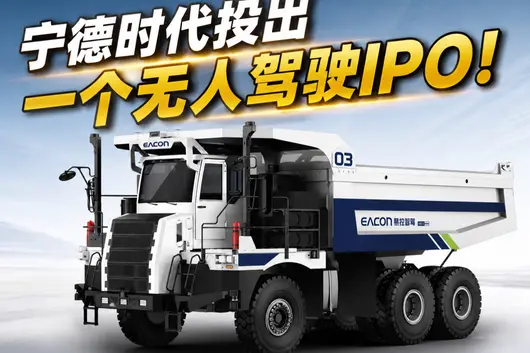
With the comprehensive deepening of electrification and intelligence, mainstream automotive supply chain companies are beginning to step from behind the scenes to the forefront, achieving role transition in the process of major changes in the automotive industry and reconstruction of the automotive ecosystem, rather than being limited to suppliers of car companies in the past. The underlying logic of their "rise" is to leverage the new tracks of electrification and intelligence to achieve a paradigm shift in technology, reach a technology premium, become joint definers and equal participants of the underlying technology stack of new cars with automakers, and thus achieve a brand premium, with influence directly reaching the consumer end. Automotive supply chain companies are welcoming a strategic development opportunity for comprehensive advancement.
Aiming at the advancement of supply chain companies, "Auto Panorama" specially produced this issue's "Cover Story" special report.

Currently, the new energy industry stands at a new historical node. In this historical process where the energy revolution and the technological revolution intersect, and reality and the future overlap, CATL has always been answering a question with action: How to build deterministic long-term value in an uncertain world?
CATL's financial report shows that its revenue in 2025 reached a high of 423.702 billion yuan, with net profit of 72.201 billion yuan, and global market share reached 39.2%. It has ranked first globally in power battery usage for 9 consecutive years. Of note, this supply chain company located upstream of vehicle manufacturing saw its net profit last year exceed the total profit of 13 mainstream listed automakers. The joke that "car companies work for King Ning" seems to have come into reality.
Behind this phenomenon lies CATL's influence on mainstream automakers globally. And the starting point of all this is the core status of power batteries in the new energy vehicle industry—power batteries account for about 40% of the cost of the entire vehicle and are undoubtedly the "heart" of new energy vehicles. For automakers, stable and reliable battery supply has long evolved from a basic guaranteed demand into a core strategic demand concerning product competitiveness and long-term development; for CATL, how to transform "top customers" into "strategic allies" is also a key issue determining the ceiling of its business landscape.
So, how did CATL "bind" nearly half of the automotive industry single-handedly? The reason lies in the fact that from a power battery supplier to a full-domain energy ecosystem service provider, CATL has built a deep binding system covering capital, production capacity, R&D, supply guarantee, ecosystem, and more over more than ten years. It is this system that firmly incorporates mainstream global automakers into its own industrial landscape, realizing a leap from "selling batteries" to "setting standards, building ecosystems," and thoroughly reshaping the relationship between supply chain companies and automakers.
Capital Binding
In the wave of electrification reconstructing the automotive industry, CATL jumped out of the traditional supplier's single model of "supply and collect money," using diverse capital means such as direct investment, strategic equity participation, and joint venture holding to deeply penetrate the equity structure of automakers, upgrading the supply-demand relationship into a community of interest and a strategic symbiosis, achieving all-round binding from the levels of funds, discourse power, and resources, and solidifying the foundation of industrial discourse power.
According to incomplete statistics, as of the end of May 2026, the number of new energy automakers invested in by CATL through direct or indirect means has exceeded 10. The latest move was on May 25, 2026, when Seres Group announced that its subsidiary Chongqing Luedian Technology Co., Ltd. received capital increase totaling 6.671 billion yuan from five investors. In the investor list, Ningbo Meishan Bonded Port Area Wending Investment Co., Ltd. (hereinafter referred to as "Wending Investment") ranked third with an investment amount of 984 million yuan and a shareholding ratio of 9.878%. This Wending Investment is a subsidiary wholly held by CATL.
Earlier, on May 12, 2026, the high-end intelligent new energy vehicle brand Qijing Auto jointly created by GAC Group and Huawei Qiankun announced that it had completed a strategic capital increase of more than 1 billion yuan, invested by CATL, investment platforms under Bosch, and capital of state-owned enterprises and central SOEs. It is understood that CATL's investment this time was also realized through paid-in capital of 300 million yuan via the wholly held Wending Investment, making it the single largest investor.
In fact, CATL's investment landscape extends far beyond these. In the new energy circle, "King Ning" is not just a battery seller, but more like a super player holding a capital map and "setting up circles" everywhere. In 2021, CATL invested heavily 770 million yuan to become the second largest shareholder of Avatr with a shareholding ratio of 23.99%, forming the unique CHN (Changan + Huawei + CATL) model at the time. As a return, Avatr not only featured CATL batteries as standard across all models but also globally launched CATL's Pangshi skateboard chassis for the first time.

In addition, CATL is also an early investor of Zeekr Auto, participating in Zeekr's Pre-A financing round. CATL not only holds about 2.97% of Chery through Wending Investment, but both sides also established the "Times Chery" joint venture company with a registered capital of 2 billion yuan. SAIC and CATL have actually been old partners for a long time. CATL holds about 0.48% of IM Motors, which is under SAIC. In BAIC Motor's financing of more than 8 billion yuan at the end of 2024, CATL invested 200 million yuan to become a shareholder.
In the commercial vehicle sector, in March 2026, Puquan Capital under CATL led the investment of 1.2 billion yuan in Lingyi Auto. In November 2025, FAW Jiefang announced a capital increase of 191 million yuan for the joint venture "Jiefang Times," and CATL invested simultaneously. The three parties invested a total of 412 million yuan. This joint venture company, established in 2023 with 50% shareholding each by FAW Jiefang and CATL, is just a microcosm of CATL's deep binding of automakers through capital ties in recent years.
In overseas markets, CATL also adopts the joint venture participation logic. On December 10, 2024, CATL and Stellantis each hold 50%, investing 4.1 billion euros to build a large-scale Lithium Iron Phosphate battery factory in Zaragoza, Spain. Products are exclusively for Stellantis' European models. Capital binding helps CATL deeply penetrate mainstream overseas automakers.
Of course, CATL has also hit snags when investing in automakers. For example, CATL once held about 2.67% of Neta Auto shares and invested in Aiways Auto early on. However, looking at the current situation, these two EV startups have basically exited the market.
CATL's capital binding is by no means simple financial investment, but a strategic layout to reconstruct the OEM-Supplier relationship and control industrial discourse power. This capital network model allows CATL to upgrade from a simple battery supplier to a strategic partner and community of interest for automakers, firmly grasping industrial leadership in the electrification wave, laying a solid capital foundation for all-round binding in technology, capacity, ecosystem, and other fields.
Production Capacity Lock-in
If capital is the skeleton of ties, then capacity is the flesh and blood. In the industry environment of cyclical tightness in battery supply and demand and intensified raw material price volatility, stable capacity is core competitiveness. CATL's capacity binding strategy can be summarized in one sentence: Build battery capacity where it is most needed—super factories next to automakers, or even directly built in customers' workshops. CATL provides deterministic capacity guarantees for cooperating automakers through three models: exclusive production lines, factory-in-factory, and regional bases, achieving deep binding through "capacity lock-in."
On June 30, 2025, CATL's two CTP 2.0 high-end battery pack production lines officially went into production at Seres Super Factory. This is the first time CATL cooperated with an automaker using the "Factory within a Factory" model to supply battery systems for local production of the AITO series models. The "Factory within a Factory" model is an innovative supply chain synergy model. CATL directly built battery production lines inside Seres Super Factory, achieving efficient closed-loop management from battery production to vehicle assembly. Batteries achieve "produce and install immediately," saving intermediate links such as packaging, transportation, and warehousing, shortening supply chain response speed to the 20-minute level.

If the "Factory within a Factory" is just a trial run of an innovative model, then the power battery joint venture companies widely established by CATL with mainstream automakers such as SAIC, GAC, FAW, Dongfeng, Geely, and Changan, such as Times SAIC, Times GAC, Times Geely, and Times Changan, usually hold controlling rights with 51% shareholding. As early as 2017, CATL cooperated with SAIC Group to establish "Times SAIC Power Battery Co., Ltd.," with a total investment of more than 10 billion yuan. This forward-looking layout allowed SAIC to fully reap dividends in the subsequent new energy transformation wave. When other competitors were queuing in front of CATL's headquarters to grab batteries, SAIC could steadily obtain battery packs meeting their customized needs through the exclusive production line of Times SAIC.
On February 13, 2026, Times Chery (Hefei) New Energy Technology Co., Ltd. was officially established, with registered capital of up to 2 billion yuan, held by CATL, Chery Automobile, and Chery Commercial Vehicle (Anhui) Co., Ltd. CATL holds 51%, while the latter two hold 49% in total. According to the agreement, Chery will obtain supply rights for CATL's core products such as Qilin Batteries and Sodium-ion Batteries first, while CATL will promote the application of innovative technologies such as semi-solid-state batteries and battery swap models in Chery's high-end models through technology licensing and joint R&D.
In factories laid out in Germany, Hungary, Indonesia, and other overseas locations, CATL has also achieved "wherever the vehicle is, the battery capacity is there." For international automakers such as Tesla, Volkswagen, and BMW, the European base is configured nearby; for automakers going global like Chery, Geely, and Leapmotor, the Southeast Asian base follows synchronously. Regional capacity layout effectively avoids trade barriers, logistics risks, and exchange rate fluctuations, ensuring automakers always have stable battery guarantees in global market expansion.
The underlying logic of capacity lock-in is using deterministic supply to counter uncertain cycles. For automakers, CATL's capacity guarantee means new cars do not get "choked" at launch, peak season delivery does not run out of stock, and overseas expansion has no worries; for CATL, locking capacity means locking sales, improving capacity utilization, dampening investment costs, and forming scale effects and cost advantages.
R&D Front-loading
If capacity lock-in binds the present, then R&D front-loading binds the future. Traditional battery supply follows a posterior adaptation mode of "automaker raises demand, battery factory makes products," while CATL has completely front-loaded R&D, achieving synchronized development, joint definition, and joint testing of vehicles and batteries, shifting from passive adaptation to active co-creation, realizing binding through deep technology embedding.
On December 17, 2025, CATL signed a 10-year deepened cooperation agreement with Voyah Auto. According to the agreement, CATL will actively cooperate with Voyah's new model development, prioritize providing leading battery technology, and comprehensively promote the scale application of benchmark battery brands such as Qilin, Shenxing, and Xiaoyao on Voyah models. This means Voyah's product planning will stay synchronized with cutting-edge innovation in the battery field. The cooperation vision between the two parties has expanded from a single power unit to new fields such as battery swap models, CIIC Intelligent Chassis Integration, Pangshi Chassis, and V2G representing future mobility ecosystems.

Of course, CATL's R&D front-loading logic is not limited to just this automaker. On November 11, 2025, CATL signed a 10-year comprehensive strategic cooperation agreement with GAC Group. Both sides will carry out joint R&D in cutting-edge fields such as intelligent chassis and battery swap ecosystems, and based on CATL's deep accumulation in power batteries, energy storage systems, and energy service fields, jointly create new energy vehicles with stronger market competitiveness. Regarding GAC Trumpchi's model planning, both sides are actively promoting the application of Pangshi Chassis technology.
Since 2025, CATL has reached cooperation with many automakers—not only GAC Group and JAC Group, but also core customers like Li Auto and Seres. Battery manufacturers and automakers are stepping over traditional buying and selling games towards a new stage of deep binding and value co-creation. CATL's R&D system has thereby become more "forward-looking": When the next generation of battery technology is still iterating in the laboratory, CATL has already been planning future vehicle platform architectures with partners.
The deep significance of R&D front-loading lies in making CATL transform from a supplier passively responding to demand into a standard setter proactively defining future technology routes. The Qilin Condensed Battery released by CATL on February 26, 2026, with an energy density of 500Wh/kg, is planned to be equipped for the first batch on NIO ET9 and Zeekr 001 FR at the end of the year. These technology explorations, which are still among the forefront in the industry, are becoming the strongest glue for CATL to bind high-end customers.
Ecosystem Co-construction
In fact, CATL's business field extends far beyond batteries. It is extending electrification goals to broader fields such as low-altitude aviation, ships, and data centers, rapidly expanding battery swap networks and services, promoting zero-carbon ecosystem construction, improving the industrial ecosystem, and extending the value chain. Around automakers, CATL is building an all-domain ecosystem of battery swaps, energy storage, charging, green power, and recycling, achieving irreplaceable binding through ecological barriers.
In the battery swap field, CATL takes Chocolate Battery Swap and Qiji Heavy Truck Battery Swap as the core, working with Changan, Chery, GAC, Seres, SAIC-GM-Wuling, BAIC, and others to form a Super Swap Shared Network, jointly building swap stations, sharing swap blocks, and unifying interface standards. On April 25, 2026, Chery Automobile, Chery Green Energy, CATL, and Times Energy Service signed a strategic cooperation agreement. All parties will focus on the layout of "Super Charging + Battery Swap" shared networks and green energy ecosystem co-construction. Chery Automobile will comprehensively import the Chocolate Battery Swap system of CATL and Times Energy Service. CATL's cooperation with GAC Group is even more all-round. It covers not only key fields such as intelligent chassis application, joint R&D of battery technology, battery swap ecosystem co-construction, and electrified platform innovation, but will also carry out long-term deep cooperation in business fields such as battery leasing and joint station building.

Zero Carbon Parks are projects CATL is vigorously promoting. Currently, zero carbon parks have been laid out in Dongying, Shandong, Xiamen, Fujian, Datong, Shanxi, Yancheng, Jiangsu, Hainan, and other places. They create green smart manufacturing bases through 100% green power direct connection and Source-Grid-Load-Storage integration technology. On July 26, 2025, the first national 100% green power direct-connected zero carbon industrial park led by CATL started construction in Dongying, Shandong. The total investment exceeds 10 billion yuan. The project adopts "Wind-Solar Coupling + Grid-forming Technology" to build an independent energy system, directly connecting wind power, photovoltaic generation, and energy storage systems to the factory. CATL's ultimate goal is to create a panoramic, integrated zero-carbon solution including green power direct supply, zero carbon parks, source-grid-load-storage, and grid-forming energy storage.
Used battery recycling is the last puzzle piece to achieve closed-loop management of the battery full lifecycle. Through recycling methods, CATL processes, purifies, and synthesizes metal materials such as nickel, cobalt, and manganese in used batteries, and recycles collected metal materials such as copper and aluminum through third-party recycling, realizing effective circular utilization of key metal resources needed for battery production. CATL has built a complete closed loop of "Production - Use - Cascade - Recycling," providing battery recycling, cascade utilization, and recycled material closed-loop services for cooperating automakers. Through scaled recycling and regeneration, raw material costs are reduced, feeding back into the price competitiveness of vehicle batteries, forming full-chain value sharing.
In addition, in overseas markets, CATL promotes vehicle-battery integration joint global expansion with Chery, Yutong, Geely, Dongfeng, etc. Overseas battery bases follow the rhythm of vehicle global expansion, providing global warranty, local services, supply chain support, and other services. Automakers going global no longer face battery adaptation, certification, and supply difficulties. CATL expands its global share following automakers going global, forming a globalized ecosystem binding.
The strategic significance of ecosystem co-construction far exceeds commercial cooperation itself. When CATL not only masters battery manufacturing but also controls battery swap networks, Battery Passport data (CATL cooperated with BMW in February 2026 to carry out an EU "Battery Passport" cross-border data pilot), and battery recycling full lifecycle management, it changes from a supplier simply providing parts into an infrastructure platform for the entire new energy mobility ecosystem. Automakers still play the role of building cars in this ecosystem, but key dimensions such as energy replenishment solutions, battery management, data services, and even user travel experience will be included in CATL's ecosystem system. This ecological-level binding far exceeds the product and price levels, forming a true "community of shared future."
© 2024 Bitauto.com. All Rights Reserved.
Bitauto (www.yiche.com and www.bitauto.com) is one of the most visited automotive websites in China. We provide detailed info on Chinese car brands available in your area. Please note that the information provided on this website is based on publicly available data and is for reference only. It may not be fully updated or accurate at all times.

Help us improve our website


