

HomeLumpur

Search History
Popular Searches
Dealer Login / Sign Up

Recently, Haomai Technology released its 2026 Q3 report: revenue for the first three quarters was 9.27 billion yuan, a year-on-year increase of 14.78%; net profit attributable to parent company was 1.612 billion yuan, a year-on-year decrease of 9.84%. Among them, Q3 revenue was 3.254 billion yuan, up 15.74%, net profit attributable to parent company was 479 million yuan, down 19.05%. "Revenue growth without profit growth" became the most prominent tag.

Exchange Rates and Costs Squeeze Profits
There are two key words for the profit decline: exchange rates and costs. Finance costs for the first three quarters changed from -70.48 million yuan to 150 million yuan, a year-on-year change of 312.57%, mainly affected by increased exchange losses; operating cost growth rate was higher than revenue, Q3 single quarter gross margin was 26.85%, down 6.21 percentage points year-on-year. For equipment manufacturing enterprises with a high proportion of overseas business, exchange rate fluctuations are changing from a "financial minor item" to a "major profit item".

Tire Molds Fully Produced and Sold, Capacity Expansion Building Strength
The other side of profit pressure is full orders. Contract liabilities increased to 439 million yuan, up 31.18% compared to the beginning of the period; construction in progress was 679 million yuan, up 35.79% compared to the beginning of the period; R&D expenses were 516 million yuan, up about 13% year-on-year.
As a leader in tire molds, the company's main business is operating at full capacity. The Kuiwen Mold Project total investment is about 1.097 billion yuan, which will add new high-performance radial tire mold capacity of 25,000 sets/year, expected to be put into production successively by the end of 2026. Against the backdrop of full tire mold orders, new capacity is expected to break delivery bottlenecks and accelerate performance release.

Electric Heating Vulcanizing Machines Win Continuous Large Orders
The company recently successively won bids for the Wanli Tire Electric Heating Vulcanizing Machine Renovation Project and the Malaysia Base New Machine Project, with a total amount exceeding 38 million yuan, accelerating the realization of the second growth curve.

Overall, this Q3 report presents a picture of "scale increasing, orders not weak, expansion continuing, but exchange rates and costs squeeze profits in the short term". Securities firms expect the company's net profit attributable to parent company to be 2.59/3.25/4.10 billion yuan respectively for 2026-2028. Risks such as slowing tire mold demand and exchange rate fluctuations need to be monitored.

喺馬來西亞嘅 SUV 市場,好多買家喺揀車嘅時候都會拿馬自達 CX-3 同現代途勝來做比較。呢兩款車喺價位同定位上都好接近,今日我就由多個方面做一次詳細嘅比較,幫你省返做功課嘅時間。
馬自達 CX-3 喺馬來西亞嘅 OTR 售價係 RM 126,159 - 139,159,合共有 2 個版本,包括 2023 2.0L High(RM 139,159)、2023 2.0L Plus(RM 126,159) 等。
現代途勝喺馬來西亞嘅 OTR 售價係 RM 143,888 - 197,888,合共有 5 個版本,包括 2025 HEV 1.6T AT 2WD Prestige(RM 197,888)、2025 1.6T DCT 4WD Prestige(RM 186,888)、2025 1.6T DCT 2WD Prime(RM 164,888) 等。
從價錢嚟睇,馬自達 CX-3 嘅起步價確實比現代途勝平咗 RM 17,729。如果你預算有限,馬自達嘅入門版已經可以滿足日常需要。但都要注意,平嗰幾千蚊,可能喺配備上會有取舍,具體要睇你嘅需要。

馬自達 CX-3 配備 1.5L Turbo,馬力 140 hp。官方油耗 7.0 L/100km。
現代途勝配備 1.5L Turbo,馬力 140 hp。官方油耗 7.0 L/100km。
兩款車用咗同一套動力系統,日常開動嘅感覺基本冇咩分別。油耗方面都差唔多,唔使太糾結呢一點。

馬自達 CX-3 嘅安全評級係 5★ (ASEAN NCAP),主動安全系統包括 i-Activsense。
現代途勝嘅安全評級係 5★ (ASEAN NCAP),主動安全系統包括 SmartSense。
兩款車嘅安全評級一樣,喺呢個級數入面安全配備都算好齊全。而家嘅新車安全性都唔差,唔使太擔心呢一點。

馬自達 CX-3 保養 5 年/150,000km,保養間隔 每 10,000km 或 6 個月。
現代途勝保養 5 年/300,000km,保養間隔 每 10,000km 或 6 個月。

總括嚟講,馬自達 CX-3 同現代途勝都係馬來西亞市場好唔錯嘅車型。揀邊一部,關鍵都要睇你嘅個人需要同預算。建議大家做功課,多比較幾間車行嘅報價,先至去試駕做最後決定。買車係件大事,花啲時間做功課絕對唔會錯。



Local time November 3, the Euro Bus Expo opened in Birmingham, UK. The exhibition is both a barometer for global public transportation industry development trends and a stage for bus enterprises to compete in strength.
Zhongtong Bus made a strong appearance at this exhibition, showcasing two products on-site: the N11D double-decker electric city bus and the H12Plus high-end tourist coach, exporting customized travel solutions for Chinese bus brands to the global market.
Over 20 Years of Internationalization Polishing Forged Localization Customization Core Competitiveness
Currently, Western Europe's public transportation low-carbon transformation continues to accelerate, with local demands for product compliance, operating condition adaptability, human-centric design, and full lifecycle costs being very high.

The public transportation solutions designed by Zhongtong Bus for the Western European market draw confidence from over 20 years of accumulation in the overseas market. Adhering to the R&D mindset of "One Country, One Policy, One Scenario, One Solution", it successfully transformed from a vehicle exporter to a global customized travel solution provider.
Overseas business has become the core pillar of Zhongtong Bus's performance growth. In 2025, export business became the main source of performance, among which the proportion of new energy bus exports in total export business exceeded 20%. In the first half of 2026, the overseas market continued to break through, with sales volume growing 23.4% year-on-year.
Achieving excellent results relies on Zhongtong Bus's strong localization customization capabilities, conducting special calibration and adaptive development for products based on climates, road conditions, and operating conditions in different global regions.
From the Middle East, Asia-Pacific, Latin America to Western Europe, every successful expansion into a new market by Zhongtong Bus is built on deep analysis of the local market. Participating in this Birmingham exhibition is the practical implementation of this overseas strategy in the Western European market.
"Twin Stars" Make Their Mark in Birmingham, Customized Products Firmly Respond to Operational Demands

Relying on customized R&D capabilities accumulated through overseas practice, the N11D and H12Plus models showcased by Zhongtong Bus this time were both positively developed for the European market, with performance and configurations precisely matching the real needs of local operators.
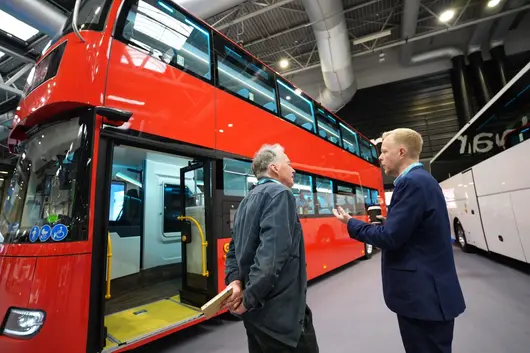
The N11D double-decker electric city bus adapts to the climatic environment of UK and other European cities, capable of handling urban commuting or urban tourism operation lines. The vehicle is equipped with high-performance batteries, with a range of 650km under SORT operating conditions; equipped with ultra-low one-step entry, maximum passenger capacity of 80 people; the lower level has wheelchair ramps and wheelchair fixing devices, the upper level has large-area sightseeing windows, fully meeting UK PSVAR accessibility standards and European double-decker bus operation requirements.
The body uses all-aluminum material and long-term anti-corrosion process, strengthening chassis sealing and electronic control waterproofing capabilities. The whole vehicle is equipped with the full set of ADAS safety systems including AEB automatic emergency braking, FCW forward collision warning, 360-degree panoramic surround view; matching digital operation systems compliant with EU GDPR privacy standards, capable of battery remote health monitoring and fault forecasting.

The H12Plus high-end tourist coach is oriented towards Western Europe inter-city passenger transport and cross-border tourism charter markets, optimizing needs for safety, long-distance comfort, and low maintenance costs. The whole vehicle material selection complies with EU bus safety testing standards, standard equipment includes AEBS automatic emergency braking system, lane departure warning system, etc., matched with air suspension, full disc brakes, hydraulic retarders, etc., ensuring safety and stability for long-distance travel on curves and slippery roads.
The vehicle is also equipped with large-capacity luggage compartments and a five-star cockpit, installed with ergonomic seats and refined NVH tuning; the powertrain has undergone long-duration operating condition tests in multiple global regions, considering energy consumption while achieving low maintenance design.
From Product Compliance to Solution Deep Dive, Understanding the "Zhongtong Answer" for the Global Market
The two exhibits can meet the strict market access standards and operational requirements of Western Europe, breaking through the competition barriers established by local brands, which cannot be achieved by relying on a single technology.
Western Europe is the value highland of the global bus industry and also the core area for Zhongtong Bus to test its global strategy. To break through, one must possess the ability to build a global system, covering localized positive development, full lifecycle digital operations and maintenance, and localized service guarantee, etc.

Zhongtong Bus adheres to R&D ahead and standards first, establishing a positive development verification system adapted to global differentiated regulations, carrying out technical certification and reliability verification for access requirements of different countries, continuously tackling high threshold access requirements of various countries. For example, in 2015, Zhongtong Bus had already obtained EU WVTA whole vehicle type certification; and in 2023, after the EU WVTA new standards were issued, Zhongtong Bus obtained the certification again, possessing the passport to enter the European high-end market.
Based on continuously accumulated regulatory R&D and localization experience, as of now, Zhongtong Bus has exported to markets such as Singapore, Portugal, Germany, UAE, Denmark, etc. The business scope extends from simple vehicle sales to range adaptation, climatic environmental adaptability, fleet digital management, and full lifecycle service sectors, committed to providing customers with all-around urban public transportation solutions.
At this Birmingham exhibition, this system capability was also fully reflected. Many Western European operators and industry experts came to Zhongtong Bus booth for visits and exchanges, discussing topics such as model localization modification, spare parts warehousing distribution, and full lifecycle services, and reached cooperation intentions.
Over twenty years of deep cultivation, Zhongtong Bus has transformed from product export to technology and ecosystem integrated output. In the future, Zhongtong Bus will continue to leverage its "Global Customization" advantages, expand into larger development spaces in Europe and other high-end markets, and provide strong support for "Chinese Solutions" serving global green public transportation.
(Provided by the enterprise)

喺馬來西亞嘅 SUV 市場,好多買家喺揀車嘅時候都會拿馬自達 CX-3 同三菱 Xforce 嚟做比較。呢兩款車喺價錢同定位上都幾接近,而家我就從多個方面做一個詳細嘅比較,幫你省下做功課嘅時間。
馬自達 CX-3 喺馬來西亞嘅 OTR 售價係 RM 126,159 - 139,159,總共係 2 個版本,包括 2023 2.0L High(RM 139,159)、2023 2.0L Plus(RM 126,159) 等等。
三菱 Xforce 喺馬來西亞嘅 OTR 售價係 RM 109,930 - 119,930,總共係 2 個版本,包括 2026 1.5L Ultimate(RM 119,930)、2026 1.5L Urban(RM 109,930) 等等。
計由價錢睇,三菱 Xforce 嘅起步價比馬自達 CX-3 平咗 RM 16,229。講實話,喺呢個價錢段,幾千蚊嘅差距其實唔算大,關鍵仲係睇整體嘅性價比同長期使用成本。
馬自達 CX-3 搭載 1.5L Turbo,馬力 140 hp。官方油耗 7.0 L/100km。
三菱 Xforce 搭載 1.5L Turbo,馬力 140 hp。官方油耗 7.0 L/100km。
兩款車用到同一套動力系統,日常行開嘅感覺基本冇分別。油耗方面也差唔多,唔使太糾結呢一點。
馬自達 CX-3 嘅安全評級係 5★ (ASEAN NCAP),主動安全系統包括 i-Activsense。
三菱 Xforce 嘅安全評級係 5★ (ASEAN NCAP),主動安全系統包括 MI-PILOT。
兩款車嘅安全評級一樣,喺呢個級別入面安全配備都算好齊全。而家嘅新車安全性都唔差,唔使太擔心呢一點。
馬自達 CX-3 採用 FWD 驅動方式。
三菱 Xforce 採用 FWD 驅動方式。
兩款車嘅驅動方式一樣,都係 FWD,日常駕駛感覺唔會有太大分別。

馬自達 CX-3 同三菱 Xforce 都係馬來西亞市場嘅主流選擇,適合家庭使用、日常通勤。如果你更睇重品牌口碑同二手價,可以優先考慮口碑更好嘅嗰一款;如果你更在意性價比同配備,嗰邊就揀配備更豐富嘅嗰款。最終仲係建議兩款都去試駕,親身試先係最緊要。

總括嚟講,馬自達 CX-3 同三菱 Xforce 都係馬來西亞市場幾唔錯嘅車型。揀邊架,關鍵仲係要睇你嘅個人需求同預算。建議大家做足功課,多問幾間車行嘅報價,再嚟試駕做最後決定。買車係件大事,花少少時間做功課絕對唔會錯。

In the SUV market in Malaysia, many buyers compare Mazda CX-3 and MG MG HS when choosing a car. These two cars are quite close in terms of price and positioning. Today, let's make a detailed comparison from multiple aspects to help you save time on research.
The Mazda CX-3 OTR selling price in Malaysia is RM 126,159 - 139,159, with a total of 2 versions, including 2023 2.0L High (RM 139,159), 2023 2.0L Plus (RM 126,159), etc.
The MG MG HS OTR selling price in Malaysia is RM 130,450 - 146,450, with a total of 2 versions, including 1.5L Standard (RM 105,000), 1.5L Executive (RM 115,000), etc.
In terms of price, the starting price of Mazda CX-3 is indeed RM 4,291 cheaper than MG MG HS. If your budget is limited, the Mazda entry-level version is already enough to meet daily needs. But also note that the few thousand cheaper might involve trade-offs in features, it depends on your specific needs.
Mazda CX-3 adopts FWD drive mode.
MG MG HS adopts FWD drive mode.
Both cars have the same drive mode, both are FWD, daily driving experience won't be much different.
Mazda CX-3 warranty 5 years/150,000km, maintenance interval every 10,000km or 6 months.
MG MG HS warranty 7 years/150,000km, maintenance interval every 10,000km or 6 months.
Mazda CX-3 and MG MG HS are both mainstream choices in the Malaysia market, suitable for family use, daily commuting. If you value brand reputation and resale value more, you can prioritize the one with better reputation; if you care more about value for money and features, then choose the one with richer configuration. Finally it is recommended to test drive both, personal experience is the most important.
Overall, Mazda CX-3 and MG MG HS are both very good car models in the Malaysia market. Which one to choose, the key depends on your personal needs and budget. We suggest everyone do their homework, compare quotes from several dealerships, then go test drive to make the final decision. Buying a car is a big matter, spending some time on homework will absolutely not be wrong.

Dalam pasaran SUV di Malaysia, ramai pembeli membandingkan Mazda CX-3 dan GWM Haval H6 semasa memilih kereta. Kedua-dua kereta ini sangat hampir dari segi harga dan segmen, hari ini kita akan membuat perbandingan terperinci dari pelbagai aspek untuk membantu anda menjimatkan masa membuat kajian.
Harga OTR Mazda CX-3 di Malaysia ialah RM 126,159 - 139,159, terdapat 2 versi, termasuk 2023 2.0L High (RM 139,159), 2023 2.0L Plus (RM 126,159) dan lain-lain.
Harga OTR GWM Haval H6 di Malaysia ialah RM 139,750 - 139,750, terdapat 2 versi, termasuk 1.5L Turbo Standard (RM 140,000), 1.5L Turbo Premium (RM 155,000) dan lain-lain.
Dari segi harga, harga permulaan Mazda CX-3 memang lebih murah RM 13,591 berbanding GWM Haval H6. Jika bajet anda terhad, versi asas Mazda sudah cukup untuk memenuhi keperluan harian. Tetapi perlu diingat, perbezaan harga beberapa ribu itu mungkin melibatkan kompromi dari segi kelengkapan, bergantung pada keperluan anda.
Mazda CX-3 dilengkapi enjin 1.5L Turbo, kuasa 140 hp. Penggunaan bahan api rasmi 7.0 L/100km.
GWM Haval H6 dilengkapi Hybrid, kuasa 170 hp. Penggunaan bahan api rasmi 4.5 L/100km.
Dari segi kuasa, Hybrid GWM Haval H6 mempunyai 30 hp lebih berbanding 1.5L Turbo Mazda CX-3. Walau bagaimanapun, untuk penggunaan harian di bandar, kuasa kedua-dua kereta ini mencukupi dan tidak akan terasa kurang tenaga.
Mazda CX-3 panjang kenderaan 4500 mm, ruang muatan belakang 450 L.
GWM Haval H6 panjang kenderaan 4400 mm, ruang muatan belakang 400 L.
Dari segi ruang, badan Mazda CX-3 100 mm lebih panjang daripada GWM Haval H6, ruang duduk dalam kereta akan sedikit lebih lapang, terutamanya ruang kaki di baris belakang. Jika anda sering membawa keluarga atau perlu meletakkan kerusi bayi, badan yang sedikit lebih besar memang lebih praktikal.
Mazda CX-3 dan GWM Haval H6 adalah pilihan utama di pasaran Malaysia, sesuai untuk kegunaan keluarga dan perjalanan harian. Jika anda lebih mementingkan reputasi jenama dan harga pasaran kedua, pertimbangkan dahulu yang mempunyai reputasi lebih baik; jika anda lebih mengutamakan nisbah harga dan prestasi serta kelengkapan, pilih yang lebih dilengkapi. Pada akhirnya disarankan untuk uji test kedua-dua kereta, pengalaman sendiri adalah yang paling penting.
Secara keseluruhan, Mazda CX-3 dan GWM Haval H6 adalah model kereta yang sangat bagus di pasaran Malaysia. Memilih mana satu, penting melihat keperluan dan bajet peribadi anda. Kami cadangkan membuat kajian terlebih dahulu, bandingkan beberapa tawaran dari dealer kereta, kemudian buat ujian test untuk membuat keputusan akhir. Membeli kereta adalah perkara besar, meluangkan masa untuk membuat kajian tidak akan salah.

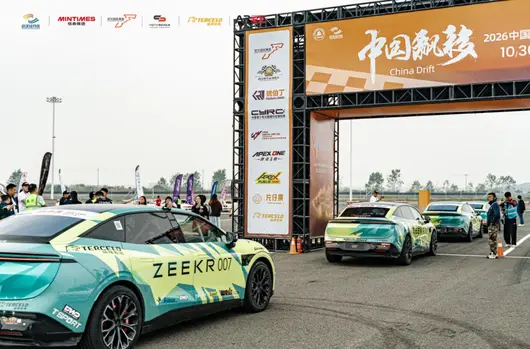
1October 30 to November 1, 2026 New Energy Vehicle Drifting Wuhan Open held at Wuhan International Track. 16 participating drivers from China, Mongolia, Russia, South Korea, and Thailand. Official race cars uniformly set as event-modified refreshed Zeekr 007,Race designated tires are Eagle TAMIR EV01.
This is the second stop after the global debut in Hainan in May of this year, and it is the first time a new energy drifting event has landed in the central region.
The competition is divided into qualification and finals stages, with scoring focused on four dimensions: track accuracy, angle control, speed maintenance, and overall smoothness. Eagle Tire Group Sales Director Jin Zhe attended the opening ceremony, witnessing alongside the China Automobile and Motorcycle Federation, Wuhan municipal relevant department heads, industry experts, and driver representatives.

Electric Vehicles Drifting, Requirements for Tires Have Changed
Electric vehicles drifting have very different tire requirements compared to fuel cars. The motor outputs peak torque instantly at startup, without a process of RPM climbing,the tires must accept all driving force in a very short time; The increase in curb weight caused by the battery makes lateral sliding actions of the same amplitudegenerate greater lateral and shear forces; In drifting events, the tread remains in a lateral sliding state for a long time,the temperature rise speed is significantly higher than fuel cars.
More troublesome is continuity. Qualifying, finals, and multi-round matchups are completed within three days,tires must repeatedly experience heating and cooling, performance cannot decline round by round.

Common semi-slick tires used for fuel drifting aim to increase grip by heating and softening the tread. This logic doesn't quite hold for electric drifting.
The working temperature window for semi-slicks is inherently narrow. Electric vehicles generate heat more concentratedly, easily pushing the tires out of the window, where grip decreases instead of increasing.
The industry's requirements for new energy drifting tires are summarized in four characters: stable, controllable, durable, and even, corresponding to heat resistance, controllable sliding, high durability, and uniform wear.
EV01 Completes Second Stop on the Track
Eagle provided the TAMIR EV01 for this event, which is a dedicated tire for new energy. Addressing electric drifting conditions, design focus is on three areas: tire body structure must withstand deformation from instantaneous high torque, tread pattern must ensure drainage and heat dissipation in sliding states, rubber compound must maintain grip in high-temperature environments.


In the previous Hainan first stop,
this tire completed the race record with no faults and no blowouts throughout.
The schedule for this event was concentrated within three days, with qualifying and finals conducted consecutively.
EV01 escorted throughout the entire process, assisting drivers to complete qualifying and finals, receiving recognition from both the event organization and drivers.
During the concurrent event, over 30 client representatives were invited to the venue. Event organizers explained the rules and race situation to them. Clients boarded the race cars under the control of professional drivers, experiencing the centrifugal force and handling of electric vehicle drifting, and observed the entire competition from the start area and beside the track.

At the side of the track, Eagle's four EV product lines were displayed simultaneously, including TAMIR EV01, Chifeng PremEnergy EV07, San A NeoEnerZ EV Pro, and Libei De RevoEpic EV Pro, covering different usage scenarios.


Data from the track will eventually return to passenger cars
The return on tire companies' investment in racing is not reflected in exposure. Passenger cars rarely encounter conditions of continuous three-day high-temperature lateral sliding with tread being repeatedly pulled. The track compresses this into a single weekend. Whichever performance metric fails first, the data is directly fed back to the engineers.
When switching to consumer products, the logic remains consistent. Electric vehicle tire issues concentrate on a few directions: heavier cars, greater torque, lower noise, more sensitivity to rolling resistance. The track amplifies these to the limit, leaving ample margin for daily use.

From Hainan to Wuhan, Eagle has completed the second stop of this event. The Hainan stop was the debut, and many in the industry viewed it as a one-off brand action; coming back for the Wuhan stop again indicates this product line plans long-term investment.
How new energy drifting events develop subsequently remains unclear, but enterprises willing to repeatedly put products into this operating condition for verification obtain data that is more valuable than the laboratory.

喺馬來西亞嘅 SUV 市場,好多買家喺揀車嗰陣都會將 馬自達 CX-3 同 奇瑞 Tiggo 9 嚟做比較。呢兩款車喺價位同定位上都算幾接近,今日我哋就從多個方面做一個詳細嘅比較,幫你省返做功課嘅時間。
馬自達 CX-3 喺馬來西亞嘅 OTR 售價係 RM 126,159 - 139,159,一共有 2 個版本,包括 2023 2.0L High(RM 139,159)、2023 2.0L Plus(RM 126,159) 等。
奇瑞 Tiggo 9 喺馬來西亞嘅 OTR 售價係 RM 166,800 - 179,800,一共有 1 個版本,包括 2026 2.0T Standard(RM 179,750) 等。
從價錢嚟睇,馬自達 CX-3 嘅起步價真係比 奇瑞 Tiggo 9 平咗 RM 40,641。如果你預算有限,馬自達嘅入門版已經可以滿足日常需求。但都要留意,平嗰幾千蚊,可能喺配備上會有取捨,具體要看你嘅需求。
馬自達 CX-3 搭載 1.5L Turbo,馬力 140 hp。官方油耗 7.0 L/100km。
奇瑞 Tiggo 9 搭載 2.0L 4-cyl,馬力 170 hp。官方油耗 8.0 L/100km。
動力方面,奇瑞 Tiggo 9 嘅 2.0L 4-cyl 比 馬自達 CX-3 嘅 1.5L Turbo 多咗 30 匹馬力。不過日常喺市區開,兩款車嘅動力都夠用,唔會覺得唔夠力。
馬自達 CX-3 嘅安全評級係 5★ (ASEAN NCAP),主動安全系統包括 i-Activsense。
奇瑞 Tiggo 9 嘅安全評級係 TBD,主動安全系統包括 Basic。
安全配備方面,兩款車都拿到唔錯嘅評級。不過 馬自達 CX-3 嘅 i-Activsense 同 奇瑞 Tiggo 9 嘅 Basic 喺功能上有些差異,如果你比較睇重主動安全嘅話,可以仔細比較吓兩者嘅功能列表。
馬自達 CX-3 車身長 4500 mm,車尾箱 450 L。
奇瑞 Tiggo 9 車身長 4400 mm,車尾箱 400 L。
空間方面,馬自達 CX-3 嘅車身比 奇瑞 Tiggo 9 長咗 100 mm,車內乘坐空間會稍微寬裕啲,尤其係後座腿部空間。如果你經常載家人或者需要放嬰兒車,大一點嘅車身真係更實用。

馬自達 CX-3 同 奇瑞 Tiggo 9 都係馬來西亞市場嘅主流選擇,適合家庭使用、日常通勤。如果你更睇重品牌口碑同二手價,可以優先考慮口碑更好嗰一款;如果你更在意性價比同配備,就揀配置更豐富嗰款。最終都係建議兩款都去試駕,親身體驗先係最重要嘅。

總嘅嚟講,馬自達 CX-3 同 奇瑞 Tiggo 9 都係馬來西亞市場幾唔錯嘅車型。揀邊一輛,關鍵都要睇你個人需求同預算。建議大家做好功課,多比較幾間車行嘅報價,再去試駕做最終決定。買車係件大事,花啲時間做功課絕對唔會錯。

In Malaysia's SUV market, many buyers compare Mazda CX-3 and Chery Tiggo 8 PHEV when choosing a car. These two cars are quite close in price and positioning. Today we will make a detailed comparison from multiple aspects to help you save time doing research.
The OTR price of Mazda CX-3 in Malaysia is RM 126,159 - 139,159, with a total of 2 versions, including 2023 2.0L High (RM 139,159), 2023 2.0L Plus (RM 126,159), etc.
The OTR price of Chery Tiggo 8 PHEV in Malaysia is RM 159,750 - 159,750, with a total of 2 versions, including 1.6L Turbo Standard (RM 130,000), 1.6L Turbo Premium (RM 145,000), etc.
From the price perspective, the starting price of Mazda CX-3 is indeed RM 33,591 cheaper than Chery Tiggo 8 PHEV. If your budget is limited, Mazda's entry-level version can already meet daily needs. But also note, the difference of a few thousand may involve compromises in features, depending on your needs.
Mazda CX-3 safety rating is 5★ (ASEAN NCAP), active safety system includes i-Activsense.
Chery Tiggo 8 PHEV safety rating is TBD, active safety system includes Basic.
Regarding safety features, both cars have received good ratings. However, Mazda CX-3's i-Activsense and Chery Tiggo 8 PHEV's Basic have some differences in functionality. If you value active safety more, you can carefully compare their feature lists.
Mazda CX-3 adopts FWD drive mode.
Chery Tiggo 8 PHEV adopts FWD drive mode.
Both cars have the same drive mode, both are FWD, daily driving experience will not differ too much.
Mazda CX-3 and Chery Tiggo 8 PHEV are both mainstream choices in Malaysia market, suitable for family use, daily commuting. If you value brand reputation and resale value more, you can prioritize the one with better reputation; if you care more about cost-performance ratio and features, then choose the one with richer configuration. Ultimately it is suggested to test drive both, personal experience is the most important.
Overall, Mazda CX-3 and Chery Tiggo 8 PHEV are both very good models in Malaysia market. Which one to choose, key depends on your personal needs and budget. Suggest everyone do research, compare quotes from several car dealers, then test drive to make final decision. Buying a car is a big matter, spending some time doing research will never be wrong.

Dalam pasaran SUV di Malaysia, ramai pembeli sering membandingkan Toyota Harrier dan Land Rover Discovery Sport semasa memilih kereta. Kedua-dua kereta ini mempunyai harga dan kategori yang agak hampir, hari ini kita akan buat perbandingan terperinci dari pelbagai aspek, membantu anda menjimatkan masa membuat kajian.
Toyota Harrier di Malaysia dijual pada harga OTR RM 289,000 - 289,000, terdapat 1 varian, termasuk 2026 HEV 2.5L Standard (RM 289,000) dan lain-lain.
Land Rover Discovery Sport di Malaysia dijual pada harga OTR RM 499,800 - 499,800, terdapat 1 varian, termasuk Standard (RM 499,800) dan lain-lain.
Dari segi harga, harga permulaan Toyota Harrier memang RM 210,800 lebih murah berbanding Land Rover Discovery Sport. Jika bajet anda terhad, varian pemula Toyota sudah mencukupi untuk keperluan harian. Tetapi perlu diingat, ribuan ringgit yang lebih murah ini mungkin ada pengorbanan pada kelengkapan, bergantung pada keperluan anda.

Pemarkahan keselamatan Toyota Harrier adalah 5★ (ASEAN NCAP), sistem keselamatan aktif termasuk Brand ADAS.
Pemarkahan keselamatan Land Rover Discovery Sport adalah TBD, sistem keselamatan aktif termasuk Asas.
Dari segi peralatan keselamatan, kedua-dua kereta mendapat pemarkahan yang baik. Walau bagaimanapun, Brand ADAS Toyota Harrier dan Asas Land Rover Discovery Sport mempunyai perbezaan fungsi. Jika anda mengutamakan keselamatan aktif, anda boleh membandingkan senarai fungsi kedua-duanya dengan teliti.

Toyota Harrier menggunakan cara penggerak FWD.
Land Rover Discovery Sport menggunakan cara penggerak 4WD.
FWD Toyota dan 4WD Land Rover akan memberikan rasa pengawalan yang berbeza, disarankan untuk uji pemanduan membandingkan.

Toyota Harrier dijamin 5 tahun/tanpa had jarak, selang penyelenggaraan setiap 10,000km atau 6 bulan.
Land Rover Discovery Sport dijamin 3 tahun/100,000km, selang penyelenggaraan setiap 10,000km atau 6 bulan.

Toyota Harrier dan Land Rover Discovery Sport adalah pilihan utama pasaran Malaysia, sesuai untuk kegunaan keluarga, perjalanan harian. Jika anda lebih mengutamakan reputasi jenama dan nilai semuala, utamakan model dengan reputasi lebih baik; jika anda lebih mengutamakan nisbah harga dan prestasi, pilih model dengan konfigurasi lebih kaya. Akhir sekali disarankan untuk uji pemanduan kedua-duanya, pengalaman peribadi adalah yang paling penting.

Secara keseluruhan, Toyota Harrier dan Land Rover Discovery Sport adalah model kereta yang sangat baik di pasaran Malaysia. Memilih mana satu, penting bergantung kepada keperluan peribadi dan bajet anda. Disarankan untuk membuat kajian terlebih dahulu, bandingkan beberapa sebut harga di pengedar, kemudian buat ujian pemanduan untuk keputusan akhir. Membeli kereta adalah perkara besar, meluangkan masa untuk membuat kajian pasti tidak salah.


Dalam pasaran SUV di Malaysia, ramai pembeli sering membandingkan Toyota Harrier dan Audi Q7 ketika memilih kereta. Kedua-dua kereta ini mempunyai julat harga dan penempatan yang agak hampir, hari ini kita akan membuat perbandingan terperinci dari pelbagai aspek untuk membantu anda menjimatkan masa melakukan penyelidikan.
Toyota Harrier di Malaysia mempunyai harga OTR RM 289,000 - RM 289,000, mempunyai keseluruhan 1 versi, termasuk 2026 HEV 2.5L Standard (RM 289,000) dan sebagainya.
Audi Q7 di Malaysia mempunyai harga OTR RM 462,222 - RM 462,222, mempunyai keseluruhan 1 versi, termasuk Standard (RM 462,222) dan sebagainya.
Dari segi harga, harga permulaan Toyota Harrier memang RM 173,222 lebih murah daripada Audi Q7. Jika bajet anda terhad, versi permulaan Toyota sudah mencukupi untuk keperluan harian. Namun perlu diingat, perbezaan harga beberapa ribu itu mungkin melibatkan kompromi pada kelengkapan, bergantung pada keperluan anda.
Toyota Harrier dilengkapi enjin 2.0L Turbo, 220 hp. Penggunaan minyak rasmi 9.5 L/100km.
Audi Q7 dilengkapi enjin 3.0L Turbo, 350 hp. Penggunaan minyak rasmi 12.0 L/100km.
Dari segi kuasa, Turbo 3.0L Audi Q7 mempunyai 130 hp lebih daripada Turbo 2.0L Toyota Harrier. Bagaimanapun, untuk pemanduan harian di bandar, kedua-dua kereta ini mempunyai kuasa yang mencukupi, anda tidak akan rasa kurang kuasa.
Penilaian keselamatan Toyota Harrier ialah 5★ (ASEAN NCAP), sistem keselamatan aktif termasuk Brand ADAS.
Penilaian keselamatan Audi Q7 ialah 5★ (Euro NCAP), sistem keselamatan aktif termasuk Premium ADAS.
Dari segi kelengkapan keselamatan, kedua-dua kereta mendapat penilaian yang baik. Namun Brand ADAS Toyota Harrier dan Premium ADAS Audi Q7 mempunyai perbezaan fungsi, jika anda mengutamakan keselamatan aktif, bandingkan senarai fungsi kedua-duanya.
Panjang kenderaan Toyota Harrier 4400 mm, Bak 400 L.
Panjang kenderaan Audi Q7 4400 mm, Bak 400 L.
Dimensi kedua-dua kereta hampir sama, ruang dalaman hampir tidak ada perbezaan. Kereta dalam kategori ini, penggunaan harian sudah cukup.

Toyota Harrier dan Audi Q7 adalah pilihan utama di pasaran Malaysia, sesuai untuk kegunaan keluarga, perjalanan harian. Jika anda lebih mengutamakan reputasi jenama dan nilai jualan semula, pertimbangkan yang reputasinya lebih baik; jika anda lebih mementingkan nilai wang dan kelengkapan, pilih yang lebih lengkap. Akhir sekali disarankan untuk memandu kedua-duanya untuk ujian, pengalaman sendiri adalah yang paling penting.
Secara keseluruhan, Toyota Harrier dan Audi Q7 adalah model kereta yang bagus di pasaran Malaysia. Memilih yang mana, bergantung pada keperluan dan bajet peribadi anda. Disarankan untuk menyiapkan penyelidikan, bandingkan beberapa kedai kereta, kemudian buat ujian pandu untuk membuat keputusan akhir. Membeli kereta adalah perkara penting, meluangkan masa untuk penyelidikan pasti tidak salah.

In the SUV market in Malaysia, many buyers compare Toyota Harrier and Mercedes-Benz GLE when choosing a car.
The OTR price for Toyota Harrier in Malaysia is RM 289,000 - 289,000, with a total of 1 version, including 2026 HEV 2.5L Standard (RM 289,000), etc.
The OTR price for Mercedes-Benz GLE in Malaysia is RM 544,888 - 544,888, with a total of 1 version, including Standard (RM 544,888), etc.
From a price perspective, the entry price of Toyota Harrier is indeed RM 255,888 cheaper than Mercedes-Benz GLE.
If you have a limited budget, Toyota's entry-level version can already meet daily needs.
But also note that the few thousand ringgit cheaper might involve trade-offs in equipment, depending on your specific needs.
Toyota Harrier is equipped with a 2.0L Turbo, with 220 hp. Official fuel consumption 9.5 L/100km.
Mercedes-Benz GLE is equipped with a 3.0L Turbo, with 350 hp. Official fuel consumption 12.0 L/100km.
In terms of power, the 3.0L Turbo of Mercedes-Benz GLE has 130 more horsepower than the 2.0L Turbo of Toyota Harrier.
However, for daily city driving, the power of both cars is sufficient, you won't feel underpowered.
Toyota Harrier uses FWD drive mode.
Mercedes-Benz GLE uses FWD drive mode.
Both cars have the same drive method, both are FWD, daily driving experience will not differ much.
Toyota Harrier warranty 5 years/unlimited mileage, maintenance interval every 10,000km or 6 months.
Mercedes-Benz GLE warranty 3 years/100,000km, maintenance interval every 10,000km or 6 months.

Both Toyota Harrier and Mercedes-Benz GLE are mainstream choices in the Malaysian market, suitable for family use, daily commuting.
If you value brand reputation and resale price more, consider the one with better reputation first; if you care more about price-performance ratio and equipment, then choose the one with richer configuration.
Ultimately, it is recommended to test drive both models; personal experience is the most important.

Overall, both Toyota Harrier and Mercedes-Benz GLE are very good car models in the Malaysian market.
Which one to choose depends mainly on your personal needs and budget.
We recommend everyone do their research, compare quotes from several dealerships, then go for a test drive to make a final decision.
Buying a car is a big matter, spending some time doing research will never be wrong.

If you happen to have a few million surplus in funds, now you have the opportunity to acquire a legendary McLaren F1 racing car bearing countless glories. Inside these narrow cockpits, a host of famous drivers in F1 history once sat.

McLaren has built countless brilliant Formula 1 racing cars in its long F1 history. Many championship and racing cars were originally properly stored in the warehouse and exhibition hall at the UK headquarters. Many car enthusiasts remember that as early as in 2017 and 2020, during McLaren's tight cash period, this collection of classic racing cars was included in the mortgage asset list as collateral for bond financing to exchange for cash flow and overcome difficulties. At that time, there were also reports of plans to mortgage the headquarters + historical racing cars to raise 275 million pounds, which is also a major background for McLaren continuously releasing collection racing cars. Now, famous British classic car dealer Tom Hartley Jnr has withdrawn five highly iconic racing cars from McLaren's collection warehouse and listed them for unified sale. If your safe has sufficient cash, or large withdrawals require appointment with the bank in advance, now is the rare opportunity to acquire one of them, or even take away all five racing cars directly in a package.

The two most substantial and most sought-after by veteran fans in this collection are exactly the 1991 season championship cars, McLaren MP4/6A. This one with chassis number 04 was driven by Gerhard Berger, taking the runner-up at the 1991 San Marino Grand Prix. It is also a test car extensively used by the driving god Ayrton Senna. The whole car retains the original factory naturally aspirated Honda V12 engine, and the authentic mechanical charm is irreplaceable. The other MP4/6A with chassis number 07, Berger drove it to compete in four races, which include the British Grand Prix and German Grand Prix. Senna also completed multiple tests on this car. After the racing car retired, it was sealed in the McLaren original factory collection warehouse for decades and rarely appeared in public.
The other three cars in the collection belong to modern F1 racing cars with updated specifications. One is the 2012 MP4/27A. Jenson Button drove it in many races, including the Abu Dhabi Grand Prix. Seven-time champion Lewis Hamilton also drove this racing car. McLaren official promises to complete the full car refurbishment and restoration before officially delivering to the new owner, restoring it to the standard state of participation in that year.

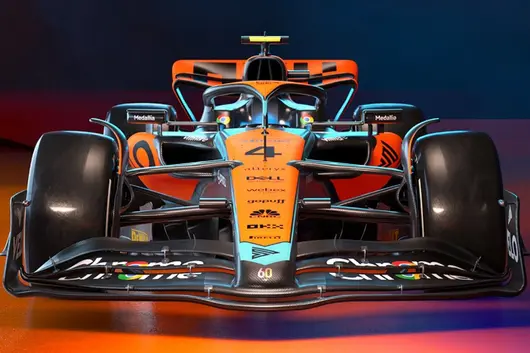
The two racing cars driven by 2025 Season Drivers' Champion Lando Norris have extremely strong attraction to contemporary F1 collectors. The first one is the 2021 MCL35M, chassis number 01. Norris relied on it to reach the podium multiple times at Imola, Monaco, and Monza tracks. It is also a modern racing car very rare on the market, equipped with the current F1 hybrid V6 power unit. The second Norris old car is the 2023 MCL37A, chassis number 03.
Norris drove this racing car to take the runner-up at the Singapore Grand Prix and Japanese Grand Prix. After the 2023 season ended, McLaren did not seal it directly, but continued to use it for various test work. Oscar Piastri, Mick Schumacher, famous IndyCar driver Pato O'Ward, former Mercedes driver, current Cadillac F1 driver Valtteri Bottas have all test-driven it. Even Hollywood actor Brad Pitt, back then for shooting the F1 themed movie, also specifically experienced and familiarized with formula racing on this car.

McLaren Racing CEO Zak Brown explained externally that the brand chose to sell this collection of racing cars because the original intention was to feel 'letting them lie quietly in the warehouse year after year, failing to honor the glory and significance carried by these racing cars'. This explanation sounds very romantic, but cannot avoid a reality: McLaren long-term financial pressure is not small. These racing cars once carrying the glory of legendary drivers Senna, Norris, Button, Hamilton etc., were used as mortgage assets for financing in the early years. Now formally sold, the income from this sale can also supplement the team's urgent working capital and alleviate financial pressure.

Di pasaran SUV di Malaysia, ramai pembeli membandingkan Toyota Harrier dan Mercedes-Benz GLE semasa memilih kereta. Kedua-dua kereta ini hampir sama dari segi harga dan penargetan, hari ini kita akan buat perbandingan terperinci dari pelbagai aspek untuk membantu anda menjimatkan masa membuat kajian.
Harga OTR Toyota Harrier di Malaysia ialah RM 289,000 - 289,000, terdapat 1 varian, termasuk 2026 HEV 2.5L Standard (RM 289,000) dan lain-lain.
Harga OTR Mercedes-Benz GLE di Malaysia ialah RM 544,888 - 544,888, terdapat 1 varian, termasuk Standard (RM 544,888) dan lain-lain.
Dari segi harga, harga permulaan Toyota Harrier memang RM 255,888 lebih murah berbanding Mercedes-Benz GLE. Jika bajet anda terhad, versi permulaan Toyota sudah cukup untuk keperluan harian. Tetapi perlu diingat, perbezaan harga beberapa ribu itu mungkin melibatkan kompromi pada kelengkapan, bergantung pada keperluan anda.
Toyota Harrier menggunakan enjin 2.0L Turbo, kuasa 220 hp. Konsumsi bahan api rasmi 9.5 L/100km.
Mercedes-Benz GLE menggunakan enjin 3.0L Turbo, kuasa 350 hp. Konsumsi bahan api rasmi 12.0 L/100km.
Dari segi kuasa, 3.0L Turbo Mercedes-Benz GLE mempunyai 130 hp lebih berbanding 2.0L Turbo Toyota Harrier. Namun untuk memandu harian di bandar, kuasa kedua-dua kereta sudah mencukupi, tiada rasa kurang tenaga.
Tahap keselamatan Toyota Harrier ialah 5★ (ASEAN NCAP), sistem keselamatan aktif termasuk Brand ADAS.
Tahap keselamatan Mercedes-Benz GLE ialah 5★ (Euro NCAP), sistem keselamatan aktif termasuk Premium ADAS.
Dari segi kelengkapan keselamatan, kedua-dua model mendapat skor yang baik. Walau bagaimanapun, Brand ADAS pada Toyota Harrier dan Premium ADAS pada Mercedes-Benz GLE mempunyai perbezaan pada fungsi. Jika anda mengutamakan keselamatan aktif, anda boleh membandingkan senarai fungsi kedua-dua sistem ini.
Toyota Harrier menggunakan penggerak roda hadapan (FWD).
Mercedes-Benz GLE menggunakan penggerak roda hadapan (FWD).
Kedua-dua kereta mempunyai cara penggerak yang sama, iaitu FWD, tiada perbezaan besar dalam pengalaman memandu harian.
Secara keseluruhannya, Toyota Harrier dan Mercedes-Benz GLE adalah model kereta yang sangat baik di pasaran Malaysia. Memilih mana satu, ia bergantung pada keperluan peribadi dan bajet anda. Disarankan untuk membuat kajian, membandingkan tawaran harga dari beberapa kedai kereta, kemudian lakukan uji jalan untuk membuat keputusan akhir. Membeli kereta adalah perkara besar, meluangkan masa untuk kajian tidak akan salah.

喺馬來西亞嘅 SUV 市場,好多買家喺揀車嗰陣都會將 Toyota Harrier 同 Mercedes-Benz GLE 做比較。呢兩部車喺價位同定位上都幾近,今日我哋就從多個角度做個詳細比較,幫你省翻做功課嘅時間。
Toyota Harrier 喺馬來西亞嘅 OTR 售價係 RM 289,000 - 289,000,一共有 1 個版本,包括 2026 HEV 2.5L Standard(RM 289,000)等。
Mercedes-Benz GLE 喺馬來西亞嘅 OTR 售價係 RM 544,888 - 544,888,一共有 1 個版本,包括 Standard(RM 544,888)等。
由價錢睇,Toyota Harrier 嘅起步價確實比 Mercedes-Benz GLE 平咗 RM 255,888。如果你預算有限,Toyota 嘅入門版已經可以滿足日常需要。但都要留意,平嗰幾千蚊,喺配備上會有取舍,具體要睇你嘅需要。
Toyota Harrier 嘅安全評級係 5★ (ASEAN NCAP),主動安全系統包括 Brand ADAS。
Mercedes-Benz GLE 嘅安全評級係 5★ (Euro NCAP),主動安全系統包括 Premium ADAS。
安全配備方面,兩部車都拿到唔錯嘅評級。不過 Toyota Harrier 嘅 Brand ADAS 同 Mercedes-Benz GLE 嘅 Premium ADAS 喺功能上有少少差異,如果你比較著重主動安全嘅話,可以仔細對比下兩者嘅功能列表。
Toyota Harrier 採用 FWD 驅動方式。
Mercedes-Benz GLE 採用 FWD 驅動方式。
兩部車嘅驅動方式一樣,都係 FWD,日常駕駛感受唔會有太大分別。
Toyota Harrier 保修 5 年/無限制里程,保養間隔 每 10,000km 或 6 個月。
Mercedes-Benz GLE 保修 3 年/100,000km,保養間隔 每 10,000km 或 6 個月。
總括嚟講,Toyota Harrier 同 Mercedes-Benz GLE 都係馬來西亞市場好唔錯嘅車型。揀邊一部,關鍵仲係睇你嘅個人需要同預算。建議大家做足功課,多比較幾間車行嘅報價,再去試駕做最後決定。買車係件大事,花少少時間做功課絕對唔會錯。


Zhu Huarong mundur ke belakang, Zhao Fei mengambil alih tugas sukar.
Bagi sebuah raksasa automobil China yang memiliki sejarah industri lebih dari 160 tahun, dan dinaikkan status menjadi perusahaan milik negara pusat automobil yang berdiri sendiri, perubahan manajemen intinya bukanlah sekadar pergantian generasi lama dan baru, tapi harus memberikan penjelasan kepada negara dan modal pasar.
Pada 16 Oktober, Changan Auto mengeluarkan pengumuman, Zhu Huarong meletakkan jawatan sebagai Pengerusinya dan jawatan berkaitan, akan memberi tenaga sepenuhnya pada peringkat strategik kumpulan Changan Automobile China (disingkatkan sebagai "China Changan"); bekas Presiden Zhao Fei meneruskan tongkat estafet, menjawat sebagai Pengerus Changan Auto.
Pada masa ini, hanya lebih dari setahun telah berlalu sejak China Changan ditubuhkan, dan hanya sebulan berlalu sejak persidangan dewan pengarah bulan September ditukar.
 [Sumber Gambar: Pengumuman Changan Auto]
Dua kali penyesuaian dalam tempoh 30 hari ini ialah operasi pembedahan terhadap sempadan tanggungjawab jangka panjang yang kabur antara kumpulan dan syarikat tersenarai Changan Auto selepas mengalami kesakitan tekanan jualan domestik dan kehilangan keuntungan.
Dalam pandangan pasaran modal, penguraian tanggungjawab dan kuasa ini hanya titik permulaan, struktur organisasi baharunya mesti menghadapi ujian paling kejam, Changan Auto menggunakan apa untuk membuktikan ia boleh menyelesaikan belitan gajah sebenar,带领 perusahaan milik negara pusat automobil keluar dari keadaan tersangkut.
01
Perubahan struktur manajemen kumpulan syarikat automobil tersenarai sering kali berkaitan rapat dengan tekanan realiti pada tahap operasi. Data penjualan dan pengeluaran Changan Auto pada tiga suku tahun pertama tahun ini ialah latar belakang yang paling langsung dan mendesak mendorong penyesuaian kali ini.
Data kilat penjualan dan pengeluaran yang didedahkan Changan Auto menunjukkan, jumlah kumulatif penjualan pada tiga suku tahun pertama tahun ini ialah 1.6927 juta unit, menurun 18.07% berbanding tahun sebelumnya. Dari 17 syarikat automobil tersenarai yang direkodkan dalam statistik "Auto K-Line", jumlah penurunan ini sangat mencolok mata.

Pada tempoh yang sama, SAIC Motor dan BYD pada pangkalan besar melebihi 3.10 juta unit hanya menurun sedikit, Geely Auto mengekalkan pertumbuhan mantap 3.01%, Chery Auto malah berlari menentang arus dengan pertumbuhan melebihi 10%.
Changan Auto bukan hanya satu-satunya syarikat automobil tersenarai dalam Top 5 yang mengalami penurunan dua digit, penyelesaian sasaran penjualan 3.30 juta unit setahun yang dikemukakan pada tahun ini juga hanya 51.29%.
Walaupun pasaran automobil China tahun ini tidak stabil, namun masih ada peratusan yang cukup syarikat automobil tersenarai mencapai kestabilan asas, bahkan stabil dengan peningkatan melalui transformasi tenaga baharu dan eksport.
Dalam pandangan "Auto K-Line", lebih berbaloi untuk diwaspadai daripada penurunan jualan, ialah kemerosotan keupayaan keuntungan.
Lab bersih Changan Auto pada separuh tahun pertama ialah 817 juta Yuan, menurun 64.32% berbanding tahun sebelumnya; Lab bersih tolak bukan berulang ialah 251 juta Yuan, penurunan mencapai 83.01%.
Selepas menyalikan **faktor bukan perniagaan utama seperti keuntungan dan kerugian pertukaran mata wang, hasil pelaburan syarikat gabungan dan kerjasama** selepas, keuntungan sebenar perniagaan utama sudah nipis sehingga paras kurang daripada 100 Yuan per kenderaan **; Arus tunai operasi bersih separuh tahun pertama ialah -11.413 bilion Yuan**, tekanan jelas kelihatan.
 [Sumber Gambar: Laporan Separuh Tahun Changan Auto 2026]
Serentak itu, perbezaan struktur produk Changan Auto juga jelas, pada tiga suku tahun pertama kadar penembusan kenderaan baharunya ialah 41.9%, manakala data Persatuan Automobil China pada tempoh yang sama menunjukkan kadar penembusan industri sudah berdiri di 53.6%.
Pangkalan kenderaan bahan api sedang mengecil, kelajuan penggantian kenderaan baharu juga tidak mencapai jangkaan.
02
Di luar itu, matriks jenama Changan Auto juga jelas berbeza-sejuk dan hangat.
Changan Qiyuan adalah satu-satunya jenama yang berjalan pantas, jumlah penjualan meningkat hampir 80% berbanding tahun sebelumnya dan mencapai keuntungan pada suku tahun tunggal; Deepal walaupun saiz berdiri kukuh, namun kelajuan pertumbuhan jatuh ke satu digit dan belum untung dari segi kewangan.
Yang paling mengejutkan adalah jenama premium Avatr, jumlah penghantaran pada tiga suku tahun pertama ialah 55,400 unit, menurun 38.99% berbanding tahun sebelumnya, model utama belum membentuk pelepasan berterusan.
Bandingkan dengan itu, pada julat harga 150,000 hingga 250,000 Yuan, Leapmotor, Xiaomi Auto dan kekuatan baharu lain sedang menyerang sahsian pasaran dengan kelajuan pertumbuhan yang sangat cepat, Changan Auto bersama beberapa syarikat tradisional menghadapi keadaan ditahan di hadapan, dikejar di belakang.
 [Sumber Gambar: Laporan Cepat Penjualan dan Pengeluaran Changan Auto]
Satu-satunya sokongan kuat datang dari pasaran luar negara. Tiga suku tahun pertama, jumlah penghantaran luar negara Changan Auto ialah 729,700 unit, meningkat 56.8% berbanding tahun sebelumnya; kadar keuntungan kasar separuh tahun pertama luar negara ialah 20.13%, jauh lebih tinggi daripada 11.67% di dalam negara.
Namun dari komprehensif, "Auto K-Line" berpendapat, keadaan tersangkut Changan Auto sekarang bukanlah kegagalan satu produk atau satu jenama tertentu, tetapi kelajuan penurunan pangkalan lama, irama keuntungan perniagaan baharu, dan kecekapan respons struktur organisasi terhadap perubahan pasaran, ketiga-tiga daya ini tidak sahaja tidak membentuk gabungan, malah saling mengekang.
03
Berdepan dengan laporan prestasi yang agak berat pada masa ini, maksud sebenar penyampaian tongkat estafet antara Zhu Huarong dan Zhao Fei tidak sukar difahami.
Sejak ditubuhkan lebih dari setahun lalu pada bulan Julai tahun lalu, Zhu Huarong serentak memegang jawatan Pengerusi Kumpulan dan Changan Auto, beberapa eksekutif tinggi juga memegang jawatan silang pada dua subjek.
Ini adalah susunan perlu fasa transisi penggabungan perusahaan pusat baharu, tiada alasan. Namun apabila sistem kumpulan telah menjadi asas, harga kos pemegang jawatan silang mula kelihatan.
Rantaian keputusan terlalu panjang, tanggungjawab operasi kabur, Changan Auto berdepan pasaran yang berubah-ubah, kekurangan seorang pemimpin depan yang benar-benar bertanggungjawab penuh terhadap hasil operasi.

Selepas penyesuaian kali ini, Zhu Huarong fokus pada peringkat kumpulan, bertanggungjawab "menetapkan strategik, memperuntukkan sumber, mempromosikan kerjasama, mengawal risiko, memperkukuhkan ganjaran"; Zhao Fei dengan jawatan Pengurus Kumpulan serentak memegang jawatan Pengerusi Changan Auto, jawatan Presiden diduduki oleh Ye Pei yang tumbuh dari dalam.
Dalam pandangan "Auto K-Line", niat调整 struktur manusia kali ini sangat jelas, iaitu kumpulan menguruskan arah, Changan Auto memperebutkan pasaran. Namun reka bentuk di atas kertas sekeras apa, menjadikan badan besar Changan Auto benar-benar berlari adalah lain cerita.
Setelah penguraian tanggungjawab dan kuasa, ujian sebenar terletak pada, adakah Changan Auto benar-benar memperoleh kuasa keputusan dan mekanisme tanggungjawab yang selaras dengan operasi bebas.
Sekiranya tidak boleh pada mekanisme benar-benar memecahkan ikatan tradisional perusahaan milik negara pusat, penyesuaian kali ini sebaliknya mudah terperangkap dalam bentuk ragu-ragu dan penyalahgunaan dalaman.
04
Dari keadaan semasa, perkara nampaknya menuju ke arah perkembangan yang baik, sekurang-kurangnya dari kenyataan manajemen Changan Auto, mereka sudah sedar sepenuhnya kepentingan perkataan "kecekapan" pada keadaan persaingan sengit pasaran masa kini.
Pada persidangan komunikasi media 16 Oktober, Zhu Huarong menjelaskan sistem mekanisme baru ini dengan menyatakan, melalui perubahan pentadbiran untuk menekan proses keputusan asal yang memakan waktu dua bulan, masa kelulusan sebahagian perkara malah perlu dipersingkat kepada 1 hingga 2 jam.

Bagi Zhao Fei yang melangkah ke hadapan, pertempuran sebenar telah bermula. Menghentikan dan stabilkan pangkalan domestik dan membina sistem luar negara, mana-mana pihak tidak boleh menunggu.
Zhao Fei bukan tidak melalui situasi angin lawan. Apabila dipindahkan ke Changan Ford pada 2018, perubahan strategik yang diketuaiannya mencapai penjualan berhenti pada 2020, pada 2021 peningkatan melebihi 20%.
Pengalaman ini membuktikan dia mempunyai keupayaan menemui dan menyelesaikan masalah di bawah tekanan. Cuma, yang dia hadapi sekarang adalah permainan catur yang jauh lebih kompleks daripada tahun lalu.
05
Di pasaran domestik, penyusuran pasaran utama kenderaan bahan api adalah industri, namun bagi Changan Auto, kelajuan pertumbuhan kenderaan baharunya, masih belum mampu mengatasi kelajuan kehilangan pangkalan kenderaan bahan api sendiri.
Oleh kerana peningkatan luar sukar mengisi tempat dengan cepat, Changan Auto hanya boleh mencari ruang peningkatan kecekapan dan keuntungan dari dalam, mempercepatkan integrasi sumber.
Pada akhir September tahun ini, Avatr dan Deepal menubuhkan Bahagian Perkembangan Berkembang AD, melaksanakan model "Pendedahan Bebas Di Hadapan, Kerjasama Di Belakang", jangkaan menurunkan kos sebanyak 20% hingga 30%.
Serentak itu, Changan Auto juga sepenuhnya menguraikan定位 jenama, menentukan Avatr ke 300,000 hingga 500,000 Yuan Baharu Mewah, Deepal fokus ke 150,000 hingga 250,000 Yuan Pertengahan Menengah Atas, manakala Changan Qiyuan pula menyerang Keluarga Utama. Selain itu, rancangan katalog produk akan dipermudahkan dari 63 model kepada 36 model, memusatkan sumber untuk membina produk utama global.

"Auto K-Line" berpendapat, arah Changan Auto ini ada contoh yang boleh diikuti. Selepas strategi "Satu Geely" Geely Auto dilancarkan, pada 2025 kadar perbelanjaan pentadbiran menurun 17.1%, laba bersih teras meningkat 36%.
Namun Geely Auto dari melancarkan penggabungan hingga kadar perbelanjaan meningkat jelas, terpisah satu tahun kewangan yang lengkap, Changan Auto menikmati bonus kerjasama, kemungkinan besar juga tidak akan lebih cepat.
Jadi, kad lain dalam tangan Zhao Fei — meluar negara, menjadi sangat penting. Pada fasa ini, model semata-mata bergantung pada eksport kenderaan siap sedang menghampiri paras siling, tarif tambahan Kesatuan Eropah ke atas kenderaan elektrik China memberi tekanan kepada daya saing harga.
Zhao Fei menyatakan dengan jelas, model "dibuat di dalam negara selesai kemudian dieksport ke luar negara" tidak sesuai lagi, masa depan akan mengintegrasikan keperluan pengguna global untuk membentuk produk utama global, dan mendorong kapasiti ke hadapan pasaran.
Pabrik Rayong Thailand Changan Auto telah mula beroperasi, pangkalan Eropah direncanakan akan membentuk kapasiti 180,000 unit pada 2028. Dari eksport produk ke lompatan sistem eksport, adalah topik baharu untuk mana-mana syarikat automobil China, ini memerlukan pengesahan dengan unit tahun.
06
Memanjangkan pandangan, keadaan Changan Auto mencerminkan isu umum transformasi syarikat automobil tradisional China.
Ia memiliki latar belakang sejarah paling lama, serentak itu juga merupakan perusahaan milik negara pusat automobil yang paling muda.
Bandingkan dengan kecekapan integrasi menegak BYD yang ekstrim dan operasi pasaran Geely yang fleksibel, perbezaan mekanisme syarikat besar jenis perusahaan milik negara pusat seperti Changan Auto pada aspek kelajuan keputusan, keanjalan ganjaran dan ruang kesilapan, bukan sekali调整 manusia boleh rata.

Berdepan dengan keperluan kenaikan industri peringkat baharu "Rancangan 15 Lima Tahun", jalan keluar Changan Auto mesti menyentuh akar, menggunakan mekanisme perusahaan milik negara pusat paling muda untuk memecahkan kecondong sejarah paling tebal.
Kali ini penggantian membuka tingkaperubahan mekanisme dalaman Changan Auto, namun penentu sebenar arah adalah sama ada penguraian tanggungjawab dan kuasa boleh membawa kebebasan operasi sebenar, sama ada R&D dan pemasaran boleh memiliki ruang percubaan yang lebih besar, menyatukan sumber perusahaan milik negara pusat dengan keaktifan syarikat swasta.
Pandangan AutosKline:
Pada separuh tahun pertama tahun ini, Zhu Huarong pernah mengatakan satu ayat: dahulu kuantiti di hadapan, keuntungan di belakang, dari tahun ini mulai kuantiti dan keuntungan sama berat. Ayat ini diletakkan pada Changan Auto hari ini, lebih sesuai daripada mana-mana masa lain. Pertukaran jawatan telah lengkap, syarikat automobil paling lama ini, mesti dengan sikap perusahaan milik negara pusat paling muda, dalam keadaan tekanan dengan beban sejarah dan sakit transformasi menyiapkan semula.
Changan Auto pasti tergesa-gesa ingin membuktikan, pada tekanan berganda jualan dan keuntungan, satu struktur pentadbiran yang lebih jelas, lebih cekap, lebih dekat dengan pasaran dan globalisasi, boleh带领 ia mencari semula pertumbuhan. Penggantian ketua sendiri bukan tujuan, menggunakan penggantian ketua untuk mengungkit perubahan sistematik kecekapan, tanggungjawab dan pendekatan, adalah perkara yang benar-benar ia ingin buktikan. Tentu saja, adakah struktur baharu ini akhirnya boleh dibuktikan berkesan, pengadil tunggal adalah angka jualan dan keuntungan pada masa hadapan.
Teks adalah orisinal daripada [Auto K-Line], kandungan merujuk bahan dari pengumuman syarikat tersenarai dan informasi industri terbuka (syarikat dan institusi berkaitan sepatutnya bertanggungjawab terhadap ketulisan); sebahagian gambar dari internet, hak cipta milik pengarang.
Teks akaun ini, tanpa kebenaran, dilarang terjemah, pengarang akan dituntut. Selain itu, kandungan artikel tidak menjadi nasihat pelaburan kepada sesiapa! Risiko pasaran saham besar, pelaburan perlu berhati-hati!



Written by | Zhang Nan
Edited by | Huang Dalu
Designed by | Zhen Youmei

Chen Binbo, President of the Wuhan Automobile Industry Association and a senior Chinese automotive executive.
In 1987, he entered the Second Automobile Works, experiencing success at Dongfeng Peugeot-Citroën, Fengshen, Dongfeng Nissan, Dongfeng Honda, Minth Group, and Farasis Energy.
His nearly forty-year career spans industrial policy, complete vehicle manufacturing, marketing, global parts, and power batteries. He has witnessed the Chinese automotive industry evolve from planned management and joint venture introduction to independent rise and new energy transition.
On October 14, 2026, in the 20th Anniversary JackTok Special Dialogue 13th Talk of "Automotive Business Review", the two of them looked back on Chen Binbo's career over two hours, and also discussed current issues such as joint venture retreat, price wars, industry cleansing, supply chain globalization, and power battery competition.
Why do choices that were once correct fail as market, technology, and organizational conditions change? When old experience is no longer the standard answer, how does an executive see clearly, accept boundaries, and find their place again amidst change?
The "50 Golden Quotes from Chen Binbo Interview" published with this article are categorized around themes of industrial changes, rise and fall of joint ventures, manufacturing efficiency, industry cleansing, corporate globalization, power batteries, and career choices.
Chen Binbo's WeChat name is "Go Forward Unceasingly". However, the forward movement he understands is not always rushing in the same direction, but still willing to relearn and adjust position after conditions change and old answers fail, continuing to do things that can create value.
Coexisting with change is sometimes not about persisting harder in the original methods, but about moving forward again after seeing the boundaries.

"Is it retirement time now?" At the beginning of the live stream, Jia Ke asked what seemed like a simple question.

Chen Binbo paused for a moment and said, "Not yet fully retired". He works at the industry association, serves as an independent director for several publicly listed companies, and acts as an advisor for enterprises. There are still arrangements every day, just no longer carrying sales and profit indicators.

His WeChat name is "Go Forward Unceasingly". This name easily brings to mind will, speed, and career peaks.
But on October 14, 2026, in the 14th Talk of the "Automotive Business Review" 20th Anniversary JackTok Special Dialogue, the two really talked about how an automotive person admits the environment has changed and rearranges themselves amidst change.

Chen Binbo was born in 1964. He entered the Second Automobile Works (today's Dongfeng Motor) after graduating with a master's degree in 1987, later experienced Dongfeng Peugeot-Citroën, Fengshen, Dongfeng Nissan and Dongfeng Honda, and then entered Minth Group and Farasis Energy.
For nearly four decades, he went from industrial policy, investment, and organizational construction to marketing and corporate management, then from complete vehicles to parts and power batteries. The companies in his resume changed constantly, and roles changed constantly. The only thing that didn't change is that he always defined himself as an executive.
What he talked about most was not a specific position, but the conditions when each decision was made: what kind of automotive industry did the country need, did the enterprise have money, could the market digest capacity, how to establish real advantages in overseas factories, and whether battery enterprises had scale support. Conditions changed, answers had to be rewritten.
This conversation also had a layer of personal background.
Around the time "Automotive Business Review" was founded in 2006, the two were already acquaintances. Chen Binbo participated in the magazine's early activities and gave advice on publishing.
Twenty years later, Jia Ke re-found old friends with "20 industry participants, 20 annual keywords, 20 conversations that did not avoid success and failure".

First Understand How a Large Enterprise Operates
In 1987, Dongfeng was still called Second Automobile Works by many.

Chen Binbo entered the Policy Research Office and Management Research Institute, writing reports for company leadership, conducting surveys, and also representing the headquarters to go down to professional factories to understand problems.
For a young person just starting work, this position allowed him to see early on how a large state-owned enterprise organized production and distributed interests, and how systems entered the daily operation of factories.
At that time, Dongfeng's commercial vehicles were in short supply, ranking high among national industrial enterprises. Changes brought by reform and opening up were happening in the factory area. The "Three Comprehensive Contract Responsibility System" decomposed quality, technical progress, and economic benefits into professional factories, workshops, and employees. Internal transfer pricing determined the operating results of different units. Professional factories welcomed researchers, not because they liked writing reports, but because they hoped the headquarters would see problems in raw material linkage, internal settlement, and responsibility division.
The so-called "Three Comprehensive" referred to comprehensive quality management as the foundation, comprehensive technical progress as the core, and comprehensive economic benefits as the goal.
Responsibilities were decomposed layer by layer, and the supporting slogan was "Every burden carried in layers, every person has an indicator". In today's view, this language carries a distinct era imprint; at that time, it tried to push a large factory from administrative management to operational responsibility.
Dongfeng also began to study line-function systems and divisional systems.
In his twenties, Chen Binbo lectured to hundreds of department heads about Sloan and General Motors' organizational methods. Looking back today, those concepts were not new; placed at the scene of the transition from planned economy to market economy, they represented a company beginning to treat subsidiaries as units capable of independent operation.
Later, Dongfeng formed multiple sectors, and this early reform provided the organizational source.
Jia Ke said that the simulated cost accounting discussed repeatedly in those years sounded almost childish today. Chen Binbo's answer was "seeming like a world apart".
He did not mock that era. For him, it was precisely these seemingly basic attempts that allowed a generation of automotive people to first learn how to understand cost, efficiency, and market outside of planning.
This experience also shaped his work habits. He did not understand management as a set of slogans that could be copied everywhere.
Organizational plans had to be put into specific enterprises, internal prices had to be tested by material costs, and reform had to answer why the grassroots were willing to cooperate. Later, whether doing complete vehicles, parts, or batteries, he was accustomed to first decomposing the system to find the conditions that truly limited results.

Shenlong's Grand Start and Market Reality
At the end of 1988, Chen Binbo entered the Dongfeng Sedan Project Preparation Office.
Whether China should develop the sedan industry on a large scale had just moved from debate to national decision. Dongfeng needed to enter passenger cars from commercial vehicles and also had to make choices among cooperation partners such as General Motors, Volkswagen, Citroën, and Toyota.

He remembered there was a demonstration meeting before the decision on whether China should mass-produce sedans.
The debate at the time was summarized into big issues like "Socialism or Capitalism". Later, the industrial pattern of "Three Big, Three Small, Two Micros" gradually took shape. Sedan projects were not something an enterprise could do just by saying yes, but had to meet conditions such as national industrial layout, foreign exchange, credit, technology introduction, and production capacity scale simultaneously.
According to Chen Binbo's recollection, the national government put forward requirements for high starting points, large batches, specialization, export orientation, import substitution, etc., with a planned scale of 300,000 vehicles.
Toyota was more inclined to start with SKD assembly, and General Motors proposed a 37,500-vehicle pilot plant, both difficult to meet approval requirements.
Citroën was willing to introduce the then newer ZX model, accept the scale plan, and the French government and banks could provide long-term low-interest credit. Dongfeng's final choice of Citroën was not just model preference, but the combined action of a set of industrial policies, capital conditions, and negotiation results.
From a national strategy perspective, building a large-scale modern sedan industry had its necessity. Putting it on the enterprise, the problem immediately became specific: the market was not that big yet, what if products could not be sold?
Chen Binbo later compared Shenlong with Dongfeng Honda. Shenlong carried large-scale investment from the beginning; Dongfeng Honda started with smaller capacity and expanded constantly according to the market.
The former reflected top-level design, the latter obeyed the market pace. Both logics could explain their rationality and had to bear their respective costs.
Shenlong Phase 1 planned for 150,000 vehicles, with a final goal of 300,000 vehicles.
Chen Binbo remembered, the first factory occupied over 2,000 mu of land, with a wall of about 5 kilometers, and investment exceeding 10 billion yuan. The country hoped to establish complete capabilities in one step, while the enterprise had to carry land, factory buildings, equipment, and localization systems before the market matured. This tension existed from the beginning of the project.
In 1992, Shenlong was established, and Chen Binbo became one of the earliest employees. He first did policies and regulations and public relations, later participated in planning and construction of Shenlong Industrial Development General Company. Chankou was still rice fields and villages at the time.

To build a factory, employee housing, schools, hospitals, sales services, and parts support had to be solved simultaneously. On the surface, this was opposite to the reform direction of state-owned enterprises "enterprises running society"; but on a land without city functions, the factory had no other choice.
Localization requirements pushed the team to establish supporting enterprises such as stamping and brake lines, and negotiate cooperation with French, Japanese, South Korean, German, American, and British companies.
Today's Dongfeng Hongtai can be traced back to these early attempts. What Chen Binbo learned here was not just how to build a car, but how to build a modern automotive industrial system starting from land, funds, living facilities, and supply chains.
Around 1994, the industrial development company he participated in also tried to package downstream parts enterprises into the capital market.
At that time, it was not called formal listing, but first went to the Wuhan counter trading system "listing on counters". Sales service, industrial support, real estate, hospitals, schools, and kindergartens were all packed into the same organization. It looked like fuzzy boundaries, but corresponded to the problems that had to be solved simultaneously from nothing to something for a new industrial city.
This system soon encountered market reality. In the late 1990s, Dongfeng's commercial vehicles had a "lack of heavy and short of light", and the market for traditional five-ton medium trucks contracted; Shenlong's sales also did not reach the planned capacity, and the two-door Fukang still faced a market dominated by official cars and three-door sedans.
Years later, the location of Shenlong's first factory became an urban development project. When Jia Ke mentioned factory changes, Chen Binbo was not sentimental, only saying that place was already building a new center. The space left by the industry would also be re-used by the next round of urban life.
"Lack of heavy and short of light" was one of the core difficulties of Dongfeng at the time. After road conditions improved, the five-ton medium trucks that originally had advantages were squeezed at both ends by heavy trucks and light trucks; Cummins and Xiangyang bases had not yet formed enough support, and Shenlong still needed investment.
Parent companies and joint venture projects were under pressure at the same time, and state-owned enterprise difficulty relief and layoff waves also occurred in the same period. Chen Binbo's later understanding of industry cycles came largely from this unsmooth experience.

How to Build a Company When Having Nothing
In May 2000, Chen Binbo left Shenlong and went south to participate in the Fengshen project. Dongfeng was in a difficult period, had approved new sedan projects, but had no money to build complete factories.
Shenzhen Fengshen's registered capital was only 130 million yuan, with Dongfeng contributing 60%, corresponding to 78 million yuan.
Chen Binbo recalled that this money was not easy to get: the team mortgaged the Dongfeng Building in Shenzhen to borrow 50 million yuan, and the rest was made up with a stack of acceptance bills.
This project did not appear suddenly.
After Guangzhou Peugeot withdrew, Honda entered the Guangzhou complete vehicle project, and Dongfeng played an important role in it but did not directly obtain complete vehicle rights.
Dongfeng and Honda first established an engine parts company in Huizhou, with products sold back to Japan, and later promoted an engine company. The "three-step jump" of parts, engines, and complete vehicles became a path for the Dongfeng Southern team to find new passenger vehicle projects.
At the same time, Dongfeng also cooperated with Yulon to produce Nissan Bluebird, forming another line for Fengshen.
Without its own production base, Fengshen bound R&D with Taiwan Yulon, controlled sales by itself, and commissioned manufacturing to Guangzhou Jing'an Yunbao and Xiangfan factories.
Chen Binbo summarized this state as "having nothing". It was not rhetoric in entrepreneurial stories, but reality on the balance sheet: limited funds could only be placed in links that determined products and markets, and intermediate manufacturing relied on external resources first.
One of his main tasks was to complete the restructuring of Jing'an Yunbao. The company originally belonged to the public security system, the craftsmanship was not complete, but it undertook Fengshen Bluebird production. Restructuring lasted from 2000 to 2002, Nissan subsequently entered, and Dongfeng and Nissan's cooperation obtained a foundation that could continue to expand.

To prevent restructuring failure, the team also inspected Wuhan Wantong and other alternative factories. Every alternative path pointed to the same question: without a production base, the project would terminate.
Jing'an Yunbao originally approached a complete vehicle assembly point, lacking complete craftsmanship such as stamping. Before further investment, equity, debt, land, and production qualifications had to be straightened out.
Chen Binbo spent a whole two years processing restructuring. Later, Nissan's "Golden Triangle Plan" could be implemented, precisely because the production base had become an asset that could be entered.
In 2003, Dongfeng Nissan was established, and the first year was not smooth.
2004 experienced a low point, in 2005, the Sino-Japanese sides re-honed through a "Common Program", and Altima, Sylphy, and Tiida gradually opened the market.
By the time "Automotive Business Review" was founded in 2006, Dongfeng Nissan had entered a relatively smooth development stage. Chen Binbo also first moved from investment, policy, and planning into a complete marketing system.
This experience made him see that corporate capability was not always having a factory first, then a product, and finally a market.
When resources were scarce, enterprises could also first master R&D and sales, organize manufacturing; after conditions matured, assets could be supplemented. More than twenty years later, the Chinese automotive industry discussed asset-light, OEM, and ecosystem collaboration again, and these methods had been practiced in Fengshen's difficulties at the time.
Therefore, he did not understand "entrepreneurship" only as personal investment to establish a company. Fengshen had no founder myth, but had a typical entrepreneurial situation: resources were extremely scarce, the organization had not yet formed, and any restructuring failure could terminate the project. Executives also had to find money, factories, and partners in uncertainty and be responsible for failure.

Capacity Experiment on the Peak
In 2010, Chen Binbo took office as Executive Deputy General Manager of Dongfeng Honda. The Chinese passenger vehicle market was still growing, and Honda's products were also in the mainstream. The problem in front of him was not lack of demand, but capacity could not keep up.
Honda was used to small-step capacity expansion to reduce investment risk.
The other side Chen Binbo saw was that every renovation would interrupt production rhythm, increase costs, and might also miss the market window. After he took office, he promoted first factory capacity expansion and second factory construction, and later started the third factory.
What really interested Honda Headquarters was not how many more factories to build, but how the Wuhan team pushed the limits of existing factories outward.
In 2017, the standard capacity of Dongfeng Honda's two factories totaled 480,000 vehicles, and sales that year reached 720,000 vehicles.
The team compared four shifts, three rotations, and two-shift extended production, and finally introduced "multi-skilled workers" who could rotate multiple positions under the premise of meeting regulations and overtime hour requirements.
In Wuhan mahjong, this kind of person was vividly called "Joker": wherever people were needed, they filled in. Employees learned one more position, and wages increased accordingly; production teams gained rest and scheduling space, and equipment also kept maintenance time.
This arrangement was not simply lengthening working hours.
Dongfeng Honda had been inspected by Honda due to overtime hours, and the plan had to meet regulatory requirements such as overtime not exceeding 36 hours per month. The team extended single-shift effective working time to 10.5 hours during peak hours, totaling about 21 hours for two shifts, leaving the remaining time for equipment inspection and handover; at the same time, employees had weekly rest through rotating rest.
Multi-skilled workers received corresponding subsidies for learning each position, and teams no longer relied on specific individuals to stay fixed at workstations.
Honda executives responsible for manufacturing came to the Wuhan site twice to check, worrying that high-load operation would damage quality. Finally, this method was considered to have promotion value. Chen Binbo judged based on this that Dongfeng Honda could support a limit capacity of nearly 1 million vehicles with three factories, and there was no need to build a fourth factory.
According to his calculation, a factory with a single-standard capacity of 240,000 vehicles could reach 320,000 vehicles or even higher after adjusting cycle time, equipment, and working hours.
In 2017, the two factories produced 360,000 vehicles on average each, equivalent to releasing nearly one factory's capacity without adding complete factories. Japanese Honda initially did not believe it, and the manufacturing person in charge came to Wuhan twice, focusing on checking quality control and site load, before finally accepting this method.
When the third factory started, the team had already reserved conditions for hybrid and future pure electric production. Chen Binbo believed that three factories were enough to cover Dongfeng Honda's limit of nearly 1 million vehicles. When Jia Ke said "Glad we didn't build the fourth factory", he did not continue to evaluate it. After leaving, market and investment decisions were no longer his responsibility.
Standing at that time, this was an efficiency innovation; standing today, it also looks like a slice left by the peak of joint venture automobiles. When demand was strong, managers worried about how to build 200,000 more vehicles. Less than ten years later, the industry faced idle capacity, price declines, and channel losses. Success experiences were not wrong, but the market on which they relied had disappeared.

Joint Venture Retreat is Only Part of Reshuffling
Public data from the China Association of Automobile Manufacturers shows that the share of joint venture brands in the Chinese passenger vehicle market dropped from 61.6% in 2014 to 31.5% in 2024.
In the same period, new energy vehicles expanded rapidly, and price wars spread from complete vehicles to dealers and supply chains. Chen Binbo admitted he did not expect the decline of joint venture enterprises to be so rapid. Those enterprises that once reached or approached millions or two millions of units seemed solid enough at one time.
But he was not willing to explain joint venture retreat as a simple win or loss.
Joint venture enterprises cultivated a large number of manufacturing, R&D, and marketing talents for China's automotive industry. In the teams of Chinese brands such as BYD, Geely, and Chery today, people trained by the joint venture system can still be seen. Market status can decline, capability transfer has already occurred.
He was more willing to explain the next stage of the automobile industry using the home appliance industry.
Around 2000, the color TV price war dragged the home appliance industry into industry-wide losses and forced many enterprises to exit. After long-term integration, the market concentrated in a few enterprises such as Gree, Midea, Haier, Hisense, and TCL, and top companies re-gained more stable profits.
The automotive industry is experiencing similar supply and demand imbalance, but assets are heavier, employment and local economic ties are deeper, and cleansing is more complex.
In his review, when Changhong started the price war, it had scale and upstream color tube resources, hoping to clean up the house with low prices. As a result, technology route changes hurt itself first and also made the entire industry pay the price of profits.
The meaning of this case for the automotive industry is not to prove that price wars must be won by anyone, but to show that when supply is over, top enterprises may also be seriously injured in the process of cleaning the market.
In Chen Binbo's view, joint venture brands will not disappear completely, and Volkswagen, Toyota, etc., may still remain, and the market needs diversity; but the original high share of the joint venture era will not naturally return. The bigger question is how many players are left on the table. He judged that the market will undergo major changes in the next two to three years, and the elimination rate of complete vehicle enterprises may be much higher than that of power battery enterprises.
If one must give the remaining quantity of joint venture enterprises, he gave a judgment of three to five families in the interview. This number was not an exact prediction, but his intuition of concentration in mature industries. Will Volkswagen and Toyota leave China? He thought not. Whether other brands can remain depends on whether products, costs, and local R&D can adapt to the Chinese market again.
This was not a relaxed industry prophecy.
In 2025, multiple departments publicly opposed disorderly price wars, and the sales profit margin of the automotive industry continued to bear pressure; at the circulation end, dealer price inversions and store losses were even more common. Chen Binbo said, "Ducks are the first to know when the river water warms", the dealers who felt the cold first, and then the pressure will continue to transmit to parts and complete vehicle factories.
The attitude of local governments was also changing. In the past, a complete vehicle enterprise often drove tax revenue, employment, and industrial park investment, and there was motivation to continue support; now fiscal pressure has increased, and long-term underwriting ability has weakened.
There were still frictions between the unified national market, enterprise closures, mergers, and transfers, and local interests, but Chen Binbo judged that local constraint changes would speed up cleansing, not continue to delay indefinitely.
He emphasized that the market does not distribute victory according to enterprise nature.
Joint ventures, SOEs, private enterprises, and sole proprietorships are all on the same table. Winning a round today does not mean winning forever. The joint venture peak of the past thirty years will not automatically protect any company, and the current leading of Chinese brands is also not the final outcome.

Before Taking Chinese Experience Out
After leaving the Dongfeng system in 2018, Chen Binbo entered Minth Group and later served as the group's Chief Executive Officer.
Minth produced door frames, trim strips, etc. Single products were not eye-catching, but had already followed global customers in layout in Europe, Americas, and Asia. When Chen Binbo entered the company, about four to five percent of revenue came from overseas. He hoped to further increase the proportion of overseas revenue, making the enterprise's sales structure closer to the global automotive market.
Chen Binbo recalled, when Minth's annual sales revenue exceeded 10 billion yuan, the annual output of various trim strips and related parts reached hundreds of millions of pieces; there were more than 80 million cars produced worldwide in a year, of which about 30 million used Minth parts.
Products looked traditional, but the moat came from materials, craftsmanship, customer certification, and a global delivery network close to complete vehicle factories.
This turn changed his observation position.
In joint venture complete vehicle enterprises, Chinese teams long received technical support from multinational companies; at Minth, a Chinese parts enterprise had to output products, engineering, and manufacturing capabilities to global customers, and the direction was reversed.
Chinese automobiles moved from "market for technology" to supply chain globalization, also compressed into a change in an executive's position.
Globalization does not equal copying domestic factories to overseas. Chen Binbo remembered, one Minth factory in Germany had an annual sales revenue of about 40 million euros, but lost 15 million euros in one year.
Producing with local employees, local equipment, and local systems, what made the enterprise perform better than local competitors? If relying only on Chinese low labor costs and long working hours, the answer did not exist overseas at all.
Differences would appear directly in daily life. He cited the example of a Mexico factory: after a major festival, maybe one-third of employees did not come to work. Managers could not simply attribute this phenomenon to employees "not diligent", nor could they forcibly replace local life with Chinese factory schedules. Planning, automation level, position redundancy, and delivery promises had to be redesigned according to local reality.
He re-understood Minth's overseas system as a division of labor.
The European manufacturing center was placed in Serbia, the American center in Mexico, and China retained core capabilities such as R&D, product engineering, and manufacturing processes; factories in UK, Germany, France, etc., close to customers undertook assembly, warehousing, and rapid response. Overseas factories increased automation, used the efficiency of Chinese engineers and R&D systems to empower, instead of requiring local employees to copy Chinese work methods.
After Brexit, Minth invested in an aluminum door frame project for Nissan's UK factory.
Chen Binbo advocated making the process route as simple as possible: complex machining was placed in Serbia, and the UK only did assembly and delivery close to customers.
The German loss factory was also not simply closed, but retained necessary assembly and warehousing. Front-end factories were close to customers, regional centers undertook scale manufacturing, and the China headquarters mastered R&D and processes, which was his understanding of the global network.
Minth had already accumulated years in Germany, Thailand, Mexico, and the United States, Chen Binbo also participated in promoting the Serbia factory. He summarized these experiences as "more lessons, less experience". The most dangerous time for going overseas was often not when enterprises knew nothing, but thought domestic was already successful, and overseas only needed to copy.
He explained localization with seeds and soil: when a seed fell on another piece of land, it had to take root in the climate there, and could not require soil to change according to the original environment.
This judgment also applied to today's Chinese complete vehicle enterprises going overseas. Localization requirements proposed by Europe, ASEAN, and other markets were not unexpected, and China used localization thresholds the same when developing the automotive industry. The real question is whether enterprises can rebuild value chains within constraints and explain what capabilities they have that are irreplaceable locally.

Relearning After Entering Power Batteries
In 2023, Chen Binbo took office as General Manager of Farasis Energy and resigned in 2024. The term was not long, but it made a manager who had worked in the automotive industry for more than thirty years become a student again.
He originally thought that managing battery manufacturing and managing complete vehicle factories would not have fundamental differences. After truly entering the production line, he found that mechanical machining and chemical production followed different logics. Machine tools could control dimensions to microns, but batch consistency of battery materials was difficult to reach the same degree of certainty. Formulas looked mature, but quality and costs made by different enterprises could still vary greatly.
Batteries were still heavier assets.
According to Chen Binbo's estimate in the interview, investment in a 30GWh battery factory could reach twice that of a 300,000-vehicle complete vehicle factory. After cathode production, it still needed to stand for a period of time. From raw material procurement, production to shipment to Europe, acceptance, and payment, cash turnover could be stretched to half a year.
At the same time, energy density and product size continued to iterate, and production lines from five years ago lost competitiveness quickly.
Factory buildings themselves were also different. Power batteries needed clean workshops and constant temperature and humidity environments, and after production was completed, they still needed to stand and detect for one month to one and a half months.
Equipment, raw materials, and work-in-process continued to occupy funds, and European customer transportation and acceptance extended payment collection. Complete vehicle people were easy to only see batteries occupying 30 to 40 percent of complete vehicle costs, but underestimated the cash and process constraints behind this business.
This experience changed his view on complete vehicle enterprises manufacturing batteries themselves.
In the past at complete vehicle factories, he also felt that power batteries were like engines in the fuel vehicle era and should be mastered in one's own hands; after doing batteries, he thought most complete vehicle enterprises should not build battery capacity themselves.
Without sufficient sales volume, investment could not be thinned, and technological updates could not be kept up.
Intelligent driving also needed a lot of R&D and data accumulation, and enterprises with insufficient scale were difficult to do themselves in all key areas.
BYD was the exception he admitted because the enterprise originally started with batteries and had complete vehicle scale support. For other enterprises, his judgment was more cautious.
He even used SVOLT as an example, worrying that complete vehicle groups building batteries themselves would become a burden when scale was insufficient. This judgment may not apply to all companies, but clearly expressed his change from "complete vehicles must master batteries" to "professional suppliers may be more efficient".
Intelligent driving also had similar scale thresholds.
The experience judgment given by Chen Binbo was that only groups with annual sales volume reaching 5 million vehicles or more could support complete self-research; enterprises with smaller scale building batteries, intelligent driving, and software systems simultaneously, might invest heavily, but effects were still worse than professional companies.
Volkswagen, Audi, and other multinational groups investing and then purchasing Chinese solutions were also seen by him as examples where vertical integration was not always successful.
Scale gaps eventually fell on the cost of every kWh of electricity and the pass rate of every batch of products.
He gave an example that the pass rate of some enterprises could only reach 90% to 92%, while top enterprises could reach 98%. A gap of a few percentage points was enough to decide whether a company made money or loss. Therefore, he judged that power batteries would finally concentrate on a few top enterprises; complete vehicle enterprises because there were more, elimination would be more intense.
He also compared quality costs: under the same conditions, top enterprises might be one to two percentage points lower than peers; if a kWh of electricity was only 2% to 3% more expensive, customers were also willing to pay for stable delivery.
The enterprises that could truly mass-produce power batteries were about a dozen in his view, and finally might converge to about five; the number of complete vehicle enterprises was more, and he estimated that more than 90% needed to be eliminated for supply and demand to possibly recover balance.
Entering a strange industry in the later stage of his career did not make him rush to prove that old experience was still effective. On the contrary, he admitted he underestimated the complexity of batteries. Management experience could help enterprises organize resources, but could not replace relearning processes, pass rates, and cash cycles. For someone who had experienced the peak of joint venture automobiles, this admission was more important than continuing to maintain past authority.

Executive Was His Choice
When the interview was nearing the end, Jia Ke asked Chen Binbo if he regretted not starting a business. His answer was quick: "I never regretted it."
These years, he had contacted entrepreneurs of different sizes, saw the pressure bosses undertook for funds, employees, and enterprise survival.
He respected entrepreneurs and did not treat entrepreneurship as a life proof every manager must complete. Being an executive was the path he chose for himself early on. "If there is space to deploy, deploy; if there is no space to deploy, be a good person."
In his view, society sometimes only saw the glamour of entrepreneurs and did not see their long-term undertaking of debt, employees, and enterprise fate.
Because of understanding this pressure, he never treated not starting a business as a regret. He was willing to undertake operational responsibility in SOEs, central SOEs, joint ventures, and private enterprises, but did not hope to turn all risks into a business that individuals must bear.
This sentence explained his multiple turns.
Shenlong did not reach expectations, he went to do Fengshen; Dongfeng Honda stood on the peak, and he entered parts again; Minth was already global, he still had to learn how to make overseas factories profitable; at Farasis, original manufacturing experience was re-tested by battery chemistry.
Every change could be interpreted by outsiders as position progress, but for him, the more important thing was what problems in the new system were worth solving.
Now, he no longer undertook clear sales indicators, but still maintained contact with the industry through associations, boards of directors, and advisory work.
This was continued participation after taking off burdens. What was pressed on shoulders every day in the past was how many million vehicles were sold this year and how many more next year; now experience could be used for judgment and advice, and space could be left for life.
This state was not started suddenly.
He always liked sports and also always kept interest in the industry. The difference was, when doing CEO in the past, whether SOE, joint venture, or private enterprise, performance had to be made; now as independent director and advisor, there were no daily operational indicators, but could still hear frontline problems from enterprises.
For him, completely leaving society and just waiting for time to pass was the retirement he really was unwilling to accept.
He did not package retirement life as another struggle. 60 was different from 50, and energy would change after 70. When able to do things, maintain contact with society; when truly unable to do, go home to cook, tidy the yard, walk everywhere, "seek peace". Accepting boundaries of body and roles was also part of coexisting with change.

No Standard Answer for Change
"Automotive Business Review" was founded in 2006. That year, high-speed growth of China's automotive industry was already evident, but few could predict export scale, new energy penetration rate, and brand pattern twenty years later.
Chen Binbo did not predict it either. Looking back on these twenty years, what he was most certain of was that no experience could serve as a standard answer for a long time.
Shenlong's high starting point and large-scale construction responded to national industrialization goals; Fengshen's entrusted production responded to lack of funds; Dongfeng Honda pushed 480,000 standard capacity to 720,000, responding to shortage of supply and demand; Minth's overseas division responded to global customers and local rules; power batteries' heavy assets and rapid iteration required enterprises to re-respect scale and specialization. Every practice had a moment of establishment and had boundaries of failure.
This was also his reminder to the current automotive industry. Joint venture system retreat did not mean value lost in capabilities left by joint ventures; Chinese brands walking to the center stage did not mean victory or defeat had ended.
Supply overabundance, price wars, and channel losses were forcing industry restructuring, and enterprises that really remained still had to prove they could make money continuously in the global market.
Before the interview ended, Chen Binbo said "Automotive Business Review" should continue to record the context of industrial changes. Media do not build cars directly, but can observe how different business models rise and how they are corrected by reality.
This sentence could also be used to summarize his forty years. He did not stand outside the tide to summarize the industry, but entered the most specific places of change time and again: factories, capacity, supply chains, pass rates, cash, and people's lives.
He also remembered advice to Jia Ke twenty years ago.
Since it was called "Automotive Business Review", it should not become another collection of public relations soft articles, but should maintain spiritual value and actual value, observe, record, and comment on the industry.
During the twenty years, the magazine expanded to forums, awards, and business schools, and Jia Ke changed from a literati who was "embarrassed to talk about advertising" to an entrepreneur who must manage organizations. Chen Binbo regarded this change as part of media and industry maturing together.
"Go Forward Unceasingly" did not mean always rushing in the same direction. For Chen Binbo, it was more like a way to stay clear-headed: admit old roads are done, see conditions clearly again, and continue to do what can be done in front of eyes.
Career peaks would pass, and industry cycles would turn. Becoming oneself was not getting rid of change, but no longer letting change define oneself.
JackTok Special Dialogue:
Talk 01 Jia Ke Dialogues with Zhou Hang: Can the winner of the last round win the next round?
Talk 02 Jia Ke Dialogues with Fu Qiang: Came, fought, is it enough?
Talk 03 Jia Ke Dialogues with Dong Haiyang: Gross margin is dignity
Talk 04 Jia Ke Dialogues with Wang Chao: China's automotive industry just finished the card dealing phase
Talk 05 Jia Ke Dialogues with Feng Qingfeng: Life needs to be constantly restarted
Talk 06 Jia Ke Dialogues with Dai Lei: Mystery of Byton's Failure and Role Inversion of Chinese and European Automotive Industries
Talk 07 Jia Ke Dialogues with Ying Yilun: What did he bet right?
Talk 08 Jia Ke Dialogues with Wu Gansha: Saw the future, why were there so few arrivals?
Talk 09 Jia Ke Dialogues with Li Hongpeng: Re-understanding persistence, failure, and life's second half
Talk 10 Jia Ke Dialogues with Lin Mi: After exiting car making, where did he break through?
Talk 11 Jia Ke Dialogues with Xu Min: Does China's automotive industry still need a second "Ten Thousand Whys"?
Talk 12 Jia Ke Dialogues with Wang Chaoyun: Entrepreneurship at 54, 9 years of loss, he still expects tomorrow
Talk 20 Jia Ke Dialogues with Liu Ren: Twenty years, the person who constantly set themselves up
The following is "Automotive Business Review" 20th Anniversary JackTok Special Dialogue · Talk 13 Chen Binbo Golden Quotes 50 Items.
①
Forty Years of Chinese Automobiles
1. In 2006, we discussed whether China's automobiles could reach 30 million, 40 million vehicles, but no one thought that twenty years later, new energy vehicles and automobile exports would completely rewrite the industrial pattern.
2. From discussing internal contracting in the planned economy period to today discussing intelligence and globalization, China's automotive industry has walked not through one technical upgrade, but the reconstruction of the entire industrial logic.
3. Many things our generation of automotive people experienced were not adding flowers to a mature system, but building from scratch in places without factories, without supply chains, or even without living support.
4. True changes in the automotive industry occurred not only in products and technology, but also in factories, organizations, supply chains, and the lifestyle of practitioners.
5. After industry cycle changes, experiences proven correct in the past did not necessarily continue to be effective, and could even become the heaviest baggage for enterprises in the next stage.
②
Shenlong's Start and Cost
6. From the strategy of developing the sedan industry at the national development perspective, Shenlong's large-scale construction was correct; but for enterprises, no one could answer for you what to do after planned capacity was built and cars could not be sold.
7. At that time Toyota hoped to do SKD assembly first, GM was only willing to plan a 37,500-vehicle pilot plant, only Citroën accepted 300,000-vehicle scale and provided credit support, so Dongfeng actually did not have too many choices.
8. Shenlong first factory occupied over 2,000 mu of land, wall about 5 kilometers, investment exceeded 10 billion yuan, but at that time China's private automobile market had not truly formed, this was the gap between grand planning and market reality.
9. Chankou was still rice fields and villages at the time, what we built was not just one automotive factory, but had to simultaneously solve employee housing, schools, hospitals, parts support, and basic living problems.
10. Thirty-some years later, the location of Shenlong factory that year became an urban development project, this explained better than any data what vicissitudes the industry and city experienced.
③
How Fengshen Started from Zero
11. Fengshen was truly "having nothing" at the time: no own production base, and not enough funds, could only reorganize R&D, manufacturing, and sales.
12. Dongfeng needed to contribute 78 million yuan in Shenzhen Fengshen, of which 50 million yuan relied on mortgaging Dongfeng Building to obtain loans, the rest part was made up with a stack of acceptance bills.
13. In the case of extremely limited funds, we cooperated with Yulon for R&D, controlled sales ourselves, entrusted production to external factories, and put money in links that truly determined products and markets.
14. If Jing'an Yunbao restructuring failed, Fengshen project would lose the production base, and the whole project might terminate, this was the real pressure we faced at the time.
15. Entrepreneurship did not necessarily mean individuals registered a company; under conditions of lacking funds, assets, and organizations, making a project that could terminate at any time become a reality was also a kind of entrepreneurship.
④
Dongfeng Honda's Capacity Experiment
16. In 2017, Dongfeng Honda's two factories' standard capacity totaled only 480,000 vehicles, but eventually produced and sold 720,000 vehicles, equivalent to releasing nearly one factory's capacity from the existing system again.
17. The multi-skilled workers we cultivated were like "Jokers" in Wuhan mahjong, wherever people were needed, they filled in, allowing the production line to rotate rest, switch posts, and maintain continuous operation.
18. For every position an employee mastered more, the enterprise increased a subsidy; employees increased income, and enterprises also gained more flexible production organization capability.
19. Japanese Honda initially did not believe two factories could complete 720,000 vehicles, executives responsible for manufacturing came to Wuhan twice, focusing on checking whether production load would affect quality.
20. The value of management innovation was not necessarily investing and building another factory, but also in guaranteeing quality and employee rest, truly releasing the capability of existing factories.
⑤
Efficiency Cannot Overdraw People
21. Improving capacity cannot rely only on lengthening working hours, and cannot rely long-term on two-shift systems of 12 hours against 12 hours, because such efficiency would eventually overdraw employees.
22. The future was not a question of whether enterprises were willing to let employees work overtime, but young people would not accept a production method that had work but no life.
23. Manufacturing efficiency that could truly continue must satisfy three conditions simultaneously: comply with regulations, guarantee quality, and let employees be willing to continue working.
24. Factories needed output, equipment needed inspection and maintenance, and employees also needed rest and life; managers could not sacrifice two other conditions for one indicator.
25. If an efficiency could only be maintained by low wages, long working hours, and constantly overdrawing employees, it was not a competitiveness enterprises could rely on long-term.
⑥
Why Joint Venture Enterprises Retreat
26. I expected joint venture enterprises' advantages would weaken, but did not think those enterprises that once reached million, two million units would slide so rapidly in such a short time.
27. Joint venture brands' market share could decline, but the large number of manufacturing, R&D, and marketing talents cultivated by the joint venture system for China's automotive industry had already become an important capability of Chinese brands.
28. Joint venture enterprises' past success came from brands, technology, and scale, but these advantages would not automatically continue; after market environment changed, they also needed to re-prove their value.
29. Volkswagen, Toyota, and other joint venture enterprises would not easily leave China, but the joint venture golden era of occupying the market dominant position in the past would not naturally return.
30. Joint ventures, SOEs, private enterprises, and sole proprietorships ultimately competed on the same table, and the market would not give anyone a more relaxed rule because enterprise identities were different.
⑦
Price Wars and Industry Cleansing
31. That year Changhong hoped to use scale and upstream color tube resources to start price wars, resulting not only in not clearing opponents safely, but also beating itself into bloody mess, and dragging down the entire home appliance industry.
32. The danger of price wars was that enterprises originally wanted to clear others through low prices, but finally often destroyed their own profits, brands, and long-term operational capability first.
33. Winning a price war today did not represent enterprises could stay on the table forever; true winners were those who could still survive and profit after going through several industrial cycles.
34. Dealers were "ducks knowing first when river water warms" in the automobile market; when large numbers of stores began to lose money and exit, it indicated industry cold air had transmitted from the terminal upwards.
35. After dealers were parts suppliers, then complete vehicle enterprises upwards; supply and demand imbalance and price war pressures would finally transmit along the entire industry chain.
⑧
Next Round Industry Elimination
36. China's market needed brand and product diversity, so joint venture enterprises would not disappear completely, but finally only three to five truly competitive joint venture car enterprises may be needed.
37. Power battery enterprises reducing from a dozen to about five families, could recover balance; complete vehicle enterprise numbers were more, and true elimination rate could reach 90 percent.
38. In the past, local governments had capability to support complete vehicle projects long-term; now fiscal and industrial environments were changing, and enterprises could not expect local infinite underwriting anymore.
39. Unified national market, local interests, and enterprise closures, mergers, and transfers still had contradictions; but after local government support capability declined, industry cleansing speed might be faster than in the past.
40. For many automotive enterprises, the most important problem at present was no longer how to expand, but how long cash flow could support, and whether enterprises could continue to live on.
⑨
How Chinese Enterprises Go Overseas
41. The easiest mistake Chinese enterprises went overseas to make was thinking domestic was already successful, just needed to copy Chinese factories, Chinese systems, and Chinese work methods to overseas.
42. One Minth factory in Germany had about 40 million euros sales revenue in one year, but could lose 15 million euros, this indicated having revenue did not equal overseas operation having competitiveness.
43. If an overseas factory used local employees, local equipment, and local systems, enterprises must answer clearly: what made themselves perform better than local competitors?
44. In Mexico, after a major festival ended, maybe seven members of employees did not come to work; managers could not only criticize employees, but must re-design shifts, automation, and delivery systems.
45. When a seed fell on another piece of land, it must adapt to there climate and soil; when Chinese enterprises entered overseas, they also could not require local environments to change completely according to Chinese methods.
⑩
Real Thresholds of Power Batteries
46. After entering the power battery industry, I realized battery production was not traditional mechanical machining, but a chemical system that was harder to control batch consistency.
47. Investment in a 30GWh power battery factory could reach twice that of a 300,000-vehicle complete vehicle factory, but technical update speed was even faster than complete vehicle factories.
48. After cathode production was completed, it still needed to stand for one month to one and a half months, from purchasing raw materials to European customer acceptance payment, enterprise funds could be occupied for half a year.
49. Before doing batteries, I also thought complete vehicle enterprises should master batteries themselves; after truly doing it, I thought complete vehicle enterprises without scale support should not easily build battery capacity themselves.
50. Battery pass rate rising from 90% to 98%, looked like only differing by a few percentage points, ultimately decided may be an enterprise loss, another enterprise continues to make money.
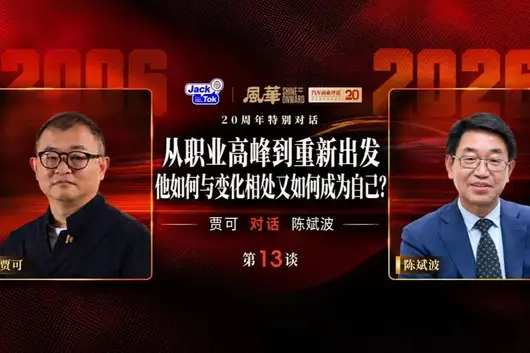

喺馬來西亞嘅 SUV 市場,好多人買車嗰陣都會拿 Toyota Harrier 同 Mercedes-Benz GLA 嚟比較。呢兩款車喺價位同定位上都幾接近,今日我哋就從多個方面做一個詳細嘅對比,幫你省咗做功課嘅時間。
Toyota Harrier 喺馬來西亞嘅 OTR 售價係 RM 289,000 - 289,000,一共有 1 個版本,包括 2026 HEV 2.5L Standard(RM 289,000) 等。
Mercedes-Benz GLA 喺馬來西亞嘅 OTR 售價係 RM 258,888 - 295,888,一共有 1 個版本,包括 Standard(RM 258,888) 等。
從價錢嚟睇,Mercedes-Benz GLA 嘅起步價比 Toyota Harrier 平咗 RM 30,112。講真係,喺呢個價位段,幾千蚊嘅差距其實唔算大,關鍵始終都睇整體嘅性價比同長期使用成本。
Toyota Harrier 配備 2.0L Turbo,馬力 220 hp。官方油耗 9.5 L/100km。
Mercedes-Benz GLA 配備 2.0L Turbo,馬力 220 hp。官方油耗 9.5 L/100km。
兩款車用緊同一套動力系統,日常開落嚟嘅感受基本無差。油耗方面都幾接近,唔使太計較呢一點。
Toyota Harrier 保養 5 年/無限制里程,保養間隔 每 10,000km 或 6 個月。
Mercedes-Benz GLA 保養 3 年/100,000km,保養間隔 每 10,000km 或 6 個月。
Toyota Harrier 同 Mercedes-Benz GLA 都係馬來西亞市場嘅主流選擇,適合家庭使用、日常通勤。如果你更加看重品牌口碑同二手價,可以優先考慮口碑更好嗰一款;如果你更加在意性價比同配備,那就揀配備更豐富嗰款。最終都係建議兩款都去試駕,親身體驗先係最重要。

總嘅嚟講,Toyota Harrier 同 Mercedes-Benz GLA 都係馬來西亞市場幾唔錯嘅車型。揀邊一輛,關鍵始終都要睇你嘅個人需求同預算。建議大家做好功課,多比較幾間車行嘅報價,再去試駕做最終決定。買車係件大事,花少少時間做功課絕對唔會錯。

喺馬來西亞嘅 SUV 市場,好多買家喺選車嘅時候都會拿豐田 Harrier 同寶馬 X5 PHEV 嚟做比較。呢兩款車喺價位同定位上都幾接近,今日我哋就從多個方面做一個詳細嘅對比,幫你省下做功課嘅時間。
豐田 Harrier 喺馬來西亞嘅 OTR 售價係 RM 289,000 - 289,000,一共有 1 個版本,包括 2026 HEV 2.5L Standard(RM 289,000)等。
寶馬 X5 PHEV 喺馬來西亞嘅 OTR 售價係 RM 486,800 - 494,800,一共有 2 個版本,包括 xDrive20i(RM 420,000)、xDrive30e(RM 480,000)等。
從價錢嚟睇,豐田 Harrier 嘅起步價確實比寶馬 X5 PHEV 平咗 RM 197,800。如果你預算有限,豐田嘅入門版已經可以滿足日常需求。但都要注意,平嗰幾千塊,可能喺配備上會有取捨,具體要睇你嘅需求。
豐田 Harrier 搭載 2.0L Turbo,馬力 220 hp。官方油耗 9.5 L/100km。
寶馬 X5 PHEV 搭載 Hybrid,馬力 170 hp。官方油耗 4.5 L/100km。
動力方面,豐田 Harrier 嘅 2.0L Turbo 比寶馬 X5 PHEV 嘅 Hybrid 多咗 50 匹馬力,中段加速更有信心,尤其係跑高速公路上超車嘅時候。不過寶馬 X5 PHEV 嘅油耗可能更友好,日常市區通勤分別唔會太大。
豐田 Harrier 車身長 4400 mm,尾箱 400 L。
寶馬 X5 PHEV 車身長 4400 mm,尾箱 400 L。
兩款車嘅尺寸幾乎一樣,車內空間分別唔大。呢個級別嘅車,日常使用完全夠用。
豐田 Harrier 同寶馬 X5 PHEV 都係馬來西亞市場嘅主流選擇,適合家庭使用、日常通勤。如果你更睇重品牌口碑同二手價,可以優先考慮口碑好嗰一款;如果你更在意性價比同配備,嗰就揀配置更豐富嗰款。最終仲係建議兩款都去試駕,親身體驗先最重要。

總嘅嚟講,豐田 Harrier 同寶馬 X5 PHEV 都係馬來西亞市場幾唔錯嘅車型。揀邊一輛,關鍵仲係睇你嘅個人需求同預算。建議大家做好功課,多比較幾間車行嘅報價,再去試駕做最終決定。買車係件大事,花點時間做功課絕對唔會錯。

喺馬來西亞嘅 SUV 市場,好多次買家喺揀車嘅時候都會拿豐田 Harrier 同寶馬 X5 嚟做比較。呢兩款車喺價位同定位上都幾相近,今日我哋就從多個方面做一個詳細嘅比較,幫你攞平做功課嘅時間。
豐田 Harrier 喺馬來西亞嘅 OTR 售價係 RM 289,000 - 289,000,一共有 1 個版本,包括 2026 HEV 2.5L Standard(RM 289,000)等。
寶馬 X5 喺馬來西亞嘅 OTR 售價係 RM 470,800 - 470,800,一共有 3 個版本,包括 1.5L Standard(RM 86,300)、1.5L Executive(RM 95,300)、1.5L Premium(RM 103,300)等。
從價錢來看,豐田 Harrier 嘅起價確實比寶馬 X5 平咗 RM 181,800。如果你預算有限,豐田嘅入門版已經可以滿足日常需求。但都要注意,平嗰幾千蚊,可能喺配備上會有取舍,具體睇你嘅需求。
豐田 Harrier 嘅安全評級係 5★ (ASEAN NCAP),主動安全系統包括 Brand ADAS。
寶馬 X5 嘅安全評級係 5★ (ASEAN NCAP),主動安全系統包括 ADAS (ACC, AEB, LKA, LDA, BSM, RCTA)。
兩款車嘅安全評級一樣,喺呢個級別入面安全配備都算畀好齊全。而家嘅新車安全性都唔差,唔使太擔心呢一點。
豐田 Harrier 車身長 4400 mm,行李箱 400 L。
寶馬 X5 車身長 4400 mm,行李箱 400 L。
兩款車嘅尺寸幾乎一樣,車內空間差別唔大。呢個級別嘅車,日常使用完全夠用。
豐田 Harrier 保修 5 年/無限制里程,保養間隔 每 10,000km 或 6 個月。
寶馬 X5 保修 5 年/無限里程,保養間隔 每 10,000km 或 6 個月。

豐田 Harrier 同寶馬 X5 都係馬來西亞市場嘅主流選擇,適合家庭用、日常通勤。如果你更睇重品牌口碑同二手價,可以優先考慮口碑更好嗰一款;如果你更在意性價比同配備,就揀配備更豐富嗰款。最終都係建議兩款都去試駕,親身感受先至係最緊要。

總體嚟講,豐田 Harrier 同寶馬 X5 都係馬來西亞市場好唔錯嘅車型。揀邊輛,關鍵都係要睇你嘅個人需求同預算。建議大家做好功課,多啲比較幾間車行嘅報價,再去試駕做最終決定。買車係件大事,花少少時間做功課絕對唔會錯。
© 2024 Bitauto.com. All Rights Reserved.
Bitauto (www.yiche.com and www.bitauto.com) is one of the most visited automotive websites in China. We provide detailed info on Chinese car brands available in your area. Please note that the information provided on this website is based on publicly available data and is for reference only. It may not be fully updated or accurate at all times.

Help us improve our website


