

HomeNissan X-Trail

Search History
Popular Searches
Dealer Login / Sign Up

Di pasaran SUV di Malaysia, ramai pembeli membandingkan Honda WR-V dan Chery Tiggo 8 semasa memilih kereta. Kedua-dua kereta ini memiliki harga dan kedudukan yang agak hampir. Hari ini, kami akan melakukan perbandingan terperinci dari pelbagai aspek, membantu anda menjimatkan masa membuat kajian.
Harga OTR Honda WR-V di Malaysia ialah RM 89,900 - 107,900, terdapat 4 varian termasuk 2023 1.5L V (RM 99,900), 2023 1.5L E (RM 95,900), 2023 1.5L S (RM 89,900) dan lain-lain.
Harga OTR Chery Tiggo 8 di Malaysia ialah RM 129,750 - 129,750, terdapat 1 varian termasuk 2026 1.6T Standard (RM 129,750) dan lain-lain.
Dari segi harga, harga permulaan Honda WR-V sebenarnya lebih murah RM 39,850 berbanding Chery Tiggo 8. Jika bajet anda terhad, versi masuk Honda sudah dapat memenuhi keperluan harian. Namun, perlu diambil perhatian, beberapa ribu ringgit yang lebih murah itu, mungkin ada pertimbangan dalam peralatan, bergantung pada keperluan anda.

Penilaian keselamatan Honda WR-V adalah 5★ (ASEAN NCAP), sistem keselamatan aktif termasuk Honda SENSING.
Penilaian keselamatan Chery Tiggo 8 adalah TBD, sistem keselamatan aktif termasuk Basic.
Dari segi peralatan keselamatan, kedua-dua kereta mendapat penilaian yang baik. Walau bagaimanapun, Honda SENSING Honda WR-V dan Basic Chery Tiggo 8 mempunyai perbezaan dalam fungsi. Jika anda lebih memprioritaskan keselamatan aktif, boleh membandingkan senarai fungsi kedua-duanya dengan teliti.

Panjang badan Honda WR-V adalah 4400 mm, ruang bagasi 400 L.
Panjang badan Chery Tiggo 8 adalah 4400 mm, ruang bagasi 400 L.
Saiz kedua-dua kereta hampir sama, ruang dalam tidak jauh berbeza. Kereta pada tahap ini, cukup sepenuhnya untuk penggunaan harian.

Honda WR-V dan Chery Tiggo 8 adalah pilihan utama pasaran Malaysia, sesuai untuk kegunaan keluarga, pengangkutan harian. Jika anda lebih memprioritaskan reputasi jenama dan nilai semula, boleh utamakan model yang mempunyai reputasi lebih baik; jika anda lebih mengutamakan nisbah harga dan prestasi serta peralatan, pilih model yang mempunyai konfigurasi lebih kaya. Akhir sekali, disarankan untuk memandu ujian kedua-duanya, pengalaman peribadi adalah yang paling penting.

Secara keseluruhannya, Honda WR-V dan Chery Tiggo 8 adalah model kereta yang agak baik di pasaran Malaysia. Memilih yang mana satu, utamanya bergantung pada keperluan peribadi dan bajet anda. Disarankan melakukan kajian terlebih dahulu, bandingkan banyak penawaran dari beberapa dealer kereta, kemudian buat ujian pemanduan untuk membuat keputusan akhir. Membeli kereta adalah perkara besar, luangkan masa untuk membuat kajian tidak akan salah.


August 19, Chery Executive Vice President, General Manager of International Business Group and General Manager of MoJia Robotics Zhang Guibing revealed during the 2026 World Robot Conference that MoJia Robotics (AiMOGA Robotics) under Chery has launched IPO preparations, is currently negotiating with multiple listing venues, and the timetable is yet to be determined. He stated that listing can raise financing for technical investment and also help improve governance transparency.

MoJia's starting point was not building robots, but the digital virtual avatar Mornine (Mornine). Around 2023, Chery's overseas brand OMODA heated up the C5 model, creating virtual human Mornine that resonates with Gen Z, active on promotional animations, brand live streaming platforms, and more.
The turning point began with operational pain points encountered in Chery's overseas stores. Zhang Guibing revealed that overseas sales are affected by peak and off-peak seasons, staff turnover is frequent, recruitment is difficult, and even if hired, multi-language training is a high threshold. The team thus conceived the idea of "letting Mornine walk into reality", which became the origin of the AiMOGA Robot project.
At the end of 2023, Mornine's first prototype went off the line, and in early 2024, it made its first public appearance at Chery's Global Dealer Conference. After more than two years of technical accumulation, on January 7, 2025, Chery officially invested to establish "Anhui MoJia Smart Innovation Robotics Technology Co., Ltd.", with registered capital of 100 million yuan, legal representative Zhang Guibing, MoJia transformed from an internal project to an independent legal entity.

In February of the same year, Mornine completed its first overseas commercial debut at the Kuala Lumpur store in Malaysia; in April, it appeared at the Shanghai Auto Show, demonstrating multi-modal perception and dexterous operation capabilities; in October, at the Chery Global Innovation Conference, it gave an autonomous speech in seven languages, becoming the focus of the whole event.

From December 2025 to January 2026, MoJia completed the first round of capital increase and strategic investment, registered capital increased to about 104 million yuan. After capital increase, the latest equity structure shows Chery Motors holds 96%, Bethel 1.40%, Fuchun Dyeing 1.20%, Hexie Chaoyue Fund 0.40%, Zhiyuan Innovation 0.20%, Wuhu Economic Development Zone Weida Venture Capital 0.40%, Wuhu Sci-Tech Investment Fund 0.40%.
In terms of performance, MoJia's cumulative global deliveries have exceeded 3,000 units, approximately 2,000 sold overseas, business covers 60 countries and regions, it is the world's first humanoid robot to complete dual EU software and hardware certification. On April 27, 2026 press conference, signed an order for 1,000 intelligent police robots at once and delivered 110 units on-site, product line thus expanded from "4S store sales associates" to the public security field.
Key customers cover Chery's overseas dealer network and public security departments of multiple cities.
Zhang Guibing revealed plans to increase global delivery volume to 10,000 units in 2027, join the industry's first tier, and proposed "three specific actions: improving reliability and cost-effectiveness of large-scale applications, iterating in over 50 countries and 100+ scenarios, achieving 100 unit deliveries to trigger 1,000 unit intent signings."
Industrialization advances in three stages according to "scenario-driven technology", first make child companion scenario robots, then expand to public service and enterprise service scenarios, finally promote robots entering homes.
In terms of supporting construction, 31 innovation labs have been set up, "AiMOGA Academy" established, signed with 100 universities to train talent, quadruped robot production line annual capacity reaches 15,000 units.

At Chery AI Night in January of this year, Chery Chairman Yin Tongyue proposed a "One Bottom Line, Three Directions" strategy, using cars as the cornerstone to promote AI extension to the physical world, covering humanoid robots, Robotaxi, smart agricultural machinery and other scenarios, "putting the car brain into the bodies of other industries". He revealed Chery's R&D budget for 2026 exceeds 32 billion yuan, the "2R Technology" composed of Robotaxi and MoJia is one of the four key focuses, and stated that the original intention of the layout is a rethinking of the "second growth point after the total number of future cars decreases".
At the April 27 MoJia press conference, he once again stated: "We most do not want to be defined as a car company, but as a high-tech, embodied, innovative company facing the future."
He proposed "intelligent cars are mobile robots", robots and intelligent cars have highly homogeneous underlying technologies in perception, planning, control, etc., technology modules and supply chains can be transferred.
2026 is regarded by the industry as the year of concentrated release of automakers' embodied intelligence layouts, globally over 20 mainstream automakers have entered the game through self-research, incubation, investment, etc., the industry is shifting from technology exploration to mass production racing.
MIIT data shows, China's quadruped robots already account for nearly 70% share of global sales. The industry generally judges that 2026 to 2028 will be the key verification window for humanoid robots to go from "prototypes" to "mass production of 10,000 units", but commercialization loop is still in early "strategic loss" stage, bottlenecks such as limited application scenarios and high costs remain to be broken. Against the background of the automotive industry profit margin falling below 3%, embodied intelligence has been regarded by many automakers as a "second growth curve" to hedge against the slowdown of the main business growth.
Source: Car Observer


喺馬來西亞嘅 SUV 市場,好多買家喺揀車嘅時候都拿本田 WR-V 同奇瑞 Tiggo Cross 嚟比較。呢兩款車喺價位同定位上都好相近,今日我哋就由多個方面做一个詳細嘅對比,幫你節省做功課嘅時間。
本田 WR-V 喺馬來西亞嘅 OTR 售價係 RM 89,900 - 107,900,一共有 4 個版本,包括 2023 1.5L V(RM 99,900)、2023 1.5L E(RM 95,900)、2023 1.5L S(RM 89,900) 等。
奇瑞 Tiggo Cross 喺馬來西亞嘅 OTR 售價係 RM 88,750 - 99,750,一共有 2 個版本,包括 2025 HEV 1.5L CSH(RM 99,750)、2025 1.5T Standard(RM 88,750) 等。
從價錢睇,奇瑞 Tiggo Cross 嘅起步價比本田 WR-V 平咗 RM 1,150。講真,喺呢個價位段,幾千蚊嘅差距其實唔算大,關鍵仲係睇整體嘅性價比同長期使用成本。
本田 WR-V 嘅安全評級係 5★ (ASEAN NCAP),主動安全系統包括本田 SENSING。
奇瑞 Tiggo Cross 嘅安全評級係 TBD,主動安全系統包括 Basic。
安全配備方面,兩款車都拿到唔錯嘅評級。不過本田 WR-V 嘅本田 SENSING 同奇瑞 Tiggo Cross 嘅 Basic 喺功能上有少少分別,如果你比較睇重主動安全嘅話,可以仔細對比下兩者嘅功能列表。
本田 WR-V 保修 5 年/無限里程,保養間隔 每 10,000km 或 6 個月。
奇瑞 Tiggo Cross 保修 3 年/100,000km,保養間隔 每 10,000km 或 6 個月。
本田 WR-V 同奇瑞 Tiggo Cross 都係馬來西亞市場嘅主流選擇,適合家庭用、日常通勤。如果你更睇重品牌口碑同二手價,可以優先考慮口碑更好嗰款;如果你更在意性價比同配備,就揀配置更豐富嗰款。最終始終建議兩款都去試駕,親身體驗先至最重要。

總體嚟講,本田 WR-V 同奇瑞 Tiggo Cross 都係馬來西亞市場幾好嘅車型。揀邊一部,關鍵都係睇你嘅個人需求同預算。建議大家做好功課,多比較間車行嘅報價,再去試駕做最終決定。買車係件大事,花啲時間做功課絕對唔會錯。

喺馬來西亞嘅 SUV 市場,好多買家喺揀車嗰陣都會拿本田 WR-V 同馬自達 CX-8 嚟做比較。呢兩款車喺價位同定位上都幾接近,今日我哋就從多個方面做一個詳細嘅對比,幫你省返做功課嘅時間。
本田 WR-V 喺馬來西亞嘅 OTR 售價係 RM 89,900 - 107,900,一共有 4 個版本,包括 2023 1.5L V(RM 99,900)、2023 1.5L E(RM 95,900)、2023 1.5L S(RM 89,900) 等。
馬自達 CX-8 喺馬來西亞嘅 OTR 售價係 RM 165,360 - 201,360,一共有 5 個版本,包括 2025 2.5T 4WD High Plus Petrol(RM 201,360)、2025 2.2L 2WD High Plus Diesel(RM 193,123)、2025 2.5L 2WD High Plus Petrol(RM 186,360) 等。
從價錢嚟睇,本田 WR-V 嘅起步價確實比馬自達 CX-8 平咗 RM 75,460。如果你預算有限,本田嘅入門版已經可以滿足日常需求。但都要留意,平嗰幾千塊,可能喺配備上會有取捨,具體要睇你嘅需求。
本田 WR-V 搭載 1.5L 4-cyl,馬力 105 hp。官方油耗 6.0 L/100km。
馬自達 CX-8 搭載 2.0L 4-cyl,馬力 170 hp。官方油耗 8.0 L/100km。
動力方面,馬自達 CX-8 嘅 2.0L 4-cyl 比本田 WR-V 嘅 1.5L 4-cyl 多咗 65 匹馬力。不過日常喺市區開,兩款車嘅動力都夠用,唔會覺得唔夠力。
本田 WR-V 嘅安全評級係 5★ (ASEAN NCAP),主動安全系統包括本田 SENSING。
馬自達 CX-8 嘅安全評級係 5★ (ASEAN NCAP),主動安全系統包括 Brand ADAS。
兩款車嘅安全評級一樣,喺呢個級別入面安全配備都算畀得好齊全。而家嘅新車安全性都唔差,唔使太擔心呢一點。
本田 WR-V 車身長 4400 mm,尾箱 400 L。
馬自達 CX-8 車身長 4500 mm,尾箱 450 L。
空間方面,馬自達 CX-8 嘅車身比本田 WR-V 長咗 100 mm,乘坐空間更有優勢。不過本田 WR-V 喺城市入面泊車會靈活啲,各有取捨。

本田 WR-V 採用 FWD 驅動方式。
馬自達 CX-8 採用 FWD 驅動方式。
兩款車嘅驅動方式一樣,都係 FWD,日常駕駛感受唔會有太大分別。

總嚟講,本田 WR-V 同馬自達 CX-8 都係馬來西亞市場好好嘅車型。揀邊一部,關鍵係要睇你嘅個人需求同預算。建議大家做好功課,多比較幾間車行嘅報價,再去試駕做最終決定。買車係件大事,花少少時間做功課絕對唔會錯。

In Malaysia's SUV market, many buyers compare the Honda WR-V and Mazda CX-5 when choosing a car. These two cars are quite close in price and positioning, so today we will make a detailed comparison from multiple aspects to help you save time on research.
The Honda WR-V's OTR price in Malaysia is RM 89,900 - 107,900, with a total of 4 versions, including 2023 1.5L V (RM 99,900), 2023 1.5L E (RM 95,900), 2023 1.5L S (RM 89,900), etc.
The Mazda CX-5's OTR price in Malaysia is RM 135,469 - 166,760, with a total of 3 versions, including 2025 2.0L AT 35th Anniversary (RM 316,154), 2025 2.0L AT (RM 296,154), 2025 2.0L MT (RM 294,154), etc.
From a price perspective, the Honda WR-V's starting price is indeed RM 45,569 cheaper than the Mazda CX-5. If your budget is limited, Honda's entry-level version already meets daily needs. However, note that the few thousand cheaper difference might involve trade-offs in features, depending on your specific requirements.
The Honda WR-V is equipped with a 1.5L 4-cyl, 105 hp. Official fuel consumption 6.0 L/100km.
The Mazda CX-5 is equipped with a 1.5L Turbo, 140 hp. Official fuel consumption 7.0 L/100km.
In terms of power, the Mazda CX-5's 1.5L Turbo has 35 more horsepower than the Honda WR-V's 1.5L 4-cyl. However, for daily city driving, both cars' power is sufficient, you won't feel underpowered.
The Honda WR-V body length is 4400 mm, trunk 400 L.
The Mazda CX-5 body length is 4500 mm, trunk 450 L.
In terms of space, the Mazda CX-5 body is 100 mm longer than the Honda WR-V, passenger space is more advantageous. However, the Honda WR-V is more flexible for parking in the city, each has trade-offs.
The Honda WR-V uses FWD drive type.
The Mazda CX-5 uses FWD drive type.
Both cars' drive types are the same, both are FWD, daily driving feel won't have a big difference.

Overall, the Honda WR-V and Mazda CX-5 are both very good models in the Malaysian market. Choosing which one, the key depends on your personal needs and budget. It is recommended for everyone to do research, compare quotes from several dealers, then go for a test drive to make the final decision. Buying a car is a big matter, spending some time doing research will definitely not be wrong.

In the Malaysian SUV market, many buyers will compare Honda WR-V and Mazda CX-30 when choosing a car.
Honda WR-V has an OTR price in Malaysia of RM 89,900 - 107,900, with a total of 4 versions, including 2023 1.5L V (RM 99,900), 2023 1.5L E (RM 95,900), 2023 1.5L S (RM 89,900), etc.
Mazda CX-30 has an OTR price in Malaysia of RM 122,409 - 146,409, with a total of 4 versions, including 2025 2.0L High+ Premium (RM 146,409), 2025 2.0L High+ (RM 138,409), 2025 2.0L High (RM 130,409), etc.
From the price perspective, Honda WR-V's starting price is indeed RM 32,509 cheaper than Mazda CX-30. If your budget is limited, Honda's entry-level version is already sufficient for daily needs. But also note, the few thousand difference may involve trade-offs in features, depending on your specific needs.
Honda WR-V uses FWD drive type.
Mazda CX-30 uses FWD drive type.
Both cars have the same drive type, both FWD, and there won't be much difference in daily driving experience.
Honda WR-V warranty 5 years/unlimited mileage, maintenance interval every 10,000 km or 6 months.
Mazda CX-30 warranty 5 years/150,000 km, maintenance interval every 10,000 km or 6 months.
Honda WR-V and Mazda CX-30 are both mainstream choices in the Malaysian market, suitable for family use and daily commuting. If you value brand reputation and resale value more, you can prioritize the one with better reputation; if you care more about cost-performance and features, then choose the one with richer configurations. Ultimately, it is recommended to test drive both, personal experience is the most important.

In general, Honda WR-V and Mazda CX-30 are both quite good car models in the Malaysian market. Which one to choose depends mainly on your personal needs and budget. We suggest doing your homework, comparing quotes from several dealerships, and then test driving to make a final decision. Buying a car is a big matter, spending some time doing homework will never be wrong.

In Malaysia's SUV market, many buyers compare the Honda WR-V and Mazda CX-3 when choosing a car. These two cars are quite close in price and positioning. Today, we will make a detailed comparison from multiple aspects to help you save time doing research.
The OTR price of Honda WR-V in Malaysia is RM 89,900 - 107,900, with a total of 4 versions, including 2023 1.5L V (RM 99,900), 2023 1.5L E (RM 95,900), 2023 1.5L S (RM 89,900), etc.
The OTR price of Mazda CX-3 in Malaysia is RM 126,159 - 139,159, with a total of 2 versions, including 2023 2.0L High (RM 139,159), 2023 2.0L Plus (RM 126,159), etc.
In terms of price, the Honda WR-V's starting price is indeed RM 36,259 cheaper than the Mazda CX-3. If your budget is limited, Honda's entry-level version can already meet daily needs. However, be aware that the savings of a few thousand Ringgit may involve compromises in features, which depends on your specific requirements.
Honda WR-V is equipped with a 1.5L 4-cyl, 105 hp. Official fuel consumption 6.0 L/100km.
Mazda CX-3 is equipped with a 1.5L Turbo, 140 hp. Official fuel consumption 7.0 L/100km.
In terms of power, the Mazda CX-3's 1.5L Turbo has 35 more horsepower than the Honda WR-V's 1.5L 4-cyl. However, for daily city driving, both cars have sufficient power and you won't feel underpowered.
Honda WR-V warranty 5 years/unlimited mileage, service interval every 10,000km or 6 months.
Mazda CX-3 warranty 5 years/150,000km, service interval every 10,000km or 6 months.
Both Honda WR-V and Mazda CX-3 are mainstream choices in the Malaysian market, suitable for family use and daily commuting. If you value brand reputation and resale value more, you can prioritize the one with better reputation; if you care more about value for money and features, choose the one with richer configuration. Ultimately, it is recommended to test drive both, personal experience is the most important.

Overall, both Honda WR-V and Mazda CX-3 are very good models in the Malaysian market. Which one to choose depends mainly on your personal needs and budget. It is recommended that everyone do their research, compare quotes from several dealerships, and then test drive to make the final decision. Buying a car is a big matter, spending some time doing research is never wrong.

Adakah anda perasan, sekarang membeli SUV EV, semakin sukar untuk memilih?
Spesifikasi satu demi satu semakin menarik, jarak bateri semakin jauh, kekuatan pemprosesan cip semakin tinggi. Tetapi ketika melihat kereta, penjual bercakap dengan sangat hebat, bila tiba masanya digunakan—musim sejuk jarak bateri terpotong separuh, musim panas bateri panas melampau, selepas digunakan dua tahun bunyi pelik tidak henti. Mengapa? Kerana ada sesetengah kereta adalah "dibuat cepat": kitaran pembangunan dikurangkan dari 36 bulan ke 18 bulan atau lebih pendek, menggunakan data simulasi menggantikan ujian jalan kereta sebenar, membuang pengesahan kondisi sempadan operasi. Masalah kualiti industri semakin meningkat, bilangan kerosakan per 100 kenderaan pada Tahun 2025 bertambah 16 buah berbanding tahun sebelum. Menambah spesifikasi mudah, membina kualiti susah.
Tetapi logik pertandingan di medan EV sedang berubah. Industri telah memasuki separuh kedua, bukan lagi semata-mata bersaing jarak bateri berapa jauh, cip seberapa pantas, tumpuan beralih kepada kestabilan produk, kebolehpercayaan dan rasa kualiti. Siapa yang boleh pastikan pengguna rasa selamat menggunakannya dalam tempoh lama, sahajalah yang akan menang.
Pada masa ini, Chery yang sentiasa dipanggil "lelaki jurutera yang bersahaja", membawa Fengyun T7.
Kereta ini sejak awal penyelidikan telah menetapkan Piawaian Global, Uji Global, Pengguna Global, Ketahanan Global, Pembuatan Berkualiti Global lima sistem. 2 tahun perancangan, 3 tahun pengembangan, lebih 5,000 kumpulan kajian pengguna global, 15 buah negara tipikal lawatan mendalam. Bukan baik buatan tempatan kemudian ubah suai sedikit jual ke luar negara, tetapi biarkan pengguna global "menguji barang" dahulu—model jenis yang sama sudah pra-pembelian di Afrika Selatan, Thailand dikeluarkan. Chery terus nombor satu eksport selama 23 tahun, 20 juta pengguna global dukungan, sistem globalisasi ini, bukan dibina dalam sehari.
Fasa pengesahan lebih menunjukkan hasil sebenar. 81 unit kereta ketahanan khusus ujian jalan serentak, kenderaan penuh kumulatif ujian melebihi 6 juta kilometer, ujian khusus ketahanan 1.45 juta kilometer. Merangkumi musim hujan Asia Tenggara, Panas terik Timur Tengah, sejuk melampau Eropah Utara, -40°C hingga 55°C sesuai keseluruhan. Lengkungan lebuh raya Jerman, jalan batu kerikil Mexico, jalan tak berpavemen Afrika Selatan, lebih 95% kondisi jalan rumit di seluruh dunia sudah dilalui. Ini bukan dikira di dalam makmal, satu kilometer demi satu kilometer dilalui.

Semua versi 600 kilometer jarak bateri cas pantas 30%-80% hanya 22 minit; 80% Keluli Kekuatan Tinggi + 9 beg udara, menyamakan piawaian E-NCAP Versi 2026 lima bintang; 4nm 8775 cip integrasi kabin dan pemanduan + skrin besar 15.6 inci 2.5K; jarak paksi 2700mm + mod katil rata penuh. Konfigurasi ini, ditaruh di harga pra-pembelian RM 109,900 hingga RM 129,900, keikhlasan sudah sangat jelas.
Pada akhirnya, sebuah kereta bukan untuk guna 3 tahun, tetapi untuk menemani keluarga berjalan 5 tahun, 8 tahun, 10 tahun. Spesifikasi boleh ketinggalan zaman, tetapi kualiti tidak. Fengyun T7 menggunakan satu siri pengesahan global lengkap, dari punca menyelesaikan semua kekhawatiran anda tentang kebolehpercayaan kereta elektrik, kesesuaian persekitaran, ketahanan jangka panjang. Sebuah SUV EV benar-benar diperbaiki dengan bersungguh-sungguh di seluruh dunia, sahajalah yang bernilai kepercayaan jangka panjang seluruh keluarga.
Sudah lama ditunggu. Pergi ke kedai cuba sendiri, kereta ini bernilai.
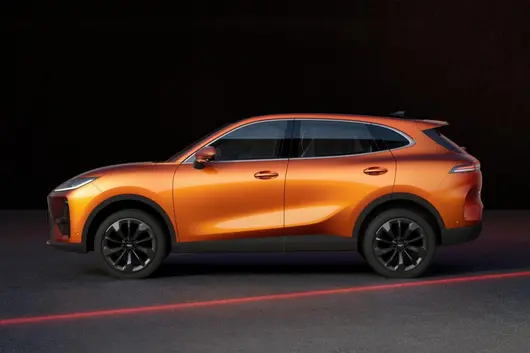

喺馬來西亞嘅 SUV 市場,好多車主喺揀車嗰陣都會拎本田 WR-V 同馬自達 CX-5 做比較。呢兩部車喺價錢同定位上都好接近,今日我哋就由多個方面做詳細比較,幫你省返做功課嘅時間。
本田 WR-V 喺馬來西亞嘅 OTR 售價係 RM 89,900 - 107,900,合共有 4 個版本,包括 2023 1.5L V(RM 99,900)、2023 1.5L E(RM 95,900)、2023 1.5L S(RM 89,900) 等。
馬自達 CX-5 喺馬來西亞嘅 OTR 售價係 RM 135,469 - 166,760,合共有 3 個版本,包括 2025 2.0L AT 35th Anniversary(RM 316,154)、2025 2.0L AT(RM 296,154)、2025 2.0L MT(RM 294,154) 等。
從價錢來看,本田 WR-V 嘅起步價真係比馬自達 CX-5 便宜咗 RM 45,569。如果你預算有限,本田嘅入門版已經可以滿足日常需求。但亦都要留意,便宜嗰幾千塊,可能喺配備上會有取舍,具體要睇你嘅需求。
本田 WR-V 配備 1.5L 4-cyl,馬力 105 hp。官方油耗 6.0 L/100km。
馬自達 CX-5 配備 1.5L Turbo,馬力 140 hp。官方油耗 7.0 L/100km。
動力方面,馬自達 CX-5 嘅 1.5L Turbo 比本田 WR-V 嘅 1.5L 4-cyl 多咗 35 匹馬力。不過日常喺市區開,兩部車嘅動力都夠用,唔會覺得無力。
本田 WR-V 嘅安全評級係 5★ (ASEAN NCAP),主動安全系統包括本田 SENSING。
馬自達 CX-5 嘅安全評級係 5★ (ASEAN NCAP),主動安全系統包括 。
兩部車嘅安全評級一樣,喺呢個級別入面安全配備都算好齊全咗。而家嘅新車安全性都唔差,唔使太擔心這一點。
本田 WR-V 採用 FWD 驅動方式。
馬自達 CX-5 採用 FWD 驅動方式。
兩部車嘅驅動方式一樣,都係 FWD,日常駕駛感受唔會有太大分別。
本田 WR-V 同馬自達 CX-5 都係馬來西亞市場嘅主流選擇,適合家庭用、日常通勤。如果你更重視品牌口碑同二手價,可以優先考慮口碑更好嗰部;如果你更在意性價比同配備,那就揀配備更豐富嗰款。最終都建議兩部都去試駕,親身體驗先係最重要嘅。

總括嚟講,本田 WR-V 同馬自達 CX-5 都係馬來西亞市場幾唔錯嘅車款。揀邊部,關鍵都係要睇你嘅個人需求同預算。建議大家做好功課,多比較間車行嘅報價,先去試駕做最終決定。買車係件大事,花少少時間做功課絕對無錯。
In the Malaysian SUV market, many buyers compare the Proton X90 and Subaru Crosstrek when choosing a car. The price and positioning of these two cars are quite close, today we will make a detailed comparison from multiple aspects to help you save research time.
The OTR price of Proton X90 in Malaysia is RM 106,800 - 122,800, with a total of 4 versions, including 2026 1.5T Prime X (RM 122,800), 2026 1.5T Prime (RM 116,800), 2026 1.5T Lite (RM 106,800), etc.
The OTR price of Subaru Crosstrek in Malaysia is RM 145,000 - 160,000, with a total of 1 version, including 2.0L e-Boxer (RM 150,000), etc.
From a price perspective, the starting price of Proton X90 is indeed RM 38,200 cheaper than Subaru Crosstrek. If you have a limited budget, Proton's entry-level version can already meet daily needs. But note also that those few thousand cheaper might involve trade-offs in features, depending on your needs.

Proton X90 is equipped with a 1.5L Turbo, 140 hp. Official fuel consumption 7.0 L/100km.
Subaru Crosstrek is equipped with a 1.5L Turbo, 140 hp. Official fuel consumption 7.0 L/100km.
Both cars use the same powertrain, the driving experience in daily use is basically the same. Fuel consumption is also similar, no need to dwell too much on this point.

Proton X90's safety rating is 5★ (ASEAN NCAP), active safety systems include ADAS (ACC, AEB, LKA, LDA, BSM, RCTA).
Subaru Crosstrek's safety rating is 5★ (Euro NCAP), active safety systems include EyeSight.
Regarding safety features, both cars have received decent ratings. However, the ADAS (ACC, AEB, LKA, LDA, BSM, RCTA) of Proton X90 and EyeSight of Subaru Crosstrek have some differences in functionality. If you value active safety highly, you can compare their feature lists carefully.

Proton X90 body length 4400 mm, trunk 400 L.
Subaru Crosstrek body length 4400 mm, trunk 400 L.
The dimensions of both cars are almost identical, with little difference in interior space. For this class of cars, it is more than enough for daily use.

Proton X90 warranty 5 years/150,000km, maintenance interval every 10,000km or 6 months.
Subaru Crosstrek warranty 3 years/100,000km, maintenance interval every 10,000km or 6 months.
Overall, Proton X90 and Subaru Crosstrek are both very good car models in the Malaysian market. Which one to choose depends mainly on your personal needs and budget. We recommend doing your research, comparing quotes from several dealerships, and then test driving to make the final decision. Buying a car is a big matter, taking some time to research will never go wrong.


In Malaysia's SUV market, many buyers compare the Proton X90 and Volkswagen Tiguan when selecting a vehicle. These two cars are quite similar in price and positioning. Today, we will conduct a detailed comparison from multiple aspects to help you save time on research.
The Proton X90 OTR price in Malaysia is RM 106,800 - 122,800, with a total of 4 versions, including 2026 1.5T Prime X (RM 122,800), 2026 1.5T Prime (RM 116,800), 2026 1.5T Lite (RM 106,800), etc.
The Volkswagen Tiguan OTR price in Malaysia is RM 206,540 - 260,024, with a total of 2 versions, including 2025 Allspace 2.0T R-Line (RM 260,024), 2025 Allspace 1.4T Elegance (RM 206,540), etc.
In terms of price, the Proton X90's starting price is indeed RM 99,740 cheaper than the Volkswagen Tiguan. If your budget is limited, the Proton entry-level version can already meet daily needs. However, note that the few thousand cheaper might involve trade-offs in features, depending on your specific needs.
The Proton X90 safety rating is 5★ (ASEAN NCAP), active safety systems include ADAS (ACC, AEB, LKA, LDA, BSM, RCTA).
The Volkswagen Tiguan safety rating is 5★ (Euro NCAP), active safety systems include IQ.Drive.
Regarding safety features, both cars received good ratings. However, there are some functional differences between the Proton X90's ADAS (ACC, AEB, LKA, LDA, BSM, RCTA) and the Volkswagen Tiguan's IQ.Drive. If you value active safety, you can compare the feature lists of both carefully.
The Proton X90 adopts FWD drive mode.
The Volkswagen Tiguan adopts FWD drive mode.
Both cars have the same drive mode, which is FWD, so there will not be much difference in the daily driving experience.
Proton X90 warranty 5 years/150,000km, maintenance interval every 10,000km or 6 months.
Volkswagen Tiguan warranty 3 years/100,000km, maintenance interval every 10,000km or 6 months.

Proton X90 and Volkswagen Tiguan are both mainstream choices in the Malaysian market, suitable for family use and daily commuting. If you value brand reputation and resale value more, you can prioritize the one with better reputation; if you care more about cost-performance and features, then choose the one with richer configuration. In the end, it is recommended to test drive both models, as hands-on experience is the most important.

Overall, Proton X90 and Volkswagen Tiguan are both very good models in the Malaysian market. Which one to choose depends mainly on your personal needs and budget. We suggest you do your homework, compare quotes from several car dealerships, and then test drive to make the final decision. Buying a car is a big matter, spending some time on research will never be wrong.

Dalam pasaran SUV di Malaysia, ramai pembeli yang membandingkan Proton X90 dan Subaru Forester semasa memilih kereta. Kedua-dua kereta ini memiliki julat harga dan kedudukan yang agak hampir, hari ini kita akan membuat perbandingan terperinci dari pelbagai aspek, membantu anda menjimatkan masa membuat penyelidikan.
Harga OTR Proton X90 di Malaysia adalah RM 106,800 - 122,800, terdapat 4 versi, termasuk 2026 1.5T Prime X (RM 122,800), 2026 1.5T Prime (RM 116,800), 2026 1.5T Lite (RM 106,800) dan lain-lain.
Harga OTR Subaru Forester di Malaysia adalah RM 174,000 - 197,000, terdapat 3 versi, termasuk 2024 2.0L S EyeSight GT Edition (RM 189,538), 2024 2.0L S EyeSight (RM 177,538), 2024 2.0L L EyeSight (RM 167,538) dan lain-lain.
Daripada segi harga, harga permulaan Proton X90 memang lebih murah RM 67,200 berbanding Subaru Forester. Jika bajet anda terhad, versi asas Proton sudah boleh memenuhi keperluan harian. Tetapi perlu diingatkan, perbezaan harga ribuan ringgit mungkin melibatkan kompromi pada peralatan, bergantung pada keperluan anda.
Proton X90 dilengkapi enjin Turbo 1.5L, kuasa 140 hp. Penggunaan minyak rasmi 7.0 L/100km.
Subaru Forester dilengkapi enjin 4-silinder 2.0L, kuasa 170 hp. Penggunaan minyak rasmi 8.0 L/100km.
Dari segi kuasa, enjin 4-silinder 2.0L Subaru Forester mempunyai 30 kuda kuasa lebih daripada Turbo 1.5L Proton X90. Walau bagaimanapun, untuk penggunaan harian di bandar, kuasa kedua-dua kereta ini sudah mencukupi, tidak terasa kurang tenaga.
Pengelas keselamatan Proton X90 adalah 5★ (ASEAN NCAP), sistem keselamatan aktif termasuk ADAS (ACC, AEB, LKA, LDA, BSM, RCTA).
Pengelas keselamatan Subaru Forester adalah 5★ (Euro NCAP), sistem keselamatan aktif termasuk EyeSight.
Dari segi peralatan keselamatan, kedua-dua kereta mendapat pengelasan yang baik. Walau bagaimanapun, ADAS Proton X90 (ACC, AEB, LKA, LDA, BSM, RCTA) dan EyeSight Subaru Forester ada perbezaan fungsi. Jika anda memberi perhatian kepada keselamatan aktif, anda boleh membandingkan senarai fungsi kedua-duanya.
Proton X90 panjang badan 4400 mm, bagasi 400 L.
Subaru Forester panjang badan 4400 mm, bagasi 400 L.
Dimensi kedua-dua kereta hampir sama, ruang dalaman tidak banyak berbeza. Kereta dalam kelas ini, penggunaan harian sudah mencukupi.

Proton X90 menggunakan kaedah pemacu FWD.
Subaru Forester menggunakan kaedah pemacu FWD.
Kaedah pemacu kedua-dua kereta sama, semua FWD, pengalaman memandu harian tidak akan banyak berbeza.
Secara keseluruhan, Proton X90 dan Subaru Forester adalah model kereta yang sangat baik di pasaran Malaysia. Memilih yang mana, asas utamanya adalah keperluan peribadi dan bajet anda. Disarankan anda membuat penyelidikan, bandingkan beberapa tawaran harga daripada dealer kereta, kemudian buat ujian test untuk membuat keputusan akhir. Membeli kereta adalah perkara besar, meluangkan masa membuat penyelidikan pasti tidak akan salah.

喺馬來西亞嘅 SUV 市場,好多買家喺揀車嘅時候都會拎本田 WR-V 同 豐田 Yaris Cross 做比較。呢兩部車喺價錢同定位上都幾接近,今日我哋就從多個方面做個詳細比較,幫你節省咗做功課嘅時間。
本田 WR-V 喺馬來西亞嘅 OTR 售價係令吉 89,900 - 107,900,總共係 4 個版本,包括 2023 1.5L V(令吉 99,900)、2023 1.5L E(令吉 95,900)、2023 1.5L S(令吉 89,900) 等。
豐田 Yaris Cross 喺馬來西亞嘅 OTR 售價係令吉 99,900 - 109,900,總共係 2 個版本,包括 2026 1.5L Standard(令吉 99,900)、2026 HEV 1.5L Standard(令吉 109,900) 等。
由價錢睇,本田 WR-V 嘅起步價確實比 豐田 Yaris Cross 平咗 令吉 10,000。如果你預算有限,本田嘅入門版已經可以滿足日常需要。但亦都要注意,平嗰幾千蚊,可能喺配備上要有取舍,具體就要睇你嘅需要。
本田 WR-V 配備 1.5L 4 汽缸,馬力 105 馬力。官方油耗 6.0 公升/100 公里。
豐田 Yaris Cross 配備 1.5L 4 汽缸,馬力 105 馬力。官方油耗 6.0 公升/100 公里。
呢兩部車用嘅係同一套動力系統,日常開落去嘅感覺基本冇分別。油耗方面都差不多,唔使太糾結呢一點。
本田 WR-V 嘅安全評級係 5★ (ASEAN NCAP),主動安全系統包括 本田 SENSING。
豐田 Yaris Cross 嘅安全評級係 5★ (ASEAN NCAP),主動安全系統包括 TSS。
呢兩部車嘅安全評級一樣,喺呢個級別入面,安全配備都算好齊全。而家嘅新車安全性都唔差,唔使太擔心呢一點。
本田 WR-V 採用 FWD 驅動方式。
豐田 Yaris Cross 採用 FWD 驅動方式。
呢兩部車嘅驅動方式一樣,都係 FWD,日常駕駛感受唔會有太大分別。

本田 WR-V 同 豐田 Yaris Cross 都係馬來西亞市場嘅主流選擇,適合家庭使用、日常通勤。如果你更睇重品牌口碑同二手價,可以優先考慮口碑更好嗰一款;如果你更在意性價比同配備,那就揀配置更豐富嗰款。最終都係建議兩部都去試駕,親身經歷先係最重要。

總括嚟講,本田 WR-V 同 豐田 Yaris Cross 都係馬來西亞市場幾不錯嘅車型。揀邊一部,關鍵都要睇你嘅個人需要同預算。建議大家做好功課,多比較幾間車行嘅報價,再去試駕先做最終決定。買車係件大事,花啲時間做功課絕對唔錯。

In January to May this year, the cumulative number of new models launched in the domestic automobile market reached 542 models, translating to an average of 3.6 new cars officially announced daily. Meanwhile, about 1.65 million vehicles were recalled nationwide in the first half of 2026, with the recall volume of independent brands surging 681.2% year-on-year. On one hand, the high-speed launches brought by the "Sea of Cars" strategy; on the other, the recall pressure brought by speed. More and more people are starting to question: What exactly have those rapidly launched new cars cut out?
Chery Automobile Executive Vice President Li Xueyong stated plainly: "Automobiles are not FMCGs, they concern the safety of tens of millions of families, and bear the test of global road conditions, climates, and habits. There are some times, we really dare not save." Voyah Chairman Lu Fang publicly stated: "Quick-made cars" is a concept that has been "severely misread," a short development time does not equal quick-made cars. The watershed for judging "quick-made cars" lies in whether the verification is complete.

When industry anxiety found an outlet in the three words "quick-made cars", the discussion regarding the speed of car building between Chery and Voyah took on another meaning. The faster cars are built, the shorter the verification time is compressed; this is the fact on the table. What we want to know more is, how many unfinished lessons are hidden in "fast", and whether there is real skill in "slow". In the final analysis, what this controversy is more worth asking is not who is right between fast and slow, but under the "Sea of Cars" strategy, whether speed and quality can truly be achieved together.
Speed and Quality, Not So Easy to Balance
Some things hold theoretically, but in reality, they always incur some discounts. This is also one of the reasons for the industry's anxiety over "quick-made cars". In the past, a car from project initiation to market launch generally took 3 to 4 years, but in recent years this has been compressed to 18 months or even shorter. Where is the time saved? Platformization and modularization can save some repeated development, mature simulation testing can save some pure physical trials. These are technological progress, looking very reasonable. But the question is, the bottom line for saving time is hard to verify.
At the 2026 China Automotive Forum, Beijing Hyundai General Manager Li Fenggang said that some brands, in order to rush to launch, directly cut out the mandatory Design Verification (DV) and Production Verification (PV) links in overall vehicle development, pushing to market before verification is complete. Two links, one checks if the plan works, one checks if mass production is stable, neither can be missing. But once only one step is done, production consistency will be poor, and quality will be very unstable. The consequence is that customers turn from consumers into test drivers.

Voyah's Lu Fang believes "quick-made cars" were misread, short development time does not equal quick-made cars, the real yardstick is whether verification is complete. This viewpoint itself is not problematic, indeed some cars have short cycles but complete the necessary verification. But in reality, it is precisely the matter of "whether verification is complete" that is most easily fudged. When the whole industry is taking speed as results, how many can honestly run through every verification step? The "efficient cars" Lu Fang spoke of, hold theoretically, but verifying step by step without omission tests the automaker's bottom line. And the word "bottom line", is precisely the hardest thing to stick to under the "Sea of Cars" strategy.
Given that theory may have some disconnect with reality, Chery's attitude of "daring not to save time" is undoubtedly more reassuring. For this point, we can verify it by looking at the R&D process of Chery Fengyun T7. 2 years planning, 3 years forward development, this car took 5 years in total to reach the market. The first two years global research covered 15 typical countries, completed over 5,000 user questionnaires, breaking down car usage habits in different markets into over 80 adaptation details.

The following 3 years, 81 cars ran globally simultaneously, from Siberia -40℃ extreme cold to Middle East 55℃ intense heat, from Indonesia's high humidity acid rain to Mexico's pebble bumpy roads, all completed. Total accumulated vehicle test mileage exceeded 6 million kilometers, durability special actual testing reached 1.45 million kilometers alone. This is not running in a lab, but running on real road conditions around the world.
At present, technology can indeed reduce the car building cycle, but exchanging time for reliability, exchanging global verification for user trust, is still the more reassuring path for now.
Fast and Slow, Not a "Single Choice Question"
In the domestic car market, hardly anyone dares to slow down truly. Price wars come one after another, new cars come one after another, step back one step, might not even enter the track. So "speeding up" for most automakers is the only choice. In fact, in this era where technology develops rapidly, talking about bottom lines and efficiency, fast and slow themselves shouldn't be a "single choice question". To put it bluntly, the systematic leap of technology has improved the efficiency of building cars, this is an undeniable fact. But for automakers, how to grasp the proportion of fast and slow is a more worth thinking about question.
Li Xueyong said "some times we dare not save", this sentence is actually very interesting. This is a sentence with "room" left, we look at Chery's product renewal strategy, can find, it neither clings to "fast", nor completely obsesses over "slow". Objectively speaking, this is a "dual track" approach. For cars like Fengyun T7 that carry the brand and fight in the global market, do them slowly; for annual facelifts like Arrizo 8 PRO or classic IP electrification renewals like QQ3, do them quickly.

Why? The latter type of cars, platforms are already mature, three-electric systems cross-model reuse, core components have run multiple markets, the focus of verification changed from "zero verification" to "change point verification". What is saved here is repetitive labor, not bottom lines. In other words, Chery is not averse to pursuing speed; it simply applies "speed" to areas that are already proven, and reserves "slowness" for places that truly cannot be rushed. So, Chery can plan 17 models for 2026, yet also be willing to sink its heart and spend 5 years, solely to verify the reliability of the Fengyun T7.
Of course, to grasp the balance between fast and slow, it is very important whether the automaker has sufficient confidence. This means bearing the rhythm pressure brought by slowness without being overwhelmed by price wars, while possessing mature platforms and reuse capabilities to ensure quality isn't discounted despite speed. Just like Chery, it has already achieved commendable results in the global market. Profits from overseas feed back into domestic R&D, then using global road conditions and climates to verify vehicles. With no need to rely on cutting R&D time to protect profits, it naturally dares to spend sufficient time where it shouldn't be saved.

In the end, fast and slow shouldn't be a question requiring a binary choice, the real difficulty lies in the proportion. In this regard, Lu Fang's viewpoint that technology drives speed at Voyah is correct, but Chery's "dual-track" strategy is more worth learning from by the industry.
After Controversy, How to Solve Industry Anxiety?
For the whole industry, "quick-made cars" are indeed anxious. To speak plainly, the essence of the "quick-made cars" controversy is not fast or slow, it is information asymmetry. Beijing Hyundai General Manager Li Fenggang said someone "cut key links of DV (Design Verification) and PV (Production Verification), turning consumers into road testers" "only verifying one stage, leading to poor production consistency, large quality fluctuations", which hits the anxiety behind "quick-made cars". And in recent times, the status quo where multiple domestic automakers had products explode with quality issues, having to recall tens of thousands to hundreds of thousands of cars, also made consumers' worry about "quick-made cars" quality issues reach the peak.
In an environment where 3.6 new cars per day, everyone shouting "fast", exactly what can be used to distinguish who is building cars seriously and who is cutting corners? Behind this controversy about "quick-made cars", what everyone is anxious about is whether the bottom line will be blurred because of this. After all, once the bottom line is blurred, finally the whole industry pays for the laziness of a few people. So, the controversy itself is not important, the important thing is how to solve the problem of industry anxiety.

At present, Chery's approach is relatively meaningful. Here we can see three relatively core things, one is external standards, Chery has IATF board member identity, can directly participate in global automotive quality standard formulation. This is not a certification that can be bought with money, requires the enterprise to reach international frontline level in technical system, quality control ability, globalization degree to enter.
Secondly, quantifiable results: 71 car models achieved global five-star ratings, J.D. Power ranked first in four autonomous categories; these are hard evidence that Chery's "verification was not in vain". Additionally, Chery has a safety net mechanism, such as Fengyun T7's promise to replace the new car in case of battery thermal runaway, and a maximum compensation of 5 million for intelligent driving liability accidents. Essentially, this transfers the risk of "insufficient verification" from the consumer back to the automaker. If the industry adopts such mechanisms, the cost of "slacking off" will be raised significantly.

Thirdly, a virtual-real combined verification loop. Chery's verification system is not "replacing real with virtual", but "using virtual to improve real efficiency". It uses simulation testing to filter out the vast majority of problems across massive working conditions, with real vehicle road tests making final confirmation. Real data collected from road tests then feeds back to optimize digital twin models, forming a closed loop of virtual-real mutual calibration. Technology improves efficiency, but nothing is saved in the parts that require time for verification; this is something the industry should learn.
According to reports, in 2027, the reliability road test for pure electric models will be uniformly raised from 15,000 kilometers to 30,000 kilometers. This information indicates that time will remain a key indicator for verifying vehicle reliability. The industry's bottom line cannot rely on "self-discipline" to maintain; establishing appropriate "standards" is what allows efficiency and quality to truly be balanced. The true value of this "quick-made cars" controversy may be forcing the entire industry to shift from the former to the latter.
Conclusion
In this controversy about "quick-made cars", "fast" or "slow" is not the key, we ultimately need to focus on the balance of efficiency and quality. Technology can improve efficiency in some stages of building cars, but some time cannot be completely omitted because of this. The ultimate proposition of the automotive industry has never been faster is better, nor slower is better, but under the premise of ensuring safety, let consumers not have to pay for "trust".
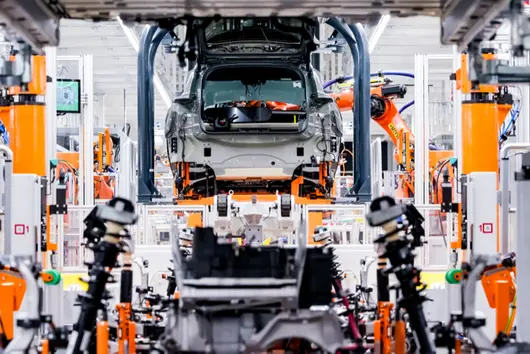

Di pasaran SUV di Malaysia, ramai pembeli membandingkan Proton X90 dan Mitsubishi Xforce semasa memilih kereta. Kedua-dua kereta ini mempunyai harga dan kedudukan pasaran yang hampir sama. Hari ini, kami akan membuat perbandingan terperinci dari pelbagai aspek untuk membantu anda menjimatkan masa membuat penyelidikan.
Proton X90 dijual dengan harga OTR di Malaysia sebanyak RM 106,800 - 122,800, dengan keseluruhan 4 versi, termasuk 2026 1.5T Prime X (RM 122,800), 2026 1.5T Prime (RM 116,800), 2026 1.5T Lite (RM 106,800) dan lain-lain.
Mitsubishi Xforce dijual dengan harga OTR di Malaysia sebanyak RM 109,930 - 119,930, dengan keseluruhan 2 versi, termasuk 2026 1.5L Ultimate (RM 119,930), 2026 1.5L Urban (RM 109,930) dan lain-lain.
Dilihat dari harga, harga permulaan Proton X90 memang RM 3,130 lebih murah daripada Mitsubishi Xforce. Jika bajet anda terhad, versi masuk Proton sudah cukup memenuhi keperluan harian. Tetapi jangan lupa, perbezaan harga beberapa ribu ini mungkin melibatkan kompromi dalam kelengkapan, bergantung pada keperluan anda.
Proton X90 dilengkapi enjin 1.5L Turbo, kuasa 140 hp. Penggunaan bahan api rasmi 7.0 L/100km.
Mitsubishi Xforce dilengkapi enjin 1.5L Turbo, kuasa 140 hp. Penggunaan bahan api rasmi 7.0 L/100km.
Kedua-dua kereta menggunakan set sistem enjin yang sama, perasaan memandu dalam kehidupan harian hampir tidak berbeza. Penggunaan bahan api juga serupa, tidak perlu terlalu bimbang tentang perkara ini.
Proton X90 waranti 5 tahun/150,000km, selang penyelenggaraan setiap 10,000km atau 6 bulan.
Mitsubishi Xforce waranti 3 tahun/100,000km, selang penyelenggaraan setiap 10,000km atau 6 bulan.
Proton X90 dan Mitsubishi Xforce kedua-duanya adalah pilihan utama di pasaran Malaysia, sesuai untuk kegunaan keluarga dan perjalanan harian. Jika anda lebih mengutamakan reputasi jenama dan harga kenderaan terpakai, boleh utamakan model yang mempunyai reputasi lebih baik; jika anda lebih mengutamakan nilai harga dan kelengkapan, pilihlah model yang mempunyai kelengkapan lebih lengkap. Pada akhirnya, disarankan untuk mencuba pemanduan kedua-duanya, pengalaman peribadi adalah yang paling penting.

Secara keseluruhannya, Proton X90 dan Mitsubishi Xforce kedua-duanya adalah model kereta yang sangat baik di pasaran Malaysia. Memilih mana satu, penting untuk melihat keperluan dan bajet peribadi anda. Kami syorkan anda membuat penyelidikan dengan teliti, bandingkan lebihan penawaran dari pelbagai kedai kereta, kemudian buat ujian pemanduan sebelum membuat keputusan akhir. Membeli kereta adalah perkara besar, meluangkan masa untuk membuat penyelidikan pasti tidak salah.

Before Chery Fengyun T7 launched domestic pre-sales, its overseas version Lepas L6 had already debuted at Milan Design Week and is officially launched in Thailand. Fengyun T7 completed its overseas debut and launch first, then turned back to the Chinese market. This "go global first, return home later" path is not common among Chinese brands.
The previously common model was products launched domestically first, verified, and gained volume, then exported overseas depending on the situation. Fengyun T7 does the opposite, the product logic behind it reflects Chery's clear understanding of this car's positioning. Fengyun T7 is not a car specially supplied for the domestic market, but a native global car developed for multi-regional markets from the start of R&D.

According to local media reports, the overseas model of Fengyun T7 — Lepas L6 — launched in Thailand with a price of 769,900-829,900 Baht (approximately starting from 157,100 RMB), while in China, this car is expected to launch Enjoy Edition, Comfort Edition, Smart Edition versions, with pre-sale prices of 109,900, 119,900, and 129,900 RMB respectively.

From the product itself, Fengyun T7 is a standard-sized home compact pure electric SUV, with a length of 4,570mm, wheelbase 2,700mm, interior space rate 84%, rear legroom 911mm, rear seats folded flat can form a 1,955mm pure flat space.
In the domestic market, Fengyun T7 did not intentionally lengthen due to different market environments, but maintained size proportions acceptable across multiple global markets.

Car body safety can also undergo the "global test". Body is 80% high-strength steel, 18.84% hot-formed steel, 9-horizontal 5-vertical cage structure, equipped with 9 airbags, including the rare 48L dual-chamber remote airbag and rear-side airbag in its class.

Battery uses IP68 waterproofing, waterproof grade is 96 times the national standard. These configurations are not compliance baselines targeting regulations of one country, but directly benchmarked against 2026 version E-NCAP 5-star standards. Total vehicle cumulative test mileage exceeds 6 million kilometers, among which durability special test is 1.45 million kilometers, test vehicles cover Southeast Asian rainy season, Middle East extreme heat, Indonesian high humidity and other extreme environments.
This validation intensity, in essence, is using the market access threshold of the global market to force product maturity.

In terms of range, Fengyun T7 is equipped with a 65.05kWh battery across all series, CLTC condition 600km, actual test range exceeds 667km. This "reverse false labeling" calibration method actually uses actual test data to offset user range anxiety, more pragmatic than simply stacking large batteries. 30% to 80% charging time is 20 minutes, paired with wide heat pump air conditioning and high voltage PTC, official calibrated operating temperature range from -30°C to 55°C.

This means its thermal management system is designed for multi-climate regions, not just targeting the temperature difference between North and South China, but also covering Middle East high heat, Southeast Asia high humidity, Northern Europe extreme cold, etc.
Intelligence is another point worth detailing about Fengyun T7. It is equipped with an integrated cockpit-driving 8775 chip, 4nm process, 72 TOPS computing power, integrated 3 mmWave radars, 7 cameras, 12 ultrasonic radars, total 22 sensors. Falcon 500 Driving Assist System supports highway NOA, and up to 2km cross-floor memory parking, covering over 300 parking scenarios.

It is worth mentioning the Fengyun T7 Driving Assist Safety Guarantee Policy: within one year of purchase, if an accident is caused by system reasons in parking or intelligent pilot scenarios, compensation up to 5 million RMB. At the same time, providing whole vehicle lifetime warranty and 666 RMB purchase of lifetime basic maintenance package. The setting of these benefits, on the one hand, expresses confidence in the self-developed intelligent driving system, on the other hand, it also lowers the psychological threshold for users to try advanced assist driving. After all, no matter how advanced the technology is, if users dare not use it, it equals zero.

Back to the "Overseas first, Domestic later" path. Chery has 8 global styling centers, Fengyun T7 was co-created by over 100 designers, bringing together over 5,000 global users for co-creation, the homologous model Lepas L6 won international recognition at Milan Design Week. From Milan to Bangkok to China, this route shows Chery is trying a new logic: define products with global resources, verify quality with global markets, and bring back products verified in multiple regions to domestic market.

The actual effect of this model is, when Fengyun T7 returns to the Chinese market, it is no longer a "pending verification" new product, but a mature model that has undergone regulations and road condition tests in multiple places such as EU, Australia, Southeast Asia, Middle East, South America, etc.
For domestic consumers, "overseas listing first" itself constitutes a quality endorsement. In this fiercely competitive sub-segment of the 100,000 level pure electric SUV, Fengyun T7 needs to use the identity of a "Global Car" to build broader, stricter, and more scenario-based standard differentiation.

Of course, the pre-sale price starting from 109,900 RMB, means Fengyun T7 eventually still has to face the fierce price war of the domestic market. Whether global quality can be converted into sales depends on whether consumers are willing to pay for "broader standards". But at least, it provides a different product idea: not exporting cars that can't be sold domestically, but letting global demand define a car, then letting this car return to the world's largest new energy market for inspection.
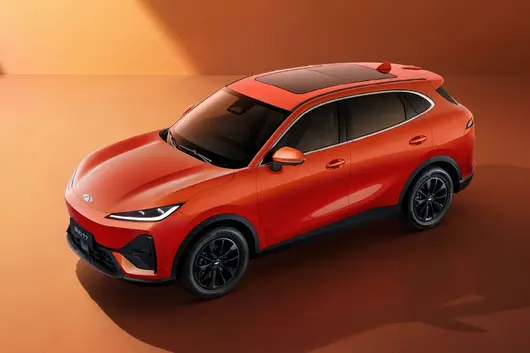
In the Malaysian SUV market, many buyers compare Proton X90 and Chery Tiggo 8 when choosing a car. These two models are quite close in price and positioning. Today, we will make a detailed comparison from multiple aspects to help you save time on research.
Proton X90 OTR prices in Malaysia range from RM 106,800 - 122,800, with a total of 4 versions, including 2026 1.5T Prime X (RM 122,800), 2026 1.5T Prime (RM 116,800), 2026 1.5T Lite (RM 106,800), etc.
Chery Tiggo 8 OTR prices in Malaysia are RM 129,750 - 129,750, with a total of 1 version, including 2026 1.6T Standard (RM 129,750), etc.
In terms of price, Proton X90's starting price is indeed RM 22,950 cheaper than Chery Tiggo 8. If your budget is limited, Proton's entry-level version can already meet daily needs. However, keep in mind that the few thousand Ringgit difference might involve trade-offs in features, depending on your specific needs.
Proton X90 safety rating is 5★ (ASEAN NCAP), active safety systems include ADAS (ACC, AEB, LKA, LDA, BSM, RCTA).
Chery Tiggo 8 safety rating is TBD, active safety systems include Basic.
Regarding safety features, both cars received good ratings. However, there are some differences in functionality between Proton X90's ADAS (ACC, AEB, LKA, LDA, BSM, RCTA) and Chery Tiggo 8's Basic. If you value active safety, you can compare the feature lists of both in detail.
Proton X90 adopts FWD drive system.
Chery Tiggo 8 adopts FWD drive system.
Both cars have the same drive system, which is FWD, so there won't be much difference in daily driving experience.
Proton X90 warranty is 5 years/150,000km, maintenance interval every 10,000km or 6 months.
Chery Tiggo 8 warranty is 3 years/100,000km, maintenance interval every 10,000km or 6 months.
Both Proton X90 and Chery Tiggo 8 are mainstream choices in the Malaysian market, suitable for family use and daily commuting. If you value brand reputation and resale value more, prioritize the one with better reputation; if you care more about cost-performance and features, choose the one with richer configurations. Ultimately, it is recommended to test drive both, as personal experience is the most important.

In general, both Proton X90 and Chery Tiggo 8 are very good car models in the Malaysian market. Which one to choose depends mainly on your personal needs and budget. We recommend doing your research, comparing quotes from several dealerships, and then test driving to make a final decision. Buying a car is a big matter, spending some time on research is never a mistake.

On August 12, Chery Fengyun T7 officially opened pre-sales. This launch event with the theme "Slow work builds good cars, you've waited long" conveyed the concept that Fengyun T7 insists on long-term car manufacturing. As a quality pure electric SUV built by Chery for global family users, Fengyun T7 has been developed according to global standards from the initial research phase, combined with product creation for user needs in different markets, and experienced severe testing in multiple scenarios and long cycles, striving to provide family users with a more reliable pure electric travel choice.

Global Standard R&D, Creating a Pure Electric SUV Worth Verifying
With the new stage of competition in the new energy vehicle market, consumer focus on pure electric models is shifting from simple intelligent configurations and performance parameters to vehicle quality, safety, and long-term reliability. Fengyun T7 chose to be based on a global R&D system, starting from the product planning phase to conduct verification around usage environments in different countries and regions.
It is understood that Fengyun T7 went through 2 years of planning and 3 years of R&D, developed according to the 2026 Version E-NCAP five-star safety standard, completed over 5,000 global user surveys and in-depth visits to 15 typical countries, and optimized product design starting from actual vehicle usage needs.

In terms of testing and verification, Fengyun T7 covers the full environmental adaptation range from -40°C to 55°C, and is equipped with a dual-source wide temperature range heat pump + PTC system, capable of coping with different temperature environments. At the same time, the vehicle completed testing covering 95% of global road types, including Brazilian high-speed hump roads, Mexican cobblestone roads, German highway high-curvature turns and South African unpaved muddy roads and other complex road conditions.
In order to further verify the vehicle's long-term reliability, Fengyun T7 invested 81 exclusive durability test vehicles for synchronous road trials, with cumulative test mileage exceeding 6 million kilometers, durability special testing reaching 1.45 million kilometers, covering multiple regional environments such as the European Union, Australia/New Zealand, Middle East, South Africa, Russia, Mexico, and Brazil.
Range, Safety, Intelligence Fully Cover Family Core Needs
Targeting the actual needs of family users in choosing pure electric SUVs, Fengyun T7 focuses on product creation around six directions: range, safety, intelligence, space, comfort, and design, hoping to meet various scenarios such as daily commuting, family travel, and long-distance travel with comprehensive configurations.
In terms of range, the entire series of Fengyun T7 is equipped with the 65.05kWh Rhino Battery, with CLTC range reaching 600 km, and official actual test range can reach 667 km. It also supports 30%-80% fast charging in just 22 minutes, further improving daily energy replenishment efficiency.

In terms of safety, Fengyun T7 adopts a high-strength body structure, with the body high-strength steel ratio reaching 80%, and equipped with 18.84% hot-formed steel. At the same time, the vehicle is equipped with the most airbags in the same class, 9 airbags, including double-cavity far-end airbags and long-lasting side air curtains and other configurations, providing more comprehensive safety protection for family members.
In terms of battery safety, Fengyun T7 adopts the Rhino Battery 6D Lock Armor protection structure, supports IP68 waterproofing, and completed multiple extreme safety tests, including collision, water immersion, and thermal runaway scenario verifications.

In terms of intelligent experience, Fengyun T7 is equipped with the 4nm 8775 chip, possessing 72 TOPS NPU computing power, integrating intelligent cockpit and assisted driving capabilities. The vehicle is equipped with a 15.6-inch 2.5K high-definition screen, and is equipped with Lingxi Smart Cockpit 2.0 and Doubao Large Model, supporting more natural human-machine interaction. At the same time, the Falcon 500 Intelligent Driving System is equipped with 22 high-precision sensors, capable of providing multi-scenario assisted driving experience.
Global Aesthetics Fusion Oriental Design Concept
Besides product performance, Fengyun T7 also emphasizes the combination of global aesthetics and Oriental aesthetics in the design aspect. The model was jointly created by a global R&D design system, and combined with 5,000+ global user co-creation needs, seeking a balance between different market aesthetics.

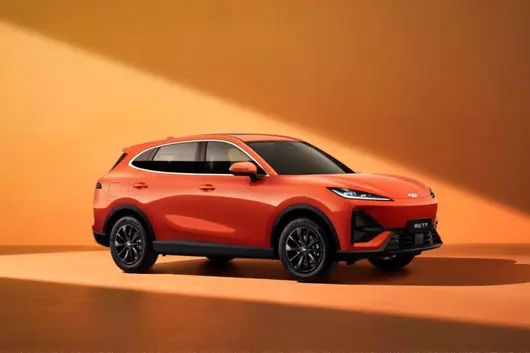
In terms of appearance, Fengyun T7 adopts design elements such as "Wind-riding Front Face" and "Wind-sculpted Satin Body Surface", with body dimensions of 4570×1852×1694mm, wheelbase reaching 2700mm, and overall proportions more relaxed. It also provides six oriental elegant paint colors: Blazing Orange, Mountain Smoke Purple, Cloud Pink Beige, Flowing Light Silver, Green Bamboo Grey, and Ink Stone Black, to meet the aesthetic needs of different family users.
In terms of interior, Fengyun T7 adopts the Cloud Wing Embracing Cockpit design, combining family warmth and technological atmosphere through soft-touch materials, exquisite textures, and dual-style interior color schemes.

"Slow Work Builds Good Cars" Opens Global Layout
Chery stated that the "Slow" behind Fengyun T7 is reflected in multiple aspects such as R&D cycle, design co-creation, global standards, and long-term verification. The model experienced a 3-year R&D cycle, created relying on a global R&D system, and verified product reliability through million-kilometer-level tests. Currently, Fengyun T7 is opening the Chinese market listing rhythm, its homologous global model Lepas L6 had previously been laid out in overseas markets such as South Africa and Thailand, and plans to enter more international markets successively. From global R&D system to local market implementation, Fengyun T7 hopes to provide family users with a pure electric SUV that balances reliability, intelligence, and comfortable experience through longer-cycle R&D investment and stricter quality verification.
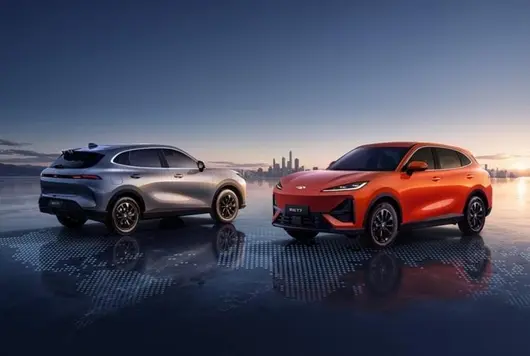

2026 年,奇瑞全新 QQ3 以海外名稱「Chery Q」正式登陸東南亞市場,先後完成泰國、印尼雙市場上市落地,成為 QQ 全球化戰略嘅第一個海外陣地。
從 3 月曼谷國際車展全球首秀,到 7 月印尼 GIIAS 車展正式開售,未滿半年時間,呢台中國精品小車便在東南亞交出咗一份遠超預期嘅成績單——泰國累計訂單突破 3000 台,印尼突破 6000 台,雙市場合計訂單逼近 1 萬台。呢唔係單一市場嘅偶然爆發,而係中國精品小車喺東南亞市場體系化競爭力嘅集中驗證。

泰國市場:十日訂單破千,上市即爆單
3 月 24 日,全新 QQ3 喺曼谷國際車展完成東南亞全球首秀並同步開啓預售。短短十日內,訂單便突破 1000 台。6 月 24 日,新車正式公布售價——44.99 萬至 51.99 萬泰銖,上市當日累計訂單已強勢突破 3000 台。7 月,首批 2000 餘台整車從國內發運泰國,完成 PDI 質檢後已陸續交付用戶。
泰國奇瑞總經理 Jim Lee 喺發布會上直言:「奇瑞 QQ 陪伴泰國用戶走過 20 年,呢個係我哋深耕本地市場最大嘅底气。」20 年嘅國民情懷積澱,令呢台小車喺回歸之初便收穫咗市場嘅熱烈回應。

印尼市場:GIIAS 車展一鳴驚人,訂單持續走高
印尼市場嘅節奏同樣緊湊。5 月 18 日完成車型定名,7 月 31 日登陸 GIIAS 印尼國際車展正式開售,售價區間 2.399 億至 2.649 億印尼盾。截至 7 月底,印尼市場訂單已超過 6000 台。而喺為期 10 日嘅 GIIAS 車展期間,Chery Indonesia 共收穫 3500 份車輛訂單,其中 Chery Q 單一車型便貢獻咗 1750 份訂單,佔比高達 50%。尤其值得注意係,喺全部約 2000 場試駕中,Chery Q 佔據咗 67.7% 嘅試駕份額——試過即落單,見得產品力對當地用戶嘅吸引力。

國內外聯動:從中國到東南亞,全球熱銷已成定局
海外市場嘅火爆並唔係孤例。全新 QQ3 喺國內上市首月訂單即突破 5.6 萬台。海內外雙線爆單,充分驗證咗呢款車型嘅全球產品競爭力。
從曼谷到雅加達,從預售到交付,全新 QQ3 用實打實嘅訂單數據證明:中國精品小車出海,唔係講故仔,而係真刀真槍嘅市場驗證。當泰國 62% 嘅訂單來自女性用戶,當印尼用戶因 20 年情懷主動落定,當一台 7 萬銀碼級別嘅中國 A0 級小車喺兩個陌生市場同時引爆——呢不僅係奇瑞嘅成功,更加係中國汽車品牌全球化能力嘅一次集中展現。

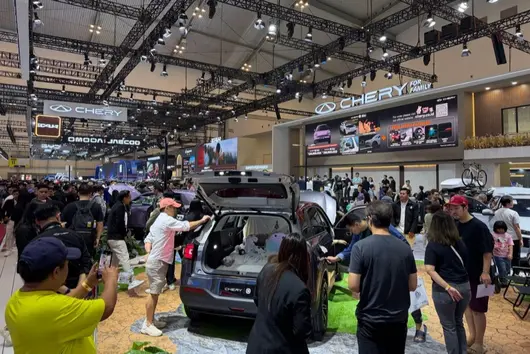

August 12, global quality pure electric SUV — Fengyun T7 officially opened pre-sale, new car launches 3 trims, pre-sale guidance price from 109,900 to 129,900 Yuan, enjoy 7 purchase benefits.

This pre-sale launch event took "Slow Craft Builds Good Cars, We've Waited Too Long" as theme, conveying Fengyun T7 adheres to long-termism manufacturing philosophy, refining products with global standards, sticking to building quality global cars, and expressing sincere gratitude for users' long-term expectations.
1)
Fengyun T7 is a standard medium pure electric SUV, overall size 4,570 mm x 1,852 mm x 1,694 mm, wheelbase 2,700 mm; rear floor pure flat, with class-leading 911 mm legroom, rear seats folded to 1,955 mm long pure flat bed; regular trunk volume 450 L, expandable to 1,550 L, sufficient cargo space adapts to outdoor crossover, multi-person travel.

Relying on Chery's top 10 global design centers, over 5,000 domestic and overseas users co-created throughout the process, same-origin model Lepas L6 debuted at Milan Design Week gaining international recognition, Fengyun T7 blends global aesthetics, appearance always online. Wind-capturing front face, wind-sculpted satin body, sky glow tailgate, balancing international simple aesthetics and Eastern elegant charm. Whole vehicle paint standard synchronized with overseas strict weather resistance requirements, providing 6 color schemes: Blazing Orange, Mountain Smoke Purple, Cloud Pink Beige, Flowing Light Silver, Green Bamboo Gray, Ink Stone Black.
Interior divided into Warm Black-Brown, Polar Night Obsidian two styles, Cloud Wing wrap-around cabin with large area soft wrap, pebble suspended speaker, diamond quilted details exquisite; all interior leather, seal strips, plastic parts are not easy to harden or fade, year-round use still new and good-looking, balancing appearance and texture.

Fengyun T7 has 9-layer cloud-feel seats, soft but not sagging, long sitting not tired. In addition, seats also have ventilation and heating functions, can realize 3-gear temperature control adjustment, in minus 20°C environment, 5 minutes fast heating to 30°C, quickly warm whole body; seat ventilation uses suction design, summer back not stuffy with sweat, satisfying user comfort needs. In terms of details, whole car 38 places clever storage space, storage orderly, enjoy exquisite life. Four rivet rings max load 300 kg and two hooks max load 3 kg, camping equipment, large goods can be firmly fixed.
2)
Fengyun T7 benchmarks 2026 version E-NCAP five-star safety standard design, functional safety ASILD highest level. After two years planning, 3 years R&D, invested total 81 exclusive durability cars synchronized road testing, whole vehicle cumulative test mileage over 6 million km, durability special test 1.45 million km. At the same time, targeting Southeast Asia rainy season, Middle East high temperature sun exposure, Indonesia high humidity and other multiple global regions for extreme real car trials.

Body uses 80% high-strength steel, 18.84% hot-formed steel to build nine horizontal five longitudinal cage body, uses shotgun structure, dual frame subframe + Pack crash beam, steel bones and iron bones guarantee cabin safety, front 9 + side 6 collision force transmission paths maximize dispersion collision energy, retain occupant survival space; In addition, this car also carries 9 airbags, including 48L dual chamber remote airbag and rear side airbag, 360° all-round protection occupant safety. Fengyun T7 series carries Rhino battery, super strong 6D protection builds battery safety fortress all-around resist squeezing, puncture, impact, for power battery build multi-layer stereo safety barrier. Facing frequent summer heavy rain, Rhino battery IP68 waterproof is 96 times national standard, fearless rainy season waterlogging, road surface water accumulation, outdoor wading, effectively prevent battery water short circuit hidden dangers.
Fengyun T7 chassis is tuned by Maserati former chassis tuning expert-led international chassis team dedication "polishing", 50.8:49.2 golden axle load ratio can effectively inhibit steering understeer, tail-swing phenomenon, improve turning stability and straight-line driving tracking. As early as 2009, Chery independently designed China's first ground mobile type dual-axis K&C test bench. 26 years of design foundation empowers chassis performance, brings more excellent driving and riding quality experience.
3)
Based on global multiple regions energy and climate needs, Fengyun T7 achieves range configuration series-wide equality, series standard large capacity Rhino battery 65.05 kWh, CLTC condition reaches 600 km range, actual test range over 667 km, solve anxiety with "reverse false labeling". Battery 30% to 80% charging only takes 20 minutes.

Fengyun T7 carries global domain integrated thermal management dual-source wide heat pump air conditioning + high voltage PTC, northern users winter can also drive with peace of mind. Minus 30°C - 55°C super wide temperature range stable operation, low temperature environment heating more power-saving, high temperature environment cooling more efficient. Matching series standard AGS intelligent intake grille and 14 items low wind resistance optimization, high and low speed energy consumption more stable.
Fengyun T7 carries cockpit-drive integrated 8775 chip, achieve cockpit-drive dual optimization, two domains seamless collaboration, "half understands you, half protects you". The chip has 4nm process, 72 TOPS high computing power, response only needs 80 ms, startup speed up 33%, startup speed faster, screen operation more smooth, smart interaction response more swift.
In smart cockpit aspect, 15.6 inches 2.5K HD large screen image delicate real, anti-glare, anti-reflection, anti-fingerprint, CarPlay, HUAWEI HiCar, CarLink wireless connection, covers market 99%+ phone projection, get on car can achieve seamless interconnection. Lingxi Smart Cockpit 2.0 brings all-around companion partner, has Little Qi Classmate, Northeast Auntie, Argument Master, Spoken Language Teacher, Story King, Professional Debater etc 6 major human-sense companion experiences. Built-in nap, camping, pet, wake up etc 6 major scene modes, let car truly become understanding your mobile space.
Fengyun T7 also carries Falcon 500 driving assistance system, integrates 3 mm-wave radars, 7 high-performance cameras, 12 ultrasonic radars, total 22 high-precision sensors (3R7V12U), see far, see clear, measure accurate. Can 300+ full scene automatic parking, industry coverage most complete. Dead end road parking, one-key track reversal, cross-floor parking etc can be realized, from now on say goodbye to "parking difficulty", achieve parking freedom.
4)
Relying on Chery 23 years globalized technology accumulation, Fengyun T7 walks reverse overseas trial path, refuse industry quick-build car manufacturing idea, use whole link global strict standards polish whole vehicle strength. Around quality life 6 major core new rigid demands, merge appearance rigid demand, safety rigid demand, travel rigid demand, smart rigid demand, comfort rigid demand, peace of mind rigid demand into one, build global quality pure electric SUV, adapt commute, long-distance, outdoor, multi-person travel etc multiple scenarios.

Chery not only brings users hard-core strength products, also stands at user perspective, fully considers car purchase after whole cycle use experience, faces everyone regarding vehicle failure, later car maintenance cost etc actual worries. For this, Fengyun T7 launches two major bottom-line guarantees, two lifetime benefits, from car purchase to long-term use whole journey protection.
Two major bottom-line guarantees:First is power battery safety guarantee: due to power battery itself reasons causing whole vehicle thermal runaway damage, Chery will compensate same model new car or new car not lower than original car configuration; Second is driving assistance guarantee: from car purchase day within one year, in "parking scene", "smart navigation scene" judged as "smart driving assistance system reason" causing accident, causing onboard personnel injury and third party loss compensation, maximum compensation 5 million Yuan.
Two major lifetime benefits:First is whole vehicle lifetime warranty: value 10,000 Yuan whole vehicle lifetime warranty (including three-electric), wear parts, special parts excepted; Second is lifetime maintenance package: 666 Yuan purchase value 3,999 Yuan lifetime basic maintenance package (1 time/year).
Written at the end:From global standard R&D, global aesthetics design, global craft manufacturing, to global road condition verification, Fengyun T7 with whole link global quality, sets up pure electric SUV value benchmark. It through all over world standards tempering, finally rushes to China users, with appearance, travel, safety, smart, comfort, peace of mind 6 major rigid demands full satisfaction, responds quality family all expectations.
Thus, Fengyun T7, not only is a vehicle condensing global technology and quality, but also is global standard and China family needs deep resonance era choice.
© 2024 Bitauto.com. All Rights Reserved.
Bitauto (www.yiche.com and www.bitauto.com) is one of the most visited automotive websites in China. We provide detailed info on Chinese car brands available in your area. Please note that the information provided on this website is based on publicly available data and is for reference only. It may not be fully updated or accurate at all times.

Help us improve our website


