

HomePerodua Aruz

Search History
Popular Searches
Dealer Login / Sign Up

2026 年上半年已過,正係總結、復盤與回顧嘅時點。喺全球經濟波動嘅過程中,中國汽車嘅出海卻並未減速,增長反而越來越猛烈。
今年上半年,中國汽車整車出口量接近 500 萬輛,按年增長超過 60%。
根據顧問公司艾睿铂嘅預測,2026 年中國汽車出口量將突破 1000 萬輛,這將係人類歷史上單一國家汽車年度出口嘅最高紀錄。但這 1000 萬輛嘅海外征程,絕非一帆風順,全球各個區域市場正呈現出截然不同嘅格局與政策。

美國係全球最大嘅消費市場,但接下來好長一段時間,可能中國汽車與之無緣了。
好多人都以為中國車進唔到美國係因為關稅高,但實際情況比呢樣更複雜。美國已經事實意義上構建咗三道封鎖體系,幾乎徹底斷絕咗與中國汽車產業嘅關聯。
第一層係關稅壁壘。美國對進口汽車徵收 25% 嘅普通關稅,疊加此前對中國產電動車 100% 嘅 301 條款關稅,綜合稅率高達 125% 以上。舉個例子,假設理想 i8 要出口美國,離岸價 4 萬美元,到岸後需繳納 5 萬美元關稅,僅呢兩項成本起碼就達 9 萬美元,而喺美國市場,呢個價格已足夠購買 Cybertruck 嘅頂配車型。

除咗關稅仲有技術禁令。2025 年 1 月美國發佈嘅《智能網聯汽車規則》要求,從 2027 年款開始,禁止中國或俄羅斯「擁有、控制或管轄」實體設計、開發或供應嘅網聯汽車軟件;2030 年款開始,進一步禁止網聯汽車硬件。呢套規則唔單只看車輛喺邊處組裝,更穿透至軟件同資本嘅源頭。
唔久前,極星成為首個受此影響嘅汽車品牌。美國商務部以「擁有中國相關網聯技術嘅車輛可能收集車主嘅敏感信息,存在國家安全風險」為由,拒絕給予極星銷售授權。因此,極星不得不宣佈從 2027 年款起,全面停止喺美國銷售新車,呢幾等同於退出美國市場。
最後仲有立法限制。今年 5 月,美國國會仲喺推動更嚴厲嘅《網聯車輛安全法案》,計劃將呢項臨時禁令上升為永久法理,同時把「通過墨西哥、加拿大轉口或喺美國建廠」等傳統規避制裁嘅路線全部封堵。
因此,喺中美大國博弈嘅背景下,美國市場好可能係中國車企出海挑戰最大嘅市場。
歐盟大門半開歐盟係全球第二大新能源汽車市場,亦係中國車企必須拿低嘅戰略高地。
雖然此前嘅反補貼調查與加稅法案引發廣泛關注,但歐盟嘅策略並未採取「一棍子打死」,而是採取咗較為緩和嘅漸進手段,本質上亦係一種自我產業保護。
2026 年初,經過中歐兩年多嘅談判,歐盟落地咗針對中國進口電動車嘅最低價格承諾機制。即係話中國純電汽車進入歐洲無需額外繳納高昂稅費,但要根据歐盟嘅規則嚟定價,不能以過低價格進入市場。

表面上看,係中國企業唔使再交納高昂嘅反補貼稅,將利潤留咗喺自己手中;但實質上,歐盟係喺用行政手段抹平中國電動車嘅價格優勢,限制中國電動車喺歐洲市場發動價格戰。這亦就意味著,每一款車型、每一種配置都要單獨核算最低價,極大地拉高咗合規成本。
所以,中國車企接下來想喺歐洲發展,就唔再能單純依賴價格優勢,必須要推進深度本地化。
未來嘅歐洲市場,單純嘅「整車貿易出口」模式已難有生存空間,奇瑞喺西班牙建合資公司、比亞迪匈牙利工廠投產,都係喺用實體投資換取入場券,這與中國早年引入外企嘅思路其實係一致嘅。
門檻雖然抬高咗,但只要企業願意喺當地分擔價值、創造收益,市場大門依舊敞開——不過,係一扇「半開」嘅大門。
東南亞構建後花園東南亞係中國車企投資最密集、戰果最顯著嘅區域市場。泰國就係典型嘅風向標。
2026 年 1 月,泰國汽車市場迎嚟歷史性轉折。根據泰國工業聯合會數據,當月中國品牌純電車銷量達 31,860 輛,按年增長 354%,佔泰國純電市場份額嘅 75% 以上。品牌銷量榜上,豐田以 19,113 輛排第一,比亞迪以 12,812 輛穩居第二,奇瑞以 9,714 輛躋身前三,六家中國品牌集體進入前十。中國品牌喺泰國嘅合計市場份額達 47.34%,首次歷史性超越日系品牌嘅 47.338%。

印尼係另一個重點市場。截至 2025 年底,中國品牌喺印尼市場份額已按年翻倍至 14%,比亞迪銷量躍升至第三位。2026 年 1 月,印尼新車批發銷量 66,447 輛,按年增長 7%。喺電動車領域,中系車市占率高達 91.7%。
放眼整個東南亞,日系車主導咗六十年嘅市場格局正面臨四面衝擊。2025 年日系車喺印尼、泰國、越南等六個主要國家嘅銷量較 2019 年下滑 22%,喺泰國更係驟降至 68%。與此同時,中國車企 2025 年喺東南亞銷量超 80 萬輛,按年增長超 120%,平均市佔率突破 35%。截至 2025 年底,已有 7 家中國車企喺泰國投資建廠,累計投資額超 30 億美元。
唔過,中國品牌喺東盟嘅供應鏈仍有約 80% 從中國進口。日系車企亦並未有退出,而係轉換賽道——豐田投資 550 億泰銖擴產混動,當地政策正從專注純電轉向技術中立。點樣喺本地化供應鏈同產品多元化上建立護城河,係中國車企喺東南亞下一場硬仗。
中東意外嘅機遇中國汽車喺中東市場,正經歷戲劇性嘅變化。
2026 年頭兩個月,阿聯酋已經躍居中國汽車出口目的國嘅第二位,進口量達 10.39 萬輛,按年增長 53%。2025 年中國對中東區域汽車出口達 140 萬輛,其中阿聯酋 57 萬輛與沙特 30 萬輛合計貢獻超六成份額。沙特媒體發佈嘅 2026 年經濟報告顯示,中國汽車品牌喺沙特市場嘅年銷量預計超過 12 萬輛。

既然如此,中國品牌喺中東嘅市場份額已升至 20% 以上,喺沙特同阿聯酋等核心市場占比突破 25%,其中奇瑞同比亞迪係占比最大嘅兩家中國企業。
促成呢一增長嘅關鍵變量,正係近期中東地區嘅局勢變化。荷爾木茲海峽嘅緊張局勢讓呢條傳統黃金航線近乎癱瘓,船舶通行量從 2 月份嘅每天約 130 艘驟降至 3 月份嘅僅 6 艘。豐田已經計劃削減面向中東嘅出口產量 2.4 萬輛,日產延續減產措施,馬自達亦證實 5 月底之前將停止面向中東出口。
日系車企嘅交付期大幅延長,中國車企則憑藉穩定嘅供應鏈同更具競爭力嘅產品,迅速填補咗市場空白。中東市場嘅另一顯著優勢在於資金充裕、對中國品牌認知客觀,並且地理位置可輻射非洲同歐洲。呢亦係今年中國汽車出海嘅一大意外之喜。
拉美跳板定係新市場?拉美市場正成為中國車企增長最快嘅區域之一。
2026 年上半年,中國品牌喺南美 7 國市場嘅銷量大約喺 65-75 萬輛之間,按年增長超過 80%,市佔率亦正式超過咗美國同德國品牌,成為市場第三大車系。

今年 3 月,中國品牌汽車喺墨西哥單月銷量達 15,698 輛,市佔率 11.9%,首次超越德國品牌。名爵銷量大漲 54.2% 至 6,166 輛,排名升至第 7 位;吉利銷量激增 245.3%。巴西係增長最快嘅單一市場,整個一季度,中國向巴西出口乘用車 166,787 輛,累計按年增長 242.8%。巴西已成中國新能源汽車出口量最大嘅國家。
但拉美市場面對嘅唔確定性亦喺上升。美國正喺施壓墨西哥,要求其限制中國汽車通過美加墨貿易協定進入北美。比亞迪喺巴西、墨西哥已建立銷售網絡並計劃喺墨西哥建廠,但「墨西哥跳板」仲能發揮幾多嘅作用,很大程度上將取決於美國同墨西哥之間嘅政策博弈。
非洲被忽視嘅大陸非洲擁有 14 億人口,但目前嘅汽車滲透率較低,多數車企曾因消費力限制而未有充分重視。但從 2026 年上半年嘅數據嚟看,南非同北非正出現重要趨勢變化。
埃及、南非等核心國家嘅產業導向非常明確,佢哋大力鼓勵本地組裝模式,整車進口嘅關稅壁壘高企,但散件進口卻能享受極大嘅稅收優惠。所以佈局非洲,同樣唔能指望單純依賴整車出口實現盈利,核心邏輯依然係「產業換市場」。

企業若能深入當地投資建廠、以散件組裝帶動本地就業,便更有希望獲得長期嘅市場入場券。雖然眼下溢價空間有限,目前願意喺此進行長遠佈局嘅中國車企依舊較少。
俄羅斯中國汽車嘅特殊戰場中國汽車出口最大嘅國別市場邊個?就係俄羅斯。
2026 年第一季,中國向俄羅斯出口乘用車 186,765 輛,累計按年增長 97.1%。2026 年 1 至 5 月,俄羅斯以 94,301 輛嘅單月進口量位居中國汽車出口目的國首位。2025 年,中國自主品牌喺俄羅斯嘅市場份額回升至 57.2%,佔比過半。

俄羅斯市場嘅特殊性喺於,西方車企嘅大規模退出留下咗巨大嘅市場空白,中國品牌迅速填補咗呢個缺口。但客觀而言,地緣政治風險始終係中國同俄羅斯貿易中嘅「達摩克利斯之劍」。
最後嘅話有人預測,2026 年中國汽車出口將跨過 1000 萬輛嘅門檻,這喺人個工業史上,絕對係里程碑式嘅成就。
不過我哋認為,呢一數字並非越高越好,因為數字越高,前行嘅道路就更具挑戰性。中國汽車出海,需要正式從單純追求銷量嘅 1.0 階段,邁入體系輸出、產業鏈輸出嘅 2.0 時代。而到咗呢個更成熟嘅階段,中國車企之間嘅競爭戰火,亦將全面延伸至海外市場。

環顧當下嘅全球格局,汽車產業正喺不可逆轉地分化為「中國生態」同「非中國生態」兩個陣營。喺海外市場,我哋最大嘅對手,或許已唔再係豐田或者特斯拉,而係嗰啲一同出海競爭嘅中國同行們。
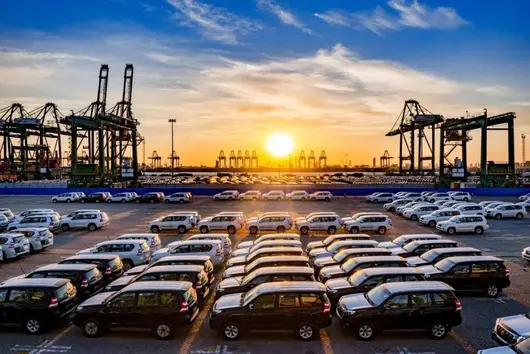

喺馬來西亞嘅 SUV 市場,好多買家喺揀車嘅時候都會拿 Proton X70 同 Chery Tiggo 8 來做比較。呢兩款車喺價位同定位上都好接近,今日我哋就從多個方面做一個詳細嘅比較,幫你節省做功課嘅時間。
Proton X70 喺馬來西亞嘅 OTR 售價係 RM 106,800 - 122,300,一共有 3 個版本,包括 1.5L Standard 2WD(RM 106,800)、1.5L Executive 2WD(RM 115,800)、1.5L Premium 2WD(RM 122,300) 等。
Chery Tiggo 8 喺馬來西亞嘅 OTR 售價係 RM 129,750 - 129,750,一共有 1 個版本,包括 2026 1.6T Standard(RM 129,750) 等。
從價錢嚟睇,Proton X70 嘅起步價確實比 Chery Tiggo 8 平咗 RM 22,950。如果你預算有限,Proton 嘅入門版已經可以滿足日常需求。但都要留意,平嗰幾千塊,可能喺配備上面會有取舍,具體要看你嘅需求。

Proton X70 配備 1.5L Turbo,馬力 140 hp。官方油耗 7.0 L/100km。
Chery Tiggo 8 配備 1.5L Turbo,馬力 140 hp。官方油耗 7.0 L/100km。
兩款車用緊同一套動力系統,日常開起嚟嘅感受基本冇咩差別。油耗方面都差唔多,唔使太糾結呢一點。

Proton X70 嘅安全評級係 5★ (ASEAN NCAP),主動安全系統包括 ADAS (ACC, AEB, LKA, LDA, BSM, RCTA)。
Chery Tiggo 8 嘅安全評級係 TBD,主動安全系統包括 Basic。
安全配備方面,兩款車都拿到咗唔錯嘅評級。不過 Proton X70 嘅 ADAS (ACC, AEB, LKA, LDA, BSM, RCTA) 同 Chery Tiggo 8 嘅 Basic 喺功能上面有啲差異,如果你比較重視主動安全嘅話,可以仔細比較下兩者嘅功能列表。

Proton X70 保修 5 年/150,000km,保養間隔 每 10,000km 或 6 個月。
Chery Tiggo 8 保修 3 年/100,000km,保養間隔 每 10,000km 或 6 個月。
Proton X70 同 Chery Tiggo 8 都係馬來西亞市場嘅主流選擇,適合家庭使用、日常通勤。如果你更重視品牌口碑同二手價,可以優先考慮口碑更好嗰一款;如果你更在乎性價比同配備,那就揀配置更豐富嗰款。最終都係建議兩款都去試駕,親身體驗先至係最重要。
總括嚟講,Proton X70 同 Chery Tiggo 8 都係馬來西亞市場好唔錯嘅車型。揀邊部車,關鍵都係要睇你嘅個人需求同預算。建議大家做好功課,多比較幾間車行嘅報價,再去試駕做最終決定。買車係件大事,花少少時間做功課絕對唔會錯。


In Malaysia's SUV market, many buyers compare Proton X70 and Mazda CX-3 when choosing a car. These two models are quite close in price and positioning. Today, we will conduct a detailed comparison from multiple aspects to help you save time on research.
Proton X70's OTR price in Malaysia is RM 106,800 - 122,300, with a total of 3 versions, including 1.5L Standard 2WD (RM 106,800), 1.5L Executive 2WD (RM 115,800), 1.5L Premium 2WD (RM 122,300), etc.
Mazda CX-3's OTR price in Malaysia is RM 126,159 - 139,159, with a total of 2 versions, including 2023 2.0L High (RM 139,159), 2023 2.0L Plus (RM 126,159), etc.
From a price perspective, Proton X70's starting price is indeed RM 19,359 cheaper than Mazda CX-3. If your budget is limited, Proton's entry-level version can already meet daily needs. But note, the few thousand difference might involve trade-offs in features, depending on your needs.

Proton X70 is equipped with 1.5L Turbo, 140 hp. Official fuel consumption 7.0 L/100km.
Mazda CX-3 is equipped with 1.5L Turbo, 140 hp. Official fuel consumption 7.0 L/100km.
Both cars use the same powertrain, and the driving experience feels basically the same. Fuel economy is also similar, so don't worry too much about this.
Proton X70's safety rating is 5★ (ASEAN NCAP), active safety systems include ADAS (ACC, AEB, LKA, LDA, BSM, RCTA).
Mazda CX-3's safety rating is 5★ (ASEAN NCAP), active safety systems include i-Activsense.
Both cars have the same safety rating, and safety features are quite comprehensive at this level. New cars nowadays generally have good safety, so don't worry too much about this.
Proton X70 warranty 5 years/150,000km, service interval every 10,000km or 6 months.
Mazda CX-3 warranty 5 years/150,000km, service interval every 10,000km or 6 months.
Both cars have the same warranty conditions, no need to worry about this. Actual maintenance costs depend on the brand's service network and parts prices, it is recommended to ask real owners in car owner groups for experience.
Proton X70 and Mazda CX-3 are both mainstream choices in the Malaysian market, suitable for family use and daily commuting. If you value brand reputation and resale value more, consider the one with better reputation first; if you care more about cost-performance and features, choose the one with richer configuration. Ultimately, it is recommended to test drive both, as personal experience is most important.
Overall, Proton X70 and Mazda CX-3 are both very good models in the Malaysian market. Which one to choose mainly depends on your personal needs and budget. We suggest doing your research, comparing quotes from multiple dealerships, and then test driving to make the final decision. Buying a car is a major event, spending time on research is never wrong.


In the Malaysian SUV market, many buyers compare Proton X70 and Mazda CX-3 when choosing a car. These two models are quite close in price and positioning. Today, we will compare them in detail from multiple aspects to save you the time of doing research.
The OTR price of Proton X70 in Malaysia is RM 106,800 - 122,300. There are 3 versions in total, including 1.5L Standard 2WD (RM 106,800), 1.5L Executive 2WD (RM 115,800), 1.5L Premium 2WD (RM 122,300), etc.
The OTR price of Mazda CX-3 in Malaysia is RM 126,159 - 139,159. There are 2 versions in total, including 2023 2.0L High (RM 139,159), 2023 2.0L Plus (RM 126,159), etc.
From a price perspective, the starting price of Proton X70 is indeed RM 19,359 cheaper than Mazda CX-3. If your budget is limited, Proton's entry-level version can already meet daily needs. But also note, the few thousand Ringgit savings might involve trade-offs in equipment, specifically depends on your needs.
Proton X70's safety rating is 5★ (ASEAN NCAP). Active safety systems include ADAS (ACC, AEB, LKA, LDA, BSM, RCTA).
Mazda CX-3's safety rating is 5★ (ASEAN NCAP). Active safety systems include i-Activsense.
Both cars have the same safety rating. In this class, safety features are quite comprehensive. New cars nowadays generally have good safety, so don't worry too much about this.
Proton X70 body length 4400 mm, trunk 400 L.
Mazda CX-3 body length 4500 mm, trunk 450 L.
In terms of space, Mazda CX-3's body is 100 mm longer than Proton X70, offering an advantage in seating space. However, Proton X70 is a bit more flexible for parking in the city. Each has its trade-offs.
Proton X70 warranty 5 years/150,000km, maintenance interval every 10,000km or 6 months.
Mazda CX-3 warranty 5 years/150,000km, maintenance interval every 10,000km or 6 months.
Both cars have the same warranty conditions, no need to struggle with this aspect. Actual maintenance costs also depend on the brand's service network and parts prices. It is recommended to ask real owners in car owner groups about their experiences.
Overall, Proton X70 and Mazda CX-3 are both very good models in the Malaysian market. Which one to choose depends mainly on your personal needs and budget. It is recommended to do your homework, compare quotes from several dealerships, and then test drive to make a final decision. Buying a car is a big matter, spending some time doing research is never wrong.

Di pasaran SUV Malaysia, ramai pembeli membandingkan Proton X70 dan Mazda CX-60 semasa memilih kereta. Kedua-dua kereta ini berada pada tahap harga dan kedudukan yang agak hampir, hari ini kita akan buat perbandingan terperinci dari pelbagai aspek, membantu anda menjimatkan masa membuat penelitian.
Proton X70 dijual di Malaysia pada harga OTR RM 106,800 - 122,300, terdapat 3 versi, termasuk 1.5L Standard 2WD (RM 106,800), 1.5L Executive 2WD (RM 115,800), 1.5L Premium 2WD (RM 122,300) dan lain-lain.
Mazda CX-60 dijual di Malaysia pada harga OTR RM 200,510 - 252,873, terdapat 2 versi, termasuk 2026 3.3T 4WD High Plus (RM 252,873), 2025 2.5L 2WD High (RM 200,510) dan lain-lain.
Dari segi harga, harga permulaan Proton X70 memang RM 93,710 lebih murah daripada Mazda CX-60. Jika bajet anda terhad, versi entry-level Proton sudah boleh memenuhi keperluan harian. Namun, perhatikan juga, perbezaan harga ribuan ringgit itu mungkin ada pemadanan dari segi kelengkapan, bergantung pada keperluan anda.

Proton X70 dilengkapi enjin 1.5L Turbo, kuasa 140 hp. Penggunaan minyak rasmi 7.0 L/100km.
Mazda CX-60 dilengkapi enjin 2.0L 4-silinder, kuasa 170 hp. Penggunaan minyak rasmi 8.0 L/100km.
Dari segi kuasa, enjin 2.0L 4-silinder Mazda CX-60 mempunyai 30 kuasa kuda lebih daripada Proton X70 1.5L Turbo. Namun dalam memandu harian di bandar, kedua-dua kereta ini mempunyai kuasa yang mencukupi, tidak akan rasa kurang tenaga.

Proton X70 menggunakan kaedah pemacu FWD.
Mazda CX-60 menggunakan kaedah pemacu FWD.
Kaedah pemacu kedua-dua kereta sama, iaitu FWD, tiada perbezaan besar dalam pengalaman memandu harian.

Proton X70 jaminan 5 tahun/150,000km, selang penyelenggaraan setiap 10,000km atau 6 bulan.
Mazda CX-60 jaminan 5 tahun/150,000km, selang penyelenggaraan setiap 10,000km atau 6 bulan.
Syarat jaminan kedua-dua kereta sama, tiada perlu bimbang di sini. Kos penyelenggaraan sebenar bergantung pada rangkaian servis jenama dan harga komponen, disarankan tanya pengalaman pemilik sebenar dalam komuniti pemilik kereta.
Proton X70 dan Mazda CX-60 kedua-duanya adalah pilihan utama dalam pasaran Malaysia, sesuai untuk kegunaan keluarga dan perjalanan harian. Jika anda lebih mementingkan reputasi jenama dan nilai semula, sila utamakan jenama dengan reputasi lebih baik; jika anda lebih mementingkan nilai wang dan kelengkapan, maka pilih model dengan kelengkapan lebih banyak. Akhir sekali, disarankan untuk memandu kedua-dua model tersebut, pengalaman peribadi adalah yang paling penting.
Secara keseluruhan, Proton X70 dan Mazda CX-60 kedua-duanya adalah model kereta yang sangat baik dalam pasaran Malaysia. Memilih yang mana satu, utama sekali bergantung pada keperluan dan bajet peribadi anda. Disarankan buat penelitian terlebih dahulu, bandingkan beberapa tawaran dari kedai kereta yang berbeza, kemudian memandu untuk membuat keputusan akhir. Membeli kereta adalah perkara besar, meluangkan masa membuat penelitian pasti tidak salah.


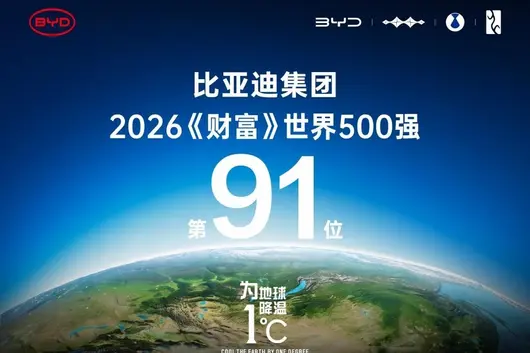
Chinese automakers are going absolutely crazy! On July 28, the 2026 Fortune Global 500 Ranking was just released, with BYD directly reaching 91st globally!

Listed for 5 consecutive years, firmly ranking among the global top 100. Do you know what this means? Among all automakers worldwide, BYD is the highest-ranked Chinese automaker, and also the only Chinese automotive brand to break into the top 100!
Some might say, what's there to brag about being ranked 91st? Come, let me run the numbers for you.
In 2025, BYD's full-year revenue was 804 billion, net profit 32.6 billion. Sold 4.6 million new energy vehicles all year, consecutively winning the title of global new energy vehicle sales champion, China market automaker sales champion, etc., and is a benchmark enterprise for global new energy vehicles. In the first half of this year, it sold another 1.8 million+, the 17 millionth new car rolled off the production line in July, making BYD the first automaker globally to achieve this number!
Do you think that's it? The most fierce part is R&D investment.
BYD has always adhered to the development concept of "Technology is King, Innovation is the Foundation". Invested 63.4 billion in R&D in 2025! A year-on-year increase of 17%, ranked 1st among all A-share listed companies for two consecutive years. Invested another 11.3 billion in Q1 this year. Until now, cumulative R&D investment has surpassed 250 billion! What concept? For many automakers, one year's revenue isn't even this much.
Where was the money spent? The 2nd Gen Blade Battery + Super Flash Charge technology released in March this year. By the end of the year, nationwide to build 20,000 Super Flash Charge stations, another 6,000 overseas. Even fiercer in May, all vehicle series can be equipped with Sky-Eye B Assisted Driving Laser Version, and also promises City Navigation Safety Guarantee for 1 year, full guarantee for smart parking, ushering in the era of public city navigation.
The overseas market is also expanding wildly. In 2025, overseas sales surpassed 1 million for the first time, surging 145%. Sold another 780,000 in the first half of this year. BYD's overseas expansion strategy has formed a pattern of "Latin America leading, Europe breaking through, Asia blooming at multiple points". This year, BYD's first overseas Cloud Rail was opened in Brazil, the Brazil factory reached the 100,000th new energy vehicle rolled off the line; Denza Z, Z9GT and D9 jointly opened a new chapter of European tech luxury; BYD's first overseas specialized model Sea Otter (BYD RACCO) landed in Japan; the Thailand factory welcomed its 2nd anniversary of production. BYD is accelerating into a deep-rooted local, high-quality development globalization new stage. As of now, BYD's business has spread to 121 countries and regions worldwide.
There is another detail: As of June 30, BYD new energy vehicles cumulative carbon emission reduction was 149 million tons, equivalent to planting 2.48 billion trees. In terms of social responsibility implementation, BYD launched a 3 billion yuan education charity fund, and reached donation agreements with 127 universities nationwide, incentivizing over 6,000 students.
From a small battery factory to a global top 100 automaker, BYD took 20 years. Some say Chinese brands are no good. Some say Chinese automakers can only compete fiercely domestically. What's the result? BYD's presence can be seen in hundreds of countries worldwide, Europeans are queuing to buy Denza, developing new models specifically for the Japanese market. What expressions are those who looked down on Chinese cars back now making?
804 billion revenue, 4.6 million sales, 63.4 billion R&D, 17 million cars rolled off, the story behind these numbers boils down to one sentence: Chinese automobiles, have truly stood up!
As the global leader in new energy vehicles, BYD firmly ranks in the world's top 100 camp, which is the result of its persistence in technological innovation and global breakthroughs. Looking forward, BYD will continue to unswervingly uphold sustainable development concepts, with more cutting-edge technology and a more perfect global layout, to cool down the Earth by 1°C.
In Malaysia's SUV market, many buyers compare Proton X50 and Honda WR-V when choosing a car. These two models are quite close in price and positioning. Today we will make a detailed comparison from multiple aspects to help you save time on research.
The OTR price of Proton X50 in Malaysia is RM 89,800 - 113,300, with a total of 4 versions, including 1.5T Executive (RM 89,800), 1.5T Premium (RM 101,800), 1.5T Flagship (RM 113,300), etc.
The OTR price of Honda WR-V in Malaysia is RM 89,900 - 107,900, with a total of 4 versions, including 2023 1.5L V (RM 99,900), 2023 1.5L E (RM 95,900), 2023 1.5L S (RM 89,900), etc.
From a price perspective, the starting price of Proton X50 is indeed RM 100 cheaper than Honda WR-V. If your budget is limited, Proton's entry-level version is already sufficient for daily needs. However, keep in mind that the few thousand RM saved might involve trade-offs in specifications, which depends on your specific needs.

Proton X50 is equipped with 1.5L 4-cyl, Horsepower 105 hp. Official fuel consumption 6.0 L/100km.
Honda WR-V is equipped with 1.5L 4-cyl, Horsepower 105 hp. Official fuel consumption 6.0 L/100km.
Both cars use the same powertrain, the driving experience is basically no different. Fuel consumption is also similar, no need to worry too much about this point.

Proton X50 body length 4400 mm, trunk 400 L.
Honda WR-V body length 4400 mm, trunk 400 L.
The dimensions of both cars are almost the same, interior space difference is not significant. For cars in this class, it is fully sufficient for daily use.

Proton X50 warranty 5 years/150,000km, maintenance interval every 10,000km or 6 months.
Honda WR-V warranty 5 years/unlimited mileage, maintenance interval every 10,000km or 6 months.

Overall, both Proton X50 and Honda WR-V are very good models in the Malaysian market. Which one to choose depends on your personal needs and budget. We suggest doing your research, compare quotes from multiple car dealerships, and then test drive to make a final decision. Buying a car is a major event, spending some time on research will never go wrong.


喺馬來西亞嘅 SUV 市場,好多買家喺選車嗰陣都會拎 Proton X50 同 Toyota Yaris Cross 嚟做比較。這兩款車喺價位同定位上都幾近,今日我哋就由多個方面做一個詳細嘅比較,幫你省返做功課嘅時間。
Proton X50 喺馬來西亞嘅 OTR 售價係 RM 89,800 - 113,300,一共有 4 個版本,包括 1.5T Executive(RM 89,800)、1.5T Premium(RM 101,800)、1.5T Flagship(RM 113,300) 等。
Toyota Yaris Cross 喺馬來西亞嘅 OTR 售價係 RM 99,900 - 109,900,一共有 2 個版本,包括 2026 1.5L Standard(RM 99,900)、2026 HEV 1.5L Standard(RM 109,900) 等。
睇翻價錢,Proton X50 嘅起步價真係比 Toyota Yaris Cross 平咗 RM 10,100。如果你預算有限,Proton 嘅入門版已經可以滿足日常需求。但要留意,平嗰幾千蚊,可能喺配備上會有取舍,具體要睇你嘅需求。
Proton X50 搭載 1.5L 4-cyl,馬力 105 hp。官方油耗 6.0 L/100km。
Toyota Yaris Cross 搭載 1.5L 4-cyl,馬力 105 hp。官方油耗 6.0 L/100km。
兩款車用緊同一套動力系統,日常開起嚟嘅感覺基本無咩分別。油耗方面都幾近,唔使太糾結呢一點。
Proton X50 嘅安全評級係 5★ (ASEAN NCAP),主動安全系統包括 ADAS (ACC, AEB, LKA, LDA, BSM, RCTA)。
Toyota Yaris Cross 嘅安全評級係 5★ (ASEAN NCAP),主動安全系統包括 TSS。
兩款車嘅安全評級一樣,喺呢個級數入面安全配備都算畀得好齊全。而家嘅新車安全性都唔差,唔使太擔心呢一點。
Proton X50 採 4WD 驅動方式。
Toyota Yaris Cross 採 FWD 驅動方式。
Proton 嘅 4WD 同 Toyota 嘅 FWD 喺操控上會有唔同感受,建議試駕比較。

Proton X50 同 Toyota Yaris Cross 都係馬來西亞市場嘅主流選擇,適合家庭使用、日常通勤。如果你更重視品牌口碑同二手價,可以優先考慮口碑更好嗰款;如果你更在意性價比同配備,那就揀配備更豐富嗰款。最終都係建議兩款都去試駕,親身體驗先至最重要。

總體嚟講,Proton X50 同 Toyota Yaris Cross 都係馬來西亞市場好好嘅車款。揀邊一部,關鍵仲係睇你嘅個人需求同預算。建議大家做足功課,多比較幾間車行嘅報價,先至去試駕做最終決定。買車係件大事,花少少時間做功課絕對無錯。

喺馬來西亞嘅 SUV 市場,好多買家喺揀車嗰陣都會拿寶騰 X70 同馬自達 CX-5 嚟做比較。呢兩款車喺價位同定位上都幾接近,今日我哋就由多個方面做一個詳細嘅比較,幫你省咗做功課嘅時間。
寶騰 X70 喺馬來西亞嘅 OTR 售價係 RM 106,800 - 122,300,一嚿有 3 個版本,包括 1.5L Standard 2WD(RM 106,800)、1.5L Executive 2WD(RM 115,800)、1.5L Premium 2WD(RM 122,300) 等。
馬自達 CX-5 喺馬來西亞嘅 OTR 售價係 RM 135,469 - 166,760,一嚿有 3 個版本,包括 2025 2.0L AT 35th Anniversary(RM 316,154)、2025 2.0L AT(RM 296,154)、2025 2.0L MT(RM 294,154) 等。
由價錢睇,寶騰 X70 嘅起步價確實比馬自達 CX-5 平咗 RM 28,669。如果你預算有限,寶騰嘅入門版已經可以滿足日常需求。但要留意,平嗰幾千蚊,可能喺配備上會有取捨,具體睇你嘅需求。

寶騰 X70 搭載 1.5L Turbo,馬力 140 hp。官方油耗 7.0 L/100km。
馬自達 CX-5 搭載 1.5L Turbo,馬力 140 hp。官方油耗 7.0 L/100km。
兩款車用住同一套動力系統,日常開起嚟嘅感受基本冇分別。油耗方面都幾差不多,唔使太糾結呢一點。

寶騰 X70 採用 FWD 驅動方式。
馬自達 CX-5 採用 FWD 驅動方式。
兩款車嘅驅動方式一樣,都係 FWD,日常駕駛感受唔會有太大區別。

寶騰 X70 保修 5 年/150,000km,保養間隔 每 10,000km 或 6 個月。
馬自達 CX-5 保修 5 年/150,000km,保養間隔 每 10,000km 或 6 個月。
兩款車嘅保修條件一樣,呢方面唔使糾結。實際保養成本仲要睇品牌嘅服務網絡同零件價格,建議去車友群問問真實車主嘅經驗。
寶騰 X70 同馬自達 CX-5 都係馬來西亞市場嘅主流選擇,適合家庭使用、日常通勤。如果你更睇重品牌口碑同二手價,可以優先考慮口碑更好嗰一款;如果你更在意性價比同配備,那就選配置更豐富嗰款。最後仲係建議兩款都去試駕,親身體驗先係最重要嘅。
總嘅嚟講,寶騰 X70 同馬自達 CX-5 都係馬來西亞市場幾唔錯嘅車款。揀邊一部,關鍵仲係睇你嘅個人需求同預算。建議大家做好功課,多比較幾間車行嘅報價,再去試駕做最終決定。買車係件大事,花少少時間做功課絕對唔會錯。


喺馬來西亞嘅 SUV 市場,好多買家在揀車嗰陣都會將 Proton X70 同 Mazda CX-5 作比較。呢兩款車喺價位同定位上都好接近,今日我就從多個方面作個詳細比較,幫你省下做功課嘅時間。
Proton X70 喺馬來西亞嘅 OTR 售價係 RM 106,800 - 122,300,一共有 3 個版本,包括 1.5L Standard 2WD(RM 106,800)、1.5L Executive 2WD(RM 115,800)、1.5L Premium 2WD(RM 122,300) 等。
Mazda CX-5 喺馬來西亞嘅 OTR 售價係 RM 135,469 - 166,760,一共有 3 個版本,包括 2025 2.0L AT 35th Anniversary(RM 316,154)、2025 2.0L AT(RM 296,154)、2025 2.0L MT(RM 294,154) 等。
由價錢來看,Proton X70 嘅起步價確實比 Mazda CX-5 平咗 RM 28,669。如果你預算有限,Proton 嘅入門版已經可以滿足日常需求。但都要注意,平嗰幾千塊,可能喺配備上有取捨,具體睇你嘅需求。
Proton X70 嘅安全評級係 5★ (ASEAN NCAP),主動安全系統包括 ADAS (ACC, AEB, LKA, LDA, BSM, RCTA)。
Mazda CX-5 嘅安全評級係 5★ (ASEAN NCAP),主動安全系統包括。
兩款車嘅安全評級一樣,喺呢個級別裡面安全配備都算給得好齊全。而家嘅新車安全性都唔差,唔使太擔心呢一點。
Proton X70 車身長 4400 mm,行李廂 400 L。
Mazda CX-5 車身長 4500 mm,行李廂 450 L。
空間方面,Mazda CX-5 嘅車身比 Proton X70 長咗 100 mm,乘坐空間更有優勢。不過 Proton X70 喺城市入面停泊會靈活少少,各有取捨。
Proton X70 同 Mazda CX-5 都係馬來西亞市場嘅主流選擇,適合家庭使用、日常通勤。如果你更睇重品牌口碑同二手價,可以優先考慮口碑更好嗰一款;如果你更在意性價比同配備,那就揀配備更豐富嗰款。最終都係建議兩款都去試駕,親身體驗先最重要。
總嚟講,Proton X70 同 Mazda CX-5 都係馬來西亞市場好唔錯嘅車型。揀邊一部,關鍵仲係睇你嘅個人需求同預算。建議大家做好功課,多比較幾間車行嘅報價,再去試駕做最終決定。買車係件大事,花少少時間做功課絕對唔會錯。
In the Malaysian SUV market, many buyers compare Proton X50 and Honda CR-V when choosing a car. Both cars are quite close in price and positioning, so today we will make a detailed comparison from multiple aspects to save you time on research.
The OTR price of Proton X50 in Malaysia is RM 89,800 - 113,300, with a total of 4 versions, including 1.5T Executive (RM 89,800), 1.5T Premium (RM 101,800), 1.5T Flagship (RM 113,300), etc.
The OTR price of Honda CR-V in Malaysia is RM 178,200 - 195,900, with a total of 4 versions, including 2026 e:HEV 2.0L 2WD RS (RM 195,900), 2026 1.5T 4WD V (RM 181,900), 2026 e:HEV 2.0L 2WD E (RM 178,200), etc.
From the price perspective, the starting price of Proton X50 is indeed RM 88,400 cheaper than Honda CR-V. If your budget is limited, Proton's entry-level version can already meet daily needs. However, you should also note that the few thousand difference in price might involve trade-offs in features, which depends on your specific needs.
Proton X50 is equipped with a 1.5L 4-cyl engine, delivering 105 hp. Official fuel consumption is 6.0 L/100km.
Honda CR-V is equipped with a 2.0L 4-cyl engine, delivering 170 hp. Official fuel consumption is 8.0 L/100km.
In terms of power, the 2.0L 4-cyl engine in Honda CR-V has 65 hp more than the 1.5L 4-cyl engine in Proton X50. However, for daily driving in the city, the power of both cars is sufficient and you won't feel like it lacks power.
Proton X50 safety rating is 5★ (ASEAN NCAP), active safety systems include ADAS (ACC, AEB, LKA, LDA, BSM, RCTA).
Honda CR-V safety rating is 5★ (ASEAN NCAP), active safety systems include Honda SENSING (ACC, CMBS, LKAS, RDM).
Both cars have the same safety rating, and safety features are quite comprehensive in this class. New cars nowadays generally do not have poor safety, so no need to worry too much about this point.
Proton X50 uses 4WD drive system.
Honda CR-V uses FWD drive system.
Proton's 4WD and Honda's FWD will feel different in terms of handling, test drive and comparison is recommended.

Overall, both Proton X50 and Honda CR-V are very good models in the Malaysian market. Which one to choose depends mainly on your personal needs and budget. We recommend doing your research, comparing quotes from several dealerships, and then test driving to make a final decision. Buying a car is a big matter, spending some time on research will definitely not be a mistake.

In Malaysia's SUV market, many buyers compare Proton X50 and Toyota Yaris Cross when choosing a car. These two cars are quite close in price and positioning. Today we will make a detailed comparison from multiple aspects to help you save time on research.
The OTR price for Proton X50 in Malaysia is RM 89,800 - 113,300, with a total of 4 versions, including 1.5T Executive (RM 89,800), 1.5T Premium (RM 101,800), 1.5T Flagship (RM 113,300) etc.
The OTR price for Toyota Yaris Cross in Malaysia is RM 99,900 - 109,900, with a total of 2 versions, including 2026 1.5L Standard (RM 99,900), 2026 HEV 1.5L Standard (RM 109,900) etc.
In terms of price, the starting price of Proton X50 is indeed RM 10,100 cheaper than Toyota Yaris Cross. If your budget is limited, Proton's entry-level version can already meet daily needs. However, be aware, that difference of a few thousand might involve trade-offs in features, depends specifically on your needs.
Proton X50 is equipped with 1.5L 4-cyl, 105 hp. Official fuel consumption 6.0 L/100km.
Toyota Yaris Cross is equipped with 1.5L 4-cyl, 105 hp. Official fuel consumption 6.0 L/100km.
Both cars use the same powertrain, the driving feel in daily use is basically no different. Fuel consumption is also about the same, no need to worry too much about this point.
Proton X50 safety rating is 5★ (ASEAN NCAP), active safety systems include ADAS (ACC, AEB, LKA, LDA, BSM, RCTA).
Toyota Yaris Cross safety rating is 5★ (ASEAN NCAP), active safety systems include TSS.
Both cars' safety ratings are the same, safety features are considered quite complete for this class. New cars now are not lacking in safety, no need to worry too much about this point.
Proton X50 warranty 5 years/150,000km, maintenance interval every 10,000km or 6 months.
Toyota Yaris Cross warranty 5 years/unlimited mileage, maintenance interval every 10,000km or 6 months.
Proton X50 and Toyota Yaris Cross are both mainstream choices in the Malaysian market, suitable for family use, daily commuting. If you value brand reputation and resale value more, you can prioritize the one with better reputation; if you value value for money and features more, then choose the one with richer configuration. Ultimately it is suggested to test drive both, personal experience is the most important.
Overall, Proton X50 and Toyota Yaris Cross are both very good car models in the Malaysian market. Which one to choose, the key still depends on your personal needs and budget. It is recommended to do research, compare quotes from several car dealers, then go test drive to make the final decision. Buying a car is a major decision, spending time on research will definitely not go wrong.
In the Malaysian SUV market, many buyers will compare Proton X50 and Toyota Yaris Cross when choosing a car. These two cars are quite close in price and positioning. Today we will make a detailed comparison from multiple aspects to help you save time on research.
The Proton X50 OTR price in Malaysia is RM 89,800 - 113,300, with a total of 4 versions, including 1.5T Executive (RM 89,800), 1.5T Premium (RM 101,800), 1.5T Flagship (RM 113,300) etc.
The Toyota Yaris Cross OTR price in Malaysia is RM 99,900 - 109,900, with a total of 2 versions, including 2026 1.5L Standard (RM 99,900), 2026 HEV 1.5L Standard (RM 109,900) etc.
From a price perspective, the Proton X50 starting price is indeed RM 10,100 cheaper than Toyota Yaris Cross. If your budget is limited, Proton's entry-level version can already meet daily needs. But also be aware, that few thousand cheaper amount, there might be trade-offs in features, it depends on your specific needs.
Proton X50 is equipped with 1.5L 4-cyl, 105 hp. Official fuel consumption 6.0 L/100km.
Toyota Yaris Cross is equipped with 1.5L 4-cyl, 105 hp. Official fuel consumption 6.0 L/100km.
Both cars use the same powertrain, the driving feel on a daily basis is basically no difference. Fuel economy is also similar, no need to worry too much about this.
Proton X50 body length 4400 mm, trunk 400 L.
Toyota Yaris Cross body length 4400 mm, trunk 400 L.
The dimensions of the two cars are almost the same, interior space difference is not significant. Cars at this level are completely sufficient for daily use.
Proton X50 adopts 4WD drive system.
Toyota Yaris Cross adopts FWD drive system.
Proton's 4WD and Toyota's FWD will have different handling feelings, suggest test driving to compare.
Proton X50 and Toyota Yaris Cross are both mainstream choices in the Malaysian market, suitable for family use and daily commuting. If you value brand reputation and resale value more, you can prioritize the one with better reputation; if you care more about value for money and features, then choose the one with richer configuration. In the end, it is suggested to test drive both, experiencing it firsthand is the most important.
Overall, Proton X50 and Toyota Yaris Cross are both very good models in the Malaysian market. Choosing which one depends on your personal needs and budget. We suggest everyone do their research, compare quotes from several dealers, then go for test driving to make a final decision. Buying a car is a big deal, spending some time on research will never be wrong.

喺马来西亚嘅 SUV 市場,好多買家喺揀車嘅時候都會拿 寶騰 X70 同 馬自達 CX-3 嚟做比較。呢兩部車喺價位同定位上都幾接近,今日我哋就從多方面做個詳細比較,幫你慳返做功課嘅時間。
寶騰 X70 喺马来西亚嘅 OTR 售價係 RM 106,800 - 122,300,一共 3 個版本,包括 1.5L Standard 2WD(RM 106,800)、1.5L Executive 2WD(RM 115,800)、1.5L Premium 2WD(RM 122,300)等。
馬自達 CX-3 喺马来西亚嘅 OTR 售價係 RM 126,159 - 139,159,一共 2 個版本,包括 2023 2.0L High(RM 139,159)、2023 2.0L Plus(RM 126,159)等。
從價錢睇,寶騰 X70 嘅起步價確實比 馬自達 CX-3 平咗 RM 19,359。如果你預算有限,寶騰嘅入門版已經可以滿足日常需求。但都要留意,平嗰幾千蚊,可能喺配備上會有取捨,具體要看你嘅需求。
寶騰 X70 配備 1.5L Turbo,馬力 140 hp。官方油耗 7.0 L/100km。
馬自達 CX-3 配備 1.5L Turbo,馬力 140 hp。官方油耗 7.0 L/100km。
兩部車用咗同一套動力系統,日常開落嚟嘅感覺基本冇分別。油耗方面都差不多,唔使太糾結這一點。
寶騰 X70 保養 5 年/150,000km,保養間隔 每 10,000km 或 6 個月。
馬自達 CX-3 保養 5 年/150,000km,保養間隔 每 10,000km 或 6 個月。
兩部車嘅保養條件一樣,呢方面唔使糾結。實際保養成本仲要睇品牌嘅服務網絡同零件價格,建議去車友群問下真實車主嘅經驗。
寶騰 X70 同 馬自達 CX-3 都係马来西亚市場嘅主流選擇,適合家庭用、日常上下班。如果你更看重品牌口碑同二手價,可以優先考慮口碑更好嗰一款;如果你更在意性價比同配備,就揀配置更豐富嗰款。最終仲係建議兩款都去試駕,親身體驗先至最重要。
總括嚟講,寶騰 X70 同 馬自達 CX-3 都係马来西亚市場幾靚嘅車型。揀邊部,關鍵仲係要睇你嘅個人需求同預算。建議大家做好功課,多比較幾間車行嘅報價,先至去試駕做最終決定。買車係件大事,花少少時間做功課絕對唔會錯。


Written by | Ying Liu
Edited by Dalu Huang
Designed by | Youmei Zhen
On June 5, 1950, Kiichiro Toyoda resigned as president. This founder, who brought the family loom business into the automotive industry, could not hand over the company directly to his children.
A labor-management standoff lasting two months ended with large-scale layoffs and executive resignations; 2,146 employees left, and the vice president and executive directors resigned alongside Kiichiro Toyoda on the same day. Over a month later, Juzo Ishida, president of Toyota Automatic Loom Works, concurrently took over as president of Toyota Motor Corporation, while Fumio Nakagawa and others from the banking background entered the new management team.
The turning point occurred on the twentieth day after Kiichiro Toyoda's resignation.
The outbreak of the Korean War brought truck orders from the US military, giving the bankrupt Toyota a reprieve. By March 1951, cumulative orders reached 4,679 units, totaling 3.66 billion yen. Factories resumed operations, and the books once again showed cash flow. By early 1952, the company was preparing to ask the founder to return and resume the presidency. However, just before the official comeback, Kiichiro Toyoda suddenly passed away at the age of 57.
Succession moments for Toyota have frequently undergone changes.
In 1967, President Fumio Nakagawa suffered a sudden heart attack after returning from a business trip to Tokyo; the presidential position remained vacant until after his funeral. In 1995, Shoichiro Toyoda was hospitalized for six months due to illness, interrupting the period of family control once again. In 2009, Akio Toyoda took charge amidst the company's predicted first annual operating loss since inception, later became involved in one of Toyota's most severe recall crises, and testified before the US Congress alongside Yoshimi Inaba, head of Toyota North America, in 2010.

Toyota also once had a secret succession.
In late 2022, at the Buriram Circuit in Thailand, Akio Toyoda asked Koji Sato, an engineer beside him, if he was willing to assume the presidency. Sato officially took office in April 2023. In April 2026, he transferred to the position of Vice Chairman and Chief Industry Officer, with Kenji Kondo succeeding him as President and CEO.
In 2026, another personnel change sparked external attention to the fifth generation of the family, but Toyota did not define it as a succession plan.
On August 1, 2026, Daisuke Toyoda, 38-year-old son of Akio Toyoda, will leave Woven by Toyota, the software company he co-created, and the first phase of Woven City, which has already been launched, as well as the second phase still under construction, to return to Toyota Motor Corporation. He will not join the board of directors, nor will he receive an executive title; instead, he will enter a department close to the vehicle development "frontline" (genba) as a project manager. Toyota has not disclosed the specific department or model.
Toyota has not publicly announced any successor. The company's history of nearly ninety years repeatedly proves that a name can provide credit during a crisis but may also raise doubts during a power transition.
The Fifth Generation Returns to the Vehicle Development Frontline
Woven City is built on the site of the old Toyota East Fuji factory, testing autonomous vehicles, robots, and logistics equipment in a real urban environment. In September 2025, Phase 1 officially launched, and the first residents began moving in, with multiple partner enterprises entering the co-creation phase; Phase 2 is currently still under construction.
As a founding member of Woven by Toyota, Senior Vice President, and core head of Woven City, Daisuke Toyoda once turned his gaze beyond automobiles. In a 2025 interview, he compared this city to his great-grandfather Kiichiro Toyoda entering the automotive industry and posed a question: "When we truly become a mobility company, will Toyota Motor still be the group's core? We don't know."
Less than a year later, he began to move back.

On June 1, 2026, Woven announced that Daisuke Toyoda would transfer to Toyota Motor Corporation on August 1. The company announcement did not disclose the new position. A Toyota spokesperson subsequently confirmed to Reuters that he would serve as a project manager, entering a department close to the vehicle development "frontline" (genba), but refused to specify the specific business division and model.
This means his work focus will shift from a city-level testing platform to vehicle development. However, since Toyota has not yet explained specific duties, it is currently impossible to judge whether he will independently be responsible for a specific model, nor can this confirm it is a succession training arrangement.
This is not his first time entering Toyota Motor Corporation. In 2016, he worked in the Electronic Control Engineering Department; in 2018, he transferred to Toyota's Advanced R&D subsidiary. Since then, his work has mainly focused on software, autonomous driving, and future mobility.
Counting from Sakichi Toyoda, he is the fifth generation of the family. Counting from Kiichiro Toyoda, the founder of Toyota Motor, he is the fourth generation of the automotive business.
However, Toyota's succession history has never followed a bloodline straight line since the first president.
1937: The First President Was Not a Blood Relative of Sakichi Toyoda
At the founding conference in August 1937, the person appointed as the first president was not Kiichiro Toyoda, who opened the automotive business, but Riichiro Toyoda. Kiichiro served as vice president and only assumed the presidency in 1941.
Riichiro was originally Riichiro Kodama. After marrying Aiko Toyoda, the eldest daughter of Sakichi Toyoda, in 1915, he was adopted by the family and changed his surname to Toyota. He came from the cotton textile industry, managed the family business for years, and naturally took the presidential seat upon the company's establishment.
In other words, the first president of Toyota Motor was both a family member and not a blood relative of Sakichi Toyoda. Marriage, adoption, management ability, and family trust, several forces together decided where this position would fall.
The early family boundaries of Toyota were inherently wider than a straight-line genealogy.
In 1936, the automotive business intentionally distanced itself from the family name. The logo solicitation received about 27,000 submissions, and finally, the brand name was changed from the Katakana writing of the family surname "トヨダ" (Toyoda) to "トヨタ" (Toyota), and the Roman alphabet spelling was also changed to "Toyota".
Toyota's official reasons included: the new name uses unvoiced sounds, sounding clearer than the voiced sound of "Toyoda"; the Katakana writing of "トヨタ" is exactly eight strokes, and eight strokes are considered related to wealth and good fortune. This name change also symbolized the enterprise moving from a small independent company to a larger-scale company.

In Chinese, both "Toyoda" and "Toyota" are written as "Toyota", a subtle distinction that is easily overlooked. But this rewrite of the Japanese and English names drew a clear line: the enterprise comes from the Toyota family but does not belong solely to the Toyota family.
Even so, the Toyota surname remains deeply embedded in the company's DNA. Sakichi Toyoda left the automatic loom and the concept of "Stop at anomaly," while Kiichiro Toyoda turned family technical accumulation toward automobiles and bred the prototype of just-in-time production. Later, Eiji Toyoda, Shoichiro Toyoda, and Akio Toyoda passed the torch to mature the production system, expand globally, and drive product transformation.
This family has never provided a stable majority shareholding, but rather an industrial narrative spanning generations. Whenever the company intrudes into unfamiliar fields or hits major crises, the Toyota surname is always pushed back to the forefront. However, after experiencing the first true life-and-death test, it proved the company could actually invite the founding family off the driver's seat.
1950: The Founder Was Forced to Leave the Management Frontline
In the spring of 1950, Toyota's cash flow had reached the breaking point. Post-war economic tightening crushed automotive demand, and steel and non-ferrous metal prices soared; bank negotiation representatives sat across the conference table, demanding business restructuring, downsizing layoffs, and spinning off the sales department separately.
In April 1950, Toyota Motor Sales Co., Ltd. was established, separating manufacturing and sales, a split that lasted 32 years.
The split failed to put out the crisis immediately.
Starting from April 11, labor and management clashed over wages, layoffs, and reconstruction plans. People at both ends of the negotiation table almost met every day, negotiating for two months straight. The company eventually closed its Shibaura and Kameido factories in Tokyo; 2,146 people left, and the total number of employees plummeted from 8,140 to 5,994. The vacant workstations in the factory area were temporarily unfilled, and those who stayed had to accept pay cuts.

On June 5, Kiichiro Toyoda, Vice President Kazuo Kumabe, and Executive Director Takahachi Nishimura resigned on the same day. After the extraordinary general meeting on July 18, Juzo Ishida, president of Toyota Automatic Loom Works, concurrently assumed the presidency of Toyota Motor Corporation, while Fumio Nakagawa from the Imperial Bank entered management.
Toyota Motor had been established for only 13 years when the founder already lost control of operations.
20 days after Kiichiro Toyoda's resignation, the Korean War broke out. The US military quickly procured trucks from Toyota, issuing a first batch of 1,000 units on July 31, followed by additions of 2,329 and 1,350 units, totaling 4,679 units and 3.66 billion yen. War orders stabilized Toyota's operations after layoffs, split, and management changes.
Kiichiro Toyoda did not return immediately.
After leaving office, he continued to privately follow passenger car development, with sketches and parts lists on his desk. By early 1952, with the company's operations improving, Juzo Ishida began arranging for his comeback. Facing the invitation, he only said: "A company that doesn't build passenger cars is not a car manufacturer."
This statement sounded tough, but Eiji Toyoda later recalled that he was actually very happy inside.

The company originally planned to officially announce his comeback at the July 1952 shareholder meeting, and the new passenger car project had already launched in January of that year. However, on March 27, Kiichiro Toyoda suddenly passed away, abruptly ending the comeback plan, and the planned welcome ceremony was never held. The development of the Crown, which later became Toyota's representative model, also launched during this period.
The founder created the automotive business himself but was forced to leave during the company's most difficult moment. Orders flooded in after he left, and when the company was ready to welcome him back, he suddenly passed away.
Toyota's first succession was not completed. The company continued to be managed by professional managers, while the founding family retreated to the edge of power for a long time, waiting for the next turning point.
1967 to 1995: Sudden Succession
On October 13, 1967, Toyota President Fumio Nakagawa attended all-day meetings in Tokyo and was driving back to Nagoya. In the dead of night, he suffered a sudden heart attack and did not wait until dawn.
The company did not announce a successor on the second day. Since other representative directors were still maintaining operations, the president position remained temporarily vacant. It was not until October 30, after the funeral ended, that Vice President Eiji Toyoda officially assumed the role.
Eiji Toyoda was the cousin of Kiichiro Toyoda. He had long been rooted in the factory and technical system, promoting the Toyota Production System to maturity together with Taiichi Ohno and others. Before being pushed to the highest position, he had worked in the company for decades.
He later recalled that the position itself did not make him feel strange, "what surprised me was the change in the attitude of people around me."

This sudden succession reflected a typical way of Toyota family influence: Family members would never sit in the highest position solely based on bloodline. However, when the company suddenly lost a leader, someone with deep internal experience who could represent the company's tradition was easier for management to accept.
Eiji Toyoda served as president for 15 years until 1982, when the manufacturing and sales companies were recombined.
At that time, Japan-US automotive trade friction intensified, and Toyota began considering overseas production. Communication costs resulting from the separation of manufacturing and sales rose higher and higher. The company urgently needed to unify products, funds, personnel, and international decision-making. In January 1982, the two signed a merger memorandum, then immediately handled merger ratios, board seats, and organizational structure.
At 9:30 AM on July 1, 53 executives attended the establishment ceremony of the new company at headquarters. Eiji Toyoda and Shoichiro Toyoda unveiled the company sign for "Toyota Motor Corporation," recombining the manufacturing and sales system separated for 32 years into one.

At the subsequent board meeting, Eiji Toyoda served as chairman, and Shoichiro Toyoda, son of Kiichiro Toyoda, became president. Eiji Toyoda wrote in a letter to employees: "Toyota's post-war era has ended."
This was a true return of the family, but still not a direct baton handover between father and son. After Kiichiro Toyoda left in 1950, three presidents passed: Juzo Ishida, Fumio Nakagawa, and Eiji Toyoda. 32 years passed before his son sat in the presidency of the merged Toyota.
Shoichiro Toyoda subsequently promoted North American localization production. In 1983, Toyota and General Motors established the New United Motor Manufacturing, Inc. (NUMMI). His younger brother, Daigo Toyoda, deeply participated in the North American production system and succeeded to the presidency in 1992.
Family continuous control lasted only three years.

Daigo Toyoda had long suffered from health issues. He resigned after being hospitalized for about six months in 1995 and transferred to Vice Chairman. Toyota did not look for another family member to fill the position but appointed Minoru Oda, who had worked in the company for about 40 years, as president.
After that, Minoru Oda, Fujio Cho, and Takeo Hashimoto successively led Toyota, and professional managers held power for 14 years.
The family did not truly leave. Shoichiro Toyoda continued to serve as chairman and honorary chairman, retaining a voice in group relations and major directions, while daily operations were handed to internal professional managers.
Toyota thus formed a structure that repeatedly appeared: the family was responsible for preserving history, sense of direction, and symbolic meaning during crises, while professional managers were responsible for maintaining operational continuity in a huge organization. The boundaries between the two were not clear, but they checked and balanced each other for a long time.
2009: The Family Returns in a Crisis
In late 2008, the global financial market was full of alarm bells, and Akio Toyoda's name began to appear frequently in succession rumors.
At that time, the global financial crisis rapidly suppressed automotive demand. Toyota had just surpassed General Motors to become the global sales champion but was expected to face its first annual operating loss since inception. Whether to have the founding family retake the helm at this moment, there were different opinions within the company.
According to Reuters reports at the time, key figures such as Fujio Cho, Minoru Oda, and Shoichiro Toyoda weighed whether to arrange a transitional manager first to let Akio Toyoda accumulate a few more years of experience. Ultimately, Toyota chose to have 52-year-old Akio Toyoda assume the role directly.
His surname was both a talisman and a shackle.

When Akio Toyoda joined the company in 1984, his father Shoichiro Toyoda warned him that no one wanted to become "the president's son's subordinate." Many employees kept their distance from him for a long time. He rotated through production, sales, North American joint ventures, and Asian and Chinese businesses, moved his desk time and time again, only entering the board of directors in 2000 and officially assuming the presidency in 2009.
Soon after taking office, a large-scale recall crisis came head-on. Between 2009 and 2011, over 10 million Toyota vehicles were recalled due to issues such as accelerator pedals and floor mats. In 2010, Akio Toyoda testified before the US Congress alongside Yoshimi Inaba, head of Toyota North America.
At that hearing, he linked his family identity with personal responsibility: "I am the grandson of the founder, and all Toyota cars carry my name. When the car gets hurt, I feel hurt too."

After this, Akio Toyoda served as president for 14 years but did not hand the position to his son. In late 2022, at the Buriram Circuit in Thailand, he asked Koji Sato, head of Lexus and GR: "Would you be willing to assume the presidency?"
Koji Sato officially took office in April 2023, and Akio Toyoda transferred to Chairman. According to his own words, an important reason for selecting Sato was that he was young, loved cars, and demonstrated Toyota's philosophy and way of doing things on the vehicle development frontline.
2026: Kenji Kondo Assumes Presidency
In February 2026, Toyota announced that Sato would transfer to Vice Chairman and Chief Industry Officer in April, with Kenji Kondo succeeding him as President and CEO.
This adjustment occurred amidst Toyota facing multiple pressures. The certification violation incident of 2024 is still testing the group's governance. At the same time, uncertainty in trade policy, costs, and industry competition is rising. Toyota listed improving profitability and reducing break-even sales volume as urgent tasks in official explanations and stated that Sato still needs to devote more energy to the Japan Automobile Manufacturers Association and industry collaboration.
Therefore, the change of command should not be simply understood as a negation of Sato's three-year term but more like a reorganization of responsibilities for operations and industry affairs.
Kenji Kondo's most important resume is serving as Executive Officer and Chief Financial Officer of Toyota Motor Corporation. He has long engaged in finance and operation management, having served as Akio Toyoda's secretary early on, and later concurrently served as a Woven director and CFO.

These experiences concentratedly reflect his trust relationship with Akio Toyoda, financial expertise, and cross-departmental experience. According to Toyota's published division of labor, Sato will mainly be responsible for industry cooperation and external affairs, while Kenji Kondo will be responsible for corporate operations, profitability improvement, and reducing break-even sales volume.
From Akio Toyoda stepping down to Koji Sato and Kenji Kondo succeeding one after another, the presidential position was handed to non-family members twice. Akio Toyoda still serves as Chairman and Representative Director, continuing to exert influence in products, culture, group relations, and manager training.
This influence cannot be explained solely from shareholding ratios.
Akio Toyoda's personal shareholding is less than 0.2%, and the total family shareholding is also lower than 2%, making it impossible to influence the board of directors with majority shareholding. Toyota's current major shareholders are mainly trust banks, financial institutions, and group enterprises; family members don't even squeeze into the top ten shareholder seats.

Scholars researching Japanese family enterprises call names, reputation, internal relations, social networks, and long-term accumulated management knowledge "soft family assets." At Toyota, it is precisely these assets that allow the family to influence corporate culture and strategy even after shareholding is constantly diluted.
This influence is also constrained by shareholders. In 2024, dragged down by certification violations and corporate governance controversies, Akio Toyoda's shareholder support rate once fell to about 72%. In 2025, the support rate rose back to 96.72%. A surname can bring authority within the company but cannot exchange for unconditional support in the capital market.
Beyond the Surname, There Is Also a System
In Toyota's current company documents, there are no clauses like "Family Priority," "Primogeniture," or "Founding Family Reserved Seat."
According to Japanese company law and Toyota's governance structure, shareholder meetings are responsible for electing directors, and the board of directors selects representative directors from them and appoints positions such as Chairman and President. Akio Toyoda personally does not possess legal "power of transmission," and Daisuke Toyoda cannot directly inherit the presidency by a surname.
Toyota did not start disclosing president training and selection mechanisms only in 2026. As late as 2023, its comprehensive report and shareholder meeting notices had already listed links such as talent training, evaluation feedback, candidate determination, and external director participation. The 2026 shareholder meeting notice, combined with the appointment of Kenji Kondo, once again and more centrally explained how this mechanism works.

Potential candidates will be sent to serve as internal company presidents, regional CEOs, and functional heads, taking on management responsibilities in product, regional, and professional posts. Candidates will also demonstrate judgment, skills, and working style through regular operational discussions and frontline work. Independent external directors observe their execution through listening to internal heads and regional executive reports and visiting business sites.
Toyota also conducts interviews with over 40 management executives and senior management talents each year to understand their personal characteristics. Candidates receive comprehensive evaluations and 360-degree feedback from multiple superiors and relevant personnel annually, with evaluation results continuously accumulated for several years. Finally, candidates must also undergo individual interviews.
Final choices are deliberated by the executive appointment meeting.

This meeting currently has three members, including two independent external directors and one internal director, with external directors holding the majority. The meeting is responsible for discussing executive and director candidates, forming appointment plans, and then submitting them to the board of directors for a vote; director candidates must finally be handed to the shareholder meeting for formal election.
Toyota told The Financial Times that the company will not be subjected to "inappropriate influence" from the Toyota family, and family members joining the company must go through the same procedures as other employees.
Beyond the system, personal trust still truly exists.
The fact that Koji Sato received the inquiry by the race track indicates that the formal nomination procedure cannot completely present the entire process of succession brewing. Long-term observation and personal trust still affect when candidates enter the formal procedure.

Akio Toyoda's arrangement for his son is constrained by company systems but also carries the consideration of family heritage.
When asked in 2025 whether Daisuke Toyoda would continue the family business, Akio Toyoda said: "He is my son, but also a completely different person." He does not want his son to replicate the path he walked but still hopes something can be passed down.
"The driver decides the flavor of the brand."
Daisuke Toyoda has participated in endurance races and also participated in the vehicle evaluation of the Toyota GR GT flagship sports car from the concept stage. Official materials list him as one of the drivers involved in development evaluation. He has provided feedback to the engineering team on vehicle performance alongside Akio Toyoda, professional drivers, and internal evaluation drivers.
These experiences can prove he understands driving and products but cannot replace a complete management resume. In public materials, he has not yet independently been responsible for a global mass-produced model, nor has he managed a large factory, a major regional market, or a business requiring profit responsibility.
The position of Project Manager is therefore worth attention. Woven and Woven City gave him experience in software, partners, and future mobility. After returning to Toyota Motor, whether he can supplement the vehicle development and operation management resume depends on specific duties and actual results.

In 1936, Toyota proactively distanced itself from the family surname in brand spelling, hoping the automotive business would grow into a socially broader enterprise. Nearly ninety years later, the Toyota family has never truly exited this company, but they also did not guard a stable hereditary channel.
The founder was once forced to resign, professional managers held power for consecutive years, and family members also left the scene in disgrace due to illness. The presidential seat can be temporarily filled after a funeral or decided with a question by the side of a track, but finally, everything must go through corporate governance procedures and the test of operational results.
The Toyota surname offers an earlier opportunity to be seen and brings a more difficult responsibility to shoulder.
On August 1, 2026, Daisuke Toyoda will enter a department close to the vehicle development frontline as a project manager. For him, this is a position transition. Whether it is also a path to higher management positions, there is no answer yet.

In Malaysia's SUV market, many buyers compare the Proton X50 and Toyota Corolla Cross when choosing a car. These two models are quite close in price and positioning. Today, we will make a detailed comparison from multiple aspects to help you save time on research.
The Proton X50's OTR price in Malaysia is RM 89,800 - 113,300, with a total of 4 versions, including 1.5T Executive (RM 89,800), 1.5T Premium (RM 101,800), 1.5T Flagship (RM 113,300), etc.
The Toyota Corolla Cross's OTR price in Malaysia is RM 133,800 - 148,800, with a total of 3 versions, including 2026 HEV 1.8L GR Sport (RM 148,800), 2026 HEV 1.8L Standard (RM 140,800), 2026 1.8L Standard (RM 133,800), etc.
In terms of price, the Proton X50's starting price is indeed RM 44,000 lower than the Toyota Corolla Cross. If your budget is limited, Proton's entry-level version can already meet daily needs. However, be aware that the savings of a few thousand might involve trade-offs in features, depending on your specific requirements.
The Proton X50 is equipped with a 1.5L 4-cyl engine, 105 hp. Official fuel consumption is 6.0 L/100km.
The Toyota Corolla Cross is equipped with a 1.5L Turbo, 140 hp. Official fuel consumption is 7.0 L/100km.
In terms of performance, the Toyota Corolla Cross's 1.5L Turbo has 35 more horsepower than the Proton X50's 1.5L 4-cyl. However, for daily driving in the city, both cars have sufficient power, and you won't feel underpowered.
The Proton X50 body length is 4400 mm, trunk 400 L.
The Toyota Corolla Cross body length is 4400 mm, trunk 400 L.
The dimensions of both cars are almost the same, with little difference in interior space. Cars in this class are more than sufficient for daily use.
The Proton X50 uses 4WD drive.
The Toyota Corolla Cross uses FWD drive.
The Proton's 4WD and Toyota's FWD will feel different in handling, test drive comparison is recommended.

Both the Proton X50 and Toyota Corolla Cross are mainstream choices in the Malaysian market, suitable for family use and daily commuting. If you value brand reputation and resale value more, you can prioritize the one with a better reputation; if you care more about cost-performance ratio and features, then choose the one with more configurations. Ultimately, it is recommended to test drive both models, as personal experience is the most important.
Overall, the Proton X50 and Toyota Corolla Cross are both very good models in the Malaysian market. Choosing which one depends mainly on your personal needs and budget. We suggest doing your research, comparing quotes from several dealerships, and then test driving to make the final decision. Buying a car is a big deal, taking some time to do research will definitely not be a mistake.

喺馬來西亞嘅 SUV 市場,好多買家喺揀車嘅時候都會拎 Proton X50 同 Mazda CX-3 嚟做比較。呢兩部車喺價位同定位上都好接近,而家我哋就從多個方面做一次詳細比較,幫你省咗做功課嘅時間。
Proton X50 喺馬來西亞嘅 OTR 售價係 RM 89,800 - 113,300,合共 4 個版本,包括 1.5T Executive(RM 89,800)、1.5T Premium(RM 101,800)、1.5T Flagship(RM 113,300)等等。
Mazda CX-3 喺馬來西亞嘅 OTR 售價係 RM 126,159 - 139,159,合共 2 個版本,包括 2023 2.0L High(RM 139,159)、2023 2.0L Plus(RM 126,159)等等。
從價錢睇嚟,Proton X50 嘅起步價的確比 Mazda CX-3 平咗 RM 36,359。如果你預算有限,Proton 嘅入門版已經可以滿足日常需要。但亦要小心,平嗰幾千蚊,喺配備上可能有取舍,具體睇你嘅需要。
Proton X50 嘅安全評級係 5★ (ASEAN NCAP),主動安全系統包括 ADAS (ACC, AEB, LKA, LDA, BSM, RCTA)。
Mazda CX-3 嘅安全評級係 5★ (ASEAN NCAP),主動安全系統包括 i-Activsense。
兩款車嘅安全評級一樣,喺呢個級別入面安全配備都算好齊全啦。而家嘅新車安全性都唔錯,唔使太擔心呢一點。
Proton X50 採用 4WD 驅動方式。
Mazda CX-3 採用 FWD 驅動方式。
Proton 嘅 4WD 同 Mazda 嘅 FWD 喺操控上會有唔同嘅感受,建議試駕比較。
Proton X50 保用 5 年/150,000km,保養間隔 每 10,000km 或 6 個月。
Mazda CX-3 保用 5 年/150,000km,保養間隔 每 10,000km 或 6 個月。
兩款車嘅保用條件一樣,呢方面唔使諗頭痛。實際保養成本仲要睇品牌嘅服務網絡同零件價格,建議去車友群問下真實車主嘅經驗。
總括嚟講,Proton X50 同 Mazda CX-3 都係馬來西亞市場入面幾唔錯嘅車款。揀邊一部,關鍵始終係睇你嘅個人需要同預算。建議大家做好功課,多比較幾間車行嘅報價,先去試駕做最後決定。買車係件大事,花少少時間做功課絕對唔會錯。

In the Malaysian SUV market, many buyers compare Proton X70 and Toyota Fortuner when choosing a car. These two cars are quite close in price and positioning. Today we will make a detailed comparison from multiple aspects to help you save time doing research.
The OTR price of Proton X70 in Malaysia is RM 106,800 - 122,300, with a total of 3 variants, including 1.5L Standard 2WD (RM 106,800), 1.5L Executive 2WD (RM 115,800), 1.5L Premium 2WD (RM 122,300), etc.
The OTR price of Toyota Fortuner in Malaysia is RM 195,880 - 241,880, with a total of 3 variants, including 2024 2.8T VRZ Diesel (RM 241,880), 2024 2.7L SRZ Petrol (RM 202,880), 2024 2.4L Standard Diesel (RM 195,880), etc.
From a pricing perspective, the starting price of Proton X70 is indeed RM 89,080 cheaper than Toyota Fortuner. If your budget is limited, Proton's entry-level version can already meet daily needs. However, it is also worth noting that the few thousand cheaper might involve trade-offs in features, depending on your specific needs.

Proton X70 is equipped with 1.5L Turbo, 140 hp. Official fuel consumption 7.0 L/100km.
Toyota Fortuner is equipped with 2.5L Diesel, 187 hp. Official fuel consumption 8.5 L/100km.
In terms of power, Toyota Fortuner's 2.5L Diesel has 47 more horsepower than Proton X70's 1.5L Turbo. However, for daily city driving, both cars have sufficient power, and you won't feel lacking in power.
Proton X70 body length 4400 mm, trunk 400 L.
Toyota Fortuner body length 4400 mm, trunk 400 L.
The dimensions of both cars are almost the same, with little difference in interior space. Cars in this class are more than sufficient for daily use.
Proton X70 adopts FWD drive mode.
Toyota Fortuner adopts FWD drive mode.
Both cars have the same drive mode, both are FWD, and there won't be much difference in daily driving experience.
Overall, Proton X70 and Toyota Fortuner are both very good models in the Malaysian market. Which one to choose mainly depends on your personal needs and budget. It is recommended to do your research thoroughly, compare quotes from several car dealerships, and then go for a test drive to make the final decision. Buying a car is a big matter, taking some time to do research will definitely not be wrong.

喺馬來西亞嘅 SUV 市場,好多買家喺揀車嗰陣都會拎 Proton X50 同 Mazda CX-3 嚟做比較。呢兩款車喺價位同定位上都幾接近,今日我哋就從多個方面做一個詳細嘅比較,幫你省咗做功課嘅時間。
Proton X50 喺馬來西亞嘅 OTR 售價係 RM 89,800 - 113,300,一共有 4 個版本,包括 1.5T Executive(RM 89,800)、1.5T Premium(RM 101,800)、1.5T Flagship(RM 113,300) 等。
Mazda CX-3 喺馬來西亞嘅 OTR 售價係 RM 126,159 - 139,159,一共有 2 個版本,包括 2023 2.0L High(RM 139,159)、2023 2.0L Plus(RM 126,159) 等。
從價錢嚟睇,Proton X50 嘅起步價確實比 Mazda CX-3 平咗 RM 36,359。如果你預算有限,Proton 嘅入門版已經可以滿足日常需求。但都要注意,平嗰幾千蚊,可能喺配備上面有取舍,具體要睇你嘅需求。
Proton X50 搭載 1.5L 4-cyl,馬力 105 hp。官方油耗 6.0 L/100km。
Mazda CX-3 搭載 1.5L Turbo,馬力 140 hp。官方油耗 7.0 L/100km。
動力方面,Mazda CX-3 嘅 1.5L Turbo 比 Proton X50 嘅 1.5L 4-cyl 多咗 35 匹馬力。不過日常喺市區開,兩款車嘅動力都夠用,唔會覺得唔夠力。
Proton X50 嘅安全評級係 5★ (ASEAN NCAP),主動安全系統包括 ADAS (ACC, AEB, LKA, LDA, BSM, RCTA)。
Mazda CX-3 嘅安全評級係 5★ (ASEAN NCAP),主動安全系統包括 i-Activsense。
兩款車嘅安全評級一樣,喺呢個級別入面安全配備都算好齊全。而家嘅新車安全性都唔錯,唔使太擔心呢一點。
Proton X50 車身長 4400 mm,行李箱 400 L。
Mazda CX-3 車身長 4500 mm,行李箱 450 L。
空間方面,Mazda CX-3 嘅車身比 Proton X50 長咗 100 mm,乘坐空間更有優勢。不過 Proton X50 喺城市入面停車會靈活一點,各有取舍。
Proton X50 同 Mazda CX-3 都係馬來西亞市場嘅主流選擇,適合家庭使用、日常通勤。如果你更加看重品牌口碑同二手價,可以優先考慮口碑更好嗰一款;如果你更加在意性價比同配備,那就揀配置更豐富嗰款。最後都建議兩款都去試駕,親身體驗先係最重要。
總嘅嚟講,Proton X50 同 Mazda CX-3 都係馬來西亞市場幾唔錯嘅車型。揀邊一輛,關鍵都要睇你嘅個人需求同預算。建議大家做好功課,多比較幾間車行之嘅報價,再去試駕做最終決定。買車係件大事,花少少時間做功課絕對唔會錯。

喺馬來西亞嘅 SUV 市場,好多買家喺揀車嘅時候都會拿寶騰 X50 同馬自達 CX-30 嚟做比較。這兩款車喺價格同定位上都好接近,今日我就從多個方面做一個詳細嘅比較,幫你省做功課嘅時間。
寶騰 X50 喺馬來西亞嘅 OTR 售價係 RM 89,800 - 113,300,一共有 4 個版本,包括 1.5T Executive(RM 89,800)、1.5T Premium(RM 101,800)、1.5T Flagship(RM 113,300) 等。
馬自達 CX-30 喺馬來西亞嘅 OTR 售價係 RM 122,409 - 146,409,一共有 4 個版本,包括 2025 2.0L High+ Premium(RM 146,409)、2025 2.0L High+(RM 138,409)、2025 2.0L High(RM 130,409) 等。
從價格嚟看,寶騰 X50 嘅起步價確實比馬自達 CX-30 便宜咗 RM 32,609。如果你預算有限,寶騰嘅入門版已經可以滿足日常需求。但都要留意,便宜嗰幾千蚊,可能喺配備上會有取舍,具體要看你嘅需求。
寶騰 X50 搭載 1.5L 4-cyl,馬力 105 匹。官方油耗 6.0 L/100km。
馬自達 CX-30 搭載 1.5L Turbo,馬力 140 匹。官方油耗 7.0 L/100km。
動力方面,馬自達 CX-30 嘅 1.5L Turbo 比寶騰 X50 嘅 1.5L 4-cyl 多咗 35 匹馬力。不過日常喺市區開,兩款車嘅動力都夠用,唔會覺得唔夠力。
寶騰 X50 嘅安全評級係 5★ (ASEAN NCAP),主動安全系統包括 ADAS (ACC, AEB, LKA, LDA, BSM, RCTA)。
馬自達 CX-30 嘅安全評級係 5★ (ASEAN NCAP),主動安全系統包括 i-Activsense。
兩款車嘅安全評級一樣,喺呢個級數入面安全配備都算畀得好齊全啦。而家嘅新車安全性都唔差,唔使太擔心這一點。
寶騰 X50 保用 5 年/150,000km,保養間隔 每 10,000km 或 6 個月。
馬自達 CX-30 保用 5 年/150,000km,保養間隔 每 10,000km 或 6 個月。
兩款車嘅保用條件一樣,呢方面唔使糾結。實際保養成本仲要睇品牌嘅服務網絡同零件價格,建議去車友群問下真實車主嘅經驗。

總括嚟講,寶騰 X50 同馬自達 CX-30 都係馬來西亞市場好唔錯嘅車型。揀邊一輛,關鍵仲要睇你嘅個人需求同預算。建議大家做好功課,多比較幾間車行嘅報價,再去試駕做最終決定。買車係件大事,花少少時間做功課絕對唔會錯。
© 2024 Bitauto.com. All Rights Reserved.
Bitauto (www.yiche.com and www.bitauto.com) is one of the most visited automotive websites in China. We provide detailed info on Chinese car brands available in your area. Please note that the information provided on this website is based on publicly available data and is for reference only. It may not be fully updated or accurate at all times.

Help us improve our website


