

HomeProton Wira

Search History
Popular Searches
Dealer Login / Sign Up

In the Malaysian SUV market, many buyers compare the Proton X70 and Volkswagen Tiguan when choosing a car. These two cars are quite close in price and positioning. Today, we will make a detailed comparison from multiple aspects to help you save the time for research.
The OTR price of Proton X70 in Malaysia is RM 106,800 - 122,300, with a total of 3 versions, including 1.5L Standard 2WD (RM 106,800), 1.5L Executive 2WD (RM 115,800), 1.5L Premium 2WD (RM 122,300), etc.
The OTR price of Volkswagen Tiguan in Malaysia is RM 206,540 - 260,024, with a total of 2 versions, including 2025 Allspace 2.0T R-Line (RM 260,024), 2025 Allspace 1.4T Elegance (RM 206,540), etc.
From a price perspective, the starting price of Proton X70 is indeed RM 99,740 cheaper than Volkswagen Tiguan. If your budget is limited, Proton's entry-level version can already meet daily needs. But keep in mind, the few thousand cheaper in cost might involve trade-offs in features, depending on your specific needs.

Proton X70 is equipped with a 1.5L Turbo, 140 hp. Official fuel consumption 7.0 L/100km.
Volkswagen Tiguan is equipped with a 2.0L 4-cyl, 170 hp. Official fuel consumption 8.0 L/100km.
Regarding power, Volkswagen Tiguan's 2.0L 4-cyl has 30 more horsepower than Proton X70's 1.5L Turbo. However, for daily city driving, the power of both cars is sufficient and does not feel lacking.

Proton X70 safety rating is 5★ (ASEAN NCAP), active safety systems include ADAS (ACC, AEB, LKA, LDA, BSM, RCTA).
Volkswagen Tiguan safety rating is 5★ (Euro NCAP), active safety system includes IQ.Drive.
Regarding safety features, both cars have received good ratings. However, Proton X70's ADAS (ACC, AEB, LKA, LDA, BSM, RCTA) and Volkswagen Tiguan's IQ.Drive have some differences in functionality. If you value active safety highly, you can carefully compare the feature lists of both.

Proton X70 body length is 4400 mm, trunk is 400 L.
Volkswagen Tiguan body length is 4400 mm, trunk is 400 L.
The dimensions of both cars are almost the same, with little difference in interior space. For this class of cars, it is completely sufficient for daily use.
Proton X70 warranty 5 years/150,000km, maintenance interval every 10,000km or 6 months.
Volkswagen Tiguan warranty 3 years/100,000km, maintenance interval every 10,000km or 6 months.
Overall, Proton X70 and Volkswagen Tiguan are both very good models in the Malaysian market. Which one to choose mainly depends on your personal needs and budget. It is recommended to do your homework, compare quotes from several dealerships, and then test drive to make a final decision. Buying a car is a big matter, spending some time on research will definitely not be a mistake.

In the Malaysian SUV market, many buyers compare Proton X70 and Kia Sportage when choosing a car. These two cars are quite close in price and positioning. Today we will make a detailed comparison from multiple aspects to help you save time on research.
The OTR price of Proton X70 in Malaysia is RM 106,800 - 122,300. There are 3 versions in total, including 1.5L Standard 2WD (RM 106,800), 1.5L Executive 2WD (RM 115,800), 1.5L Premium 2WD (RM 122,300), etc.
The OTR price of Kia Sportage in Malaysia is RM 129,639 - 179,320. There are 4 versions in total, including 2025 1.6T DCT 4WD High (RM 179,320), 2025 1.6T DCT 2WD High (RM 159,320), 2025 2.0L AT 2WD High (RM 139,639), etc.
From a price perspective, the starting price of Proton X70 is indeed RM 22,839 cheaper than Kia Sportage. If your budget is limited, the entry-level Proton version can already meet daily needs. But be aware that the few thousand RM saved might involve trade-offs in features, depending on your specific needs.

Proton X70 is equipped with 1.5L Turbo, horsepower 140 hp. Official fuel consumption 7.0 L/100km.
Kia Sportage is equipped with 1.5L Turbo, horsepower 140 hp. Official fuel consumption 7.0 L/100km.
Both cars use the same powertrain system, the driving experience feels basically the same in daily use. Fuel consumption is also similar, no need to worry too much about this.

The safety rating of Proton X70 is 5★ (ASEAN NCAP), active safety systems include ADAS (ACC, AEB, LKA, LDA, BSM, RCTA).
The safety rating of Kia Sportage is 5★ (ASEAN NCAP), active safety systems include Drive Wise.
Both cars have the same safety rating, safety features in this class are considered quite comprehensive. New cars' safety is generally not poor nowadays, no need to worry too much about this.

Proton X70 adopts FWD drive mode.
Kia Sportage adopts FWD drive mode.
Both cars have the same drive mode, both are FWD, daily driving experience will not have too much difference.
Overall, both Proton X70 and Kia Sportage are very good car models in the Malaysian market. Which one to choose mainly depends on your personal needs and budget. We suggest doing your research well, comparing quotes from several dealerships, and then taking a test drive to make the final decision. Buying a car is a big matter, spending time on research will never be wrong.

Di pasaran SUV di Malaysia, ramai pembeli semasa memilih kereta sering membandingkan Proton X70 dengan Subaru Crosstrek. Kedua-dua kereta ini sangat hampir dari segi harga dan posisinya. Hari ini, kita akan membuat perbandingan terperinci dari pelbagai aspek untuk membantu anda menjimatkan masa membuat kajian.
Proton X70 dijual di Malaysia dengan harga OTR antara RM 106,800 hingga 122,300. Terdapat 3 versi, iaitu 1.5L Standard 2WD (RM 106,800), 1.5L Executive 2WD (RM 115,800), 1.5L Premium 2WD (RM 122,300) dan lain-lain.
Subaru Crosstrek dijual di Malaysia dengan harga OTR antara RM 145,000 hingga 160,000. Terdapat 1 versi, iaitu 2.0L e-Boxer (RM 150,000) dan lain-lain.
Dari segi harga, Proton X70 memang lebih murah RM 38,200 daripada Subaru Crosstrek. Jika anda mempunyai bajet terhad, versi asas Proton sudah mencukupi untuk keperluan harian. Namun, perlu diingat, jimat beberapa ribu ringgit mungkin memerlukan pengorbanan dari segi pakej, bergantung pada keperluan anda.

Proton X70 menggunakan enjin 1.5L Turbo, kuasa 140 hp. Konsumsi bahan api rasmi 7.0 L/100km.
Subaru Crosstrek menggunakan enjin 1.5L Turbo, kuasa 140 hp. Konsumsi bahan api rasmi 7.0 L/100km.
Kedua-dua kereta menggunakan sistem kuasa yang sama, perbezaan perasaan apabila memandu secara harian hampir tiada. Dari segi penggunaan bahan api juga hampir sama, tidak perlu bimbang mengenai perkara ini.

Proton X70 panjang badan 4400 mm, ruang beg 400 L.
Subaru Crosstrek panjang badan 4400 mm, ruang beg 400 L.
Ukuran kedua-dua kereta hampir sama, perbezaan ruang dalaman tidak besar. Untuk kelas kereta ini, penggunaan harian sudah cukup.
Proton X70 jaminan 5 tahun/150,000km, selang servis 10,000km atau 6 bulan.
Subaru Crosstrek jaminan 3 tahun/100,000km, selang servis 10,000km atau 6 bulan.
Secara keseluruhan, Proton X70 dan Subaru Crosstrek adalah model kereta yang sangat bagus di pasaran Malaysia. Memilih mana satu, perkara utama adalah keperluan dan bajet peribadi anda. Disarankan membuat kajian terlebih dahulu, membandingkan beberapa tawaran dari pengedar kereta yang berbeza, dan buat ujian memandu sebelum membuat keputusan akhir. Membeli kereta adalah perkara besar, meluangkan masa membuat kajian tidak akan pernah salah.


Dalam pasaran SUV di Malaysia, ramai pembeli membuat perbandingan antara Proton X70 dan Volkswagen Tiguan semasa memilih kereta. Kedua-dua model ini mempunyai julat harga dan penjenamaan yang agak hampir. Hari ini, kita akan membuat perbandingan terperinci dari pelbagai aspek untuk membantu anda menjimatkan masa melakukan kajian.
Harga OTR Proton X70 di Malaysia ialah RM 106,800 - 122,300, dengan jumlah 3 varian, termasuk 1.5L Standard 2WD (RM 106,800), 1.5L Executive 2WD (RM 115,800), 1.5L Premium 2WD (RM 122,300) dan lain-lain.
Harga OTR Volkswagen Tiguan di Malaysia ialah RM 206,540 - 260,024, dengan jumlah 2 varian, termasuk 2025 Allspace 2.0T R-Line (RM 260,024), 2025 Allspace 1.4T Elegance (RM 206,540) dan lain-lain.
Dari segi harga, harga permulaan Proton X70 memang RM 99,740 lebih murah daripada Volkswagen Tiguan. Jika bajet anda terhad, versi pemula Proton sudah boleh memenuhi keperluan harian. Namun, perlu diingat, perbezaan harga beberapa ribu ringgit ini mungkin melibatkan kompromi pada peralatan, ia bergantung pada keperluan anda.
Penilaian keselamatan Proton X70 ialah 5★ (ASEAN NCAP), sistem keselamatan aktif termasuk ADAS (ACC, AEB, LKA, LDA, BSM, RCTA).
Penilaian keselamatan Volkswagen Tiguan ialah 5★ (Euro NCAP), sistem keselamatan aktif termasuk IQ.Drive.
Dari segi peralatan keselamatan, kedua-dua model ini memperoleh penilaian yang baik. Namun, ADAS (ACC, AEB, LKA, LDA, BSM, RCTA) pada Proton X70 dan IQ.Drive pada Volkswagen Tiguan mempunyai perbezaan tertentu dari segi fungsi, jika anda mengutamakan keselamatan aktif, boleh bandingkan senarai fungsi kedua-duanya dengan teliti.
Panjang badan Proton X70 4400 mm, ruang bagasi 400 L.
Panjang badan Volkswagen Tiguan 4400 mm, ruang bagasi 400 L.
Saiz kedua-dua kereta hampir sama, ruang dalaman tidak terlalu berbeza. Kereta dari kelas ini, cukup untuk kegunaan harian.
Proton X70 menggunakan drif FWD.
Volkswagen Tiguan menggunakan drif FWD.
Cara pemanduan kedua-dua kereta sama, semuanya FWD, rasa memandu harian tidak akan berbeza banyak.
Secara keseluruhan, Proton X70 dan Volkswagen Tiguan adalah model kereta yang sangat bagus di pasaran Malaysia. Memilih yang mana, kunci utamanya adalah melihat keperluan dan bajet peribadi anda. Kita sarankan anda melakukan kajian terlebih dahulu, bandingkan banyak harga dari kedai kereta berbeza, kemudian buat ujian memandu untuk membuat keputusan akhir. Membeli kereta adalah perkara besar, meluangkan masa melakukan kajian pasti tidak salah.

Dalam pasaran SUV Malaysia, banyak pembeli membandingkan Proton X70 dan Kia Sportage semasa memilih kereta. Kedua-dua kereta ini memiliki harga dan kedudukan pasaran yang hampir sama, hari ini kita akan membuat perbandingan terperinci dari pelbagai aspek untuk membantu anda menjimatkan masa penyelidikan.
Harga OTR Proton X70 di Malaysia ialah RM 106,800 - 122,300, terdapat 3 varian, termasuk 1.5L Standard 2WD (RM 106,800), 1.5L Executive 2WD (RM 115,800), 1.5L Premium 2WD (RM 122,300) dan sebagainya.
Harga OTR Kia Sportage di Malaysia ialah RM 129,639 - 179,320, terdapat 4 varian, termasuk 2025 1.6T DCT 4WD High (RM 179,320), 2025 1.6T DCT 2WD High (RM 159,320), 2025 2.0L AT 2WD High (RM 139,639) dan sebagainya.
Dari segi harga, harga permulaan Proton X70 memang RM 22,839 lebih murah daripada Kia Sportage. Jika bajet anda terhad, versi pengenalan Proton sudah cukup memenuhi keperluan harian. Namun, perlu diingat, perbezaan harga beberapa ribu ringgit ini mungkin melibatkan kompromi dari segi kelengkapan, ia bergantung pada keperluan anda.
Proton X70 menggunakan enjin 1.5L Turbo, 140 hp. Kecekapan bahan api rasmi 7.0 L/100km.
Kia Sportage menggunakan enjin 1.5L Turbo, 140 hp. Kecekapan bahan api rasmi 7.0 L/100km.
Kedua-dua kereta menggunakan sistem kuasa yang sama, perasaan memandu sehari-hari pada dasarnya tiada perbezaan. Dari segi kecekapan bahan api juga hampir sama, tidak perlu terlalu bimbang mengenai hal ini.
Penarafan keselamatan Proton X70 ialah 5★ (ASEAN NCAP), sistem keselamatan aktif termasuk ADAS (ACC, AEB, LKA, LDA, BSM, RCTA).
Penarafan keselamatan Kia Sportage ialah 5★ (ASEAN NCAP), sistem keselamatan aktif termasuk Drive Wise.
Penarafan keselamatan kedua-dua kereta adalah sama, dalam kelas ini kelengkapan keselamatan dianggap cukup lengkap. Keselamatan kereta baru semasa ini tidak buruk, tidak perlu terlalu bimbang mengenai hal ini.
Proton X70 menggunakan sistem FWD.
Kia Sportage menggunakan sistem FWD.
Sistem pemanduan kedua-dua kereta adalah sama, iaitu FWD, perasaan memandu sehari-hari tidak akan berbeza dengan ketara.
Secara keseluruhannya, Proton X70 dan Kia Sportage adalah model kereta yang sangat bagus di pasaran Malaysia. Memilih yang mana, kunci utamanya bergantung pada keperluan peribadi dan bajet anda. Kami cadangkan anda membuat penyelidikan terlebih dahulu, bandingkan sebut harga dari beberapa kedai kereta, kemudian buat uji pemanduan untuk membuat keputusan akhir. Membeli kereta adalah perkara besar, meluangkan masa untuk penyelidikan tidak akan salah.

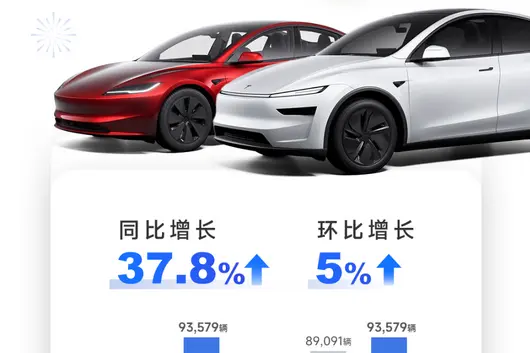
According to the latest statistics from the China Passenger Car Association, Tesla's Shanghai Gigafactory delivered over 93,000 vehicles in July 2026, setting a new high for monthly deliveries this year, up 37.8% year-on-year, up 5% month-on-month, equivalent to a new owner being born every 15 seconds.

Tesla's Shanghai Gigafactory is Tesla's largest global export center and a core capacity pillar supporting global order deliveries, with production and delivery performance remaining consistently strong.
Since the delivery of the first batch of China-made Model 3s in December 2019, the Shanghai Gigafactory has cumulatively produced over 4.5 million electric vehicles in six and a half years, accounting for more than 45% of Tesla's global total output, with more than half of globally popular orders delivered from here.
In the first half of 2026, the Shanghai Gigafactory's delivery volume reached nearly 468,000 vehicles, up 28.4% year-on-year, with production hitting a new high for the same period in the past three years.
Behind efficient deliveries lies extreme production and logistics efficiency: production can complete a whole vehicle every 30+ seconds, and transport can load 7,738 vehicles onto a single ship, providing solid assurance for orders in global markets.
Relying on powerful production capacity and export capabilities, Tesla models have become true "hit products going global," achieving sales success in multiple overseas markets.
In June 2026, Model Y sales in Australia exceeded 8,000 units, up 133.5% year-on-year, setting a new high for monthly sales, becoming the best-selling model across all categories in the local car market. This was also Model Y's second consecutive month as the passenger car sales champion in Australia.
The New Zealand market also saw strong sales, with Model Y becoming the best-selling model across all categories in the local car market in June.
In the Malaysian market, both models advanced side by side: Model Y became the best-selling imported brand electric vehicle in Malaysia in June, and Model 3 became the best-selling pure electric sedan in Malaysia in June.
During the same period, Tesla set a record single-month delivery volume in Singapore, with Model Y becoming the best-selling SUV locally; Tesla became the sales champion for electric vehicle brands in the Philippines in June.
Not limited to the output of China-made products, the large six-seater luxury SUV Model Y L, designed, developed, and manufactured under Chinese leadership, is being rolled out sequentially in multiple global markets including the US, UAE, South Korea, Japan, Singapore, and Australia, attracting many consumers to visit stores for test drives and stirring up a wave of ordering enthusiasm.

Di pasaran SUV di Malaysia, ramai pembeli akan membandingkan Proton X70 dan Kia Sportage apabila memilih kereta. Kedua-dua kereta ini agak hampir dari segi harga dan pelantarannya, hari ini kami akan membuat perbandingan terperinci dari pelbagai aspek untuk membantu anda menjimatkan masa membuat penelitian.
Harga OTR Proton X70 di Malaysia adalah RM 106,800 - 122,300, terdapat 3 varian, termasuk 1.5L Standard 2WD (RM 106,800), 1.5L Executive 2WD (RM 115,800), 1.5L Premium 2WD (RM 122,300) dan lain-lain.
Harga OTR Kia Sportage di Malaysia adalah RM 129,639 - 179,320, terdapat 4 varian, termasuk 2025 1.6T DCT 4WD High (RM 179,320), 2025 1.6T DCT 2WD High (RM 159,320), 2025 2.0L AT 2WD High (RM 139,639) dan lain-lain.
Dari segi harga, harga permulaan Proton X70 memang lebih murah RM 22,839 berbanding Kia Sportage. Jika bajet anda terhad, varian permulaan Proton sudah boleh memenuhi keperluan harian. Namun perlu diingat, ribuan ringgit yang lebih murah itu, mungkin ada kompromi dari segi peralatan, bergantung pada keperluan anda.
Proton X70 dilengkapi 1.5L Turbo, kuasa 140 hp. Penggunaan bahan api rasmi 7.0 L/100km.
Kia Sportage dilengkapi 1.5L Turbo, kuasa 140 hp. Penggunaan bahan api rasmi 7.0 L/100km.
Kedua-dua kereta menggunakan sistem pemacu yang sama, pengalaman memandu harian hampir tiada perbezaan. Dari segi penggunaan bahan api pun hampir sama, tidak perlu terlalu bimbang tentang ini.
Proton X70 panjang badan 4400 mm, ruang belakang 400 L.
Kia Sportage panjang badan 4400 mm, ruang belakang 400 L.
Saiz kedua-dua kereta hampir sama, ruang dalaman perbezaannya tidak banyak. Kereta darjat ini, penggunaan harian sudah cukup.
Proton X70 waranti 5 tahun/150,000km, selang penyelenggaraan setiap 10,000km atau 6 bulan.
Kia Sportage waranti 5 tahun/300,000km, selang penyelenggaraan setiap 10,000km atau 6 bulan.
Secara keseluruhannya, Proton X70 dan Kia Sportage adalah model kereta yang bagus di pasaran Malaysia. Memilih yang mana, terukinya bergantung pada keperluan peribadi dan bajet anda. Kami sarankan anda membuat penelitian yang baik, bandingkan harga di lebih banyak kedai kereta, kemudian buat ujian memandu untuk keputusan akhir. Membeli kereta adalah perkara besar, meluangkan masa membuat penelitian tidak akan salah.

喺馬來西亞嘅 SUV 市場,好多買家喺揀車嘅時候都會拎 Proton X70 同 Subaru Forester 嚟做比較。呢兩部車喺價位同埋定位上都好接近,今日我哋就由多個方面做一個詳細嘅對比,幫你節省做功課嘅時間。
Proton X70 喺馬來西亞嘅 OTR 售價係 RM 106,800 - 122,300,一共有 3 個版本,包括 1.5L Standard 2WD(RM 106,800)、1.5L Executive 2WD(RM 115,800)、1.5L Premium 2WD(RM 122,300) 等。
Subaru Forester 喺馬來西亞嘅 OTR 售價係 RM 174,000 - 197,000,一共有 3 個版本,包括 2024 2.0L S EyeSight GT Edition(RM 189,538)、2024 2.0L S EyeSight(RM 177,538)、2024 2.0L L EyeSight(RM 167,538) 等。
由價錢嚟睇,Proton X70 嘅起步價確實比 Subaru Forester 平咗 RM 67,200。如果你預算有限,Proton 嘅入門版已經可以滿足日常需要。但都要注意,平嗰幾千塊,可能喺配備上有取舍,具體要睇你嘅需求。

Proton X70 嘅安全評級係 5★ (ASEAN NCAP),主動安全系統包括 ADAS (ACC, AEB, LKA, LDA, BSM, RCTA)。
Subaru Forester 嘅安全評級係 5★ (Euro NCAP),主動安全系統包括 EyeSight。
安全配備方面,兩部車都拿到唔錯嘅評級。不過 Proton X70 嘅 ADAS (ACC, AEB, LKA, LDA, BSM, RCTA) 同 Subaru Forester 嘅 EyeSight 喺功能上有啲差異,如果你比較看重主動安全嘅話,可以仔細對比下兩者嘅功能列表。
Proton X70 車身長 4400 mm,尾箱 400 L。
Subaru Forester 車身長 4400 mm,尾箱 400 L。
兩部車嘅尺寸幾係一樣,車內空間差別唔大。呢個級別嘅車,日常使用完全夠用。

Proton X70 保養 5 年/150,000km,保養間隔 每 10,000km 或 6 個月。
Subaru Forester 保養 3 年/100,000km,保養間隔 每 10,000km 或 6 個月。
Proton X70 同 Subaru Forester 都係馬來西亞市場嘅主流選擇,適合家庭使用、日常通勤。如果你更看重品牌口碑同二手價,可以優先考慮口碑更好嗰款;如果你更在意性價同配備,就揀配置更豐富嗰款。最終都係建議兩部車都去試駕,親身體驗先係最重要。
總嘅嚟講,Proton X70 同 Subaru Forester 都係馬來西亞市場好唔錯嘅車款。揀邊一部,關鍵始終都要睇你個人需求同預算。建議大家做好功課,多比較幾間車行嘅報價,再去試駕做最終決定。買車係件大事,花少少時間做功課絕對唔會錯。


In Malaysia's SUV market, many buyers compare Proton X70 and GWM Haval H6 when choosing a car. These two models are quite close in price and positioning. Today we make a detailed comparison from multiple aspects to help you save time on research.
Proton X70's OTR price in Malaysia is RM 106,800 - 122,300, with a total of 3 versions, including 1.5L Standard 2WD (RM 106,800), 1.5L Executive 2WD (RM 115,800), 1.5L Premium 2WD (RM 122,300) etc.
GWM Haval H6's OTR price in Malaysia is RM 139,750 - 139,750, with a total of 2 versions, including 1.5L Turbo Standard (RM 140,000), 1.5L Turbo Premium (RM 155,000) etc.
From a price perspective, Proton X70's starting price is indeed RM 32,950 cheaper than GWM Haval H6. If your budget is limited, Proton's entry-level version can already meet daily needs. But also note, the savings of a few thousand may have trade-offs in features, depending on your specific needs.
Proton X70's safety rating is 5★ (ASEAN NCAP), active safety systems include ADAS (ACC, AEB, LKA, LDA, BSM, RCTA).
GWM Haval H6's safety rating is TBD, active safety systems include Basic.
Regarding safety features, both cars received decent ratings. However, there are some functional differences between Proton X70's ADAS (ACC, AEB, LKA, LDA, BSM, RCTA) and GWM Haval H6's Basic, if you value active safety, you can compare the feature lists of both carefully.
Proton X70 body length 4400 mm, trunk 400 L.
GWM Haval H6 body length 4400 mm, trunk 400 L.
The dimensions of both cars are almost the same, and the interior space difference is not significant. Cars in this class are completely sufficient for daily use.
Proton X70 adopts FWD drive mode.
GWM Haval H6 adopts FWD drive mode.
Both cars have the same drive mode, both are FWD, and the daily driving experience will not differ much.
Overall, Proton X70 and GWM Haval H6 are both very good models in the Malaysia market. Which one to choose depends mainly on your personal needs and budget. We suggest you do your homework, compare quotes from multiple dealerships, and then test drive to make the final decision. Buying a car is a big matter, spending time on research will definitely not be wrong.

In the Malaysian SUV market, many buyers compare Proton X70 and MG MG HS when choosing a car. These two cars are quite close in price and positioning. Today, we will make a detailed comparison from multiple aspects to help you save time on research.
The OTR selling price of Proton X70 in Malaysia is RM 106,800 - 122,300, with a total of 3 versions, including 1.5L Standard 2WD (RM 106,800), 1.5L Executive 2WD (RM 115,800), 1.5L Premium 2WD (RM 122,300), etc.
The OTR selling price of MG MG HS in Malaysia is RM 130,450 - 146,450, with a total of 2 versions, including 1.5L Standard (RM 105,000), 1.5L Executive (RM 115,000), etc.
From a price perspective, the starting price of Proton X70 is indeed RM 23,650 cheaper than MG MG HS. If your budget is limited, Proton's entry-level version can already meet daily needs. But be aware that the few thousand Ringgit difference might involve trade-offs in features, depending on your specific needs.
Proton X70 safety rating is 5★ (ASEAN NCAP), active safety systems include ADAS (ACC, AEB, LKA, LDA, BSM, RCTA).
MG MG HS safety rating is TBD, active safety systems include Basic.
Regarding safety features, both cars have received good ratings. However, the ADAS (ACC, AEB, LKA, LDA, BSM, RCTA) on Proton X70 and the Basic on MG MG HS have some differences in functionality. If you value active safety, you can compare the feature lists of both closely.
Proton X70 body length is 4400 mm, trunk 400 L.
MG MG HS body length is 4400 mm, trunk 400 L.
The dimensions of the two cars are almost the same, and the interior space difference is not significant. Cars in this class are fully sufficient for daily use.
Proton X70 warranty 5 years/150,000 km, maintenance interval every 10,000 km or 6 months.
MG MG HS warranty 7 years/150,000 km, maintenance interval every 10,000 km or 6 months.
Proton X70 and MG MG HS are both mainstream choices in the Malaysian market, suitable for family use and daily commuting. If you value brand reputation and resale value more, you can prioritize the one with better reputation; if you care more about cost-performance and features, choose the one with richer configurations. Ultimately, it is recommended to test drive both; personal experience is the most important.
In general, Proton X70 and MG MG HS are both very good models in the Malaysian market. Which one to choose depends mainly on your personal needs and budget. It is recommended to do your homework, compare quotes from several dealerships, and then test drive to make the final decision. Buying a car is a major event, spending time on research will never be wrong.

长安刚交出的7月成绩单,稳住了20万辆的基本盘,却怎么也让人轻松不起来。

8月2日,长安汽车公布7月交付数据。集团当月交付20.71万辆,与去年同期基本持平。其中,海外交付8.23万辆,同比大增79.1%,连续6个月正增长;新能源交付9.65万辆,同比增长28.8%,渗透率逼近47%。剩下的国内燃油车板块,仍在悄悄缩量。

回看上半年,销量端,累计交付119.56万辆,全年330万辆的目标完成率只有36.2%。过去三年,上半年销量占比稳定在46%以上,今年少了至少10个百分点。剩下的5个月,月均要卖42万辆才能达标,对比2025年下半年旺季,长安单月峰值也不过28万辆出头。这意味着,下半年月均目标比去年卖得最好的月份还要高出近一半才能达标。
利润端上半年归属股东净利润预计7.4亿至9.7亿元,同比下滑58%至68%;主业净利润降幅高达78%至85%,只剩2.3亿至3.3亿元。按总销量折算,每卖一辆车扣非净利润不到30元。
长安官方将原因归为汇率损失和原材料涨价,但拖后腿的还有结构。
利润端的信号更沉重。业绩预告显示,上半年归属股东净利润预计7.4亿至9.7亿元,同比下滑58%至68%;主业净利润降幅高达78%至85%,只剩2.3亿至3.3亿元。按总销量折算,每卖一辆车扣非净利润不到30元。长安官方将原因归为汇率损失和原材料涨价,但拖后腿的还有结构。

首先是,新能源板块增速低于行业。上半年新能源交付45.6万辆,同比仅增5.2%。同期,吉利汽车上半年新能源销量同比增长9.6%,奇瑞汽车上半年新能源销量同比增长34.2%,长安明显慢了半拍。再看产品结构,启源品牌高度依赖Q05一款车,半年卖了7.2万辆,其余车型如Q07、A07、E07等销量走低,贡献微薄;阿维塔上半年累计交付不足2.8万辆,同比腰斩,2022年到2025年四年亏掉132亿元,2026年上半年没有一款车月销过万;深蓝靠S05和L06撑盘,高端SUV深蓝S09月销已跌至两百余台。

其次是燃油车这边的承压。CS75燃油版上半年销量下滑超三成,逸动虽然保住了轿车榜位置,但靠的是持续降价。多款老车型销量归零,长安主动停产了5万元以下的Lumin,一进一出就是7万辆的缺口。
庆幸的是,海外端是上半年的亮眼板块。上半年国内燃油车收缩与新能源增长乏力的局面,靠海外一条腿很难完全撑住。上半年海外交付40.2万辆,同比增长35.1%,对照长安自己公布的2026年海外年度销量目标,完成度已超53%。不过,国内燃油车收缩与新能源增长乏力的局面,难以单靠海外支撑。
目前,长安已派出四位副总裁级高管主抓出海,泰国、巴西工厂先后投产,下半年启源Q05、深蓝S05等车型将在东南亚、欧洲多地上市。不过海外目前仍处在渠道和产能的投入期,短期回馈利润有限,且汇率波动还在侵蚀账面数据。

面对国内业务疲软、多品牌运营失衡的多重压力,长安在4月启动了近年最大刀阔斧的改革。深蓝与阿维塔后端整合,目标是研发和供应链成本下降20%至30%。整体产品谱系从63款砍到36款,不再追求无利润的规模。
正如中国长安汽车集团有限公司党委副书记、董事谭本宏在年中沟通会上直言:“我们现在还没有完全掌握好多品牌的经营能力。”
下半年的变量落在新车上。
深蓝S05将于8月6日上市,预售价11.99-15.19万元,搭载天枢领航+激光雷达;长安启源Q06全系标配天枢领航智驾系统,计划9月上市,主攻20万元级中大型SUV市场;阿维塔07L定位智美家庭豪华SUV,预计三季度上市,提供增程与纯电双动力,首批搭载华为乾崑ADS 5智驾系统,瞄准22万元以上的家庭市场。
一张排到年底的新车清单,承载着长安从维稳切换到上攻的全部期待。整合能否释放体系能力、新车能否跑出爆款,是下半年打破横盘的关键两道题。
来源:车观察

Recently, South Korean automaker KG Mobility (KGM) announced a strategic investment agreement with Chery Automobile. According to the agreement, Chery will invest 75 million US dollars into KGM and carry out or expand cooperation in areas such as accelerating new vehicle development, autonomous driving, and advanced electronic and electrical architecture.
If the transaction is completed and all bonds are converted to equity, Chery is expected to hold approximately 10% of KGM's shares and is expected to become its second-largest shareholder.

Chery's partnership with a South Korean automaker this time easily brings to mind the recent cooperation between Geely and Ford. Geely acquired 34% equity in the joint venture for 221 million euros and shares Ford's factory resources located in Valencia, Spain.
On the surface, in both collaborations, Chinese enterprises did not obtain absolute controlling equity, nor did they directly control daily operation management, but this precisely embodies the strategic wisdom of China's deep cultivation in the global market.
In the past, Chinese automakers going global relied more on product exports; however, nowadays, with changing competitive environments, Chinese automobiles are moving from pure "product output" to "global operation" covering technology, supply chain, manufacturing capabilities, brand value, and industrial ecosystems. For Chinese automakers, carrying out deep cooperation with local enterprises can faster utilize existing manufacturing, channels, and industrial resources to enter overseas markets with lower cost thresholds and achieve long-term rooting.
Currently, the globalization of Chinese automakers is entering a brand new stage. According to data from the General Administration of Customs, China's auto exports reached 5.31 million units in the first half of this year, a year-on-year increase of 53%, achieving continuous growth for 5 years. At the same time, consulting firms predict that China's auto export volume in 2026 will approach 10 million units, and China is expected to become the first country in the world to break through the 10 million unit auto export scale.
However, it needs to be seen that export volume growth does not equal the formation of globalization capabilities. For Chinese automakers, going global still faces multiple challenges such as trade barriers, policy differences, local operations, and brand awareness. How to move from "selling out" to "staying in" is the proposition that must be answered in the next stage.
True globalization still requires automakers to answer three core questions: Why are locals willing to accept the enterprise staying? Why are partners willing to walk alongside the enterprise for the long term? Can the enterprise achieve sustainable profitability locally?
These three questions correspond to industrial value, cooperation value, and commercial value respectively. Only when the three form a closed loop does going global become not just a short-term sales growth, but a long-term business capable of crossing cycles and continuously creating value.
"Behind the 'Global Expansion Fever', Chinese Automakers Still Need to Find Long-term Growth Solutions"
In recent years, "going global" has become a mandatory course that Chinese automakers cannot bypass. Besides Chery, enterprises such as Geely, Changan, Leapmotor, and Xpeng are also accelerating the promotion of global layout.
On the surface, this is a natural spillover after the improvement of Chinese automobile technology, product strength, and complete industrial chain capabilities; but from a more realistic perspective, it is also a strategic choice forced by market competition.

In the past few years, China's new energy vehicle market grew rapidly, with new brands, new models, and a large amount of capacity flooding in, and market competition gradually moved from incremental competition to stock game phase. Against the backdrop of domestic market "involution to death", many automakers face the dilemma of "increasing revenue but not profit". Therefore, the overseas market has become an important direction for enterprises to digest capacity, expand scale, and improve profit space.
However, when more and more enterprises regard going global as the answer for growth, a new question also appears: Will the overseas market become the next competitive red sea?
From the demand side, the global new energy vehicle market indeed still exists a large growth space. In the first half of 2026, the cumulative sales of new energy vehicles in the European market were about 2.378 million units, a year-on-year increase of 32.7%, penetration rate reached 29.2%, an increase of about 6 percentage points compared to the same period last year, accounting for 20.3% of global new energy vehicle sales. At the same time, new energy sales in emerging markets such as India and the Philippines also grew rapidly, among which India increased by 83.8% year-on-year, and the Philippines increased by 149.6% year-on-year.
However, it needs to be seen that different countries exist huge differences in consumption habits, regulatory standards, infrastructure, channel systems, and brand awareness, etc. The overseas market is not simply copying the Chinese market's "second battlefield", nor is it as simple as moving domestic mature models overseas for sales.
In fact, the export growth in the first half of this year not only comes from the improvement of the competitiveness of Chinese automakers themselves, but is also affected by multiple factors such as changes in international energy prices and adjustment of the electrification rhythm of overseas traditional automakers. With more Chinese brands entering the overseas market, competition is also gradually upgrading, and the dividends of going global are also gradually decreasing.
If enterprises only rely on price advantages, short-term sales, and channel deployment for expansion, then Chinese automobiles overseas may also fall into the cycle of "low-price competition" and "scale involution".
"Overseas is not a 'Safe Haven', Chinese Automakers Welcome Higher Cost Battlefields"
As is well known, the selling price of many Chinese automobile brands in the overseas market is often higher than the domestic market. Taking Chery Tiggo 8 as an example, the market price in China is around 100,000 yuan, but after entering the Russian market, the starting price is converted to about 220,000 yuan RMB, and in some markets in the Middle East, the landed price of the top configuration model is even close to 400,000 yuan.

This also makes many people in the past believe: going global means "China production, overseas sales", utilizing China's mature supply chain system and cost advantages to obtain higher premiums in the overseas market. But in fact, as Chinese automakers' globalization enters the deep water zone, this simple sales model is facing more and more challenges.
Even, a higher overseas selling price does not necessarily mean higher overseas profits. And a series of factors such as tariff barriers, local production requirements, environmental policies, distribution networks, after-sales service, etc., will directly affect the enterprise's final profitability.
Especially against the background of intensified competition in the global automobile industry, the overseas market is raising entry barriers. For example, the EU "Industrial Accelerator Act" proposes to implement "conditional market access" for countries with global key industry manufacturing capacity share exceeding 40%; the EU "New Battery Act" stipulates that starting from February 2027, power batteries must provide full life cycle carbon footprint data.
At the same time, European local automakers are also strengthening defense. Volkswagen, Stellantis, Renault and other European automotive enterprises have called for the EU to take more measures to protect the local electric vehicle industry; some European enterprises and unions also have concerns about cooperating with Chinese automakers, and even some overseas media described Chinese new energy vehicles as "Trojan horses".
It can be seen that Chinese automobile going global is experiencing a change in underlying logic, the past relied on product quality-price ratio, the future competes on system capabilities. Whoever can transform complex costs in global operations into brand, technology and industrial chain advantages, can truly realize the leap from "exporting products" to "global operations".
"Going Global is Not a Zero-Sum Game, But a Competitive Cooperation Game"
Chinese automakers' going global has never been standing on the opposite side of overseas enterprises.
Previously, Chairman Yin Tongyue of Chery Automobile Co., Ltd. pointed out: "Going to a (emerging) market is not just about pushing Chinese products out, must comply with local regulations, fit local user habits, at the same time we cannot keep all for themselves." He further emphasized that Chery going global is not to "grab" others' territory. "Do not be a plunderer, but be a fertilizer provider, increase fertility; do not go to their (place) to plunder markets, plunder talent."
Because true sustainable globalization is not about selling a car to the overseas market, but forming industrial connections locally, truly rooting in the local market.
Nowadays, the overseas layout methods of Chinese automakers have become more and more diversified, covering whole vehicle exports, CKD assembly, local production, dealer cooperation, technology licensing, platform output, capital cooperation, and joint operation and other models. And different models are essentially all for improving the enterprise's adaptability to the global market.

For example, SAIC-GM-Wuling planned production bases in Indonesia through the industrial chain synergy mode, built 120,000 units of whole vehicle capacity, while leading 16 domestic three-electric enterprises to go out together, and cultivated more than 100 local suppliers, achieving transition from product entry to industrial chain integration; Great Wall Motors through acquiring and transforming Brazil Daimler factory, officially started production in August 2025, created about 2,000 direct employment positions, and drove local supply chain system development; Chery and Spain EV MOTORS established a joint venture company, took over the Nissan closed Barcelona factory, with "Chery Technology + EBRO Brand" method to re-activate local manufacturing capability
In addition, Changan Thailand Rayong Factory welcomed the 20,000th whole vehicle off the line in June 2026, the factory total investment about 2.2 billion yuan, phase one annual capacity 100,000 units, key quality control workstation automation rate reached 90%; Geely relied on Proton brand deep plowing in Malaysia market, its Tanjung Malim electric vehicle factory has started production, phase one annual capacity reached 20,000 units.
It is worth noting that new power brands are also accelerating the output of technical systems and infrastructure capabilities. For example, Nio has deployed 93 battery swap stations overseas, and participated in research and formulation of Singapore electric vehicle charging and swapping standards "Singapore Standard SS 722"; Leapmotor, through establishing a joint venture company with Stellantis, promotes internationalization with the help of global channel resources, its main model C10 has also started local assembly production at Kulim Factory, Kedah, Malaysia; Xpeng not only has strategic cooperation with Volkswagen, but also acquired 90.1% equity of Indonesian listed company EIDO, planning its first overseas production base, and adopted CKD model to promote localized manufacturing.
From the perspective of industry insiders, different going global paths do not exist absolute superiority or inferiority, the key lies in whether it matches the enterprise's own capabilities and development stages. Whole vehicle export speed is fast, investment is relatively light, but easy to be affected by trade policy changes; local factory construction can enhance industrial integration, but needs continuous capital investment and scale support; channel cooperation can quickly open the market, but user relationships and brand assets may be constrained by partners; technology licensing and capital cooperation are lighter, but test whether the enterprise can transform technical advantages into long-term commercial value.
And judging whether an enterprise's going global is successful, cannot look only at export volume, how many countries and regions entered, or even cannot look only at overseas sales growth, but need to see whether it can answer several more core questions.
First, can it make money. Whether overseas business can form stable and sustainable profit-making ability, rather than relying on domestic market blood transfusion, financing support or short-term price advantages.
Secondly, can it take root. Whether it establishes local R&D, manufacturing, channel, service and supply chain systems, rather than staying at one-time product sales.
Thirdly, can it achieve win-win. Whether it can create employment, tax and industrial value for the locality, making government, partners, suppliers and consumers all become beneficiaries in the globalization process.
In addition, it also needs to see if the enterprise can resist risks. Facing tariff changes, policy adjustments, exchange rate fluctuations and geopolitical uncertainties, whether overseas business has sufficient resilience.
More importantly, whether the enterprise can build true brand value. What consumers buy, is it just a lower price Chinese automobile product, or recognize a global automobile brand that can exist for a long time and continuously provide value.
From the perspective of industry insiders, the highest standard of going global is not how much Chinese automakers took away from the overseas market, but how much value was left for the local while obtaining commercial returns. The overseas market does not reject Chinese automobiles, but no market will long-term welcome an "outsider" who only sells products, fights for share, but does not bear industrial responsibility and does not create local value.
Truly viable globalization is not a short-term surprise battle won relying on cost advantages, but finding the greatest common divisor of enterprise interests and local interests in different markets. Only from "entering overseas market" to "integrating into local industry", Chinese automobiles can truly complete the transformation from export powerhouse to important participant in the global automobile industry.

In recent years, fierce competition in the domestic tire market has intensified, international trade barriers occur frequently, going overseas is no longer an optional track but an essential task for enterprises to survive and grow.
As of the first half of 2026, 26 domestic tire enterprises have expanded overseas, with 43 independent factories. From clustering in Southeast Asia to seizing the North American, European, and African markets, the global battle of top enterprises has fully unfolded.
CheYuanCheZhe uses the latest core data to break down the ranking of China tire overseas production capacity strength, investment status, and future trends!

Overseas Production Capacity Power Ranking! 4 Tiers Gap is Huge
26 enterprises, 43 overseas factories, seemingly blooming everywhere, but tier differentiation is extremely severe! We divide into four strength tiers based on the actual number of landed factories:
First Tier: Global Top Players
Sailun Group | 5 overseas factories, firmly ranking first in the industry. Undoubtedly the "No. 1 Overseas Enterprise", the only Chinese tire enterprise spanning Asia, Africa, and the Americas, layout logic is textbook level:
▪️ Southeast Asia (Vietnam, Cambodia): Core production bases, ensuring production capacity supply
▪️ Mexico: Positioning in the North American market, avoiding US tariff barriers
▪️ Indonesia: Close to natural rubber origin, compressing raw material costs
▪️ Egypt: Radiating African and European markets, connecting overseas growth
Sailun does not rely on blind expansion, but on precise global positioning, building a complete overseas supply chain barrier.
Zhongce Rubber | 4 factories, the domestic tire leader layout is steady. Thailand and Indonesia factories are already profitable, Vietnam project progressing steadily, new Mexico construction project added, fully covering Southeast Asia, North American core markets, single factory capacity scale is top in industry.
Second Tier: Top Power Players
Sentury, Linglong Tire | Sentury focuses on European high-end market, Morocco construction, Spain planning implemented, forward-looking maxed out; Linglong Tire refines low-efficiency overseas projects, keeps Thailand, Serbia quality bases, capacity quality maxed out, focusing on high-end manufacturing export.
Pulin Chengshan, GCT, Guizhou Tire, Double Star Group, Wanli Tire, Lanma Tire, Huasheng Rubber. This batch of enterprises is the main force for going overseas, not blindly expanding, focusing on single-point deep cultivation:
▪️ Guizhou Tire, Sentury in same track, layout Morocco to position Europe
▪️ Huasheng Rubber adjusts strategy, Vietnam project changed to proposed, focusing on South Asia Pakistan market
▪️ Lanma, Wanli deep cultivate overseas regional segments, steadily doing localization penetration
Third Tier: Overseas Tasting Water
Haohua Tire, Fumas, Yongsheng Rubber, SunSet, etc. 15 enterprises, all single overseas factory layout. Most are in production start-up, construction start, planning stages, belonging to initial overseas market tasting, are core potential forces for subsequent overseas expansion. Among them SunSet Brazil factory has started construction, planned for production start, landing pace continues to accelerate.

Overseas Logic Changes! From "Forced Tax Avoidance" to "Active Global Positioning"
Earlier domestic tire enterprises going overseas, purpose was simple: Evade Europe and America "Anti-dumping and Anti-subsidy", high tariffs, rely on Southeast Asia factories to change origin, protect overseas orders.
But now, overseas logic completely reversed, 3 major changes visible to naked eye:
Full Overseas: No longer only Zhongce, Sailun top players, Haohua, Huasheng, Yongsheng and other small and medium manufacturers joining in
Full-domain Layout: Say goodbye to single Thailand factory building, Mexico, Egypt, Morocco, Brazil, Spain bloom everywhere
Deep Cultivation Landing: From simple OEM factories, upgraded to globalization bases integrating production, logistics, local operations
Main Battlefield for Overseas: Why is it Southeast Asia?
Currently over 60% domestic tire overseas factories cluster in Southeast Asia (Thailand, Vietnam, Cambodia, Malaysia, Indonesia), 3 core advantages irreplaceable:
Tariff Dividend: Southeast Asia export Europe America tariffs far lower than China, directly avoiding trade sanctions, protecting profits
Raw Material Advantage: Global natural rubber core production area, building factories nearby greatly reduces raw material, logistics costs
Cost Lowland: Land, labor costs lower than domestic, adapting to tire manufacturing rigid needs
But shortcomings also prominent: Far from Europe America core consumer markets, local supply chain support imperfect, only suitable as primary manufacturing bases.
Second Wave of Overseas: Farewell to Southeast Asia, Global Multi-point Positioning
Top enterprises have long jumped out of Southeast Asia competition, starting global precise layout, emerging tracks rise:
Mexico | North American Portal Relying on USMCA, zero tariff/low tariff entry into US market, logistics distance short, response fast, is core springboard for seizing North American high-end markets.
North Africa (Morocco/Egypt) | Europe Africa Hub Adjacent to Europe, tariff preferences, labor costs low, becoming domestic tire entry into EU market optimal transit station.
Brazil | South American Core Positioning South America largest consumer market, avoiding regional trade barriers, radiating whole South American regional incremental.

Industry Truth! Don't be deceived by "Number of Overseas Factories"
Many people mistakenly think: More factories, stronger strength? Big mistake! 3 industry hidden truths, understand real landscape:
Start ≠ Production, Production ≠ Profit Foundation, start is just beginning, an overseas factory from construction, reaching capacity to profit, at least needs 5-7 years, many projects still in investment period, not yet monetized.
Radial Tires > Passenger Car Tires, Quality Difference Huge Ordinary passenger car tires threshold low, production fast; Radial truck tires technical barriers high, value added high. Sailun, Zhongce, Linglong top enterprises, achieved double tire full coverage, strength far exceeds ordinary manufacturers.
Building factories easy, operation hard. Overseas factory building is just foundation. Local labor policy, supply chain support, local channel operations, are core keys to deciding whether enterprises can long-term stand.
Next 3 Years, Tire Overseas Core Trends
Combining current layout pattern, China tire globalization, will welcome 3 deterministic trends:
Industry Accelerates Differentiation, Stronger Remains Stronger Future overseas threshold continues to rise, funds, management, technology weak SMEs, will gradually fall behind. Finally form: Top globalization, Waist guarding segments, Niche enterprises deep cultivation domestic landscape.
From "Manufacturing Overseas" Upgrade "Brand Overseas" Current stage overseas mainly OEM production, subsequent core competition, will turn to brand, channel, service globalization, get rid of "Low-price OEM" label, impact international high-end markets.
Global Supply Chain Reconstruction, Welcome Lane Change Opportunity Global trade barriers intensify, regional production mainstream, domestic top tire enterprises with complete capacity layout and supply chain advantages, expected to break foreign giant monopoly, achieve overtaking on curves.
Finally Written
43 overseas factories, is China tire industry globalization best report card. From passive tax avoidance to active positioning, from single Southeast Asia layout to global deep cultivation, China tires long said goodbye to low-end involution, in global market planted feet firmly. Capacity overseas is just beginning, brand overseas, value overseas, is China tire future ultimate track!

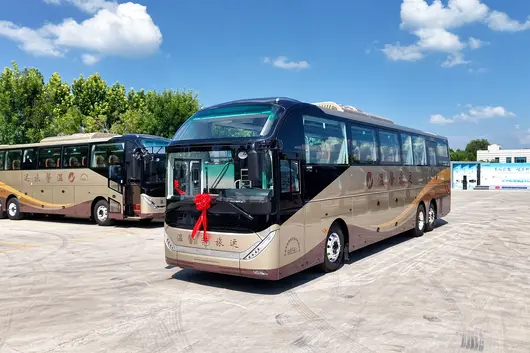
The tide of the Dongjiang River rises, widening both banks; the wind in the Bay Area is strong, making it a good time to set sail. On August 3, 2026, a grand delivery ceremony was held at the Zhongtong Bus factory, where a batch of Zhongtong H13E large-capacity pure electric tour and group coaches were officially delivered to Dongguan Wenzhen Tourism Passenger Transport Co., Ltd. (referred to as "Dongguan Wenzhen Tour & Transport").

This delivery marks a capacity upgrade for Dongguan Wenzhen Tour & Transport and a key strategic advancement in its development — taking green high-end capacity as a fulcrum, upgrading service from "transportation assurance" to "high-end experience", empowering green and efficient operations in diverse travel scenarios.
Closely aligned with the passenger flow characteristics of the Greater Bay Area, extra-long range adapts to diverse scenarios
The Greater Bay Area of China, one of the most economically dynamic regions, features intense cross-city travel. Services such as tour charters, corporate commuting, educational trips, and scenic area shuttles overlap, demanding higher requirements for vehicle range, operational reliability, and service quality.
Dongguan Wenzhen Tour & Transport has cultivated the Greater Bay Area passenger transport market for many years. Its business covers tourism reception, corporate commuting assurance, student educational travel, etc. It has established an "Direct to Scenic Areas + Cross-City Shuttle + Educational Team Building + Government-Enterprise Commuting" full-scenario operation system and has grown into a representative enterprise in the comprehensive tourism passenger transport industry of the Greater Bay Area.

To adapt to the region's diversified and high-intensity operational needs, and achieve a leap from "basic travel assurance" to "high-quality experience", Dongguan Wenzhen Tour & Transport introduced a batch of Zhongtong H13E models. This model is equipped with a 650.19kWh high-performance battery, using the core advantage of extra-long range to solve industry operational pain points.
At the delivery ceremony, the person in charge of Dongguan Wenzhen Tour & Transport introduced that the multi-scenario intertwined operation mode in the Greater Bay Area has strict requirements for vehicle range and reliability. The H13E is a 13-meter class pure electric tour and group benchmark model custom-built by Zhongtong Bus for the unique working conditions of the Bay Area. The ultra-large battery configuration brings solid and long-lasting range capability, perfectly adapting to long-distance cross-city and long-term on-site operation needs. It effectively reduces the frequency of recharging midway, greatly improves single-vehicle availability and operational efficiency, and comprehensively optimizes passenger travel experience with stable driving quality, empowering high-end passenger transport services for enterprises.
Progressing in Sync with the Greater Bay Area, Deepening Green Passenger Transport with Foresight
With the in-depth promotion of the "Dual Carbon" strategy, zero-emission, high-efficiency new energy models have become the core lever for the transformation, upgrading, and high-quality development of the passenger transport industry.

Based on achieving capacity upgrades and cost reduction with efficiency through the product's core strength, this batch implementation of Zhongtong H13E is an important strategic layout for Dongguan Wenzhen Tour & Transport to keep up with industry trends and deeply cultivate green passenger transport.
Compared to traditional fuel models, the Zhongtong H13E has prominent energy-saving and consumption-reduction advantages. Calculated based on the industry standard working condition of 300 kilometers per day operation, the vehicle's pure electric drive can reduce energy consumption costs per kilometer by more than 60%, maintenance costs decrease by about 40%. In full lifecycle operations, it can save enterprises a significant amount of operational expenses, truly converting the advantages of low cost and high availability into core market competitiveness for enterprises.

Market choice is the most direct verification of the product. From January to July 2026, Zhongtong tour and group bus market share continued to rise, and sales of 8-meter and above medium and large tour and group buses increased significantly year-on-year. Among them, the Zhongtong H Series, with core advantages such as high comfort, high safety, and high energy saving, has become one of the main models for capacity renewal in domestic top-tier travel and transport enterprises.
Relying on continuously iterated product technology and a global service guarantee system, the multi-power Zhongtong H Series buses not only continue to receive customer repurchase in important domestic tourism and commuting markets, but are also exported to multiple countries and regions such as Chile, Portugal, Singapore, and the UAE, becoming an important force for Chinese buses going global with green technology.
Delivery is just the prologue! The batch of Zhongtong pure electric buses rushing to Dongguan is a deepening of cooperation and another journey of co-creating value. Taking this as a new starting point, Zhongtong Bus will continue to refine products and cultivate services. With green smart travel solutions, it will empower industry upgrades and gather strength to sail towards a cleaner, more efficient, and better future.
(This article is provided by the enterprise)

In Malaysia's SUV market, many buyers compare Perodua Ativa and Honda HR-V when choosing a car. These two cars are quite close in price and positioning. Today we will make a detailed comparison from multiple aspects to help you save time on research.
Perodua Ativa's OTR price in Malaysia is RM 62,500 - 73,400, with a total of 3 versions, including 1.0L Turbo X (RM 62,500), 1.0L Turbo H (RM 67,300), 1.0L Turbo AV (RM 73,400), etc.
Honda HR-V's OTR price in Malaysia is RM 115,900 - 143,900, with a total of 4 versions, including 2026 e:HEV 1.5L RS (RM 143,900), 2026 1.5T V (RM 137,900), 2026 1.5T E (RM 130,900), etc.
From a price perspective, the starting price of Perodua Ativa is indeed RM 53,400 cheaper than Honda HR-V. If your budget is limited, Perodua's entry-level version can already meet daily needs. But also note, the few thousand cheaper might have trade-offs in equipment, depending on your needs.

Perodua Ativa body length 4400 mm, trunk 400 L.
Honda HR-V body length 4500 mm, trunk 450 L.
In terms of space, Honda HR-V's body is 100 mm longer than Perodua Ativa, offering a better advantage in passenger space. However, Perodua Ativa is a bit more flexible for parking in the city, with trade-offs for each.

Perodua Ativa warranty 5 years/150,000km, service interval every 10,000km or 6 months.
Honda HR-V warranty 5 years/unlimited mileage, service interval every 10,000km or 6 months.

Perodua Ativa and Honda HR-V are both mainstream choices in the Malaysia market, suitable for family use and daily commuting. If you value brand reputation and resale value more, you can prioritize the one with better reputation; if you care more about value for money and equipment, choose the model with richer configuration. Ultimately, it is recommended to test drive both, personal experience is the most important.

Overall, Perodua Ativa and Honda HR-V are both quite good models in the Malaysia market. Which one to choose depends mainly on your personal needs and budget. It is recommended to do your research, compare quotes from multiple dealerships, and then test drive to make a final decision. Buying a car is a big matter, spending some time on research will never be wrong.


In the Malaysian SUV market, many buyers compare Perodua Ativa and Mazda CX-30 when choosing a car. These two models are quite close in price and positioning. Today, we will make a detailed comparison from multiple aspects to help you save time on research.
Perodua Ativa's OTR price in Malaysia is RM 62,500 - 73,400, with a total of 3 variants, including 1.0L Turbo X (RM 62,500), 1.0L Turbo H (RM 67,300), 1.0L Turbo AV (RM 73,400), etc.
Mazda CX-30's OTR price in Malaysia is RM 122,409 - 146,409, with a total of 4 variants, including 2025 2.0L High+ Premium (RM 146,409), 2025 2.0L High+ (RM 138,409), 2025 2.0L High (RM 130,409), etc.
In terms of price, Perodua Ativa's starting price is indeed RM 59,909 cheaper than Mazda CX-30. If your budget is limited, Perodua's entry-level version can already meet daily needs. However, also note that the few thousand difference might involve trade-offs in equipment, which depends on your specific needs.
Perodua Ativa's safety rating is 5★ (ASEAN NCAP), active safety systems include ASA 3.0 + ACC + LDA + LKA + BSM + RCTA.
Mazda CX-30's safety rating is 5★ (ASEAN NCAP), active safety systems include i-Activsense.
Both cars have the same safety rating, and safety features in this class are quite comprehensive. Safety in new cars nowadays is not poor, so there is no need to worry too much about this.
Perodua Ativa body length is 4400 mm, trunk capacity 400 L.
Mazda CX-30 body length is 4500 mm, trunk capacity 450 L.
In terms of space, Mazda CX-30's body is 100 mm longer than Perodua Ativa, offering an advantage in passenger space. However, Perodua Ativa is more flexible for parking in the city, each has trade-offs.
Perodua Ativa uses FWD drive configuration.
Mazda CX-30 uses FWD drive configuration.
Both cars have the same drive configuration, both are FWD, so daily driving experience will not differ much.

Overall, Perodua Ativa and Mazda CX-30 are both very good car models in the Malaysian market. Which one to choose depends on your personal needs and budget. We recommend doing your homework, comparing quotes from several dealers, and then test driving to make a final decision. Buying a car is a big matter, spending some time doing research will never be wrong.

In the Malaysian SUV market, many buyers compare Perodua Ativa and Mazda CX-30 when selecting a car. These two models are quite close in price and positioning. Today, we will make a detailed comparison from multiple aspects to help you save time on research.
The OTR price of Perodua Ativa in Malaysia is RM 62,500 - 73,400, with a total of 3 versions, including 1.0L Turbo X (RM 62,500), 1.0L Turbo H (RM 67,300), 1.0L Turbo AV (RM 73,400), etc.
The OTR price of Mazda CX-30 in Malaysia is RM 122,409 - 146,409, with a total of 4 versions, including 2025 2.0L High+ Premium (RM 146,409), 2025 2.0L High+ (RM 138,409), 2025 2.0L High (RM 130,409), etc.
From the price perspective, the starting price of Perodua Ativa is indeed RM 59,909 cheaper than Mazda CX-30. If your budget is limited, Perodua's entry-level version can already meet daily needs. However, note that the saving of a few thousand Ringgit might involve compromises in features, depending on your specific requirements.
Perodua Ativa safety rating is 5★ (ASEAN NCAP), active safety systems include ASA 3.0 + ACC + LDA + LKA + BSM + RCTA.
Mazda CX-30 safety rating is 5★ (ASEAN NCAP), active safety systems include i-Activsense.
Both cars have the same safety rating, and safety features are quite comprehensive in this class. New cars nowadays generally have good safety, so there is no need to worry too much about this.
Perodua Ativa body length 4400 mm, trunk 400 L.
Mazda CX-30 body length 4500 mm, trunk 450 L.
In terms of space, Mazda CX-30 is 100 mm longer than Perodua Ativa, offering an advantage in passenger space. However, Perodua Ativa is a bit more flexible for parking in the city, each has its trade-offs.
Perodua Ativa warranty 5 years/150,000 km, maintenance interval every 10,000 km or 6 months.
Mazda CX-30 warranty 5 years/150,000 km, maintenance interval every 10,000 km or 6 months.
Both cars have the same warranty conditions, no need to worry about this. Actual maintenance costs depend on the brand's service network and parts prices, recommend asking real owners in car groups for experience.
Overall, Perodua Ativa and Mazda CX-30 are both very good models in the Malaysian market. Which one to choose depends on your personal needs and budget. We suggest doing thorough research, comparing quotes from multiple dealers, and going for a test drive to make the final decision. Buying a car is a major decision, spending time on research will definitely not be wrong.

Di pasaran SUV di Malaysia, banyak pembeli apabila memilih kereta akan membandingkan Proton X70 dan GWM Haval H6. Kedua-dua kereta ini hampir sama dari segi harga dan kedudukan pasaran, hari ini kita akan buat perbandingan terperinci dari pelbagai aspek, membantu anda menjimatkan masa membuat penyelidikan.
Harga OTR Proton X70 di Malaysia ialah RM 106,800 - 122,300, jumlah ada 3 varian, termasuk 1.5L Standard 2WD (RM 106,800), 1.5L Executive 2WD (RM 115,800), 1.5L Premium 2WD (RM 122,300) dan lain-lain.
Harga OTR GWM Haval H6 di Malaysia ialah RM 139,750 - 139,750, jumlah ada 2 varian, termasuk 1.5L Turbo Standard (RM 140,000), 1.5L Turbo Premium (RM 155,000) dan lain-lain.
Daripada segi harga, harga permulaan Proton X70 memang lebih murah RM 32,950 berbanding GWM Haval H6. Jika bajet anda terhad, varian asas Proton sudah boleh memenuhi keperluan harian. Tetapi perlu diingat, beza beberapa ribu itu mungkin ada kompromi pada kelengkapan, bergantung kepada keperluan anda.
Proton X70 dilengkapi 1.5L Turbo, kuasa 140 hp. Konsumsi minyak rasmi 7.0 L/100km.
GWM Haval H6 dilengkapi Hybrid, kuasa 170 hp. Konsumsi minyak rasmi 4.5 L/100km.
Daripada segi kuasa, Hybrid GWM Haval H6 mempunyai 30 hp lebih berbanding 1.5L Turbo Proton X70. Namun untuk memandu harian di bandar, kuasa kedua-dua kereta sudah mencukupi, tidak terasa kurang kuasa.
Penarafan keselamatan Proton X70 adalah 5★ (ASEAN NCAP), sistem keselamatan aktif termasuk ADAS (ACC, AEB, LKA, LDA, BSM, RCTA).
Penarafan keselamatan GWM Haval H6 adalah TBD, sistem keselamatan aktif termasuk Basic.
Daripada segi kelengkapan keselamatan, kedua-dua kereta mendapat penarafan yang bagus. Namun ADAS (ACC, AEB, LKA, LDA, BSM, RCTA) pada Proton X70 dan Basic pada GWM Haval H6 mempunyai perbezaan dari segi fungsi. Jika anda lebih mementingkan keselamatan aktif, boleh bandingkan senarai fungsi antara keduanya.
Proton X70 jaminan 5 tahun/150,000km, selang penyelenggaraan setiap 10,000km atau 6 bulan.
GWM Haval H6 jaminan 7 tahun/150,000km, selang penyelenggaraan setiap 10,000km atau 6 bulan.
Proton X70 dan GWM Haval H6 adalah pilihan utama di pasaran Malaysia, sesuai untuk kegunaan keluarga, perjalanan harian. Jika anda lebih mementingkan jenama dan harga jualan semula, boleh memprioritaskan model dengan reputasi lebih baik; jika anda lebih mementingkan nilai wang dan kelengkapan, pilih model yang lebih lengkap. Pada akhirnya, disarankan untuk memandu ujian kedua-dua model, pengalaman langsung adalah yang paling penting.
Secara keseluruhan, Proton X70 dan GWM Haval H6 adalah model yang sangat bagus di pasaran Malaysia. Memilih yang mana, tertakluk kepada keperluan peribadi dan bajet anda. Disarankan untuk membuat penyelidikan, membandingkan pelbagai tawaran dari kedai kereta, kemudian buat ujian memandu untuk keputusan akhir. Membeli kereta adalah perkara besar, meluangkan masa untuk penyelidikan tidak akan salah.

喺馬來西亞嘅 SUV 市場,好多買家喺揀車嗰陣都會拿 Perodua Ativa 同 Mitsubishi Xforce 做比較。這兩款車喺價位同定位上都幾接近,今日我哋就從多個方面做一個詳細嘅對比,幫你慳返做功課嘅時間。
Perodua Ativa 喺馬來西亞嘅 OTR 售價係 RM 62,500 - 73,400,合共有 3 個版本,包括 1.0L Turbo X(RM 62,500)、1.0L Turbo H(RM 67,300)、1.0L Turbo AV(RM 73,400)等。
Mitsubishi Xforce 喺馬來西亞嘅 OTR 售價係 RM 109,930 - 119,930,合共有 2 個版本,包括 2026 1.5L Ultimate(RM 119,930)、2026 1.5L Urban(RM 109,930)等。
從價錢嚟睇,Perodua Ativa 嘅起價確實比 Mitsubishi Xforce 平咗 RM 47,430。如果你預算有限,Perodua 嘅入門版已經可以滿足日常需要。但要留意,平嗰幾千蚊,喺配備上可能有取舍,具體要看你嘅需求。
Perodua Ativa 配備 1.5L 4-cyl,馬力 105 hp。官方油耗 6.0 L/100km。
Mitsubishi Xforce 配備 1.5L Turbo,馬力 140 hp。官方油耗 7.0 L/100km。
動力方面,Mitsubishi Xforce 嘅 1.5L Turbo 比 Perodua Ativa 嘅 1.5L 4-cyl 多咗 35 匹馬力。不過日常喺市區行,兩款車嘅動力都夠用,唔會覺得唔夠力。
Perodua Ativa 嘅安全評級係 5★ (ASEAN NCAP),主動安全系統包括 ASA 3.0 + ACC + LDA + LKA + BSM + RCTA。
Mitsubishi Xforce 嘅安全評級係 5★ (ASEAN NCAP),主動安全系統包括 MI-PILOT。
兩款車嘅安全評級一樣,喺呢個級別入面安全配備都算給得好齊全。而家嘅新車安全性都唔差,唔使太擔心呢點。
Perodua Ativa 保養 5 年/150,000km,保養間隔 每 10,000km 或 6 個月。
Mitsubishi Xforce 保養 3 年/100,000km,保養間隔 每 10,000km 或 6 個月。

總體嚟講,Perodua Ativa 同 Mitsubishi Xforce 都係馬來西亞市場好好嘅車型。揀邊一輛,關鍵主要係睇你嘅個人需求同預算。建議大家做好功課,多比較幾間車行嘅報價,再試駕做最終決定。買車係件大事,花少少時間做功課絕對唔會錯。

In Malaysia's SUV market, many buyers compare the Perodua Ativa and Mitsubishi Xforce when selecting a car. These two cars are quite close in price and positioning. Today we will make a detailed comparison from multiple aspects to help you save time on research.
The OTR price of the Perodua Ativa in Malaysia is RM 62,500 - 73,400, with a total of 3 versions, including 1.0L Turbo X (RM 62,500), 1.0L Turbo H (RM 67,300), 1.0L Turbo AV (RM 73,400), etc.
The OTR price of the Mitsubishi Xforce in Malaysia is RM 109,930 - 119,930, with a total of 2 versions, including 2026 1.5L Ultimate (RM 119,930), 2026 1.5L Urban (RM 109,930), etc.
From a price perspective, the starting price of the Perodua Ativa is indeed RM 47,430 cheaper than the Mitsubishi Xforce. If your budget is limited, the entry-level version of Perodua can already meet daily needs. However, note that the difference of a few thousand may involve trade-offs in features, depending on your specific needs.
The Perodua Ativa is equipped with a 1.5L 4-cyl, 105 hp. Official fuel consumption 6.0 L/100km.
The Mitsubishi Xforce is equipped with a 1.5L Turbo, 140 hp. Official fuel consumption 7.0 L/100km.
In terms of power, the Mitsubishi Xforce's 1.5L Turbo has 35 more horsepower than the Perodua Ativa's 1.5L 4-cyl. However, for daily city driving, the power of both cars is sufficient, you won't feel underpowered.
The safety rating of the Perodua Ativa is 5★ (ASEAN NCAP), active safety systems include ASA 3.0 + ACC + LDA + LKA + BSM + RCTA.
The safety rating of the Mitsubishi Xforce is 5★ (ASEAN NCAP), active safety system includes MI-PILOT.
Both cars have the same safety rating, safety features in this class are considered quite comprehensive. Safety of new cars nowadays is not bad, no need to worry too much about this.
Perodua Ativa warranty 5 years / 150,000km, maintenance interval every 10,000km or 6 months.
Mitsubishi Xforce warranty 3 years / 100,000km, maintenance interval every 10,000km or 6 months.
Both the Perodua Ativa and Mitsubishi Xforce are popular choices in the Malaysian market, suitable for family use and daily commuting. If you value brand reputation and resale value more, you can prioritize the one with better reputation; if you value value for money and features more, then choose the one with more features. Ultimately it is recommended to test drive both, personal experience is the most important.

Overall, both the Perodua Ativa and Mitsubishi Xforce are very good car models in the Malaysian market. Which one to choose mainly depends on your personal needs and budget. We recommend doing research well, comparing quotes from several dealerships, and then test driving to make the final decision. Buying a car is a major matter, spending some time doing research will definitely not go wrong.
© 2024 Bitauto.com. All Rights Reserved.
Bitauto (www.yiche.com and www.bitauto.com) is one of the most visited automotive websites in China. We provide detailed info on Chinese car brands available in your area. Please note that the information provided on this website is based on publicly available data and is for reference only. It may not be fully updated or accurate at all times.

Help us improve our website


